Offered by Ars Antiqua
REQUEST INFORMATION

Old Masters paintings, furniture, sculptures and modern art
Placido Costanzi (Rome, 1702 – 1759)
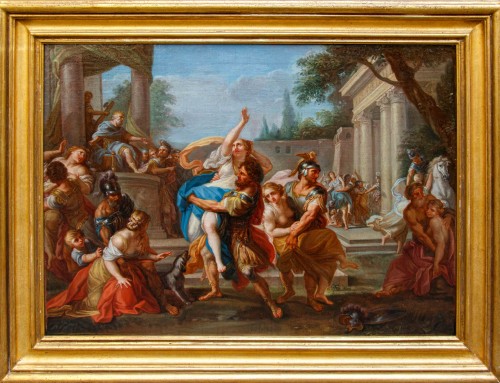
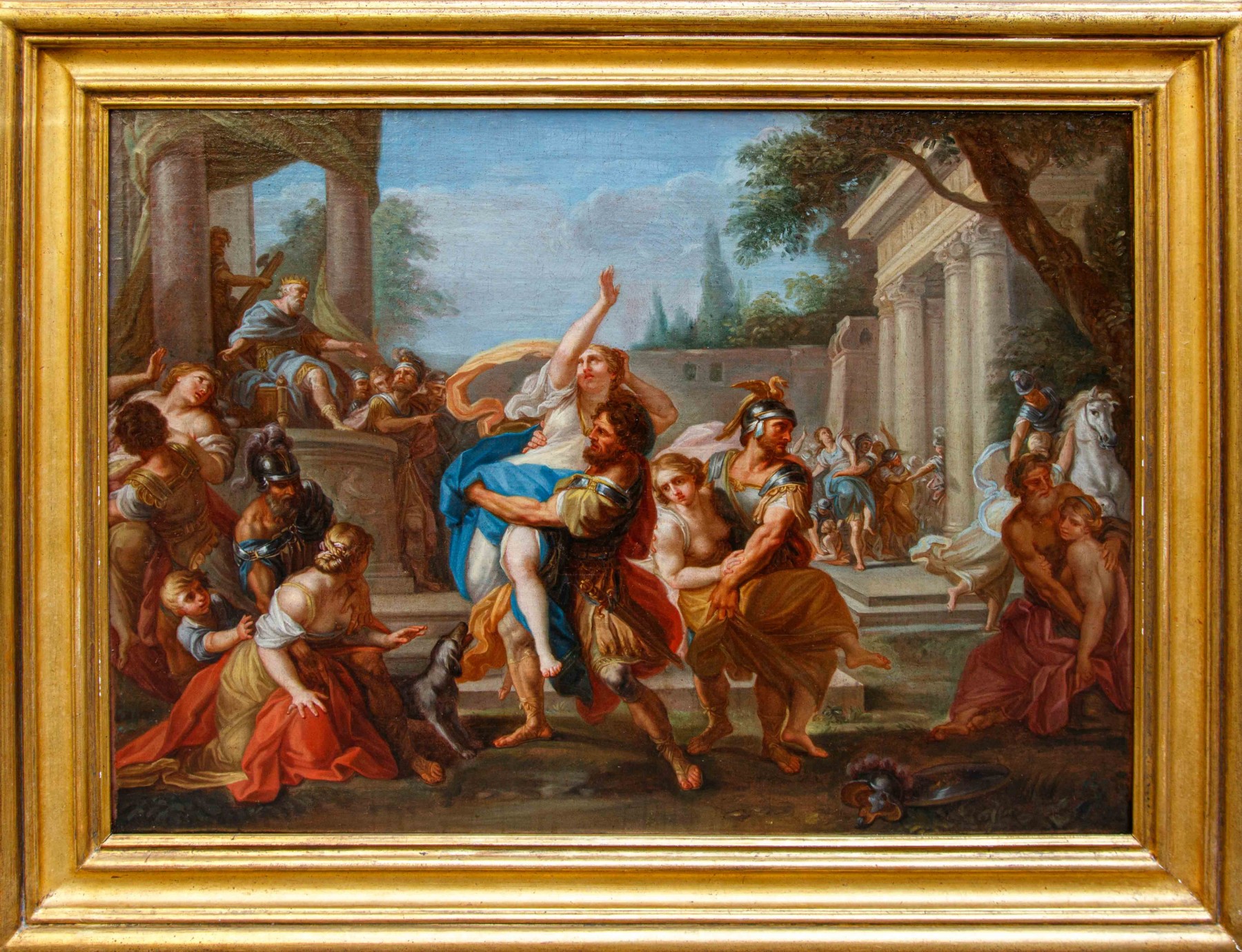
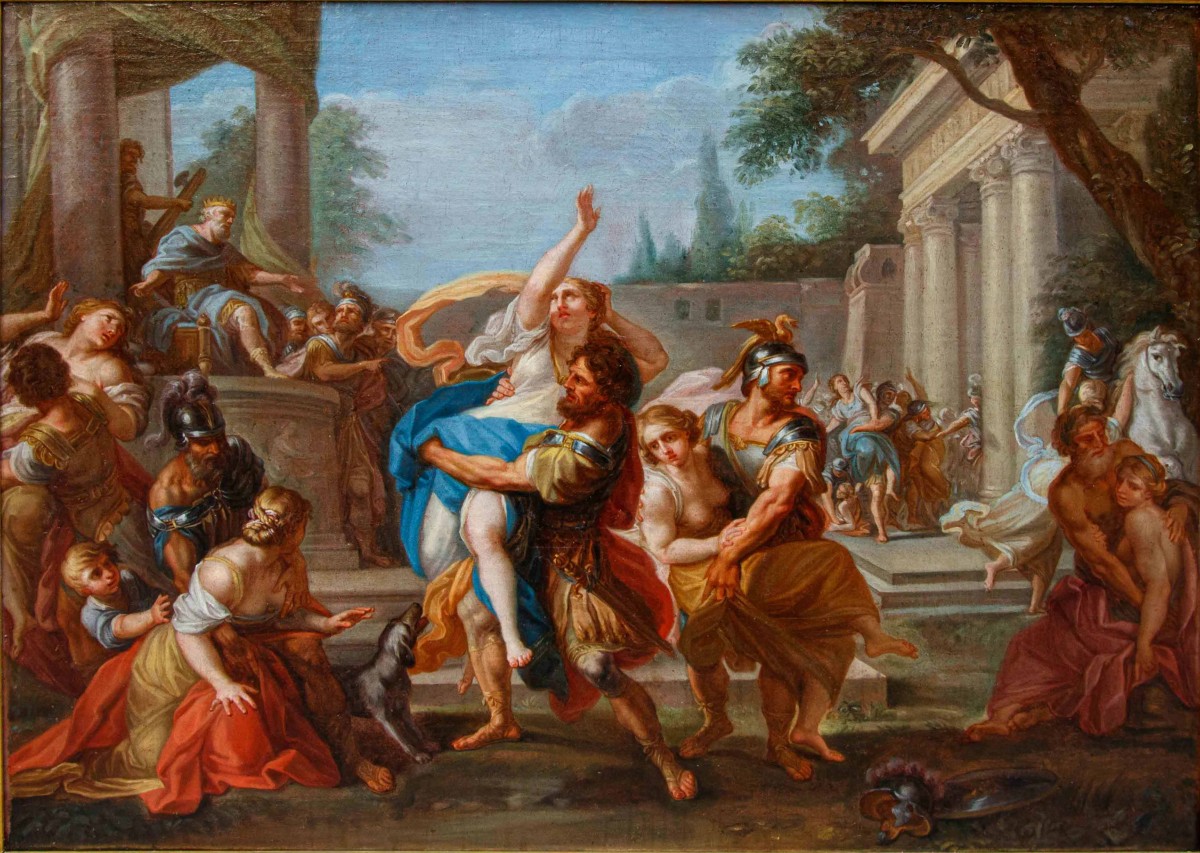
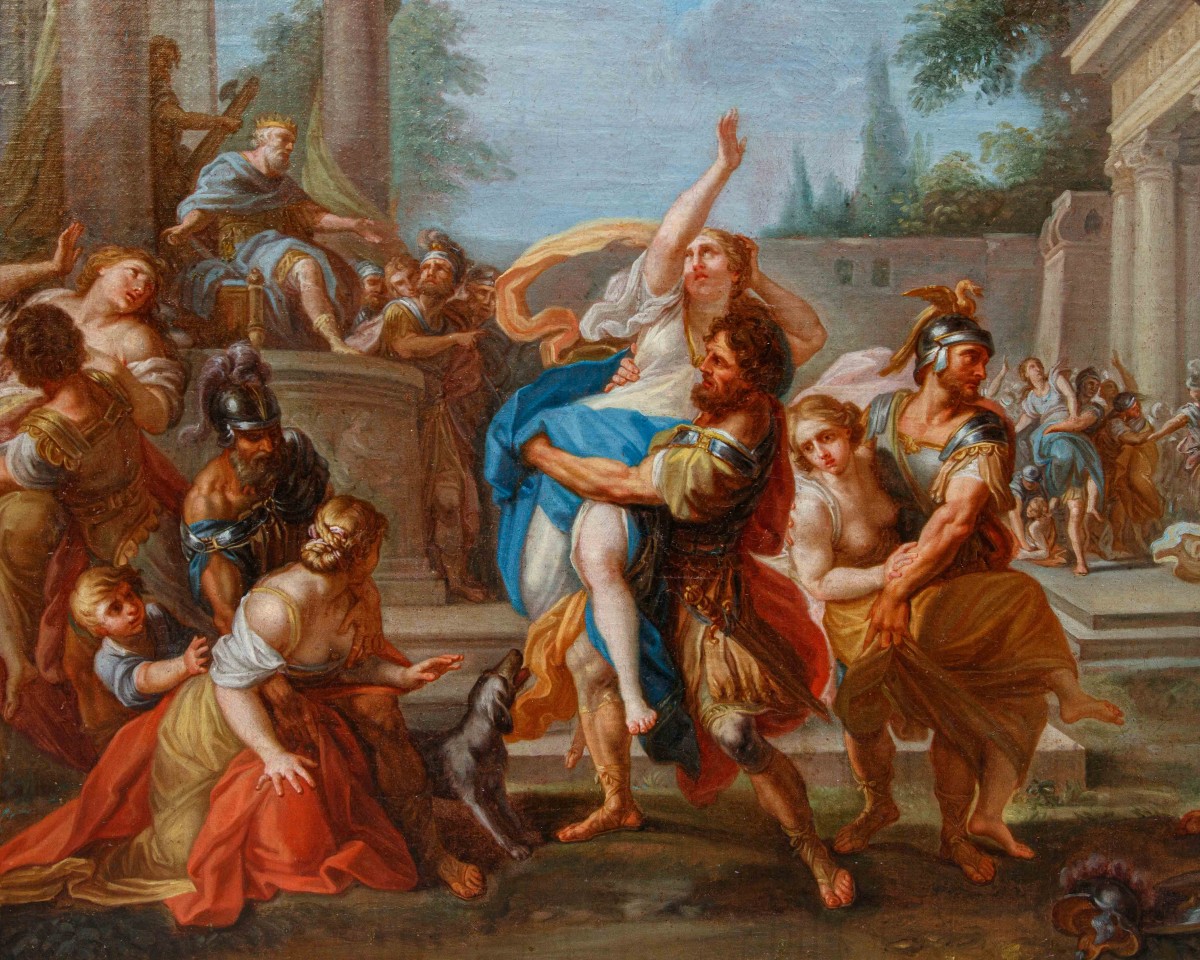
The Rape of the Sabine Women
Oil on canvas, 49.5 x 66.5 cm – framed, 65.5 x 82 cm
Provenance:
Sotheby's London, June 7, 1993, lot 256
Sotheby's London, April 20, 1994, lot 162
John Reid Collection, London
Christie’s London, December 18, 1998, lot 619
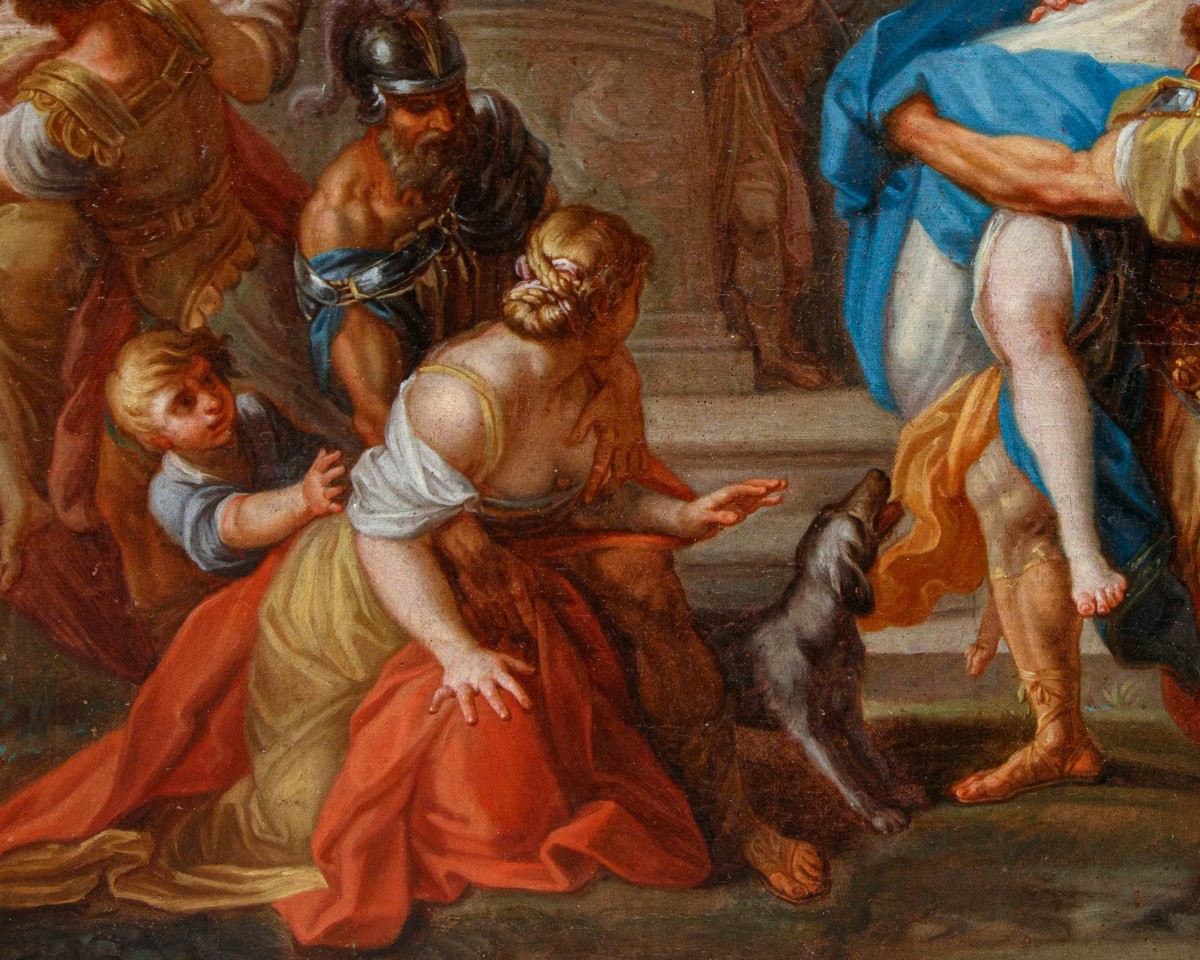
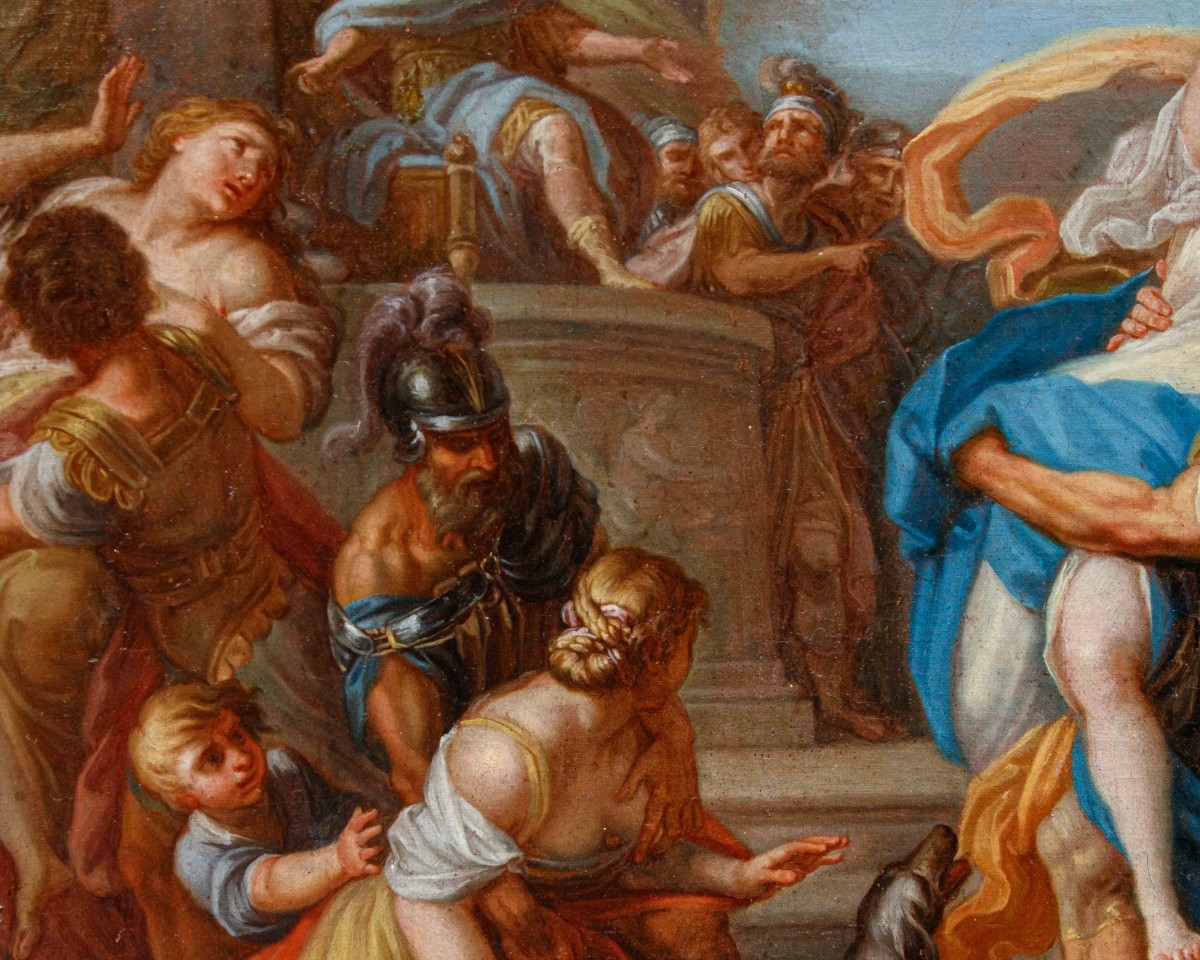
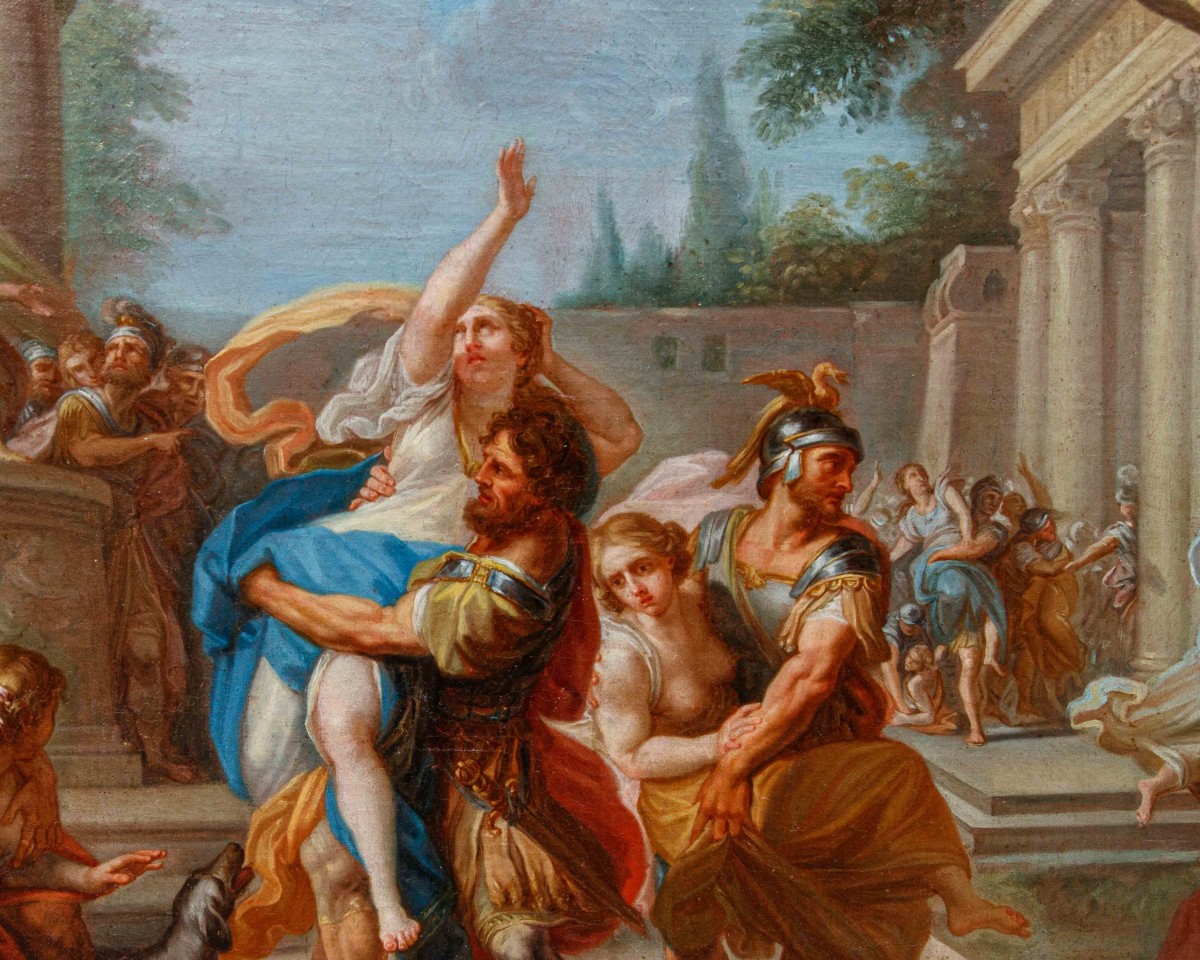
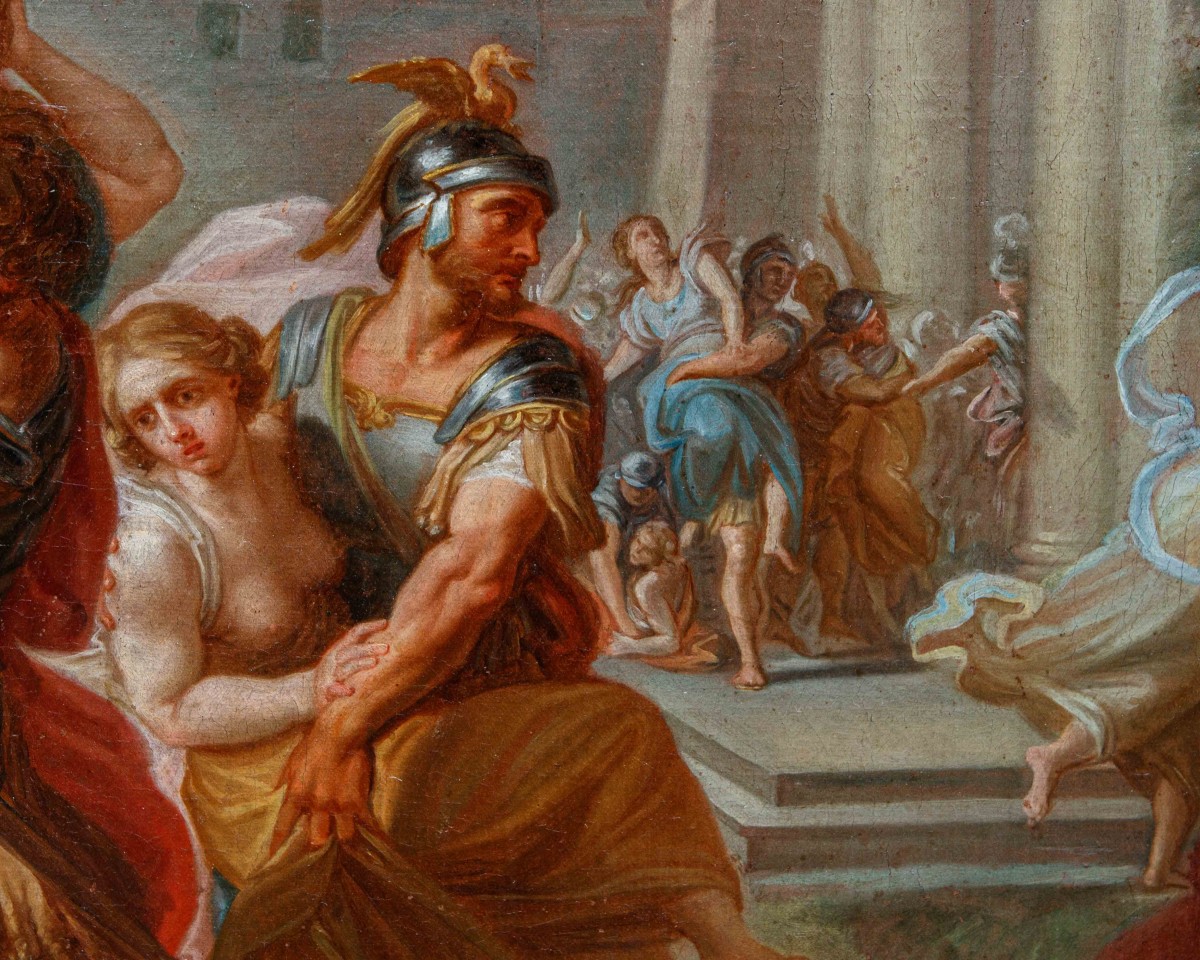
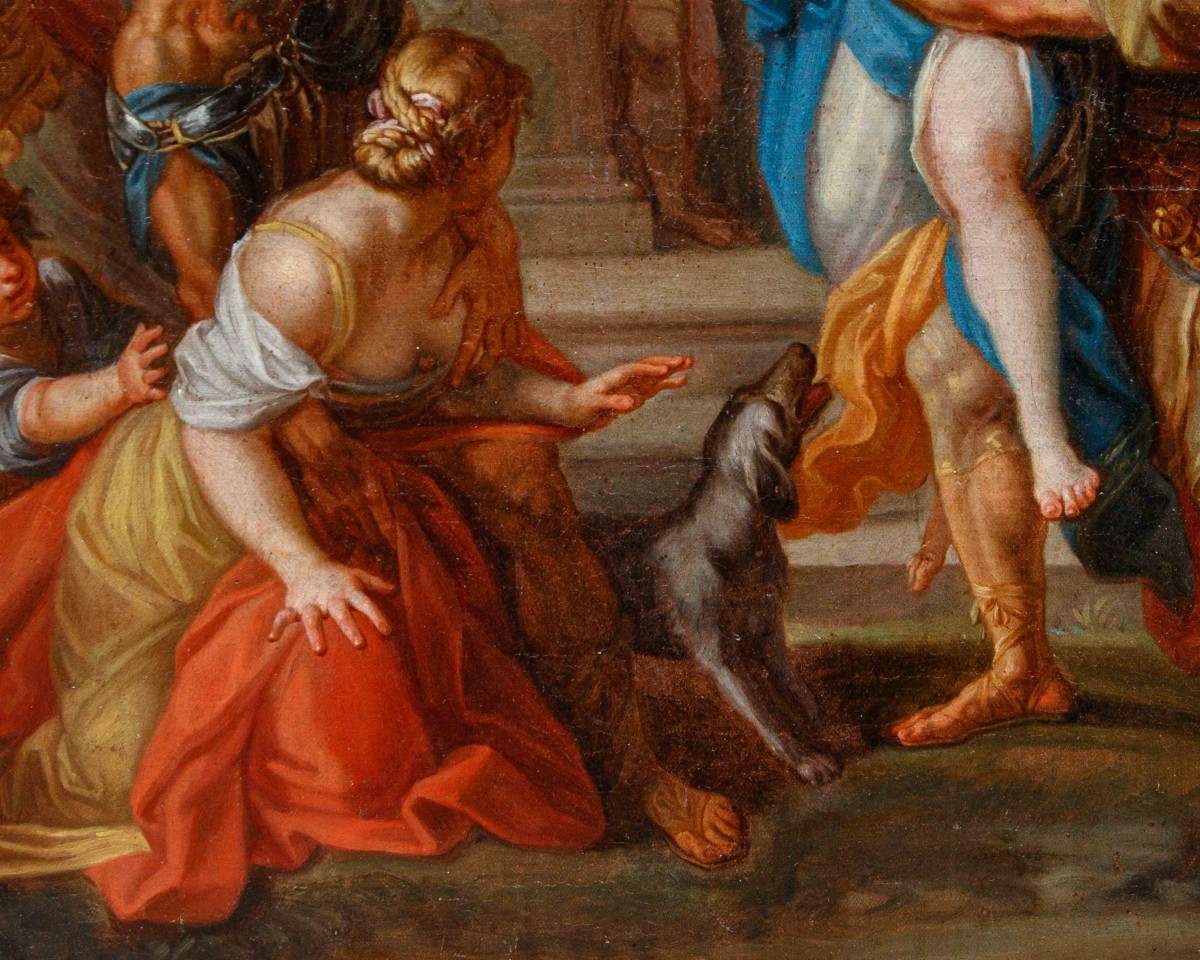
The painting depicts with intense dramatic agitation the famous episode of the Rape of the Sabine Women, the climax of Roman legend in which Romulus's soldiers abduct the young Sabine women during a festival to secure descendants for the newly founded city. At the center of the scene, a soldier lifts a young woman in his arms; her face is turned toward the sky and her right arm raised in a desperate gesture of plea, while surrounding figures in the background and at the sides struggle between flight and resignation in a swirl of bodies and drapery. On the left, seated upon a pedestal, King Romulus observes the scene with regal detachment while the turmoil unfolds around him. This version finds a direct comparison with another autograph canvas by Placido Costanzi of identical subject and composition, sold at Christie's in 2008: the two works share the same dimensions, scenic layout, arrangement of the main figures, and narrative dramatic intensity, confirming the existence of a recurring version of the theme in the artist's oeuvre, likely replicated to fulfill different commissions.
The composition appears to draw inspiration from Pietro da Cortona's celebrated Rape of the Sabine Women, now in the Capitoline Museums in Rome. From this landmark work, Costanzi borrows in particular the figure of the Sabine woman with her raised arm at the center of the scene—an iconographic motif that becomes the emotional and visual focal point of the entire composition. This element recalls the solemn Baroque theater of the 17th-century master, here filtered through a more fluid, 18th-century pictorial sensibility.
Placido Costanzi was born in Rome to Giovanni and Costanza Anguilla into a family of gem engravers, a craft also pursued by his brothers Tommaso and Carlo. He trained under Francesco Trevisani and subsequently Benedetto Luti, developing an elegant, luminous style close to that of his contemporary Sebastiano Conca. By 1724, he had already executed decorations (now lost) for Cardinals Alberoni and Acquaviva d'Aragona, and was active early in Tuscany while also sending works to Lima and France. He painted numerous altarpieces for Roman churches, including the Resurrection of Tabitha for Santa Maria degli Angeli e dei Martiri, as well as frescoes for San Gregorio al Celio, Santa Maria in Campo Marzio, and the church of San Pietro Apostolo in Castel San Pietro. From 1725 onward, he collaborated with Jan Frans van Bloemen, called Il Cavalier Orizzonte, providing figure staffage for his landscapes. He joined the Congregation of the Virtuosi al Pantheon and, in 1741, the Accademia di San Luca, where he served as Principe in 1758. He was highly regarded internationally, securing commissions from Spain, England, France, and Germany.
Costanzi was an artist capable of moving with remarkable agility across different genres, ranging from religious themes to historical and mythological subjects. He established himself within Roman Arcadian classicism with a distinct personal touch and an engaging handling, developing over time a balanced, elegant, and refined style. Notable among his mythological works are The Founding of the City of Alexandria, now at the Walters Art Museum in Baltimore, and The Triumph of Bacchus and Ariadne, preserved at Palazzo Labia in Venice—testaments to his ability to combine historical narrative, mythological invention, and compositional sophistication, qualities fully evident in the present painting.
Delevery information :
Les frais d'expédition seront calculés au moment de la commande en fonction de la destination, des dimensions et du poids du tableau, ainsi que de l'assurance couvrant la valeur totale de l'œuvre.
For paintings purchased from abroad: following payment, the application process to obtain the export license (ALC - Attestato di Libera Circolazione) will be initiated. All antiques shipped abroad from Italy require this document, which is issued by the Ministry of Cultural Heritage. The procedure may take 3 to 5 weeks from the date of request; therefore, the painting will be shipped as soon as the document is obtained