Offered by Antichità Castelbarco

Circle of Johann Carl Loth (Munich, 1632 – Venice, 1698)
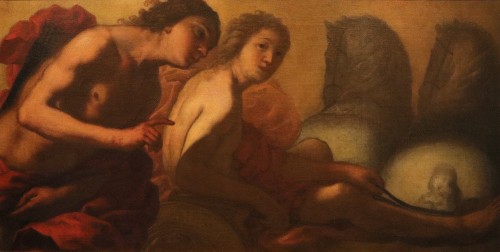
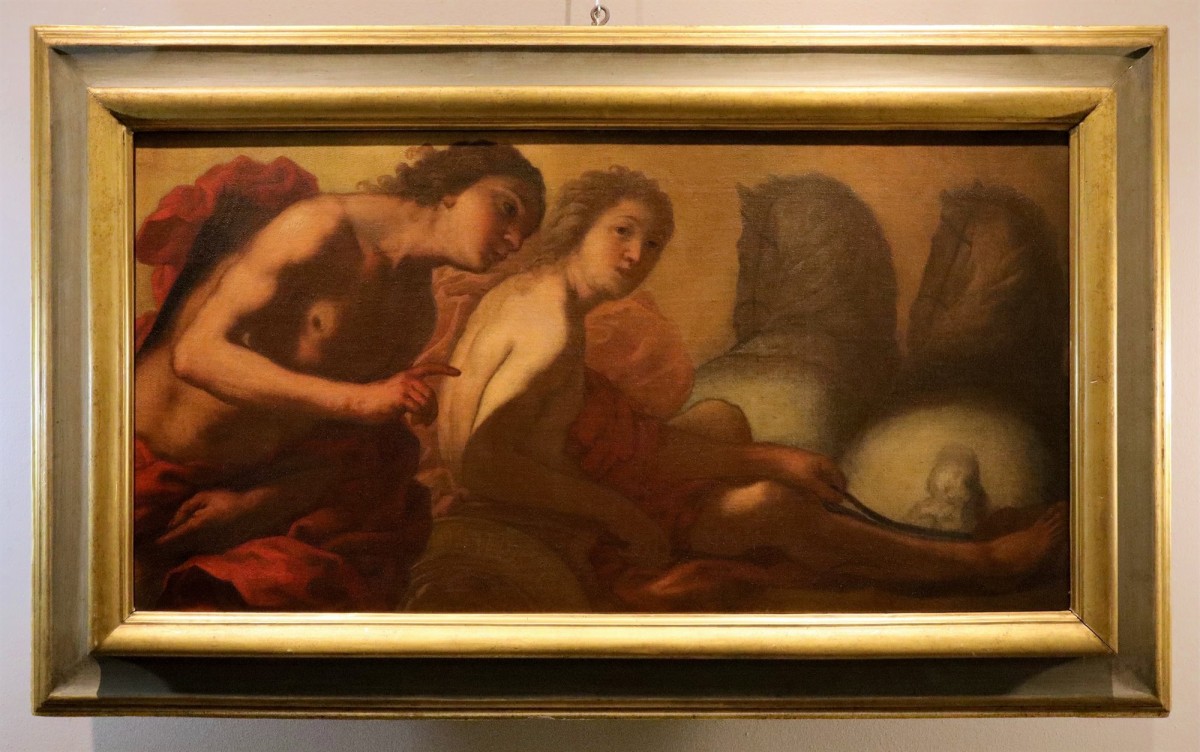
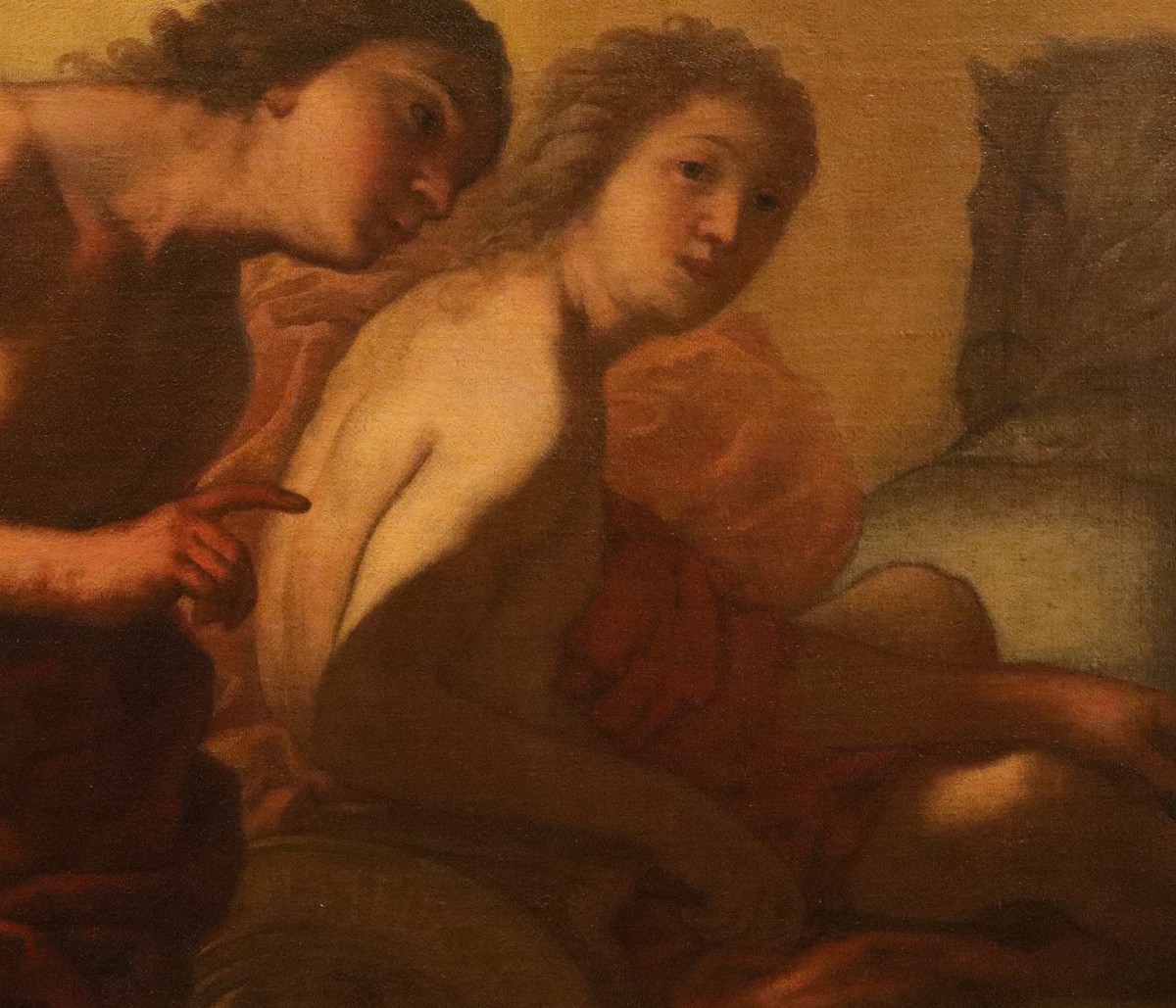
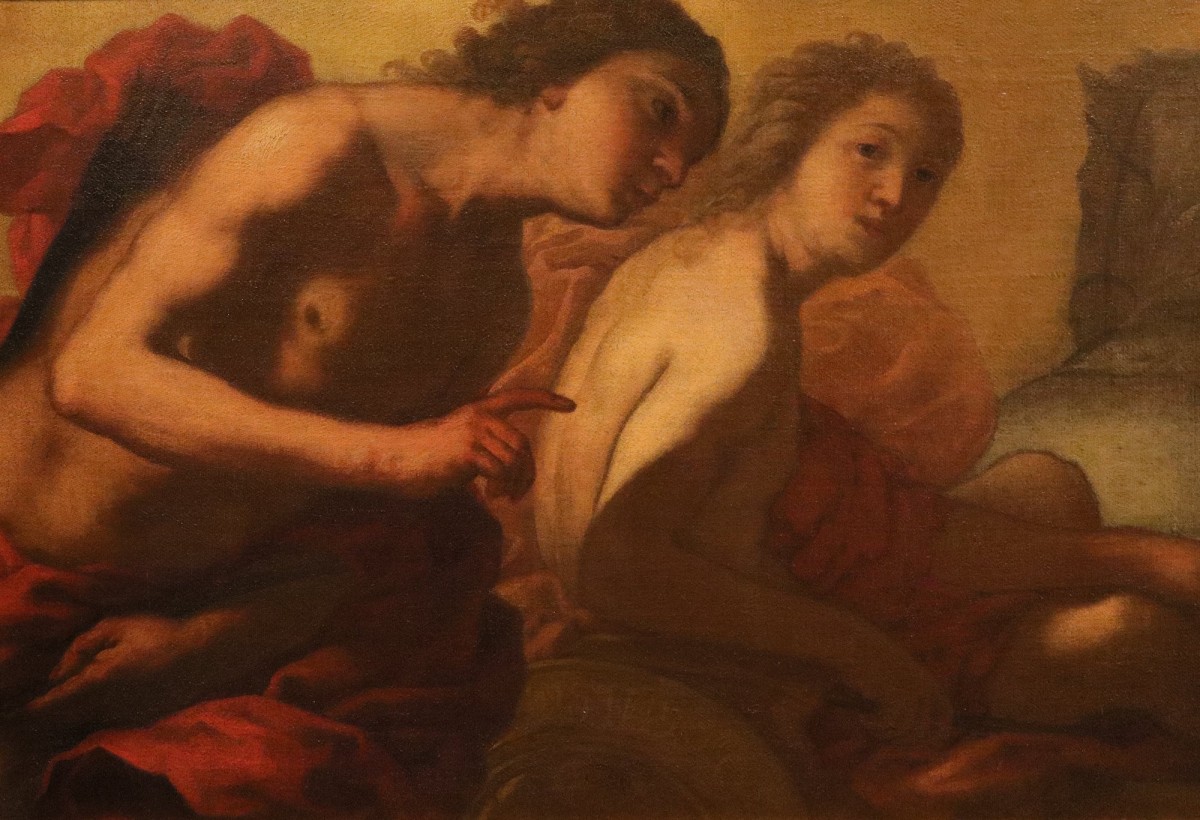
The myth of Apollo and Phaeton on the Sun Chariot
Oil on canvas 64 x 126 cm. Framed: 92 x 154 cm.
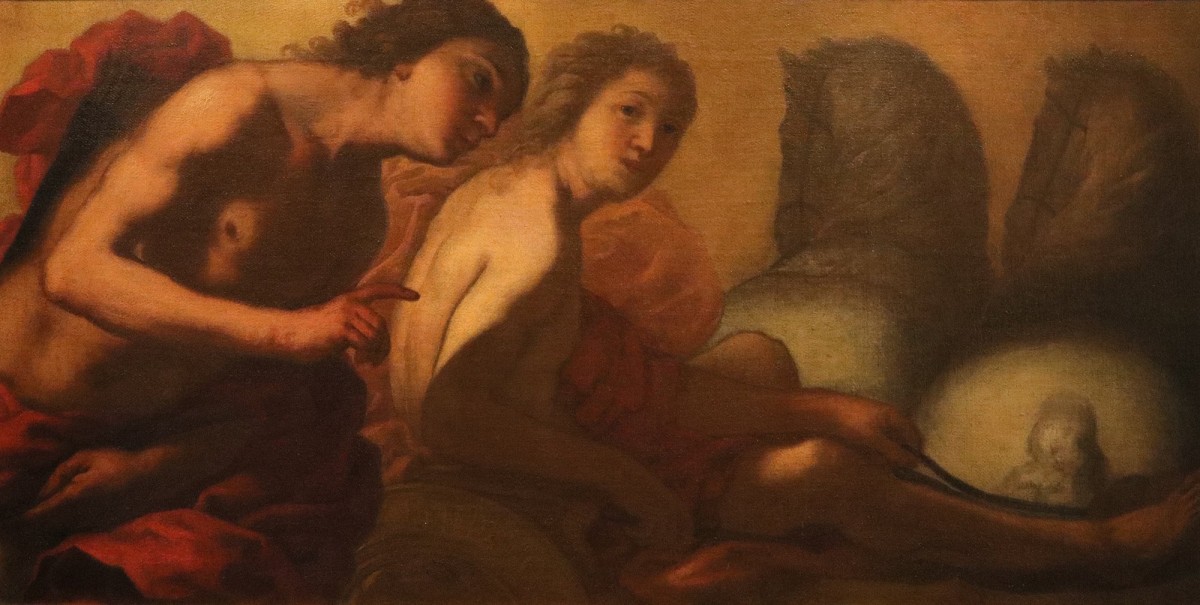
The painting depicts the famous mythological episode, recounted by Ovid in *Metamorphoses* (Book II), featuring Apollo, god of the Sun, and his young son Phaeton, who, eager to prove his divine lineage, implores his father to allow him to drive his legendary sun chariot for just one day.
Despite his father’s fears, Apollo eventually relented, setting in motion a fatal venture: reckless and inexperienced in handling the reins and keeping the horses in check, Phaeton lost control and the chariot came too close to the Earth, threatening to scorch it with excessive heat.
Thus, to save the Earth and avert its destruction, Zeus was forced to intervene, striking the chariot with a fatal thunderbolt and causing the young man to fall to his doom.
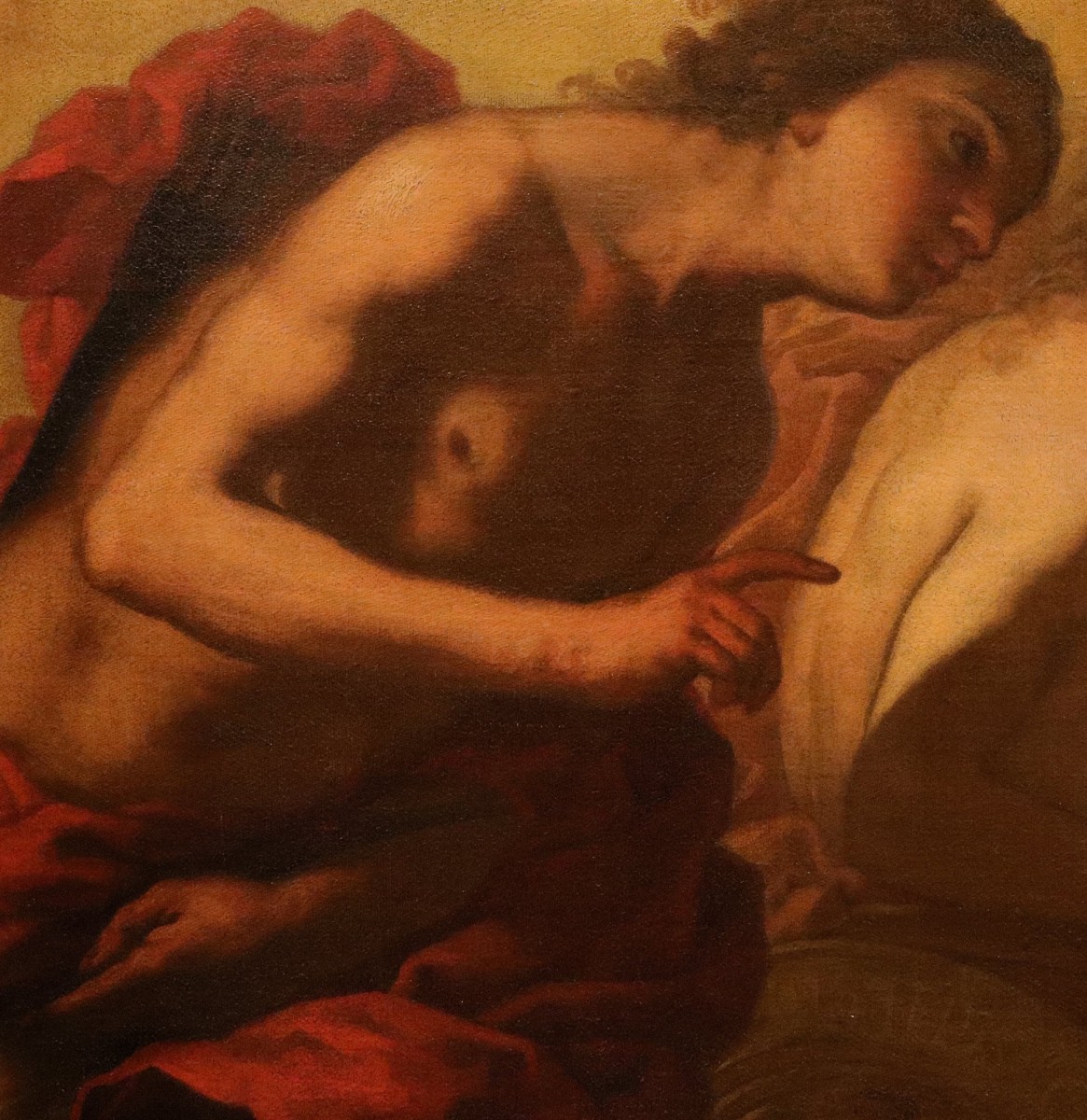
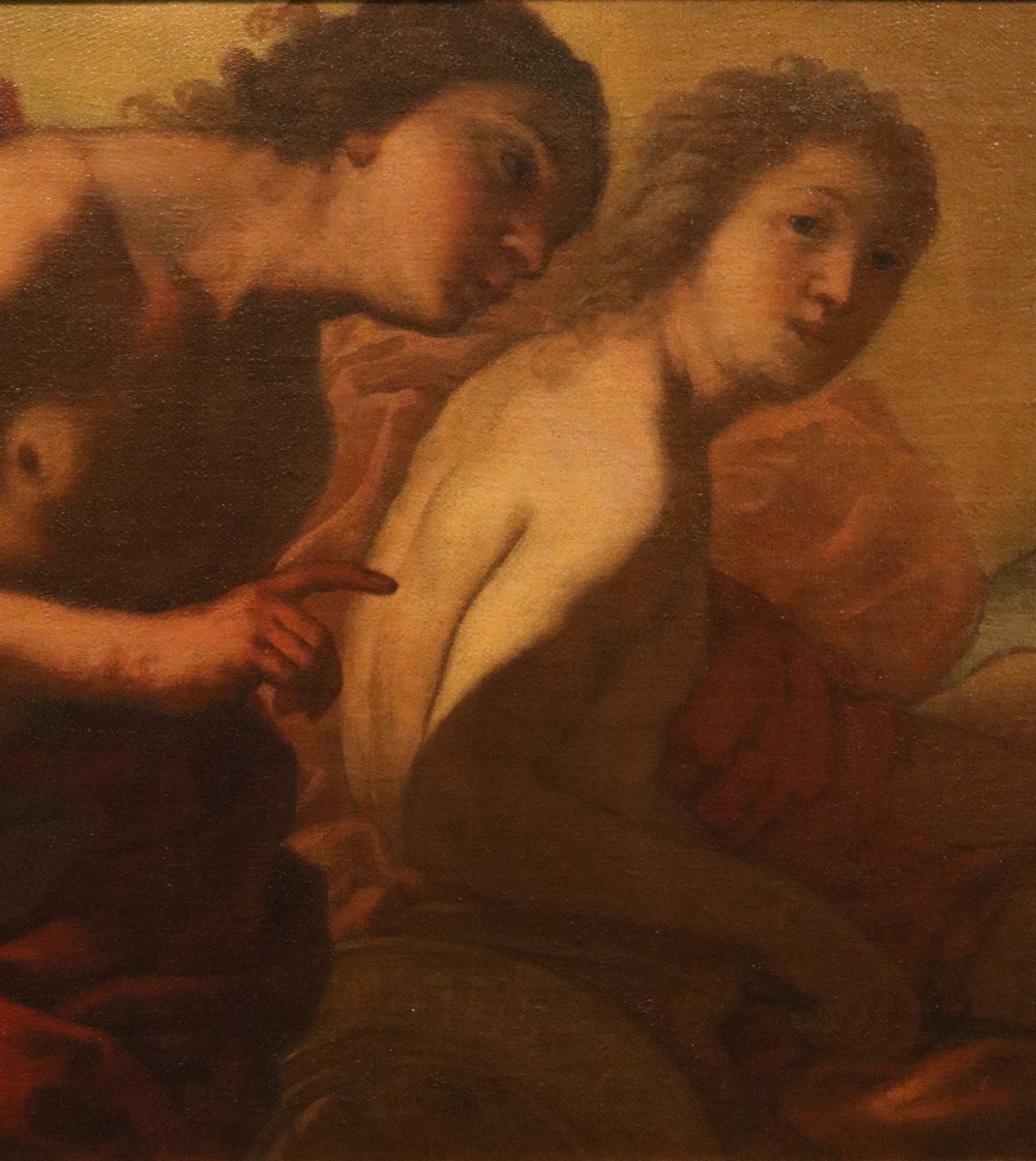
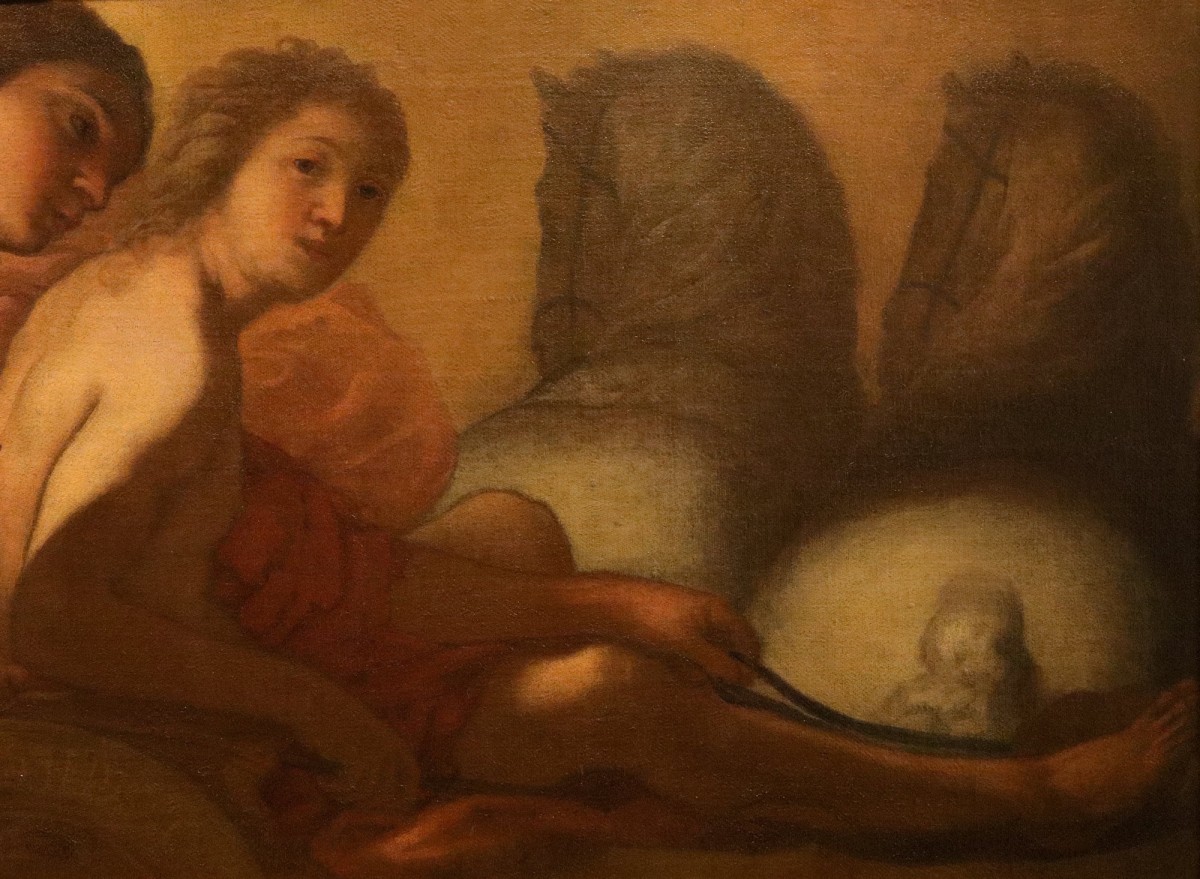
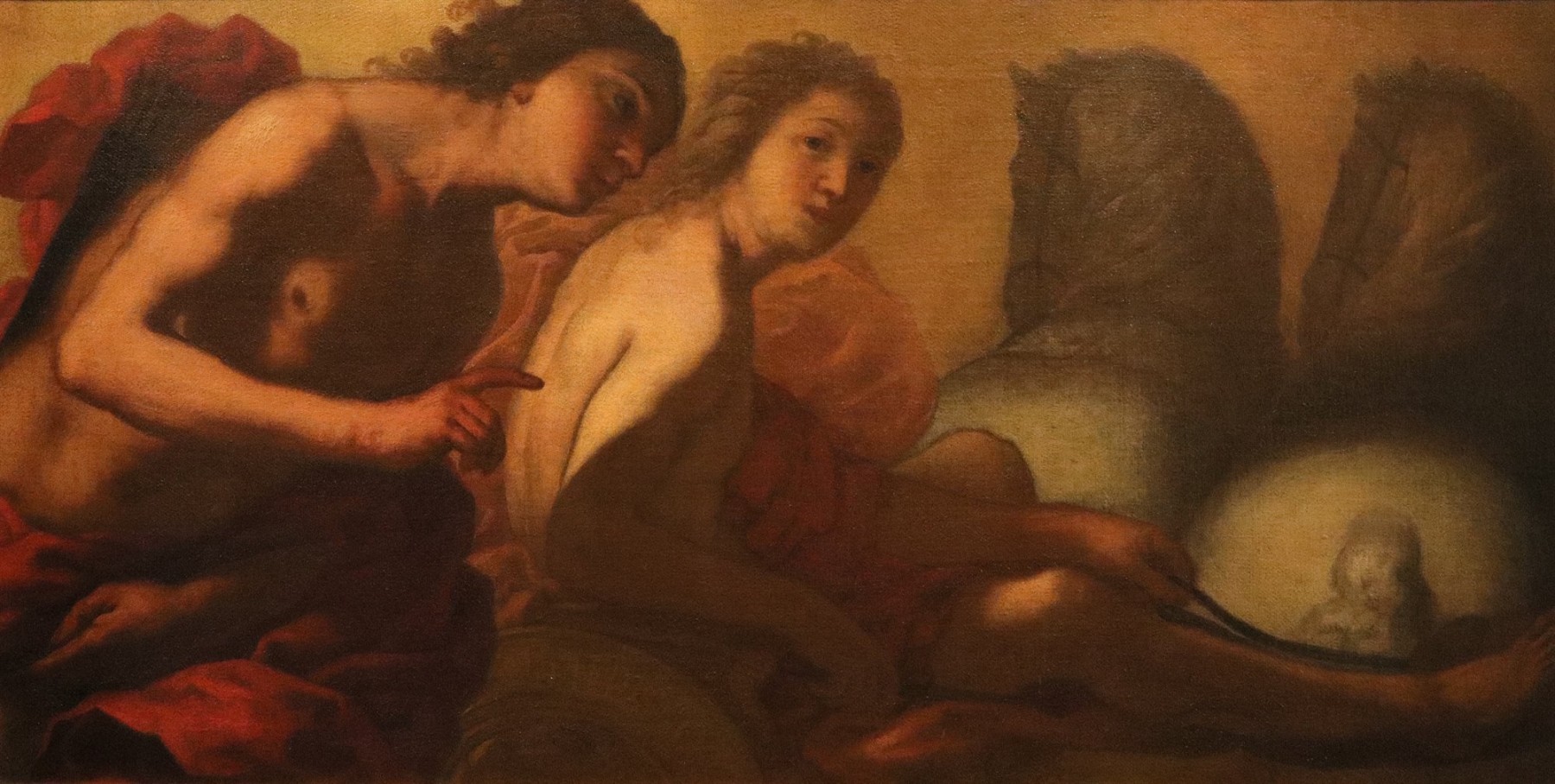
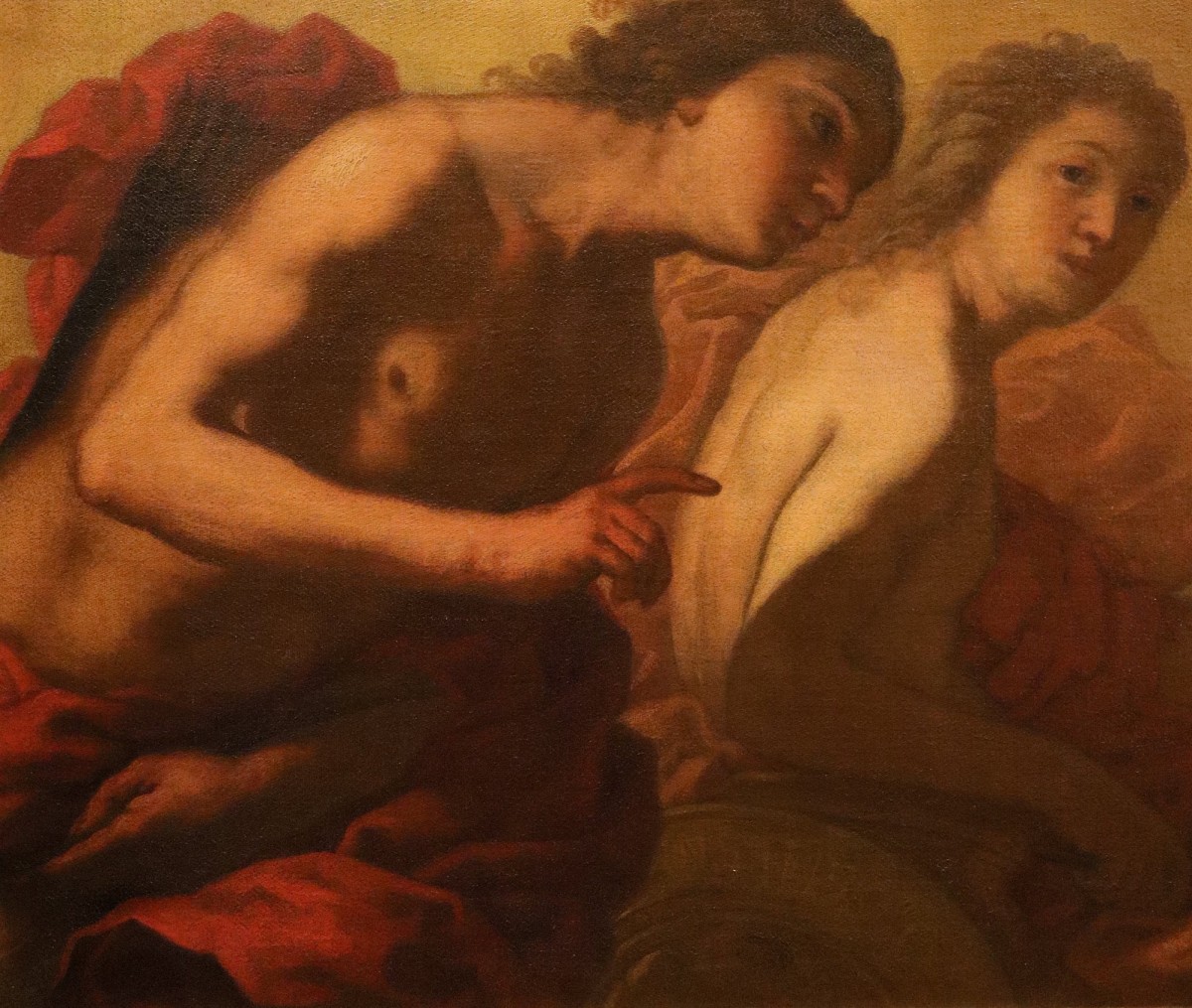
Our artist has perfectly captured the moment preceding this conclusion, rendering the scene with great theatrical intensity: on the left stands the authoritative figure of Apollo, draped in a vibrant red cloak, who, with a warning gesture of his hand, imparts his final instructions to the young man eager to drive the chariot, whose reins he already holds.
Finally, on the right, the silhouettes of the mighty divine steeds emerge from the shadows, bathed in a radiant, golden atmosphere typical of solar iconography, ready to spring into action to pull the chariot across the celestial vault.
The painting, with its highly theatrical and expressive atmosphere, can be attributed to the Venetian school of the 17th and 18th centuries, reflecting in particular the naturalistic style introduced by Johann Carl Loth (1632–1698) in Venice during the second half of the 17th century.
The artist, who trained in Rome and worked in Venice, founded a thriving workshop that profoundly influenced the next generation of Venetian painters.
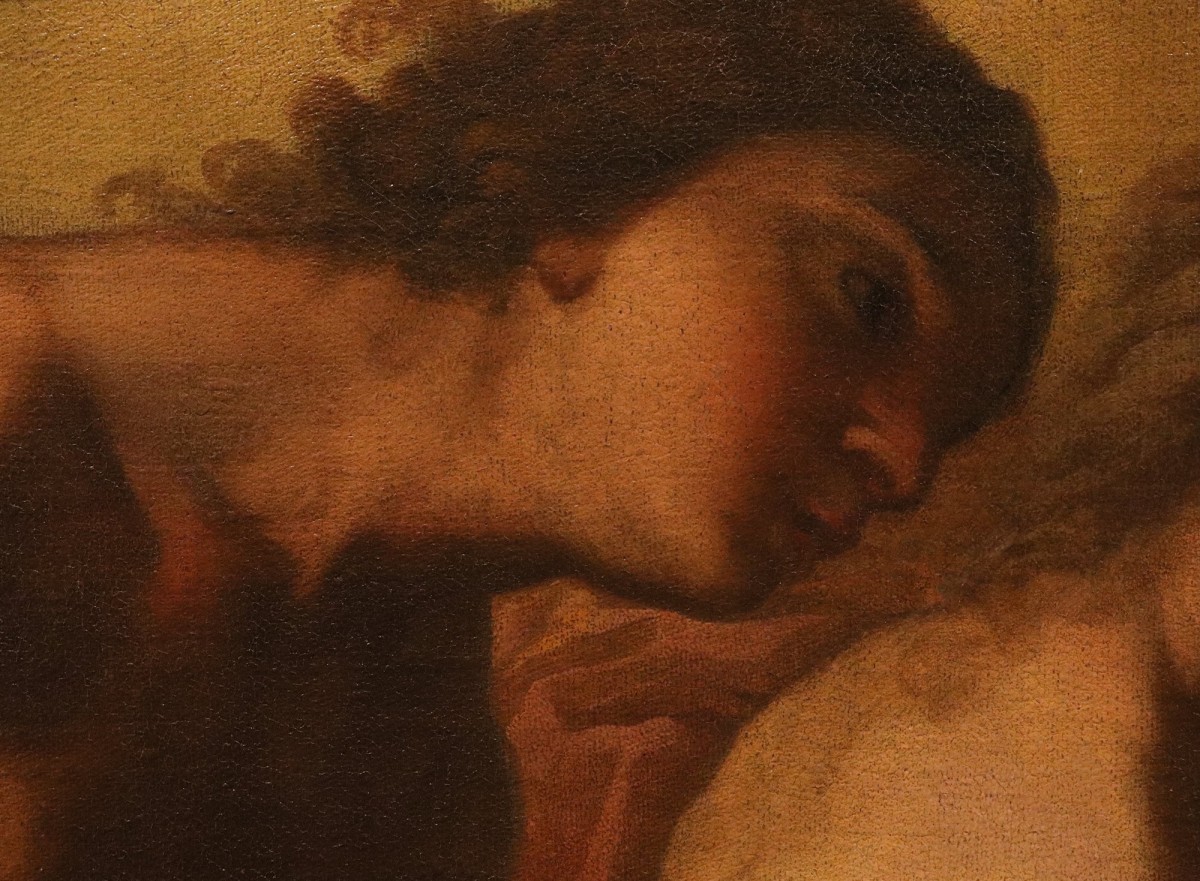
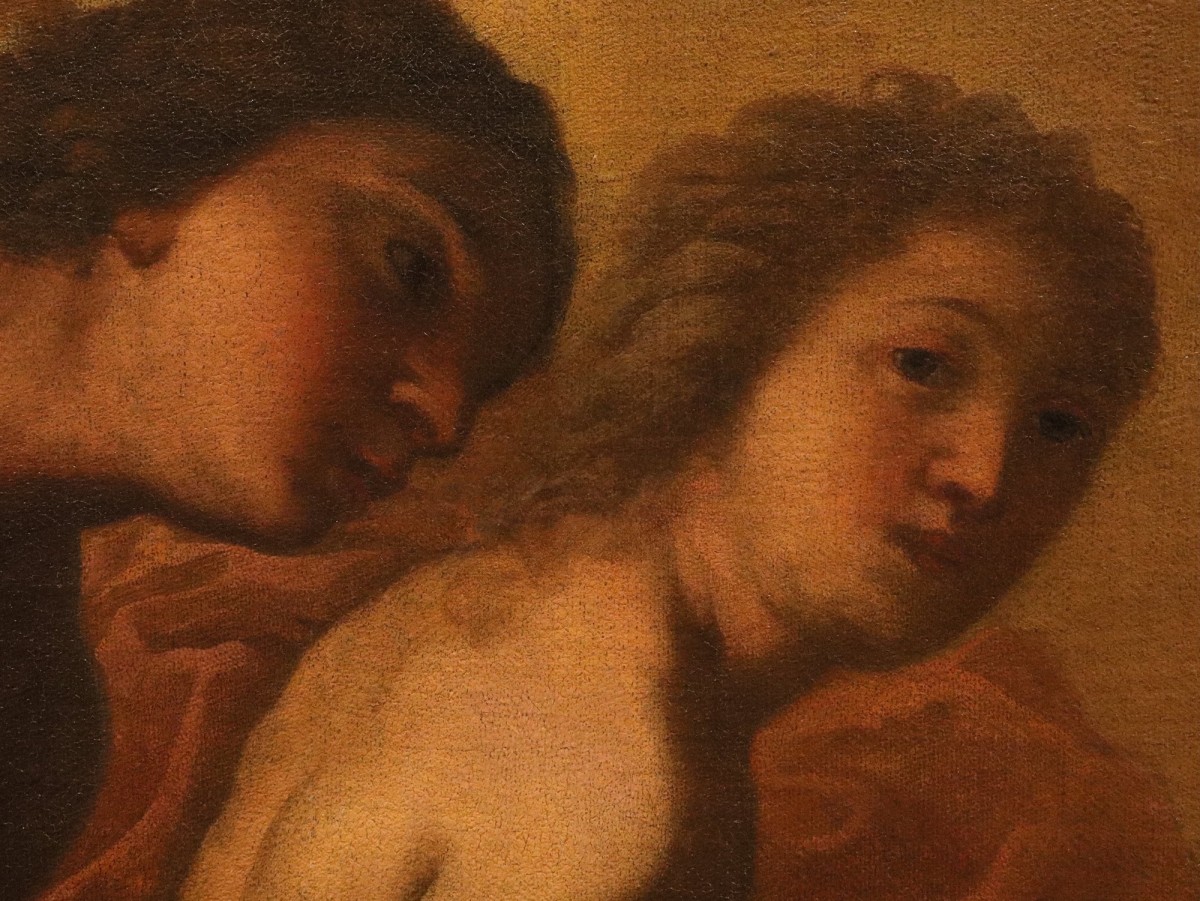
The soft rendering of the flesh tones, the colour palette playing on warm earth tones, ochre and lacquer red, together with the style of the faces, suggest the hand of a painter active within the master’s circle or workshop – a training ground for numerous Italian and Northern European artists, including Daniel Seiter, Antonio Zanchi and Johann Michael Rottmayr.
Another characteristic of the painter is the anatomical rendering of the figures: in this case, Apollo, with his muscular arm, reflects the Loth workshop’s preference for masculine and expressive nudes, with a strong sense of form, just as the C-shaped composition of the figure, turned towards the right, recurs frequently in his works.
It is possible to compare these elements of the painting in question with some of his male figures, characterised by a curved posture and an arched back, to note the clear similarities with the painter’s works [1].
Finally, an interesting detail: inside the wheel of the chariot there is a barely legible inscription, which appears to show the letters “..med..”: one hypothesis is that this may refer to a moral admonition, and in particular to the famous verse “Medio tutissimus ibis” (“You will be safest in the middle”), spoken by Apollo himself to Phaeton, advising him not to fly too high, lest he burn the heavenly abodes of the gods, nor too low, lest he incinerate the Earth.
The phrase expresses the classical ideal, also taken up by Aristotle, according to which wisdom and balance are always found in moderation, avoiding all excess.
Delevery information :
We take care of and organise the transport of the purchased works, both for Italy and abroad, through professional and insured carriers.
We take great care We personally take care of the packaging, to which we devote a great deal of care: each work is carefully packed, first with arti- cle material, then with a custom-made wooden box.
Should you have the desire to see this or other works in person, we would be happy to welcome you to our gallery in Riva del Garda, Viale Giuseppe Canella 18, we are always open by appointment only.