Offered by Galerie PhC

European paintings from the 17th, 18th and 19th centuries.
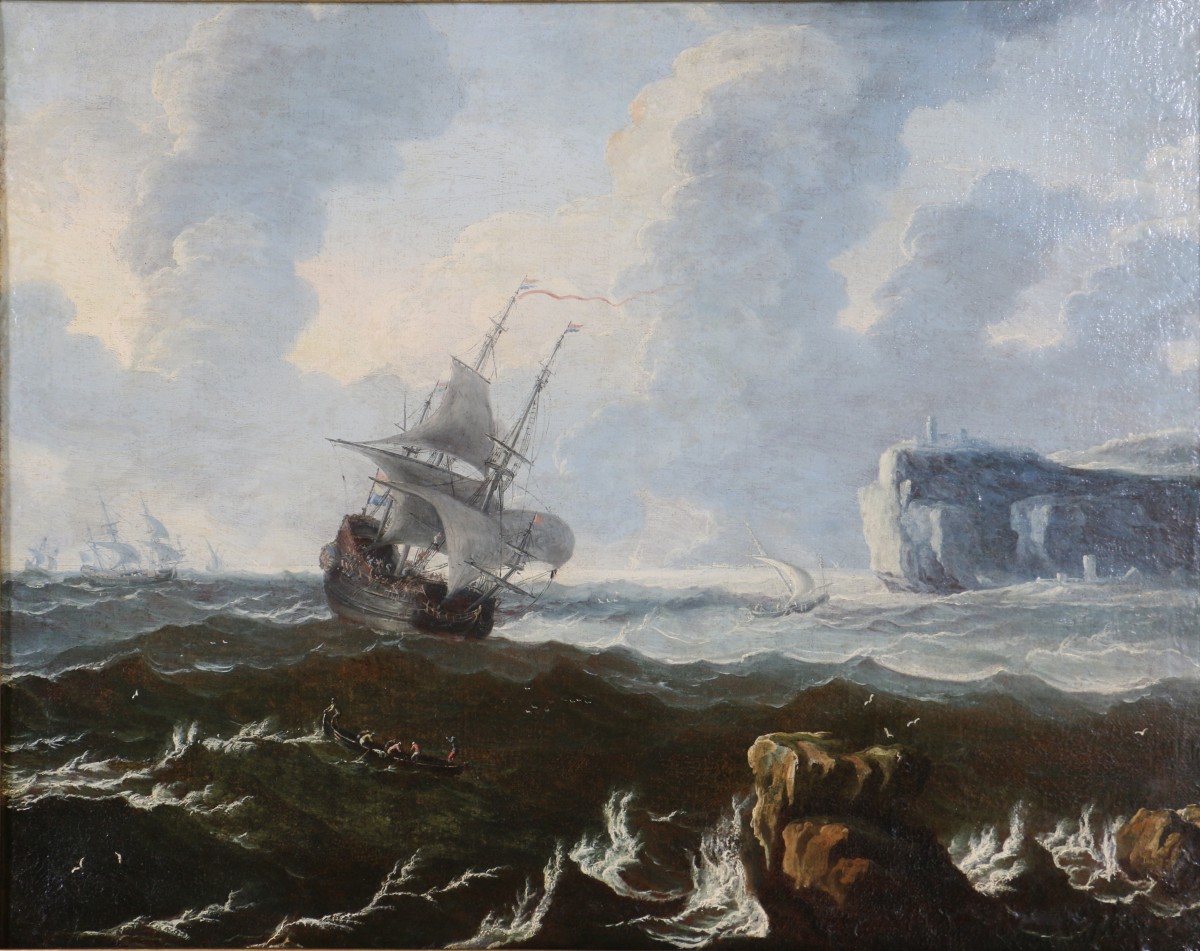
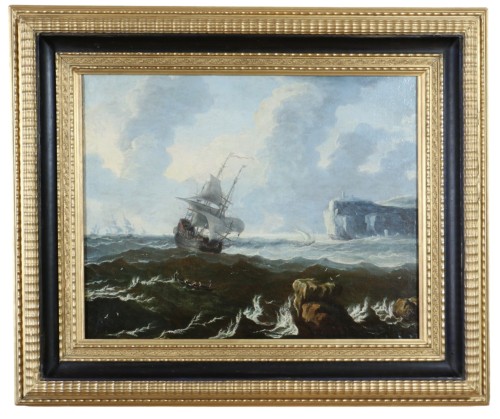
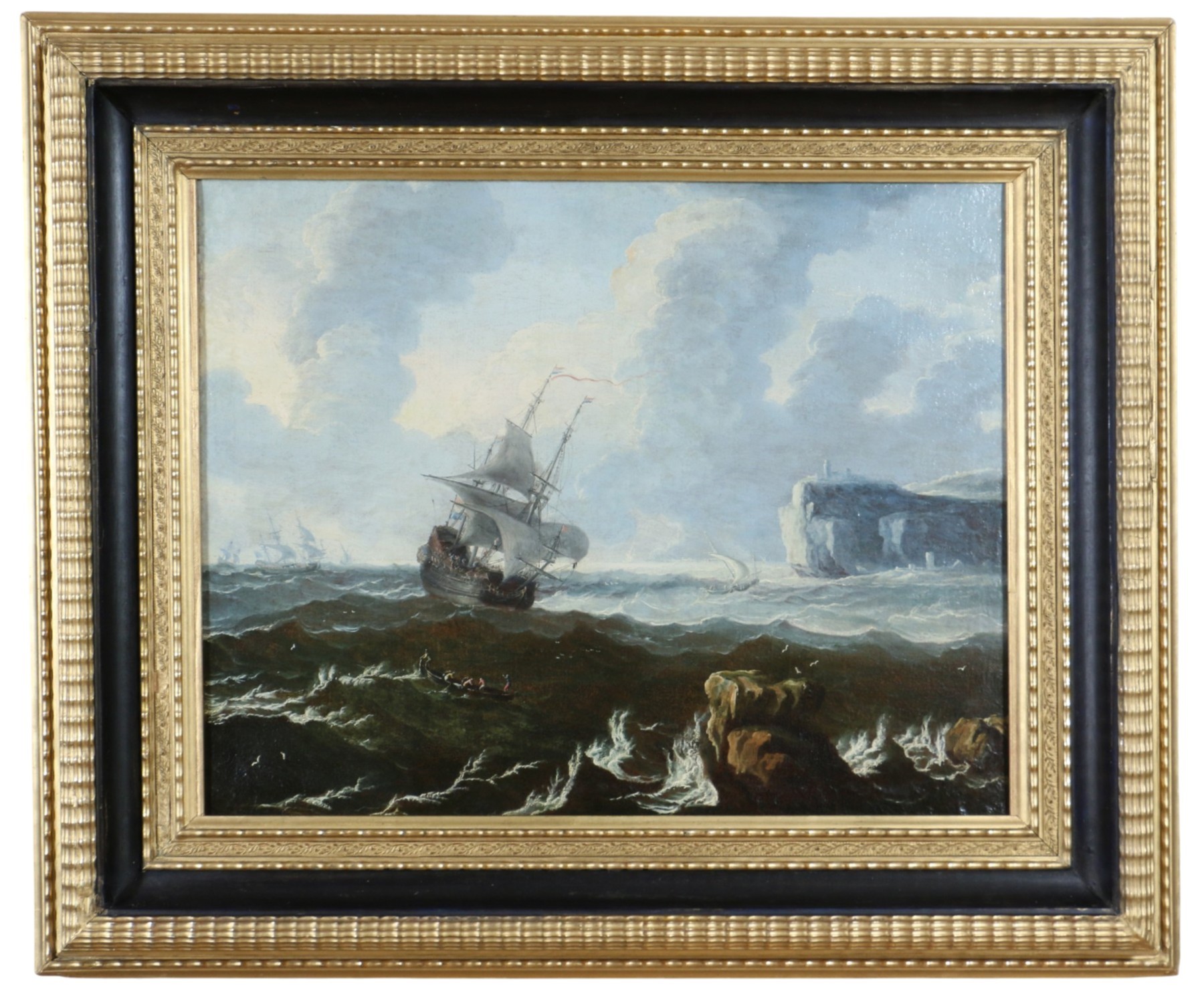
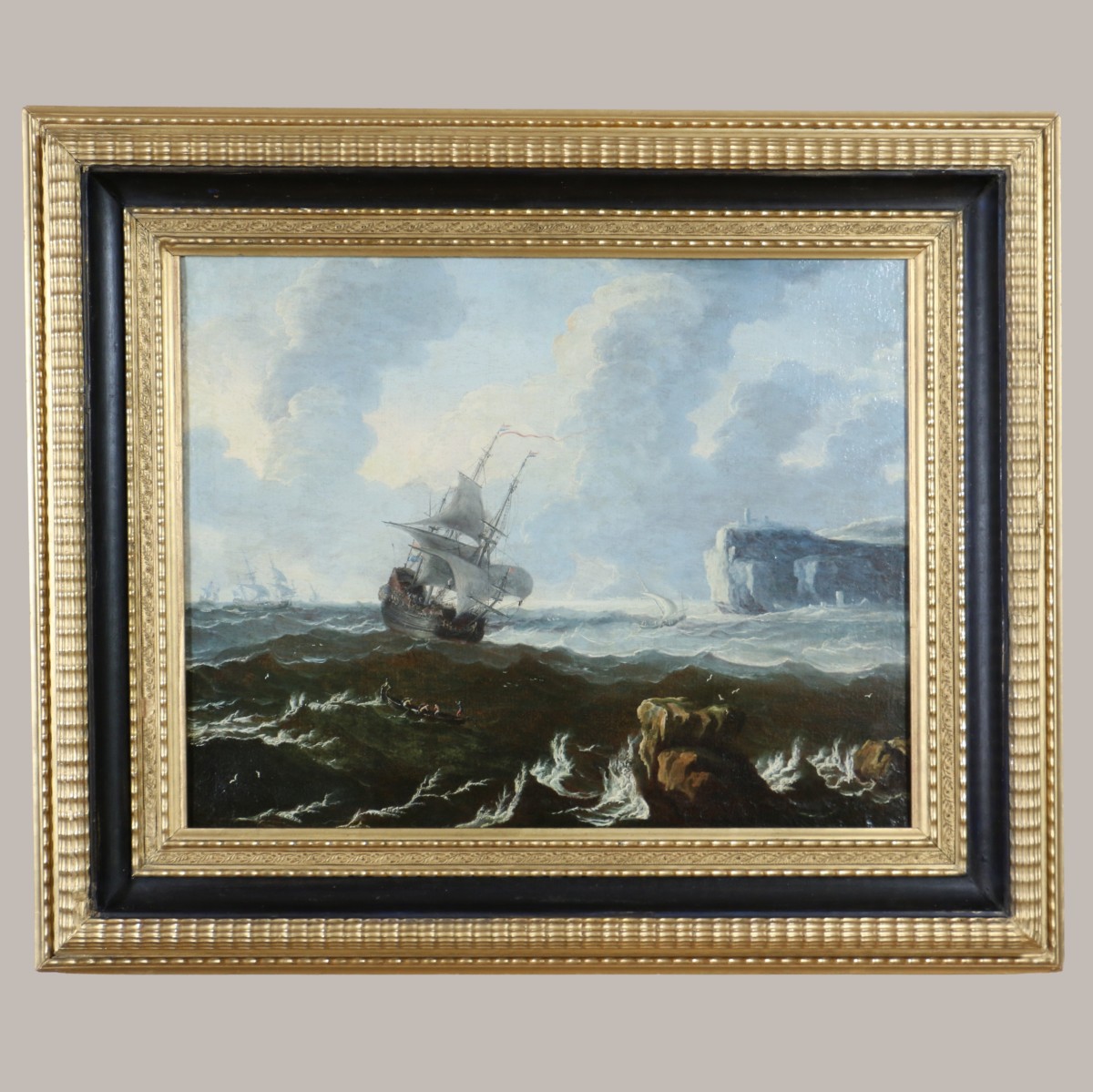
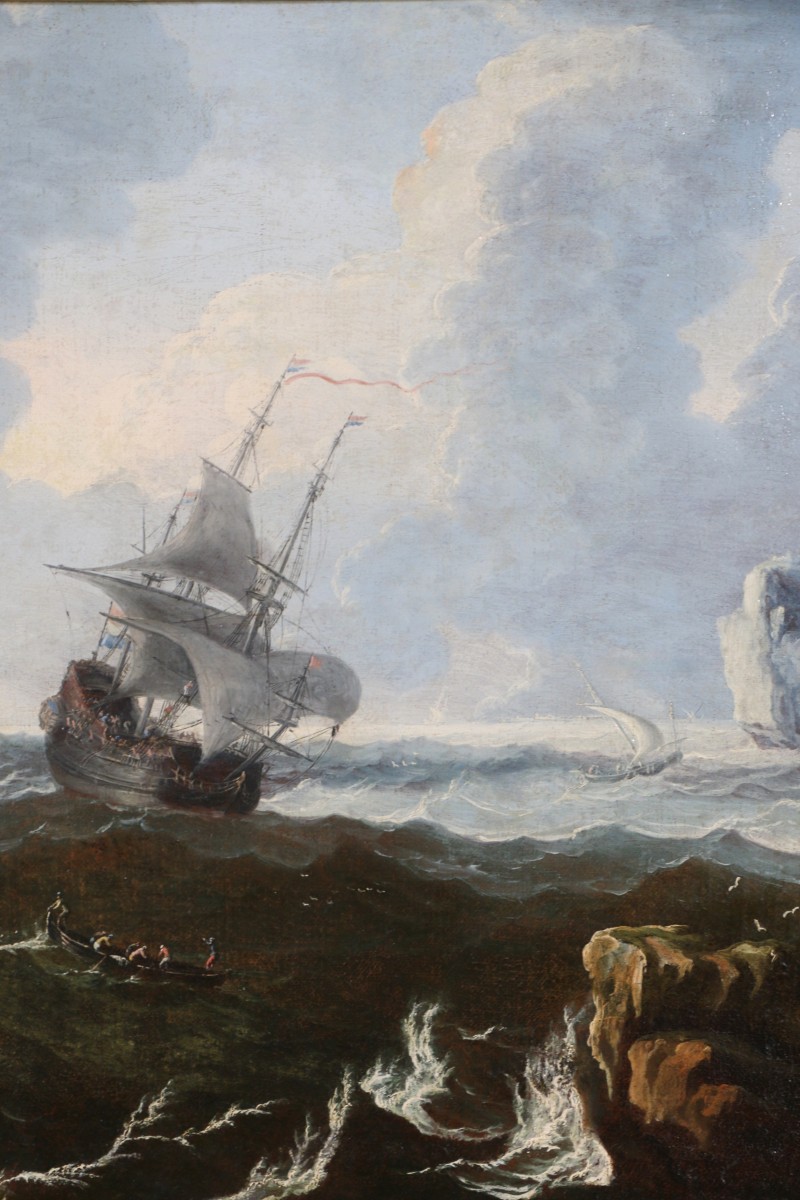
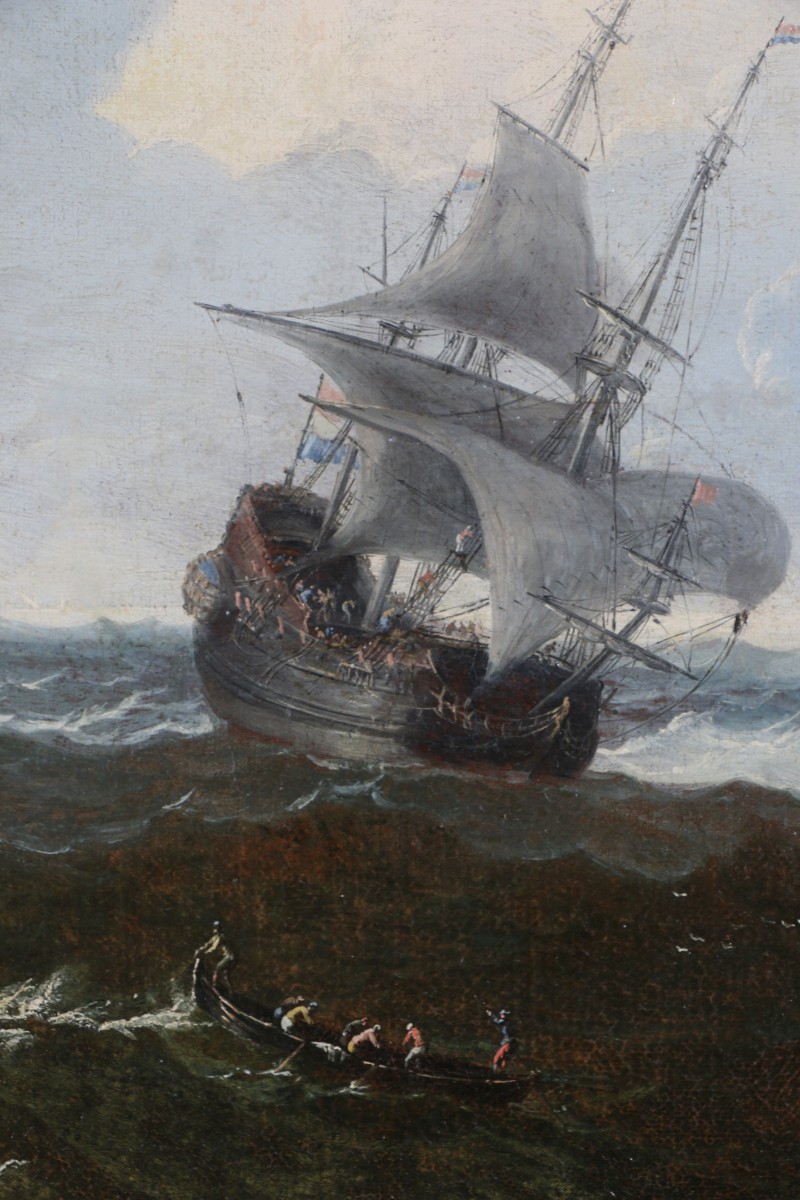
Attributed to Bonaventura Peeters the Elder (1614–1652). Seascape in rough weather, with ships off a rocky coast, c. 1640/1650.
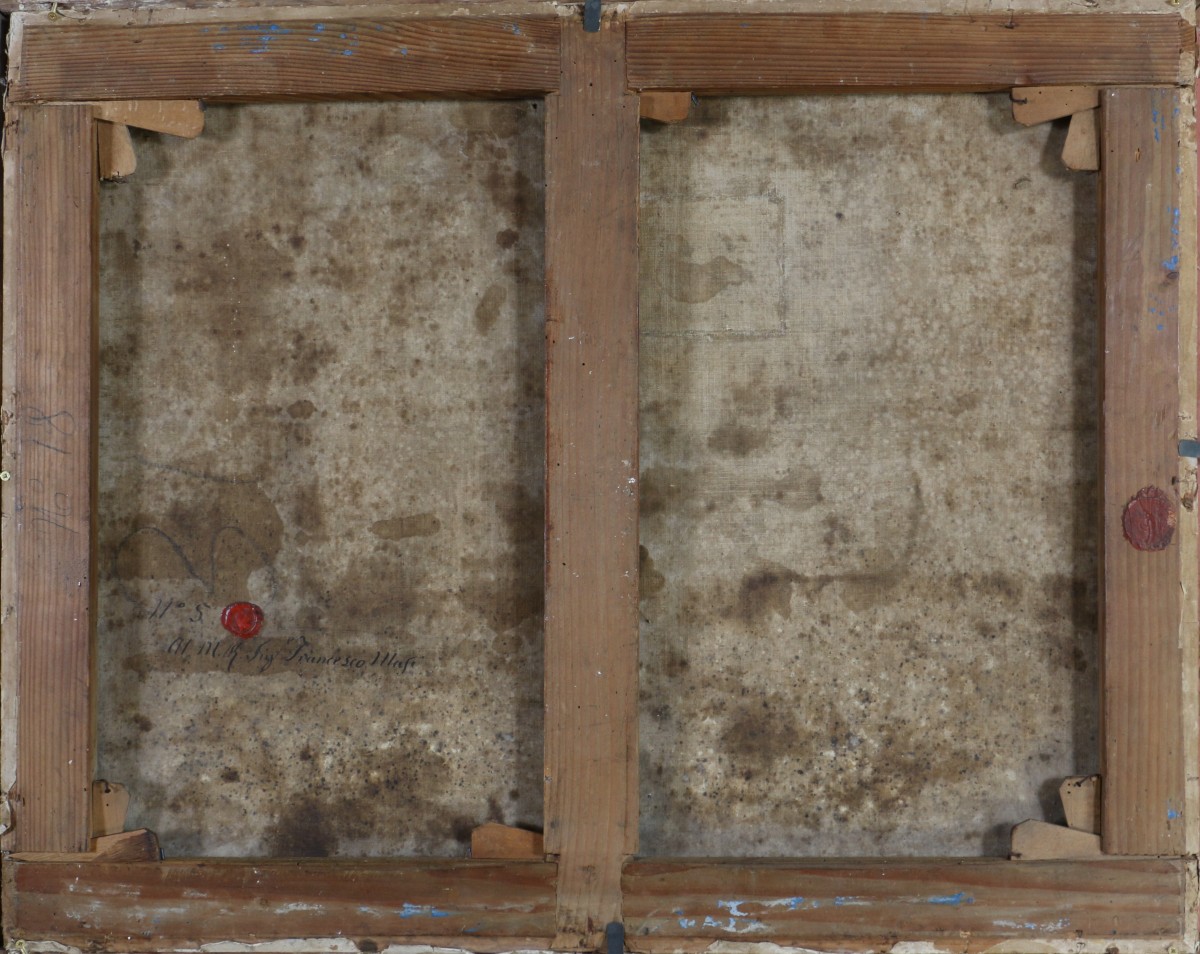
Oil on relined canvas, 73 × 58.5 cm.
Large frame measuring 102 cm by 86 cm.
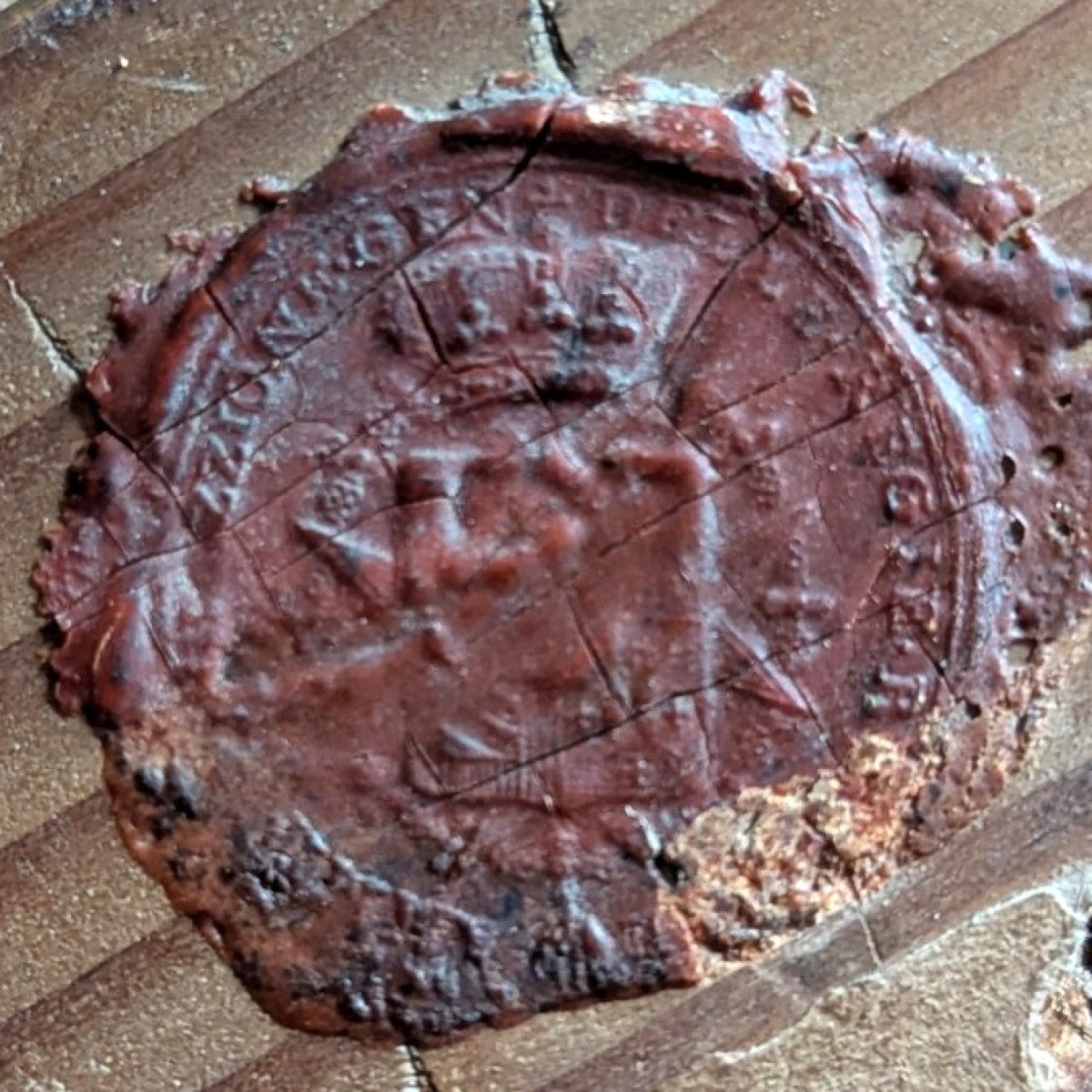
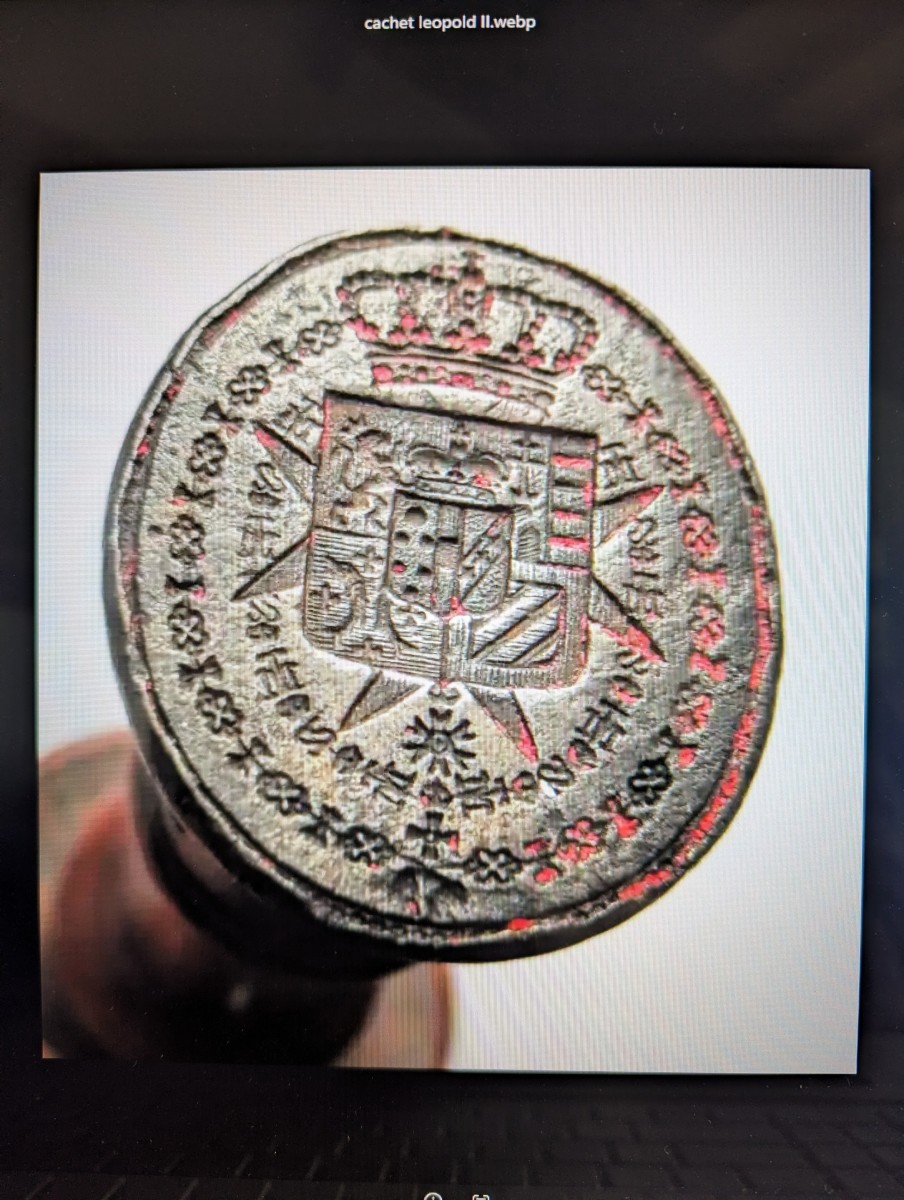
Features a collector’s stamp bearing the coat of arms of Grand Duke Leopold II of Habsburg-Tuscany (born October 3, 1797, in Florence; died January 29, 1870, in Rome).
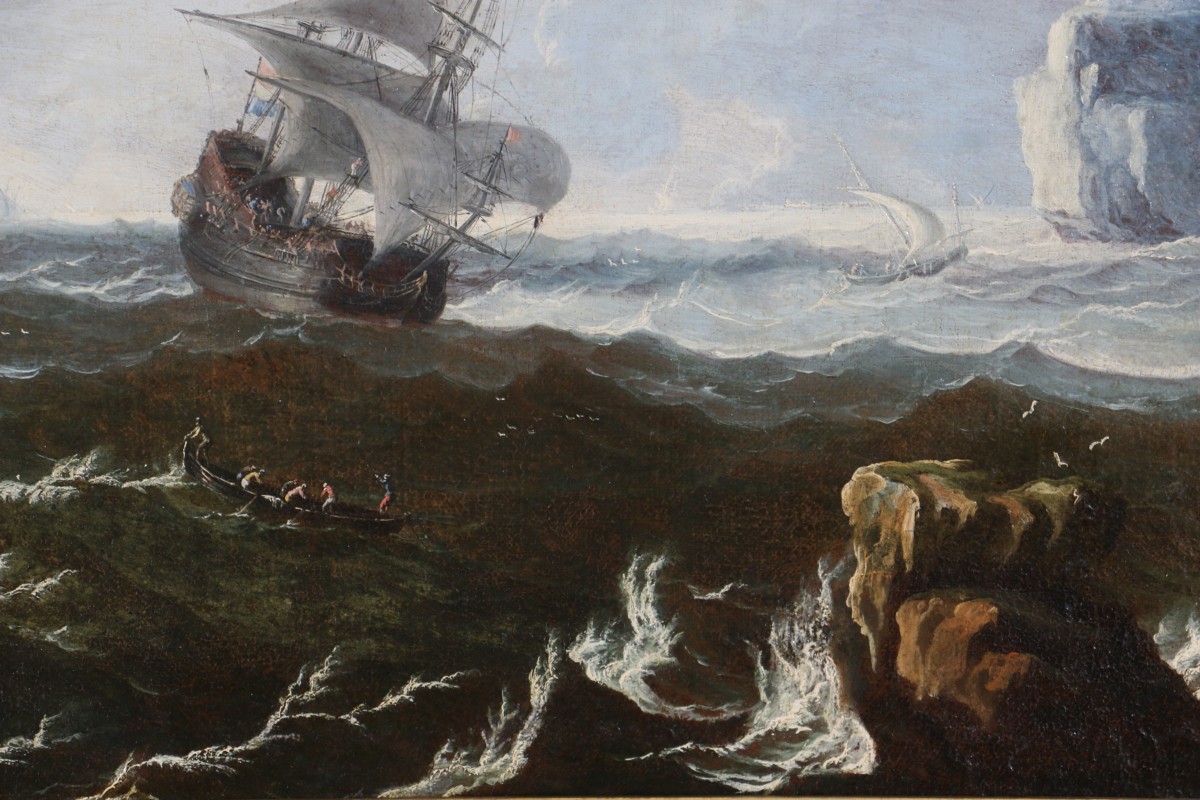
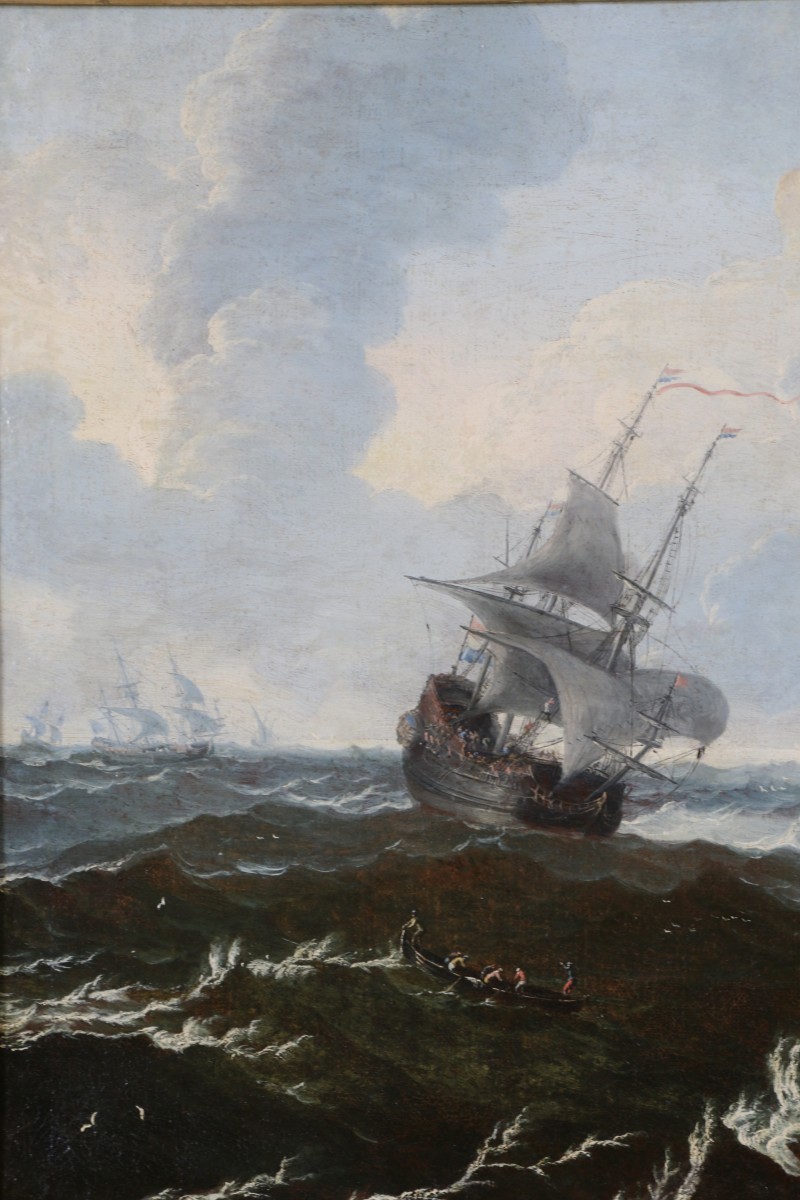
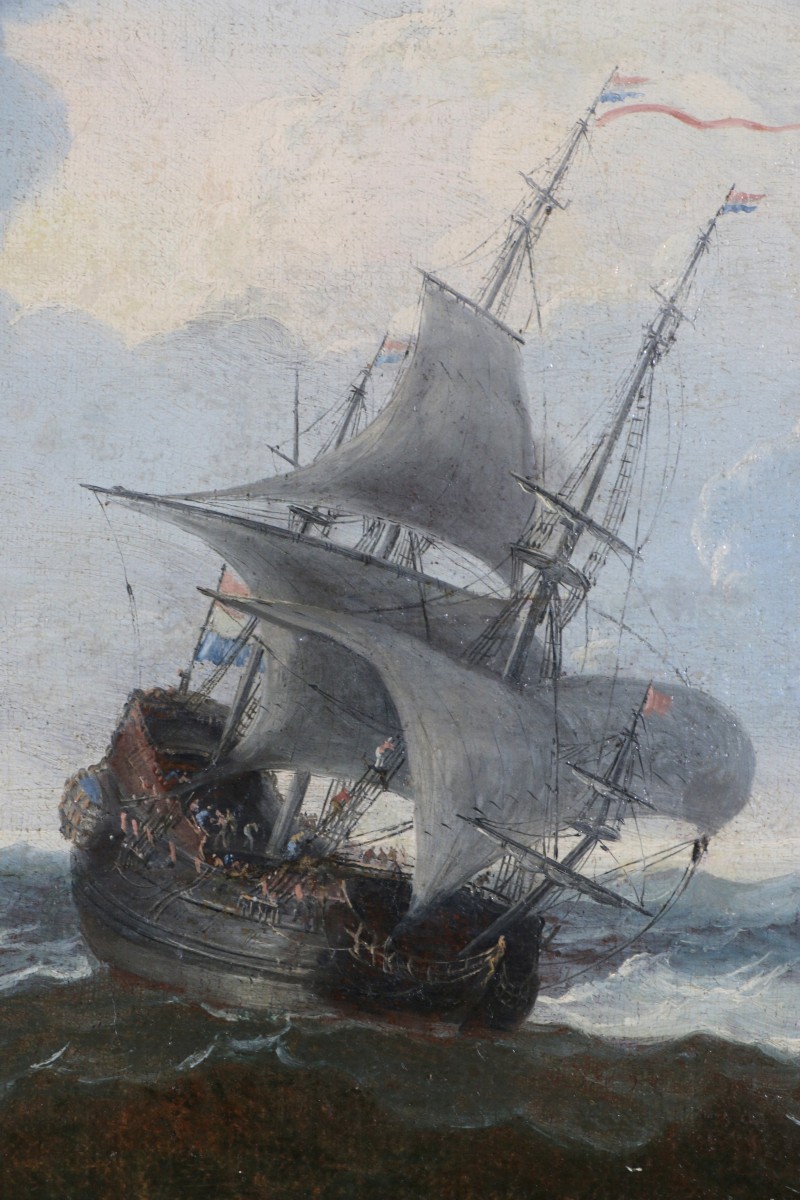
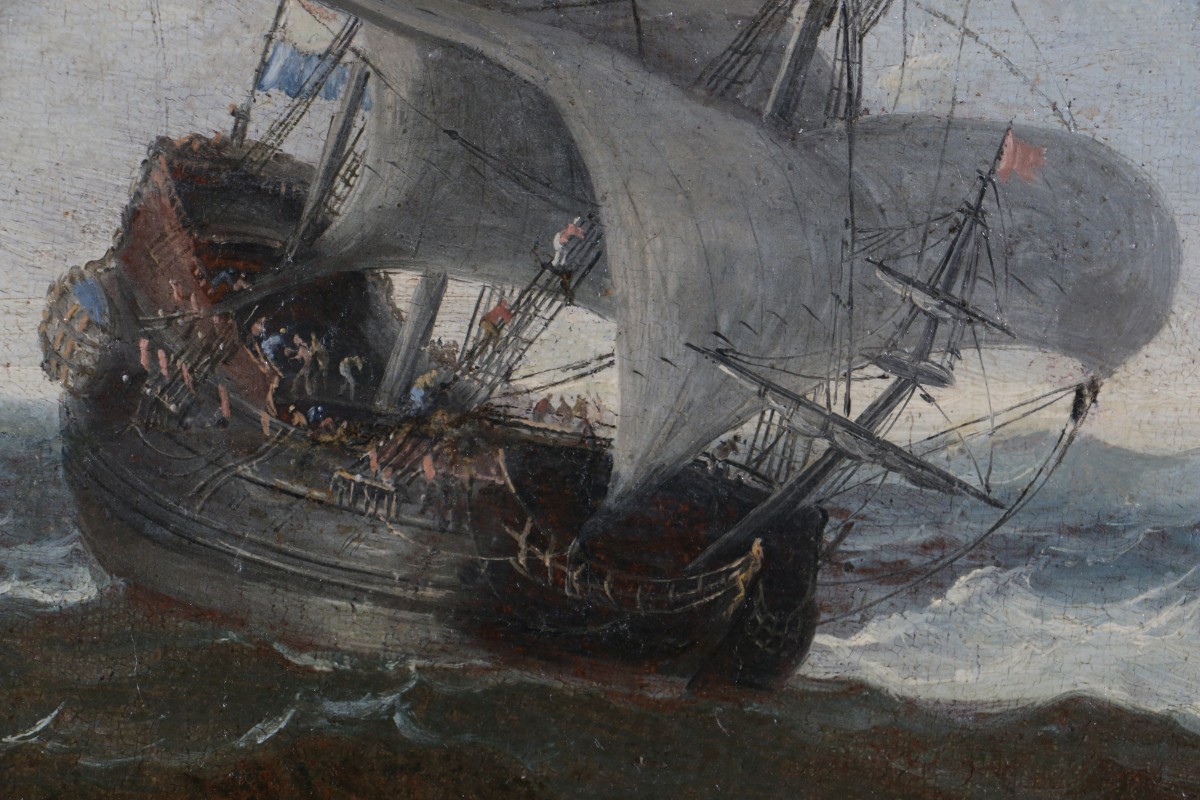
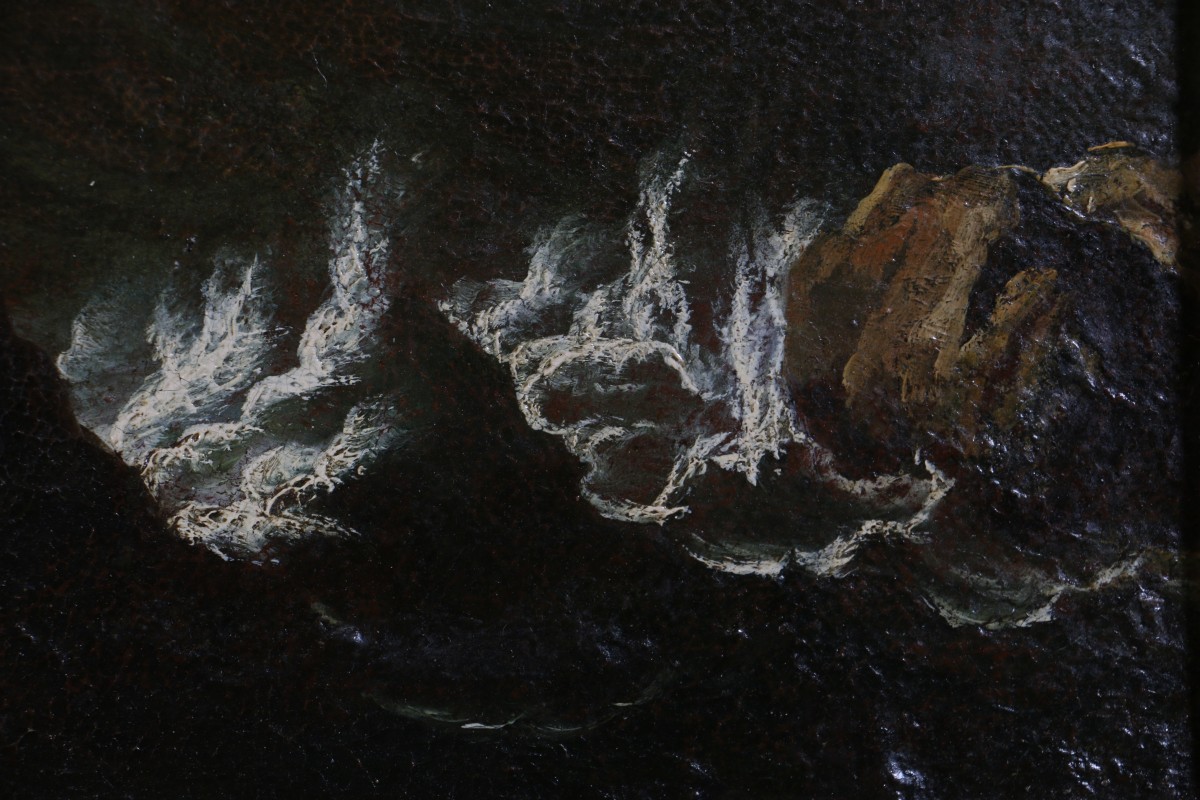
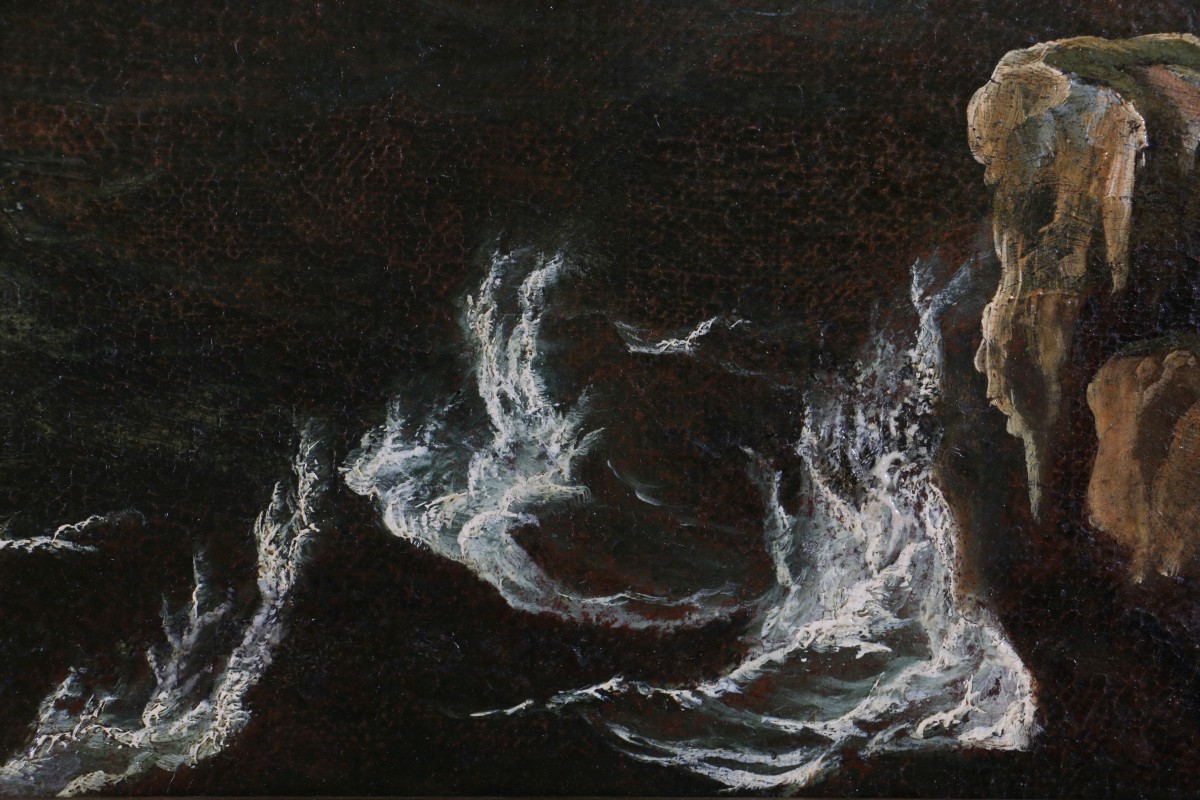
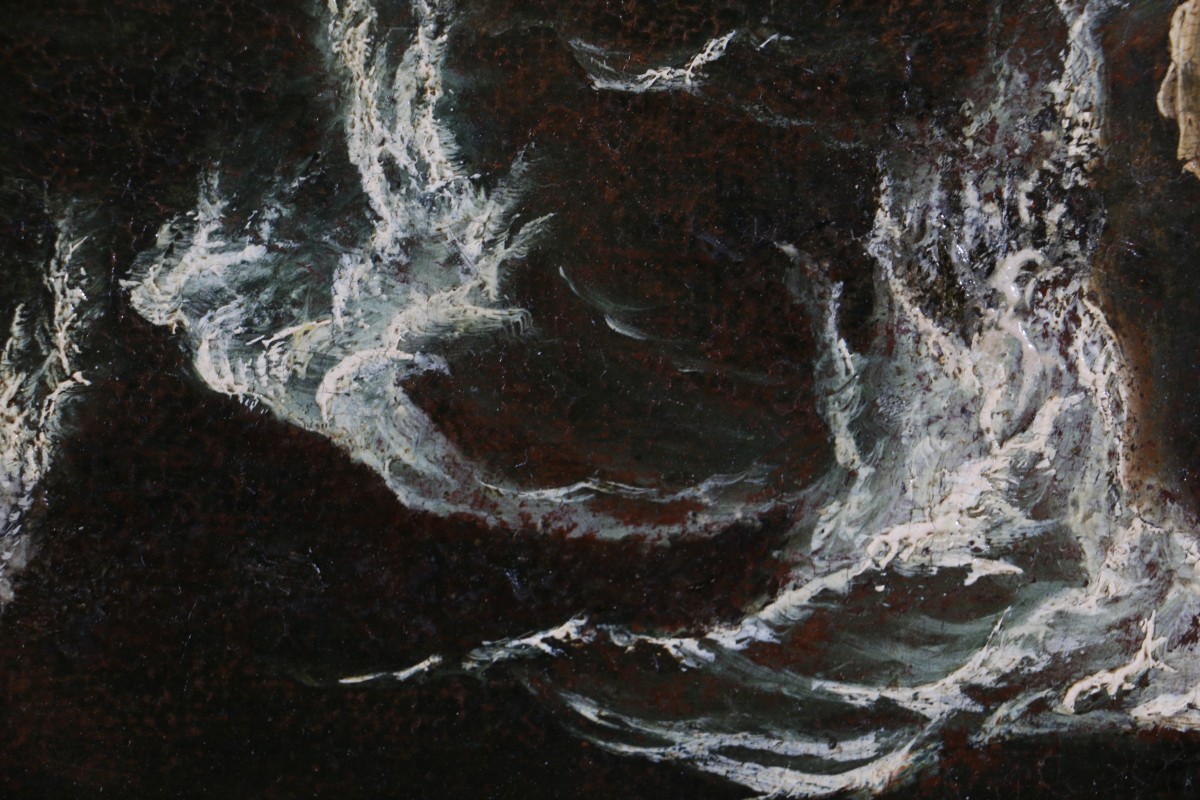
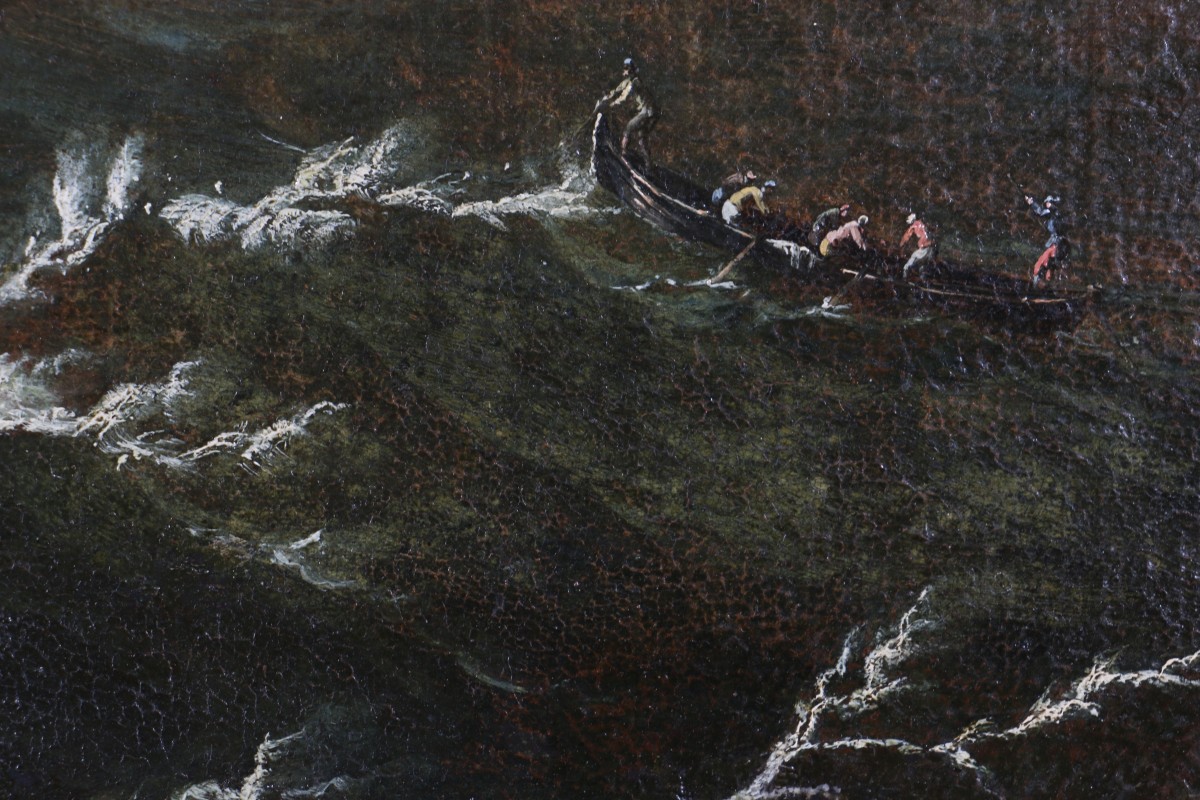
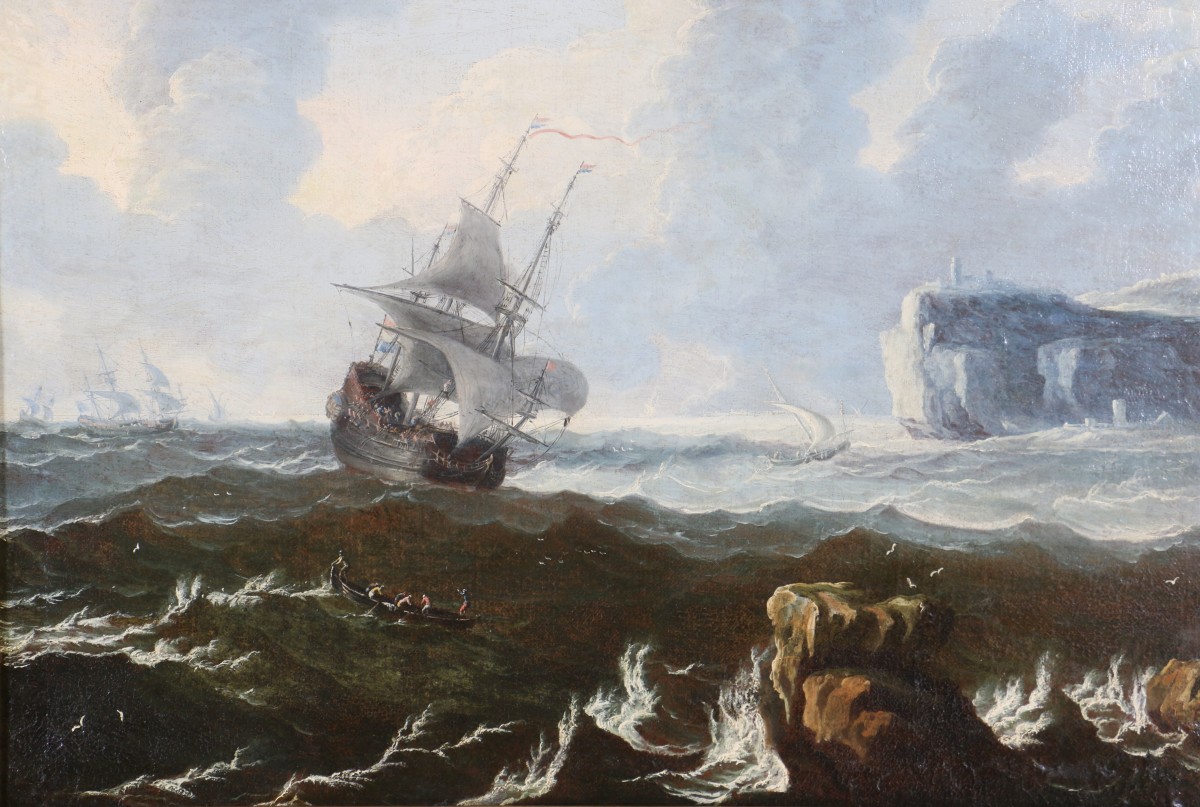
This composition depicts several ships braving a turbulent sea near a rocky coastline. Dominated by an expansive sky filled with powerfully modeled clouds, the work is distinguished by the subtlety of its atmospheric effects and the remarkable precision of its execution. The large cloud formations—rendered in harmonies of bluish-gray and pearly white—contrast with the deep tones of the sea. The waves, enlivened by delicate wisps of foam traced with extreme finesse, reveal a masterful command of the brush. This meticulous attention to detail extends to the depiction of the ships, whose rigging, sails, and structural elements are rendered with exceptional care. Given the scale of its composition, the delicacy of its light, and the refinement of its execution, this seascape likely dates from the artist’s mature period, around the 1640s.
Bonaventura Peeters the Elder (1614–1652)
Born in Antwerp in 1614, Bonaventura Peeters the Elder belongs to that remarkable generation of Flemish painters who, during the first half of the 17th century, helped establish the seascape as an independent genre—one in which the observation of the maritime world is combined with a new sensitivity toward atmospheric phenomena. In a city whose prosperity and history remained inextricably linked to maritime trade, he developed a unique artistic style, blending rigorous draftsmanship with a profound understanding of light effects, the movement of water, and the shifting nature of the sky. Coming from a family of artists, he was the brother of the painters Gillis Peeters (1612–1653), Jan Peeters (1624–1677), and Catharina Peeters (1615–1676). While the precise circumstances of his training remain unclear, his work follows in the tradition of Antwerp maritime painting, while also reflecting an awareness of parallel developments taking place in the United Provinces. Admitted as a master to the Antwerp Guild of Saint Luke in 1634–1635, he quickly established a reputation as a painter of seascapes—a field to which he dedicated the better part of his career. From his earliest known works, dating to the early 1630s, Peeters demonstrated a keen focus on balancing descriptive precision with the poetic expression of the landscape. His ships—with their rigging, sails, and structures rendered in remarkable detail—inhabit vast compositions in which the sea and sky play a dominant role. The artist does more than merely depict the perils of seafaring; he seeks to capture the very atmosphere of these settings: the density of moisture-laden air, light filtering through clouds, and the ever-changing movement of the sea’s surface. Storms and shipwrecks are among the most characteristic features of his body of work. Large, sculpted cloud formations—rendered in harmonies of silvery gray, muted blue, and pearly white—are balanced by the greenish or brownish depths of the sea. The waves, their crests occasionally accented by delicate touches of light, reveal a keen observation of the movement of water. This refinement of execution, combined with the precise draftsmanship of the ships and figures, lends his compositions a particularly palpable presence. Far from always seeking spectacular effects, Peeters also knows how to introduce a sense of restraint when depicting the elements in turmoil. The violence of a storm is tempered by the expansive horizons, the gentle transitions of light, and the chromatic unity of the whole. This fusion of dramatic tension and atmospheric harmony stands as one of the most striking qualities of his pictorial language. During the 1640s, his repertoire expanded to include coastal landscapes, harbor scenes, and depictions of distant shores—some real, others imagined. Architectural elements, fortifications, and the silhouettes of foreign vessels enliven these compositions, reflecting the era’s fascination with travel, far-off lands, and maritime horizons. His body of work thus bears witness to an expanding geographical curiosity and the growing importance of the sea within the European imagination of the 17th century. Alongside his work as a painter, Bonaventura Peeters also practiced drawing and engraving. He collaborated with his brother Gillis as well—most notably on a depiction of the Siege of Kallo, created in 1639. He spent his final years in Hoboken, near Antwerp, where he died on the 2nd.
Delevery information :
All our paintings benefit from careful and secure packaging. No geographic restrictions.