Offered by Ars Antiqua

Old Masters paintings, furniture, sculptures and modern art
Piedmont, 17th century
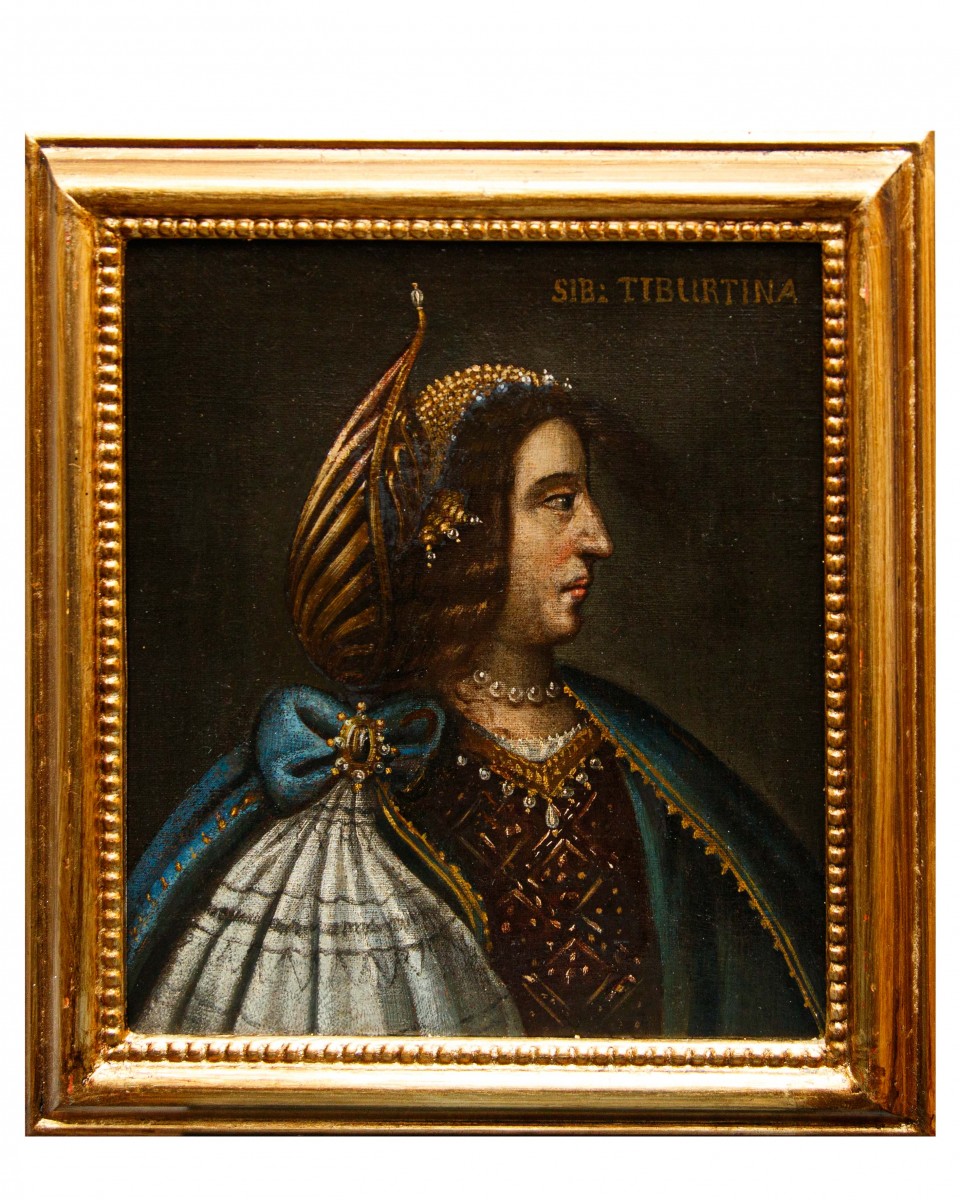
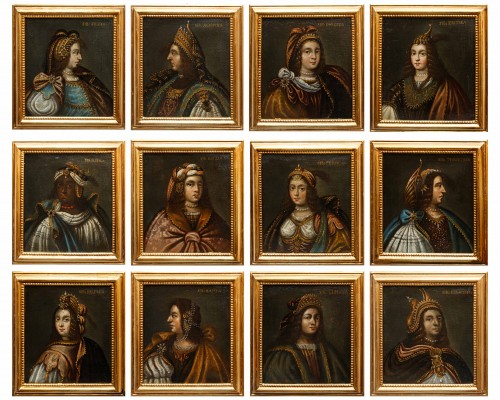
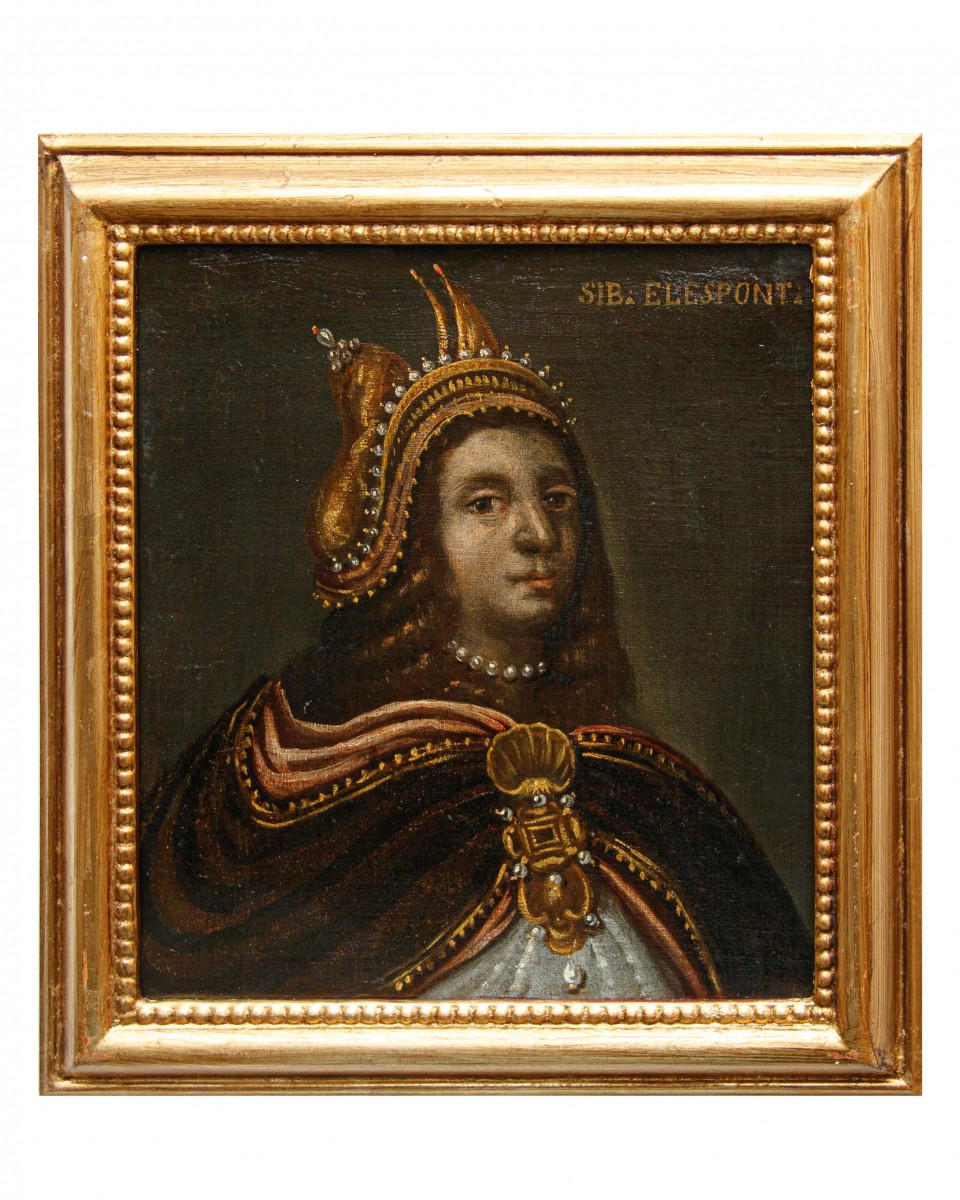
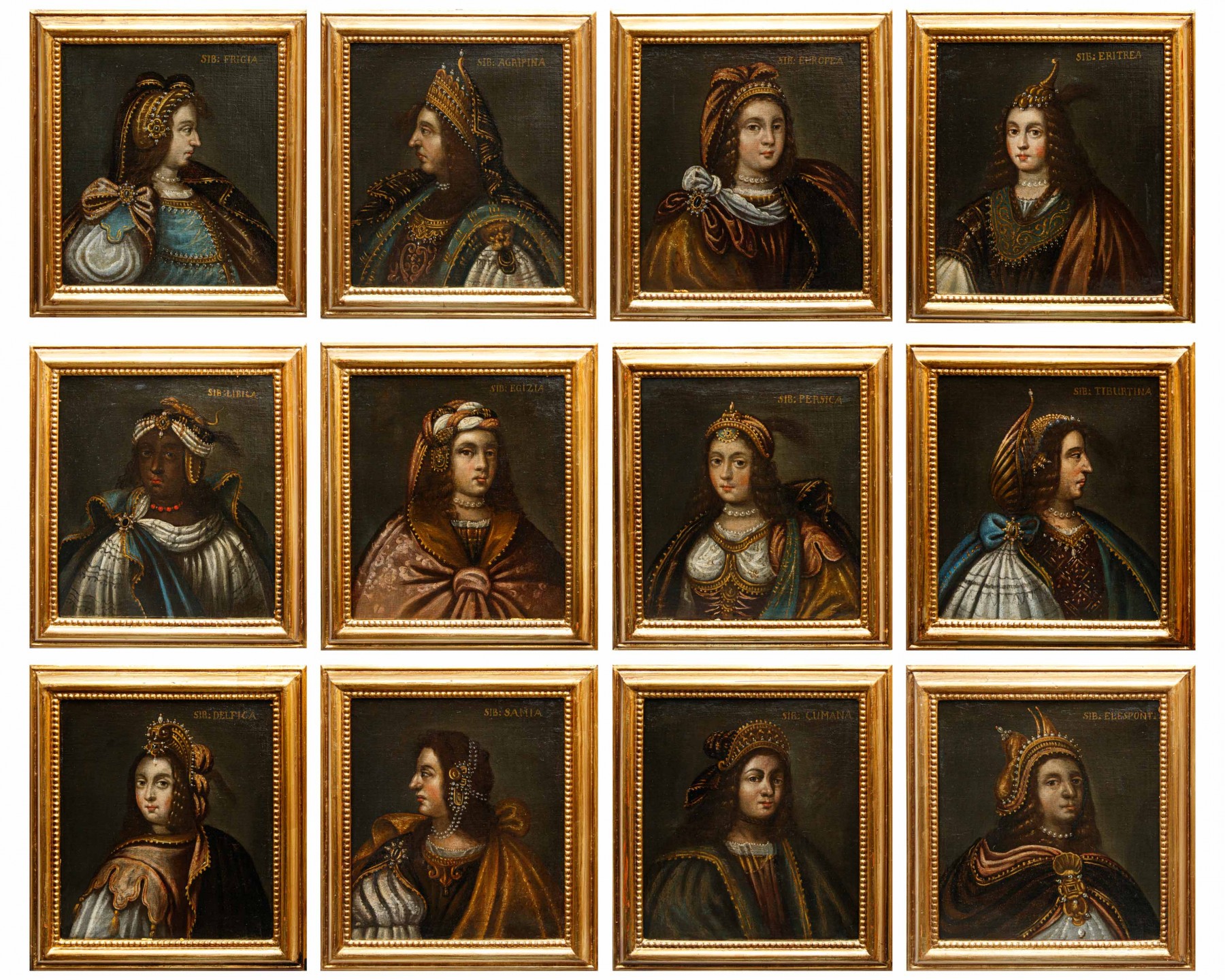
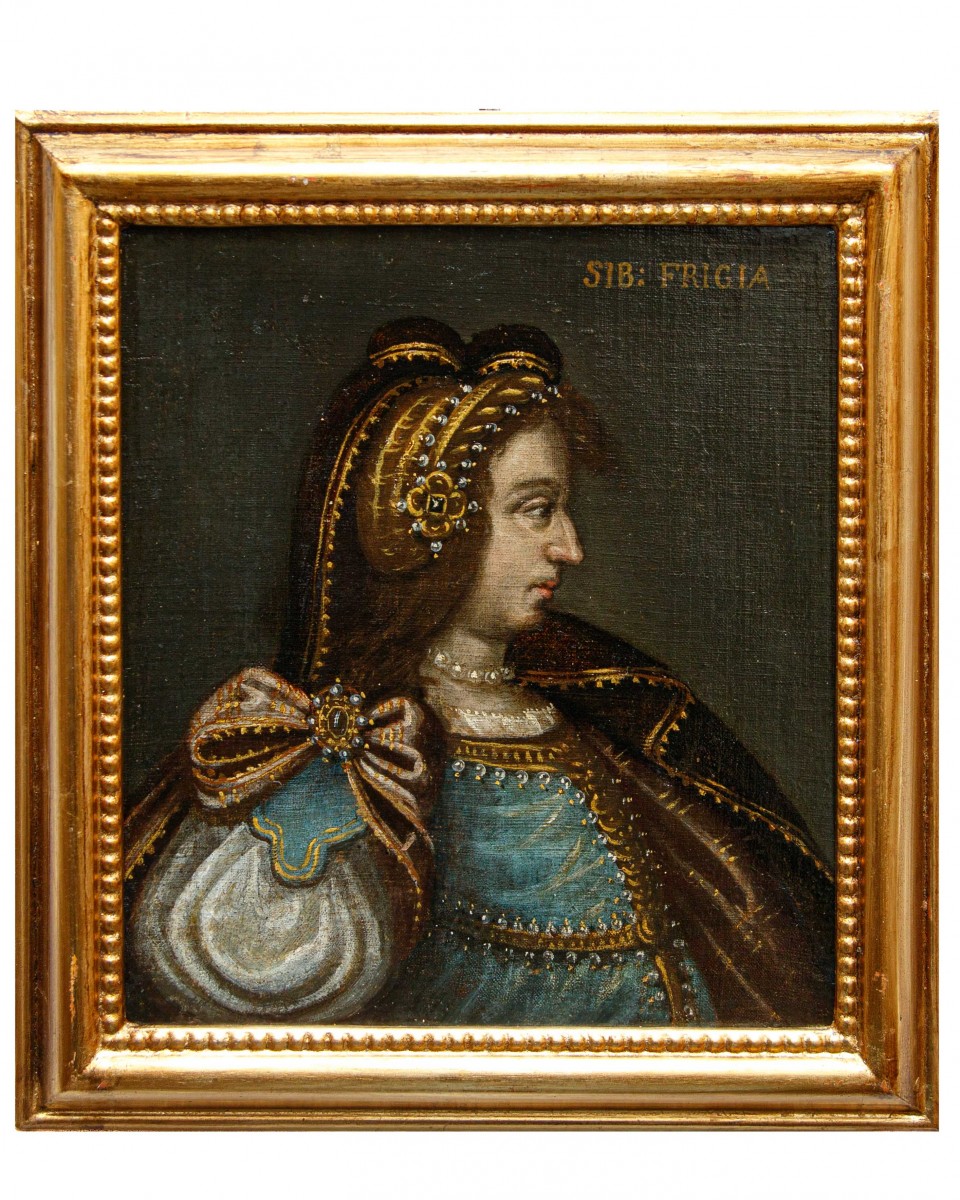
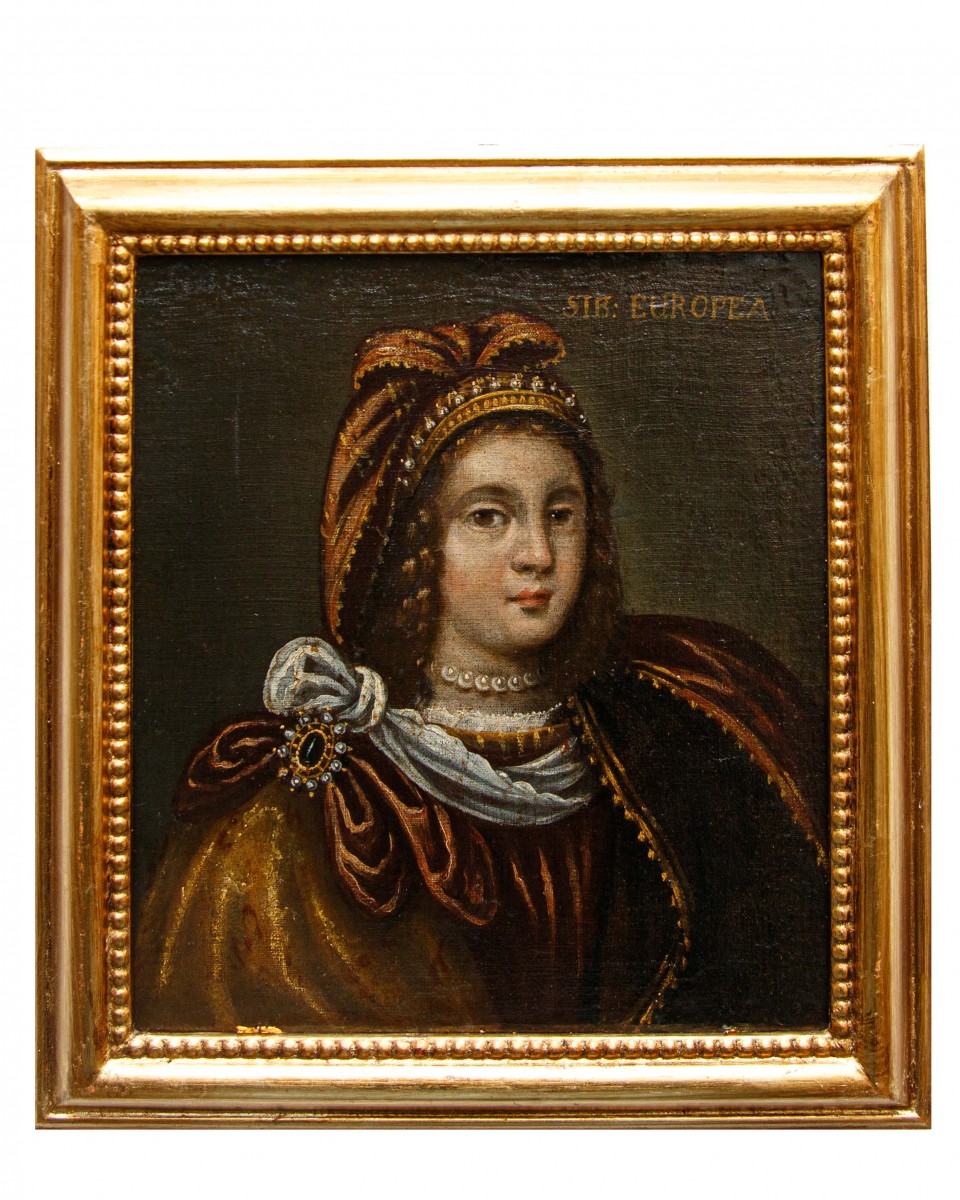
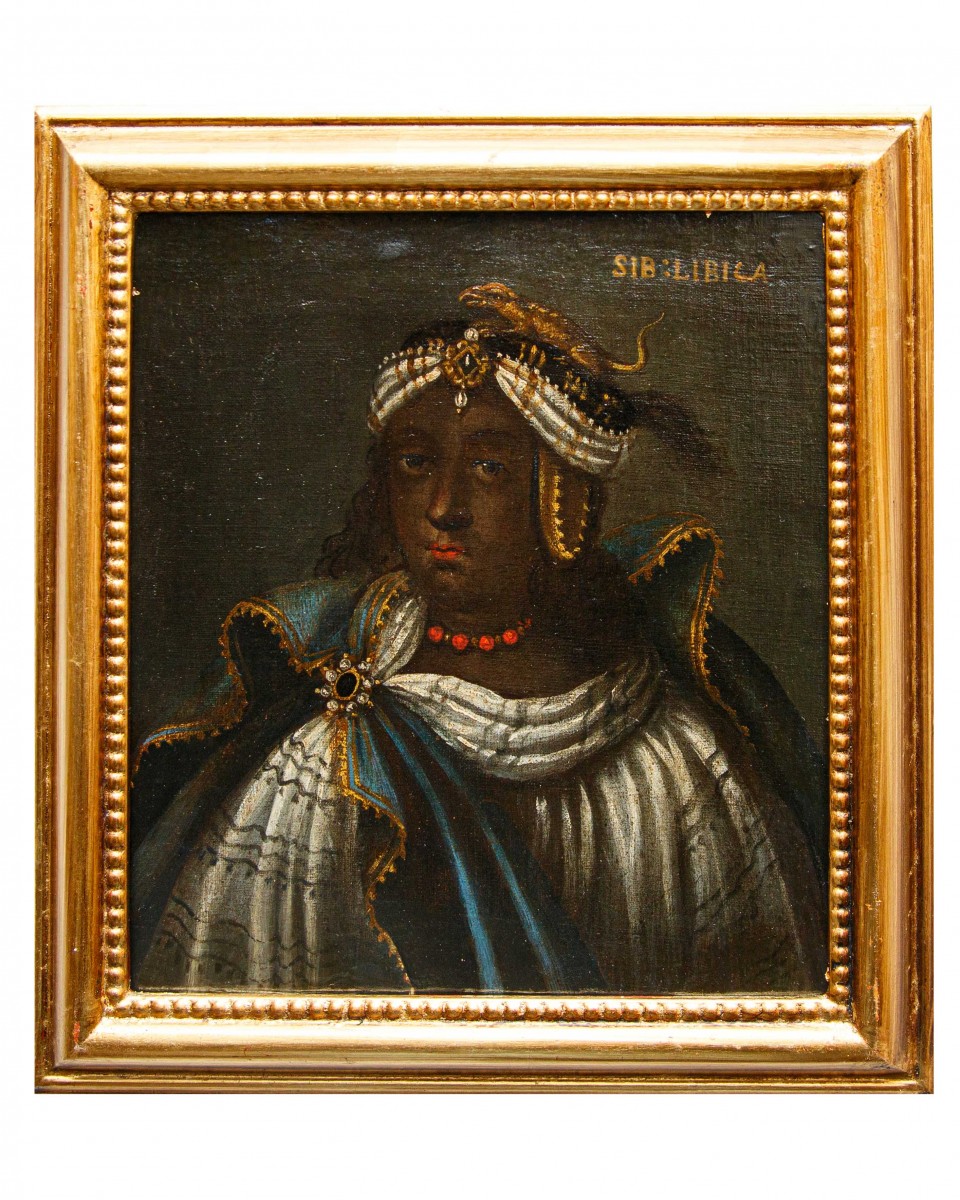
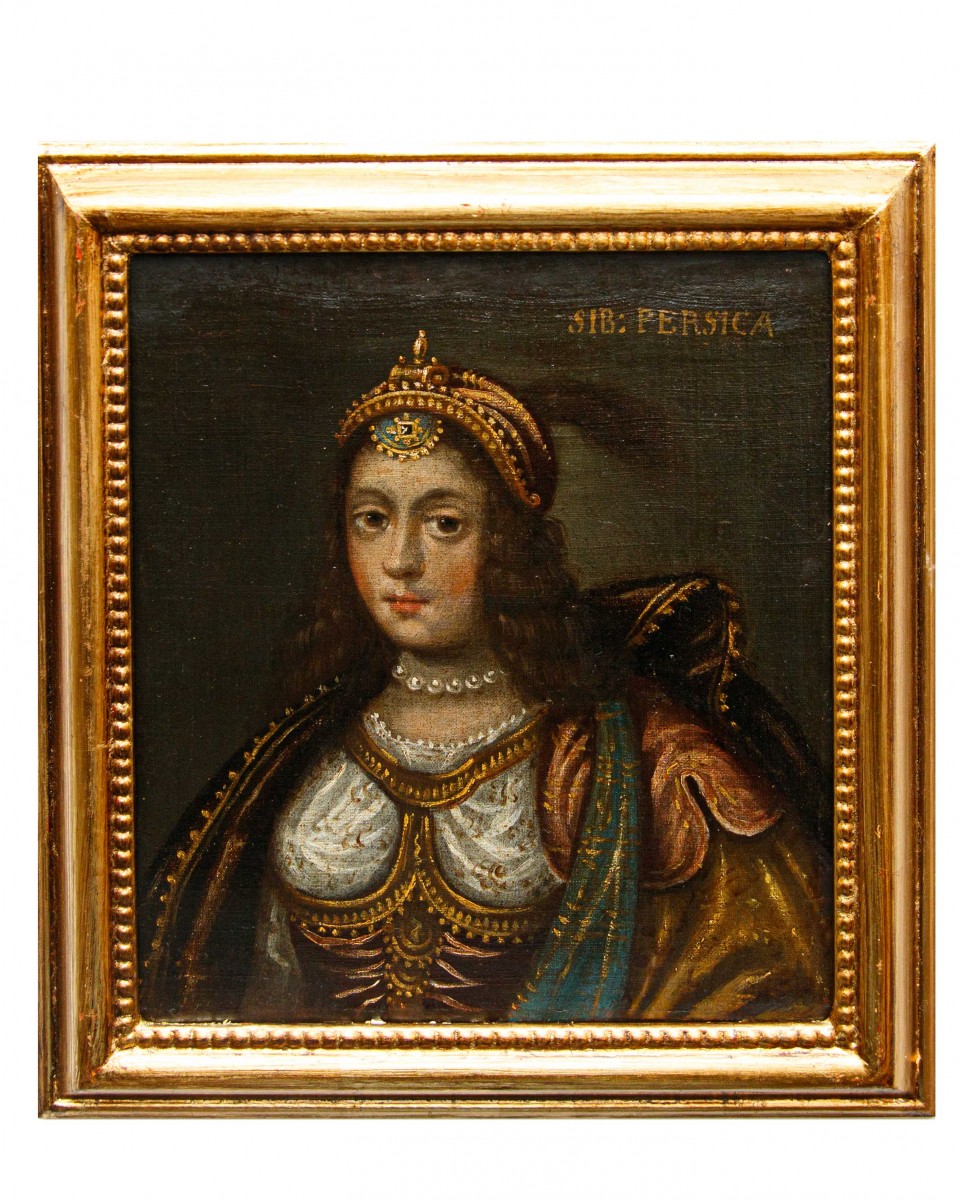
The Twelve Sibyls
Oil on canvas, 35 × 31 cm (1) – with frame, 43 × 40 cm (1)
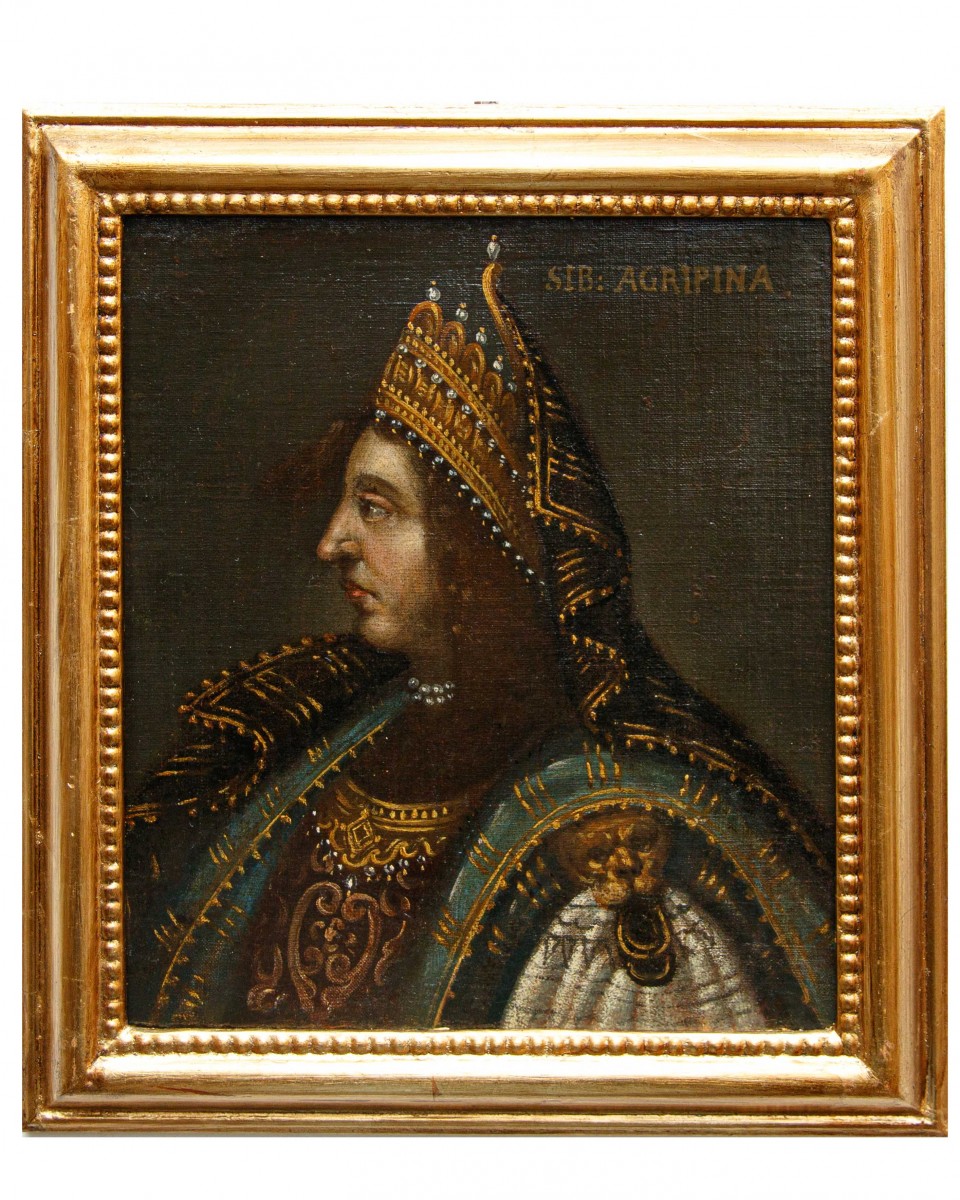
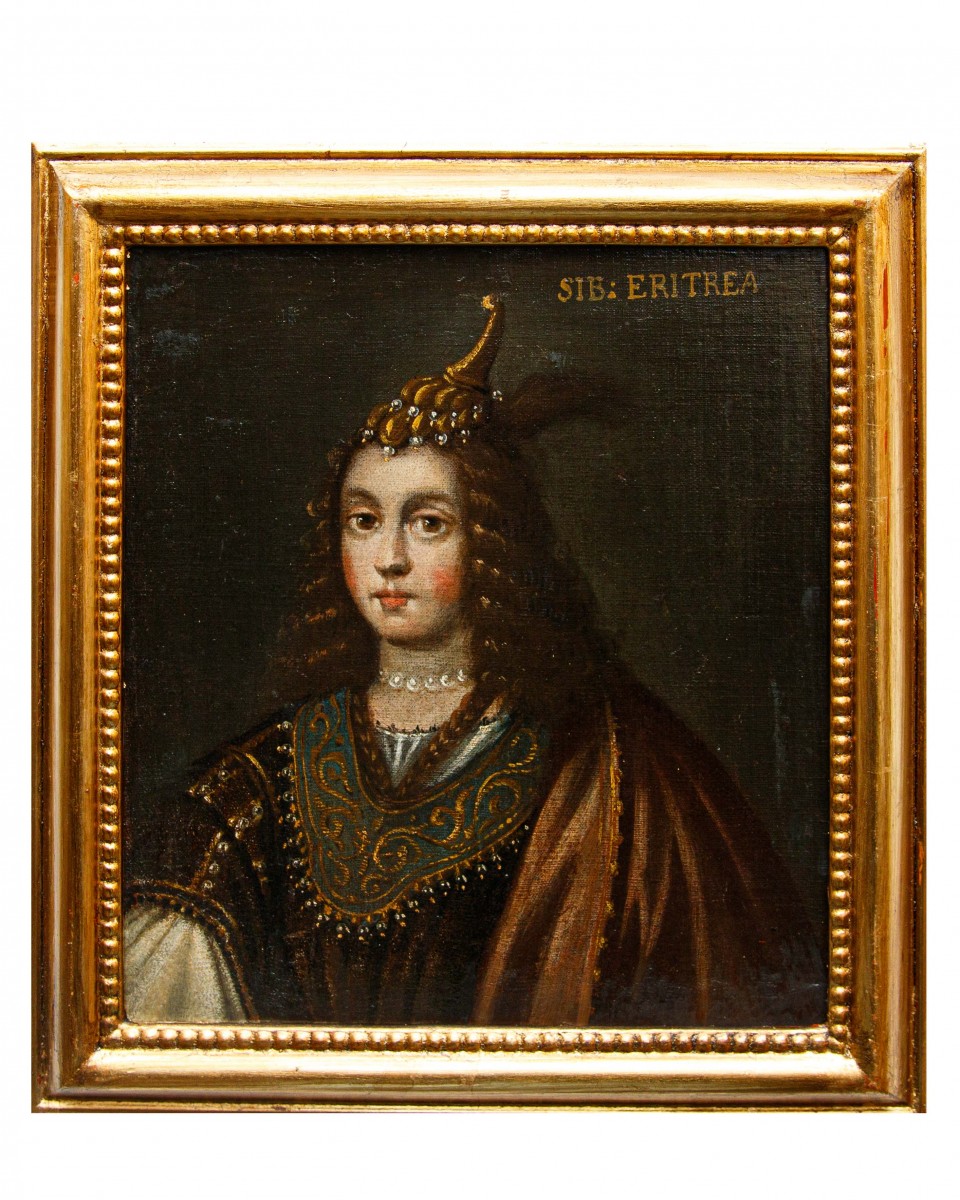
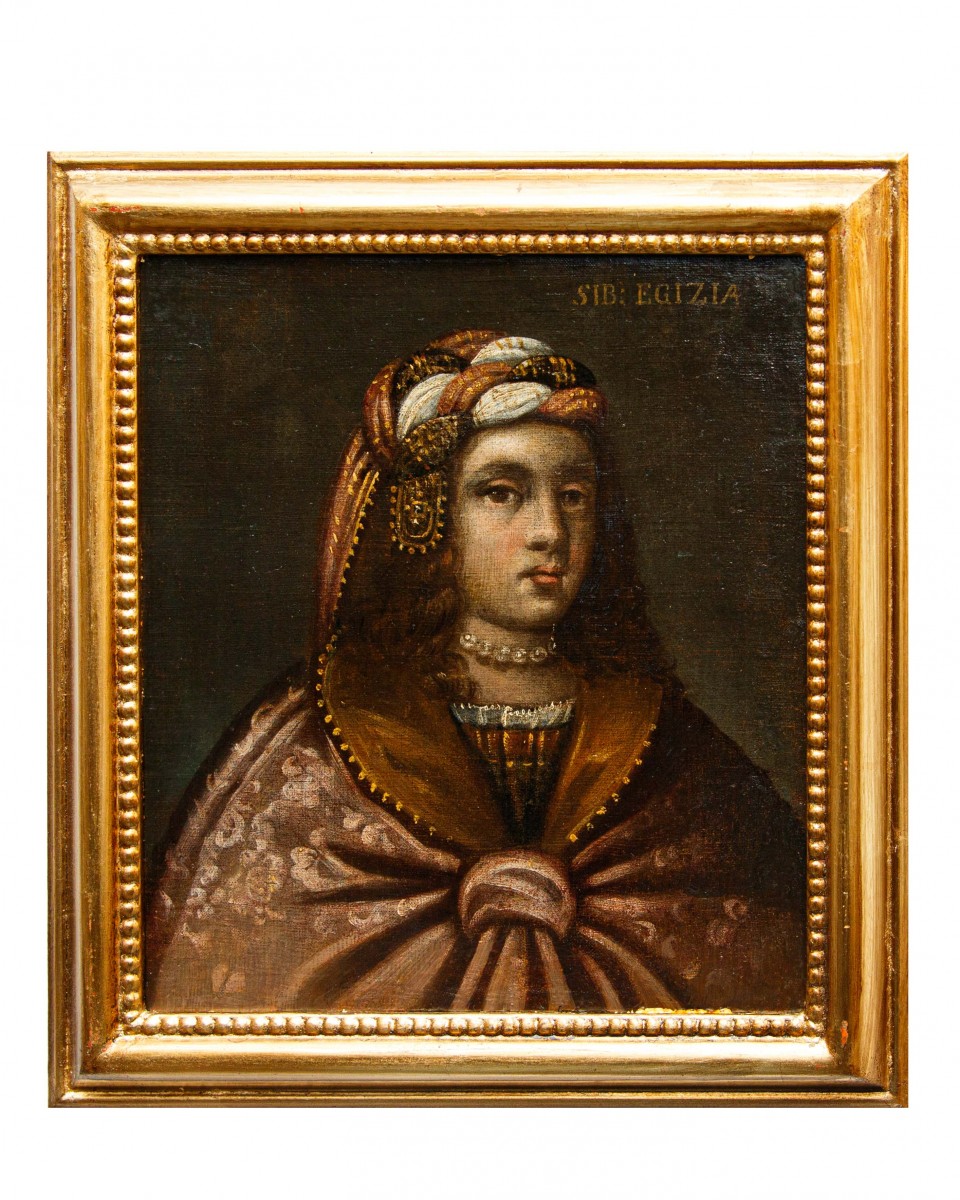
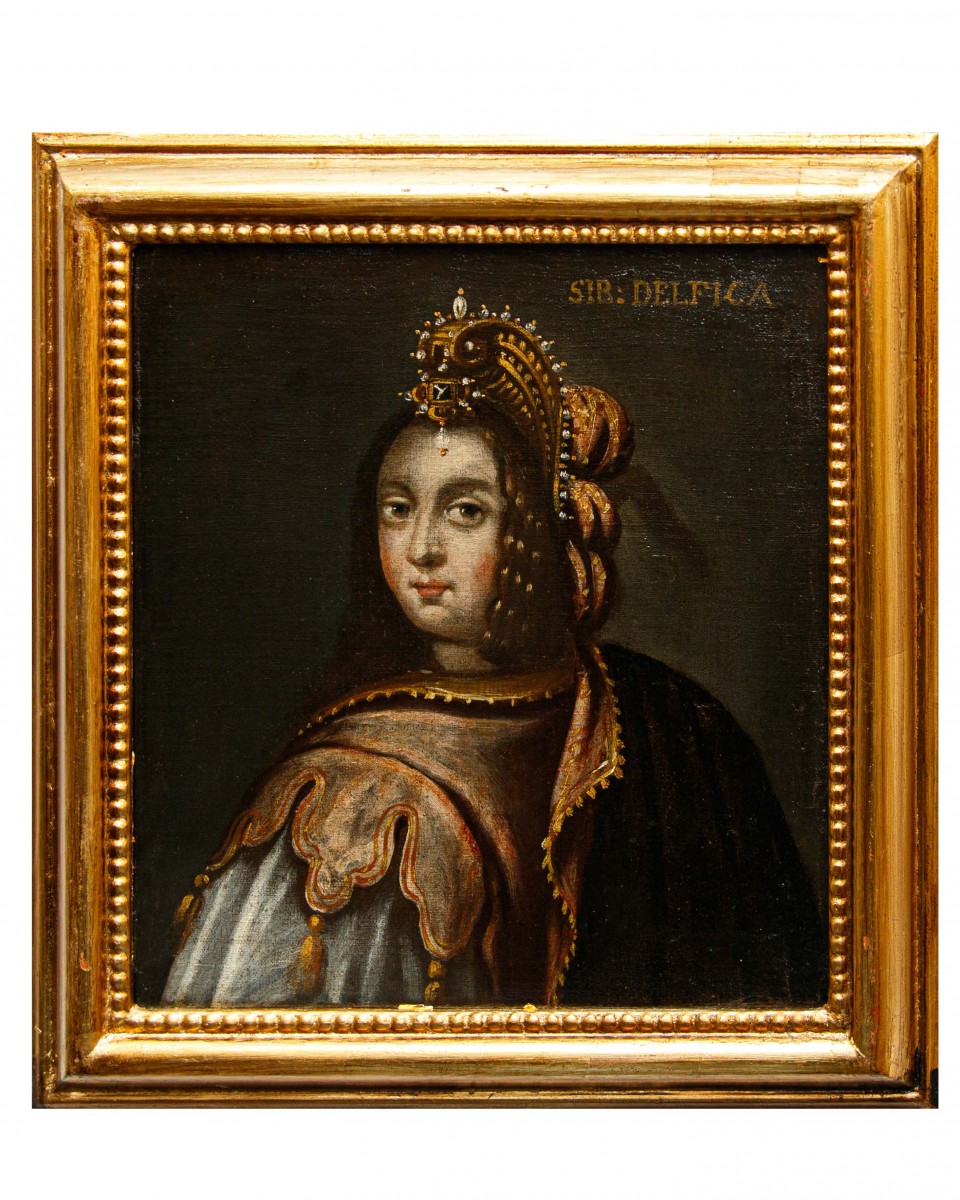
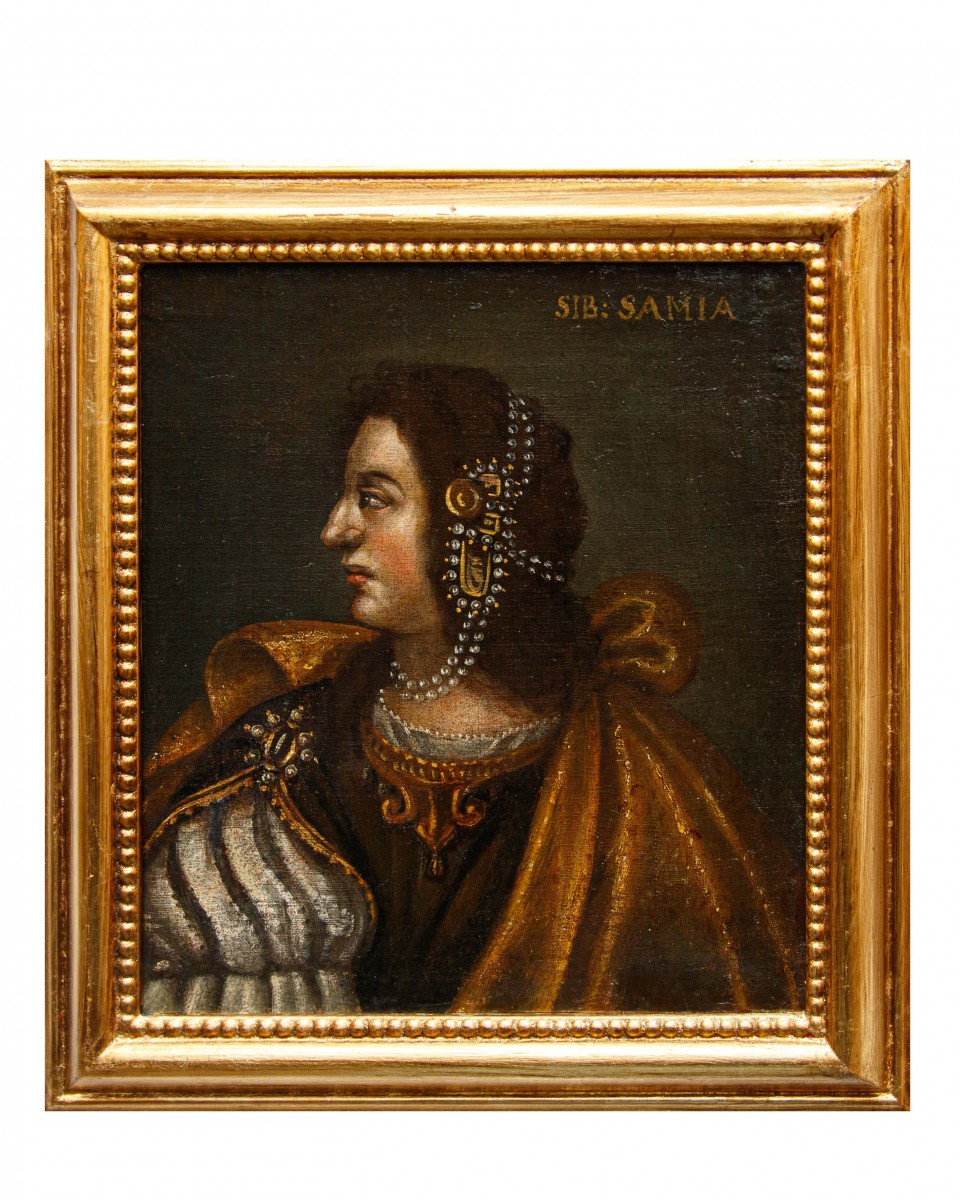
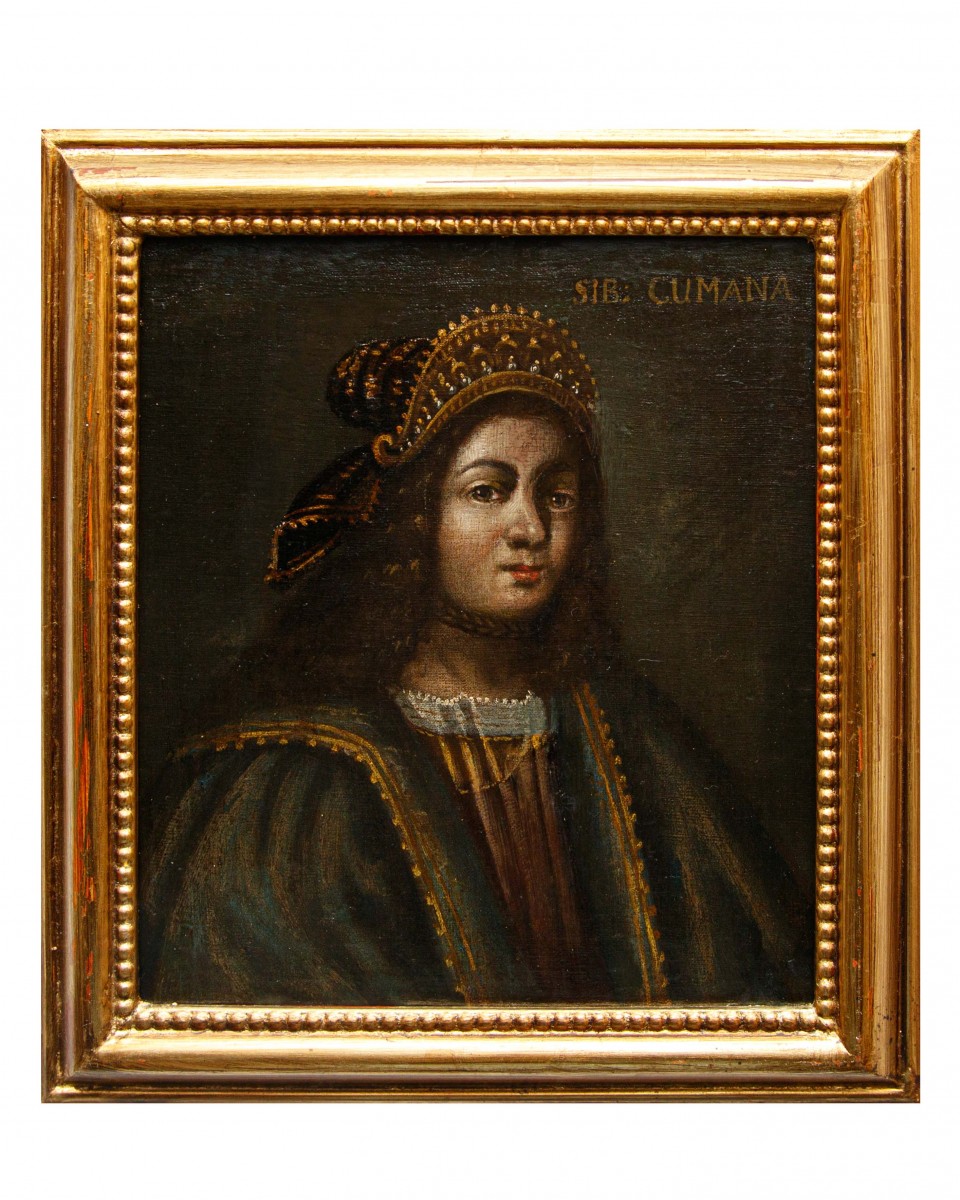
The cycle presented here comprises twelve small-format canvases dedicated to the twelve Sibyls of classical antiquity: Phrygian, Agrippina, European, Erythraean, Libyan, Egyptian, Persian, Tiburtine, Delphic, Samian, Cumaean, and Hellespontine. Each figure is identified by an inscription placed in the upper corner of the canvas, following the formula “SIB:” followed by the name, an element that makes the cycle immediately legible even centuries later. The Sibyls are depicted in half-length format, alternating frontal, profile, and three-quarter views, in a compositional variety that lends dynamism to the series while maintaining an underlying stylistic coherence. All the figures wear sumptuous garments in vivid colours—blue, ochre, brick red, and green—embellished with gold embroidery, pearls, jewels, and elaborate hairstyles featuring turbans, diadems, and veils, reflecting the taste for the exotic and the sumptuous characteristic of seventeenth-century imaginary portraiture.
From an art-historical standpoint, the compositional structure and physiognomic rendering of these canvases recall Late Mannerist models widespread in the Piedmontese area between the late sixteenth and the early decades of the seventeenth century, close to the manner of Giovanni Angelo Dolce, active in Turin and southern Piedmont, and of Antonino Parentani, a painter documented in the first half of the century at the Charterhouse of Pesio, where he executed a cycle depicting Stories from the Life of the Virgin, flanked, significantly, by a series of Sibyls. This iconographic precedent is particularly significant, as it demonstrates how the subject of the Sibyls was a recurring theme in the religious and aristocratic patronage of Piedmont during the period. The public collections of Cuneo also preserve a comparable cycle of canvases depicting busts of Sibyls, confirming the diffusion and popularity of this iconography in the region, often replicated by local workshops drawing upon a shared figurative repertoire consisting of cartoons and printed models circulated among painters.
In the Greco-Roman tradition, the Sibyls were semi-divine female figures endowed with the gift of prophecy, directly inspired by the gods to pronounce oracles concerning the destiny of men and nations. Coming from different parts of the ancient world—the earliest is said to have lived in Erythrae in the eighth century BC—the Sibyls spread from the East through Greece to Rome, where their celebrated prophetic books were jealously guarded and consulted by the Senate in times of political and religious crisis. Their number, varying according to the sources between ten, twelve, and fourteen, became established in medieval and Renaissance tradition around the dozen represented here. From the earliest centuries of Christianity, and then with renewed vigour during the Renaissance, the Church reclaimed these pagan figures, reinterpreting them as prophetesses who, like the Old Testament prophets, were believed to have foretold the coming of Christ and the redemption. This parallel between the Jewish prophets and the pagan Sibyls, also codified by Michelangelo on the ceiling of the Sistine Chapel, ensured their survival in the iconographic tradition well beyond the classical period, making them a favoured subject for religious and secular decorative cycles throughout the seventeenth century.
Delevery information :
Les frais d'expédition seront calculés au moment de la commande en fonction de la destination, des dimensions et du poids du tableau, ainsi que de l'assurance couvrant la valeur totale de l'œuvre.
For paintings purchased from abroad: following payment, the application process to obtain the export license (ALC - Attestato di Libera Circolazione) will be initiated. All antiques shipped abroad from Italy require this document, which is issued by the Ministry of Cultural Heritage. The procedure may take 3 to 5 weeks from the date of request; therefore, the painting will be shipped as soon as the document is obtained