Offered by Dei Bardi Art
REQUEST INFORMATION

Sculptures and works of art from the Middle Ages and the Renaissance
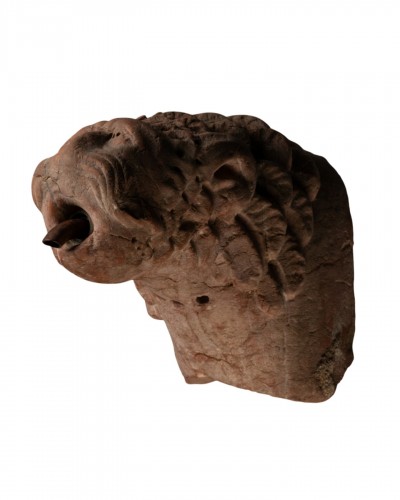
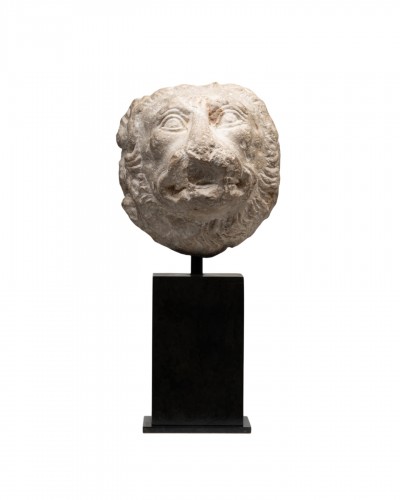
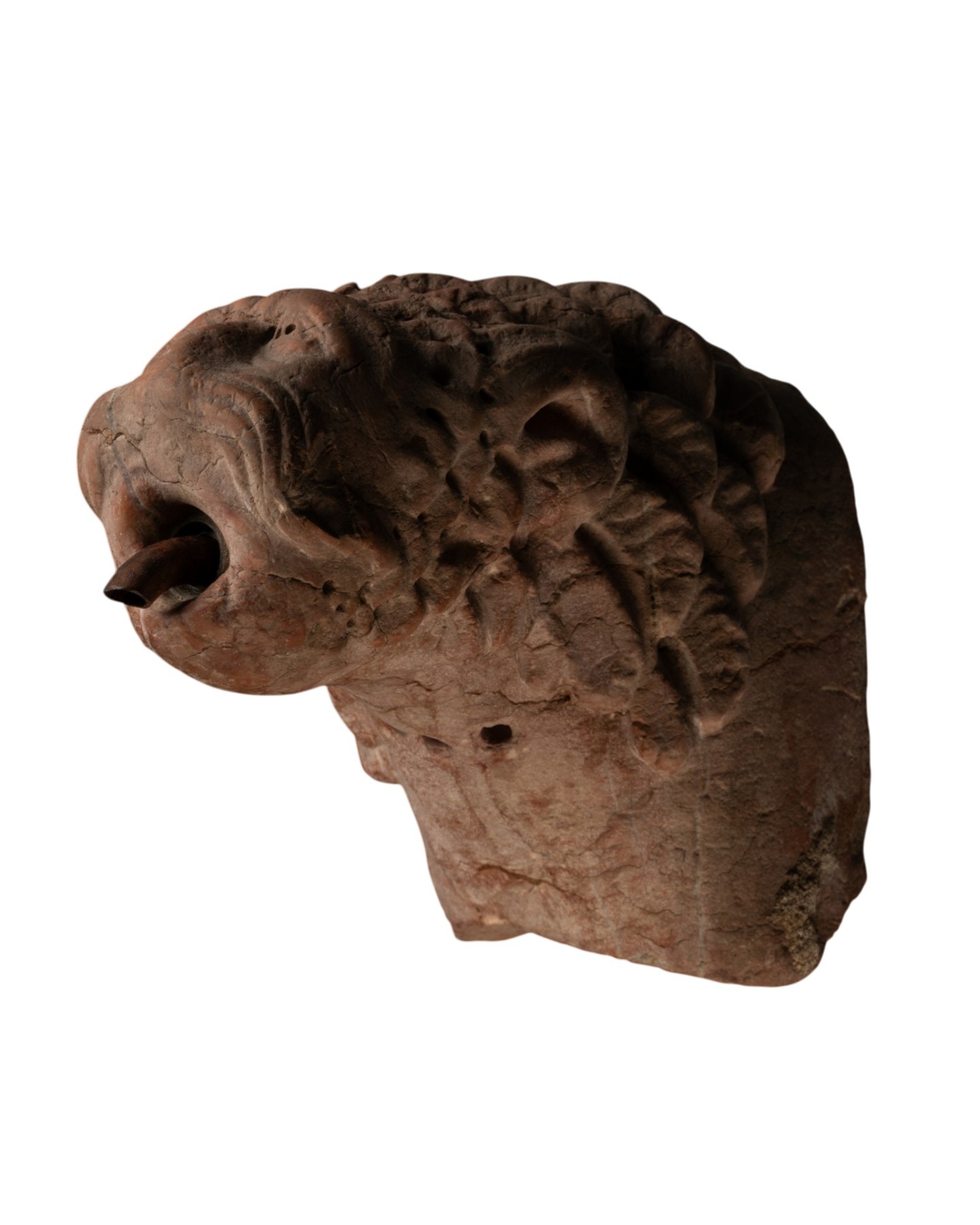
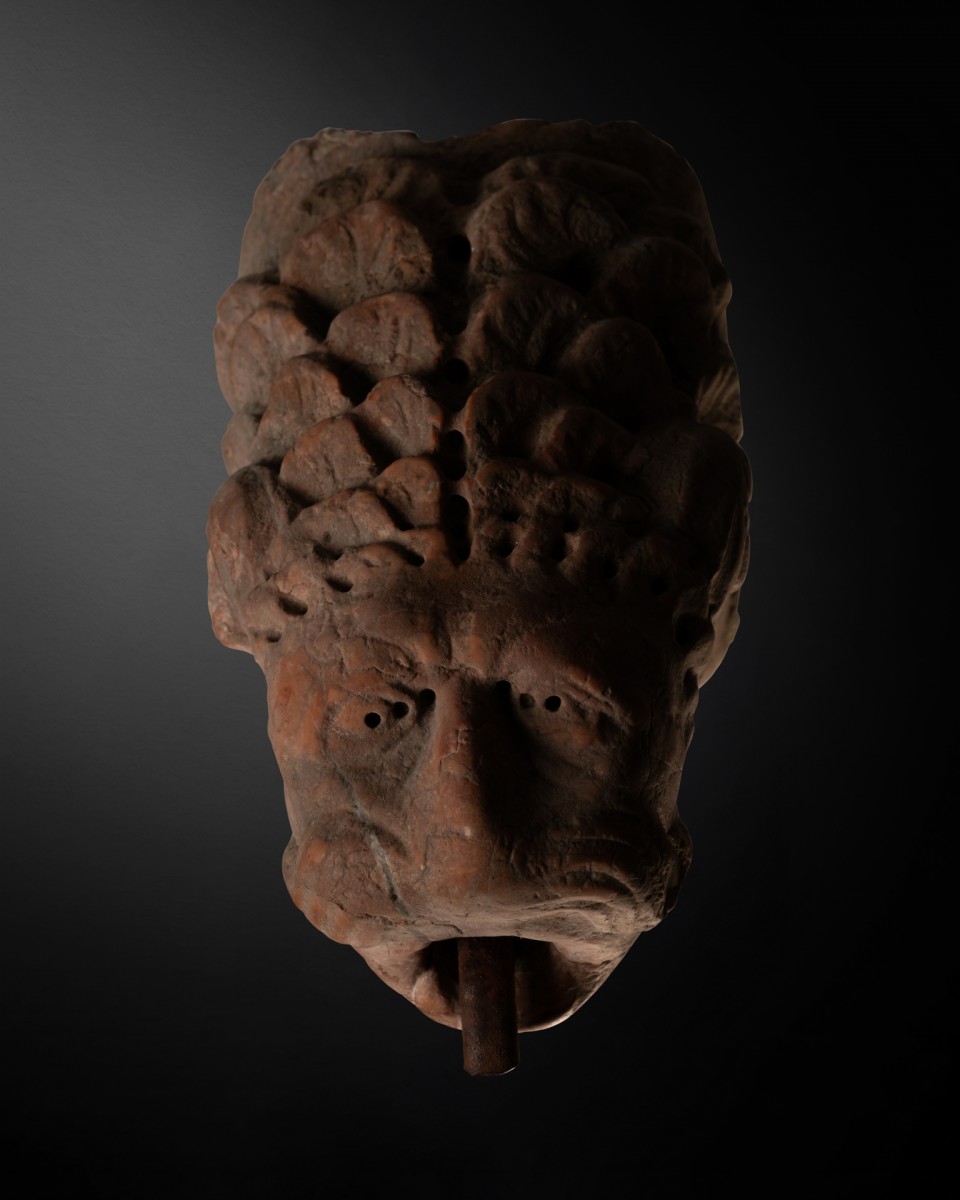
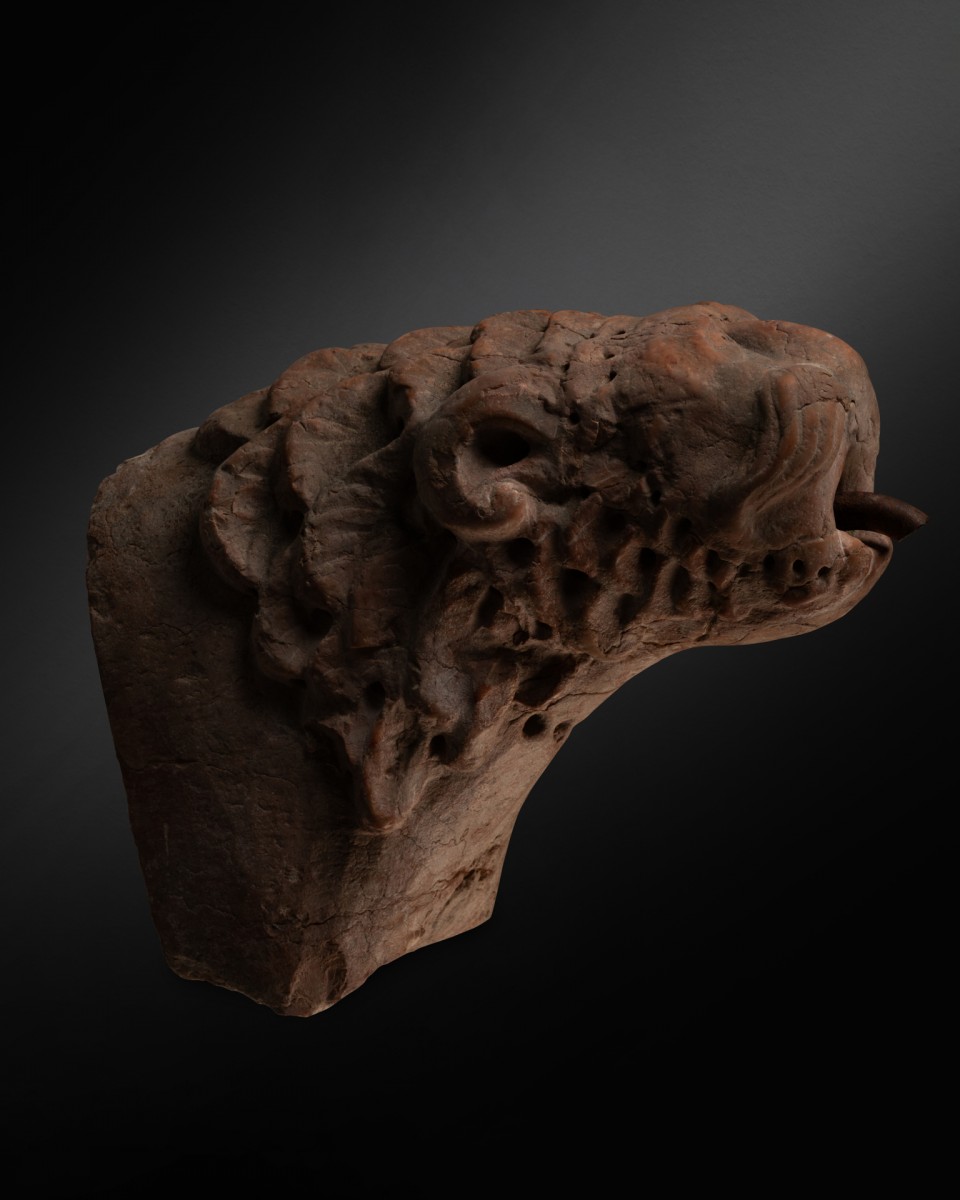
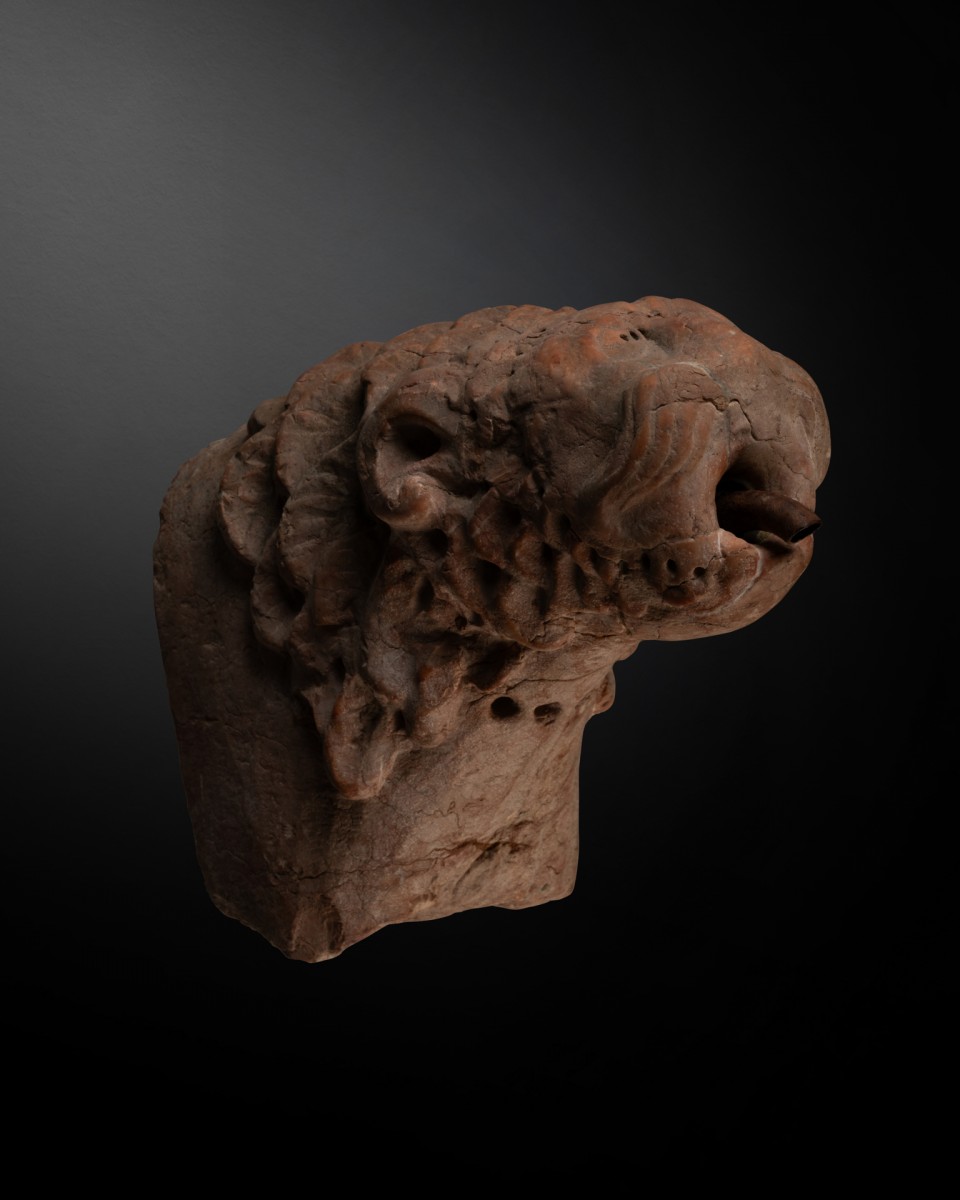
Lion protome?
Architectural fragment from a fountain
?Red marble (Rosso di Verona)
?Italy (north-central), Romanesque, 12th century?2
6 x 24 x 13 cm (10¼ x 9½ x 5? in.)
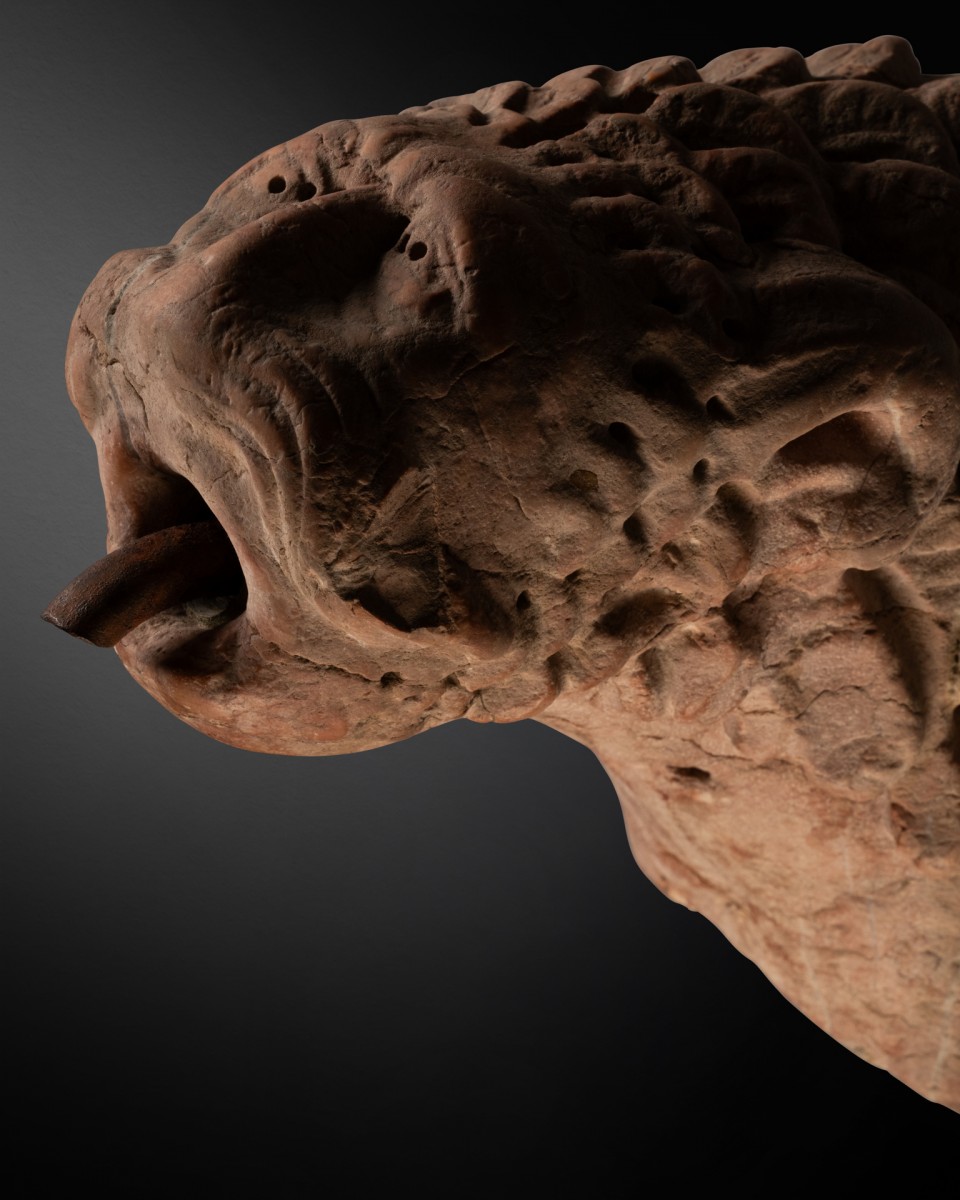
The rectangular block, left roughly finished at the back, was designed to be set into masonry — most likely the facing of a fountain or basin wall — with only the lion's head projecting outward. The mane, carved in overlapping lobed, scale-like registers rendered in shallow relief, frames a broad, stylised muzzle with a wide-open mouth; at its centre, a water channel pierces the block from front to back, still fitted with an oxidised metal tube.
The piece is carved from a red marble related to Rosso di Verona (sometimes termed "rosso ammonitico"), quarried in the Venetian Alps and widely employed, from the early medieval period through the Romanesque, for liturgical and decorative sculpture — a material that points to an origin in north-central Italy.
The lion-gargoyle motif, inherited from the antique sima with lion-head waterspouts, acquired strong symbolic charge in the Romanesque period. Guardian of thresholds and water sources, and — per the Physiologus — linked to the kingship of the resurrected Christ, the lion naturally found its place at fountains, as attested by the example in the cloister at Monreale (Sicily, late 12th century).
The stylistic handling of the present protome — rigid frontality, mane rendered in geometricised registers, drillwork deployed for contrast rather than anatomical detail, simplified volumes — belongs to a sculptural vocabulary recurring at every scale of decoration across the Italian Romanesque corpus. It finds a close parallel in Tuscan Romanesque capitals, notably at the Pieve di Brancoli (Lucca), and in the crypt of San Nicola in Bari, evidence of a repertoire shared among workshops across the peninsula in the 11th-12th centuries.
The lion held a structural and symbolic role of the first importance in this tradition: at Lodi Cathedral, whose façade was completed in the late 12th century, white marble lions support the porch baldachin as stylophores, following a scheme widespread across the Po plain, with counterparts at Modena, Parma, and Verona. Although the Lodi lions serve a distinct architectural function — column support rather than waterspout — they display the same heraldic, non-naturalistic handling of the animal: mane stylised into scale-like or geometric locks, simplified volumes, pronounced frontality — traits that more broadly characterise Lombard and Po-valley animal sculpture of the 12th century. This formal kinship attests to the circulation of a shared Romanesque ornamental repertoire across workshops of northern and central Italy.