Offered by Sérignan Antiquités
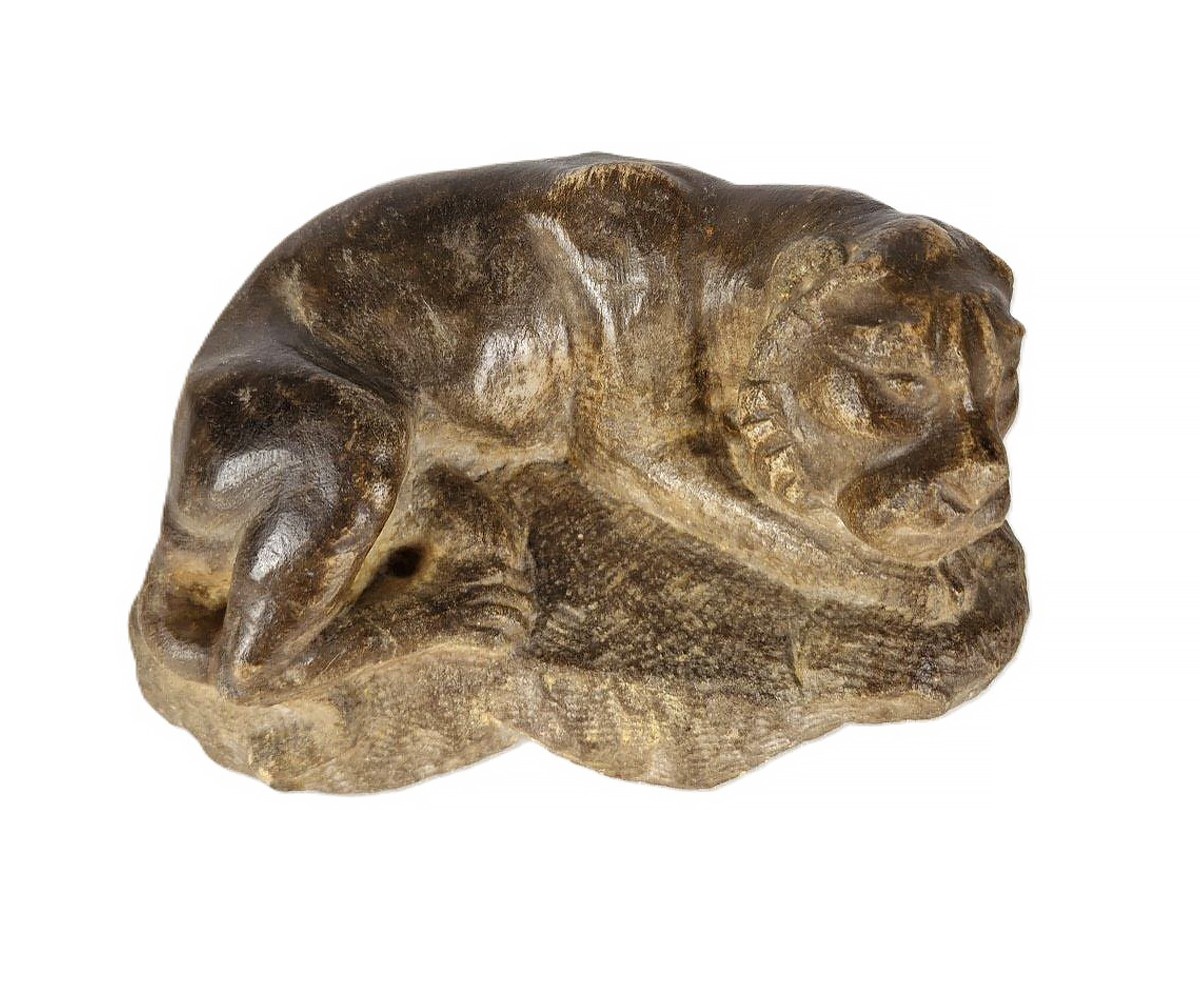
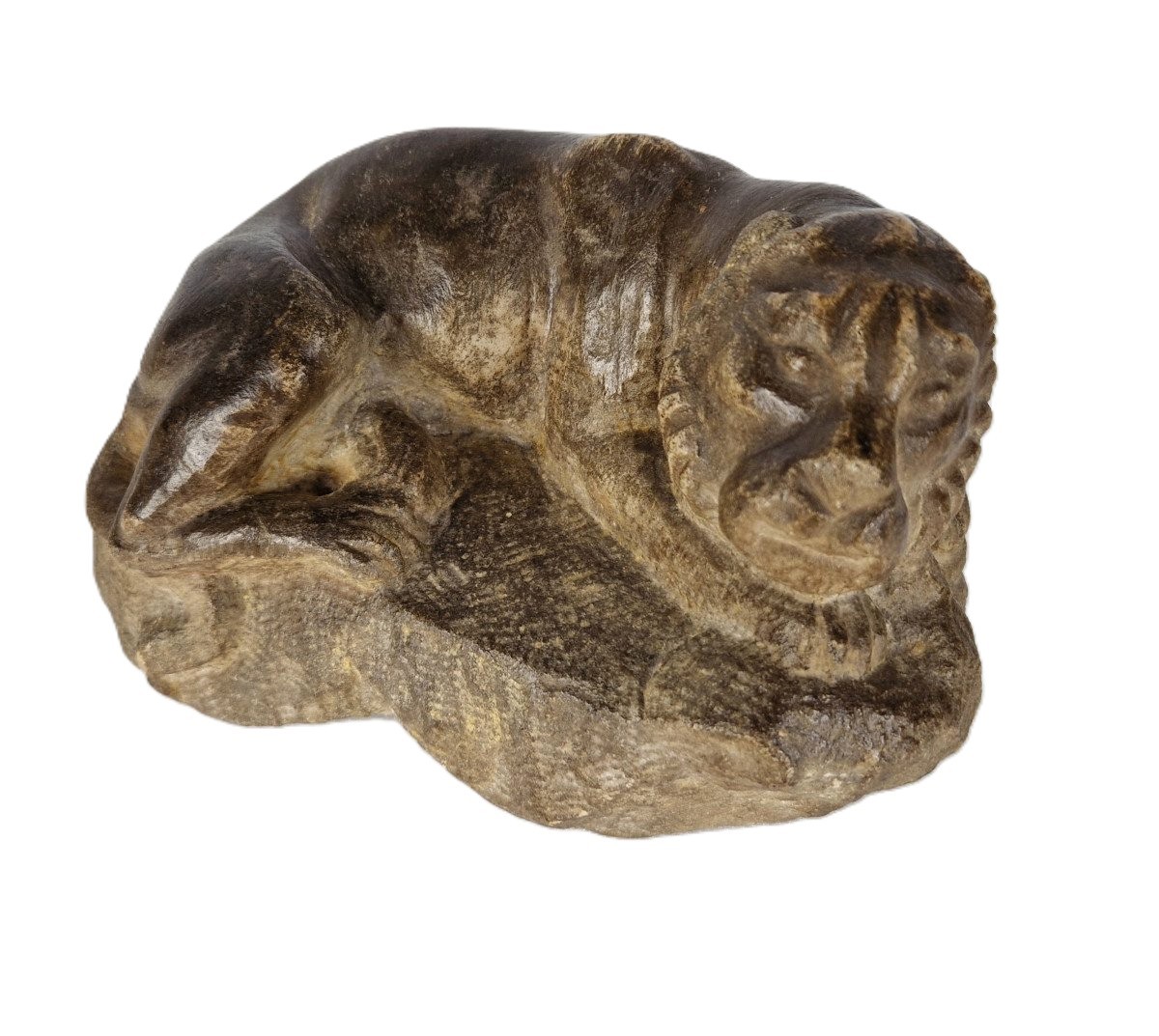
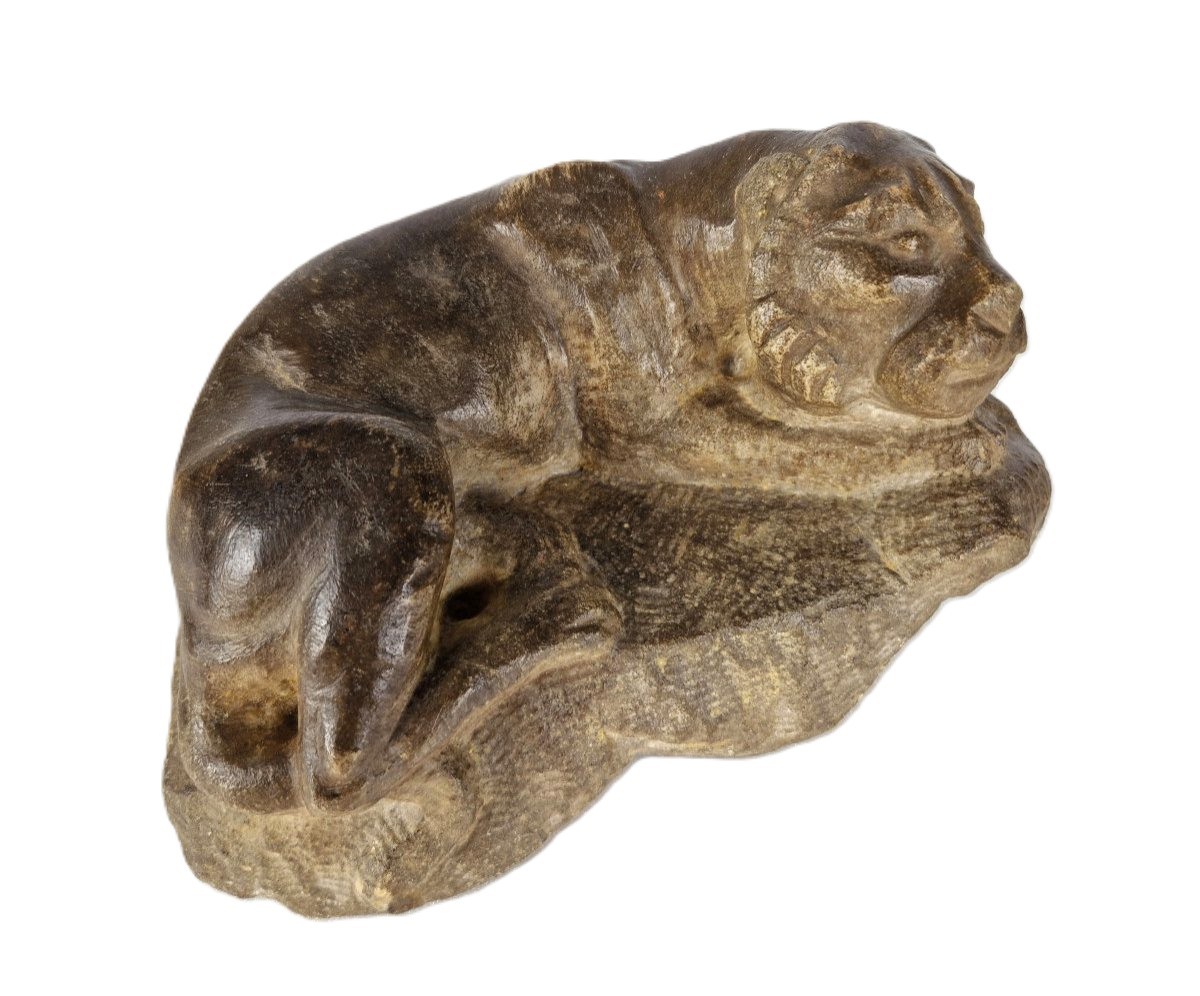
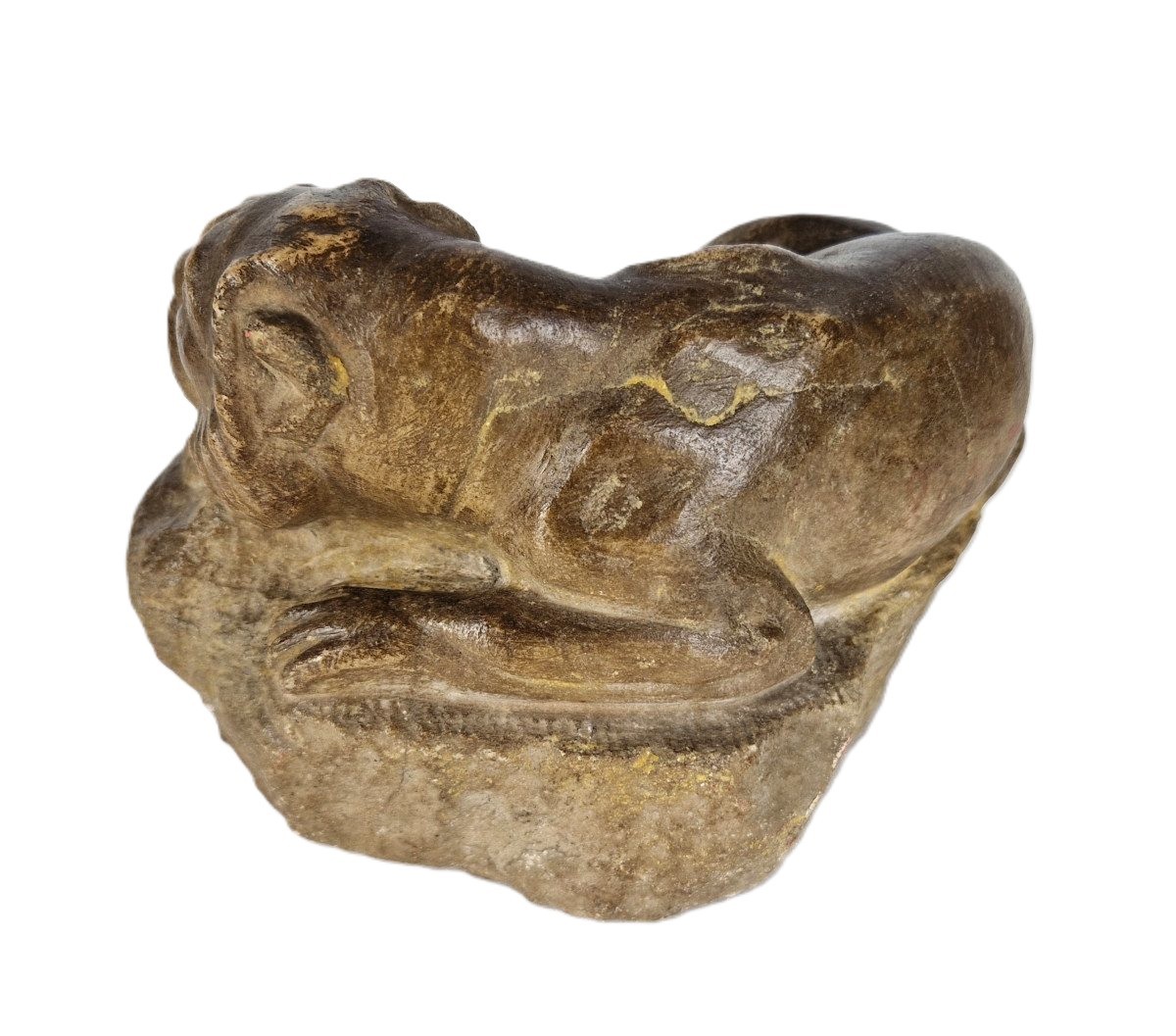
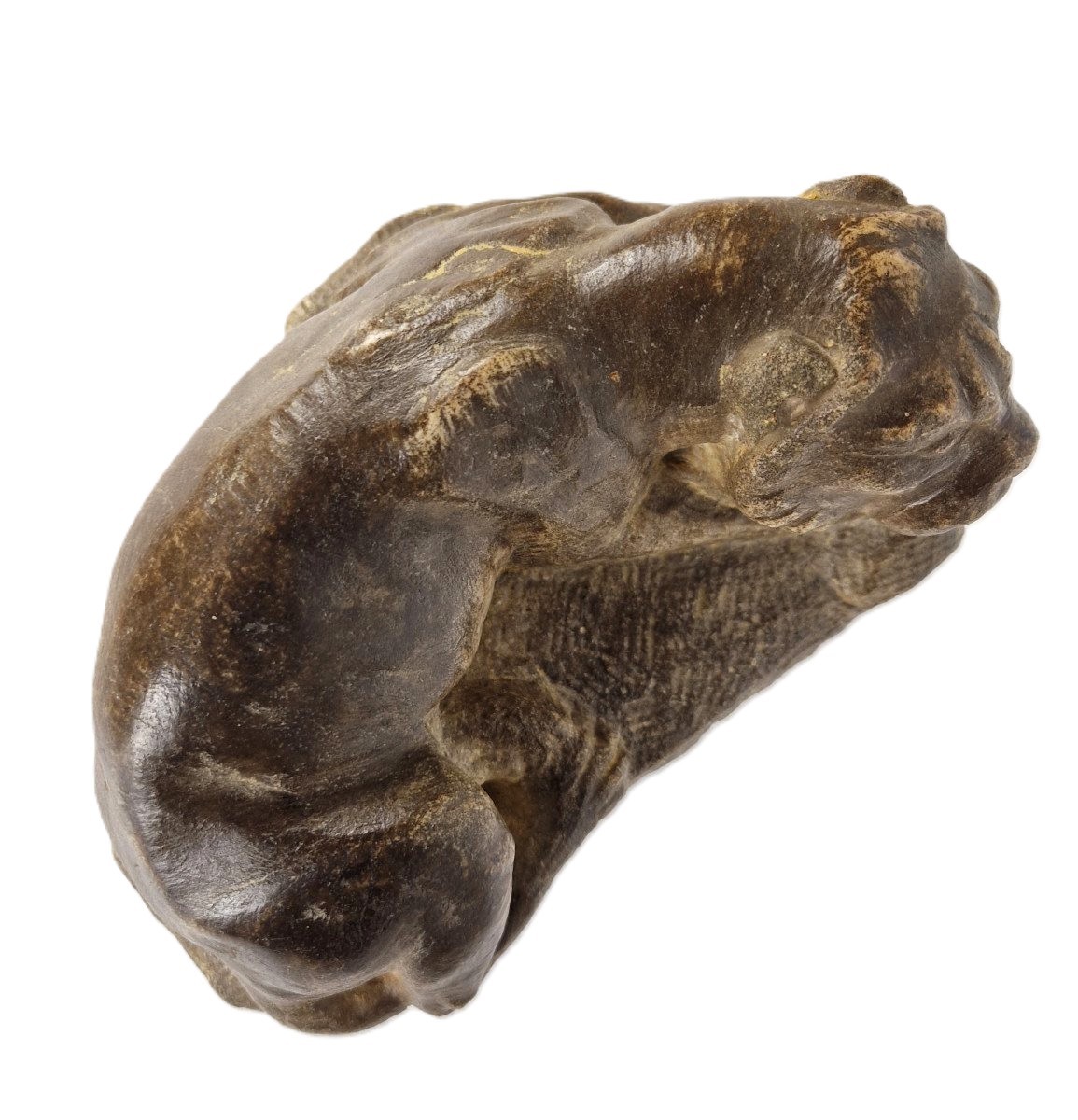

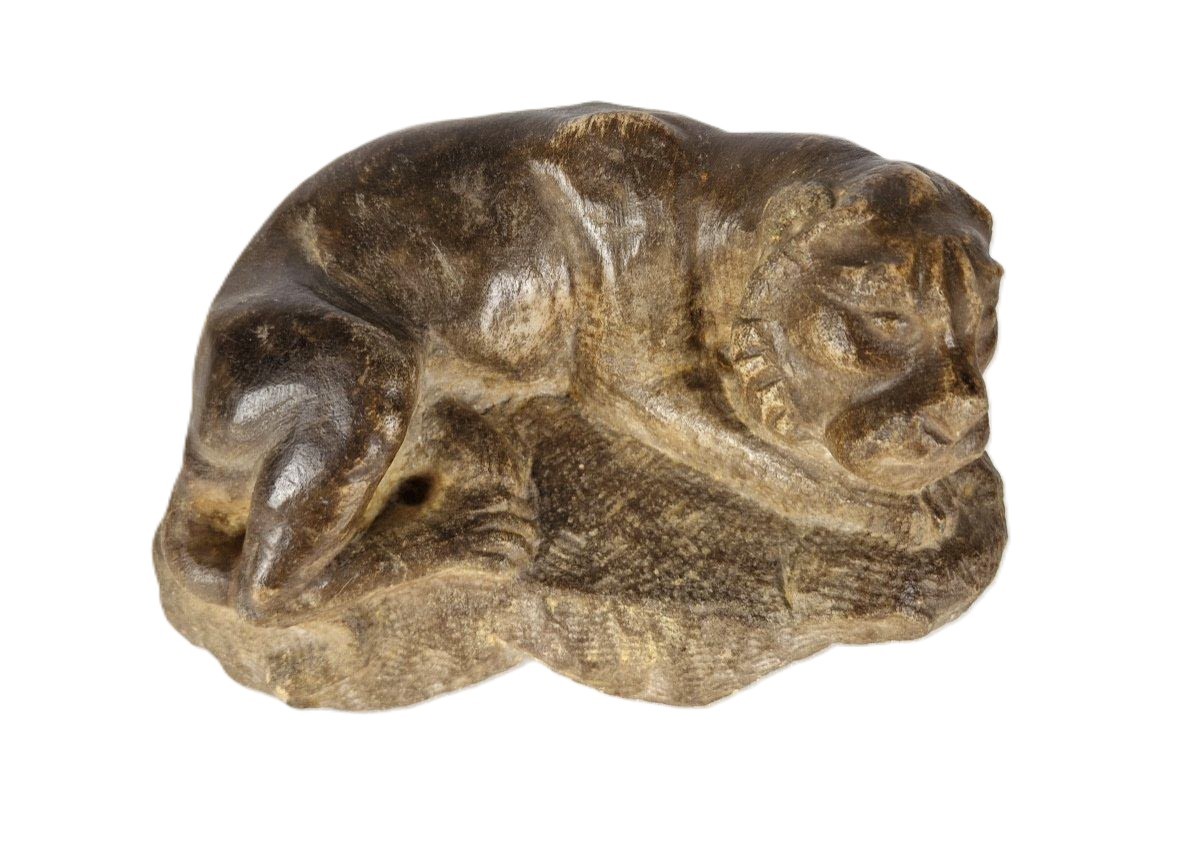
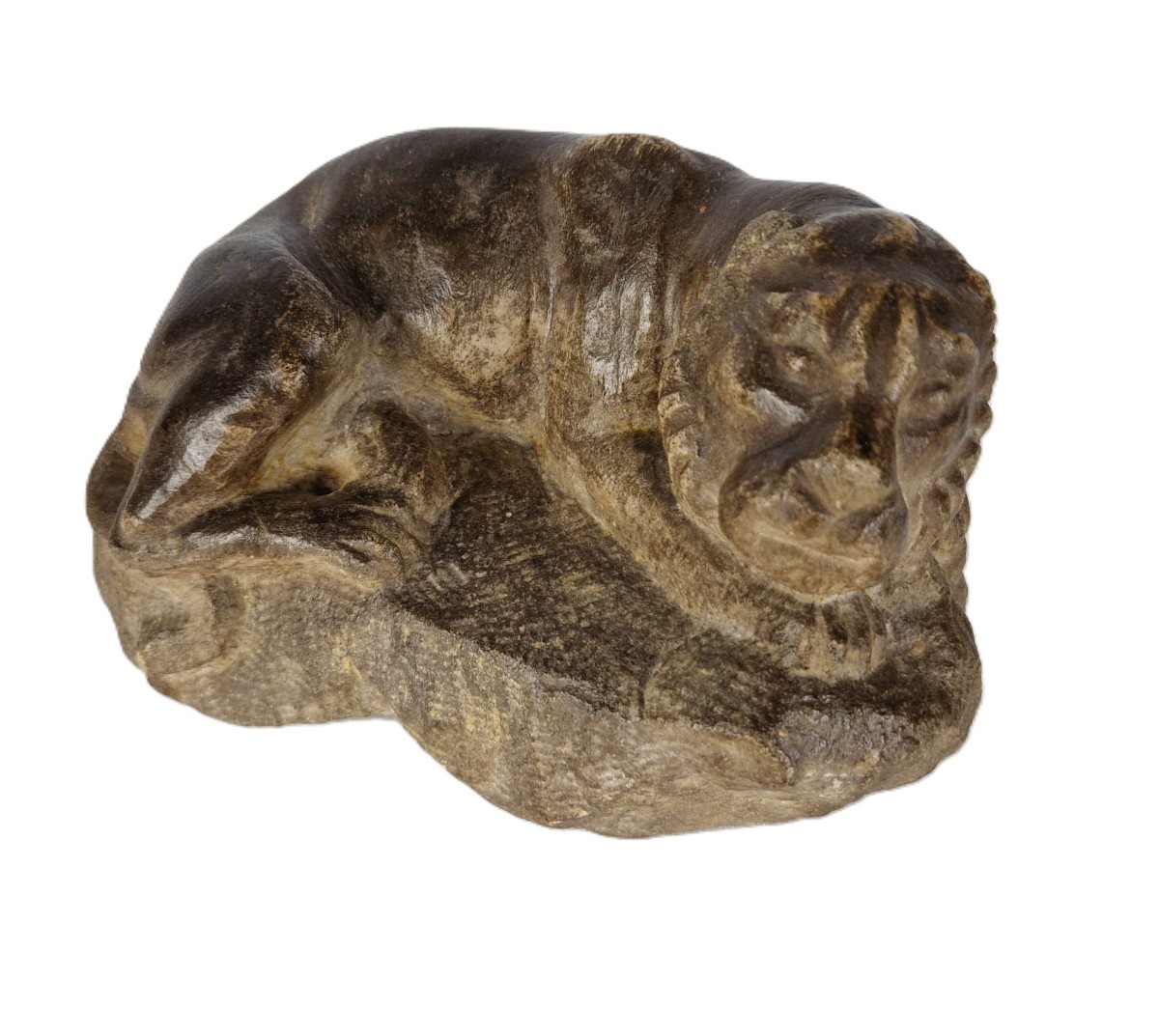
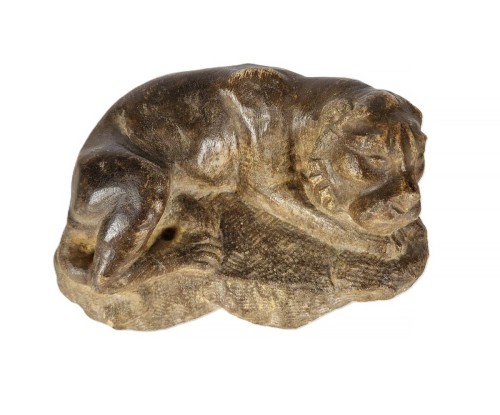
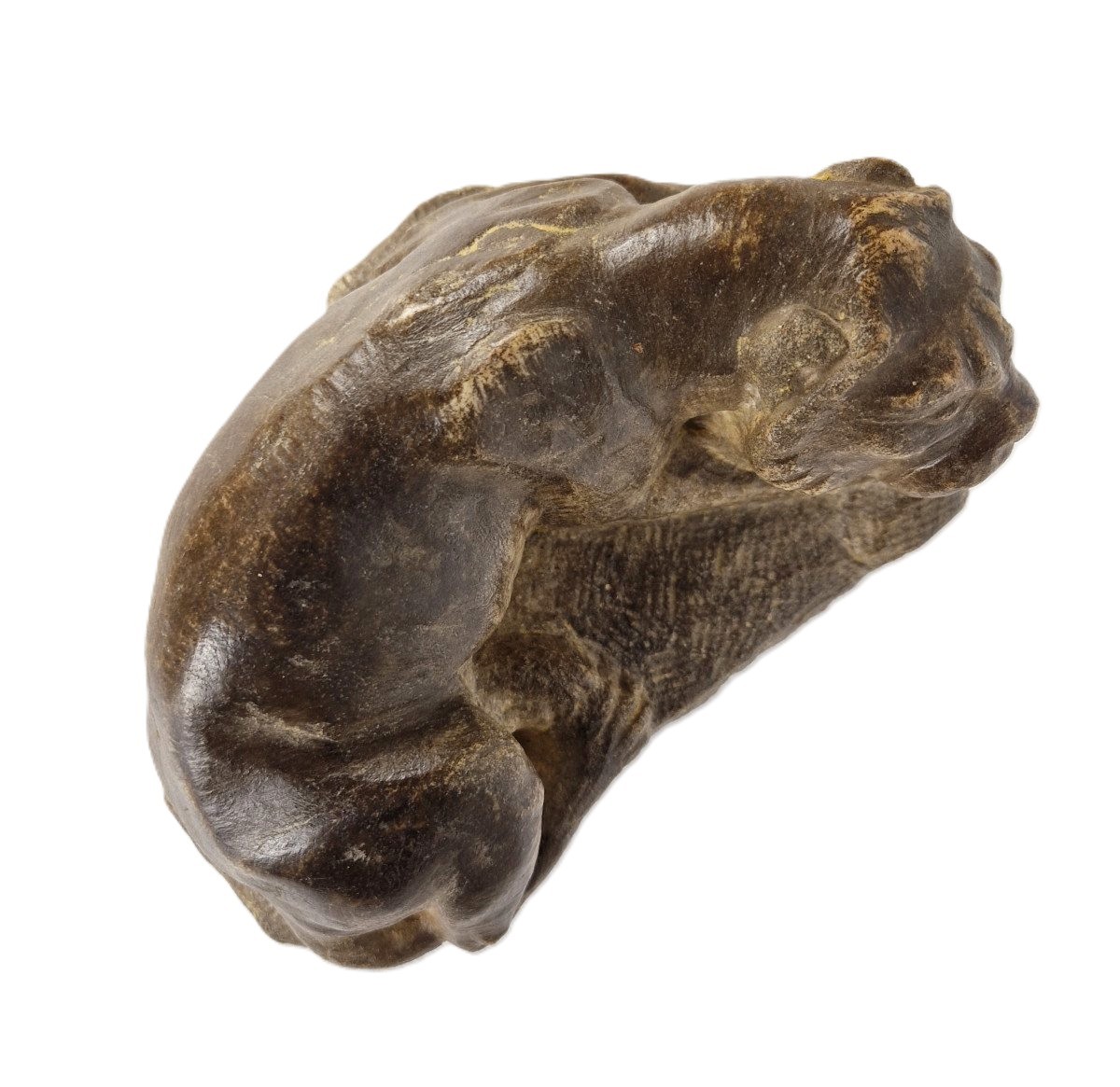
A small reclining lion carved from Boulogne marble, a decorative stone from the Boulonnais region of northern France, measuring 23 cm in length, 15 cm in width and 14 cm in height.
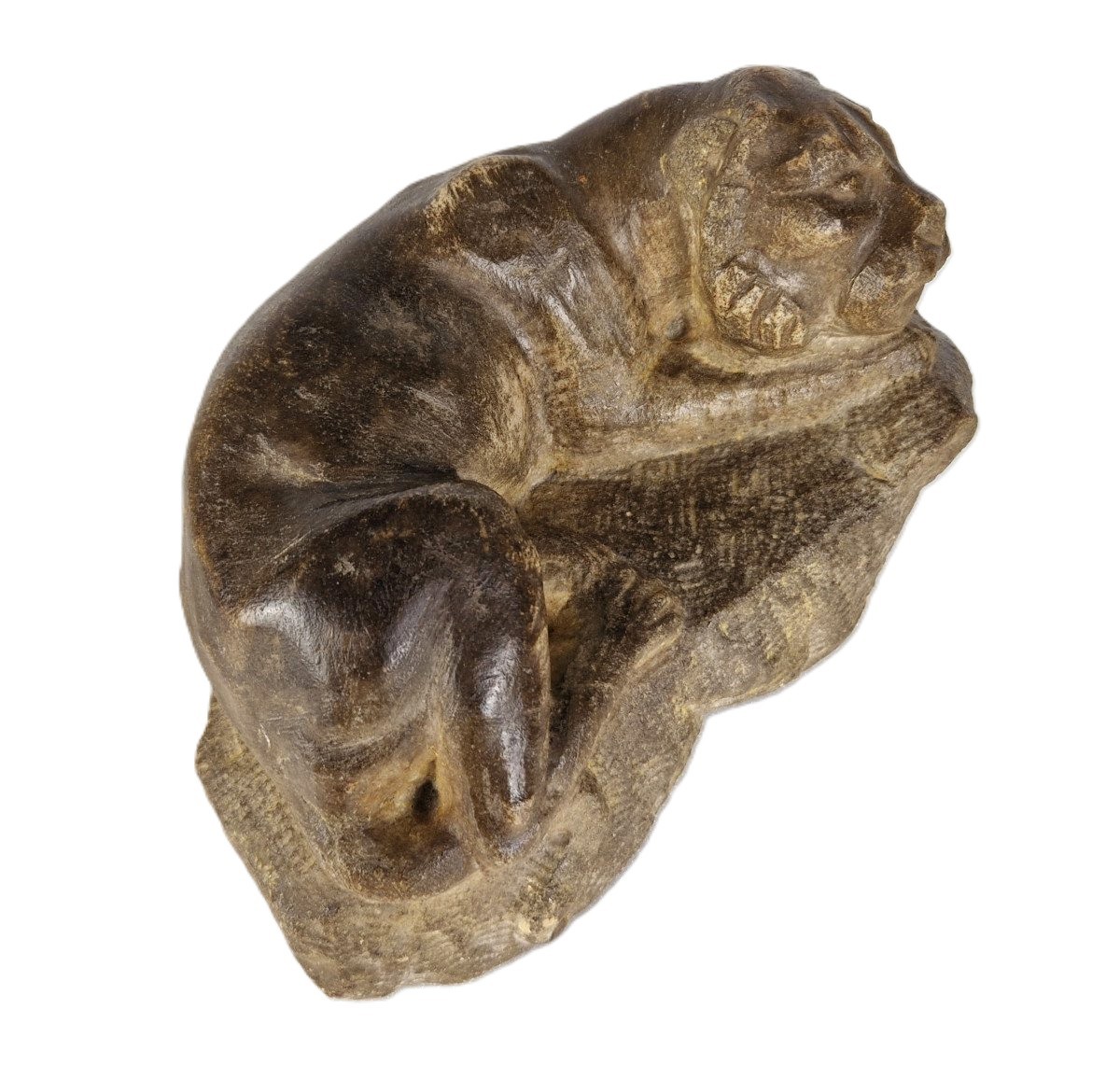
With its compact body, legs folded beneath it and head slightly raised, resting on one of its front paws, the lion adopts a resting posture imbued with quiet vigilance. The modelling is simple and stylised, with full, rounded forms and deliberately simplified anatomy. The figure conveys a calm yet distinctive presence, both animal and symbolic.
The sculpture reflects the spirit of medieval statuary, broadly spanning the 12th to the 14th century, a period during which the lion held an important place in religious, funerary and monumental art. Lions were frequently placed at the feet of tomb effigies, accompanying the representations of knights, nobles and other prominent figures. Symbolising strength, courage, nobility and authority, the lion became a stone companion, watching over the deceased in their eternal repose.
This animal imagery also carried a particular symbolism. The lion was traditionally associated with masculine figures of power and chivalry, while the dog, symbolising fidelity and devotion, was more commonly found at the feet of female tomb effigies. Lions also appeared at the base of standing statues, where they served as protective figures and sometimes as symbolic supports. Whether watching over a knight lying upon his tomb or accompanying an upright noble figure, the lion remained an emblem of power and protection.
An amusing aspect of medieval art lies in the way sculptors depicted exotic animals. Although regarded as the king of beasts, the lion was not necessarily a familiar sight to medieval sculptors. Many had probably never observed one at close quarters. Their representations were therefore often based on bestiaries, ancient accounts, legends, illuminated manuscripts and engravings circulating at the time. This sometimes resulted in lions with rather surprising features: almost human-like heads, highly stylised bodies and unexpected expressions. The aim was not always to reproduce the animal faithfully, but rather to convey what it represented: strength, nobility, courage and vigilance. This is also what gives medieval animal sculptures their particular charm, somewhere between observation, imagination and tradition.
The pose and compact dimensions of this example are consistent with the traditions of monumental and funerary sculpture of the period. Two interpretations may be considered: a lion placed at the feet of a tomb effigy, in keeping with funerary tradition, or an element belonging to the lower section of a statue or larger sculpted monument.
The choice of Boulogne marble is also of interest. This decorative stone from the Boulonnais region, notably extracted from the quarries around Marquise, belongs to a long local tradition of stone quarrying and craftsmanship. Valued for its carving and finishing qualities, it was used in religious architecture, monumental decoration and sculpture. Its use is documented in the medieval construction of Notre-Dame Cathedral in Saint-Omer, where Marquise stone was combined with Tournai stone during 12th-century building works. Such major ecclesiastical projects bear witness to the importance of this stone in the monumental heritage of northern France.
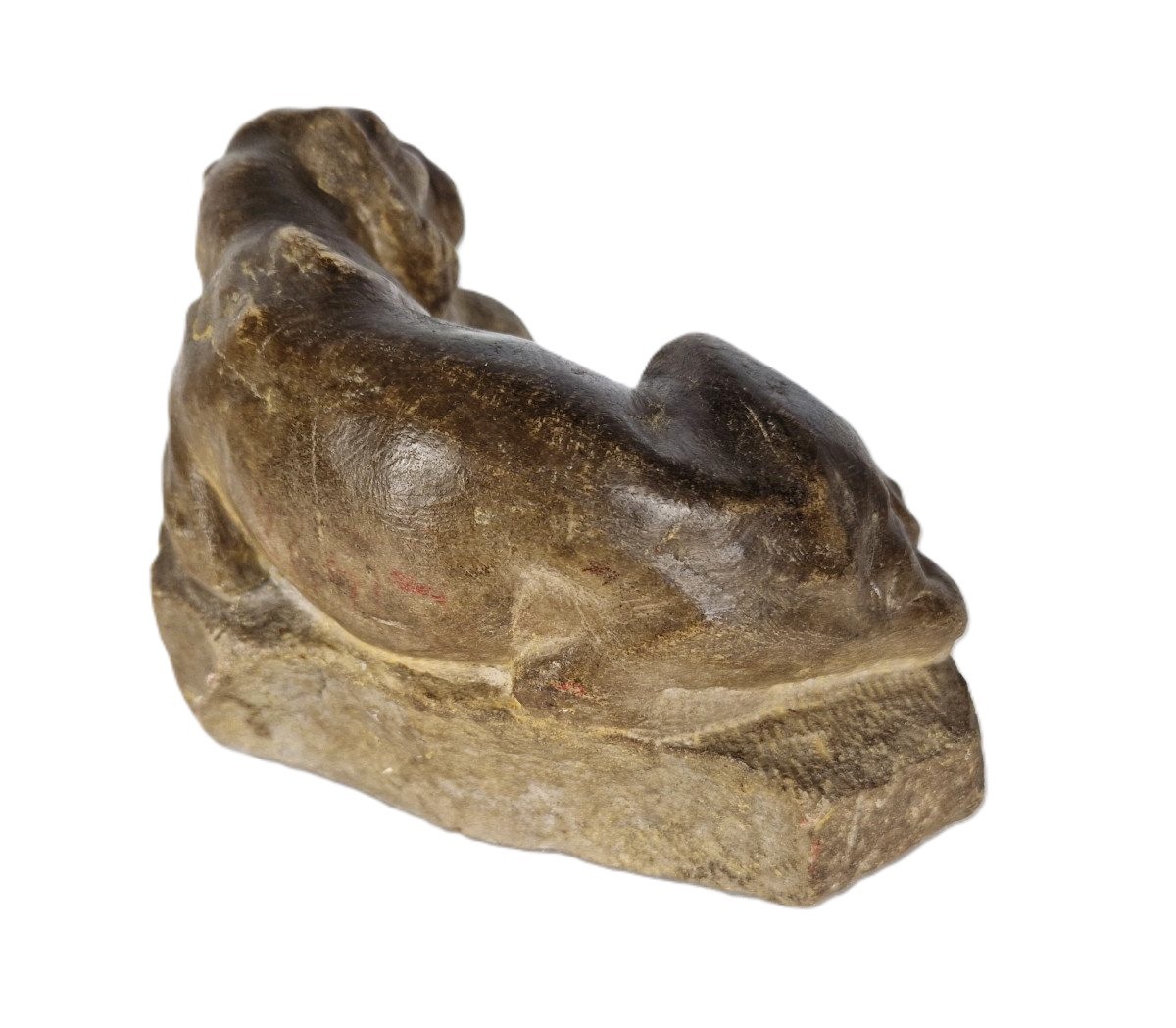
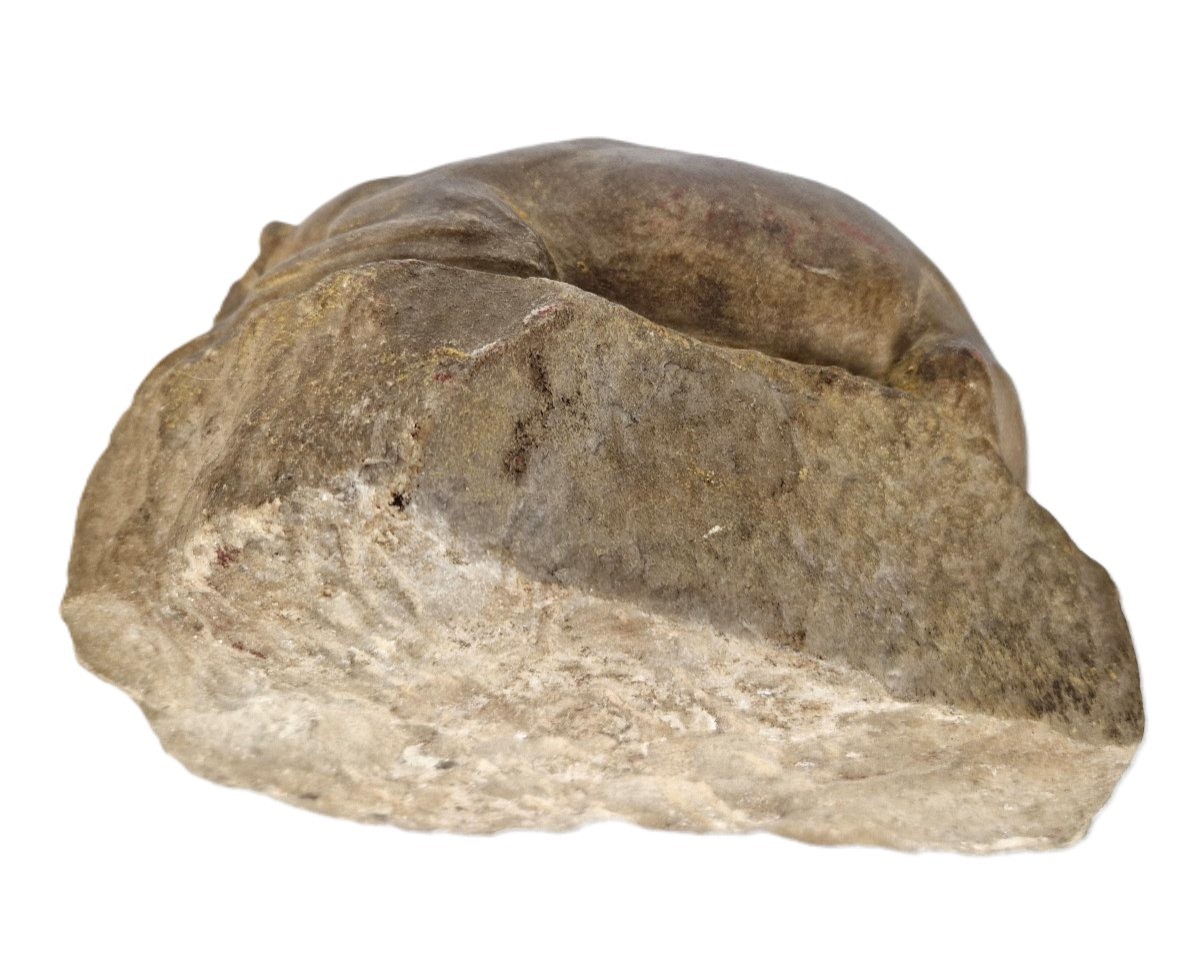
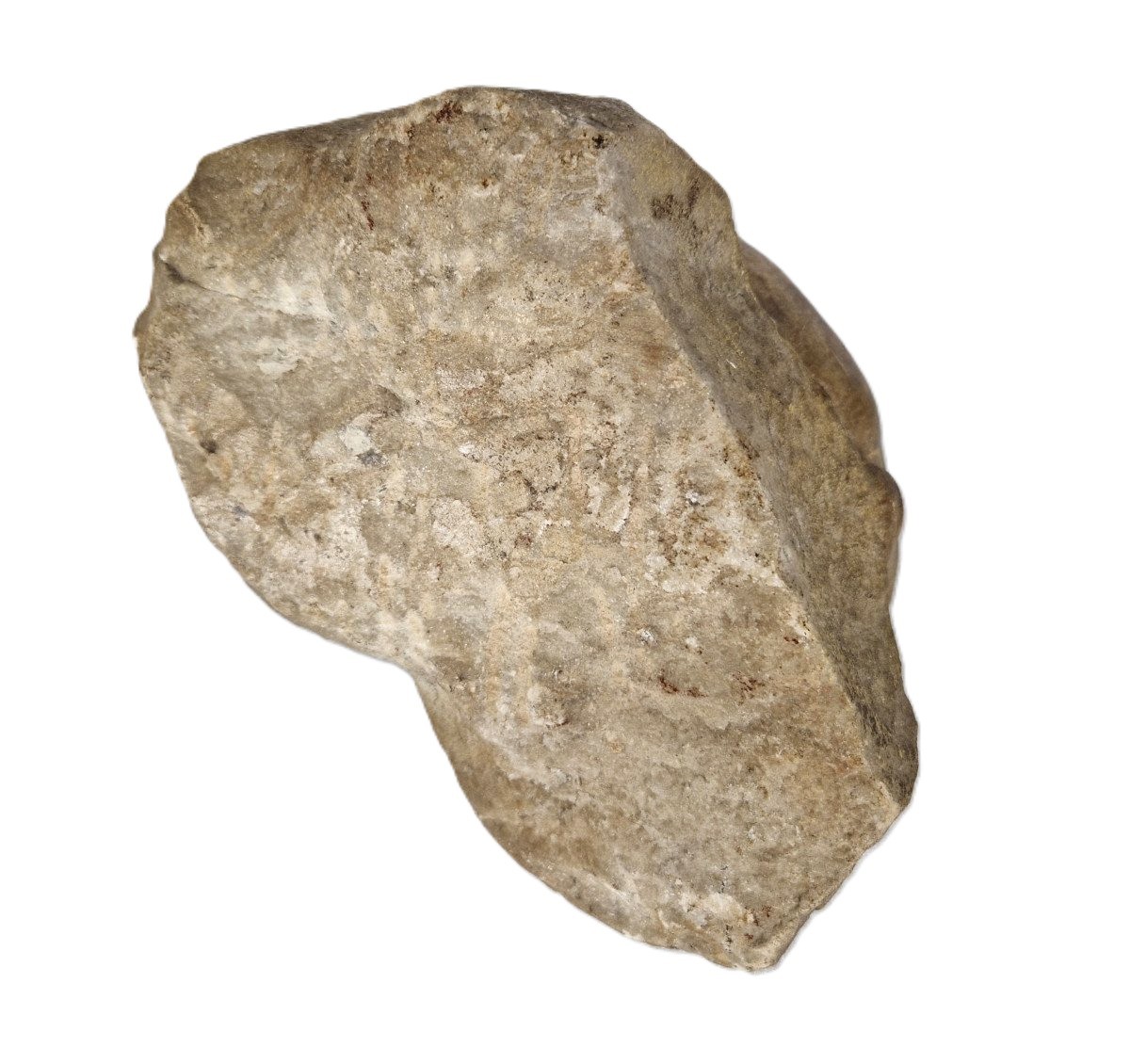
The differences in surface finish are also noteworthy. The more visible areas are more carefully worked, while the sides and rear retain a much rougher and more irregular appearance. Small tool marks remain visible in certain areas, recalling the carving process and the successive stages of working the stone.
With its softly patinated stone, compact silhouette and peaceful attitude, this little lion retains the distinctive character of an ancient sculptural fragment. A symbol of strength and protection, it seems to preserve something of its original purpose: that of a silent guardian, once placed beside a figure or monument of which perhaps only this stone witness remains.
Delevery information :
General conditions of sale and delivery: The price indicated on the ad includes the delivery throughout the metropolitan France. For Germany, Belgium, Italy or Spain contact us for a quote. For the United States, Europe outside the EU or the rest of the world contact us for a quote but the import taxes applicable in each country remain at your expense. The packing and the follow-up of the transport are insured by ourselves or by professional carriers specialized in works of art.