Offered by Dei Bardi Art
REQUEST INFORMATION

Sculptures and works of art from the Middle Ages and the Renaissance
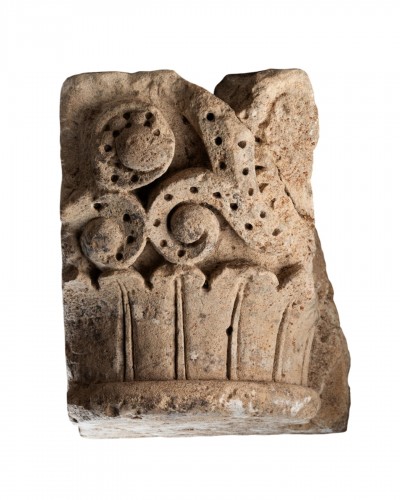
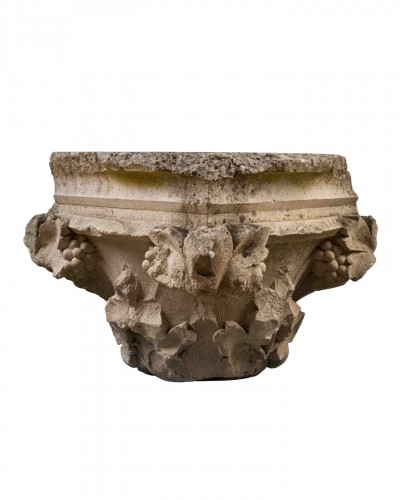
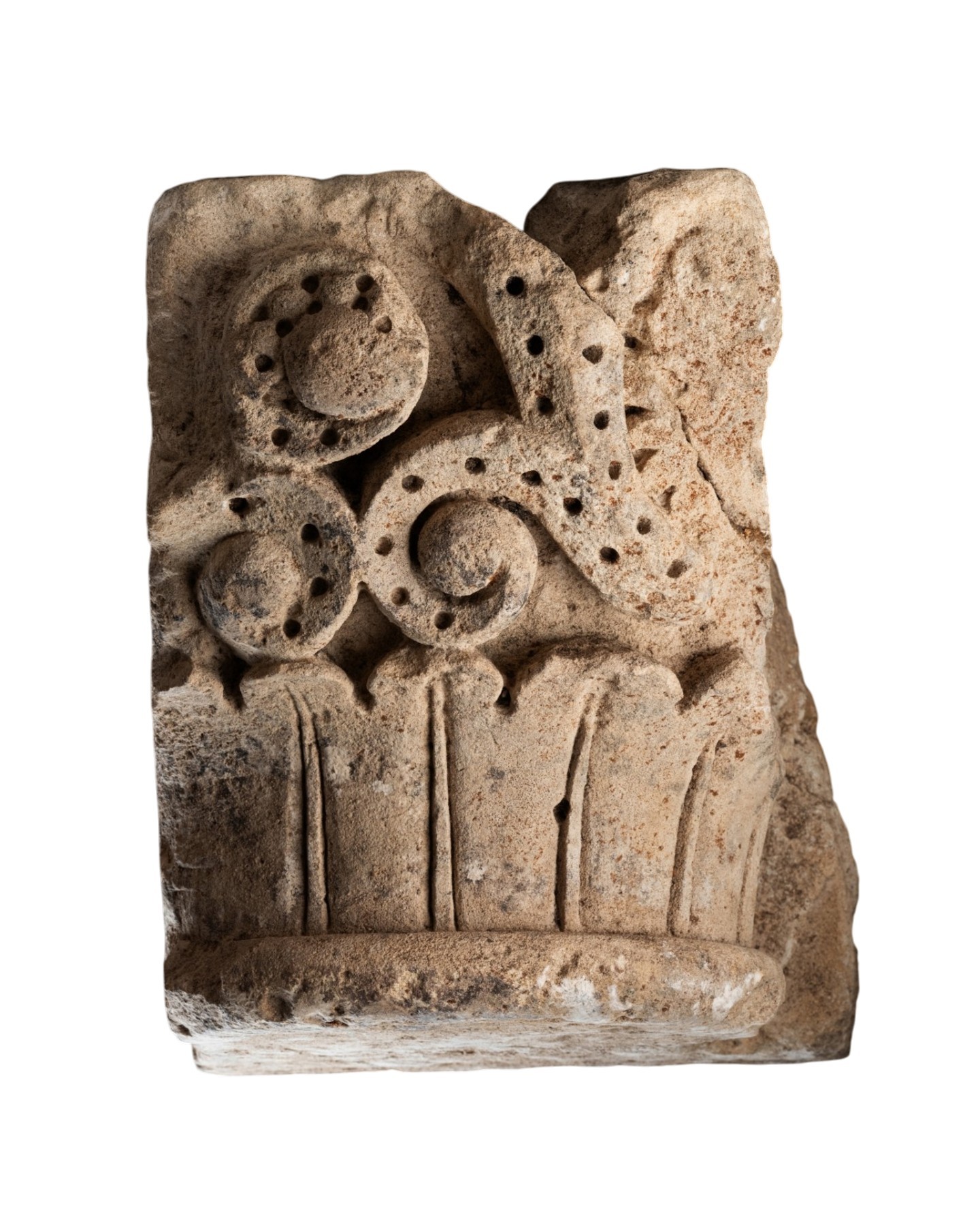
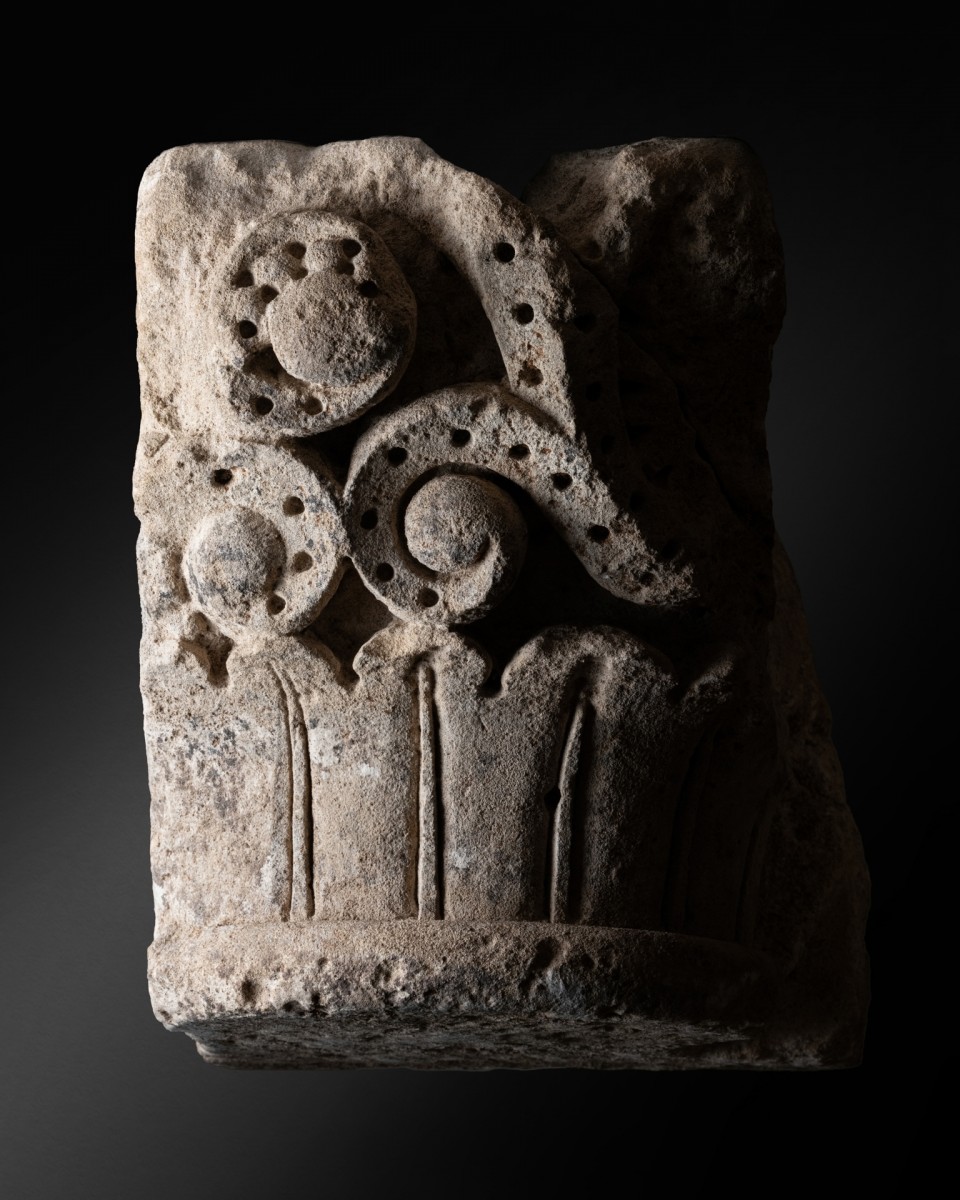
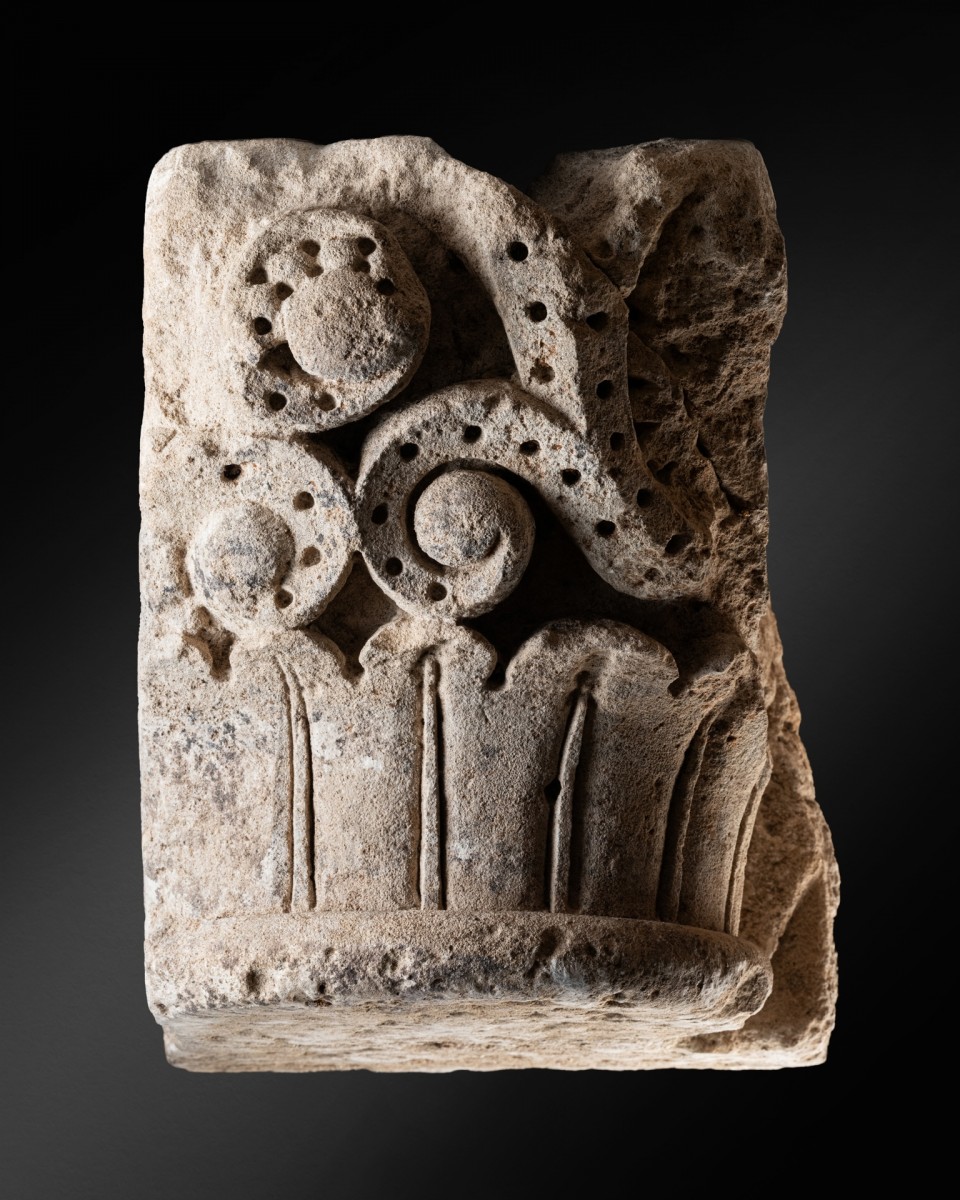
Romanesque Capital
Southwestern France
12th century?
Carved limestone?
37 x 33 x 52 cm
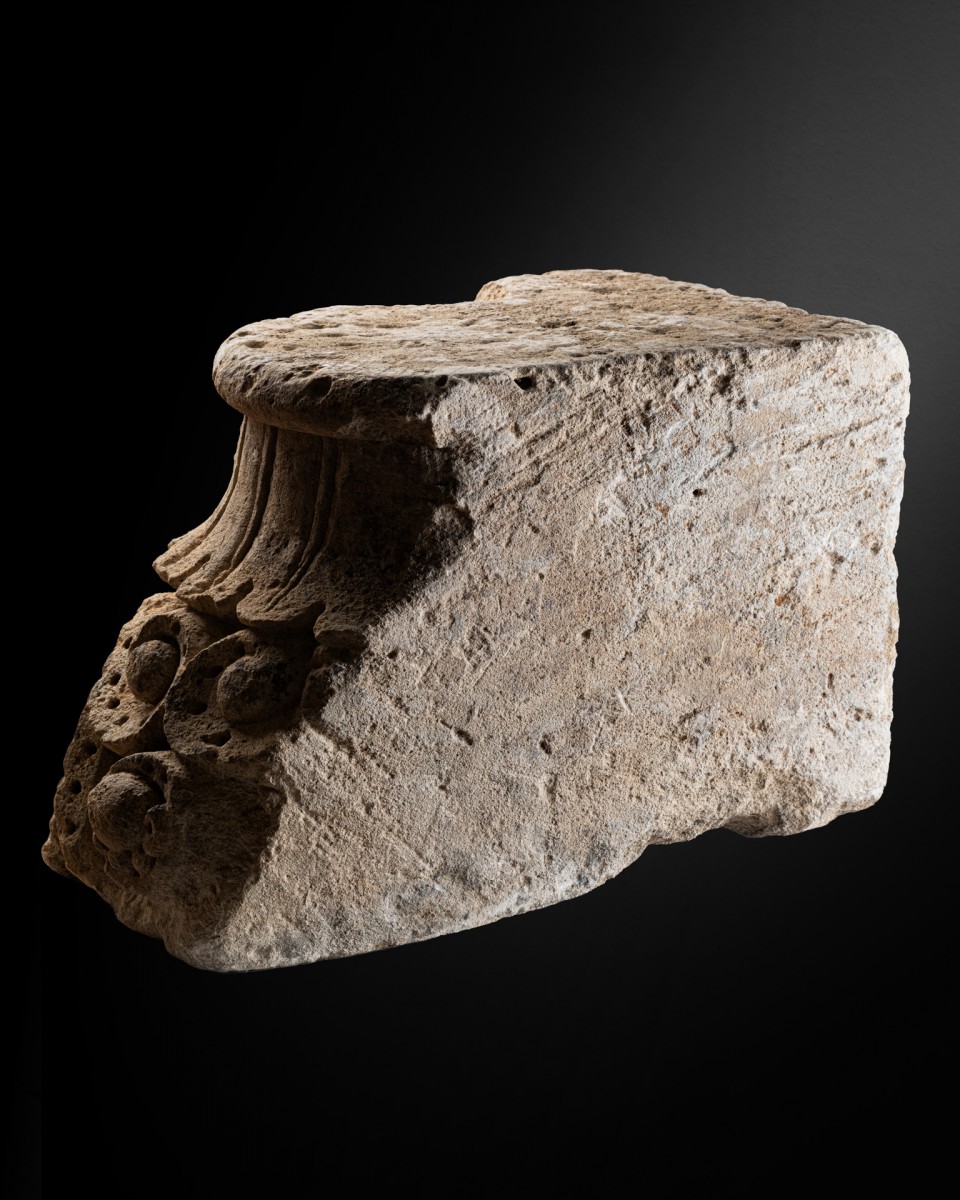
This capital fragment, carved from fine-grained limestone, has a basket that is circular at the base and flares to a rectangle, enlivened by a rich stylised vegetal decoration. The composition centres on fleshy, ribbed leaves framed by scrolling volutes recalling croziers. The vertical ribs of the basket and the regular drilled stippling of the volutes and leaves give the surface a play of light characteristic of southern Romanesque sculpture. The curved profile of the basket and the surviving portion of the abacus suggest a corner capital, probably from a cloister or portal.
The treatment of the foliage, with its ribbed palmettes, crozier-form volutes and alternation of relief and void achieved through careful drillwork, belongs to the sculptural tradition of southwestern France in the twelfth century. This tradition draws on both antique vocabulary (rinceaux, palmettes) and the ornamental idiom of the major Romanesque building sites of Languedoc and Aquitaine. The strongly geometric stylisation of the foliage and the systematic use of the drill to animate the surfaces find parallels in the vegetal capitals of the cloister of the abbey of Saint-Pierre, Moissac (Tarn-et-Garonne), circa 1100, for the treatment of the palmettes and ribbed leaves. They also compare with sculpture from Saint-Sernin, Toulouse, and the Toulouse workshops, for the geometric rigour of the volutes and the generous scale of the abacus.
With the crispness of its volutes and the near-abstract simplification of its foliage, this stylised vegetal decoration combines great elegance with a strikingly modern sensibility.