Offered by Dei Bardi Art
REQUEST INFORMATION

Sculptures and works of art from the Middle Ages and the Renaissance
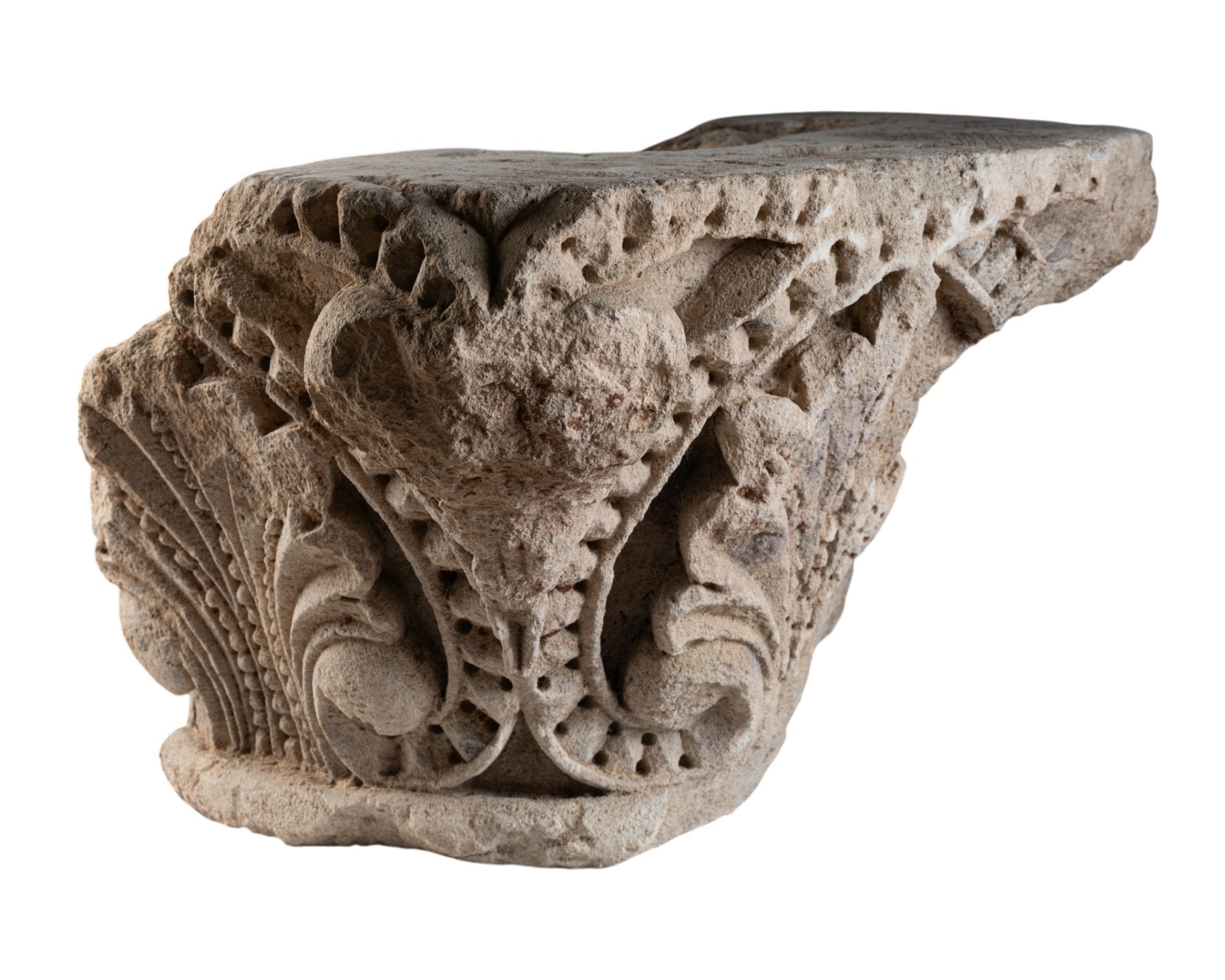
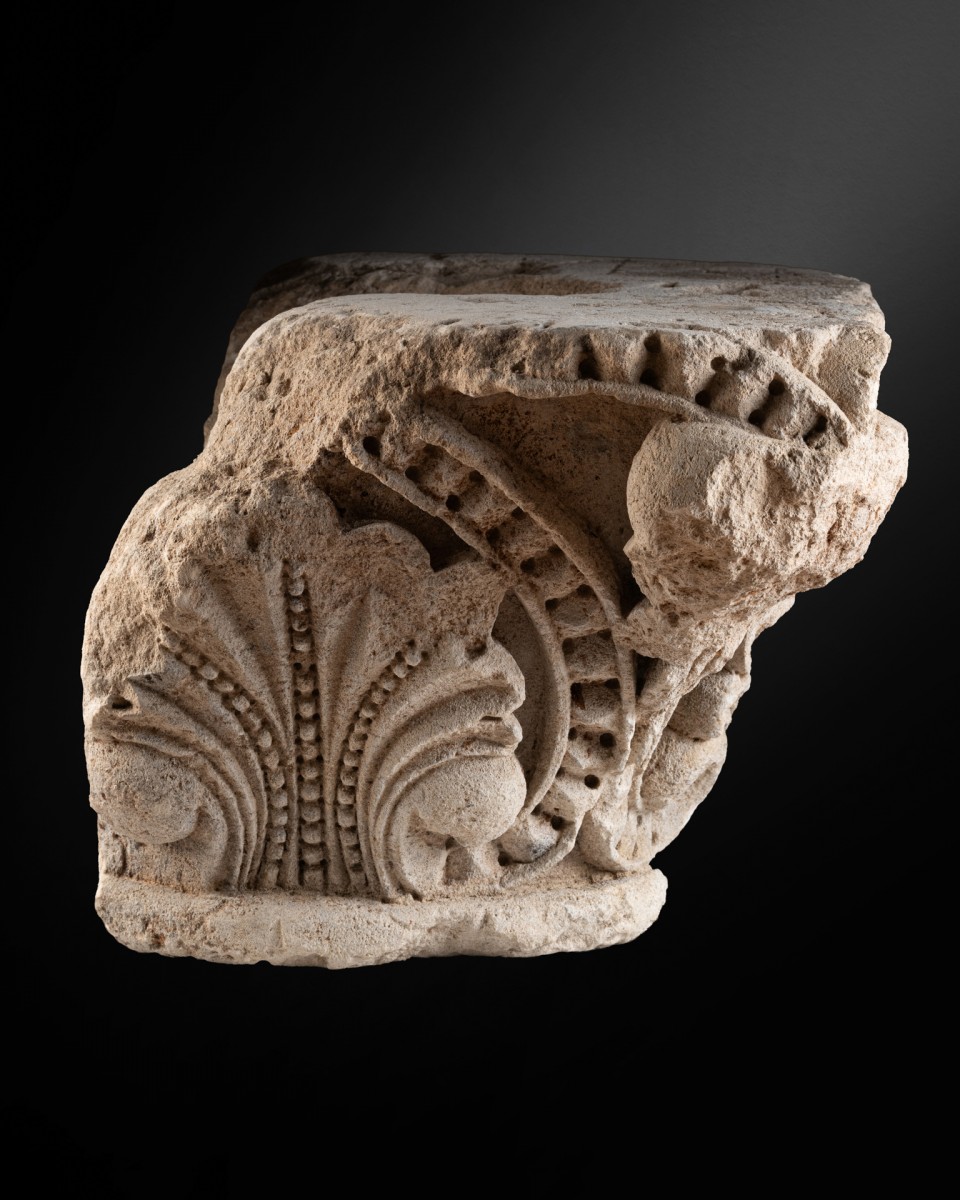
Romanesque limestone capital
Southwestern France (Languedoc or Saintonge), first half to mid-12th century
37 x 59 x 41 cm
shelly limestone
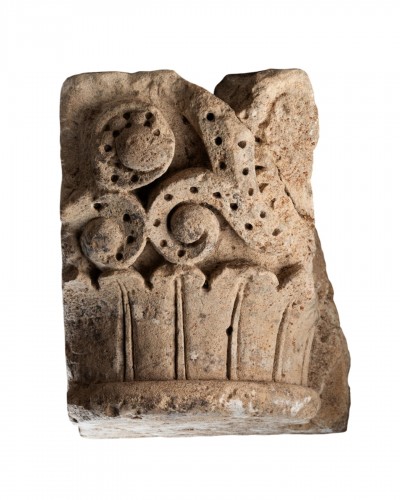
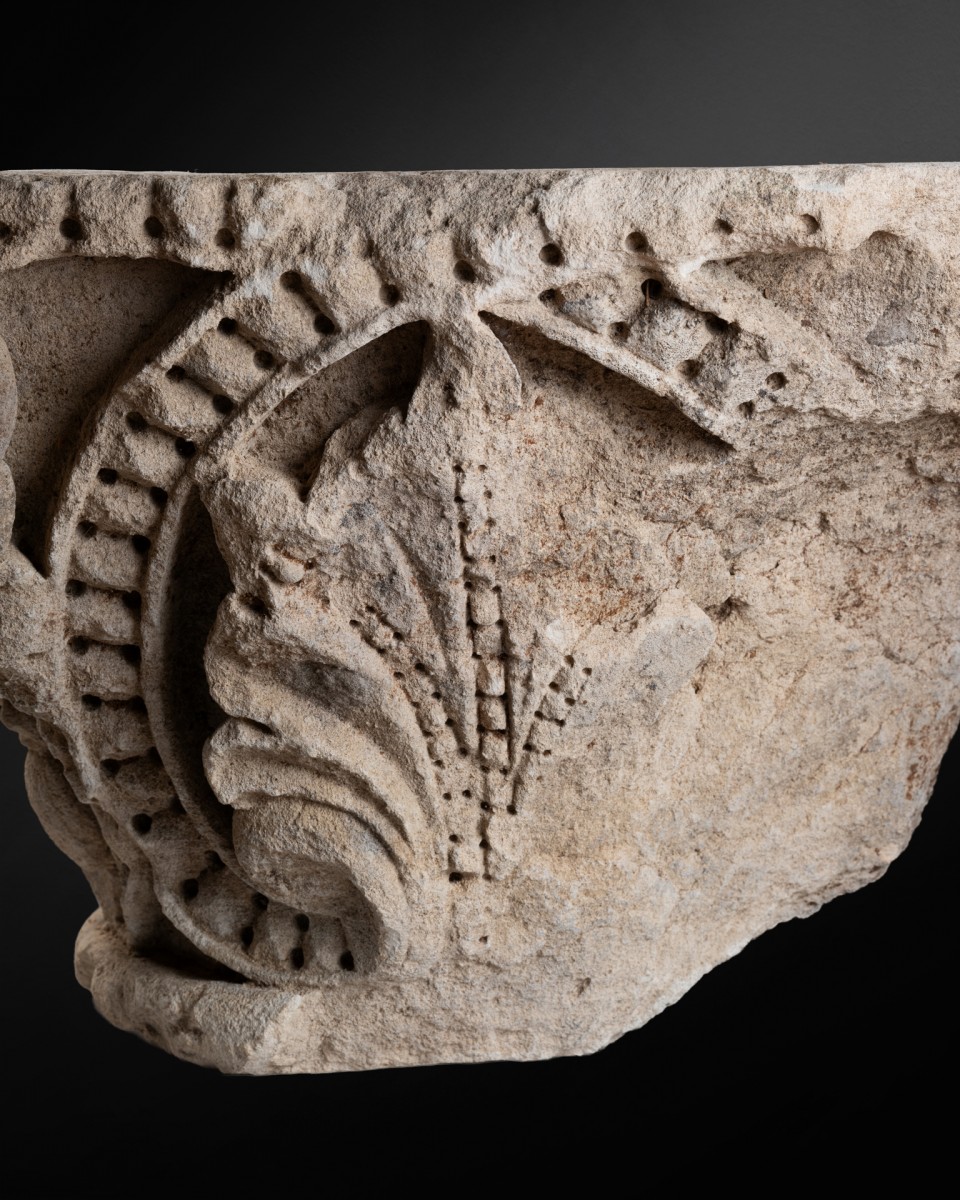
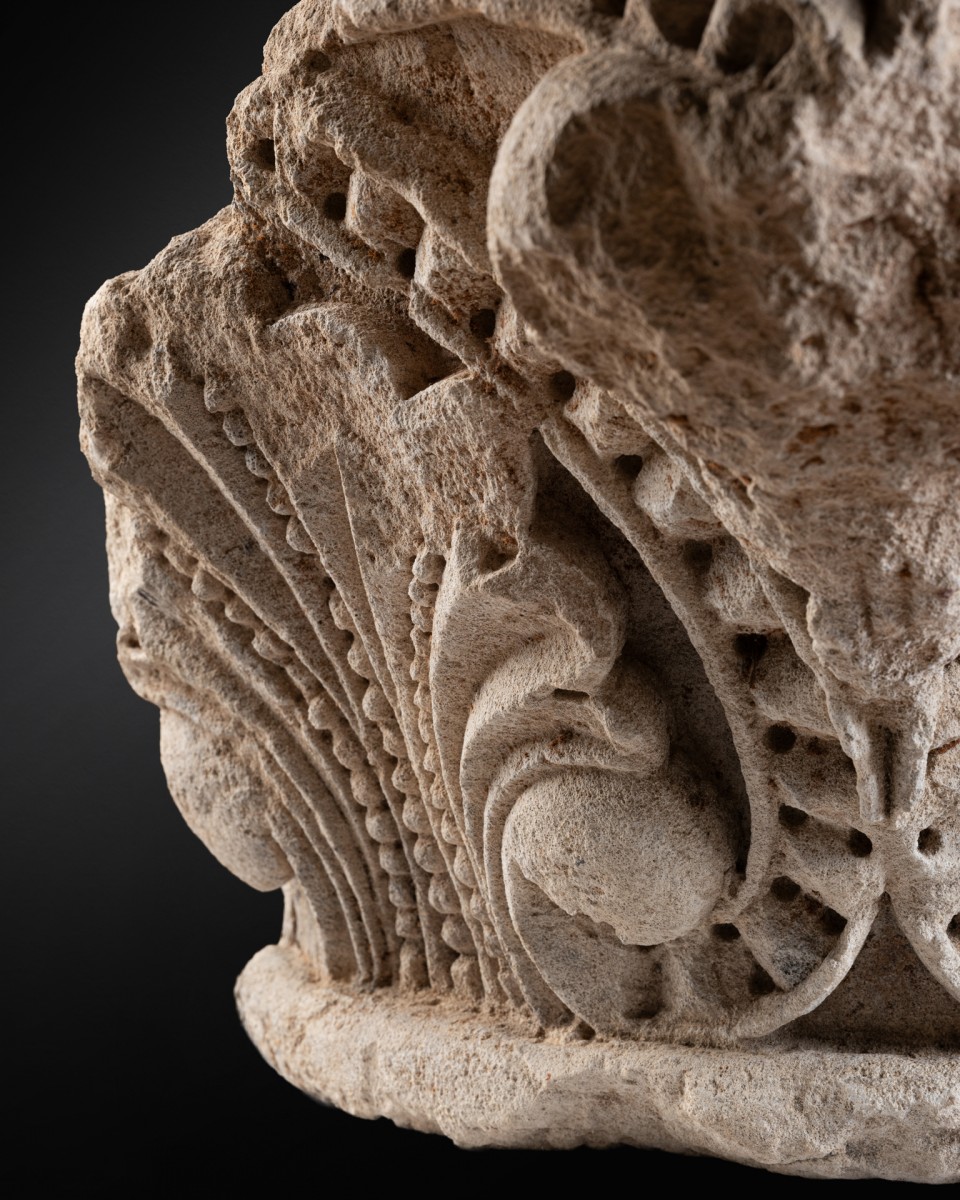
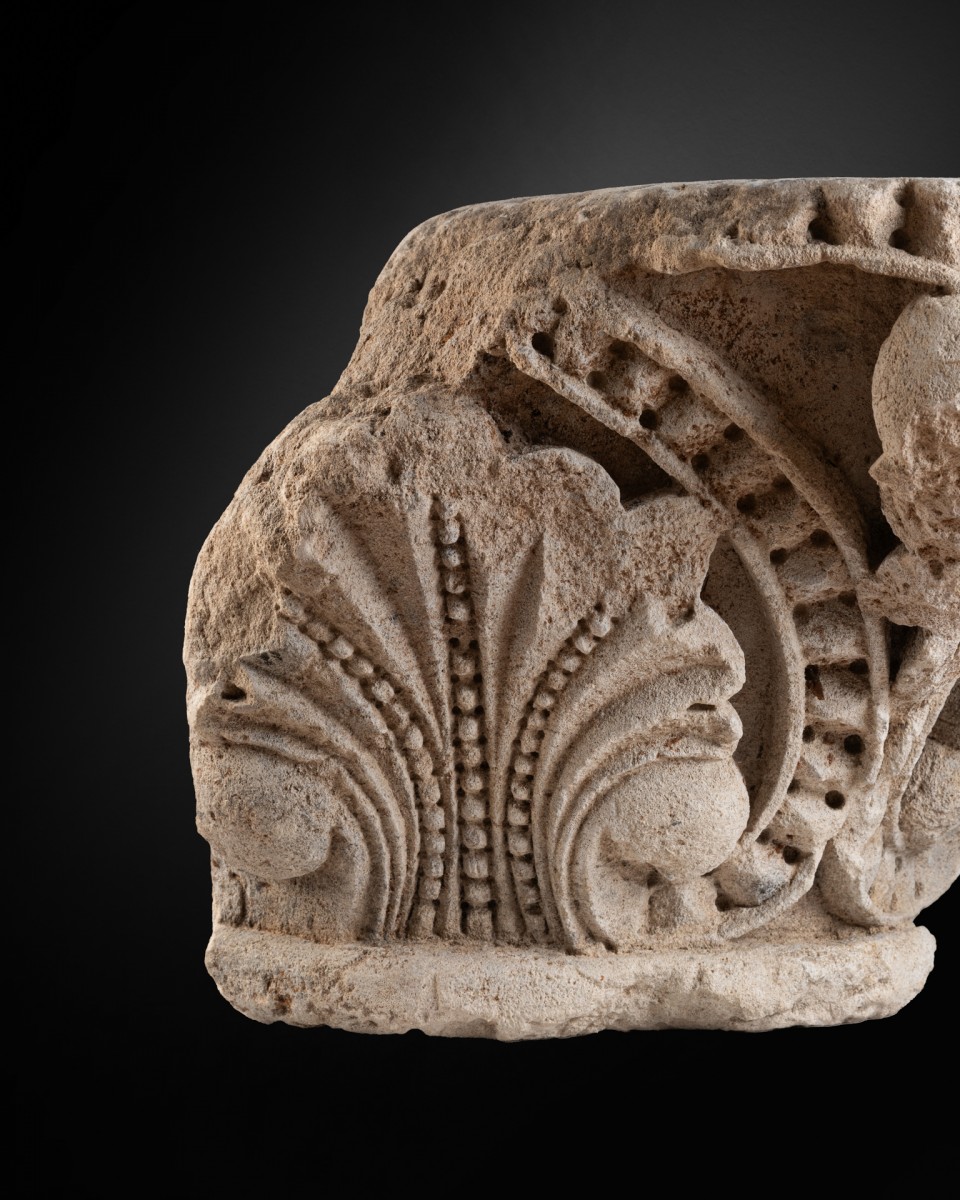
The rectangular, slightly tapered corbeille develops, on its principal face, a system of confronted spiral volutes coiling around a salient central boss. This compositional scheme, ultimately derived from the antique Corinthian capital by way of its Carolingian and pre-Romanesque reinterpretations, is here entirely absorbed into a decorative logic specific to the late eleventh and twelfth centuries: the volute no longer functions as a structural reminiscence of the acanthus leaf but as an autonomous motif, treated in low relief and animated by a systematic punctuation of small trepan-drilled holes. This drillwork technique, inherited from late-antique sculptural practice and widely disseminated among Romanesque workshops of the Midi, is deployed here not as an accessory device but as an organizing principle of the surface, generating a rhythm of solids and voids that modulates the effect of raking light. The vertically fluted lower listel of the abacus recalls the rarer tradition of gadrooned or "water-leaf" capitals attested notably in Poitou and the Saintonge.
The proposed regional attribution rests on a convergence of stylistic indices rather than a single decisive comparison. The treatment of the tightly coiled spiral volute, combined with the systematic, almost ornamental use of the trepan, finds its closest parallel in the sculptural production of the cloister of Moissac (circa 1100–1115), where R. Hamann and M. Schapiro long ago noted the technical virtuosity of the workshop in its plastic treatment of foliage and volutes (Schapiro, The Sculpture of Moissac, 1985). A more distant but significant affinity can also be drawn with certain capitals of the ambulatory and nave of the basilica of Saint-Sernin in Toulouse, where M. Durliat identified comparable schemes of hooked volutes punctuated with beading (Durliat, La sculpture romane de la route de Saint-Jacques, 1990). The systematic recourse to the trepan further invites comparison with Saintonge Romanesque production, where, according to F. Eygun, this procedure constitutes a veritable technical signature of the twelfth-century local workshops (Eygun, Saintonge romane, Zodiaque, 1970).