Offered by Galerie Gilles Linossier
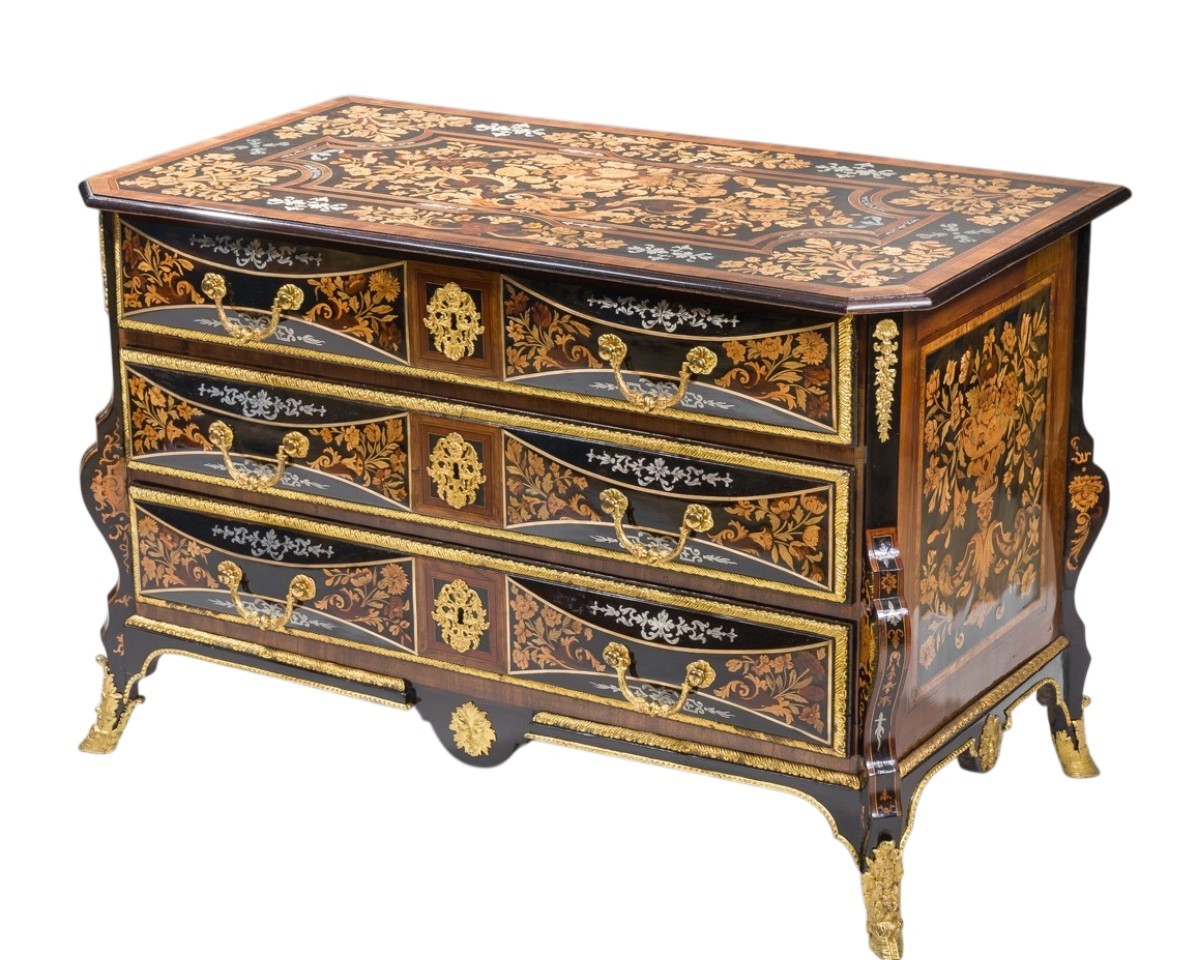
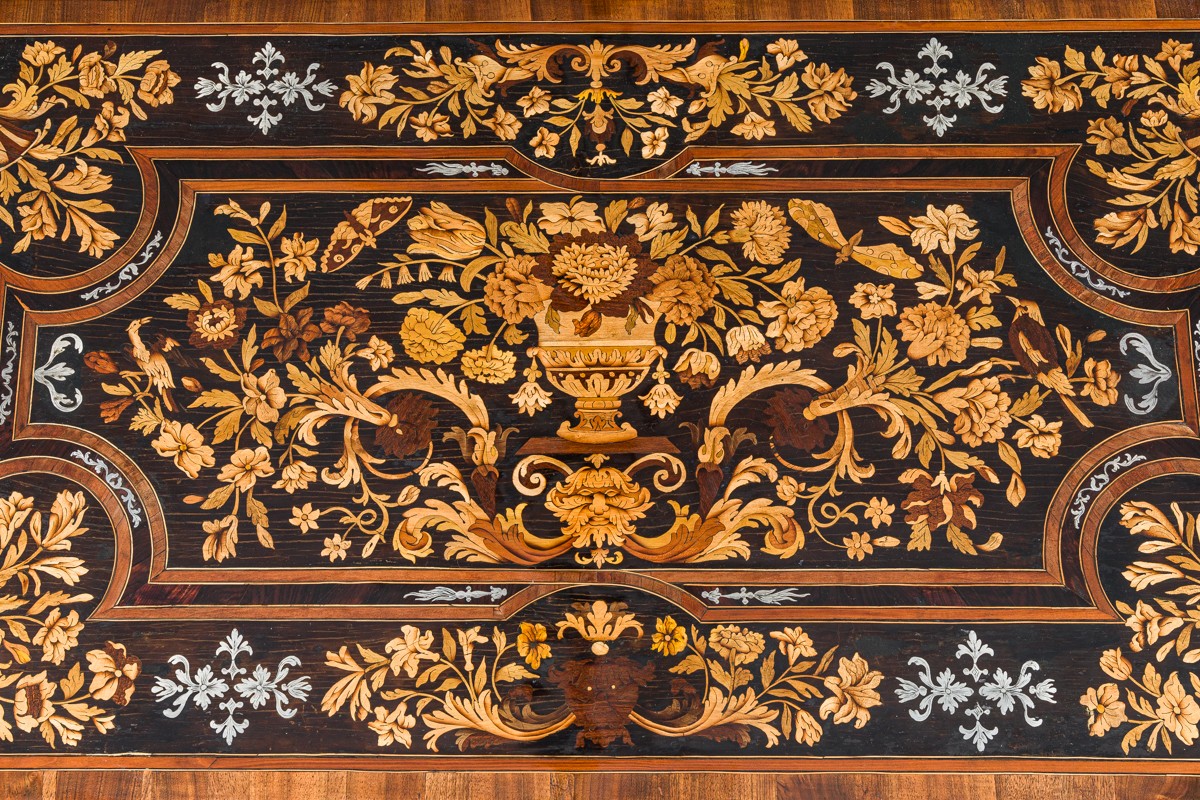

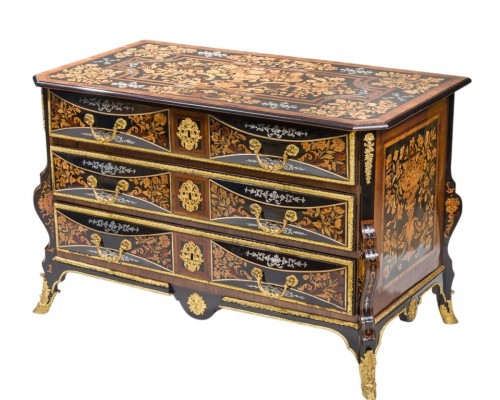
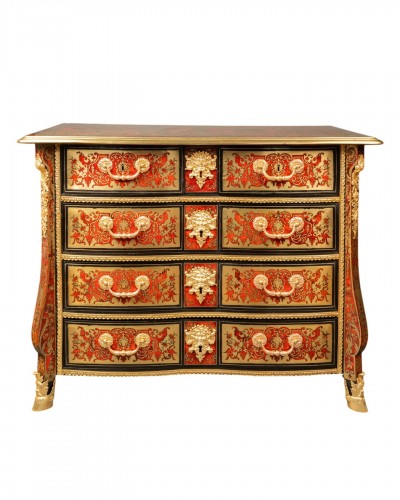
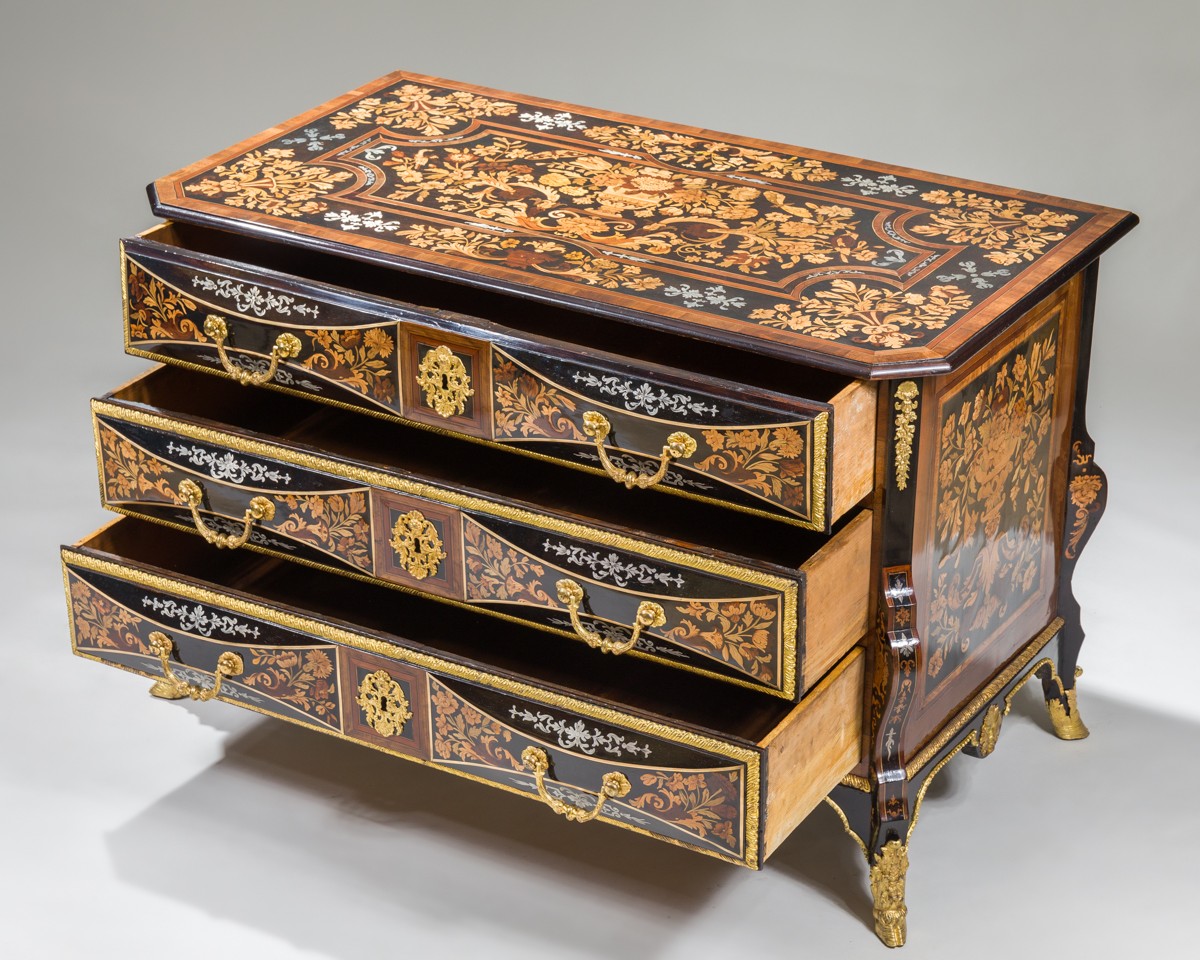
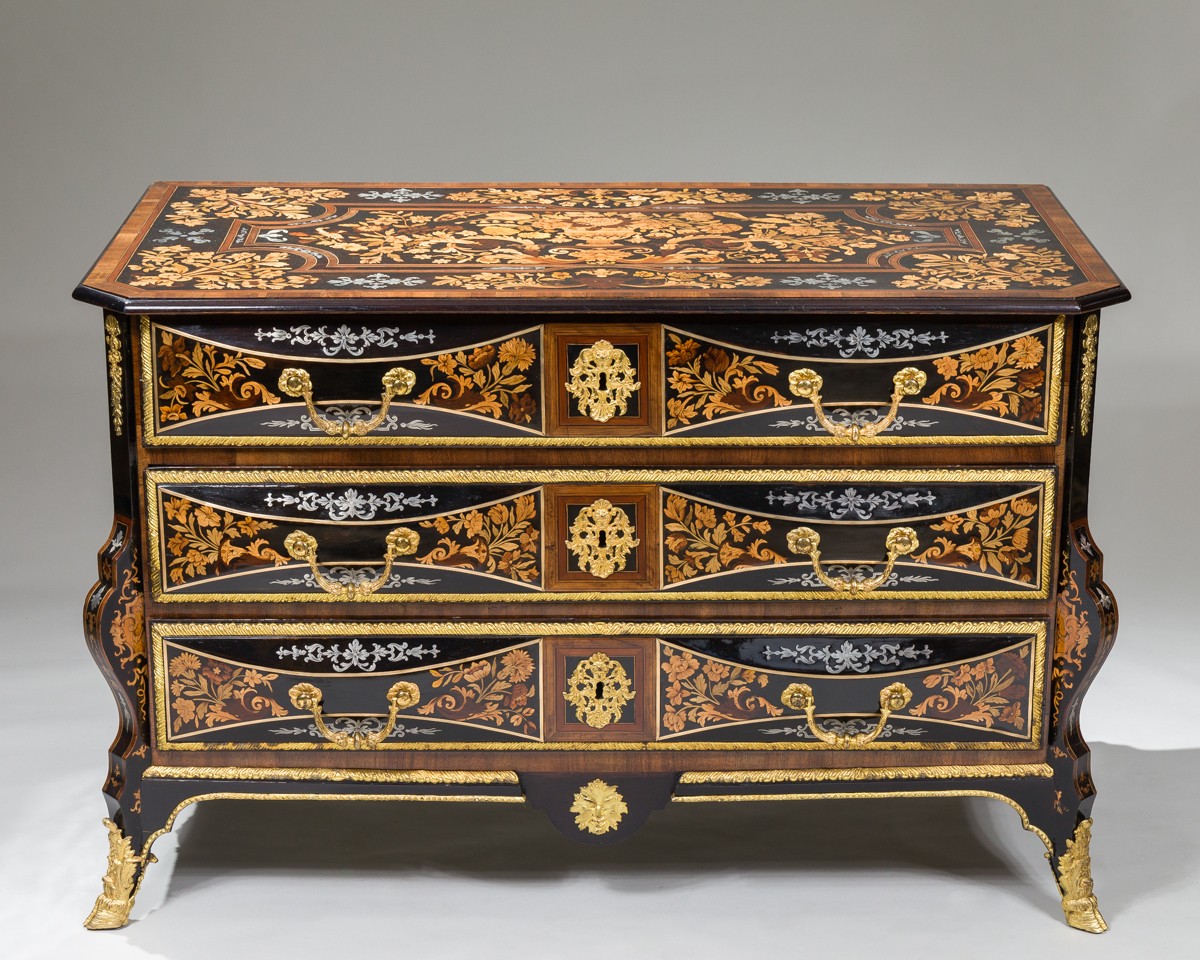
An exceptional commode featuring floral and foliate marquetry set against a blackened pearwood background, all within a fine gilt-bronze framework.
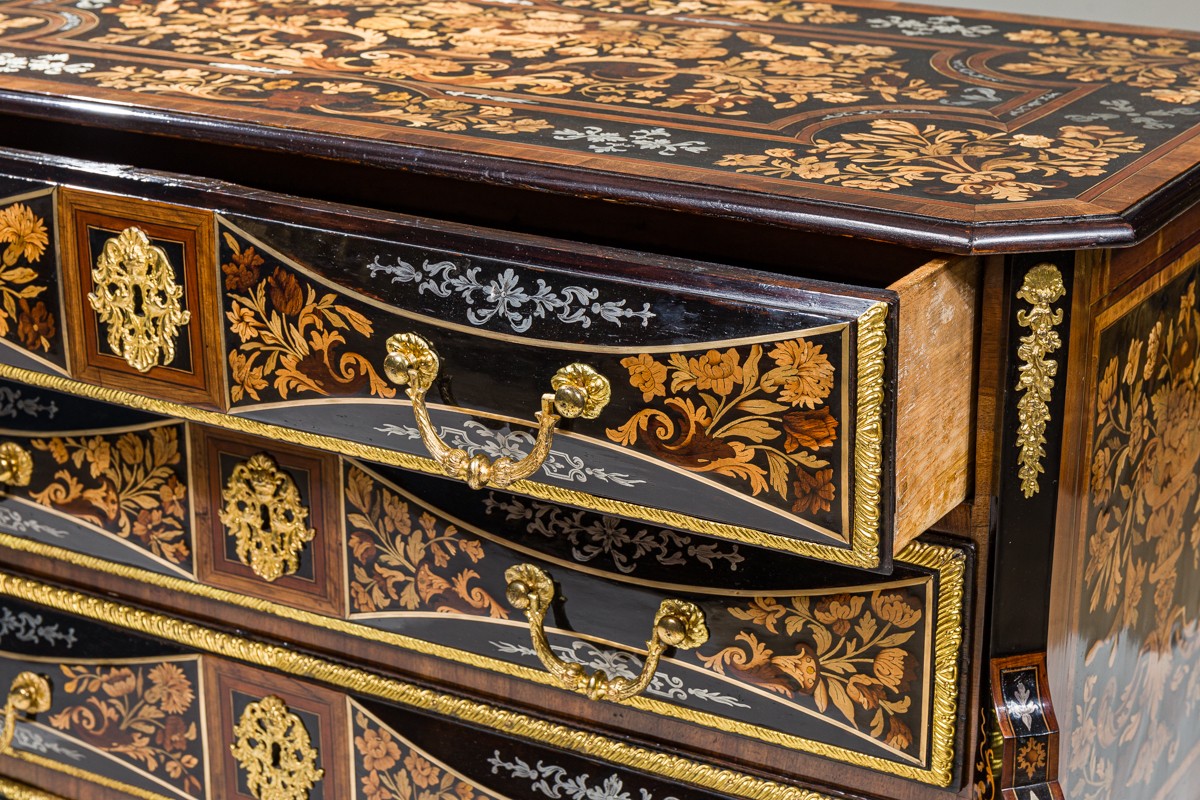
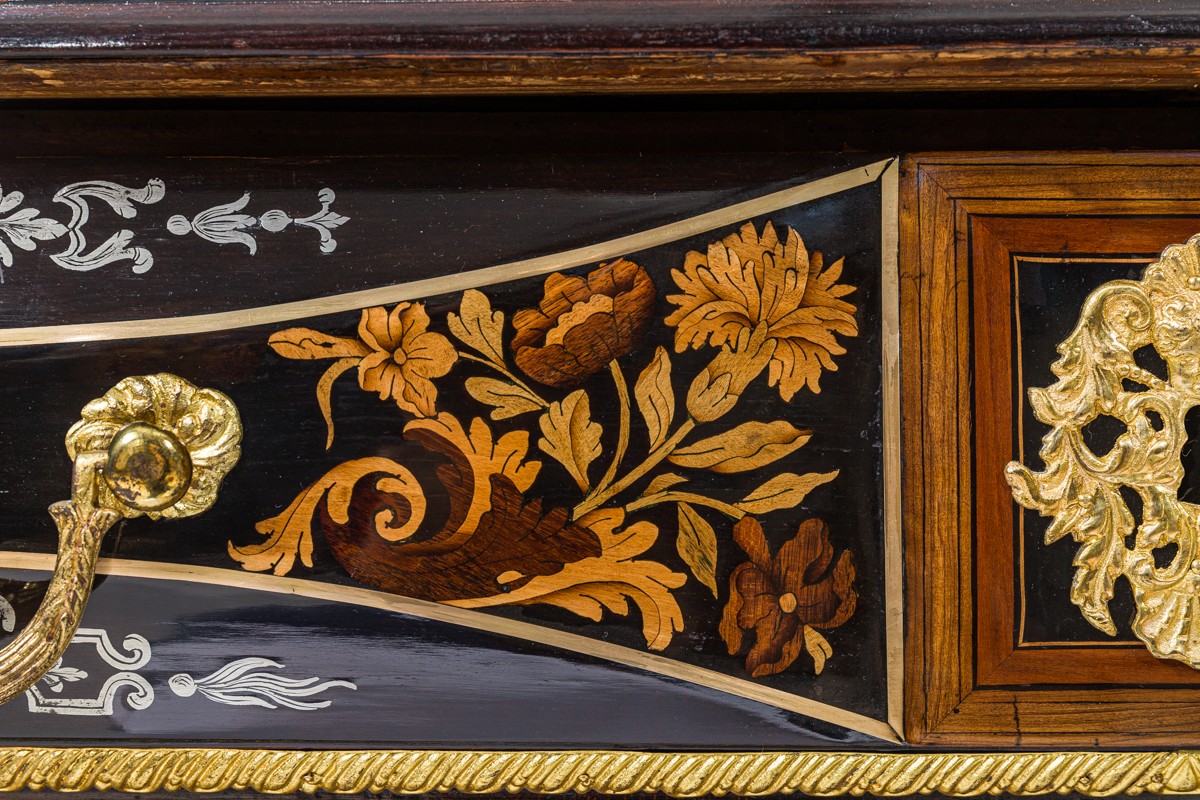
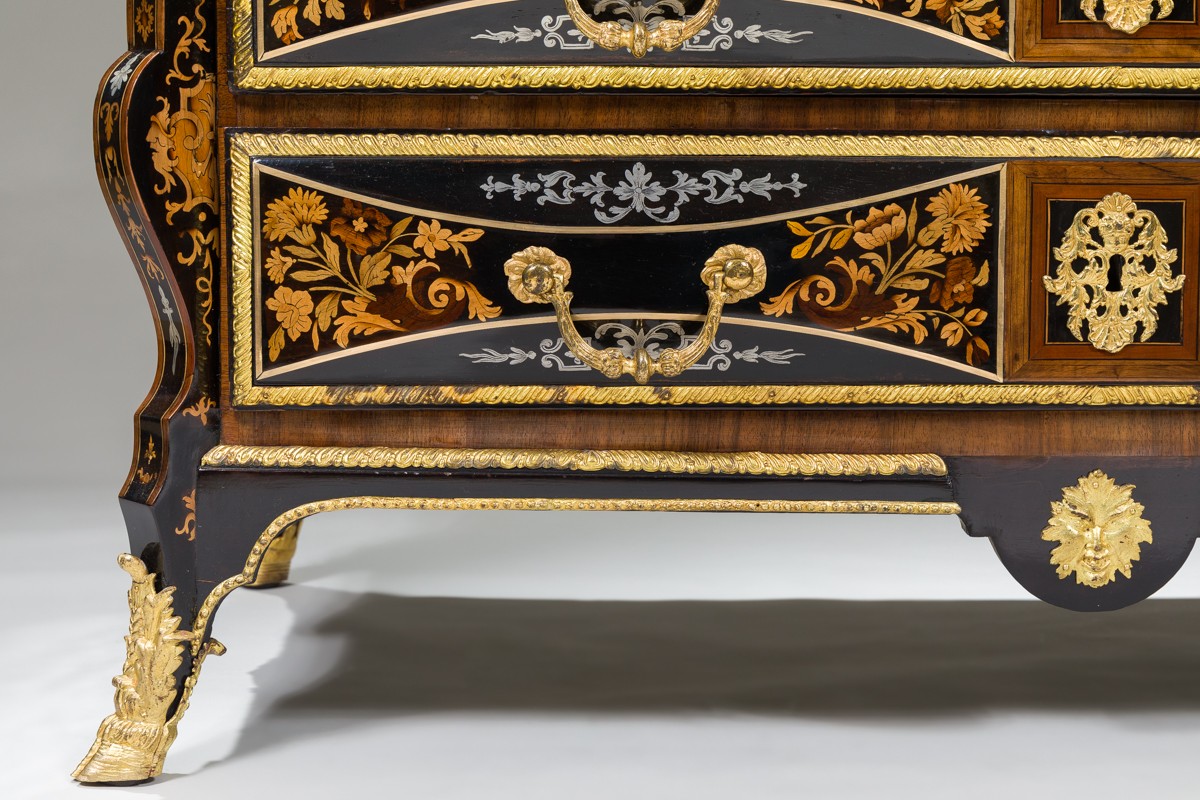
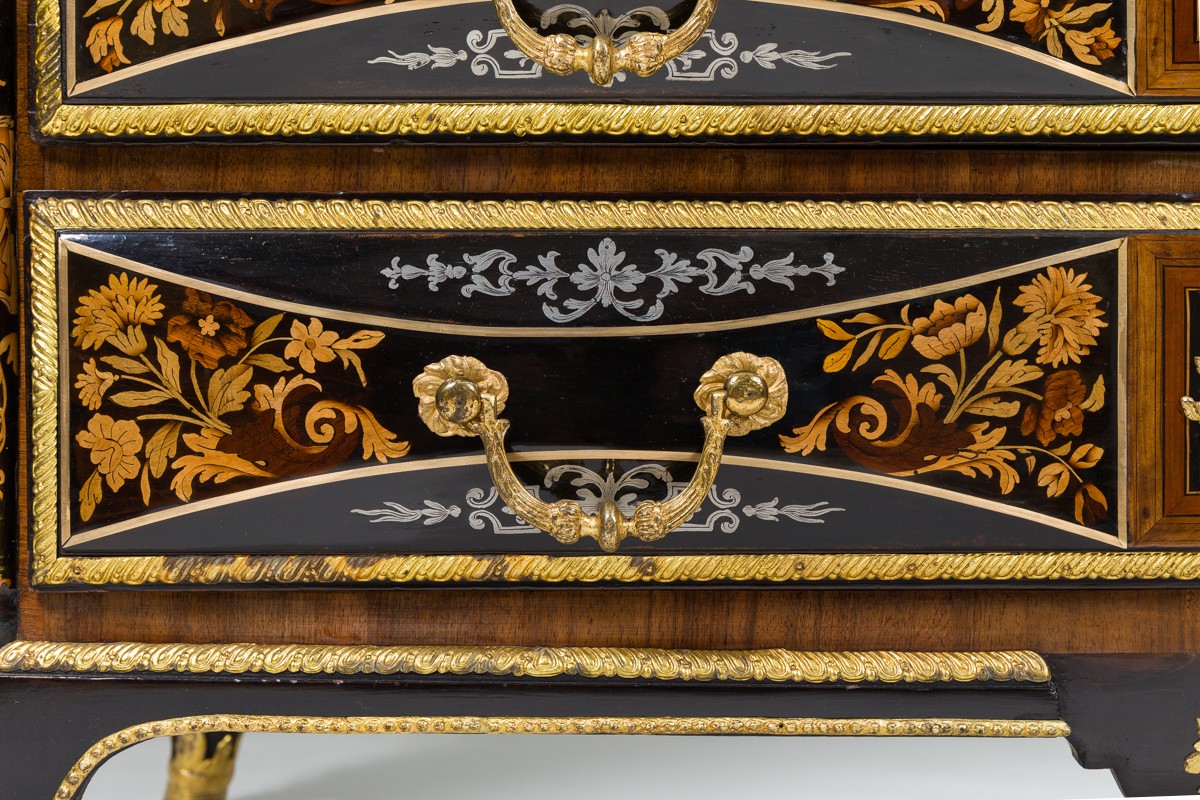
The front features three large drawers; each displays two simulated "diamond-point" drawer fronts on either side, decorated with symmetrical yet individually unique scrollwork, foliage, and flowers.
These sections are outlined with brass stringing and framed above and below by symmetrical pewter friezes of foliage.
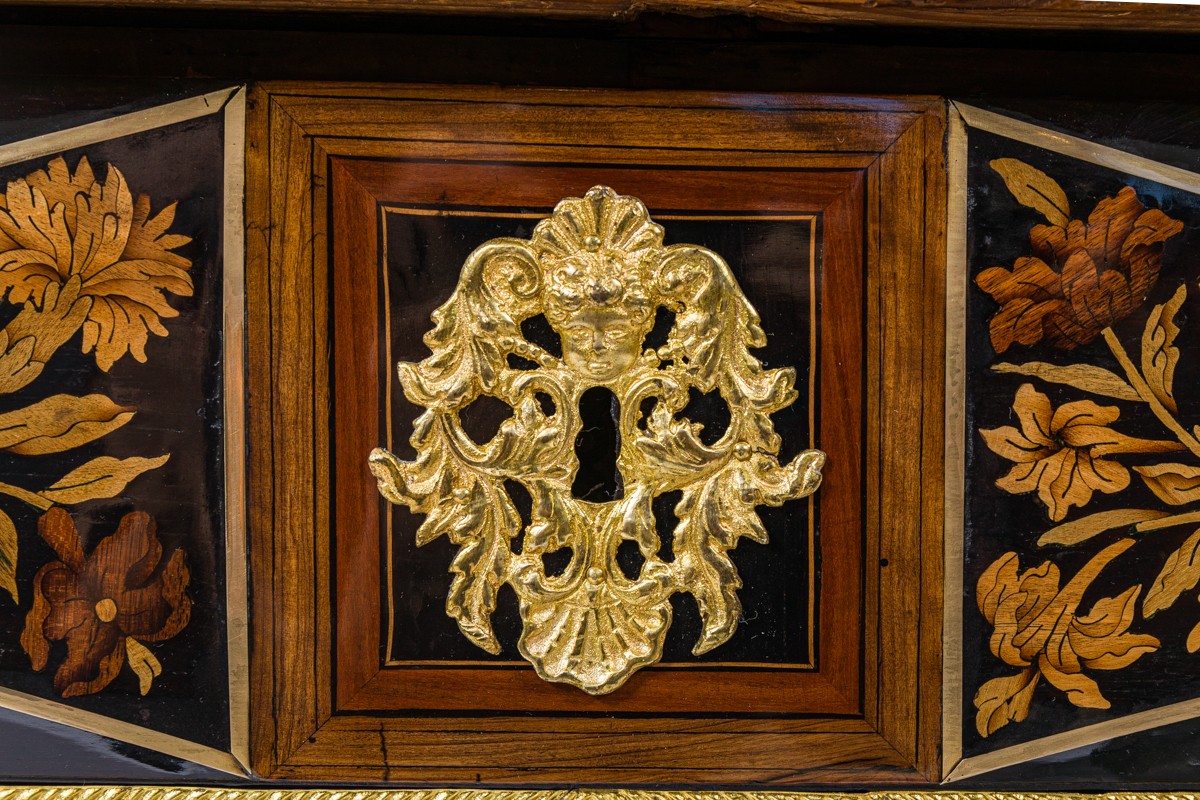
The three long drawers are centered around gilt-bronze escutcheons depicting a mascaron grotesque wearing a shell-like crown, underscored by a large shell motif framed by foliage.
Finely chased handles are positioned at the center of each diamond-point section, and the drawers are bordered by a geometric gilt-bronze frieze.
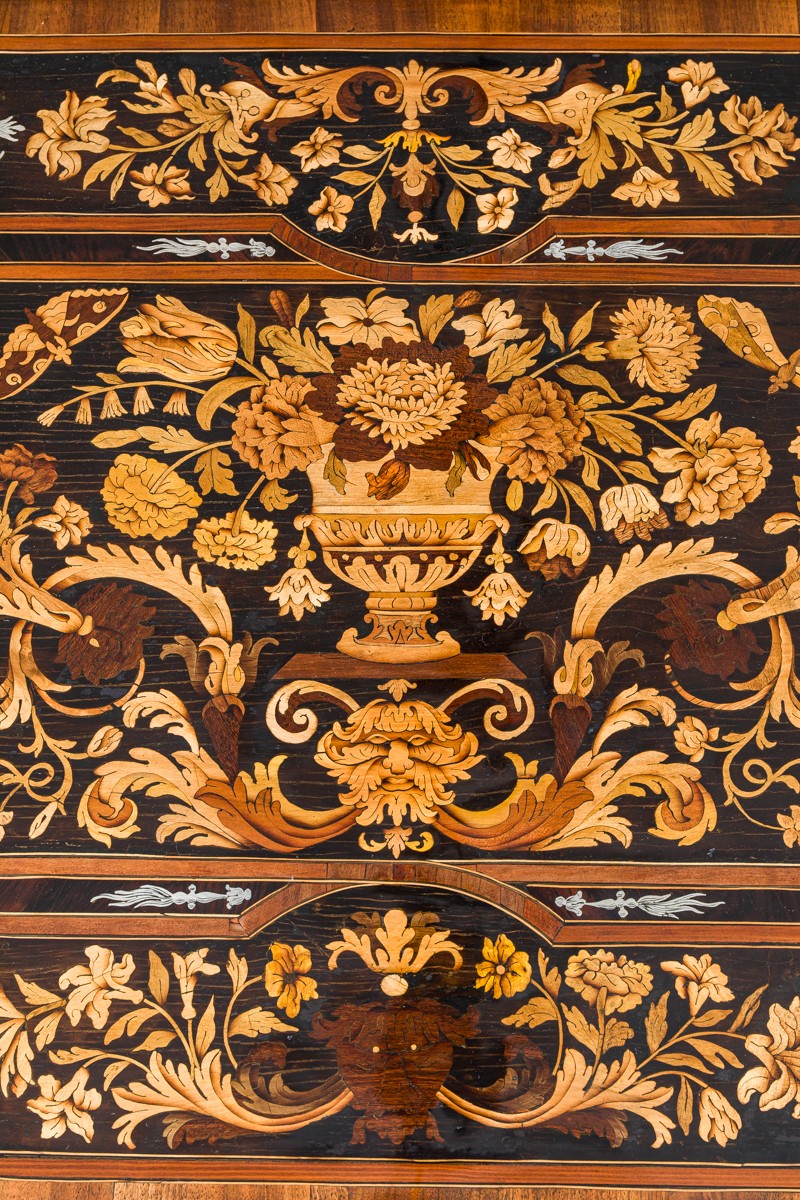
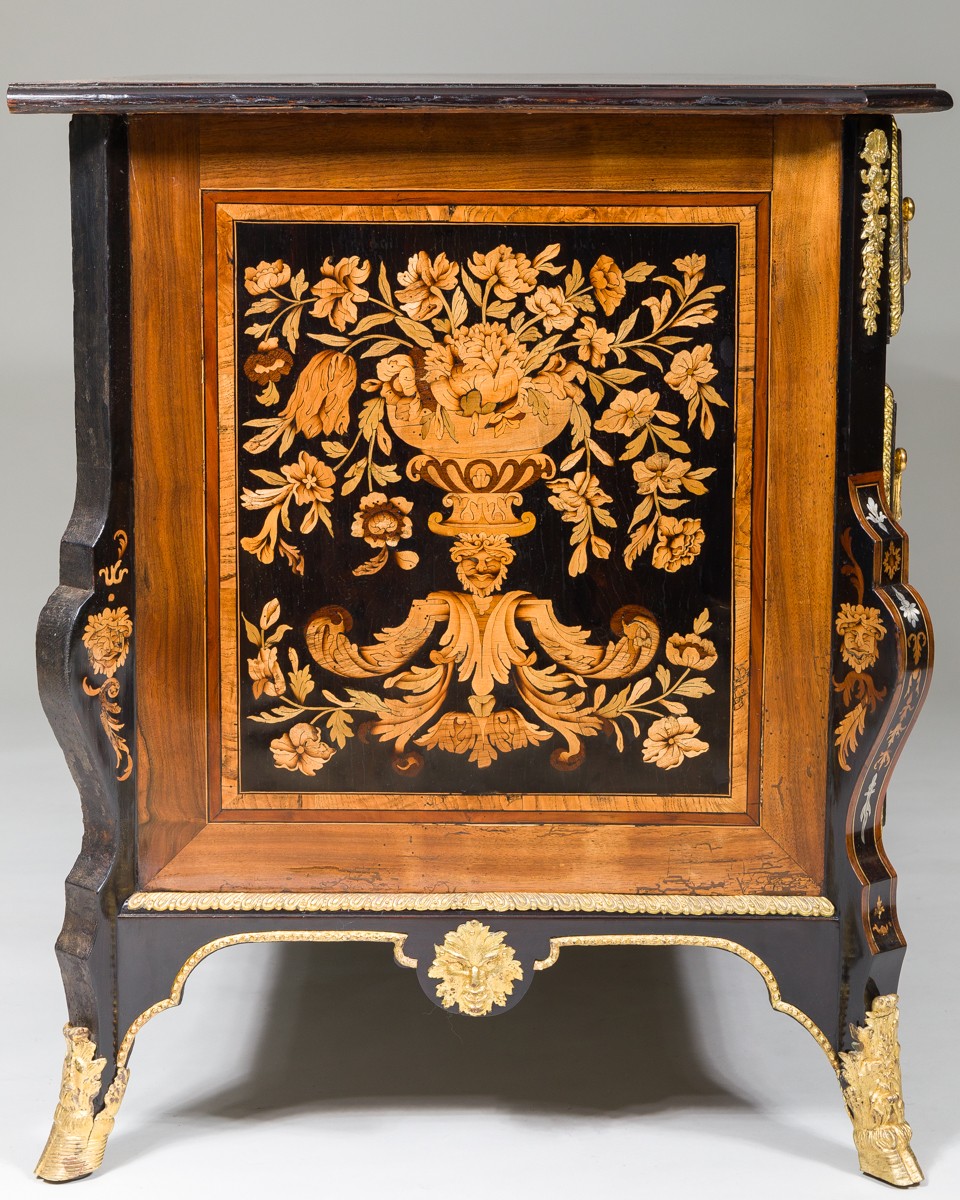
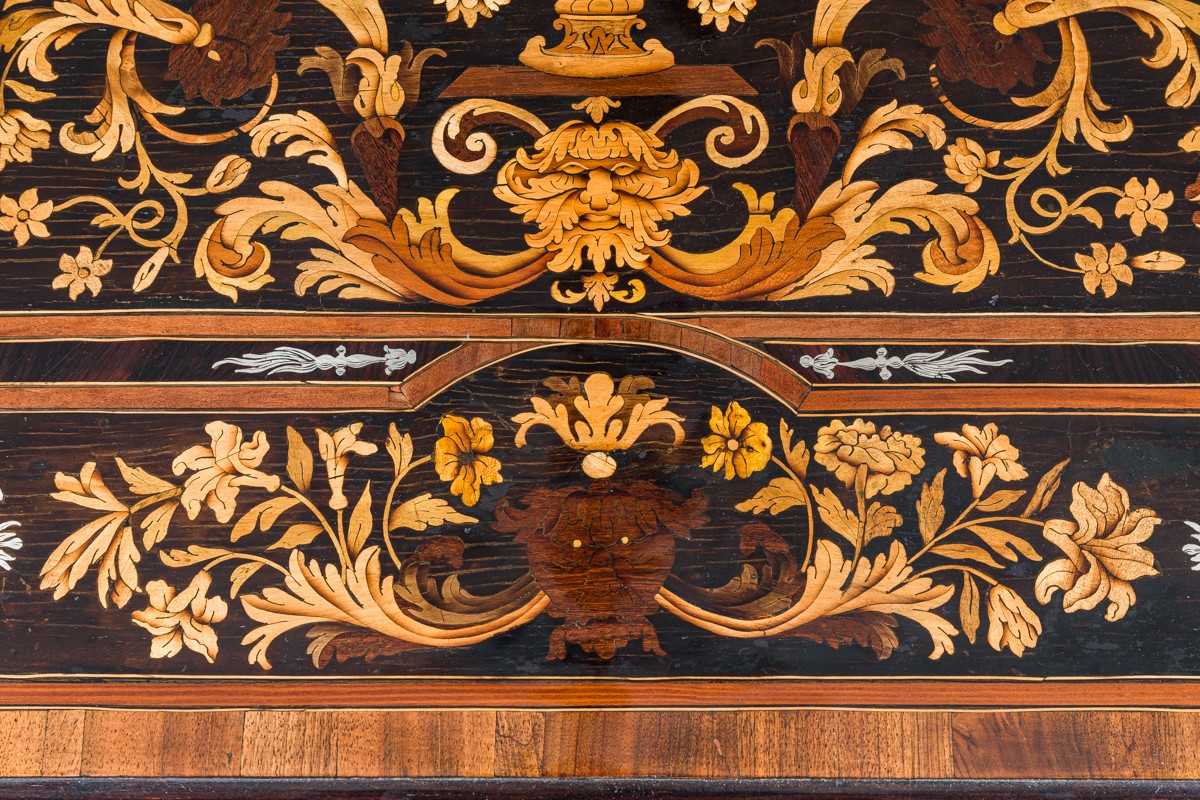
The sides share the same ornamental vocabulary, featuring expansive compositions of foliage and flowers emerging from a vessel adorned with a mascaron head; the "burnt-wood" technique employed here, also found throughout the rest of the marquetry, is characteristic of the work of Thomas Hache.
These decorative elements are set within rectangular reserves of various light and dark woods, outlined with fruitwood stringing.
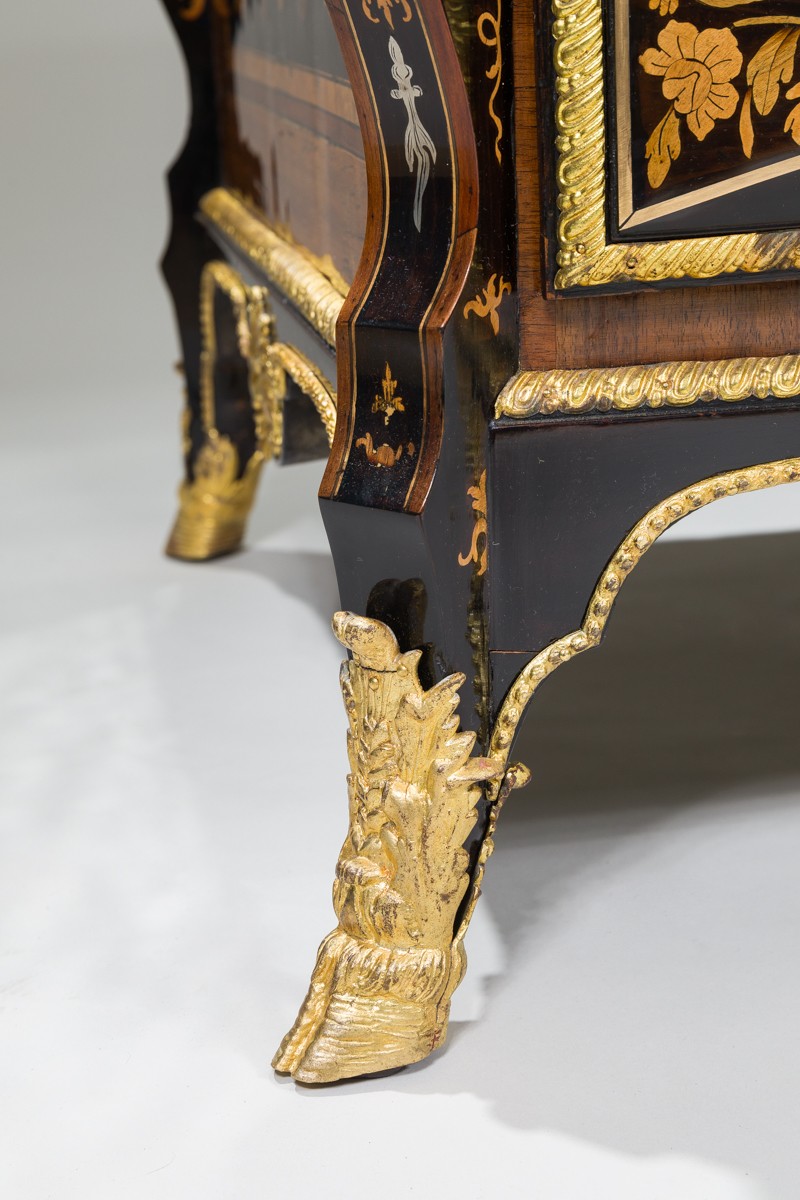
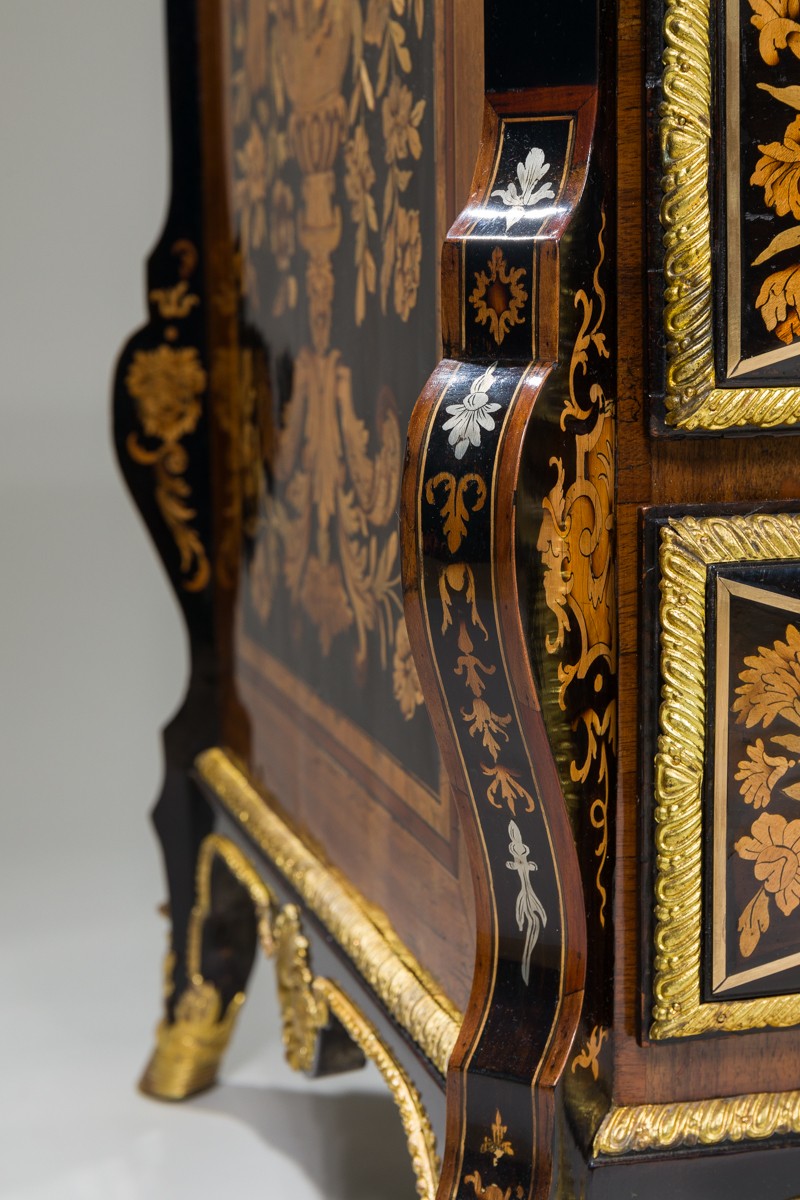
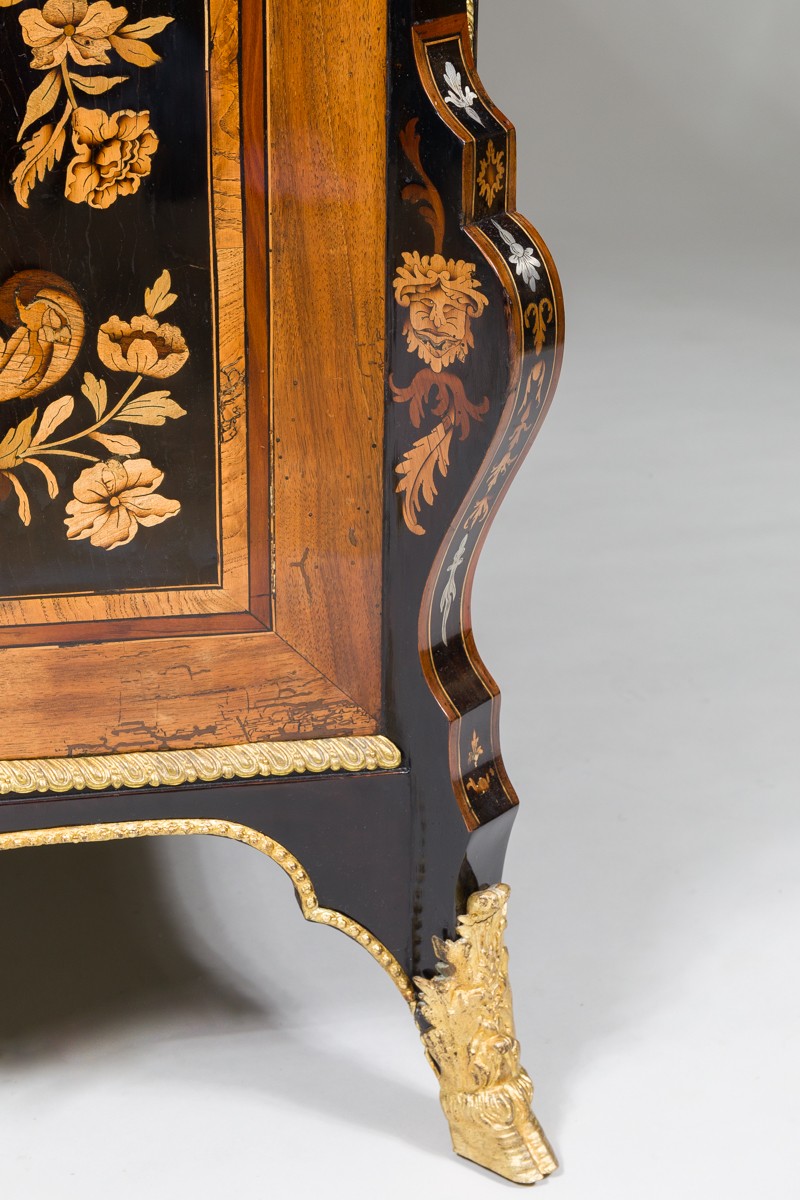
The boldly shaped, curvilinear "console-style" uprights are embellished with floral marquetry motifs, punctuated here and there by grotesque heads; their edges feature a marquetry frieze of wood and pewter displaying geometric and floral patterns.
The uprights extend into cabriole legs terminating in enveloping "pied-de-biche" gilt-bronze sabots.
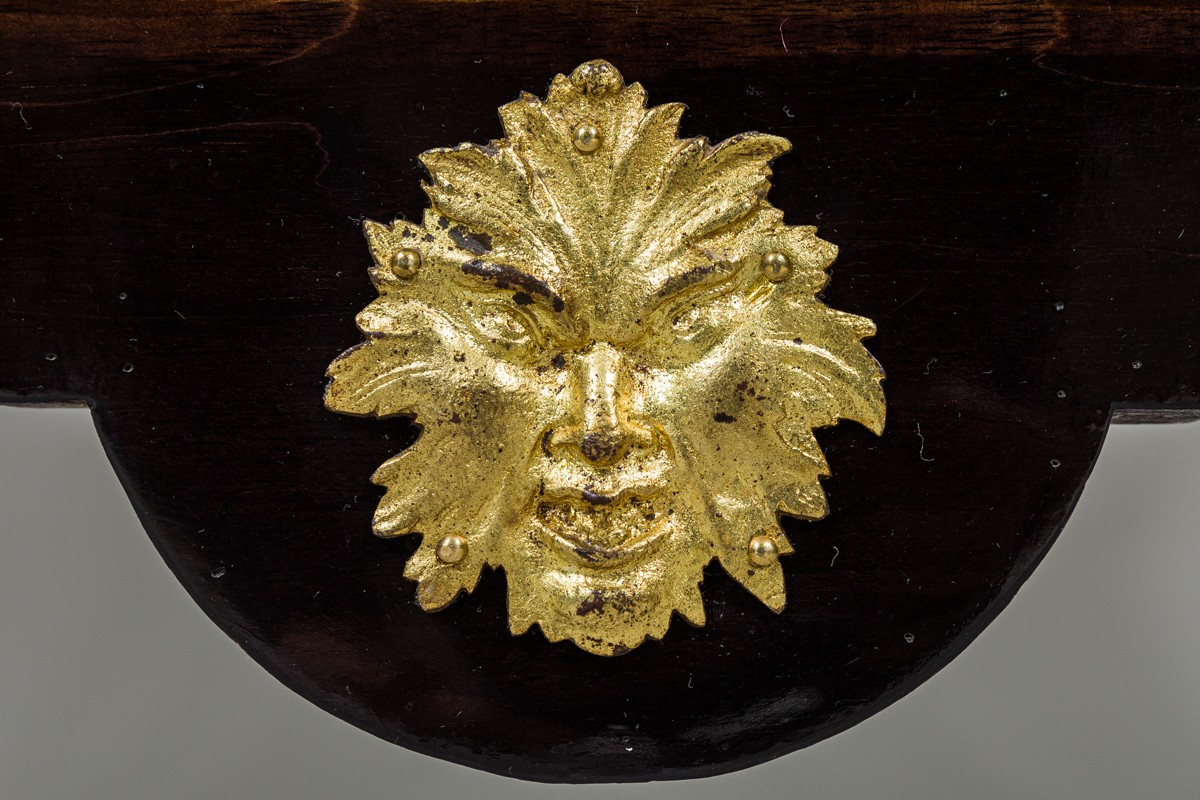
They are connected by a gilt-bronze beaded frieze, interrupted at the apron by a radiant grotesque head.
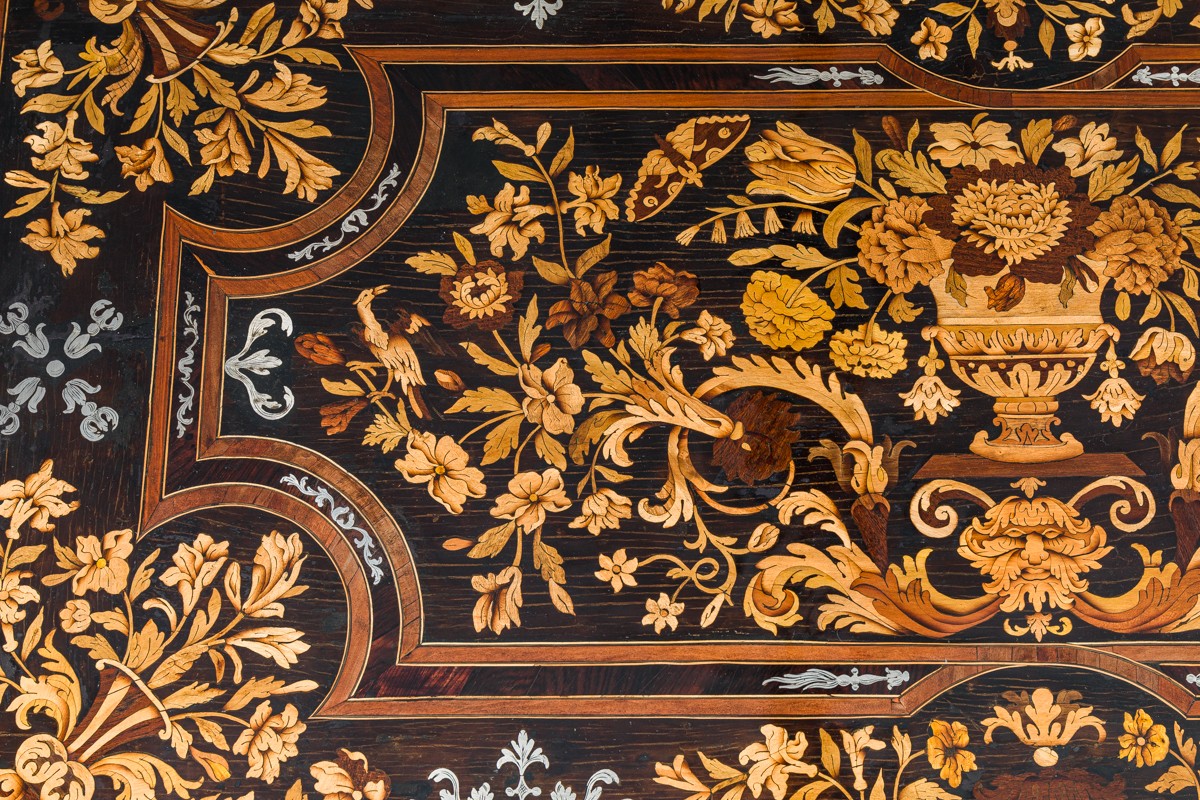
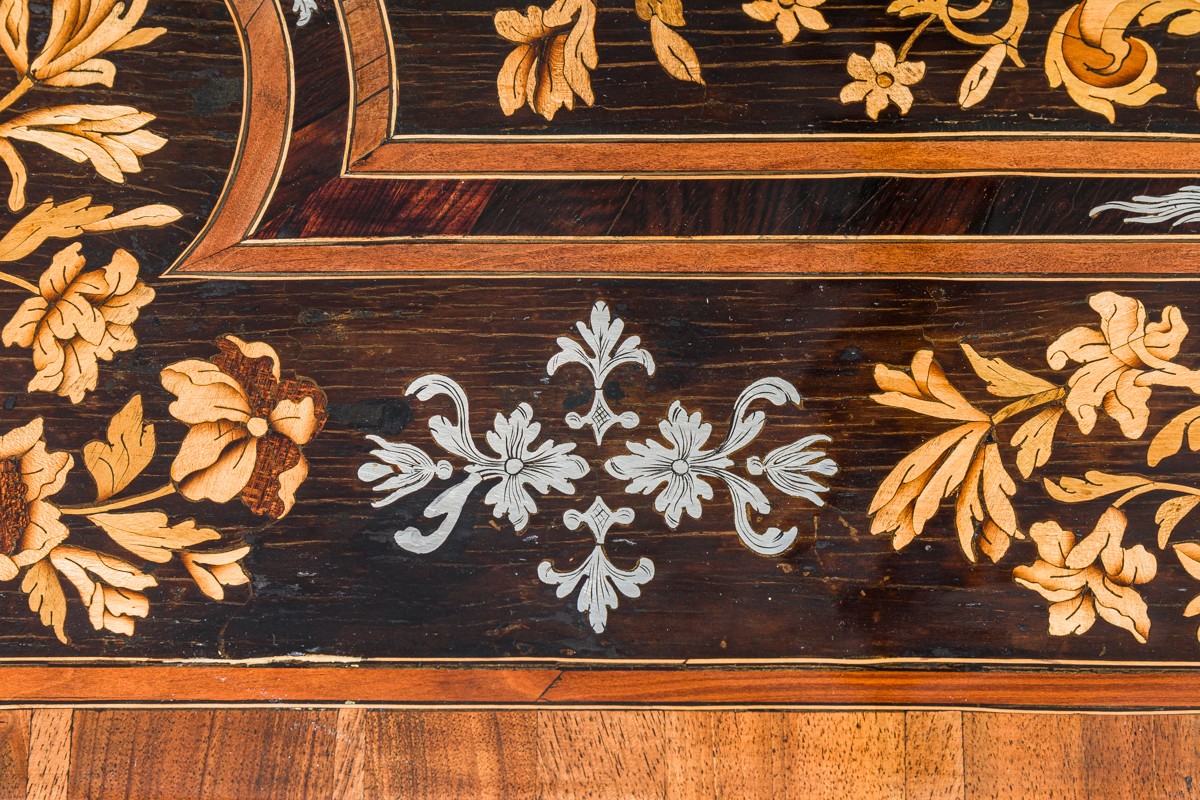
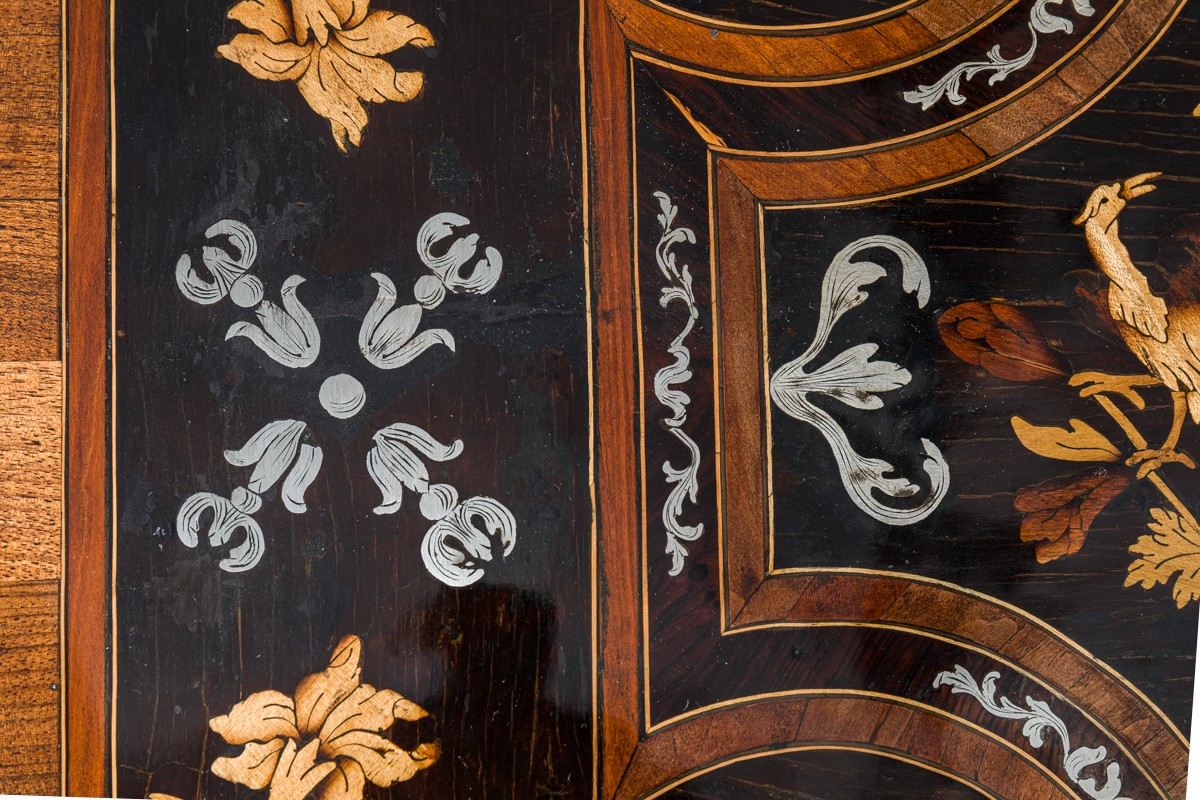
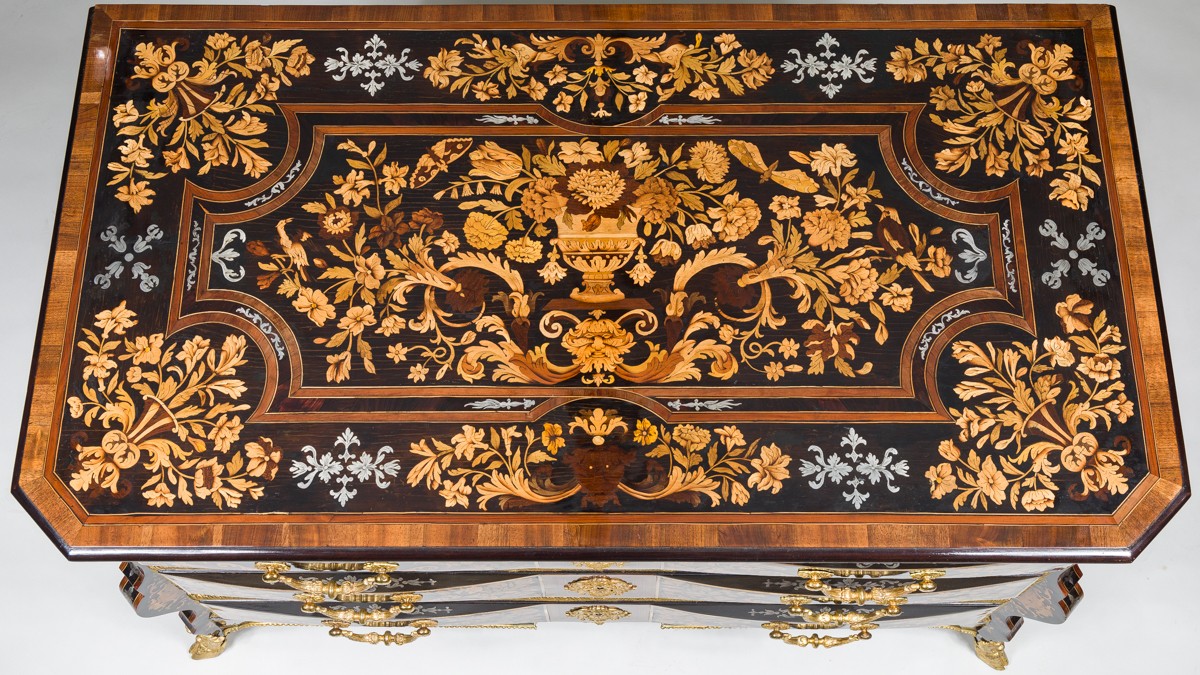
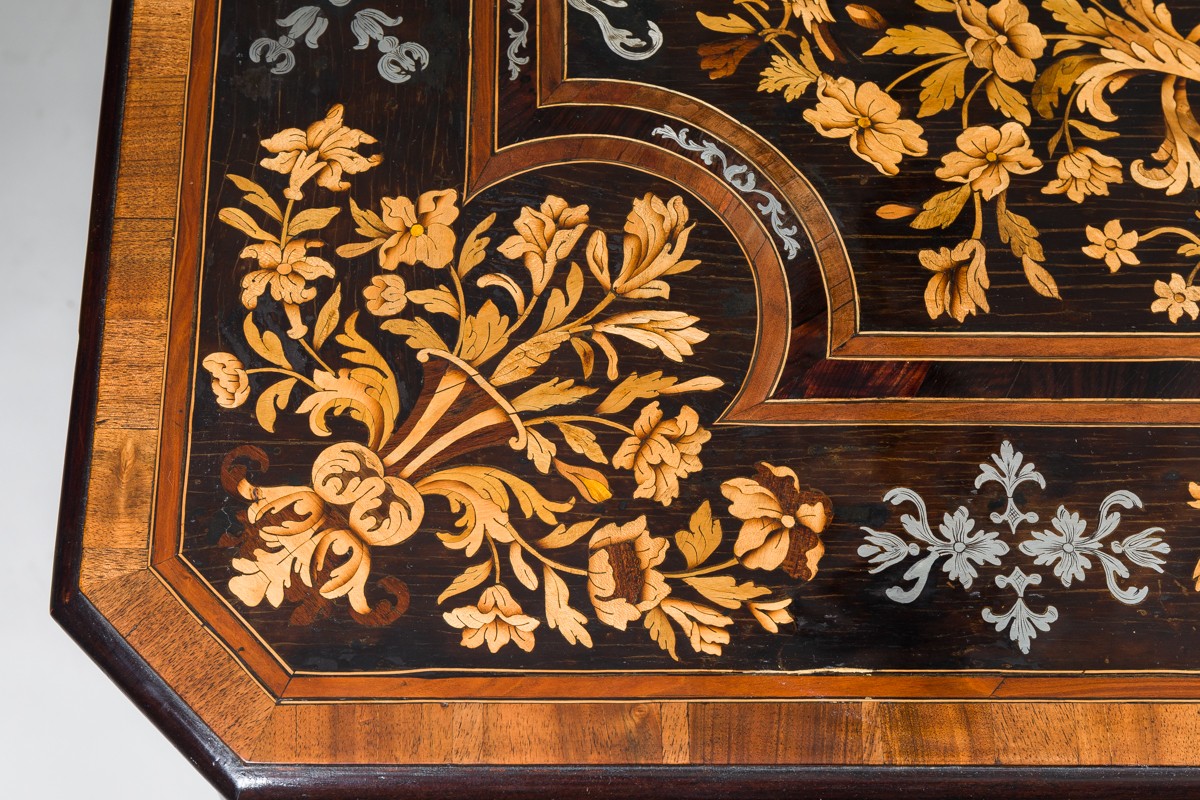
The top is exceptionally elaborate and fully marquetry-decorated. It features a symmetrical composition centered on a large panel depicting a wide vase overflowing with a large bouquet, surrounded by scrolling foliage, smaller bouquets, and leaf motifs. This central area is framed by a multi-section geometric border, with the central section accented by pewter inlay. A wide, compartmentalized outer border echoes these motifs, featuring bouquets in the corners and stylized pewter floral elements set against a dark background.
The entire piece is outlined with walnut stringing characteristic of Thomas Hache's work.
The extensive marquetry belongs to a decorative repertoire found notably in Dauphiné furniture production from the late 17th and very early 18th centuries. This style of ornamentation, featuring scrolling foliage, acanthus leaves, floral vases, and symmetrical compositions, is particularly characteristic of the work of Thomas Hache in Grenoble, specifically through his signature "burnt wood" technique.
The form of the "mazarine" commode and the diamond-point drawer fronts are further hallmarks of this cabinetmaker.
Several commodes from this period attributed to Thomas Hache display a similar layout: three rows of drawers, a richly inlaid wooden top, console-shaped uprights, diamond-point drawers, and gilt-bronze mounts.
The craftsmanship is exceptional, and the use of pewter, a rarity in production from this era, is another characteristic feature of his work.
Grenoble work, attributed to Thomas Hache (1664–1747), circa 1710.
Dimensions: H 84 cm x W 129.5 cm x D 69.5 cm