Offered by Franck Baptiste Paris
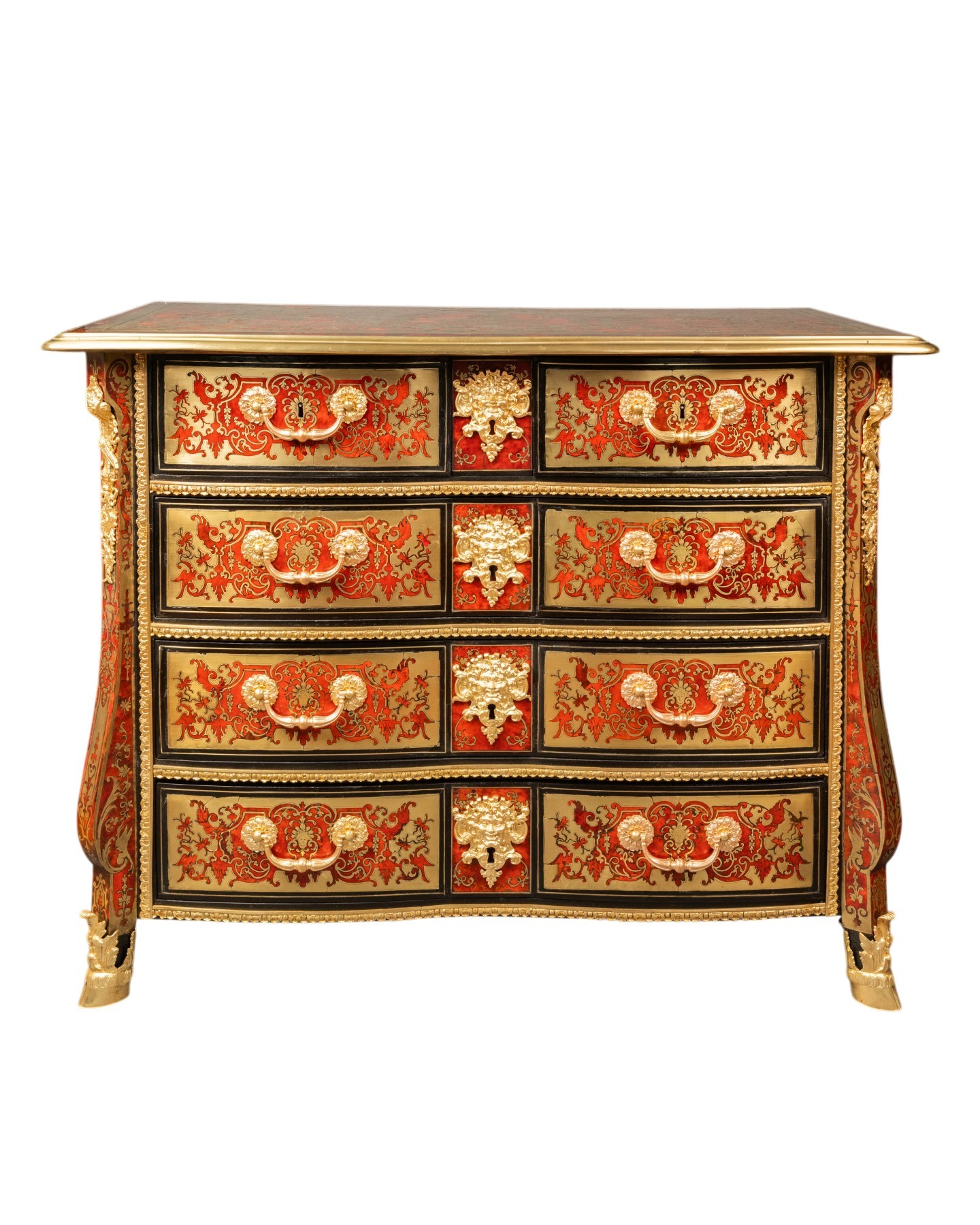
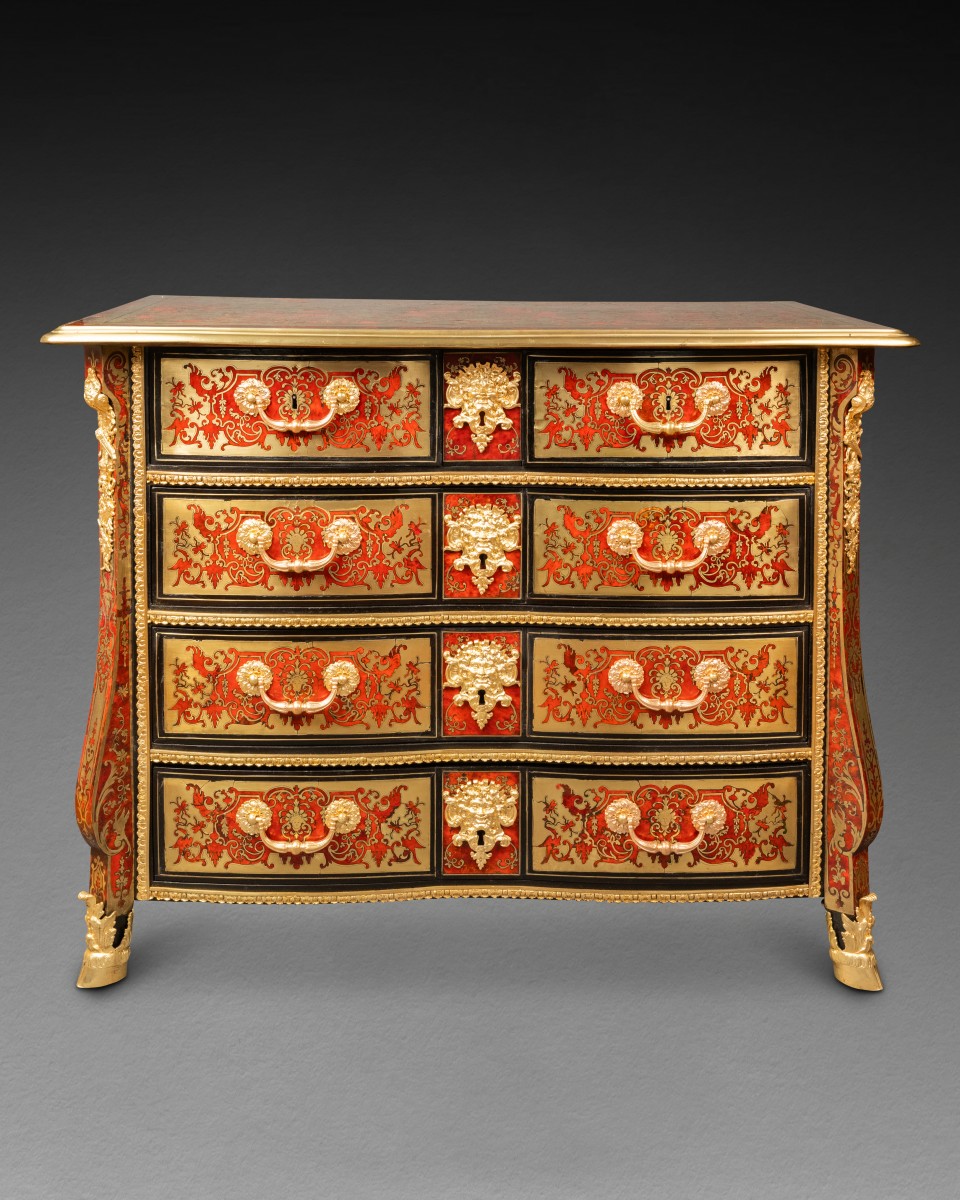
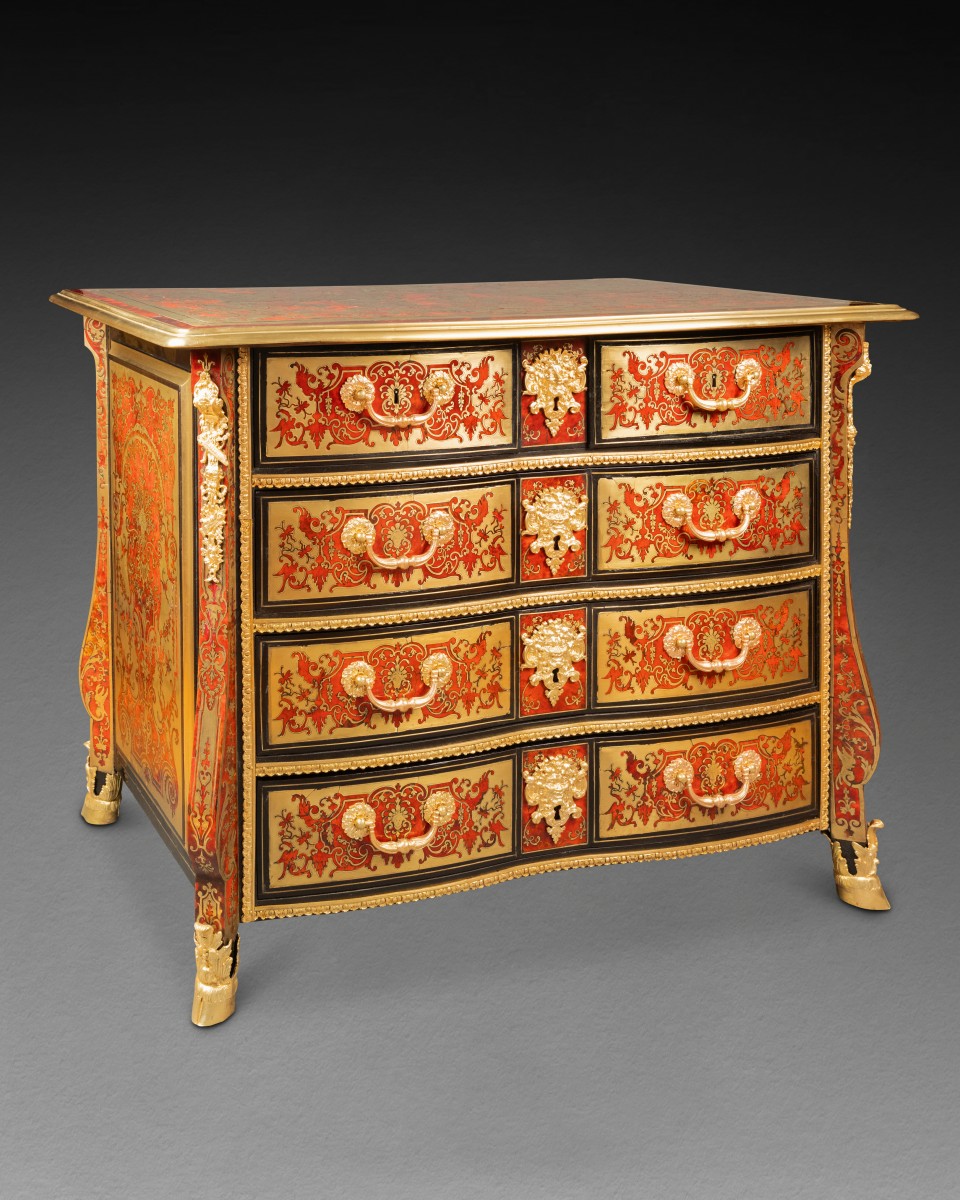
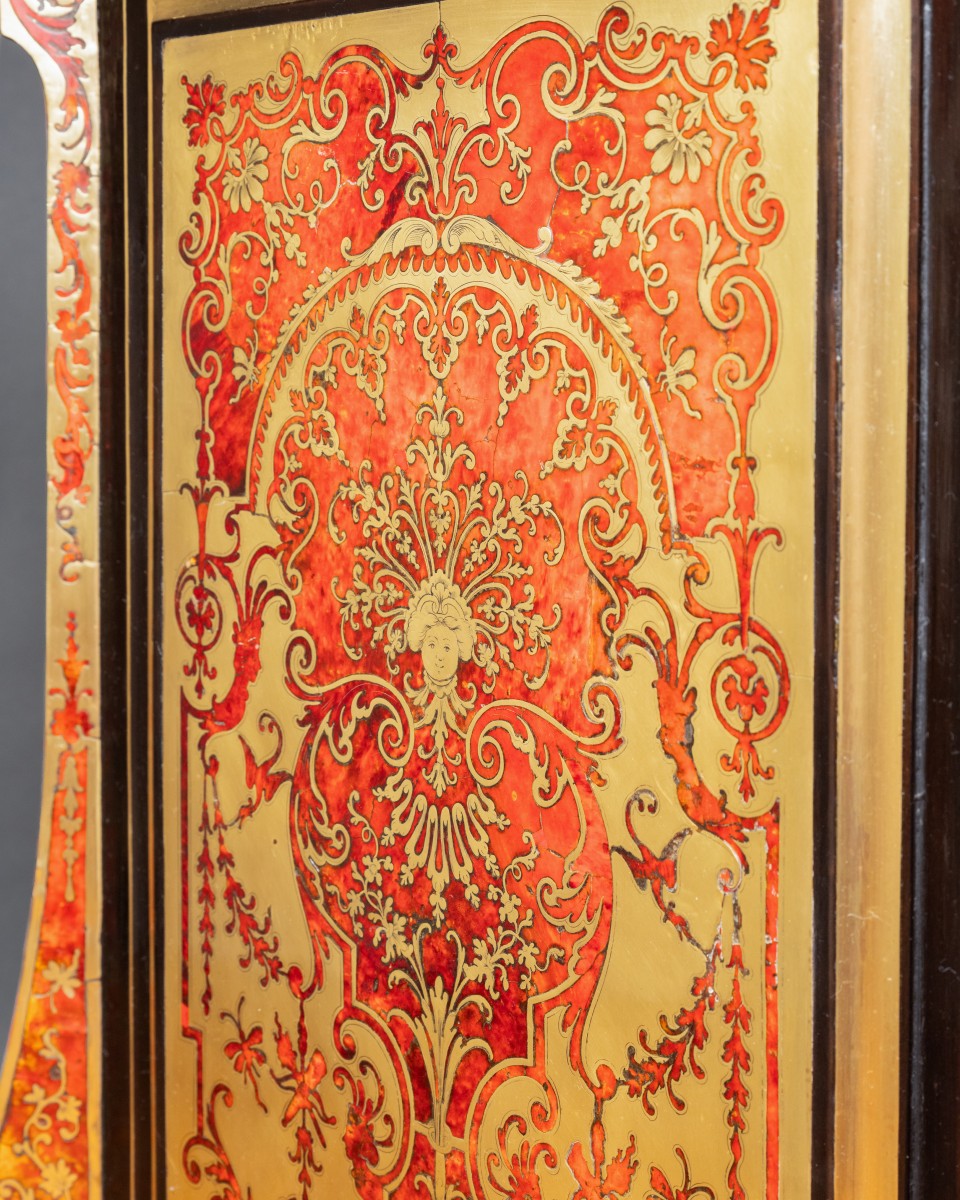

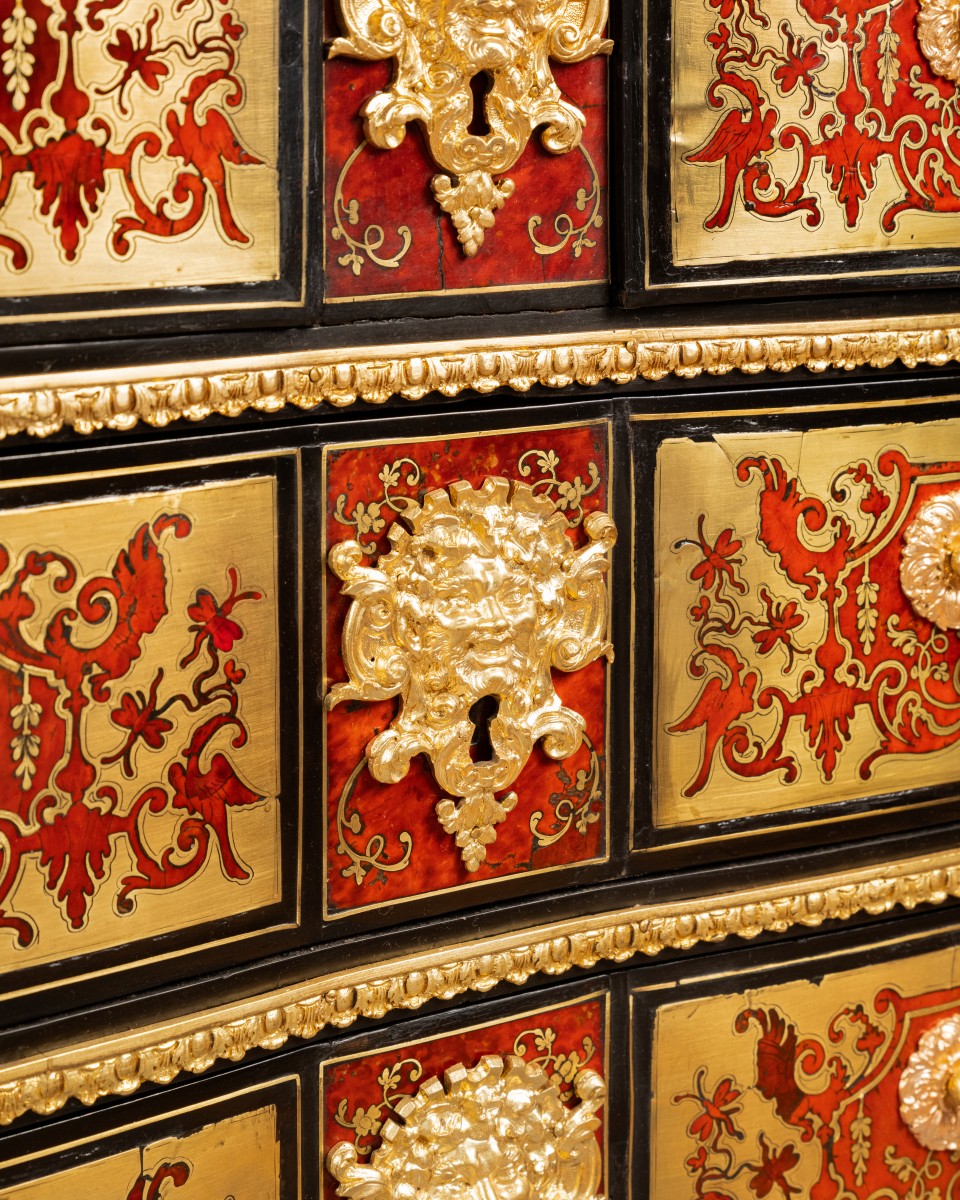
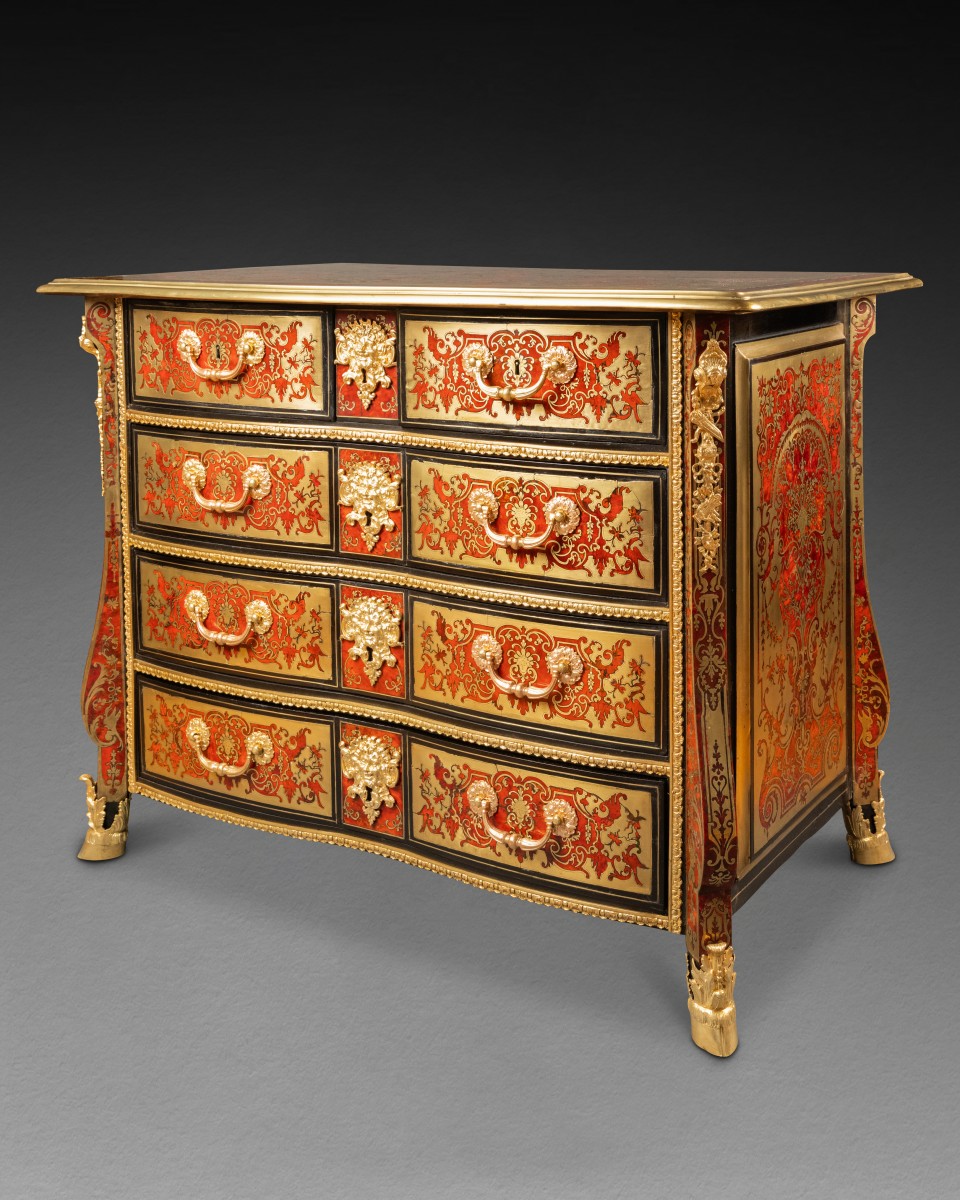
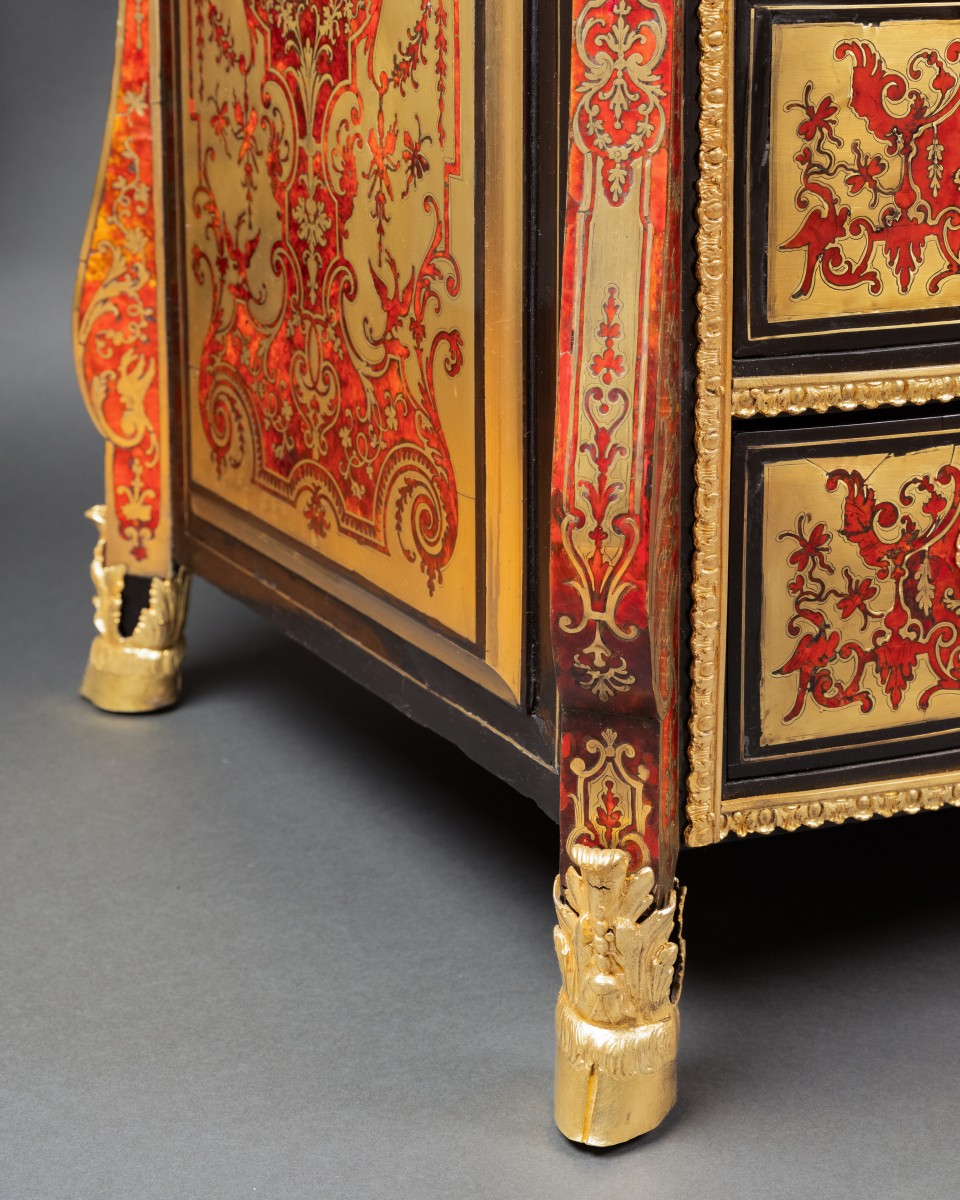
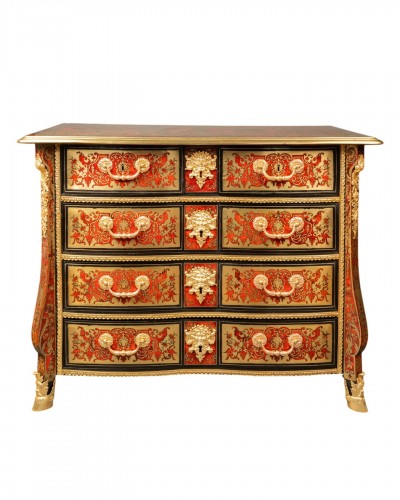
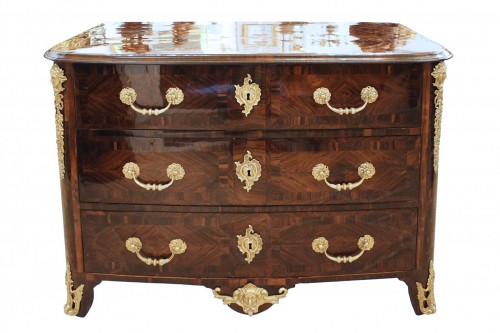
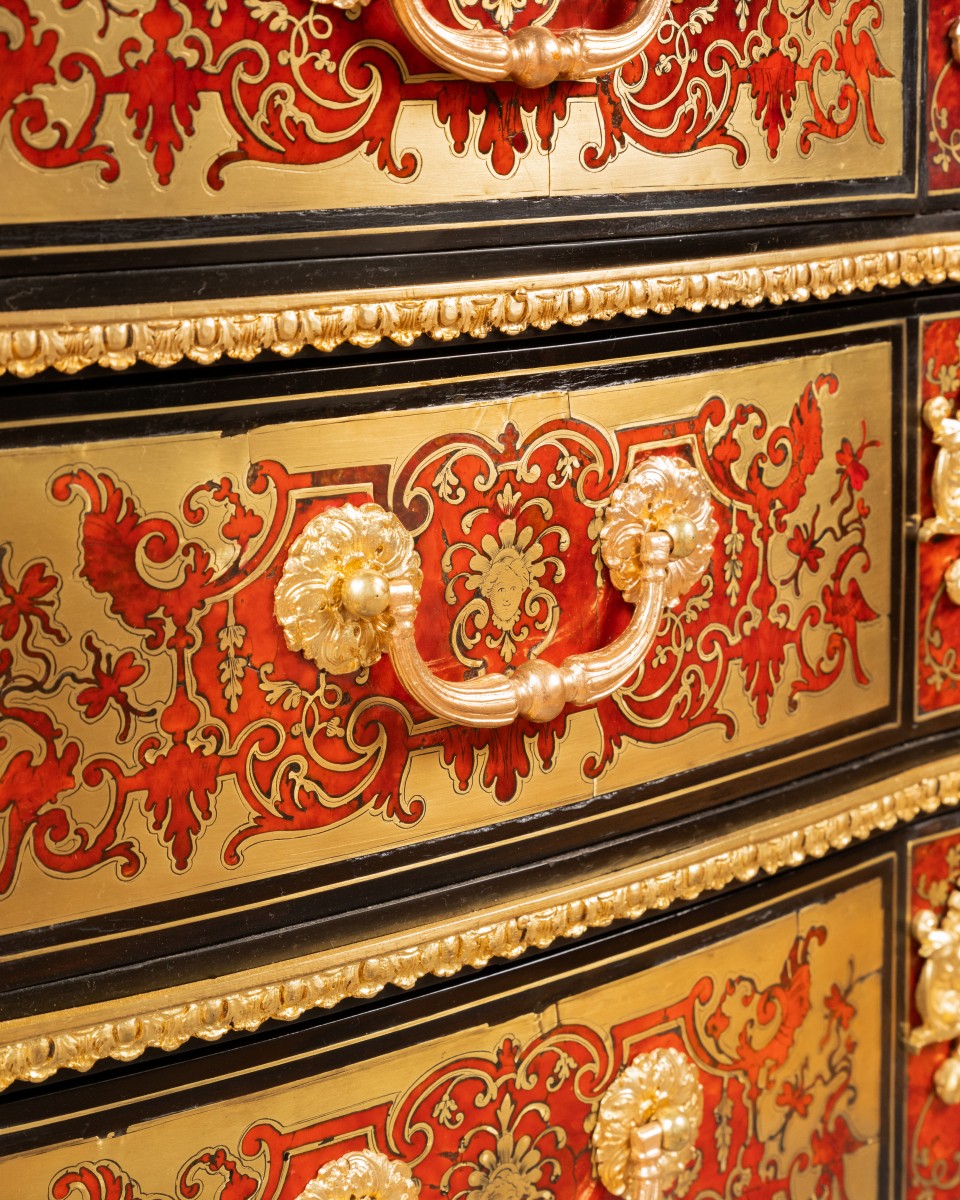
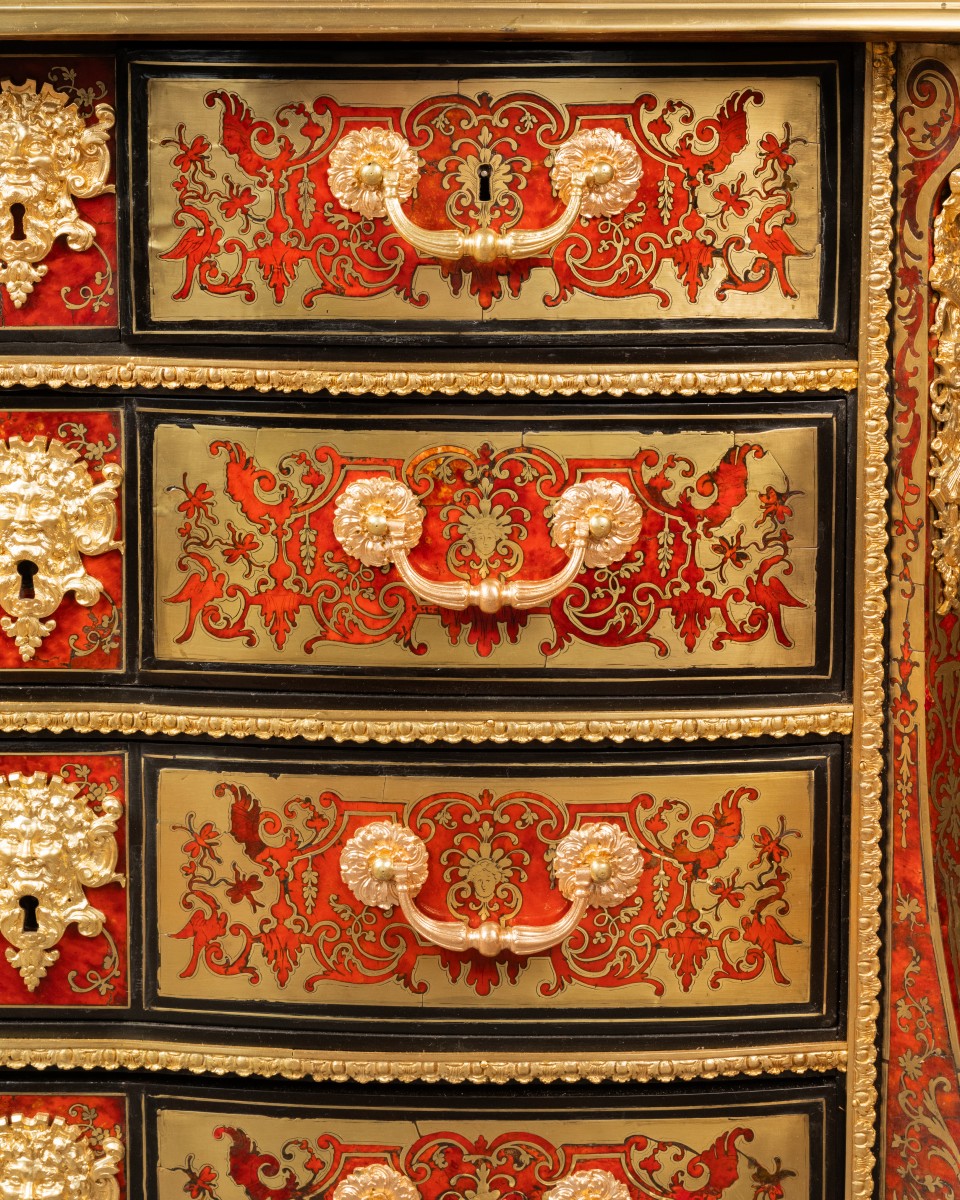
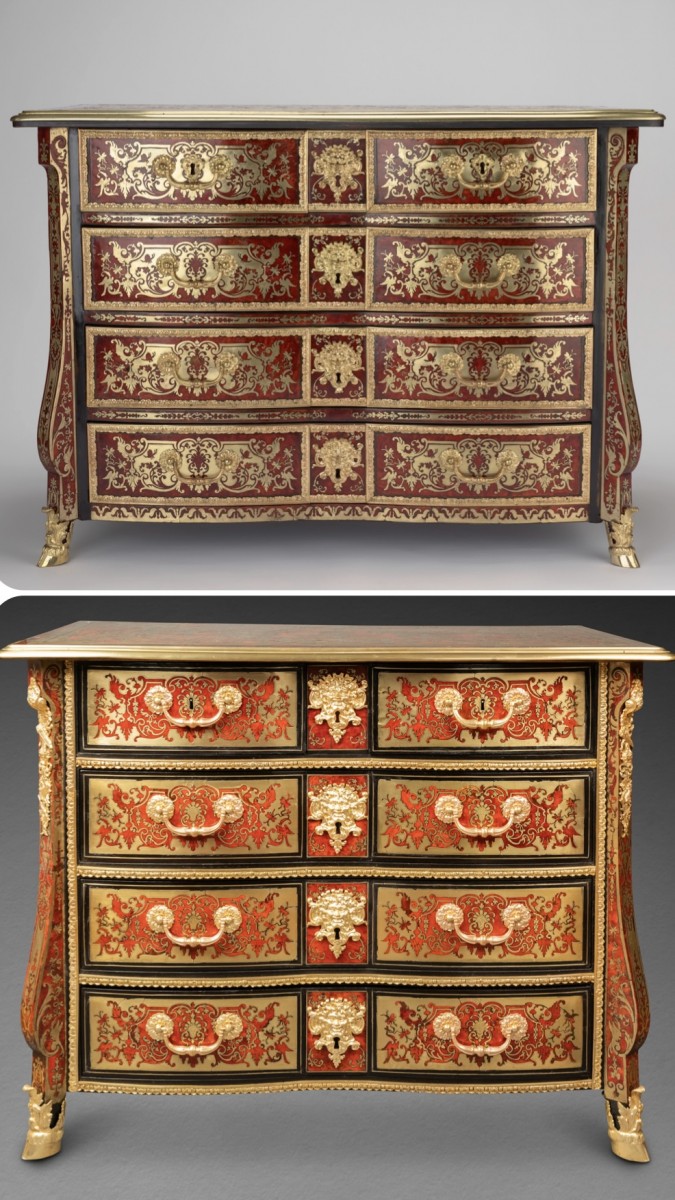
A beautiful Mazarine commode in Boulle marquetry, with the front and back panels in engraved brass on a red tortoiseshell and ebony ground. The commode has a serpentine shape with canted corners forming consoles.
It features five drawers in three rows.
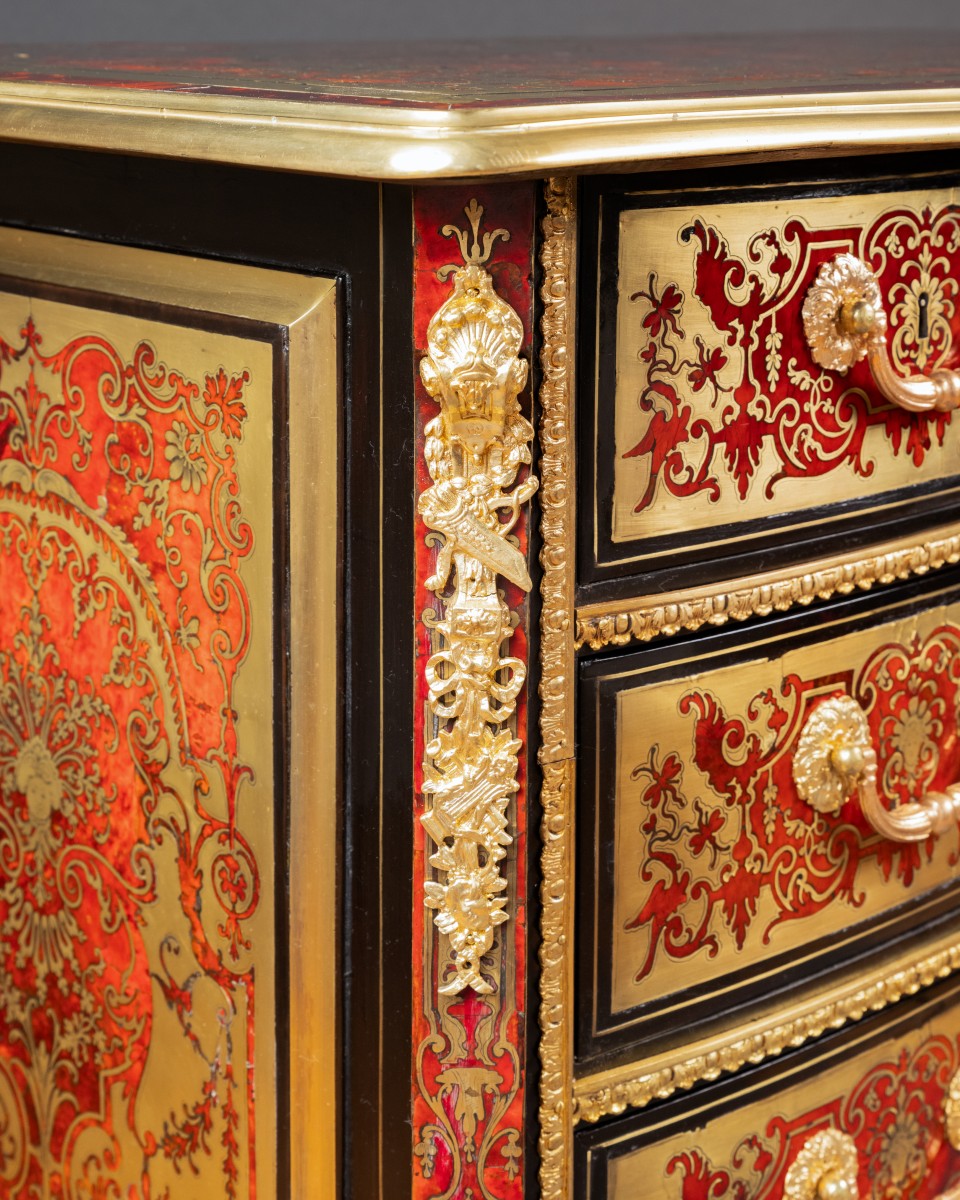
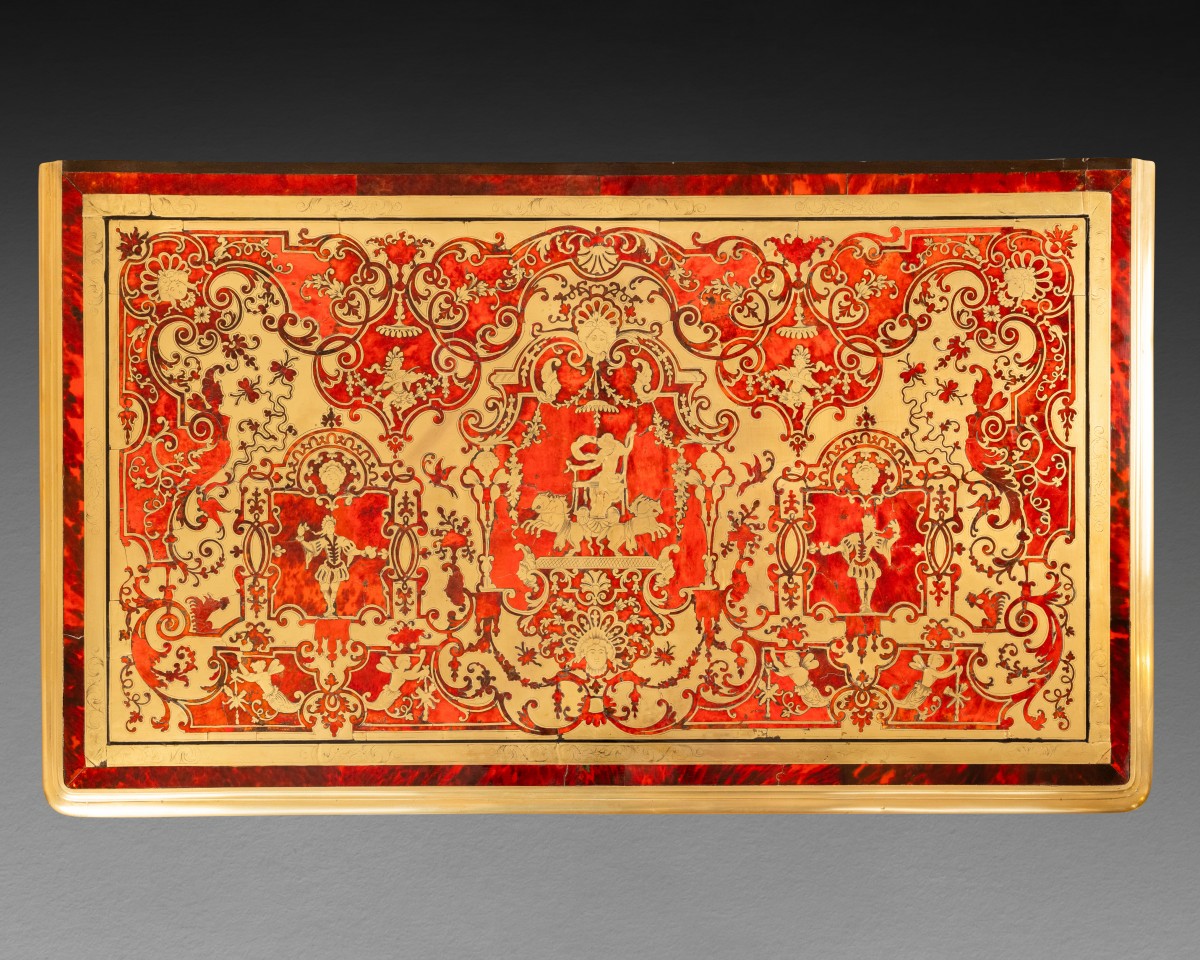
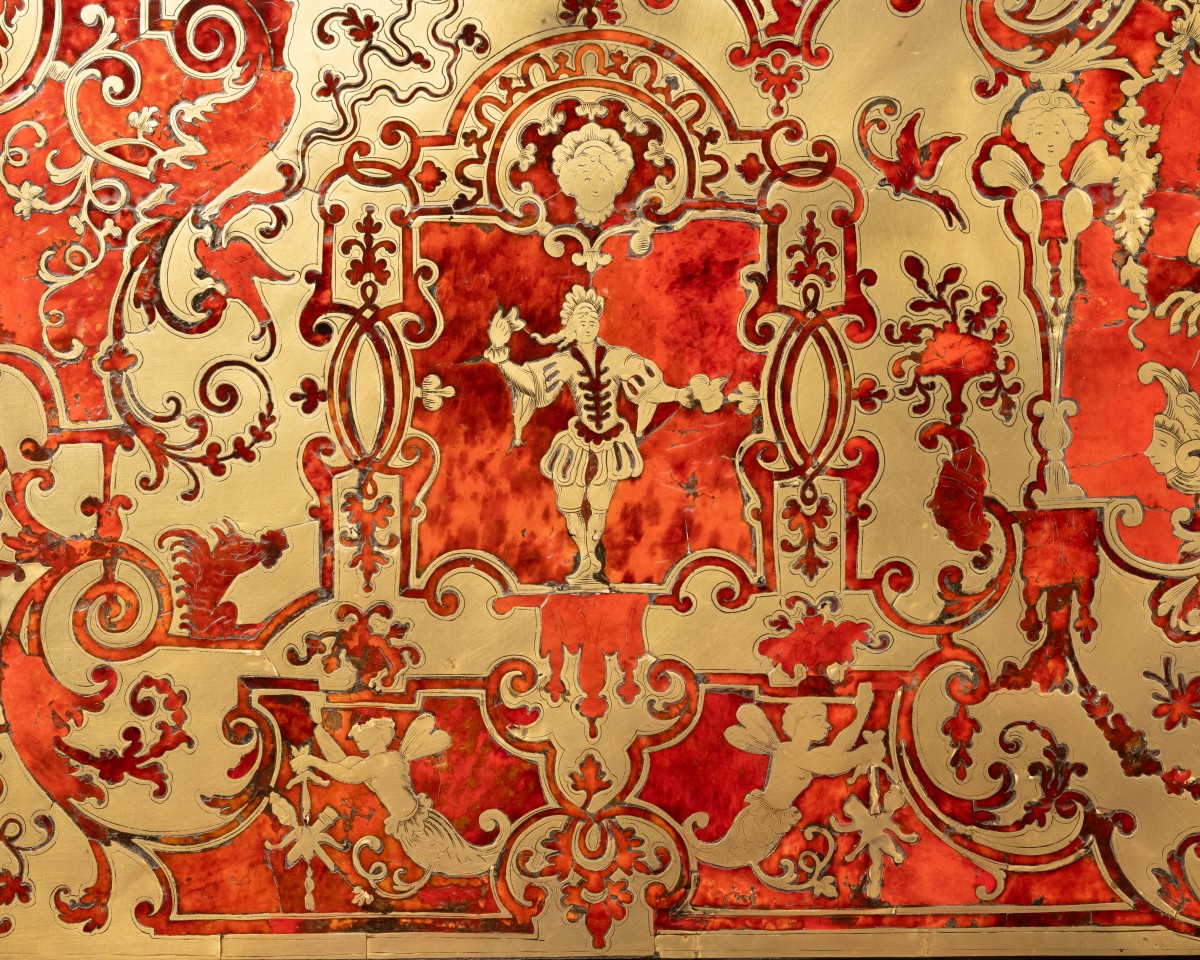
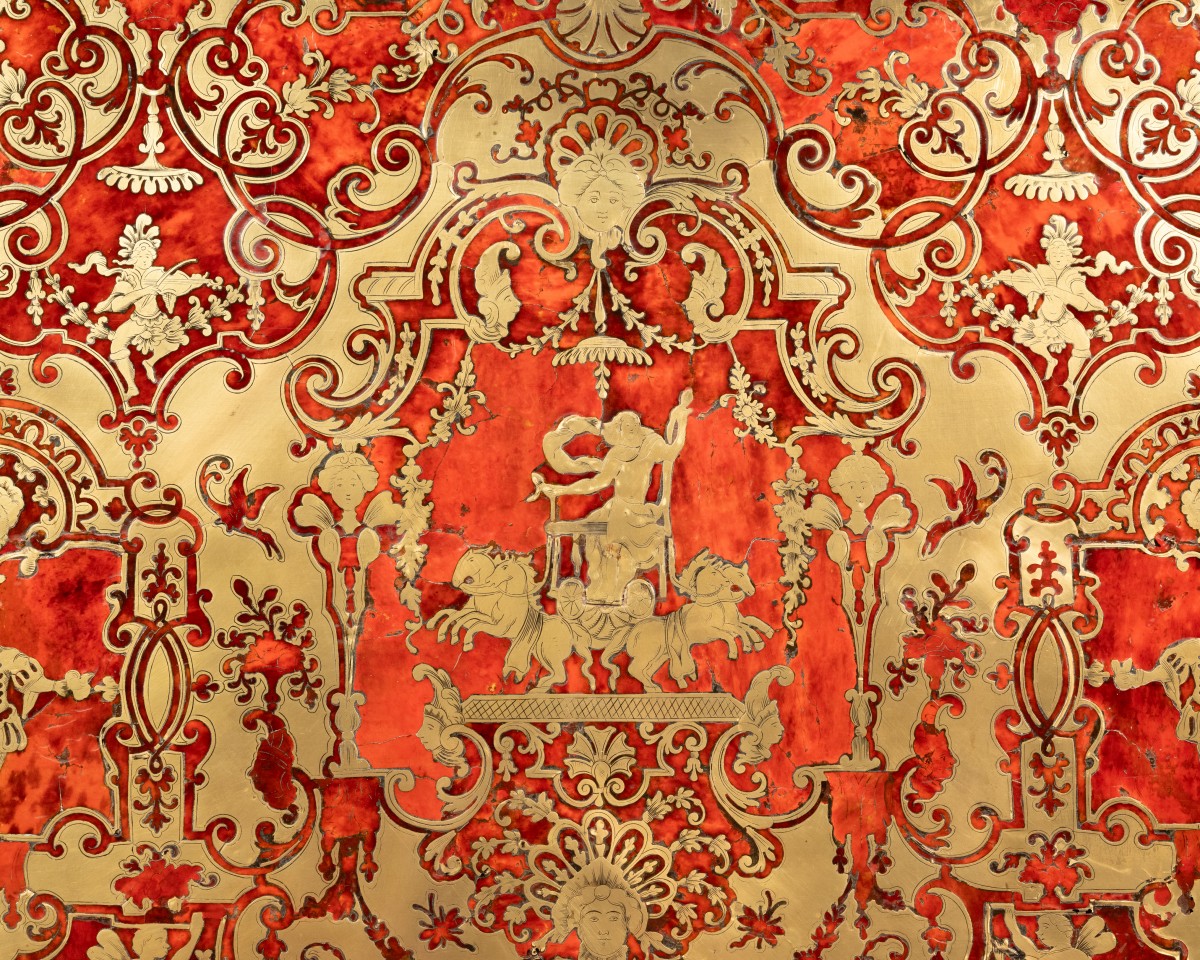
The decoration is exquisite in the Bérain style, with grotesques on mounds within an arabesque setting of scrolling foliage and palmettes populated by dancers, cherubs, birds, squirrels, mosquitoes, and more.
The top is adorned with a chariot representing the allegory of Victory.
The original gilt-bronze ornamentation is exquisite, including keyhole escutcheons with faun masks, drops decorated with musical trophies and quivers, drawer frames with gadrooned friezes, and twisted drop handles.
Softwood core, back, and drawer interiors.
In excellent condition, with the engraving still remarkably fresh.
Work of the cabinetmaker Nicolas Sageot, Paris, Louis XIV period, circa 1700.
Dimensions:
Height: 80 cm; Width: 99 cm; Depth: 58 cm
Provenance:
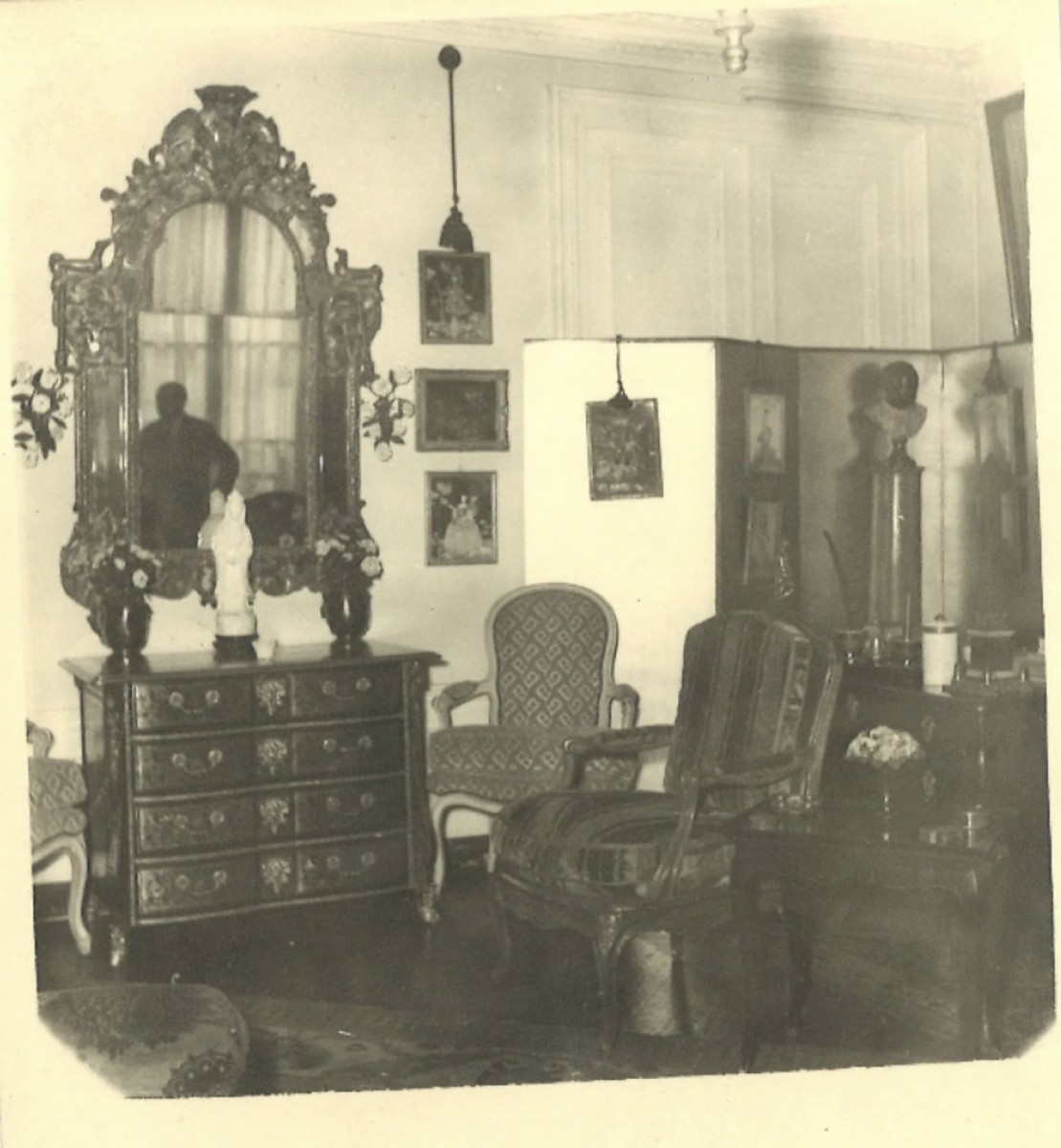
Private collection in Paris on Boulevard Saint-Germain since the beginning of the last century (photo of the chest of drawers in situ in the 1950s)
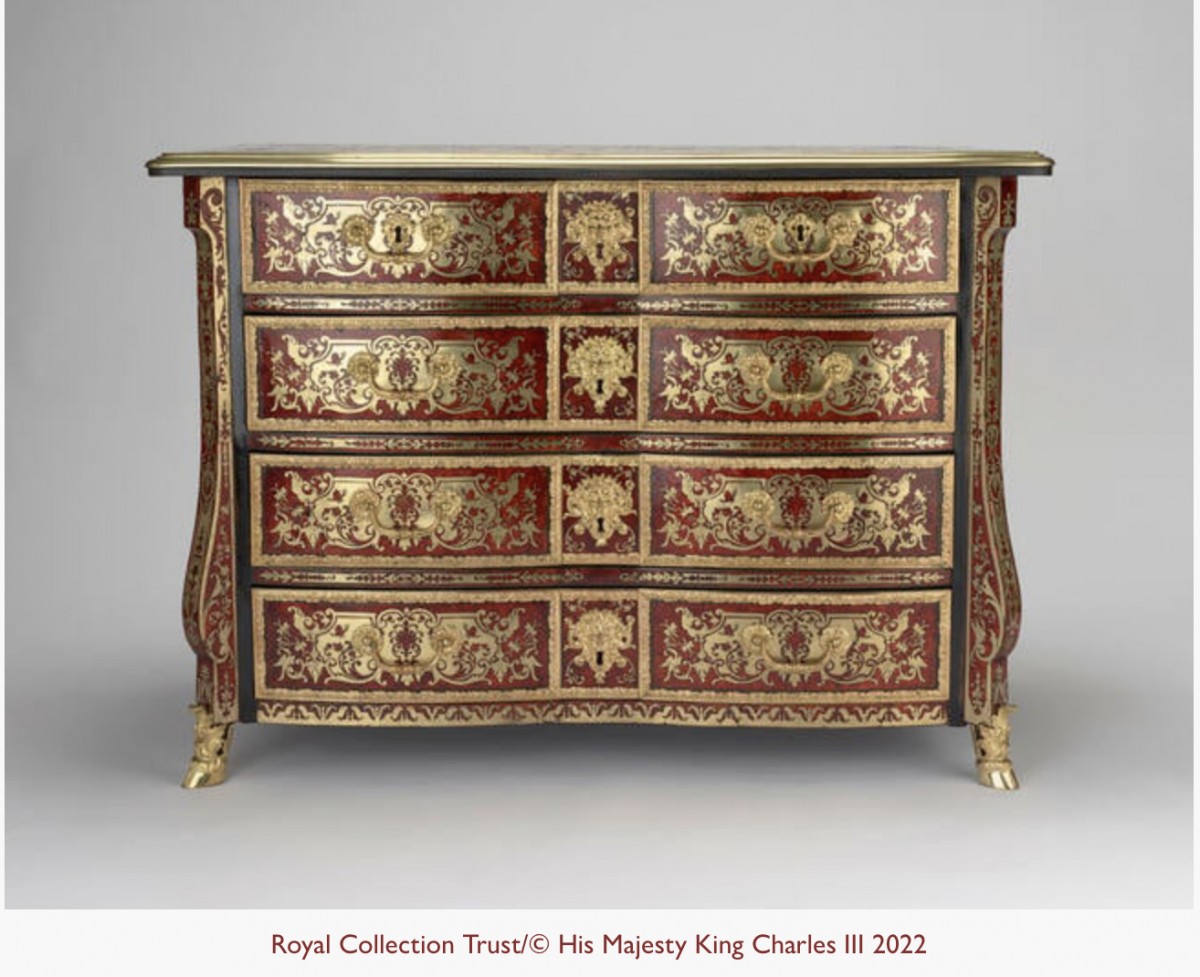
A five-drawer commode of the same size and similar decoration, but in the "first section," is held in the British Royal Collection (Inv. No. RCIN 33463).
It is likely that both pieces were made around the same time, by the same workshop.
Nicolas Sageot (1666-1731) was an ebony cabinetmaker who became a master in Paris in 1706. He was married to the daughter of his colleague Jacques Roussel. He probably worked as a journeyman in the Faubourg Saint-Antoine. Nicolas Sageot worked as a free craftsman in the Faubourg Saint-Antoine from the late 17th century. An ebony cabinetmaker in Regency Paris, Sageot was married to the daughter of his colleague Jacques Roussel. His workshop, likely maintained by his widow, appears to have remained in operation until around the end of Louis XV's reign. Few of Sageot's pieces bear his stamp, but they can be attributed to him by comparison with those that do. These are pieces of furniture inspired by the works of Boulle, primarily large bookcases.
Our opinion:
A thorough study of the decoration allows us to attribute with certainty the commode we are presenting to the great cabinetmaker of Louis XIV's reign, Nicolas Sageot.
The master's body of work is well-documented, as Sageot would only affix his mark towards the end of his career to Regency-style furniture, including double-door bookcases. Certain details, such as the mosquitoes, butterflies, and squirrels, are perfectly identical to those found on stamped pieces.
The Mazarine commode we are presenting, with its four rows of drawers, is still typically Louis XIV and, like the Mazarin desks, was made slightly before this new law on stamping.
While today the Boulle technique has entered the pantheon of French cabinetmaking, it was widely criticized at the time.
These pieces, with their shimmering colors and the myriad glints of brass, directly succeeded the austere natural wood furniture of Louis XIII's reign and provoked much incomprehension.
It is interesting to note that King Louis XIV was a pioneer, a great lover of both ancient and contemporary art.
The commode we are presenting, in perfect condition, is a very fine example of this style, which, in our view, represents the quintessence of French cabinetmaking. Although we know nothing about the original patron, the presence of a negative in the "first part" of the British royal collections allows us to imagine the importance of this type of commode.
Indeed, a large portion of the French furniture from the Ancien Régime held by the British Crown comes from purchases made during the revolutionary sales of royal châteaux.