Offered by Franck Baptiste Paris
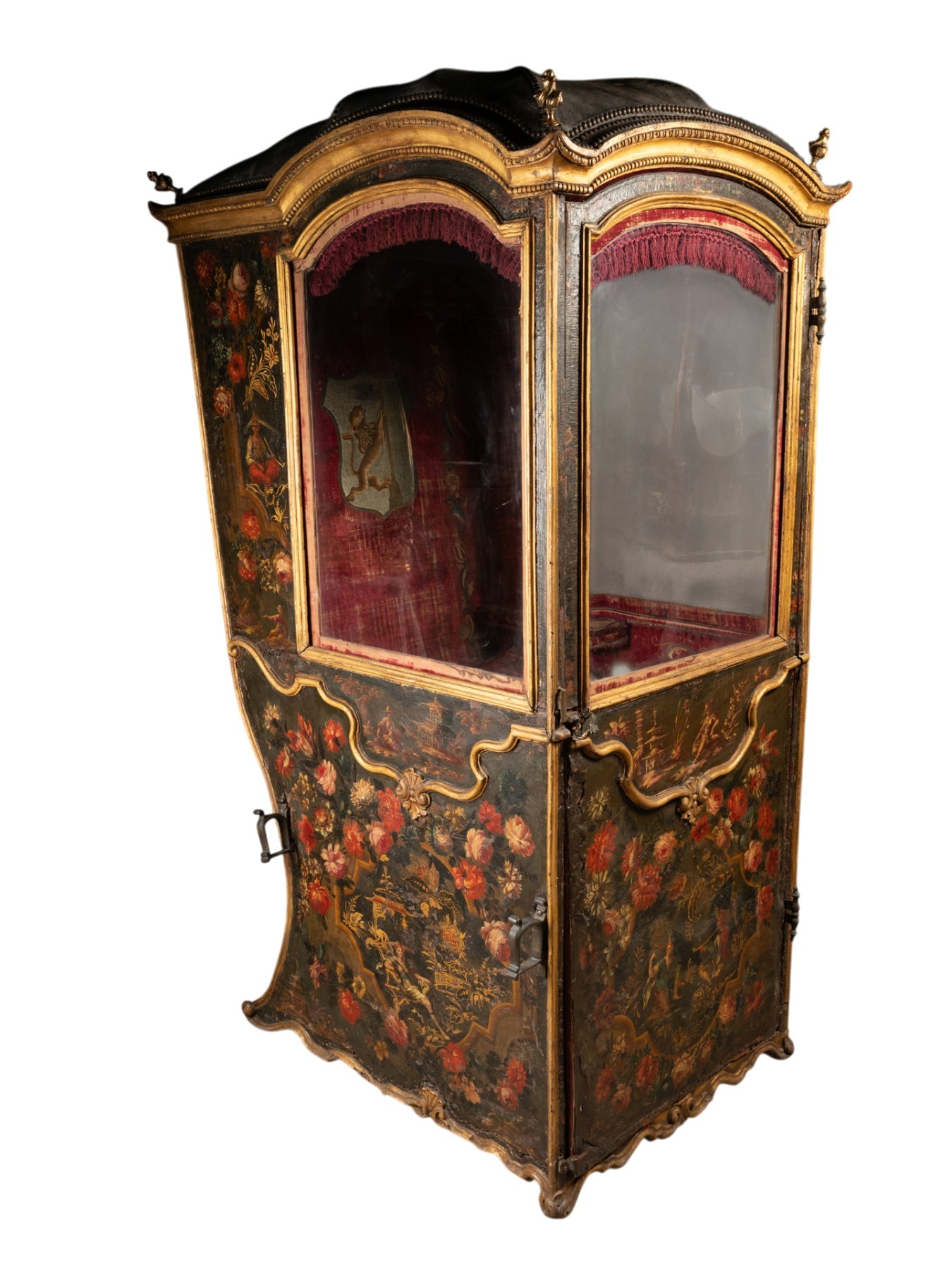
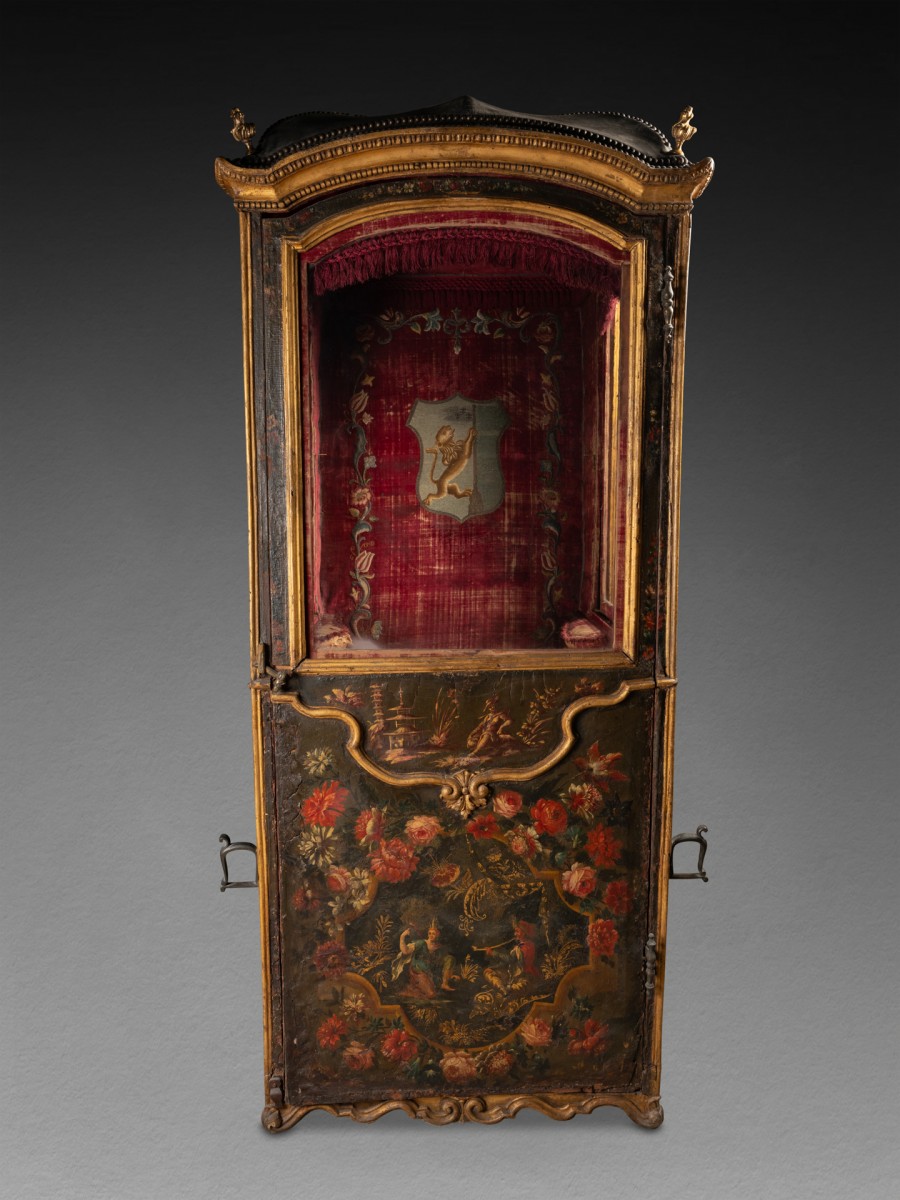
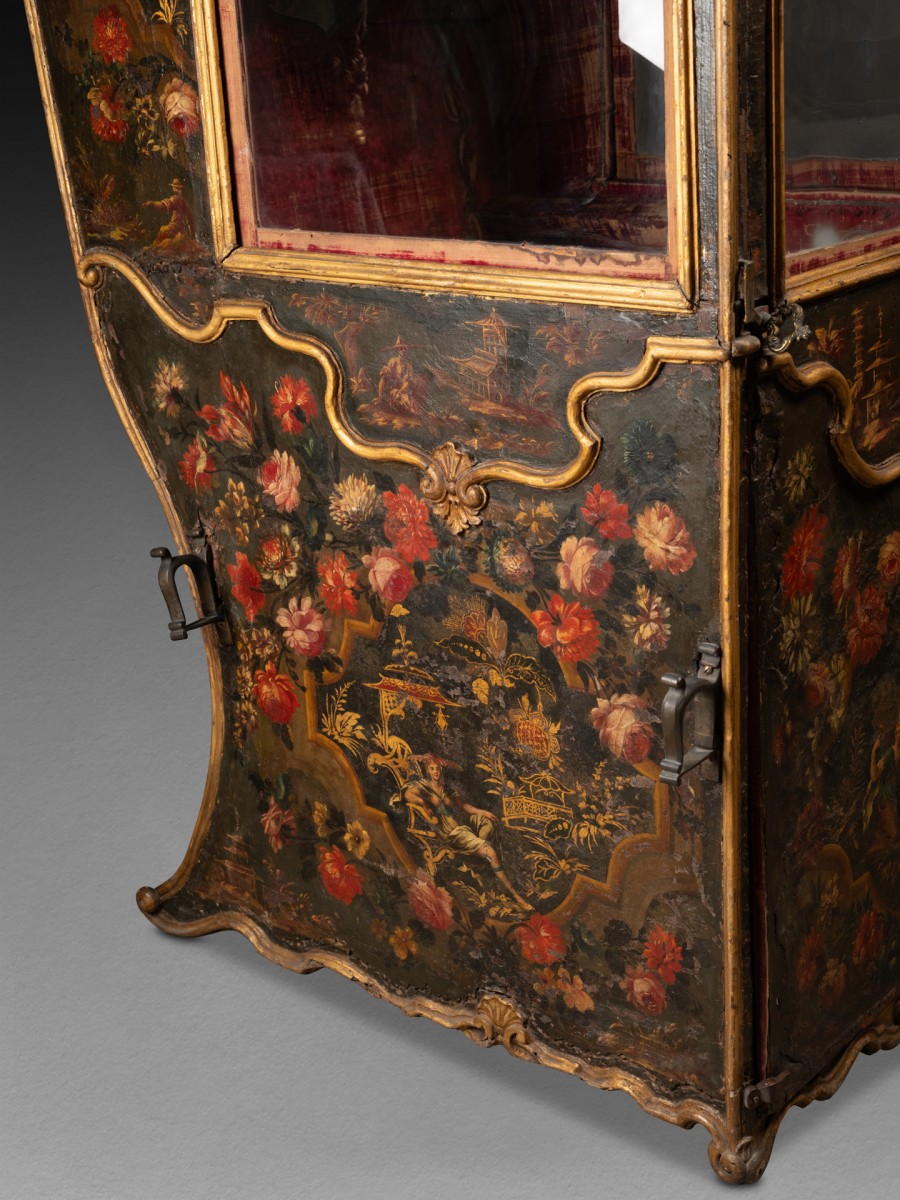
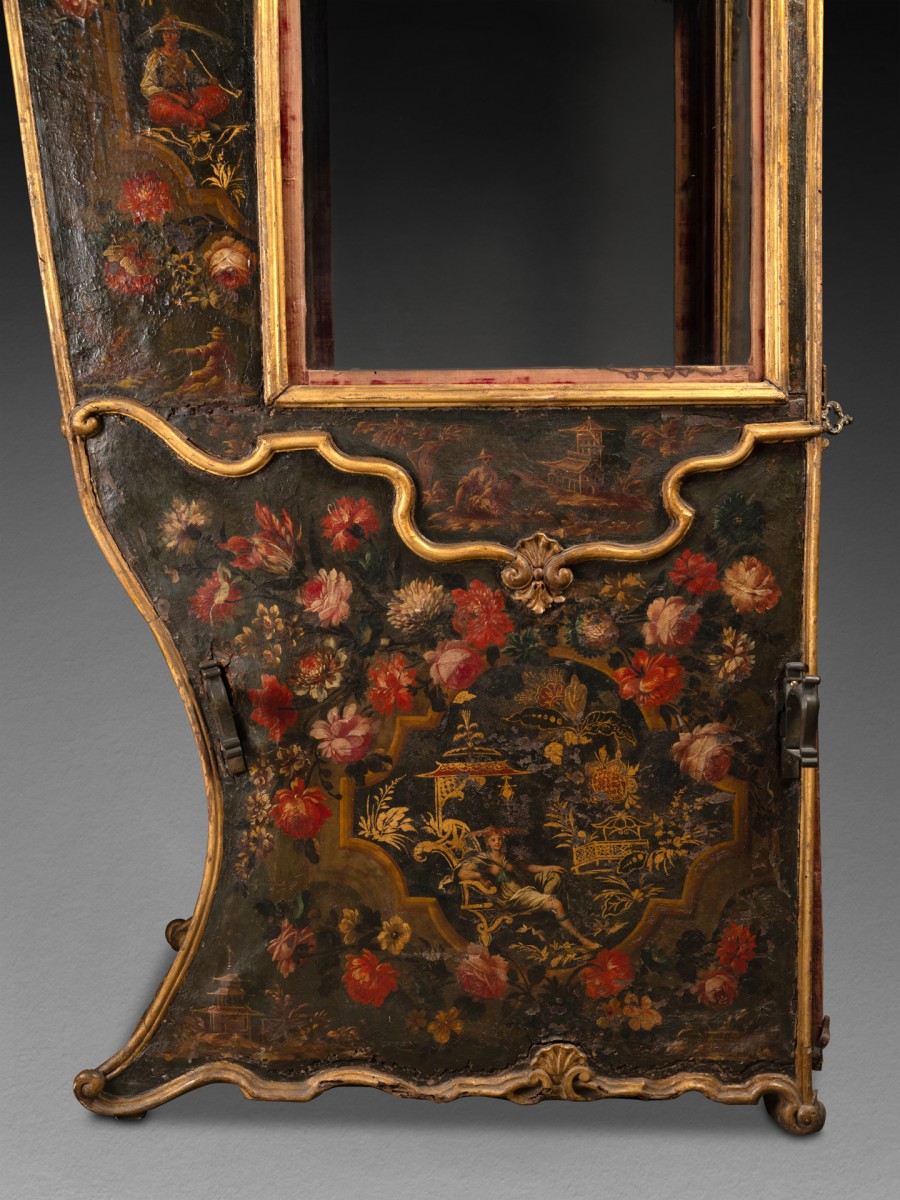

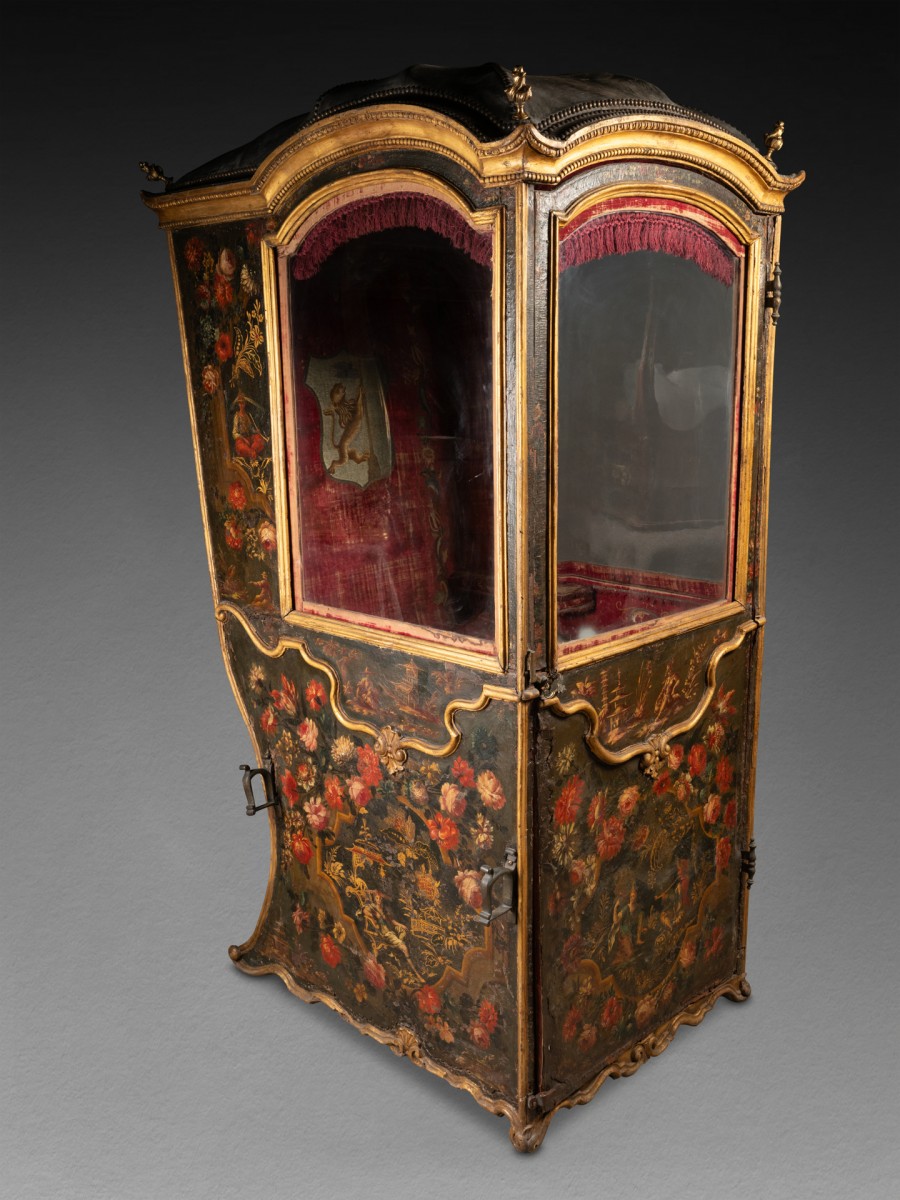
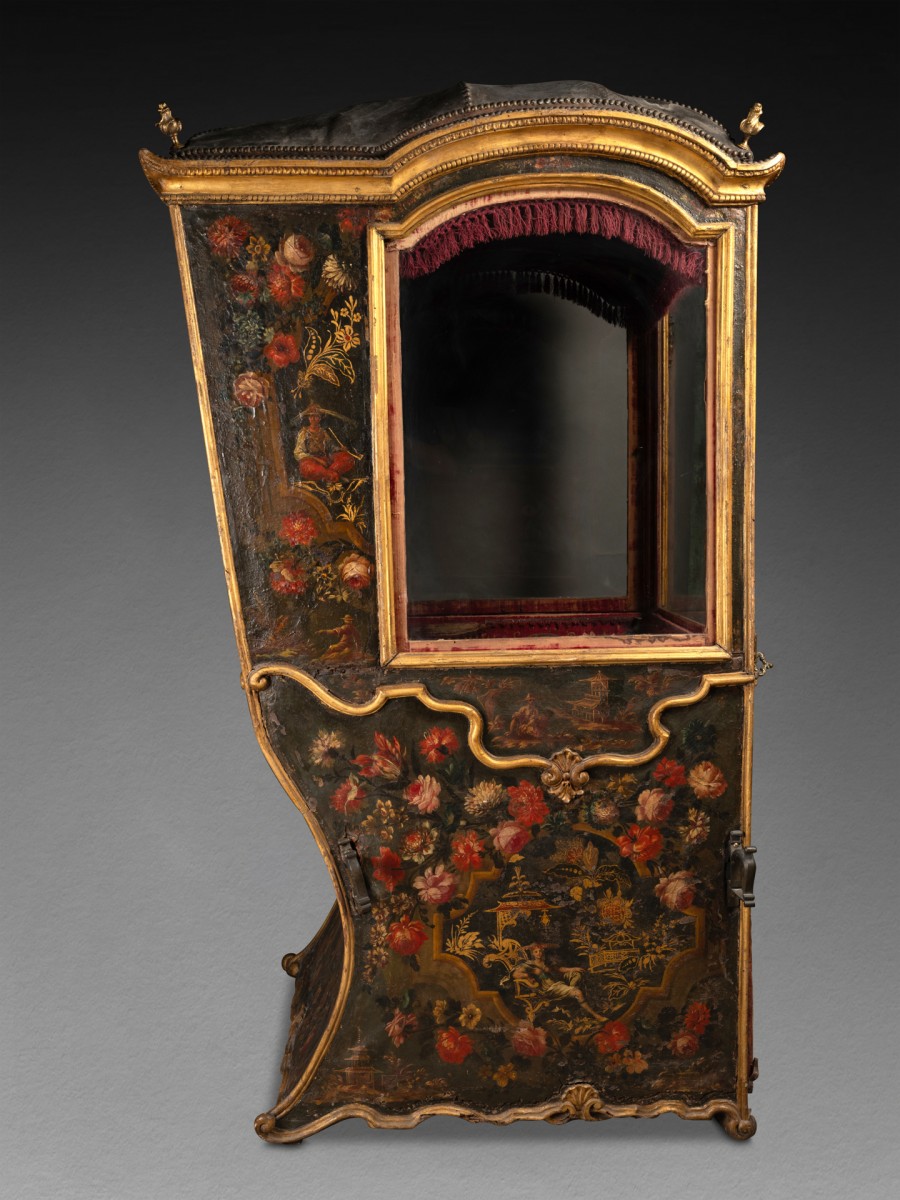
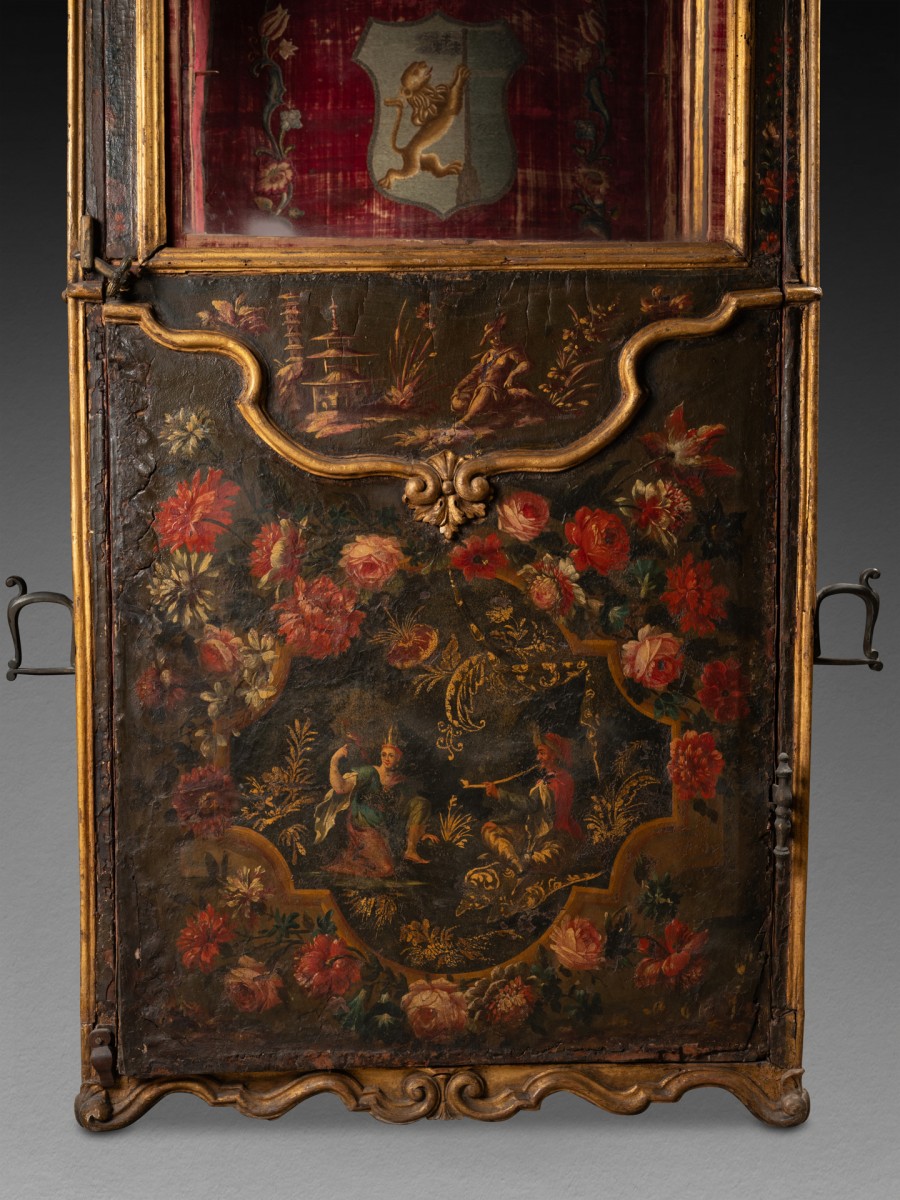
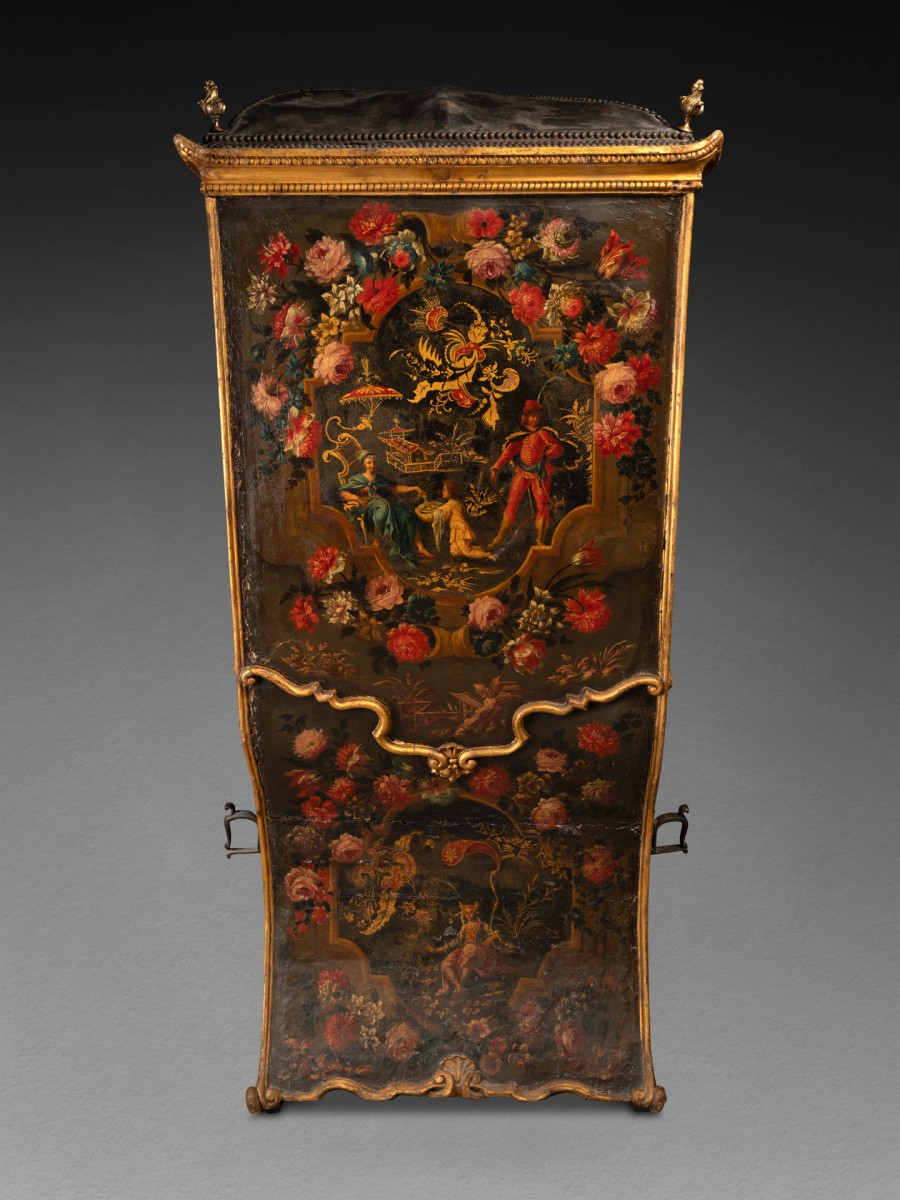
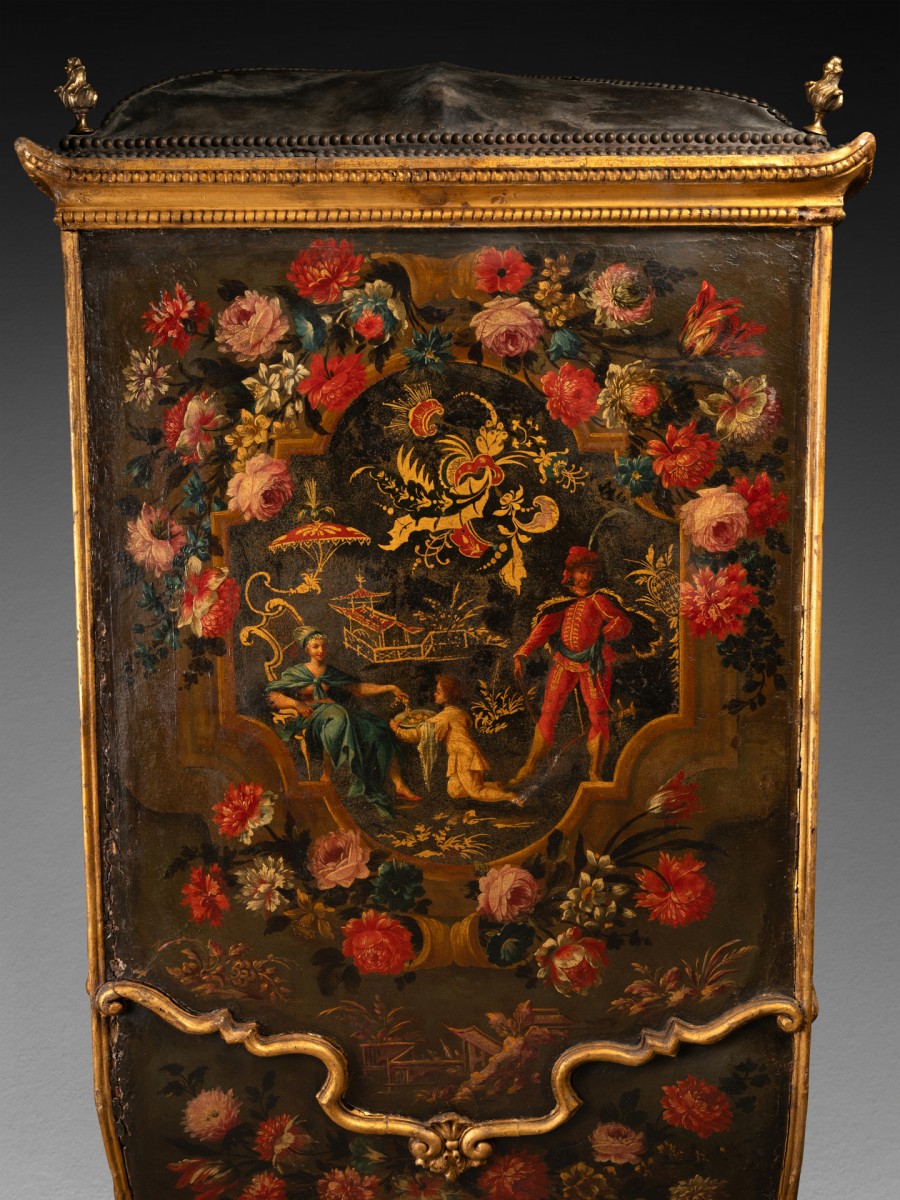
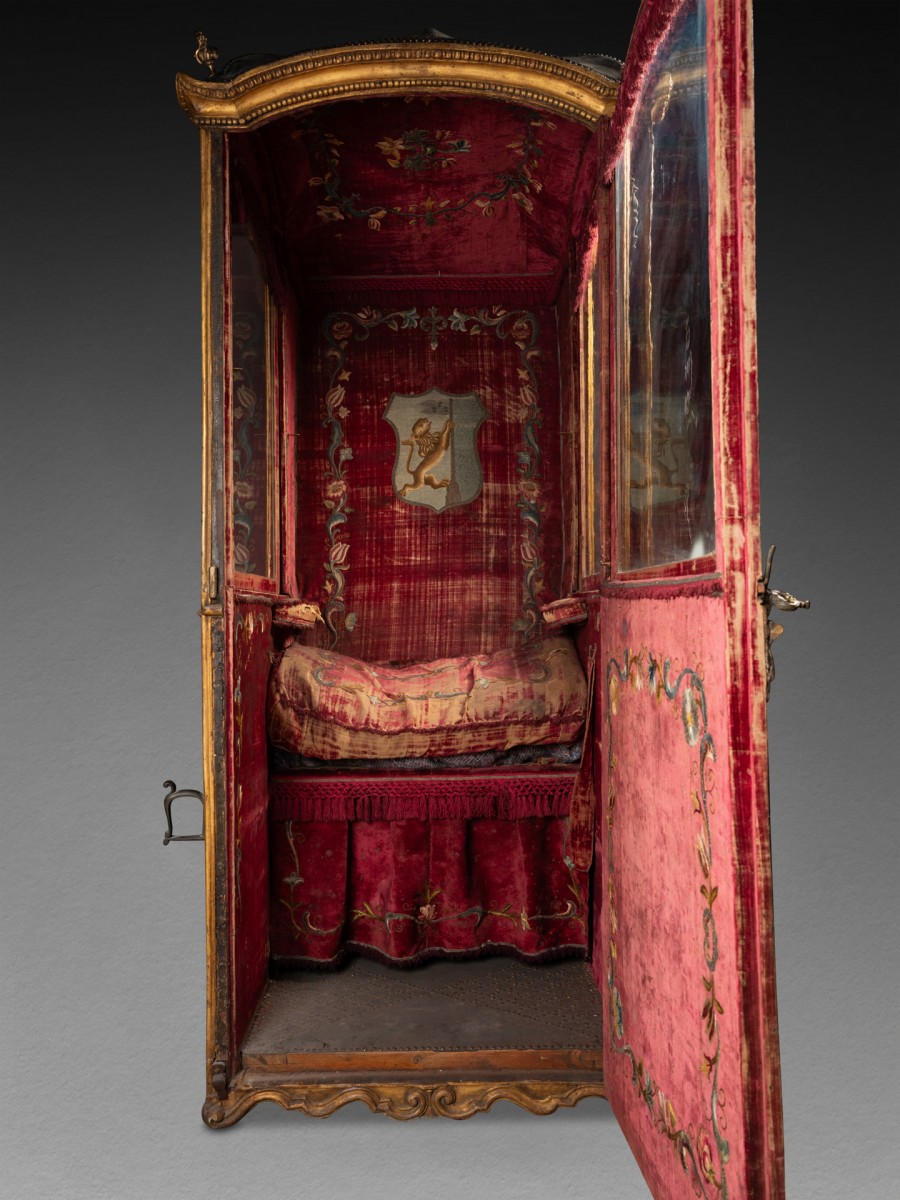
Rare sedan chair in polychrome European lacquer on a black background. A so-called "fair weather" model, with a door at the front and two removable panes of glass on the sides.
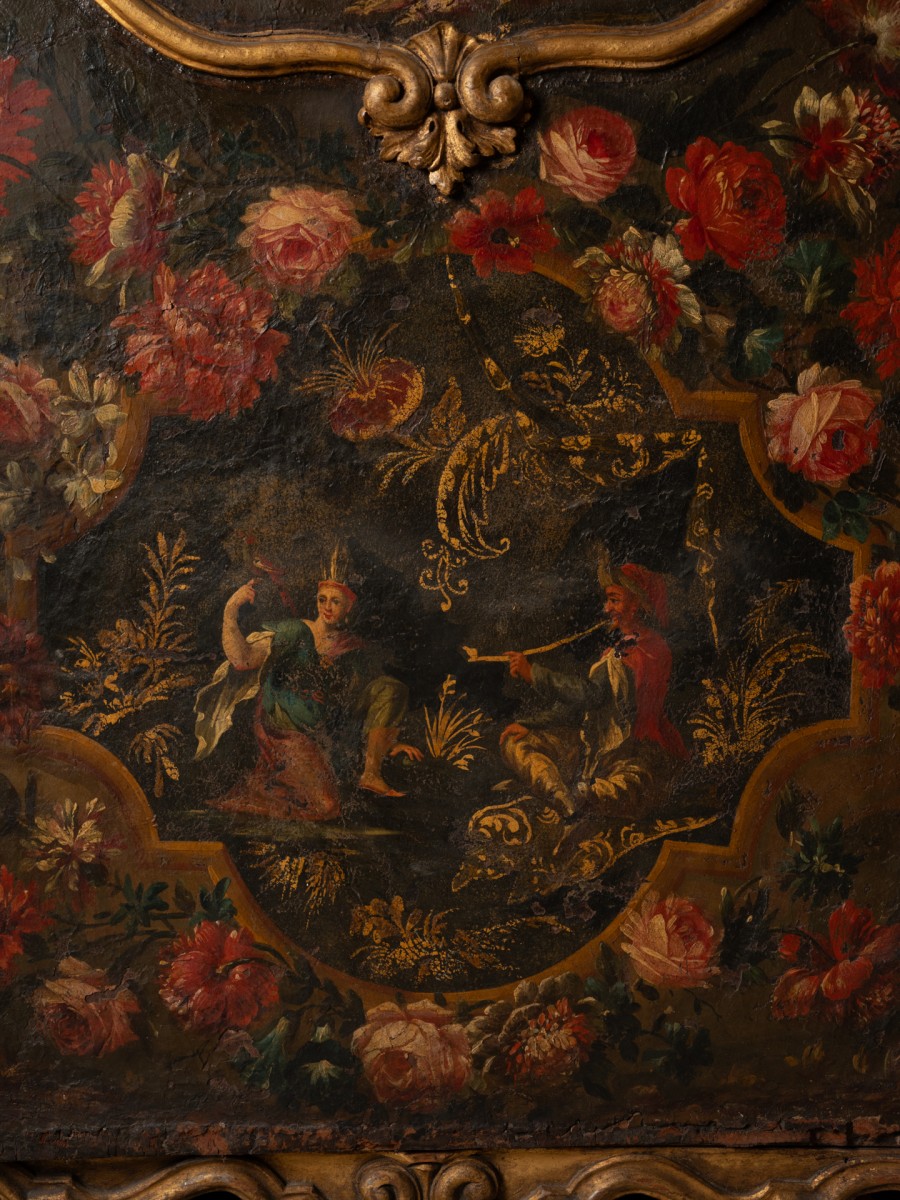
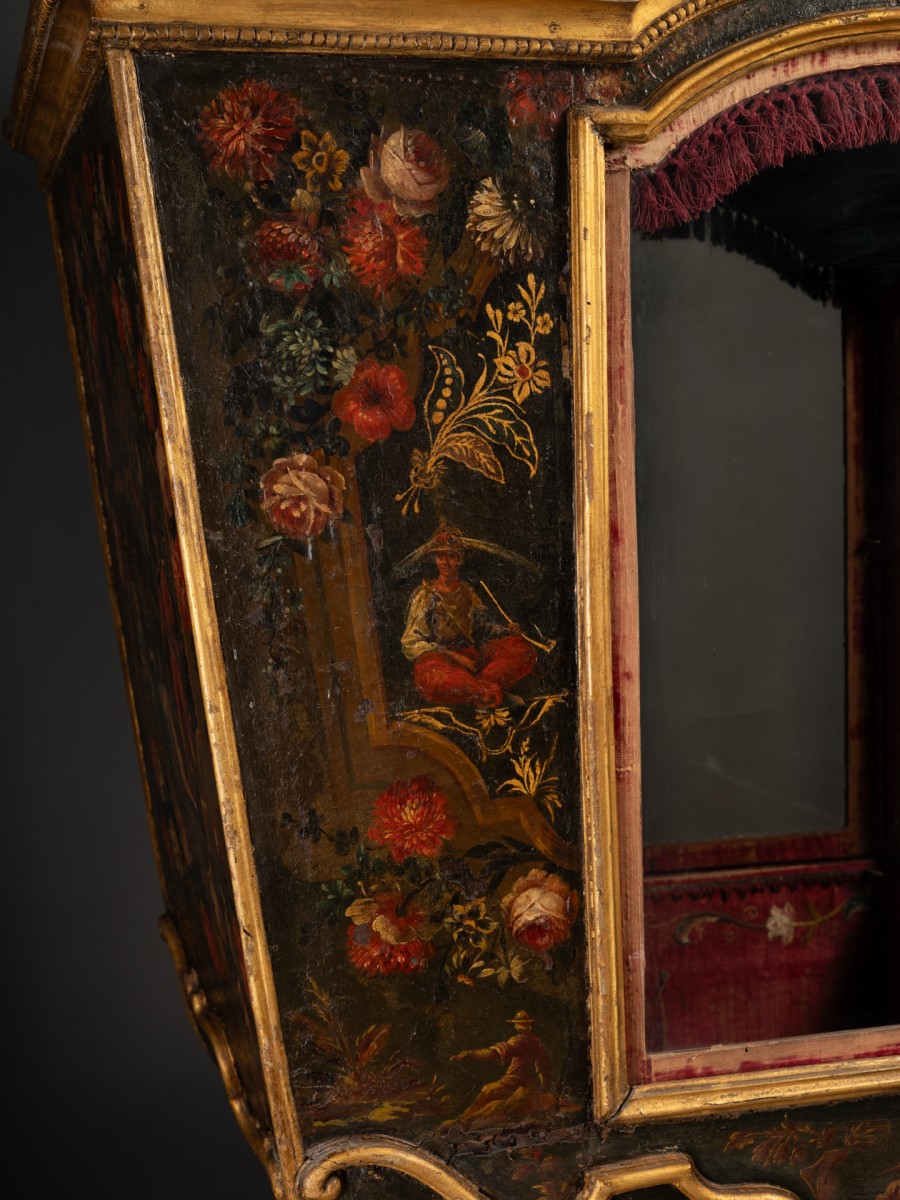
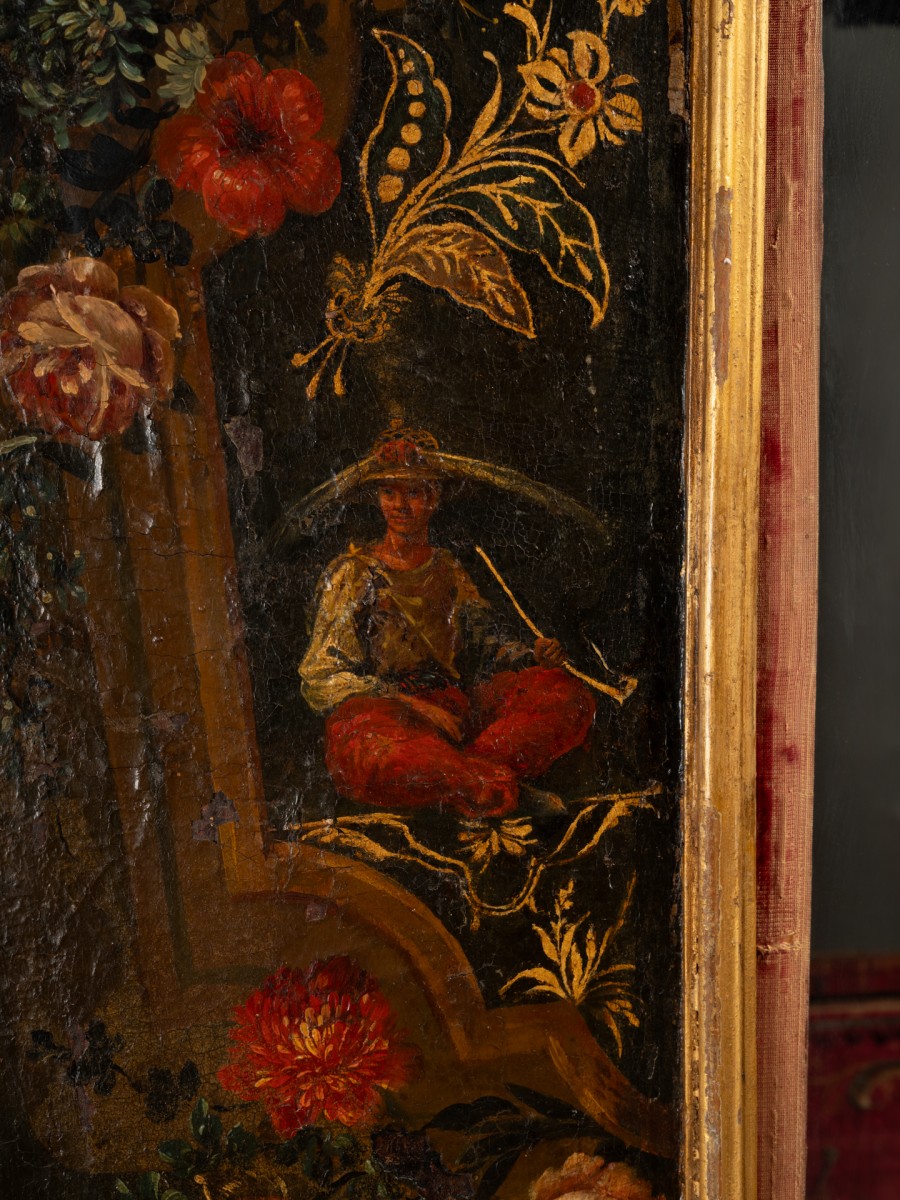
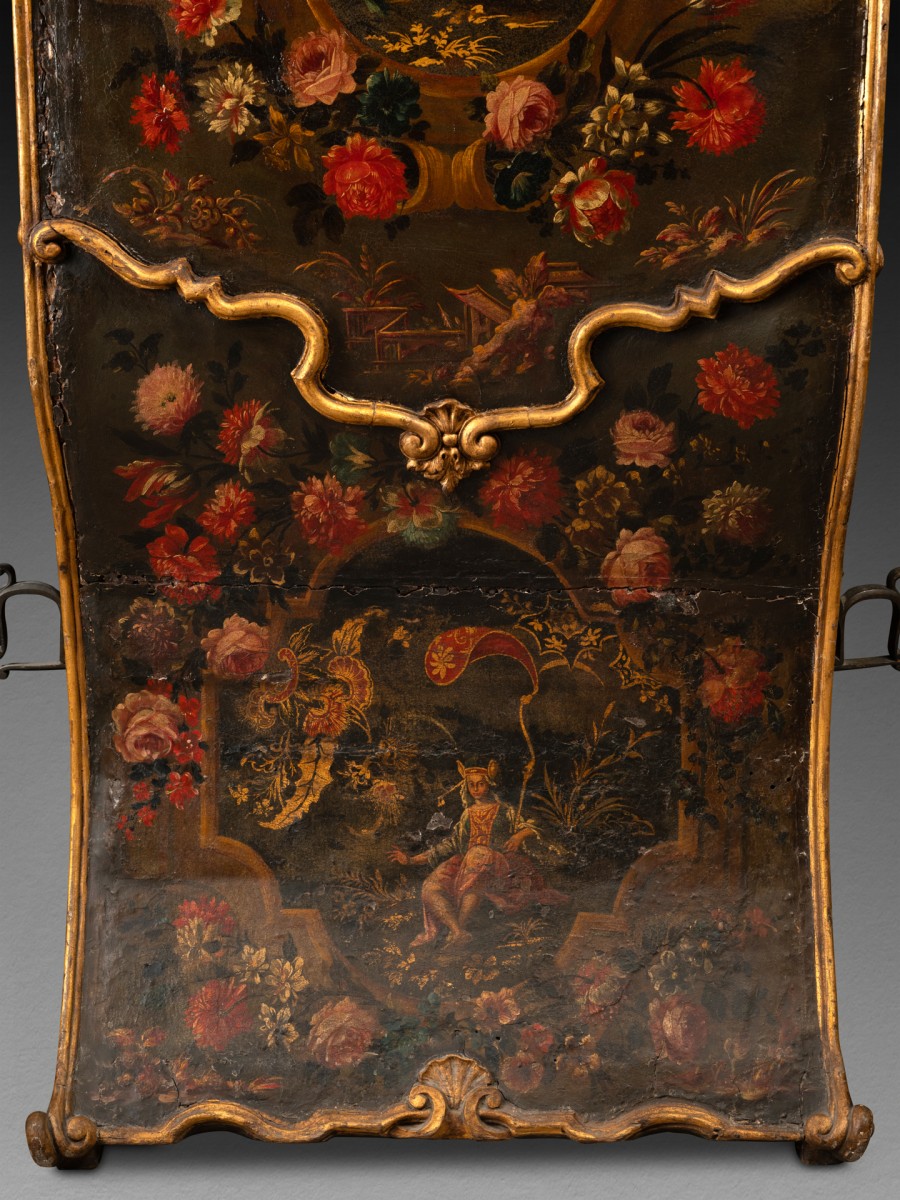
Decorated with garlands of flowers (roses, peonies) framing chinoiserie scenes, featuring European figures in a pagoda setting.
The figures, dressed in traditional Oriental costumes, sit on thrones surmounted by parasols.
Reserves bordered by a giltwood cord frame Chinese-style scenes in shades of yellow.
The uprights and window frames are covered in gold lacquer.
Domed roof in "orange quarters" pattern, covered in leather held in place by three rows of nails.
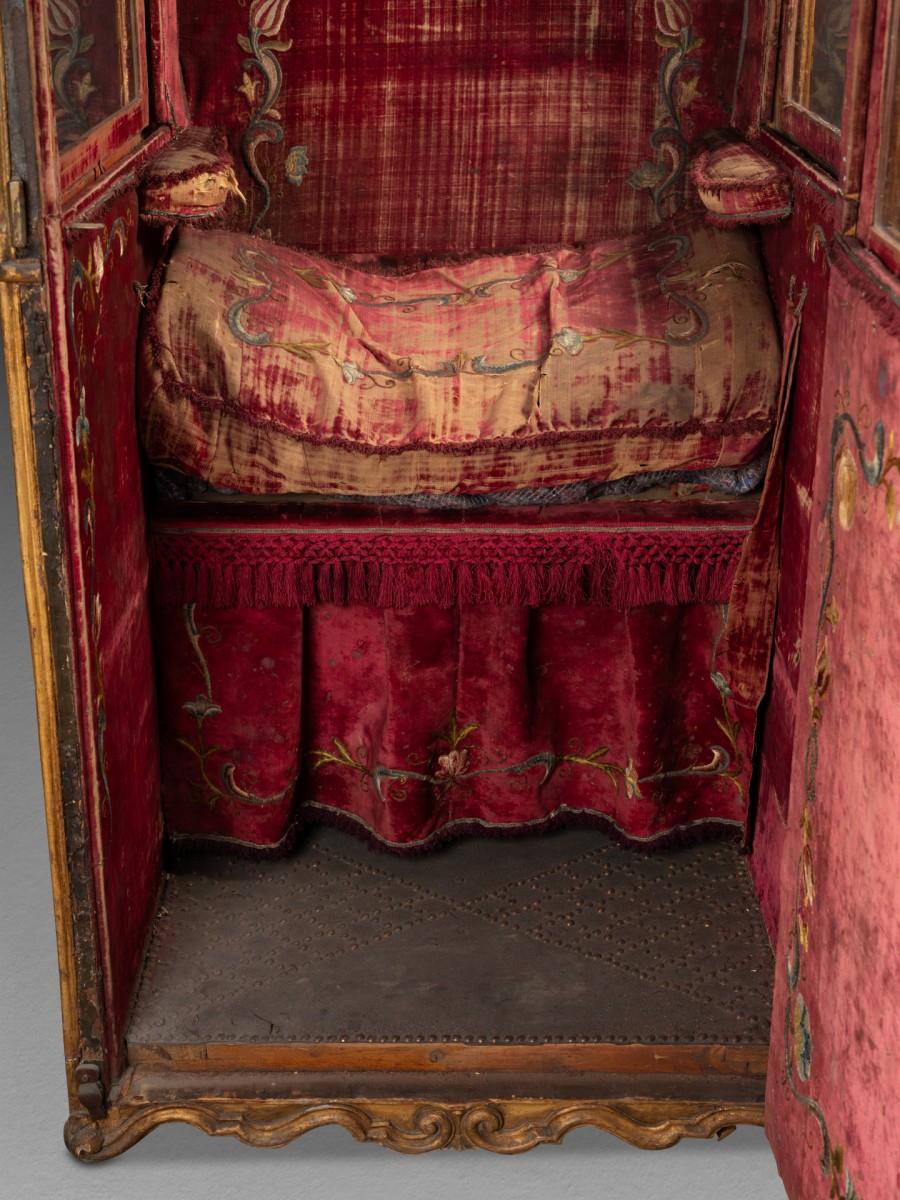
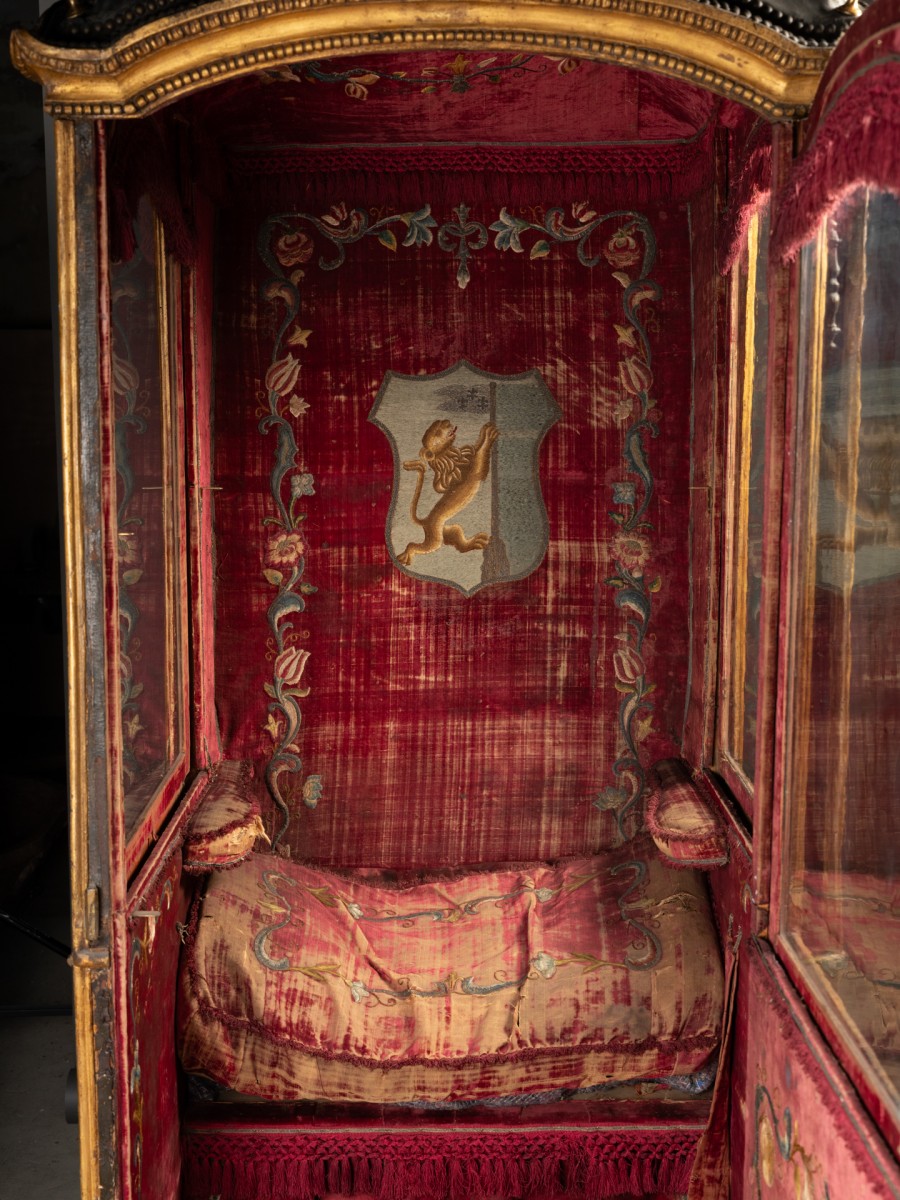
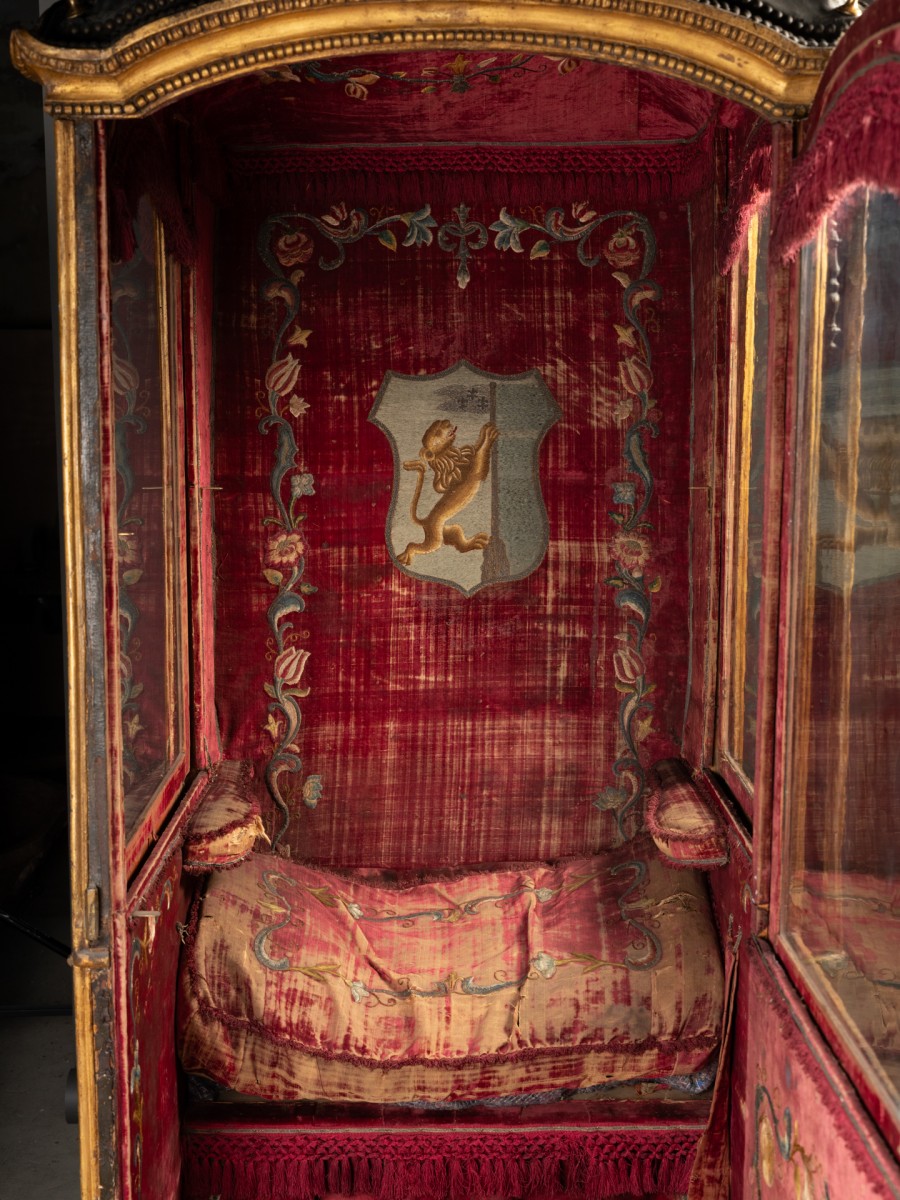
Interior with its original upholstery in red Genoa silk velvet, delicately embroidered with gold and silver thread. The chair features a frame of scrolling foliage and flowers, with a central coat of arms depicting a lion rampant against the mast of a flag bearing three fleurs-de-lis.
The coat of arms likely belongs to one of the branches of the Trabucco family, who owned the Castagneto Po castle in the 18th century.
The decoration is attributed to the Rapous brothers: Vittorio Amedeo (1729-1819) for the figures and his younger brother, Michele Antonio (1733-1819), for the floral garlands.
Turin, mid-18th century, circa 1750.
Dimensions: Height: 180 cm; Width: 78 cm; Depth: 100 cm
Provenance: Formerly in the Alberto Bruni Tedeschi collection
Our opinion:
Very few sedan chairs have survived with such original Chinese-inspired decoration on a black background. Our example is a very fine example of a lacquer imitating Chinese lacquer, produced in Piedmont.
Like Venice, this region was enamored with imitations of oriental lacquers, and numerous experiments allowed it to follow the trajectory of Martin varnish, with a new emancipation and new colors (notably yellow) appearing as early as the 1750s. Similar to Boucher's workshop, which blended bucolic and oriental scenes, the Rapous brothers, official painters to the Savoy court, devoted themselves throughout the 18th century to decorating woodwork, overmantel mirrors, ceilings, carriages, and sedan chairs for the Duchy's elite.