Offered by Franck Baptiste Paris
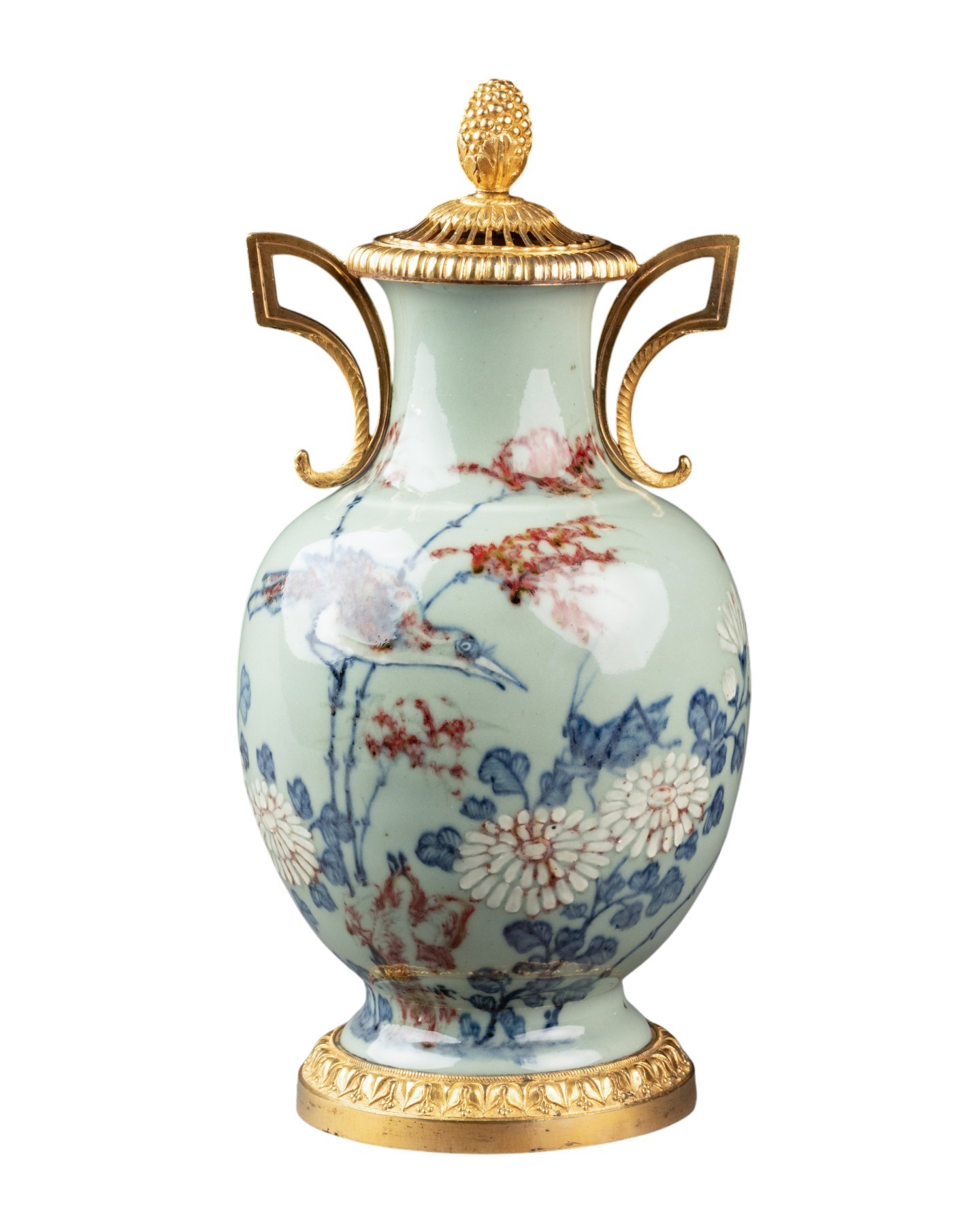
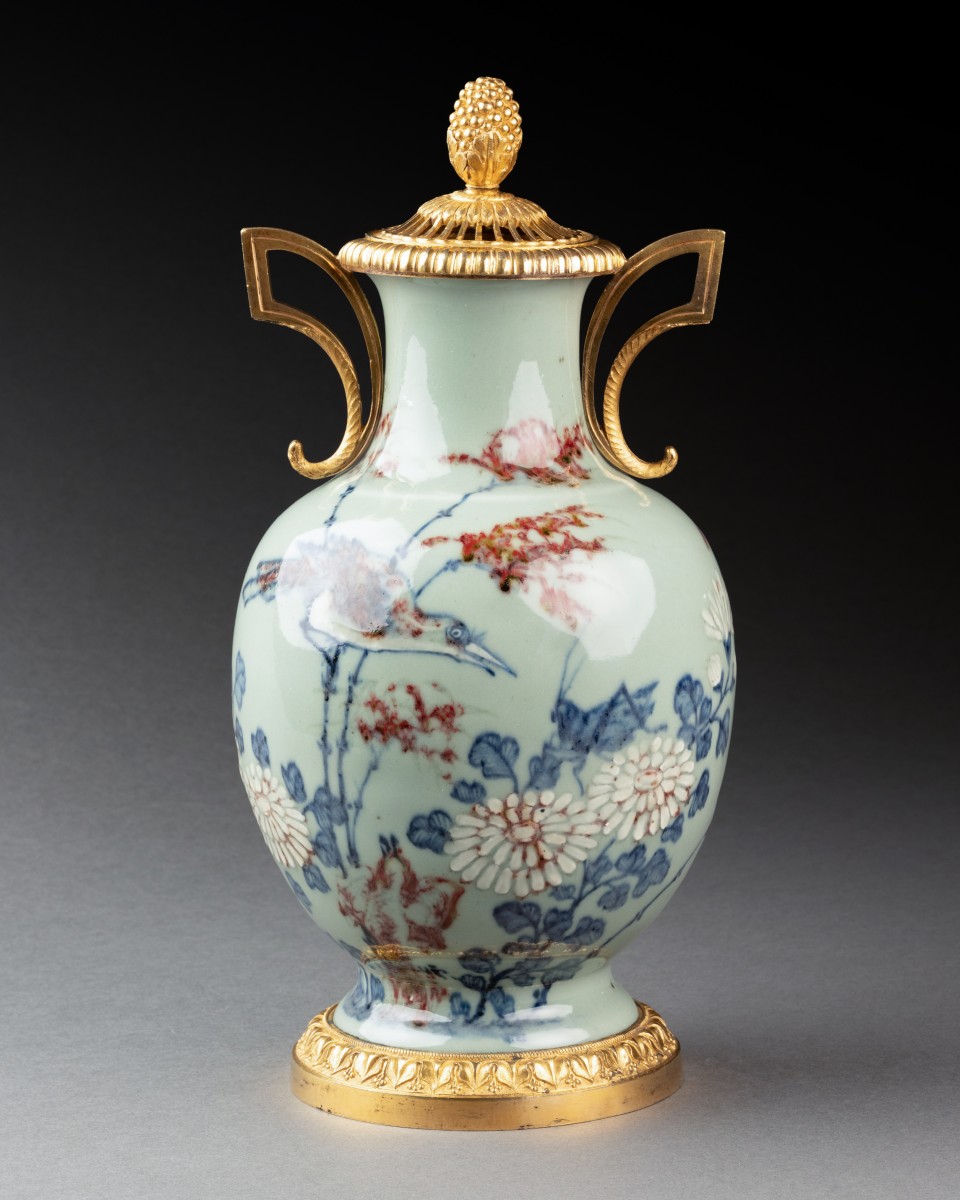
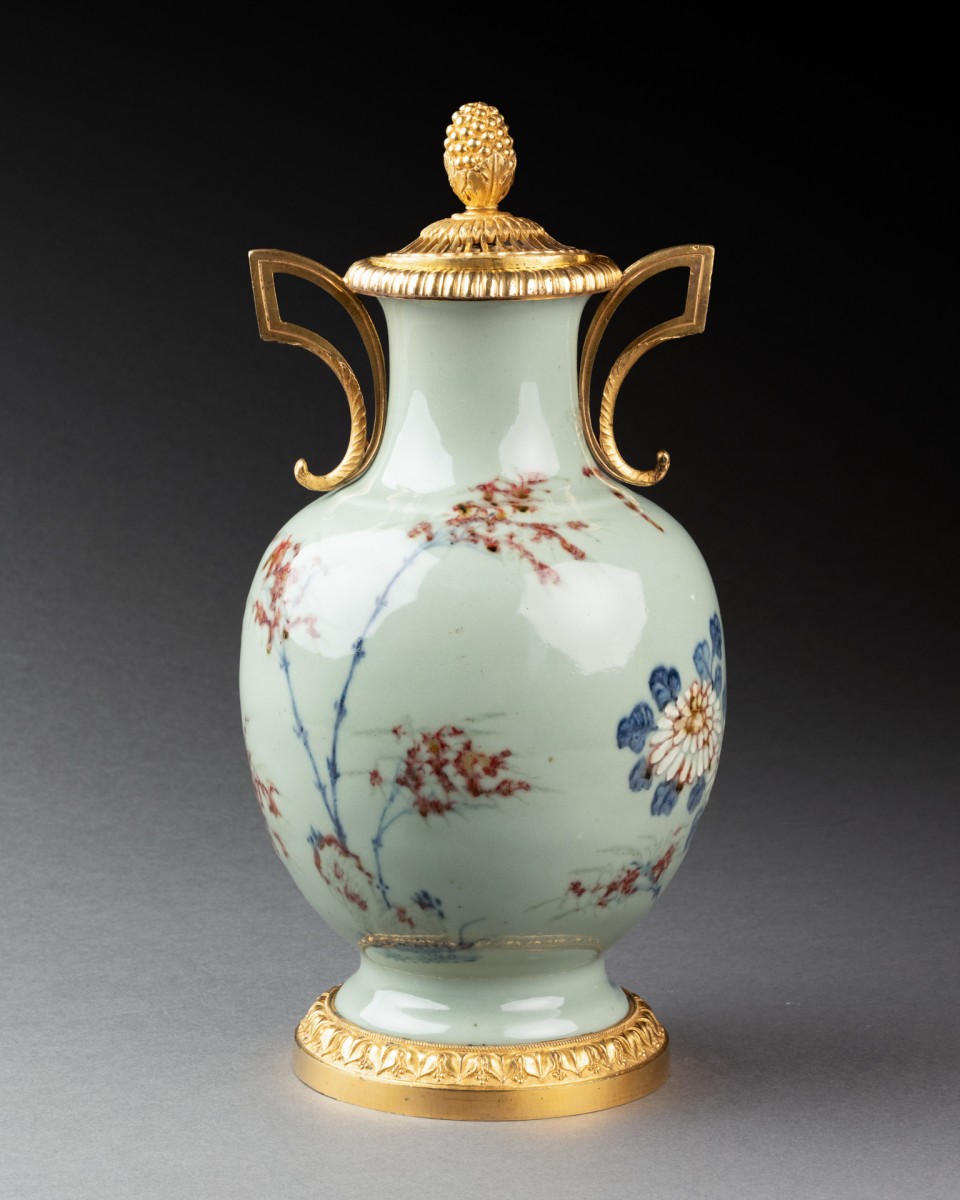

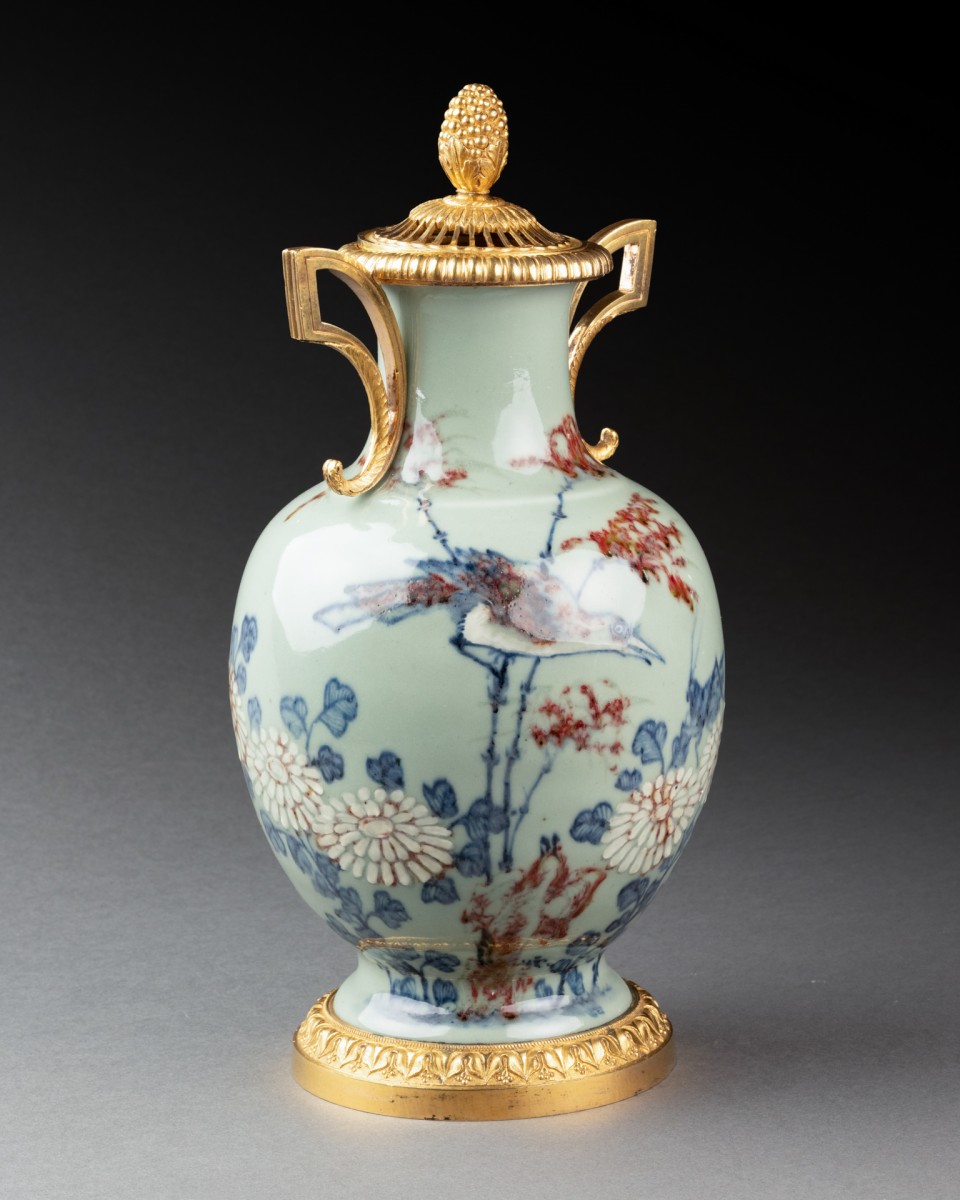
Chinese celadon vase mounted as a potpourri container in Paris, circa 1780
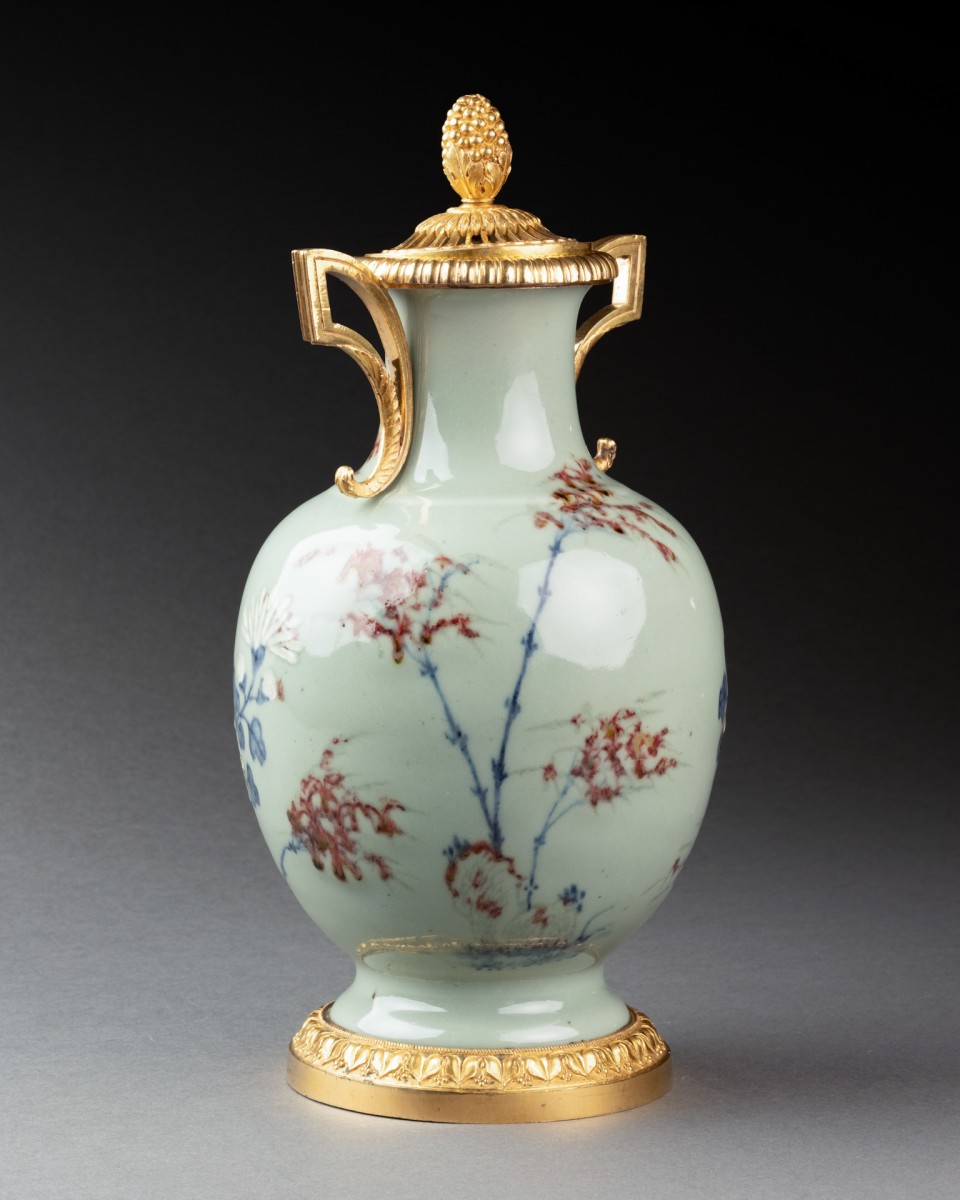
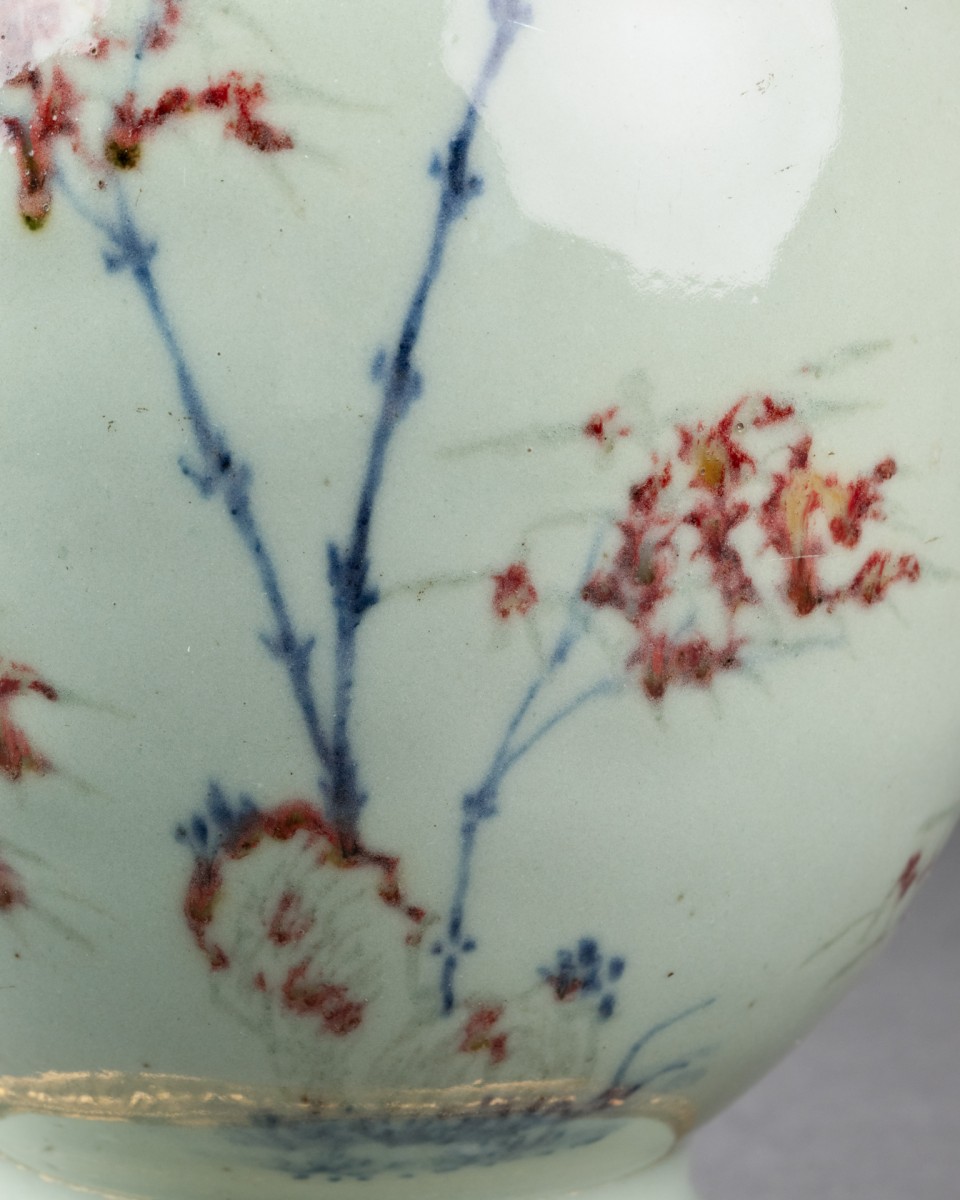
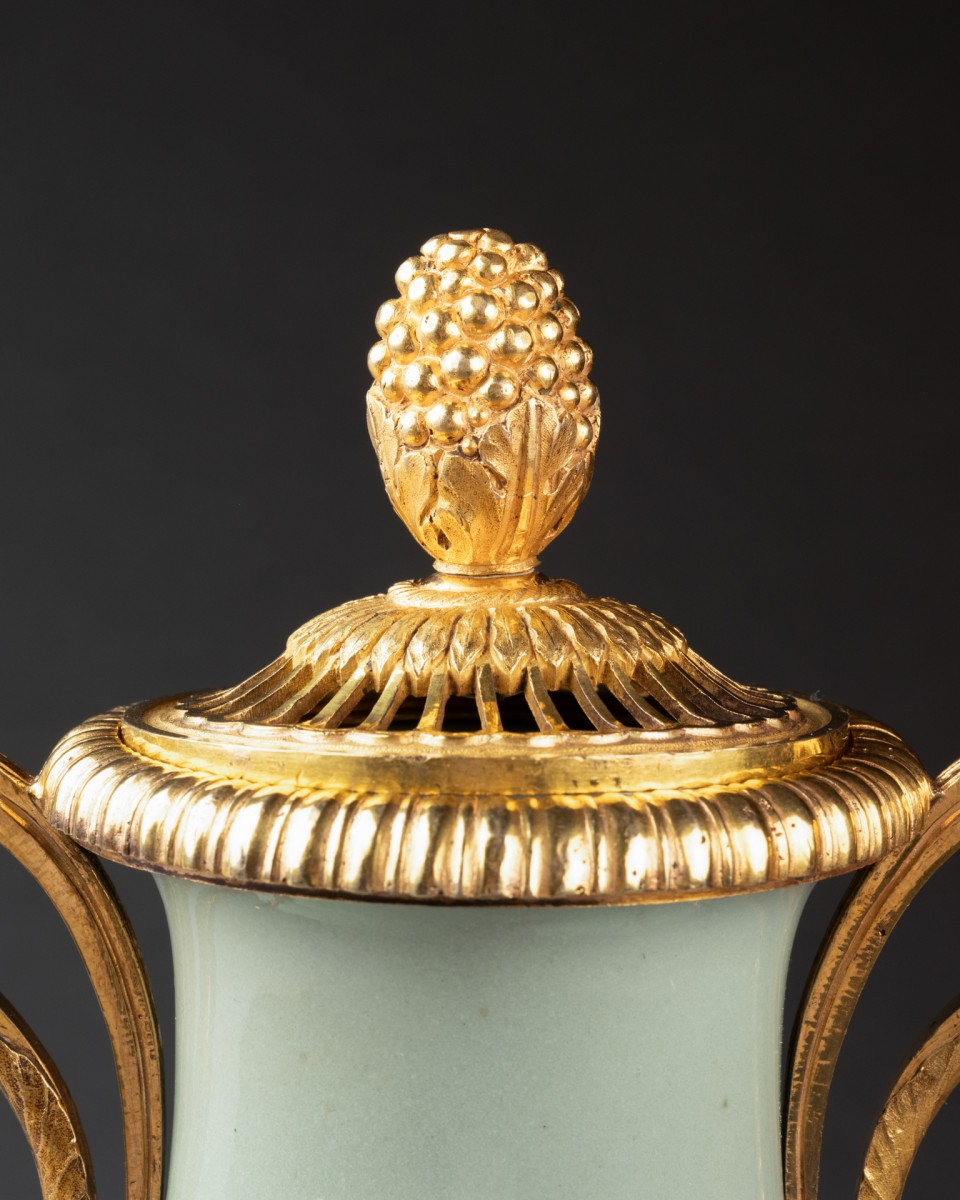
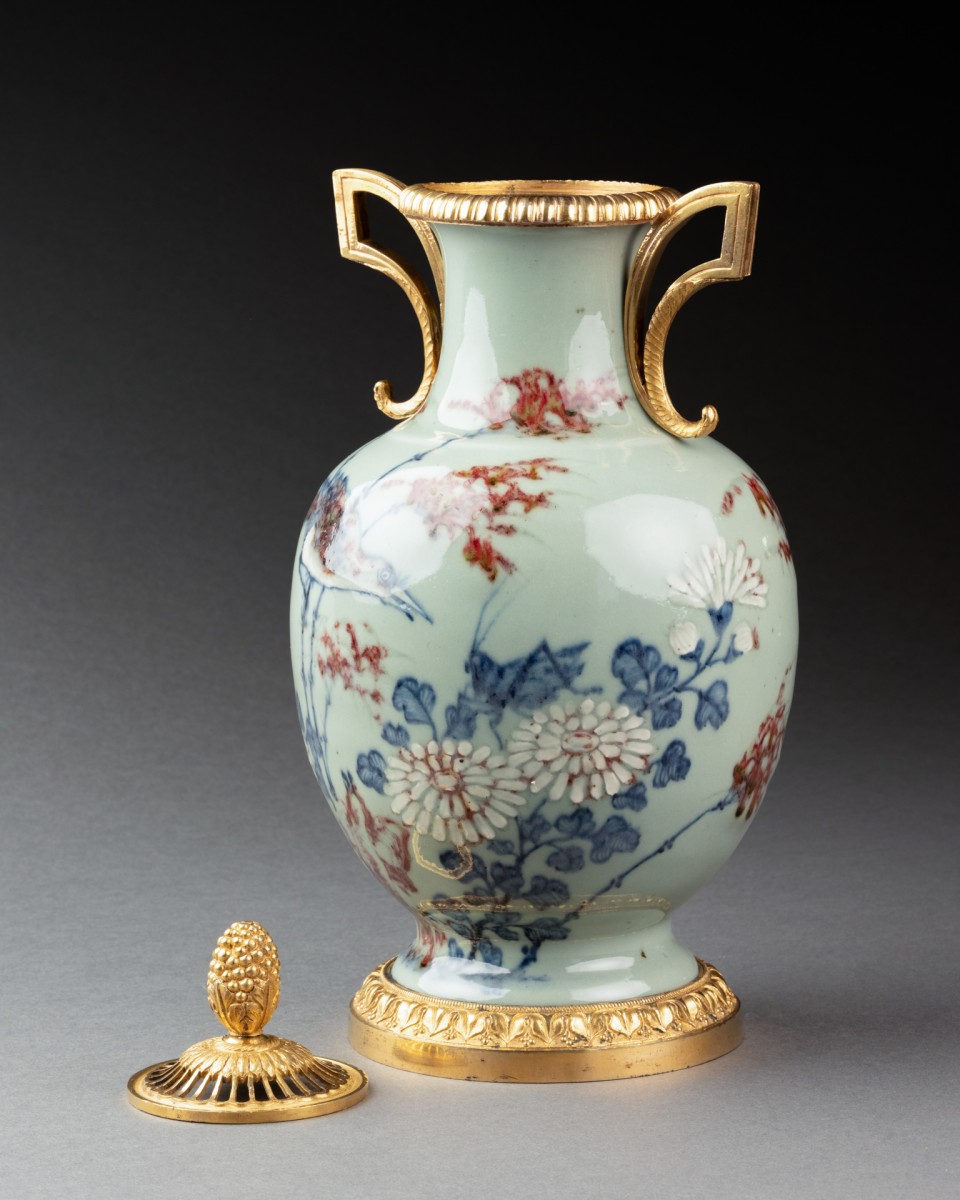
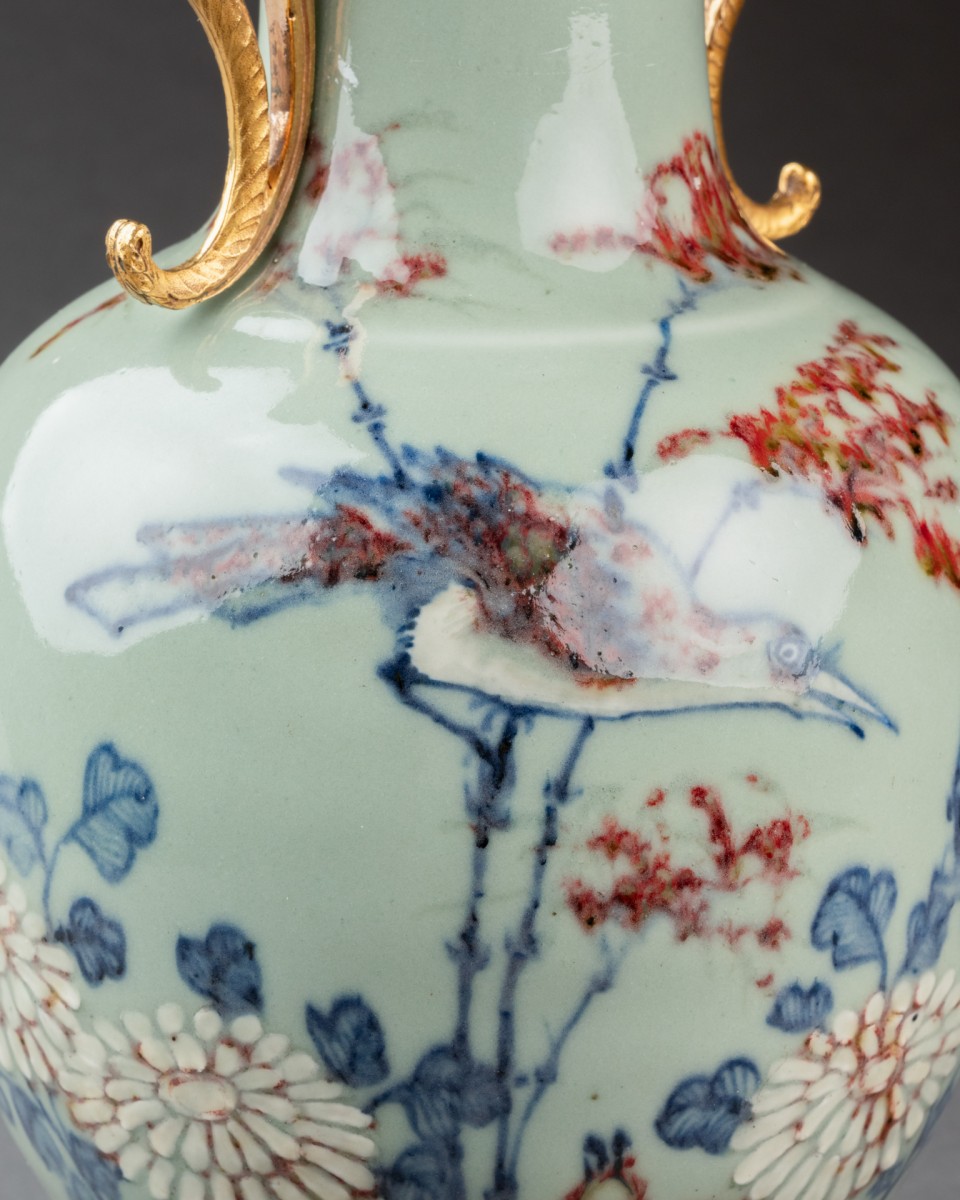
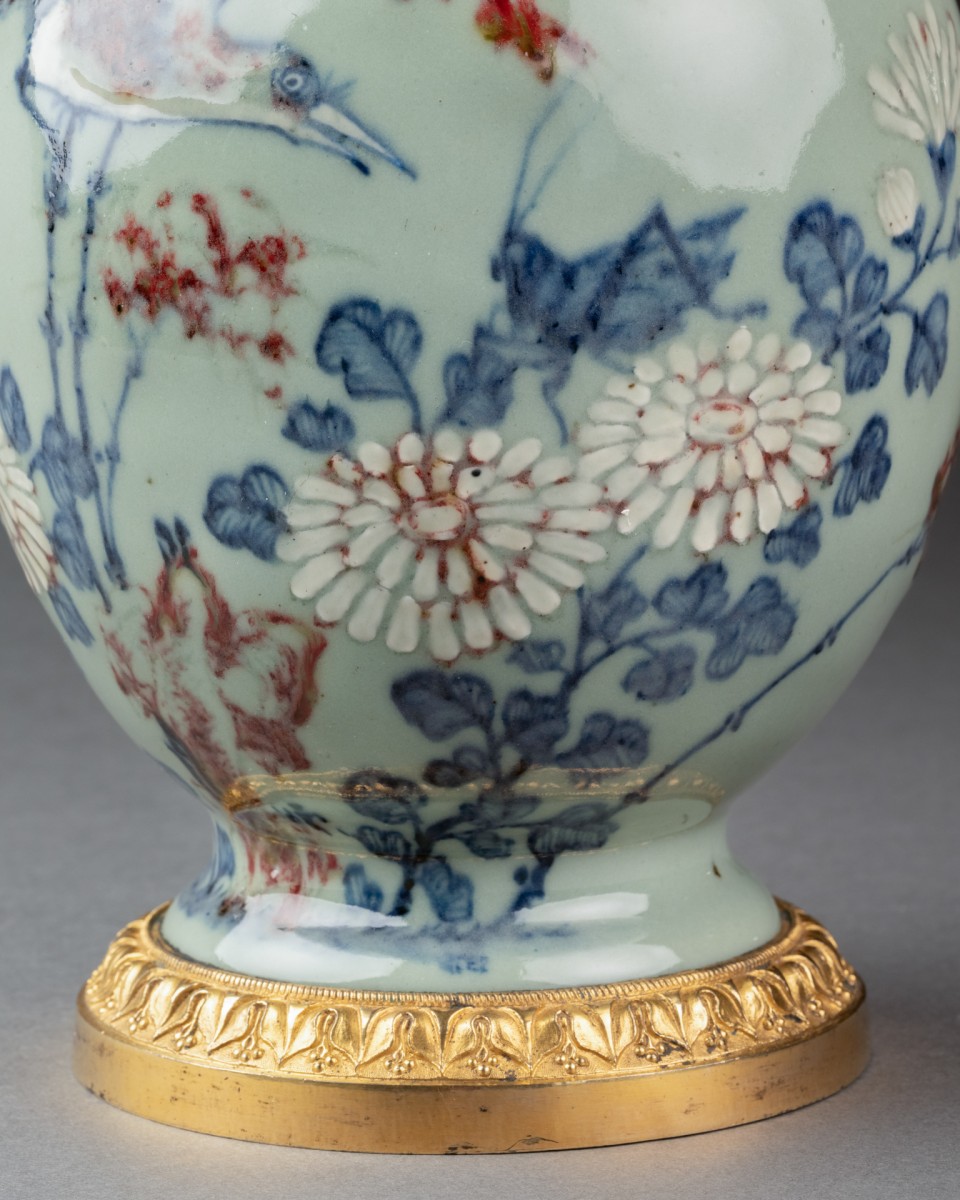
A rare baluster-shaped vase with a pale celadon glaze, beautifully decorated with a bird perched on flowering shrubs. The decoration is executed in cobalt blue and iron red underglaze, with white enamels highlighting the chrysanthemum petals.
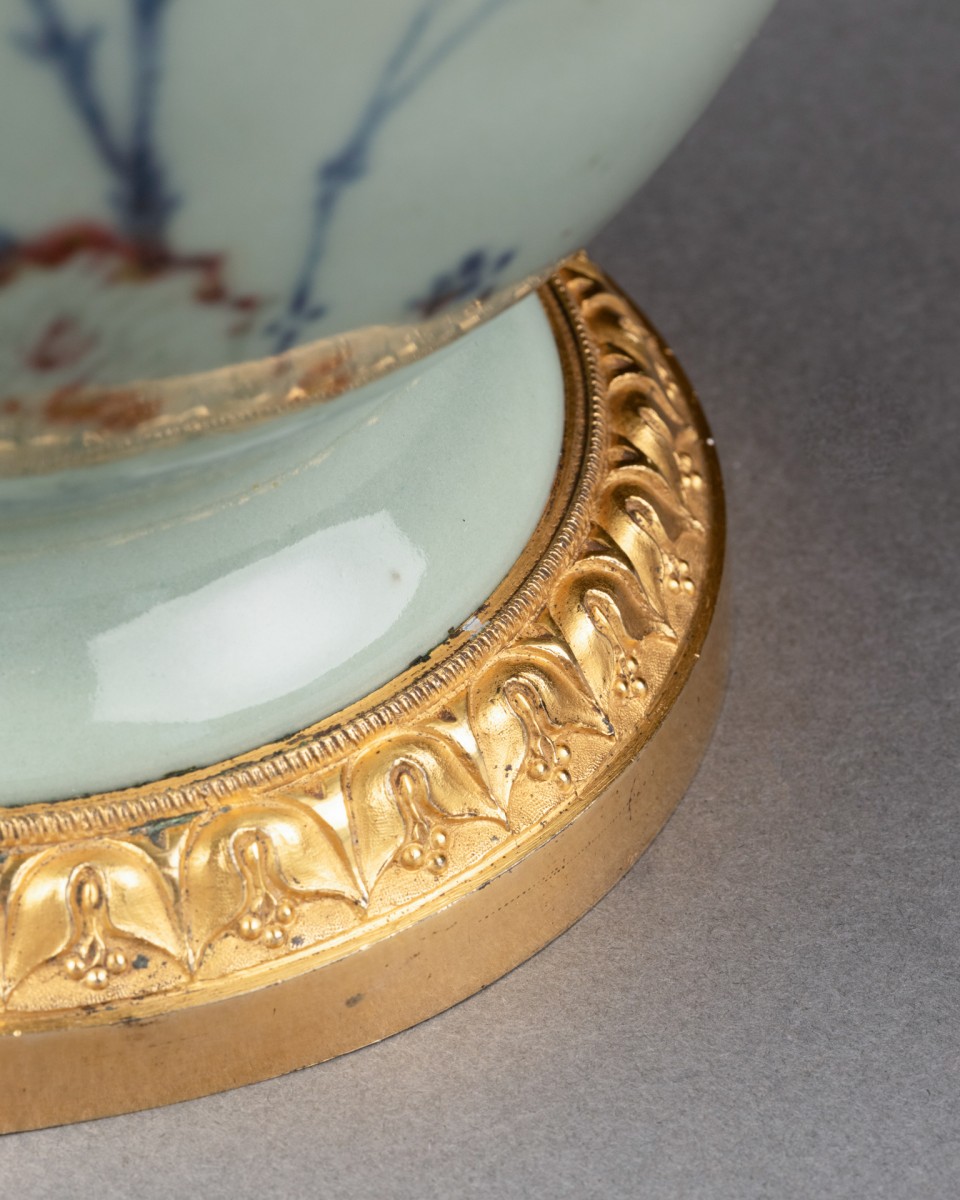
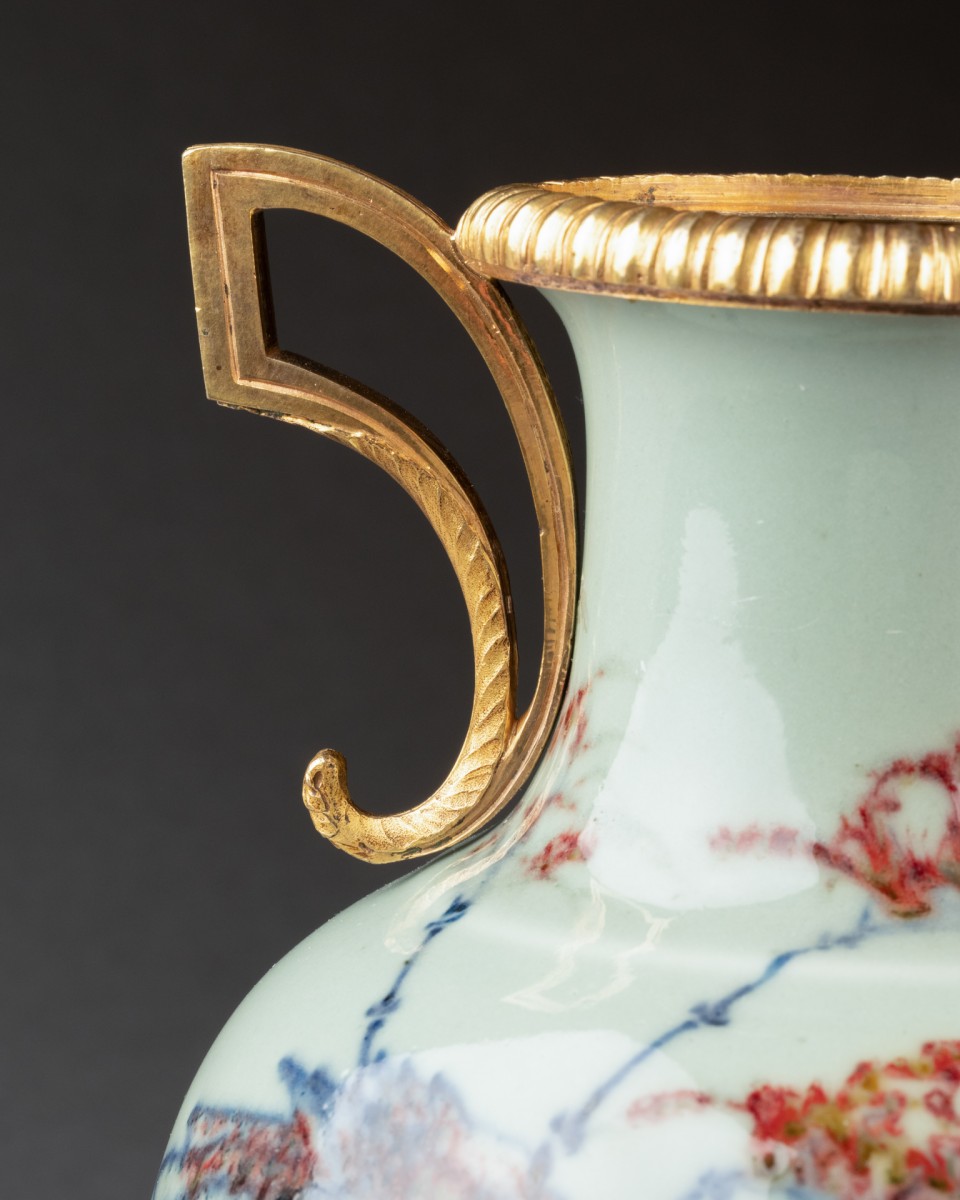
It is mounted as a potpourri container using a finely chased and mercury-gilded bronze mount. The mount comprises a circular base with a water leaf frieze, a neck with a gadrooned frieze flanked by two lateral handles, and a lid with an openwork radiating design surmounted by a pine cone finial.
In excellent condition, with original gilding.
Porcelain, China, early reign of the Qianlong Emperor (1735-1796)
The bronze mount, the work of a Parisian mercer, Louis XVI period, circa 1780.
Dimensions:
Height: 32 cm; Width: 15 cm
A pair of vases similar in shape, decoration, and size, with a Louis XV-Louis XVI transitional mount, is held at the Dijon Museum of Fine Arts.
Our opinion:
Celadon porcelain, imitating the prestigious jade stone, was among the most sought-after and expensive Oriental wares of the 18th century. Its soft, deep hue, reminiscent of ancient Chinese jade prized by scholars and the imperial court, particularly fascinated European collectors and Parisian mercers. This particular piece, produced in the imperial kilns of Jingdezhen, is distinguished by its truly exceptional character. Its underglaze decoration, combining cobalt blue with a remarkable iron red, enhanced with white enamels in slight relief, remains extremely rare on a celadon glaze. It testifies to the extraordinary technical mastery of Chinese potters, as the balance between the translucency of the glaze, the intensity of the oxides, and the precision of the enamel highlights demanded a perfect understanding of firing techniques.
Imported to France, this vase was subsequently mounted in Paris at the behest of a merchant-mercer, probably for a very high-ranking aristocratic clientele. The particularly refined quality of the chased and gilded bronze mount, notably the delicacy of the water leaf frieze, the precision of the openwork decoration, and the elegance of the pine cone finial, suggests the involvement of a great Parisian bronze caster accustomed to the most luxurious commissions of the second half of the 18th century.
The iconography of some mounts on known identical vases, in particular the handles sometimes taking the form of mermaids, tritons or dolphins, as well as the recurring use of the frieze of water leaves (Celadon Vase in the Louvre Museum Inv No. OA5497), invites us to compare this production with the work of Pierre Gouthière (1732-1813), undisputed master of gilt bronze under Louis XVI.