Offered by Franck Baptiste Paris
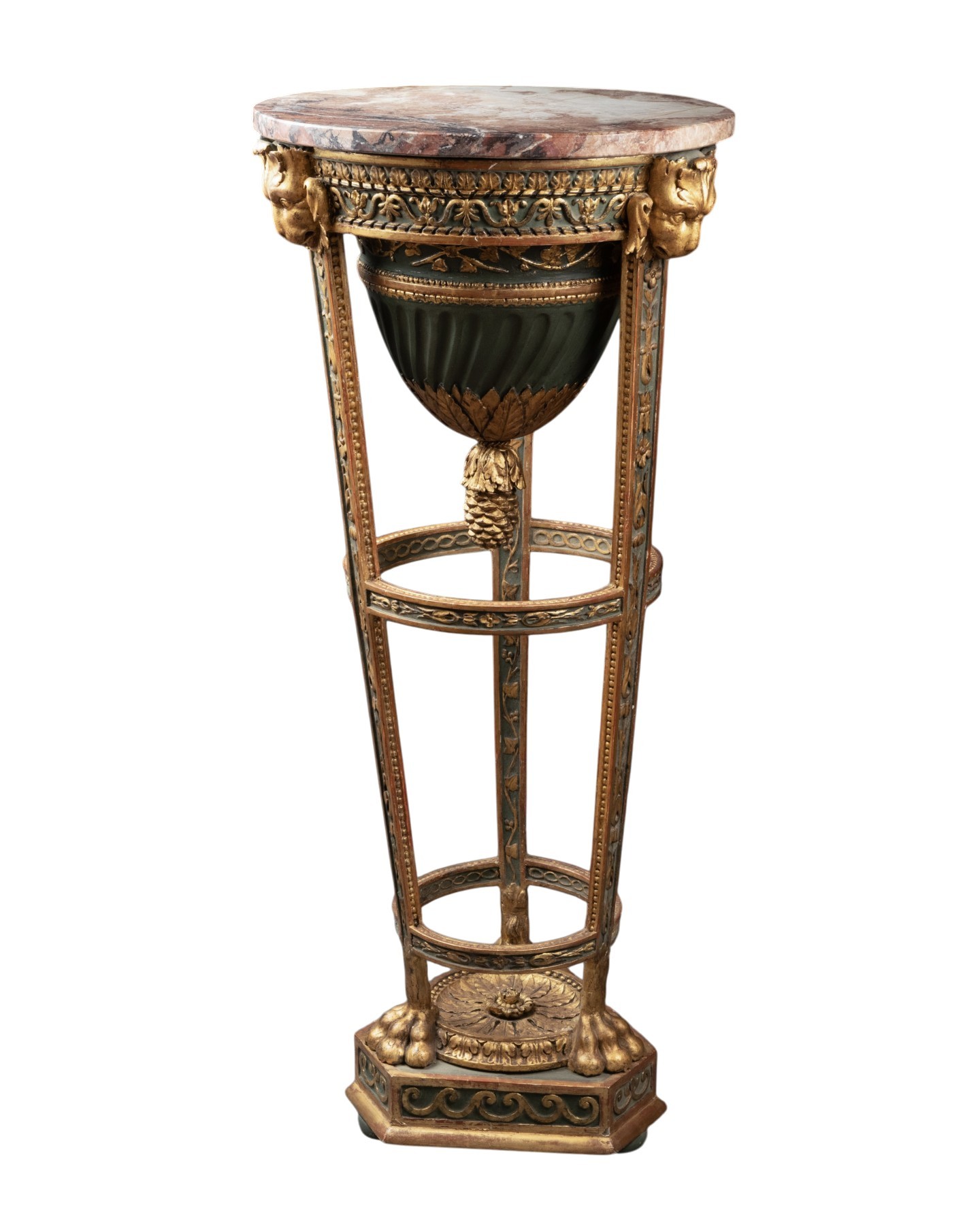
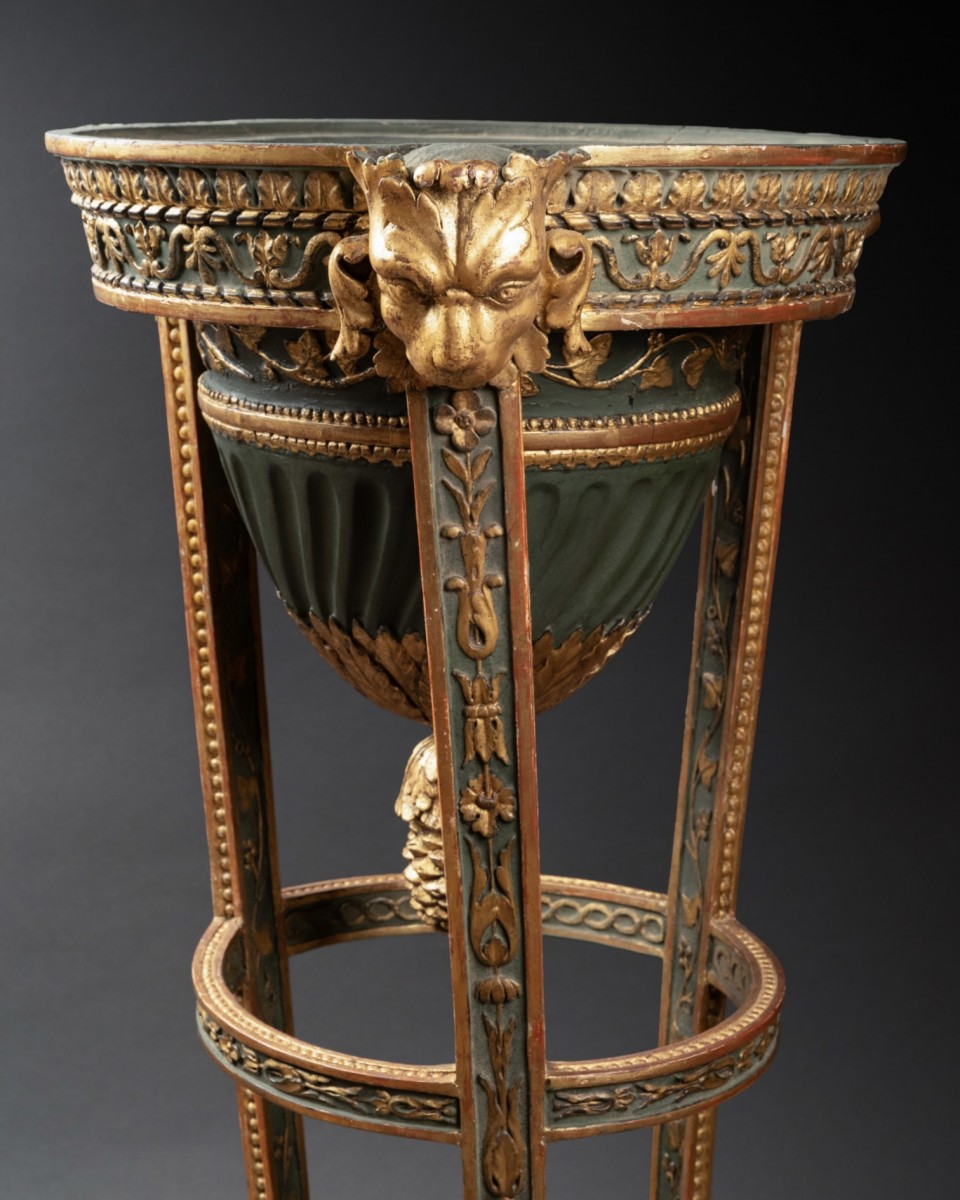
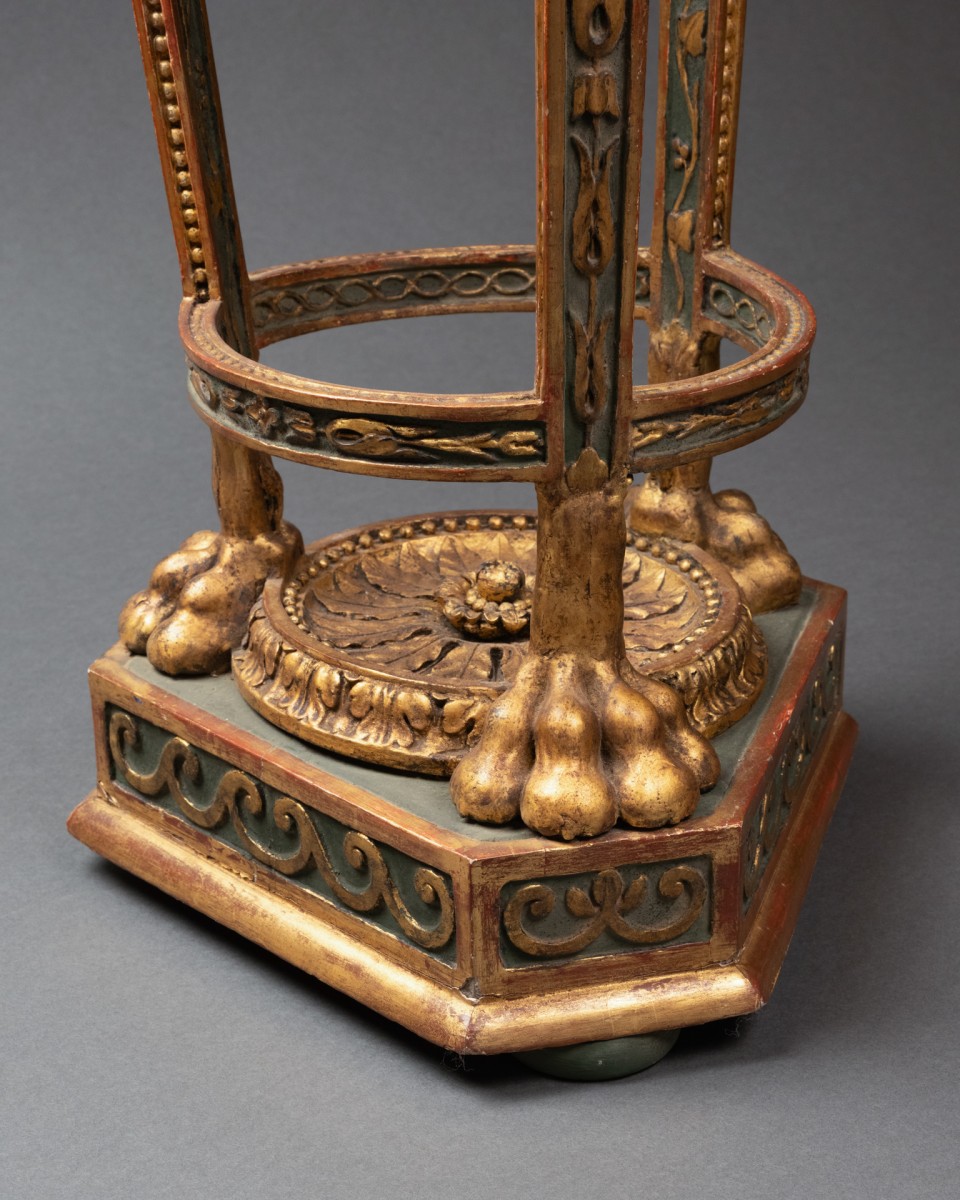
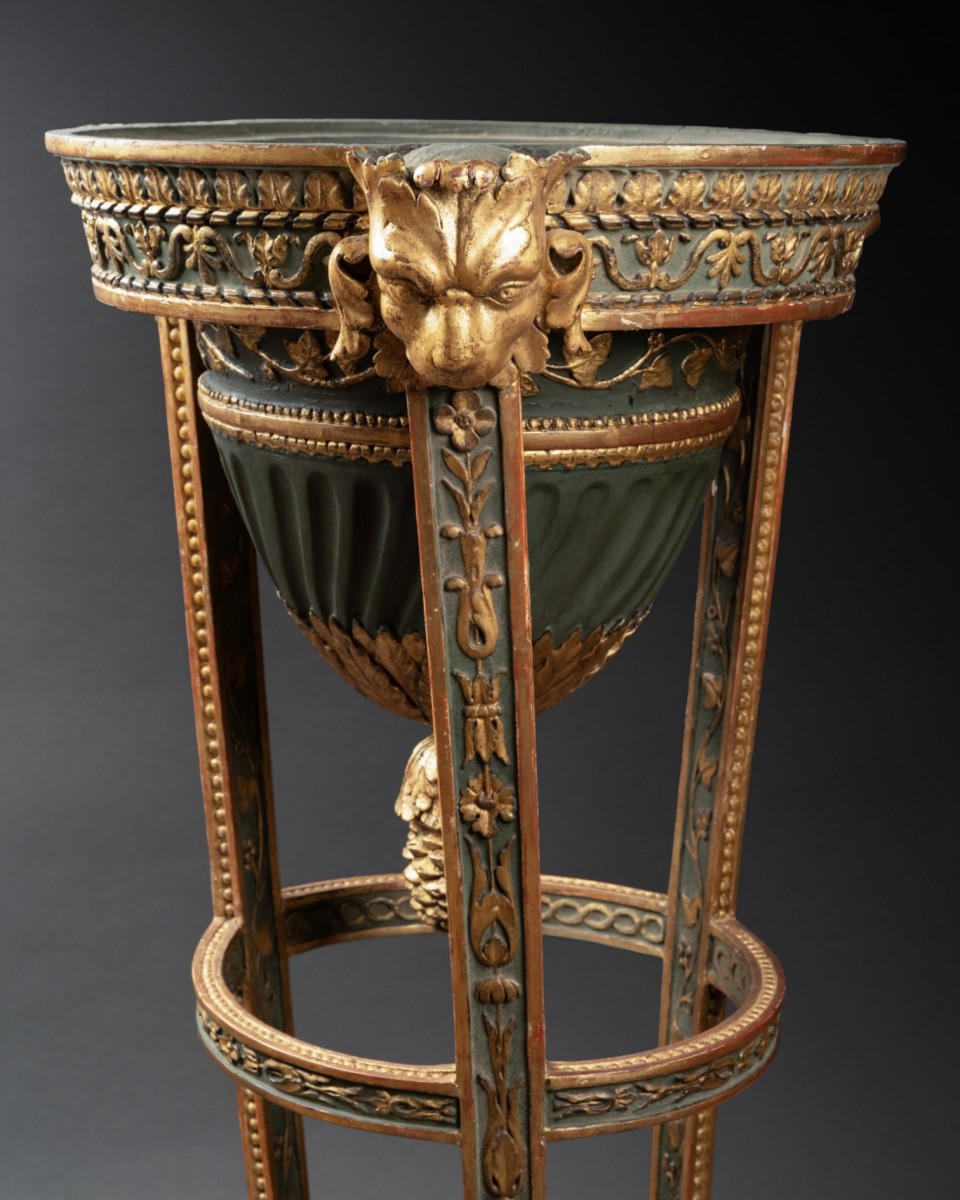

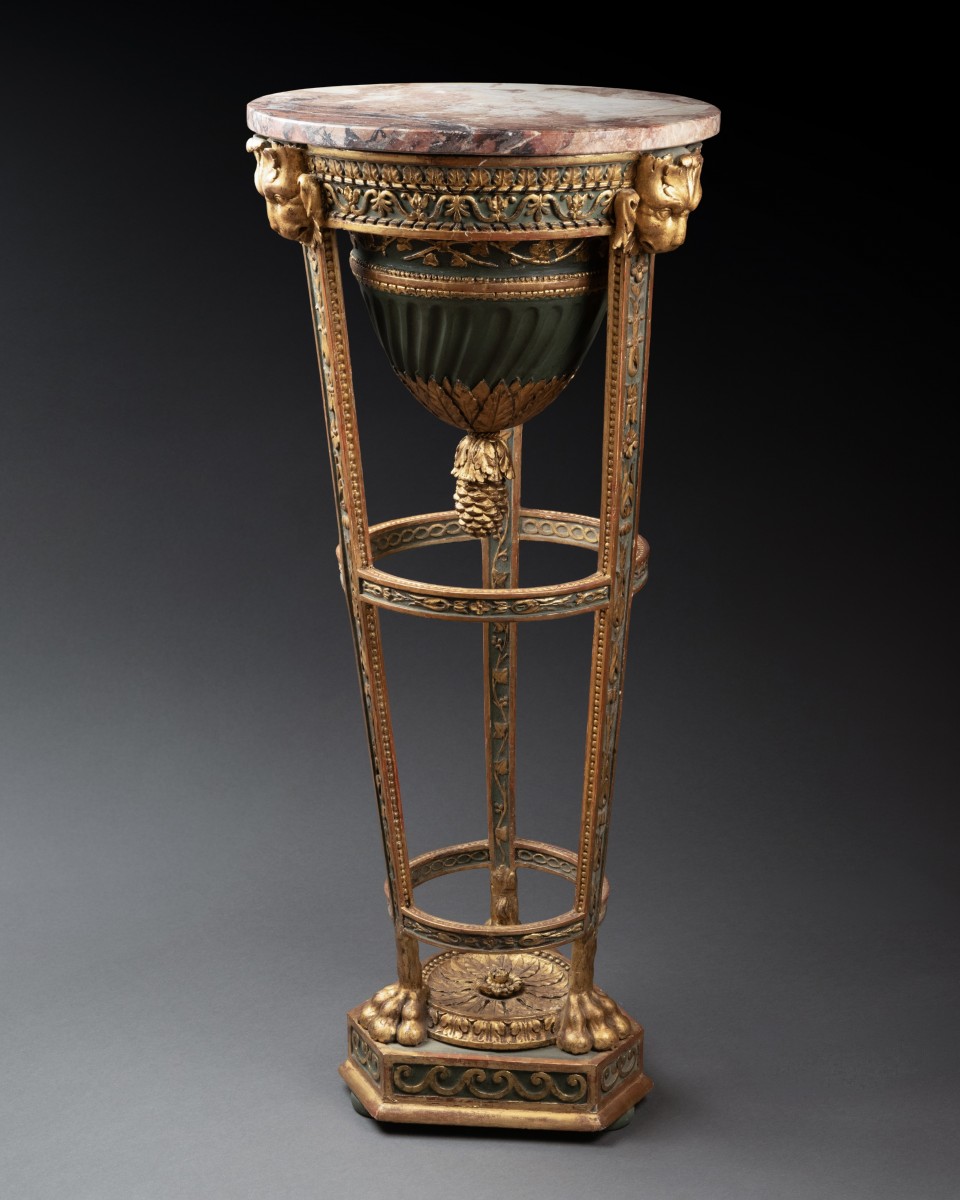
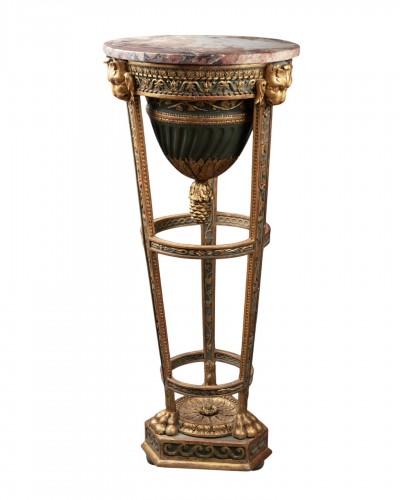
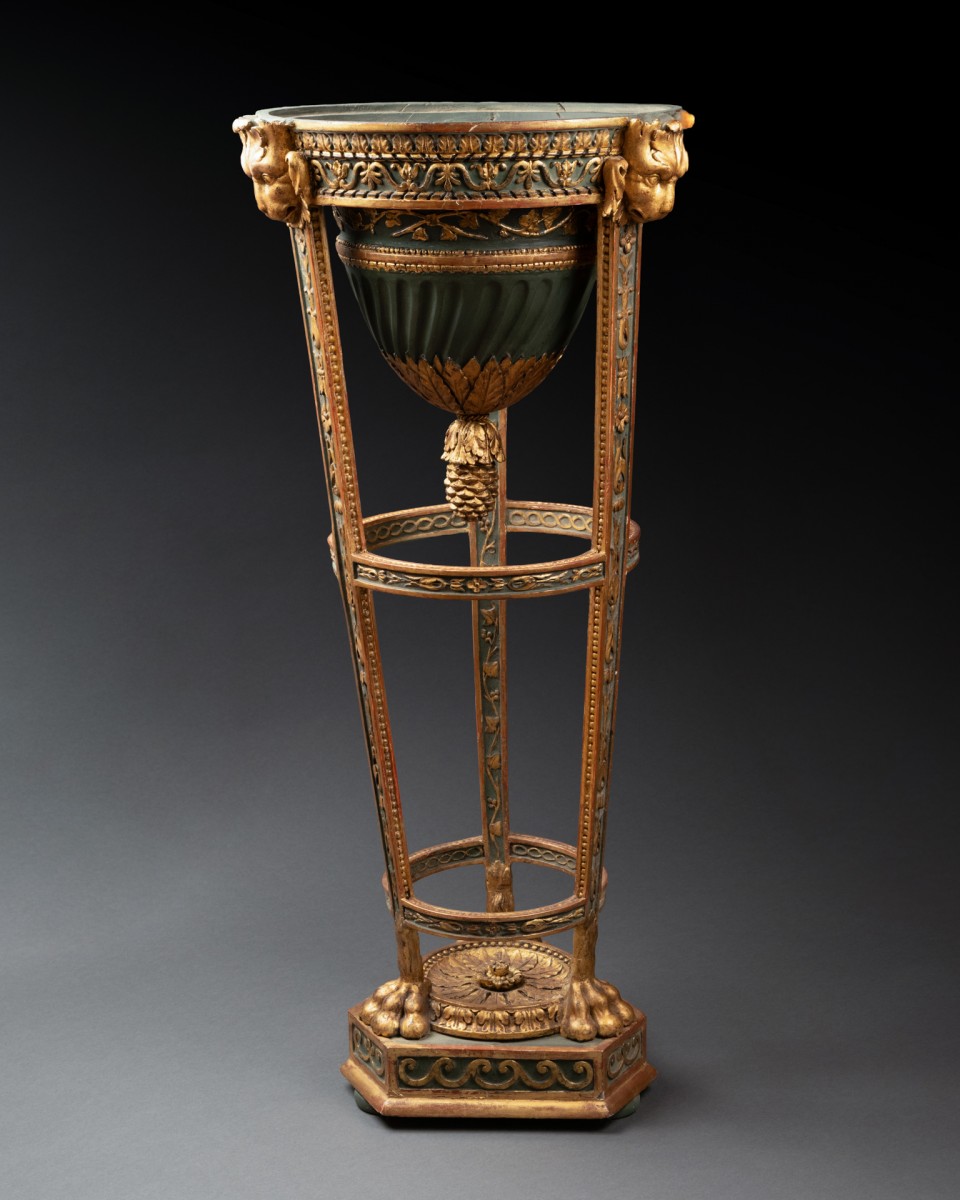
A rare Athenian urn in linden wood, lacquered green in imitation of antique bronze and richly gilded with gold leaf.
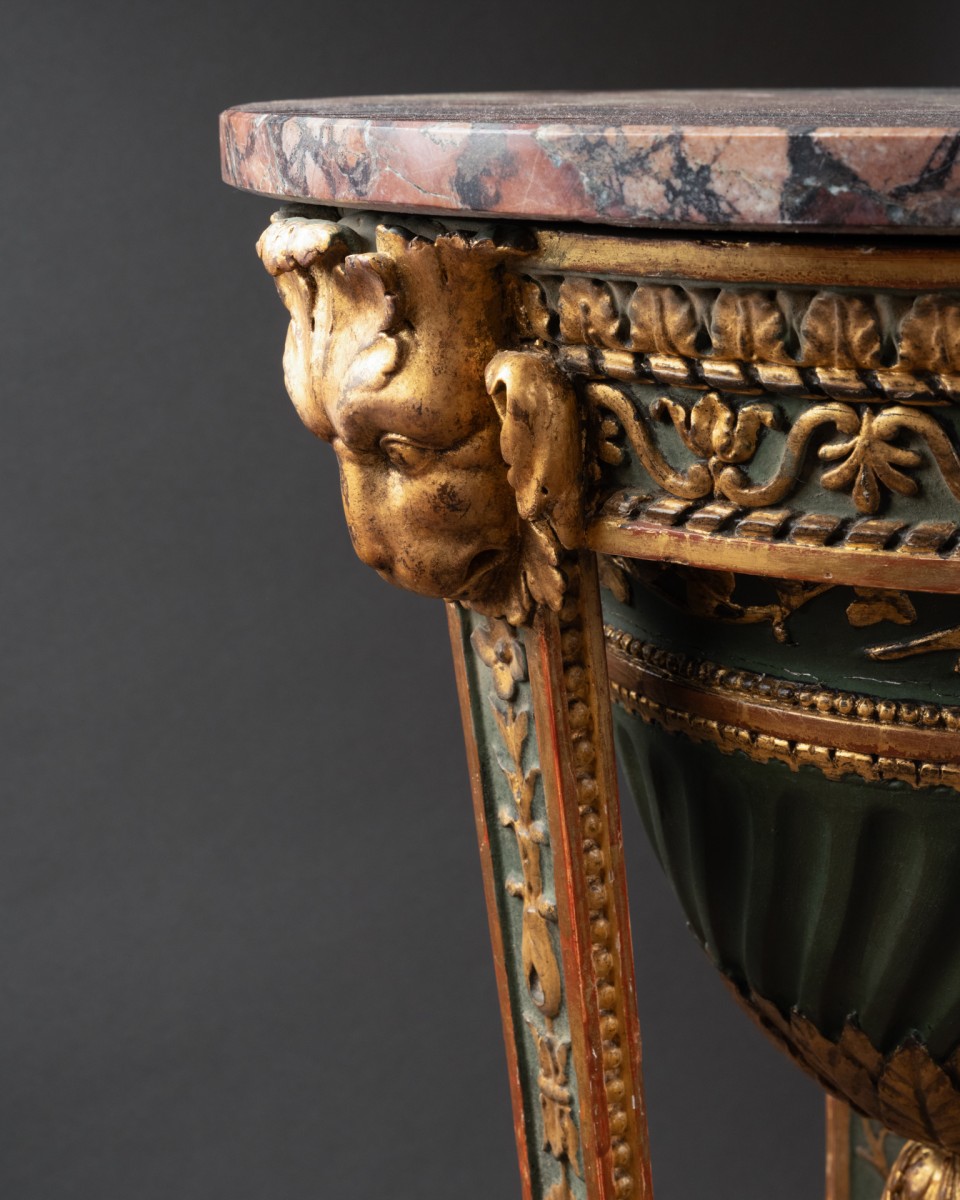
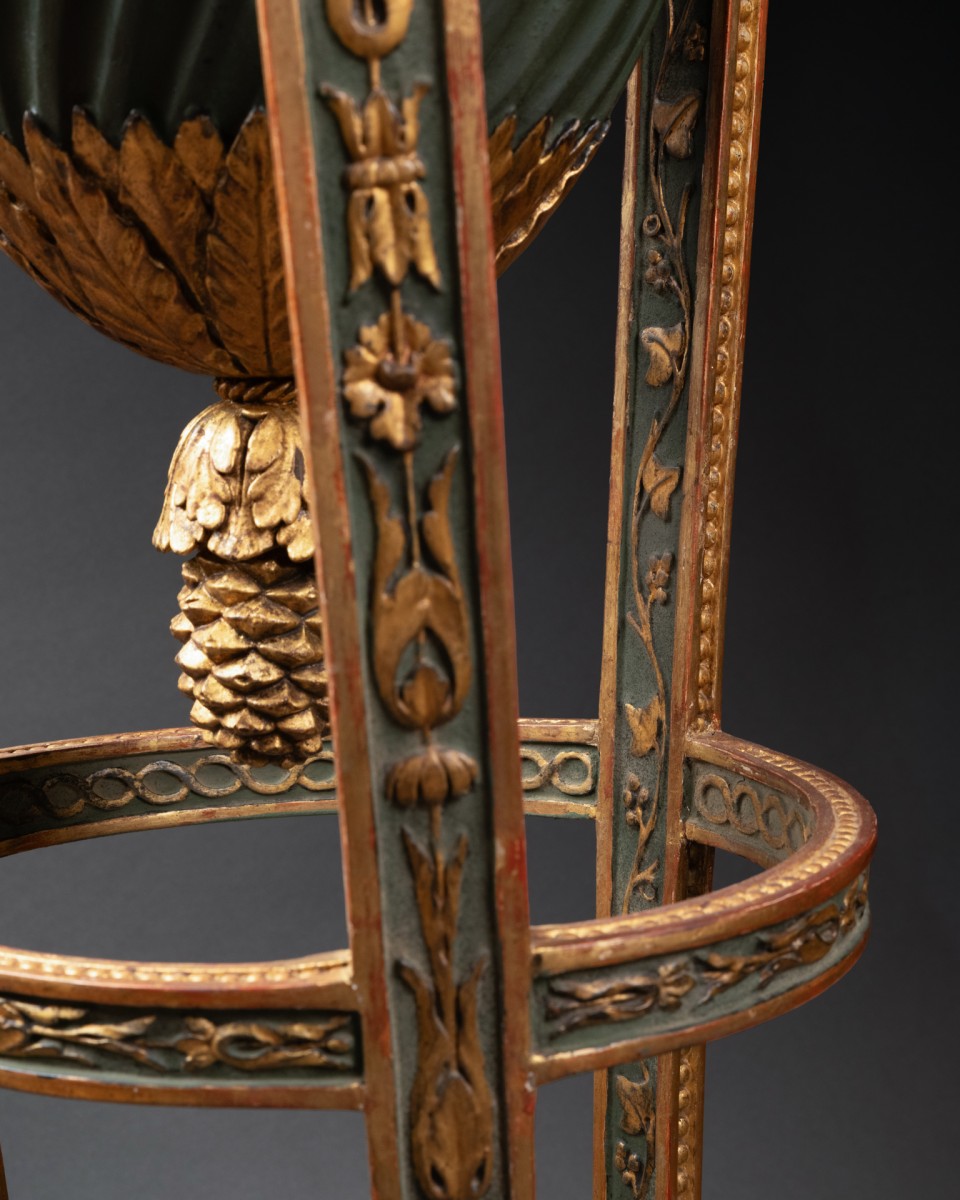
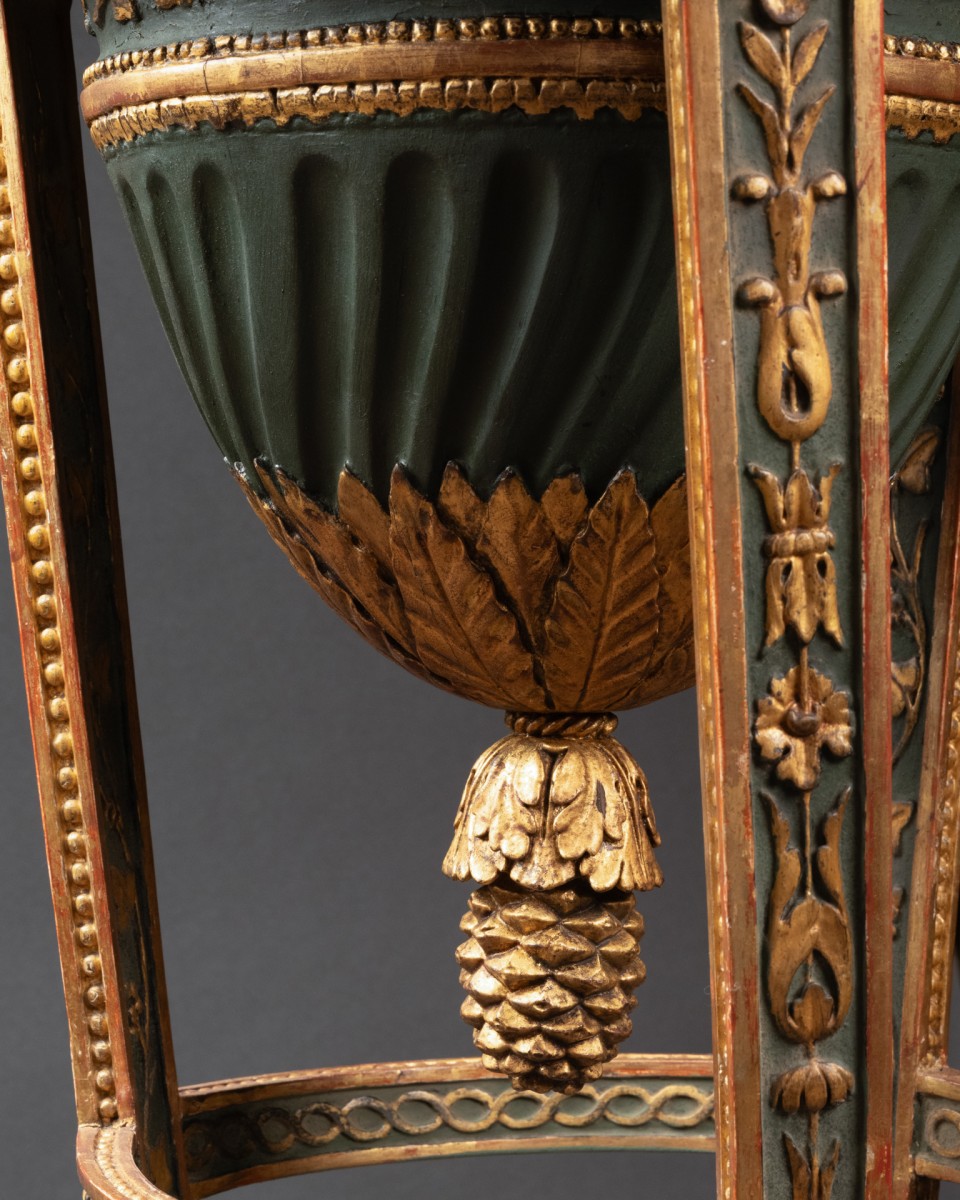
The tripod model is connected by circular crossbars. The uprights, finely carved with friezes of pearls, vine leaves, and stylized lotus flowers, terminate at the bottom with lion's paws and are adorned at the top with grimacing mascarons.
The whole rests on a triangular base decorated with wavy friezes and centered with a laurel leaf rosette.
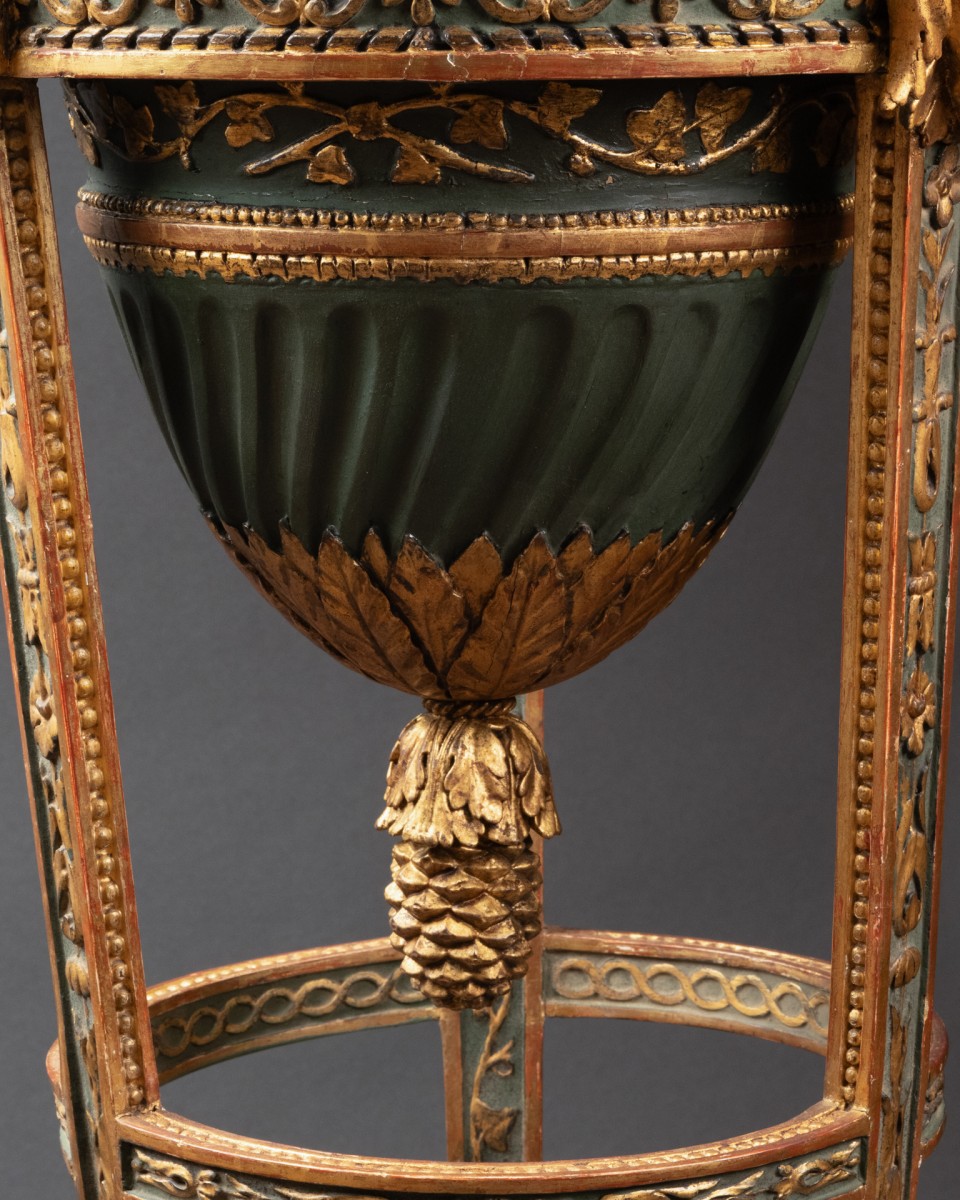
The upper circular crossbar features a double carved register, composed of palmette and lotus flower friezes, and supports in its center a suspended basin serving as a planter.
The exterior decoration of this planter imitates that of antique urns, with a repertoire of strigils, vine leaves, and a base with laurel leaves surmounted by a pine cone. The top is adorned with a peach blossom marble slab.
In good condition, with minor restorations to the gilding and lacquer. Piedmontese work circa 1800, comparable to the works of the sculptor Giuseppe Maria Bonzanigo (1745–1820) after designs by the architect Carlo Randoni (1755–1831).
Dimensions:
Height: 95 cm; Diameter: 32 cm
A very similar Athenian-style chair, with comparable uprights ending in lion's paw feet and bearing a label from the Royal Palace of Turin, is published on page 371 of Roberto Antonetto's book, *Il mobile piemontese nel Settecento*, Turin, 2010.
Another, whose design by the Savoy court architect Carlo Randoni also survives, is still in the Palazzo Doria Tursi in Genoa. It is published on page 358 of Enrico Cole's book, *Italian Empire Furniture*.
Our opinion: The Athenian jardinière we are presenting is a direct descendant of the ancient incense burners unearthed during the excavations of Herculaneum and Pompeii.
While its form draws its origins from the Greco-Roman repertoire, the decoration of palmettes and lotus flowers refers more specifically to the aesthetics of Etruscan art.
This composition, characterized by its rigorous Neoclassical style, where the skillfully controlled ornamentation recedes in favor of balance and purity of line, is typical of French and northern Italian production at the very end of the 18th century.
The presence of green lacquer, particularly prized in Piedmont, the typology of the grimacing masks, as well as known comparisons with similar Athenian jardinières, point to a Turin-based production. These elements allow us to link this work to the drawings of Carlo Randoni and the sculptor Giuseppe Maria Bonzanigo, who delivered several Athenian-style jardinières for the residences of the House of Savoy, notably for the Royal Palace of Turin and the hunting lodge Palazzina di Caccia di Stupinigi.