Offered by Franck Baptiste Paris
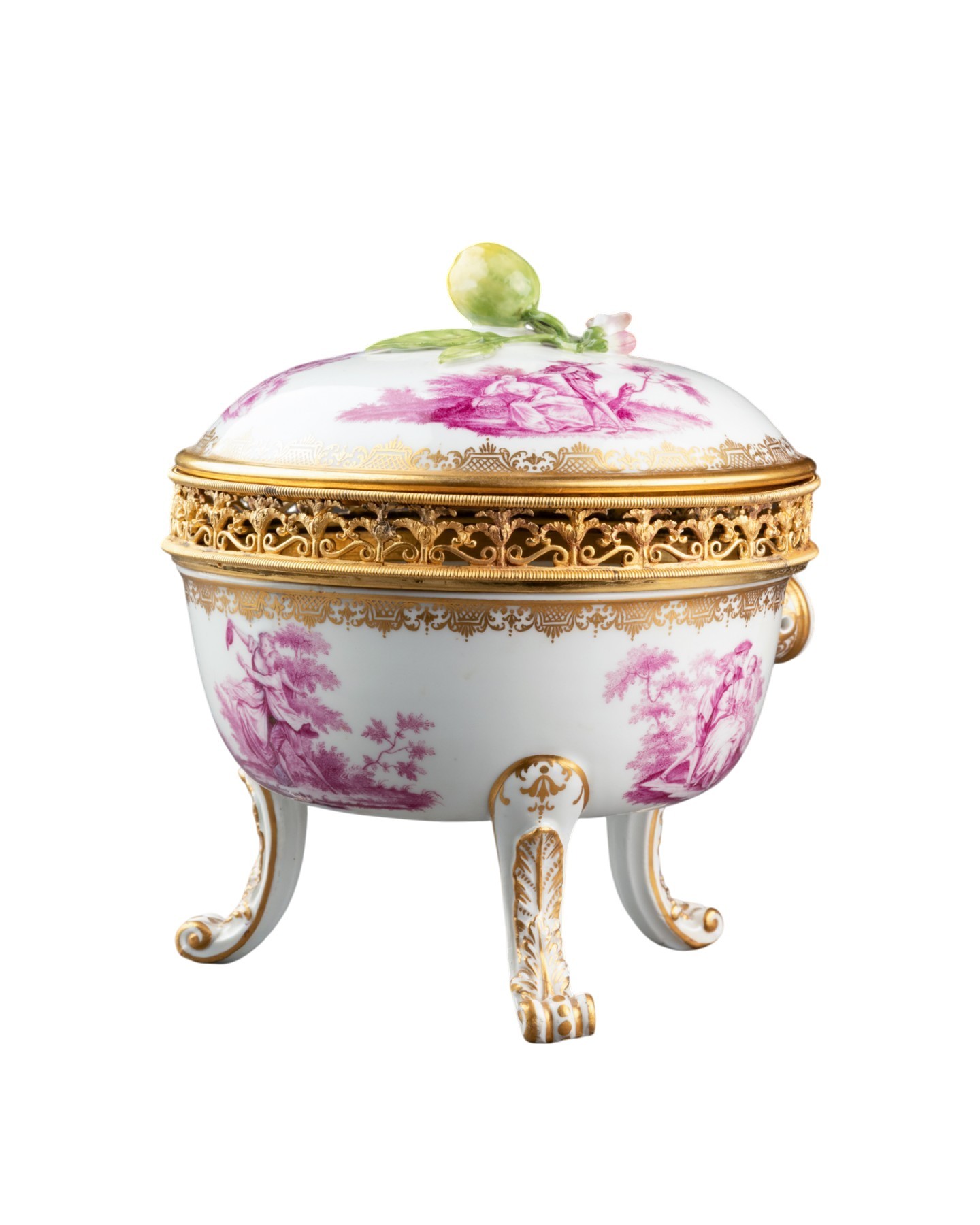
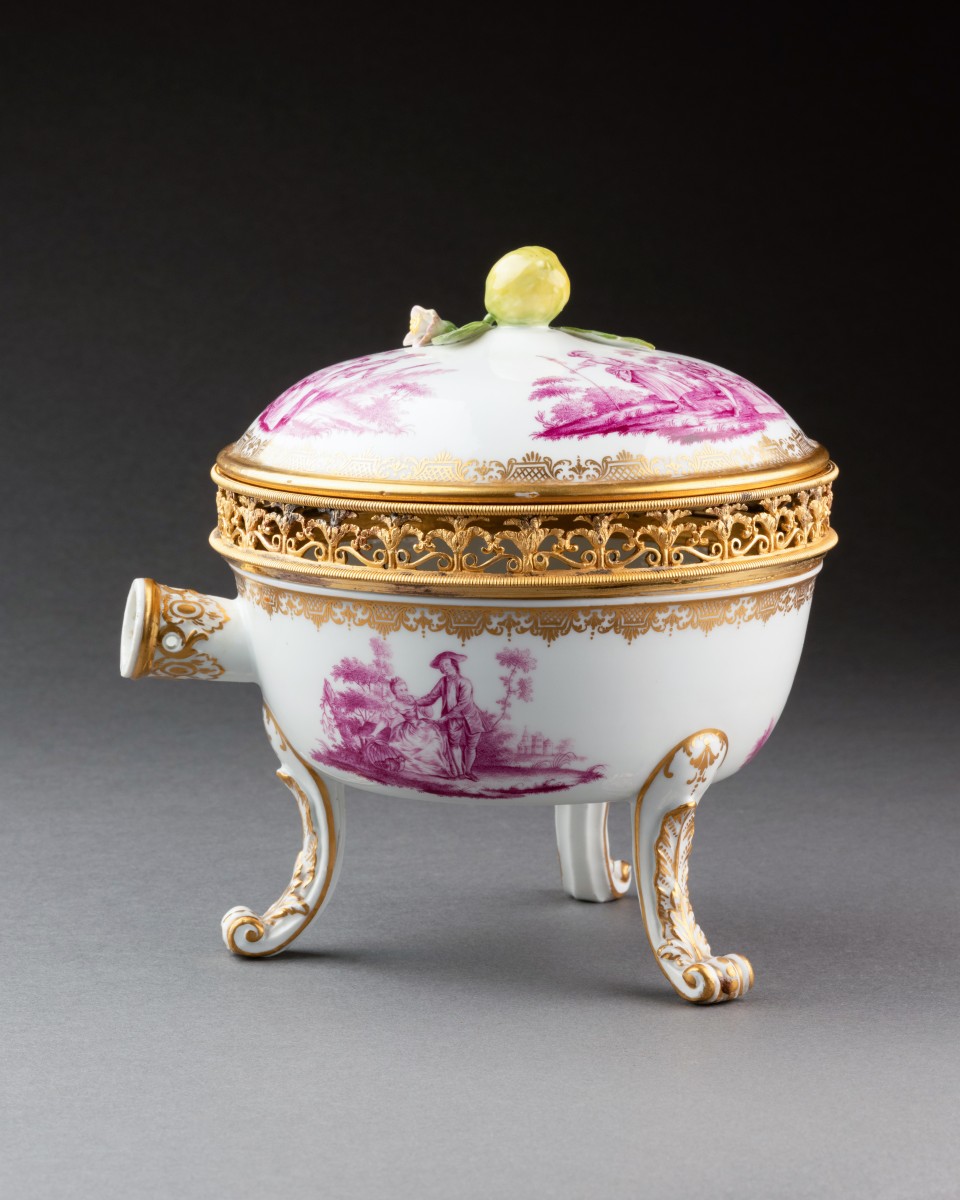
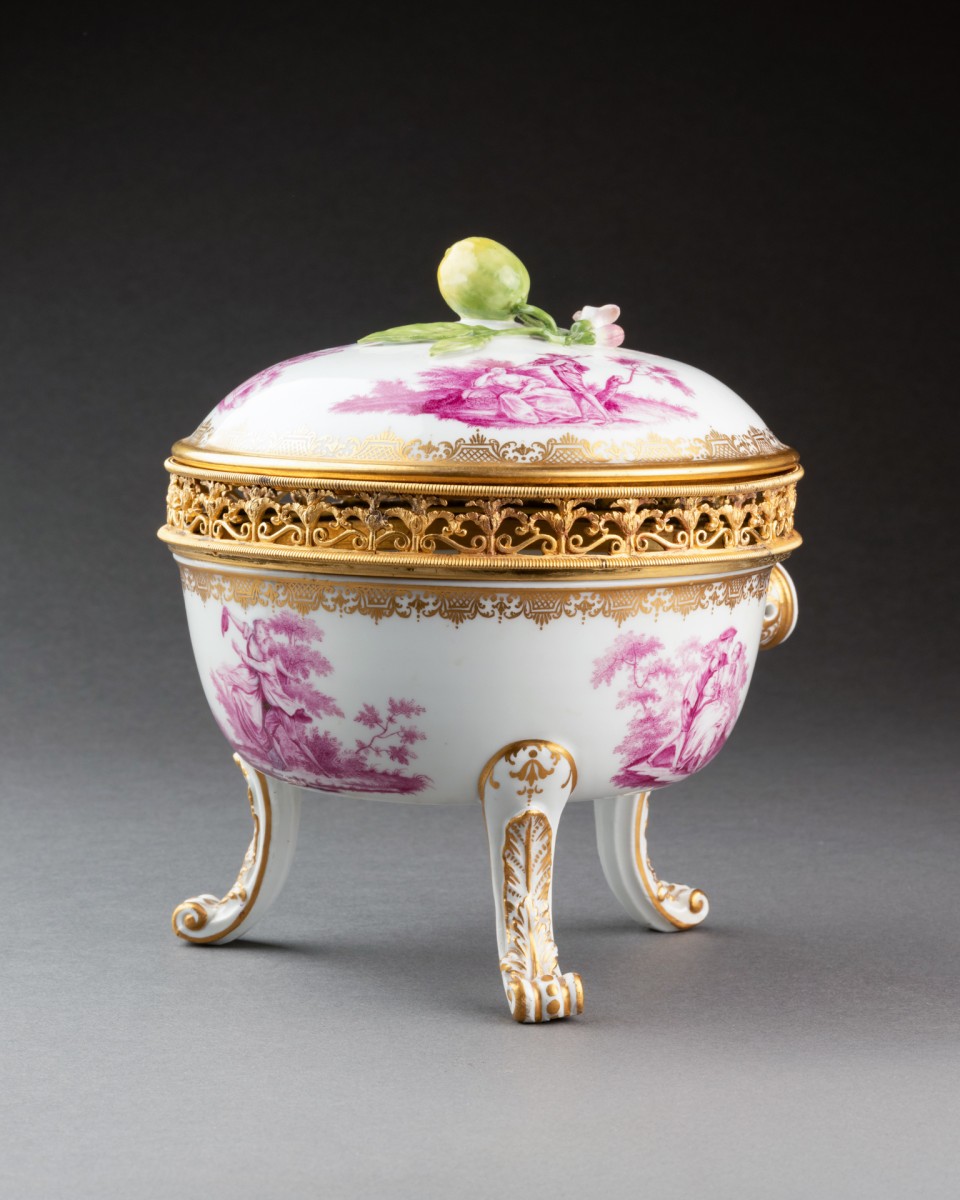
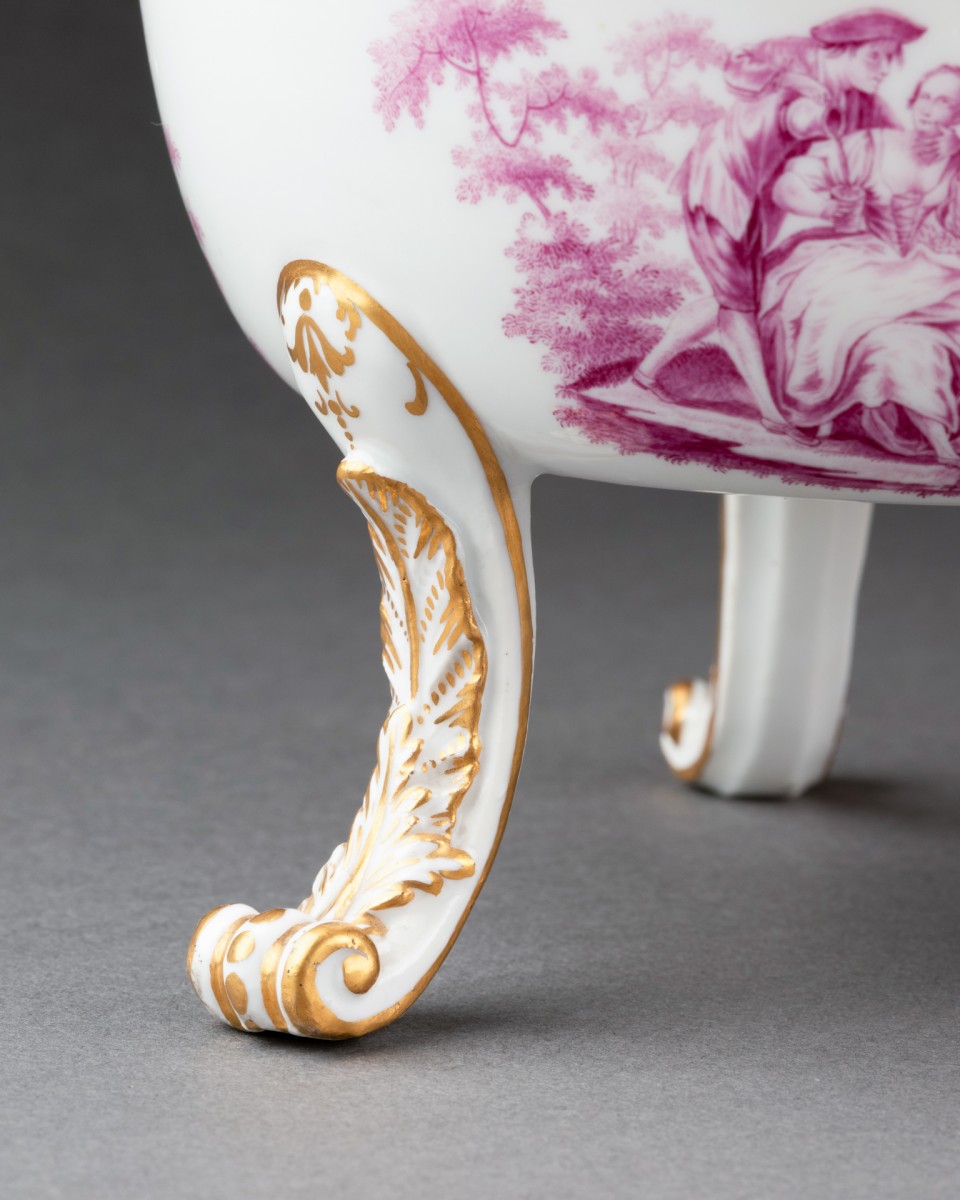

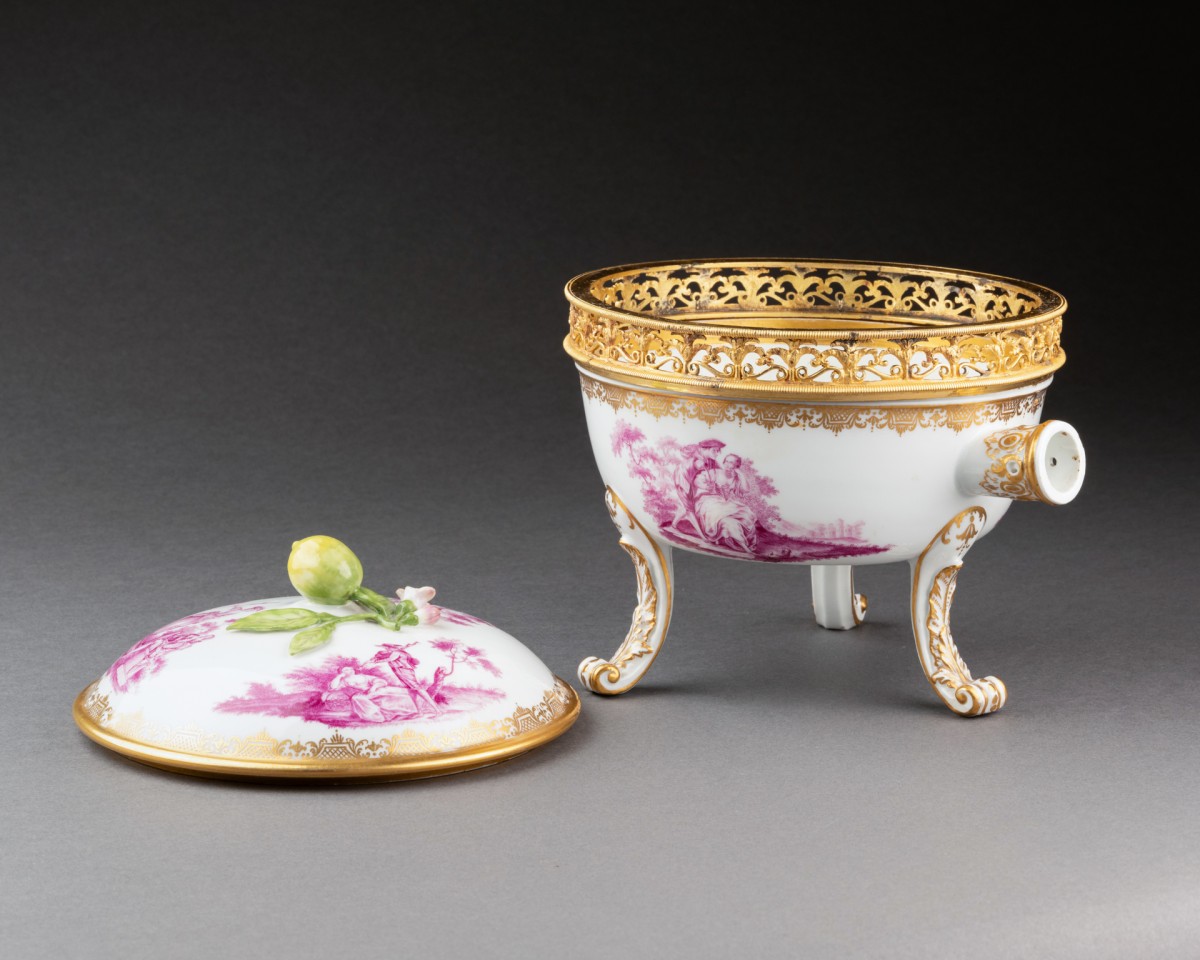
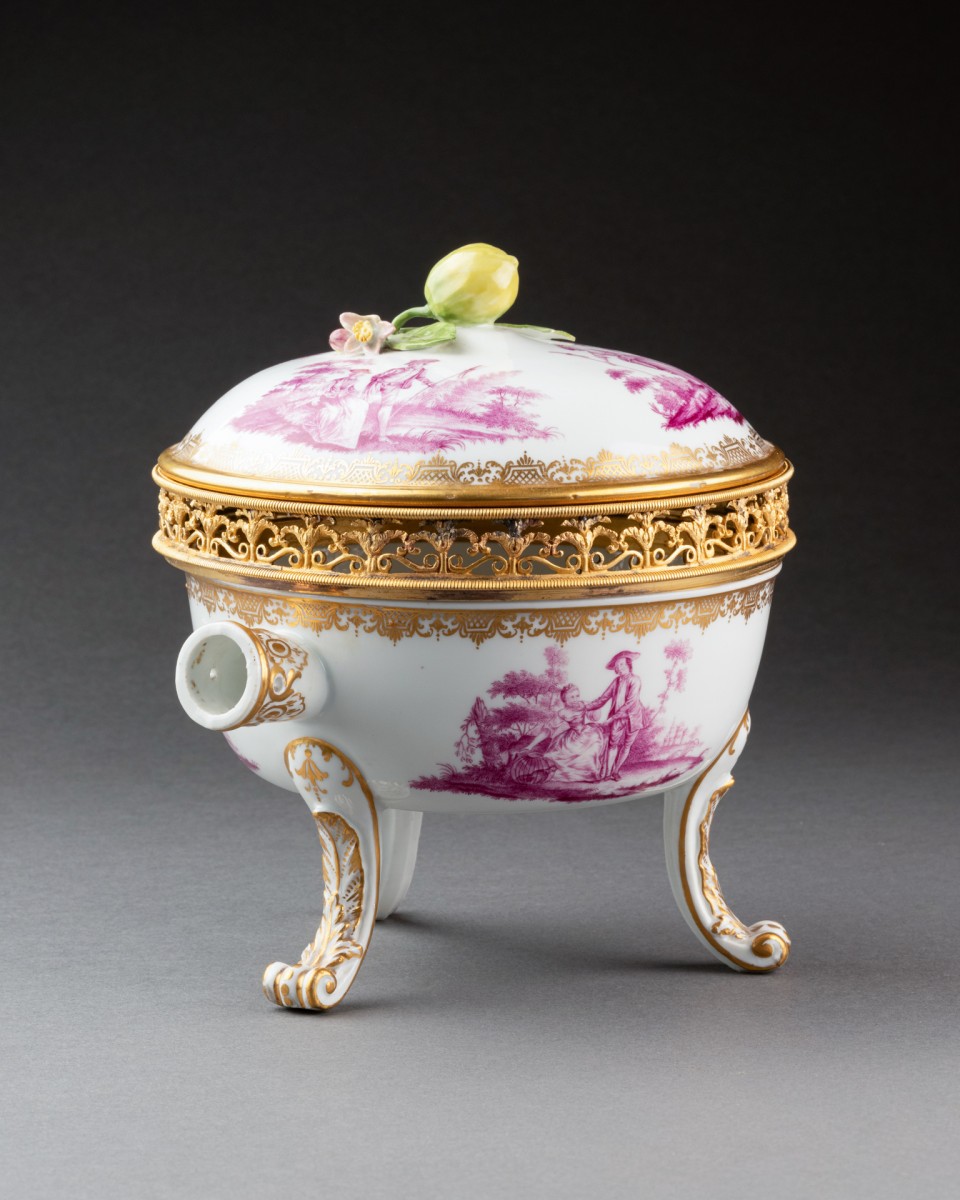
A rare tripod Meissen porcelain chalice in the so-called “Schnäppele Casserole” style, a model identified in the archives as a Reintel.
These chalices were used to keep liquids and delicate preparations warm during serving.
This particularly uncommon type belongs to the large deliveries of princely services made for the courts of Saxony and Poland in the mid-18th century.
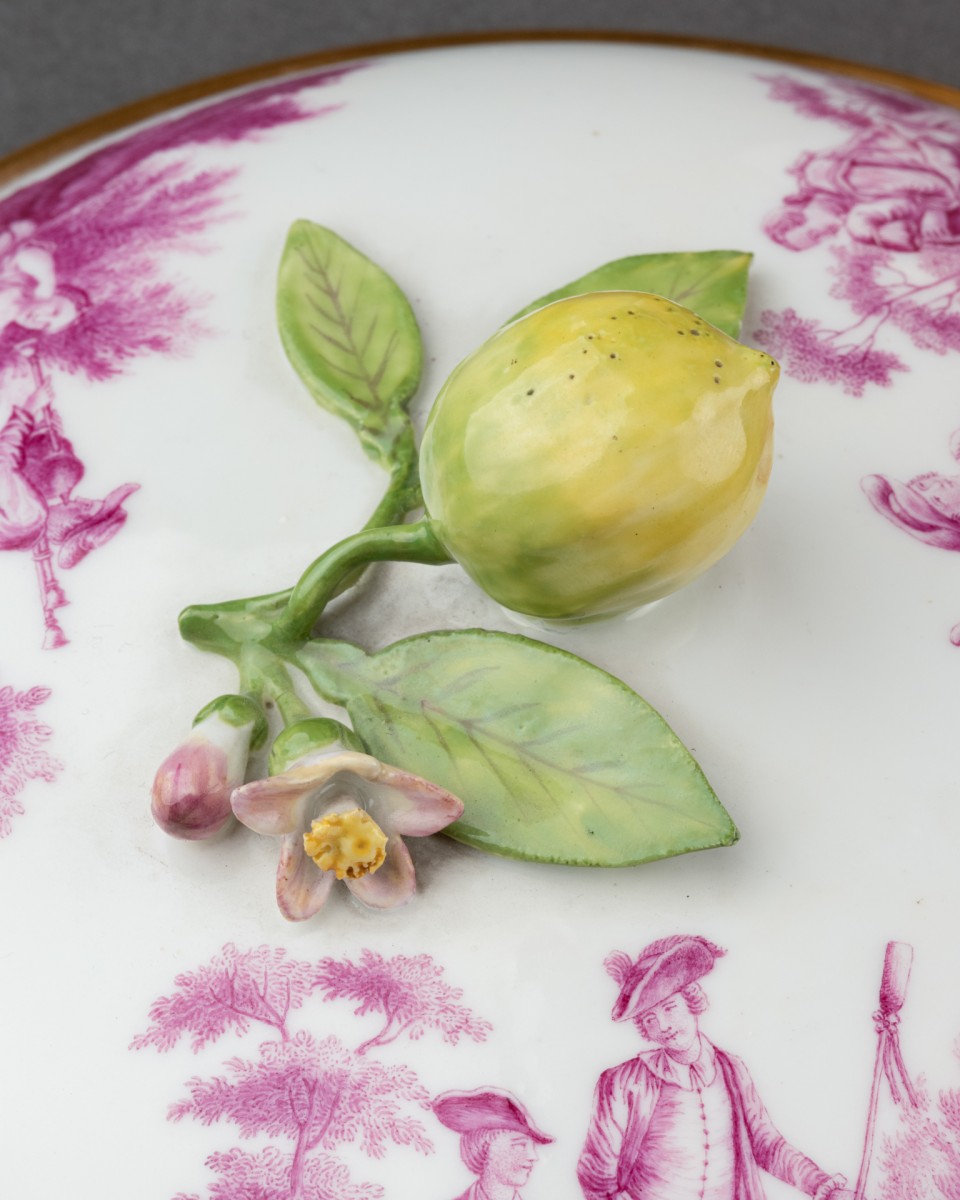
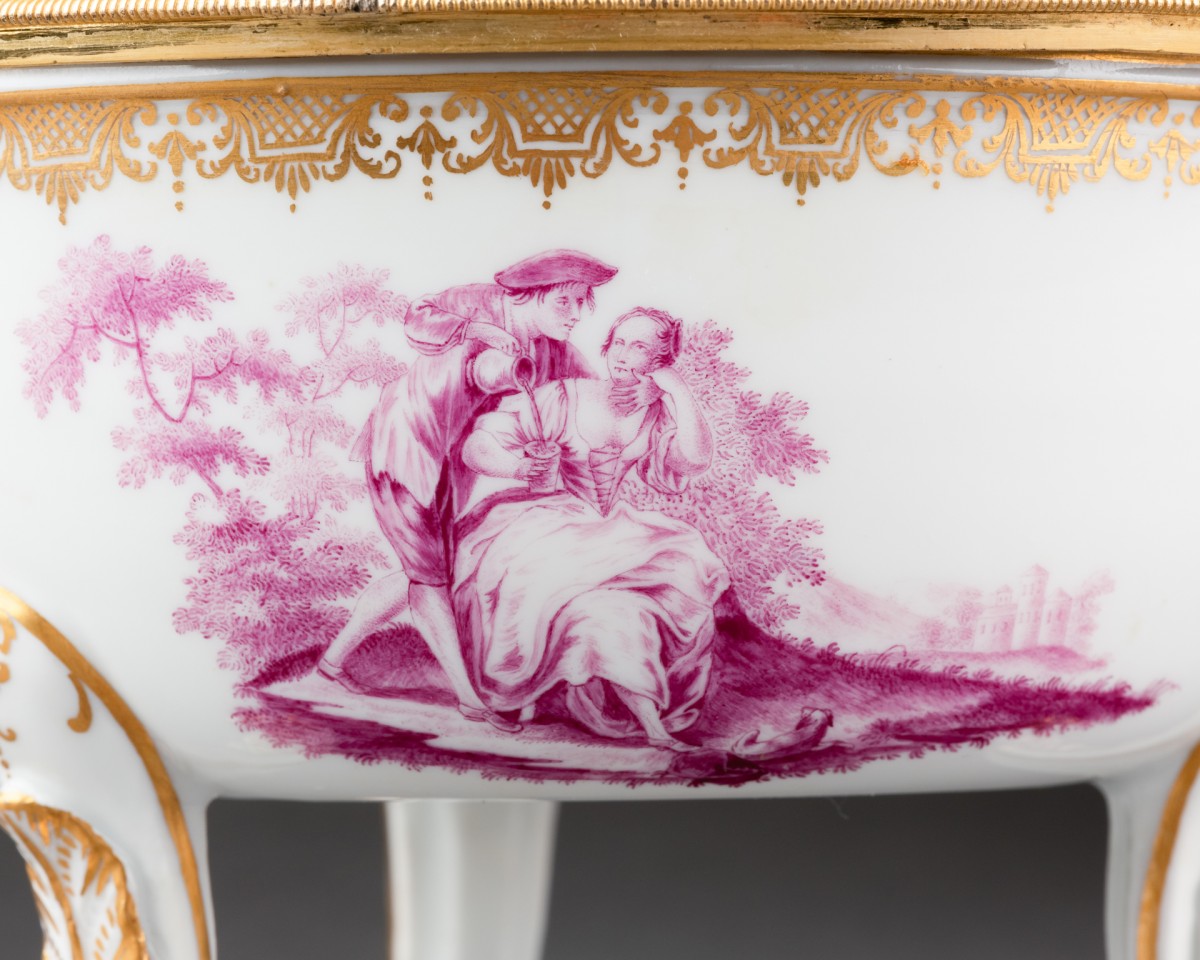
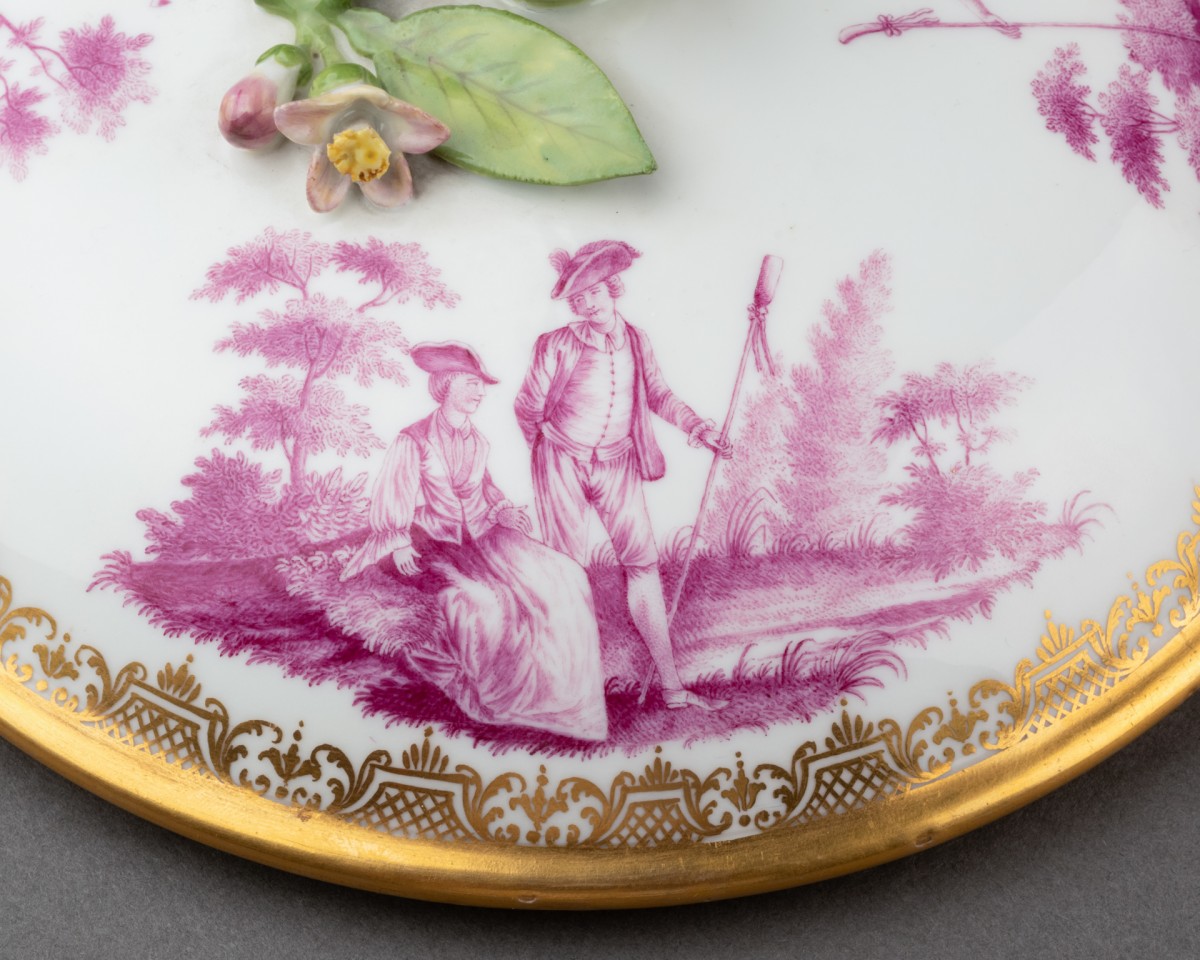
The hard-paste porcelain is decorated with a delicate purple monochrome design depicting gallant scenes after Antoine Watteau, executed with great finesse in a distinctly Rococo style. The lid is surmounted by a naturalistic handle in the shape of a lemon with a lemon leaf, a particularly refined detail emblematic of the naturalistic research conducted in Meissen during this period. A few rare examples of this model are known today, some bearing the royal arms of Frederick Augustus II of Saxony, attesting to their intended use by princes within very large ceremonial services.
The present example was transformed at the very end of the 18th century into a potpourri dish, in a typically French style. It is enhanced with a finely chased gilt-bronze mount, composed of an openwork gallery with a palmette frieze in the Etruscan style.
The quality of execution is remarkable: extremely fine chasing, mercury gilding with a double patina, matte and burnished, testifying to first-rate work comparable to the productions of great Parisian bronze casters, such as Pierre Gouthière or Pierre Philippe Thomire, at the dawn of the Revolution. It is in very good condition, with a small chip to one petal of the lemon blossom.
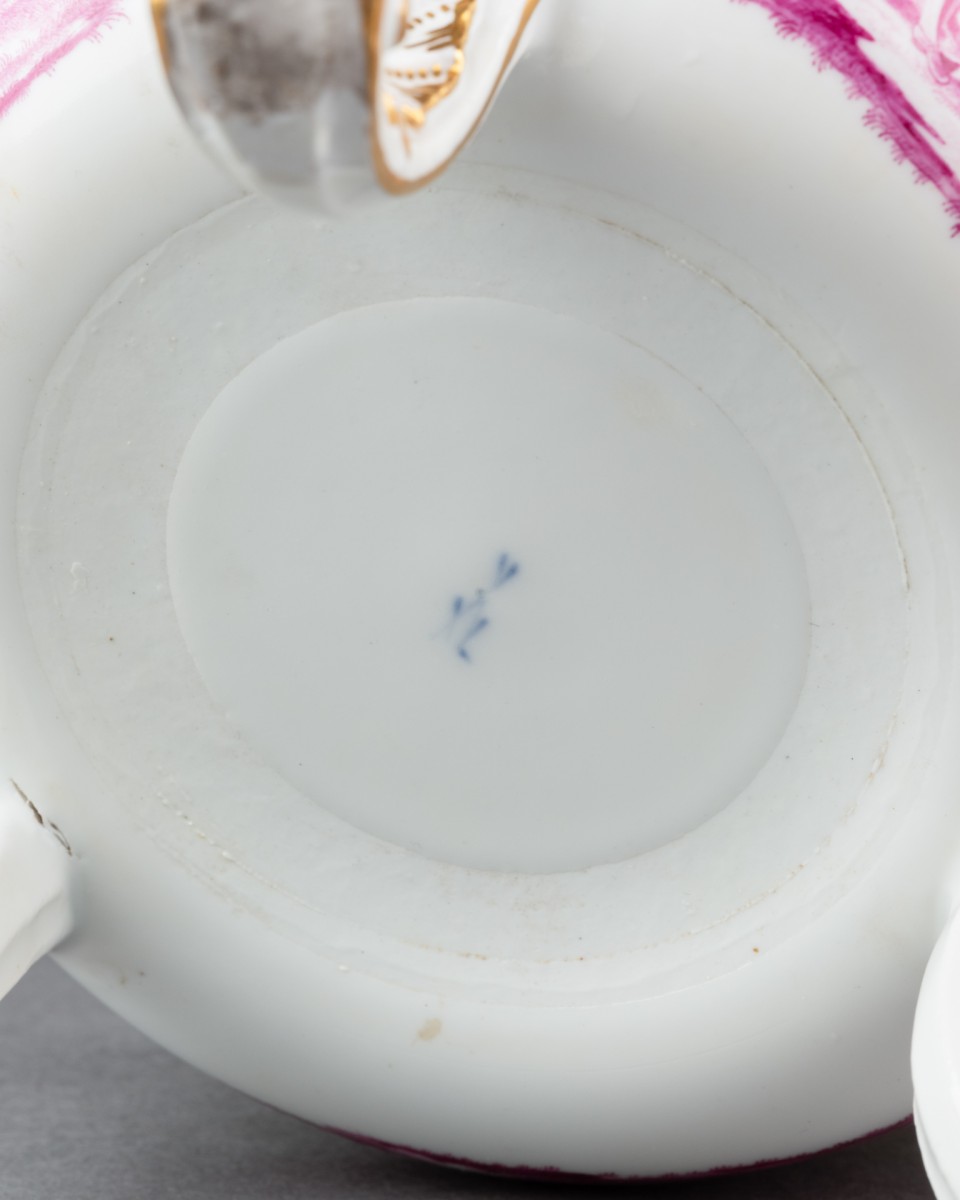
Meissen porcelain, circa 1745, with a blue mark on the reverse of two crossed swords.
The bronze mount, Paris, circa 1785-1790.
Similar chafing dishes:
-Christie’s London, September 21, 2004, lot 111, bearing the arms of Frederick Augustus II, Elector of Saxony.
-Koller, Thursday, September 19, 2024, lot 1171, bearing the combined arms of Saxony and Poland.
Our opinion: The chafing dish we are presenting is a piece of great interest, both for the rarity of its form and for the quality of its decoration and mount. This model, directly linked to the Meissen princely services, is extremely rare on the market. Its conversion into a potpourri dish at the end of the 18th century attests to its presence in France at an early date, within a context of a pronounced taste for mounted objects.
It cannot be ruled out that this type of piece passed through the circle of Marie-Josèphe of Saxony, daughter of the Elector of Saxony, who arrived in France in 1747 upon her marriage to the Dauphin Louis. Deeply attached to her origins, she helped to spread Saxon taste at court and to promote the products of the Meissen manufactory among the French aristocracy.
The fact that an identical example bearing her father's coat of arms is known reinforces this hypothesis: such pieces could have been offered in a diplomatic context or constituted choice gifts within close circles. The production dates of this model correspond perfectly to this period of particularly fruitful artistic exchange between Dresden and Versailles.