Offered by L'Egide Antiques
REQUEST INFORMATION

Porcelain, Scuptures, paintings and european Fine Arts, 18th and 19th century
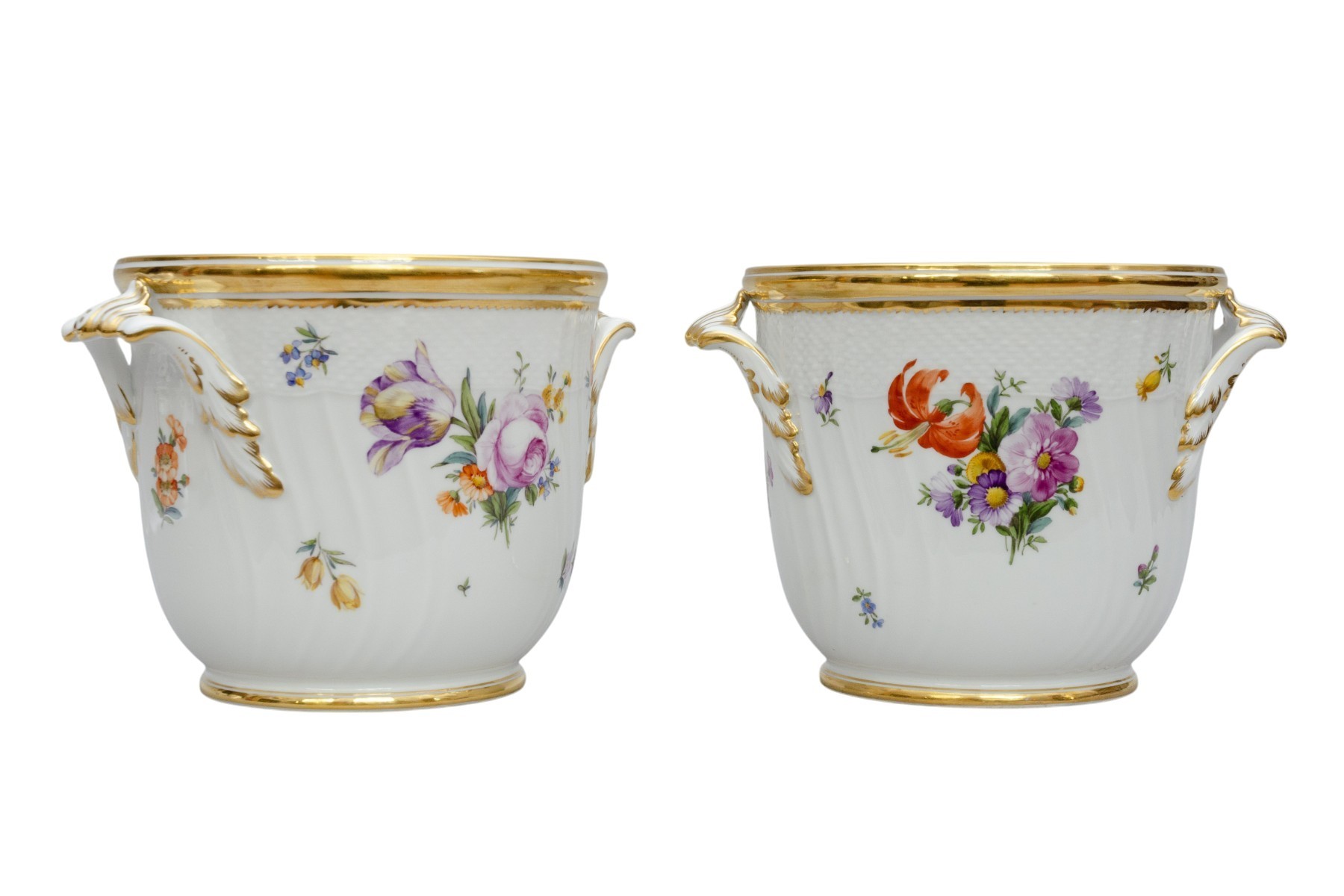
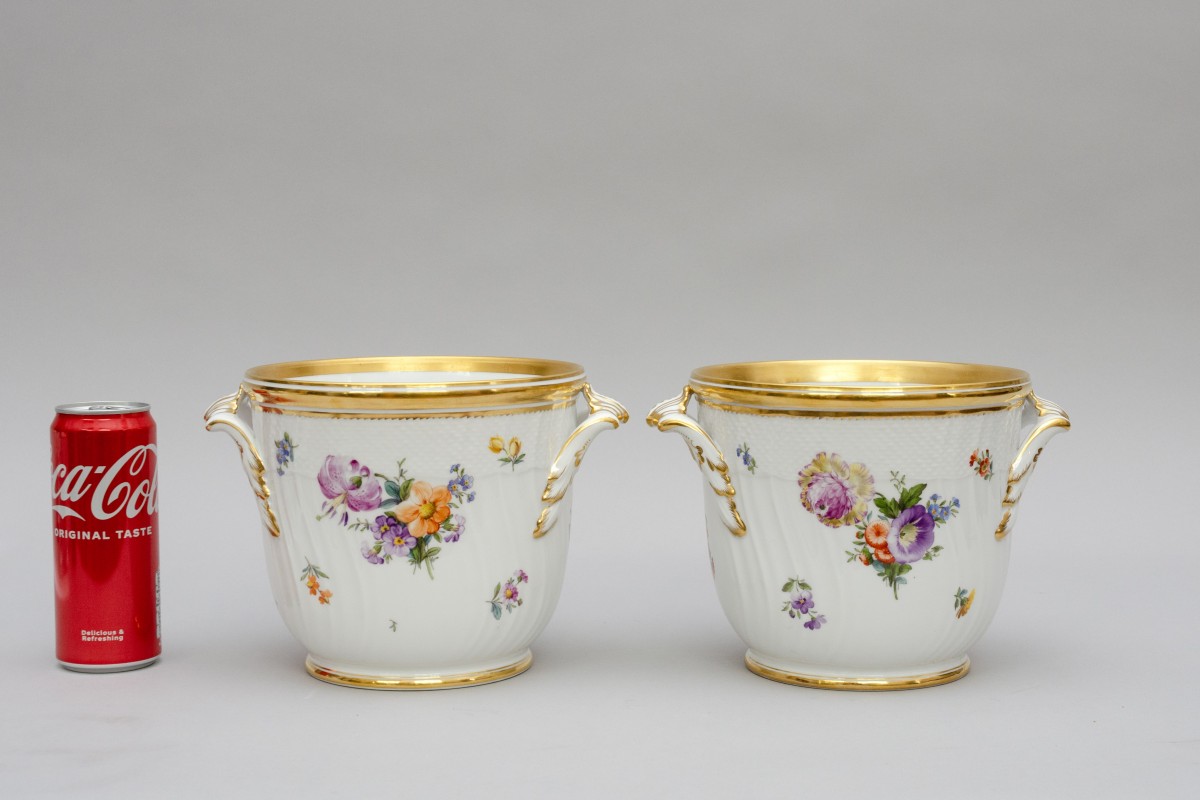
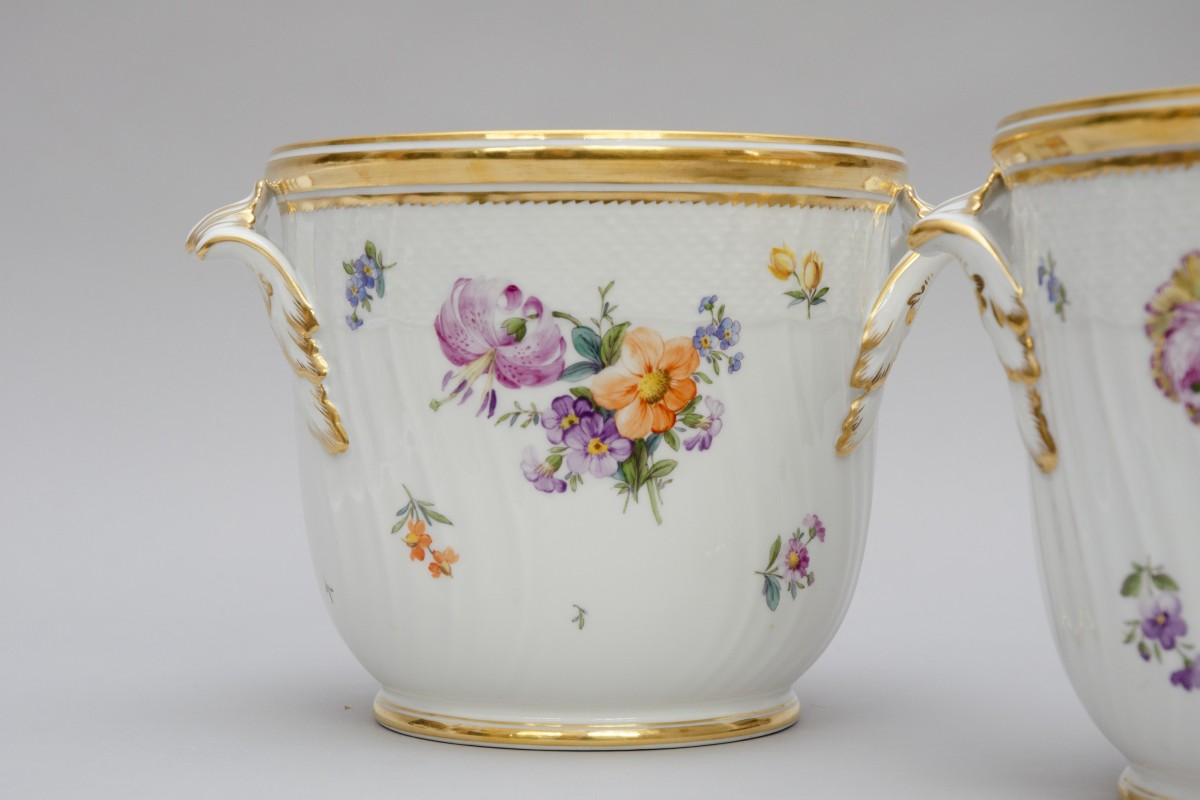
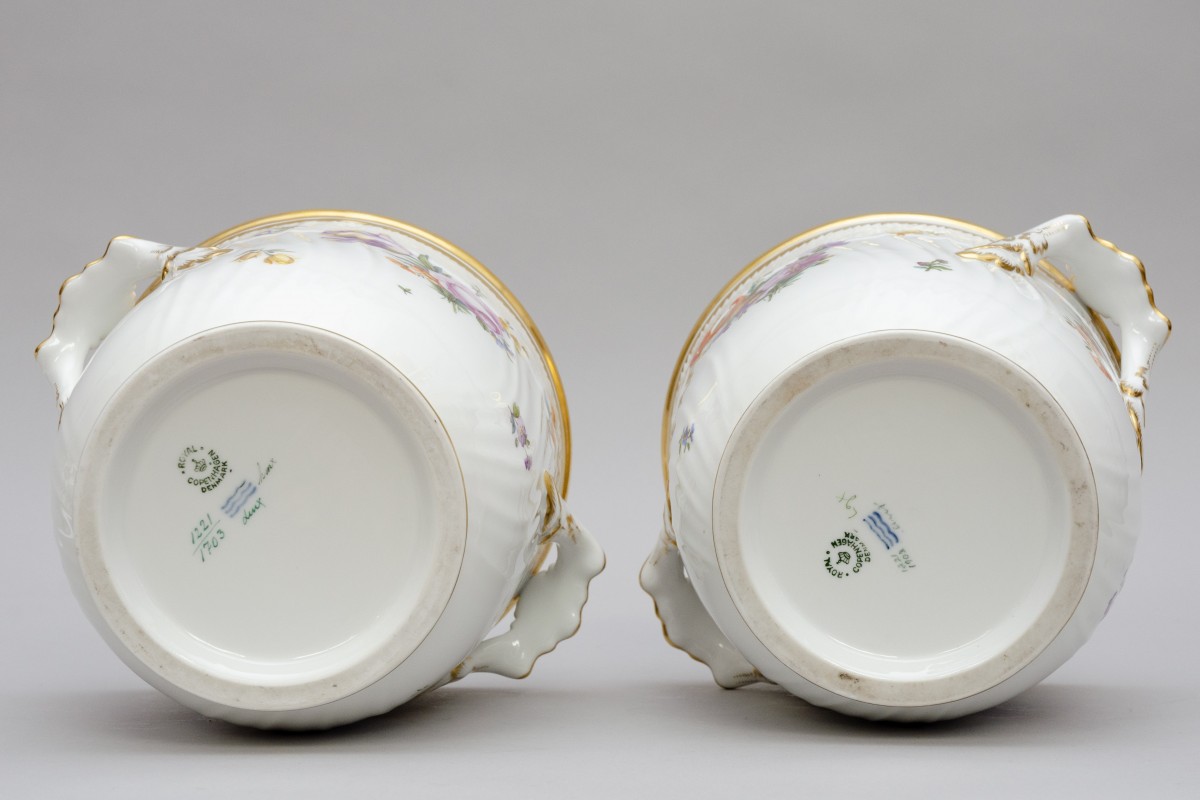
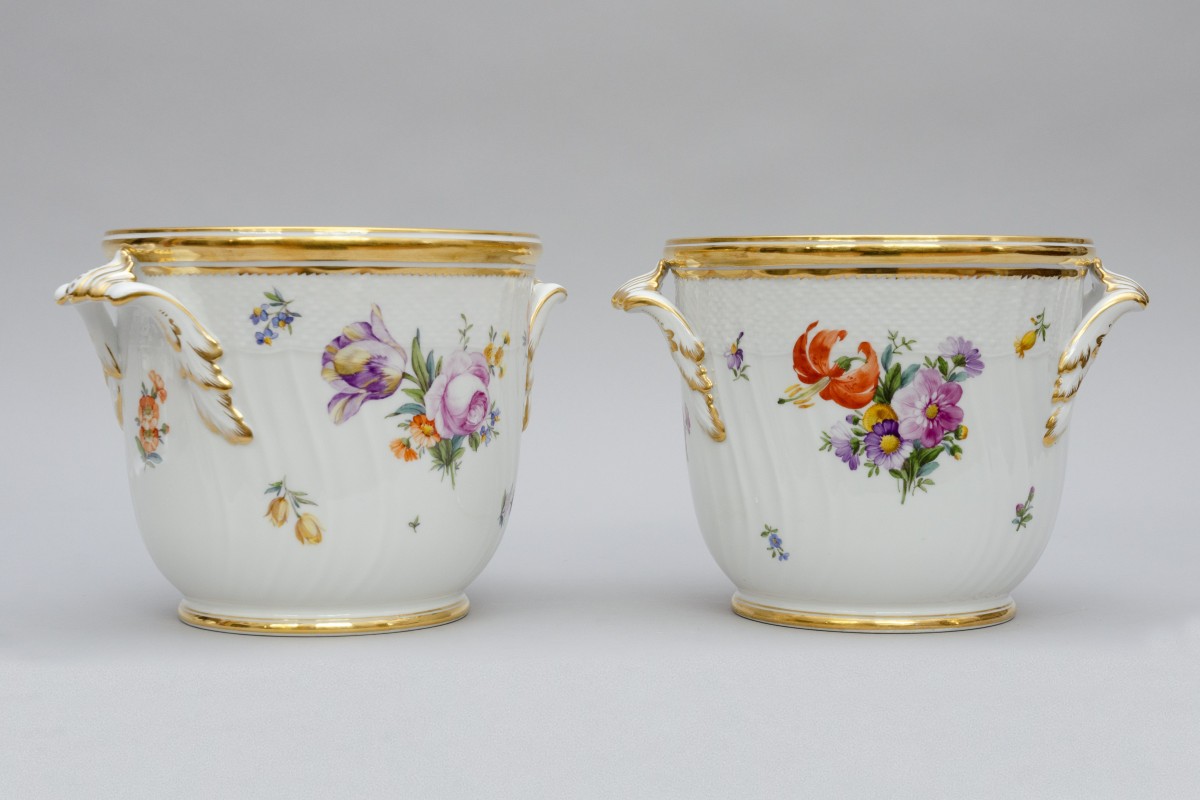
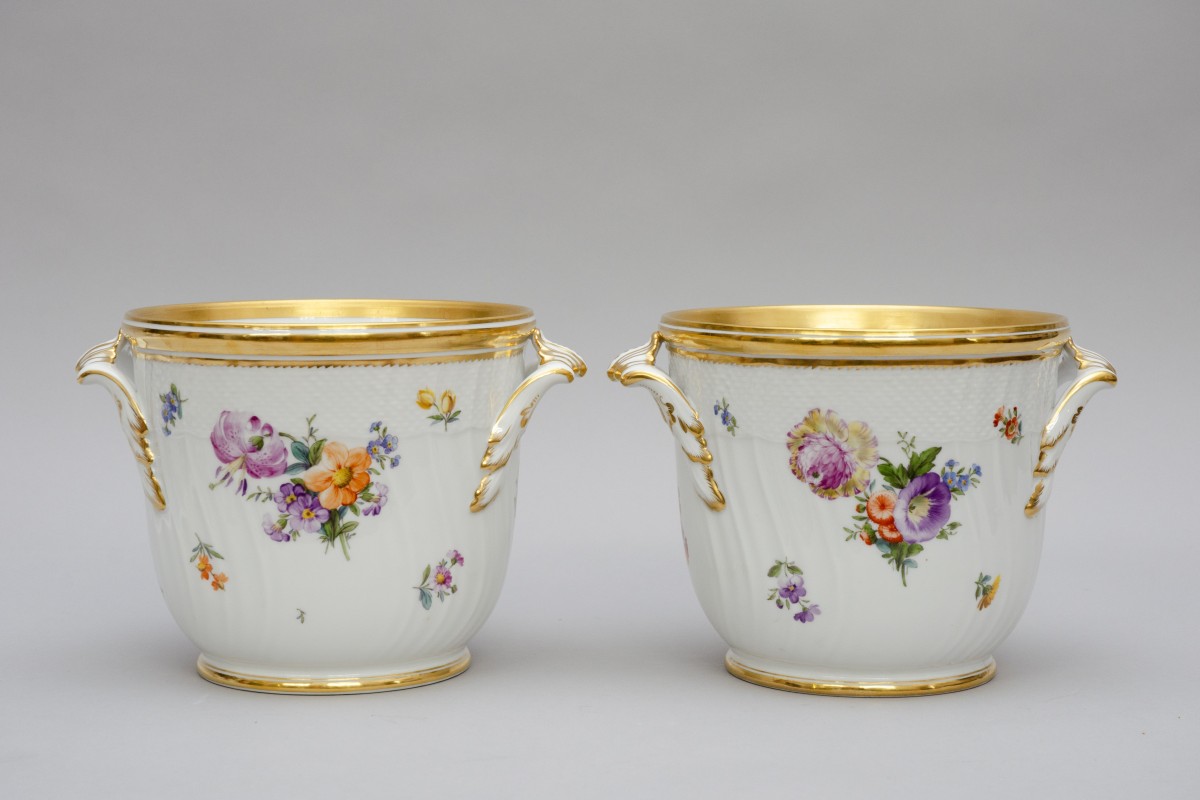
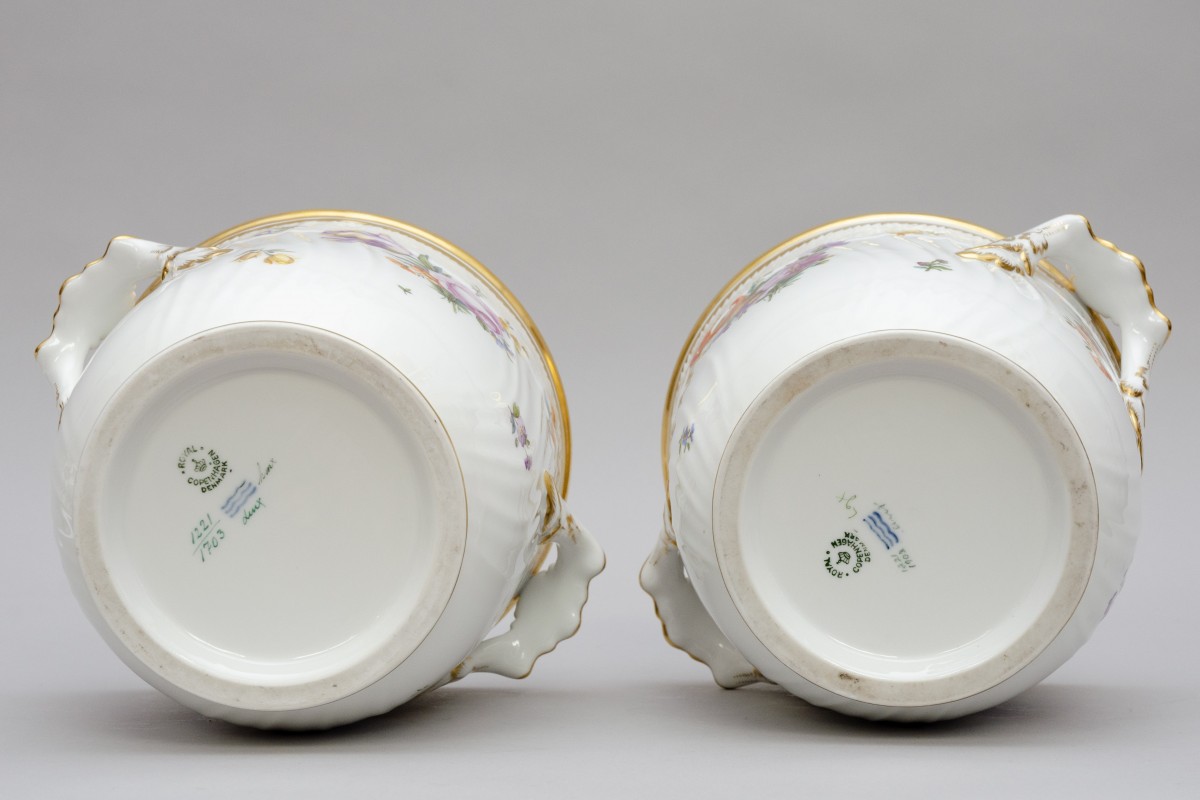
A beautiful pair of Copenhagen porcelain planters featuring polychrome floral bouquets and gold highlights. Marked with the wave symbol. A very lovely set.
Size: H 16.5 cm - diameter 19 cm
Royal Copenhagen, early 20th century
Lit: The Royal Danish Porcelain Manufactory was founded in 1775 under the leadership of chemist Frantz Heinrich Müller, a mineral specialist who sought to produce porcelain made from quartz, feldspar, and kaolin to compete with Chinese imports, which were highly prized but costly among the European aristocracy. When Müller discovered a Danish source of kaolin, Queen Juliane Marie seized the opportunity to strengthen the local economy and the kingdom’s international prestige, granting Müller a fifty-year monopoly on porcelain production in Denmark. By 1779, the company was facing financial difficulties and was taken over by King Christian VII, who bestowed upon it the title of “Royal Porcelain Factory ." For nearly a century, the manufactory was thus managed by the Danish royal family. It was during this period that its most iconic creations emerged: in 1790, the manufactory began production of the famous Flora Danica service, commissioned as a gift for Empress Catherine II of Russia. This monumental service, comprising nearly 1,800 unique pieces adorned with Danish flora, required years of work and remains one of the absolute masterpieces of European porcelain. In 1868, as part of a privatization, the factory passed into private hands, while retaining its name and the privilege of flying the royal flag. A few years later, between 1882 and 1884, it merged with the Aluminia earthenware factory and moved to new premises in Frederiksberg, on the outskirts of Copenhagen. The factory won the Grand Prix at the 1889 Paris World’s Fair, earning it considerable international renown, which was further enhanced when Tsar Alexander III acquired several of its pieces. In 1887, the Royal Porcelain Factory merged with its major rival, Bing & Grøndahl, founded in 1853, to form the Royal Copenhagen entity as it exists today. The brand, still the official supplier to the Danish Royal Court, remains one of the world’s leading names in fine porcelain.
Delevery information :
to be agreed with the customer depending on the object and the place of destination.