Offered by Franck Baptiste Paris
REQUEST INFORMATION
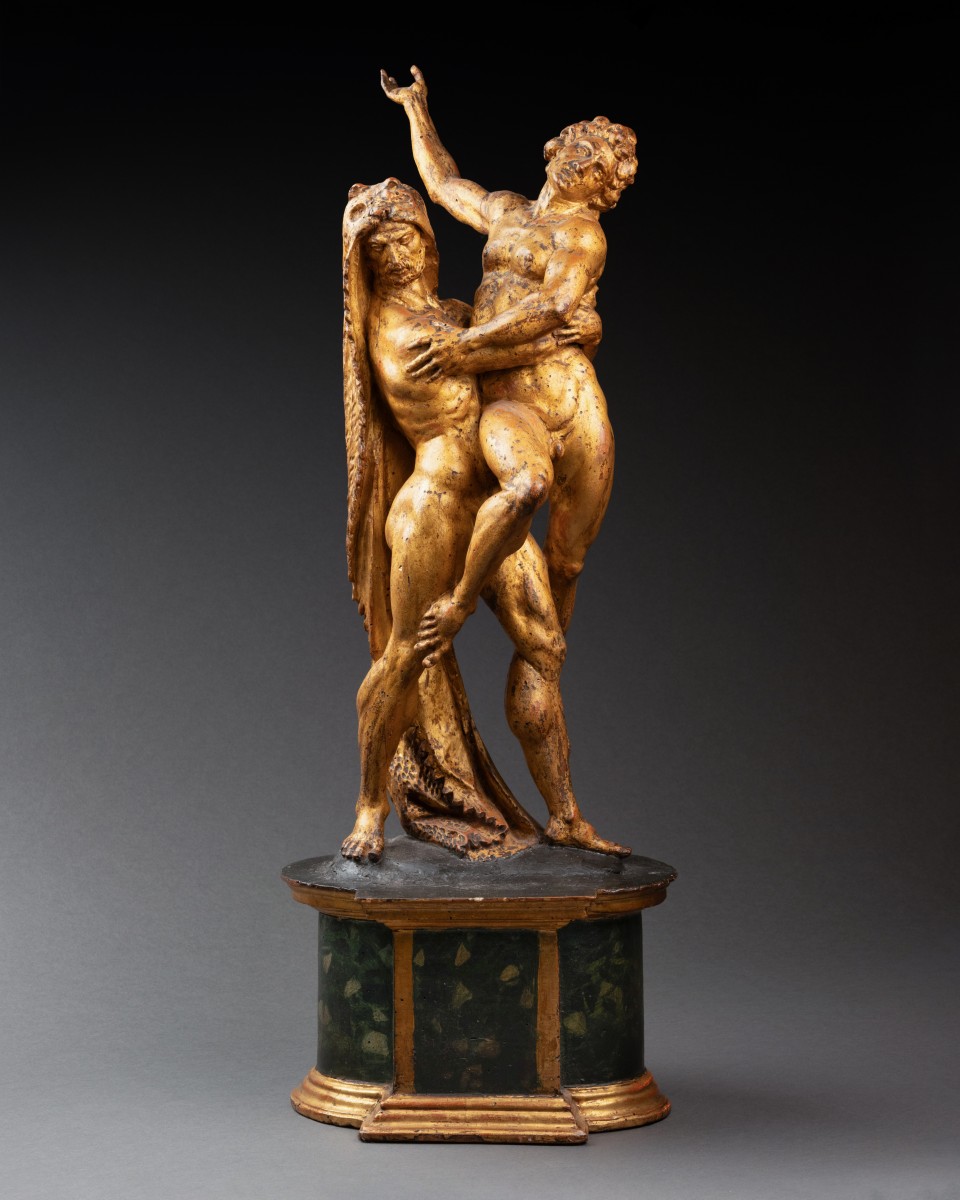
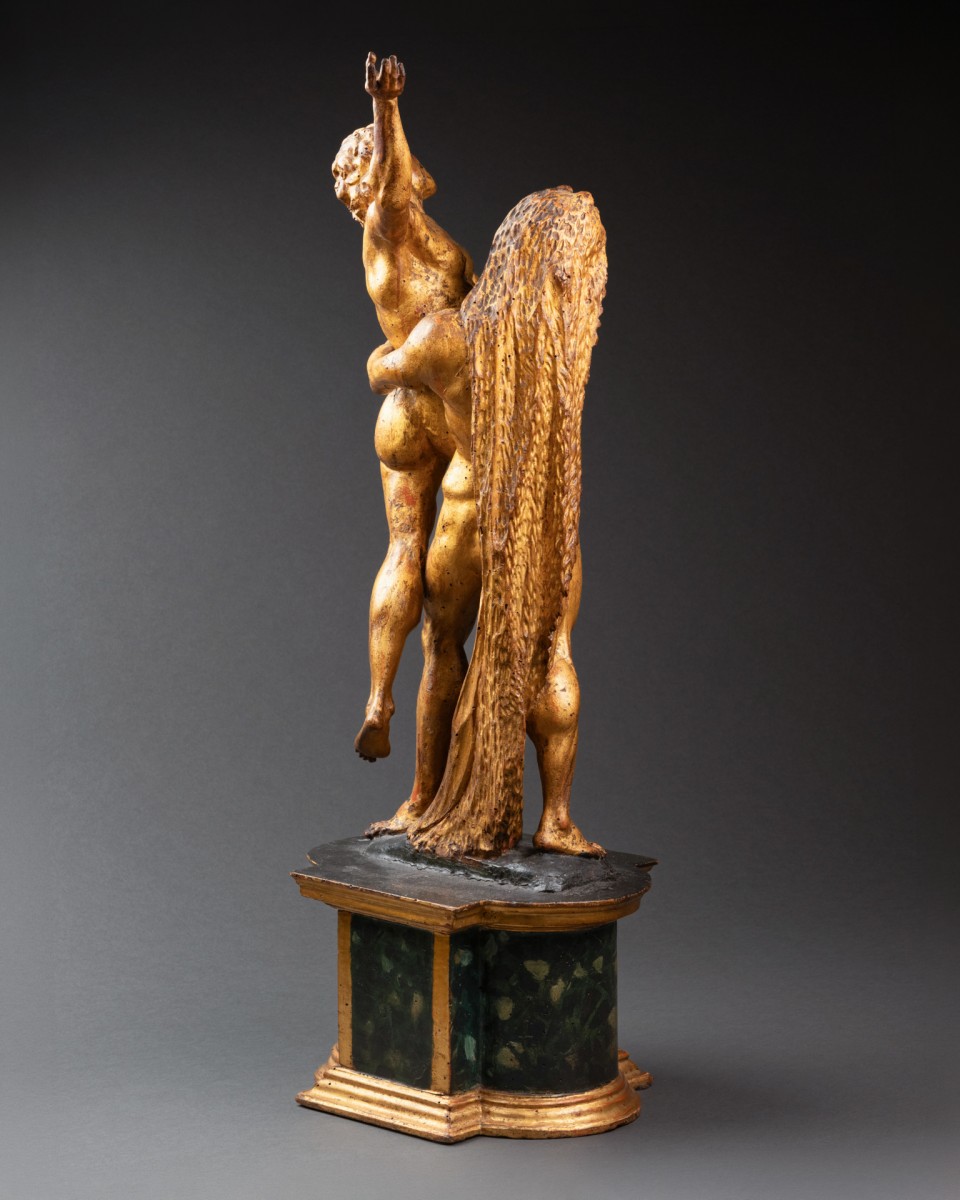
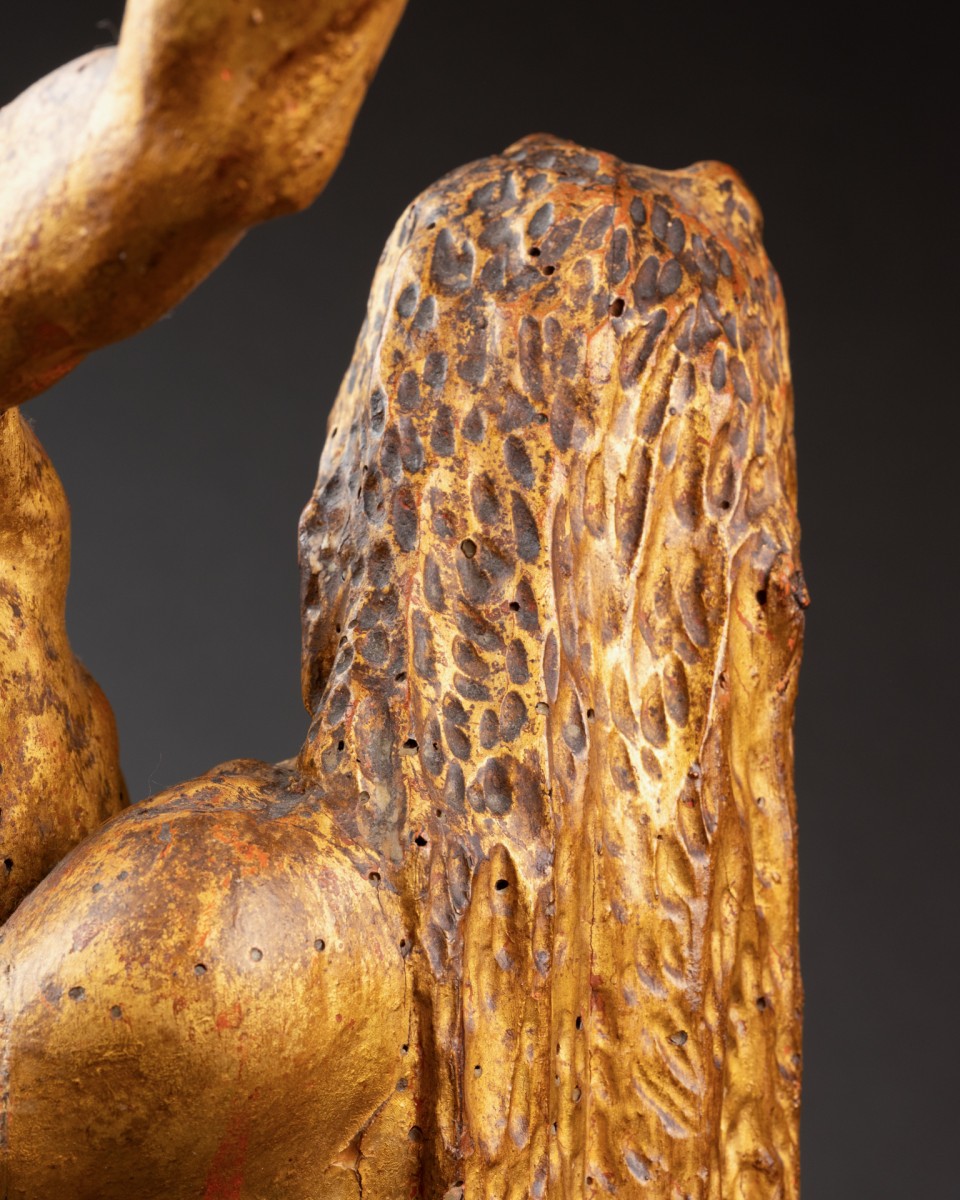

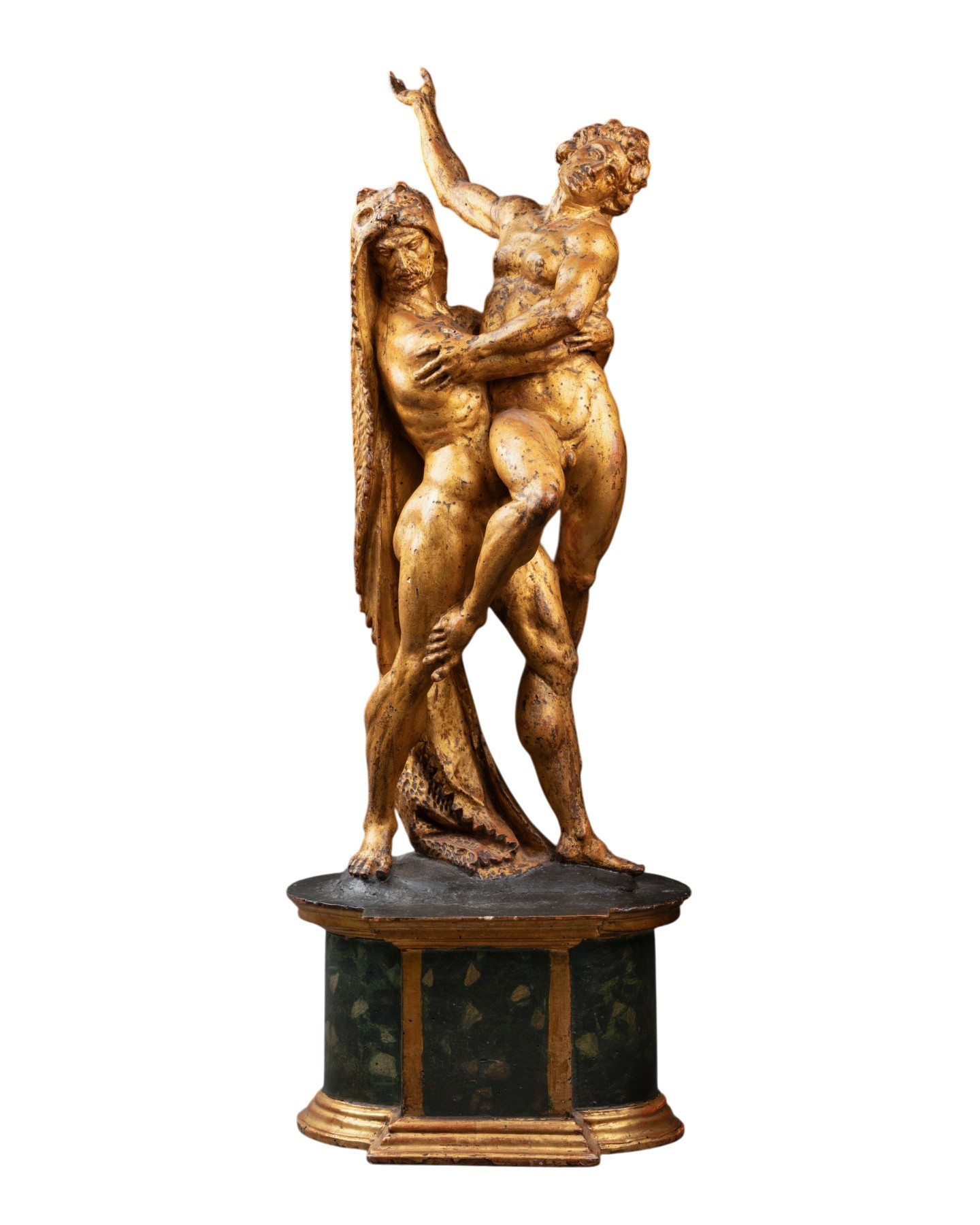
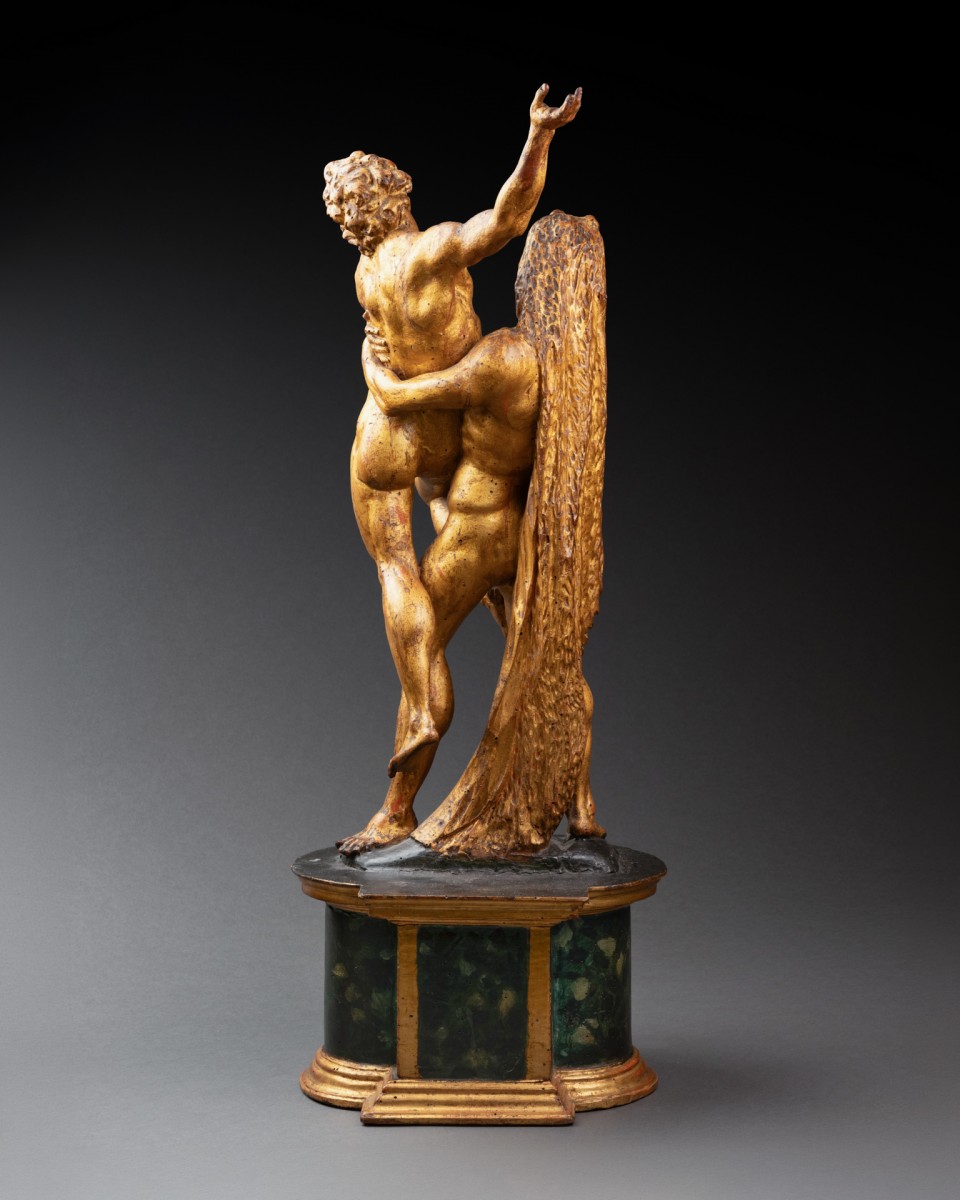
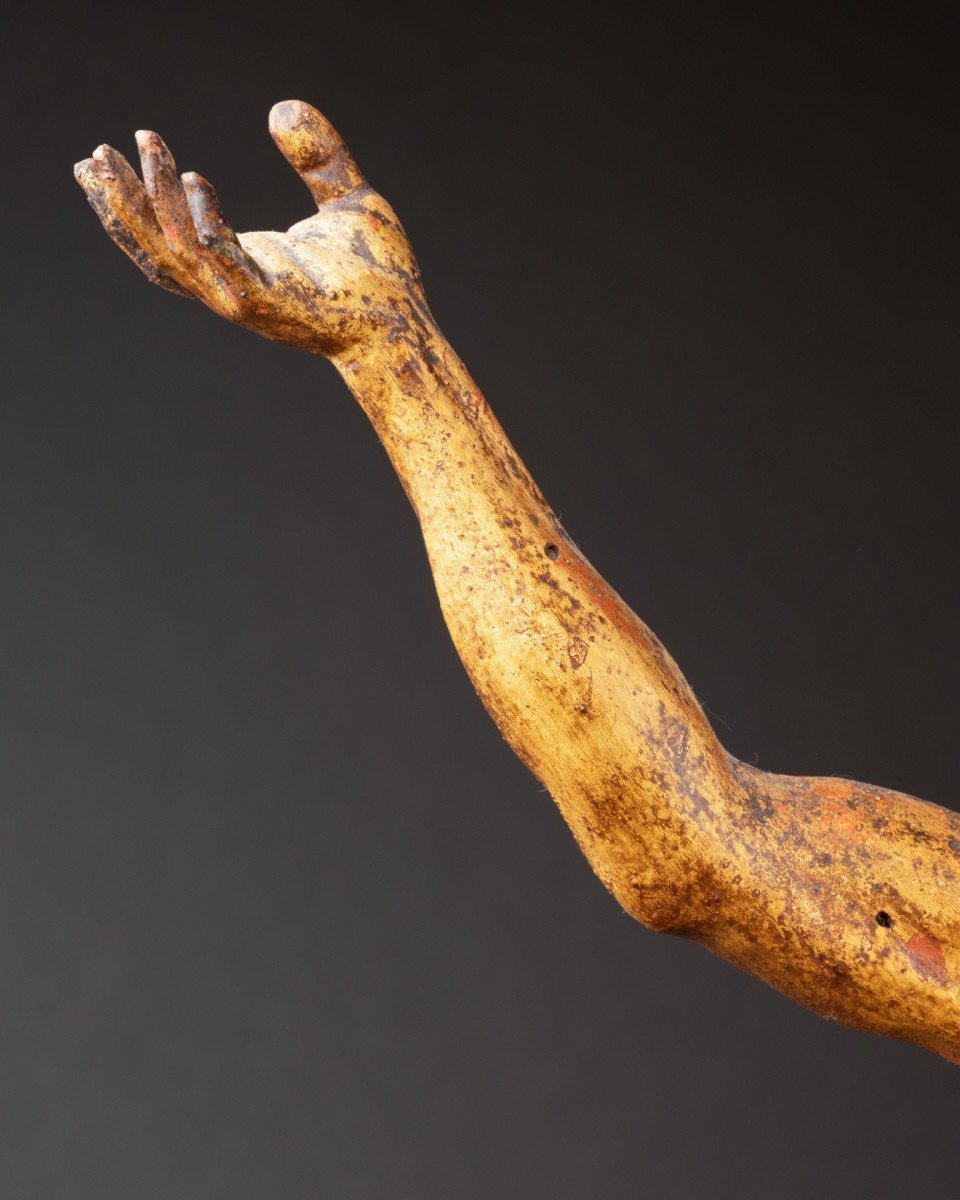
A finely carved and oil-gilded linden wood group depicting Hercules and Antaeus.
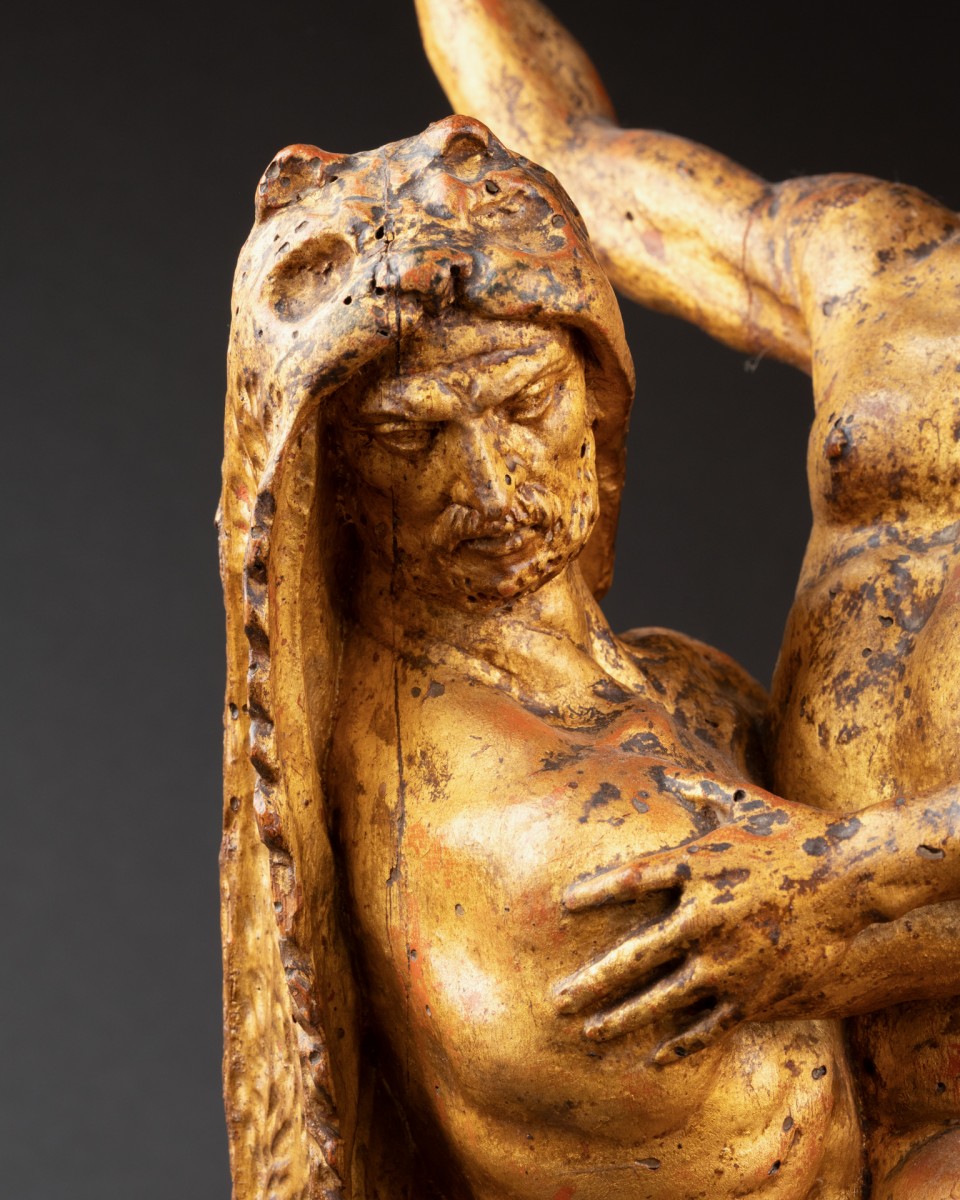
The mythological hero is shown at the moment he lifts Antaeus, thus depriving him of contact with the earth from which he drew his strength. Hercules is identifiable by his musculature and the Nemean lion's hide falling behind his shoulder. The two figures embrace in a particularly dynamic composition organized according to a powerful helical movement.
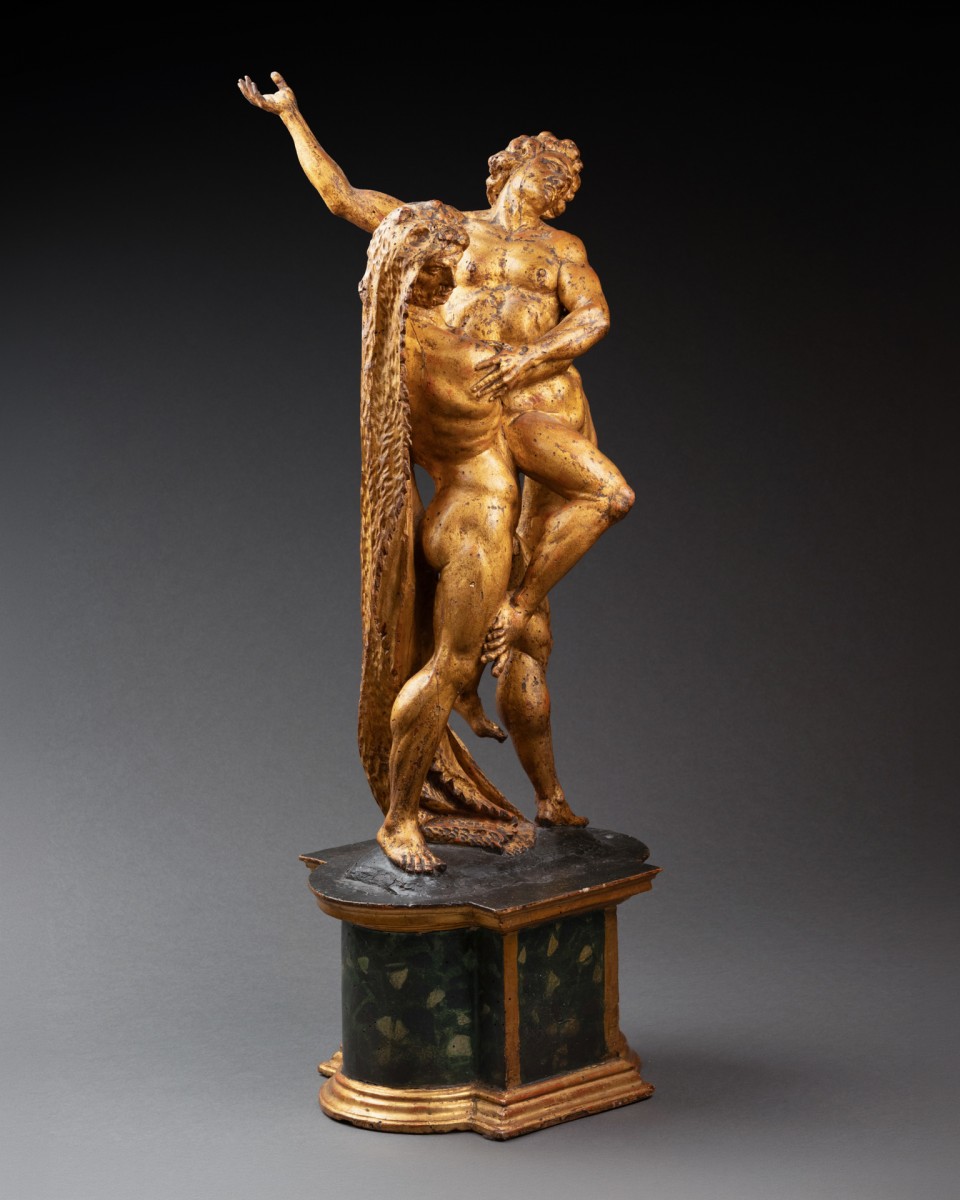
The treatment of the anatomies, with their taut musculature and accentuated twists, reflects an aesthetic directly inherited from late 16th-century Italian Mannerism. The composition develops an elegant "figura serpentinata," inviting the viewer to walk around the work to fully appreciate its sculptural richness. The elongated figures, the dramatic tension of the poses, and the taste for complex movements recall the creations of Giambologna's circle, also known as Giovanni da Bologna, and more broadly, the models of Florentine bronzes from the late Renaissance.
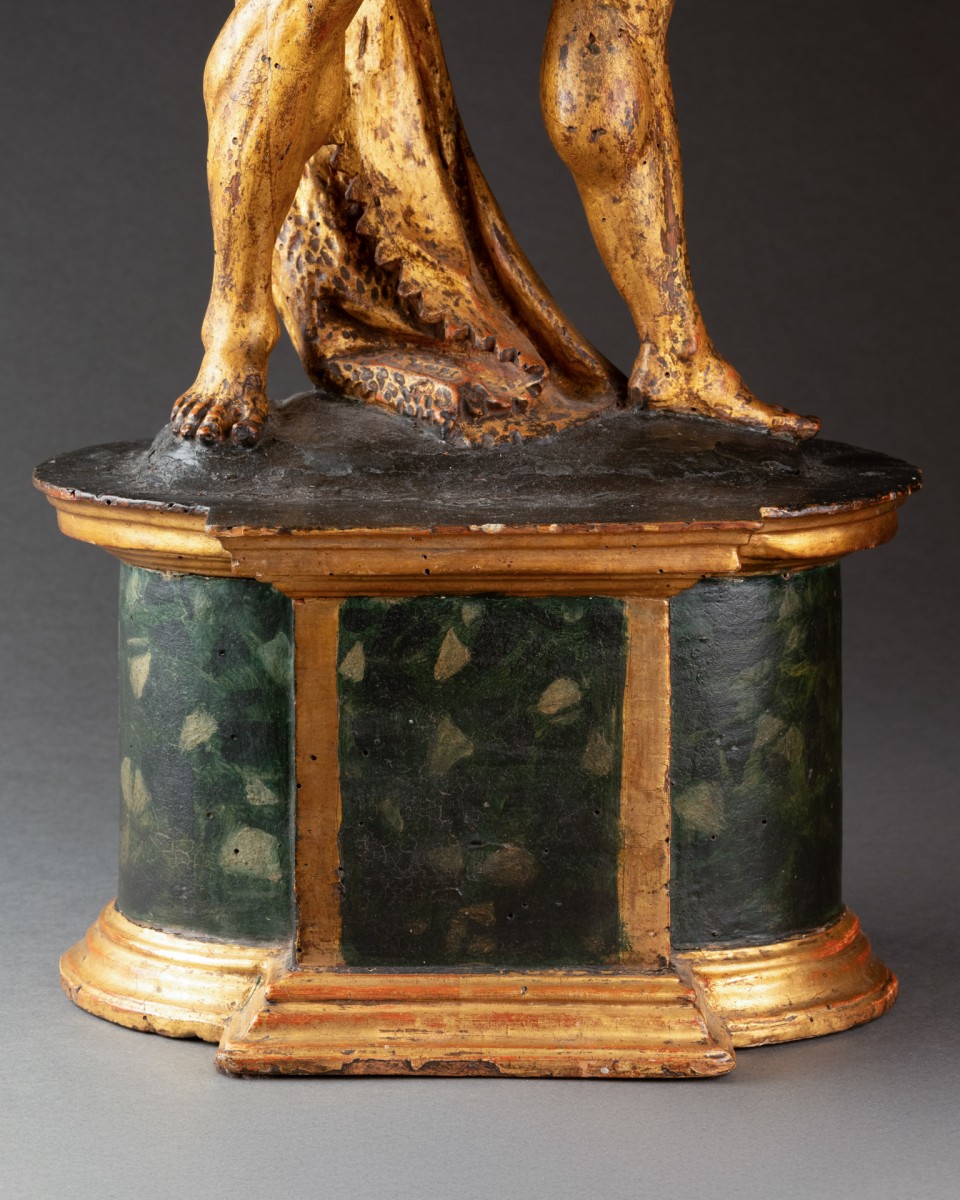
The sculpture rests on a quatrefoil base painted in imitation of green Greek porphyry, highlighted with gilded moldings, reinforcing the precious and Italianate character of the whole.
Very good condition.
Italian work from the first half of the 18th century.
Dimensions: Height: 77 cm
Our opinion: The large sculpted group, 77 cm high, that we are presenting immediately impresses with its presence and the extraordinary dynamism of its composition.
The interplay of twists, the intertwining of the bodies, and the continuous movement of the construction give the whole a remarkable visual power.
The sculpture was designed to be admired from all sides. Each angle reveals new effects of depth, tension, and balance, naturally inviting the viewer to walk around the work and gradually discover its full plastic richness.
This spiral design is one of the most emblematic characteristics of Italian Mannerist sculpture inspired by the inventions of Giambologna.
It is highly probable that our sculpture derives from a large bronze, now lost, once mercury-gilded and resting on a prestigious base of green porphyry, a material particularly sought after in European princely collections. The quality and appearance of the old oil gilding further support this hypothesis, reinforcing the illusion of a substantial gilded bronze transposed into wood. The subtle reappearance of the orange ground beneath the gilding even evokes, in places, the depth and translucency of the hot glazes seen on certain antique gilded bronzes. The aim here is not to create a simple gilded wood sculpture, but rather to visually evoke the presence and preciousness of a large Italian Mannerist bronze such as could be seen in scholarly cabinets and aristocratic studioli during the 17th and 18th centuries.
Hercules and Antaeus
The story of Hercules and Antaeus is one of the most significant episodes in Hercules' many adventures. While traveling through Libya, Hercules encountered Antaeus, who challenged him to a wrestling match. At first, Hercules struggled to defeat the giant, as Antaeus regained strength with every touch of the ground.
Understanding the source of Antaeus's power, Hercules lifted him from the ground, severing his connection to the Earth. Deprived of his mother's support, Antaeus became vulnerable and was ultimately defeated by Hercules. This victory demonstrated Hercules' intelligence and adaptability, proving that brute force is not always enough to triumph.