Offered by Galerie Puch
REQUEST INFORMATION
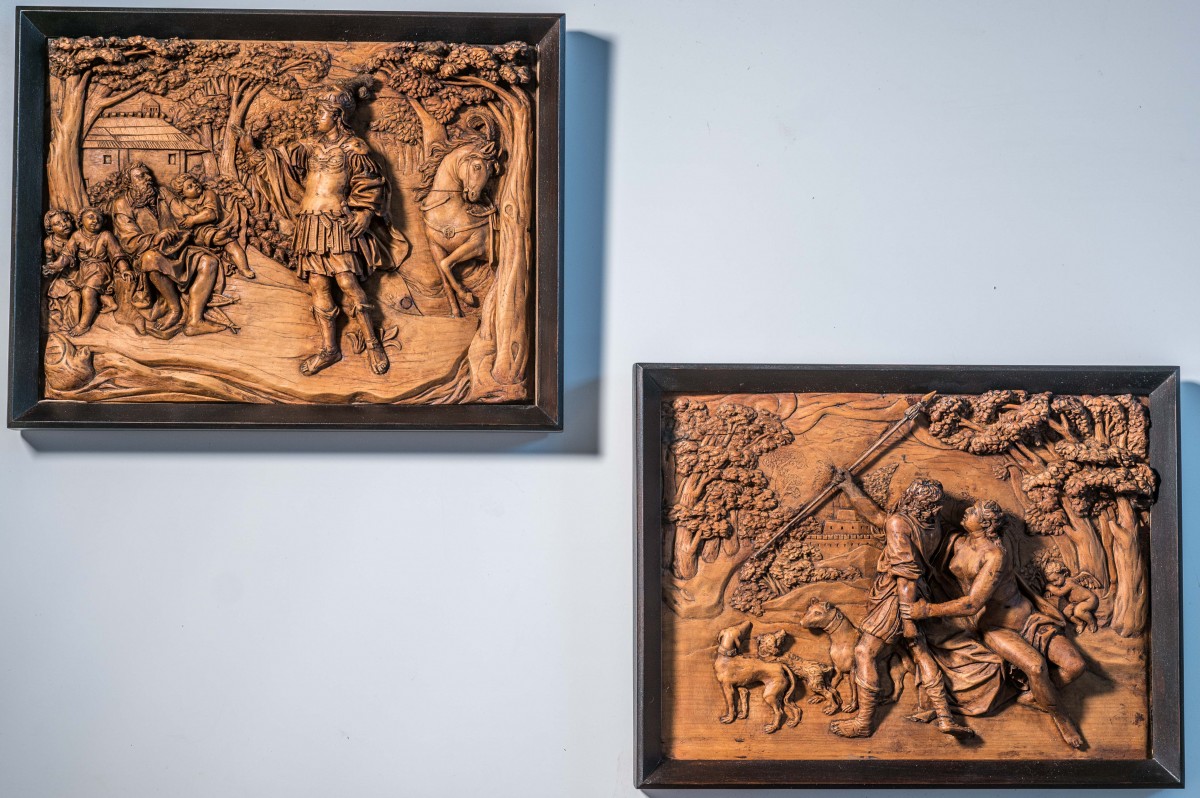

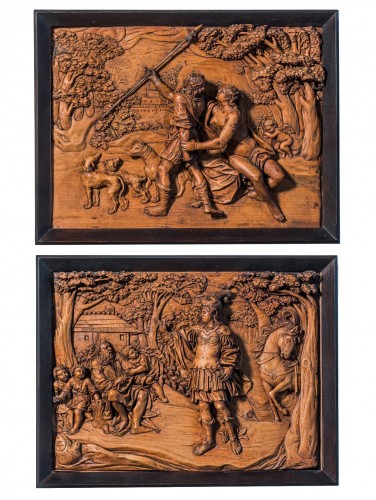
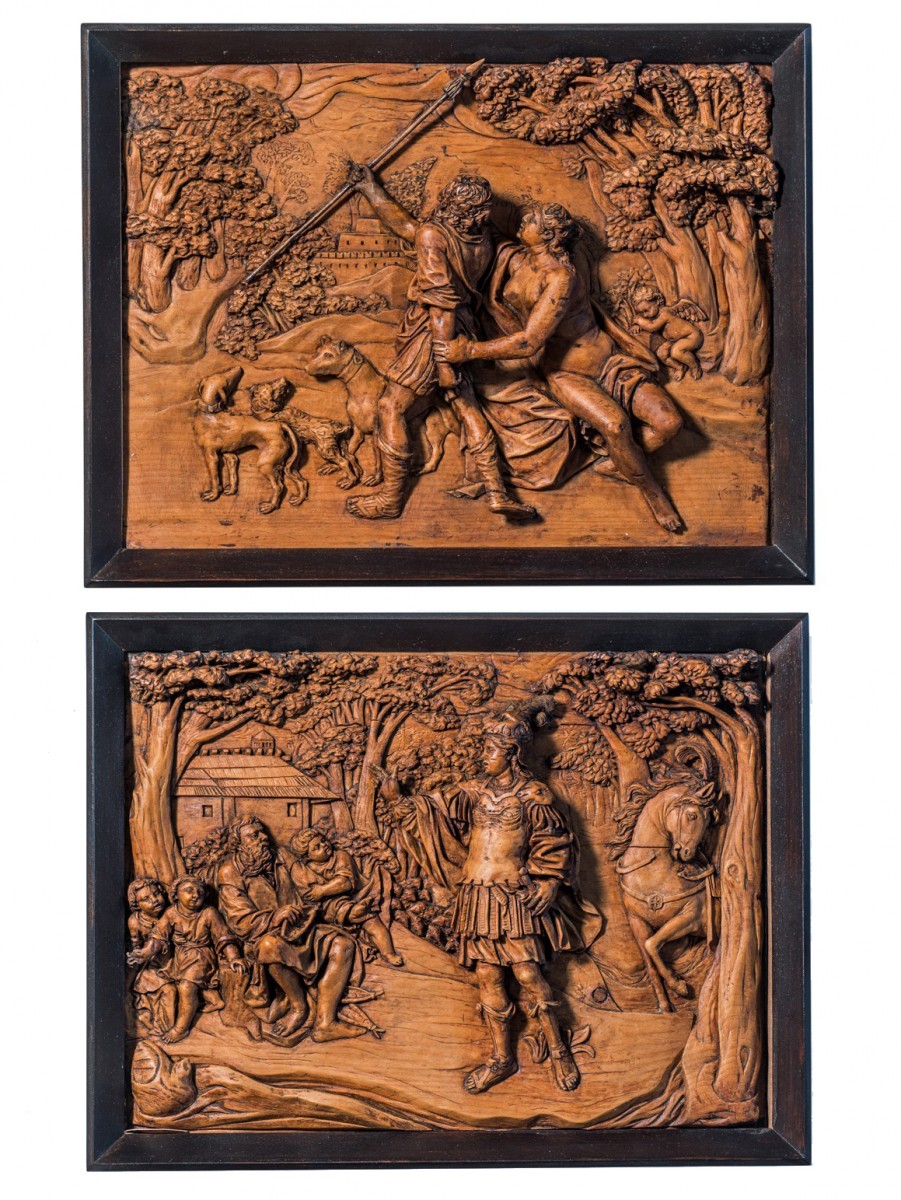
Both panels are thematically closely linked
and originate from Greek mythology:
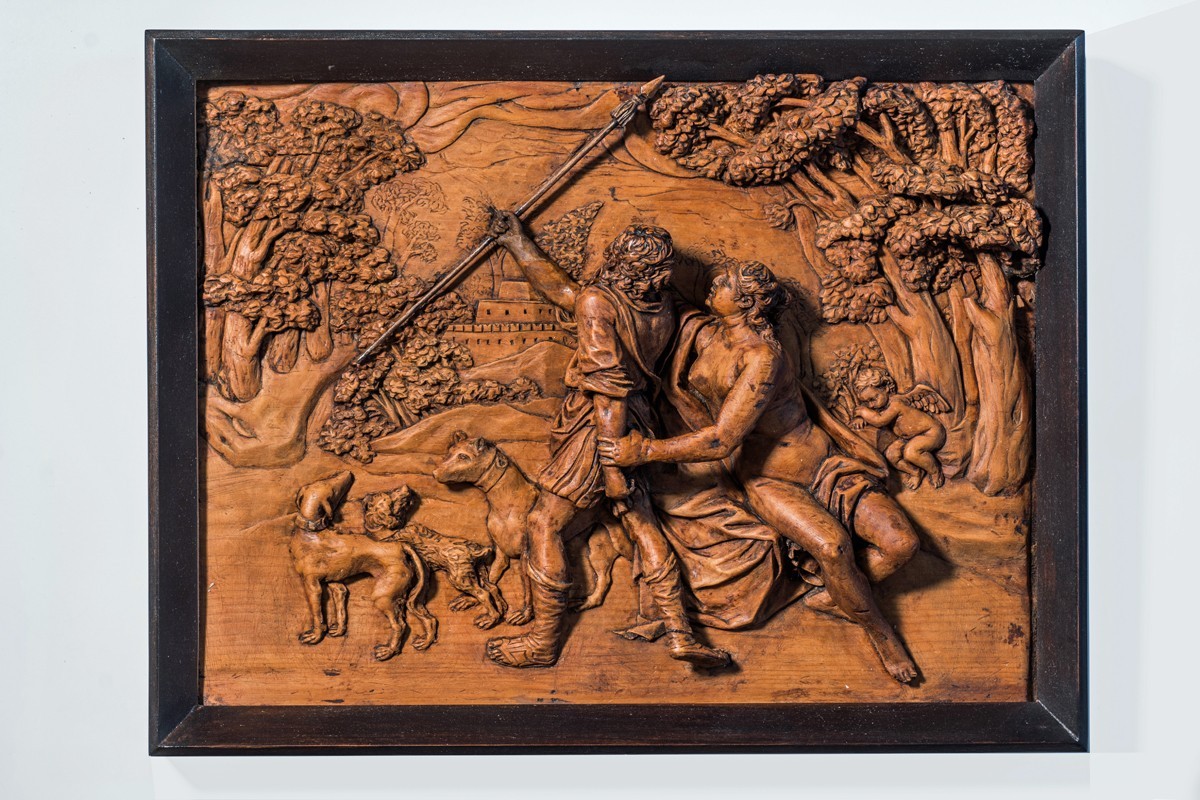
the love of Venus and Adonis and its tragic end.
PANEL 1
Venus bids farewell to Adonis, who is about to go on a boar hunt.
With a bad premonition, she tries to stop him while the angel
already stands crying beside the main figures.
The artist draws on the compositional inspiration of the paintings
by Peter Paul Rubens and Titian.
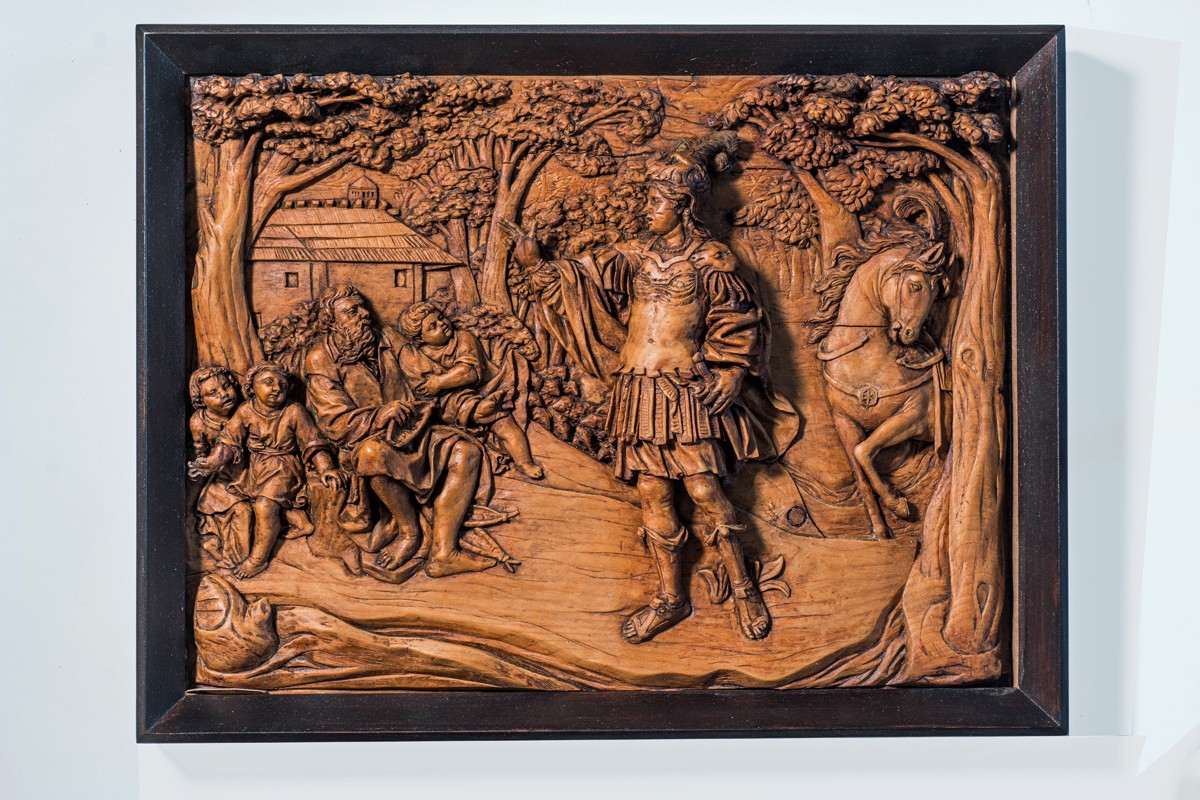
PANEL 2
Mars, the god of war, transforms himself into a boar
and kills Adonis on the hunt.
Mars stands in a victorious pose before Zeus and the young gods,
who turn away from him in horror.
This interpretation of the underlying theme has no known precedent in
painting.
ARTISTS
Johann Caspar Schenck (1620-1674) was a 17th-century Viennese sculptor.
He was court sculptor (kaiserlicher cammerpainstecher) to Emperor Leopold I (1640-1705)
His artistic career began at home; he learned the craftfrom his father.
He deseends from the prominent Schenck family of sculptors.
Christoph Daniel Schenck, who achieved equally great fame, was his student in Constance.
Both are considered the best known sculptors of the early Baroque period, creating small-figure sculptures and reliefs.
Johann Caspar Schenck's work was strongly influenced by the
master of the St. Sebastian Martyrdoms.
It is assumed that he worked in the workshop of Johann Caspar Schenck
before moving to the imperial court.
Along with Adam Lenckhart and the Master of the Saint Sebastian Martyrdoms, they are considered among the most important artists of the 17th century in the field of small-scale sculpture and relief.
QUALITY
The artist succeeds in dramatically portraying the farewell of Venus and Adonis.
Adonis surges from the panel in full-figure, his face averted from the viewer.
Nevertheless, Johann Caspar Schenck has rendered the entire face in all details.
It can only be seen when viewing the relief from the right .
Venus gazes upon the fate of Adonis with a worried expression.
A wealth of details is so finely carved that the relief appears almost too realistic.
Mars steps before Zeus in contrapposto, revealing himself with his visor raised.
He wears iron armor with a Renaissance leather-strap skirt.
His free leg is raised and slightly bent.
The drapery of his cloak, which falls backward, is very skillfully crafted.
The facial expressions of the main characters are typical oft he work of
Johann Caspar Schenck.
Zeus is frozen, and the young gods are frightened.
Father of God Zeus has his leg prominently bent; this playful element
being equally typical of Johann Caspar Schenck.
Even the horse turns its head away from Mars, the god of war.
The trees framing the scenery on both panels on the left and right, are
typical fort he work of johann Caspar Schenck too
A particular stylistic feature of the sculptors at the imperial court of Leopold I is the prominence of the main characters, sometimes full-length, like Adonis and Mars on the panels,or in three-quarter profile.
Other thematically less important characters, such as the dogs and the young gods, appear in half-profile.
This stylistic feature is characteristic of the sculptor Adam Lenckhart, the Master of the Sebastian Martyria, and Johann Caspar Schenck.
Direct detailed comparisons with works by Johann Caspar David Schenck in museums show that the use of these stylistic features are here identifies of his work.
HISTORY
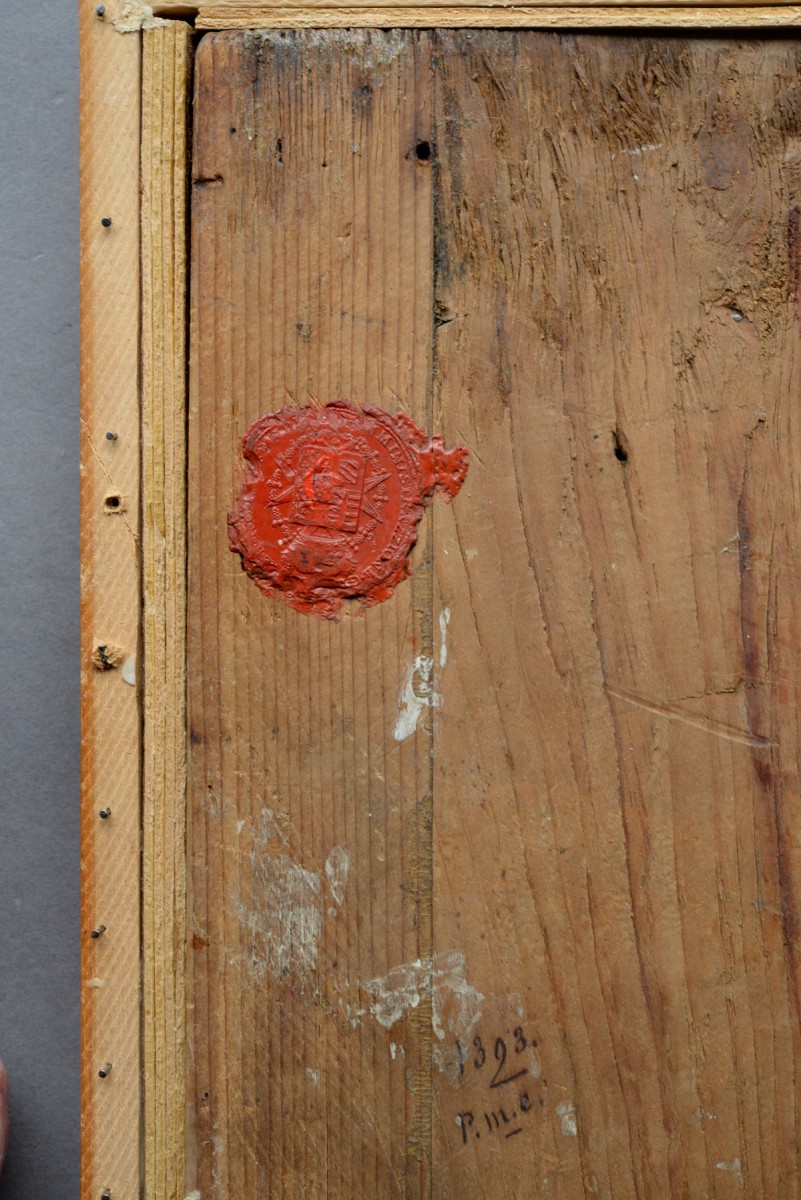
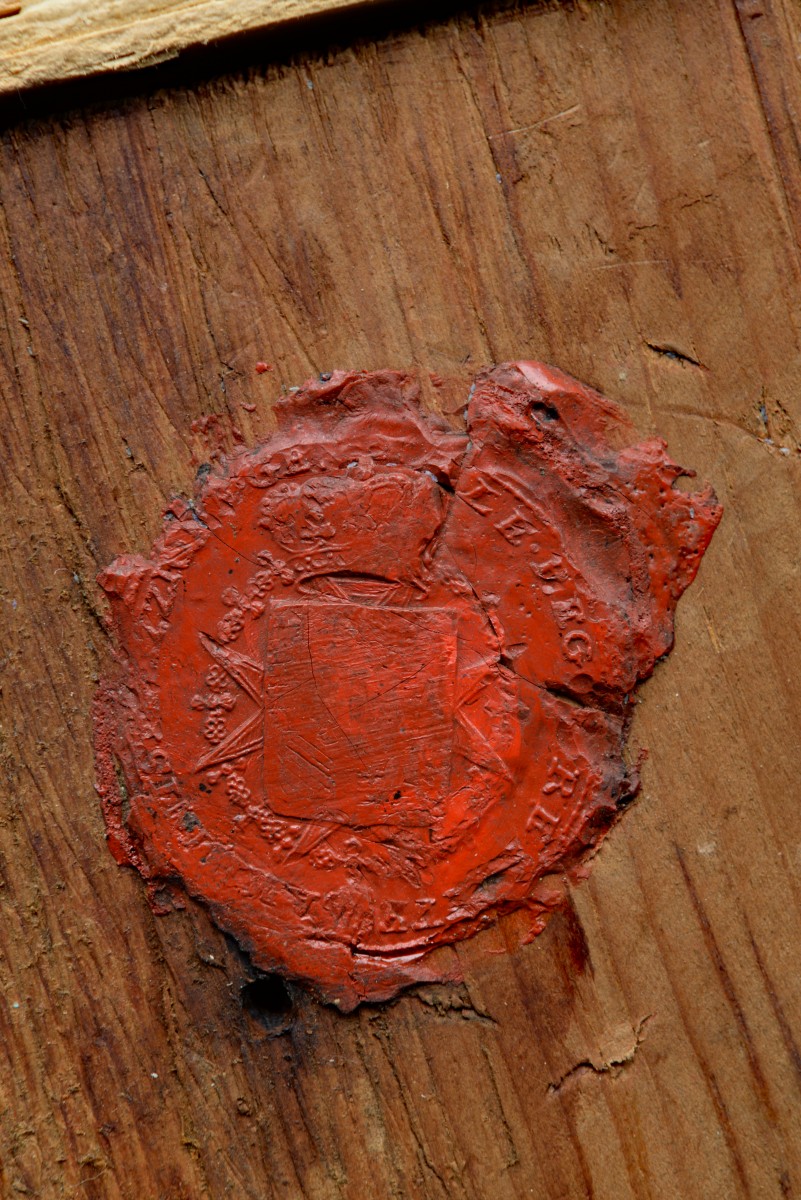
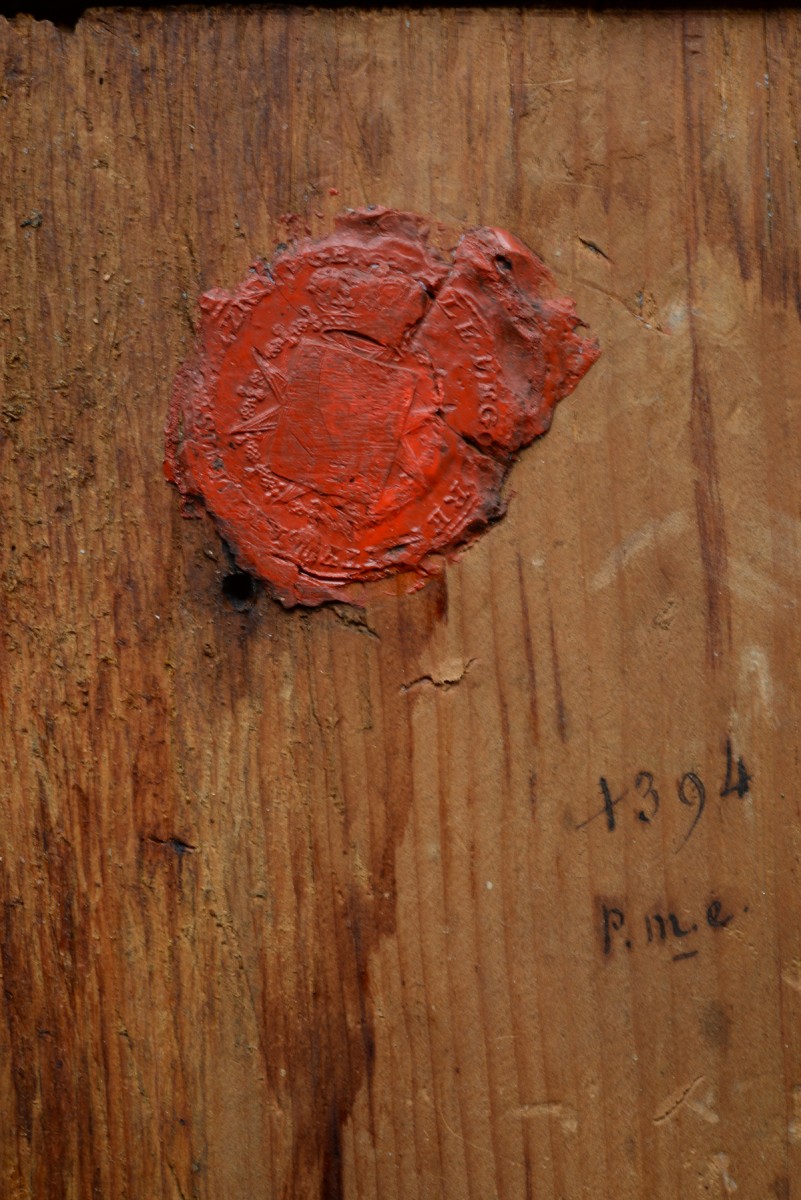
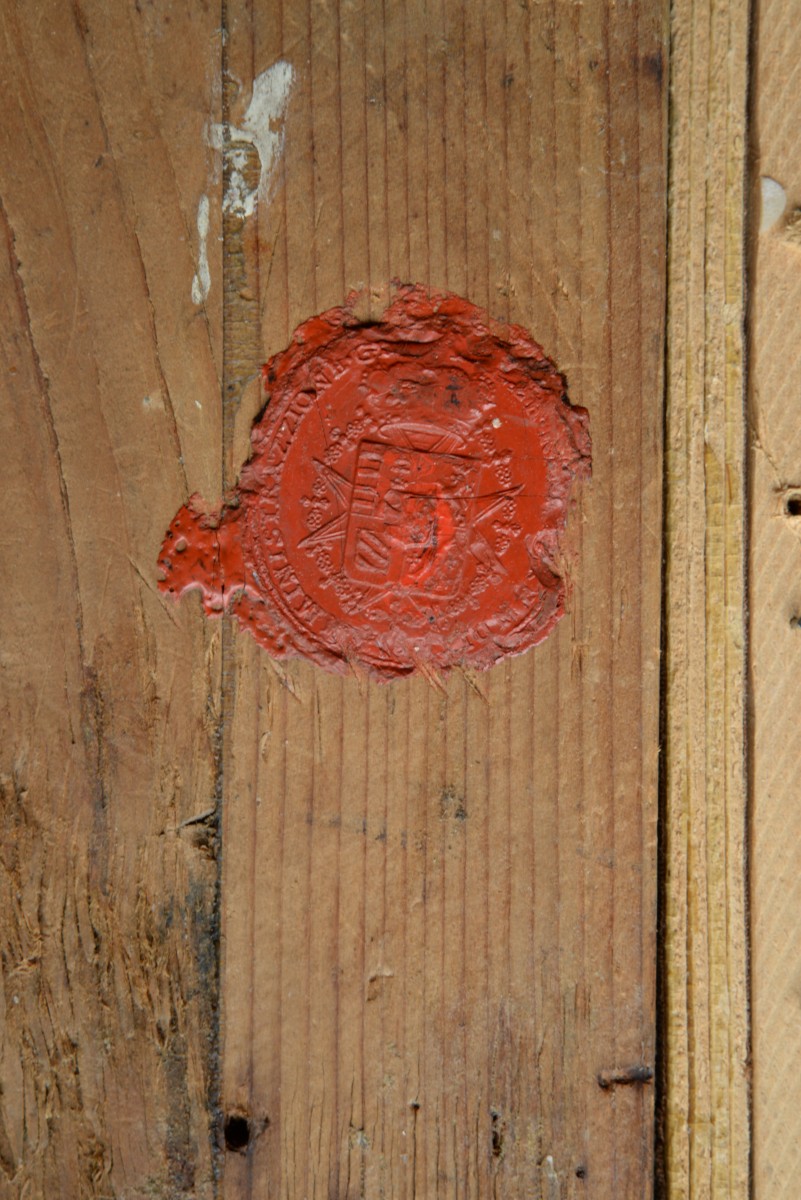
An examination of the two panels in the Bavarian National Museum revealed a seal coat of arms of the Habsburg Grand Dukes of Tuscany
and Archdukes of Austria, applied to the reverse of each panel. Both reverse-sides were covered by cardboard and were opened by the museum.
The coat of arms, with the corresponding consecutive collection numbers, belongs to the Grand Dukes of Tuscany:
Leopold II (1747-1792) Emperor of Austria
Ferdinand III (1769-1824) Grand Duke of Tuscany and Archduke of Austria
Leopold II (1797-1870) Grand Duke of Tuscany and Archduke of Austria
With the Grand Dukes, the Habsburg rule in Tuscany ended 1859 (1737-1859)
The authenticity of the seals has been confirmed by a Habsburg expert in Vienna.
Experts confirm that both panels were in the continous possession of the Habsburg emperors since their creation around 1670 and were passed down through inheritance.
Equally certain, according to expert opinion, that they were located in the Palazzo Pitti, the seat of government an the residenceof the Grand Dukes.
With the political upheaval and the overthrow of Grand Duke Leopold II, the panels probably found their way into the art trade.
According to the Archivo di State di Florence, the Palazzo Pitti contains paintings bearing the identical coat of arms thatwas used to the Grand Dukes of Florence.
RESEARCH
Our research is based on multiples inquiries with the following institutions between 2021 and 2023.
Austrian State Archives
Probate Office Vienna
House Court State Archives Vienna
Private Archives of the Habsburgs in Prague
Archivo di Stato Florence
Uffizi Gallery
Pallazzo Pitti
An expert opinion by Dr. Albrecht Miller as of on March 3, 2023, confirms the
attribution to Johann Caspar Schenck.
CONDITION AND PRESERVATION
Both panels were carefully cleaned, removing old wax and shellac residue.
The right forearm of the relief of Venus and Adonis, with Adonis's spear, was added.
The fingers of the right hand were added to the relief panel of Mars.
The two frames have have been ebonised, but are otherwise unchanged
From the previous owner
PROVENANCE
Both relief panels orginate from a significant Swedish private collection that has existed for two generations.
Delevery information :
Delivery by parcel or Delivery by professional carrier select. Each work is meticulously packaged with a custom-made wooden box, and always assured.