Offered by Ars Antiqua

Old Masters paintings, furniture, sculptures and modern art
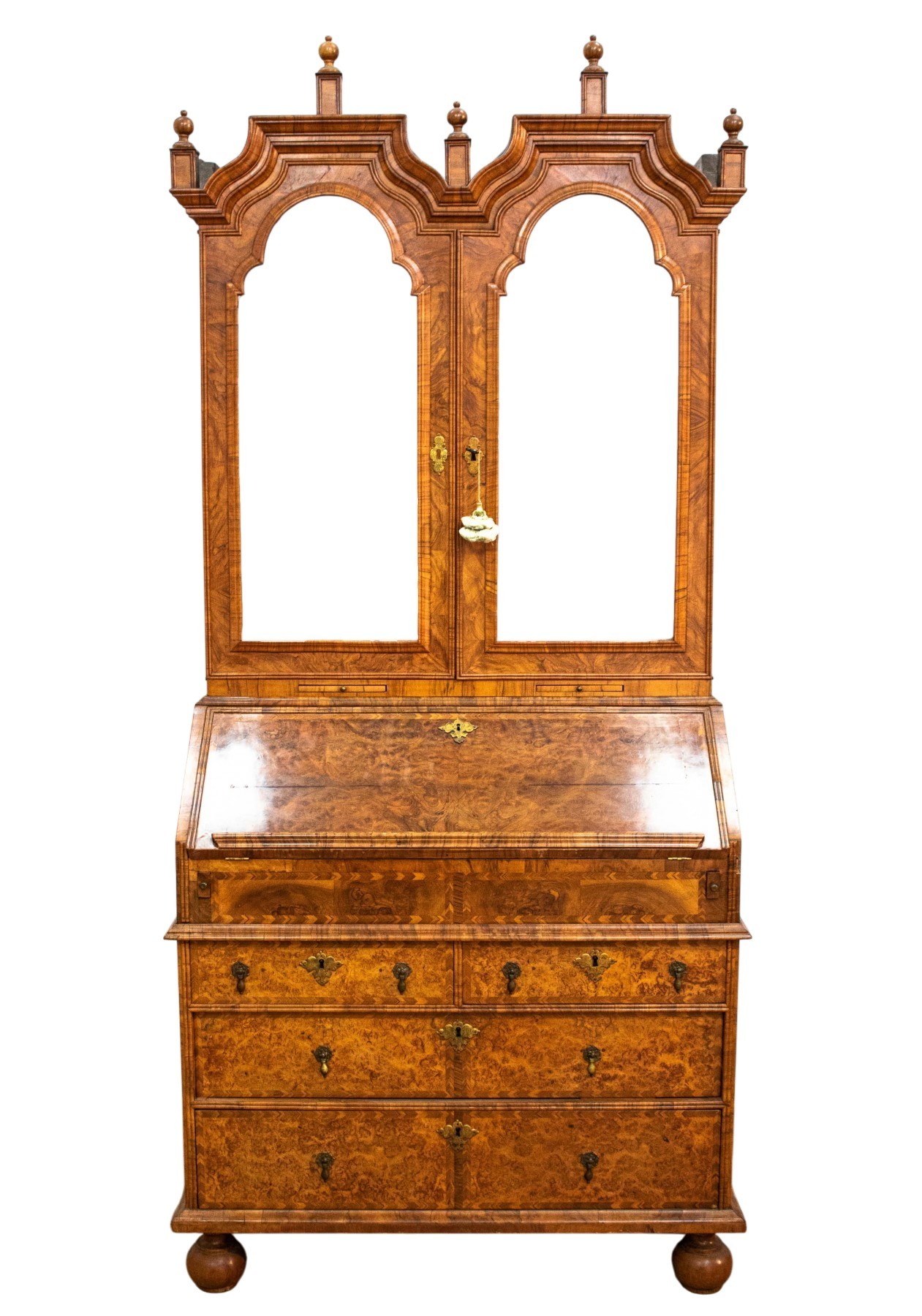
19th century, Queen Anne style, circa 1815
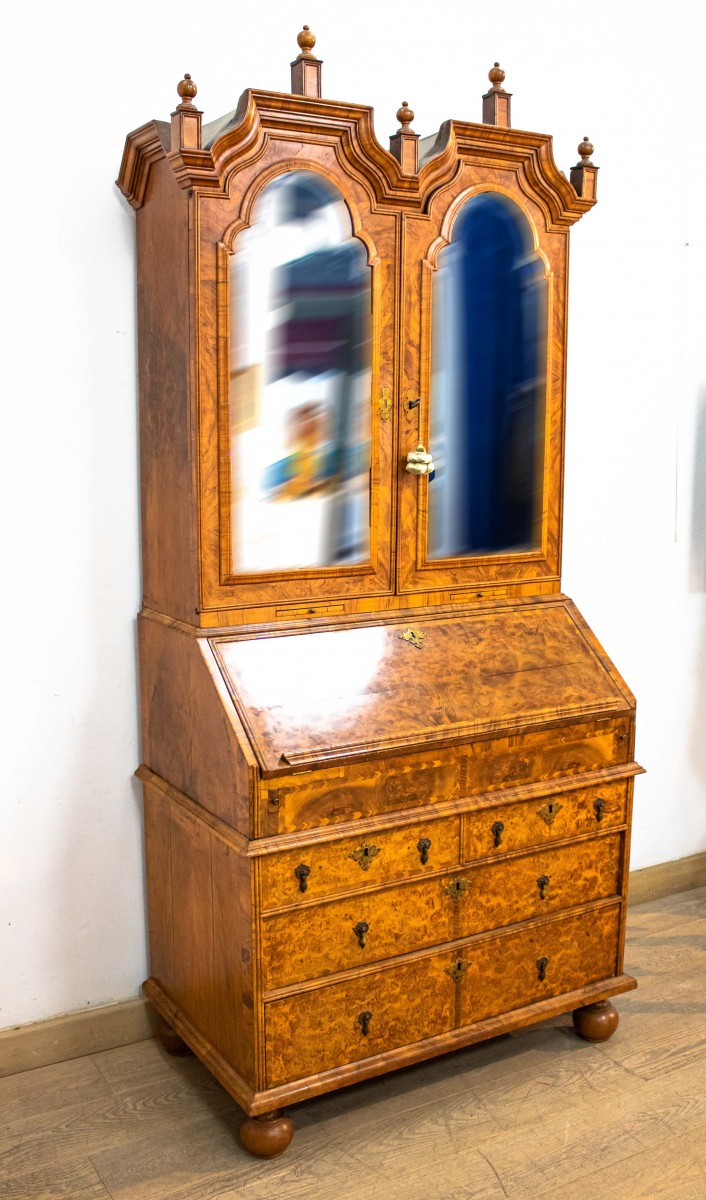
Trumeau / Bureau Bookcase
Walnut burl, 240 x 100 x 60 cm
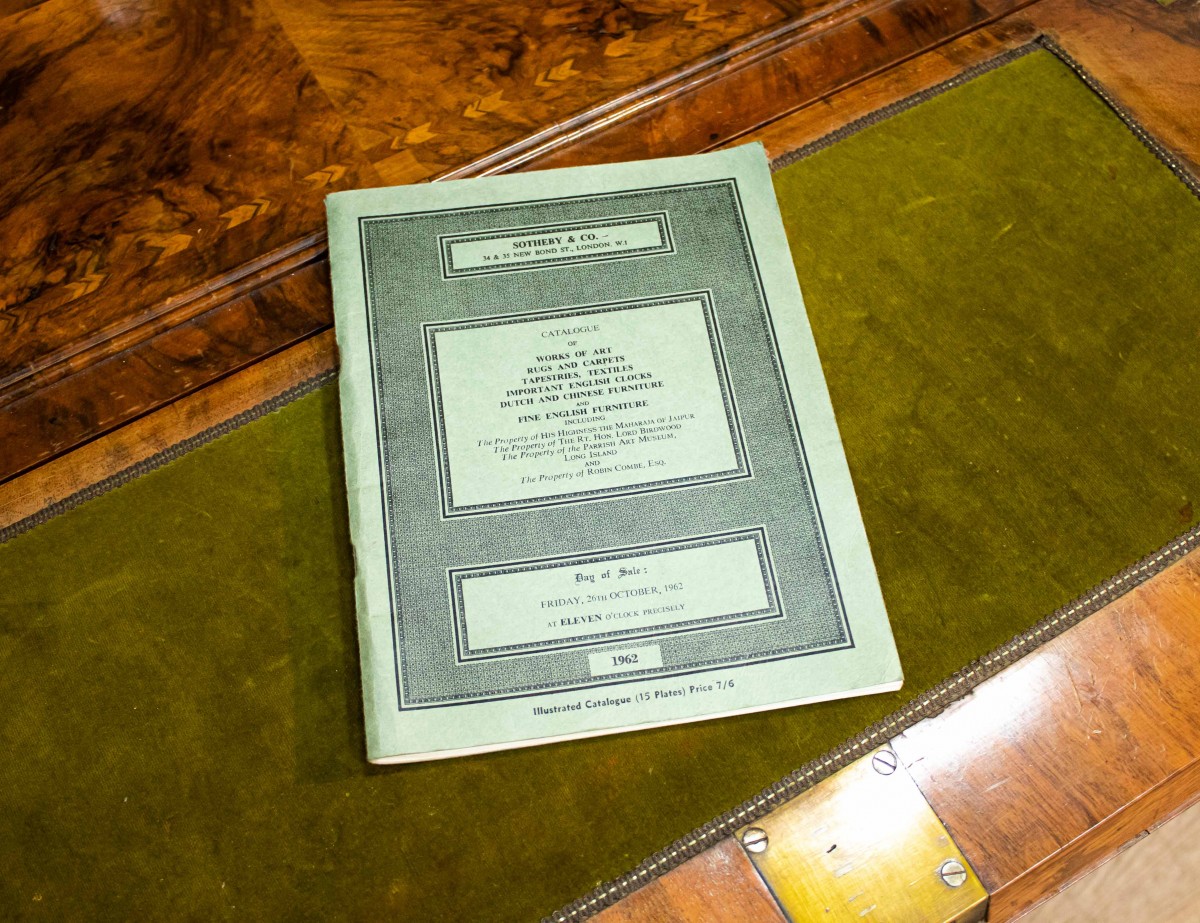
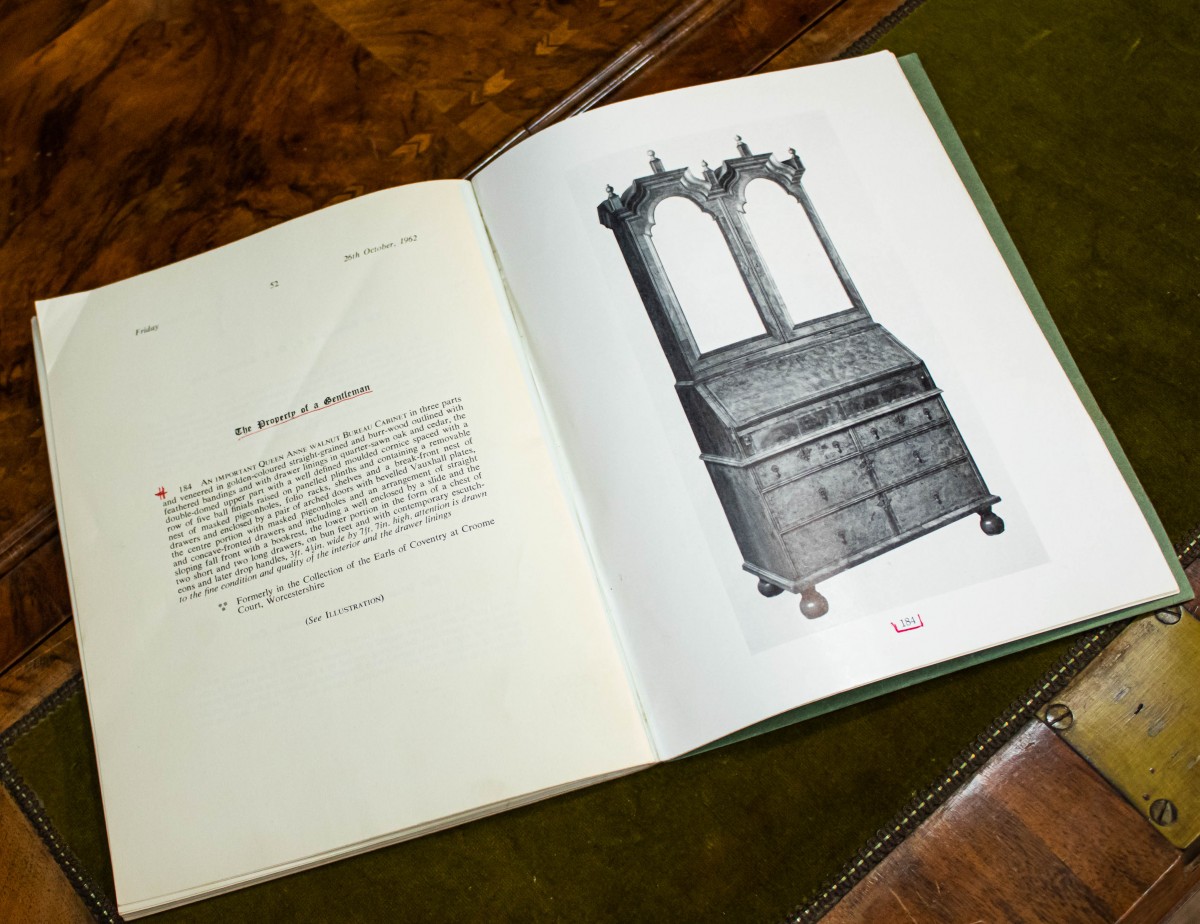
Collection of the Duke of Coventry at Croome Court, Worcestershire
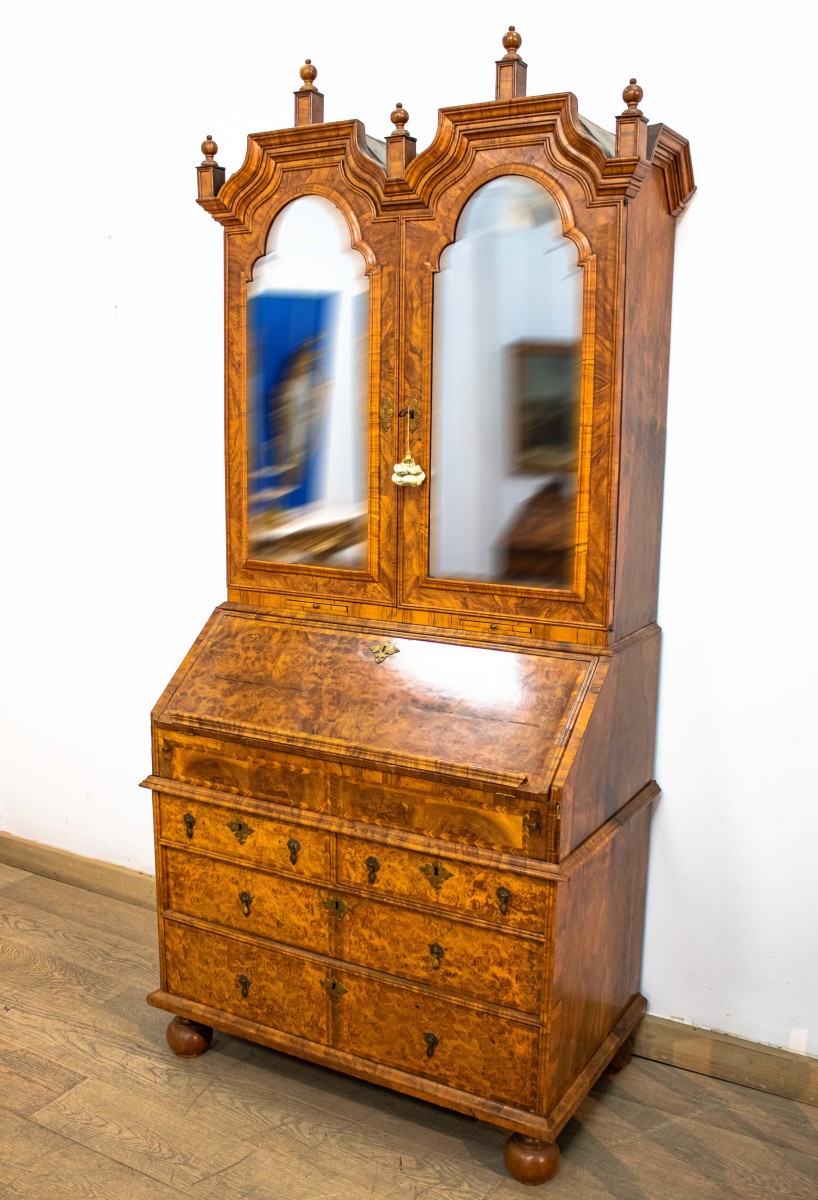
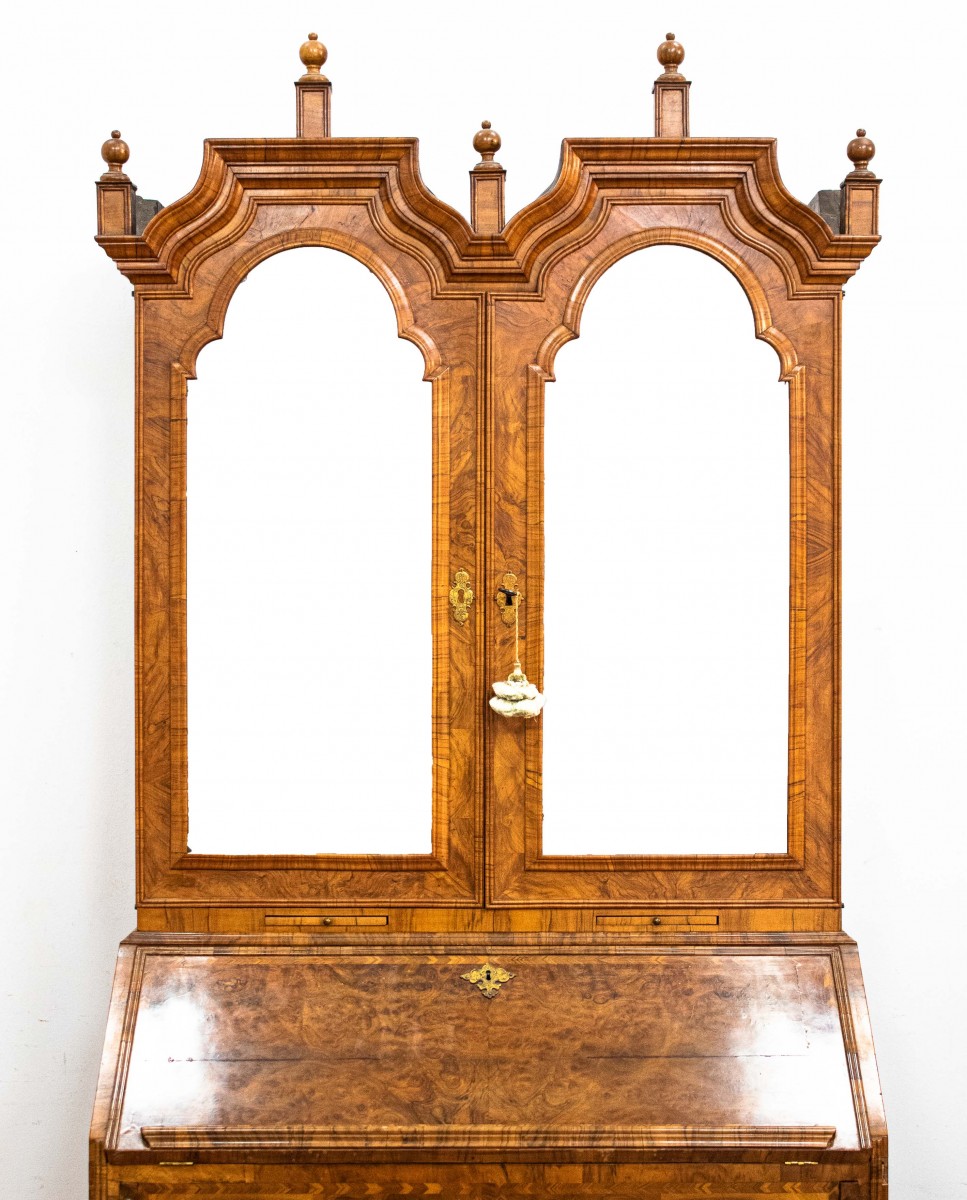
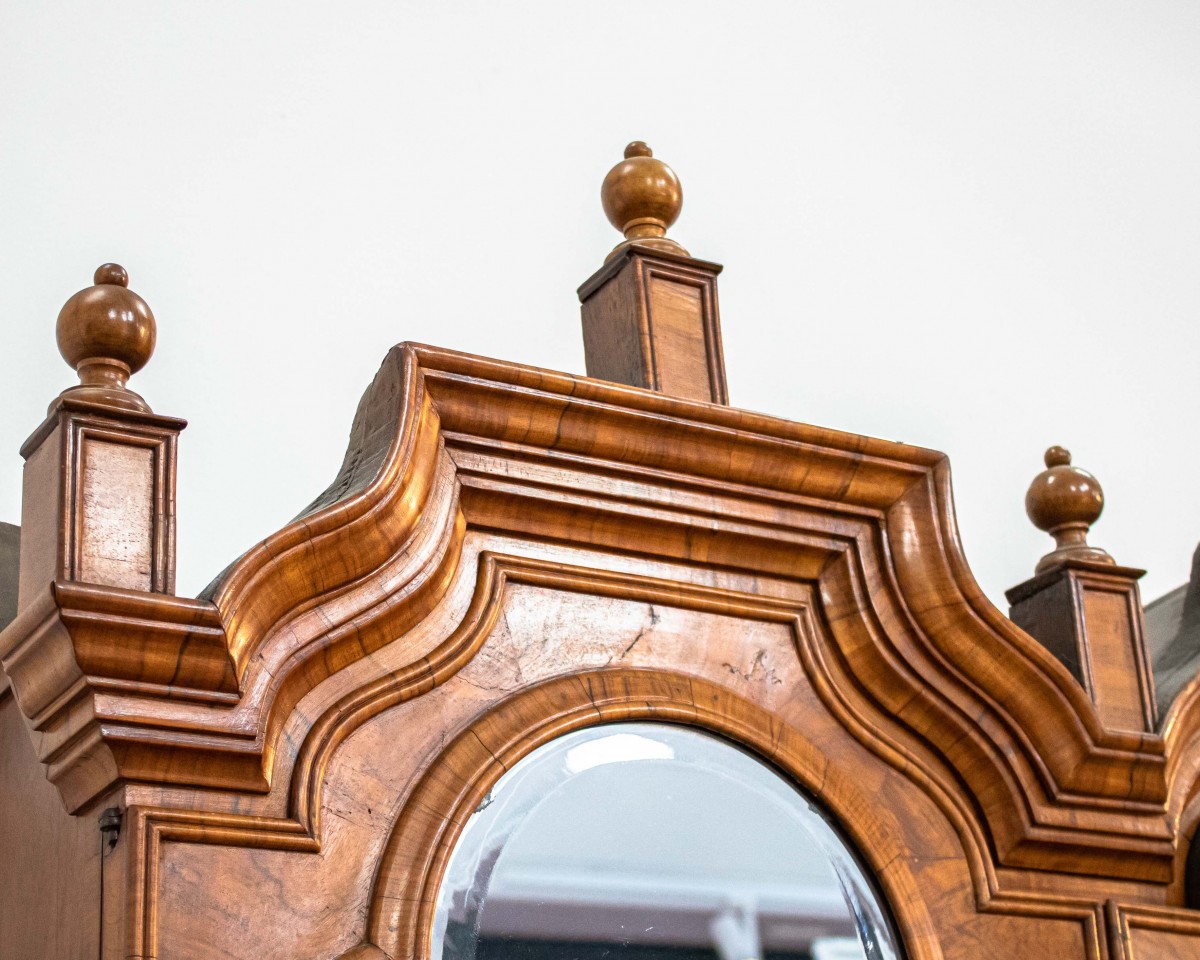
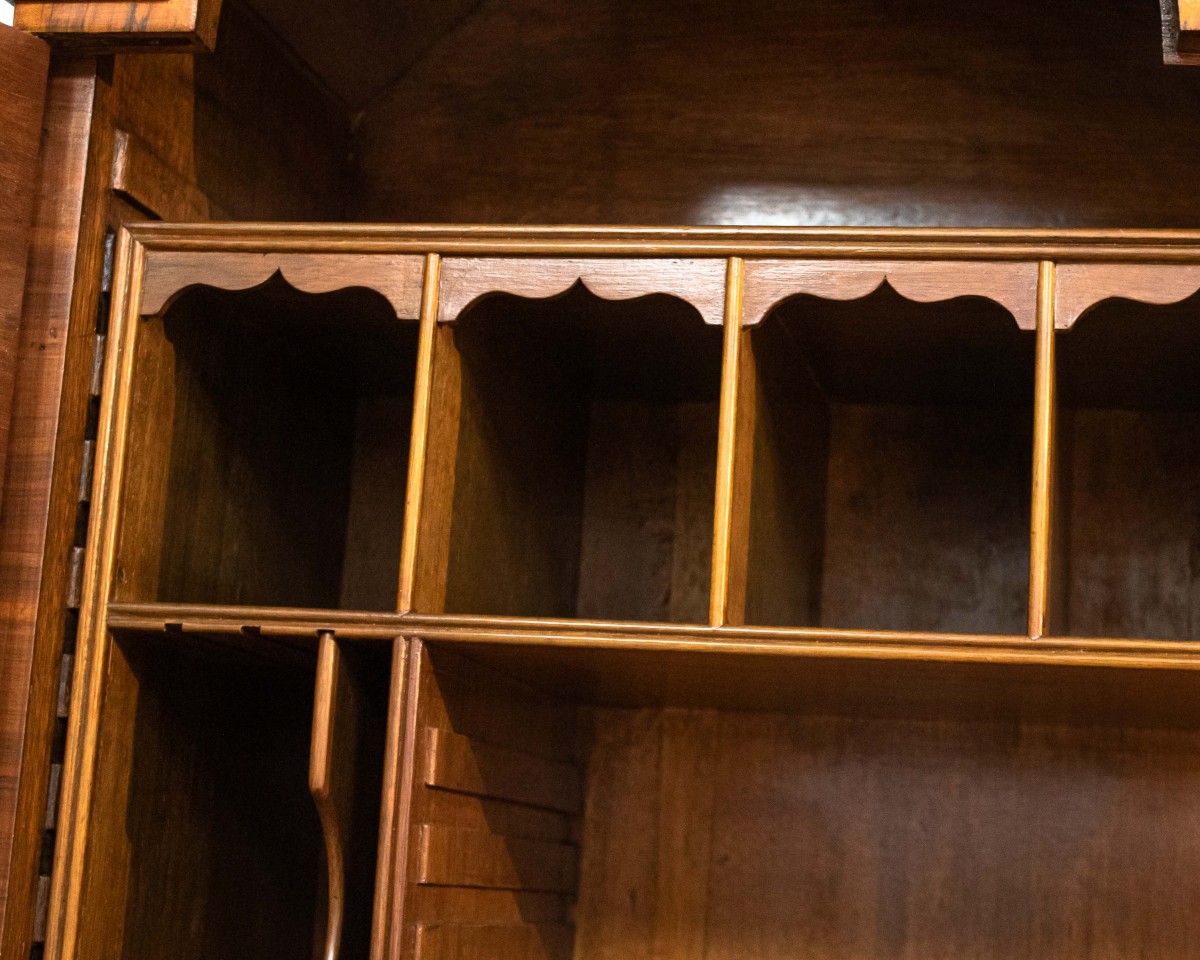
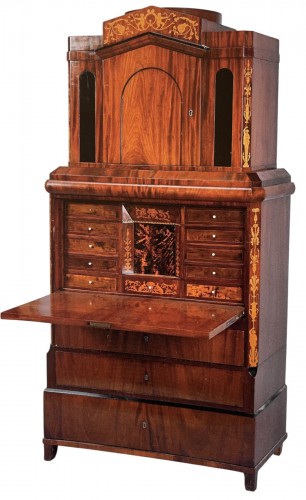
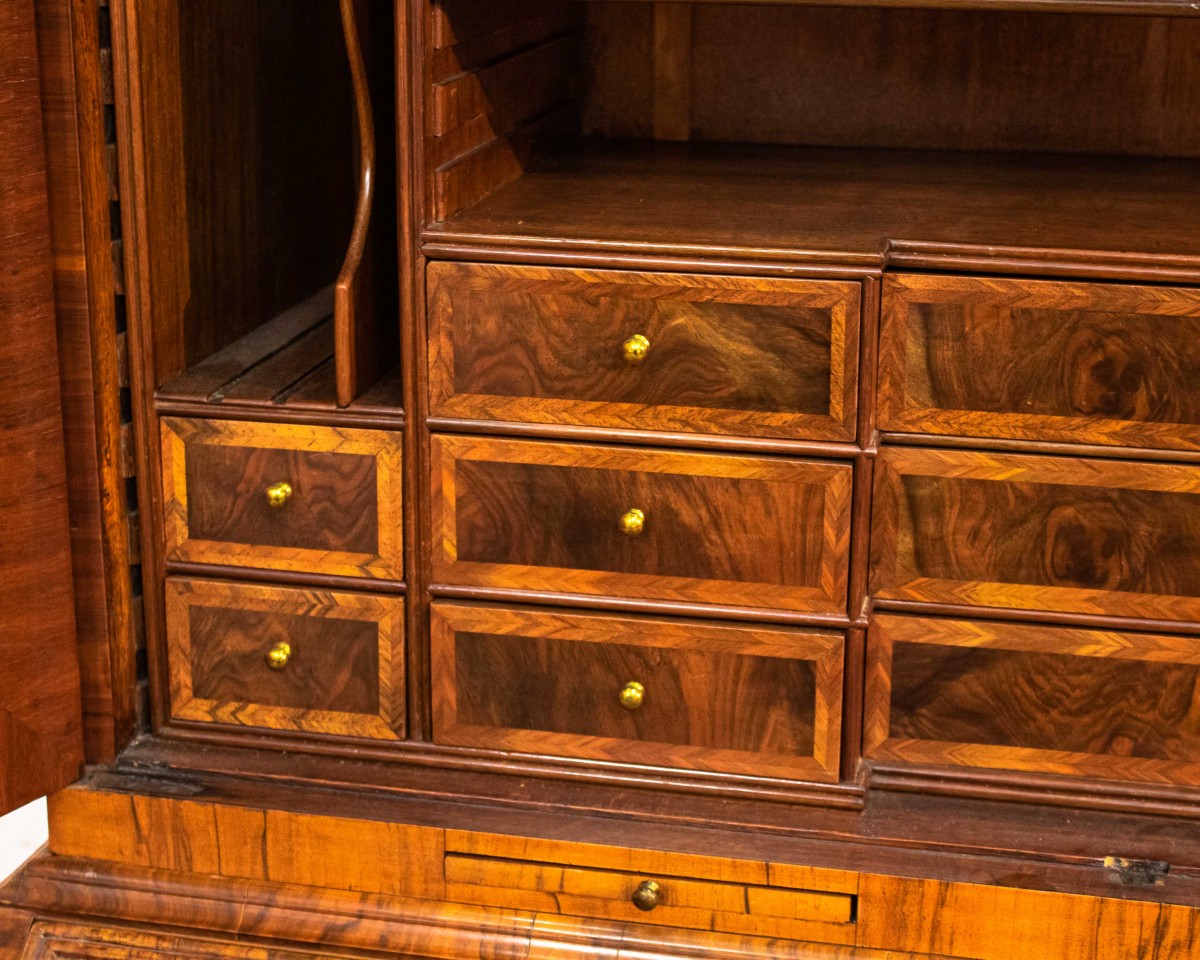
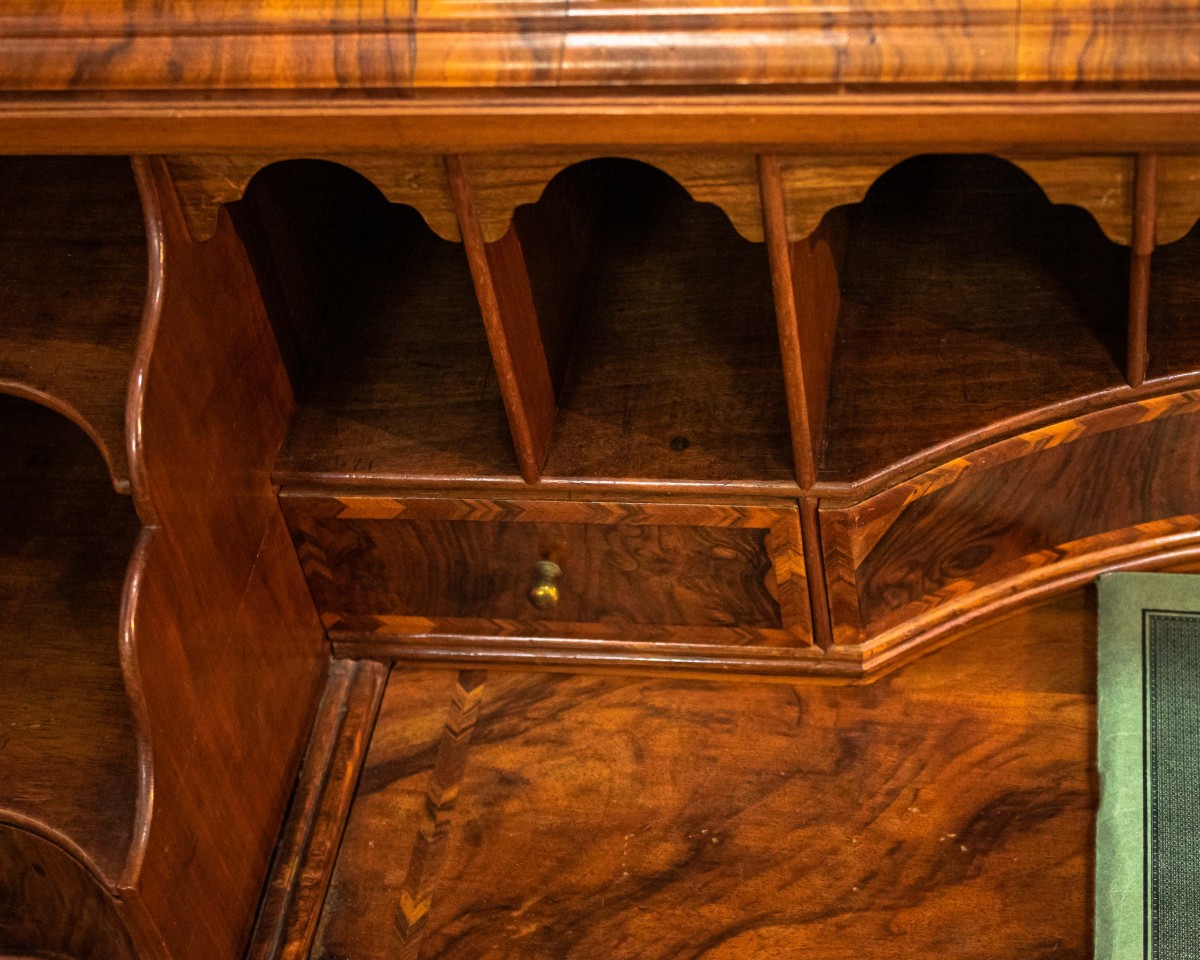
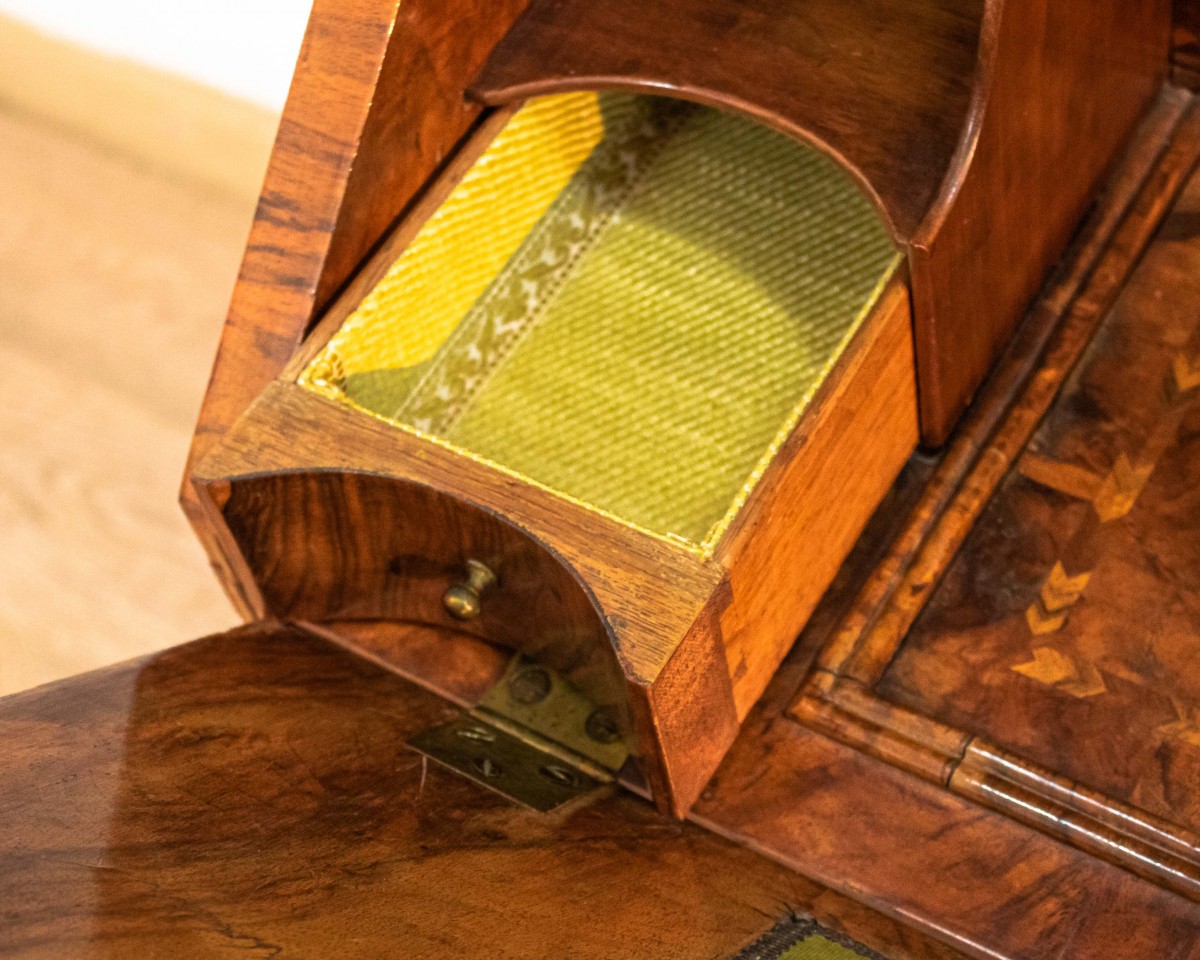
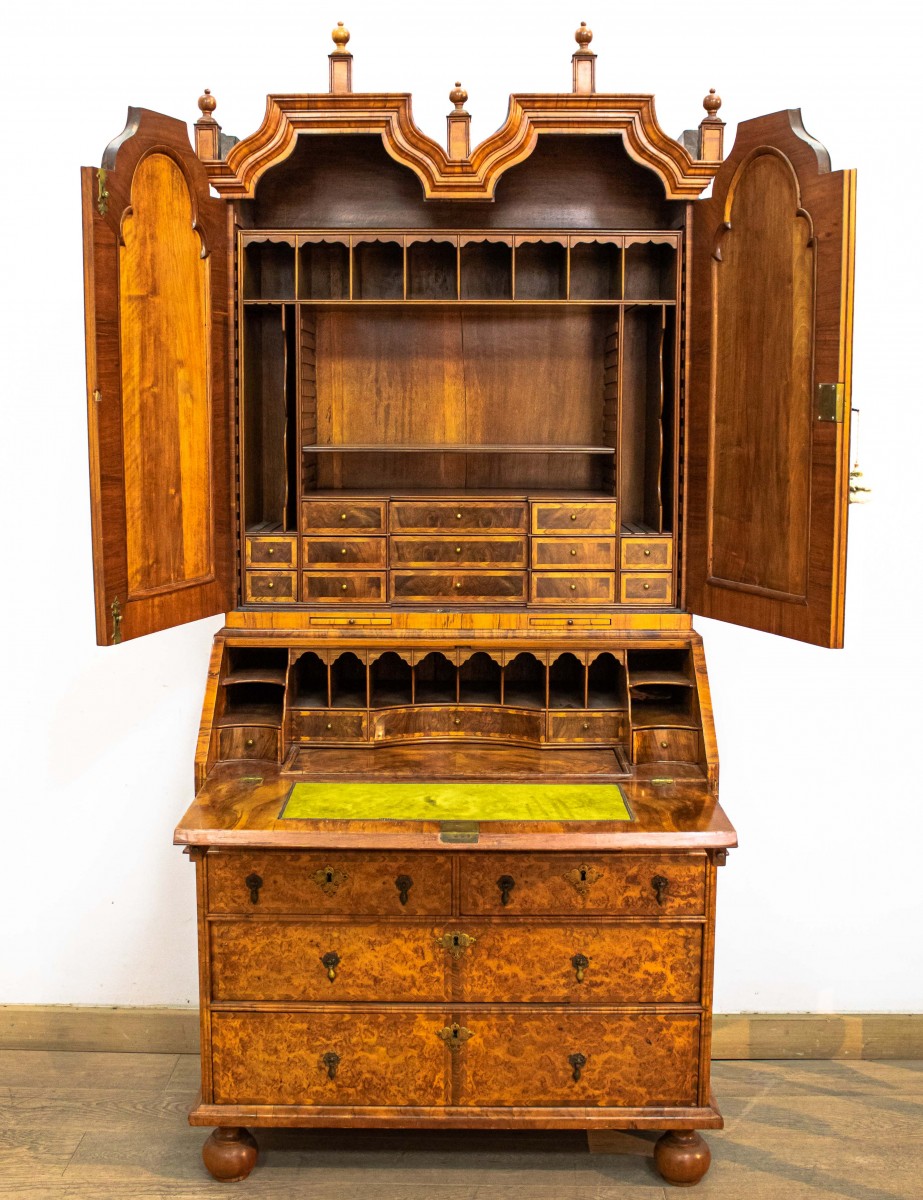
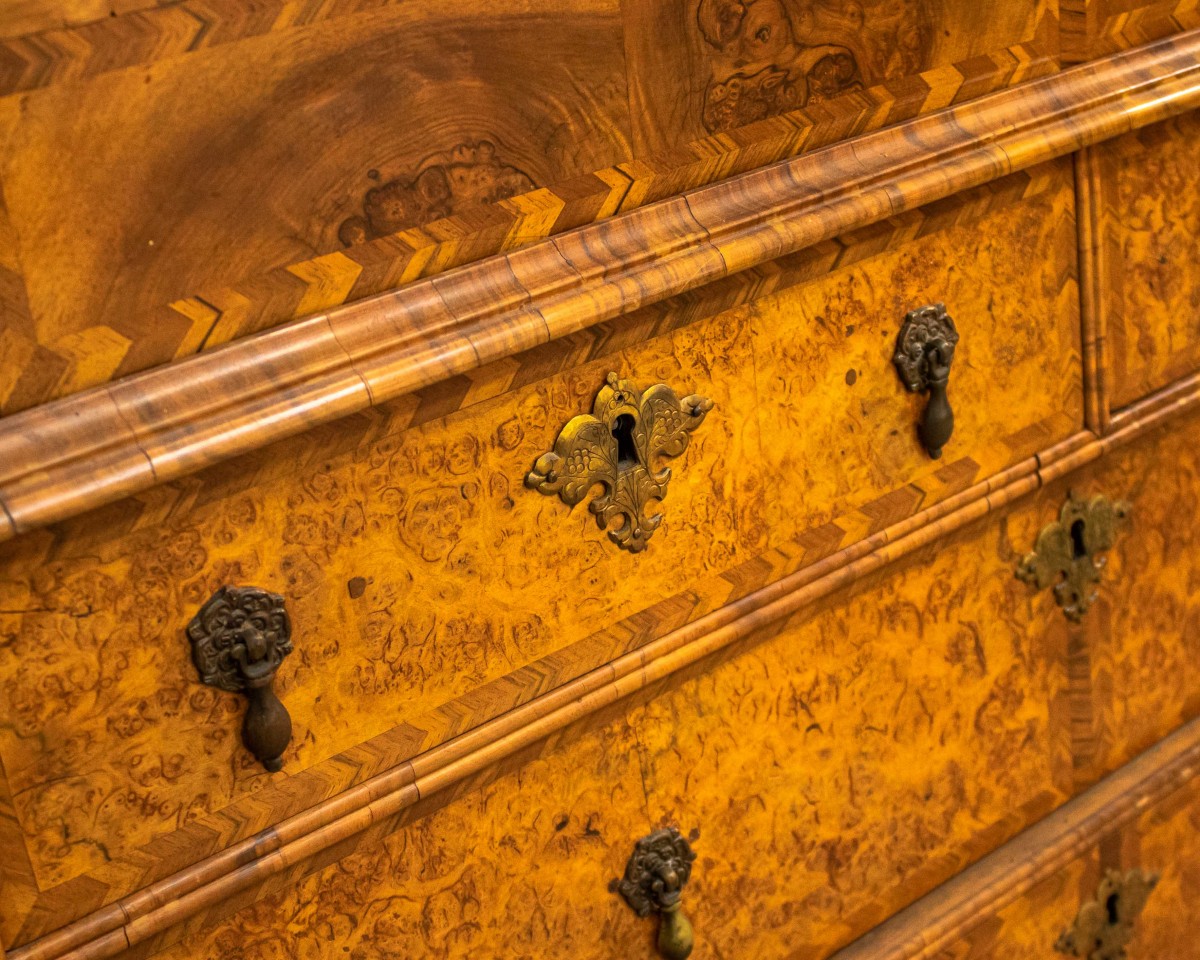
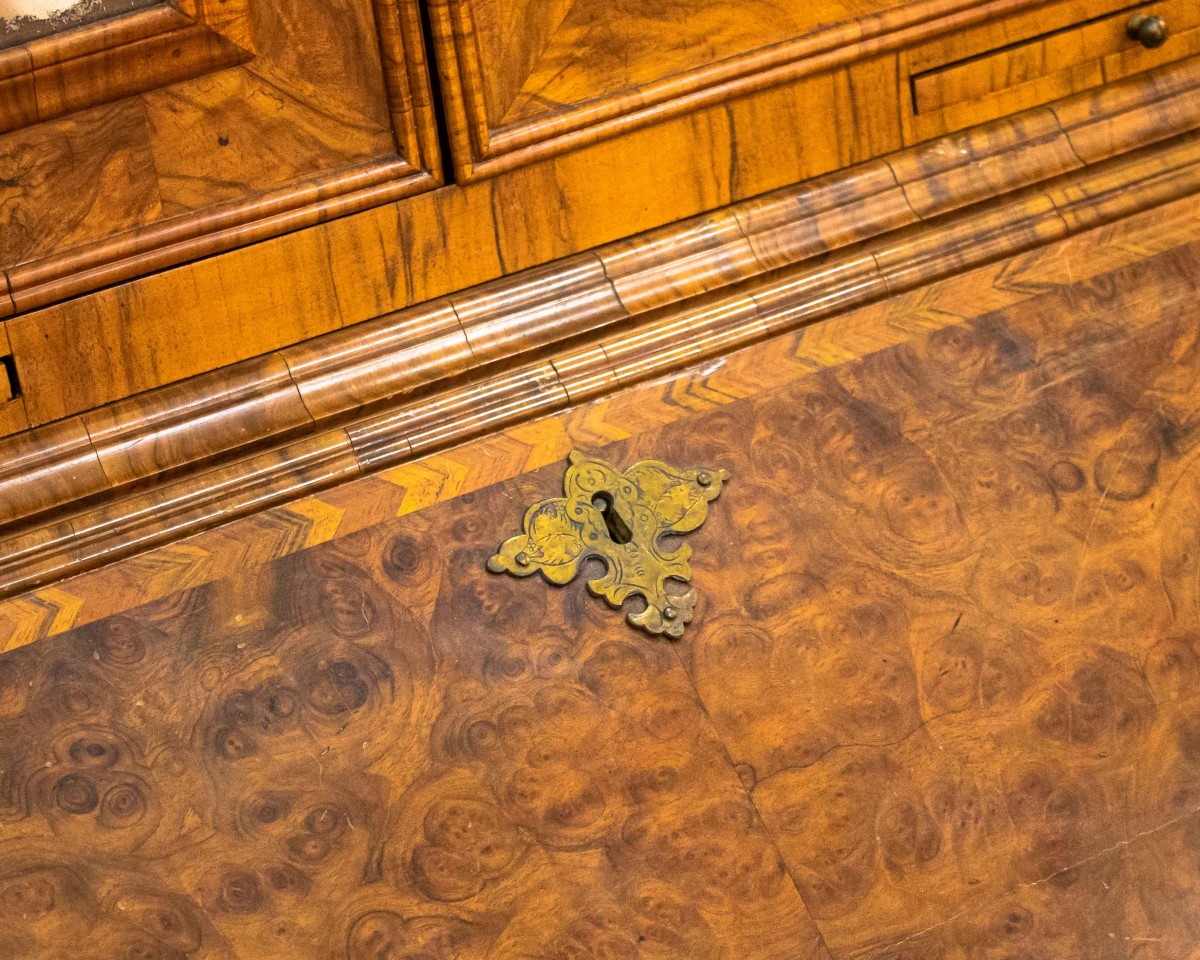
An important Queen Anne style secretary cabinet, dating to approximately 1815, elegantly testifies to the taste for the revival of 17th-century English styles that characterized early 19th-century Britain. Composed of three distinct sections, the piece is fully veneered in straight-grained walnut and fine gold-toned walnut burl, adorned with refined feather banding; the drawers are lined internally with oak and cedar, woods chosen not only for their durability but also for their characteristic scent that protected linens and paper from insects. The upper double-dome section is distinguished by a molded cornice with a sinuous, well-defined profile, surmounted by a row of five ball finials topping panel-front pedestals. This cresting encloses a highly complex internal compartment structured with concealed secret compartments, small drawers with straight and concave fronts, document holders, and shelves designed for the orderly storage of papers, letters, and valuables. Access to this cabinet is provided by a pair of arched doors embellished with Vauxhall-style bevelled mirror plates, which, when opened, reveal the intricate internal architecture—a veritable mini-theater of drawers and niches. The central section, functioning as a writing desk, also features secret compartments and a dense arrangement of drawers with alternating straight and concave fronts. Among these, a compartment enclosed by a sliding panel stands out, along with the desk surface itself: a slant-front drop-down flap that, once lowered, provides a comfortable writing slope and conceals additional small compartments for organizing correspondence. The lower section consists of a chest of four drawers—two short in the upper tier and two long below—resting on bun feet typical of the 17th-century English tradition later revived in the 19th century. Furniture of this type, known in Britain as a "bureau bookcase" or "secretary cabinet," enjoyed great popularity between the late 17th and early 19th centuries, evolving from functional desk-libraries into true status symbols in the homes of aristocratic families and the wealthy bourgeoisie. A detail of particular historical significance concerns the provenance of this piece, which was part of the collection held at Croome Court in Worcestershire, the historic seat of the Coventry family. Around 1815, the residence was inhabited by George William Coventry, 7th Earl of Coventry, who served as Lord Lieutenant of the county from 1808 to 1831. Croome Court, a Neo-Palladian masterpiece designed by Lancelot "Capability" Brown for the 6th Earl with interior collaborations by Robert Adam, was at the time one of England's most celebrated country houses, and its furniture collection reflected the taste and cultural wealth of the resident family. Belonging to such a context imparts to this trumeau a significance that transcends mere craftsmanship, embedding it within the material history of one of Britain's great noble dynasties.
Delevery information :
Les frais d'expédition seront calculés au moment de la commande en fonction de la destination, des dimensions et du poids du tableau, ainsi que de l'assurance couvrant la valeur totale de l'œuvre.
For paintings purchased from abroad: following payment, the application process to obtain the export license (ALC - Attestato di Libera Circolazione) will be initiated. All antiques shipped abroad from Italy require this document, which is issued by the Ministry of Cultural Heritage. The procedure may take 3 to 5 weeks from the date of request; therefore, the painting will be shipped as soon as the document is obtained