Offered by L'Egide Antiques
REQUEST INFORMATION

Porcelain, Scuptures, paintings and european Fine Arts, 18th and 19th century
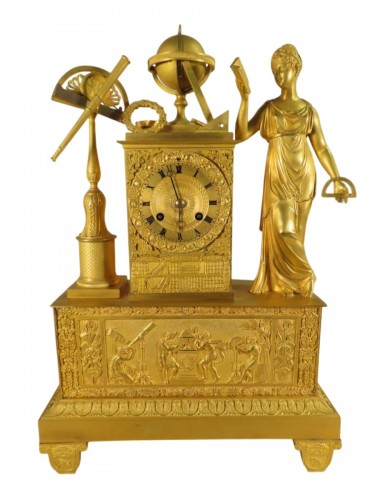
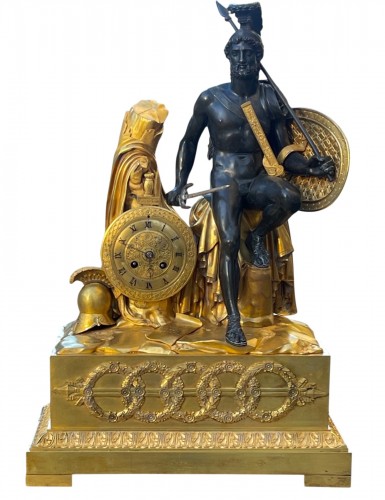
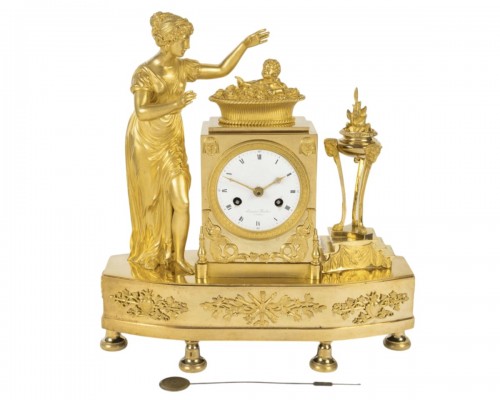
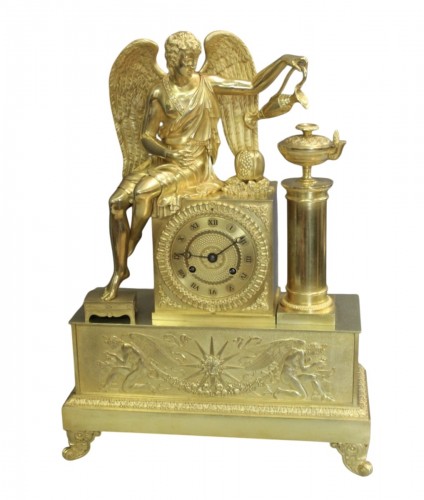
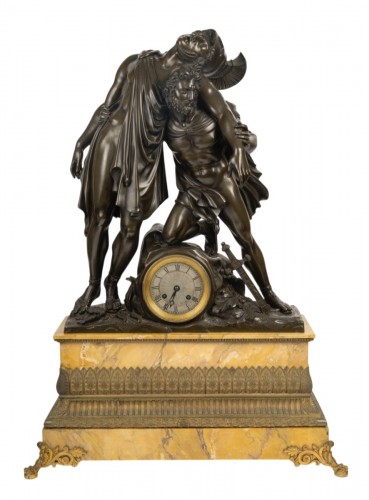
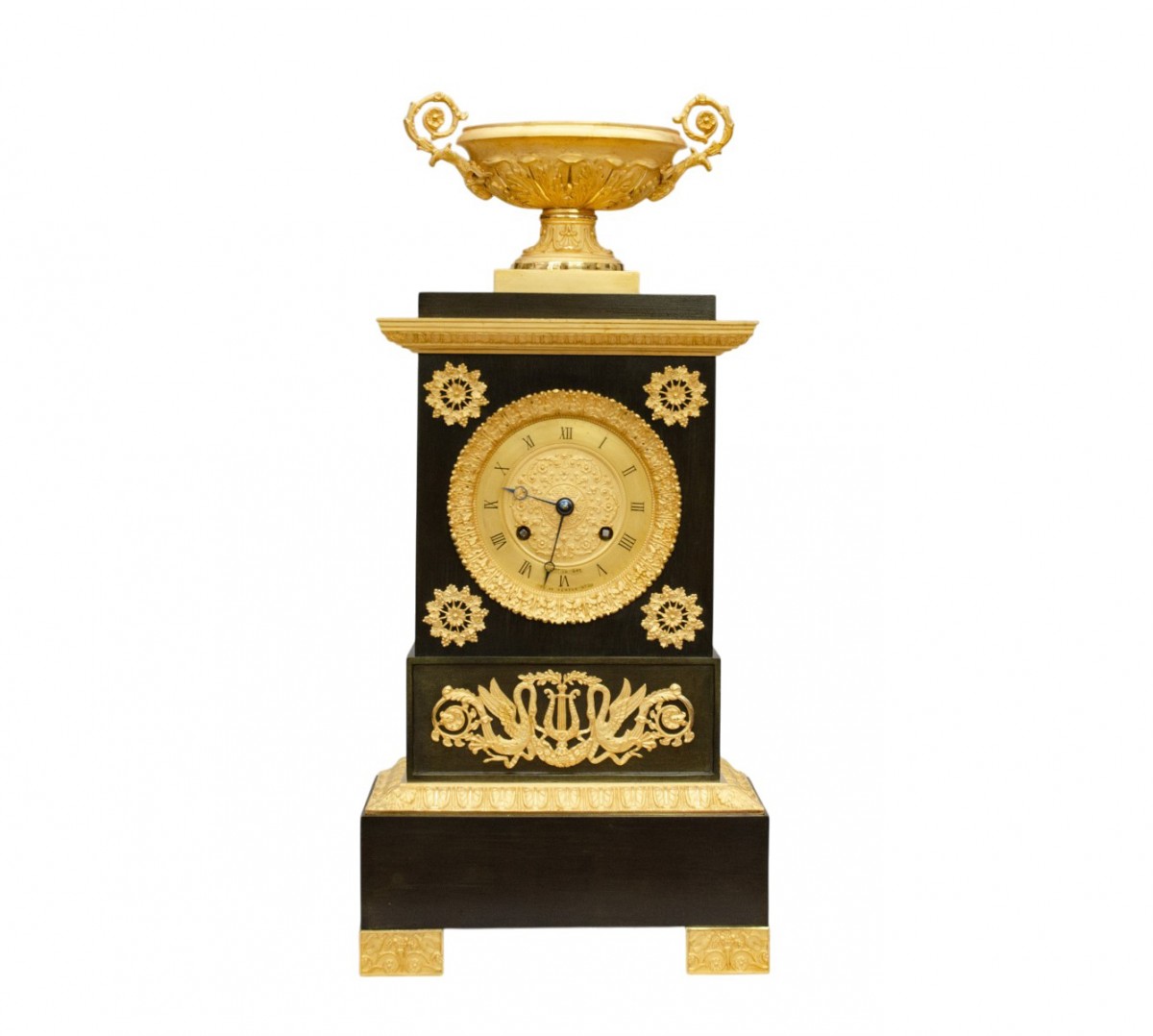
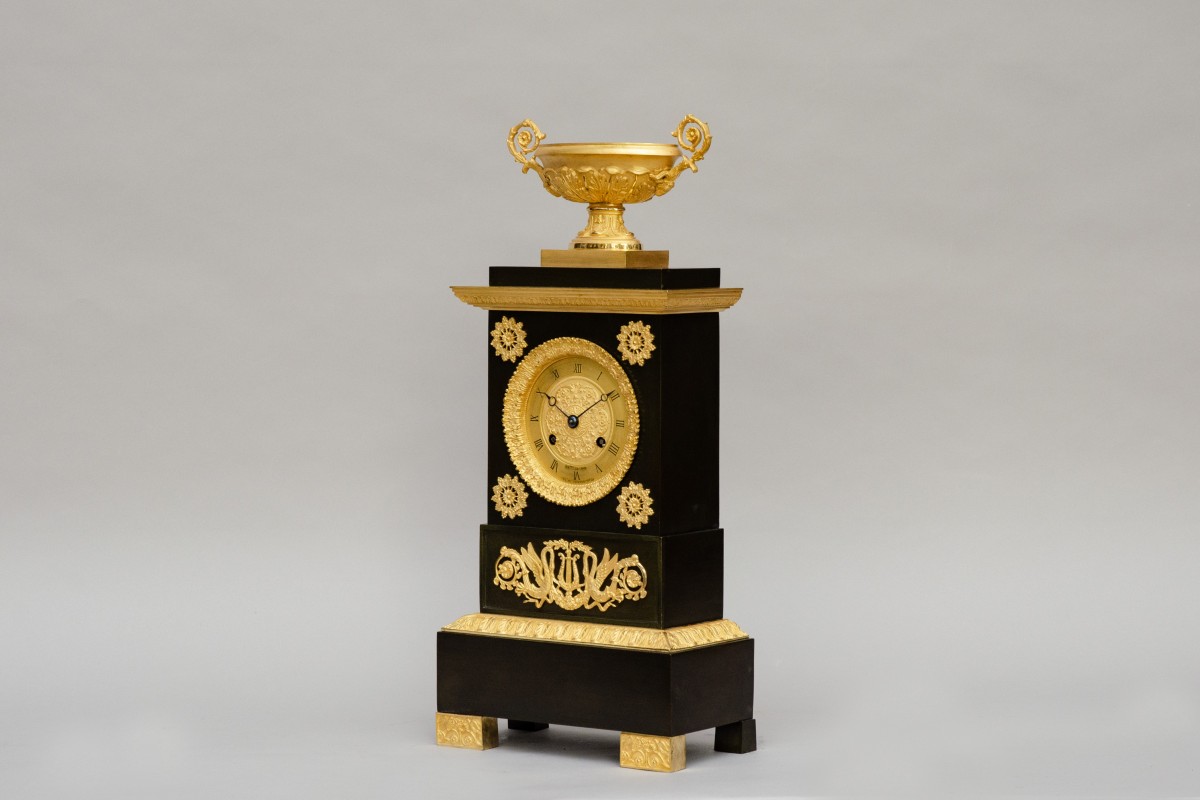
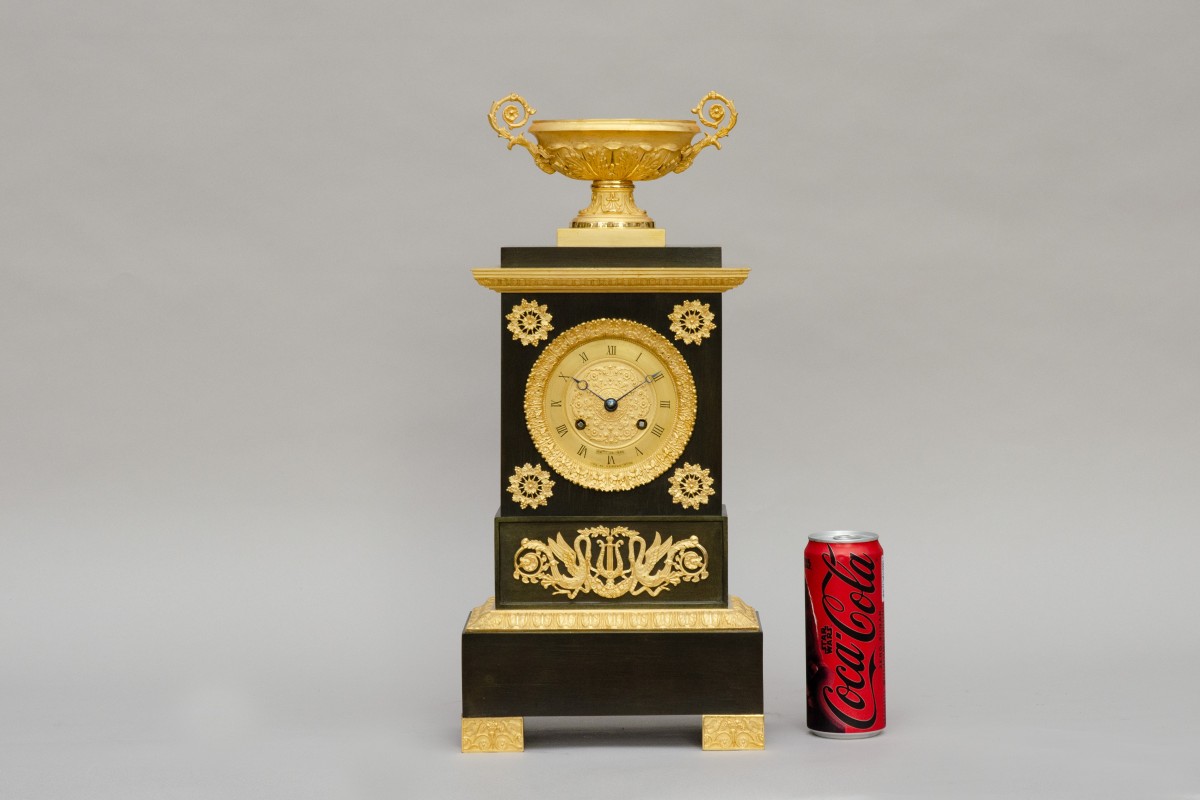
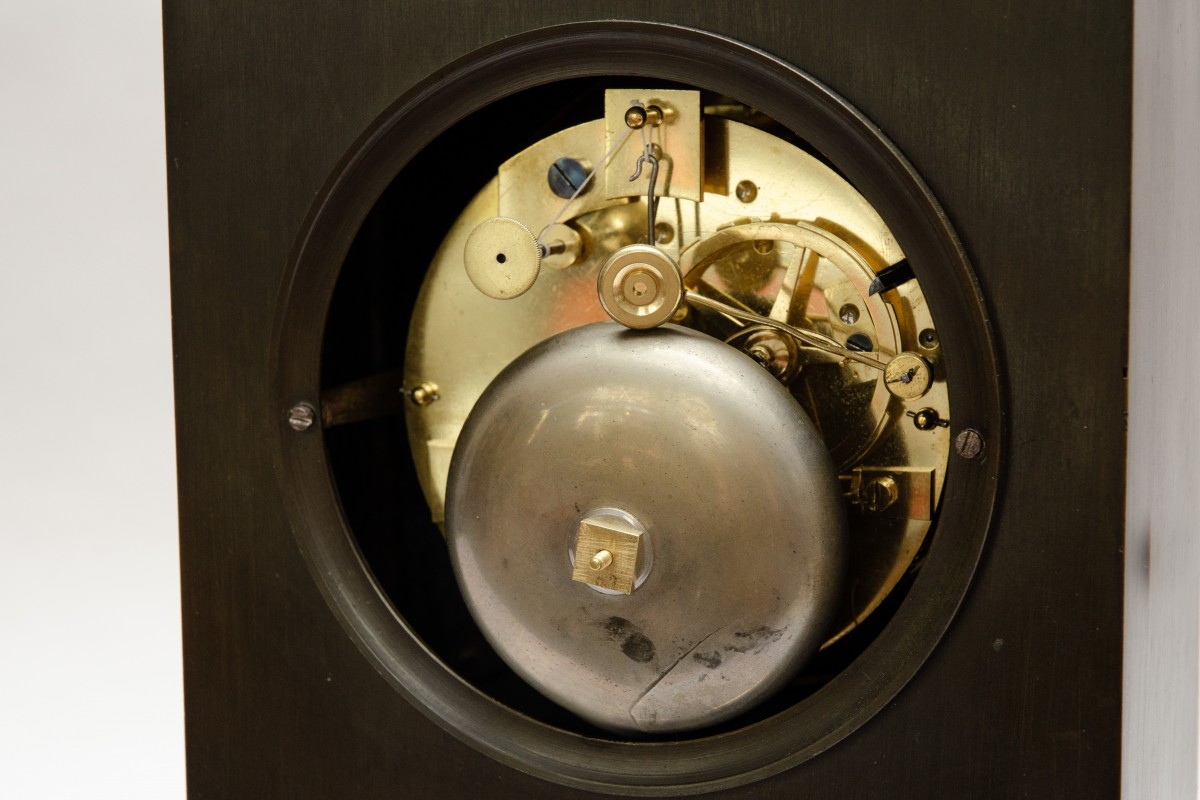
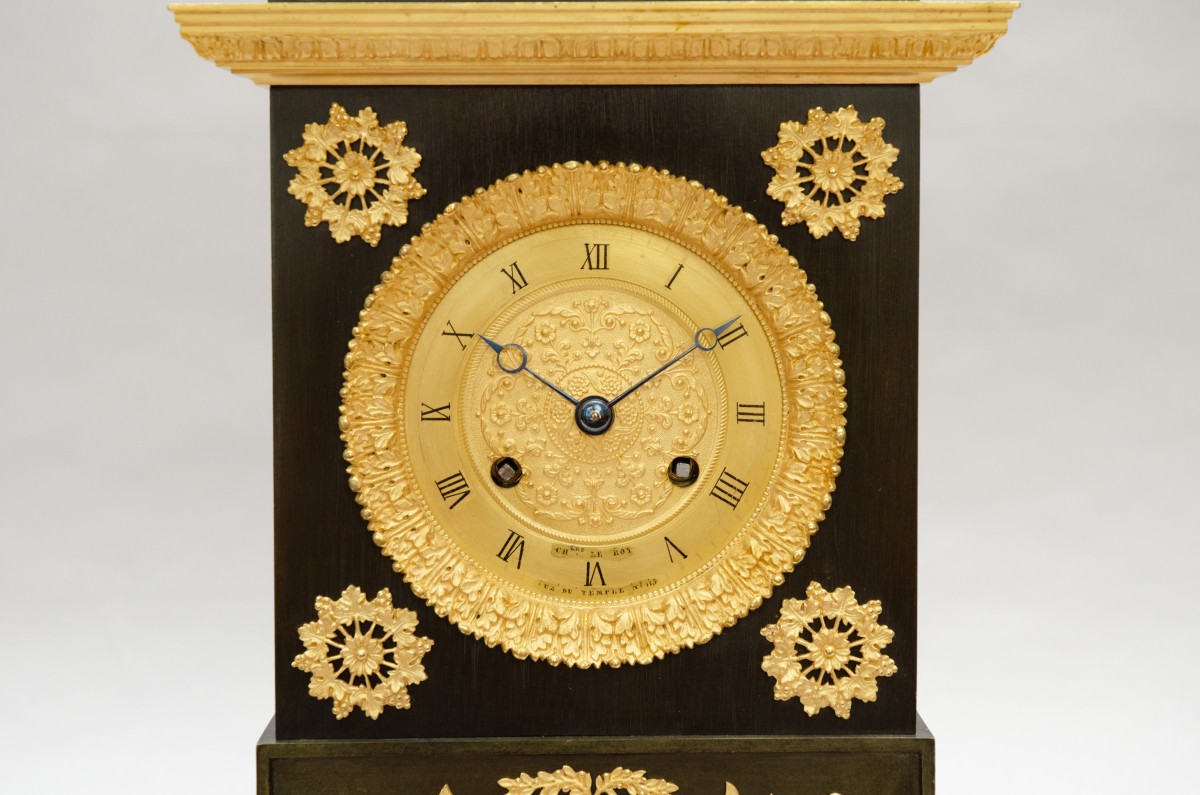
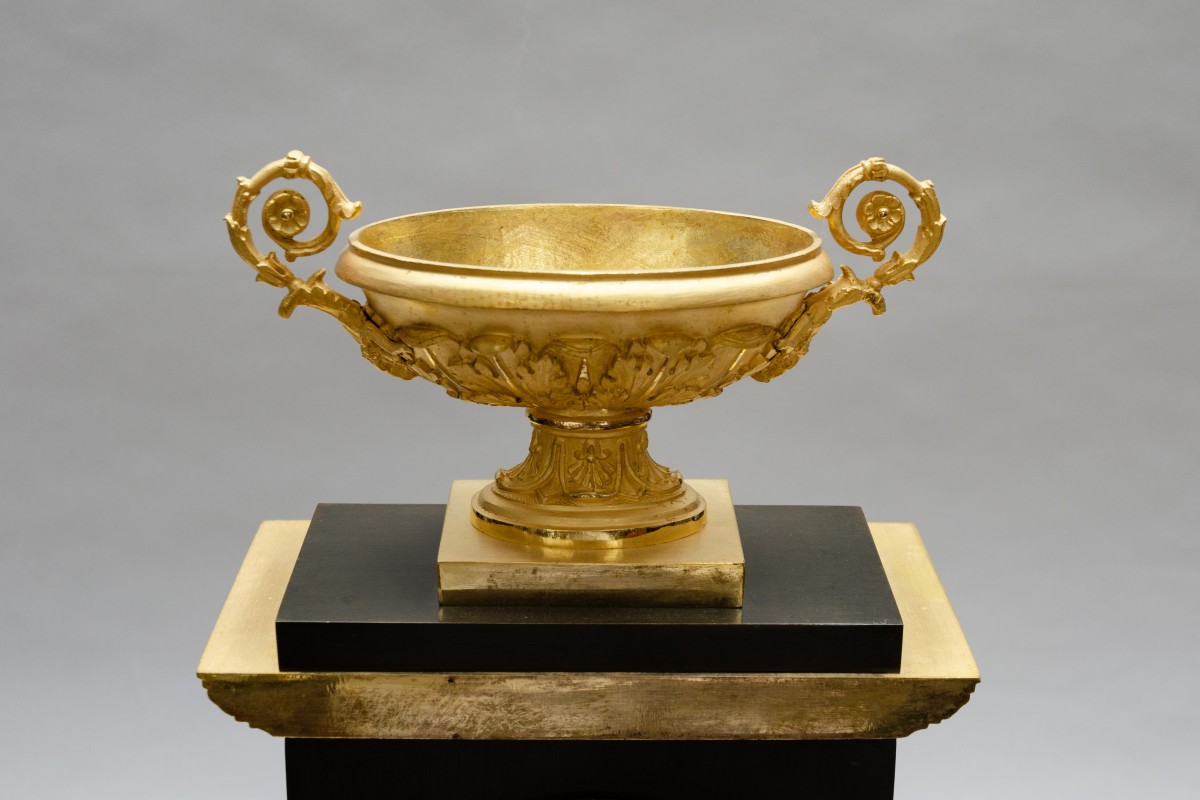
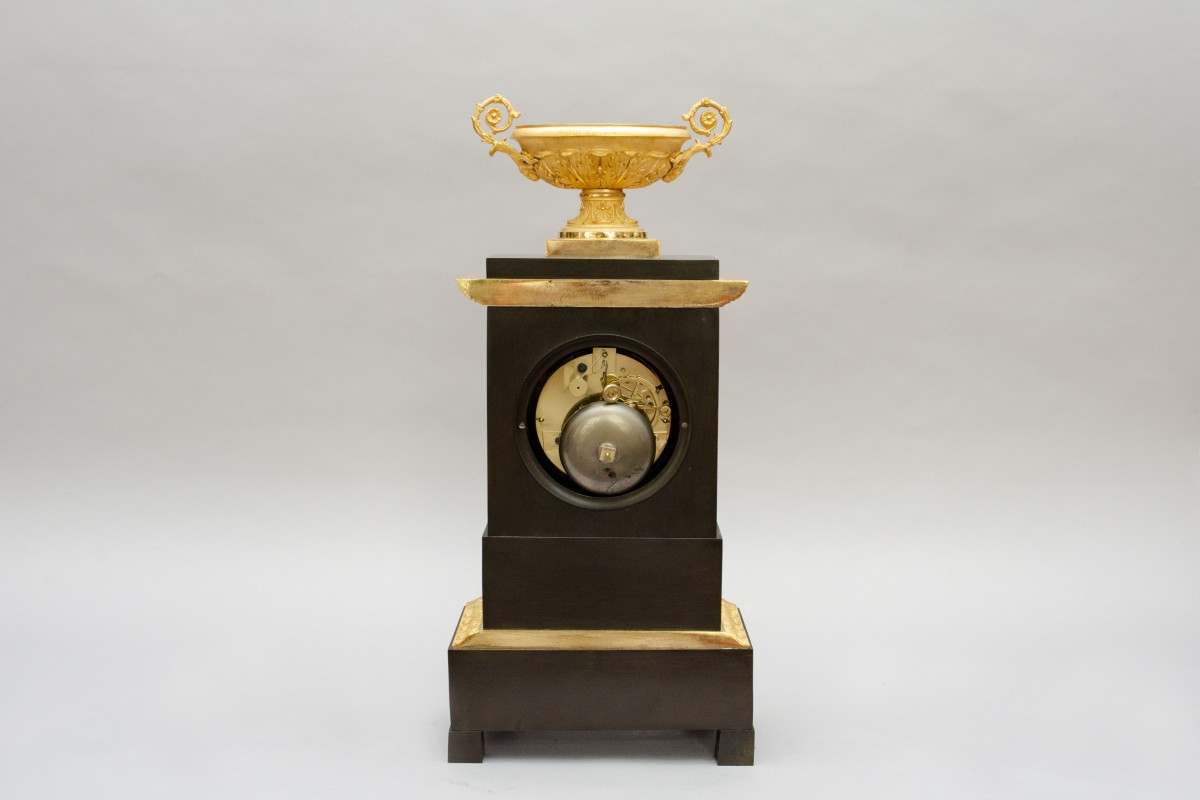
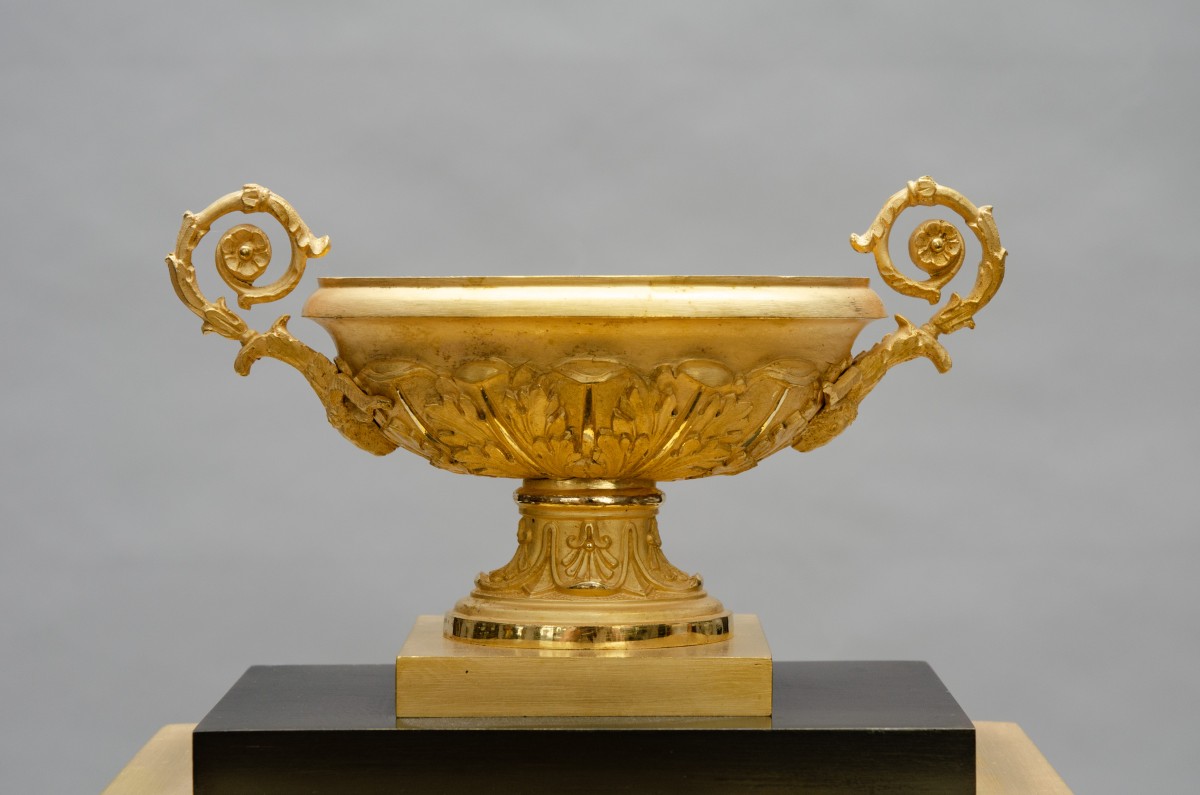
An elegant bronze clock, entirely finished with a double patina: black for the large architectural panels, and gilded with mercury for the ornamentation, in the late Neoclassical style. The gilt bronze dial, surrounded by a broad crown of chiseled foliage and radiating “fleurons” at the corners, displays the hours in Roman numerals and rests on a base adorned with a motif of facing swans framing a lyre; a musical and poetic theme much favoured in the decorative repertoire of the Restoration period. The rectangular plinth, accented by a frieze of godrons and resting on feet featuring mask motifs, supports the whole with balance, whilst an elegant bowl with curled handles, chiseled with acanthus leaves, crowns the composition. The string-wound movement has been completely dismantled, cleaned and serviced by our master clockmaker; it now functions perfectly and strikes the hours and half-hours on a gong.
Size: H 48 cm — plinth 21.5 x 10 cm
Paris, Charles Leroy, 115 Rue du Temple, c. 1810–1830.
Lit: Charles Prosper Leroy was a Parisian clockmaker active on Rue du Temple between 1810 and 1830, at the height of the Restoration period. He was one of the most prominent clockmakers of his time, having had the distinguished honour of supplying clocks to Madame Mère, Letizia Bonaparte, mother of Emperor Napoleon I, as well as to the kings of France upon the restoration of the monarchy. This dual recognition – first imperial, then royal – testifies to the reputation for excellence enjoyed by his workshop, which was able to win over patrons with opposing political views through the sheer quality of his work alone. Clocks bearing the mark ‘Chles Leroy, Rue du Temple’ remain highly sought after by collectors today for the finesse of their gilded bronze and the reliability of their movements.
Delevery information :
to be agreed with the customer depending on the object and the place of destination.