Offered by Galerie Golovanoff
REQUEST INFORMATION
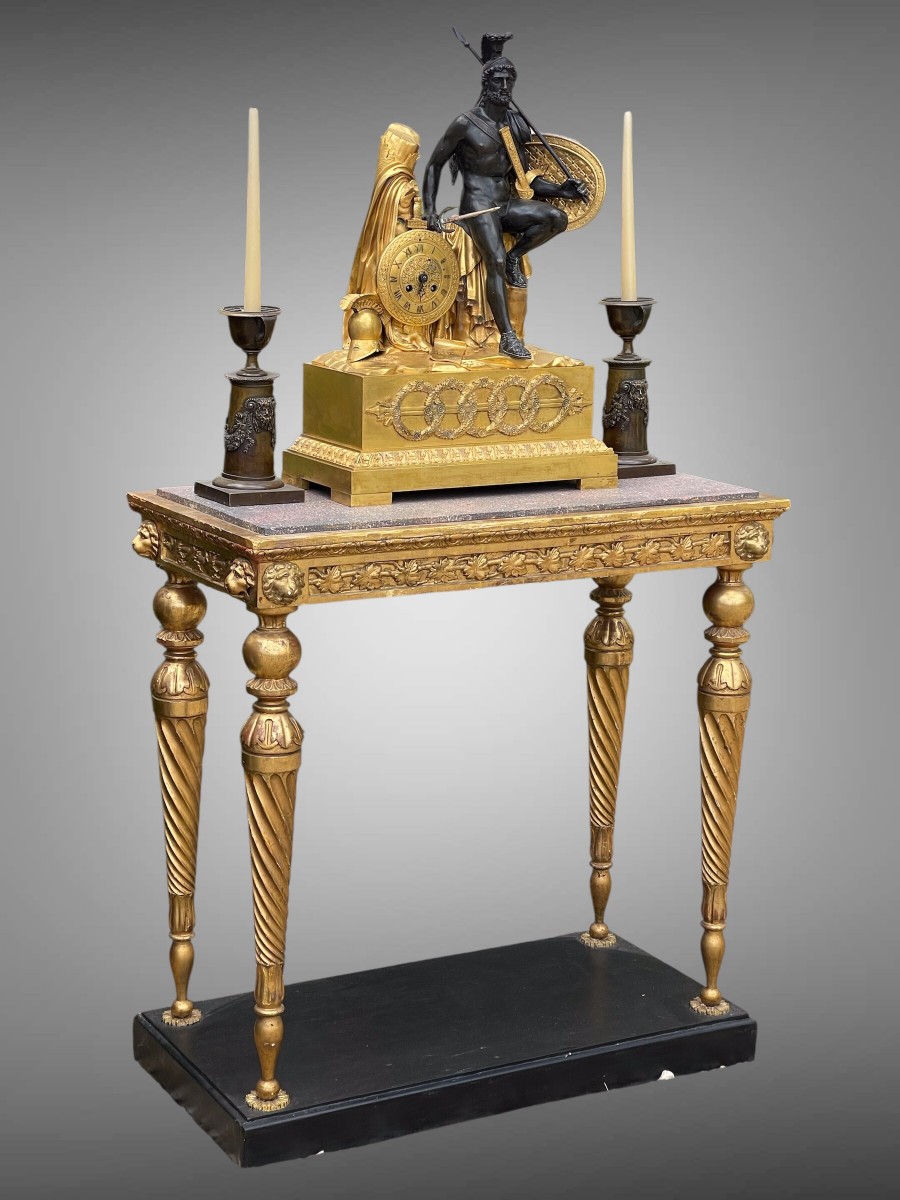

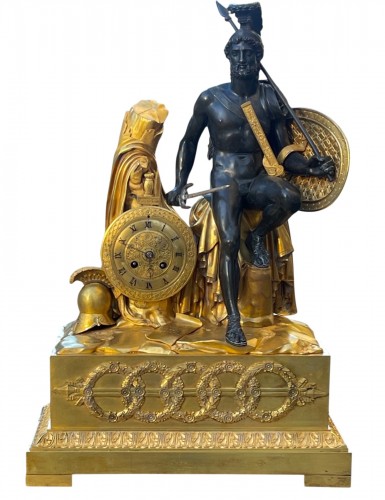
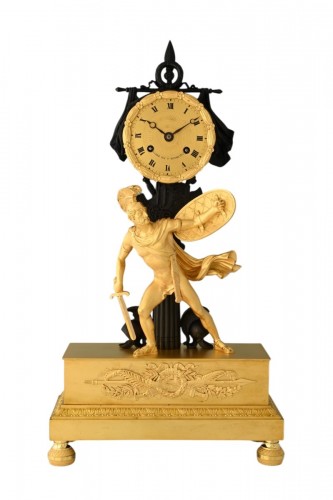
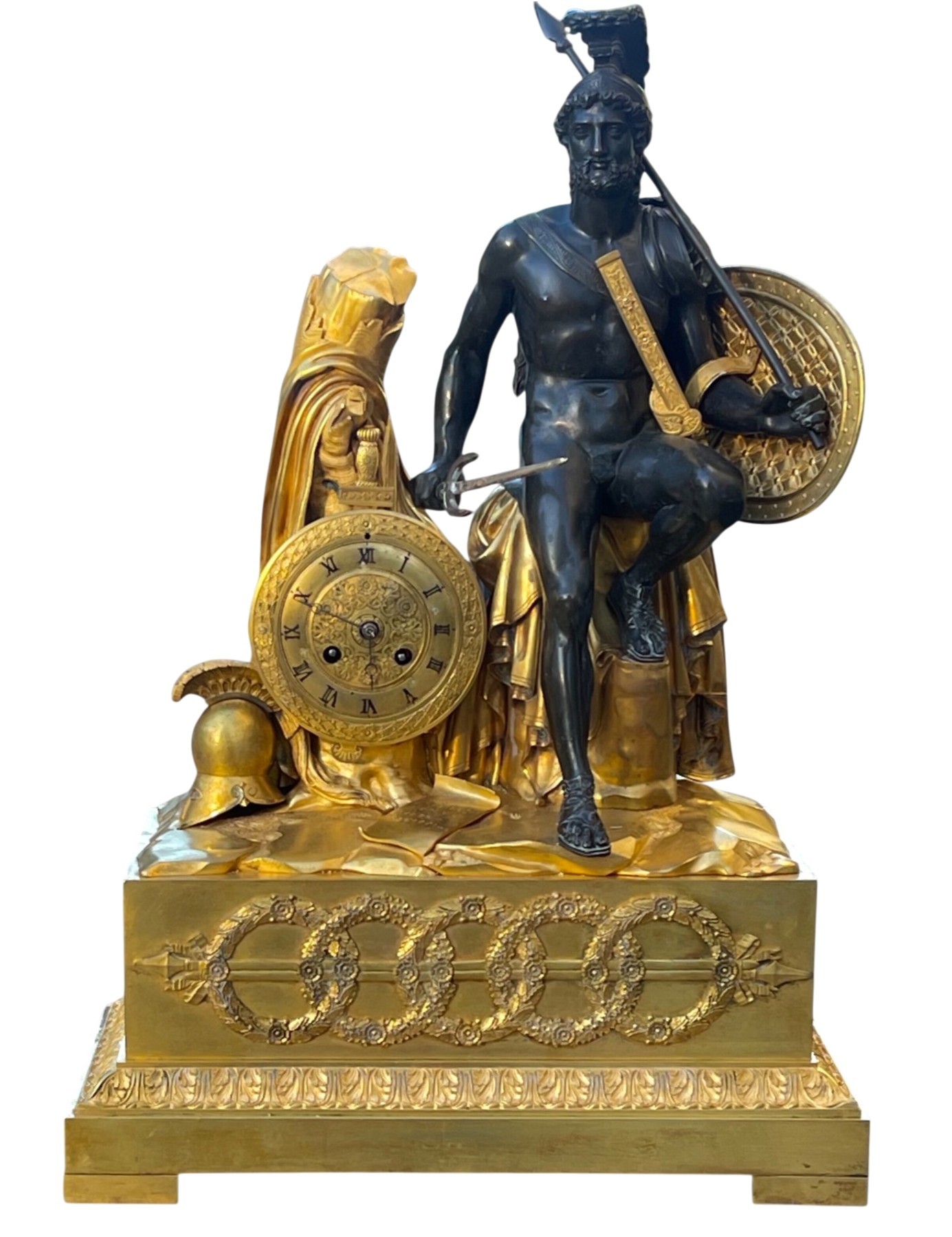
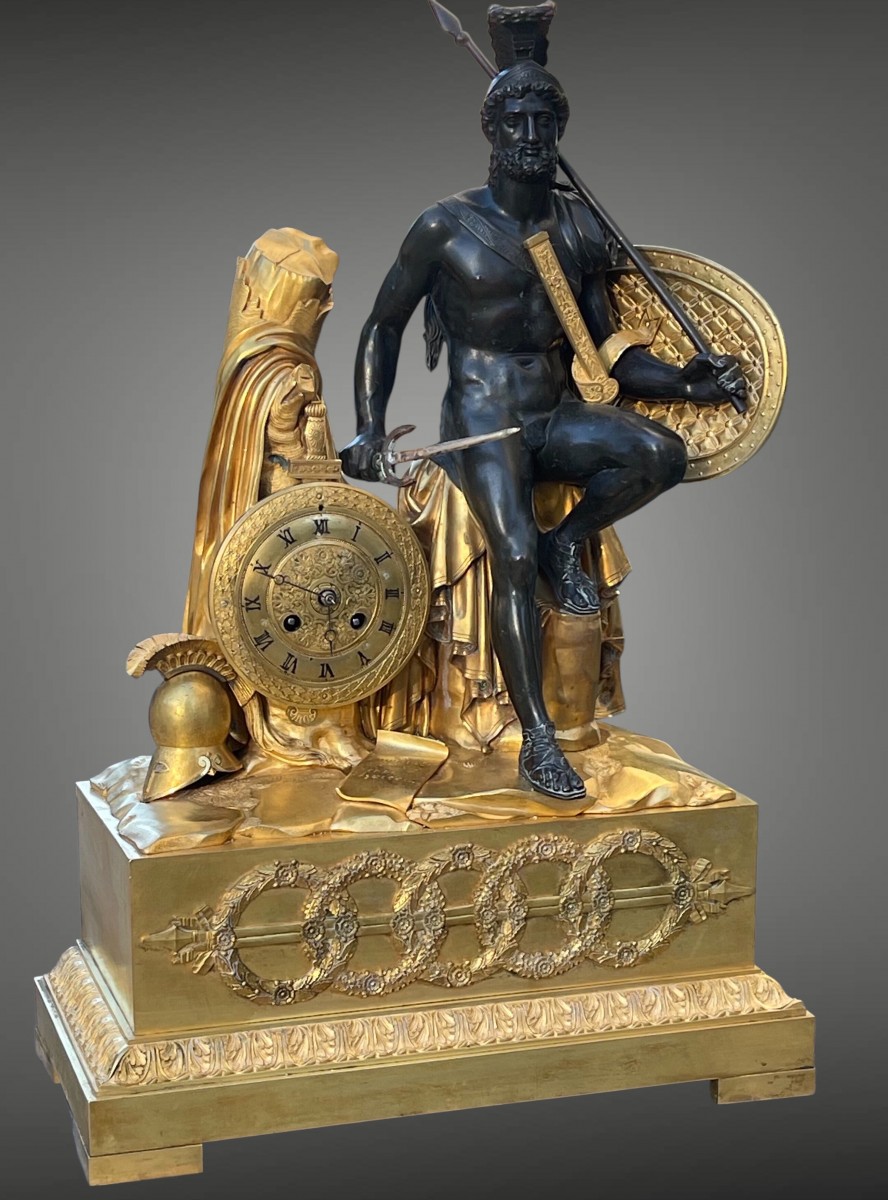
Leonidas at the Battle of Thermopylae" A magnificent clock faithful to the masterpiece by J. L. David in the Louvre."
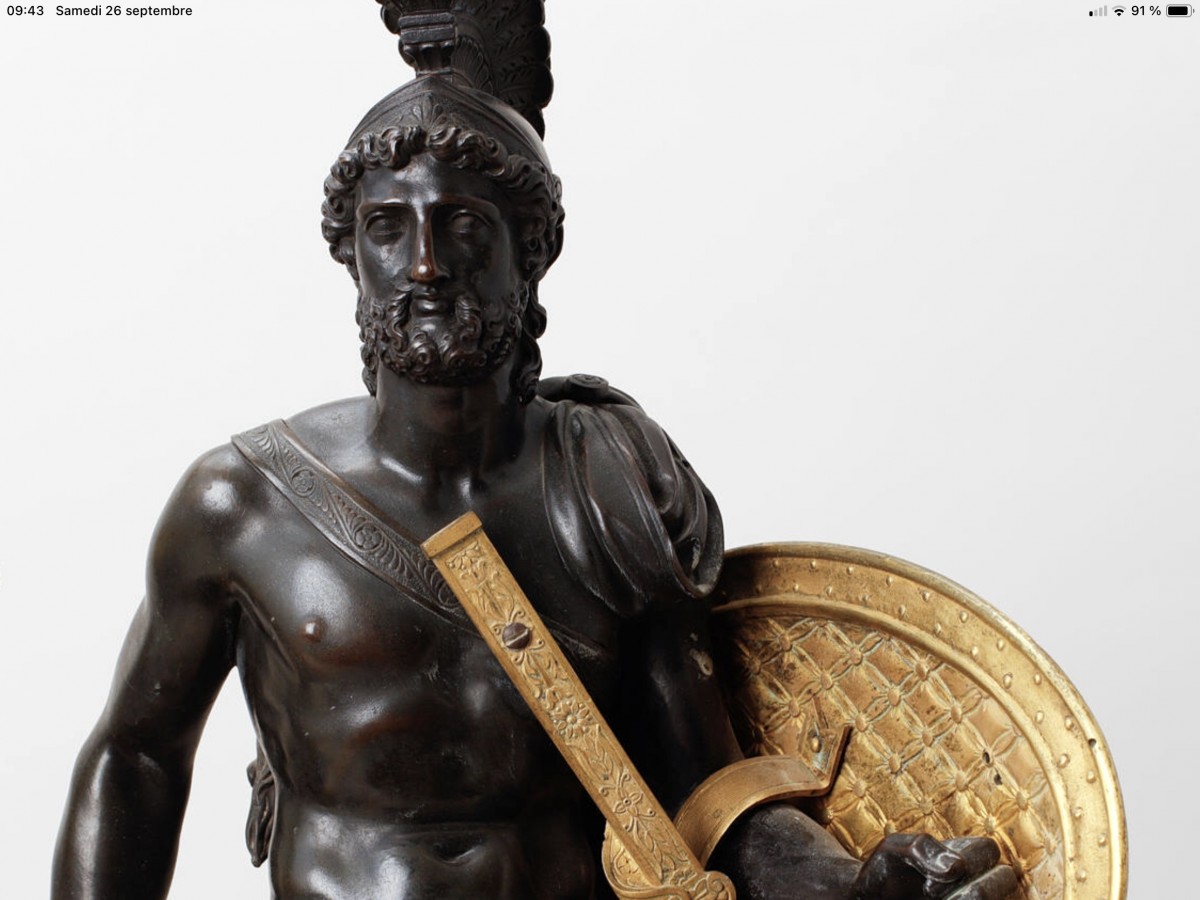
At this moment, Leonidas is without passion, without movement; he awaits death. He is almost abstract and embodies the ideal of beauty; it is an apologia for Greece and the virile nude (the heroic nude)."
This Philhellenic movement arose from the emotion stirred in Europe by the Massacre of Chios in 1822-23 and was supported by artists and intellectuals such as Victor Hugo and Lord Byron.
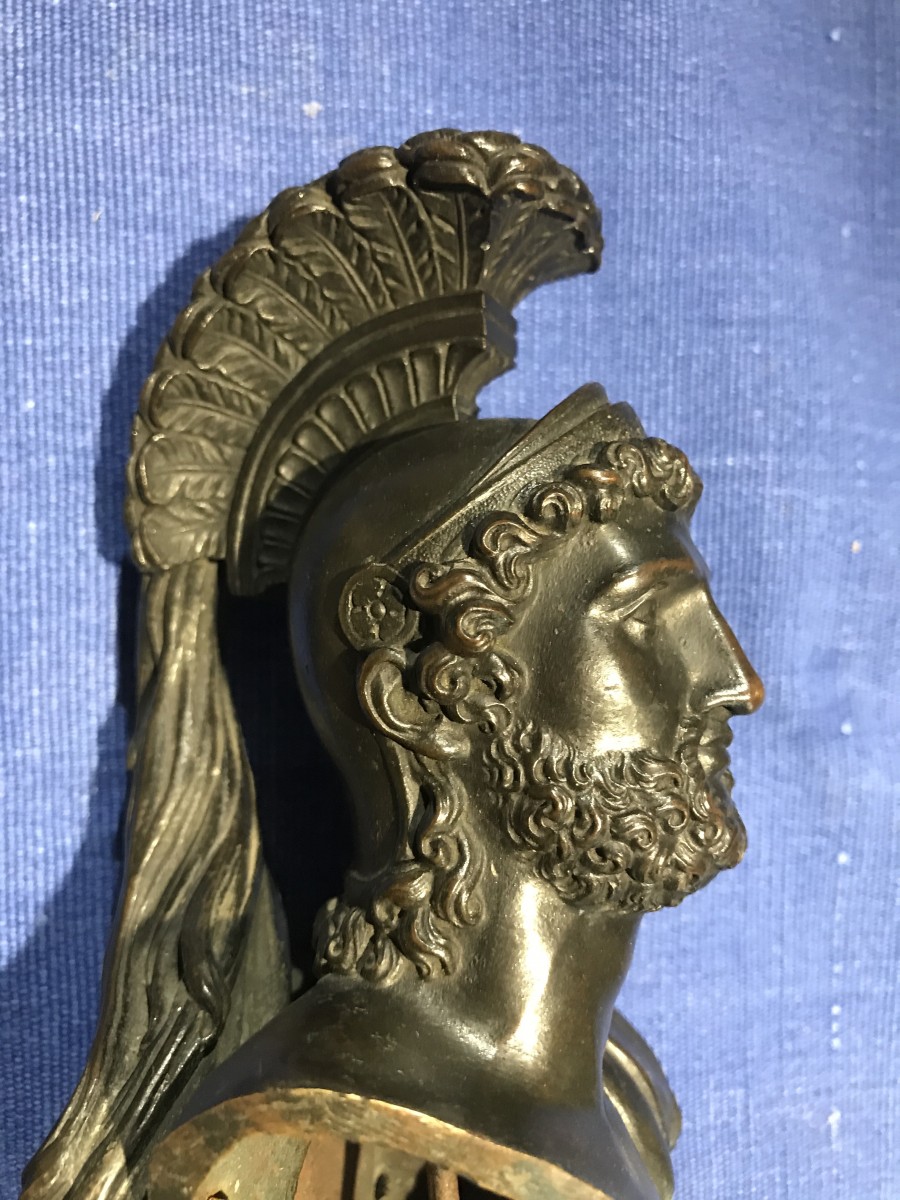
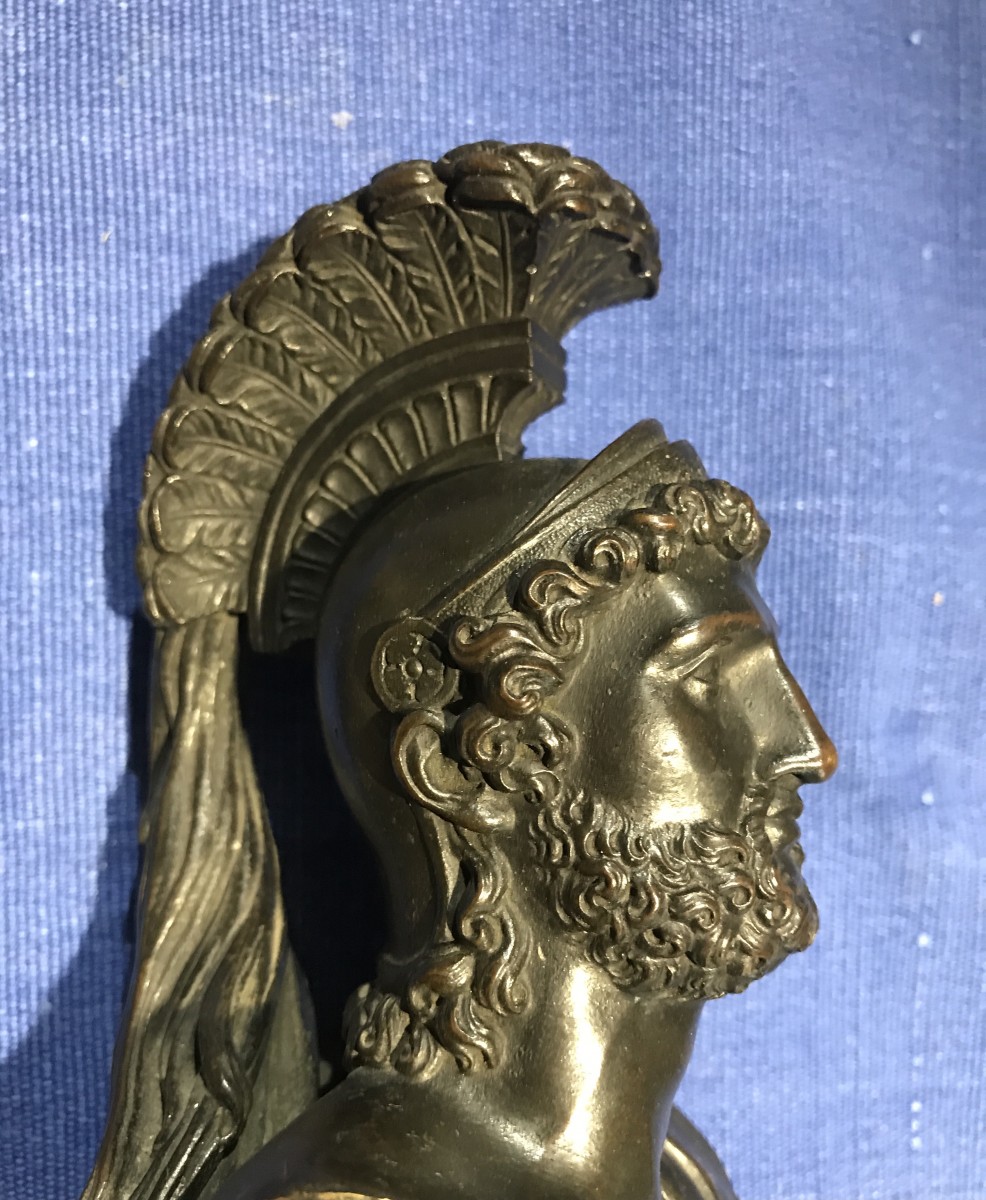
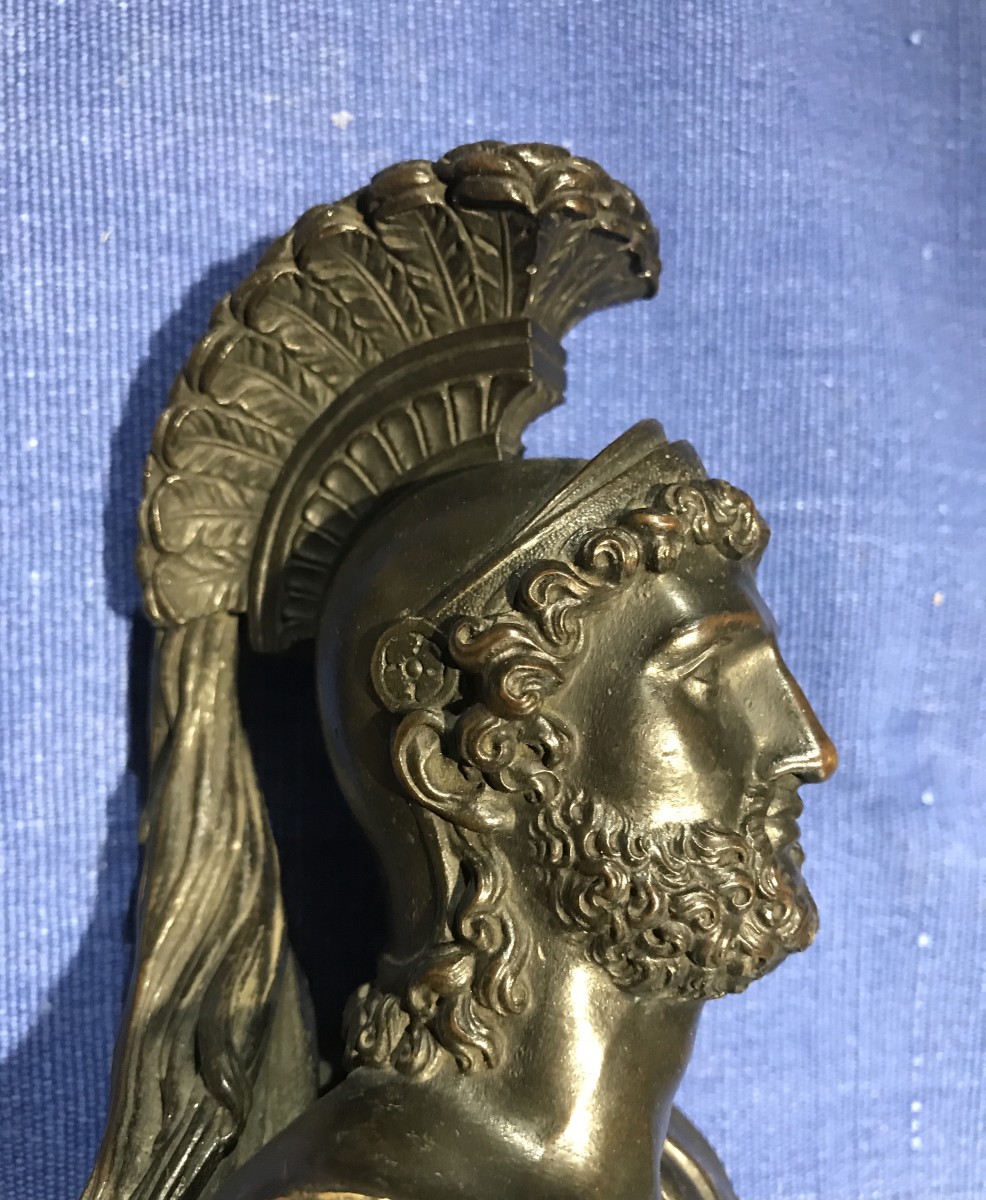
The art of the bronze sculptor, probably Jeannest, on Rue Chapon, masterfully transposed into bronze the subject painted by J. L. David, without softness or anatomical clumsiness: the imposing classical figure of Leonidas, nude and armed (large round shield, armor, and chieftain's helmet), seated on a rock, his left leg bent, down to the smallest details (such as the sandals).
Our rare clock found in Sweden suggests it may have been one of Bernadotte's many commissions in Paris for the Swedish court.
The gilding and patina are in very good condition; unfortunately, the early 19th-century mechanism was replaced, likely around 1890, with a Marti movement—awarded a silver medal in 1888—which functions perfectly A similar clock is published in "Stéphan Adler, Les Heures du Philhellénisme, "Les Pendules Philhelléniques françaises," Éditions Olkos, Athènes, 2018,"