Offered by L'Egide Antiques
REQUEST INFORMATION

Porcelain, Scuptures, paintings and european Fine Arts, 18th and 19th century
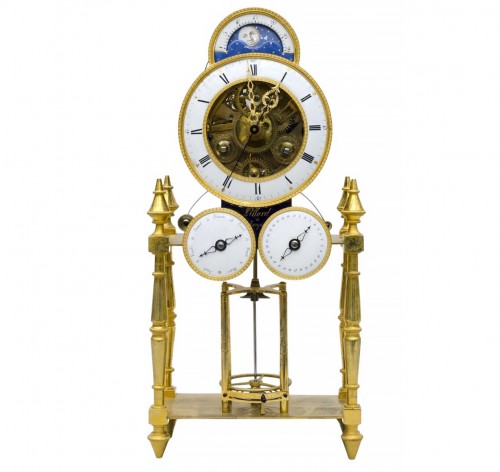
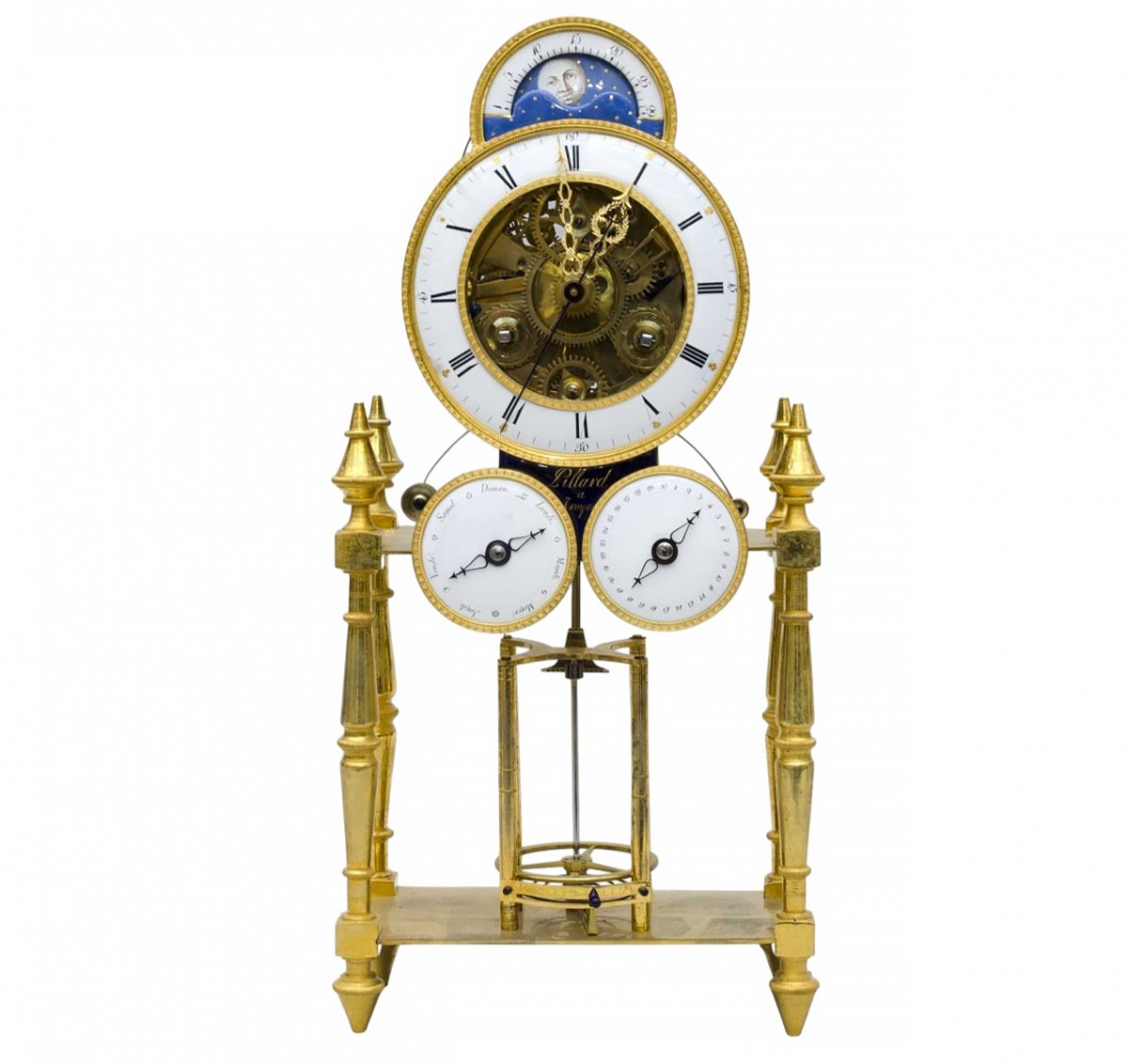
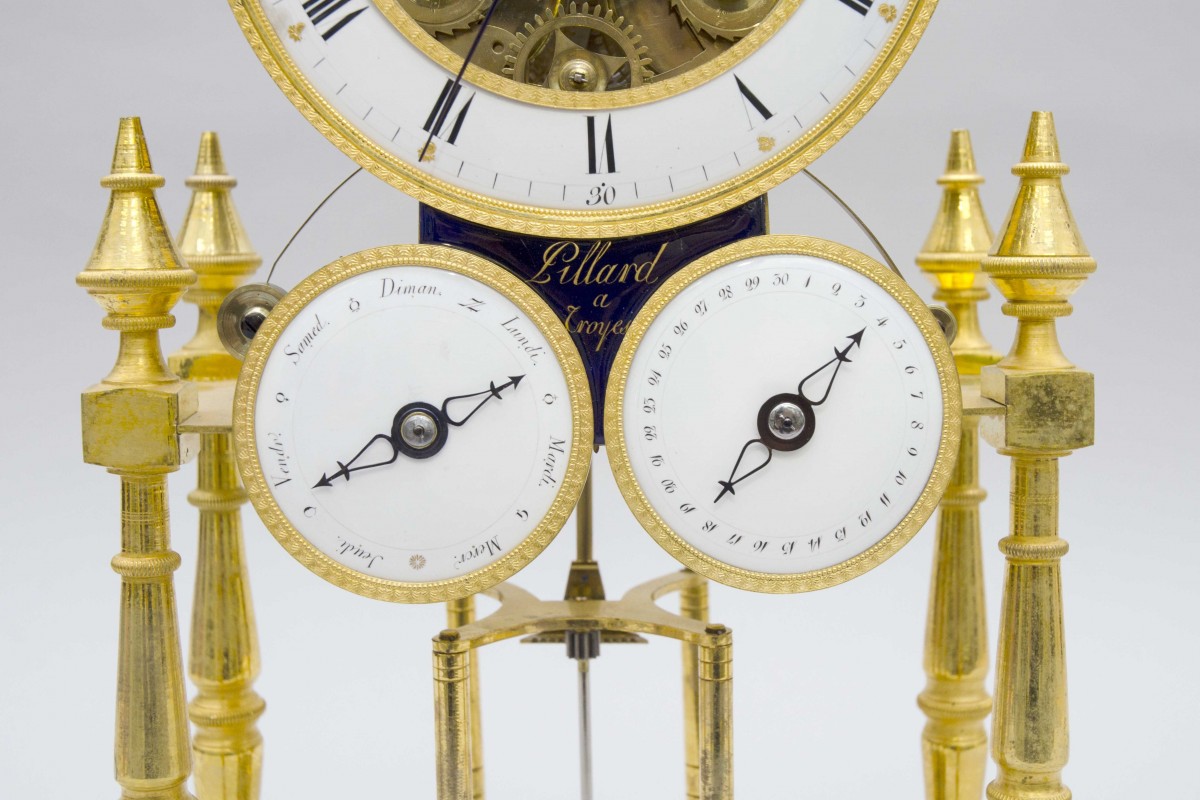
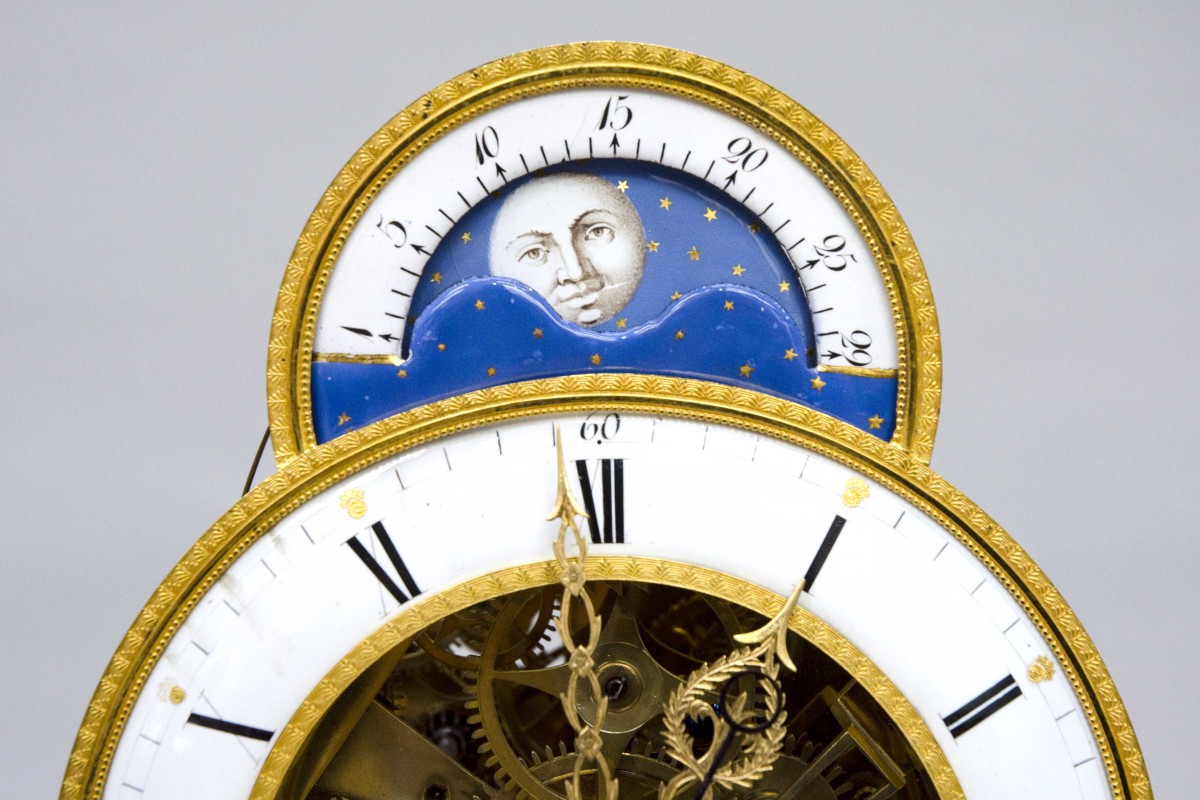
Exceptional portico clock with four dials, with an elegant architectural structure supported by turned and gilded columns. This clock stands out for its complex composition of four dials. The main one of large size and skeleton type, allows to contemplate the annular movement and the precise arrangement of the gears that mark the hours and minutes. Below it, are two subsidiary calendar dials: one for the days of the week (in French) and the other for the days of the month. Crowning the whole, a fourth dial represents the lunar phases, thus completing the astronomical and temporal information of the piece.
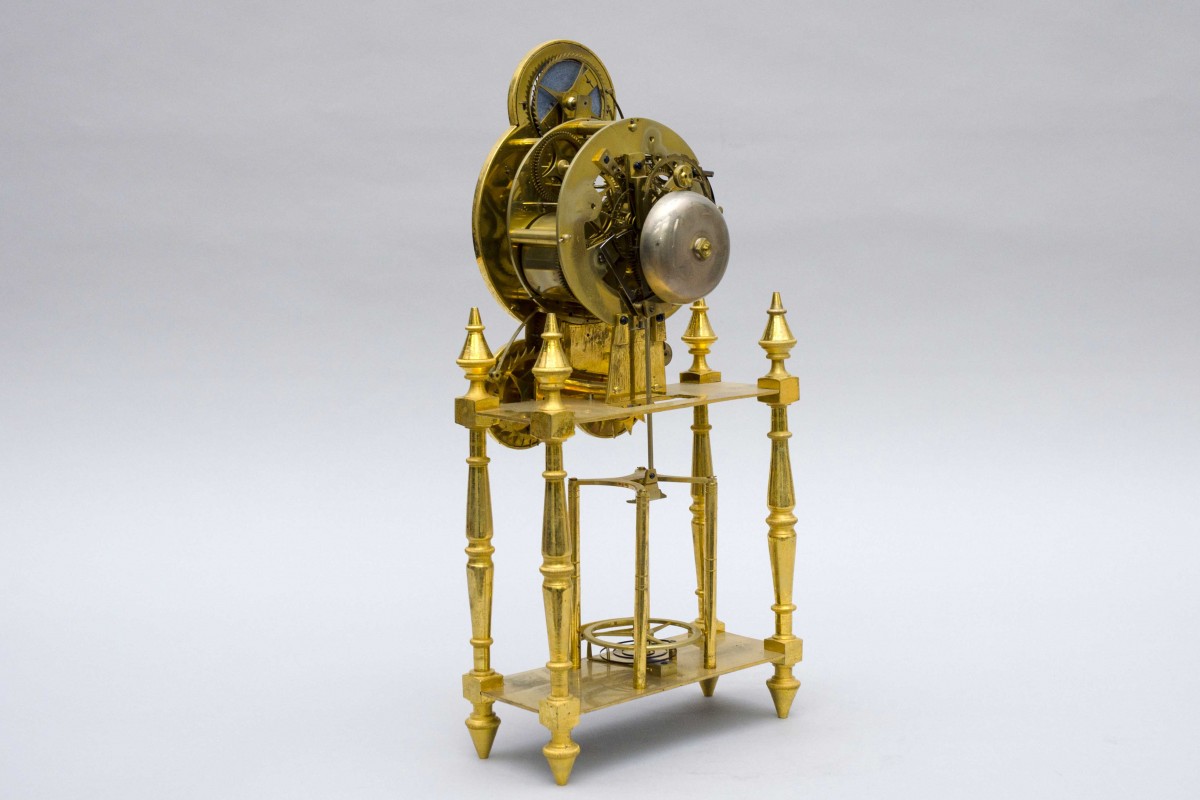
The main dial of skeleton type also reveals the ring movement and the complex inner machinery. It features a ring balance, hand escapement and central second hand. The whole is signed on the enameled plate “Pillard à Troyes” and, on the back, by the renowned enameller “Coteau, rue Poupée N°7”, renowned for his mastery of enameling during the 18th century.
The clock has been carefully restored and overhauled by a master watchmaker: disassembly, complete cleaning, assembly and lubrication. It is in perfect working order.
Size: 41 × 20 × 20 cm.
Troye in France, late 18th century
Lit: The work is an exceptional example of the savoir faire of the watchmaker Pillard, active in Troyes at the end of the 18th century, and reflects the technical and aesthetic mastery achieved by French watchmaking at the time. The skeleton design, a direct heir to the portico clock, allows the intricate mechanism to be appreciated on both the front and back, a feature conceived to showcase the virtuosity of the craftsman and the advancement of watchmaking science. This type of clock achieved great popularity between the end of the 18th century and the first decades of the 19th, in a context in which clockmakers sought to emphasize mechanical purity and technical innovation as opposed to the ornamental exuberance of the preceding figurative models.
The enameling of the dials is the work of Joseph Coteau (1740-1801), the most famous enameller of his time. Born in Geneva and trained at the Académie de Saint-Luc, Coteau settled in Paris, where from 1772 he worked in the Rue Poupée. His workshop was responsible for the finest enamels of 18th century French clockmaking, collaborating with the great masters of the time and leaving an unmistakable mark of elegance, precision and chromatic delicacy.
Delevery information :
to be agreed with the customer depending on the object and the place of destination.