Offered by L'Egide Antiques
REQUEST INFORMATION

Porcelain, Scuptures, paintings and european Fine Arts, 18th and 19th century
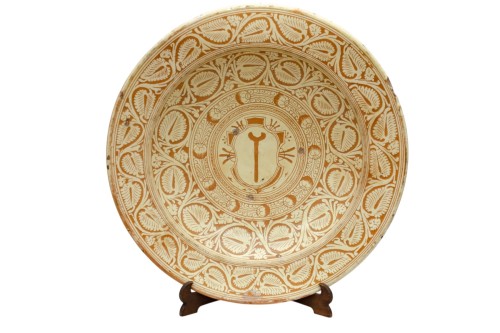
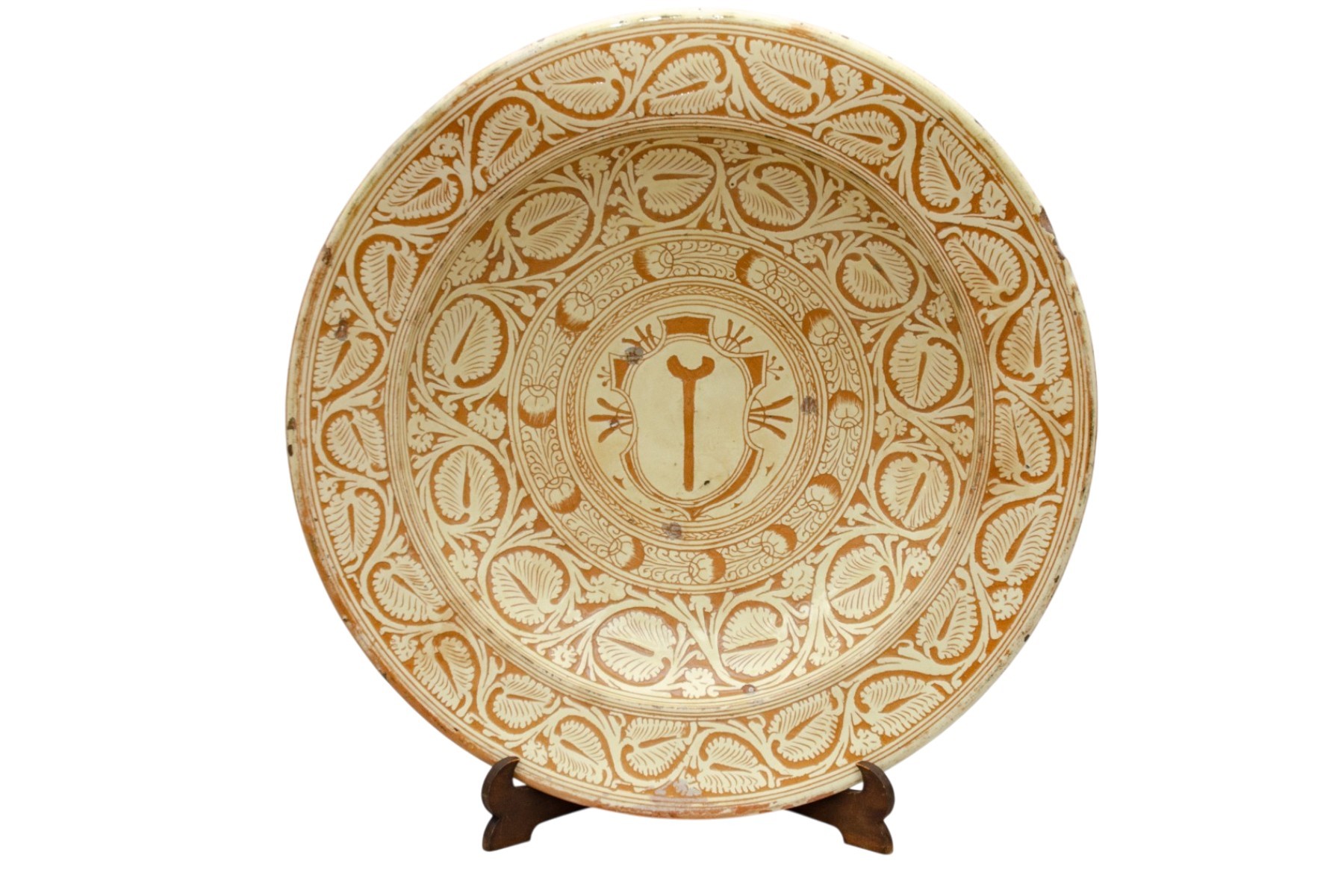
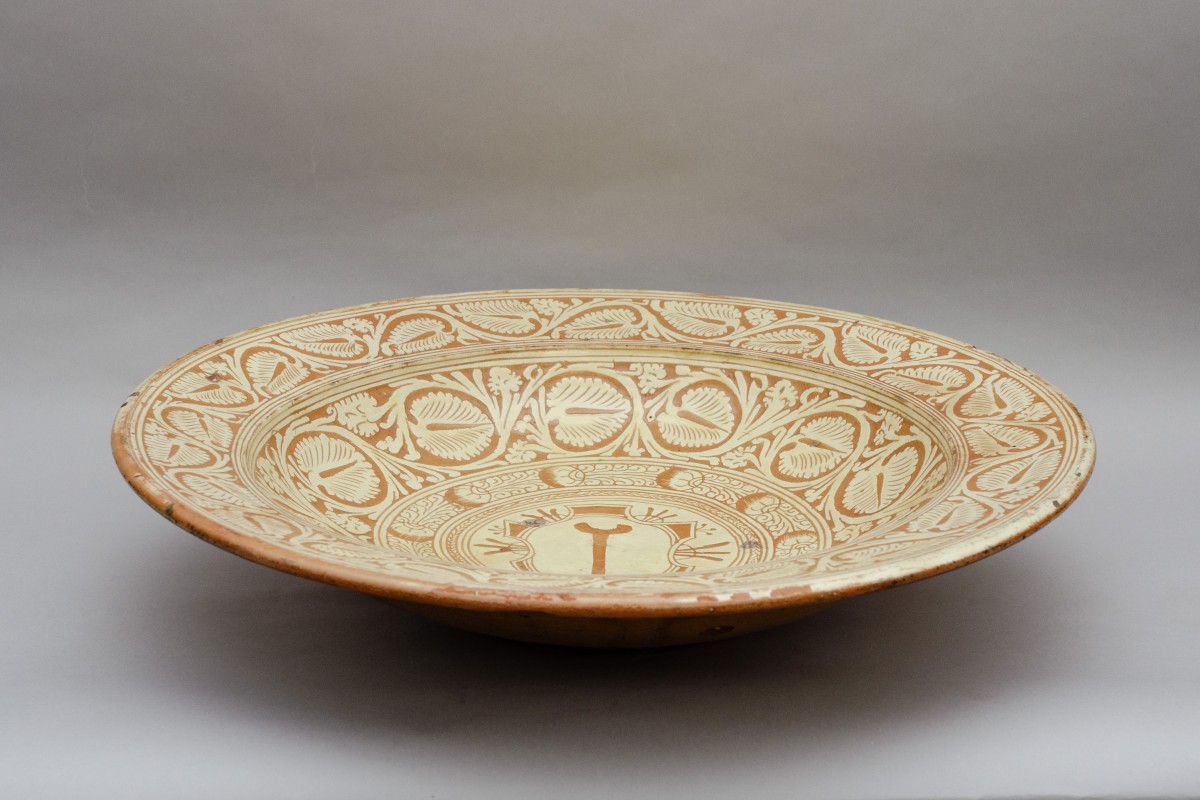
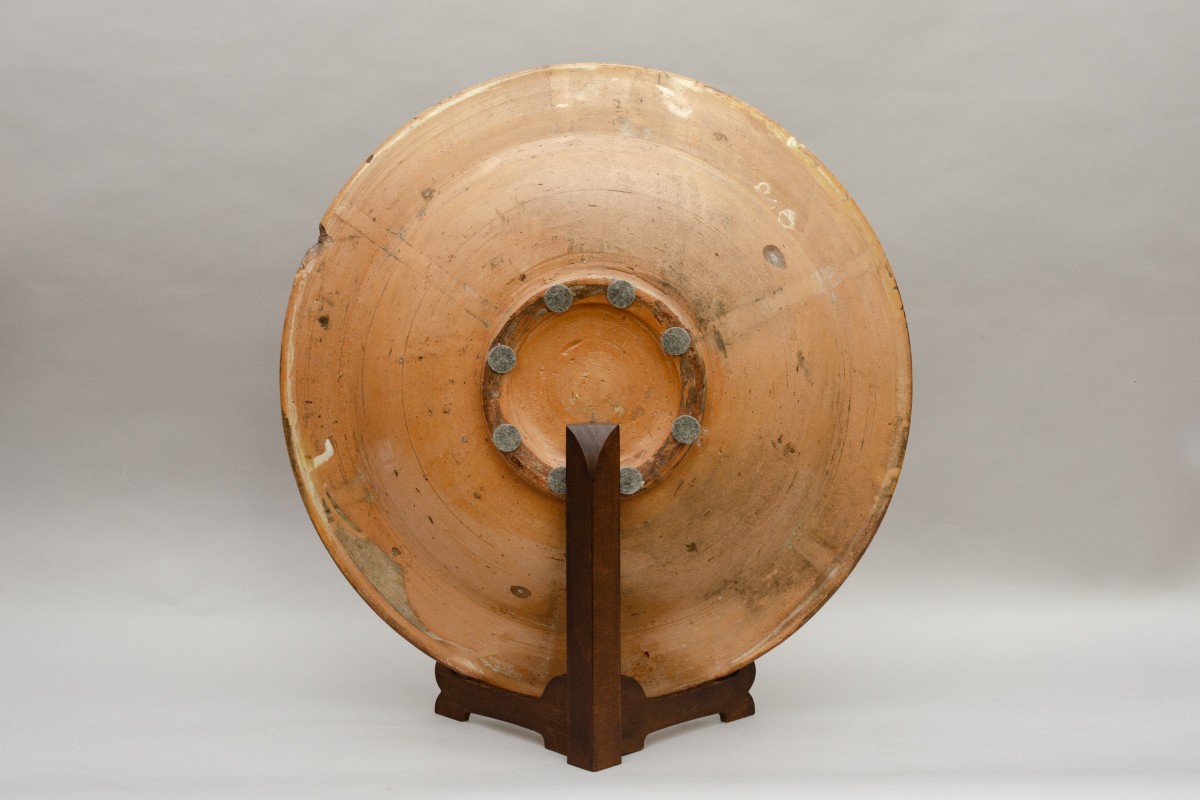
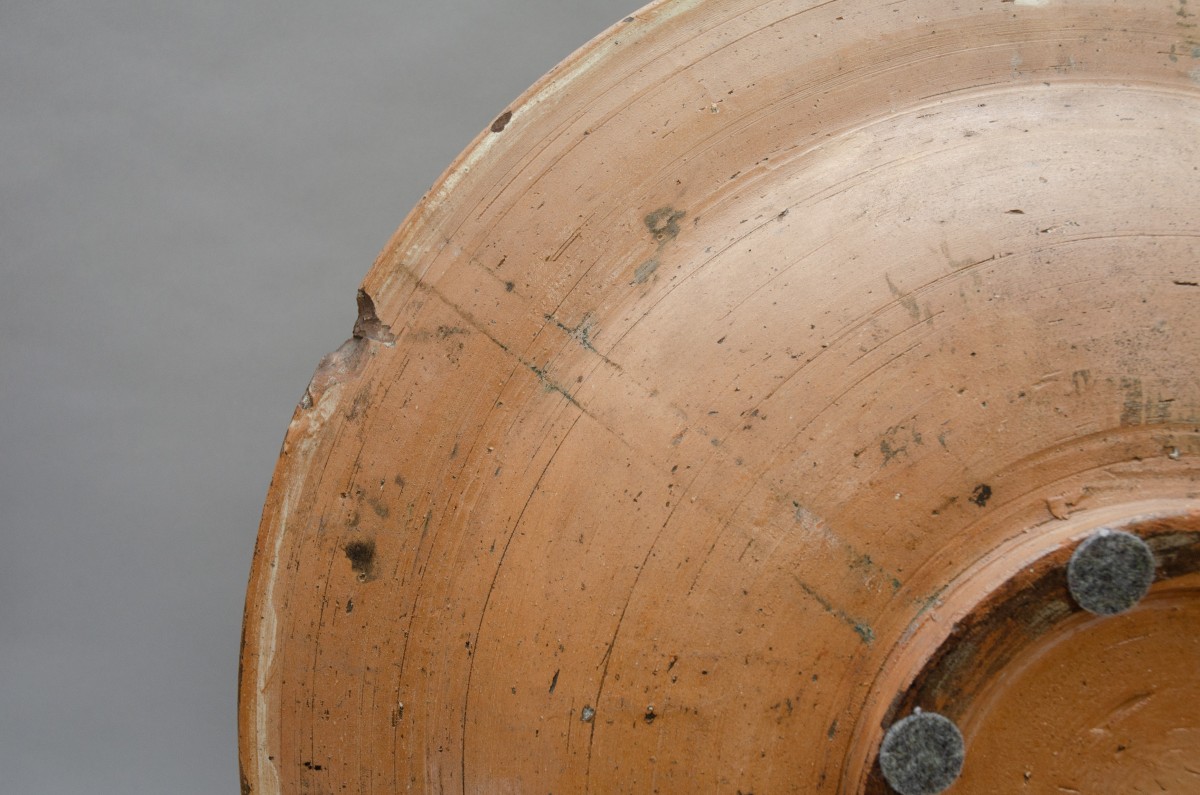
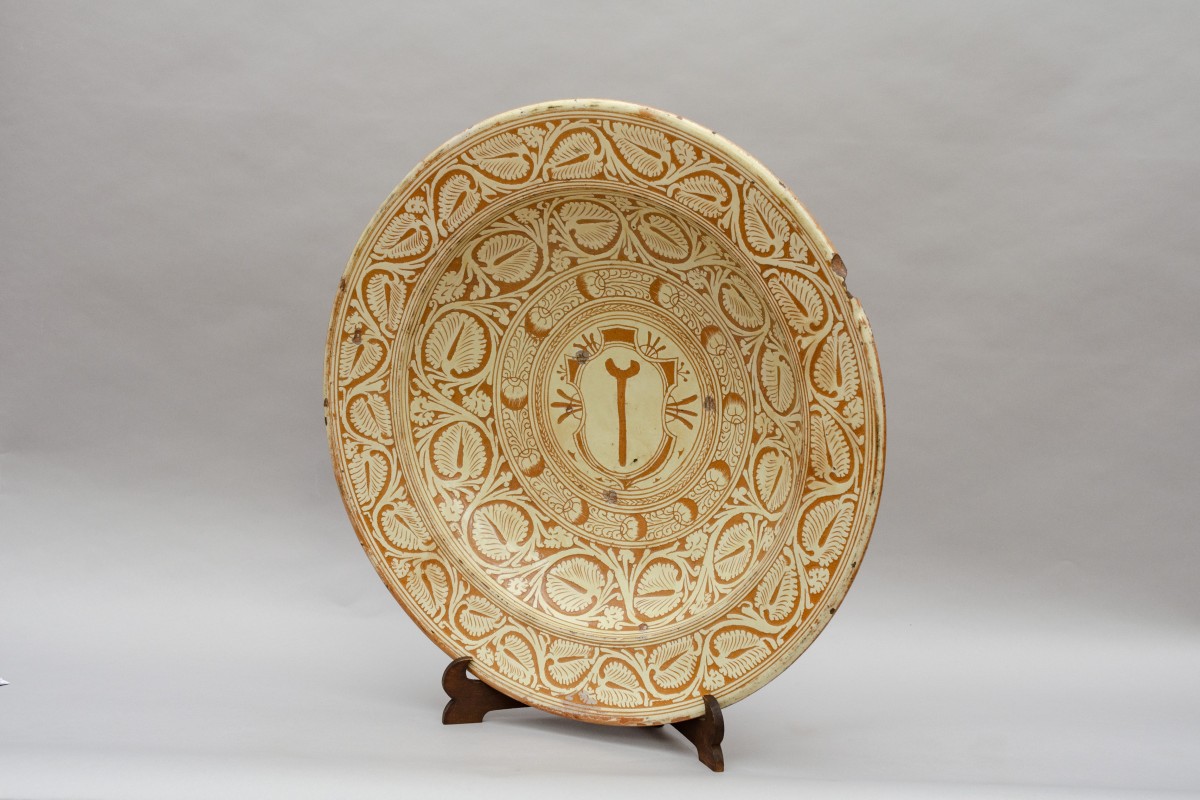
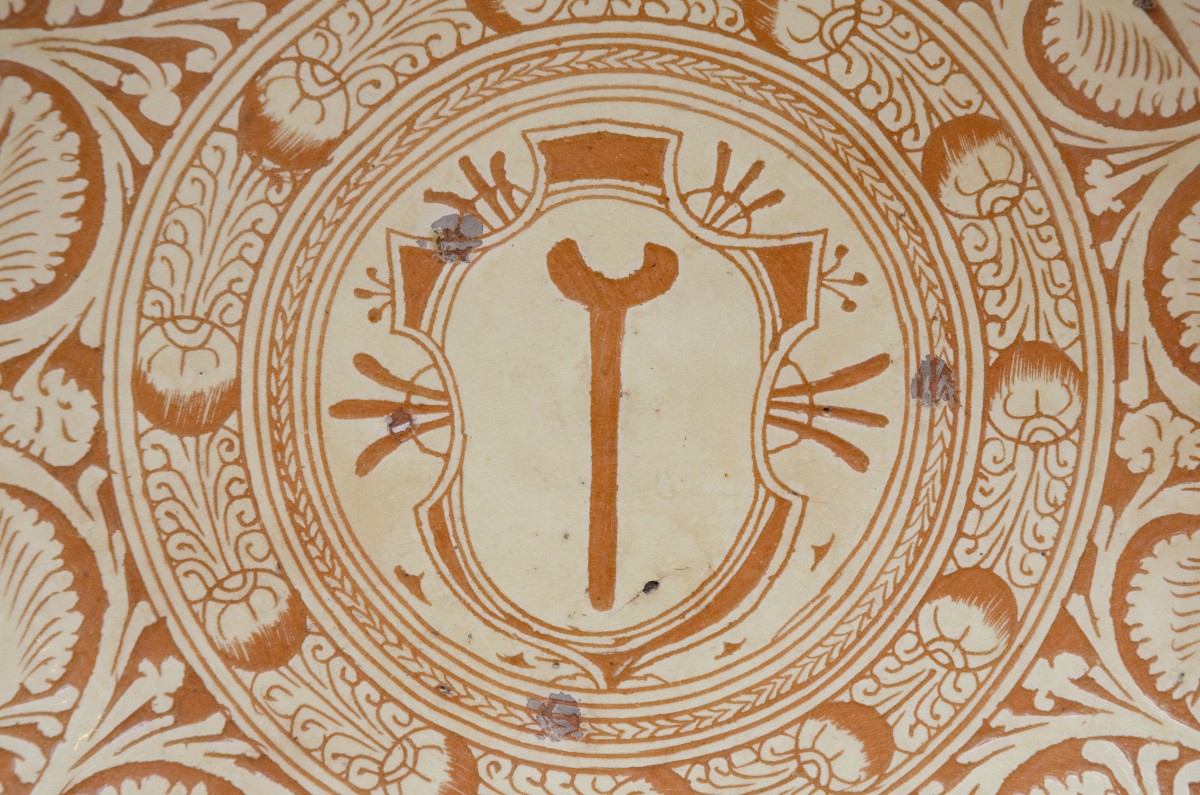
A very large, sgraffito-decorated, engobed terracotta plate with a wide rim and deep cavity. The decoration is in reserve: the red-orange background has been scraped away to reveal cream-coloured motifs of striking graphic density. In the centre, within a shield-shaped cartouche with cut-out contours, stands out a crutch (gruccia), the emblem of the Santa Maria Nuova Hospital in Florence. It is surrounded by a wreath of rope-like foliage, followed by small flowers or round buds set within a frieze of delicate foliage. The bowl is covered with large, serrated leaves, held in place by stems and tendrils that wind around them and small flowers. The rim repeats this pattern of alternating leaves on a larger scale, beneath a double fillet. The reverse side is bare terracotta, with visible traces of the potter’s wheel. A few chips and areas where the glaze is missing along the rim, as well as signs of wear and tear, are visible in the photographs. The piece remains highly decorative overall.
Size: Ø 50 cm – H 10 cm
Attributed to Castelfiorentino (Tuscany), 16th century.
Note: Sgraffito is a technique similar to majolica (tin-glazed earthenware). Like majolica, Tuscan sgraffito pottery is fired twice: an engobe is applied and then scraped away before the first firing, followed by a transparent glaze before the second
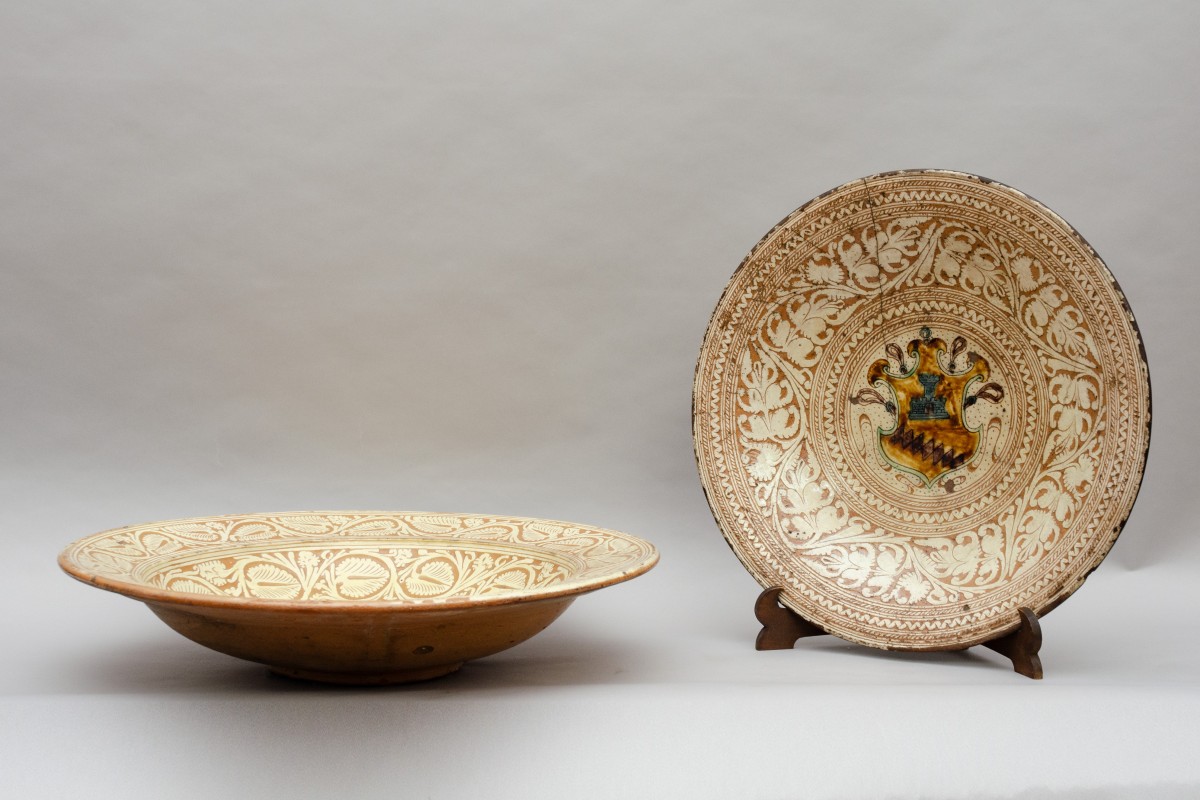
Note: Castelfiorentino is a small town in Tuscany, halfway between Florence, Pisa and Siena, in the Elsa Valley. For a long time, almost all Tuscan sgraffito was attributed to Pisa. However, excavations carried out in Piazza Cavour (by Anna Moore Valeri) have shown that this type of pottery was produced on a large scale there from the early 16th century at the latest, and may have been exported via the port of Pisa. The potters of Castelfiorentino produced two types of sgraffito: the refined and costly ‘lowered ground’ technique, in which large sections of the slip are scraped away to reveal the design, and the polychrome ‘pointed’ technique, which was quicker and simpler. This dish belongs to the first, more luxurious group. Many of these pieces bear coats of arms, many of which have been identified (Medici, Pucci, Strozzi, etc.). The same coat of arms appears on several plates, indicating that families commissioned complete table services. Religious institutions were also major clients, commissioning pieces featuring religious emblems. Another distinctive feature is that Tuscan sgraffito pottery was produced only in open forms (plates, bowls), never in closed forms such as apothecary jars.
Note: The Santa Maria Nuova Hospital in Florence was founded in 1288 by Folco Portinari, a banker and prior of Florence, and father of Beatrice, the woman loved by Dante. It was the first European medical institution to combine a complex organisational structure with the sole aim of caring for the sick and the poor, regardless of their background. The Oblate Sisters of the Hospital, founded by Monna Tessa in 1301, have been working there for over seven centuries.
Pope Leo X, Henry VIII (for the Hospital of Savoy in London) and Ferdinand of Austria drew inspiration from its rules. Luther is said to have been treated there around 1510. Its cruciform layout separated the men’s and women’s wards. In the 15th century, it was extended and embellished; Giambologna, Alessandro Allori and Buontalenti contributed to its decoration and architecture. The Church of Sant’Egidio once housed Hugo van der Goes’s famous Portinari Triptych, now in the Uffizi. In 1617, the Portinari family ceded the hospital to the Grand Duchy, bringing an end to ecclesiastical control. It is still in operation and is considered the oldest continuously operating hospital in the world.
The emblem: the crutch. The hospital’s coat of arms depicts a crutch with a green shaft and red foot, set against a gold background. Here, the sgraffito technique renders it in monochrome. Around 1430, the hospital commissioned around a thousand apothecary jars from the workshop of Giunta di Tugio, each with a green crutch on its handle. The institution therefore regularly had ceramics produced bearing its coat of arms. This dish was undoubtedly part of a service commissioned for the hospital or one of its establishments.
Delevery information :
to be agreed with the customer depending on the object and the place of destination.