Offered by Ars Antiqua
REQUEST INFORMATION

Old Masters paintings, furniture, sculptures and modern art
Expertise by Prof. Arabella Cifani
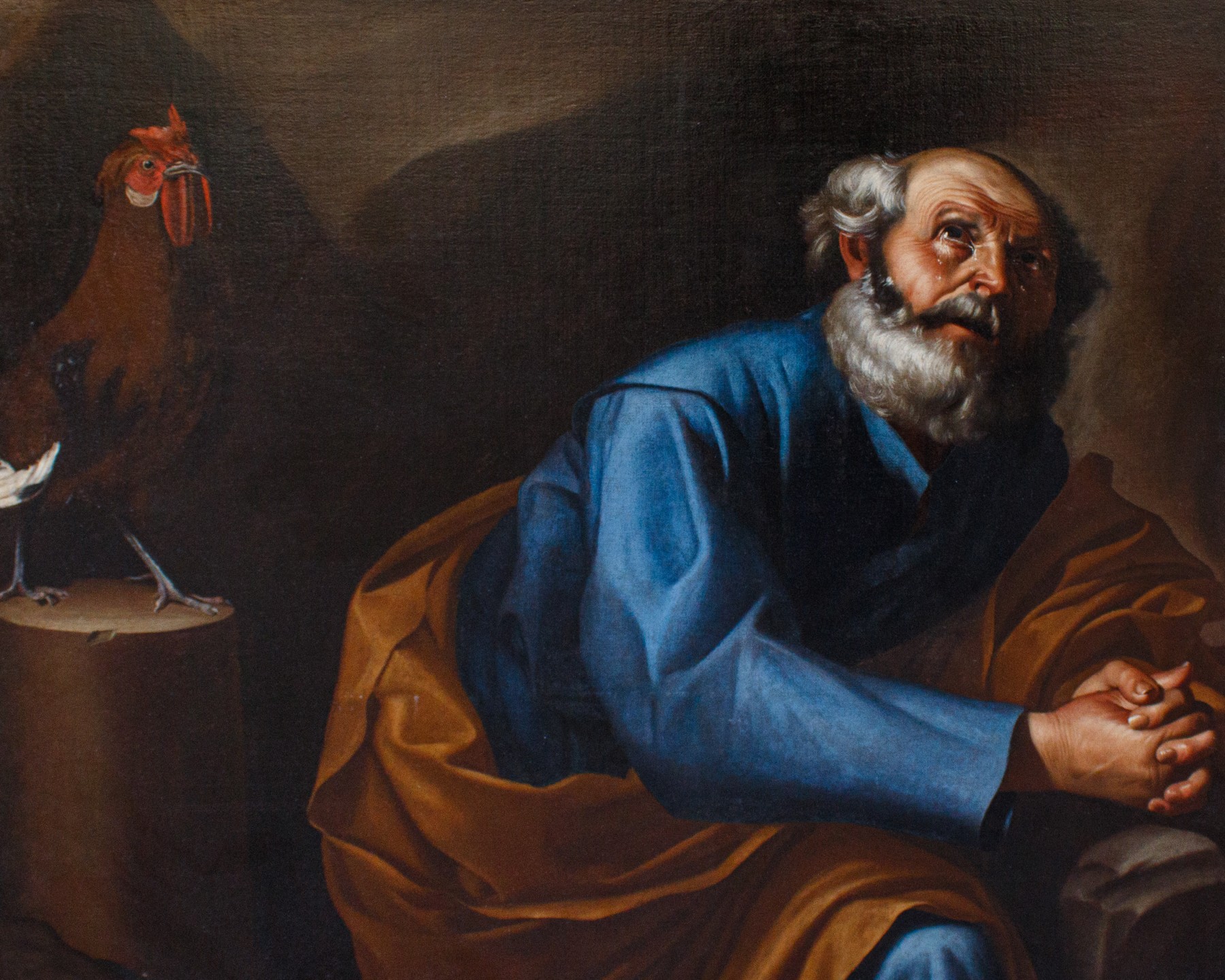
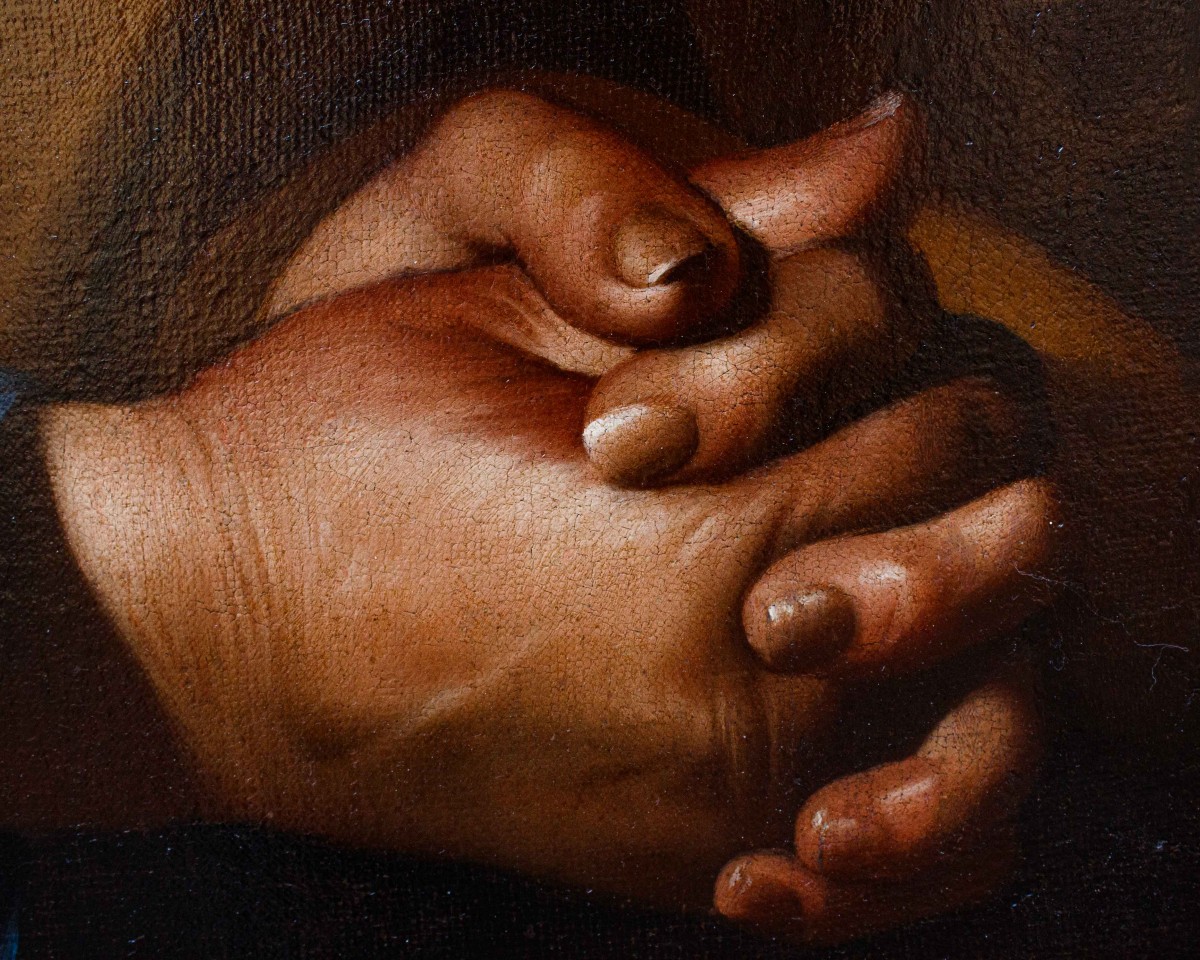
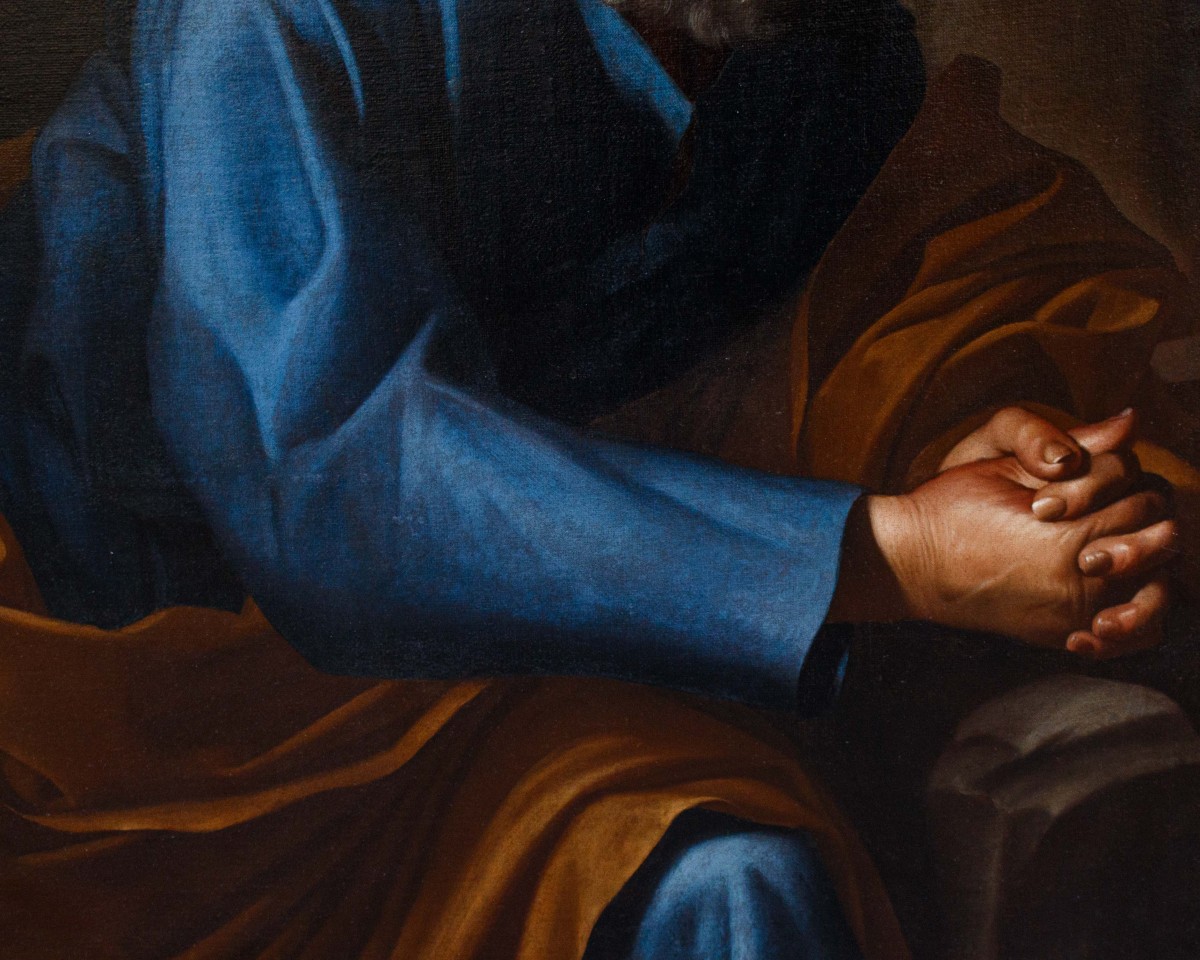
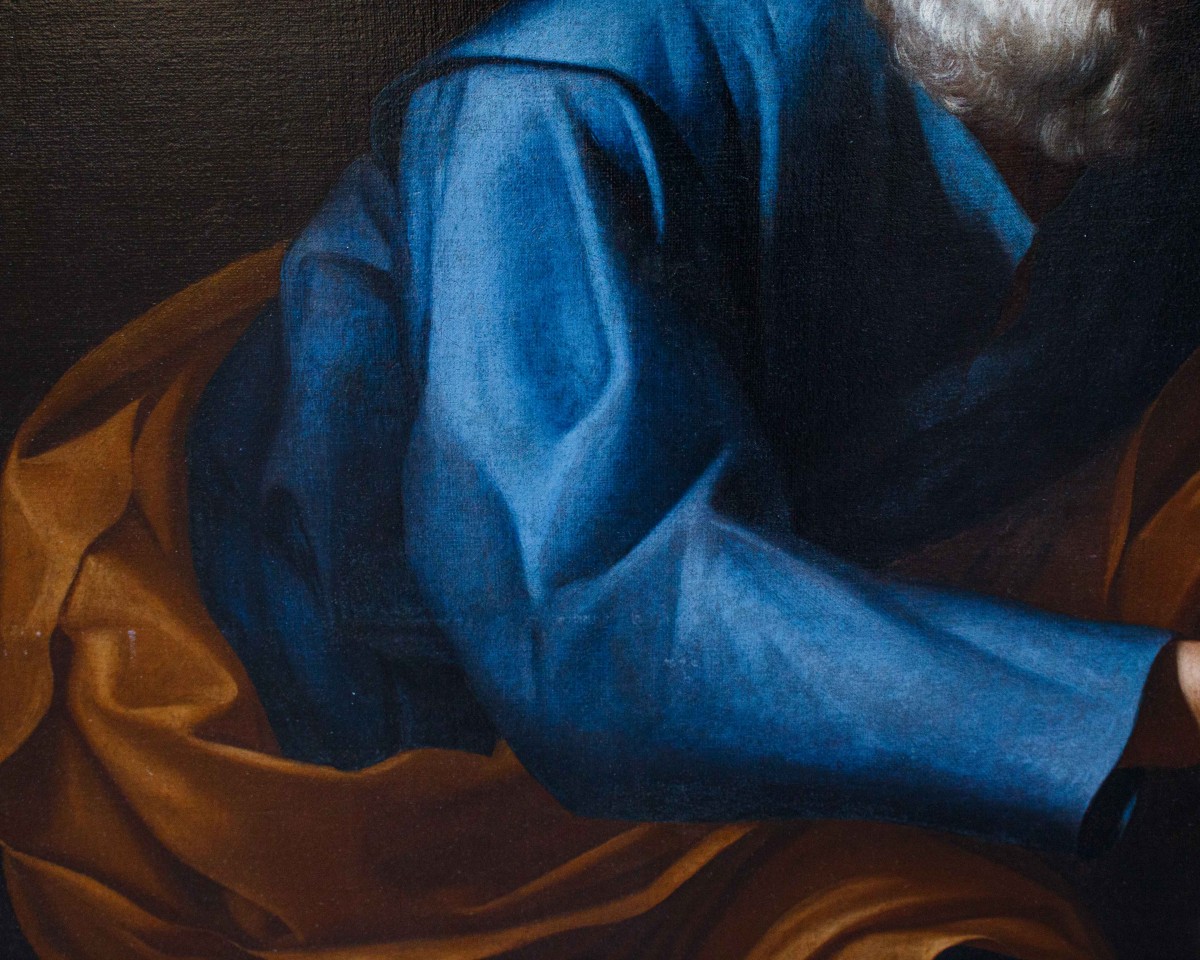
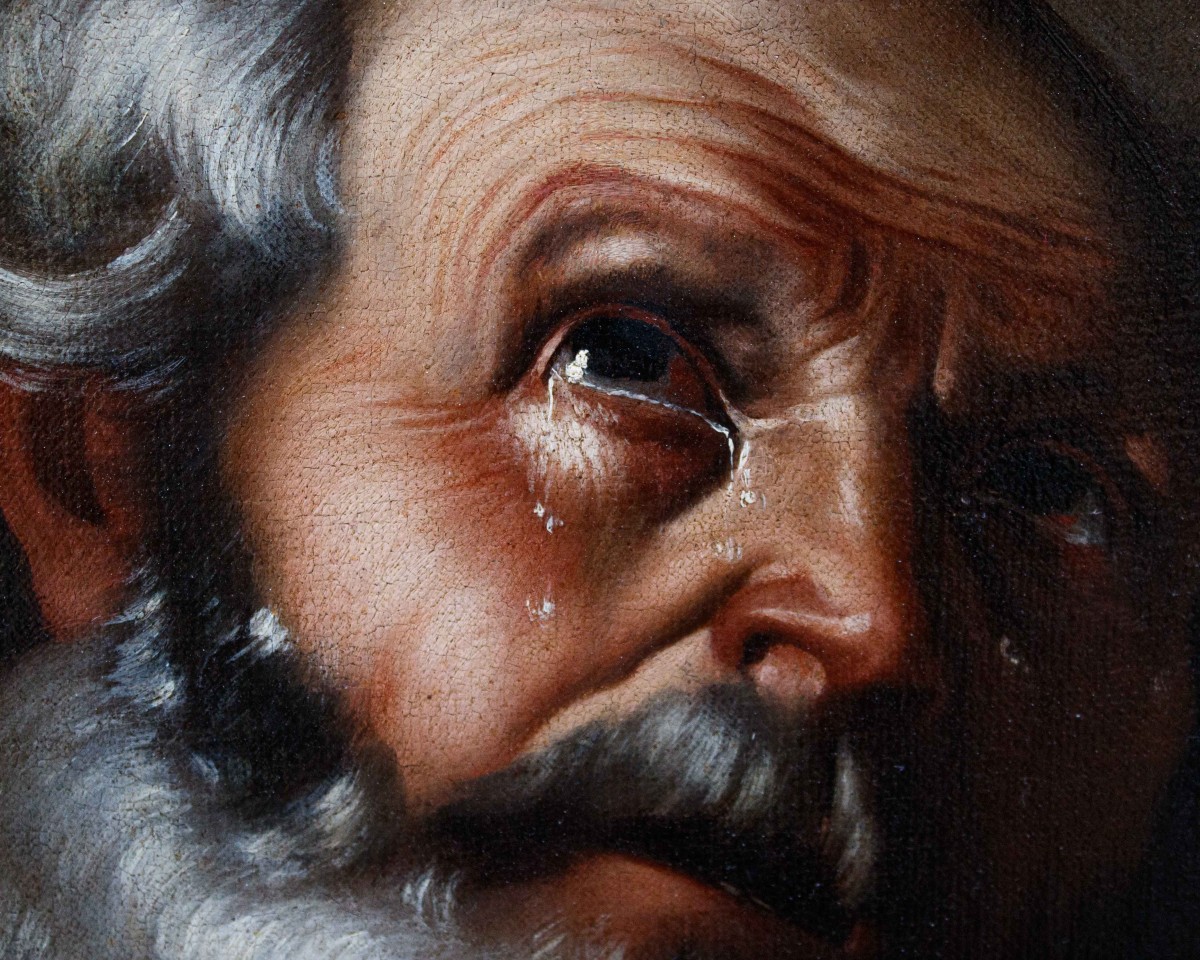
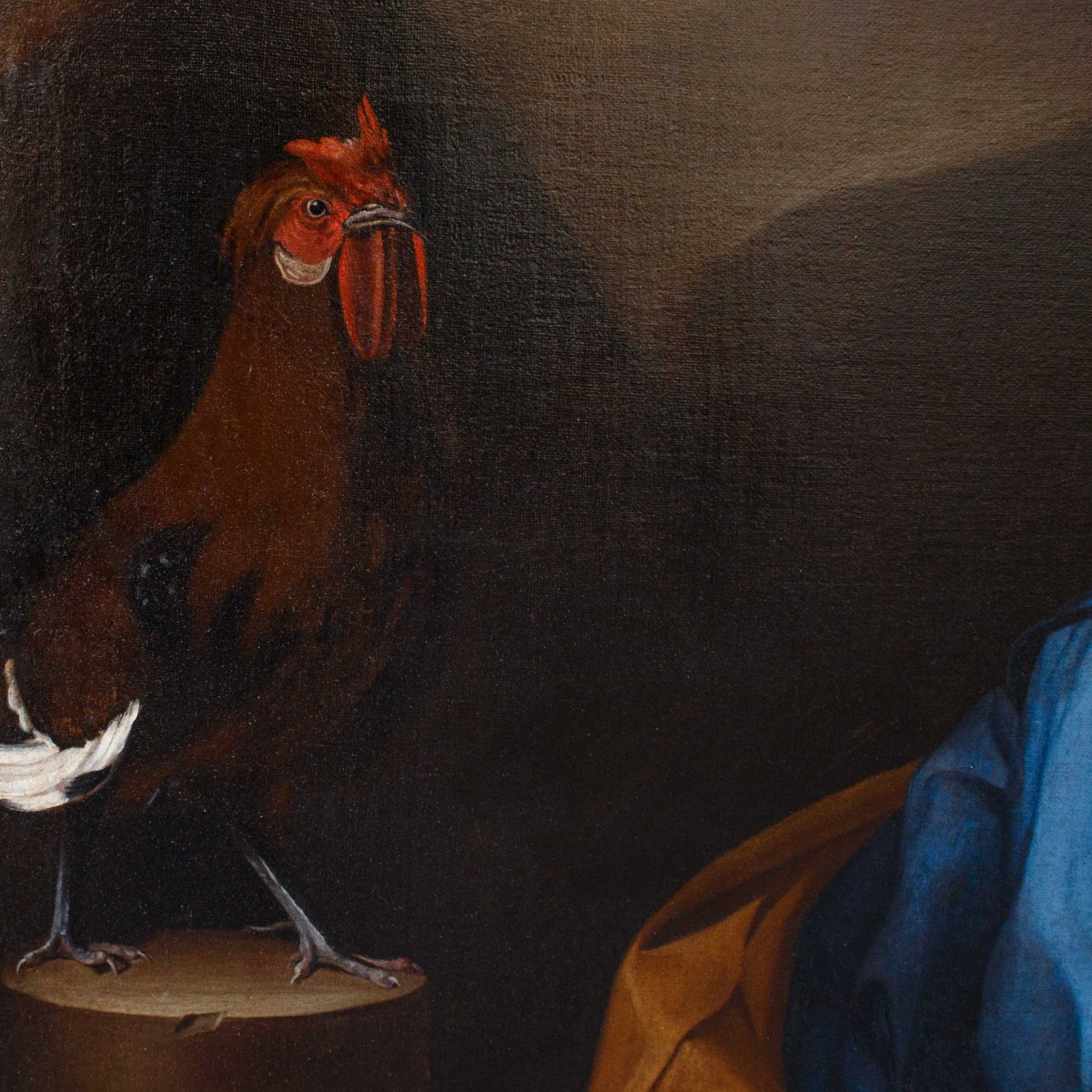
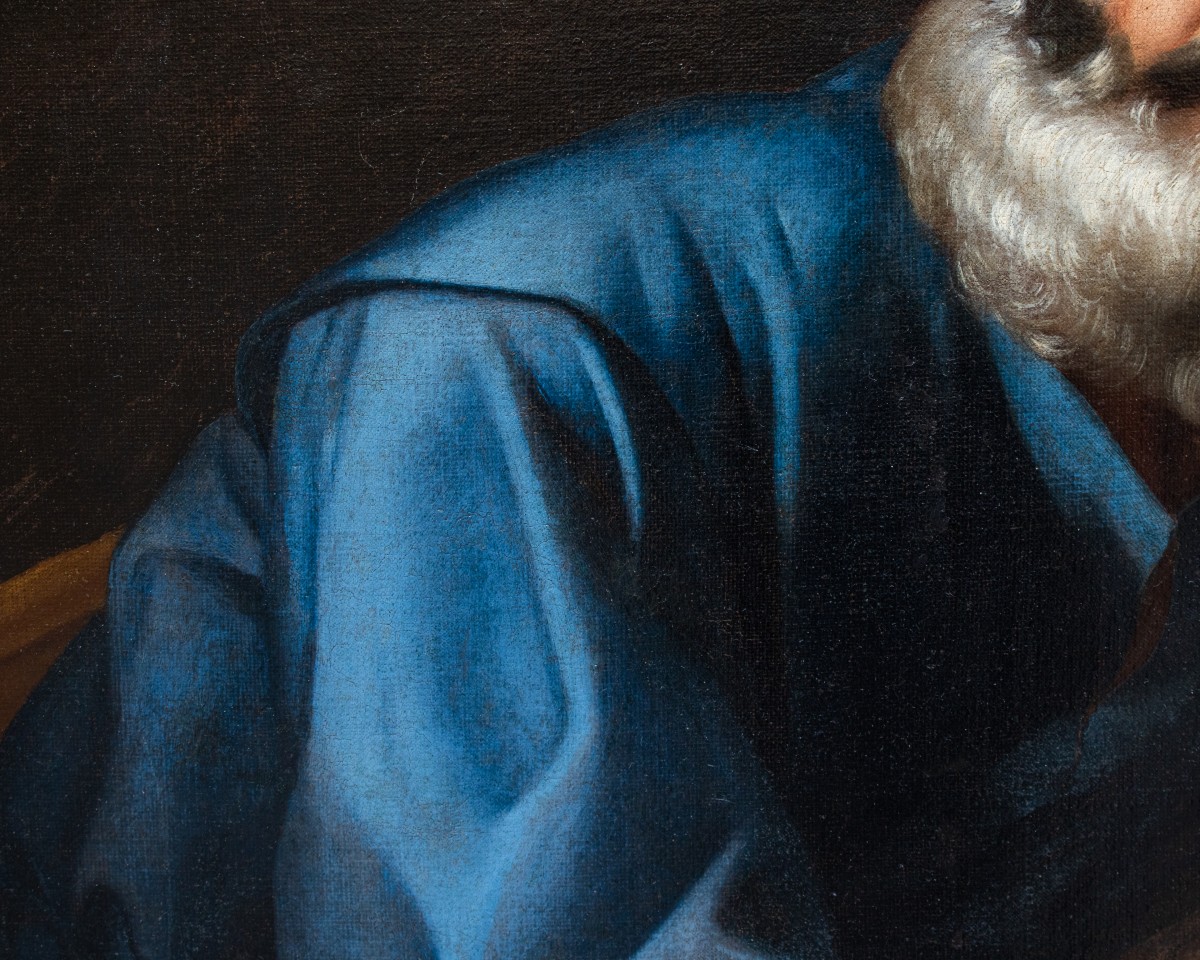
The painting represents a well-known and dramatic episode from the Gospel from the Passion of Christ. Shortly before being arrested, Jesus predicted that one of his Apostles would betray him, but Peter rose up saying: “All the other followers may lose their faith in you. But my faith will never be shaken”. Jesus answered: “The truth is, tonight you will say you don’t know me. You will deny me three times before the rooster crows.” After Jesus' arrest, Peter followed him from afar into the palace of the high priest, but he was recognized and accused of being a disciple of the Nazarene. Peter denied it flatly each time. After the third denial he heard the crowing of a rooster. The prophecy of Jesus came back to him and he repented and wept bitterly. Here, Peter is depicted wringing his hands and weeping profusely, raising his eyes to Heaven to ask God for mercy and forgiveness. Next to him, on the left, on a column trunk, a magnificent and lively rooster has just crowed. The light, coming from the left, heralds the dawn and creates dramatic plays of chiaroscuro throughout the scene, accentuating the plasticity of Peter's body.
The work is a splendid work from the Neapolitan area and it can be attributed to an illustrious painter of 17th century Southern Italy: Cesare Fracanzano.
The painter was born in Bisceglie (Bari), on 16th October 1605. In 1626, he got married in Barletta. In 1629, he was in Naples, as confirmed by a document of that year relating to a painting depicting the Assumption. According to De Dominici (1742), from 1616, Fracanzano studied in Naples together with his brother Francesco in the workshop of Jusepe de Ribera. The influence of the Spanish painter appears very clear in his works. In 1633, he is documented again in Barletta and he appears to work for the churches of the city and the surrounding area. In 1640, he moves again to Naples. Fracanzano painted many canvases for Naples and its most important churches: a “Magdalene” for S. Domenico Maggiore, a “Flagellation of Christ” for the Gerolamini Quadreria, an “Immacolate Conception” for St. Mary of Hope, a fresco cycle for the choir of St. Mary of Wisdom (1639-41). Neapolitan documents call him a "valent artist", with high payments. During the 1640s the influence of Ribera in his paintings is mixed with that of Giovanni Lanfranco adding a more modern twist to his art. At this stage, his art showed also echoes and suggestions from Van Dyck’s works in Naples. In the “Magdalen” for the Andria episcope, we note a Lanfranchian taste, which contributes to effects of vaporous softness. In the canvas for the Lupi Chapel of the Church of Jesus in Gravina, made between 1645 and 1646, the transition to a more mature Baroque style is evident in the luminous treatment of the drapery. In this period, Cesare’style becomes very similar to his brother’s.
Cesare then returned to Puglia, to Barletta, where the commissions continued to be numerous throughout the region. In this last phase, his style was notably influenced by Guido Reni’s classicism. Fracanzano died in Barletta between the end of 1651 and November 1652. Naples, therefore, must have been for him both a destination and a problem, as he must not have found the capital of the kingdom too congenial, considering the many fluctuations between the city and his native Puglia.
This canvas belongs to the mature phase of his production and must be placed in the 1640s. Here, hiis stylistic relationships with Ribera and Lanfranco appear clear. The connections between this painting and other works by Cesare Fracanzano are evident: for example the “Saint Peter penitent” in the Church of Saint Mary of Barletta, of impressive stylistic similarity. Furthermore, the “St. Peter” and “St. Joseph” in the Cathedral of Pozzuoli, as well as the pose and style of the drapery of the “Magdalene” in San Domenico Maggiore and of the “Christ bending under the weight of the Cross” in the co-cathedral of Barletta. All these paintings are characterized by a material density of the figure and drapery, while the dark backdrop on which the characters' clothes flash are a clear reference to themes from Ribera’s production.
It is not always possible to make an attribution of the Fracanzanos’ paintings between Cesare and Francesco, but in this “Saint Peter penitent” the intensity of the expression meets Cesare's more academic tendencies and must, therefore, be attributed to him. Cesare does not reject naturalistic reminiscences, as shown by the remarkable insert of the splendid rooster painted from a live model, which contrasts with the rough rocky background. His relationship with Ribera clarifies the iconographic choices that Cesare made in his versions of the penitent Saint Peter: half-length or slightly three-quarter length, a tunic and a cloak with large folds. The expression of pain on the Peter’s face is strongly highlighted by the treatment of the eyes with a particular shine and by a pose that betrays great repentance in a moment of strong emotion. The chromatic fabric of the painting is played on low tones, the large and fast brushstrokes create a portrait that is anything but idealized, of such an intensity as to make the pictorial material itself vibrate.
For this type of paintings, considering the strong relationships Cesare had with literary circles, scholars suggested that he might have been familiar with the poem by Luigi Tansillo, “The tears of St. Peter”, published in 1585 in Ferrara.
Delevery information :
Les frais d'expédition seront calculés au moment de la commande en fonction de la destination, des dimensions et du poids du tableau, ainsi que de l'assurance couvrant la valeur totale de l'œuvre.
For paintings purchased from abroad: following payment, the application process to obtain the export license (ALC - Attestato di Libera Circolazione) will be initiated. All antiques shipped abroad from Italy require this document, which is issued by the Ministry of Cultural Heritage. The procedure may take 3 to 5 weeks from the date of request; therefore, the painting will be shipped as soon as the document is obtained