Offered by Franck Baptiste Paris
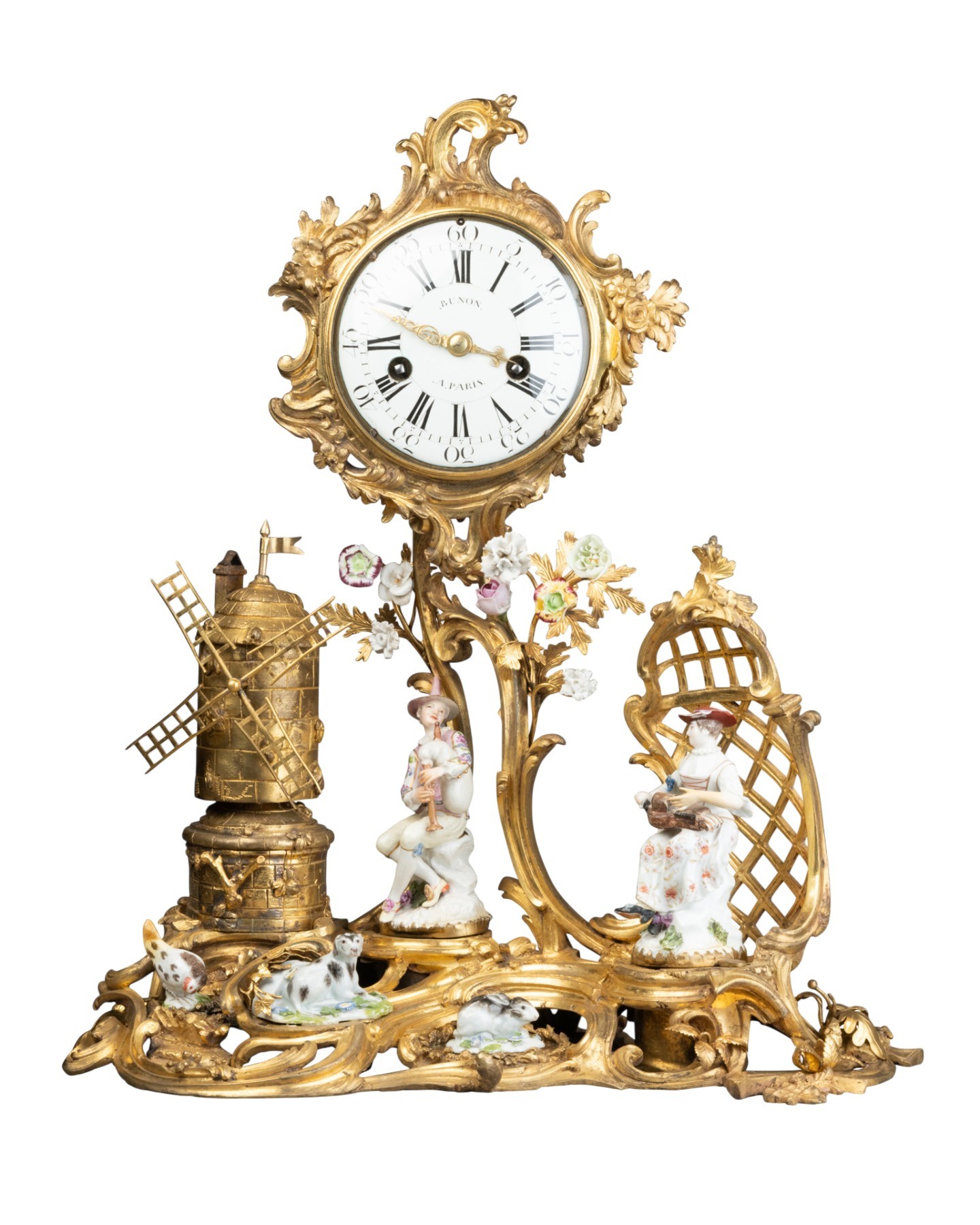
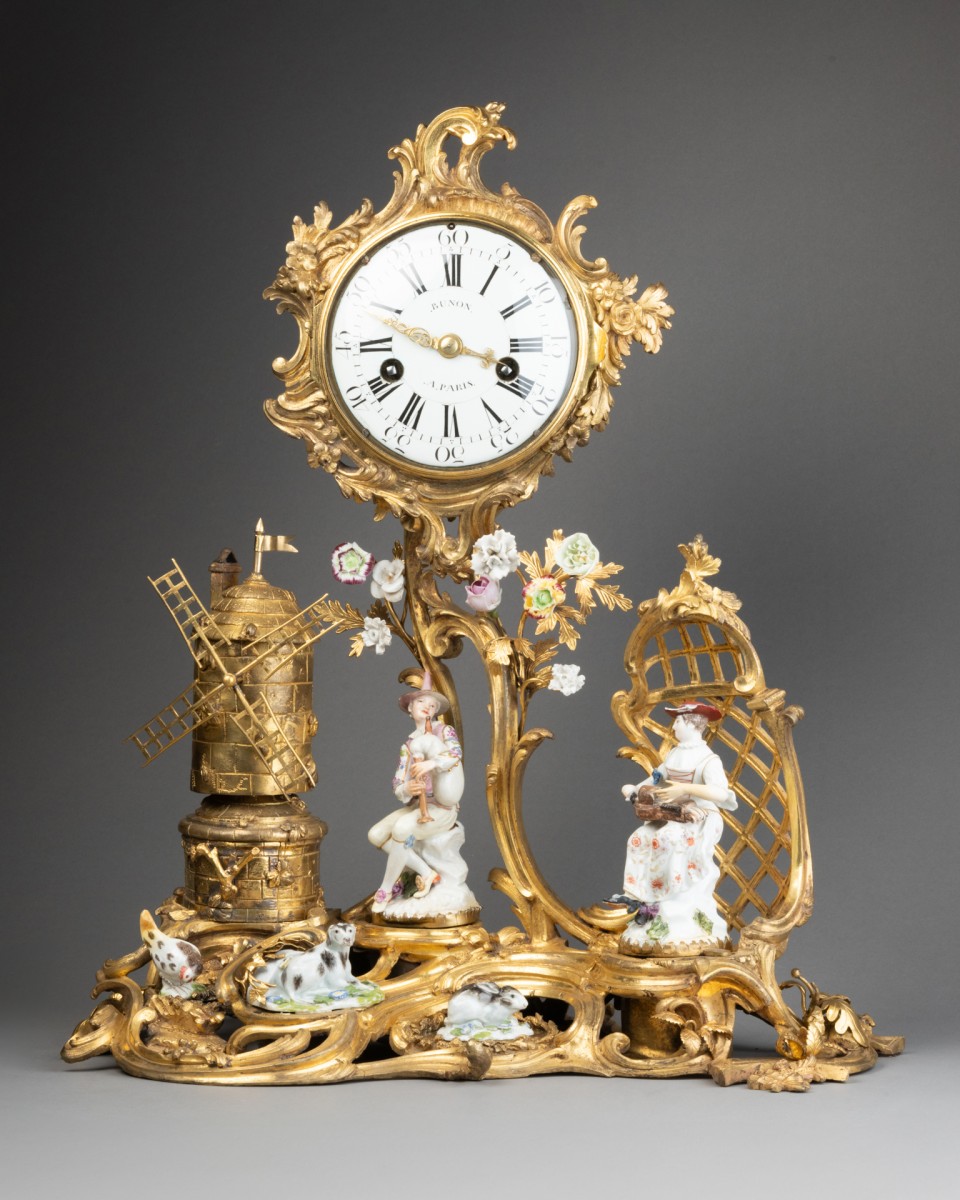

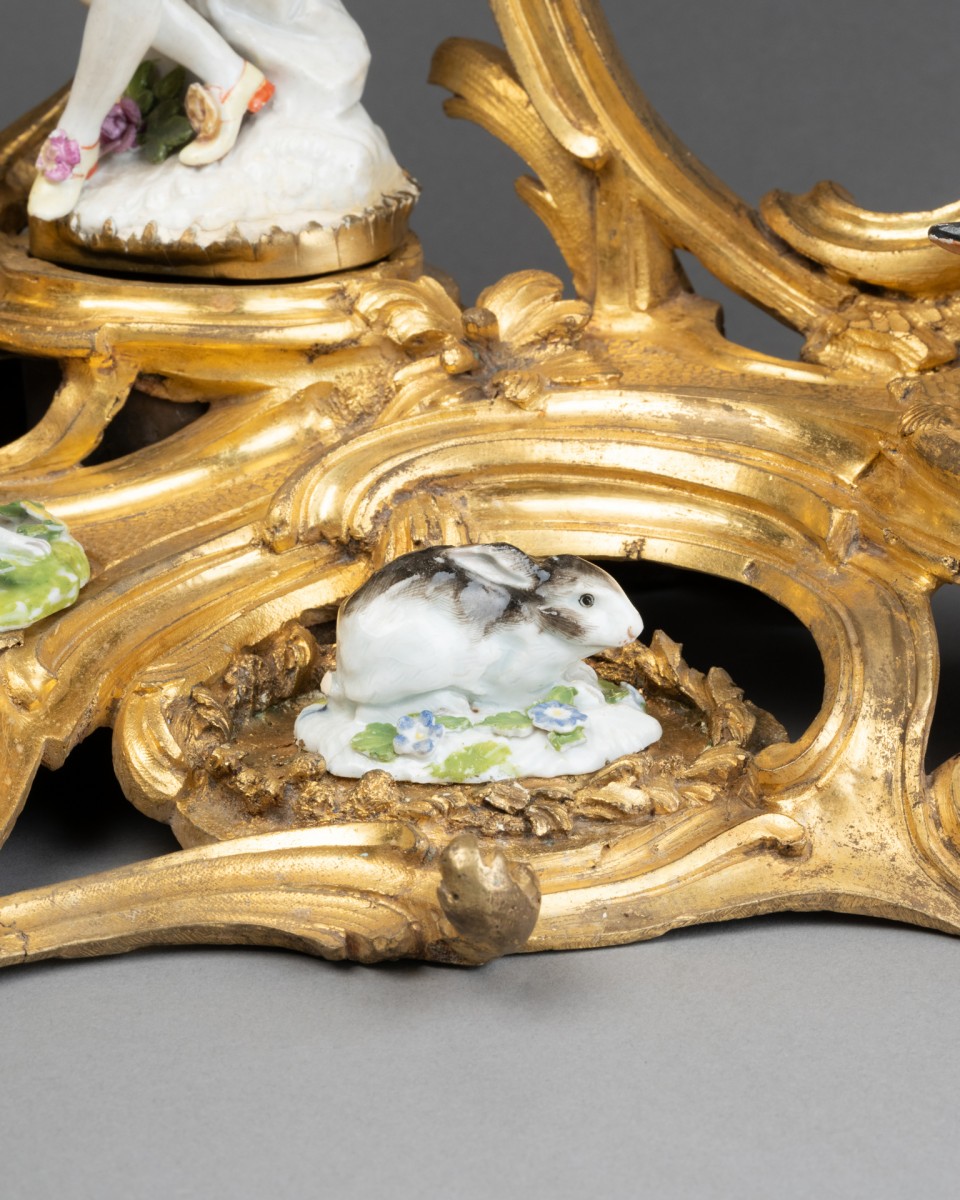
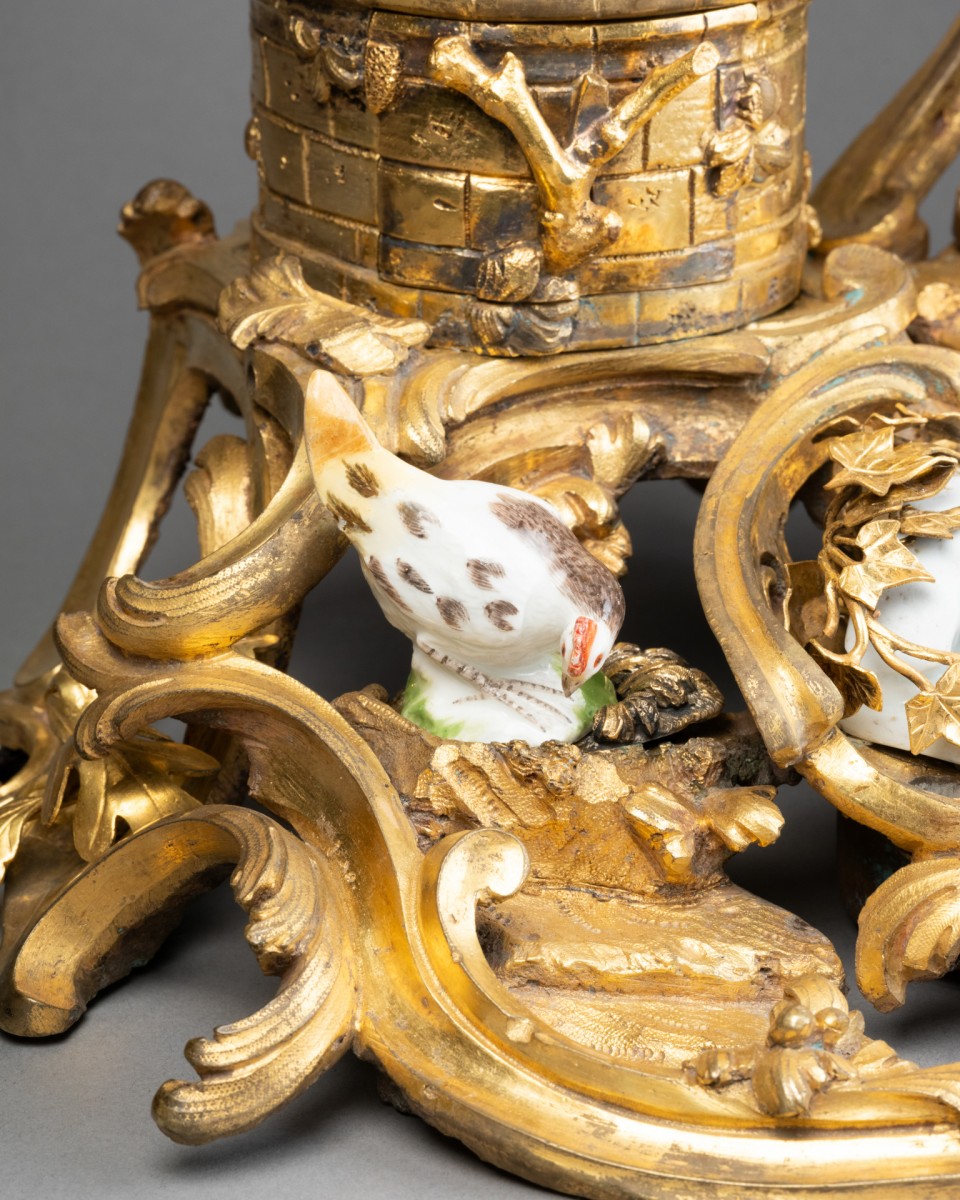
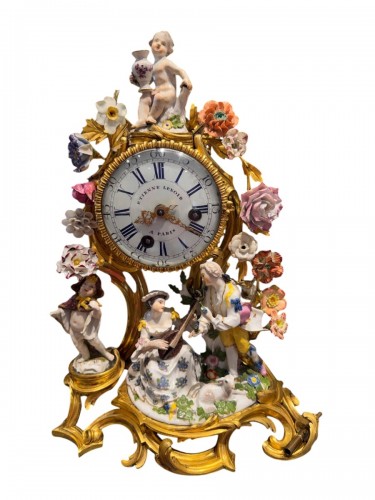
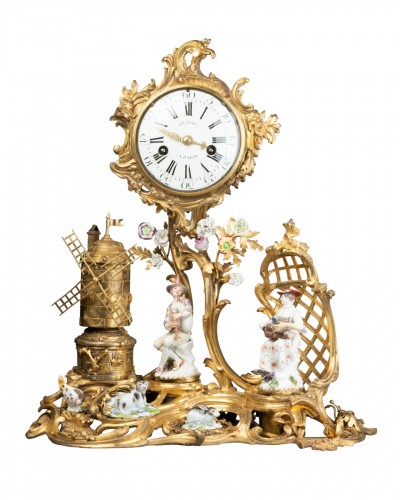
A rare and important clock featuring finely chased, mercury-gilded bronze, resting on a shaped, openwork Rococo-style base. It is embellished with naturalistic mounds, branches, polychrome porcelain flowers, and small farm animals that contribute to the composition's pastoral spirit.
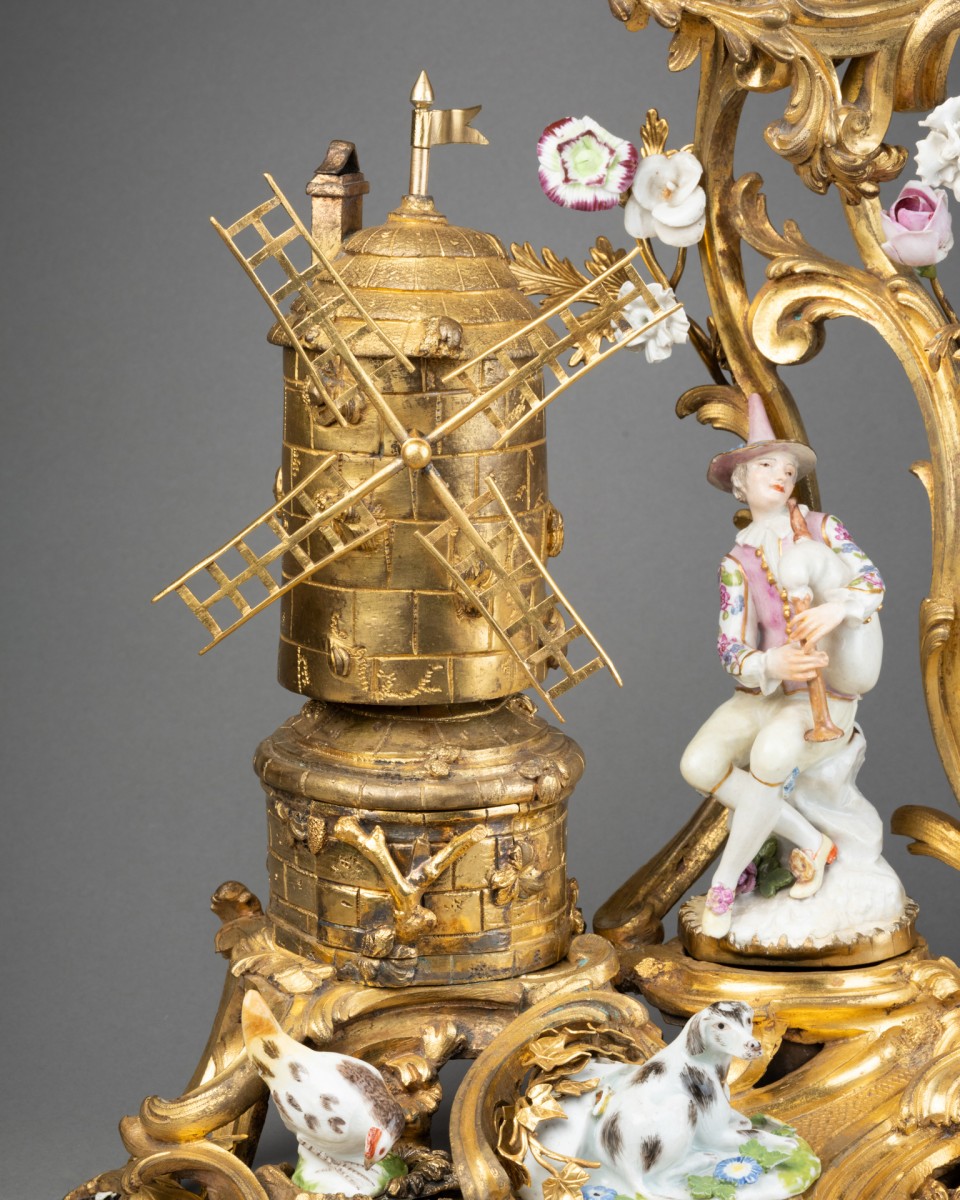
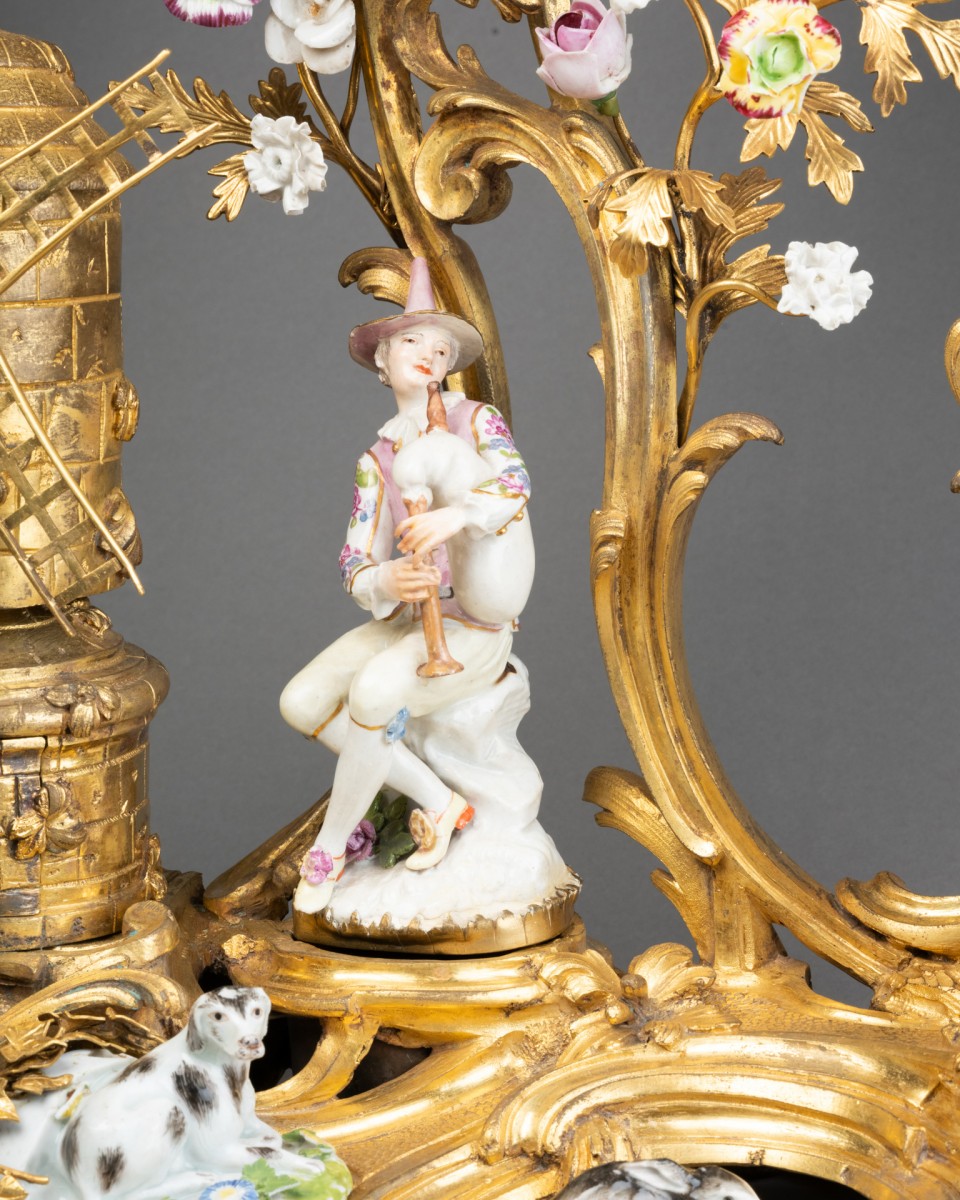
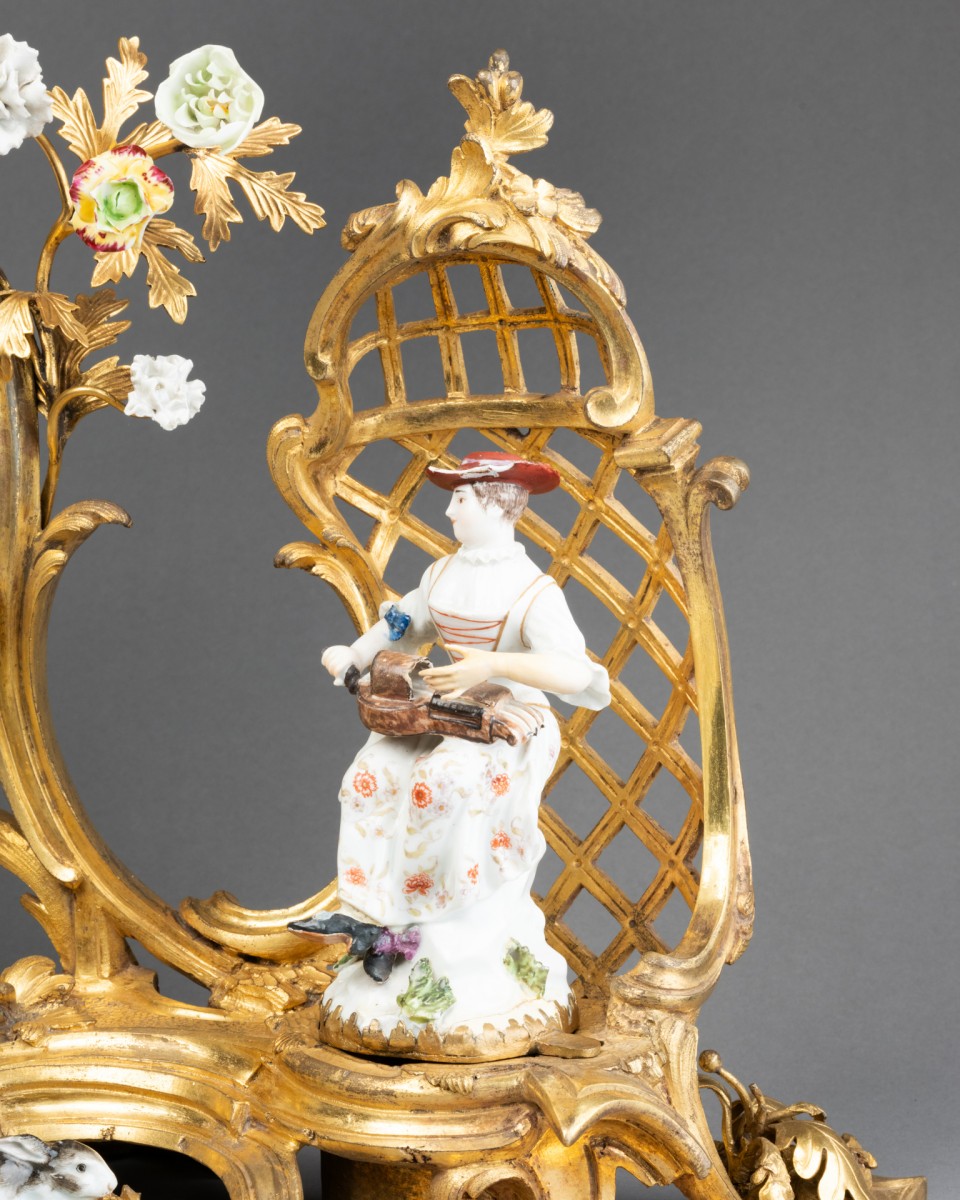
The scene features two prominent porcelain figures—likely Harlequin and Columbine—depicted in the gallant, rustic style characteristic of mid-18th-century taste. Harlequin, wearing a fanciful costume and a pointed hat, plays the bagpipes, while Columbine is shown seated, holding a stringed instrument.
The figures are positioned beneath delicate, openwork gilded bronze garden trellises that evoke the arbors found in grand aristocratic gardens.
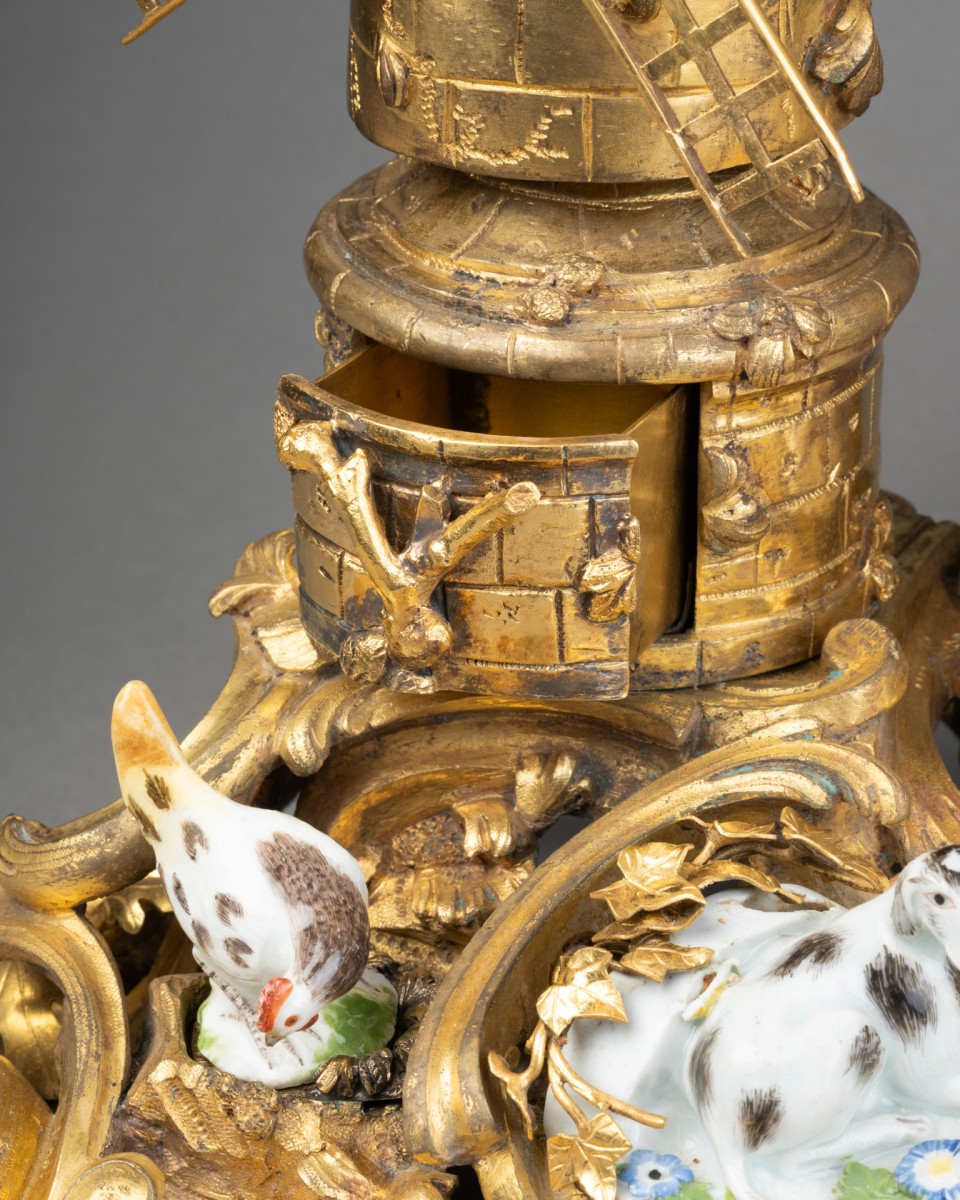
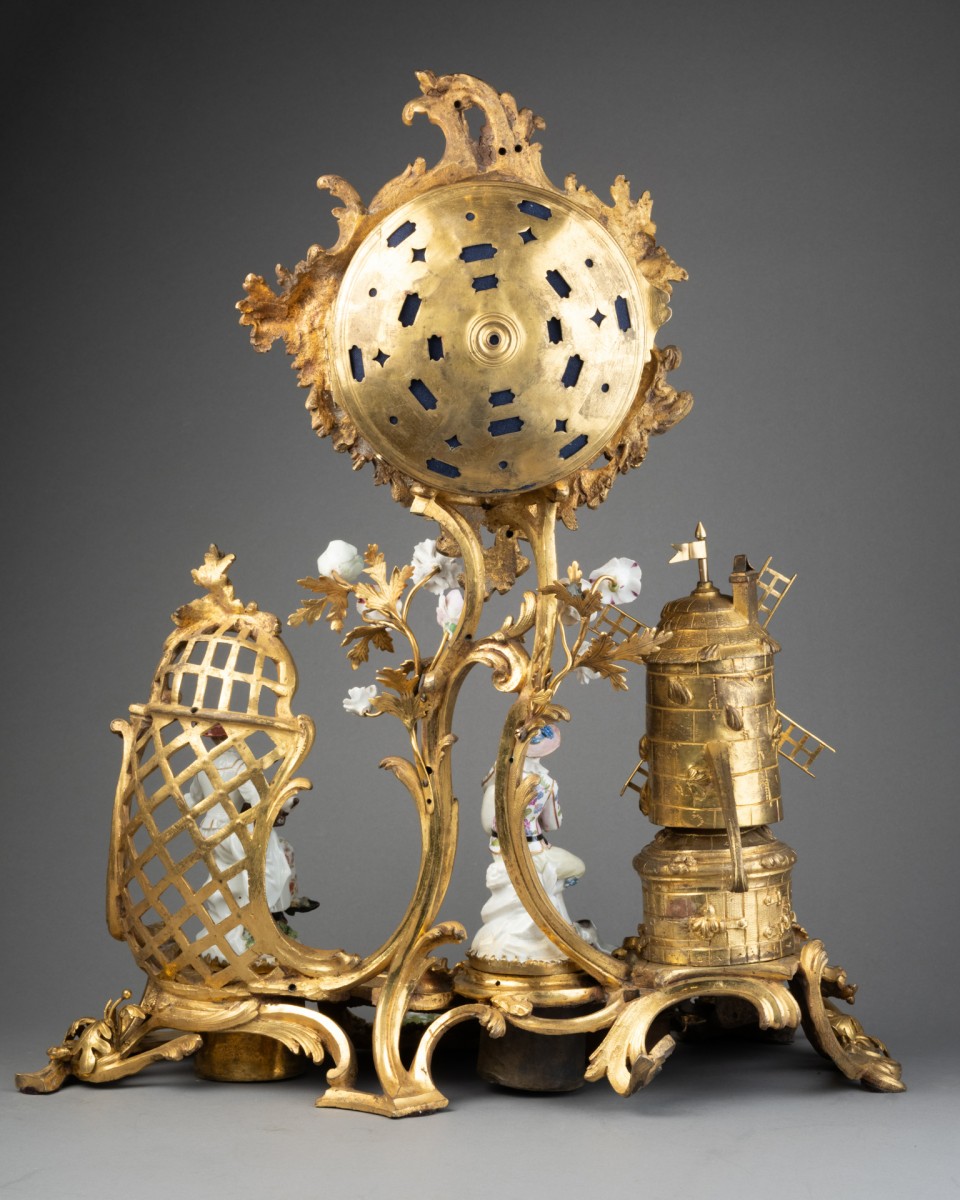
To the left rises a miniature gilded bronze windmill with openwork sails; it also functions as an oil lamp—a particularly rare feature for this type of clock. The movement is perched high atop a substantial Rococo scroll, styled to resemble a tree that dominates the entire scene.
The two main porcelain figures are mounted on swiveling gilded bronze bases that reveal small secret compartments hidden within the structure—likely intended for storing jewelry, coins, or small gold pieces.
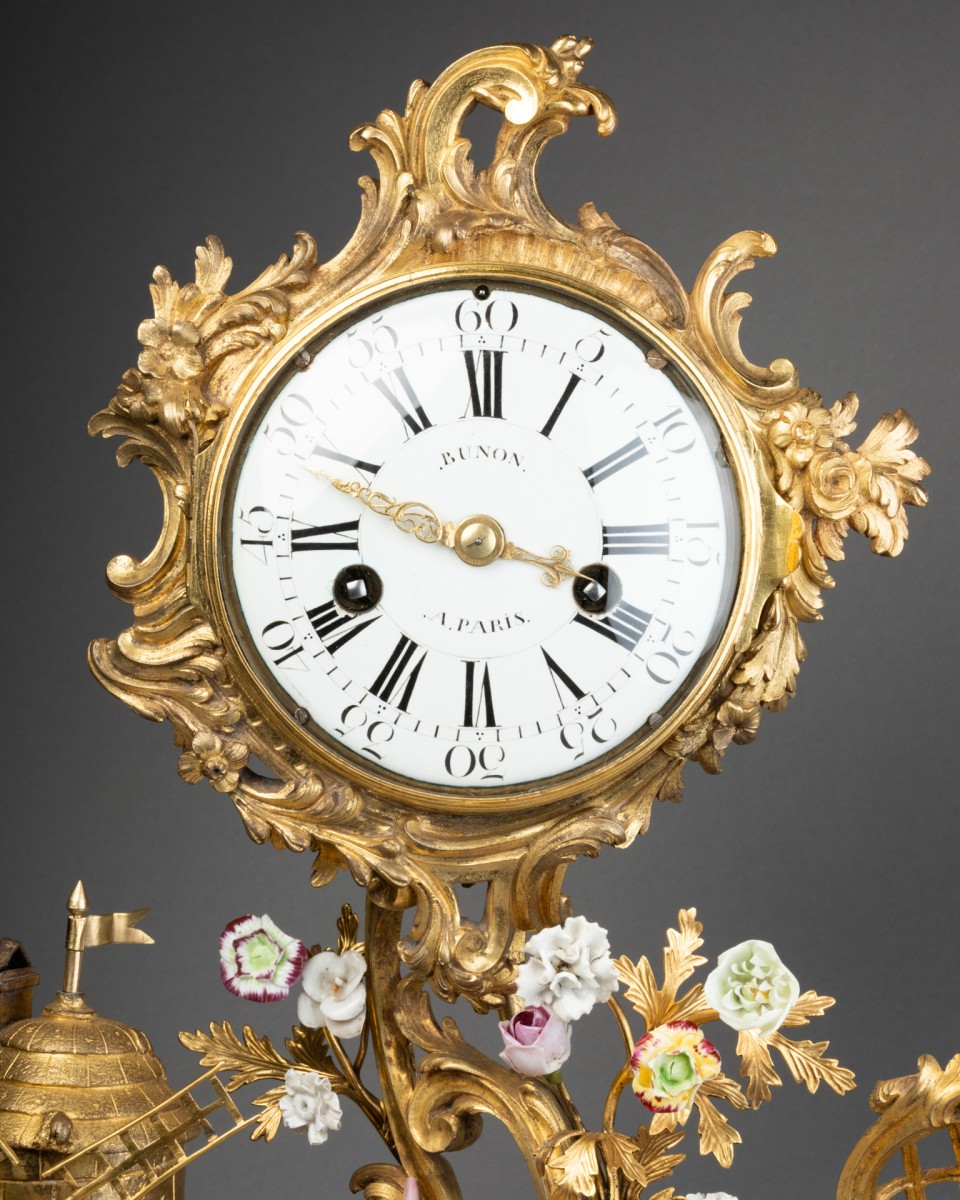
The white enamel dial, featuring Roman numerals, is set within an asymmetrical surround decorated with rockwork, acanthus leaves, and shaped clasps.
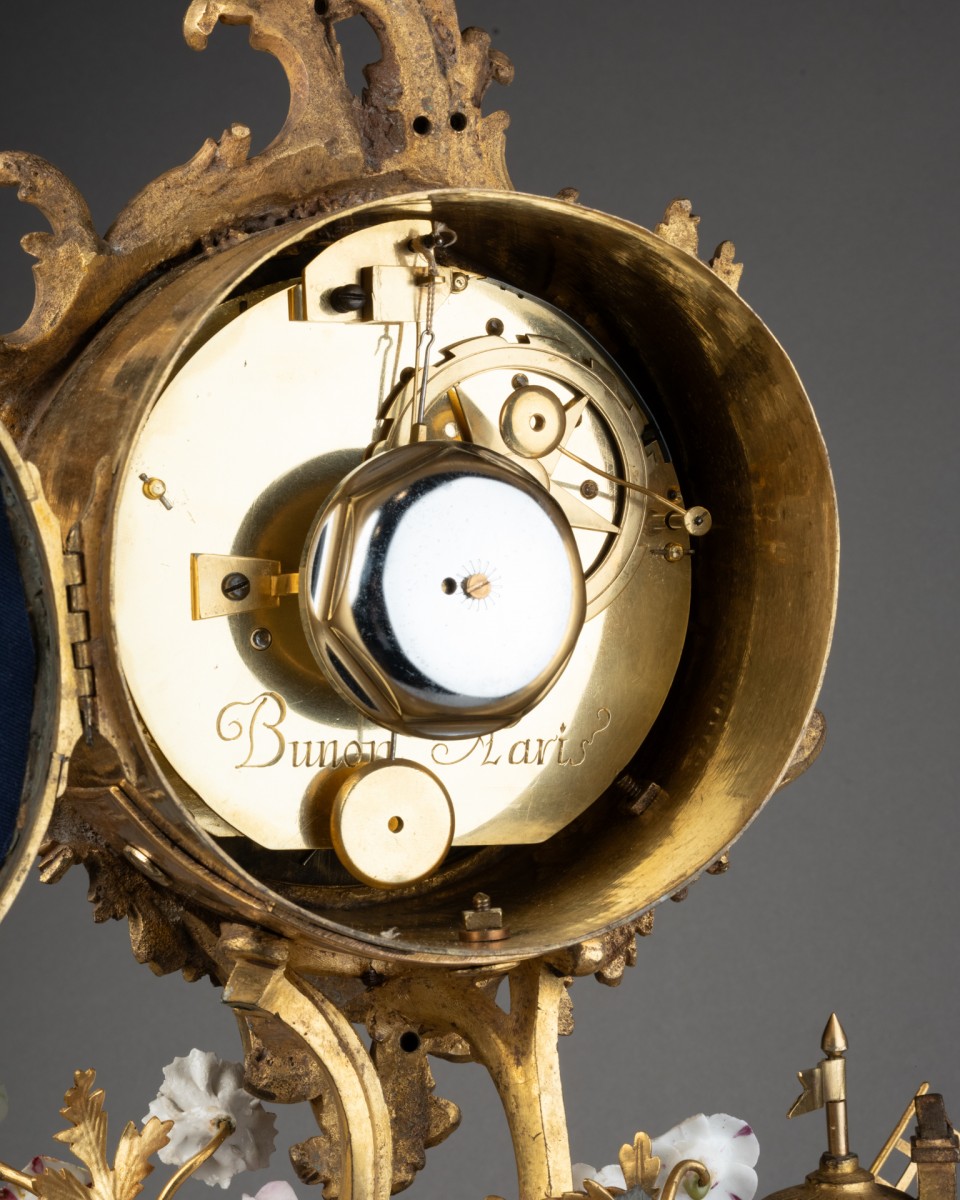
It is signed "Bunon à Paris," referring to Antoine-Robert Bunon, a clockmaker admitted as a master in Paris in 1763. The movement is also signed on the backplate.
Silk-thread suspension; in perfect working order, having been serviced by our clockmaker.
Exceptional quality of chasing and original mercury gilding. In fine condition, with some wear to the gilding and minor restorations to the porcelain.
Porcelain figures by Johann Joachim Kaendler, Meissen manufactory, circa 1750.
Work by a prominent Parisian *marchand-mercier* (luxury goods dealer), Louis XV period, circa 1765.
Dimensions:
Height: 53 cm; Width: 46 cm; Depth: 26 cm
Our assessment:
This clock is a remarkable testament to Parisian taste in the 1760s, masterfully blending Italian theater, pastoral themes, and the combination of Rococo bronze and porcelain.
The figures are directly inspired by *commedia dell’arte*—likely Harlequin and Columbine—whose likenesses were widely disseminated in 18th-century decorative arts. However, far removed from their origins in popular Italian theater, they are transformed here—in keeping with French aristocratic taste—into elegant rustic musicians inhabiting an idealized setting.
The overall spirit of the composition strongly evokes the pastoral scenes of François Boucher and Jean-Baptiste Huet; their depictions of gallant shepherds, amorous games, and music enjoyed immense success during the reign of Louis XV. Here, that same poetic world—featuring windmills, garden trellises, flowers, and domestic animals—is translated into the arts of bronze-casting and clockmaking.
This piece illustrates the transition from the exuberance of the Louis XV Rococo style to the early stages of the Louis XVI aesthetic, characterized by a return to idealized nature, pastoral simplicity, and a more restrained elegance.
The miniature windmill on the left side of the composition is of particular interest, as it also functions as an oil lamp. This arrangement significantly enhanced the work's theatrical effect: at dusk, the flickering light of the flame brought to life the relief details of the gilt bronze, the polychrome porcelain, and the shadows cast by the openwork trellis. Combined with the clockwork mechanism perched high up—like a tree dominating the scene—the composition would have created a spectacular and deeply animated effect.
This pursuit of movement and animation is characteristic of the most sophisticated creations of the mid-18th century, a period when bronze-casters and clockmakers sought to transform the clock into a veritable, inhabited miniature tableau.
The two main figures, mounted on pivoting bases that reveal secret compartments, also attest to the ingenious refinement of these precious objects, designed as much to captivate their owners as to surprise them.
Our clock perfectly embodies the "Pompadour" taste cultivated by the great Parisian *marchands-merciers* (luxury goods dealers), who combined gilt bronze, porcelain, and clockmaking in exceptionally sophisticated creations.