Offered by Franck Baptiste Paris
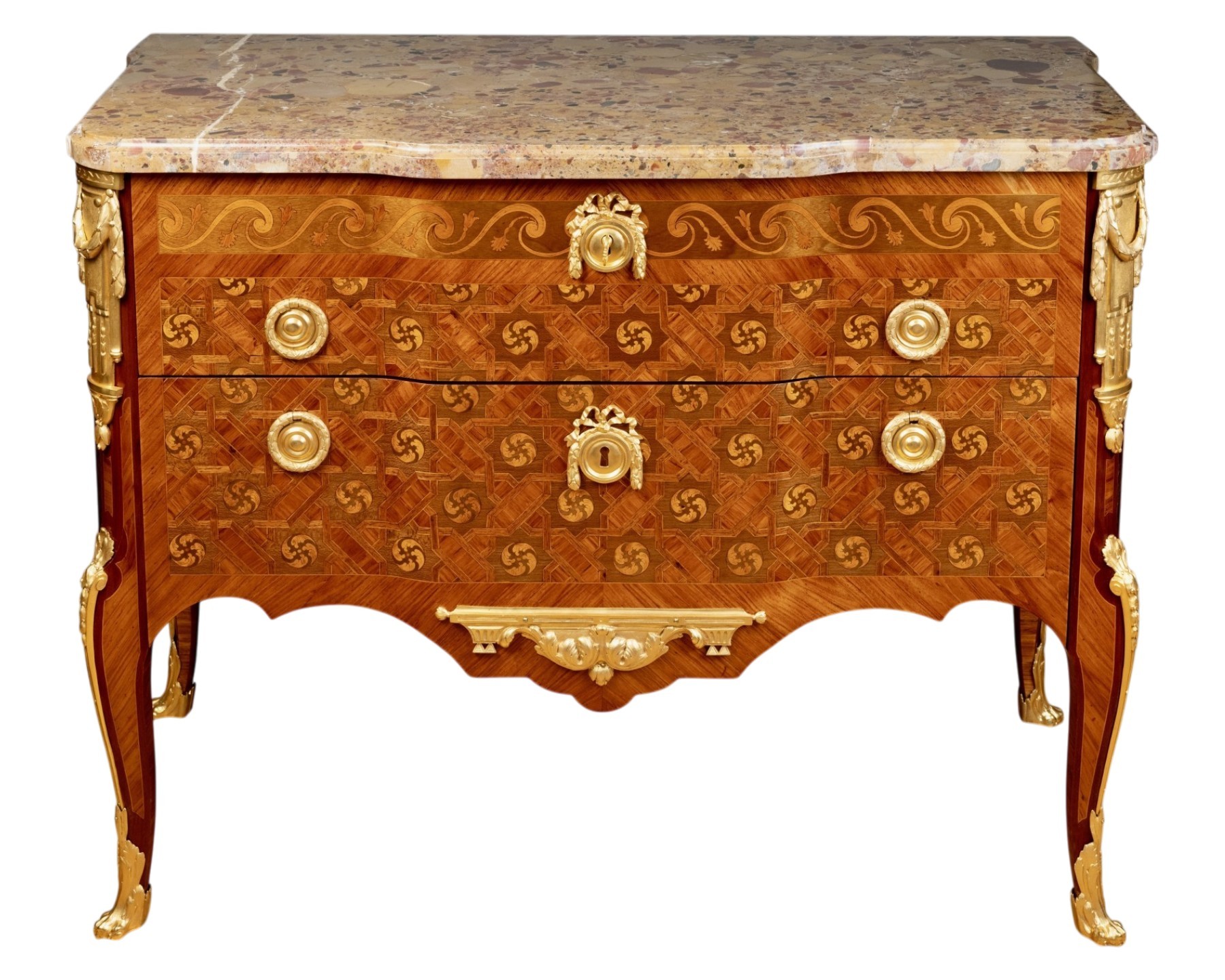
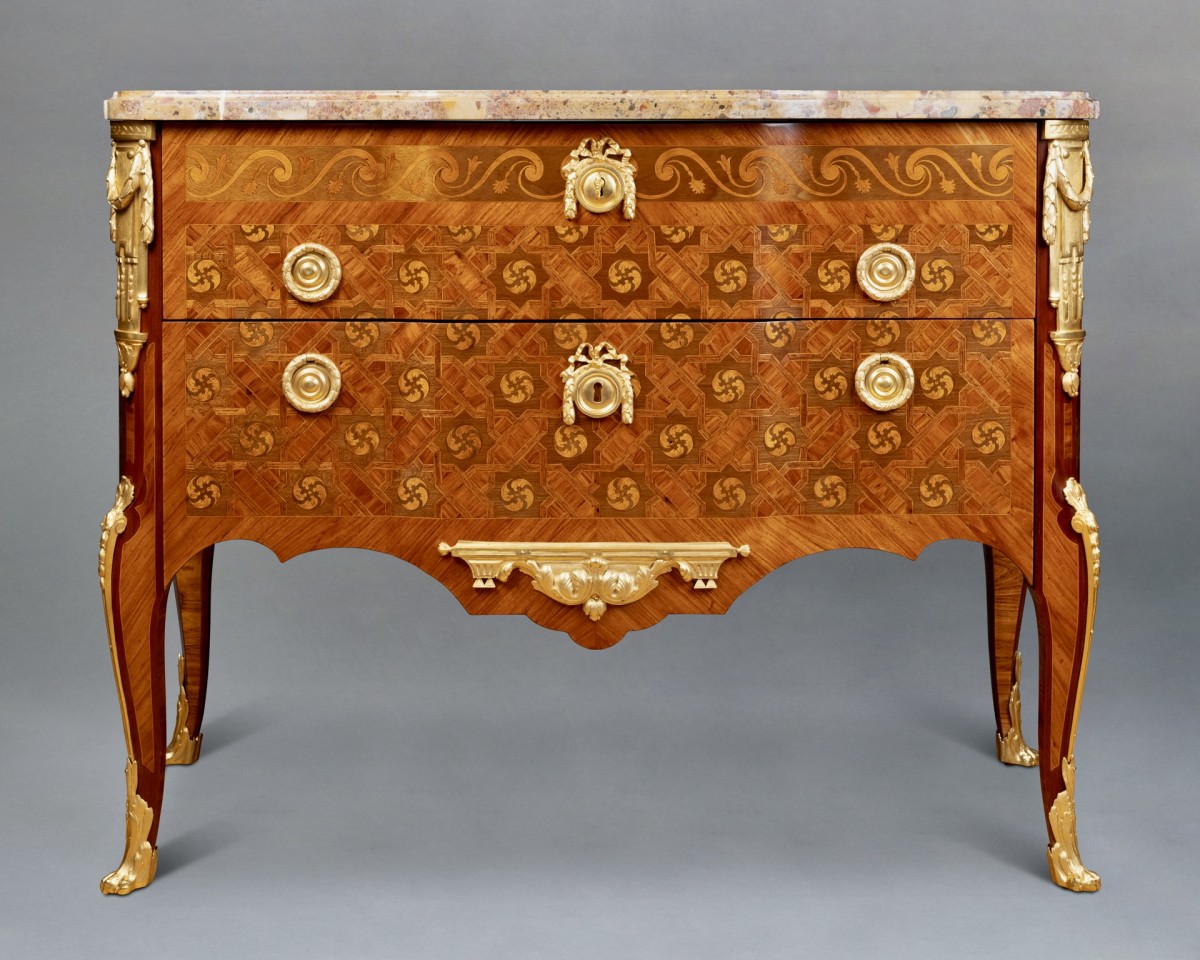
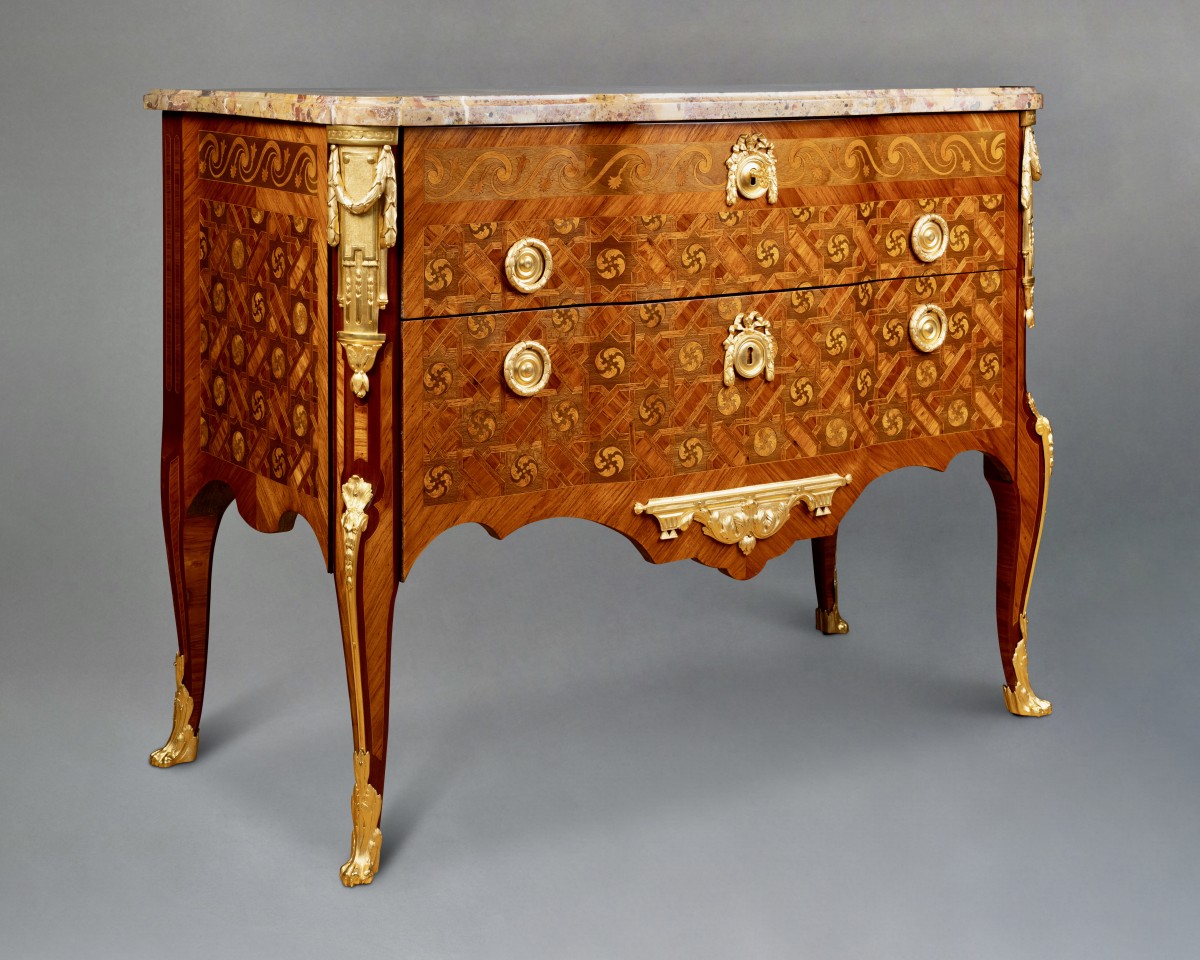

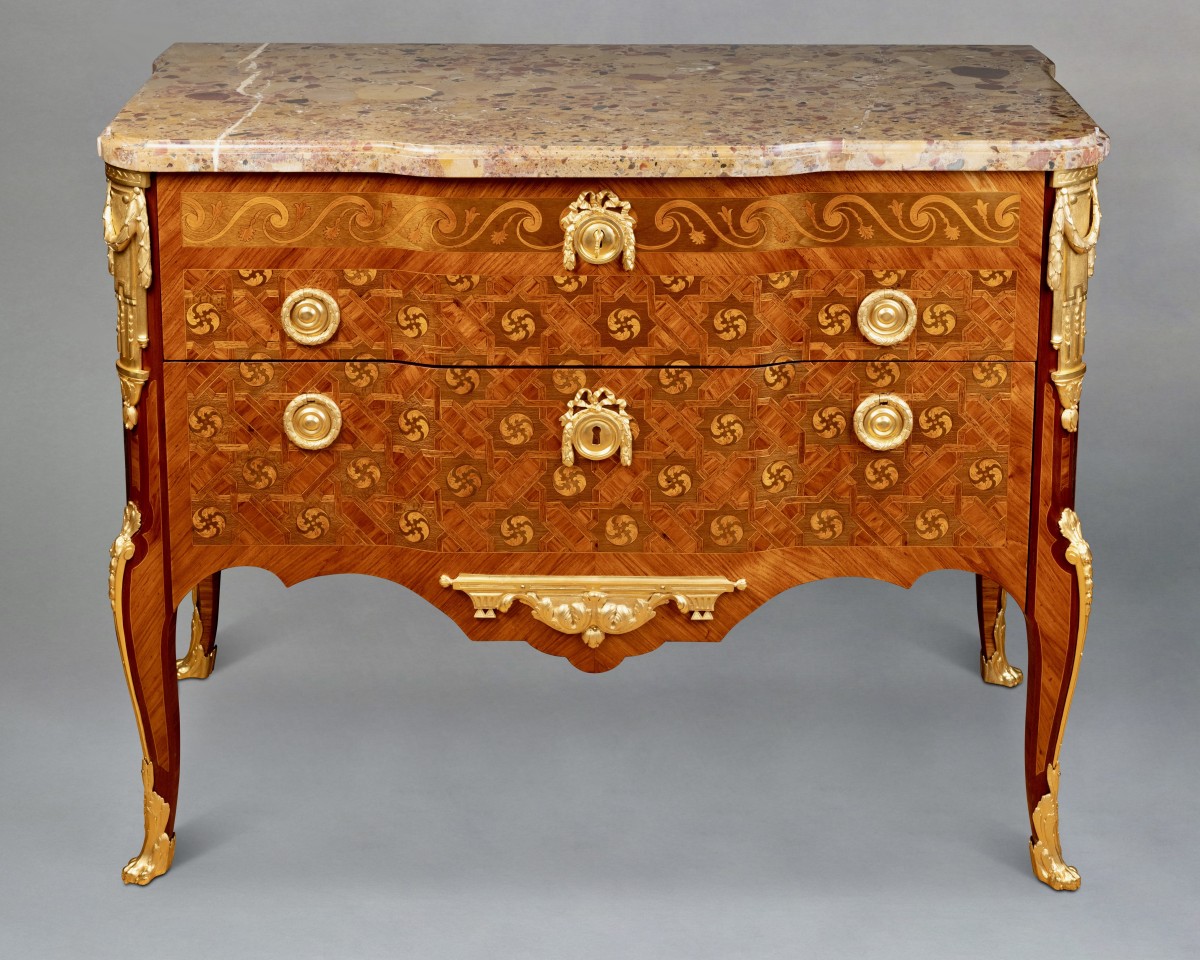
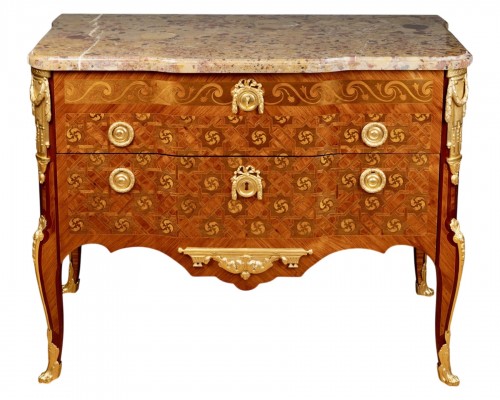
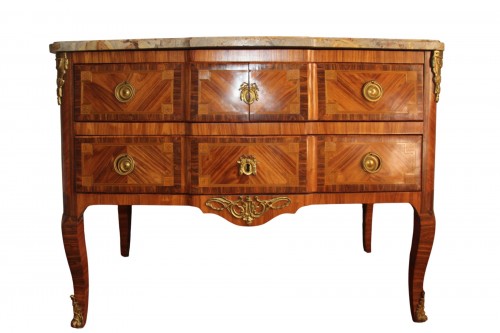
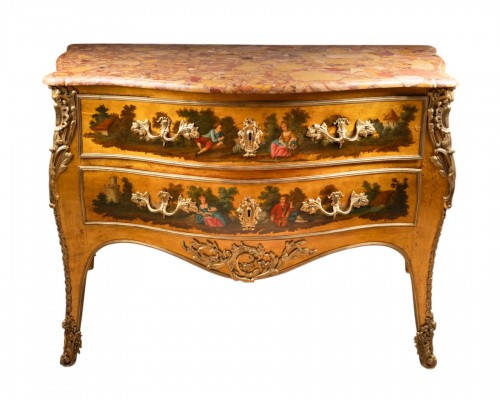
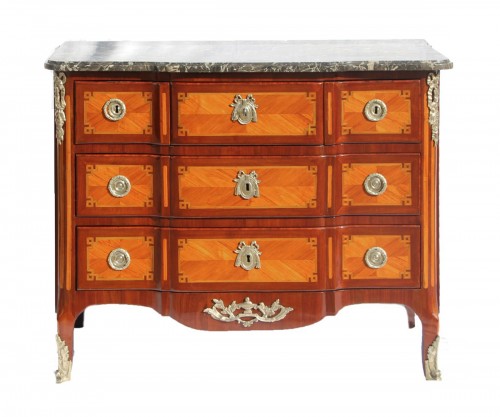
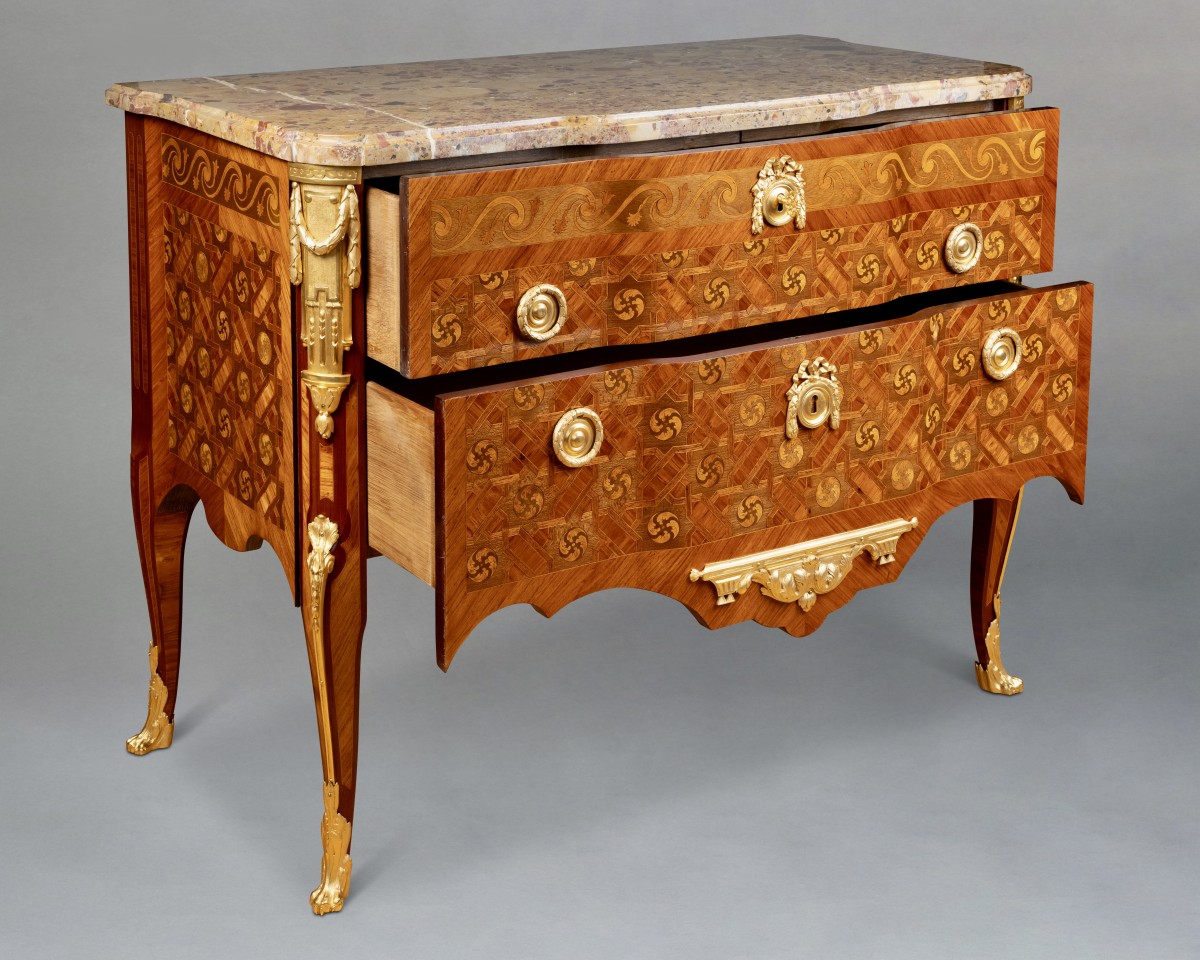
A rare commode in the Greek style, with a central projection, opening with two drawers without a central divider.
It features a luxurious veneer of precious woods, including rosewood, violet wood, natural sycamore, green-stained sycamore, amaranth, and boxwood stringing.
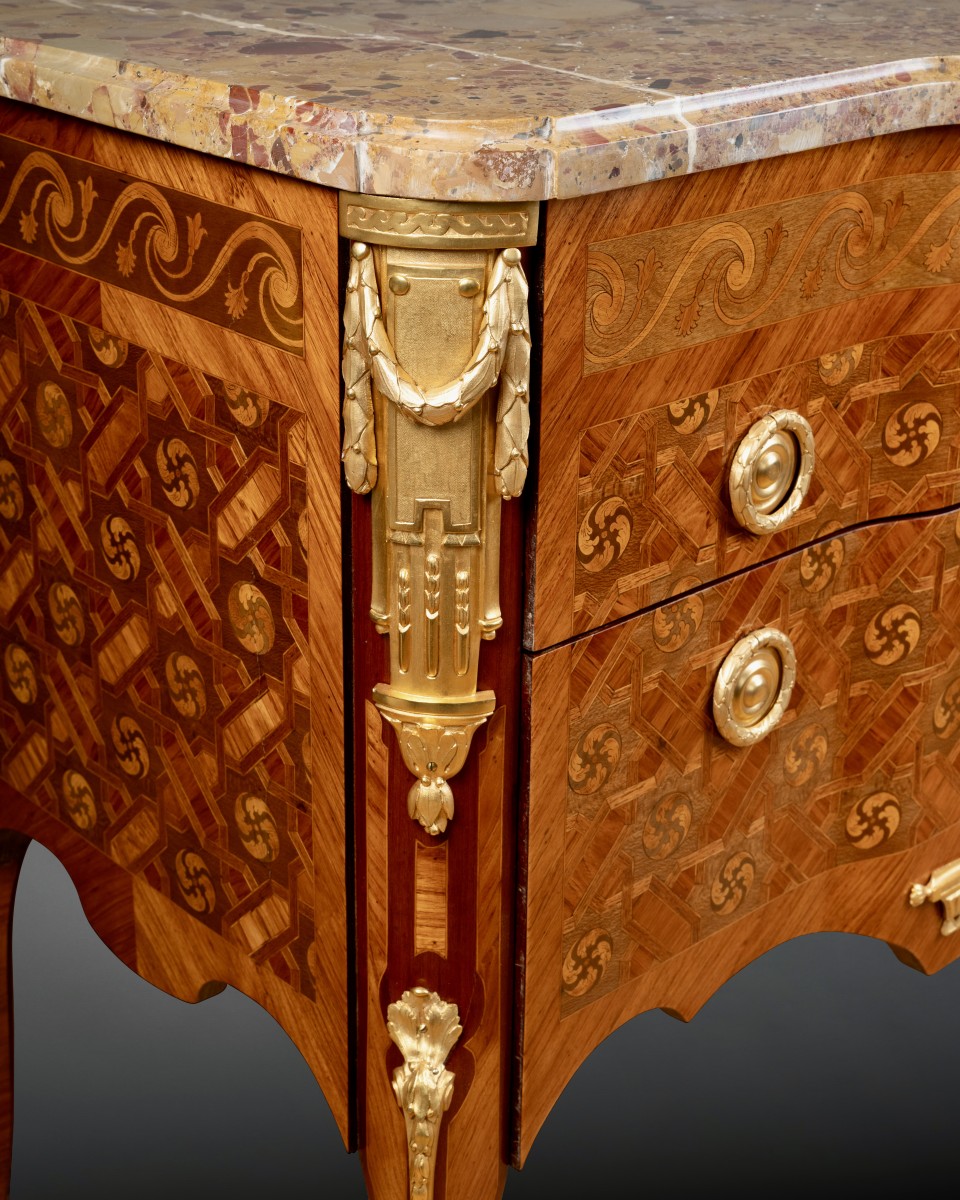
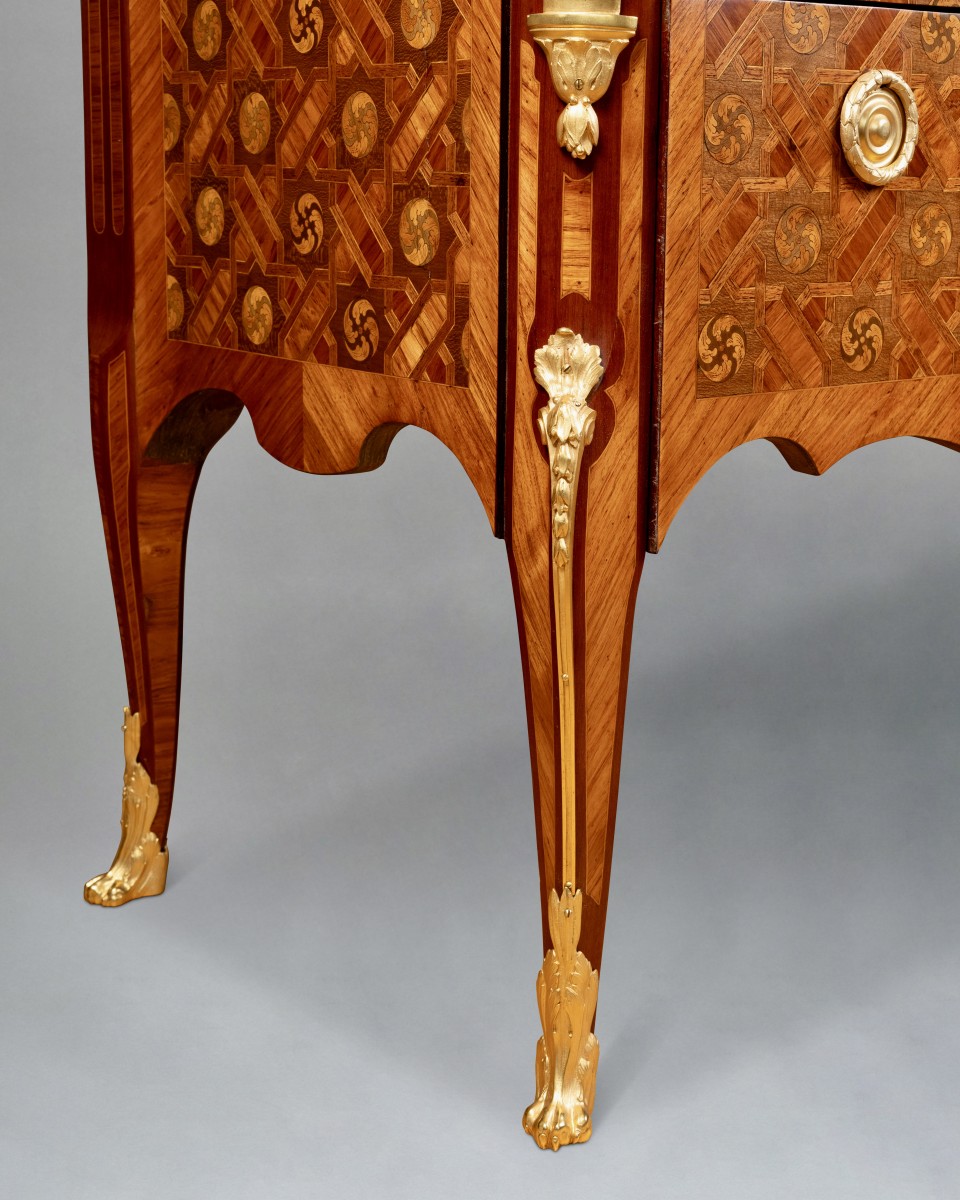
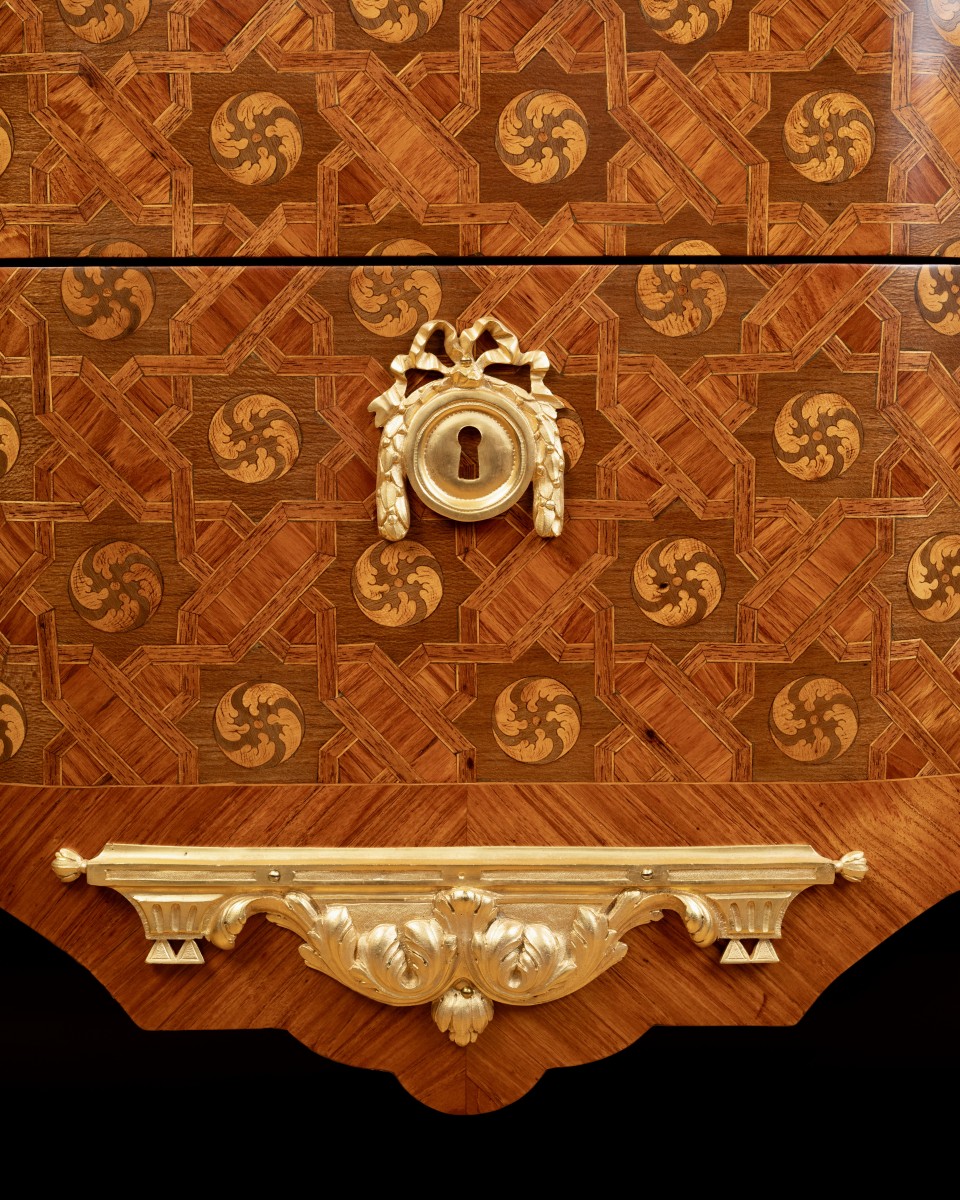
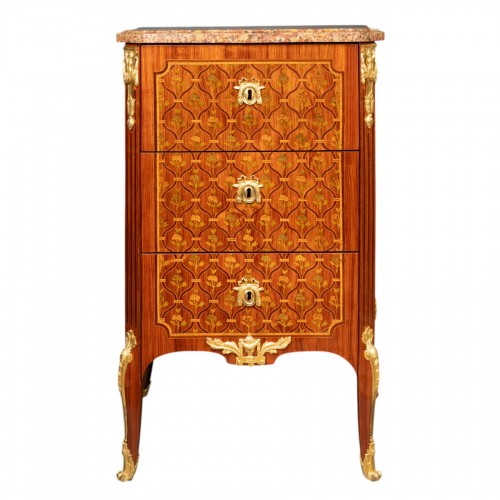
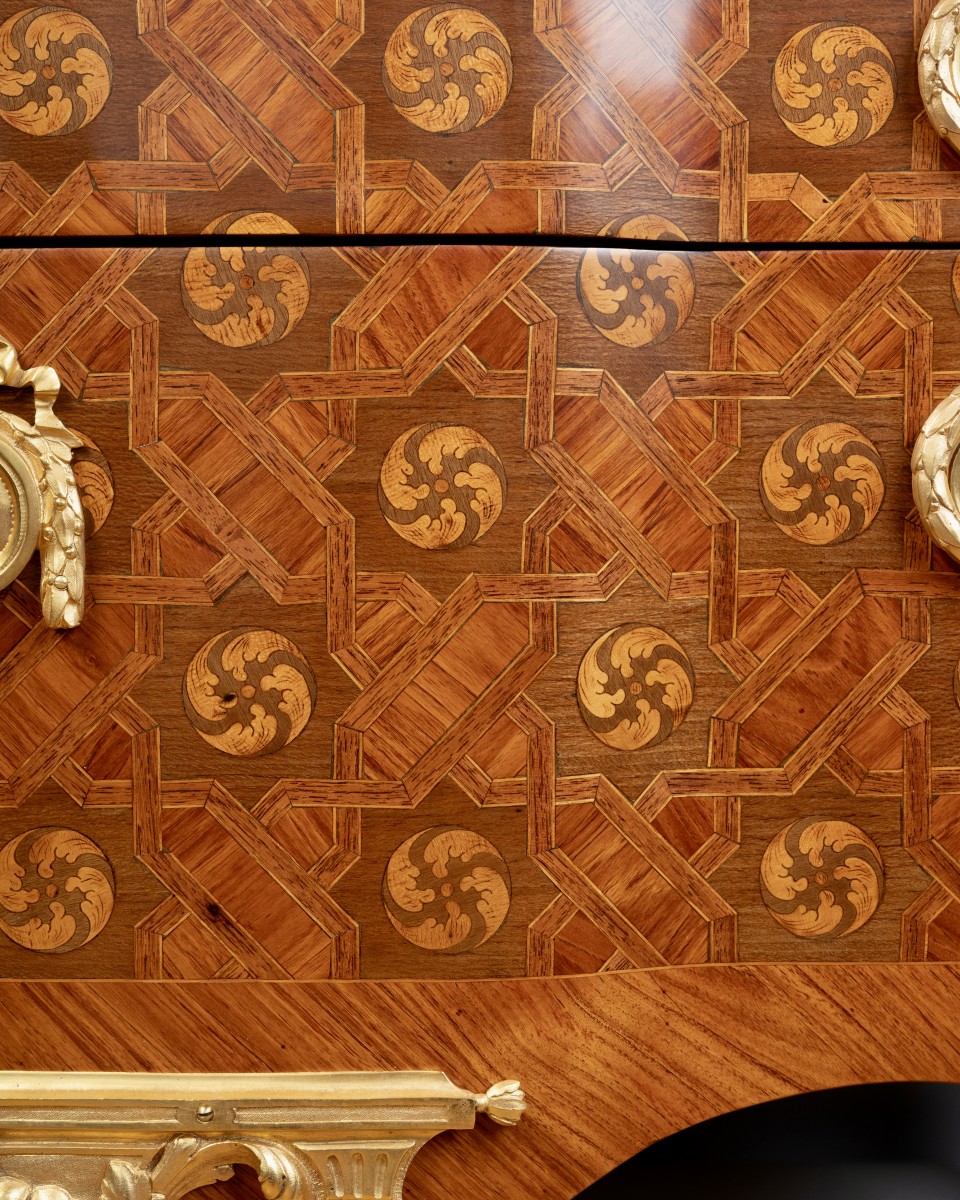
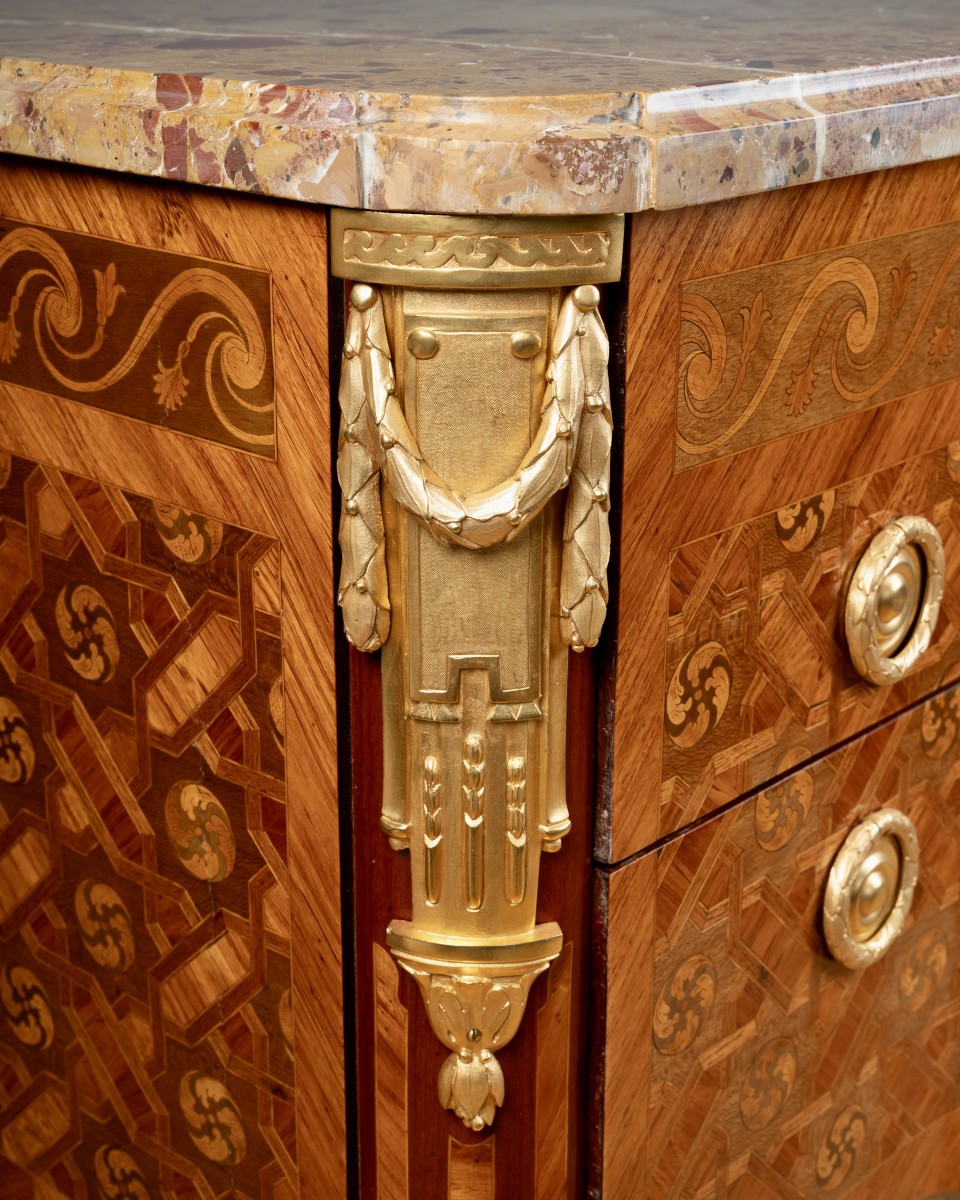
The decoration showcases a highly virtuosic geometric marquetry, composed of a continuous interlacing of ribbons forming a network of interlocking stars and polygons, centered with stylized rosettes.
The original bronze mounts are exquisitely chased and cold-worked, including drawer pulls with laurel wreaths, a lamp base, lion's paw feet and finials, and drops with laurel leaf garlands.
Original Aleppo breccia marble top. Original bronze mounts and lock.
Very good condition.
The back panel and left side rail are stamped P.DENIZOT.
Work by the cabinetmaker Pierre Denizot, Paris, transitional period between Louis XV and Louis XVI, circa 1770-1775.
Dimensions:
Width: 112.5 cm; Height: 87 cm; Depth: 57 cm
Our commode has previously undergone meticulous and extensive restoration, including the complete removal of the marquetry, which allows us to present it today in exceptional condition.
Our opinion:
The commode we are presenting is exceptional for the virtuosity of its interlaced decoration. This composition of great geometric complexity, combined with the use of stained woods with expertly controlled contrasts, constitutes one of the most characteristic signatures of the work of the cabinetmaker Pierre Denizot. It was thanks to this remarkable technical mastery that he was appointed cabinetmaker to the Count of Artois, the future Charles X, and that he worked for several members of the royal family, notably the Count of Provence, the future Louis XVIII. Several commodes with similar decoration are preserved in institutions such as the Palace of Versailles and the Victoria and Albert Museum.
His talent is expressed here in all its splendor, through a decoration whose sophistication rivals the finest Parisian pieces of his time.
In addition to the exceptional quality of its decoration, our commode is distinguished by the presence of one of the most sought-after marbles of the 18th century, gilt-bronze ornamentation with particularly refined chasing, and an ingenious central locking system that allows both drawers to be locked simultaneously with a single lock. This mechanism, developed in the 1760s by Jean-François Oeben, testifies to the high level of technical sophistication sought in the most prestigious commissions of the period.
The production period of this commode (circa 1770-1775) corresponds to the height of Pierre Denizot's career, when he worked for the Court and the most important patrons in the kingdom. The exceptional quality of its execution leads us to believe that it was made for a person of the highest rank.
The absence of a guild mark, which indicates an exemption from the tax usually paid by Parisian cabinetmakers, also suggests a privileged clientele. This feature is frequently found on furniture intended for the royal family or certain high-ranking figures who benefited from special privileges.
Pierre Denizot was a Parisian cabinetmaker who became a master on August 1, 1740. He ran a business on Rue Neuve-Saint-Roch and ranked among the leading manufacturers in the capital.
He was the official cabinetmaker to the Count of Artois.
The son of cabinetmaker and merchant-mercer Jacques Denizot, Pierre Denizot worked in his father's workshop. Although he obtained his master's certificate in 1740, he did not register it until 1760, upon his father's death. It was only then that he marked his work with his personal stamp.
He established his business on Rue Neuve-Saint-Roch, worked for his colleague Léonard Boudin, and received royal and princely commissions for the châteaux of Saint-Germain-en-Laye and Maisons-Lafitte. From 1764 to 1766, he served as a sworn accountant for his guild and, from 1776 onward, became the official supplier to the Count of Artois, providing him with all kinds of furniture, both luxury and everyday.