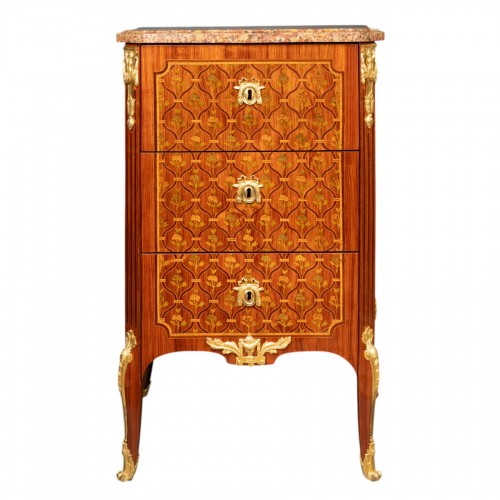
Offered by Galerie Leroy
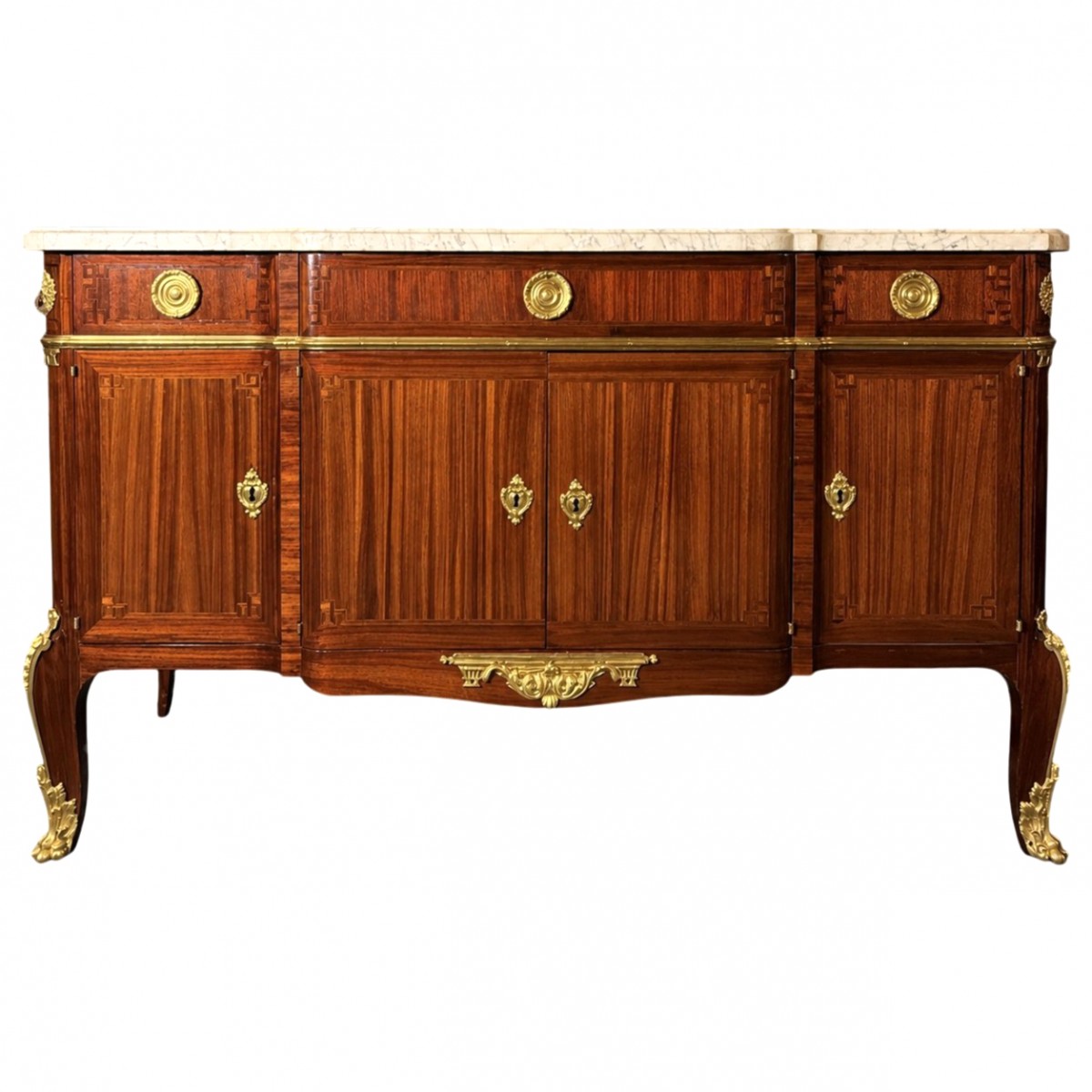
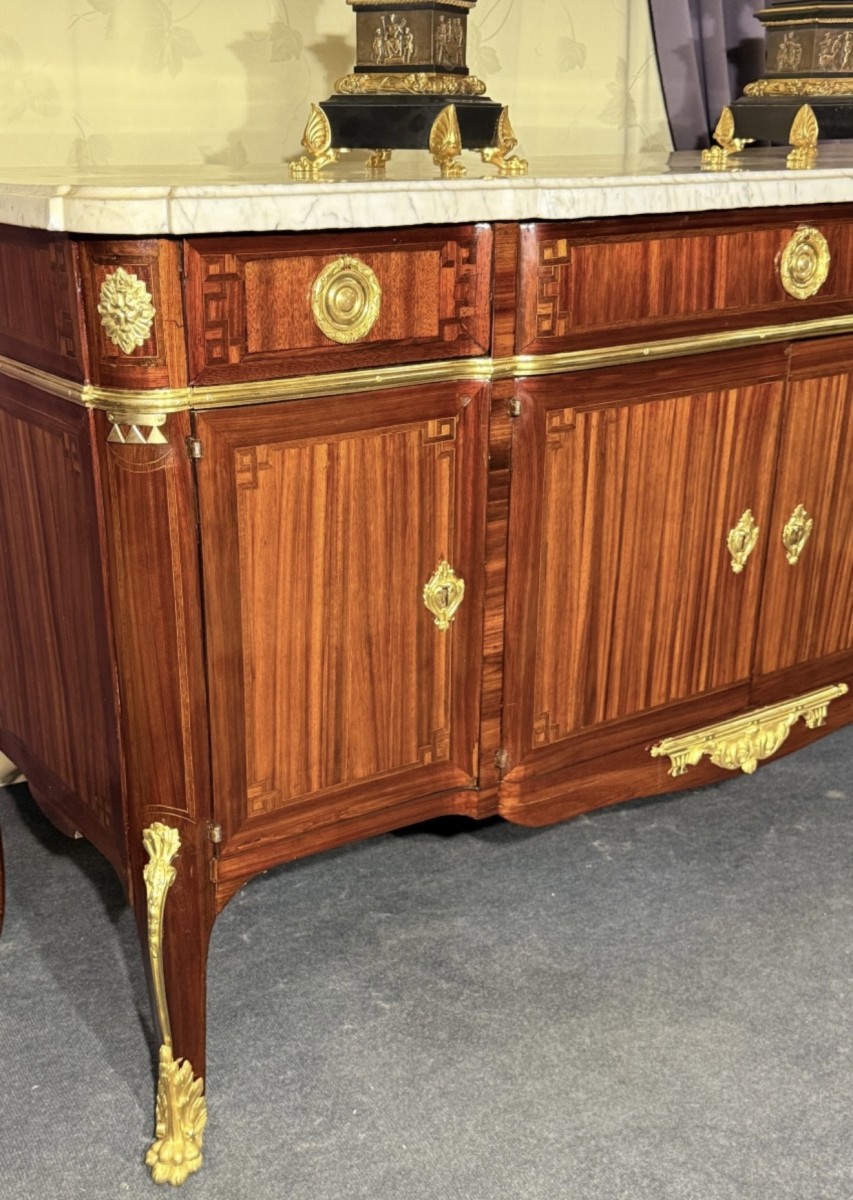
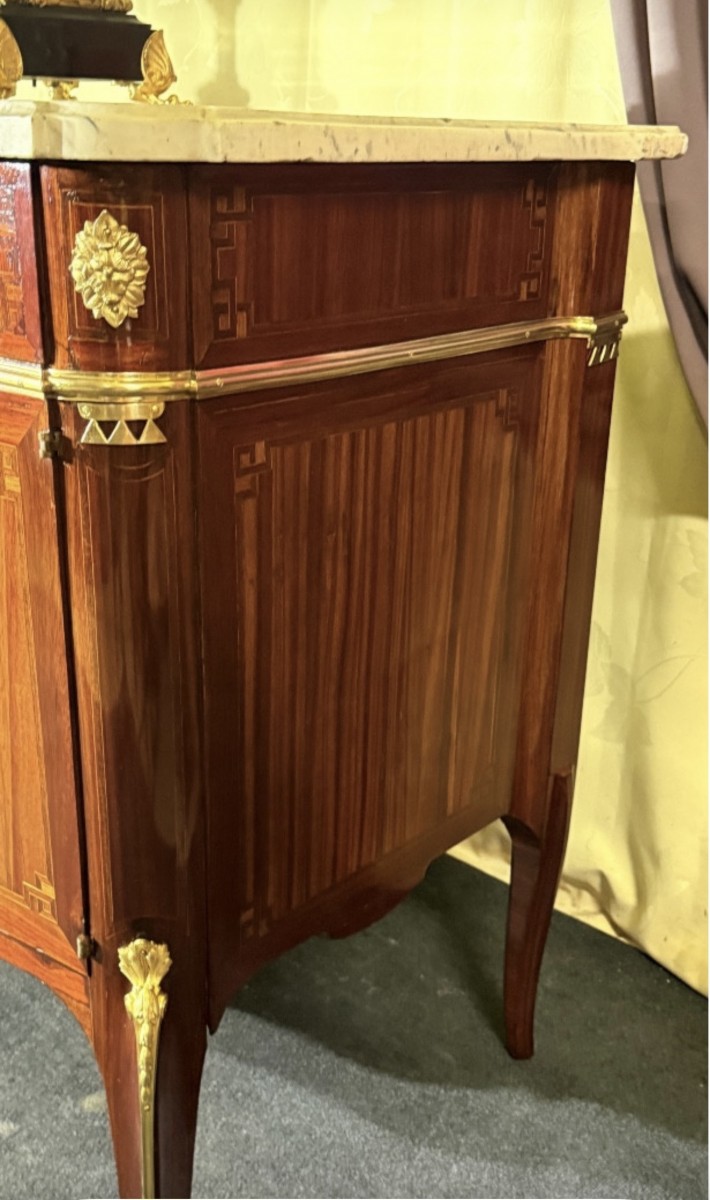
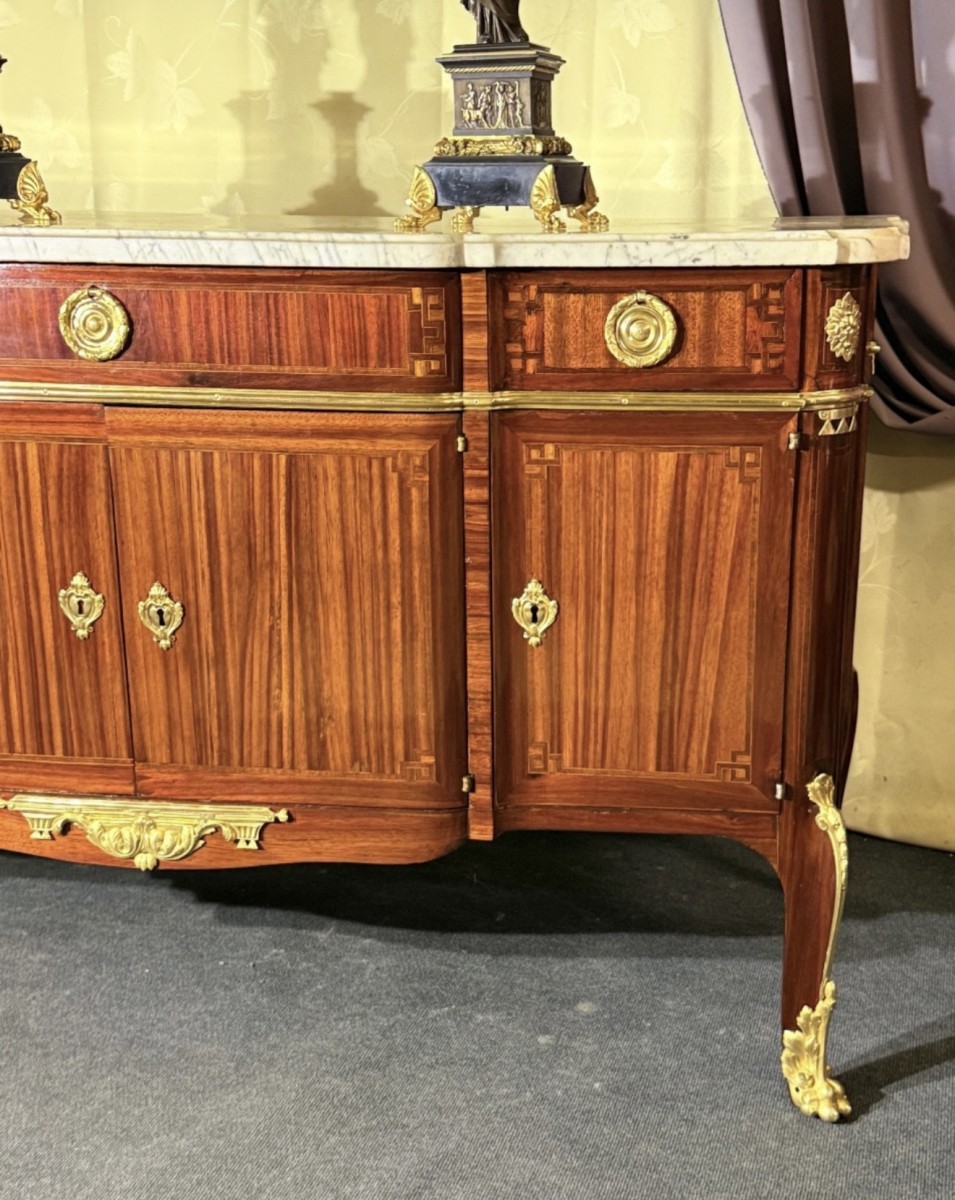

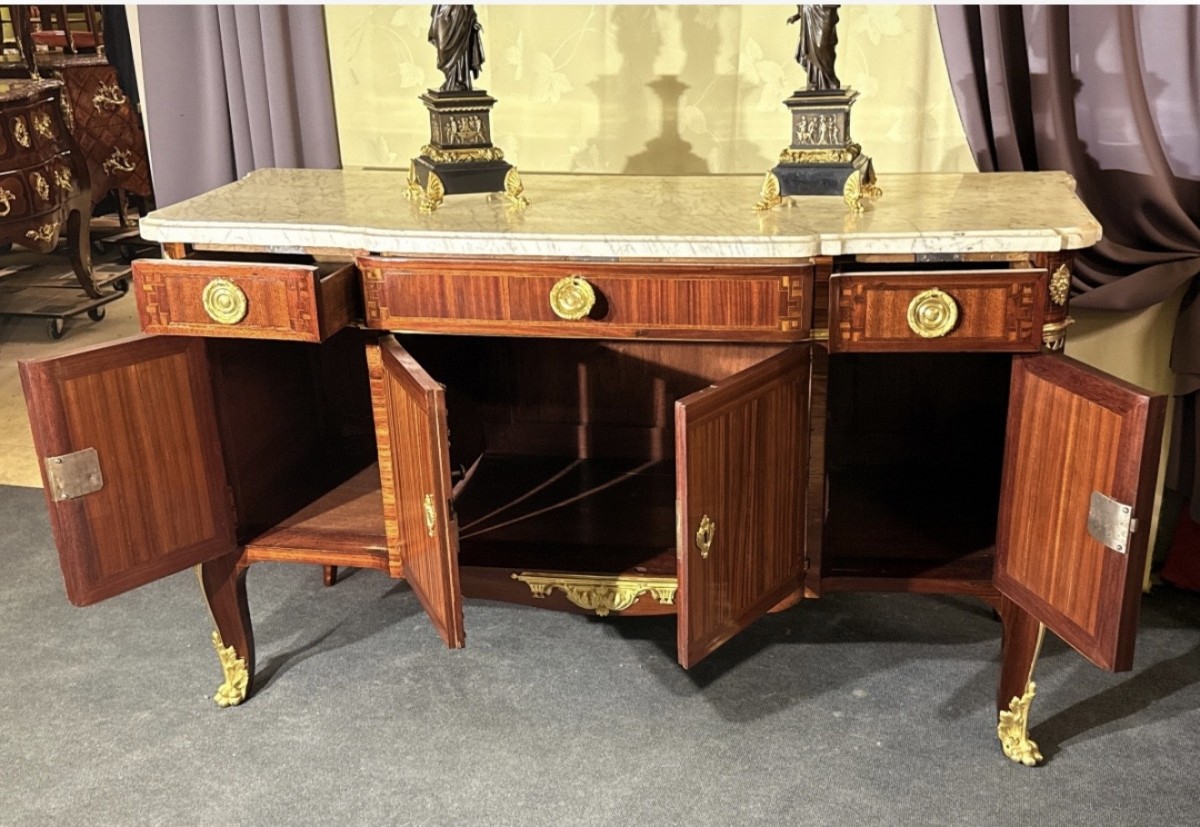
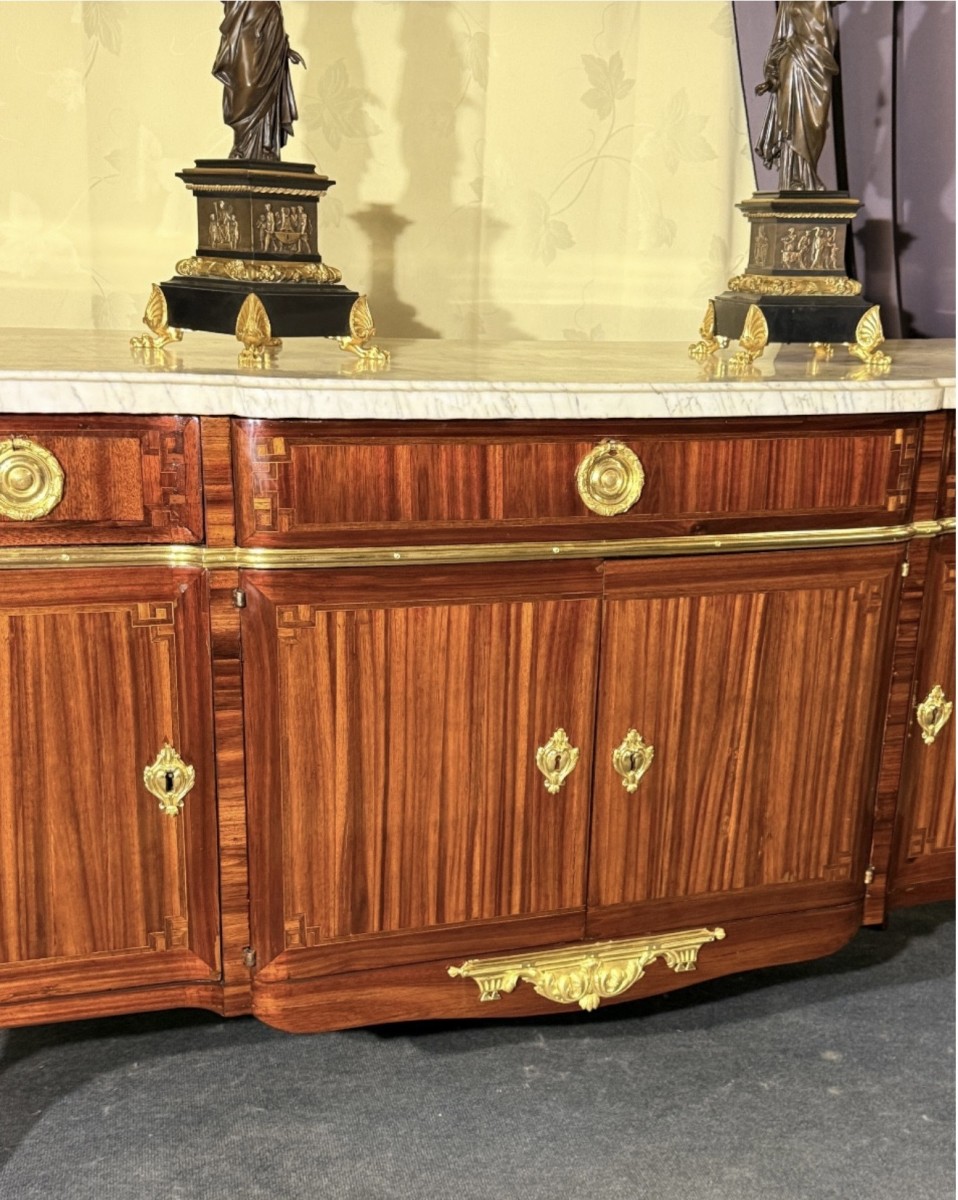
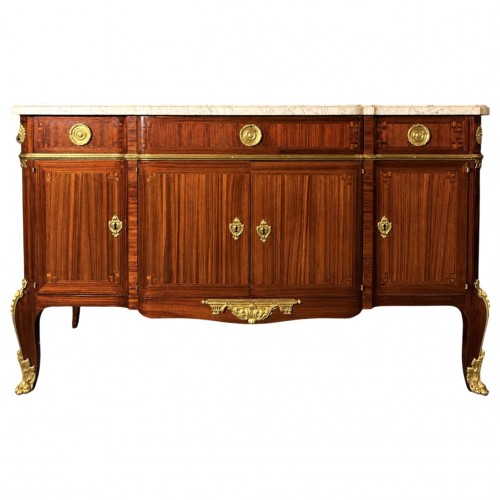
Important Transition period commode, stamped by Jean-François Dubut, veneered in satinwood arranged in sheets with Greek-key stringing, opening with three drawers in the frieze and four doors on the front.
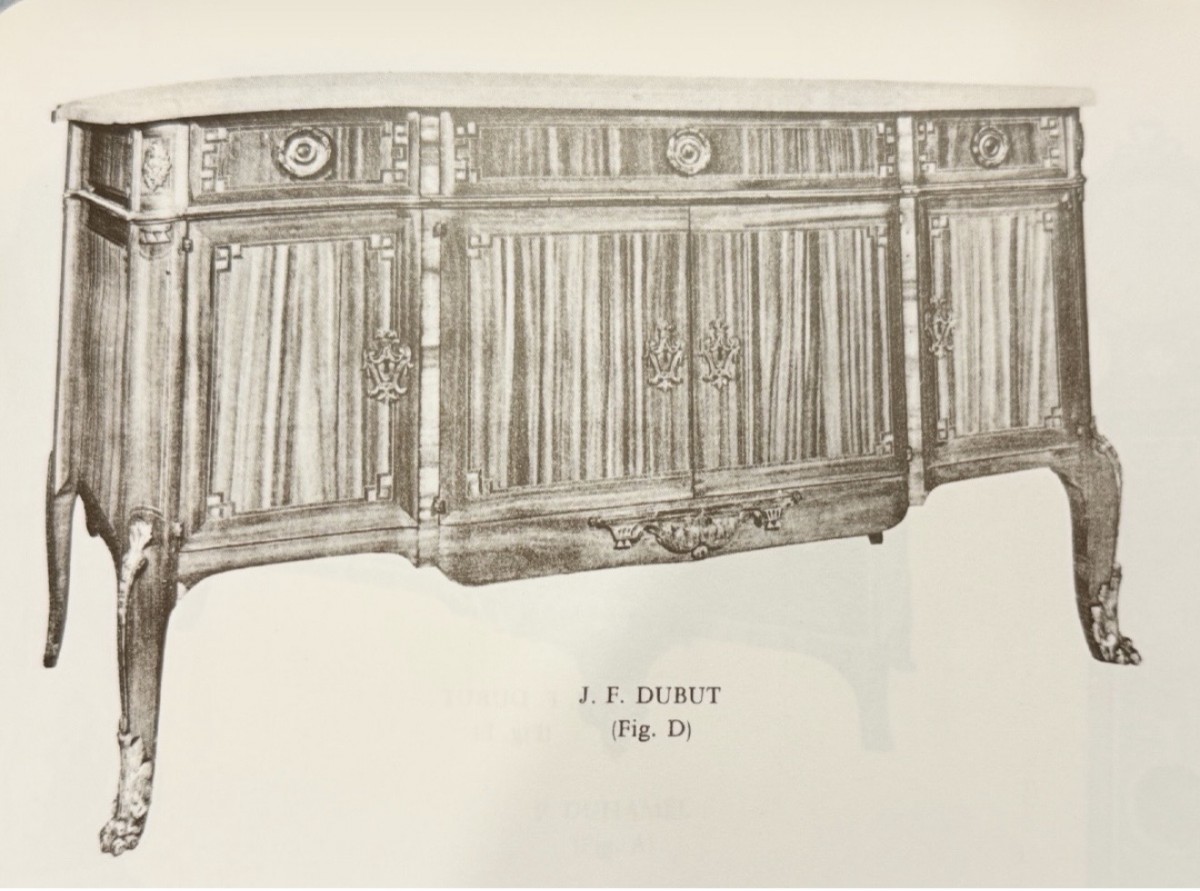
We rediscovered our commode in the book by Pierre Kjellberg… (see the last photograph).
The piece presents an elegant façade with a slight central projection, characteristic of Parisian productions from the 1760s–1770s, already announcing Neoclassical taste while preserving the supple lines of the Louis XV style.
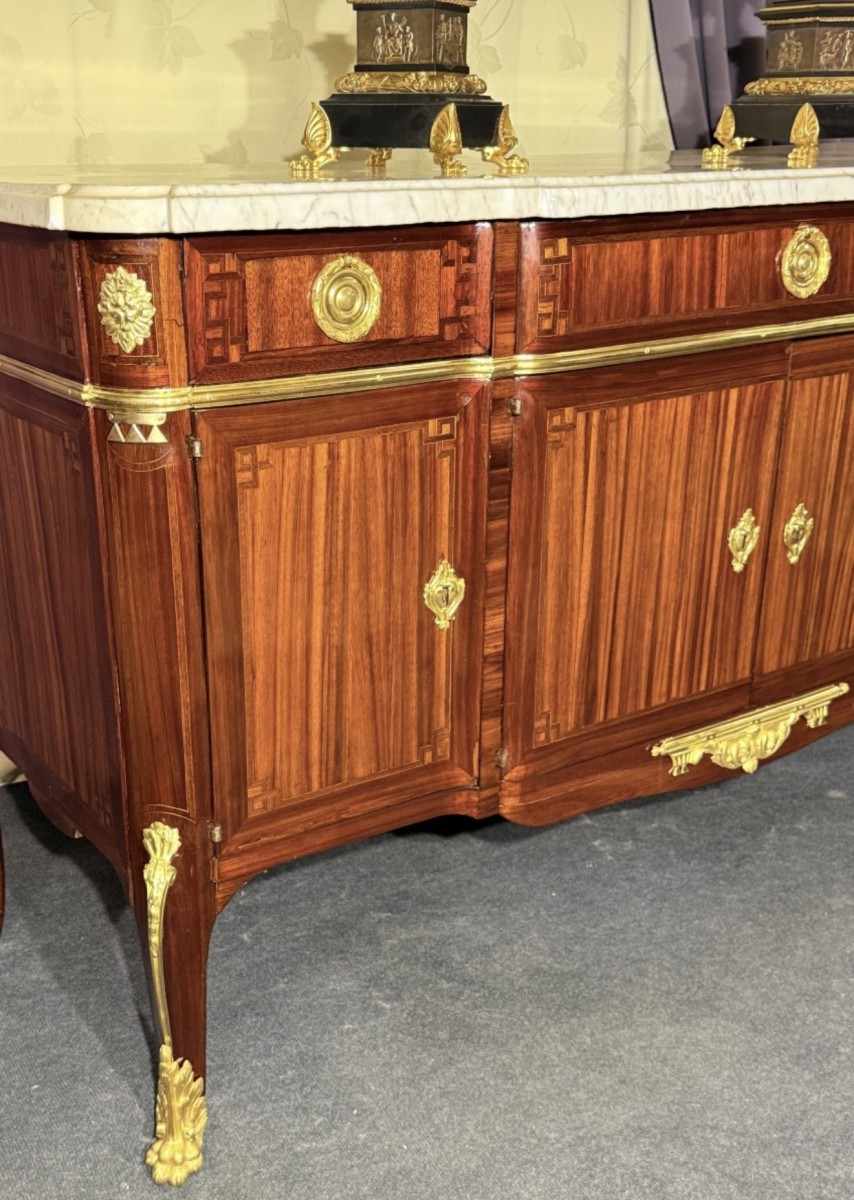
It stands on curved legs ending in richly chased and gilt bronze sabots.
The uprights are adorned with gilt bronze mounts and ornaments, finely worked; the escutcheons, drop handles, and central apron all contribute to the excellent ornamental quality of the ensemble.
The geometric Greek-key stringing elegantly highlights the satinwood veneer panels with their warm amber tone.
The top is surmounted by a molded veined white marble slab shaped to follow the contours of the furniture.
The interior opens onto spacious storage compartments and retains a fine quality of cabinetmaking with oak linings.
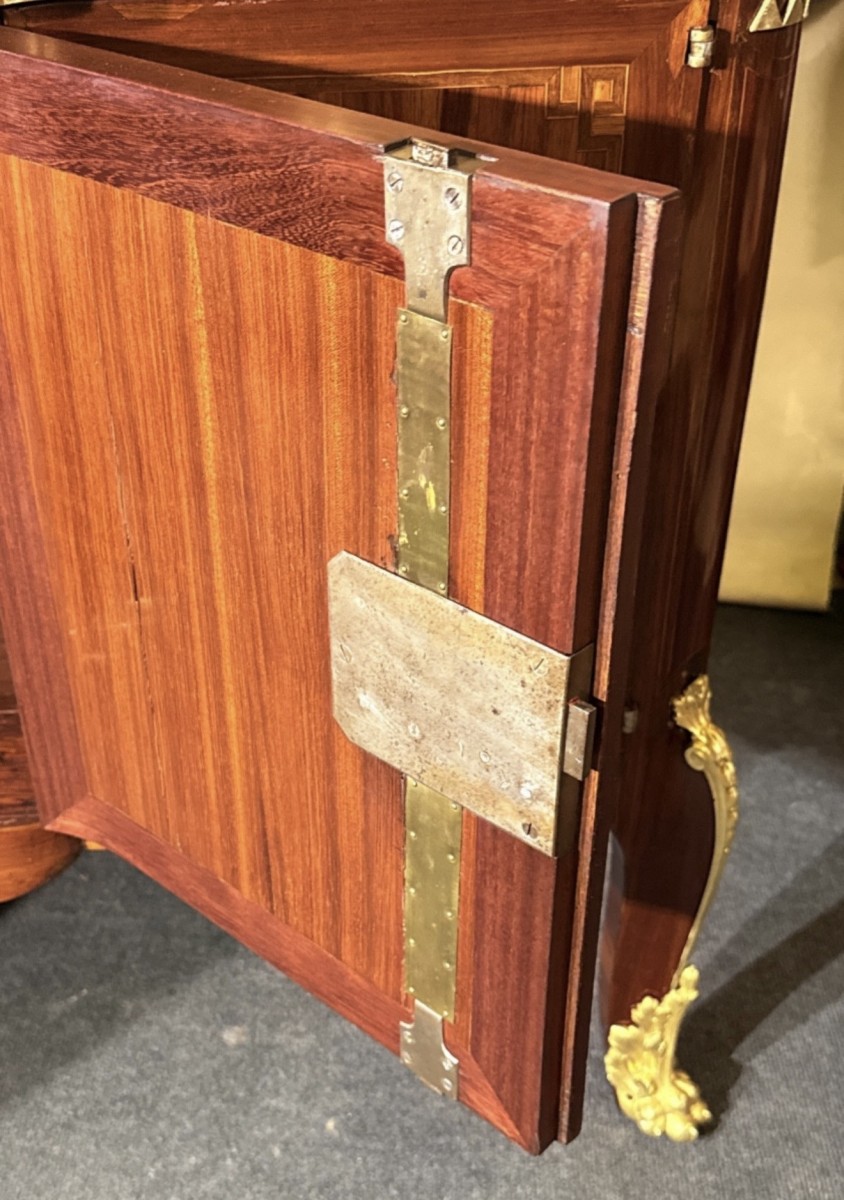
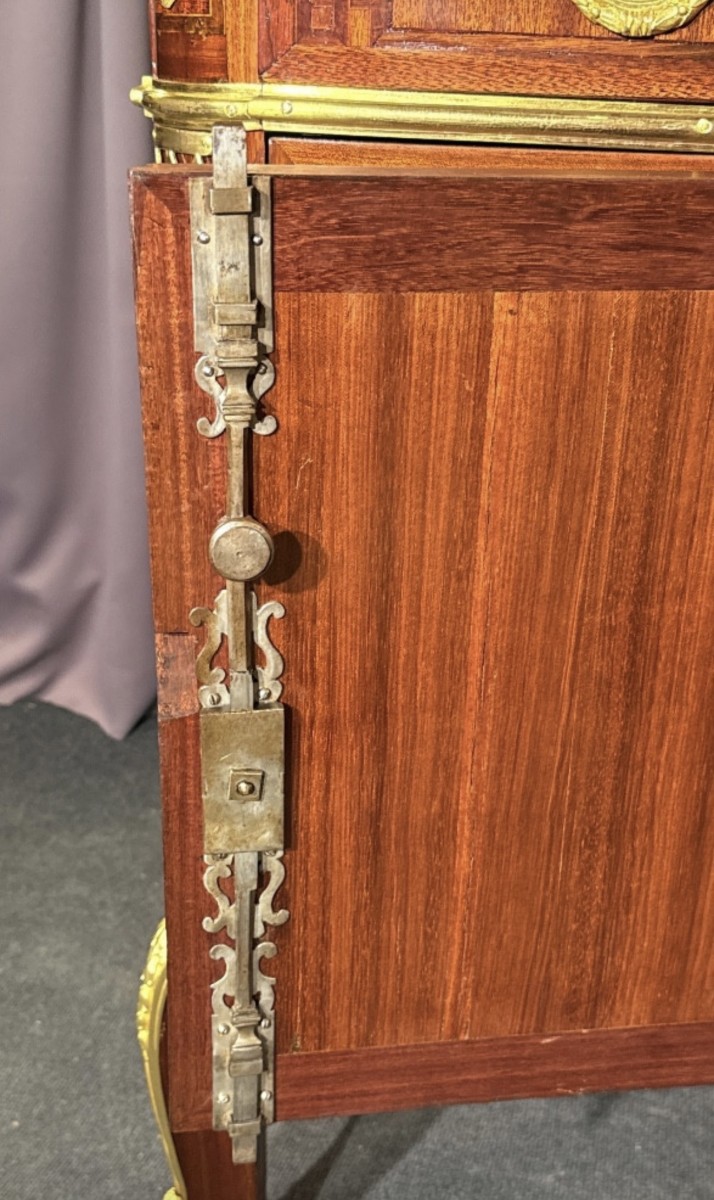
It still preserves its original iron bolts and exceptional three-point locking system — at the top, center, and bottom (see photographs).
Parisian Transition period work, circa 1765–1770.
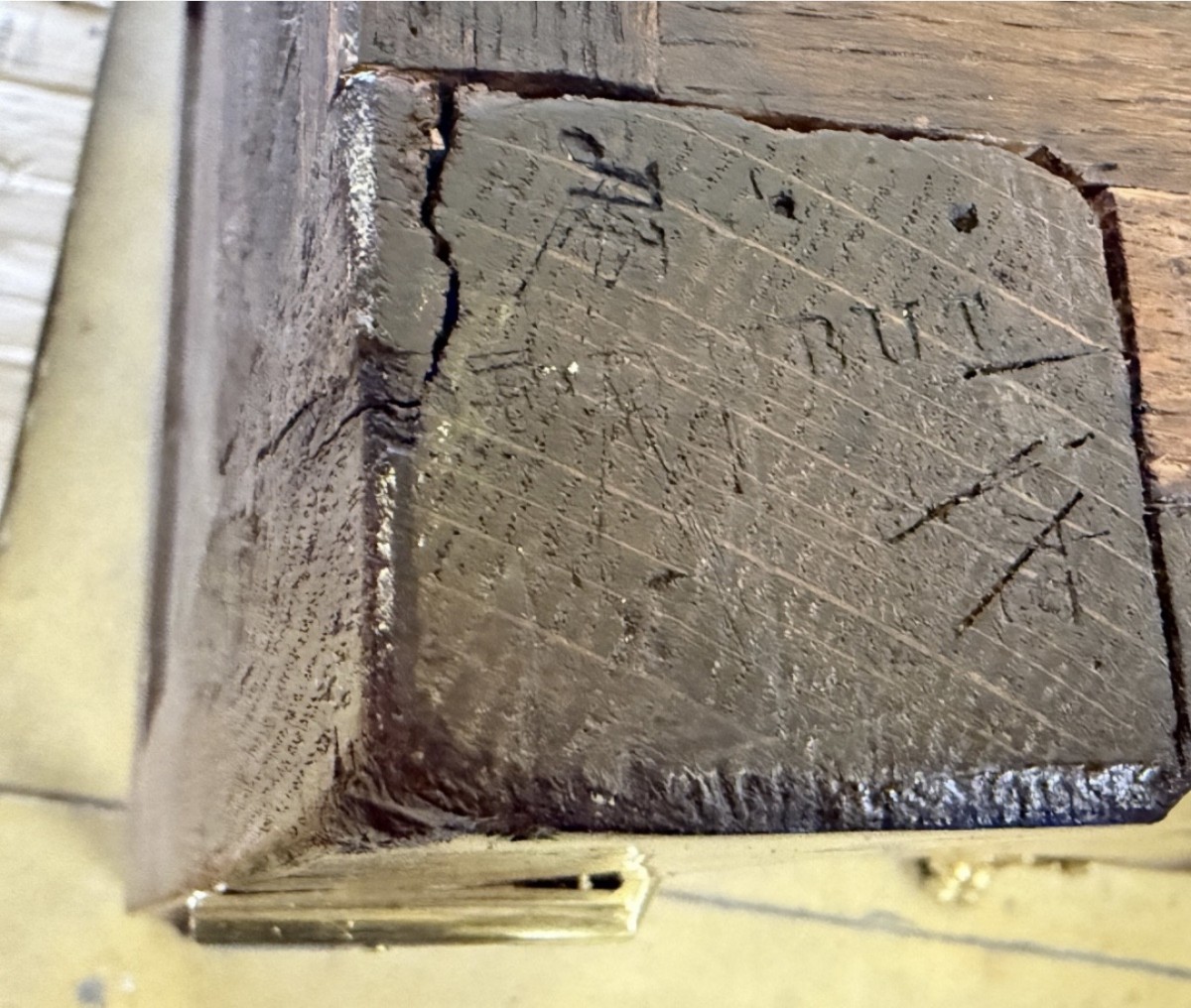
Stamped “J.F. DUBUT” as well as with the guild stamp “JME” on the front upright.
Jean-François Dubut ranks among the most sought-after cabinetmakers of the Transition period. His works, renowned for the refinement of their veneers and the quality of their bronzes, are today preserved in several major public collections, notably the Musée du Louvre, the Musée des Arts Décoratifs, and the Musée Nissim de Camondo.
Very fine state of preservation, with customary restorations and traditional varnish maintenance.
A beautiful decorative presence for this commode, at once sober, elegant, and architectural, representative of the refined taste at the end of the reign of Louis XV.
Castle commode, Parisian work of the 18th century.
Dimensions: 164 cm wide × 64 cm deep × 94 cm high.
Period: 18th century – Louis XV / Louis XVI Transition
Materials: satinwood, oak, chased and gilt bronzes, marble
Stamps: J.F. DUBUT – JME
Jean-François Dubut (?–1778) – cabinetmaker – date of mastership unknown.
A talented cabinetmaker, Jean-François Dubut produced mainly Louis XV and Transition furniture of remarkable quality.
Although we do not know the exact date on which the cabinetmaker obtained his mastership, or even whether he officially received it, we know that he created works of very high quality for both French and foreign clientele. Among his fanciful furniture, he notably produced a large black and gold lacquer commode in the Chinese taste, a small violin-shaped secrétaire with black, gold, and red lacquer panels, and also a small Transition secrétaire. Besides lacquers and varnishes with Far Eastern decoration, the cabinetmaker also employed sheet veneers and marquetry with trophy or floral motifs.
These appear on more classical furniture forms, from commodes to secrétaires.
He also left behind several Transition and Louis XVI models veneered in mahogany or satinwood. Finally, he became recognized as a specialist in ladies’ secrétaires.
After his death, the public sale organized following his estate confirmed the breadth of his production. The auction catalogue records: “bookcases, armoire secrétaires both plain and roll-top, duchess tables, vide-poches, oval and circular tables, tiered and cylinder tables, so-called mignonette tables, night tables, desks, corner cupboards, commodes, chiffonnières, dressing tables, screens, fire screens, all in exotic woods.”