Offered by Galerie Gilles Linossier
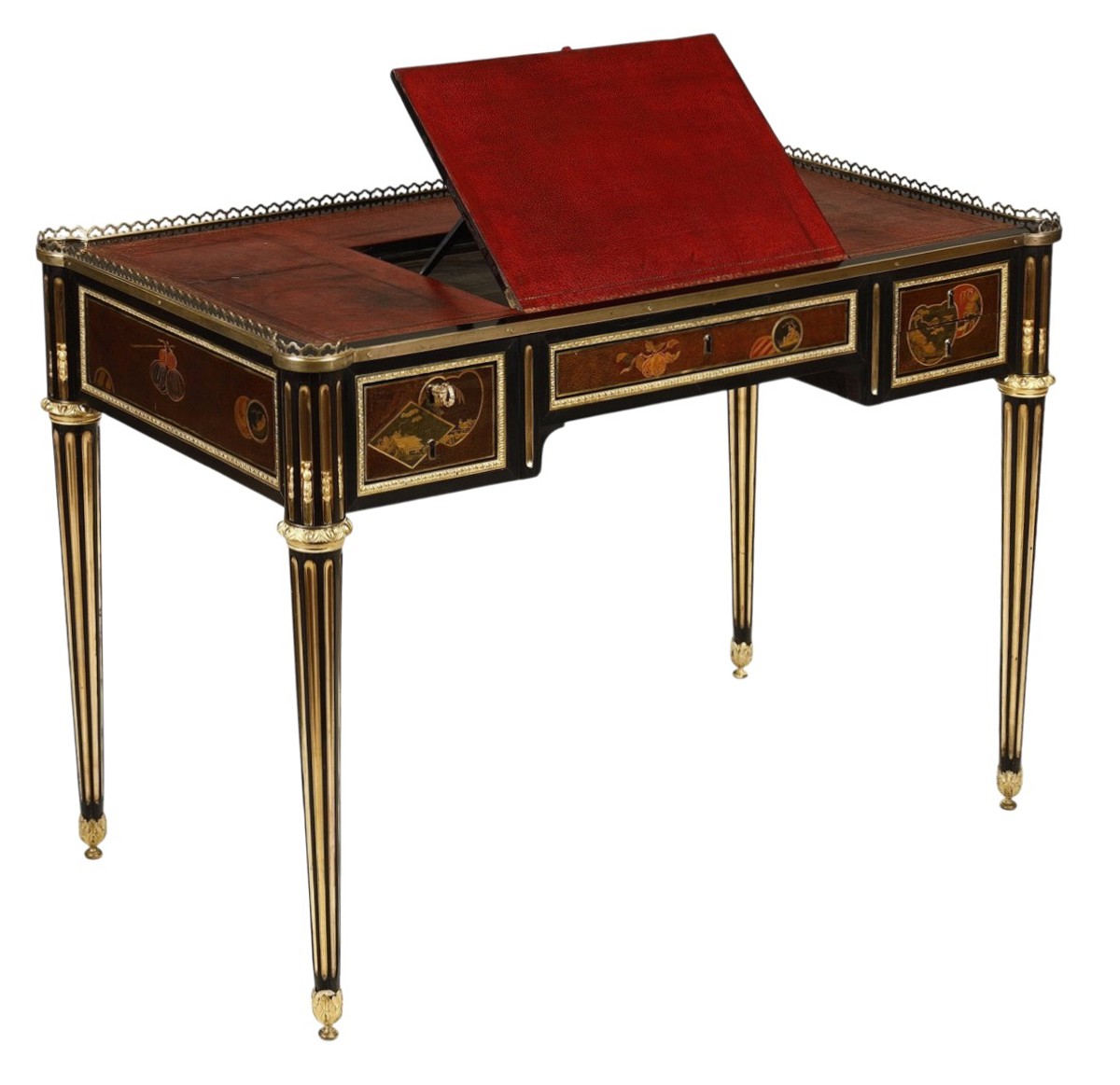
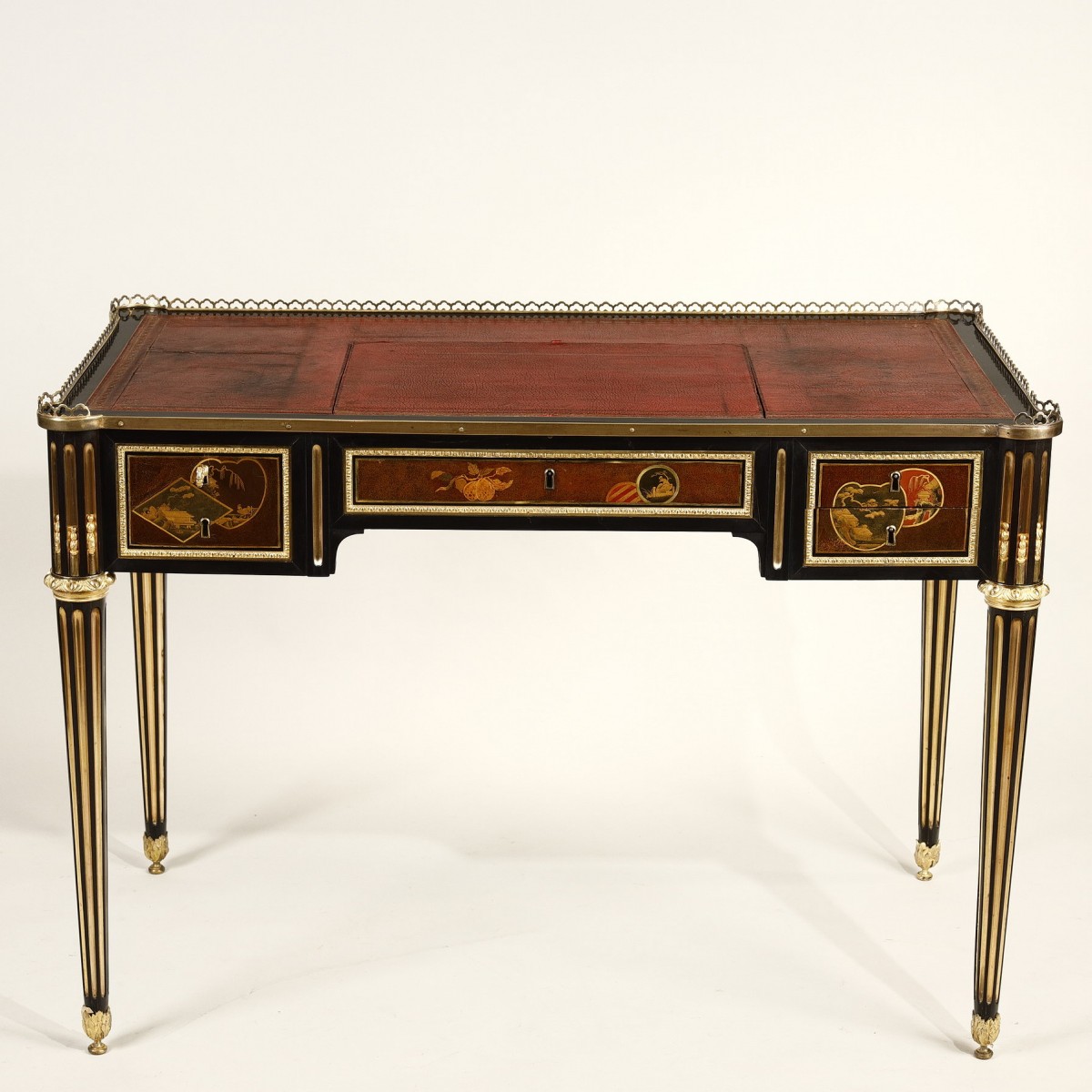

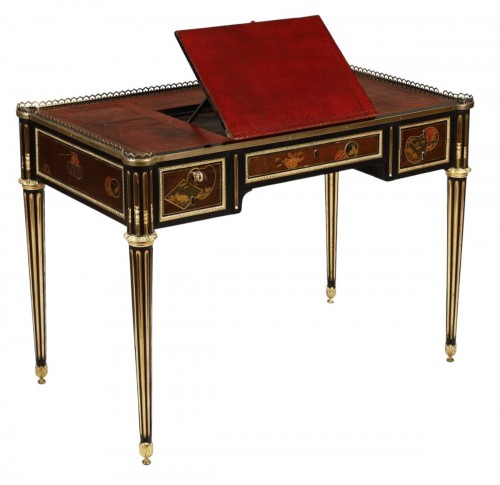
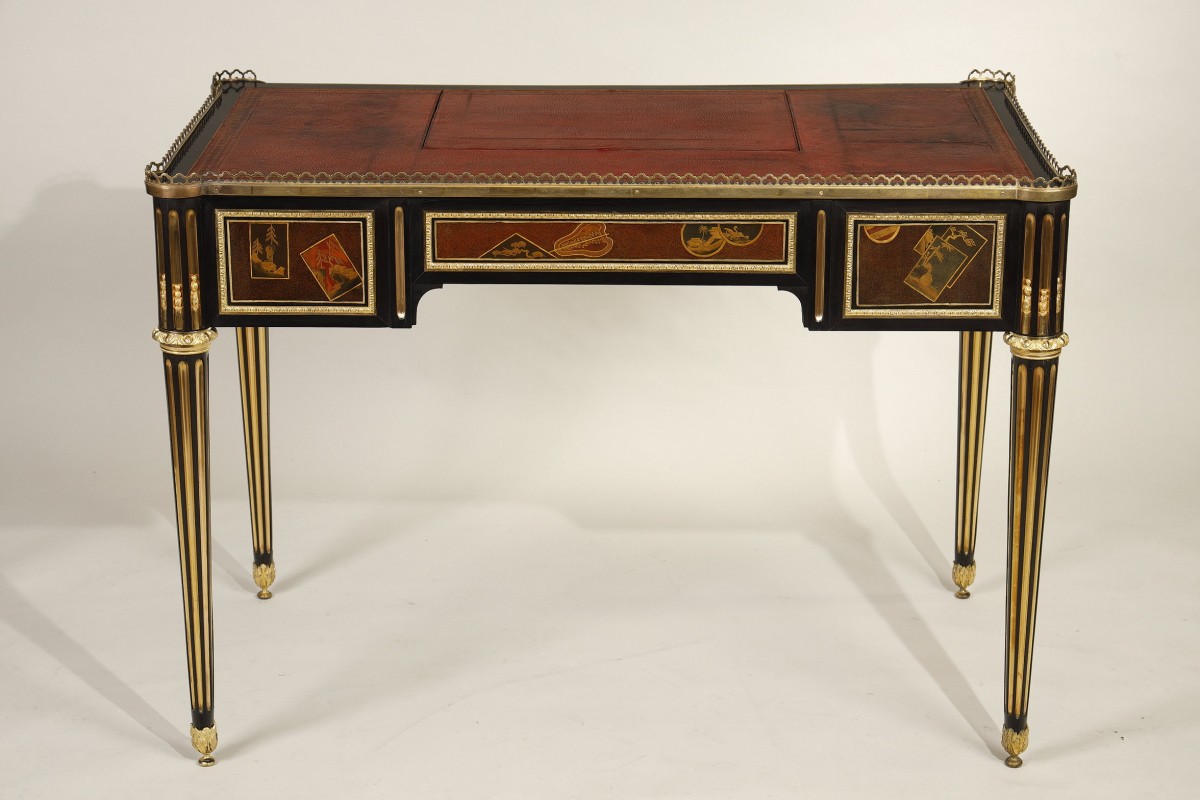
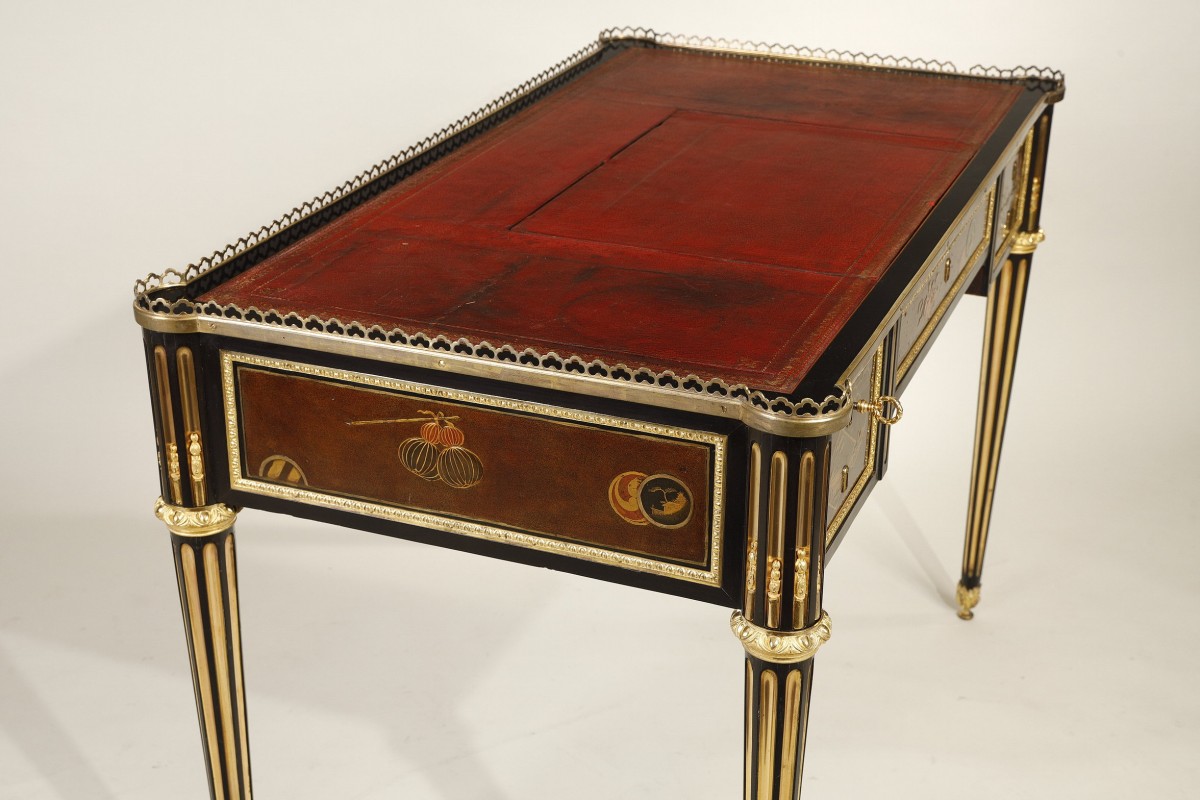
A flat desk in ebony and Japanese lacquer.
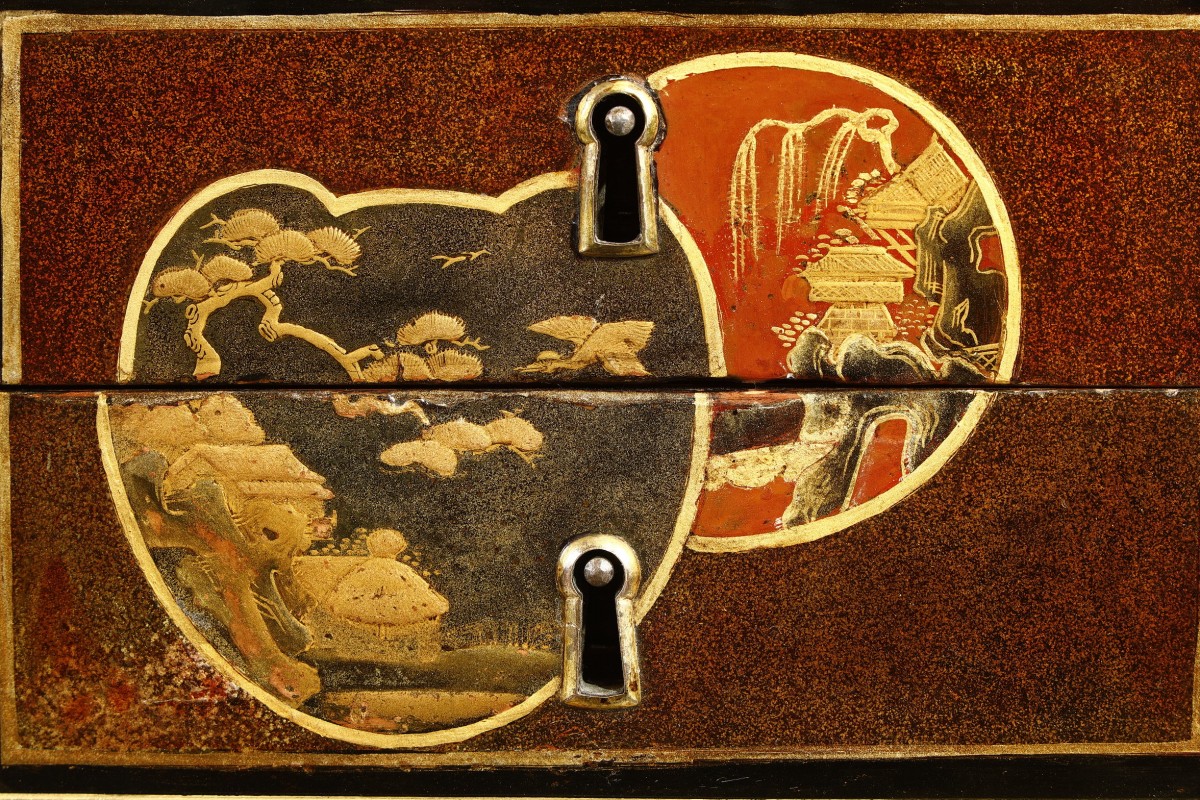
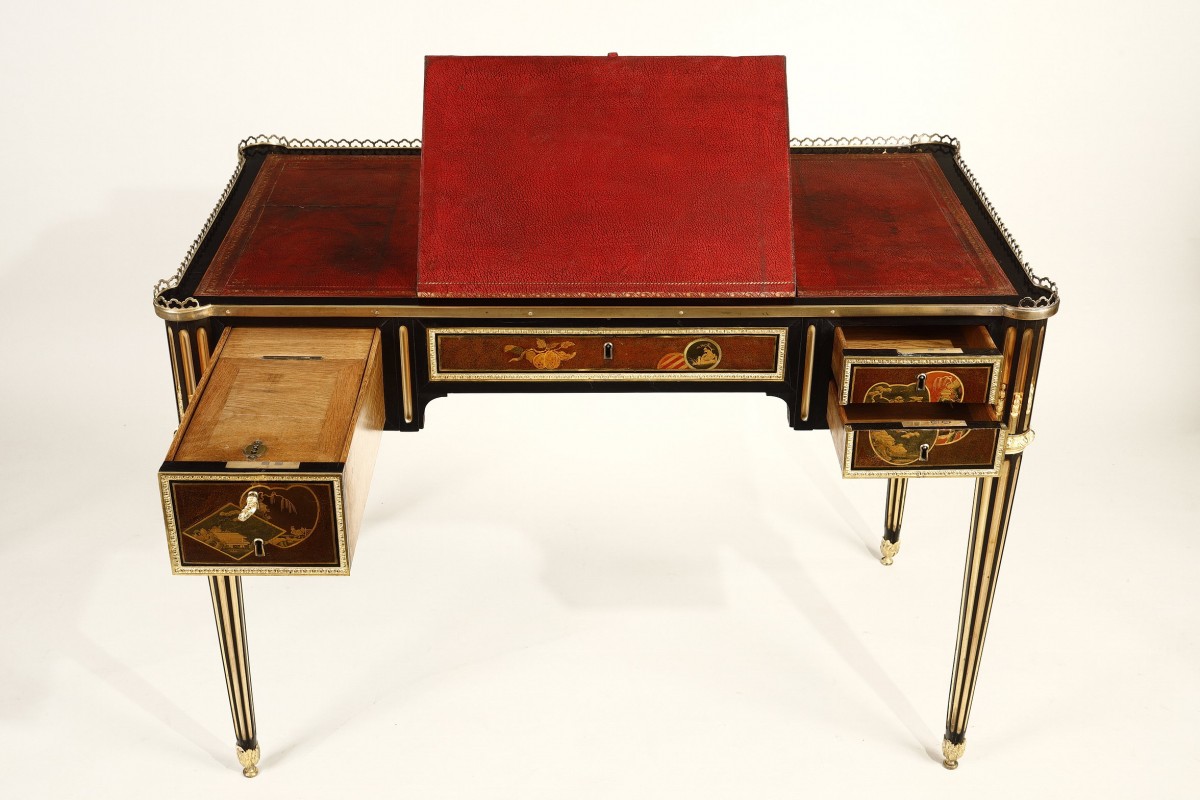
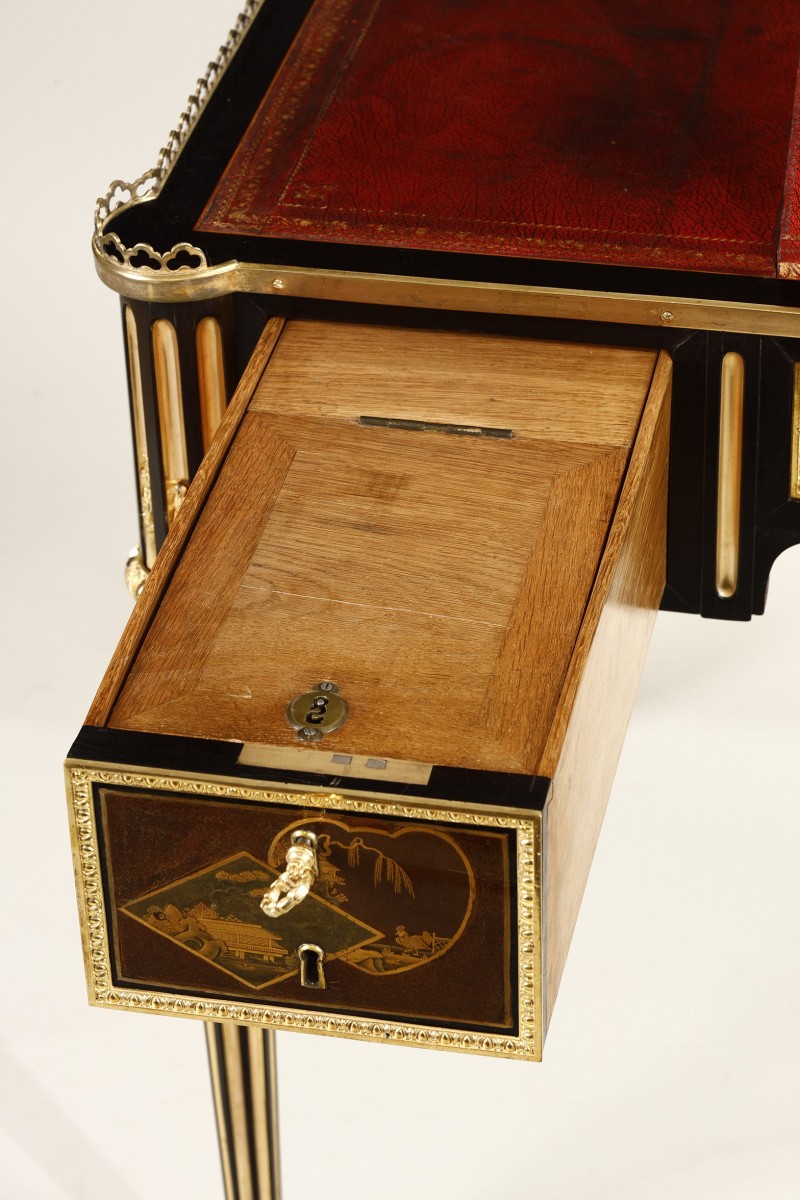
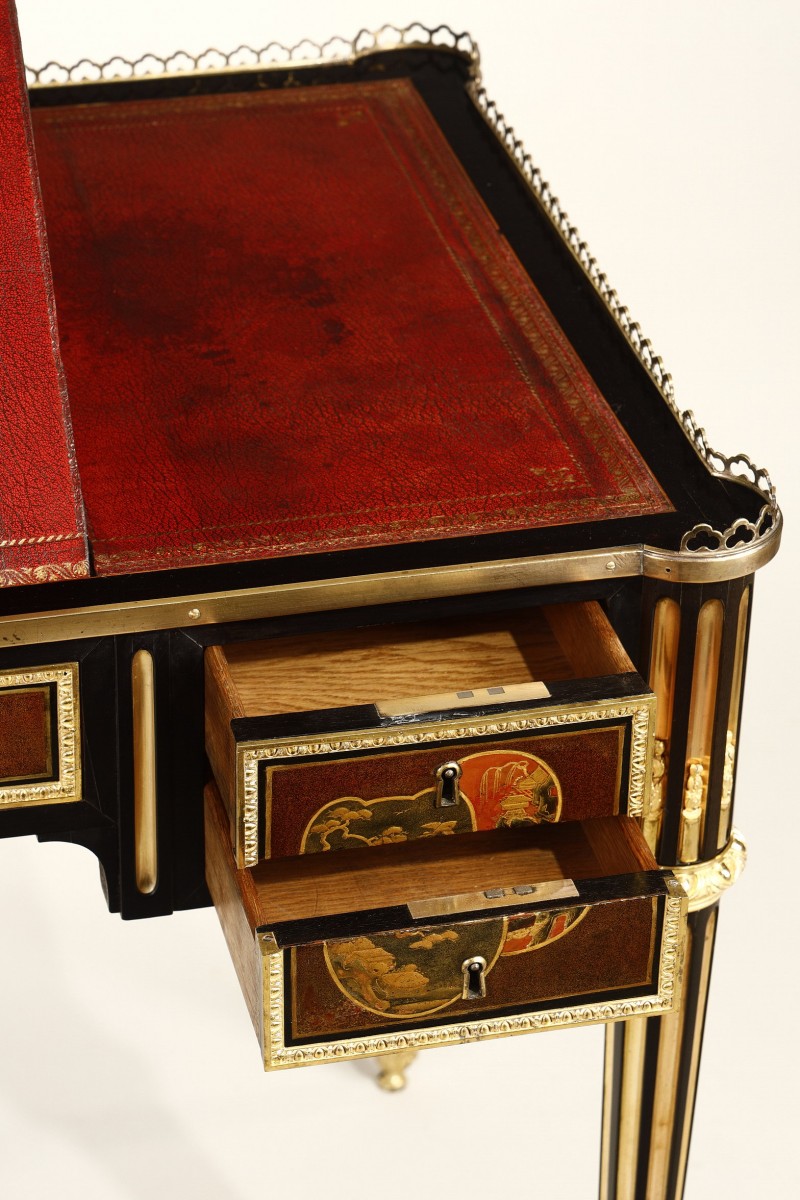
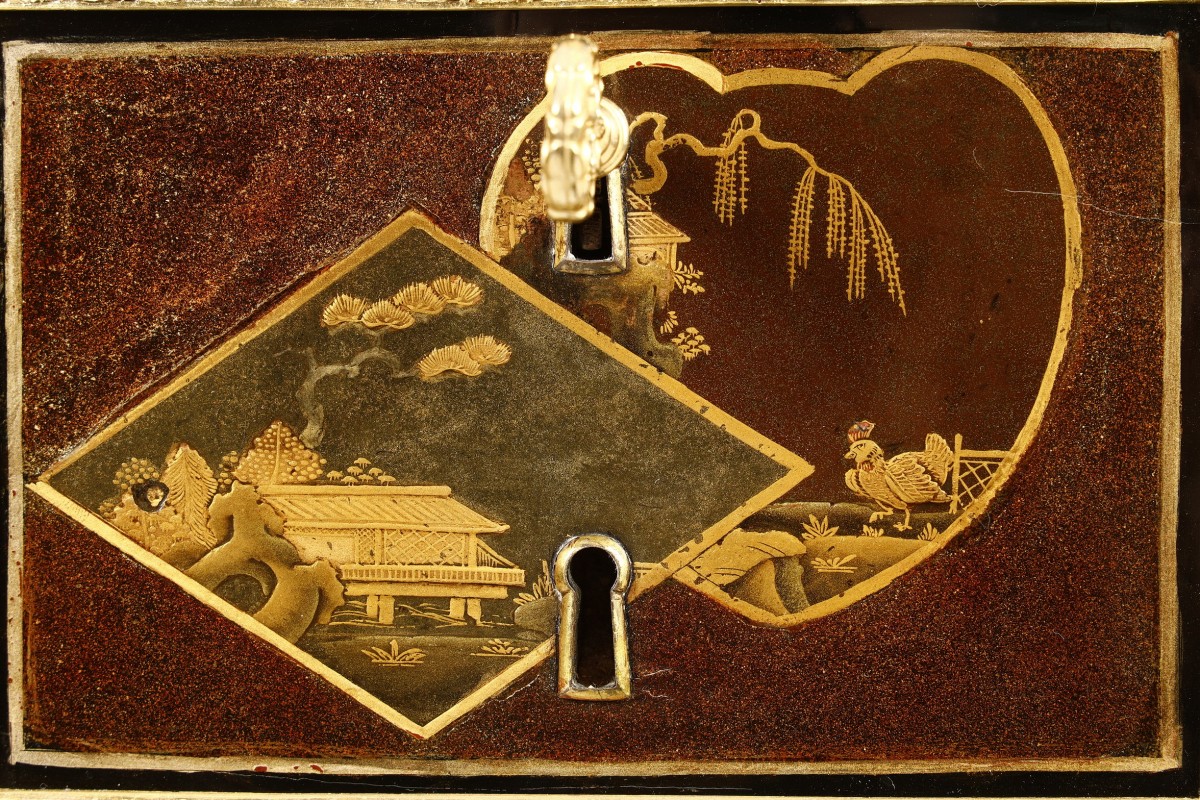
The front features four drawers, one of which is open without a central compartment, each drawer centered with a lock and an additional simulated lock.
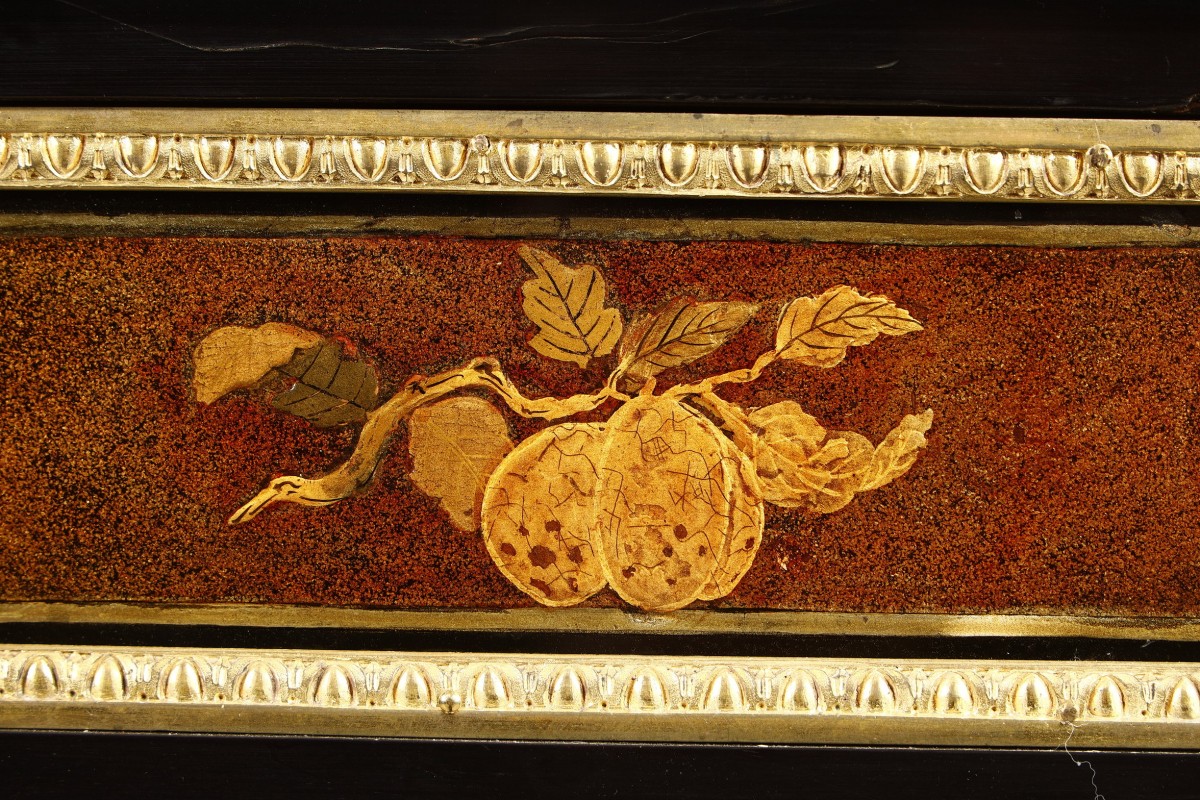
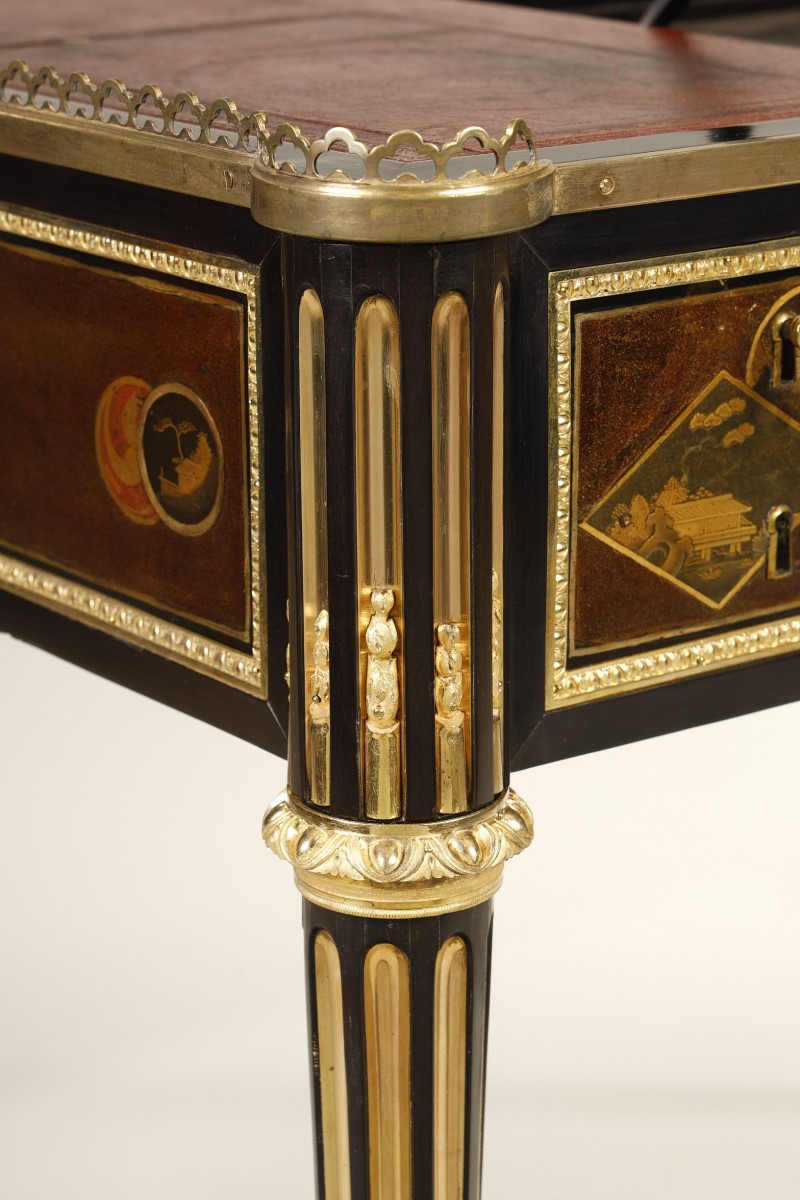
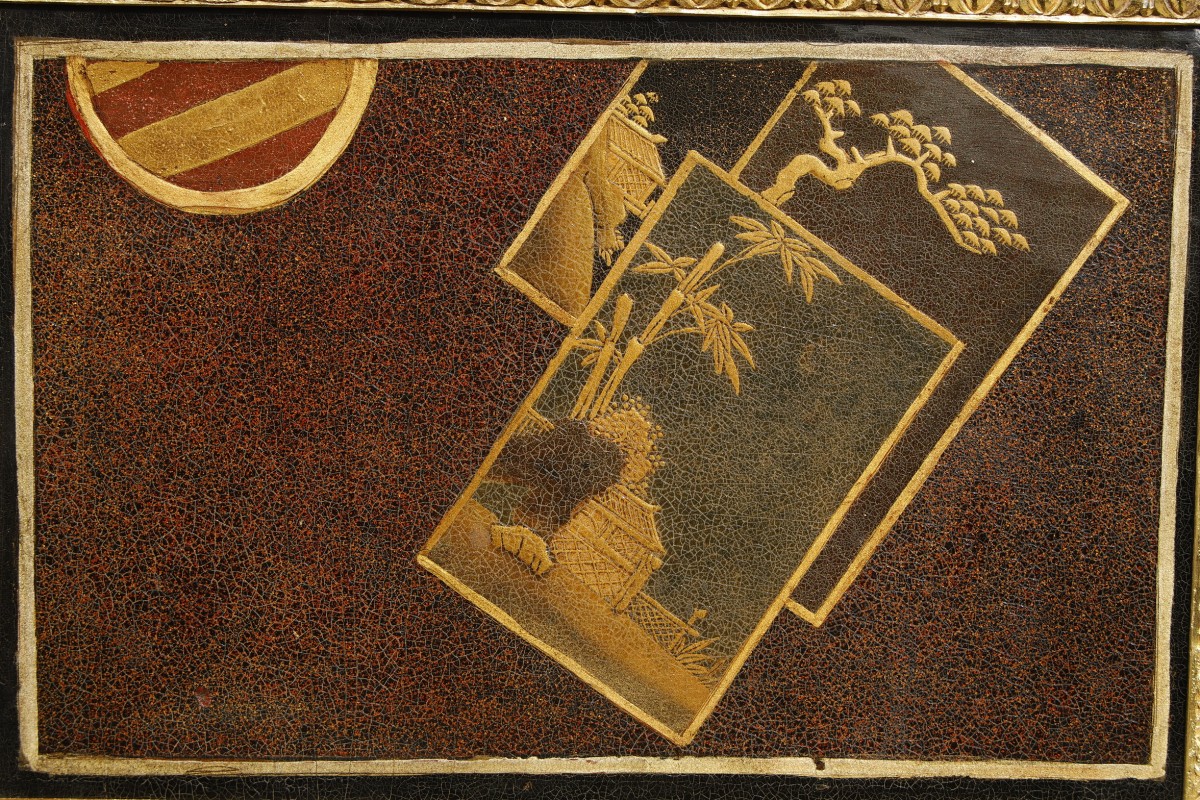
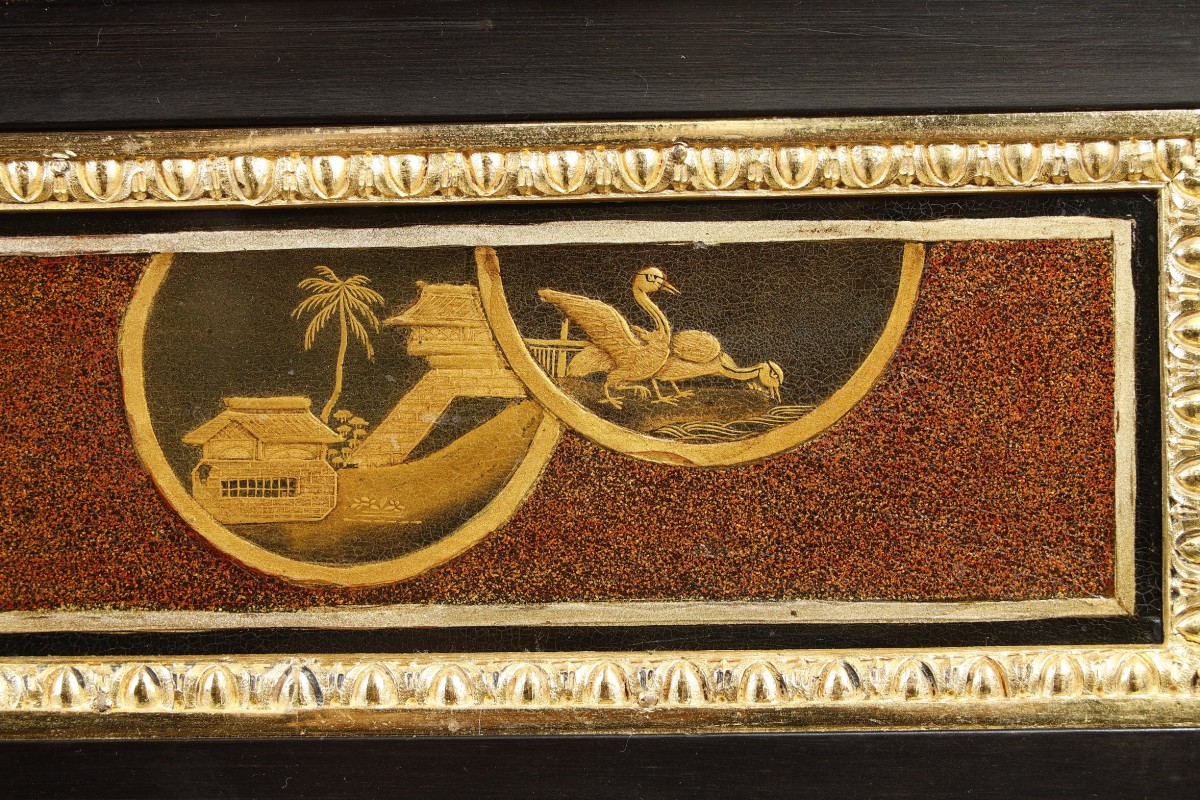
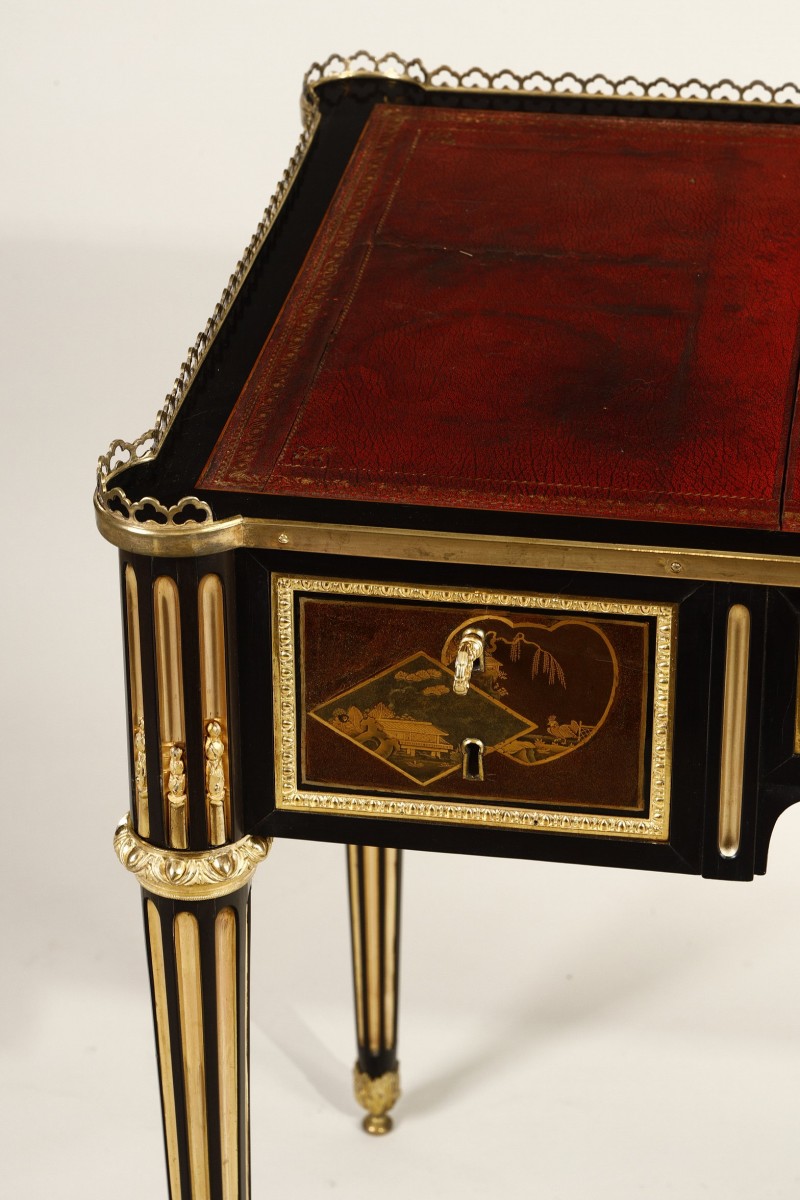
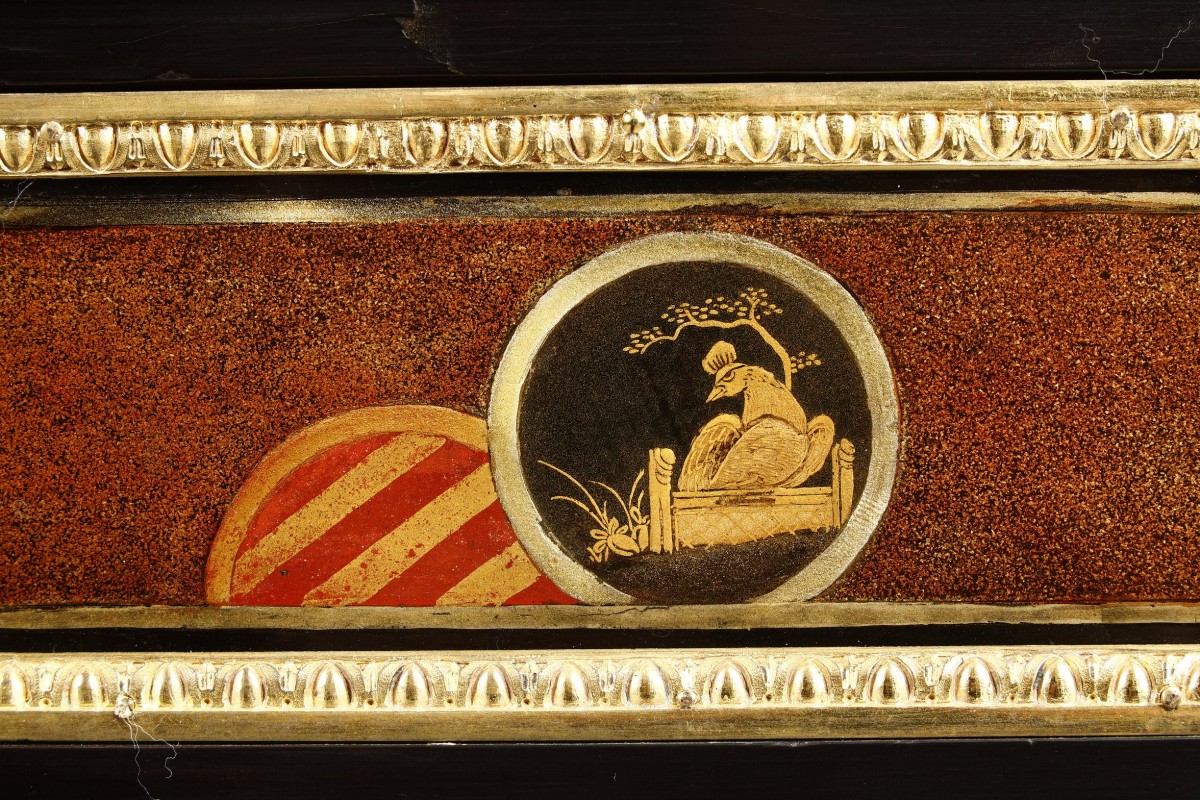
The frieze is decorated with Japanese lacquer depicting classical Asian landscapes in round, lozenge-shaped, or stylized medallions, framed by a gilt border. The gilt lakeside landscapes, on a black or red background, are enhanced with vegetation and a few birds.
This desk has three simulated drawers with somewhat similar motifs in the rear frieze.
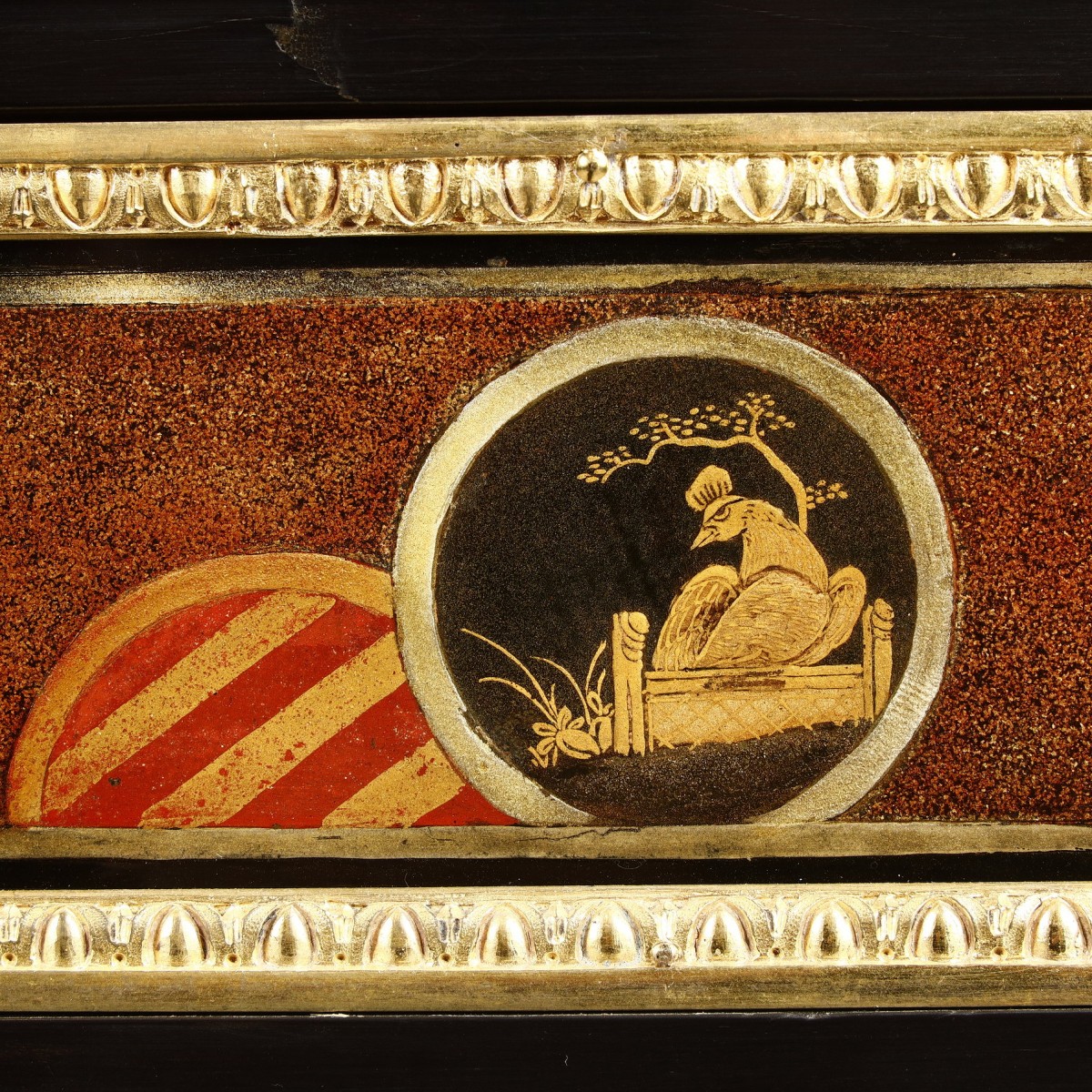
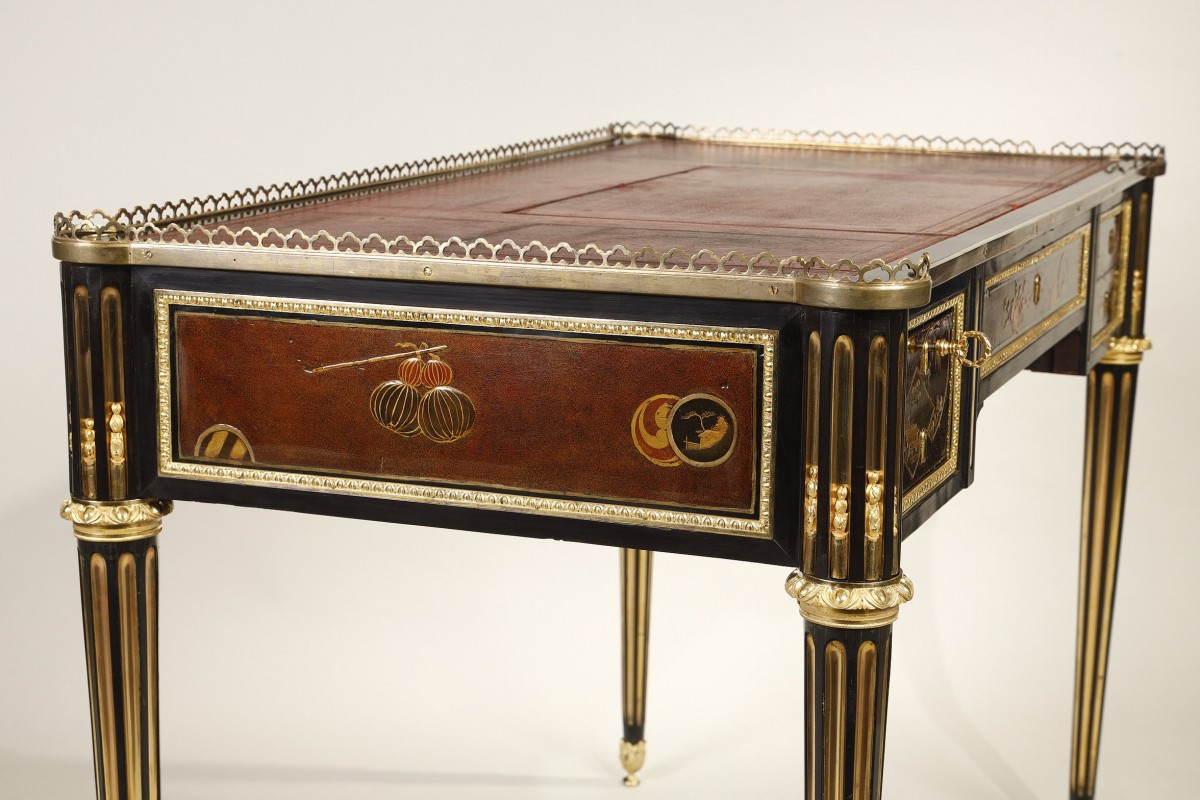
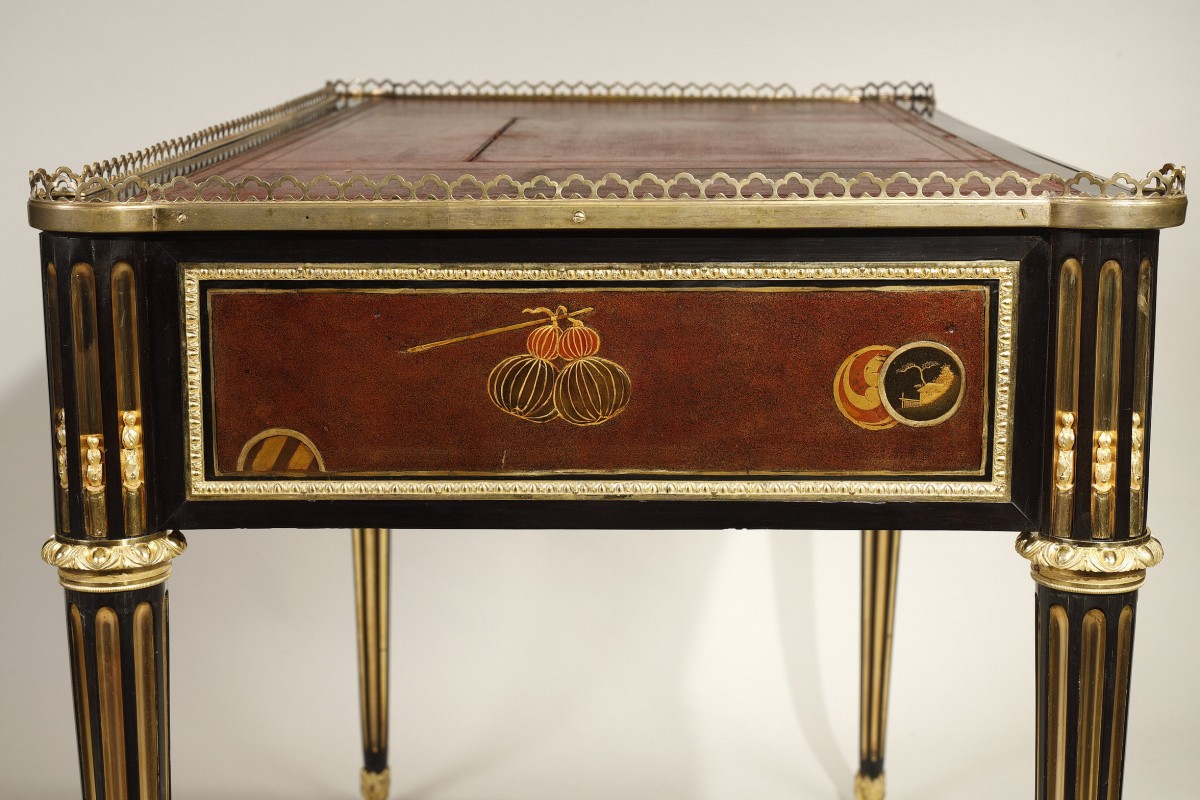
The sides feature distinct motifs of two miniature medallions; one on a red background resting in front of the other on a black background (and vice versa on the other side), both also depicting lakeside landscapes. The most visually striking motif is characterized by its absence of a medallion. On one side, it depicts a parasol and a scroll with a coiled motif, and on the other, lanterns held by a stick.
The central drawer on the front and the simulated central drawer at the rear also feature a miniature medallion motif depicting a lakeside landscape and a motif without a medallion.
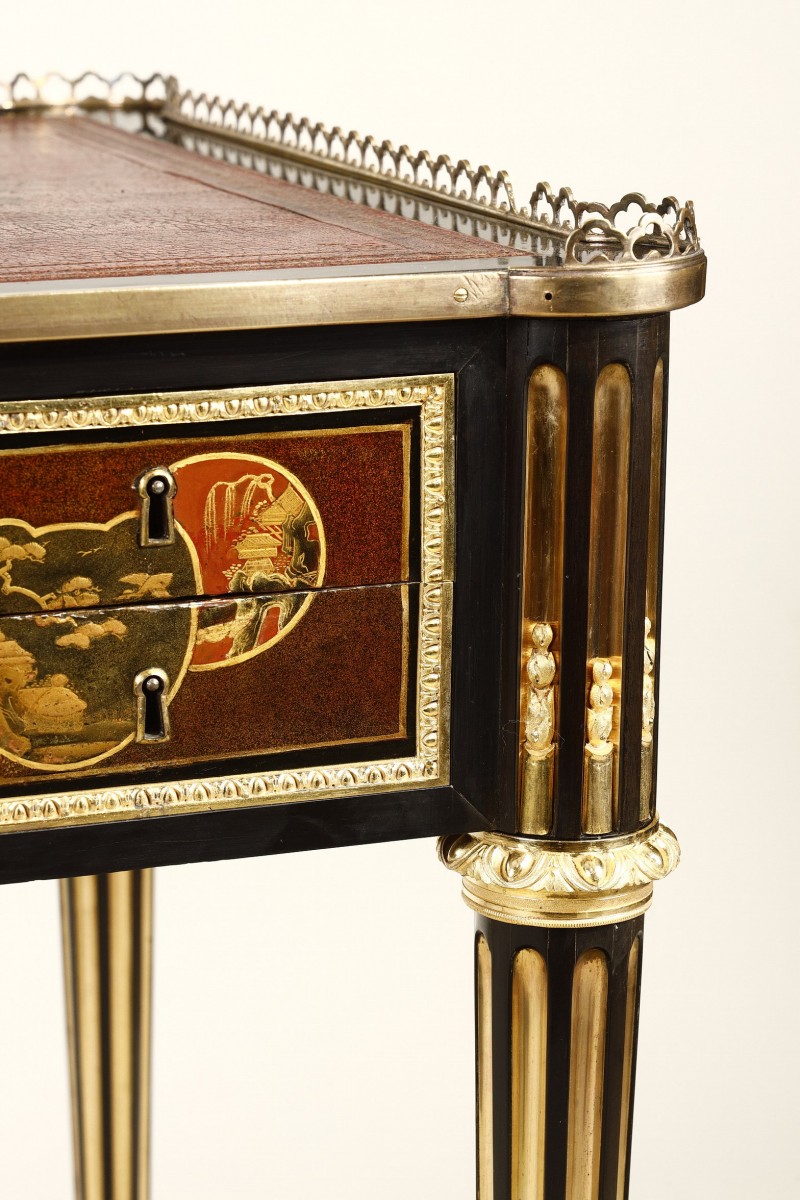
Each drawer (and simulated drawer) is framed by a finely chased gilt-bronze molding with a « rais-de-coeur » motif.
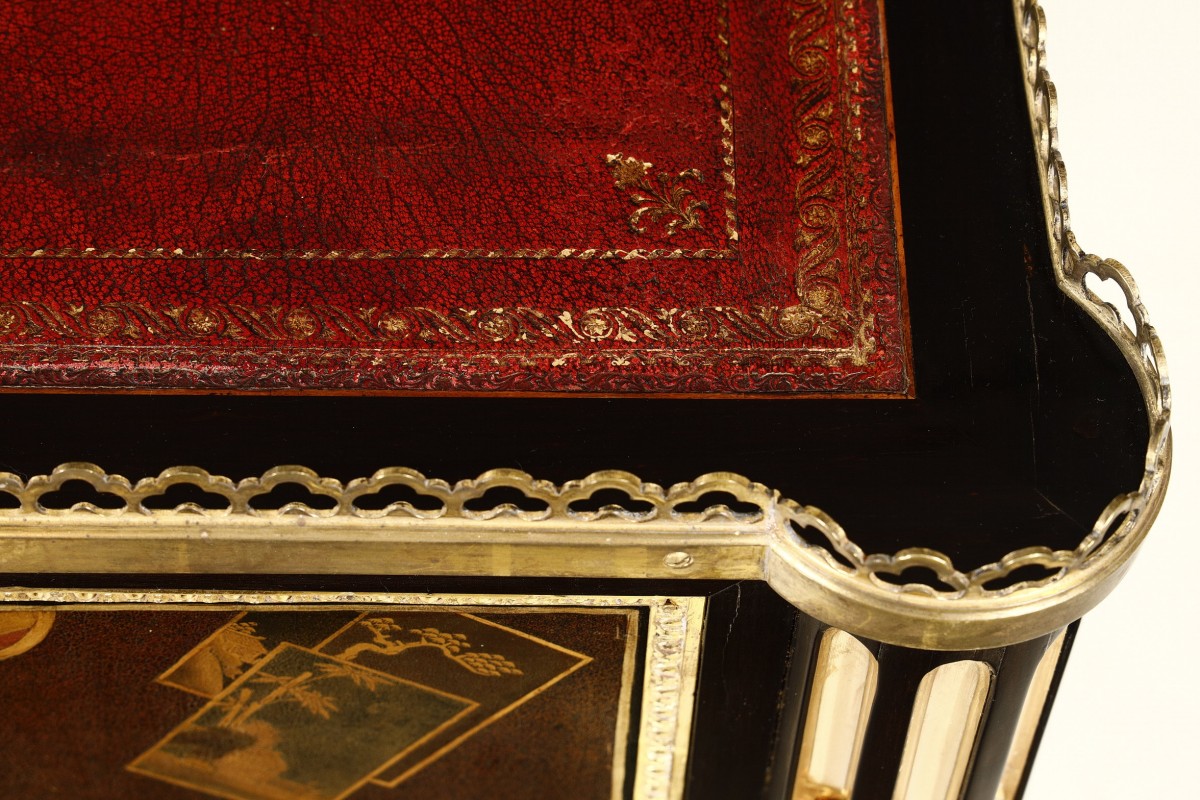
The tabletop is covered in red morocco leather tooled in gold, adorned with a central control mechanism (operated by a push button beneath the tabletop), framed in ebony and encircled by an openwork gilt-bronze molding and gallery.
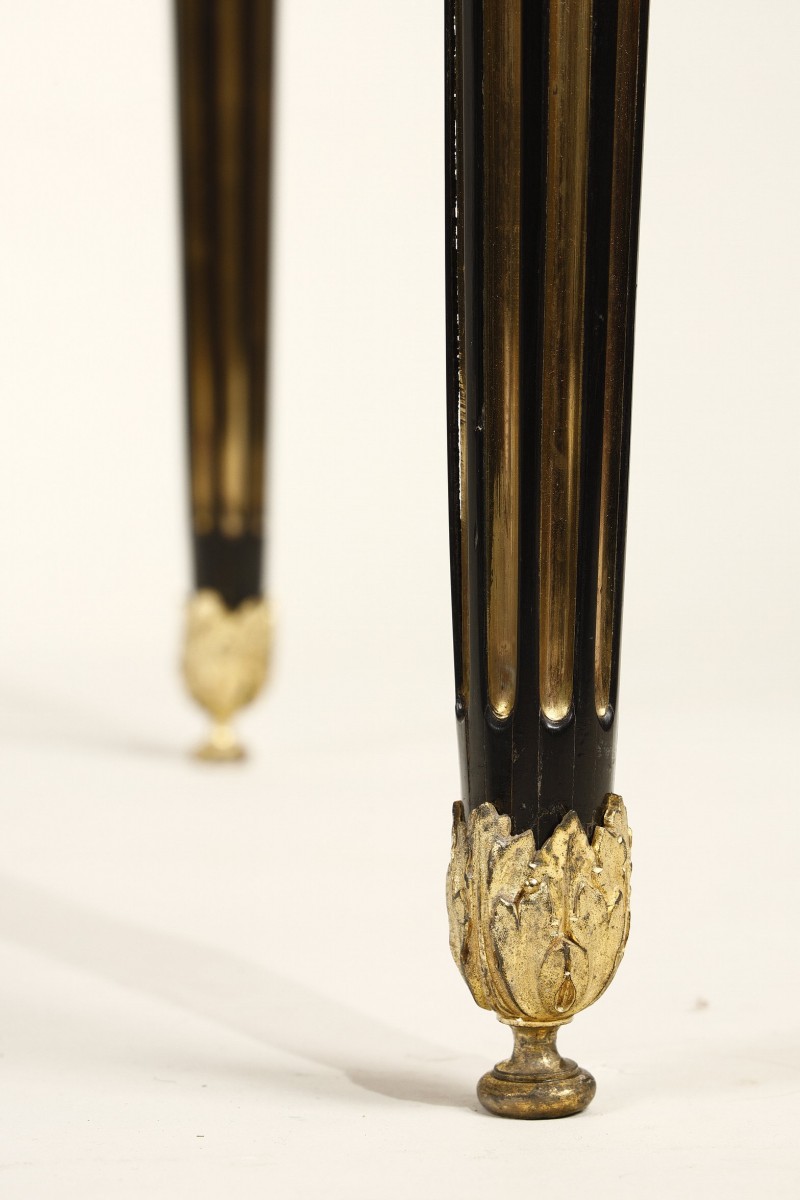
It rests on four magnificent tapered and fluted feet, encircled by a gilt-bronze ring connecting the fluted, reeded uprights in a gilt herringbone pattern. It terminates in exquisite and unique, enveloping sabots, engraved and chased with a foliate motif supported by flared conical bases, similar to those found on vases.
Parisian work from the Louis XVI period, stamped by Bury.
Ferdinand Bury, admitted as a Master craftsman on July 27, 1774, is particularly renowned for his high-quality creations combining precision, technical skill, and the engineering of various mechanisms. He surrounded himself with skilled workers for this type of invention and thus manufactured mechanical tables, rack-and-pinion side tables, knitting machines, and secret chests.
His creations all demonstrate exceptional design quality, ingenuity, and the use of superior materials.
Dimensions: H 76 x W 109 x D 61