Offered by Galerie Gilles Linossier
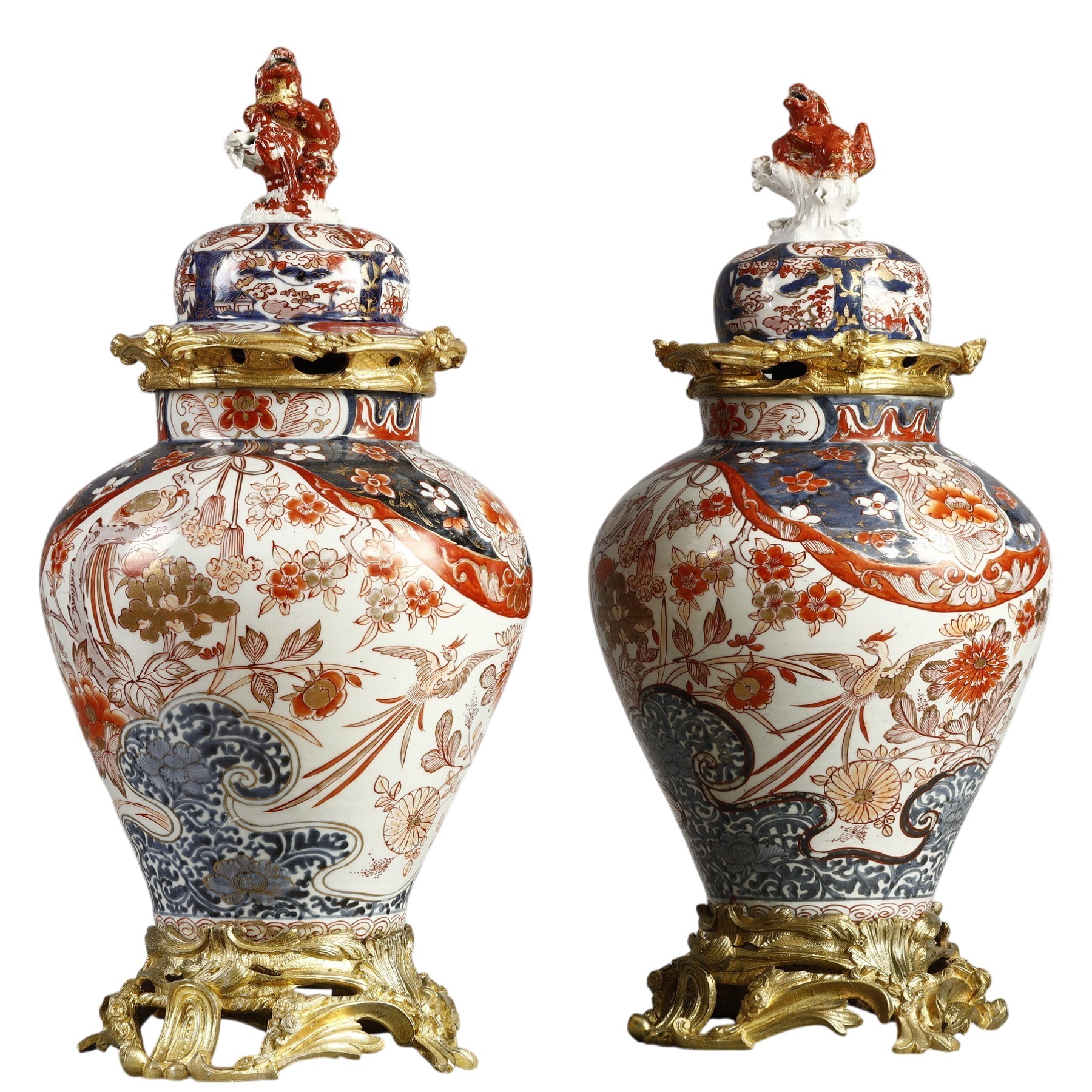
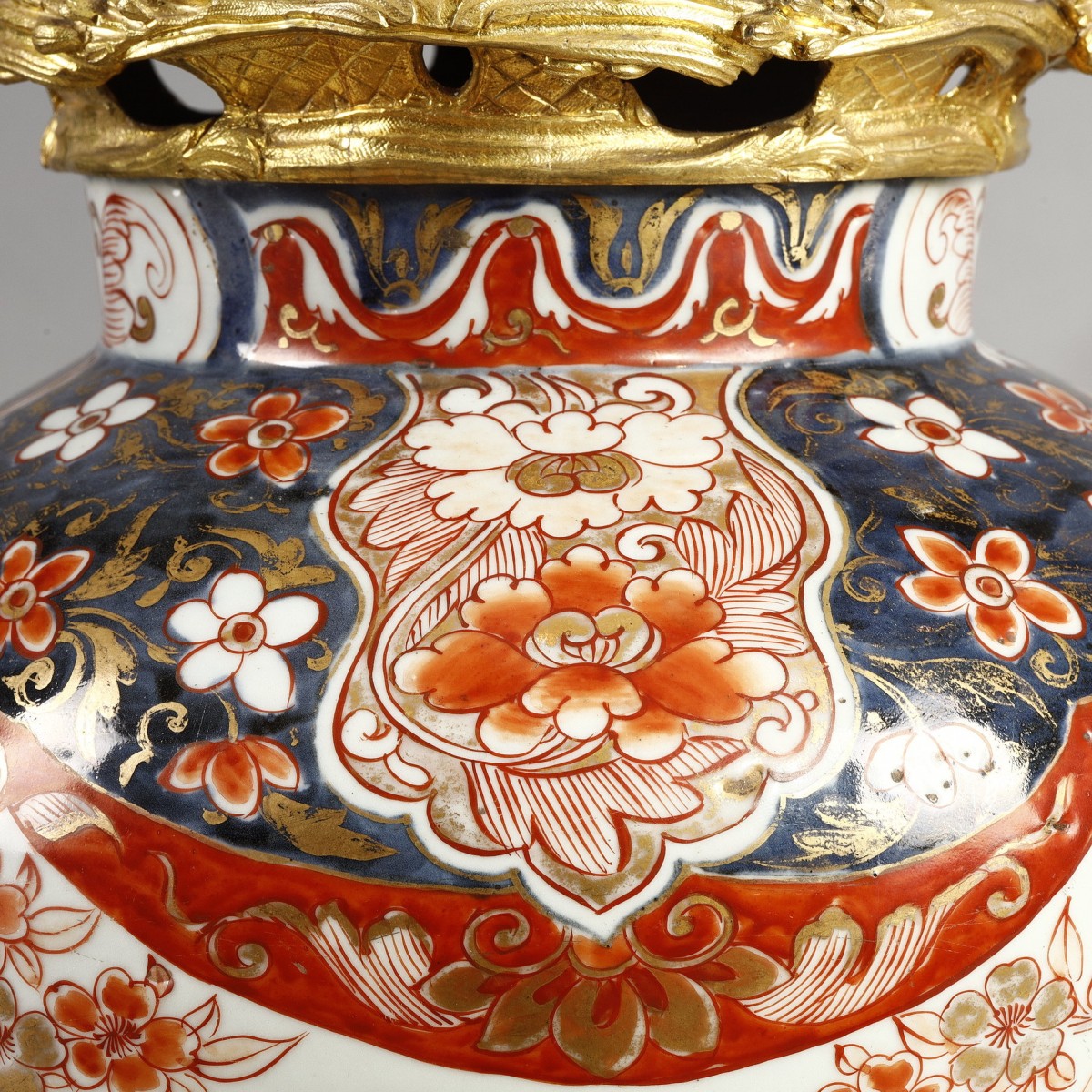
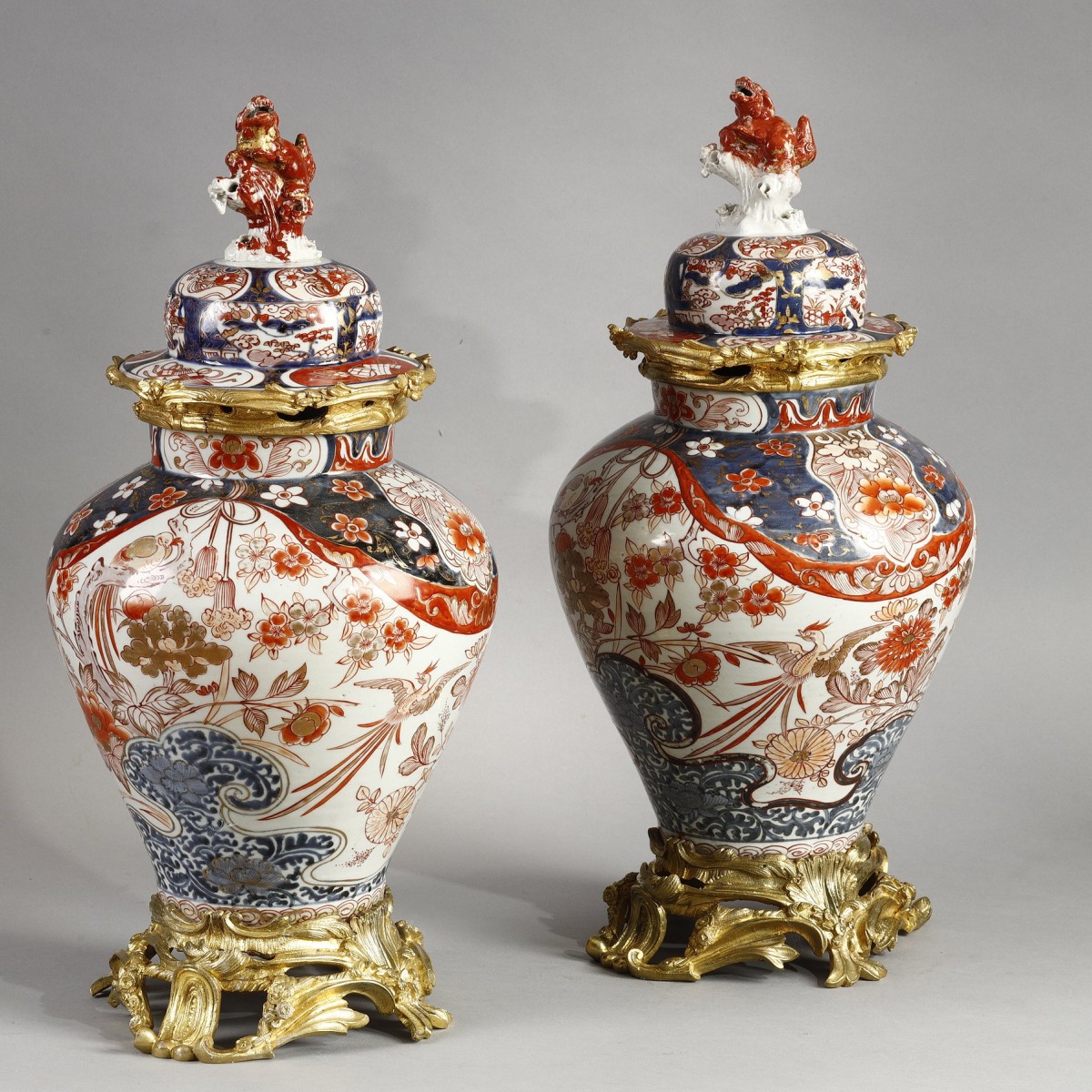

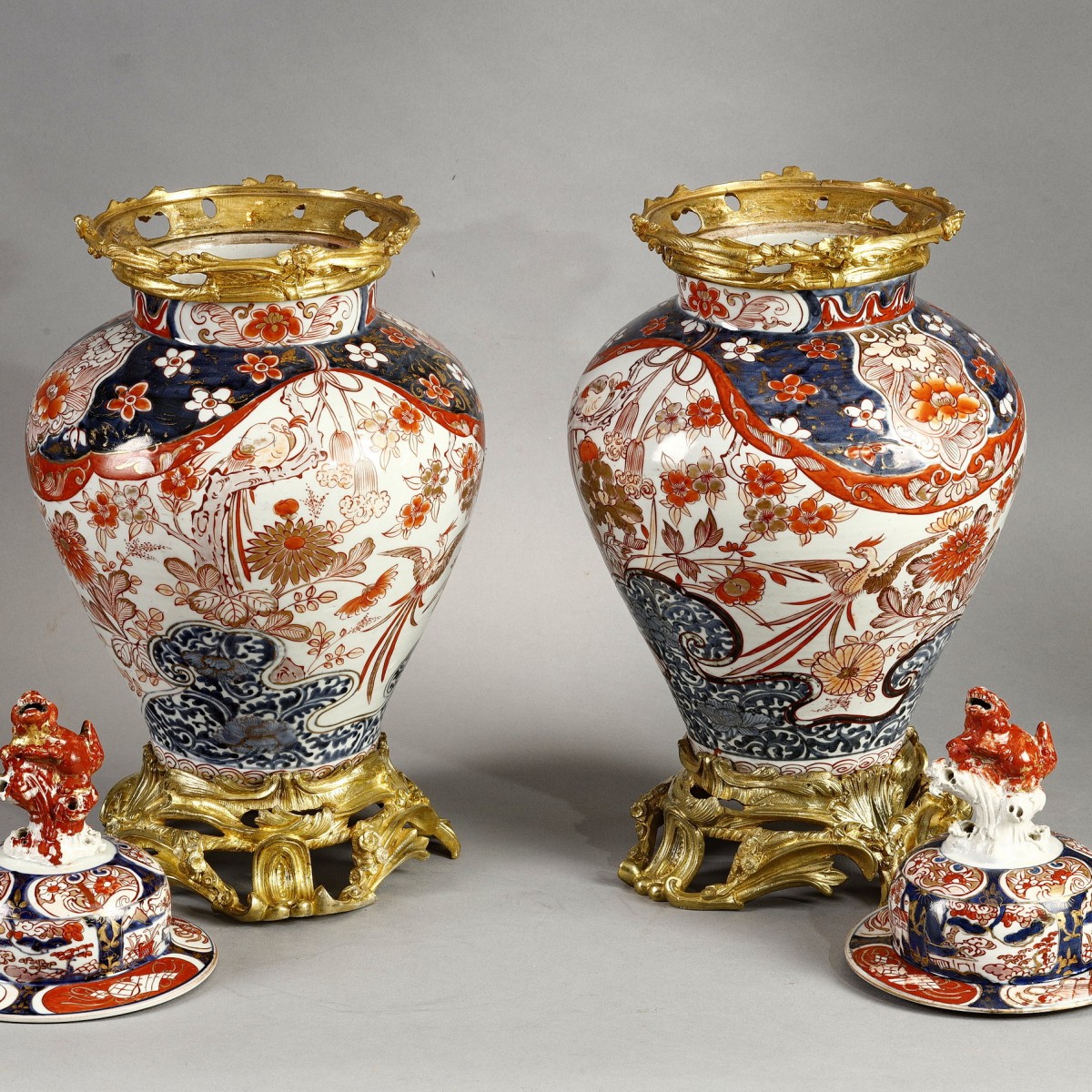
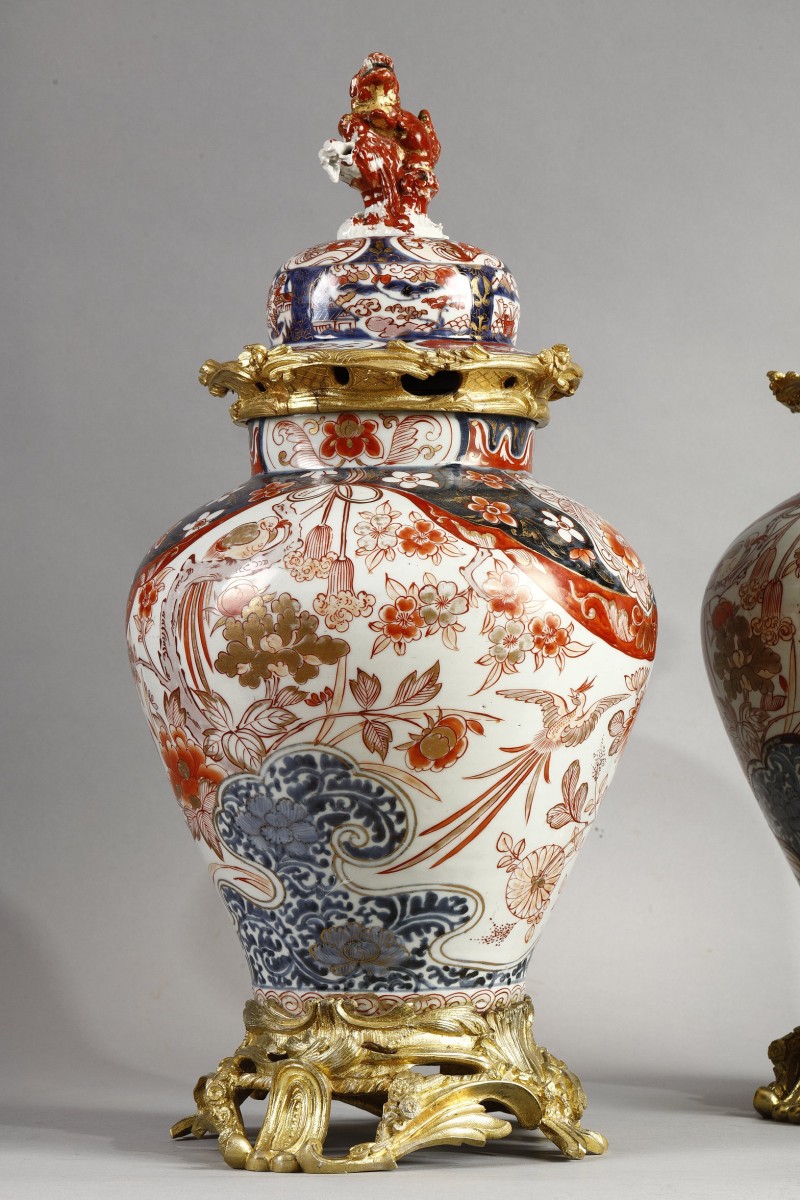
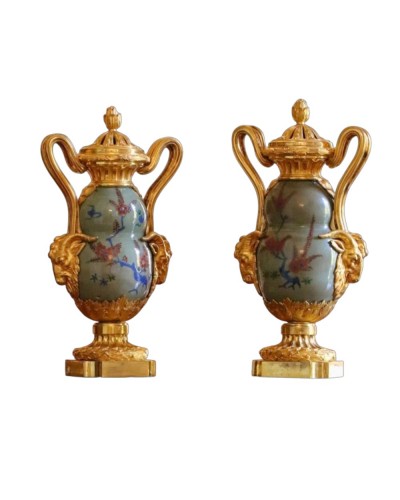
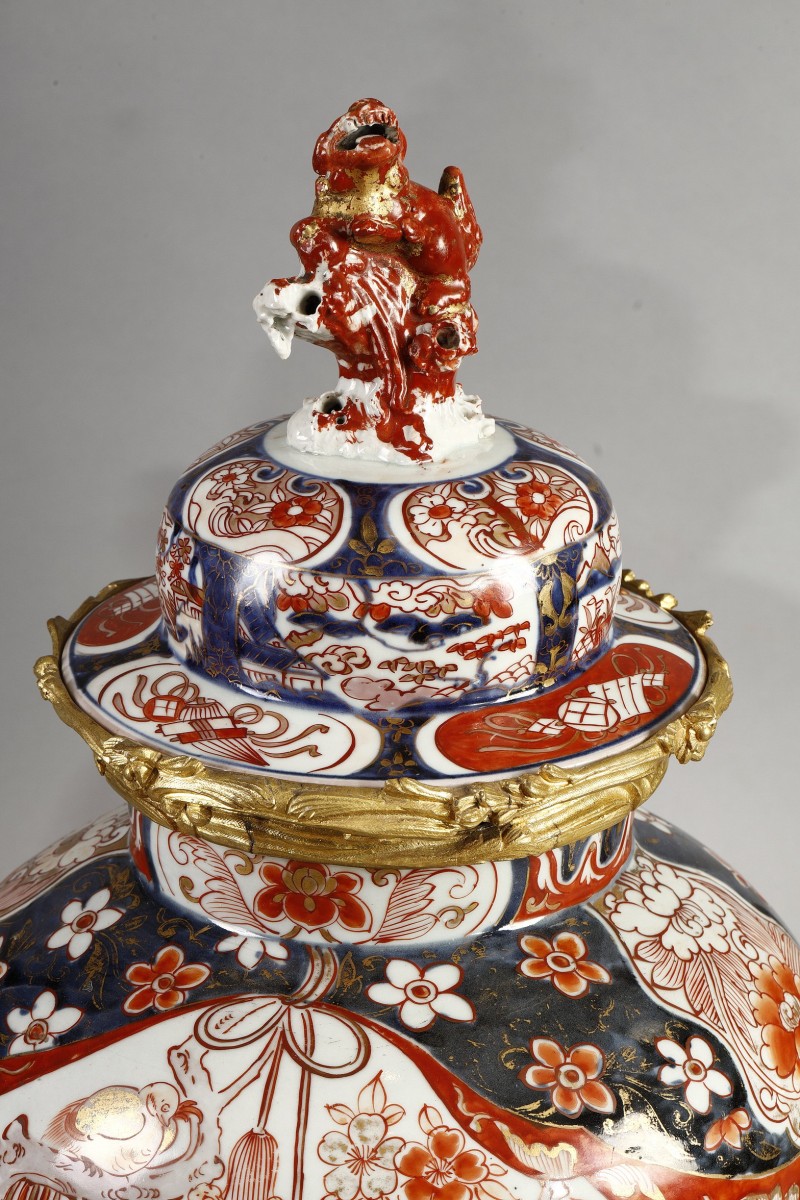
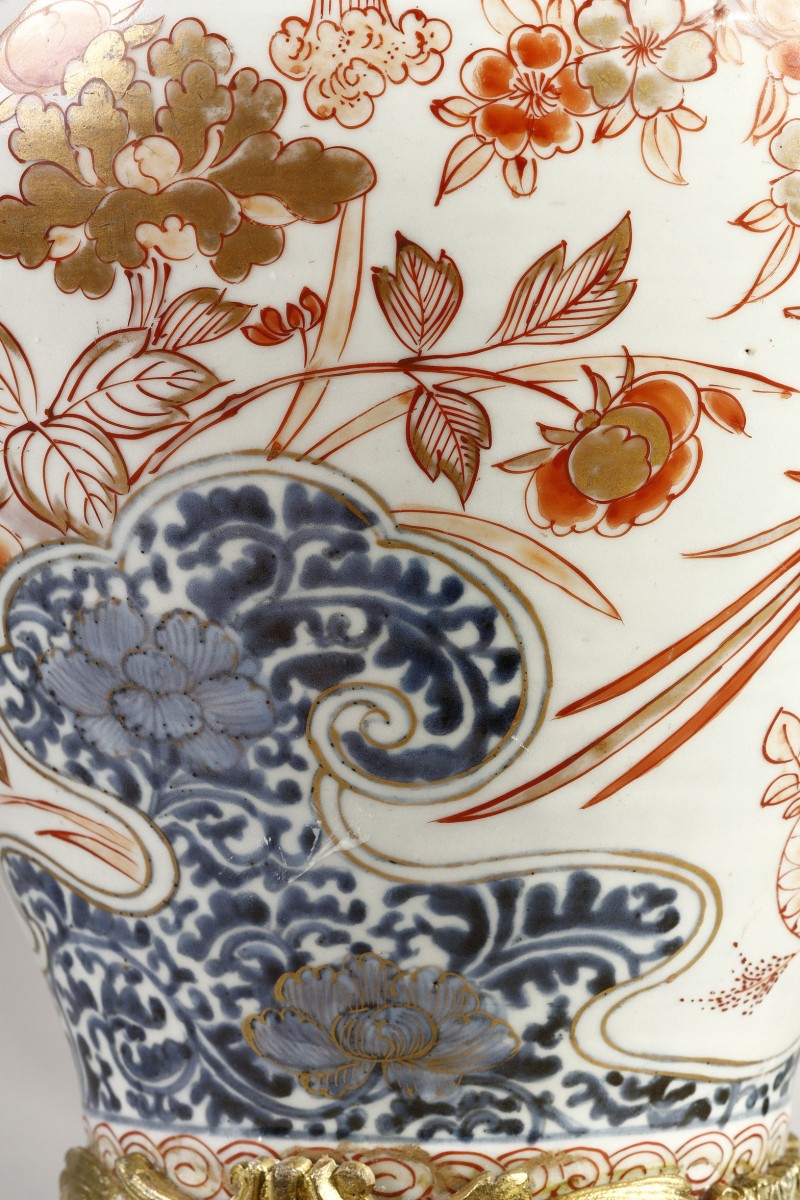
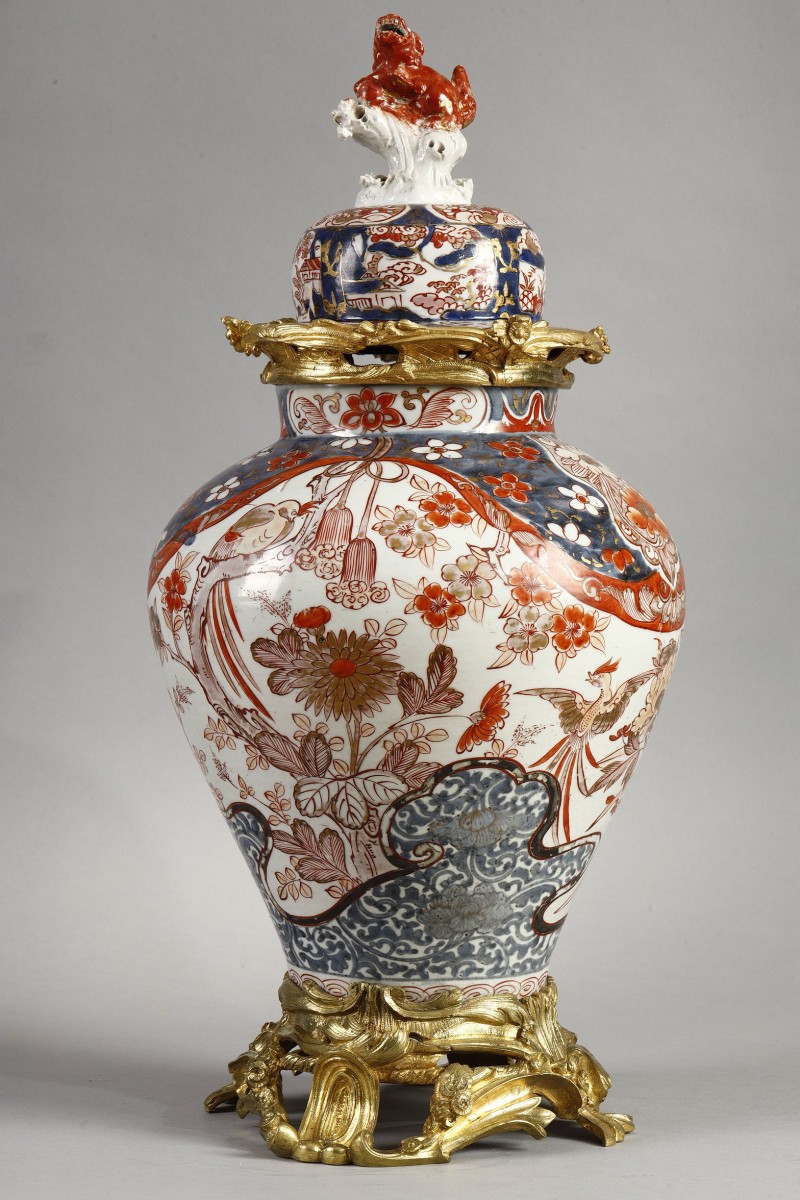
Of baluster shape, this remarkable and imposing pair features a particularly refined decoration in the traditional Imari palette, combining blue, red, and rich gold highlights on a white background. Intended for the European export market, these porcelains with Asian motifs were particularly prized in the 18th century.
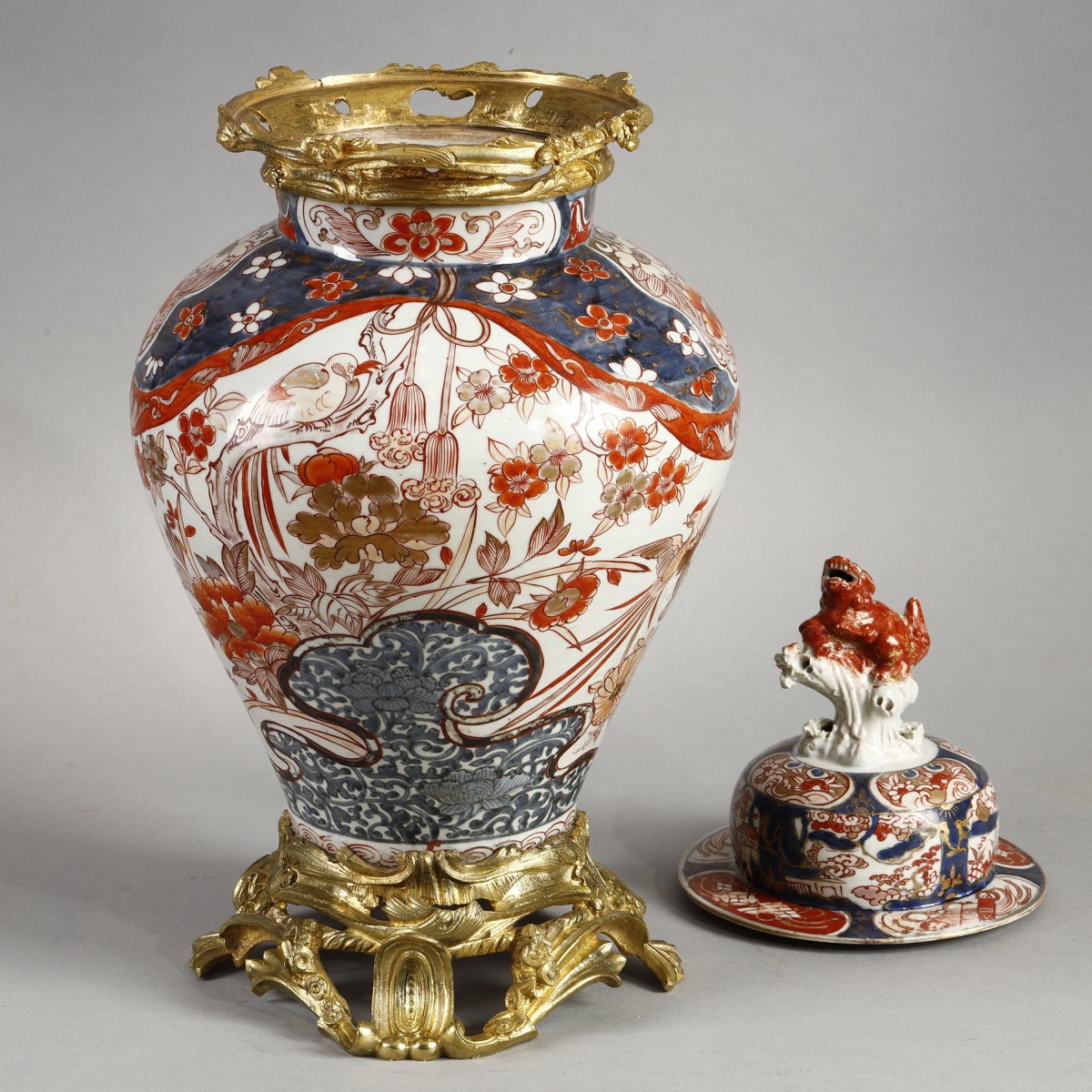
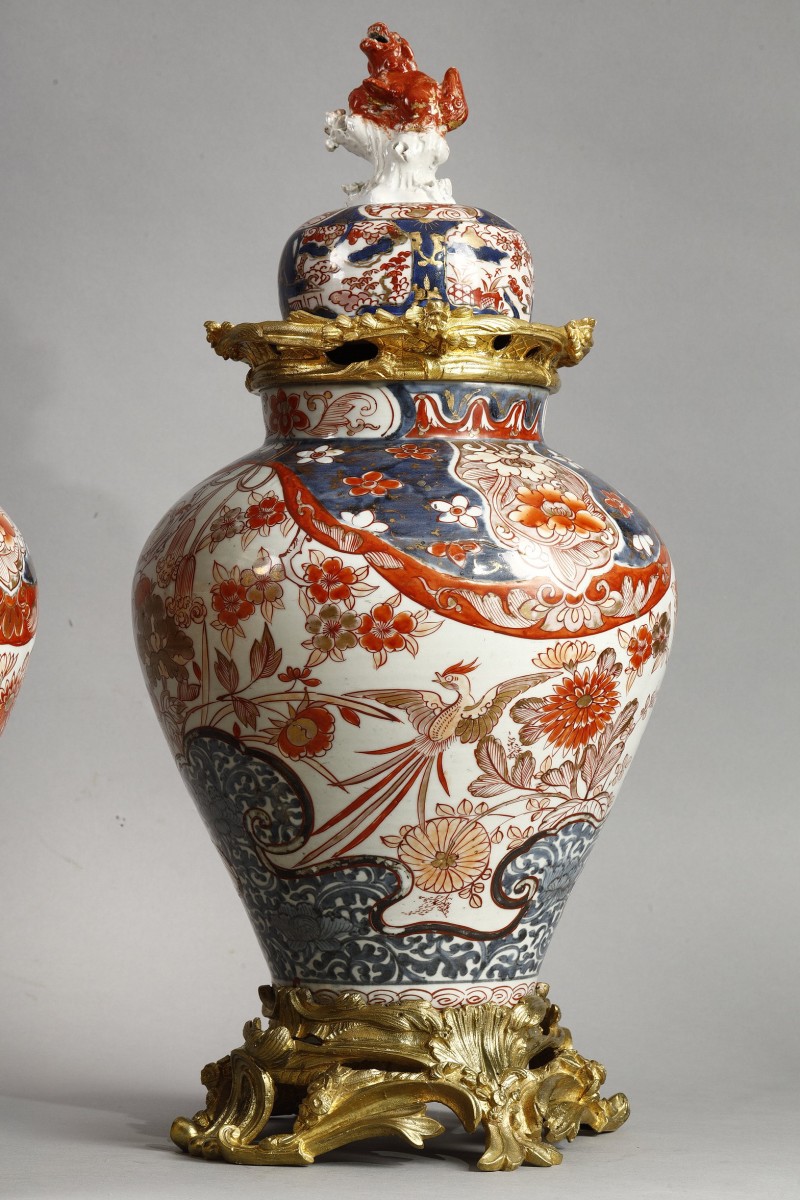
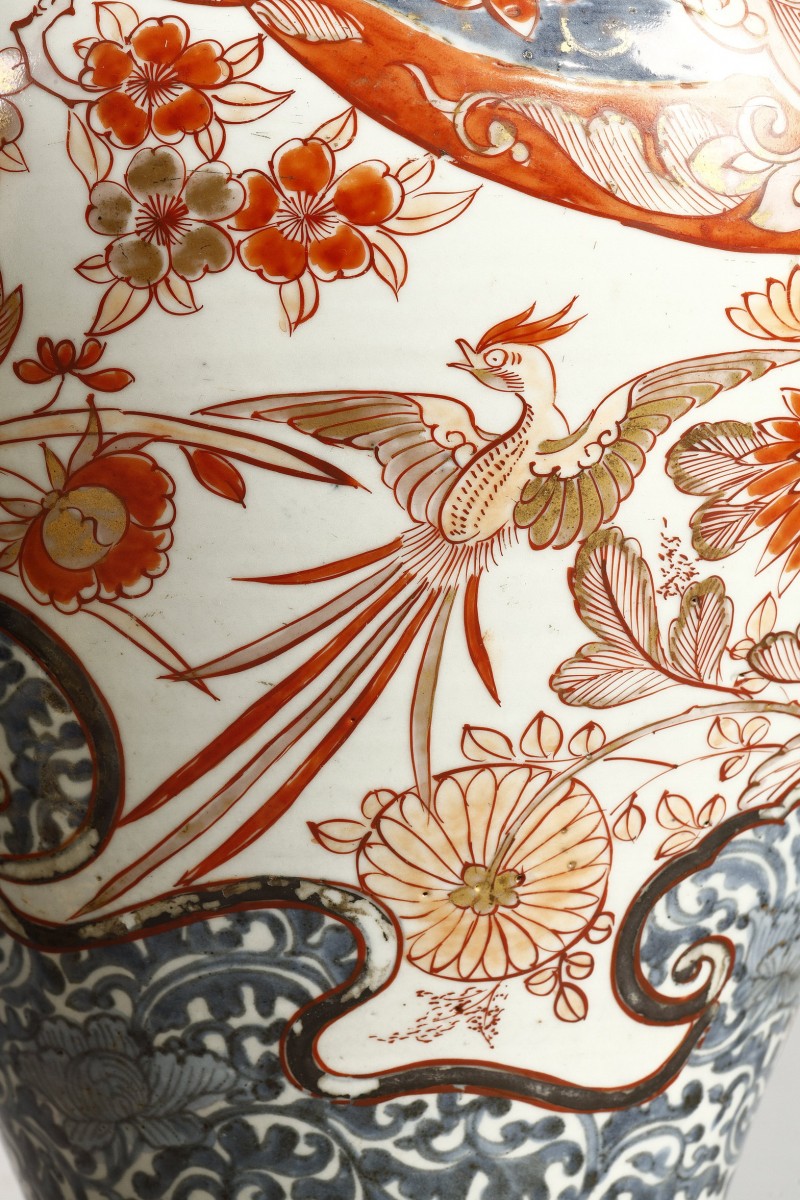
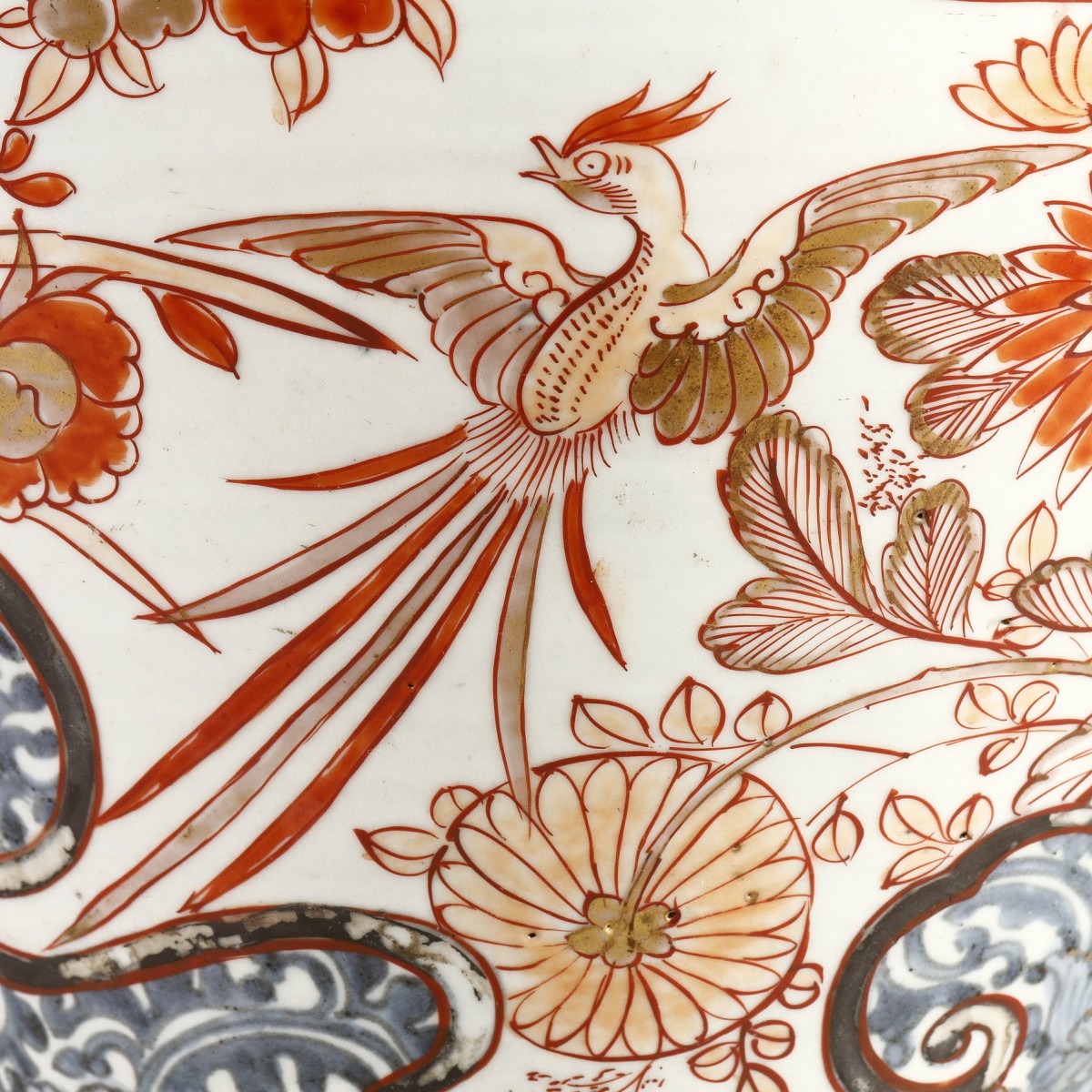
The decoration unfolds a rich and symbolic world, where fantastical birds, flowering branches, stylized clouds, and vegetal scrolls intertwine in an elegantly asymmetrical composition. A bird, representing the Japanese phoenix (h?-?), occupies a central place in Imari iconography. A symbol of rebirth, harmony, and prosperity, the phoenix is ??traditionally associated with periods of peace and imperial power. Its appearance in decorative arts intended for export also reflects the European taste for exotic and wondrous representations. Here, it reigns in all its splendor on the front of each pot.
The abundantly represented flowers (potentially stylized chrysanthemums, peonies, and plum blossoms) each possess a particular meaning in Japanese culture and, more broadly, in Far Eastern aesthetics.
The peony evokes wealth and honor, the chrysanthemum longevity and nobility, while the plum blossoms symbolize renewal and ephemeral beauty.
The clouds and swirls that structure the composition evoke the celestial and spiritual realm; they stand out in deep blue against pure white.
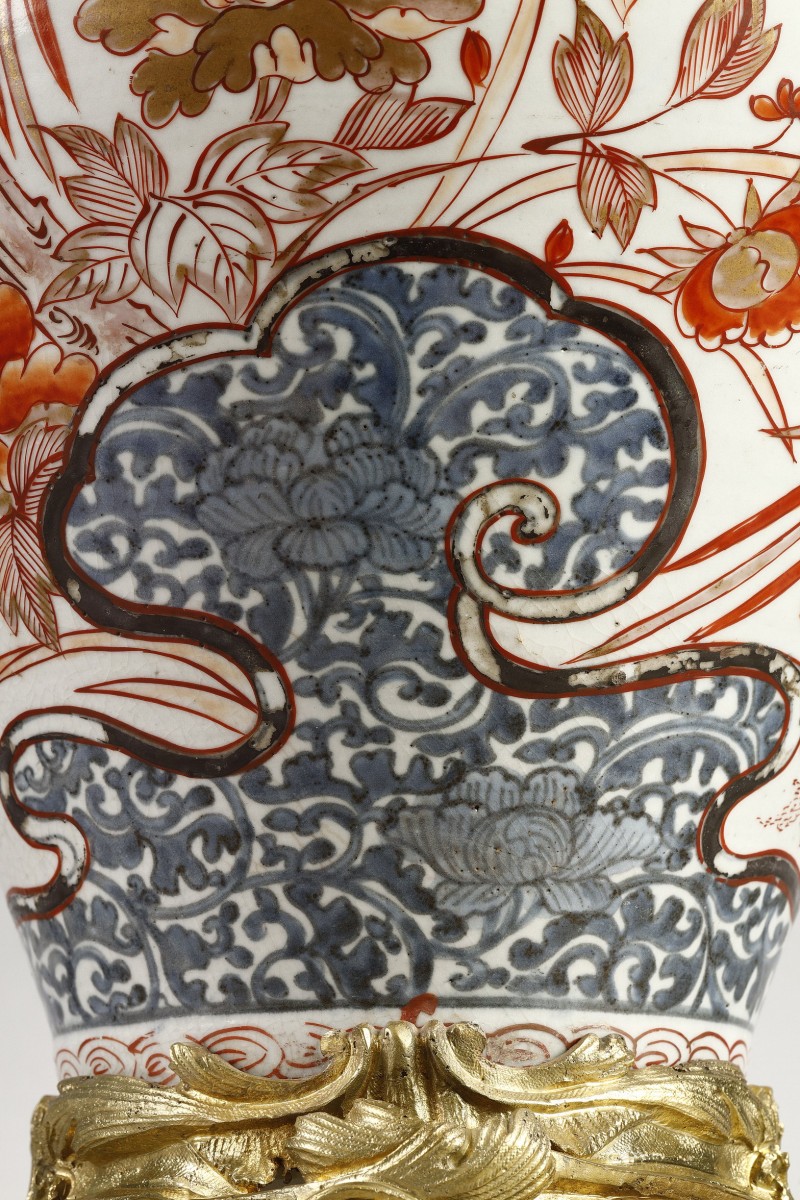
The large, deep blue reserves with vegetal decoration in the upper section recall the influence of Chinese Kakiemon porcelain and highlight the refined contrast between the densely decorated areas and the more open reserves, characteristic of the finest 18th-century Imari production.
The rich chromatic palette, amplified by the gold highlights, lends the whole a luminous and gentle presence.
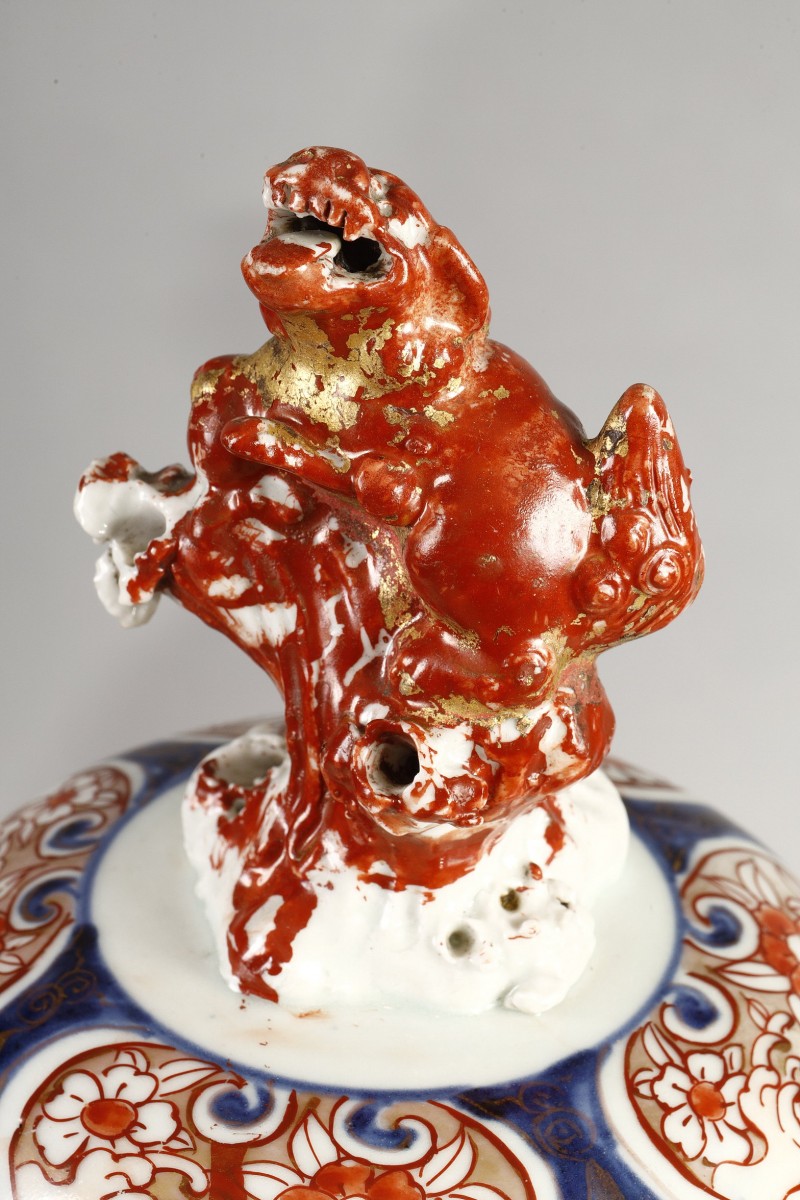
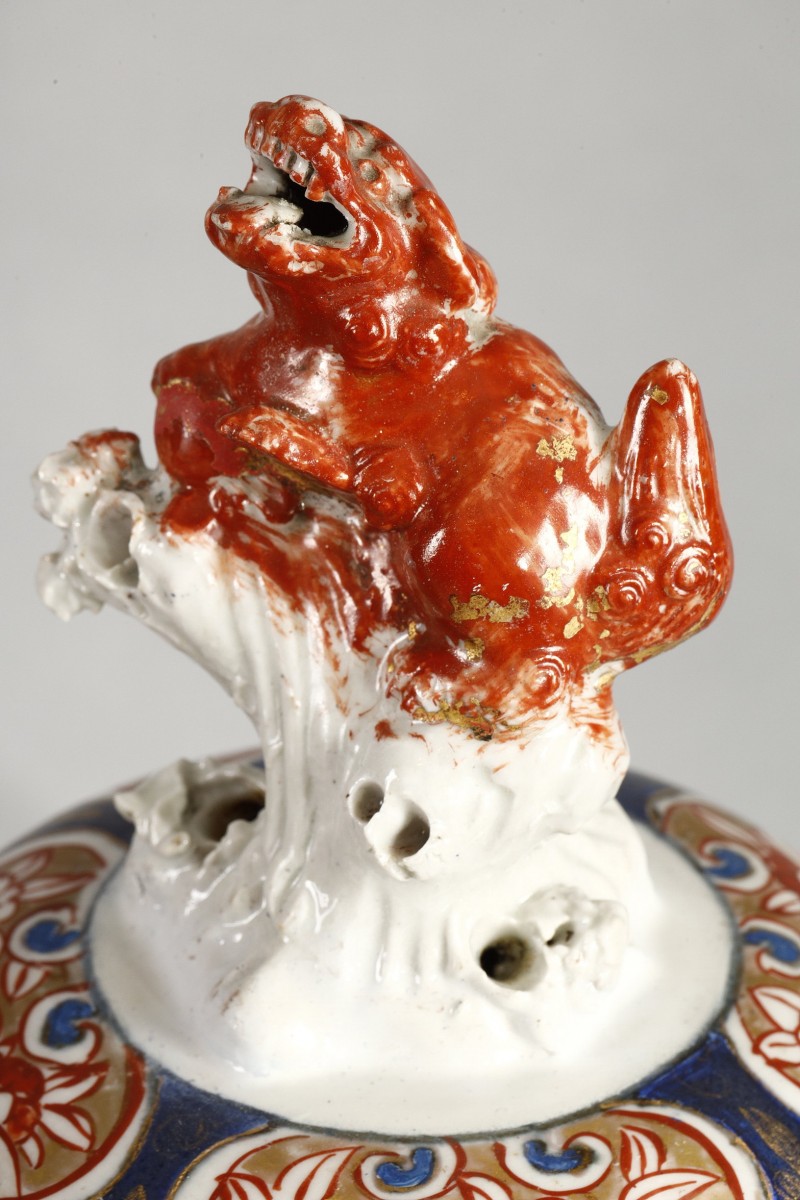
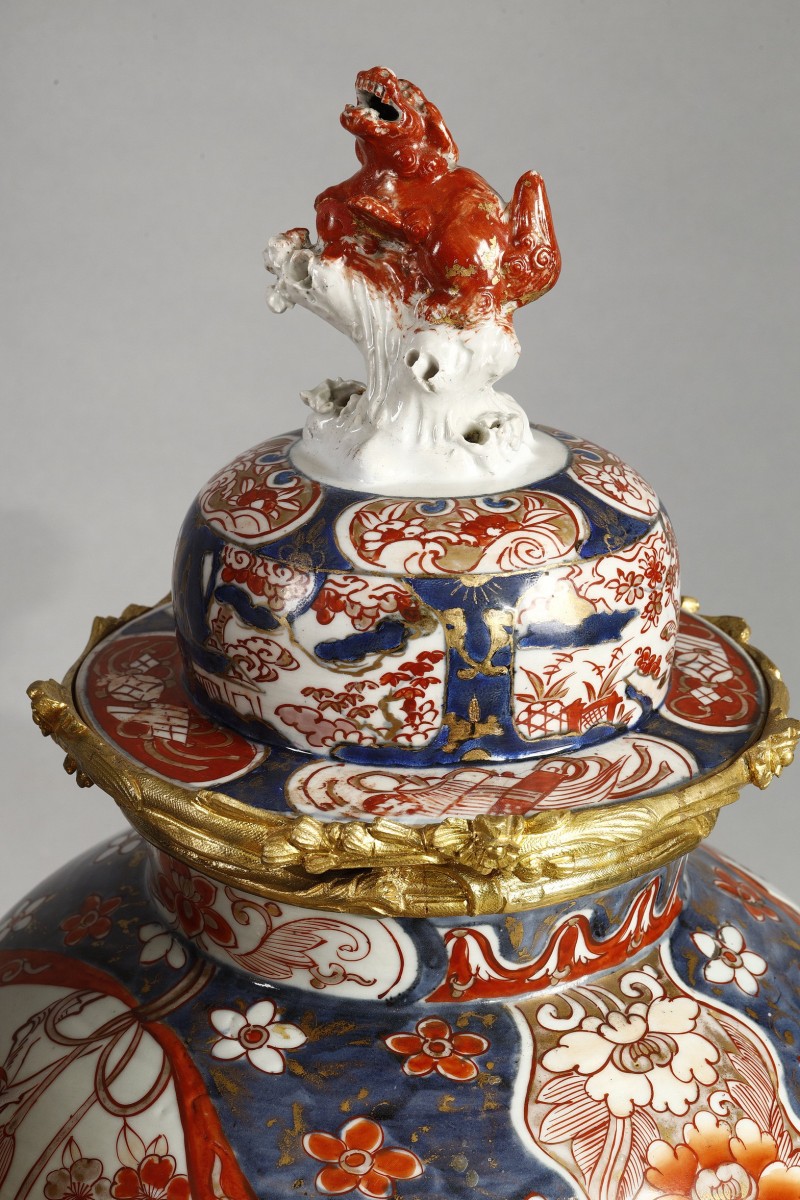
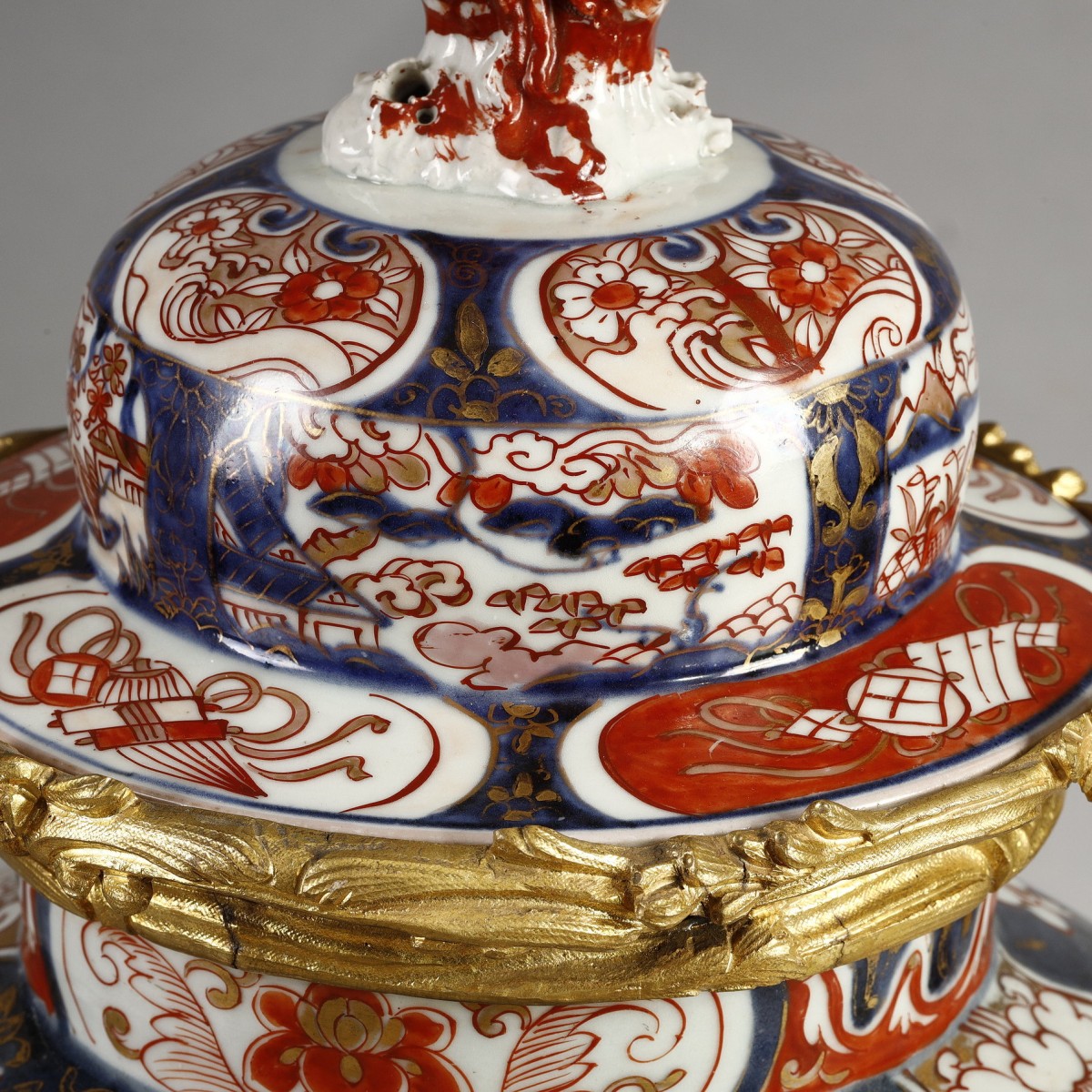
The lids are topped with dragon handles modeled in relief. A major figure in Asian symbolism, the dragon is associated with protective power, wisdom, and mastery of natural forces. Its presence reinforces the prestigious and spectacular character of this monumental pair. Their deep red color contrasts with the rest of the piece.
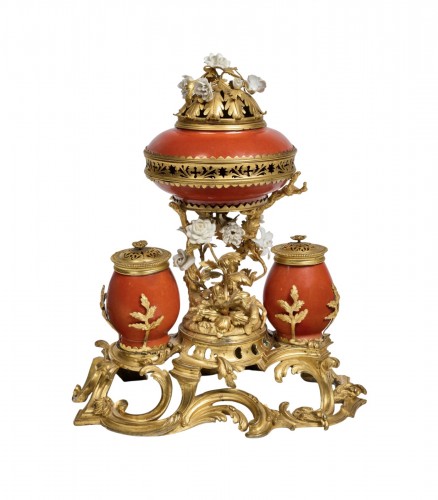
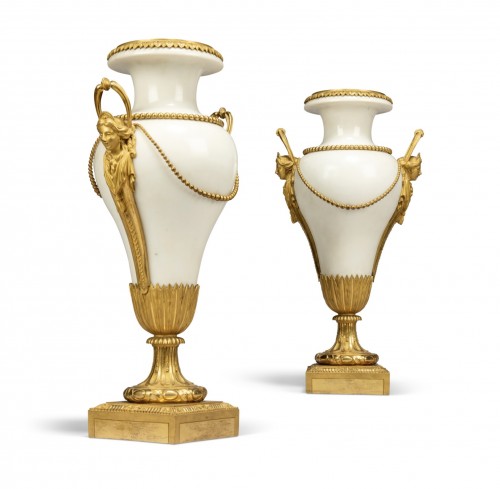
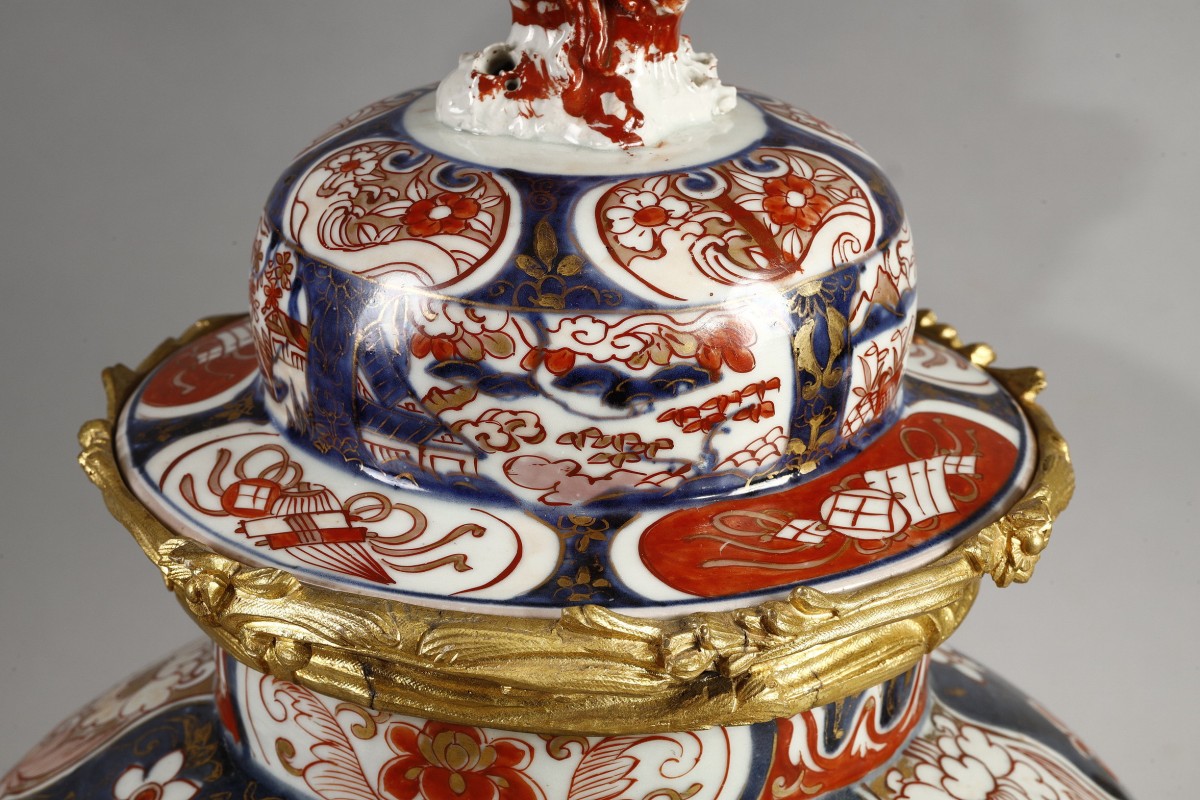
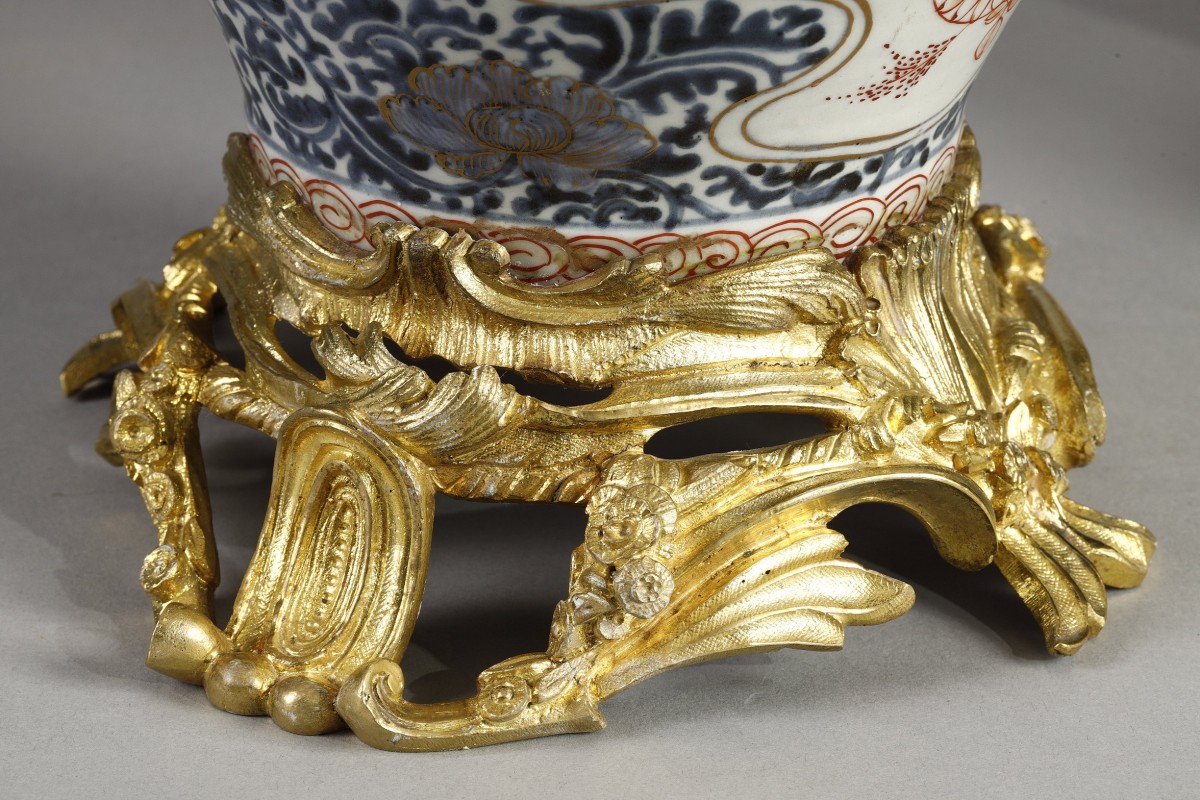
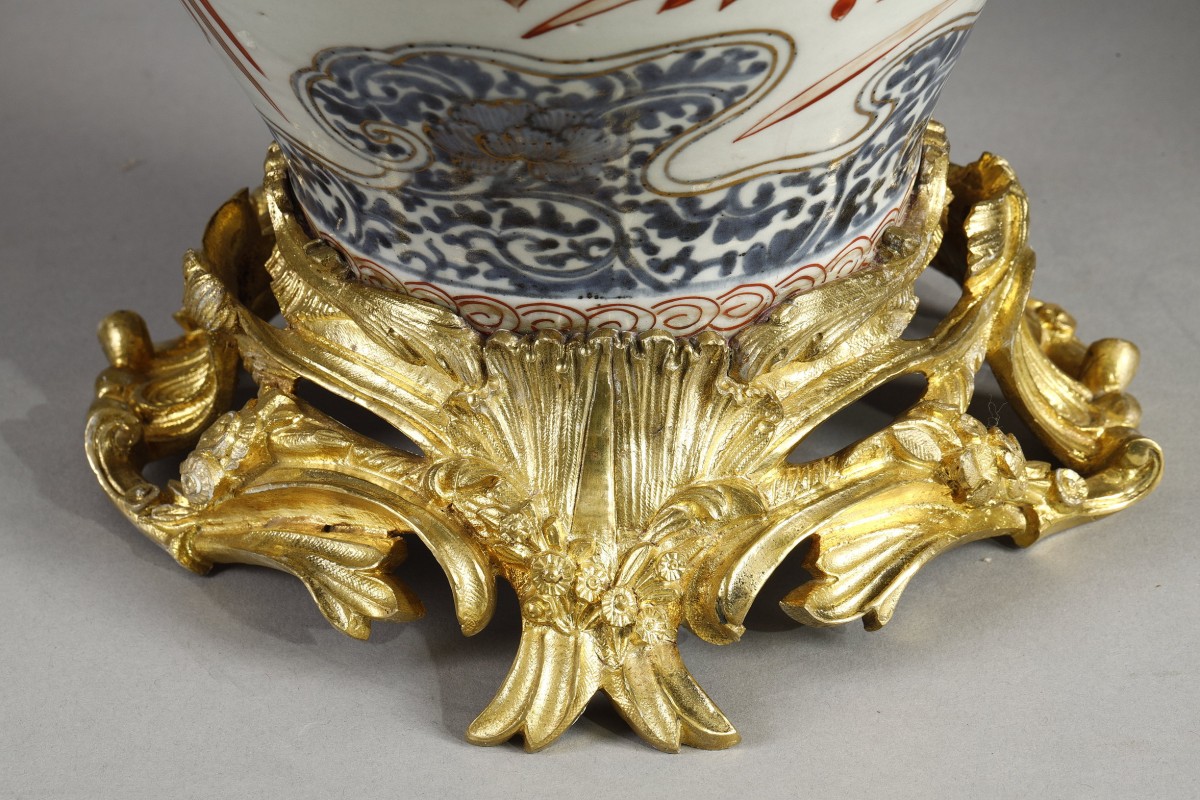
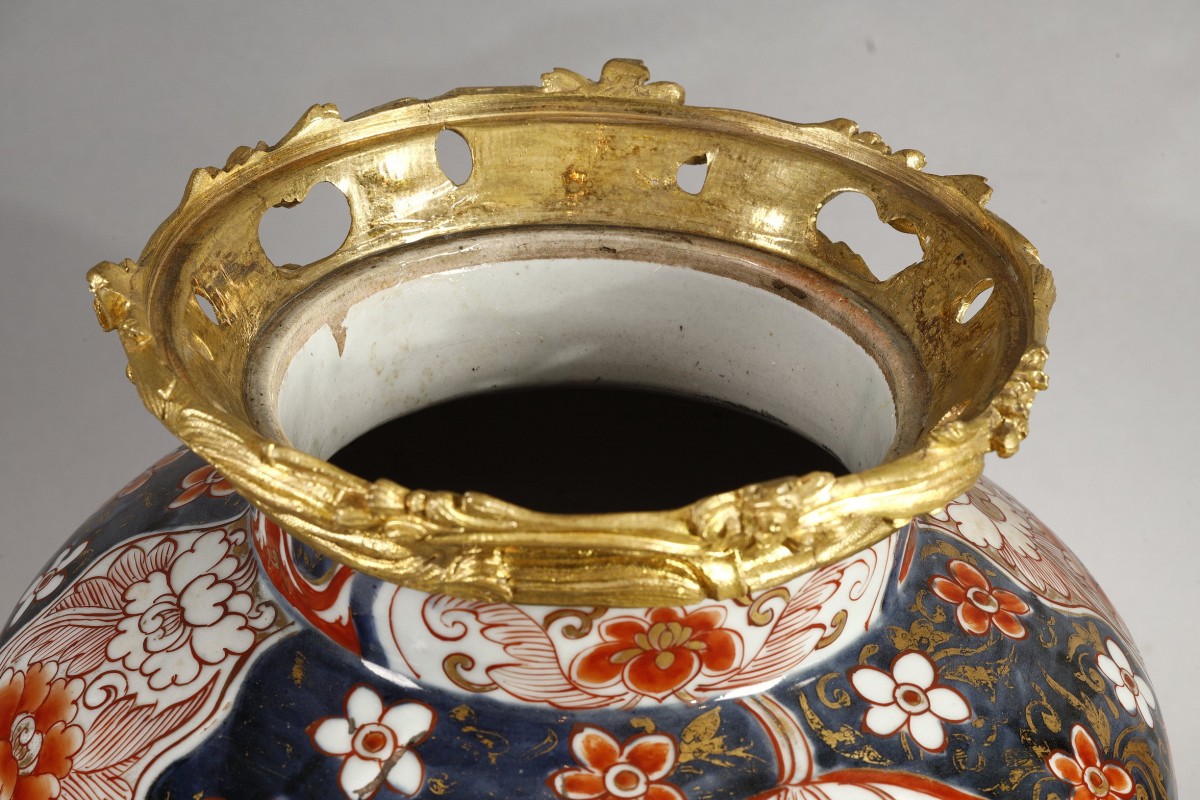
Each vase is set in a finely pierced gilt-bronze mount, crafted in France at a later date. Exquisitely crafted, this meticulous and refined bronze work harmonizes particularly well with the Japanese beauty of the porcelain.
Rococo frames with motifs of scrolls, foliage, and volutes became a defining feature of decorative arts. These exquisite mounts served to enhance imported porcelain while seamlessly integrating it into European aristocratic furniture and décor.
Large pairs of Imari vases preserved with their original lids and mounts are particularly rare today, especially in such impressive dimensions and in such excellent condition.
Japanese porcelain work from the 18th century on a French gilt-bronze mount with its original gilding.