Offered by Tobogan Antiques
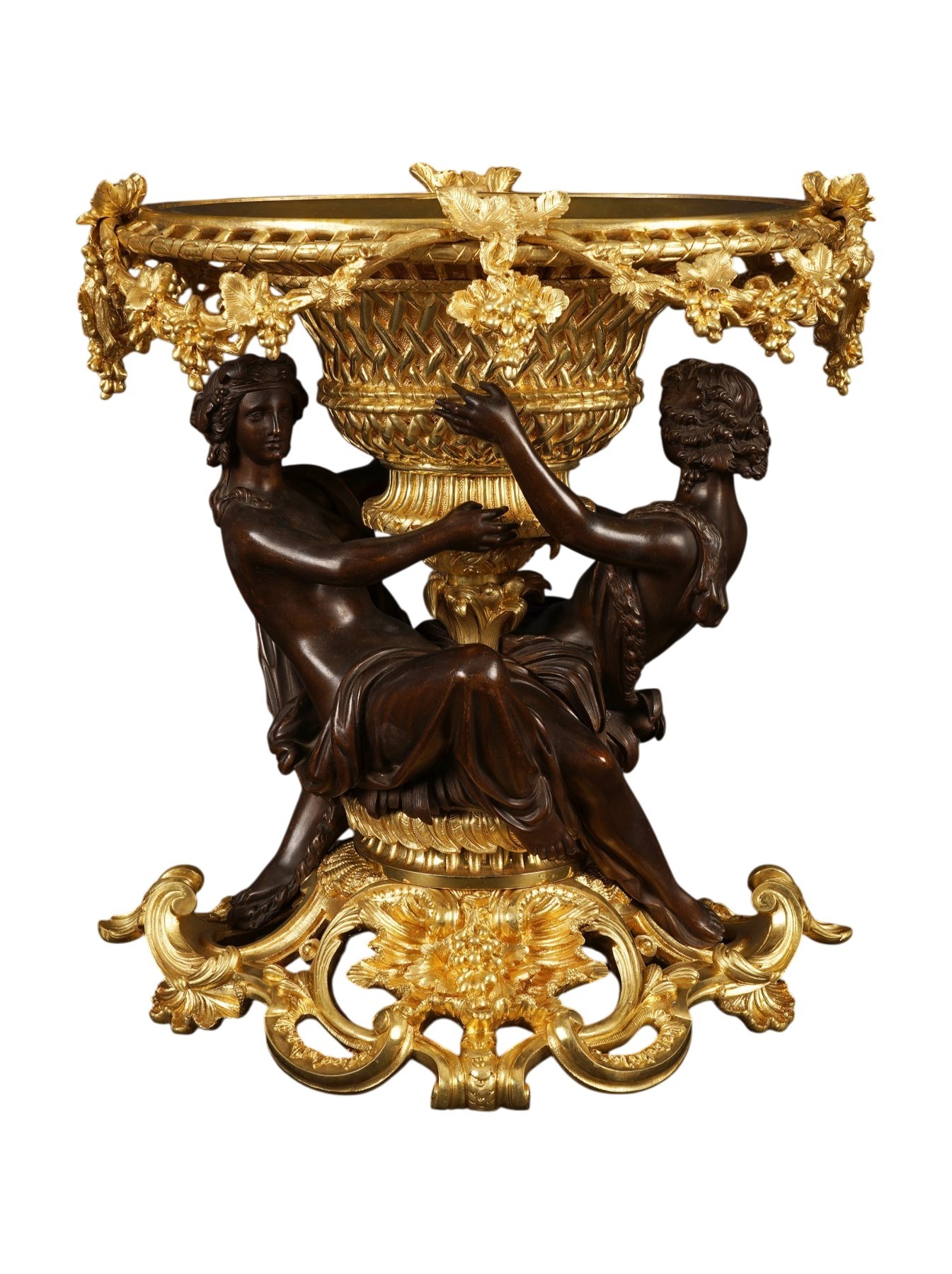
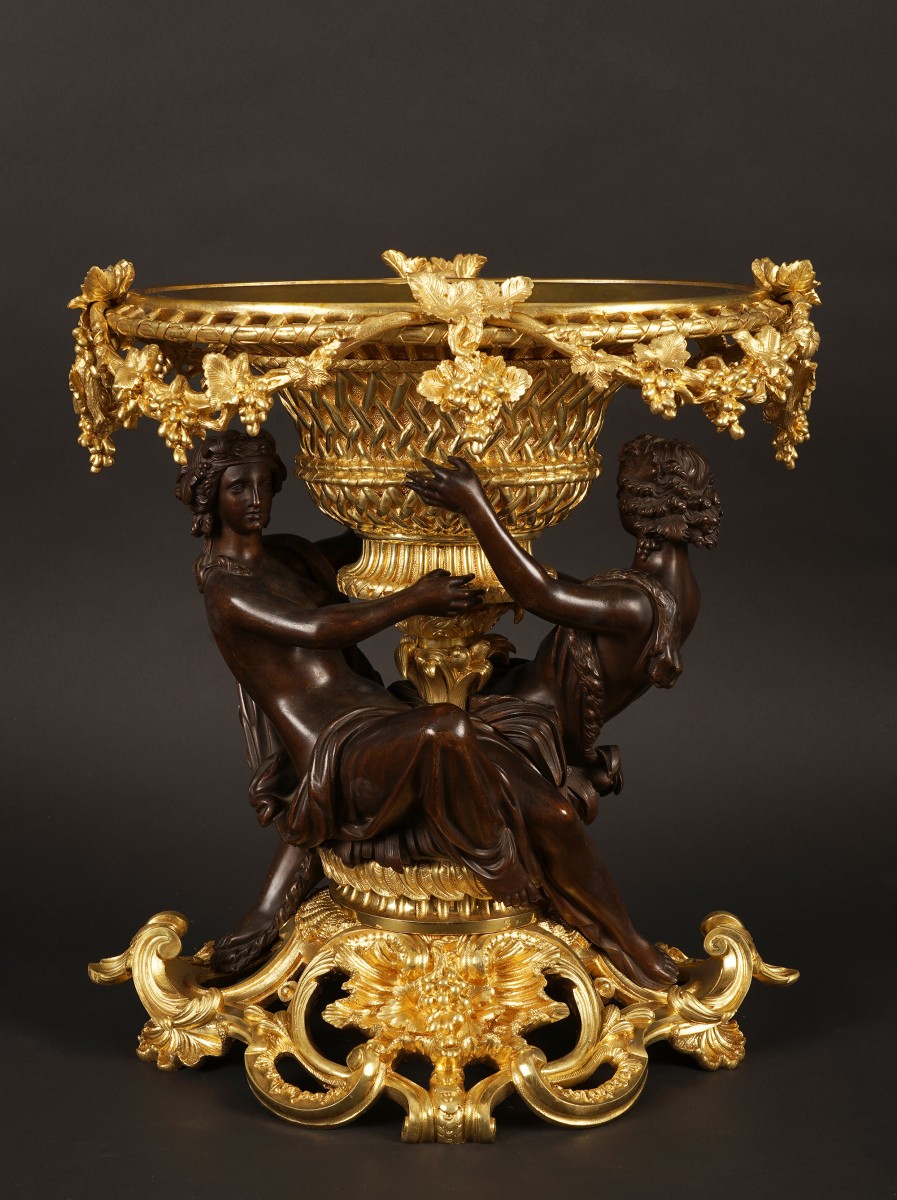
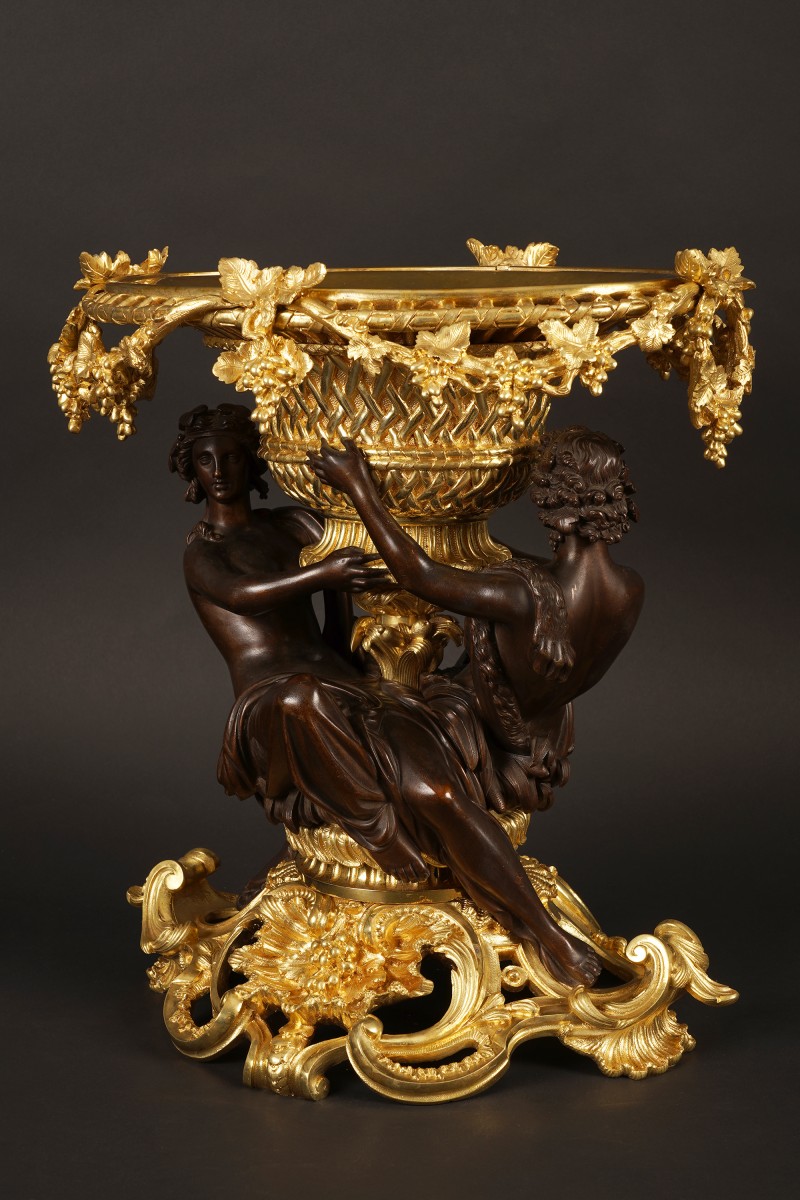
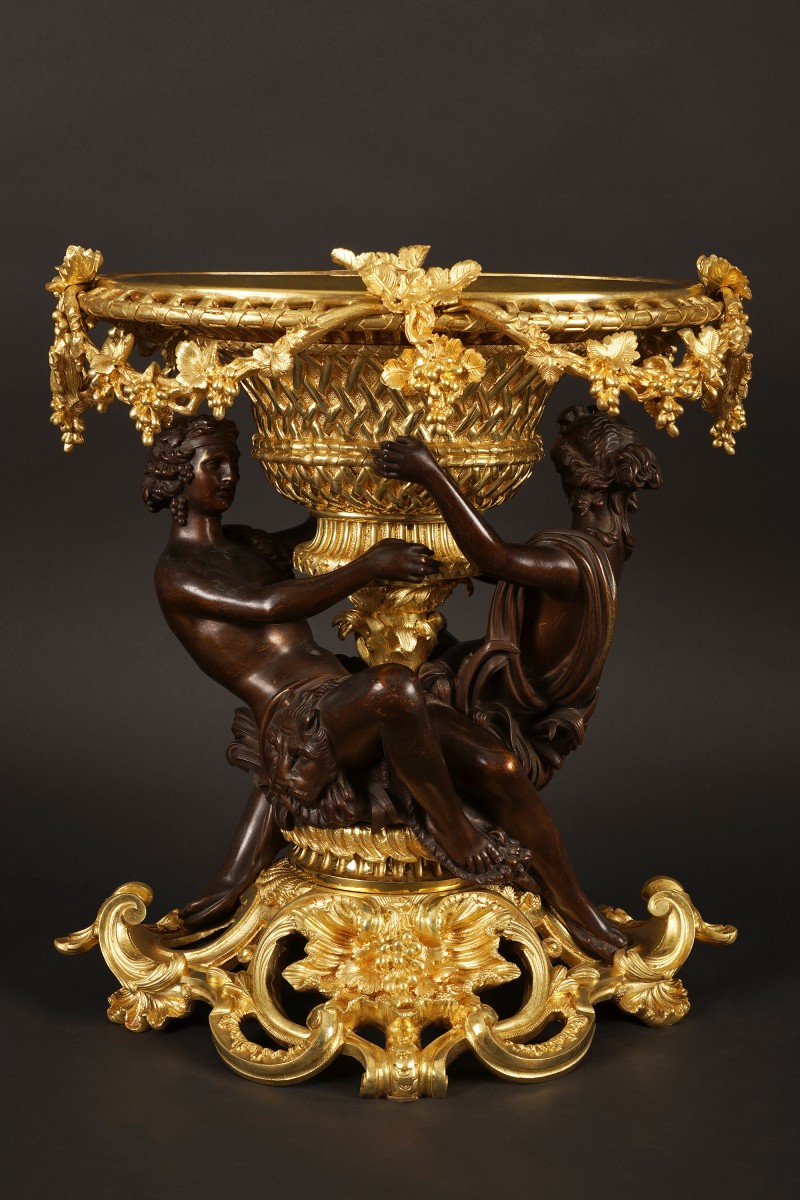

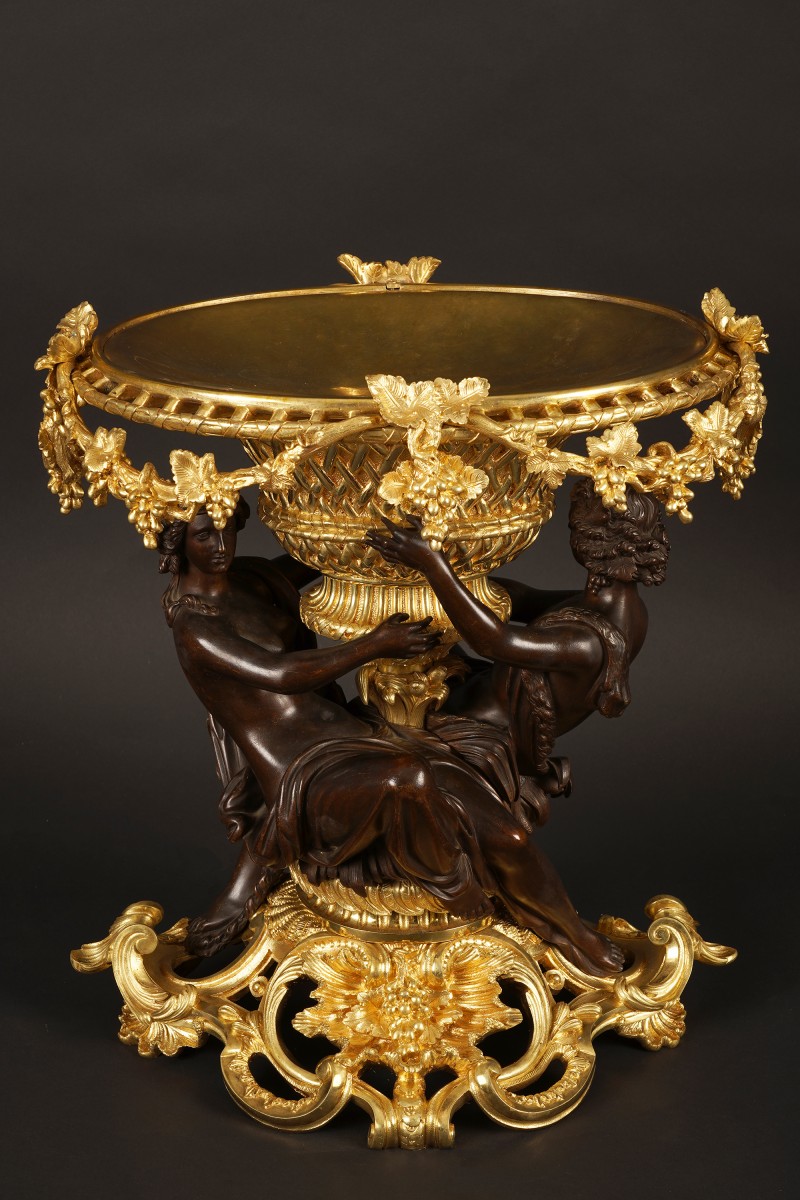
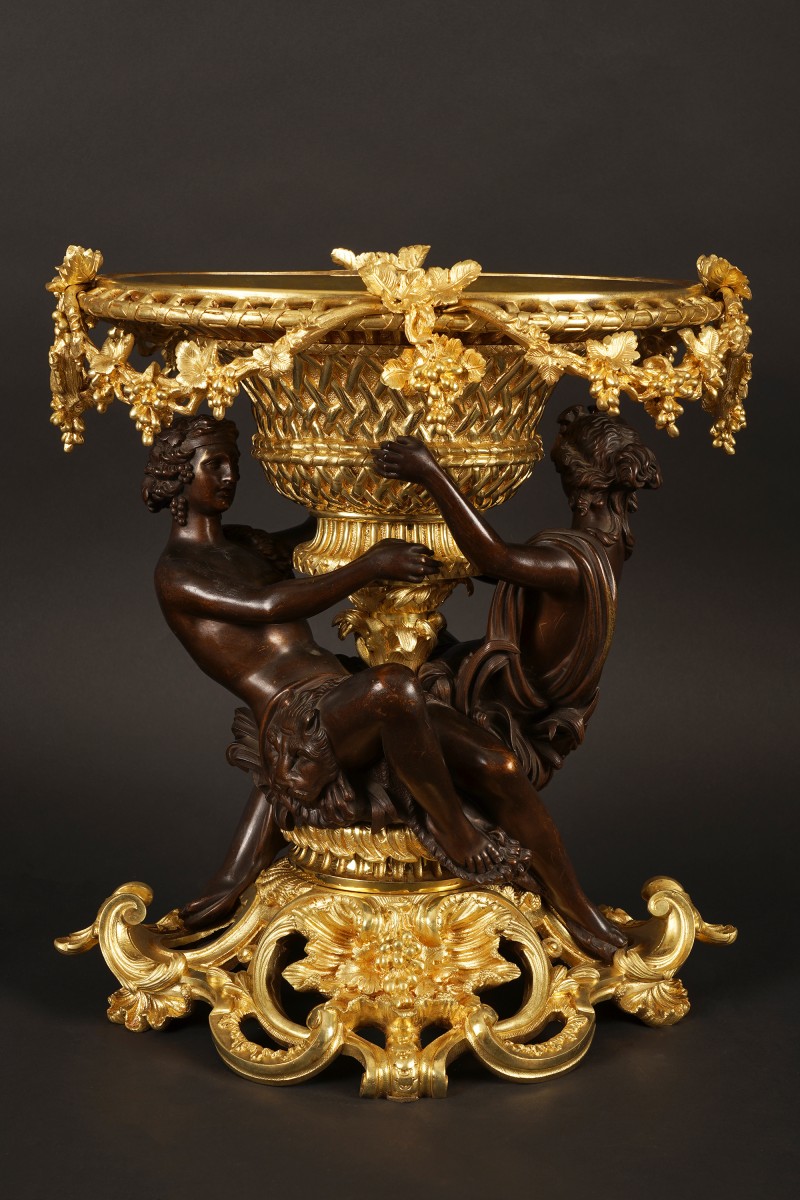
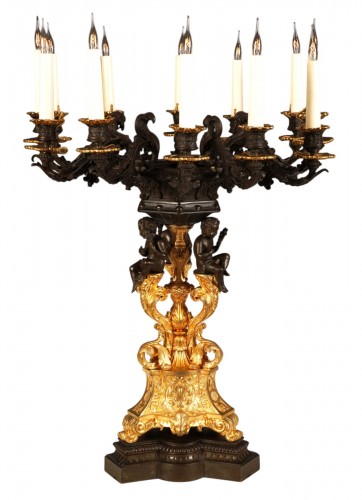
An exceptional centerpiece in patinated and gilded bronze, showcasing a magnificent contrast between the brilliance of the gilding and the depth of the brown patina. The work is centered around a three-part allegorical and Bacchic composition.
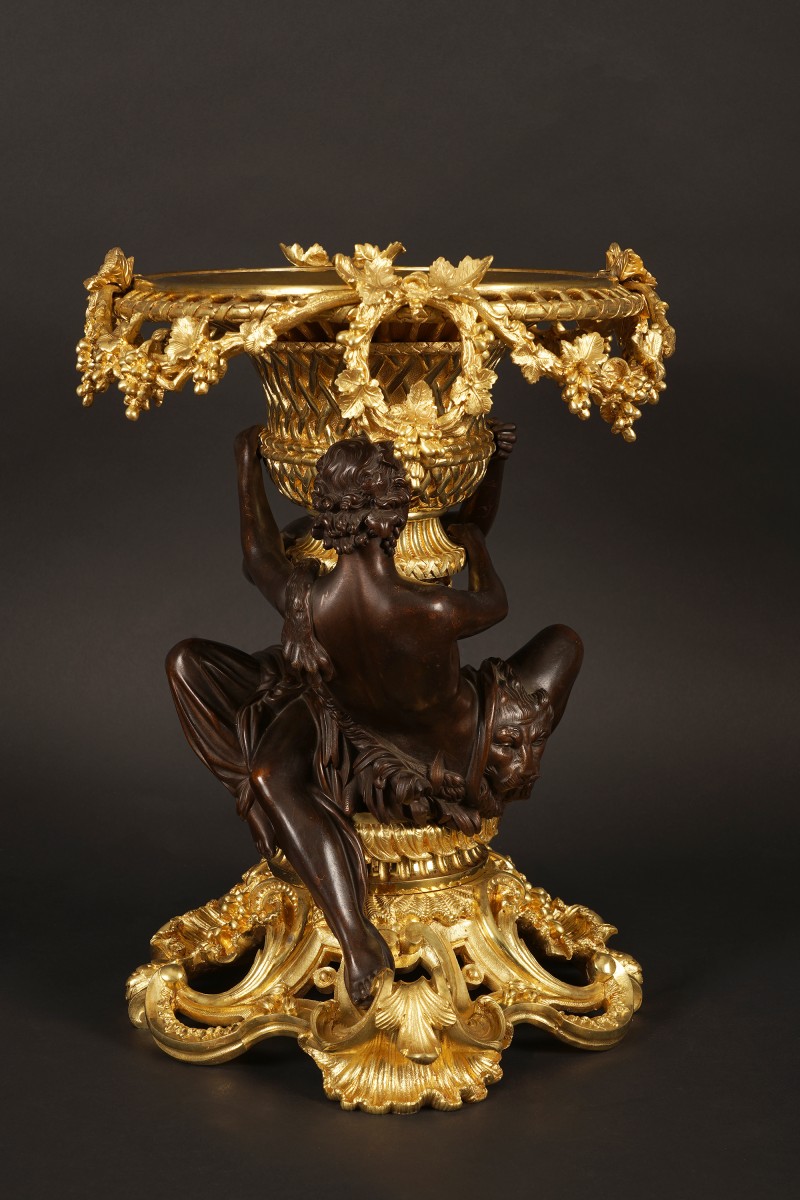
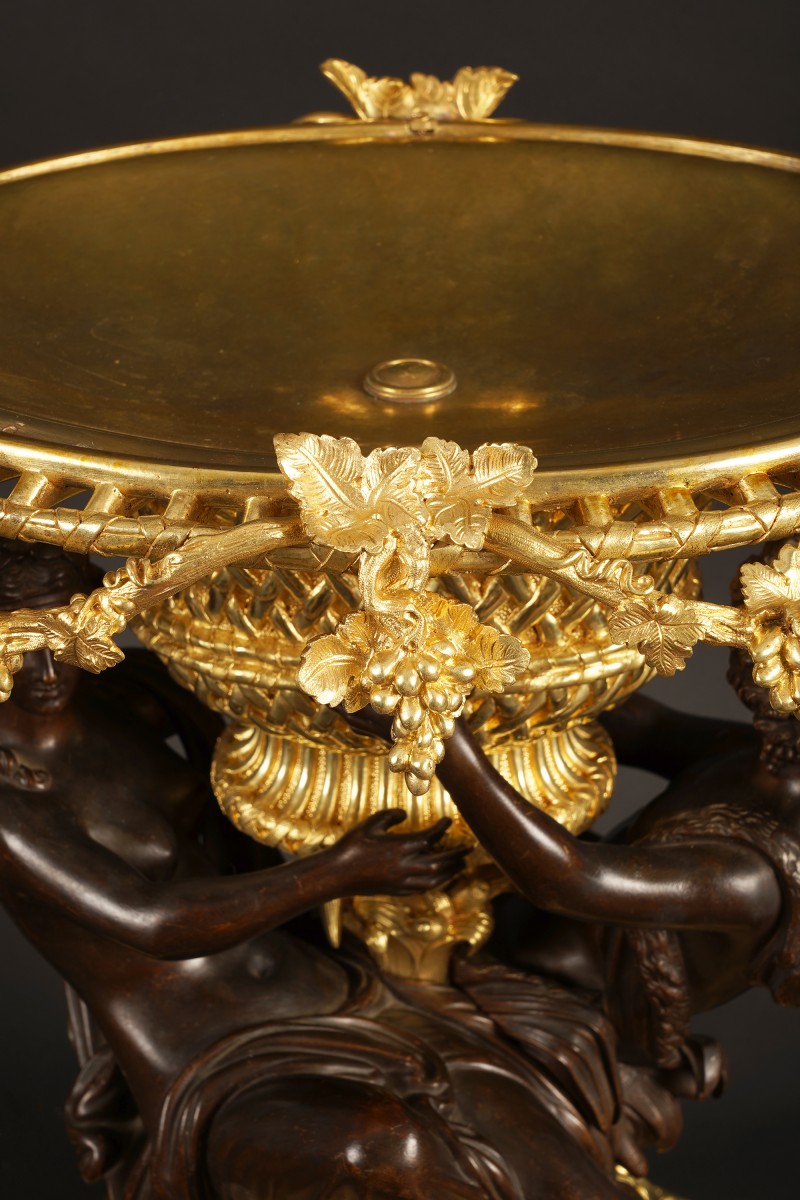
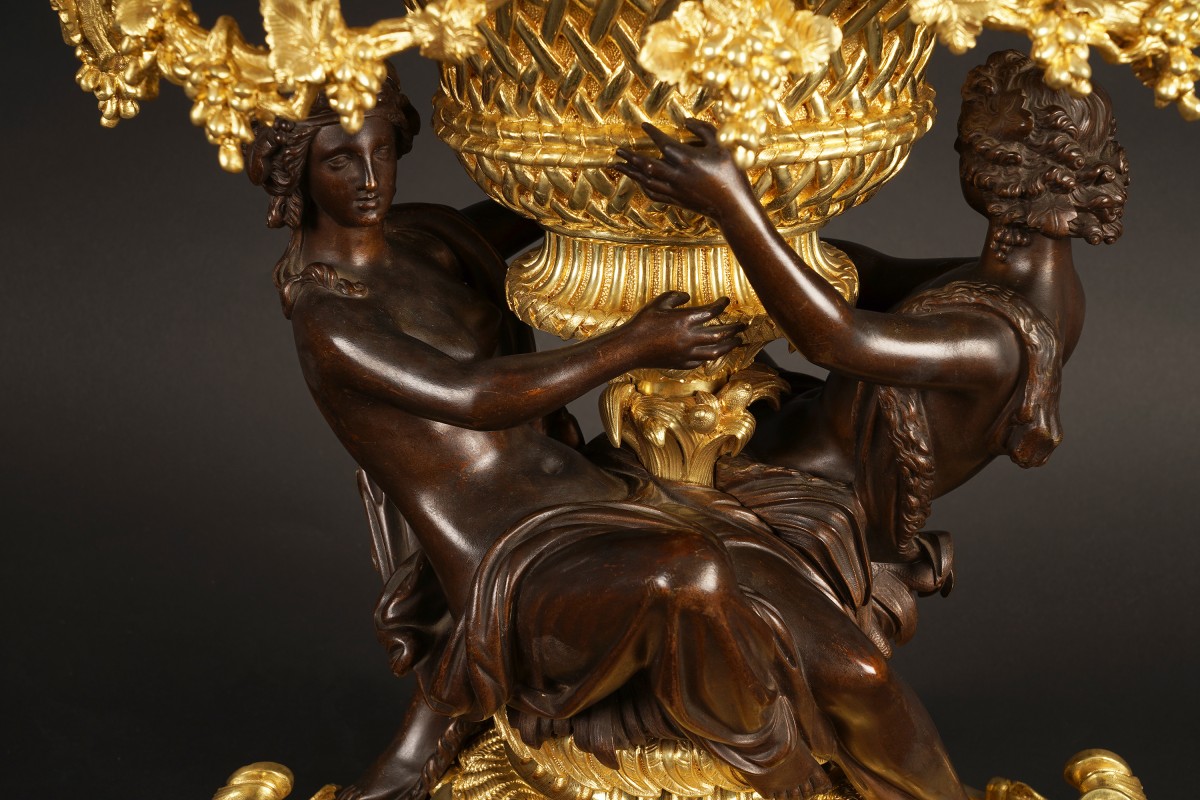
Circular and flared in shape, the bowl mimics elegant openwork wickerwork. The rim is richly ornamented with a garland overflowing with vine branches, intermingling leaves and generous bunches of grapes in high relief. The naturalistic rendering of the vine evokes abundance and Dionysian festivities.
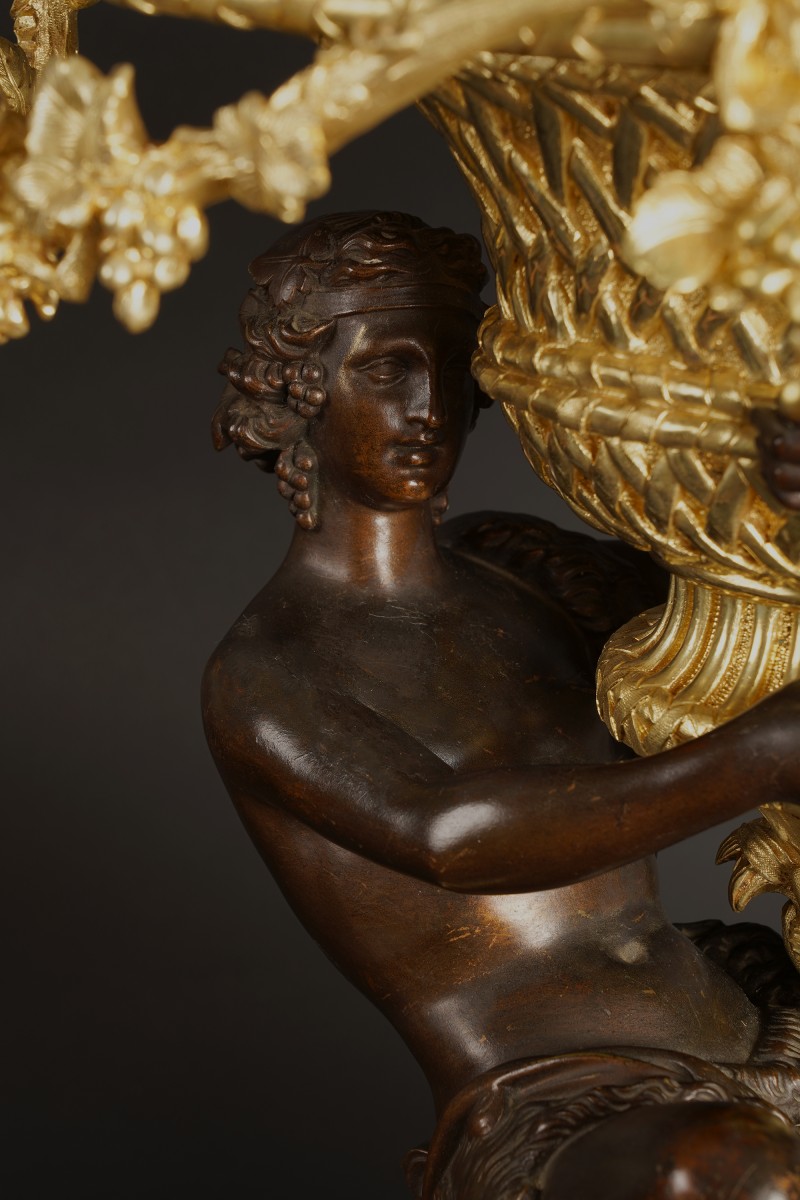
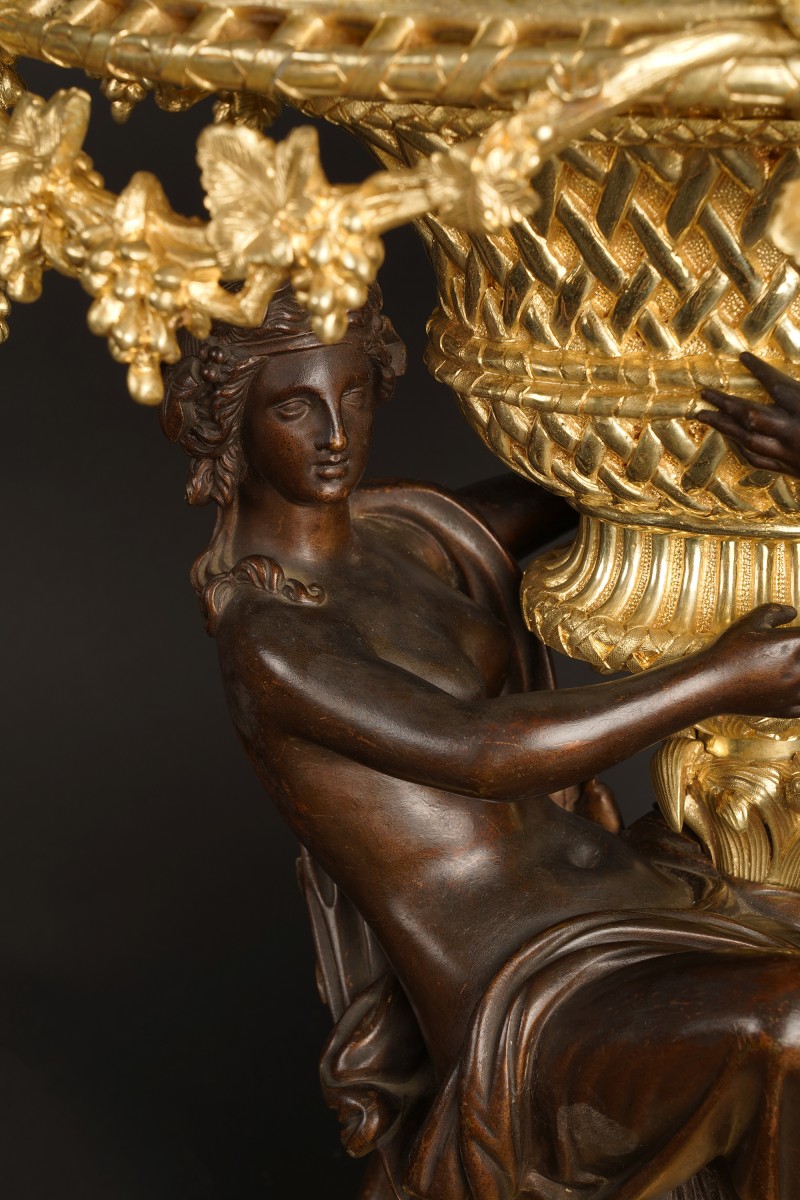
The body of the bowl is formed by two figures in the round, cast in patinated bronze, representing Hercules and a Bacchante. Seated and gracefully leaning against one another, the Bacchante is draped in ancient-style folds that partially reveal her nudity. Hercules, for his part, carries the pelt of the Nemean lion, which he slew during the first of his twelve labors. Their delicately raised arms support the basket in a fluid, theatrical gesture. The patina treatment highlights the softness of the flesh, contrasting with the mineral quality and brilliance of the gilded elements.
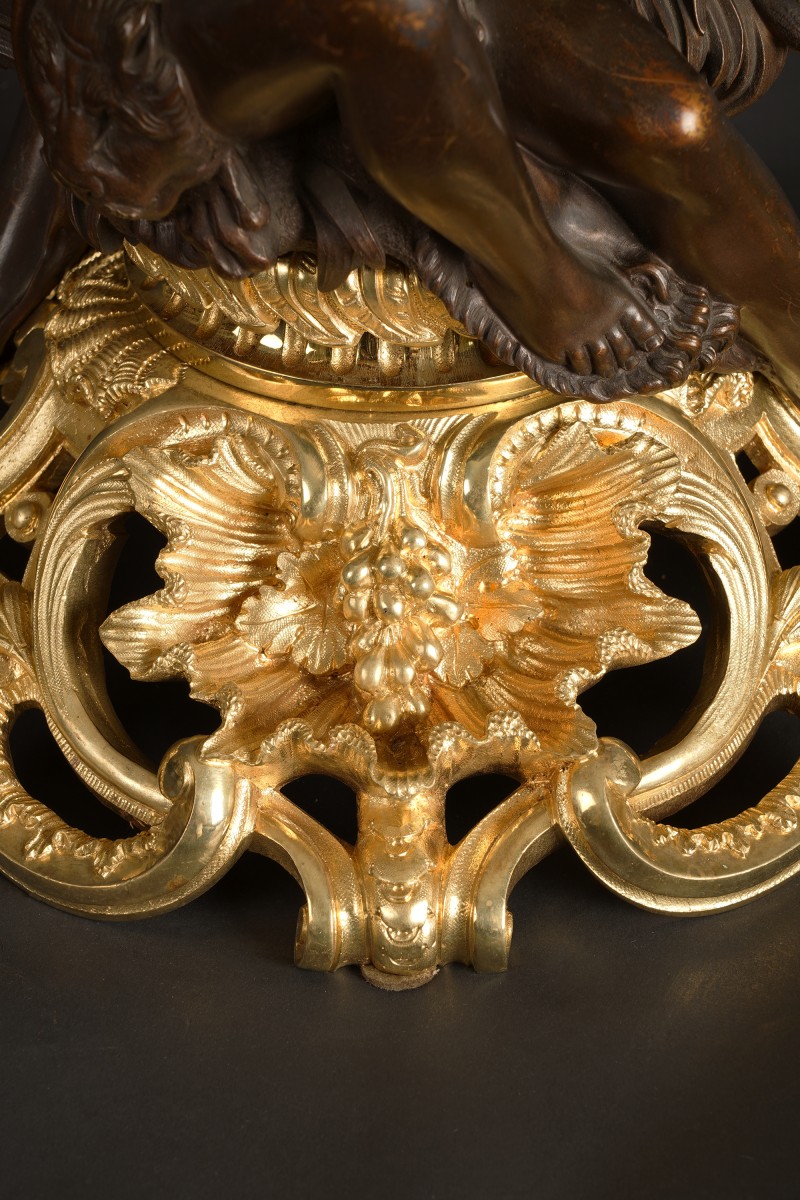
The ensemble rests on an imposing, scalloped, and undulating base made of richly gilded bronze. Inspired by the Rococo style, the pedestal is vigorously chiseled with powerful acanthus leaves, asymmetrical scrollwork, volutes, and shell motifs.
This piece is characteristic of the grand decorative style of the 19th century, particularly the Napoleonic III period, which embraced a blend of styles. It combines the opulence of the Louis XV ornamental style with classical figures inspired by Antiquity or the Renaissance. The exceptionally high quality of the chiseling and the alternating surface treatments, including matte gilding, glossy gilding, and patina, attest to the excellence of the bronze casters and gilders of that era.
Biography :
Guillaume Denière (1815-1903) was the pupil of the famous ornementalist Aimé Chenavard (1798-1838) and of the architect Henri Labrouste (1801-1875). In 1844, Denière succeeded his father in the family workshop, established in 1804, at 15, rue Vivienne in Paris. The business was at this time prosperous and four hundred workers worked to satisfy the numerous commissions from King Louis-Philippe and the upper classes. He made bronze furnishings, candelabras and centrepieces. He collaborated with a number of artists, amongst whom Carrier-Belleuse (1848-1913) and Constant Sévin (1821-1888). He turned out several clocks for the Tuileries Palace in 1852, as well as a ‘globe’ clock with rotating dials for the Grand Salon of the Château of Bagatelle. Denière’s work was very often remarked upon at the Universal Exhibitions, so much so in fact that the Emporer Napoleon III bought, at the Paris Exhibition of 1867, a clock set. His renown was by this point international. Amongst his most prestigious commissions, Denière produced 1854 a spectacular bronze centrepiece for the Russian ambassador, Kisselef, and decorative bronzes for the Viceroy of Egypt, Saïd Pacha, as well as railings for the Throne Room for the King of Cambodia, Norodom I, in 1862. At the 1889 Universal Exhibition G. Denière won a gold medal.