Offered by L'Egide Antiques

Porcelain, Scuptures, paintings and european Fine Arts, 18th and 19th century
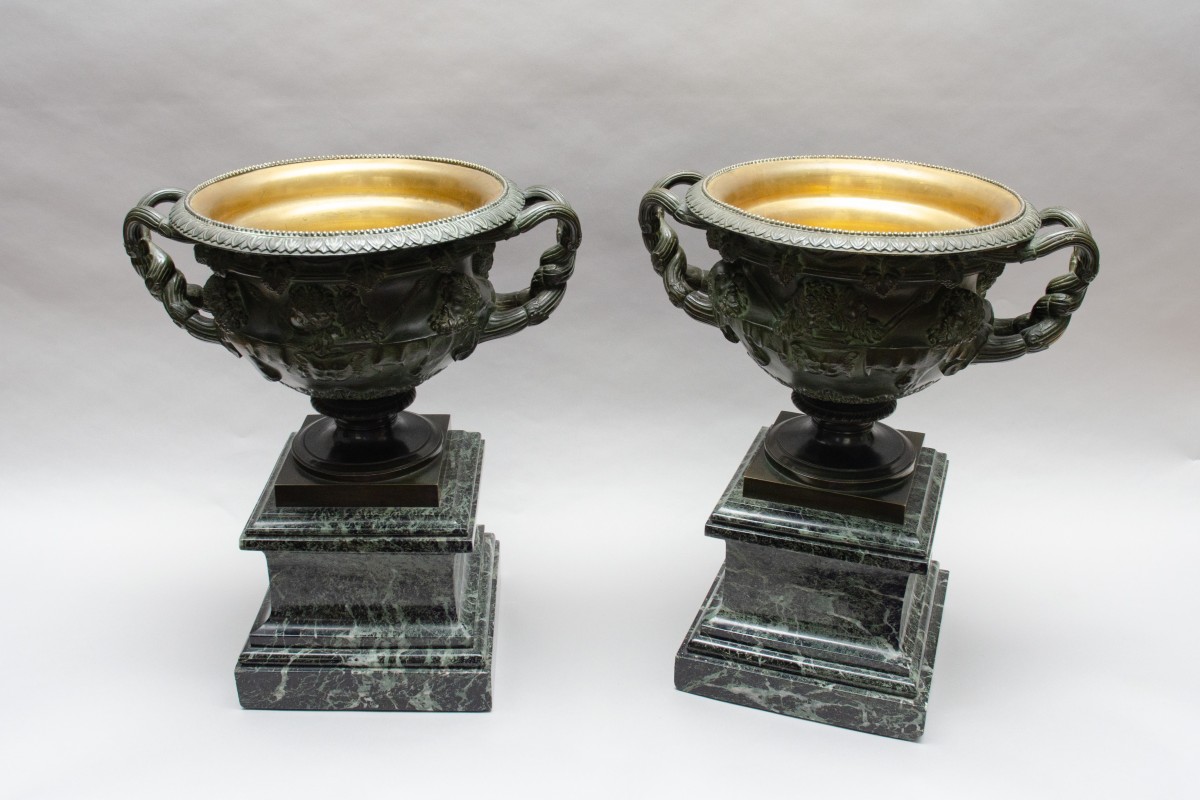
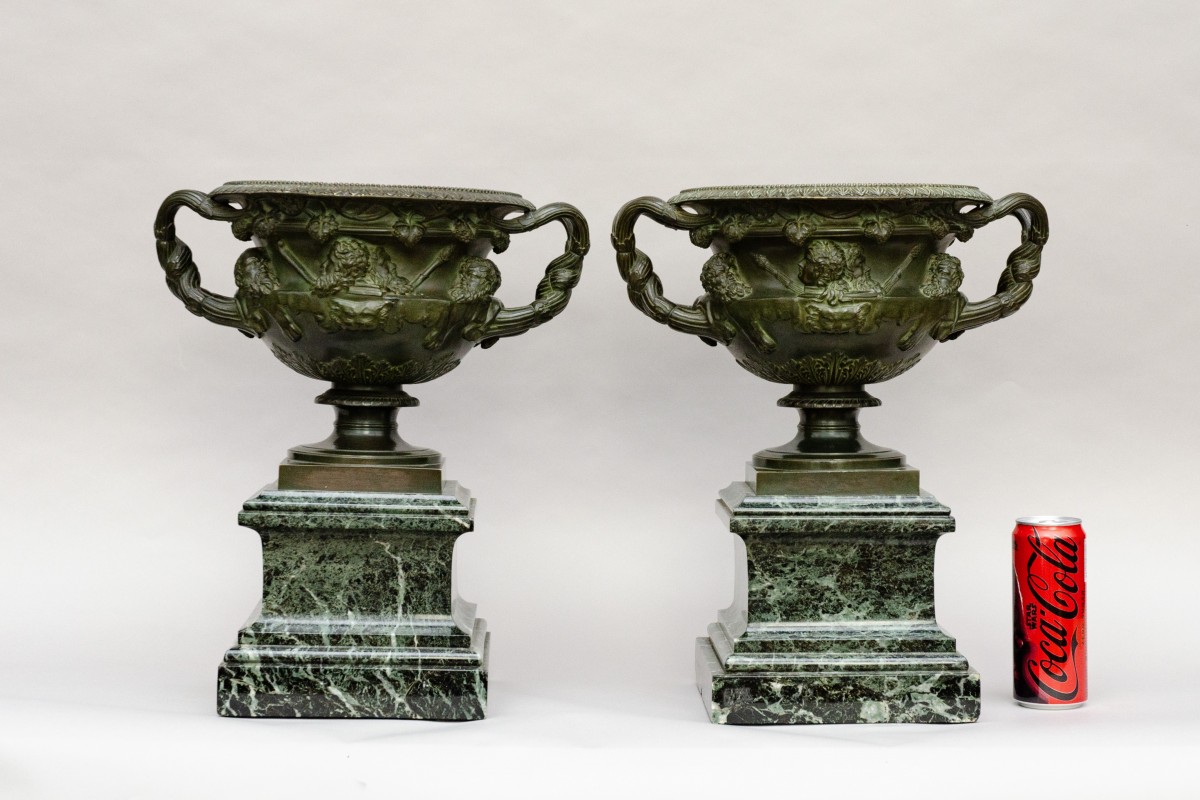
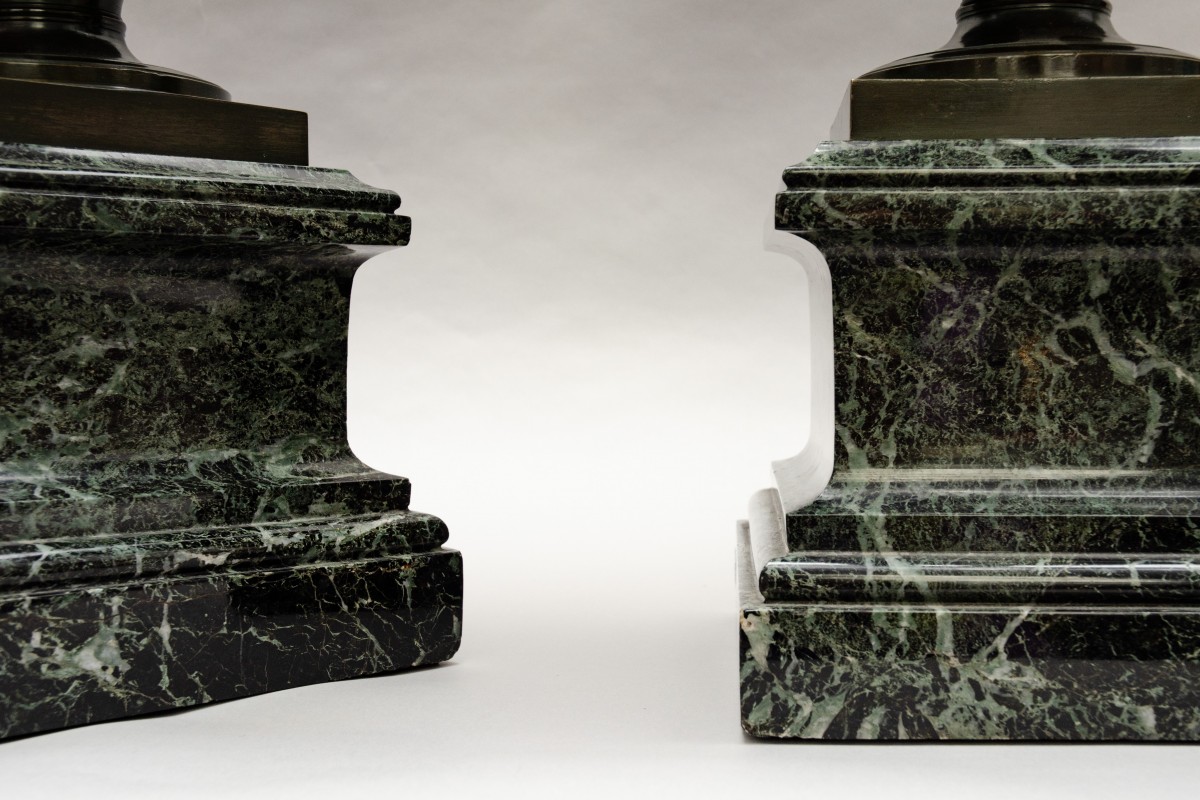
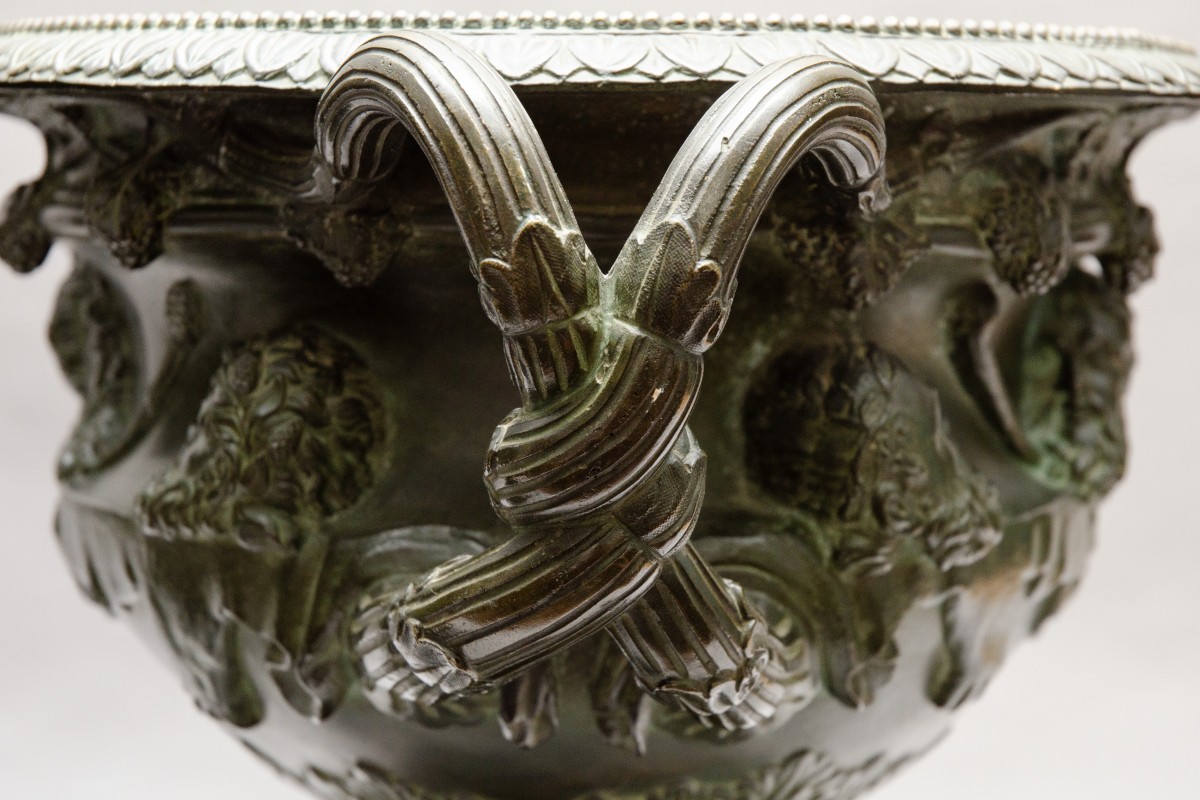
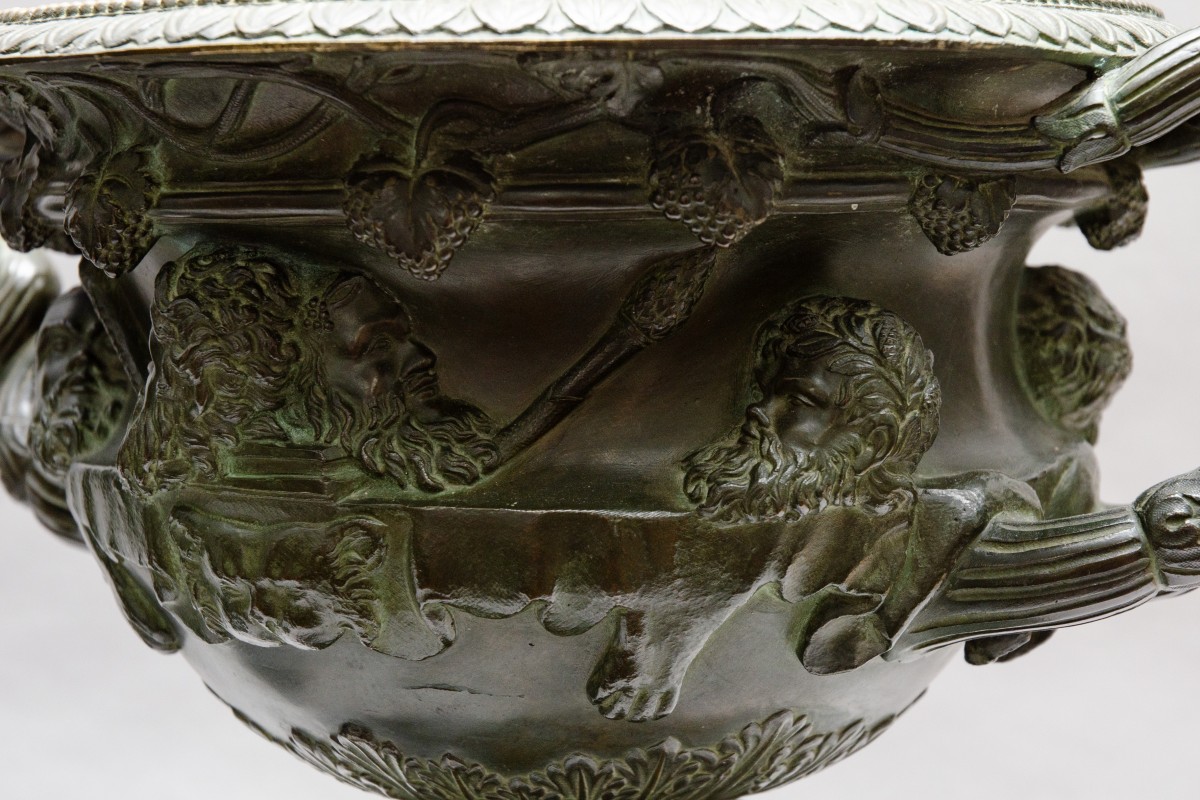
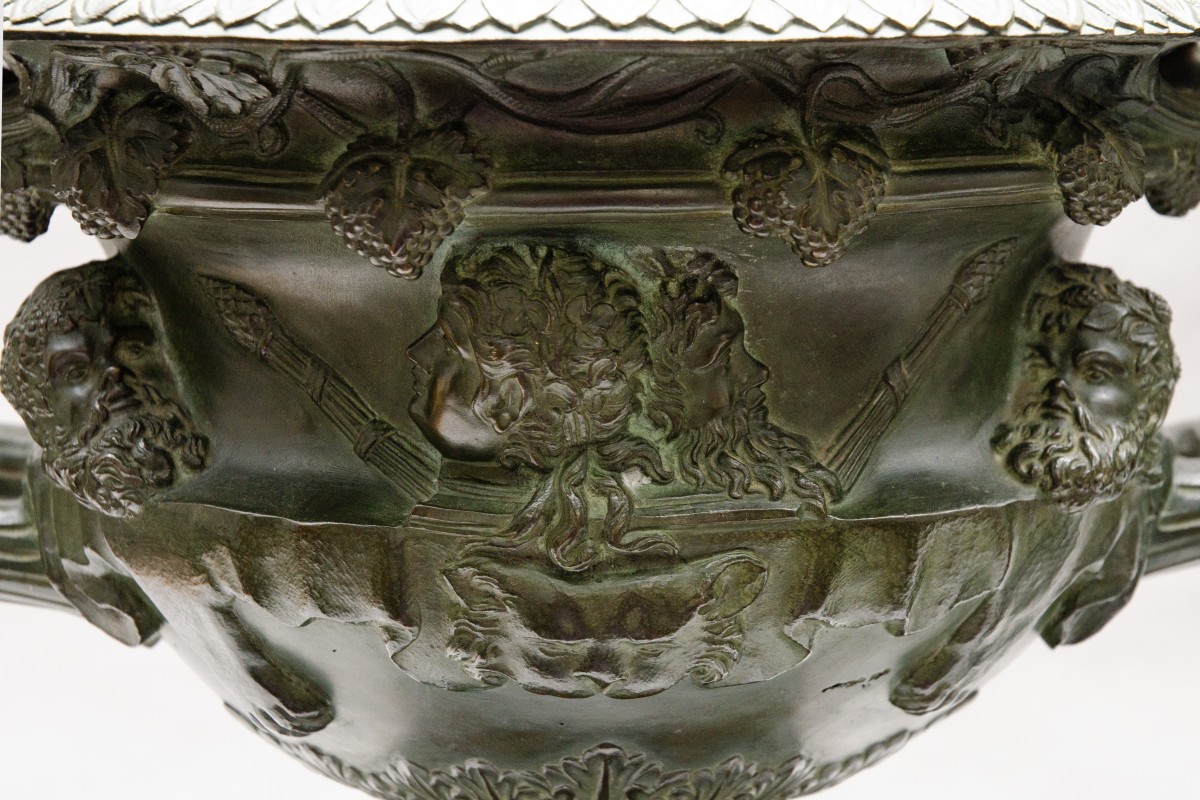
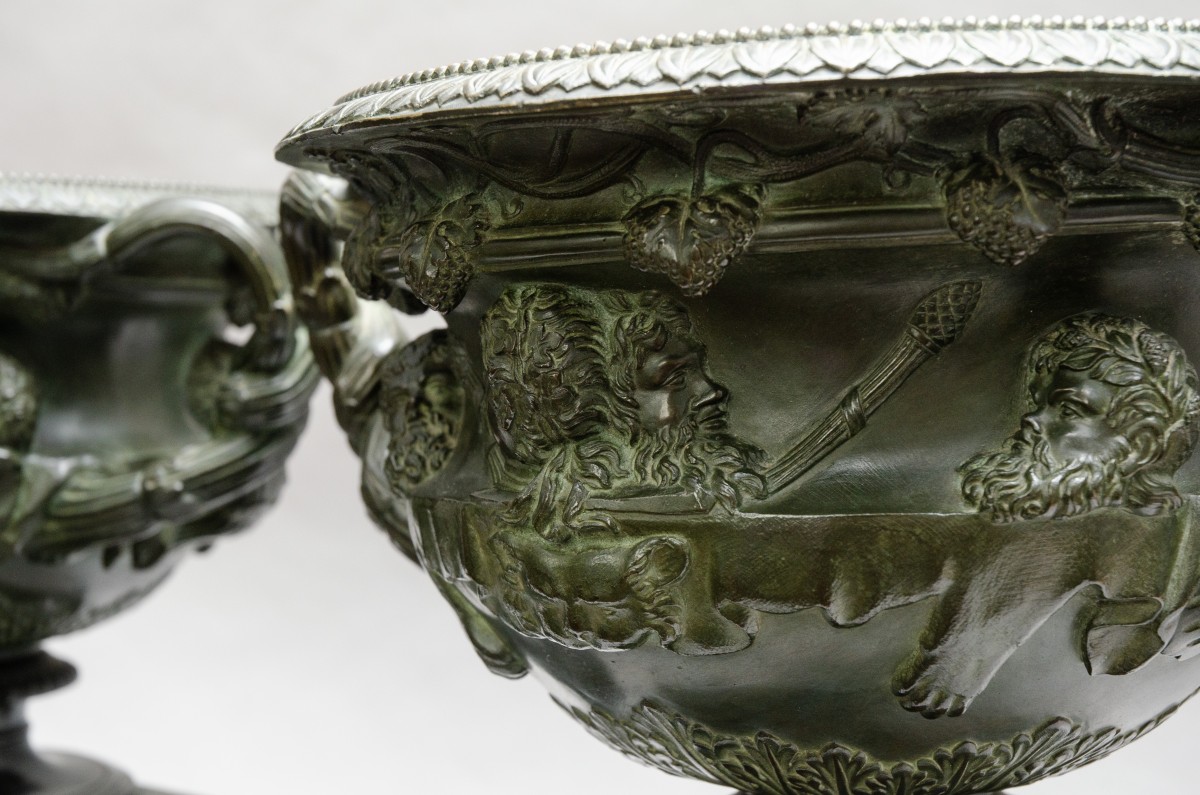
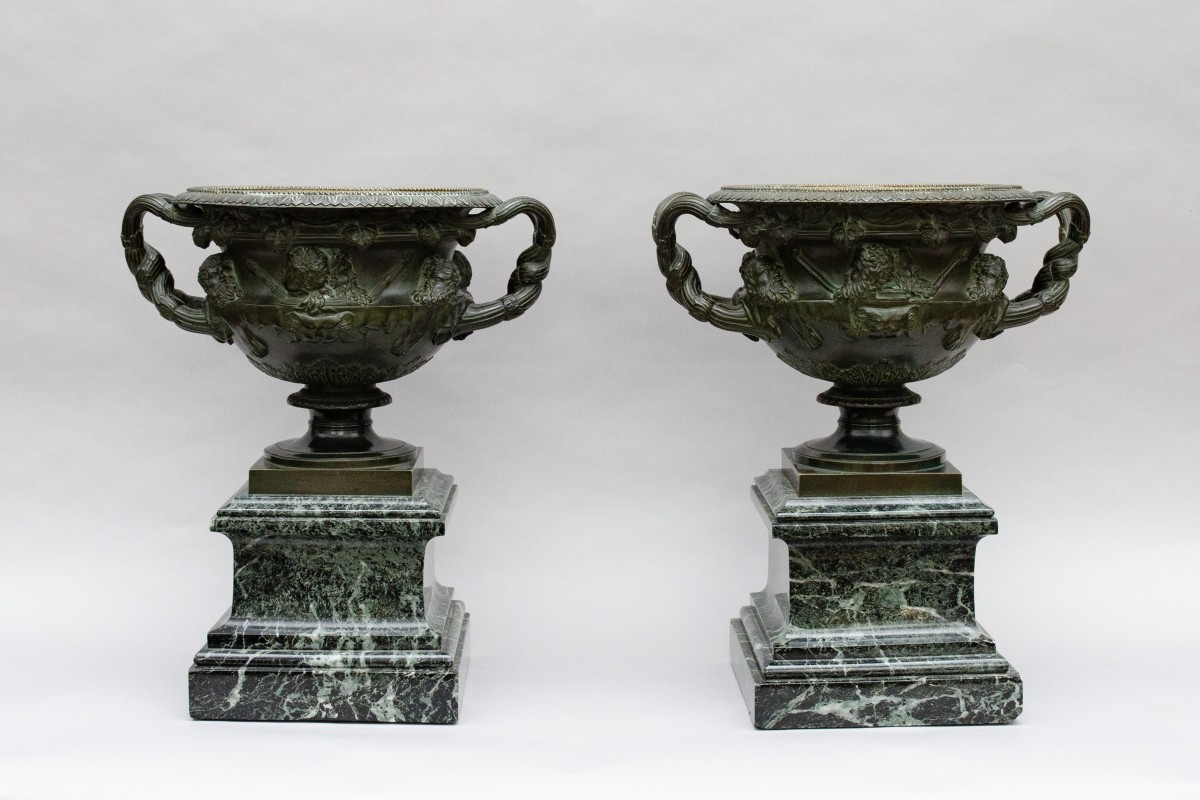
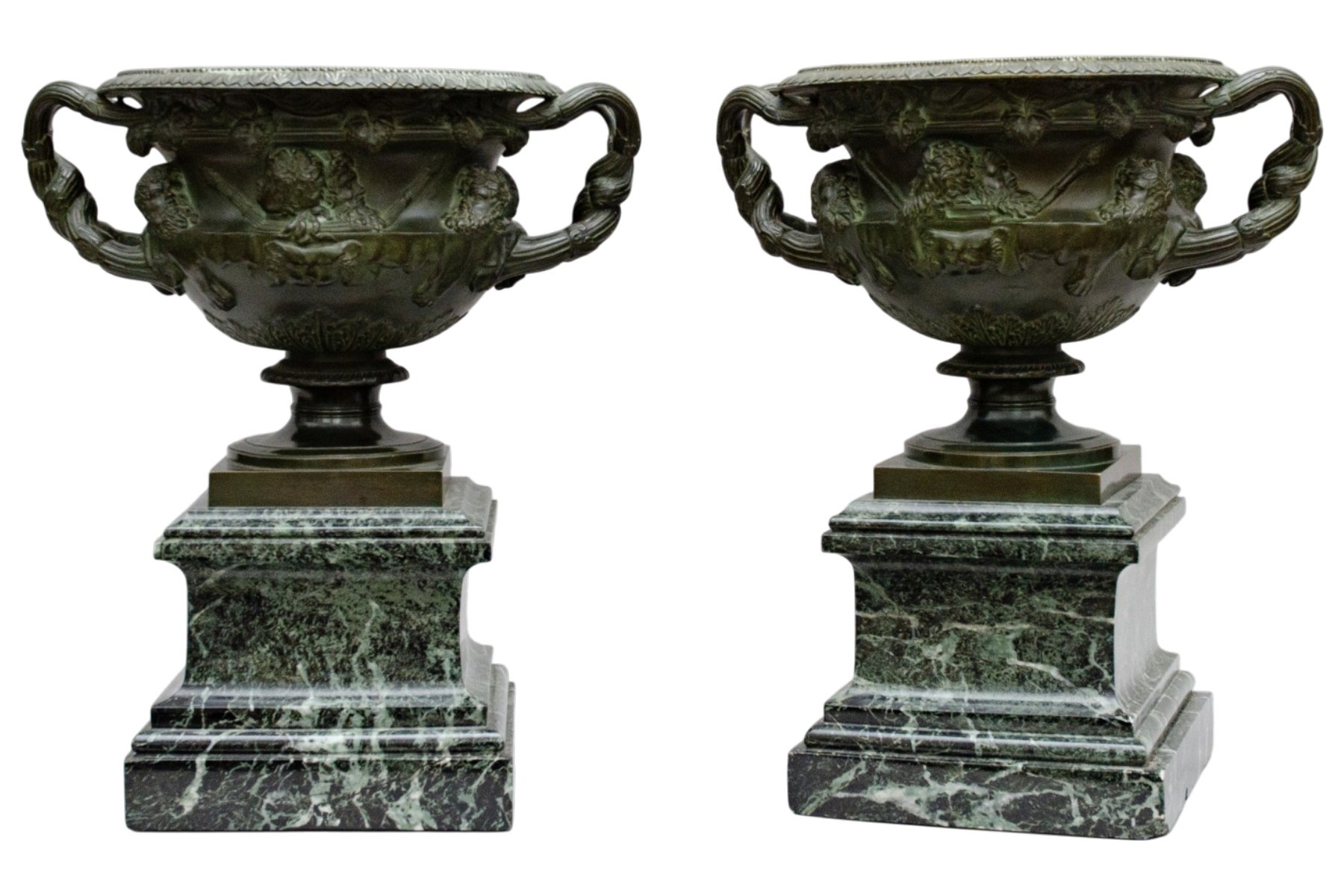
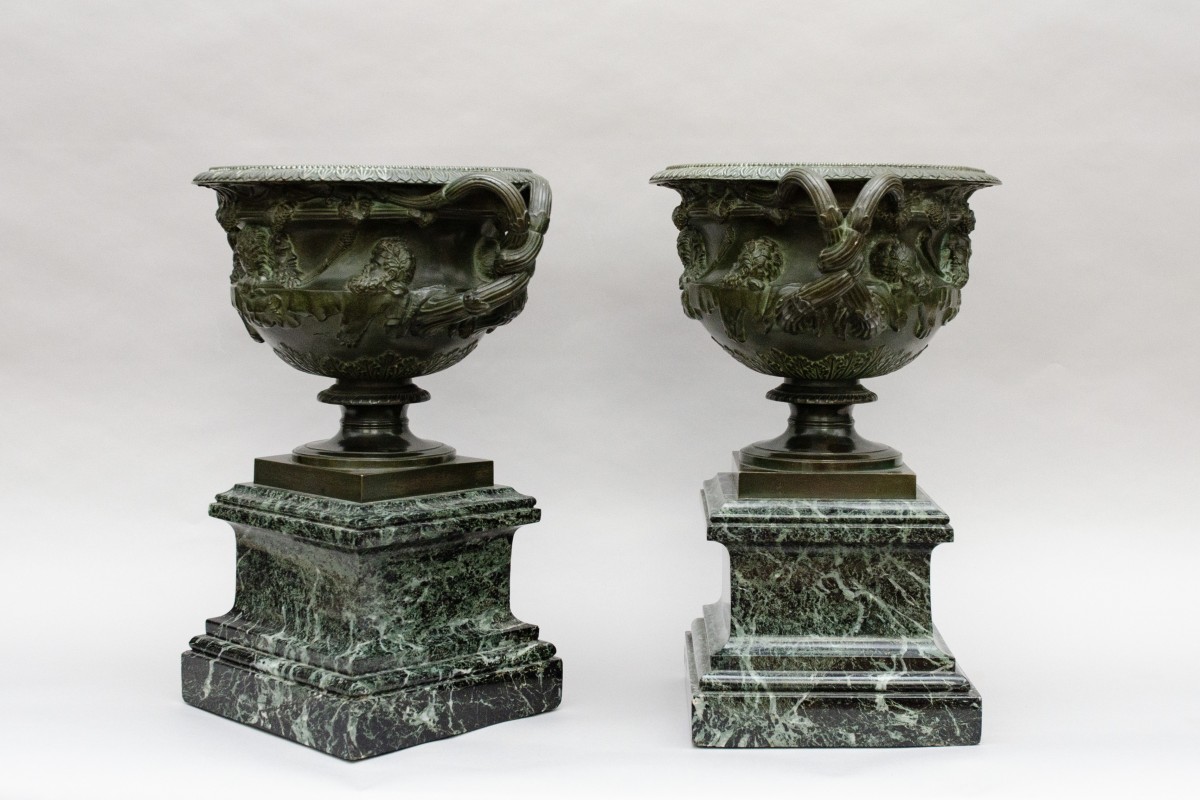
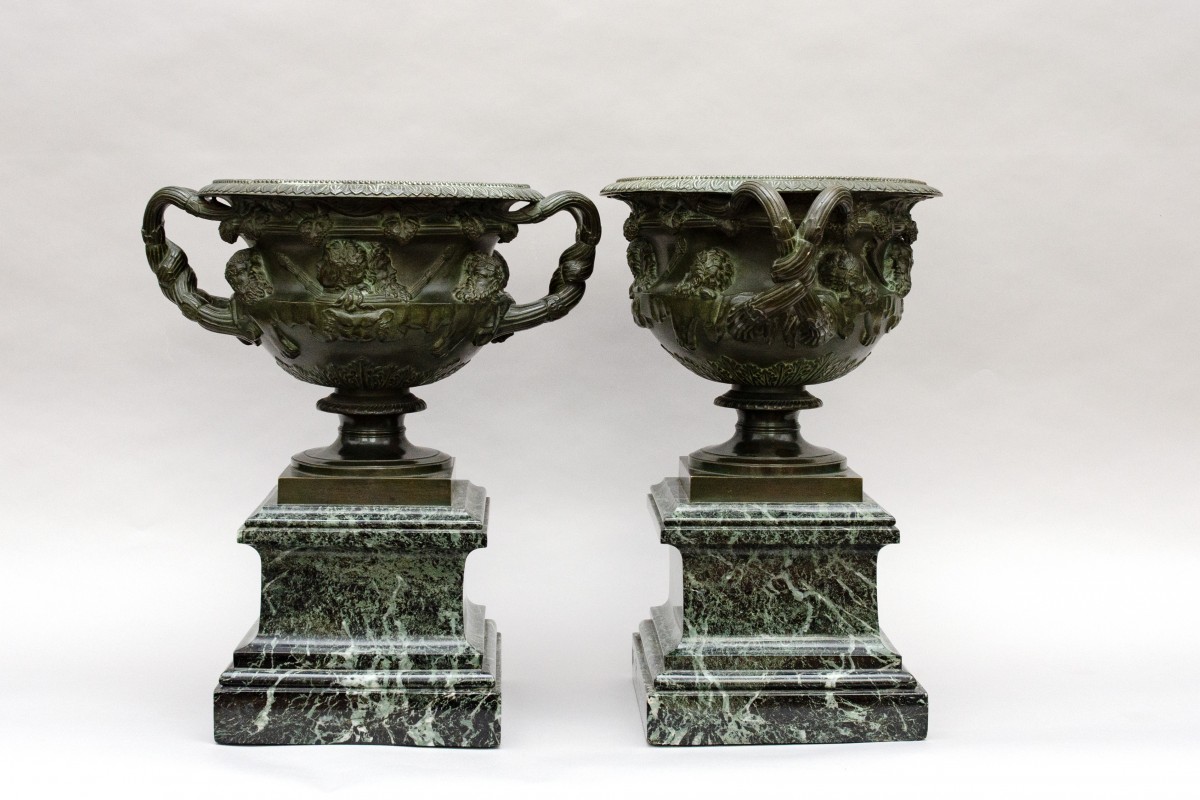
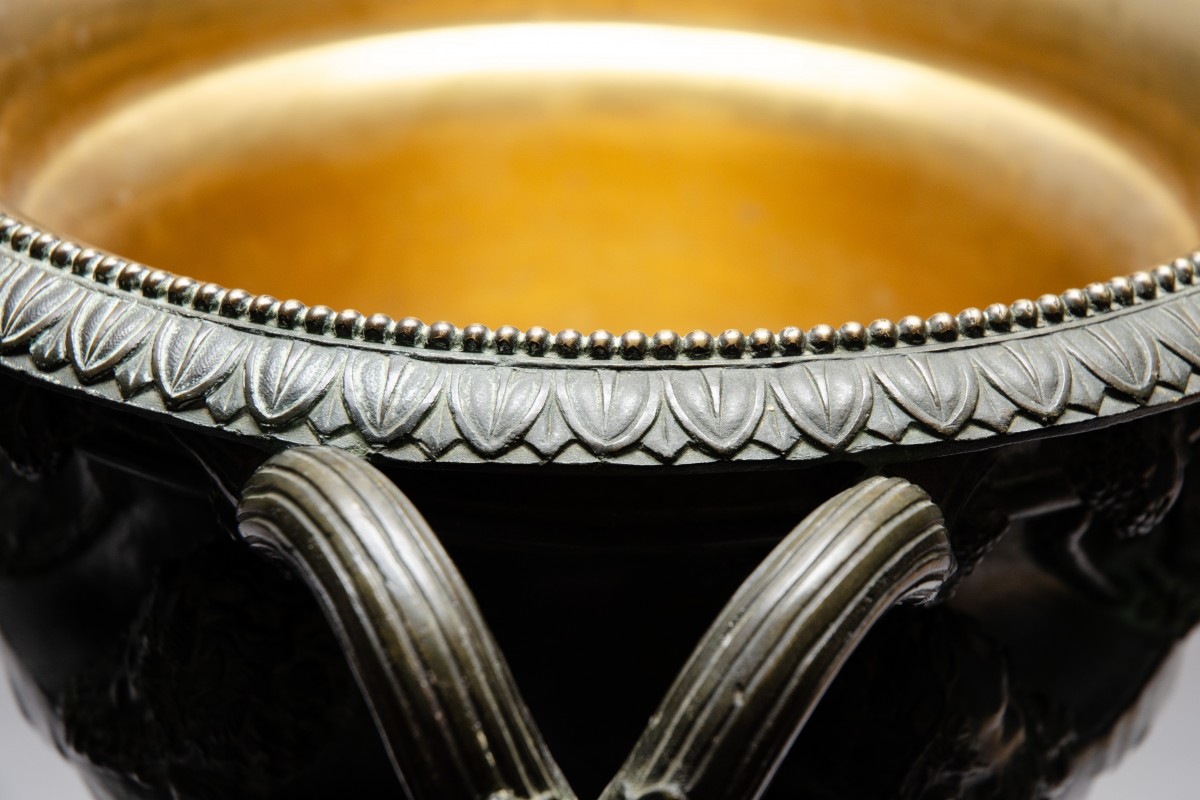
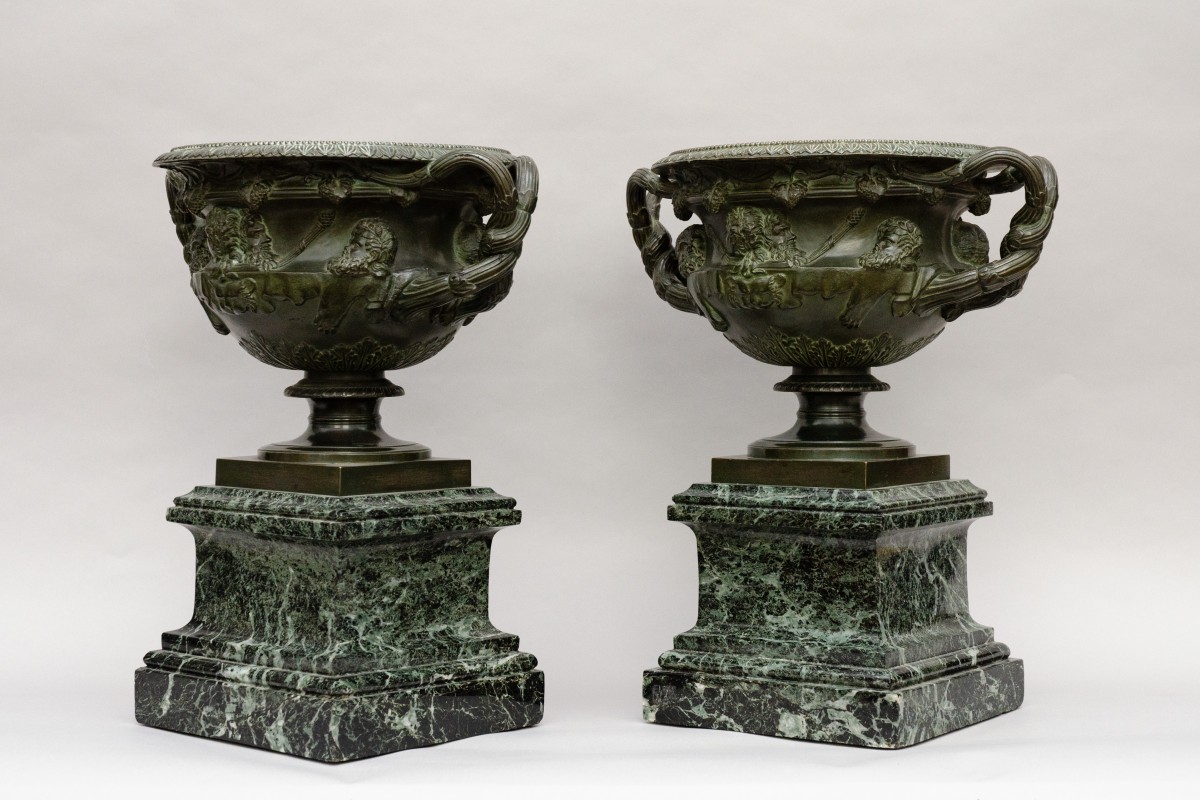
This fine pair of vases is modelled on the famous Warwick Vase, the ancient original, discovered at Hadrian’s Villa in Tivoli, is now housed at the Ashmolean Museum in Oxford. The flared body, richly chiseled, is adorned with a continuous frieze of Bacchic masks, satyrs and figures of Bacchus, intertwined with vine shoots and bunches of grapes, evoking the Dionysian celebrations. Two twisted handles, modelled as gnarled vine shoots, rise on either side of the rim, which is emphasized by a frieze of vine shoots and water leaves. The bowl rests on a baluster foot before meeting its stepped quadrangular plinth, carved from veined green marble and connected by a bronze plinth. The bronze has developed a beautiful, deep antique green patina, revealing the full relief of the sculpted decoration and the quality of the casting of this pair. This neoclassical design, shown here as a pair, enjoyed immense success throughout the 19th century and was reissued by the leading bronze casters of the period.
Dimensions: H 41 cm – W 36 cm – base 20 x 20 cm
19th-century French or Italian work, in the neoclassical style.
Lit: The Warwick Vase, why the name? The original on which this model is based is a Roman marble vase, largely restored, unearthed around 1771 from the ruins of Hadrian’s Villa in Tivoli by Gavin Hamilton, a Scottish painter based in Rome who also worked as an antiquarian in his spare time. Among the fragments unearthed was a monumental basin adorned with Bacchic motifs; vine tendrils, panther skins and satyr masks; typical of the Dionysian repertoire so favoured in Roman imperial villas.
Hamilton sold these fragments to Sir William Hamilton, the British envoy to the court of Naples and a renowned collector, who entrusted their restoration to Roman craftsmen before attempting, in vain, to sell them to the British Museum in 1776. Failing to find a buyer, the vase was then passed on to his nephew, George Greville, 2nd Earl of Warwick, who placed it in the courtyard of his castle, Warwick Castle, where it immediately attracted the admiration of visitors. To protect it from the English climate, the Earl had a neo-Gothic greenhouse built in the late 1780s, specially designed to house it; a setting which itself became an attraction on the estate.
For nearly two centuries, the Warwick Vase remained one of England’s most famous treasures, visited by a succession of travellers, artists and even Queen Victoria and Prince Albert in 1858. Its immense success inspired countless replicas and adaptations from the 19th century onwards; in bronze, cast iron, silver or reconstituted stone; intended for European gardens and interiors, thus perpetuating the neoclassical taste for Bacchic antiquity.
In 1978, the heirs of the Earl of Warwick decided to sell the original vase, which was acquired by the Metropolitan Museum of Art in New York before, under a subsequent agreement, becoming part of the Burrell Collection in Glasgow, where it is now on display. As for the greenhouse at Warwick Castle, it now houses only a copy of the work for which it was originally built.
Delevery information :
to be agreed with the customer depending on the object and the place of destination.