Offered by L'Egide Antiques
REQUEST INFORMATION

Porcelain, Scuptures, paintings and european Fine Arts, 18th and 19th century
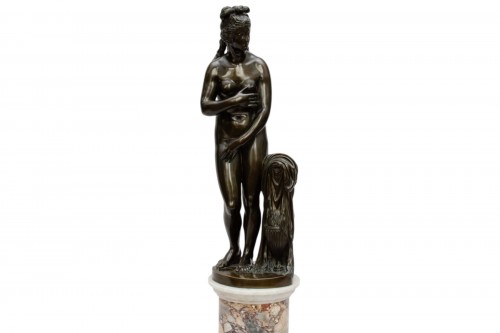
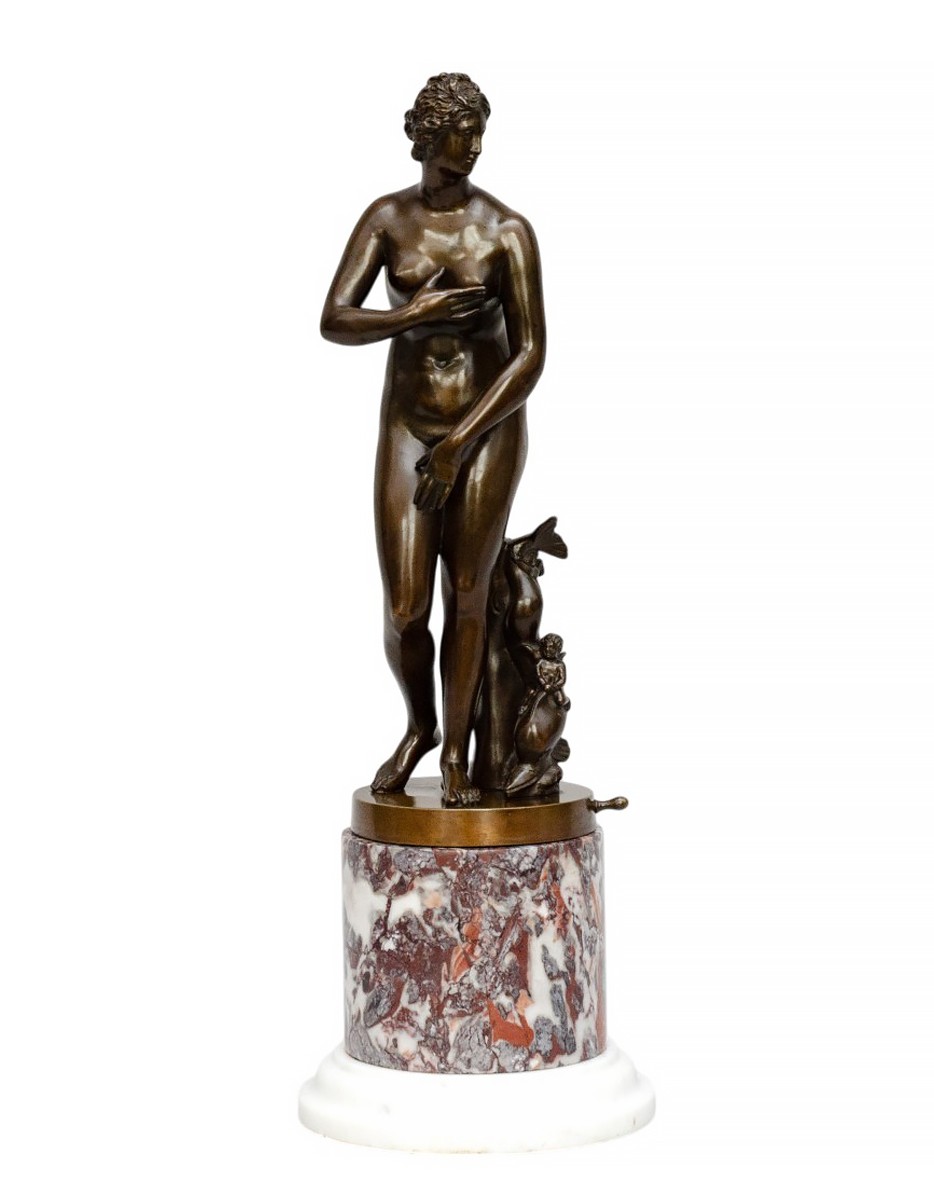
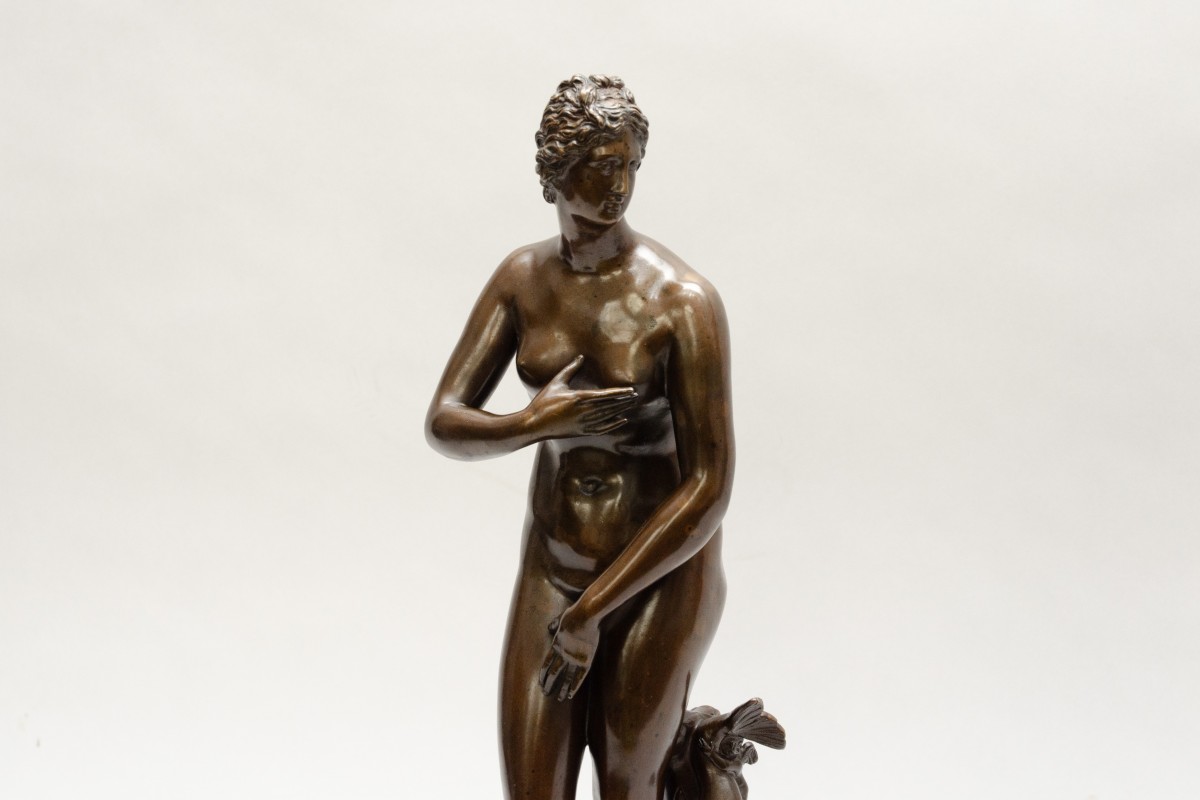
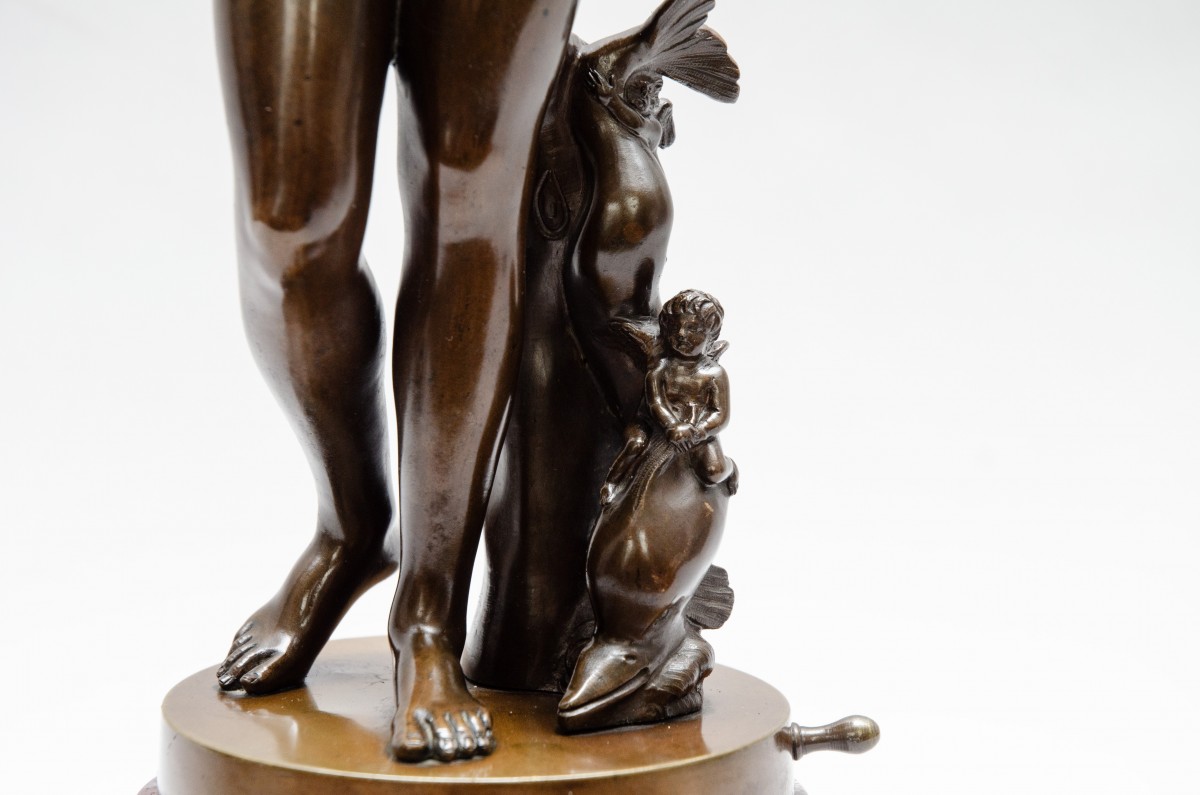
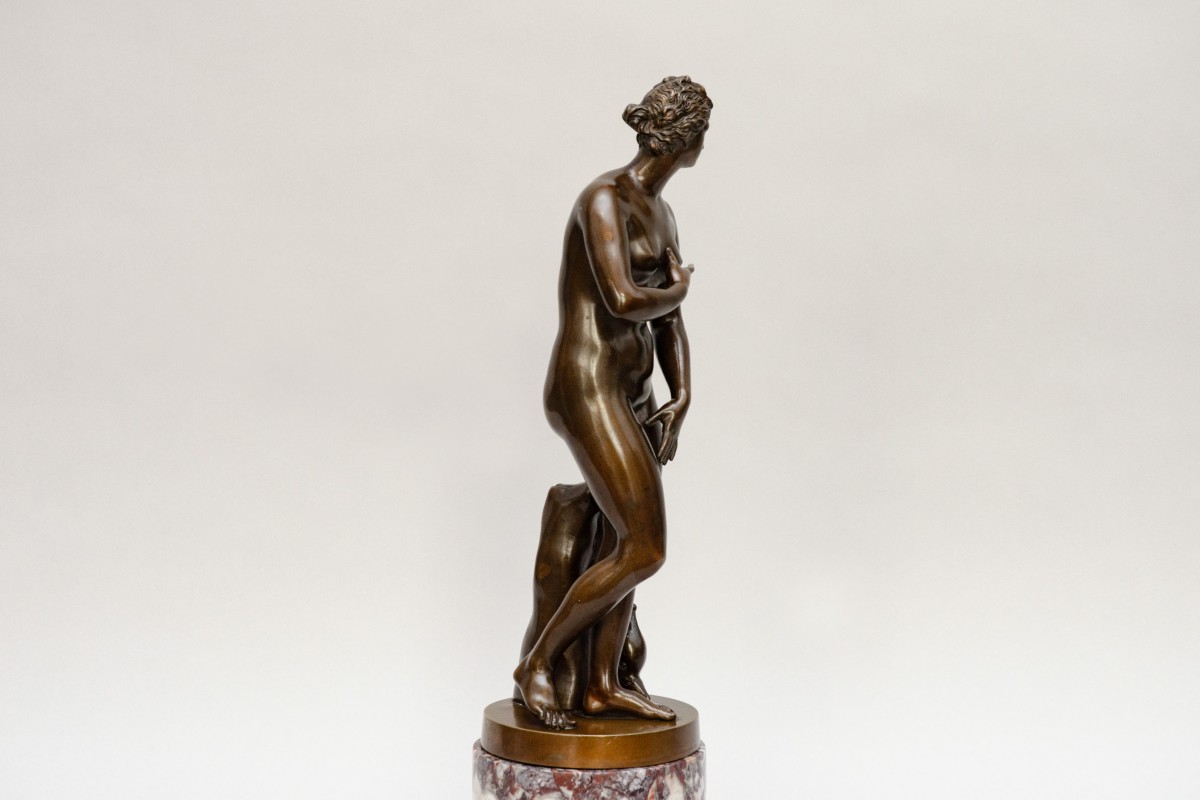
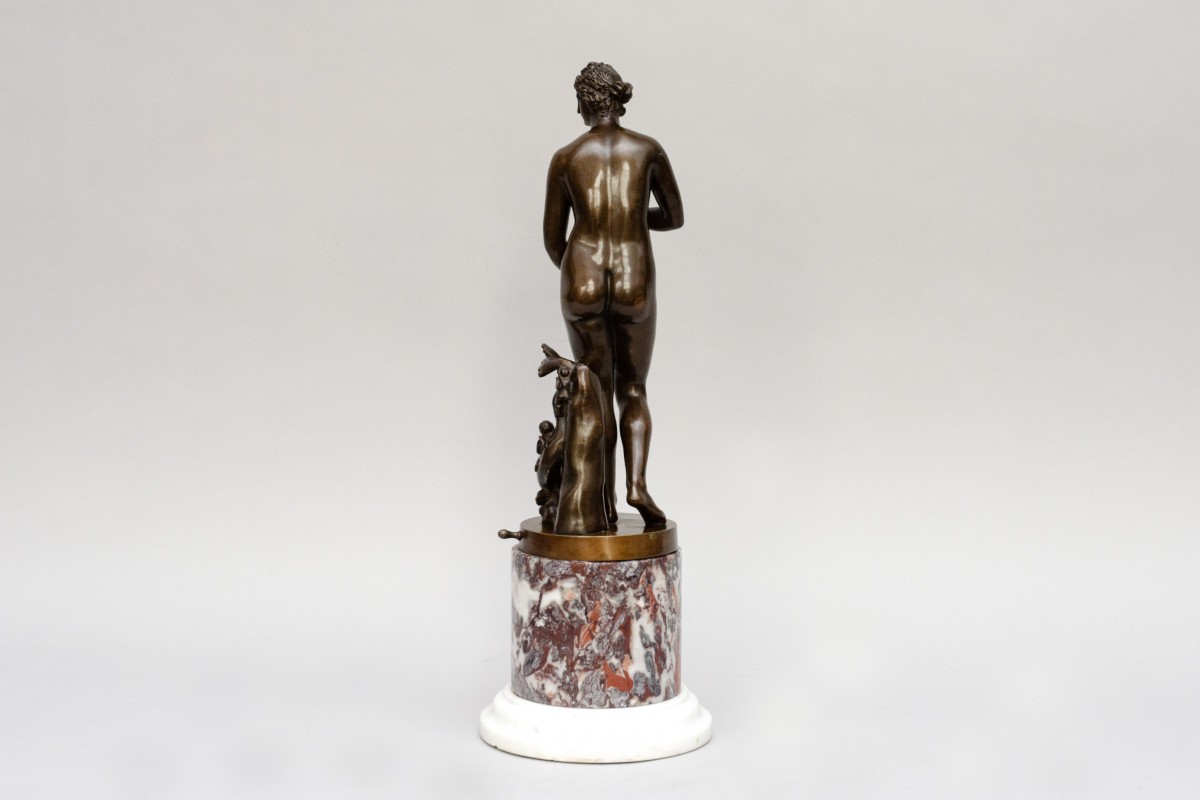
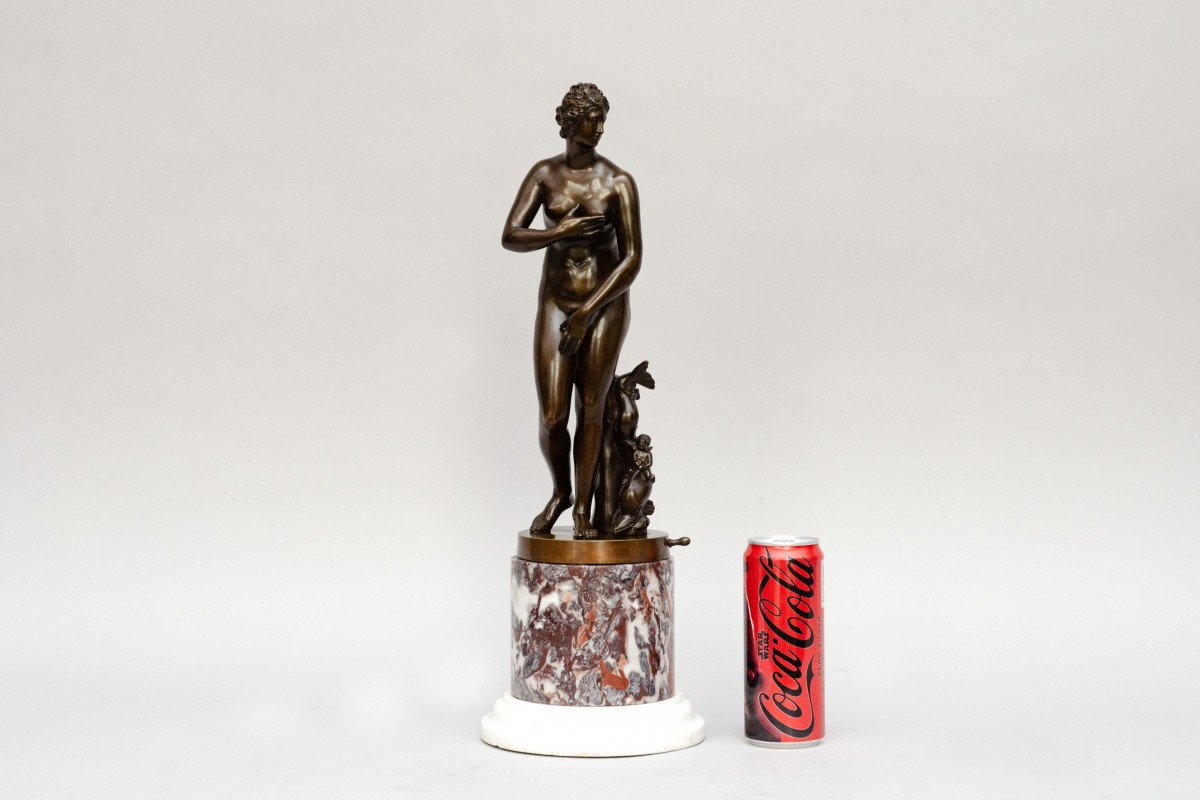
A 19th-century bronze depicting the Medici Venus, set upon an elegant breccia marble plinth. This sculpture draws inspiration from one of the most famous models of Antiquity, admired for the grace of its posture and the ideal beauty of its proportions. The contrast between the patina of the bronze and the tones of the marble emphasizes the decorative refinement of the piece as a whole. A small handle makes it easy to rotate the bronze sculpture on its base. A charming piece, this smaller version of the Medici Venus is part of the great 19th-century neoclassical tradition, when ancient masterpieces inspired art lovers, collectors and interior designers. Attributed to Antonio Messina, a sculptor and foundryman, a highly skilled craftsman who was active in Rome during the second half of the 19th century.
Dimensions: H 47 cm – bronze H 34 cm and marble base 13 cm. Diameter of the bronze: 11 cm – of the base: 17 cm
19th-century Italian school.
Lit: Antonio Messina ran a foundry workshop in Rome specialising in the production of luxury souvenirs. During the 19th century, wealthy European aristocrats and intellectuals visiting Rome would purchase these items as mementoes of their cultural journey.
The Medici Venus is one of the most famous sculptures of antiquity. It is a depiction of Venus/Aphrodite, goddess of beauty and love, in what is known as a ‘modest’ pose: she attempts to conceal her nudity with her hands, in a gesture that has become emblematic of ancient sculpture.
The statue known as the ‘Medici Venus’ is an ancient work housed in Florence, at the Uffizi Gallery. It is generally regarded as a Roman copy of a Hellenistic Greek original, probably inspired by a model created in the tradition of Praxiteles. Its name derives from the Medici collection, belonging to the great Florentine dynasty of patrons and collectors, who contributed greatly to its fame across Europe.
From the 17th century onwards, and particularly in the 18th century, the Medici Venus became an essential model of classical taste. Admired by artists, travellers and collectors on the Grand Tour, it was extensively copied in marble, plaster and bronze. In the 19th century, against the backdrop of Neoclassicism and a taste for antiquity, it became widely disseminated in the form of smaller versions intended for elegant interiors, libraries, drawing rooms and collectors’ cabinets. This success can be attributed to the ideal balance of its proportions, the fluidity of its movement and the graceful modesty of its pose.
In the nineteenth century, owning a smaller version of the Medici Venus was a way of demonstrating one’s admiration for antiquity and one’s attachment to the ideal of classical beauty.
Delevery information :
to be agreed with the customer depending on the object and the place of destination.