Offered by Jan Muller
REQUEST INFORMATION

JAN VAN KESSEL I and JAN VAN BALEN
1626 - 1679 & 1611 - 1654
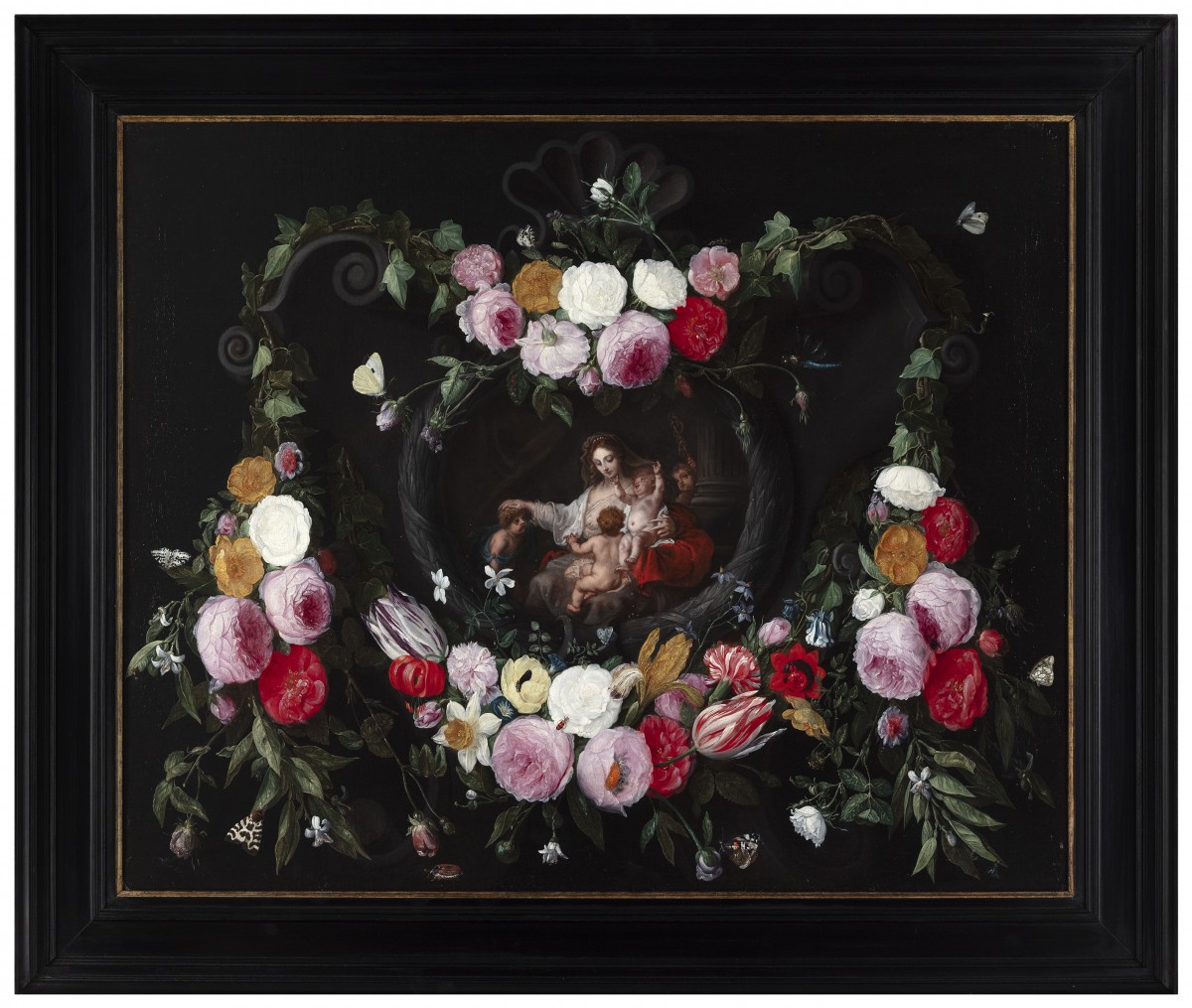
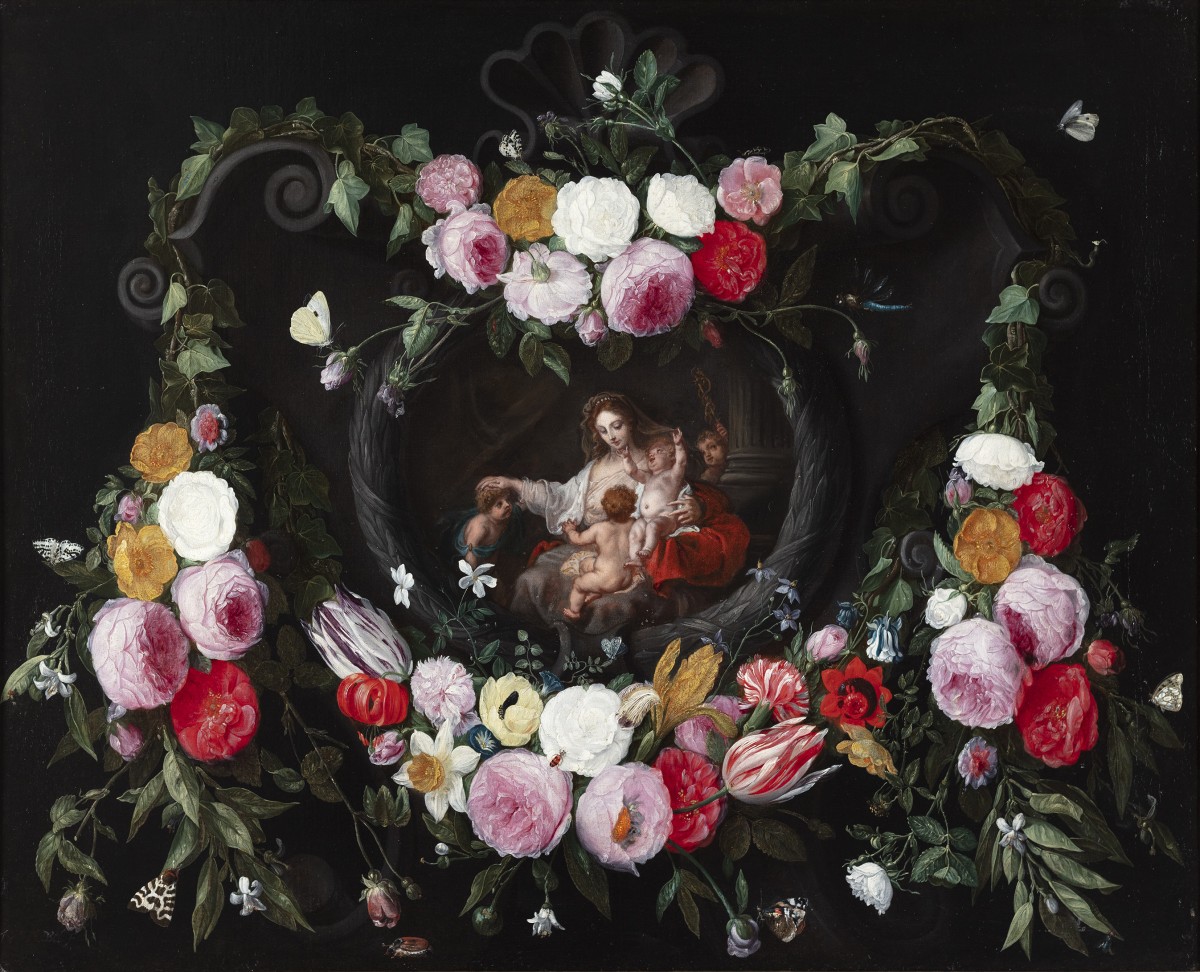
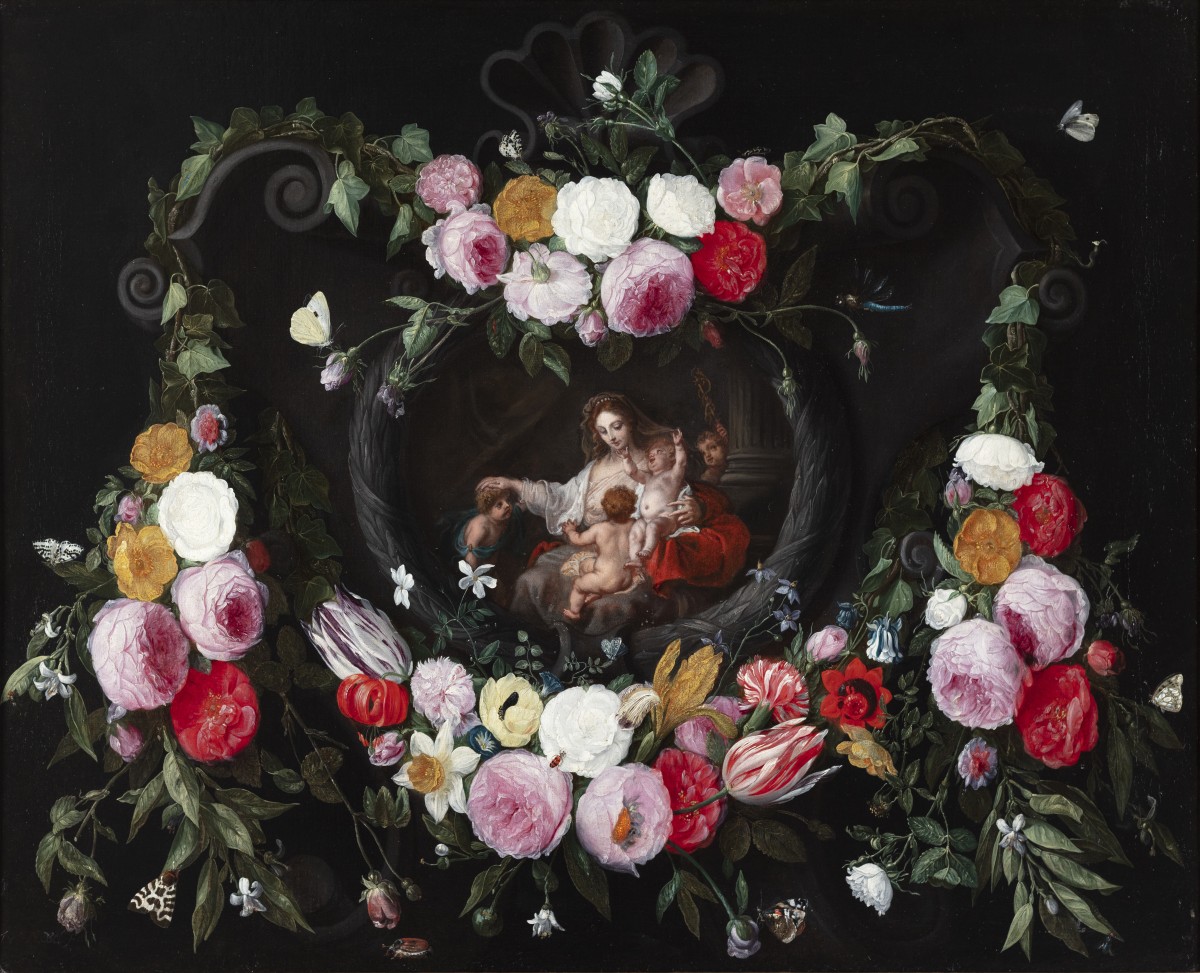
“A garland of flowers with a central cartouche of the virgin and child”
Signed lower left and remains of a monogram centre right.
Oil on canvas
Provenance:
- Collection of George Malcolm, Poltalloch House, Argyl, 1959; art market, England;
Literature:
K. Ertz, C. Nitze-Ertz, Jan van Kessel der Ältere 1626–1679. Jan van Kessel der Jüngere 1654–1708. Jan van Kessel der "Andere" ca. 1620 – ca. 1661. Kritische Kataloge der Gemälde, Lingen 2012, pp. 391–392 , no. 718, illustrated (as Jan van Kessel I, with incorrect measurements);
B. Schepers, ‘Jan van Balen redécouvert’, in C. Laffon, Brueghel et Van Balen. Artistes & complices, exhibition catalogue, Cassel, Musée de Flandre, 17 May – 28 September 2025, Ghent 2025, p. 73, no. B30, illustrated (under new attributions, as Jan van Kessel I, where the figures in the cartouche are identified as by Jan van Balen, but with incorrect measurements as recorded in a photograph in the RKD)
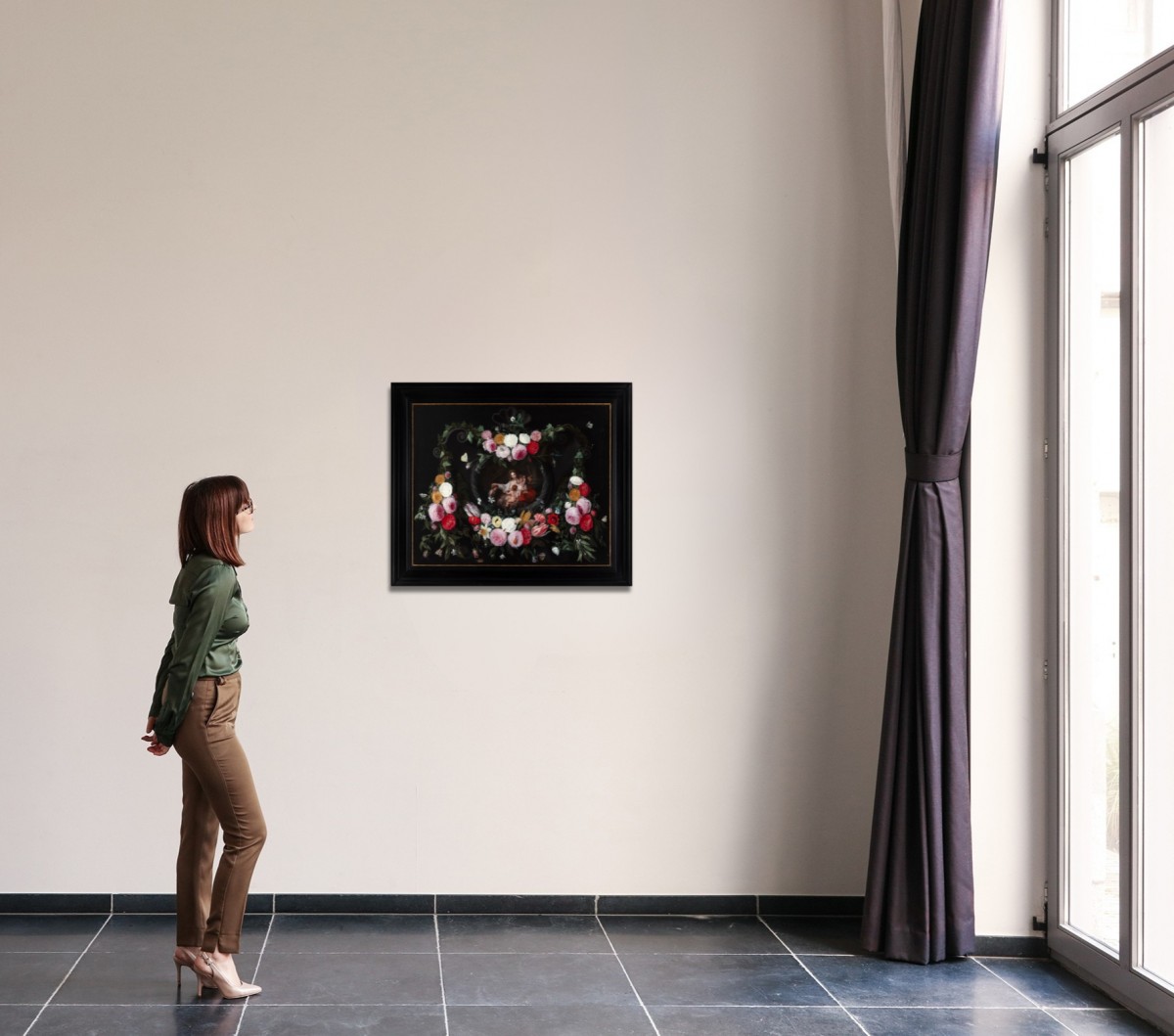
Dimensions: 69 x 83 cm
THE ARTIST
Jan van Kessel I was a Flemish Baroque painter active in Antwerp in the mid-seventeenth century. He belonged to the renowned Brueghel family and was the grandson of Jan Brueghel the Elder, whose work had a lasting influence on his artistic development. Van Kessel was a highly versatile artist who practiced a wide range of genres, including studies of insects, flower still lifes, marines, river landscapes, paradise scenes, allegorical compositions, animal subjects, and genre scenes.
For many of his themes, Van Kessel drew inspiration from his grandfather’s work and from earlier generations of Flemish artists such as Daniël Seghers, Joris Hoefnagel, and Frans Snyders. He became particularly known for his small-scale representations of the natural world, especially flower still lifes and allegorical series depicting the animal kingdoms, the four elements, the senses, or the continents. These works demonstrate his strong interest in pictorial detail and careful observation.
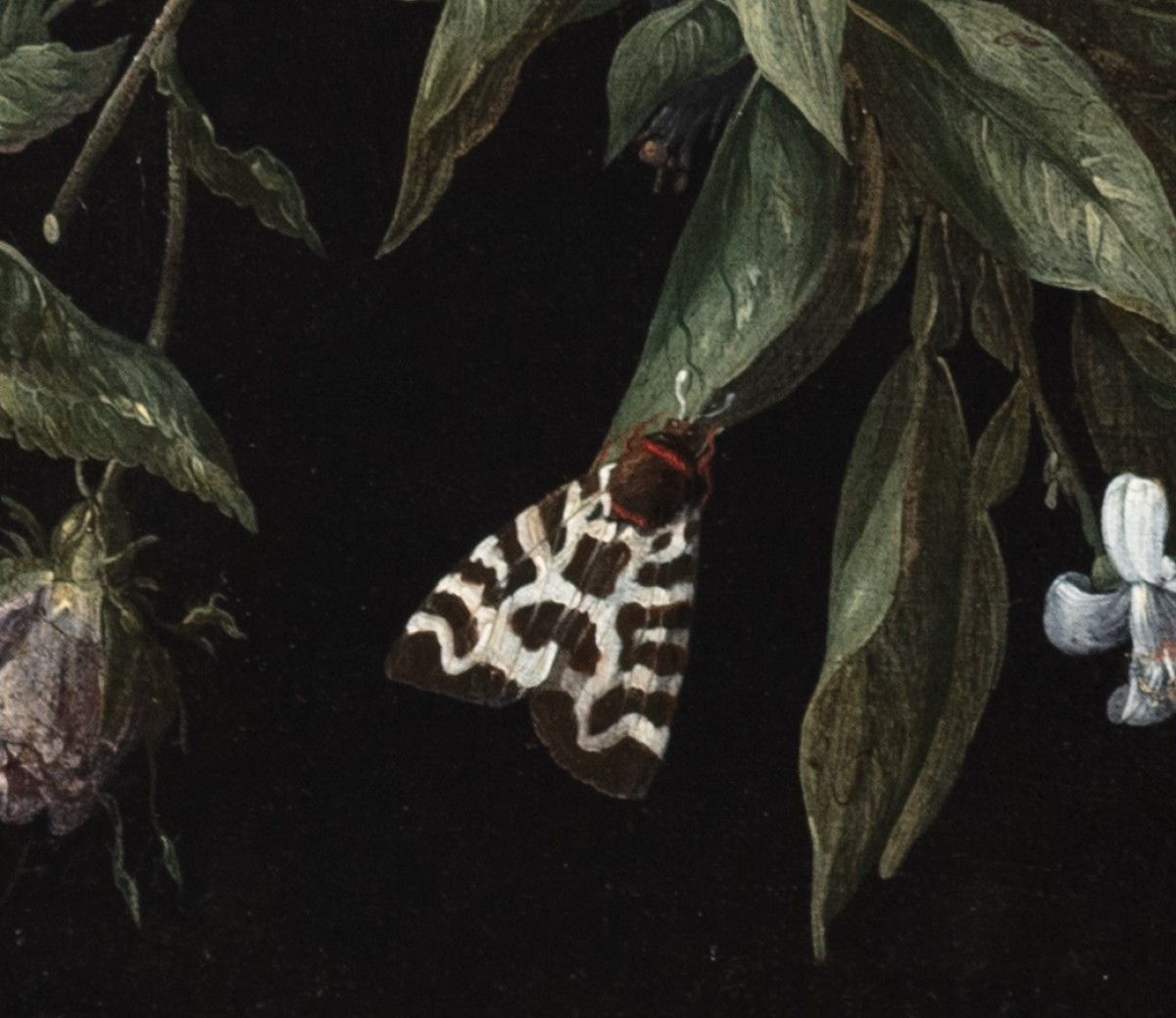
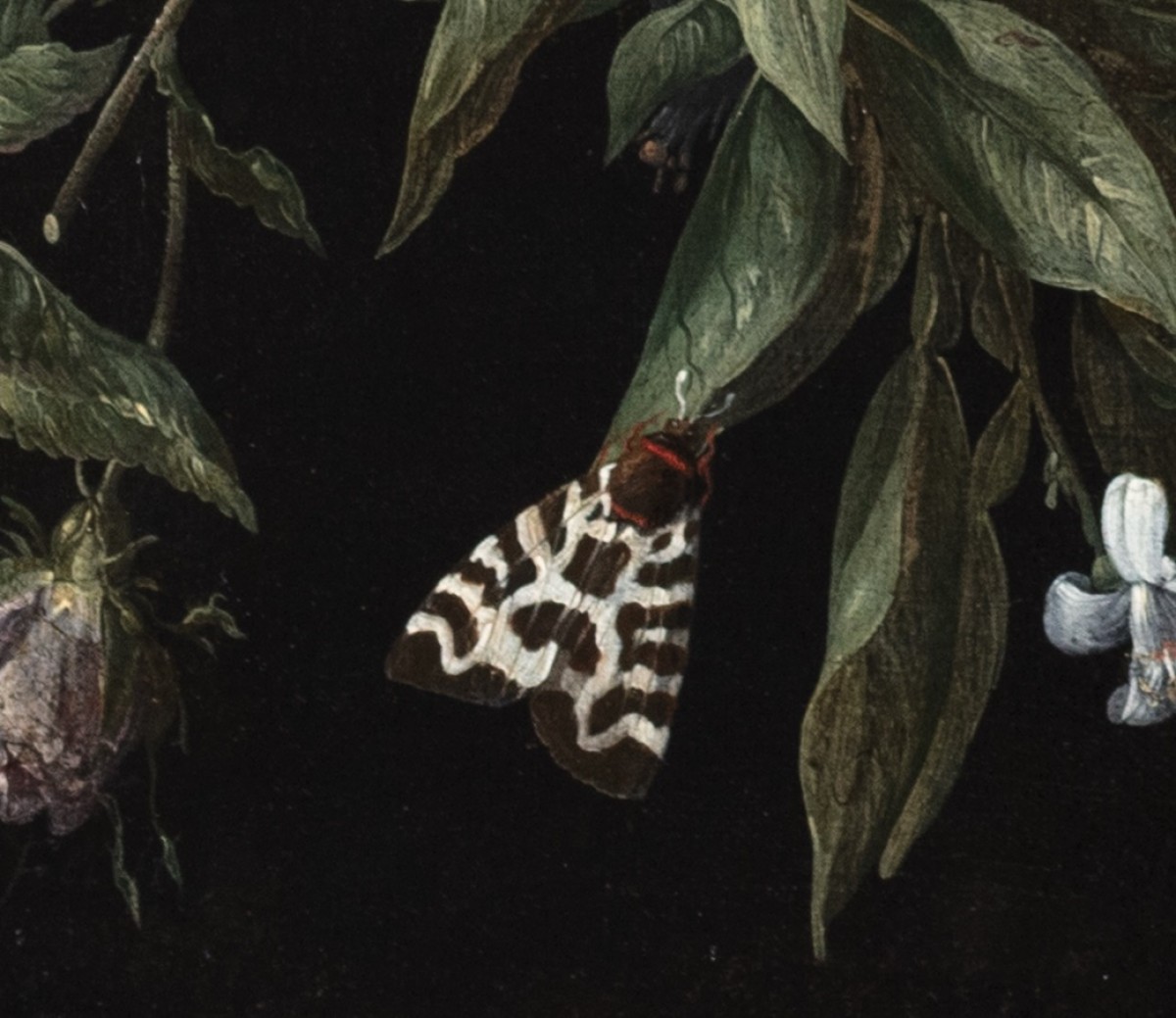
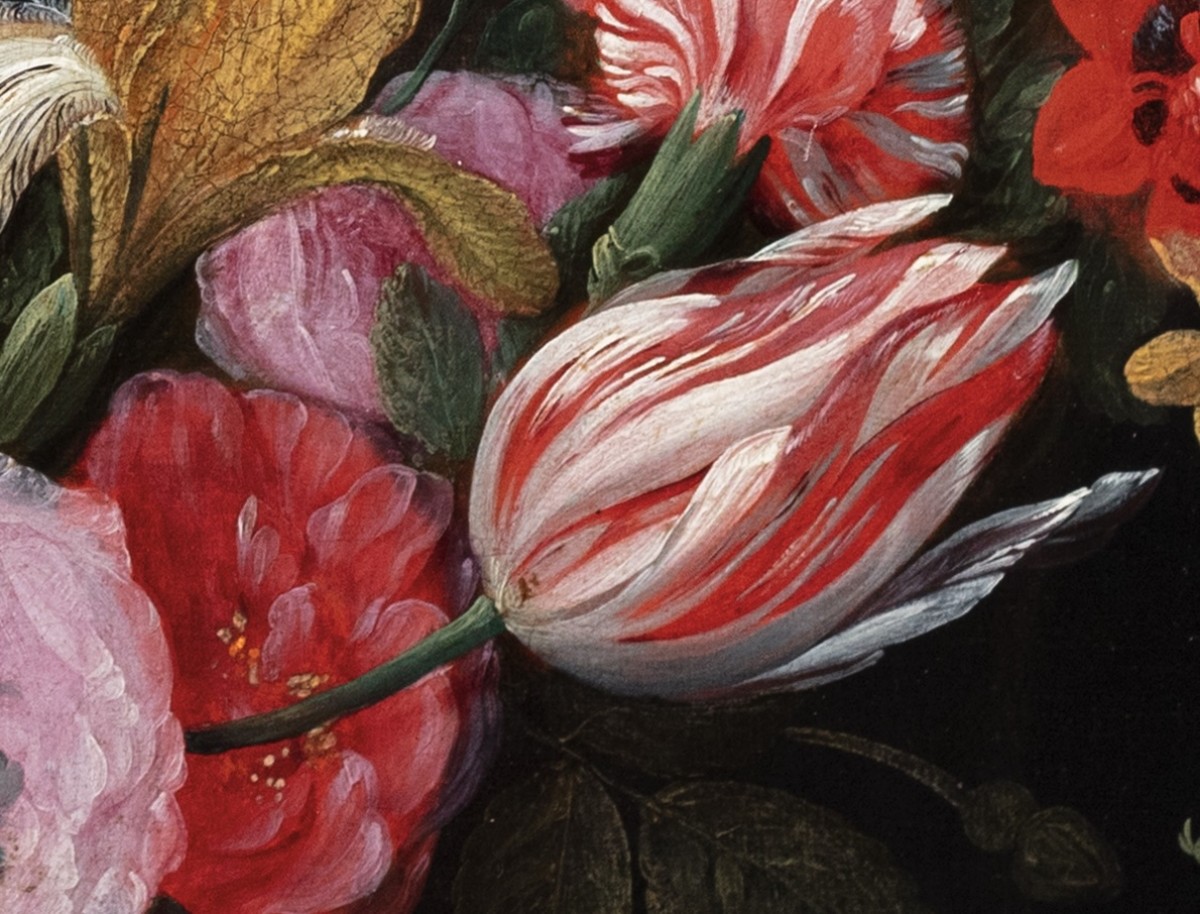
Van Kessel was deeply concerned with precision and worked closely from nature. He also made use of illustrated scientific publications, which allowed him to populate his paintings with flowers, insects, and other natural elements rendered with almost scientific accuracy. This meticulous approach gave his works both visual richness and intellectual appeal.
His paintings were highly valued by contemporaries and collected by craftsmen, wealthy merchants, members of the nobility, and foreign dignitaries throughout Europe. As a result, Van Kessel enjoyed considerable financial success during his lifetime. His dated works range from 1648 to 1676. The attribution of works to Jan van Kessel I can be complex, however, due to confusion with other artists of the same name who were active in the same period.
Jan van Balen was a Flemish painter known for his baroque paintings of history and allegorical subjects, he also painted landscapes and genre scenes. As was the custom in Antwerp at the time, Jan van Balen often collabroated with other painters who were specialist in particular genres.
THE ARTWORK
This painting belongs to the rich tradition of Antwerp flower still lifes of the seventeenth century. Antwerp was one of the most important centers for this genre, with artists such as Jan Brueghel the Elder, Daniël Seghers, Frans Snyders, and Adriaen van Utrecht producing elaborate and highly detailed compositions. These works often combined visual splendor with symbolic meanings, frequently referring to the transience of life.
The composition is structured around a central cartouche, surrounded by a carefully arranged wreath of flowers. Originally derived from heraldic shields, the cartouche evolved during the sixteenth century into a popular decorative motif characterized by scrolling forms and ornamental curves. In this work, the cartouche frames an image of the Virgin and Child, introducing a devotional element into the still life.
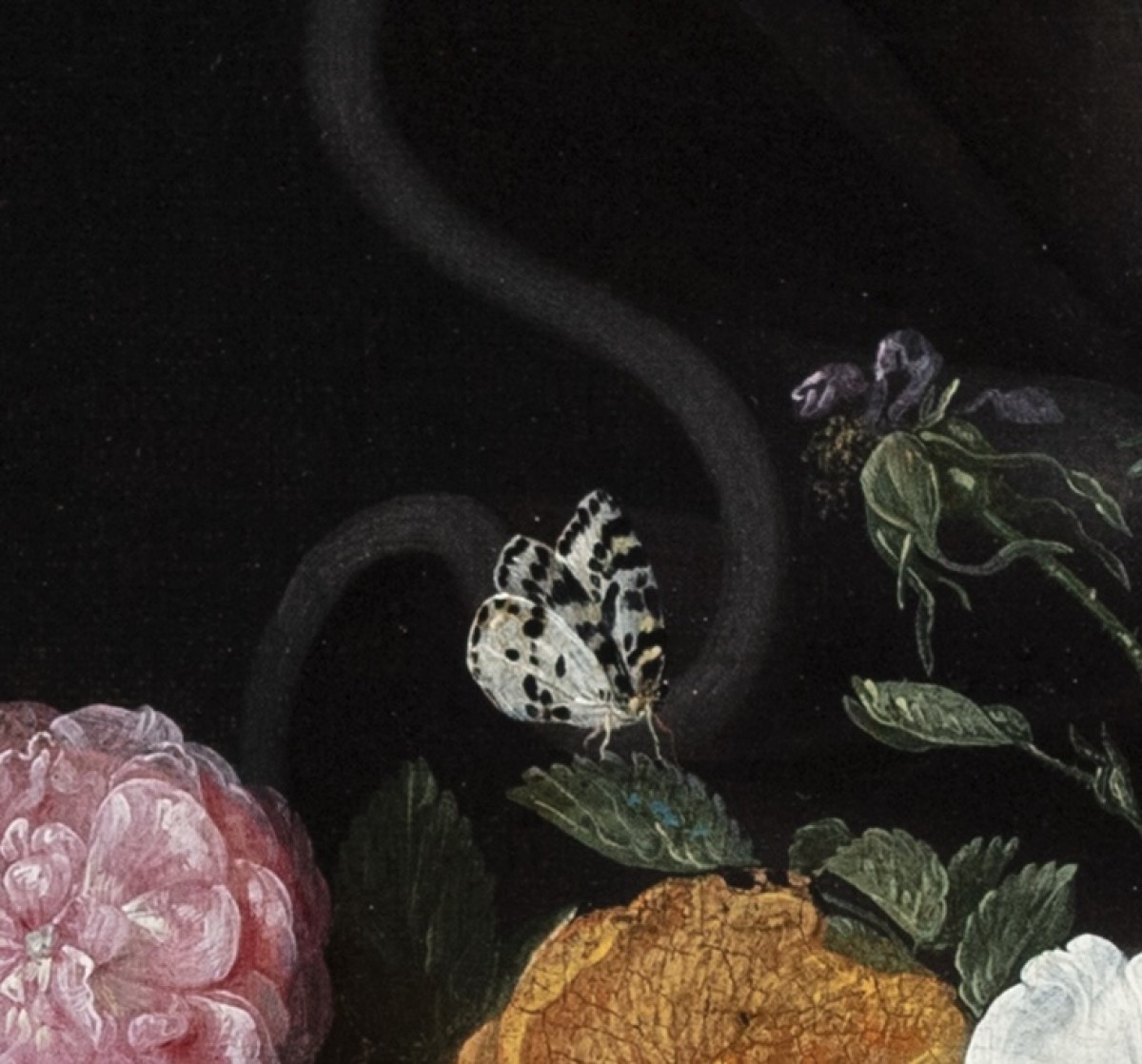
The surrounding flowers are arranged symmetrically, creating a balanced and harmonious composition. The palette is soft and refined, dominated by gentle tones of yellow and pink, which enhance the painting’s calm and contemplative character. The flowers are depicted with great attention to detail, each bloom clearly articulated and carefully positioned so that its form can be fully appreciated.
By combining a devotional image with a floral still life, the painting unites religious content with Van Kessel’s characteristic interest in nature and detail. The work reflects both the decorative appeal of flower painting and its potential for spiritual reflection, a combination that was especially valued by collectors in seventeenth-century Antwerp.
Delevery information :
After reception of payment we can box and ship our items all over the world. Estimates of this service can be provided.