Offered by Brozzetti Antichità
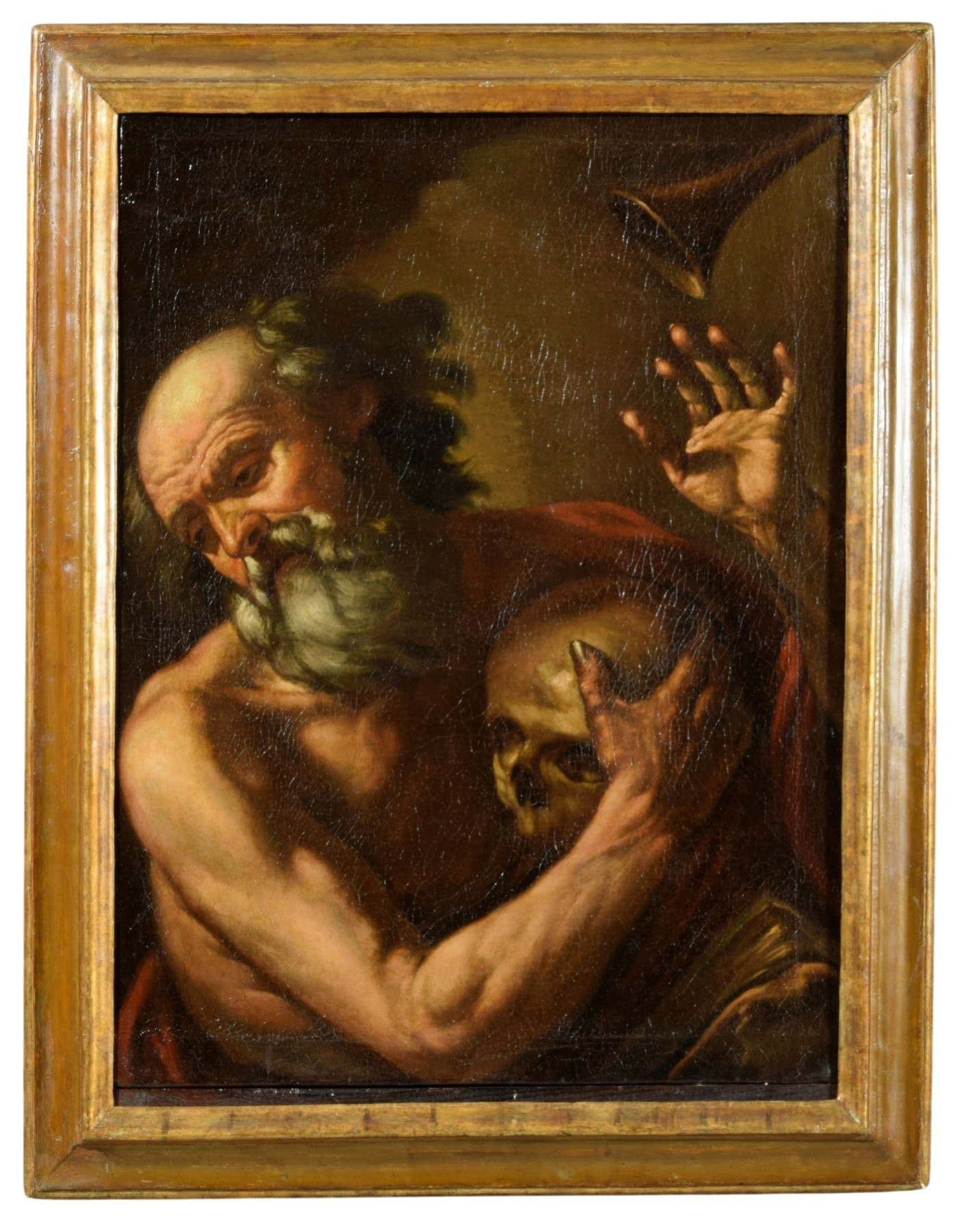
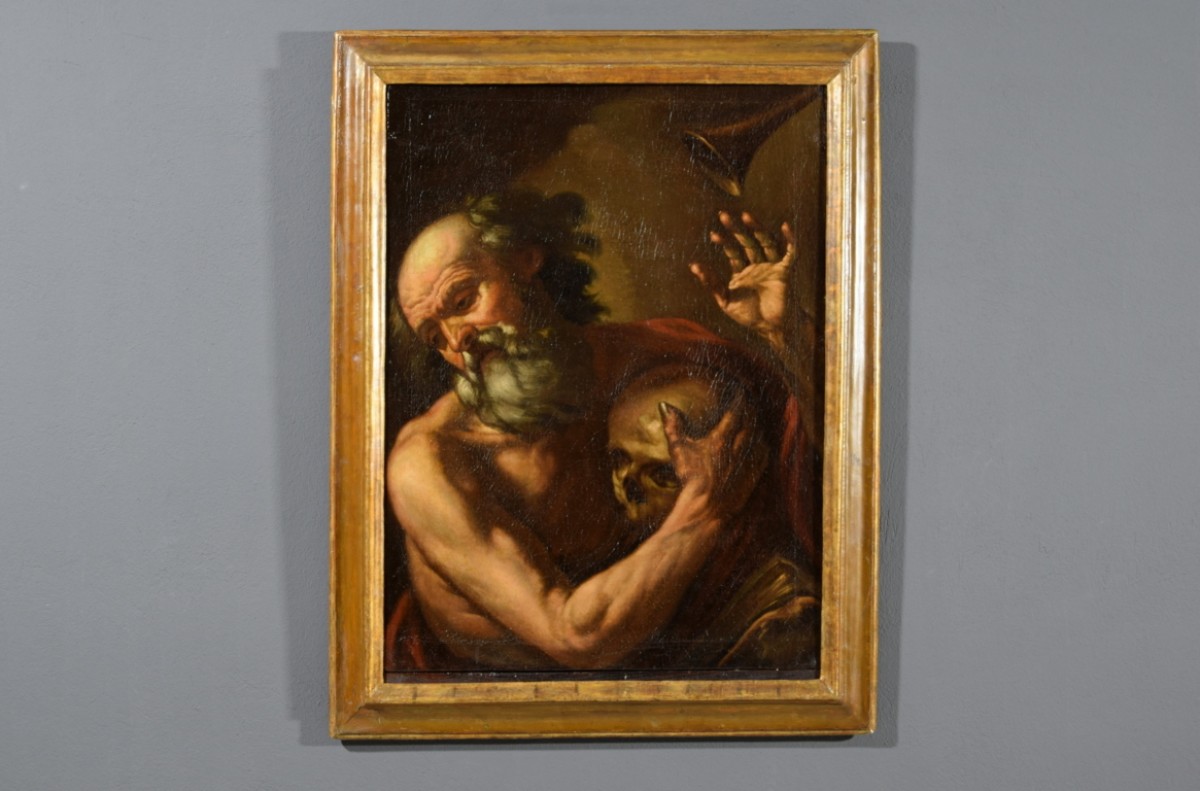
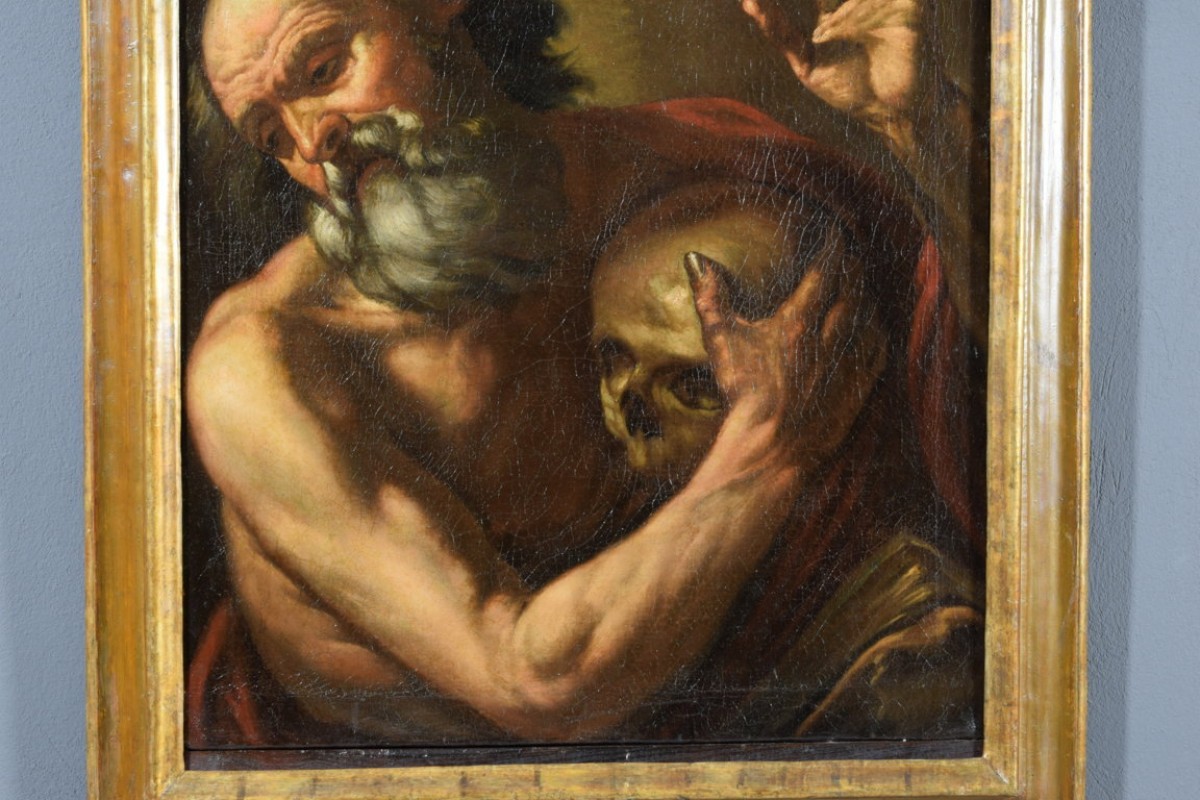
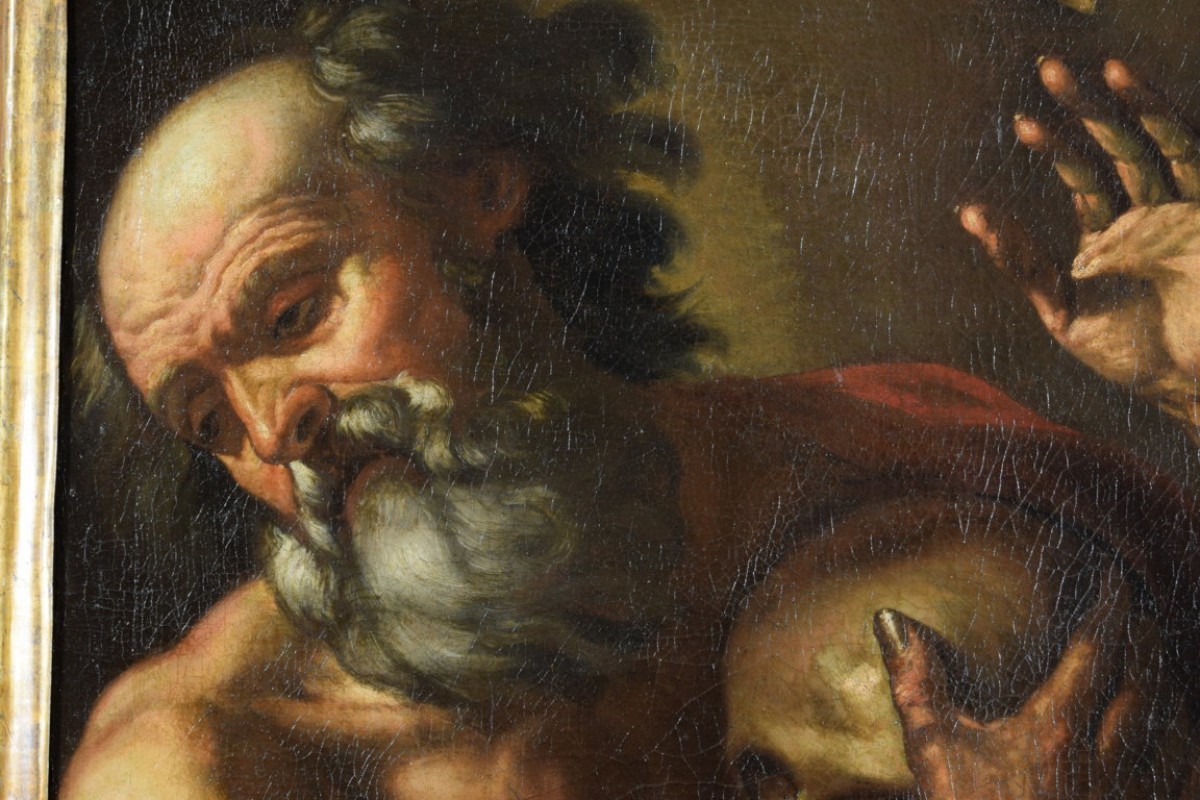
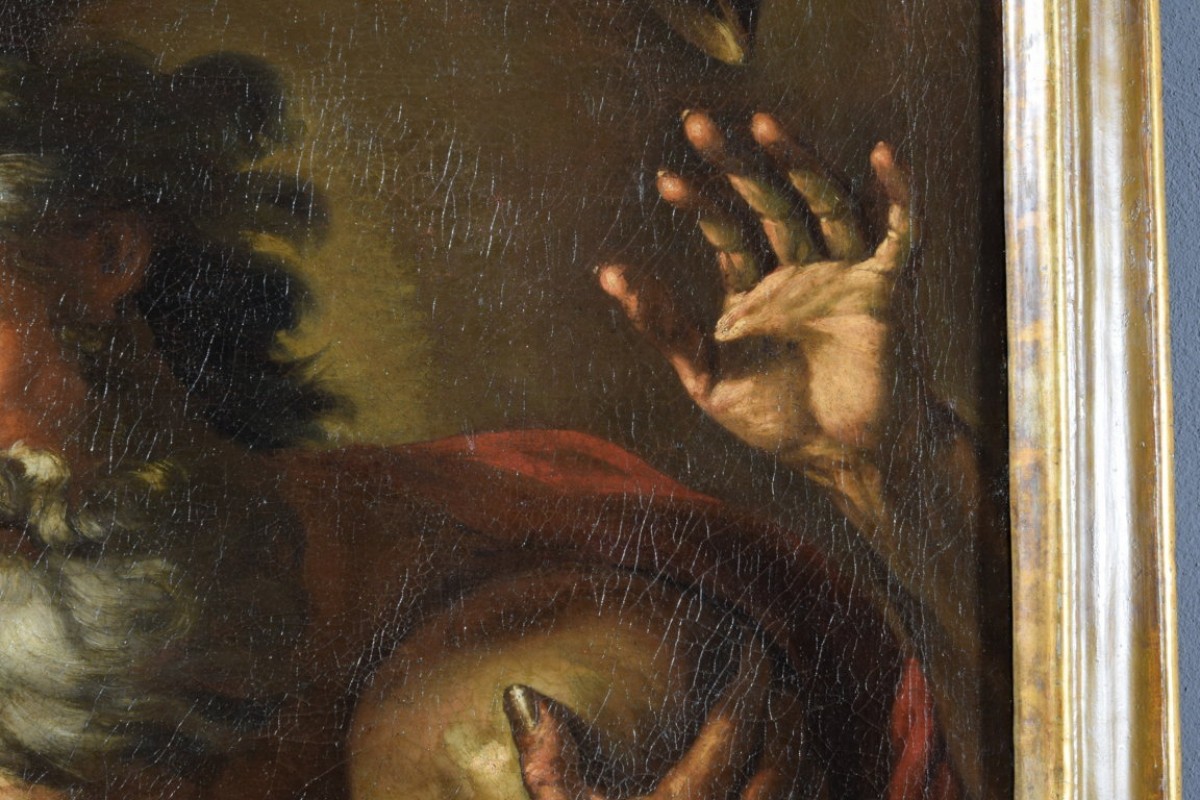

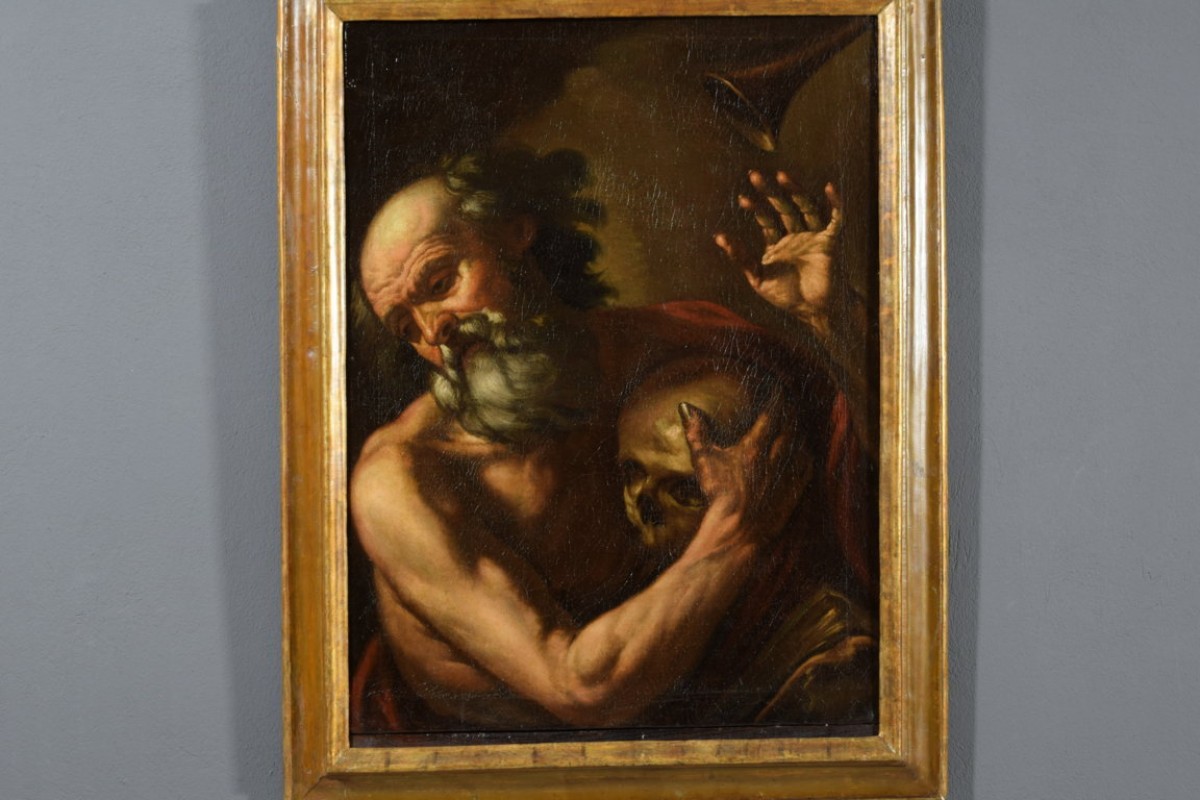
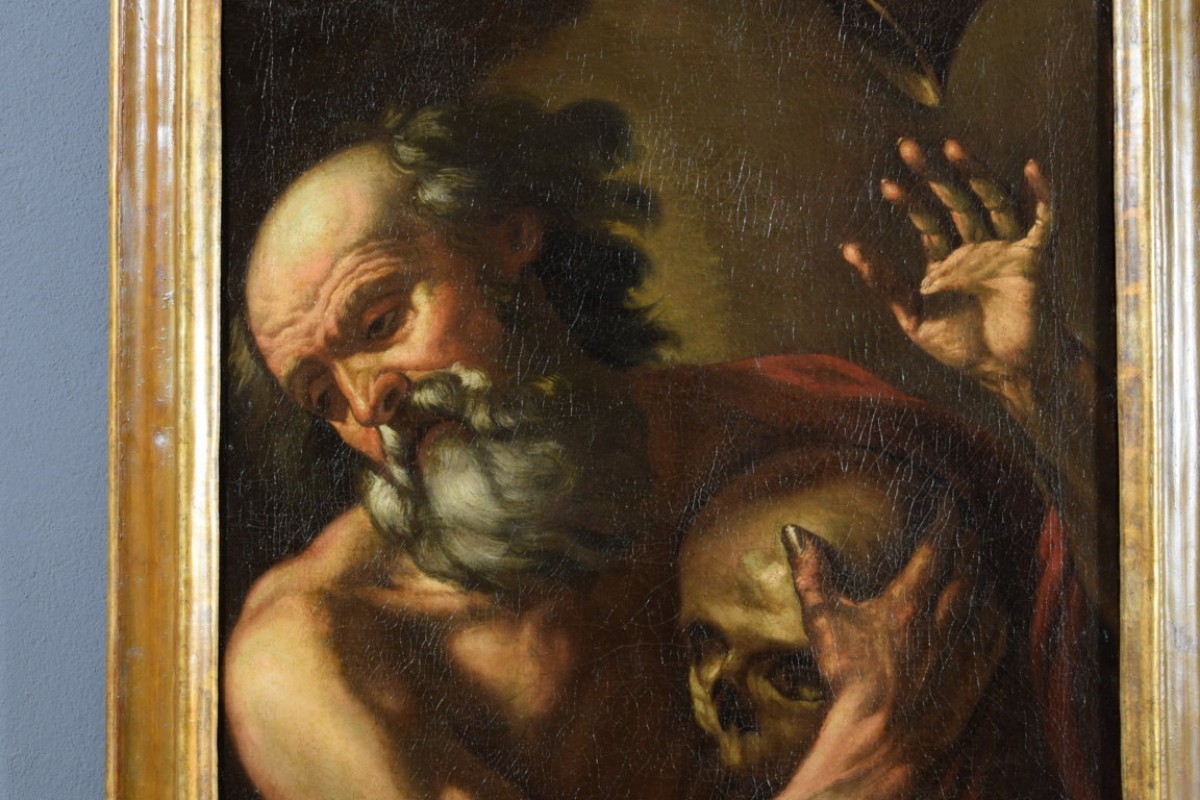
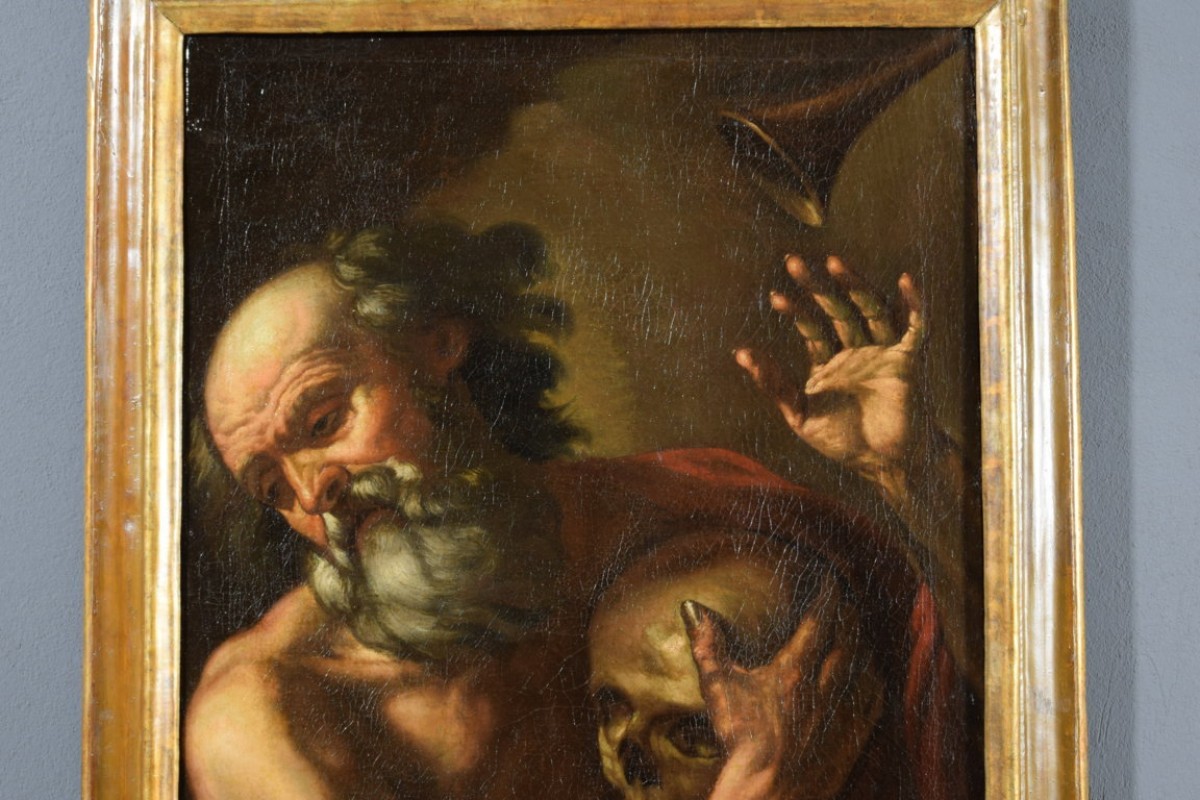
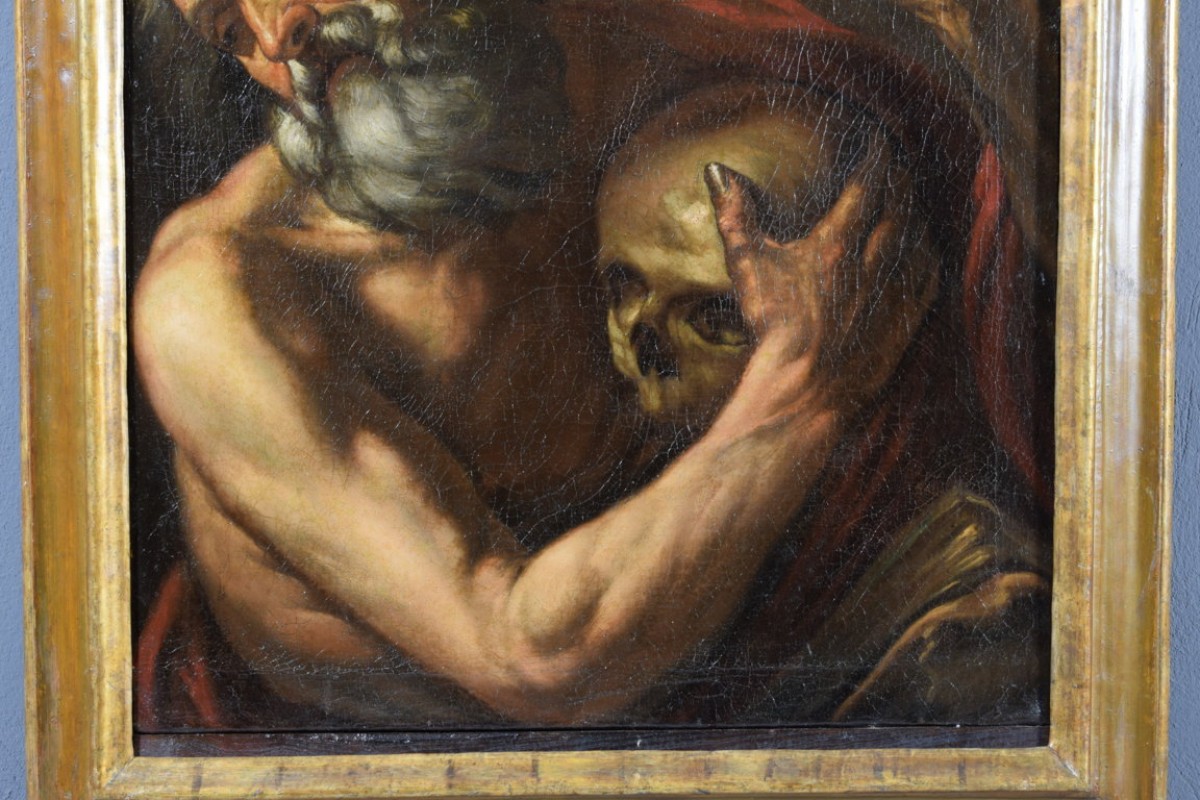
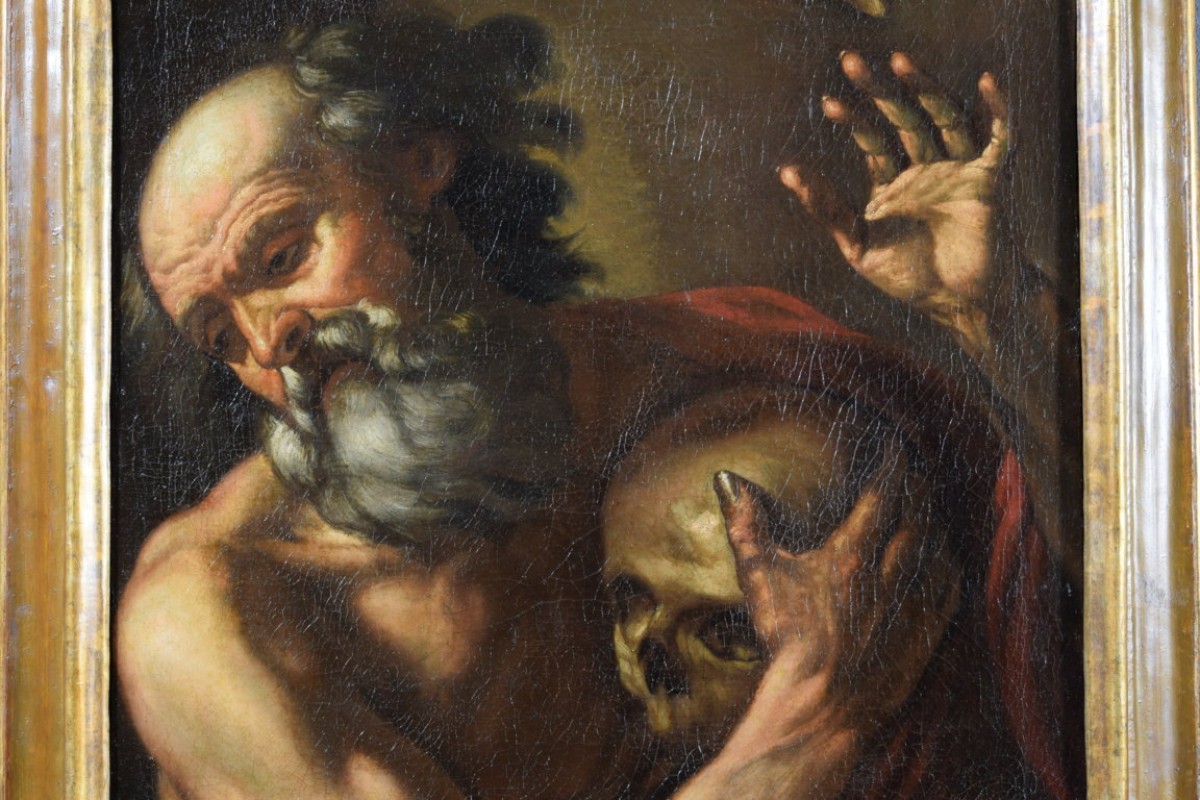
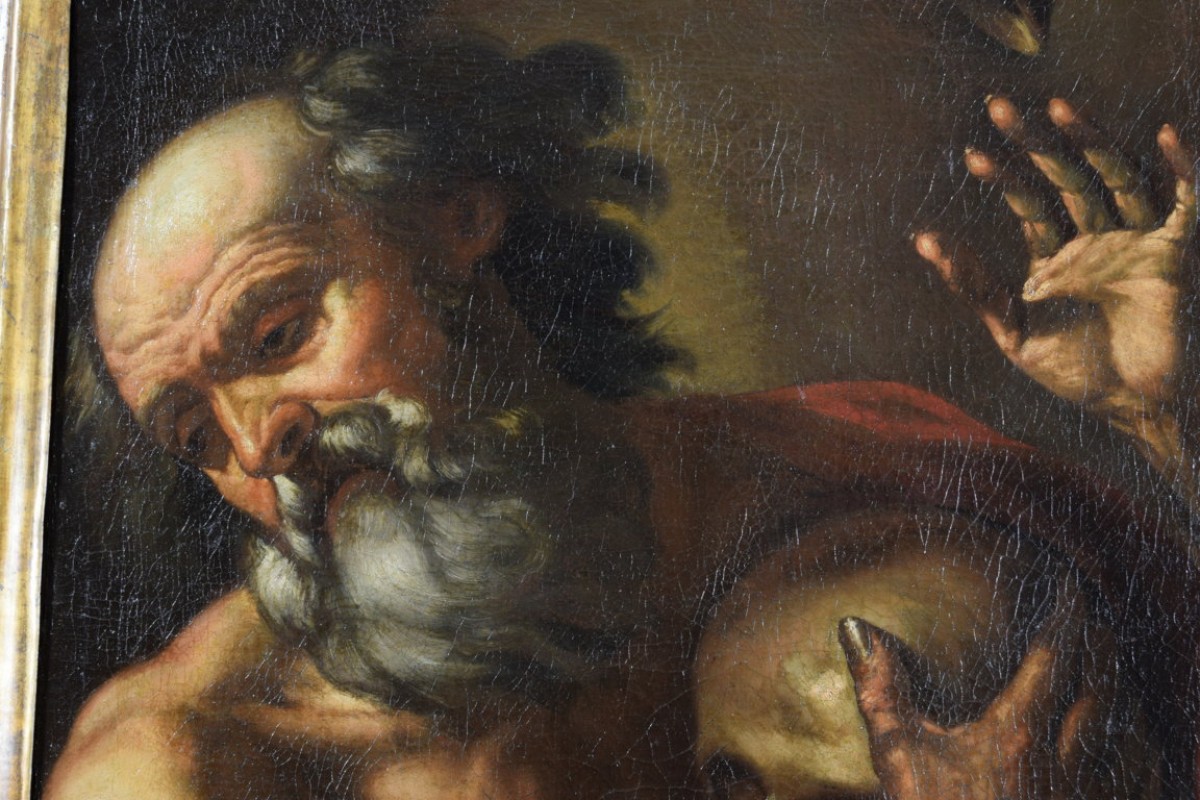
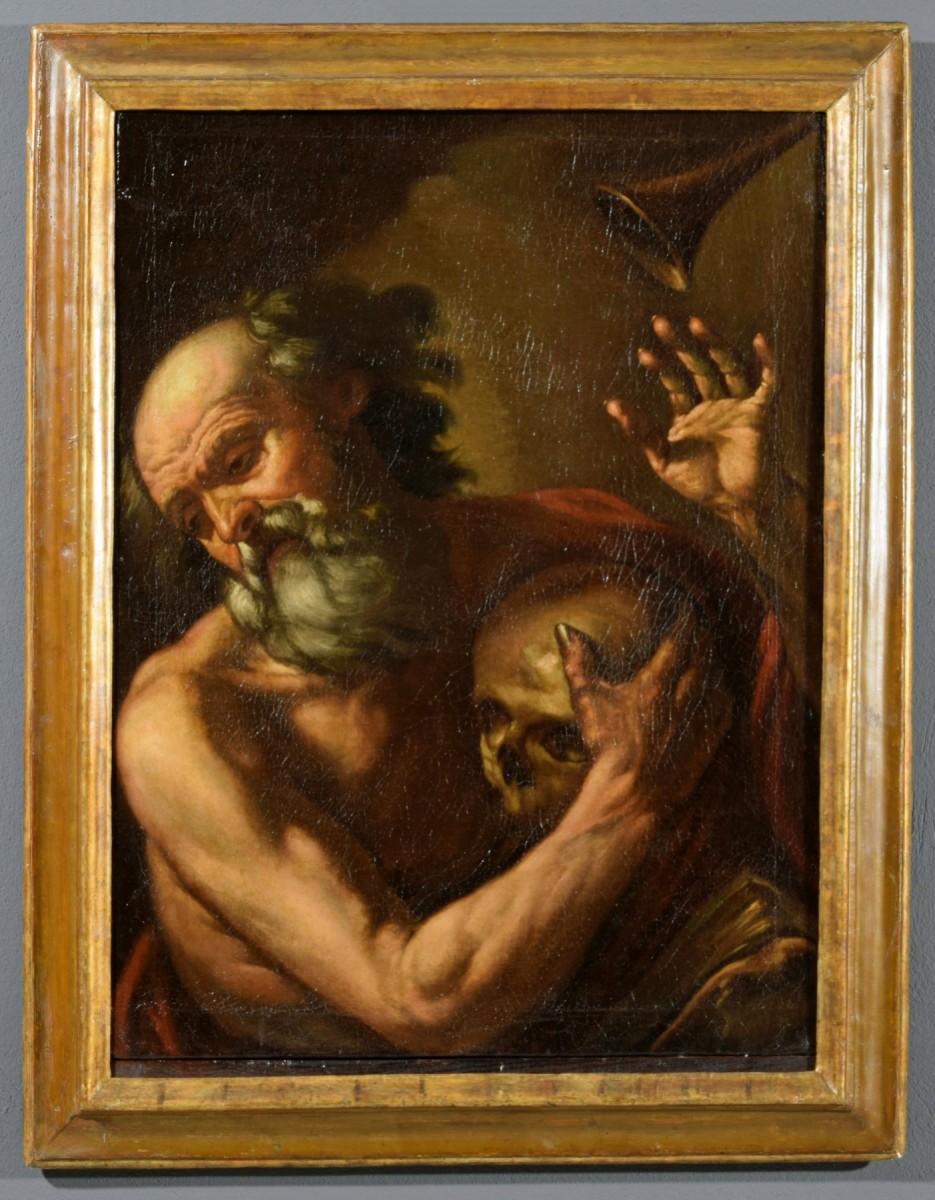
This exquisite oil-on-canvas painting depicts Saint Jerome hearing thetrumpet of the angel of the Last Judgment. The traditional iconography of SaintJerome is confirmed here through the usual symbols of his meditation: he holdsa skull in his right hand, while in the foreground, a book bound in leather isvisible. The saint is also typically depicted as a hermit, semi-nude, draped ina red cloak, with gray hair and a long white beard.Several iconographic representations of Saint Jerome exist, often linkedto episodes from his life. One of the most widespread is the depiction of thesaint in the desert, either meditating or studying. The book, one of hisiconographic attributes, alludes to his numerous exegetical writings and to theVulgate. The skull symbolizes Vanitas, the transience of human life, andcontemplation of death. The red cardinal’s cloak is a recognizable element,originating from a medieval misinterpretation, perpetuated in the LegendaAurea, which mistakenly considered him a cardinal. Since Jerome served assecretary to Pope Damasus, it was assumed he must have been a cardinal, leadingto his depiction in cardinal attire or with elements referring to it, such asthe red hat.The painting under study captures a specific moment in the saint’slife—when Jerome, having retreated into meditation in the desert, recountshearing the announcement of the Last Judgment, perceiving an angel blowing atrumpet. In the upper right corner, the bell of the angelic musical instrumentcan be seen, while Jerome is depicted in a twisting motion, raising his lefthand upwards. The trumpet with which the angel of the Apocalypse announces theJudgment prompts the saint to reflect on death and his eventual reunion withGod.Saint Jerome, born Sophronius Eusebius Jerome (Stridon, c. 347 –Bethlehem, 420), was declared a Doctor of the Church by Pope Pius V in 1576. Hewas born in Dalmatia, in present-day Croatia, and was a man of great literaryculture. He studied grammar and rhetoric in Rome, where he was baptized. Later,he traveled to Antioch and embraced an ascetic life as a hermit in the desertof Chalcis, south of Aleppo (cf. Ep. 14,10), dedicating himself tobiblical exegesis and the study of Greek and Hebrew.Ordained a priest on the condition that he could maintain hisindependence as a monk, he began an intense literary career. In 382, he movedto Rome, where he became secretary and advisor to Pope Damasus, who,recognizing his vast erudition and literary expertise, encouraged him toundertake a new Latin translation of the Bible. Drawing from original Greek andHebrew texts, Jerome translated the four Gospels into Latin, followed by thePsalter and much of the protocanonical texts of the Old Testament. His workbecame known as the Vulgate, the canonical text of the Latin Church,recognized by the Council of Trent.After the death of Pope Damasus, Jerome left Rome in 385 and undertook apilgrimage, first to the Holy Land, then to Egypt, finally settling inBethlehem in 386, where he remained until his death. He continued his intensework, building monasteries and hospices while promoting classical and Christianeducation. He is the patron saint of scholars, archaeologists, librarians,students, and translators. The Roman Martyrology commemorates him on September30. Stylistically, thispainting can be attributed to the Neapolitan school and is the work of a painter active in the 17th century. Historical and artistic studies are currently on going