Offered by Jan Muller
REQUEST INFORMATION

PSEUDO VAN KESSEL
active c. 1660-1750
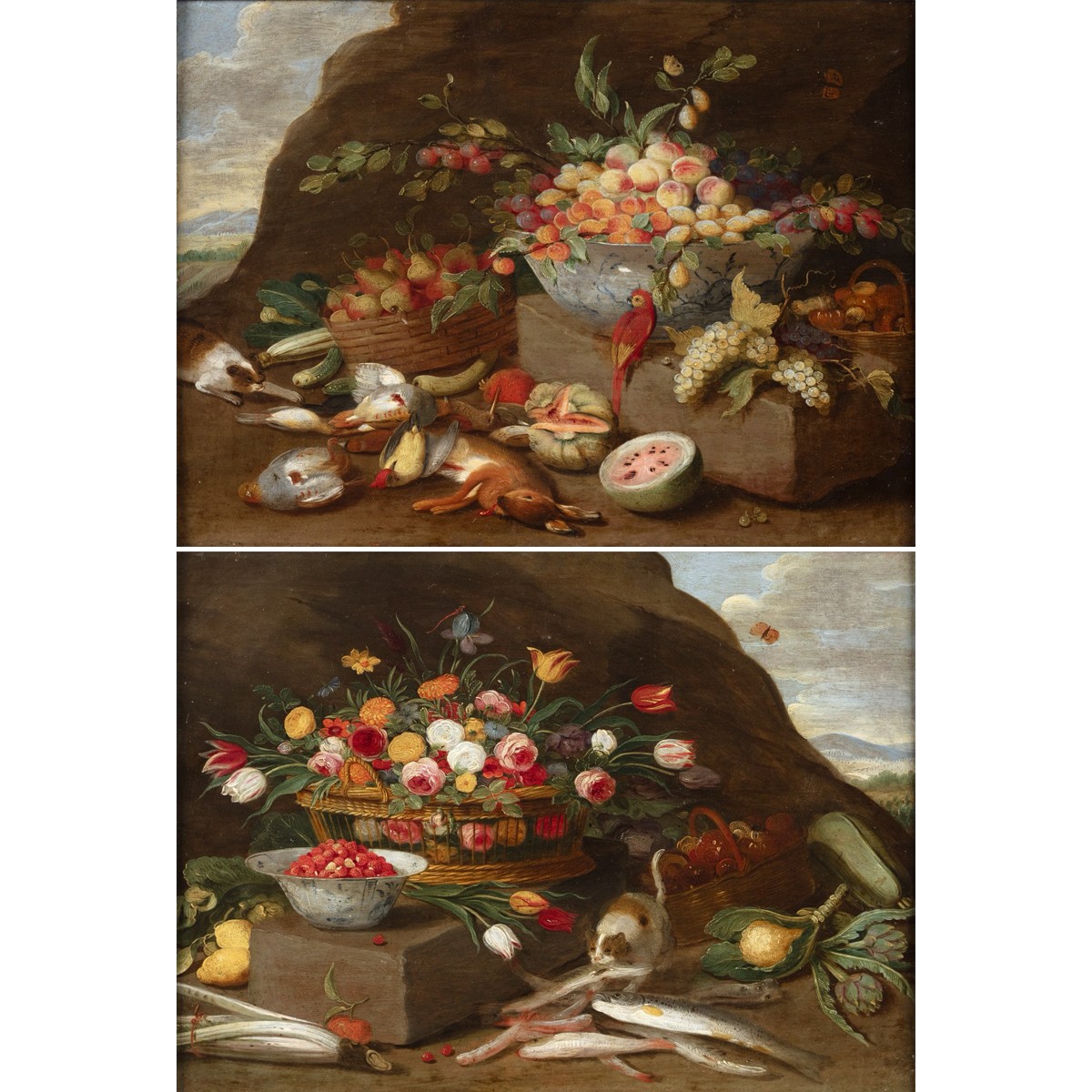
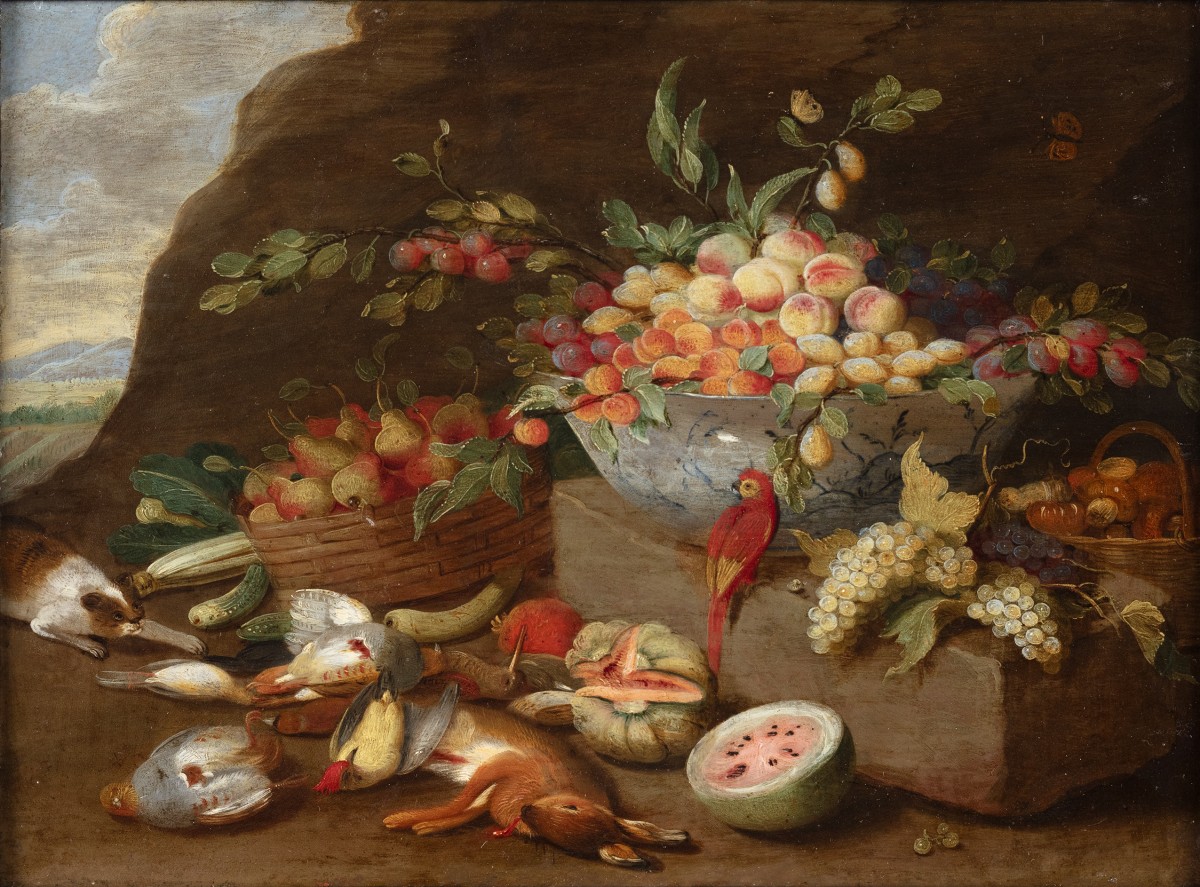
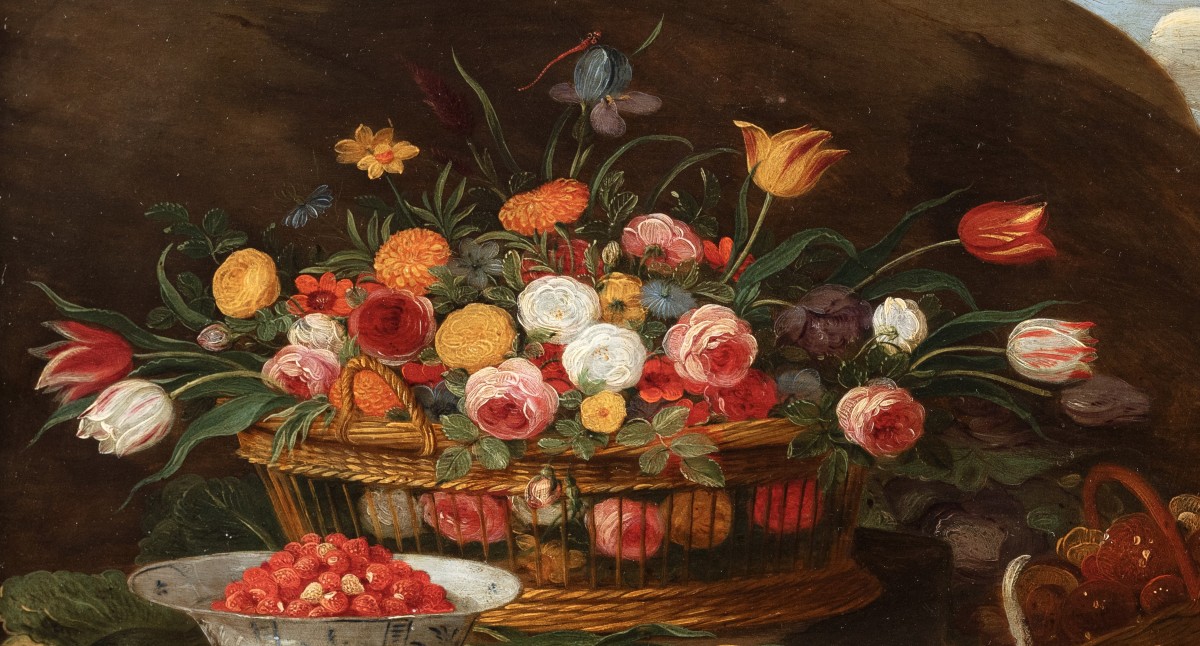
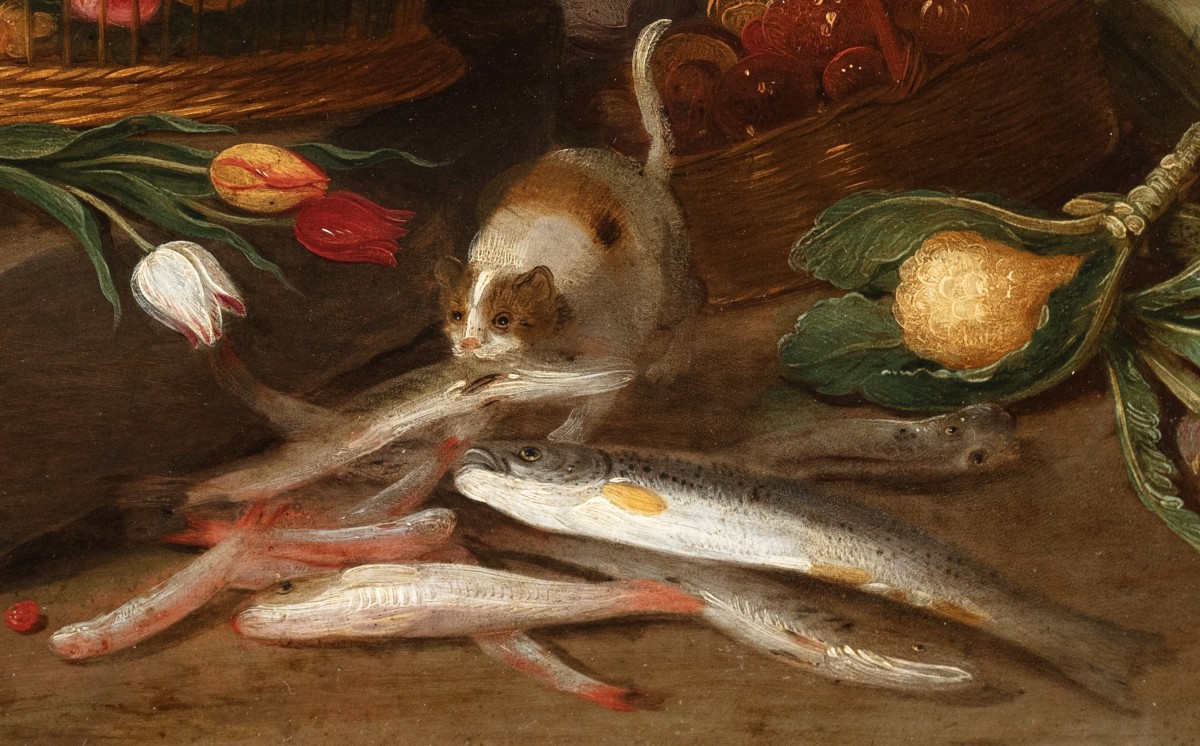
“Two still lifes one with a parrot and game, another with fish and a cat”
Oil on copper
Dimensions: 24 x 32 cm, 33 x 42 cm (framed)
THE ARTIST
The name Pseudo-Jan van Kessel the Younger (sometimes also called Pseudo-Jan van Kessel II) is not the name of a single known painter, but rather a label given to an anonymous artist or perhaps a whole workshop. Around 200 small still lifes are attributed to this hand, most of them dating from the late sixteenth and early seventeenth centuries.
These paintings often reuse a limited set of motifs, sometimes arranged in simple ways and sometimes in more elaborate, decorative compositions. The style is usually described as somewhat naïve, but always very decorative, with an eye for detail and ornament. The strong Flemish influence in these works suggests that the artist was either Flemish or trained in a Flemish workshop. At the same time, the southern European setting of many paintings, and their provenance, indicates that the artist was probably active in Italy.
The quality of these works varies a lot and their large number also points to a kind of ‘mass production.’ This has led scholars to believe that these still lifes were most likely produced in a studio context, rather than by one individual master. In other words, Pseudo-Jan van Kessel is probably not a single artist, but a name that stands for an entire group of anonymous painters whose works share the same recognizable style.
THE ARTWORK
The still lifes attributed to Pseudo-Jan van Kessel the Younger often appear in pairs and sometimes even in larger sets. They are usually quite small in size and painted on copper, a smooth surface that allows for fine detail. Occasionally they were also painted on walnut panels and in one rare case even on slate. The use of copper, combined with the Italian provenance of several works, supports the idea that these paintings were made in southern Europe, most likely in Italy.
Pairs of such works are known as pendants. These are artworks designed to be displayed together, often side by side. In this case, the paired composition is visible in the way the backgrounds mirror each other from the center. This clever arrangement shows that these paintings were not meant to be seen in isolation, but as part of a decorative set.
Still life as a genre focuses on inanimate objects: things from everyday life, either natural like flowers, fruit or animals or man-made like glassware, jewelry, or books. One of the advantages of still lifes was that they gave the artist great freedom to experiment with arrangements. Objects could be moved around, grouped or contrasted to create both harmony and meaning within the composition.
Flower still lifes, in particular, developed just before 1600 in Dutch painting, influenced by the fascination with exotic plants and newly imported flowers. These floral paintings quickly became popular, especially among aristocratic collectors. They were decorative, beautiful to look at, but they also carried deeper symbolic meaning. Flowers were often linked to the idea of vanitas: a reminder of the shortness of life and the certainty of death. Each type of flower could carry its own meaning, making the painting not just a decorative object but also a reflection on Christian ethics and the passing nature of beauty.
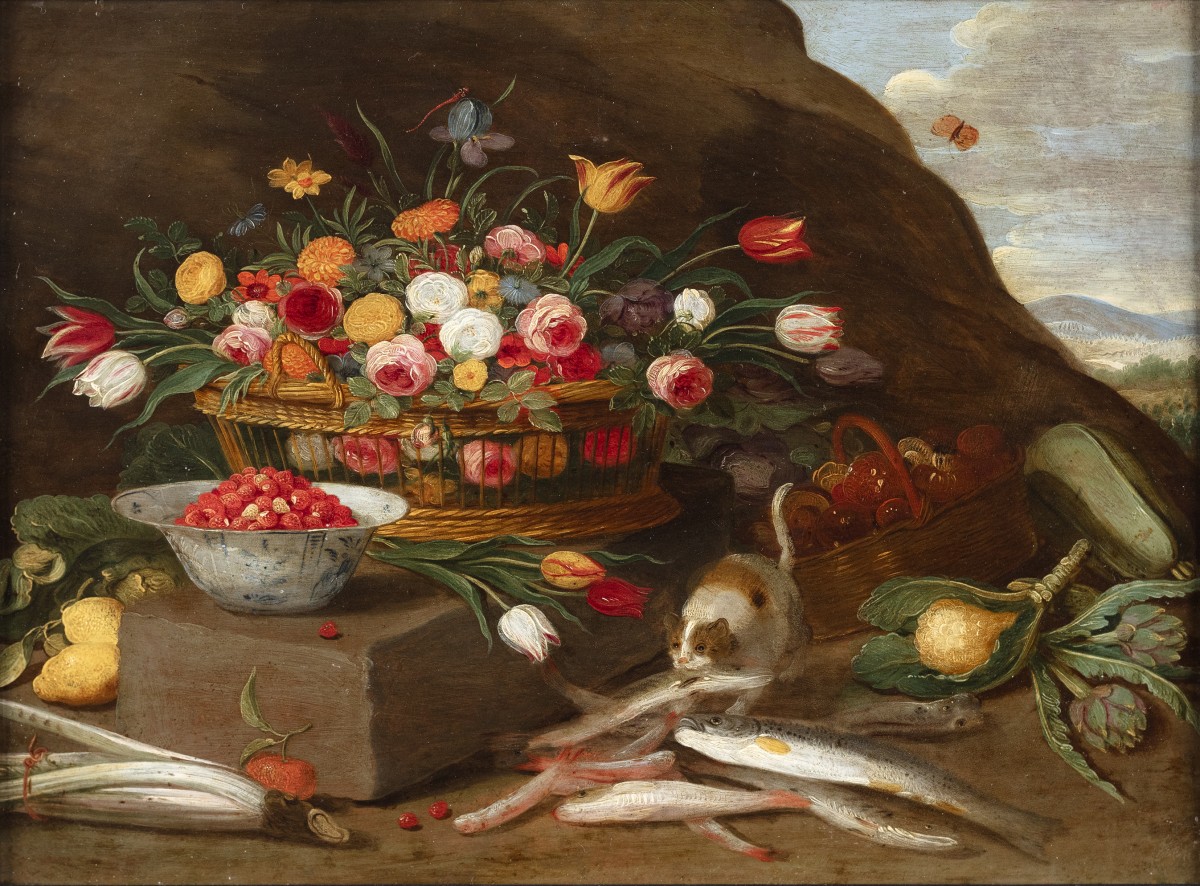
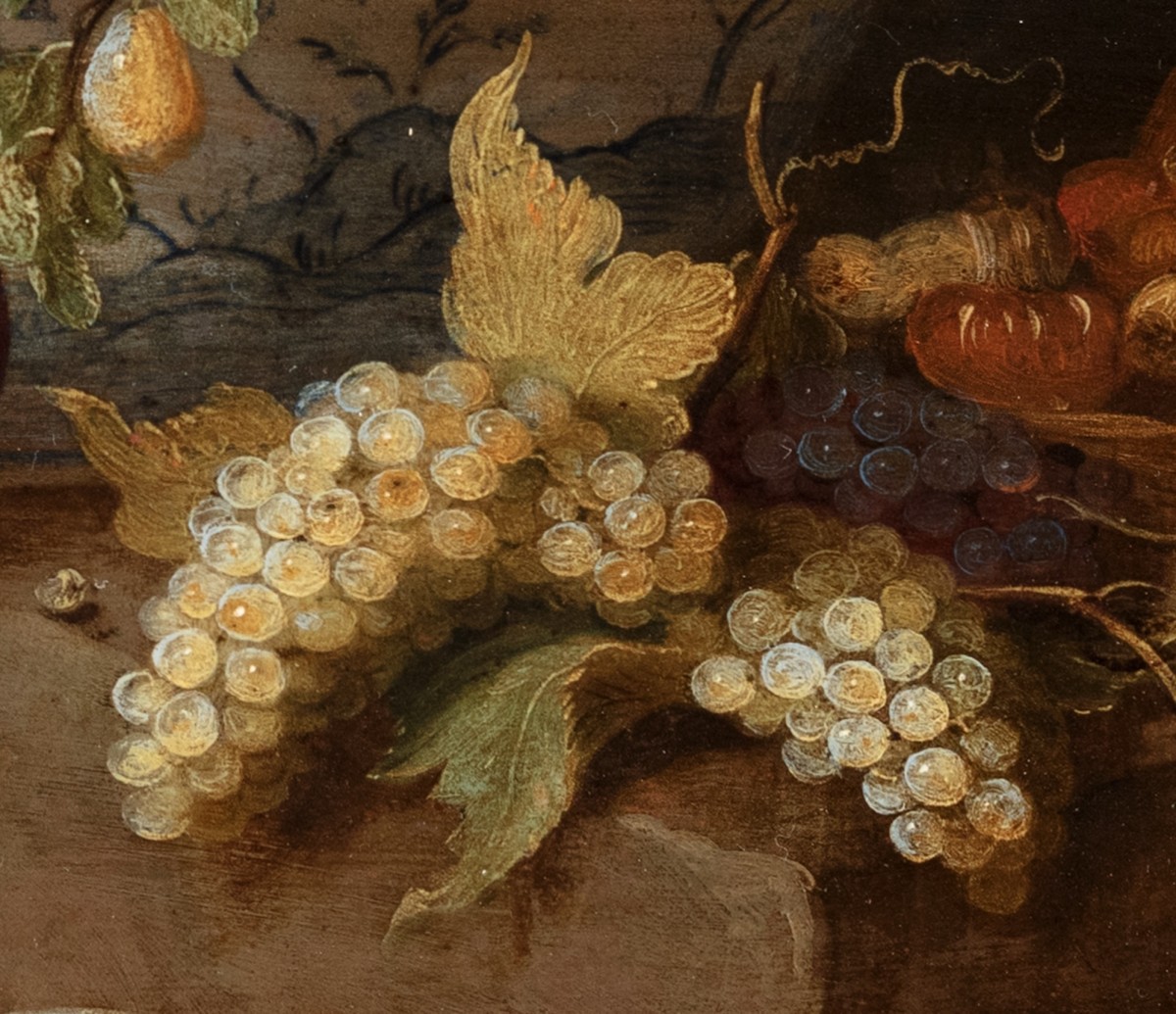
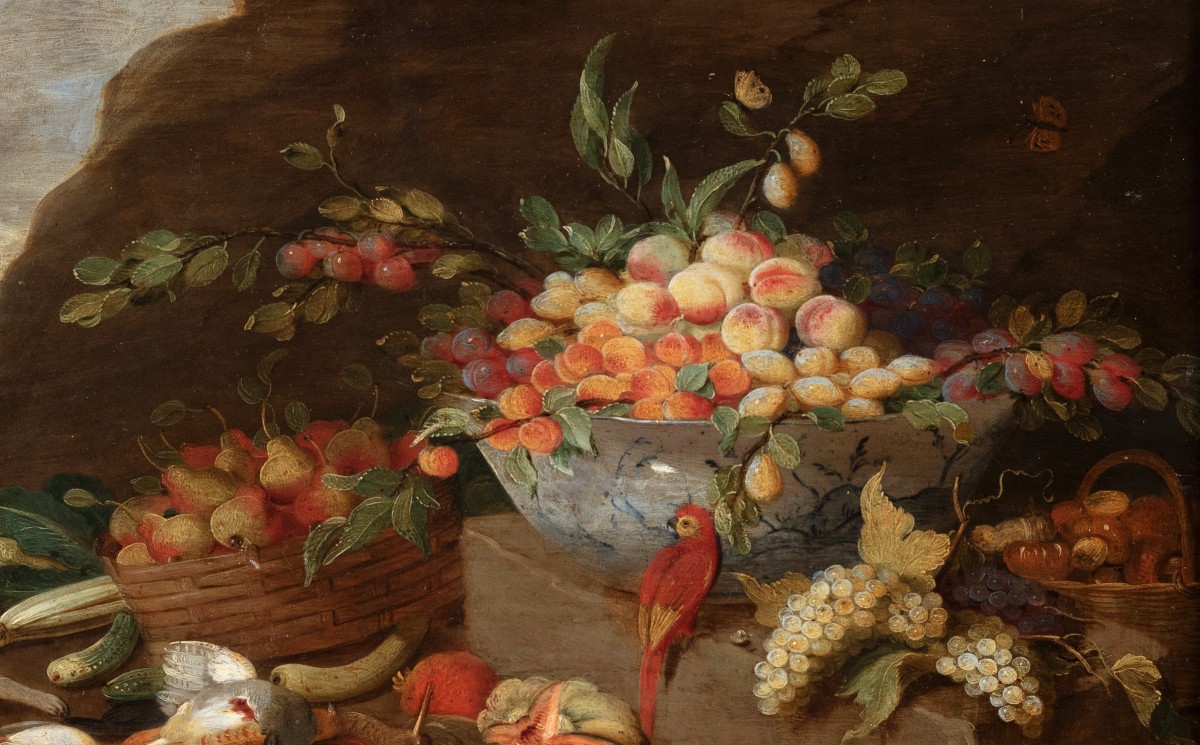
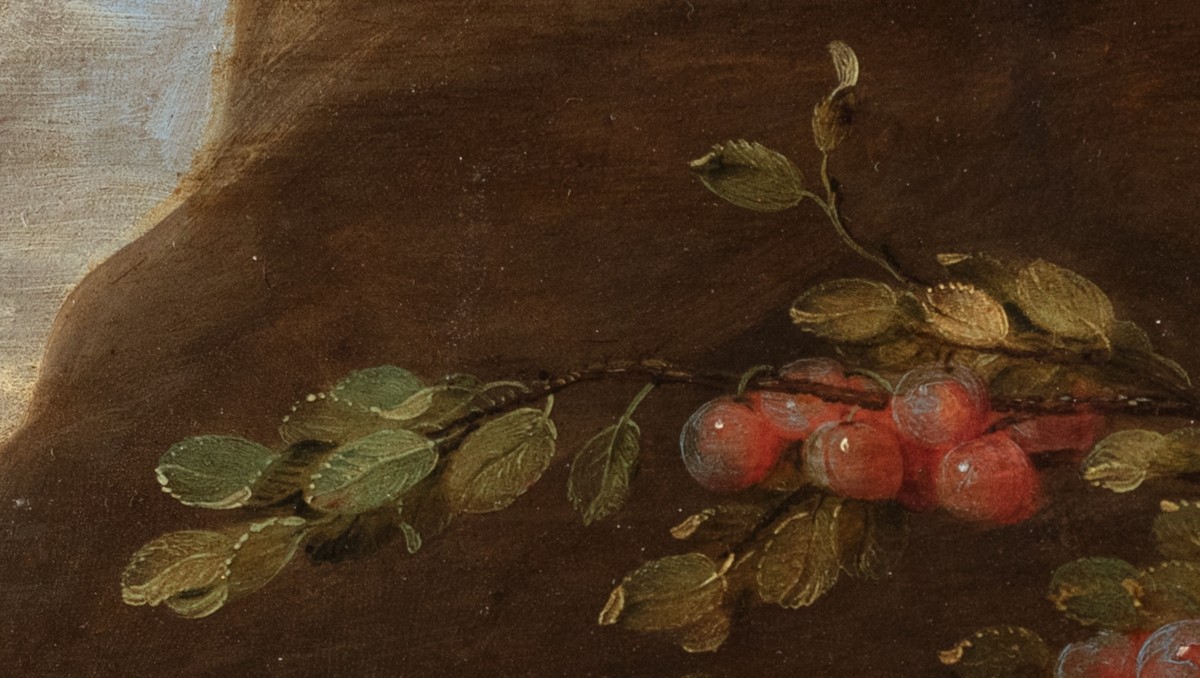
Both works feature a wide variety of elements. All of these items are placed in front of a rock, with a view of a landscape visible in the background. In one work, a basket of flowers takes center stage. Fruit and vegetables such as raspberries, lemons, a tomato, and artichokes are also depicted. In the foreground, a cat appears to be stealing the fish. In the other work, a large basket of pears, and a bowl of peaches and apricots play the leading roles. Many other products such as melons and grapes are also depicted. In the foreground, a cat is visible again, together with a parrot and game.
So, while works like ‘Fruit and parrot and game en plein air and a basket of flowers with a cat and fish’ may look cheerful and decorative at first glance, they also carry this double layer of meaning: a celebration of abundance and beauty, and at the same time a quiet reminder that all things fade.
Delevery information :
After reception of payment we can box and ship our items all over the world. Estimates of this service can be provided.