Offered by Jan Muller
REQUEST INFORMATION

HENDRIK VAN STEENWIJCK I
Kampen 1550 - Frankfurt 1603
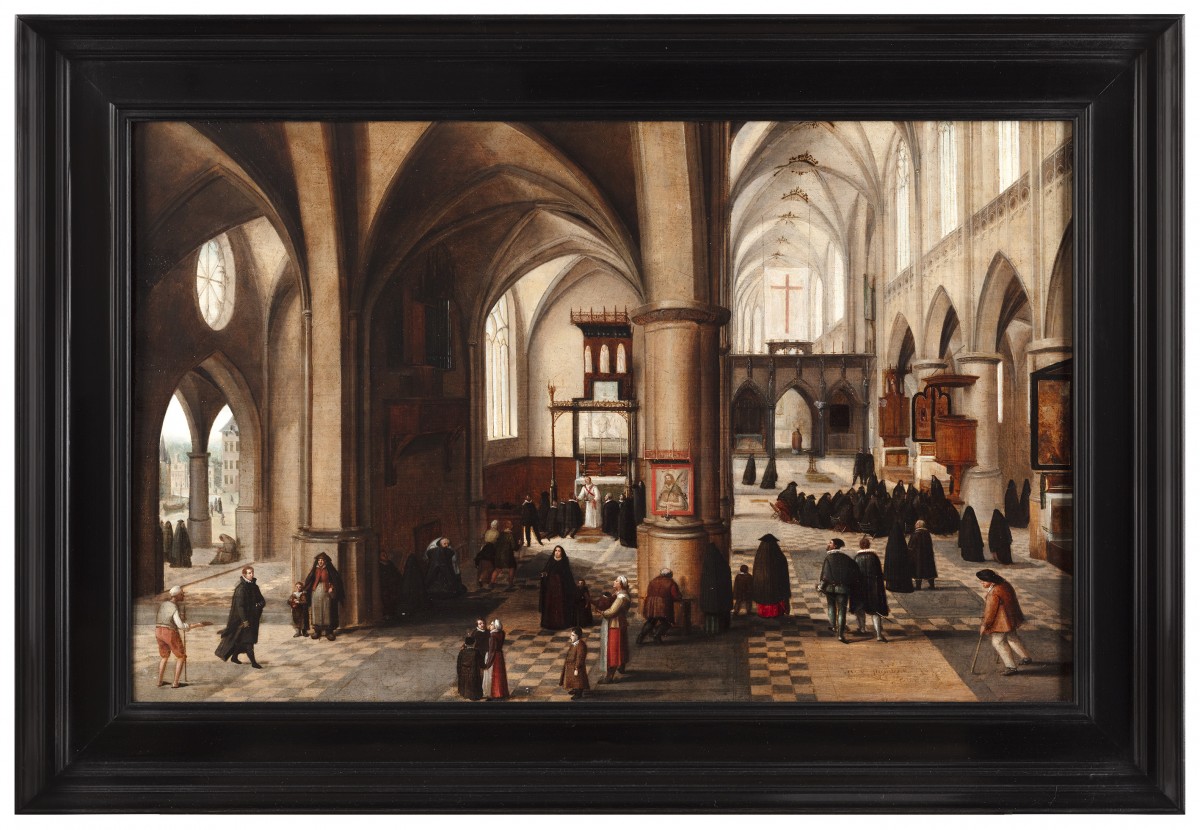
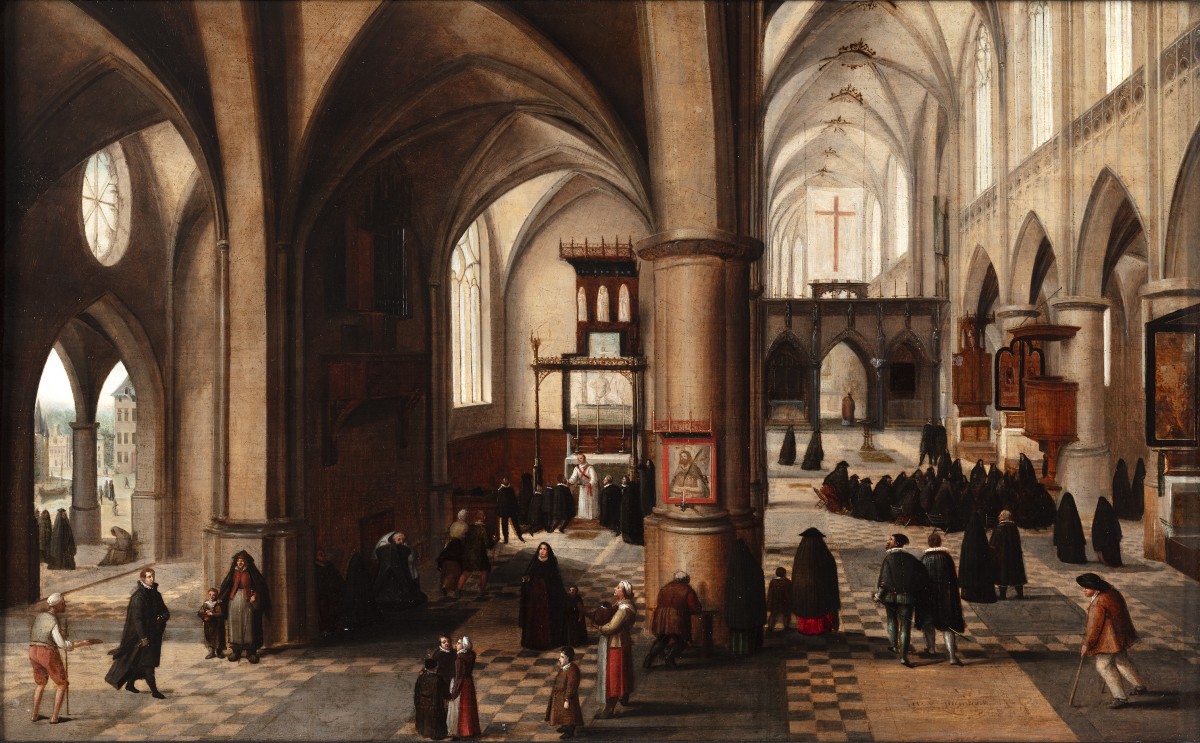
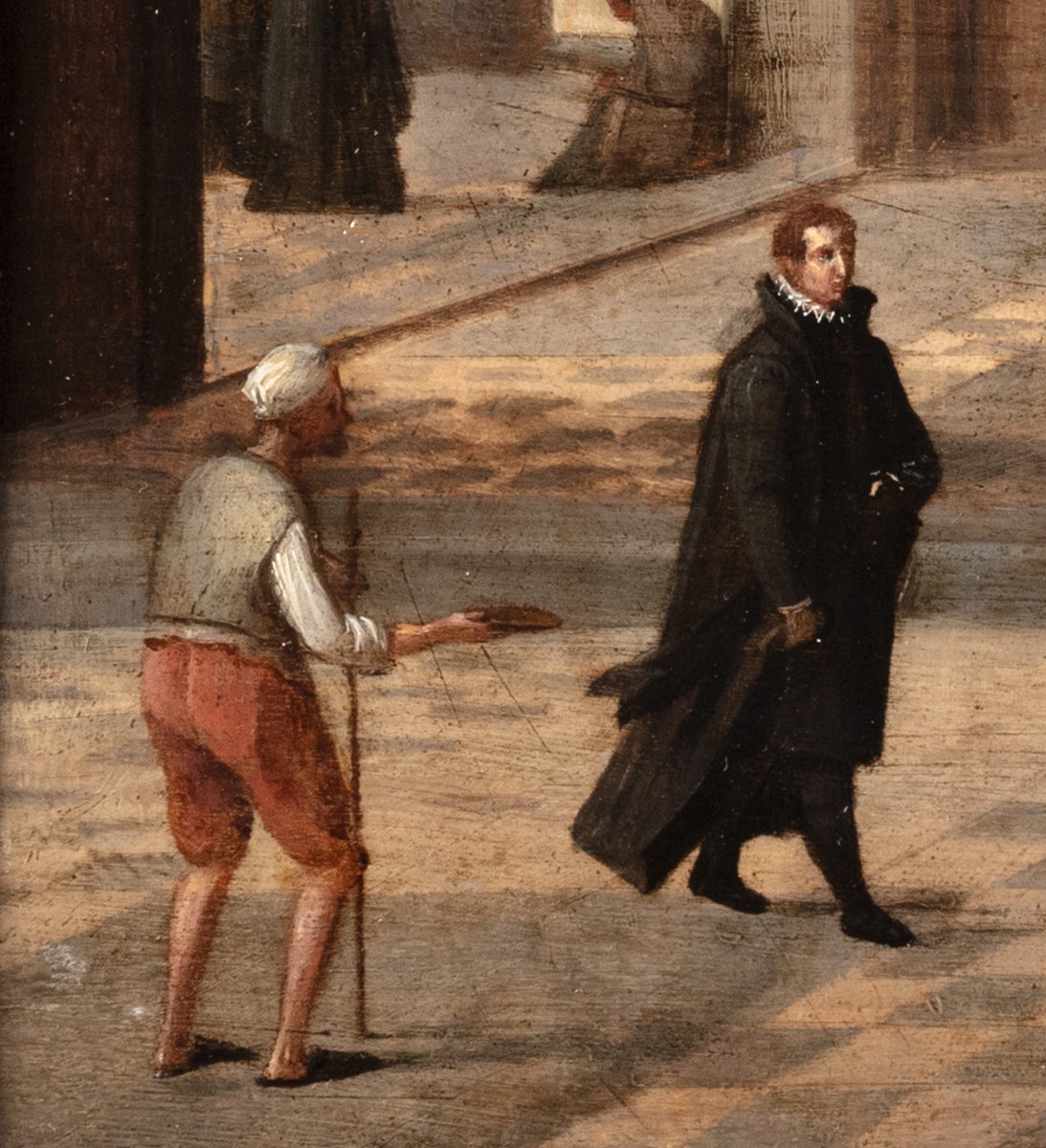
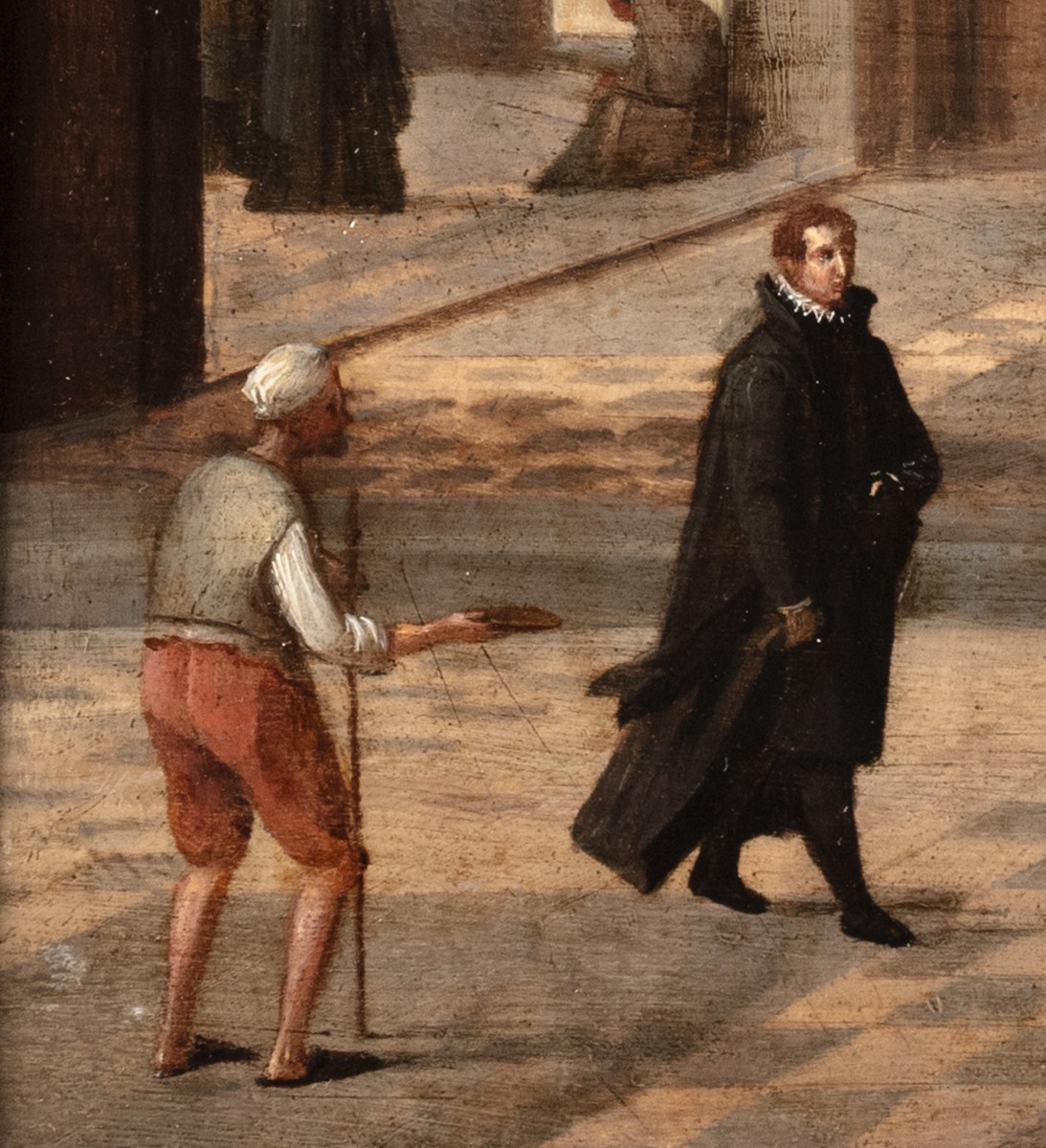
“Interior of a Church”
Oil on panel
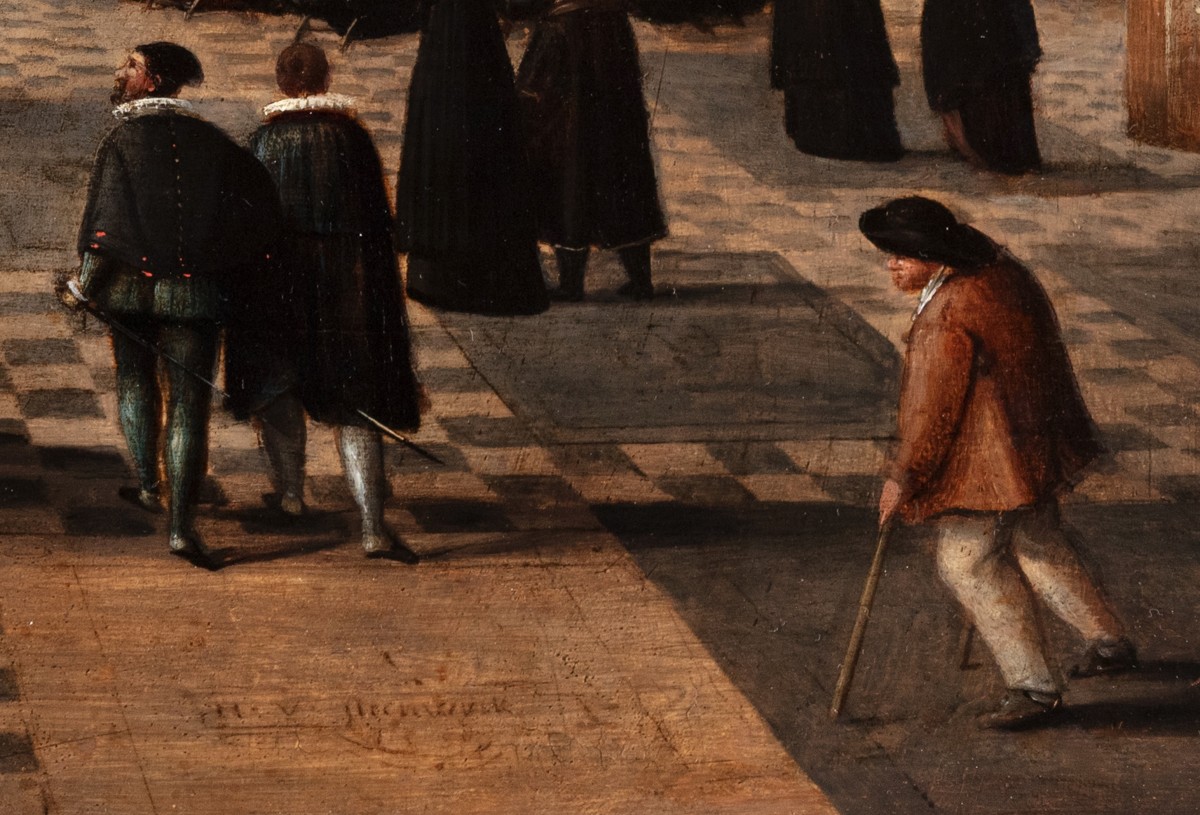
Signed lower right: “H v. Steenwijck”
Dimensions: 43 x 68 cm, 55 x 80 cm
Provenance: Collection Albin Chaladon (1809 - 1885)
THE ARTIST
Hendrik van Steenwijck I was one of the early masters of the Dutch Golden Age and is best known for his impressive paintings of church interiors. He lived in a turbulent period at the end of the sixteenth century and moved around quite a lot. Between 1573 and 1576 he lived in Aachen, where he became acquainted with Hans Vredeman de Vries, an important artist who had a strong influence on him. After that, he worked in Antwerp until 1585. The city was a lively artistic center at the time and he became a member of the Guild of Saint Luke. After 1586 he settled in Frankfurt, but he remained active in different cities, from London to Holland, while still returning to Antwerp regularly.
Van Steenwijck is considered the very first painter to focus on architectural interiors. He made a big impact because he introduced a completely new genre that would become very popular in both Dutch and Flemish Baroque art. What made him stand out was his special attention to natural light and to perspective. His teacher Vredeman de Vries had already explored these ideas, but Van Steenwijck developed them further. He created convincing depth and realistic effects of light. Van Steenwijck’s approach in developing the composition reveals a thorough understanding of architectural space.
He was also part of a wider artistic network. He had connections with other artists, such as the engraver and publisher Dirk de Bry. This shows how much artists at the time influenced and inspired each other. Even in a period of political and religious conflict, from the Calvinist iconoclasts to the Catholic Counter-Reformation, Van Steenwijck managed to develop a new art form that was admired by collectors across Europe.
Although he was a Lutheran, he worked in a divided cultural climate where both Catholics and Protestants commissioned art. His paintings could be appreciated from both sides, not only for their religious symbolism but also for their beauty, and their fascination with architectural space. Artists like van Steenwijck produced a new art form that found favour with connoisseurs in much of Europe. His deep understanding of composition and perspective made him a pioneer of a genre that left a lasting mark on European art history.
THE ARTWORK
Van Steenwijck was one of the first Netherlandish painters to specialize in showing Renaissance palaces and Gothic church interiors. His painting of the Cathedral of Antwerp is a perfect example. During the second half of the sixteenth century, Antwerp became the center of perspectival painting in Northern Europe, with Van Steenwijck and his teacher Vredeman de Vries as the leading figures.
What makes this work special is the way he used the science of perspective to create ideal, carefully constructed architectural spaces. These interiors are not only accurate depictions but also almost staged, perfected visions of space. Figures were often added to make the scene lively, which was part of the appeal. Such church interiors became very popular at the end of the sixteenth and beginning of the seventeenth century, mainly because of their religious meaning. They represented a place where any believer could belong, no matter their class or background. This is visible in the represented figures on the works.
The Antwerp Cathedral itself was the largest Gothic church in the Netherlands and could hold up to 25,000 people. It was famous for its scale and its beautiful stained-glass windows. Yet, interestingly, many paintings of the cathedral, including this one, show mostly clear, monochrome windows instead of colorful stained glass. This was often a conscious artistic choice, to keep the space visually clear, and to highlight the play of light and perspective.
Another striking feature is the presence of kneeling worshippers. In Flemish interior paintings, this was one of the strongest Catholic symbols, showing devotion and humility. It was also common for two artists to work together: one artist painted the architecture and another artist added the figures, furniture, and altars. This collaboration made the interiors feel alive while still keeping the grandeur of the architecture as the main subject.
Today, works like this are valuable not only because of their technical brilliance and use of perspective, but also because they give us insight into the architecture and religious culture of the time. Van Steenwijck managed to capture the majesty of the Antwerp Cathedral in a way that makes the painting both an artistic masterpiece and a historical document.
Delevery information :
After reception of payment we can box and ship our items all over the world. Estimates of this service can be provided.