Offered by Jan Muller
REQUEST INFORMATION

GIULIO CAMPI (Cremona c. 1507 - 1573)
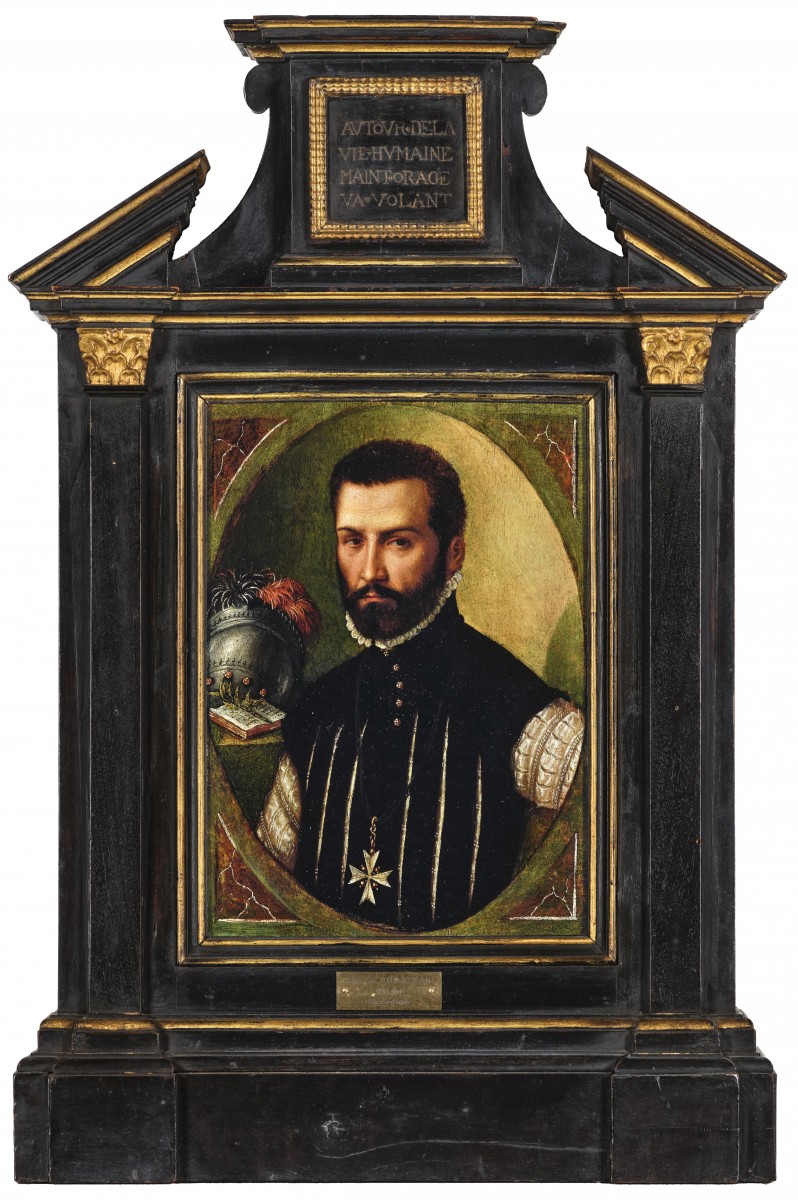
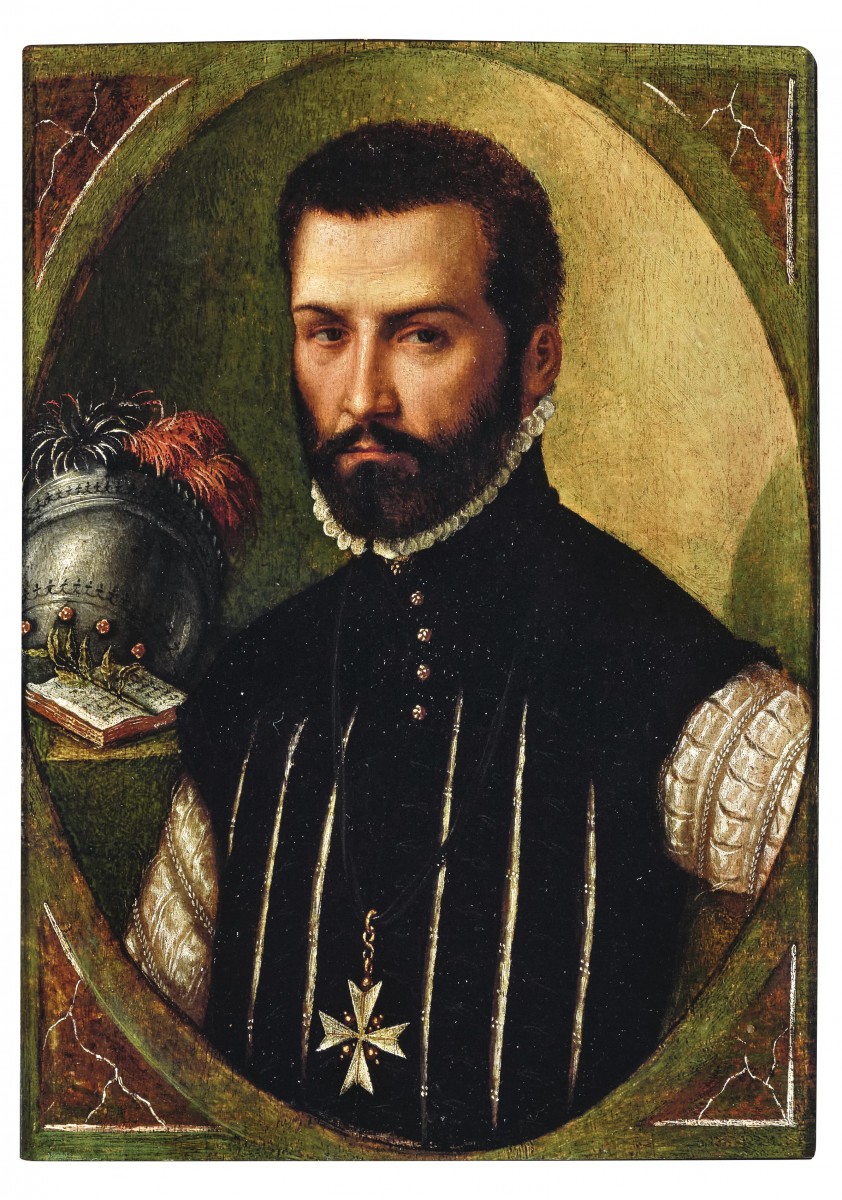
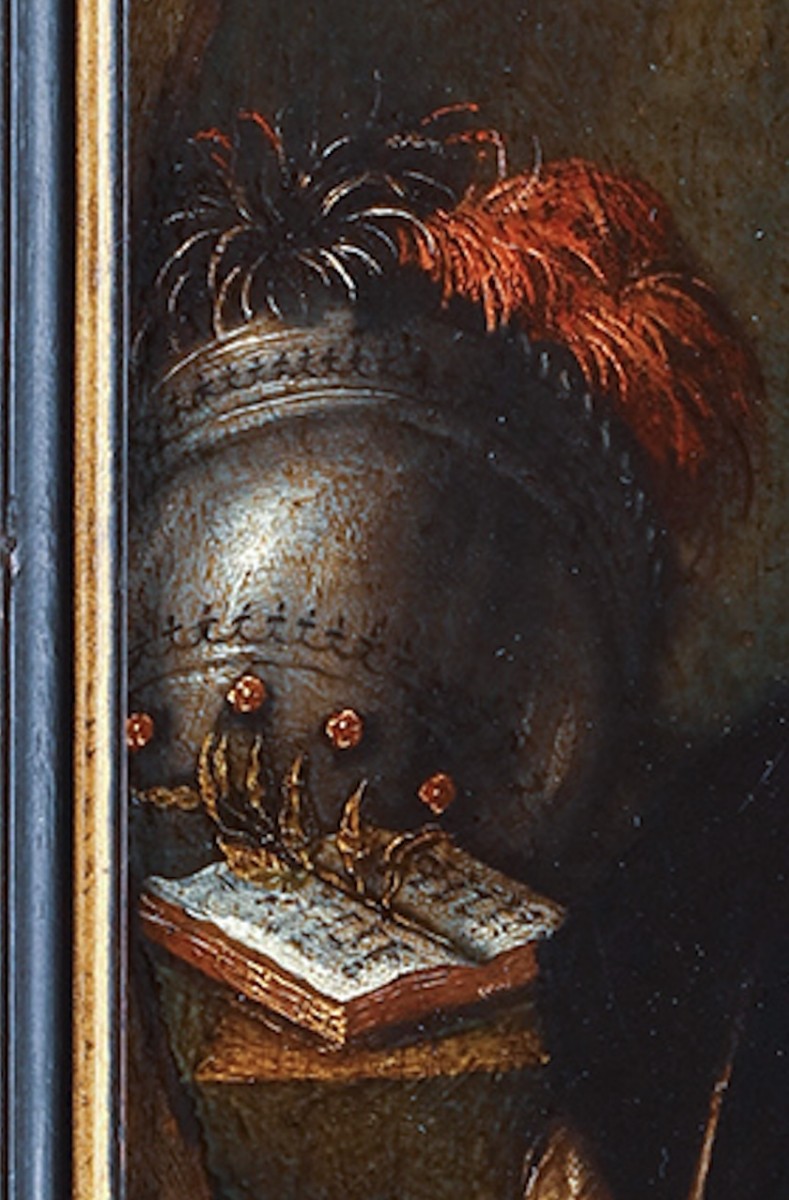
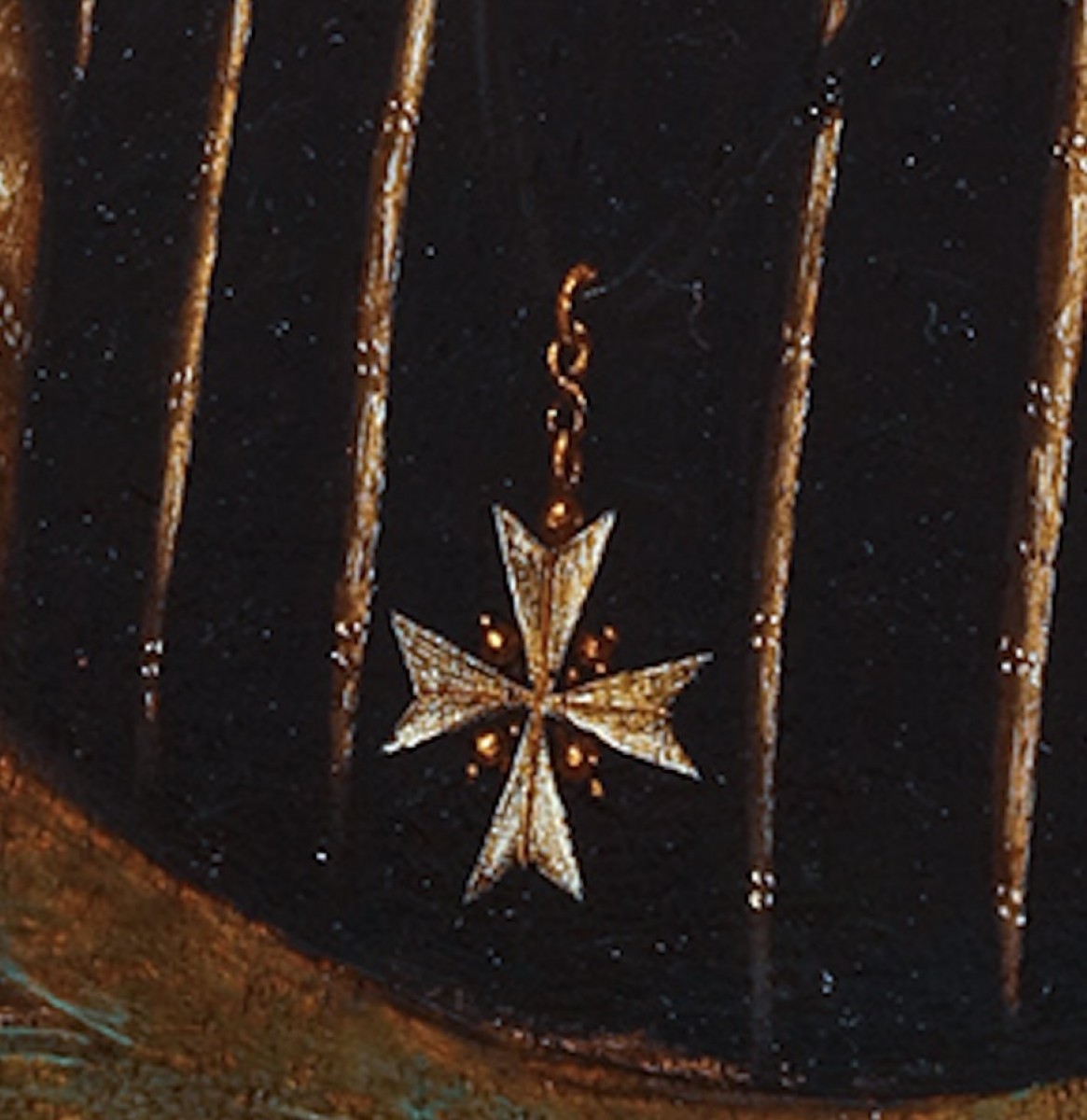
A portrait of a man (Possibly Brocardo Pesico) wearing the Order of the Knights of Malta.
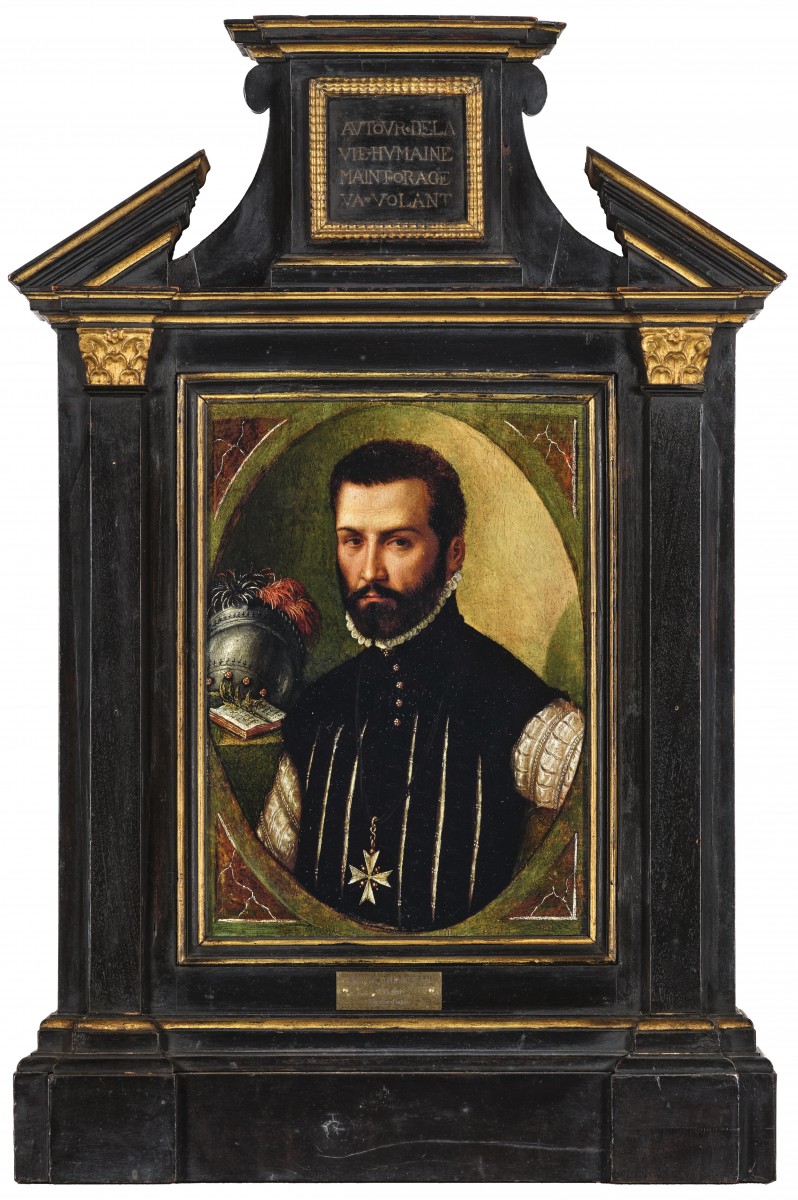
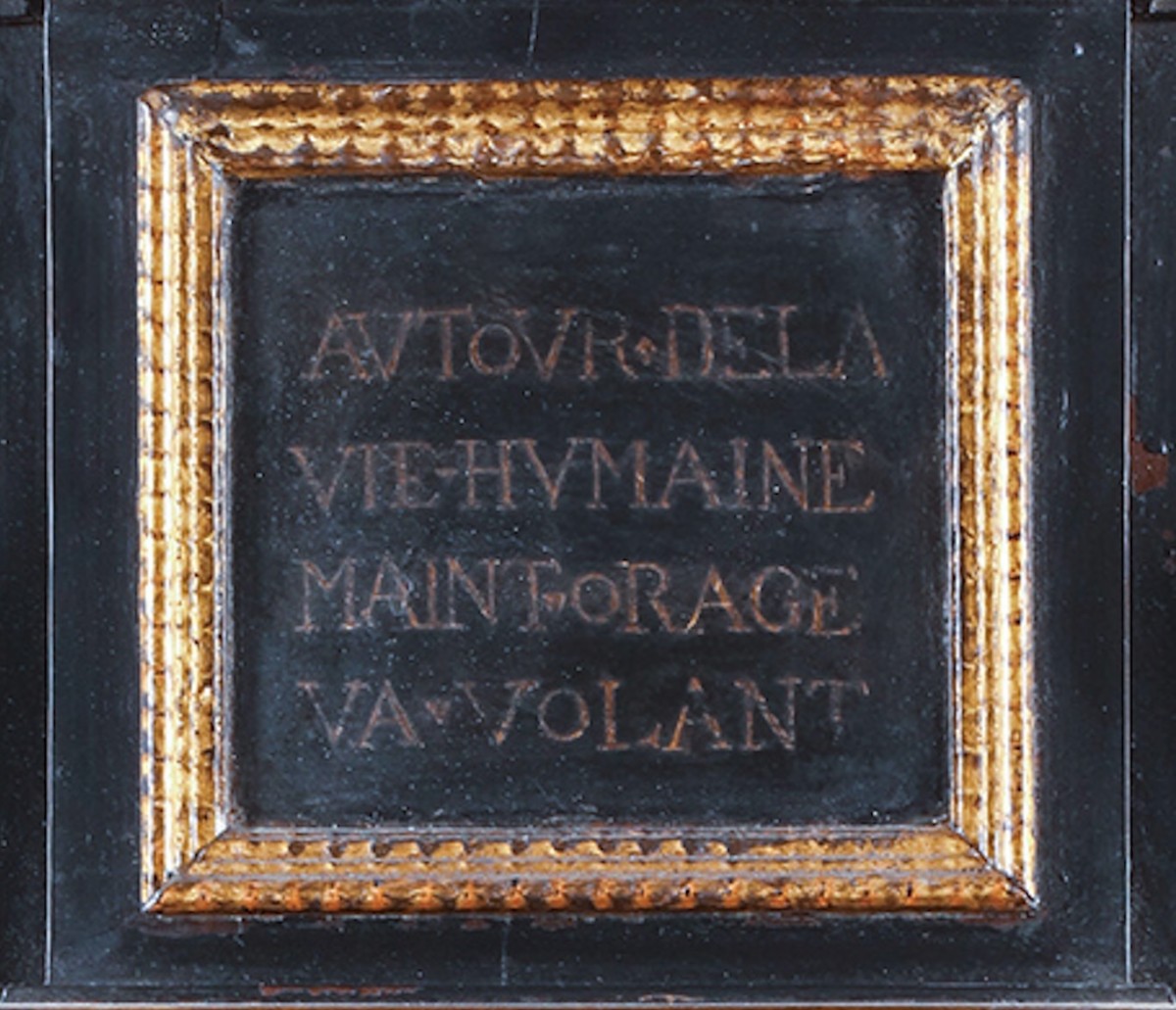
Inscribed on the frame: AVTOVR.DELA/ VIE.HVMAINE/ MAINT.ORAGE/ VA.VOLANT
Oil on canvas
Dimensions: 29 x 21 cm
Provenance:
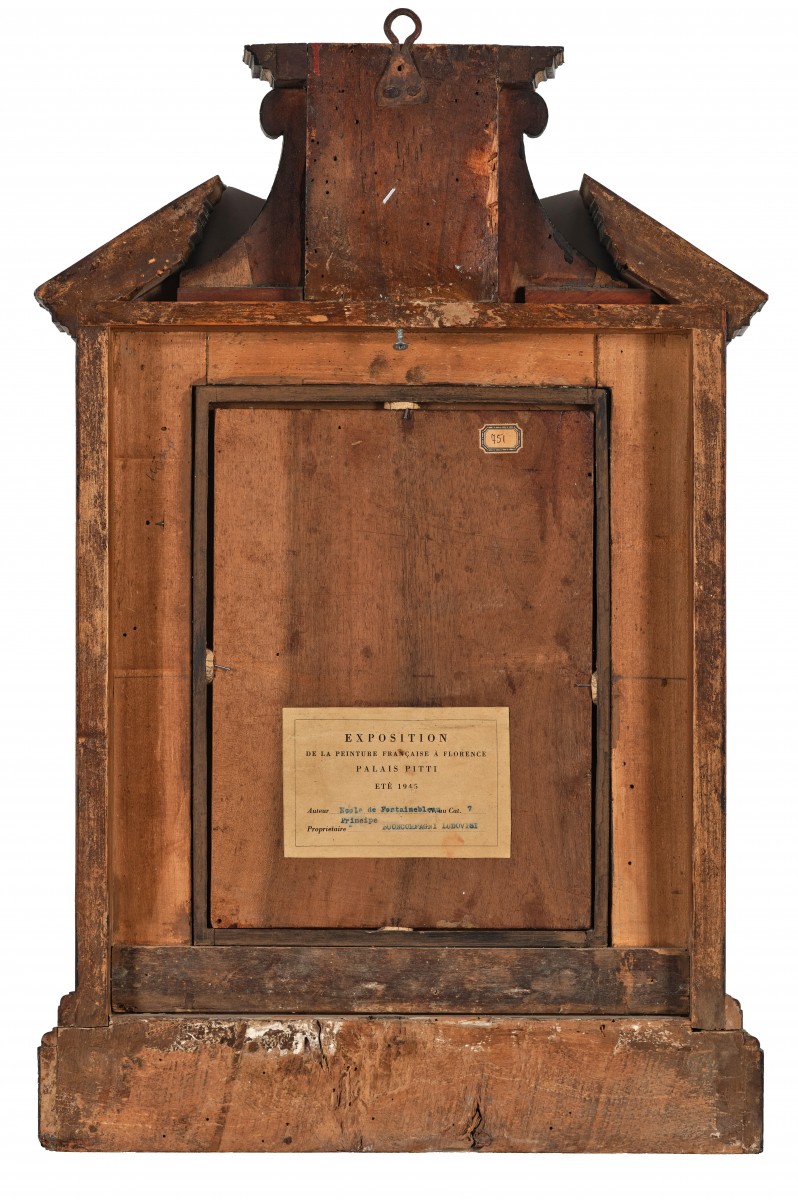
Principe Buoncompagni Ludovisi, Rome (inv. no. 751), at least until 1960 (according to a label on the reverse);
Galleria d’arte di Palazzo Thiene, Vicenza, Collezione della Banca Popolare di Vicenza, probably since the 1960s; deaccessioned by the Banca.
Literature:
B. Berenson, La peinture française à Florence, exhibition catalogue, Florence 1945, p. 32, cat. no. 7, plate XII (as School of Fontainebleau);
P. Gaudioso, in: La Pinacoteca di Palazzo Thiene, Collezione della Banca Popolare di Vicenza, ed. by F. Rigon, Milan 2001, p. 86, no. 6A (as School of Fontainebleau)
We are grateful to Marco Tanzi for suggesting the attribution of the present painting on the basis of photographs and for his help in cataloguing.
Marco Tanzi situates this panel firmly within the Northern Italian pictorial tradition, linking it in particular to Giulio Campi. Together with his brothers Antonio and Vincenzo, Giulio Campi played a central role in the development of the Cremonese school of painting during the mid-sixteenth century. Tanzi dates the present work to circa 1550–1560, when the artist’s production was dominated by important commissions for wall paintings executed in collaboration with his brother Antonio, which have given rise to complex attribution issues in distinguishing the work of the two artists.
The present work bears close affinities to Giulio Campi’s Portrait of a Musician in the Uffizi Galleries (inv. 1890, no. 958), sharing a number of characteristic features of the artist: the long, straight nose; the particularly dark tonality of beard and hair, partially veiling the small ear; and the narrow lips. A portrait of Giulio Campi’s brother Antonio (formerly in London, Trinity Fine Art) shows a similar composition to the present work and can be dated to the same period, around 1550–1560. In this painting as well, the bust is rendered using a trompe-l’œil technique within a painted oval frame, with light streaming in. This further attests to the Campi brothers’ familiarity with such small-format, representative portraits.
From circa 1525, painting in Cremona underwent a stylistic shift towards the School of Fontainebleau, strongly influenced by an enthusiasm for Francesco Primaticcio and initiated by Giulio Campi, whose younger brother Antonio followed him by the middle of the century. Giulio’s only signed work is the portrait of his father Galeazzo in the Gallerie degli Uffizi (inv. no. 1890, n. 1628). Other portraits attributed to the artist include the so-called Portrait of Ottavio Farnese in the Musei Civici di Palazzo Farnese in Piacenza (inv. Napoli no. 28-104), the Portrait of a Man with a Red Girdle in the Royal Collection (inv. no. RCIN 402625), and the Portrait of an elderly nobleman, formerly in the Casa Gaslini in Milan, which was sold as lot 22 at Millon on 27 September 2023 (see A. Perotti, Pittori Campi da Cremona, Milan 1932, p.18, fig. 10).
Marco Tanzi suggests that the sitter in the present portrait may be identified as arguably the most distinguished Cremonese Knight of Malta of the sixteenth century, Count Brocardo (or Broccardo) Persico (1520–1571). He appears as a donor in a Crucifixion by Antonio Campi, depicted in armour bearing the insignia of the Order of Malta, though rendered in an idealised manner. The painting is today conserved in the Church of San Michele, though it was originally in the Persico Chapel of the destroyed Basilica of San Domenico.
The austere black architectural frame, elegantly gilded, is unquestionably linked to France. It bears an inscription taken from an ode by Pierre de Ronsard (1524–1585), which was dedicated to François de Bourbon, Comte d’Enghien (1519–1546) and published in 1555: La victoire de François de Bourbon, Comte d’Anguien, à Cerizoles: ‘Autour de la vie humaine / Maint orage va volant’ (see P. de Ronsard, Les Quatre premiers livres des Odes de Pierre de Ronsard, Paris 1555, p. 8v; we are grateful to Filip Moerman for identifying the poem). As Marco Tanzi observes, it would be highly unusual for a poem celebrating a French prince’s victory at the Battle of Ceresole during the Italian Wars against an imperial Spanish army to serve simultaneously as a motto and decorative element for a portrait of a nobleman loyal to the pro-Spanish Habsburg cause. Moreover, François de Bourbon was never a knight of the Order of Malta.
Delevery information :
After reception of payment we can box and ship our items all over the world. Estimates of this service can be provided.