Offered by Jan Muller
REQUEST INFORMATION

ERASMUS QUELLINUS and workshop
1607 - 1678
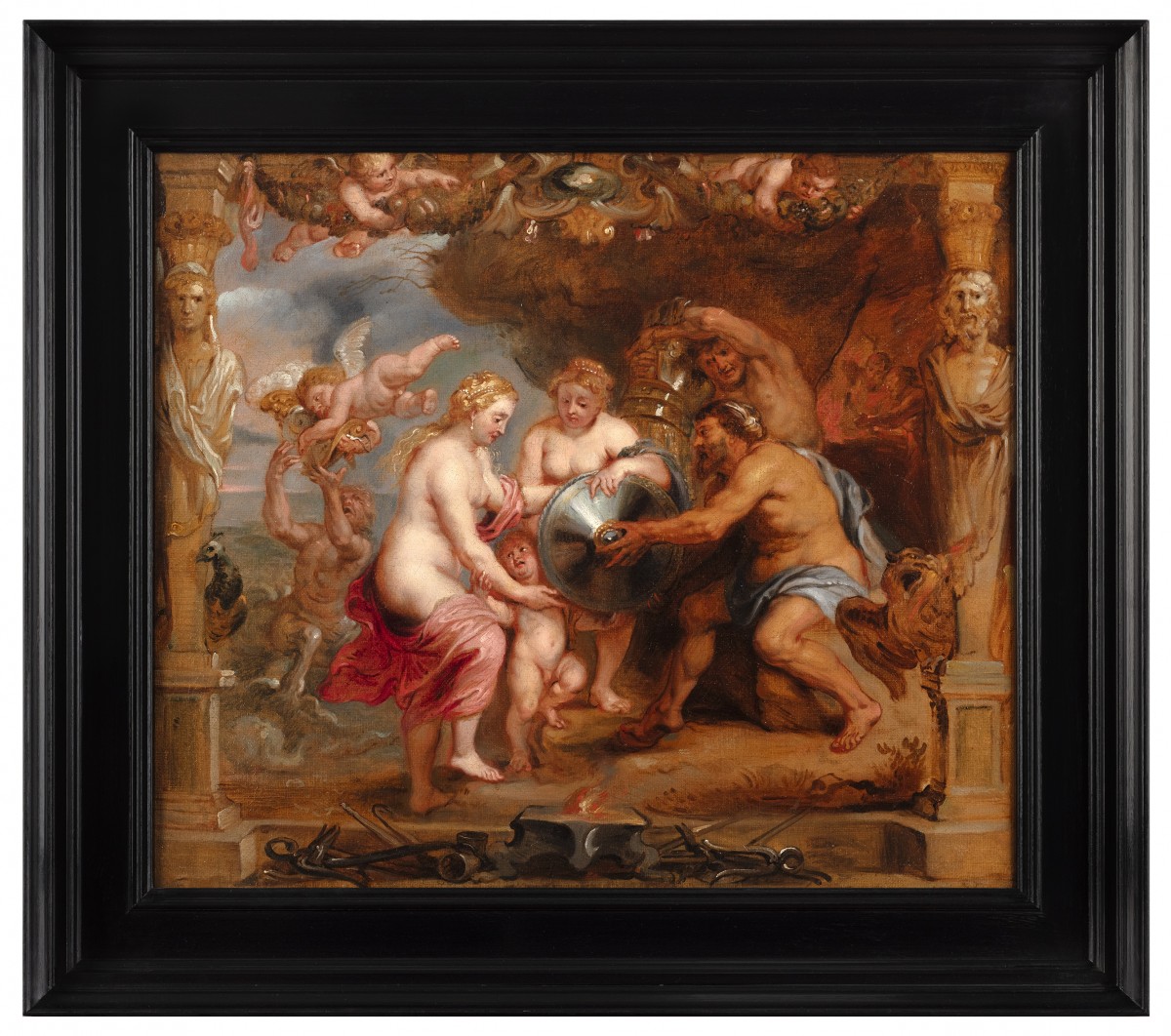
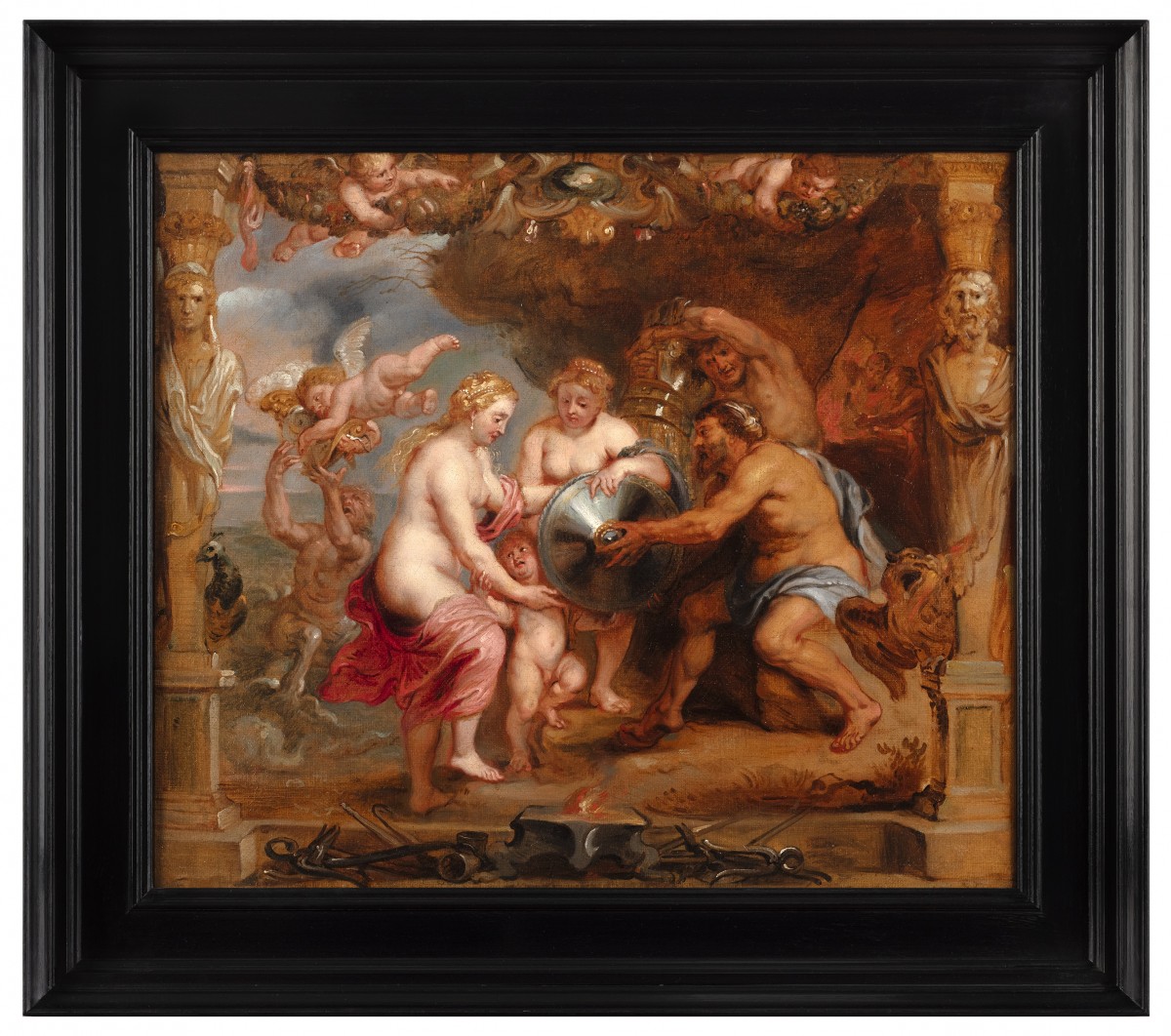
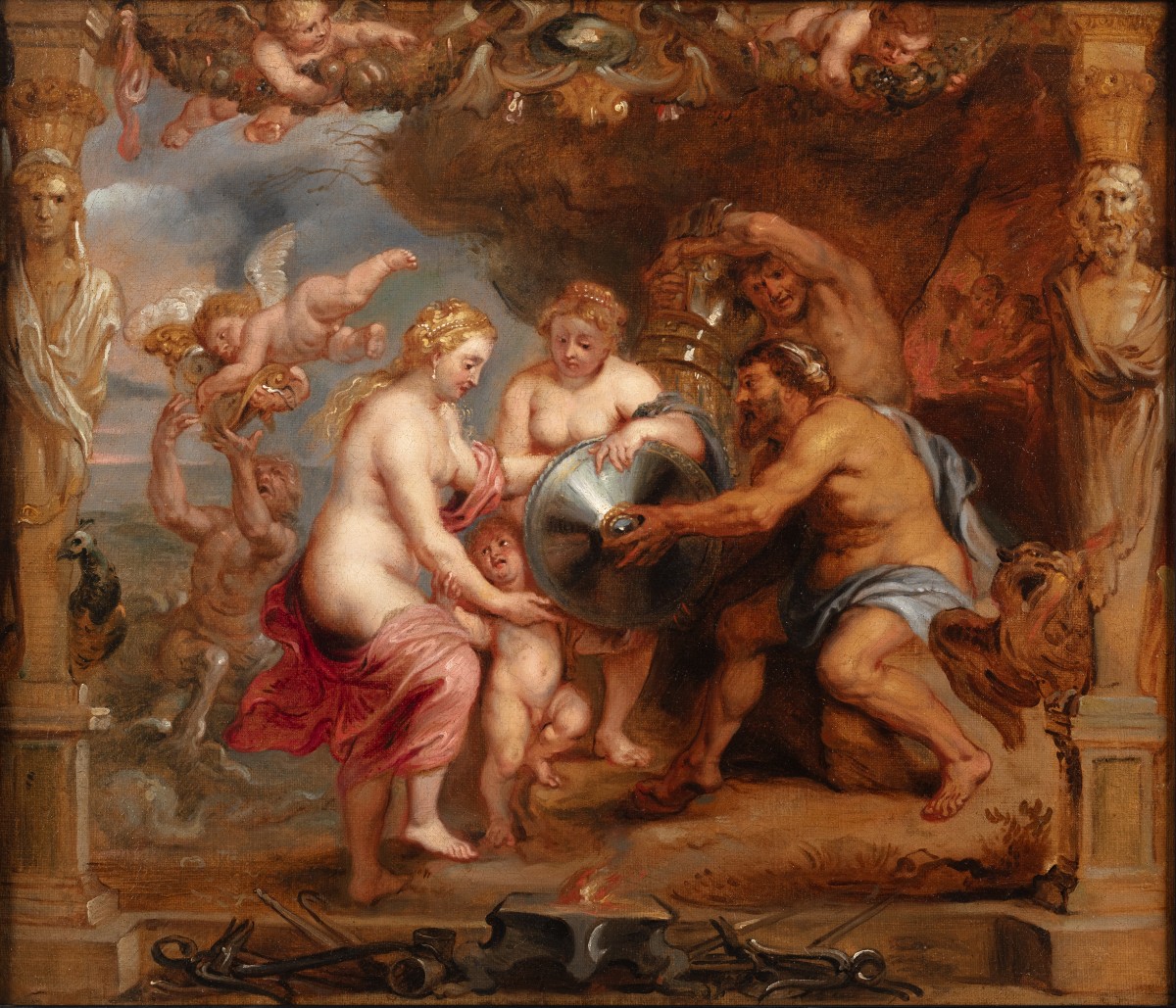
“Thétys receives Achilles’ armour from Vulcan”
Oil on canvas
Dimensions: 45 x 53 cm, 58 x 65 cm (framed)
Comes with a certificate by dr. Jean-Pierre De Bruyn.
Provenance:
Collection of Duke Roger de Bauffremont (and Prince of Condé)
Collection François Nieuwenhuys (1881)
Literature: Haverkamp Begemann p. 114 4a
THE ARTIST
Erasmus Quellinus II was one of the most important Flemish painters of the 17th century and a leading figure in Antwerp’s artistic life following the death of Rubens. Trained by his father and later working closely with Peter Paul Rubens in the 1630s, Quellinus became a prolific painter, draughtsman, engraver, and designer. His output ranged from history paintings and religious compositions to allegories, portraits, battle scenes, and tapestry designs.
Though deeply influenced by Rubens’ dynamic style, Quellinus developed a more classical and sculptural idiom, often informed by philosophical and humanist themes. This blend of grandeur and intellectualism became central to his mature work. He also played a significant role in Antwerp’s public and ceremonial commissions, and was known for his numerous collaborations with other artists and local workshops.
His philosophical education , as noted by his son Jan Erasmus in the margins of Het Gulden Cabinet, further shaped his visual narratives, which frequently reflected classical clarity and compositional balance.
THE ARTWORK
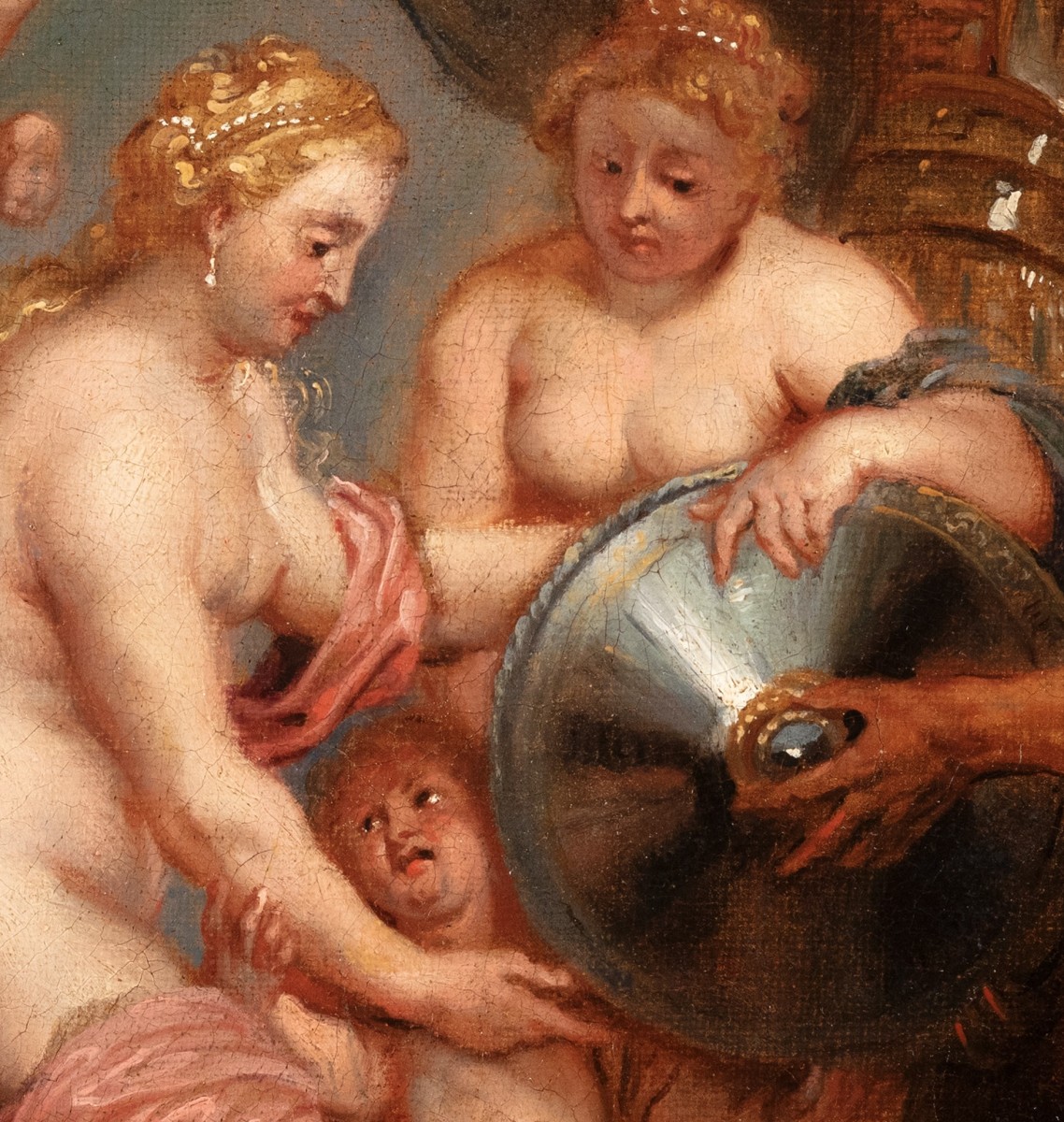
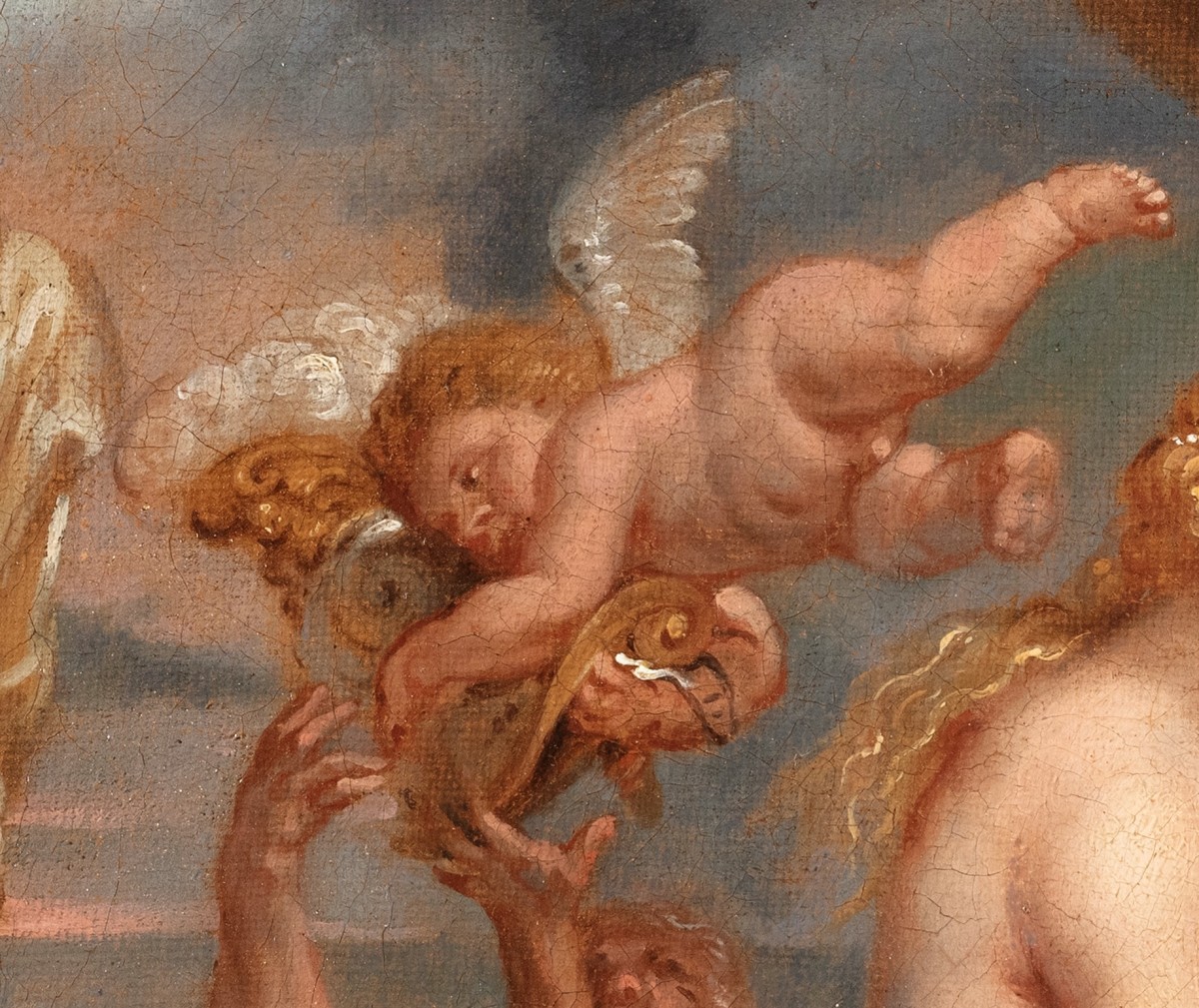
This elegant mythological composition depicts a pivotal scene from the Iliad: the goddess Thetis receives from the god Vulcan (Hephaestus) the newly forged armour destined for her son Achilles. The moment marks Achilles’ return to battle following the death of his beloved companion Patroclus. In the scene, Vulcan presents the hero’s shield, assisted by Charis, his wife, while putti, sea nymphs, and trophies of war surround the figures in a theatrical grotto-like setting.
The composition is very close to Rubens' celebrated treatment of the same subject, particularly the versions now in Pau and Rotterdam. In typical Quellinus fashion, the composition is framed by architectural and sculptural elements, in this case, flanking figures of Zeus (with eagle) and Hera (with peacock), evoking an illusionistic marble niche or altarpiece.
While the central group adheres to Rubensian models in pose and arrangement, the handling of the bodies, the lighter colour palette, and the more restrained sense of movement reflect Quellinus’ distinctive classicising approach.
The scene enjoyed particular popularity in the 17th century, as it allowed painters to combine mythology, divine machinery, and sensuality in one richly symbolic work.
Delevery information :
After reception of payment we can box and ship our items all over the world. Estimates of this service can be provided.