Offered by Jan Muller
REQUEST INFORMATION
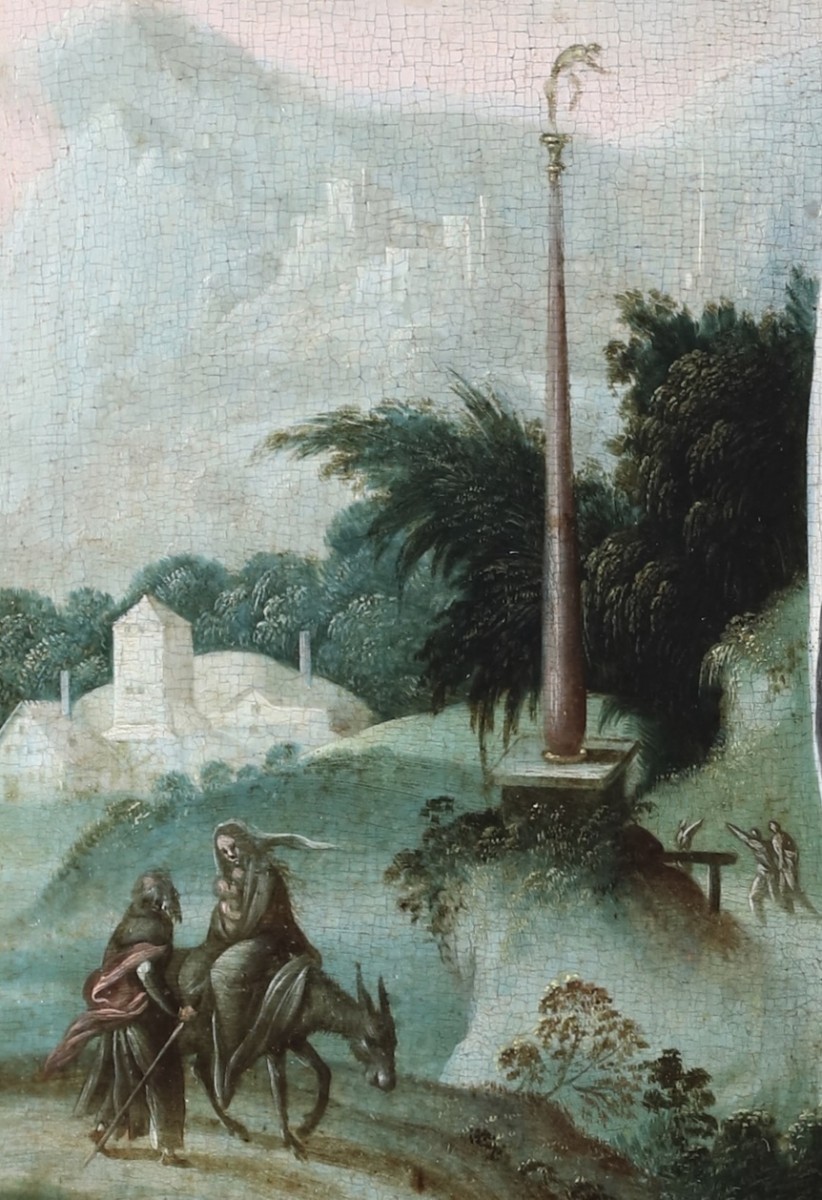
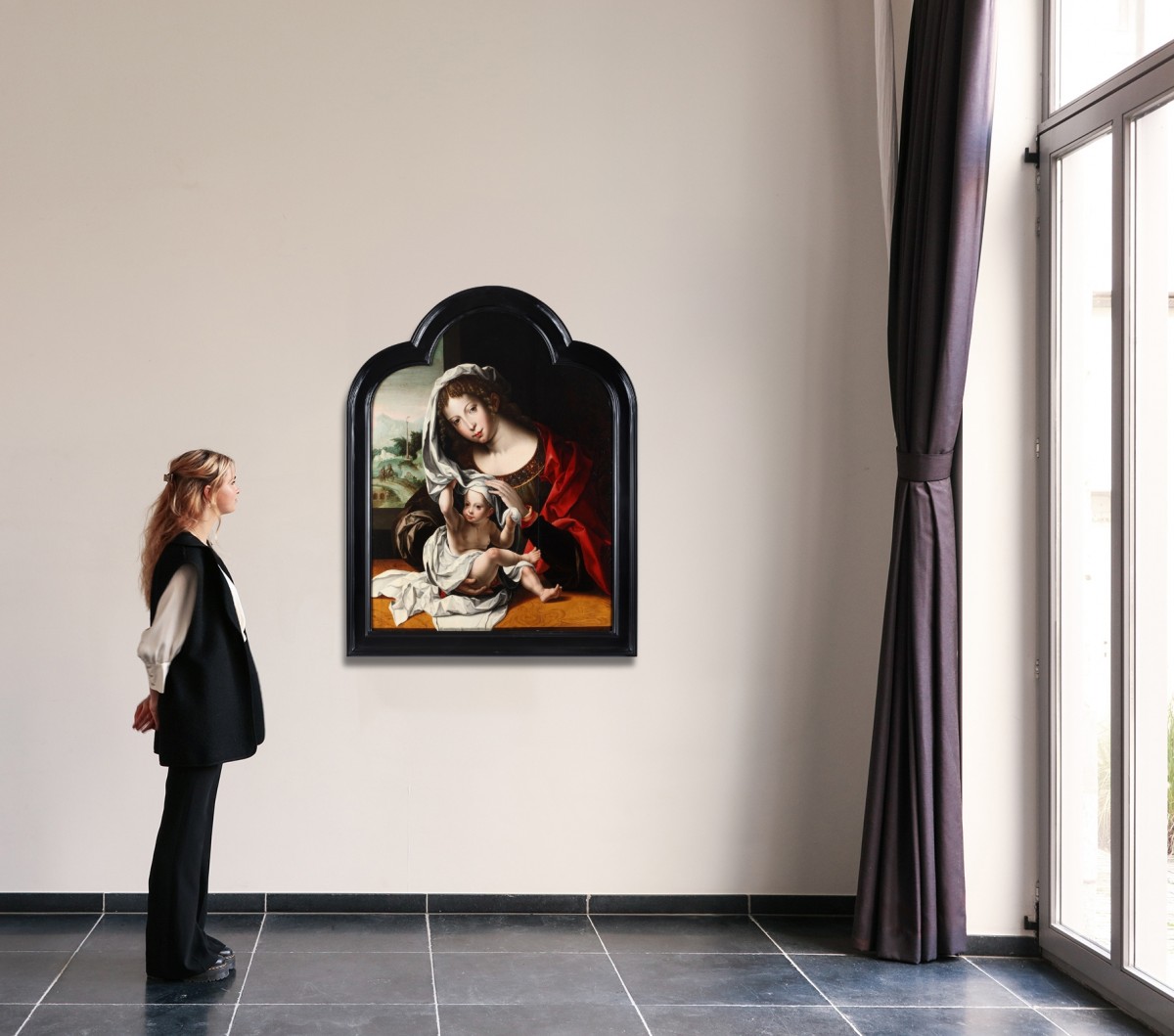

Pauwel Coecke van Aelst
Antwerp, 1530 – 1568/9
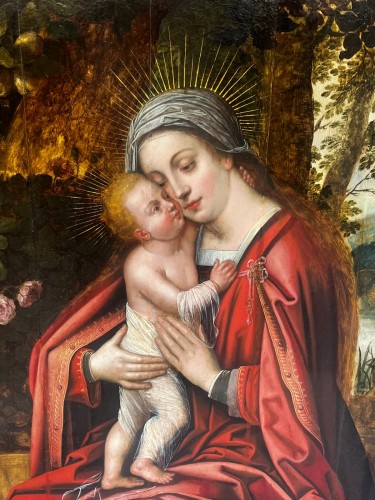
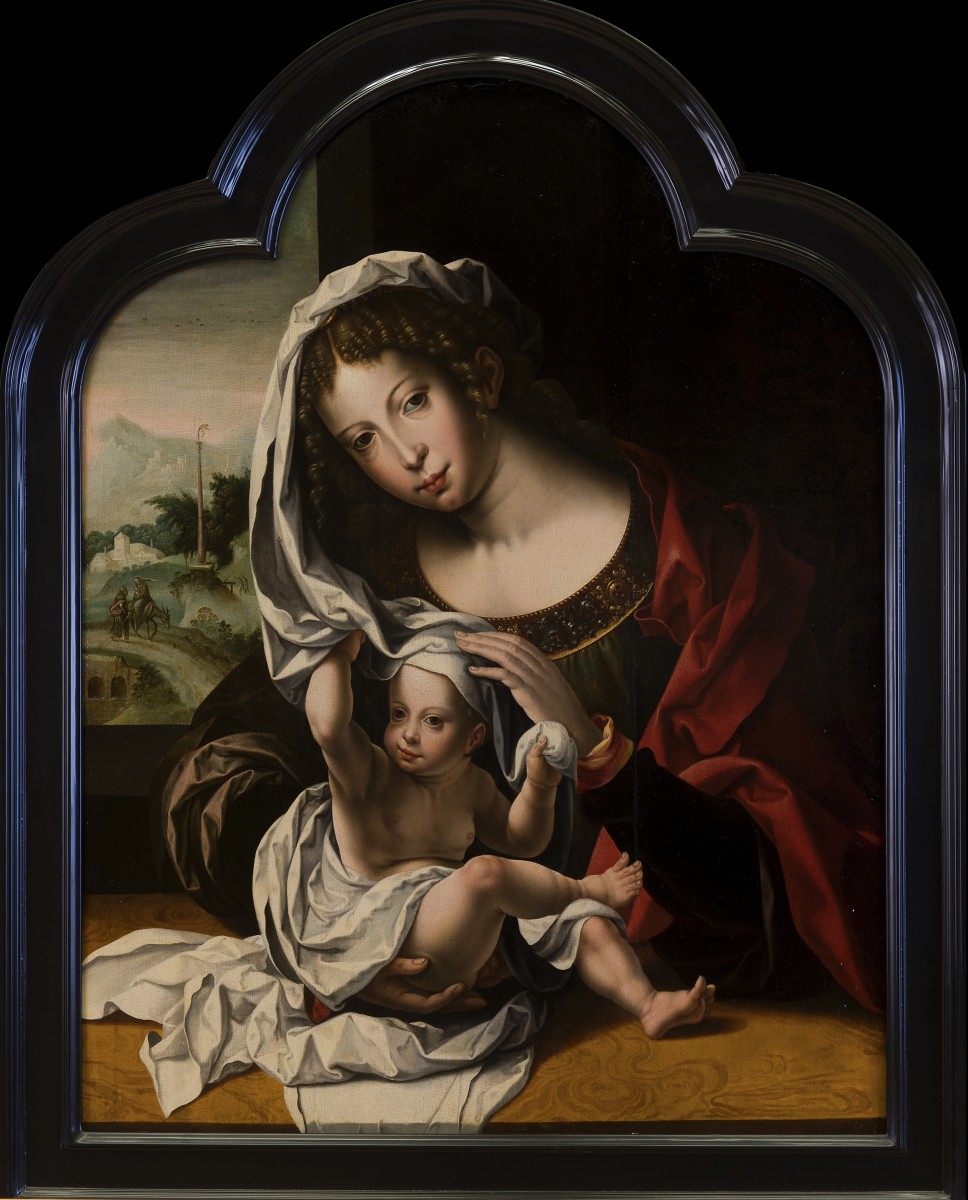
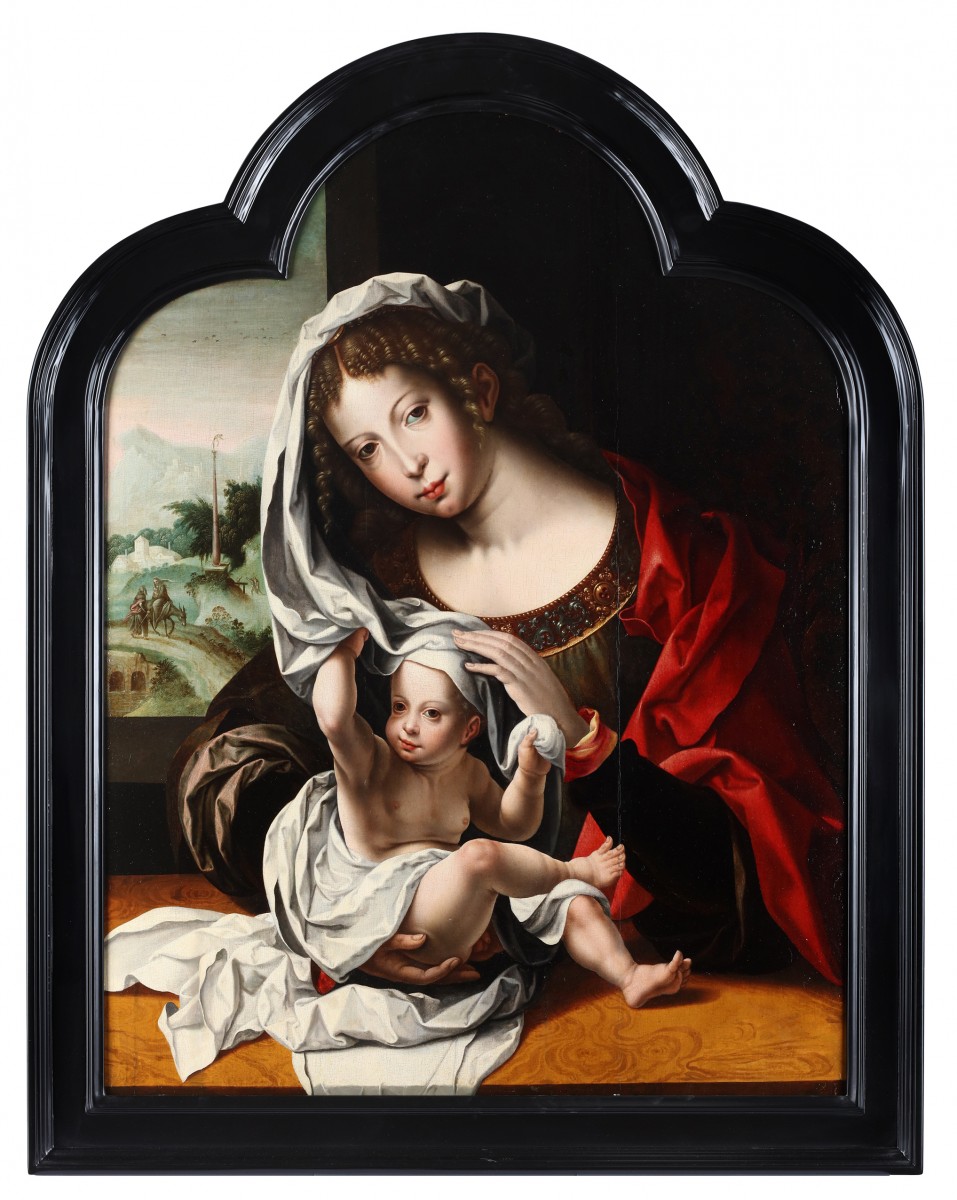
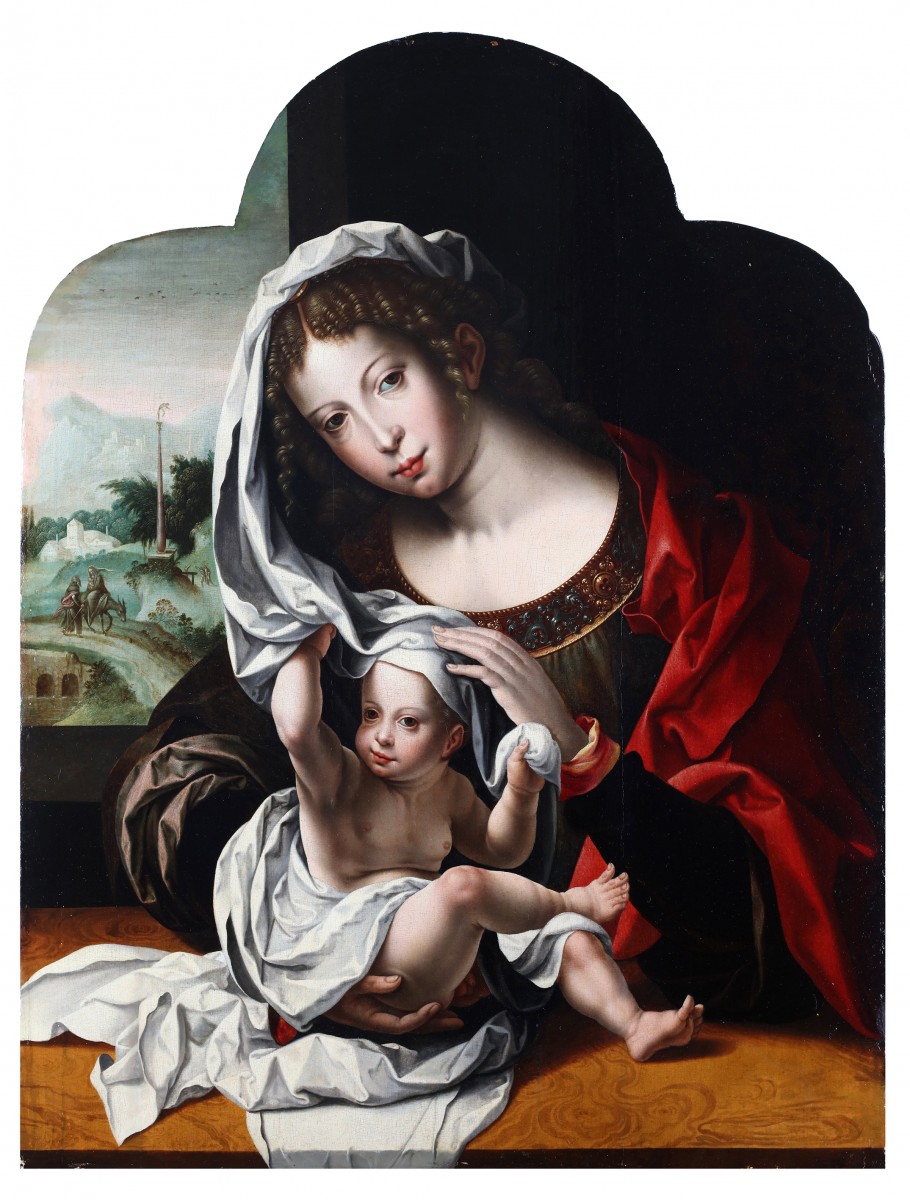
Virgin and Child
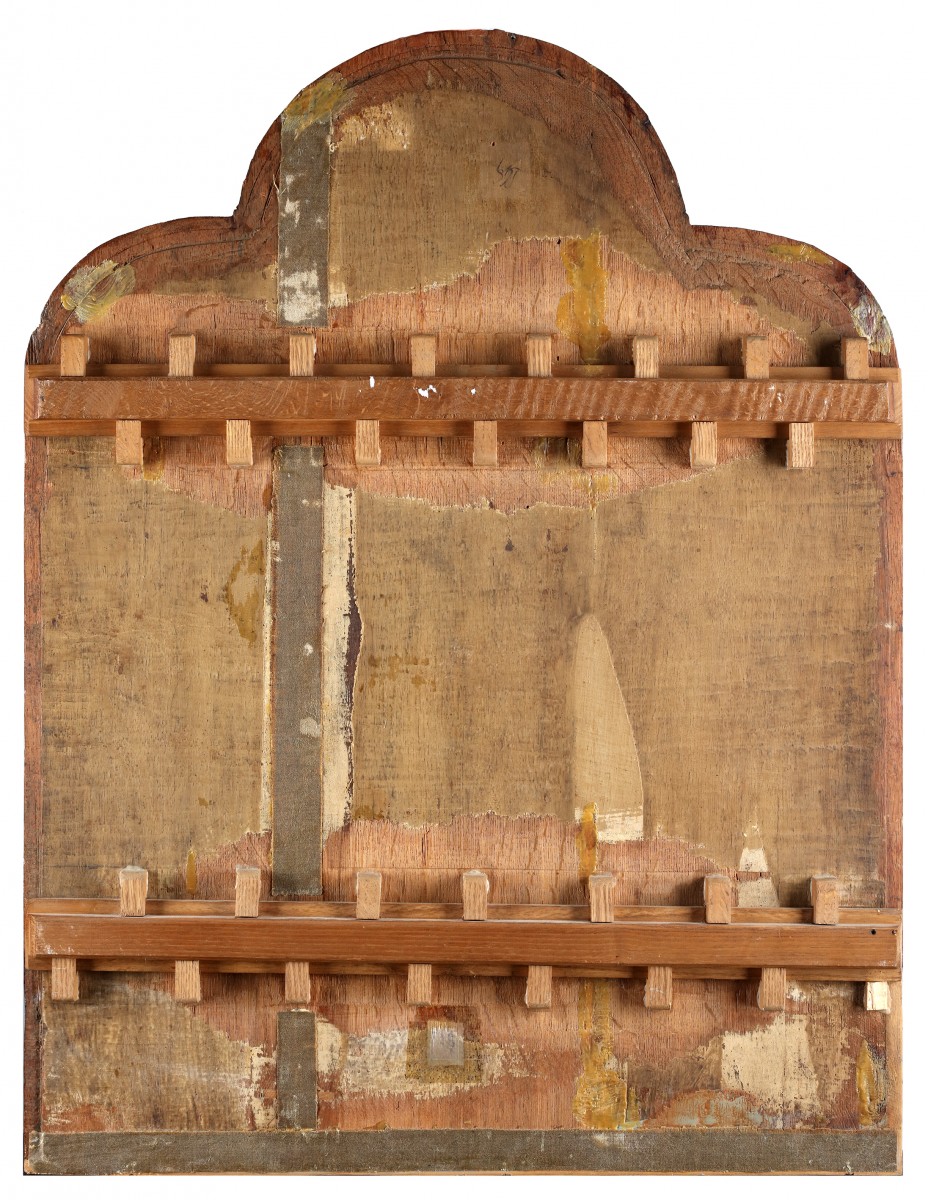
Oil on panel
Approved by Dr. Till-Holger Borchert (Suermondt-Ludwig-Museum), 2025 BRAFA vetting and written confirmation.
A technical report by prof. dr. Maximiliaan Martens (GICAS) is also available.
Dimensions: 112 x 70 cm, 137 x 95 cm (framed)
THE ARTWORK
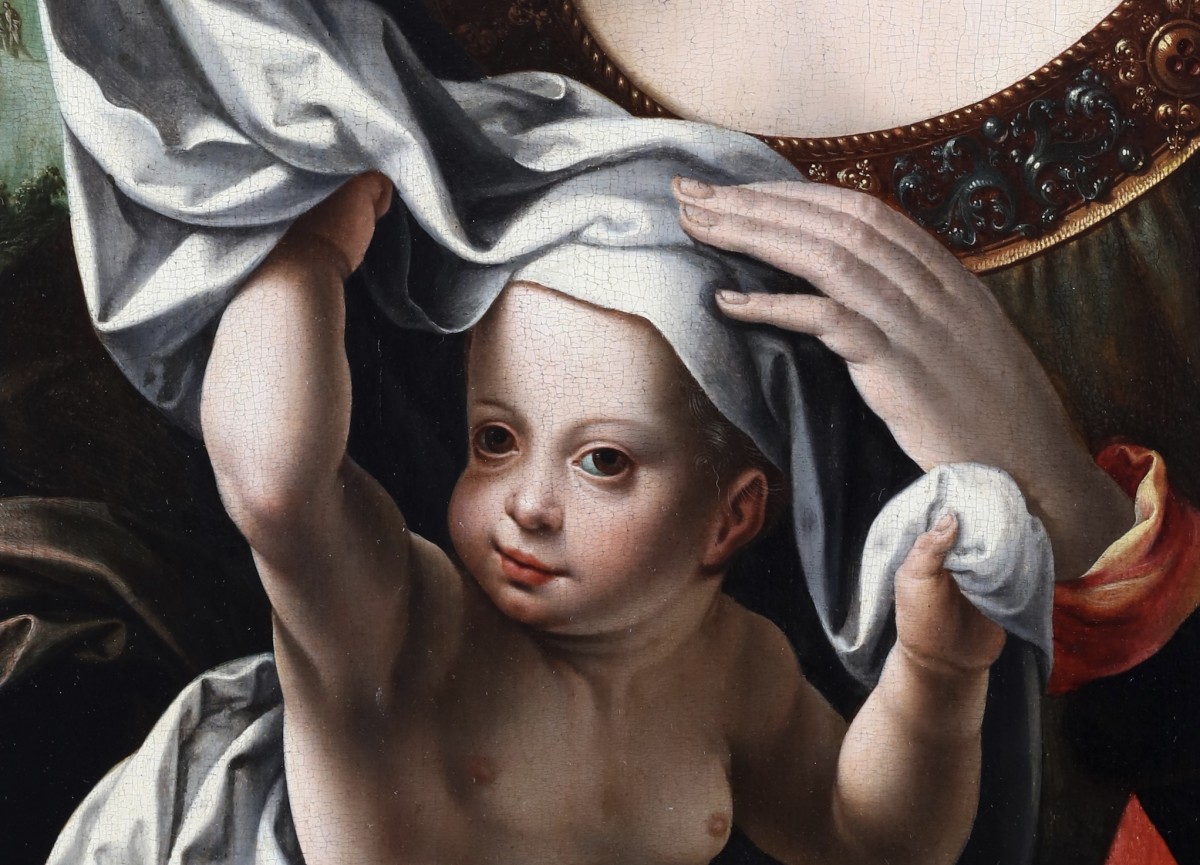
This elegant and tender depiction of the Virgin and Child is part of a celebrated series of compositions derived from a now-lost prototype by Jan Gossaert. As art historian Maryan Ainsworth has noted, no fewer than 73 known variants of this theme exist, often adapted by artists like Pauwel Coecke van Aelst for devotional use across the Low Countries and Spain.
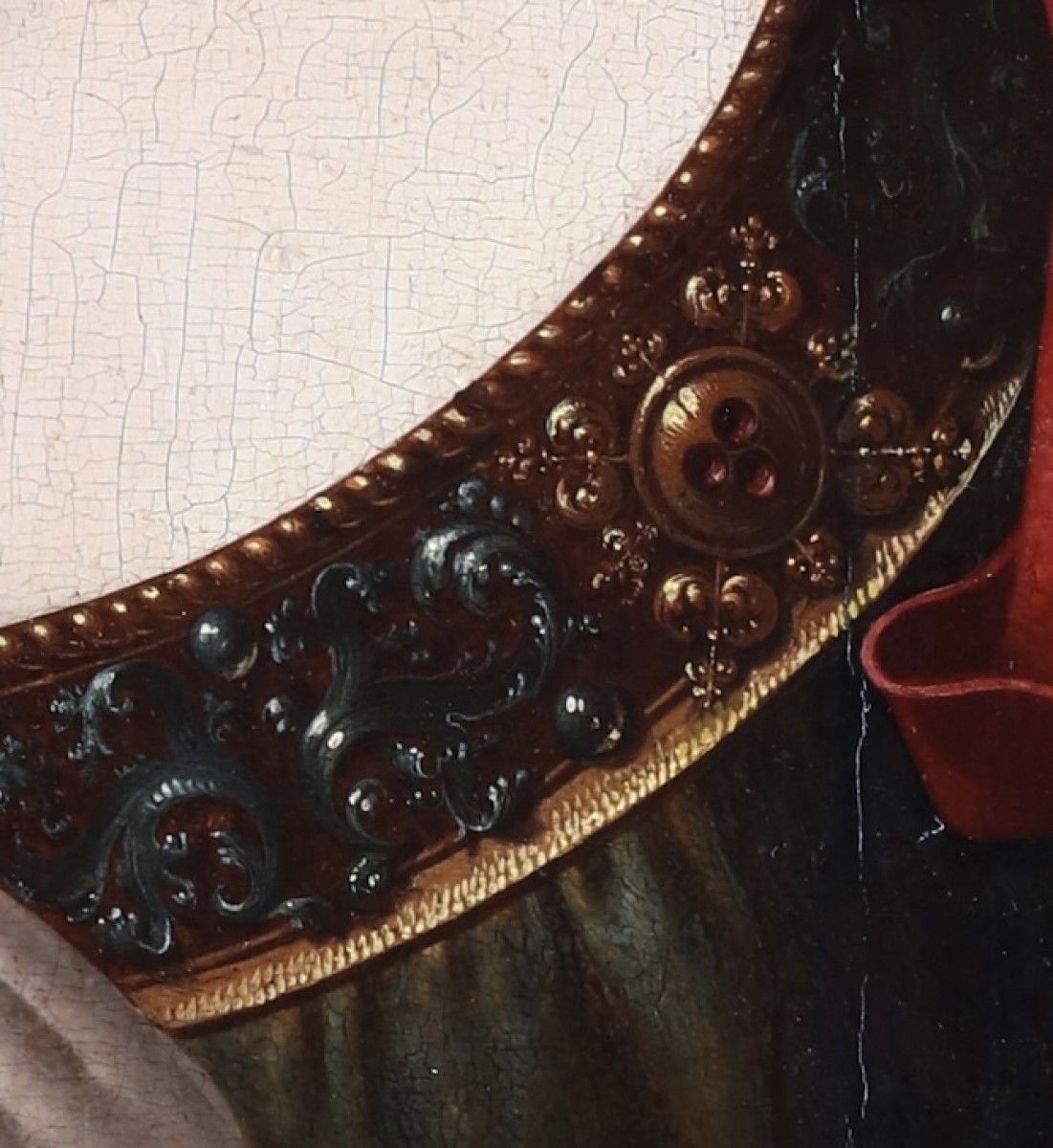
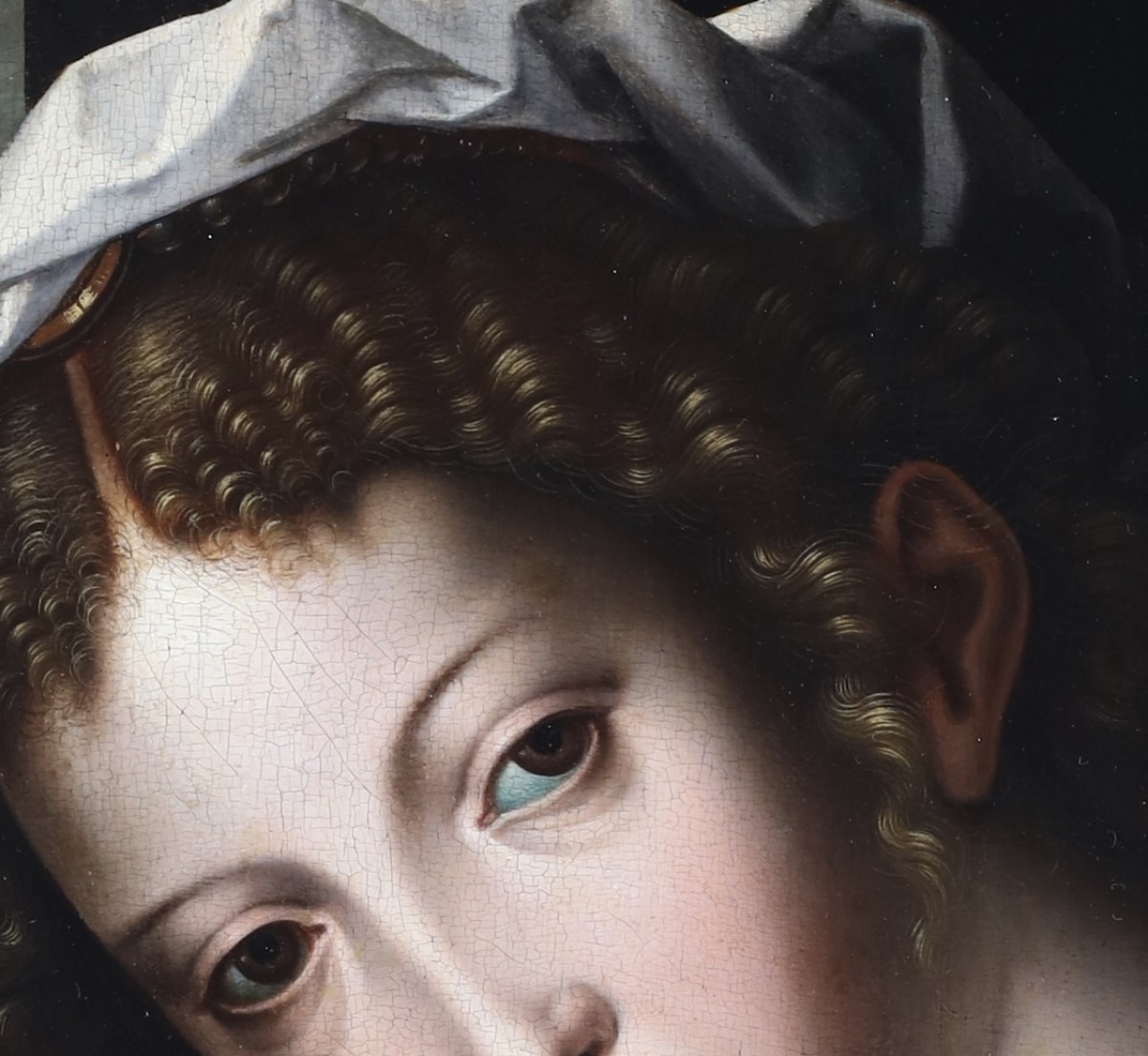
In this version, the Virgin’s features her delicate blush, golden-brown hair, and shimmering pearl headpiece speak to Coecke van Aelst’s gift for humanizing the sacred. Her affectionate gaze and gentle posture wrap the composition in maternal warmth. The Christ Child, nude and playful, tugs at her veil in a moment of innocent joy an inventive motif first seen in this tradition and praised by Ainsworth as “entirely novel” in early 16th-century Flemish art.
The background landscape, rendered with great care, provides narrative depth and symbolic richness, echoing Gossaert’s interest in classical architecture and expansive vistas. The visual clarity, soft luminosity, and tactile rendering of fabric and flesh reveal a sensitive hand and an intimate studio practice hallmarks of Coecke van Aelst’s best devotional work.
THE ARTIST
Pauwel Coecke van Aelst, son of the renowned Pieter Coecke van Aelst (court painter to Emperor Charles V), was a gifted painter in his own right. According to Karel van Mander, Pauwel was particularly known for copying Jan Gossaert’s compositions and for painting refined depictions of the Madonna and Child.
Despite not registering with the Antwerp Guild, Coecke’s estate listed six easels in his attic studio, suggesting he ran a small, efficient workshop focused on high-demand devotional images. His works were widely collected, especially in Spain, where this imagery enjoyed enduring appeal.
Recent expertise by Dr. Till-Holger Borchert, confirmed in writing in 2025, firmly attributes the painting to Pauwel Coecke van Aelst.
Delevery information :
After reception of payment we can box and ship our items all over the world. Estimates of this service can be provided.