Offered by Tobogan Antiques
REQUEST INFORMATION
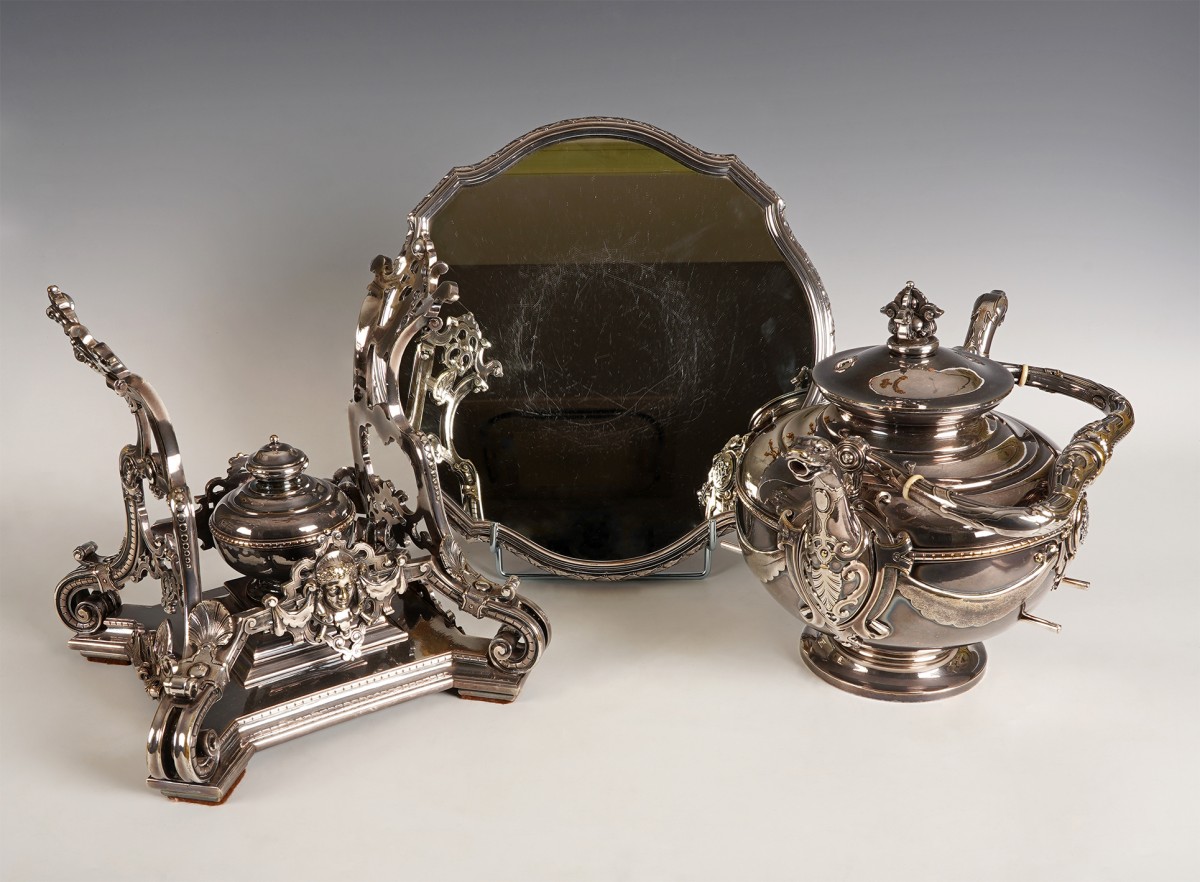

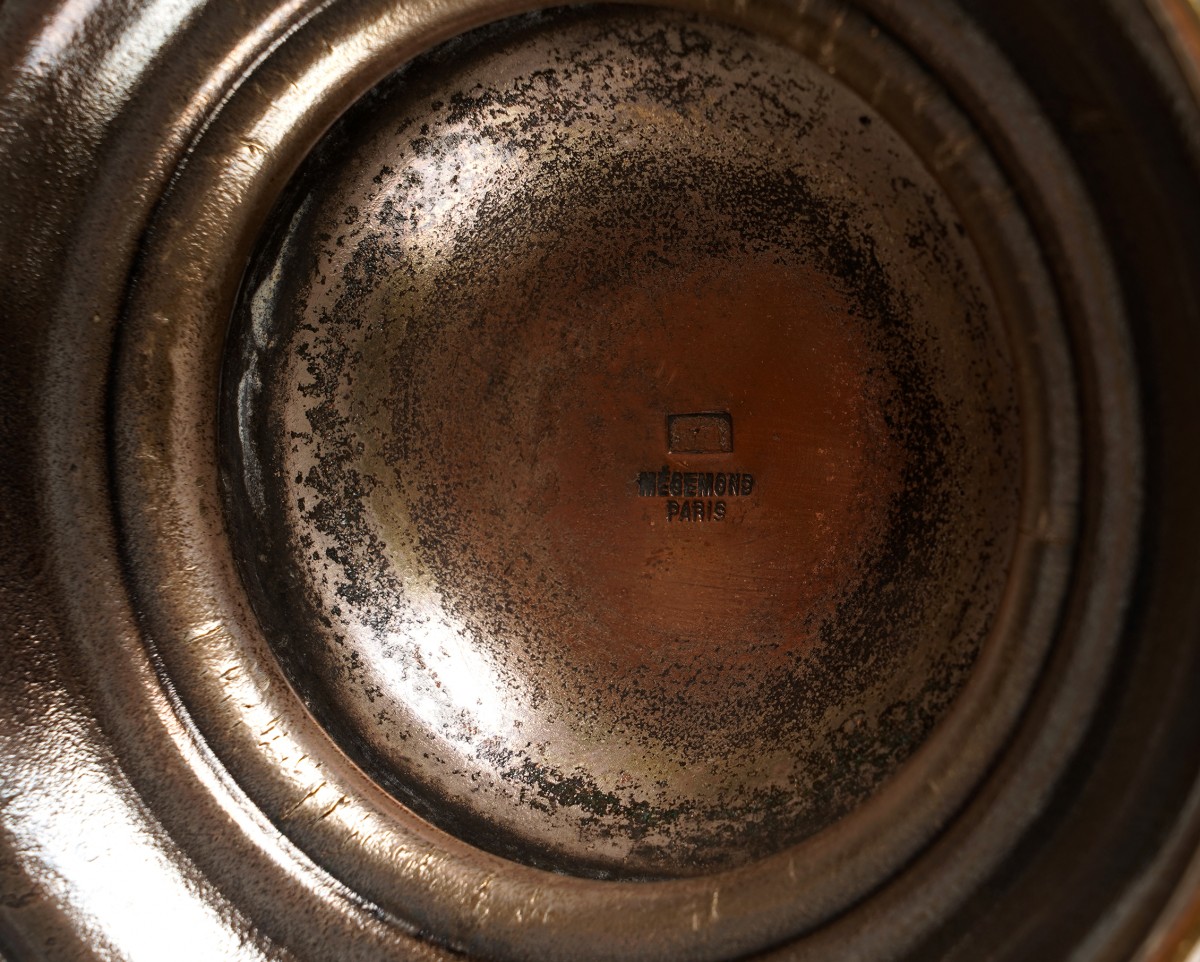
Signed MEGEMOND PARIS
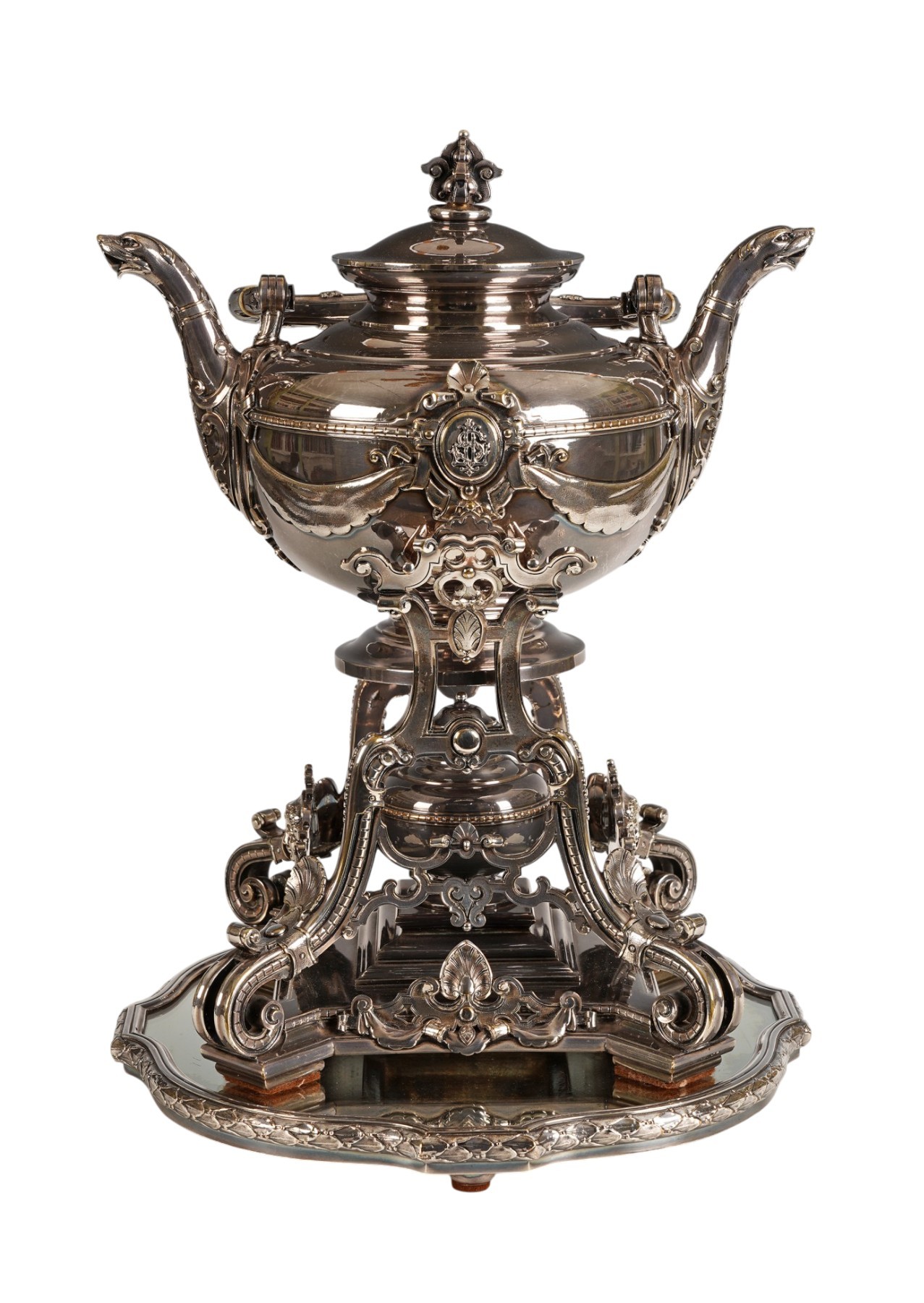
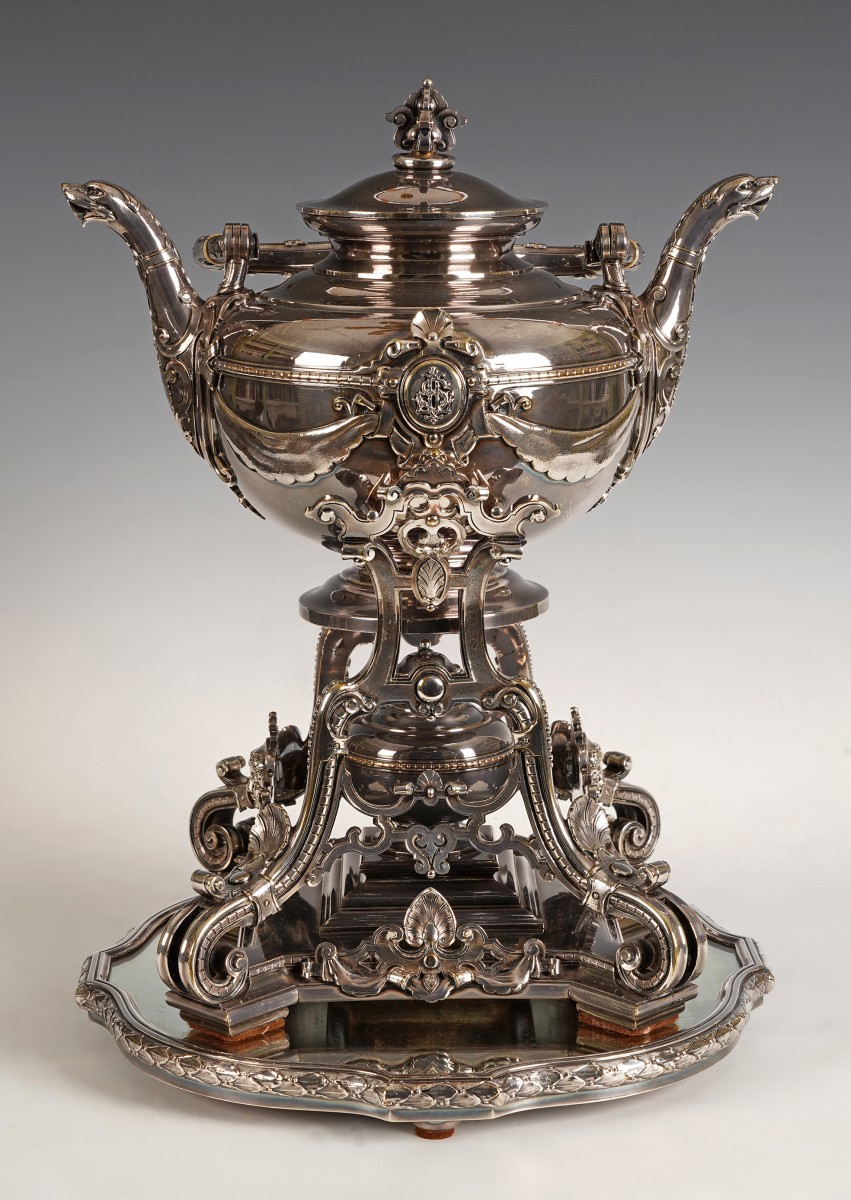
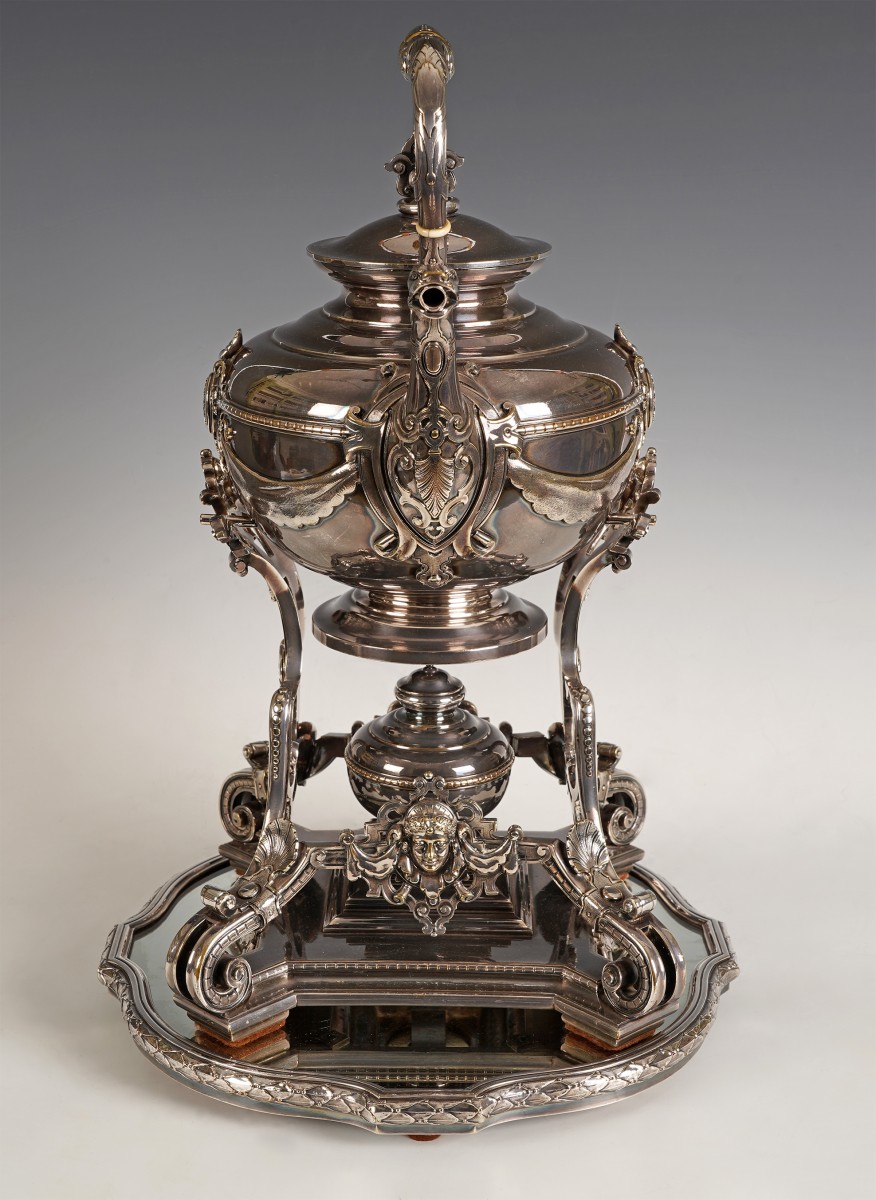
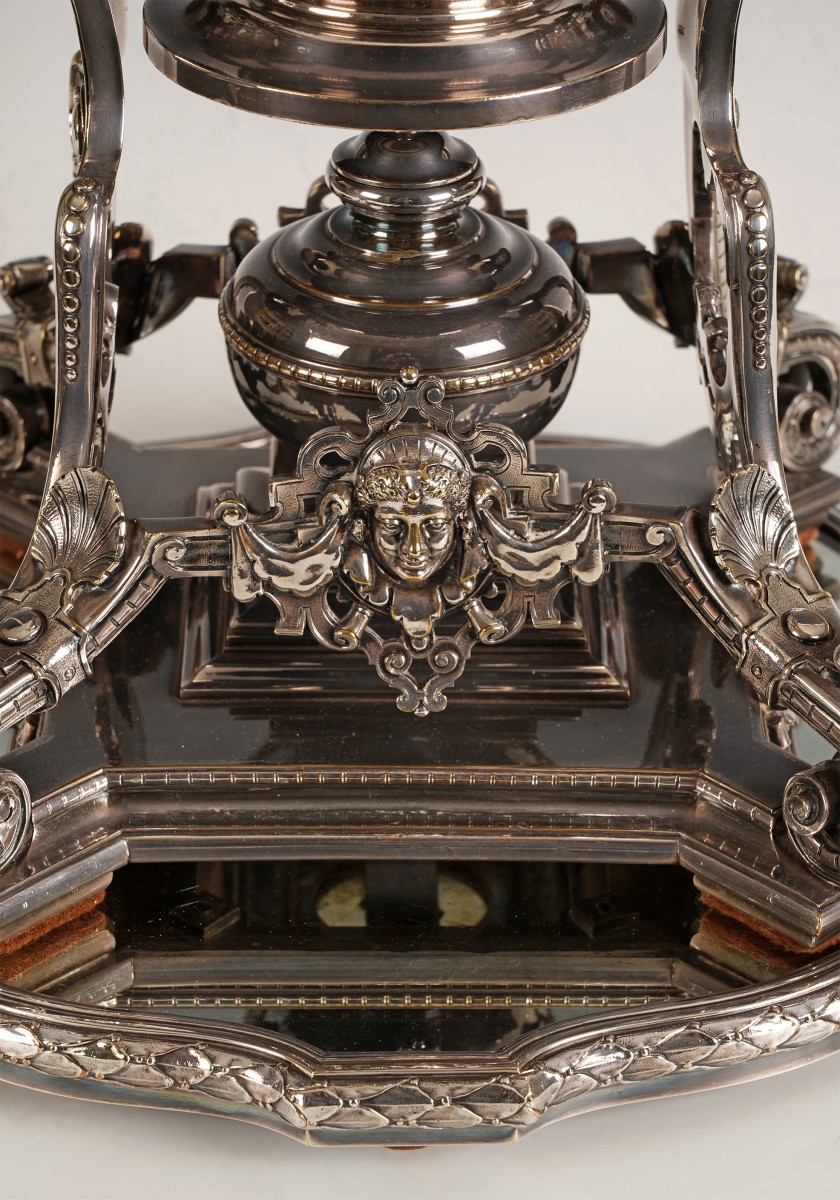
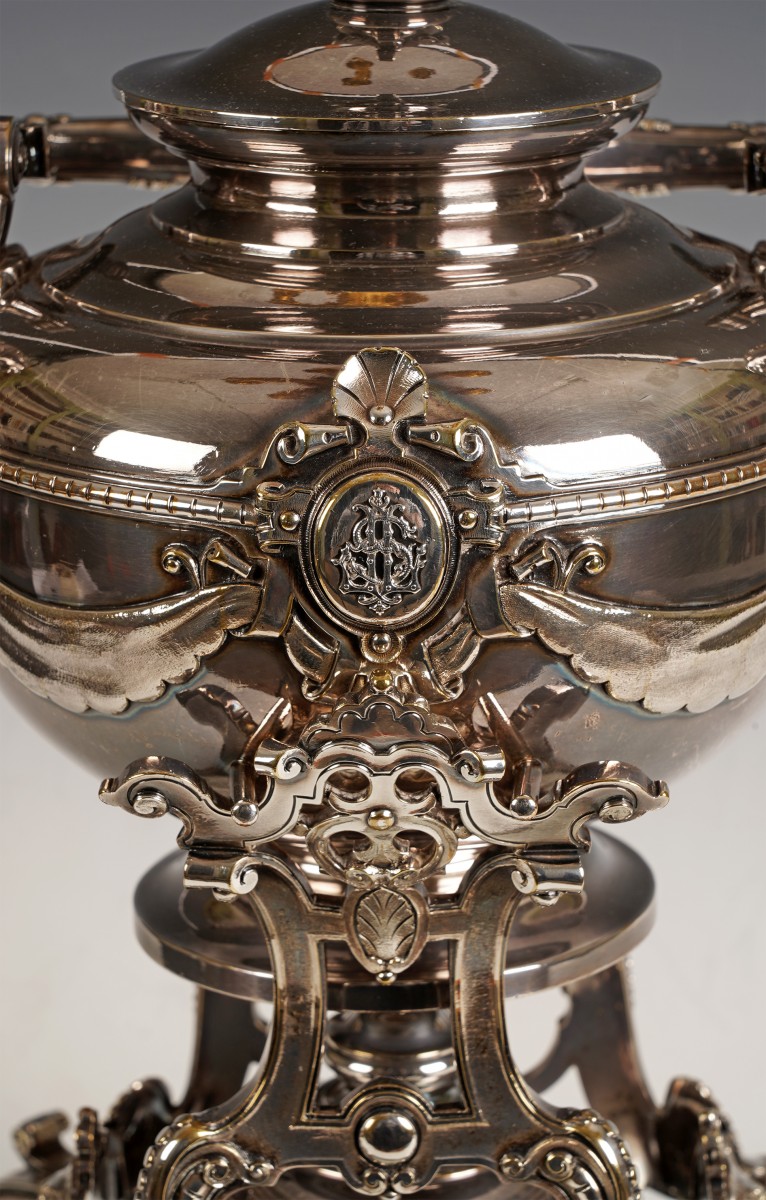
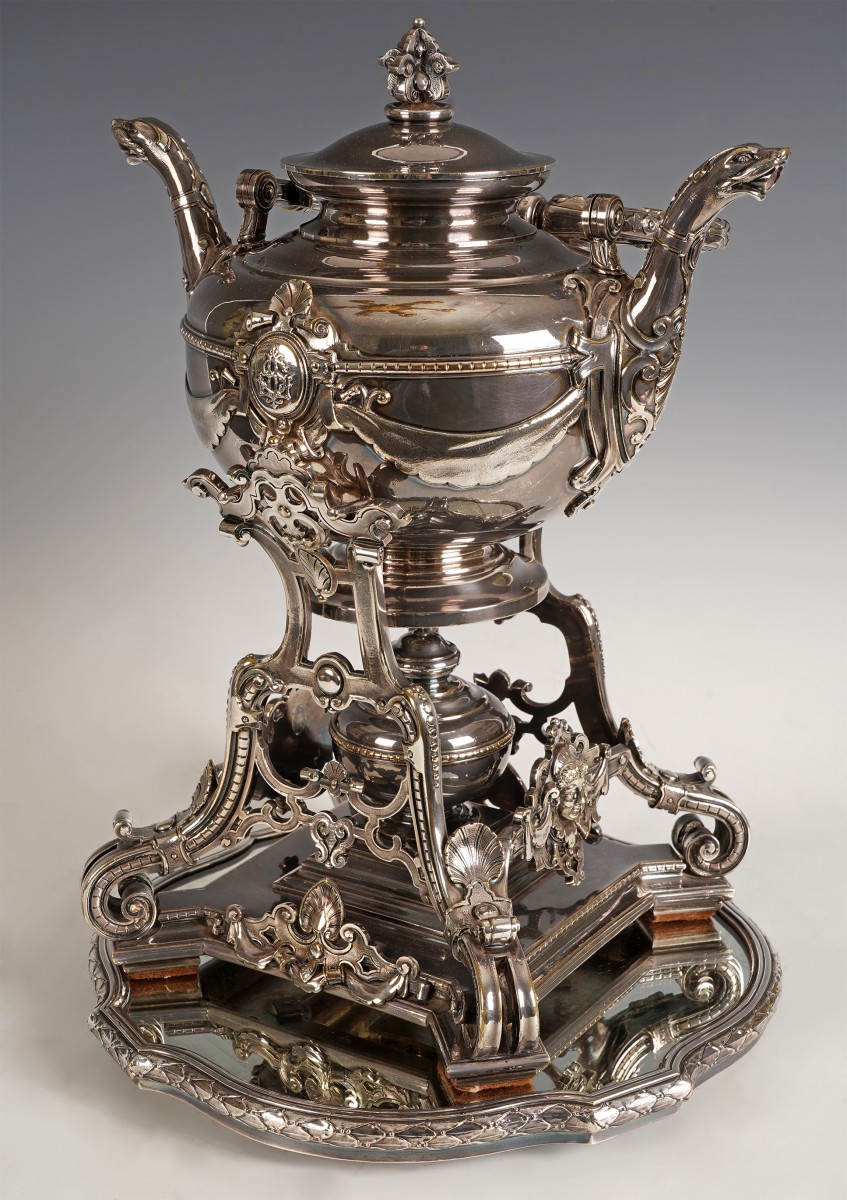
Elegant silver-plated bronze samovar, composed in its upper part of a handled teapot, surmounted by a lid with a finely worked finial, and flanked on either side by zoomorphic spouts, contributing to the visual balance of the piece. The body is adorned with a monogrammed medallion suggesting an aristocratic or bourgeois commission, set within a cartouche with cut edges and linked to the spouts by drapery with scalloped borders. It rests on a stand composed of curved uprights in volute form, connected by stretchers decorated with interlacing motifs and female mascarons, and terminating in scrolls integrated into a faceted tray. Upon this tray, raised on a stepped platform, sits a circular reservoir designed to keep the water hot.
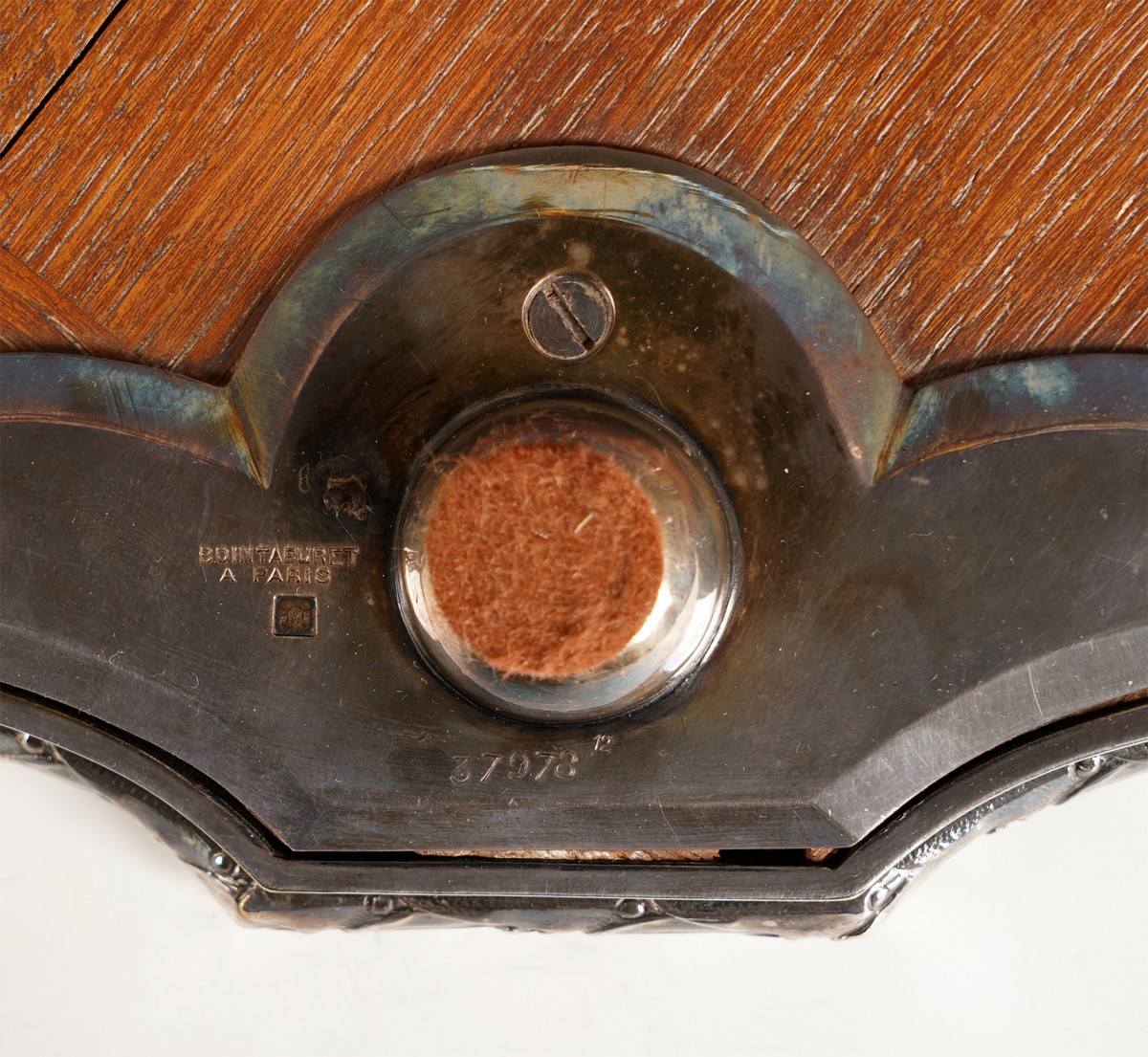
The whole rests on a silver-plated bronze tray with a shaped mirror plate and a moulded border of laurel reeds, crafted by the silversmith Boin-Taburet.
The samovar is a vessel designed for the preparation and maintenance of hot water for tea. Of Russian origin, this device appeared in the 18th century in the metallurgical centers of Tula and quickly spread throughout Western Europe as both a utilitarian and prestige object. In its 19th-century Westernized form—particularly in France under the Second Empire—the samovar evolved into a display piece incorporated into aristocratic tea services. While retaining its thermal function, with a central reservoir heated by an internal firebox or a spirit burner, it also became a true showcase of silversmithing craftsmanship.
Biography :
The products of the house of Joseph Mégemond, located in the Passage des Petites Écuries, received several honorary distinctions: a silver medal at the Universal Exhibition of 1878, a gold medal (honor prize) in 1880, and a gold medal (excellence prize) in 1887. He worked as a silversmith from 1863 to 1888, the year his silver-plating business was acquired by Paul Canaux.
The two French goldsmiths George Boin and his son-in-law Emile Taburet created around 1875 in Paris the company Boin-Taburet. They made many silver pieces inspired by the beautiful services of the eighteenth century. At the Paris Universal Exhibition of 1878, Georges Boin presented a “service de toilette” inspired by the work of François-Thomas Germain (1726-1791), and then at the Universal Exhibition of 1889, several epergnes, including one of them executed after drawings by the famous artist Juste-Aurèle Meissonier (1695-1750), as well as tea sets of Louis XIV, Louis XV and Louis XVI styles. Boin-Taburet firm also exhibited a tureen and platter after Pierre Germain’s one (1645-1684) for the Jockey Club, located then on Scribe street in Paris in 1863. Through its lavish events to various international shows, Boin-Taburet company contributed to the revival styles of the eighteenth century.