Offered by Galerie Nicolas Lenté
REQUEST INFORMATION
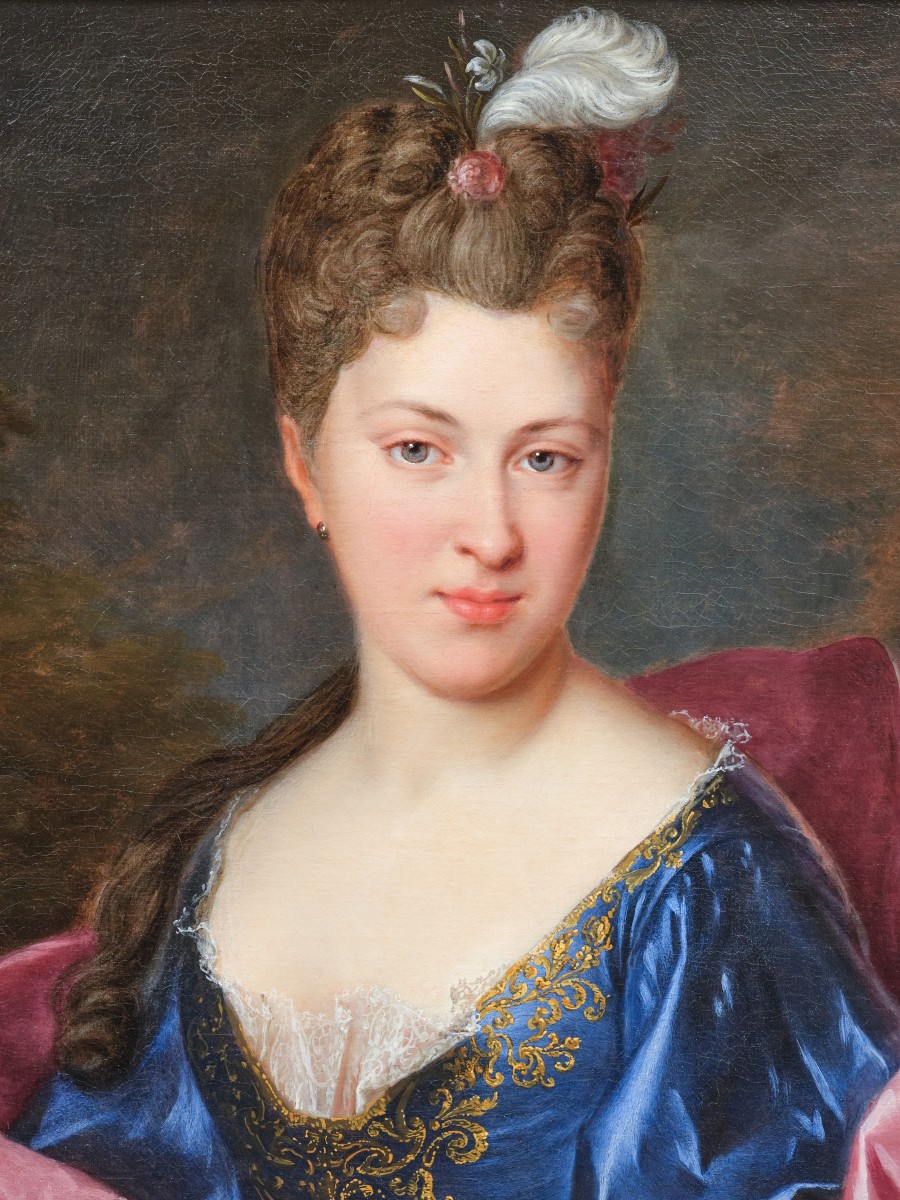

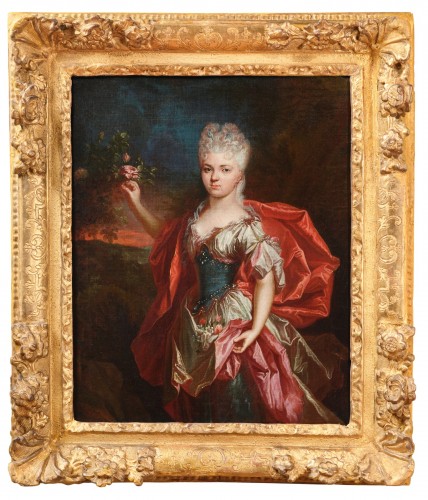
Early 18th century French School, circa 1700
Oil on canvas
Dimensions: h. 71 cm, w. 58 cm
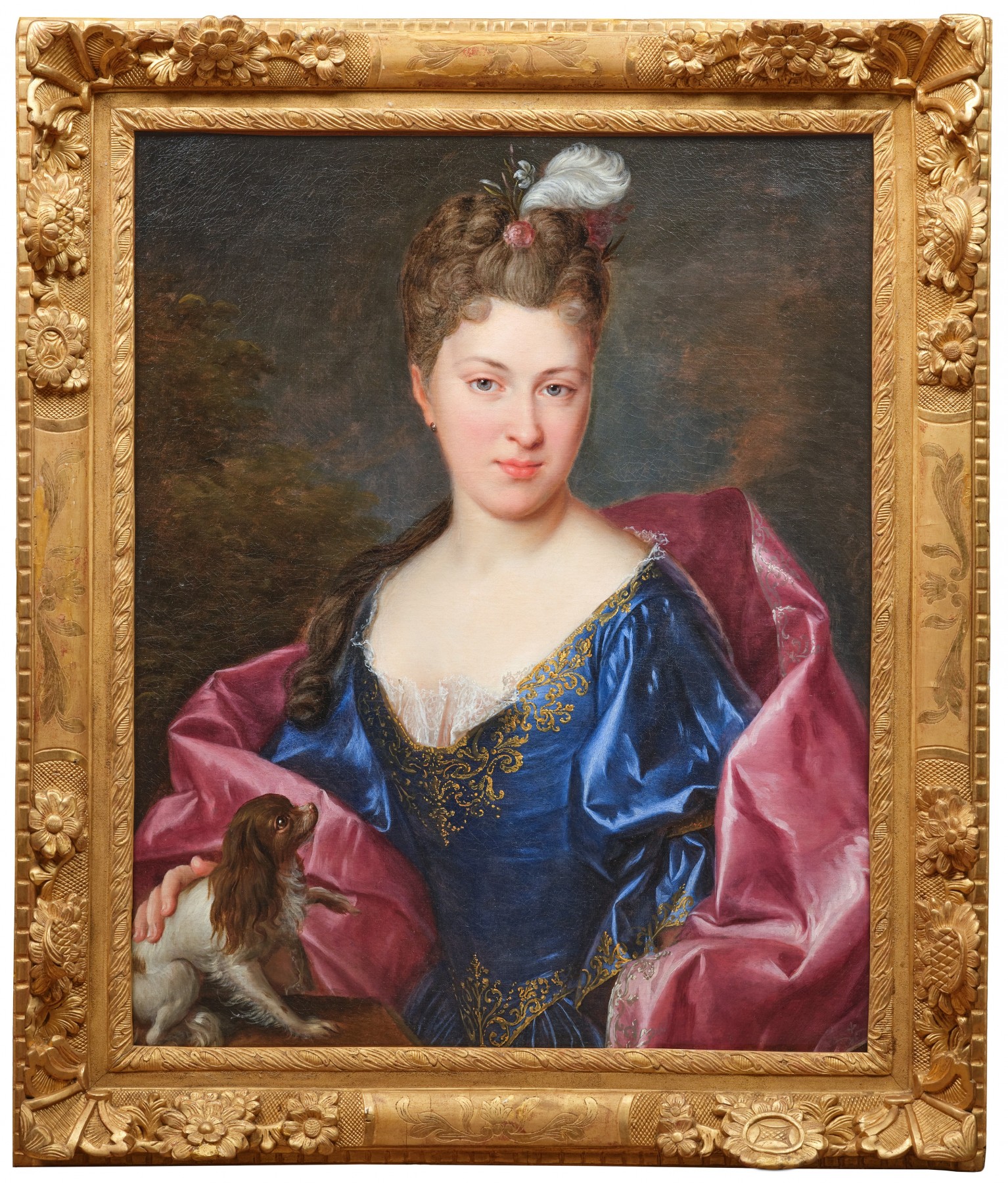
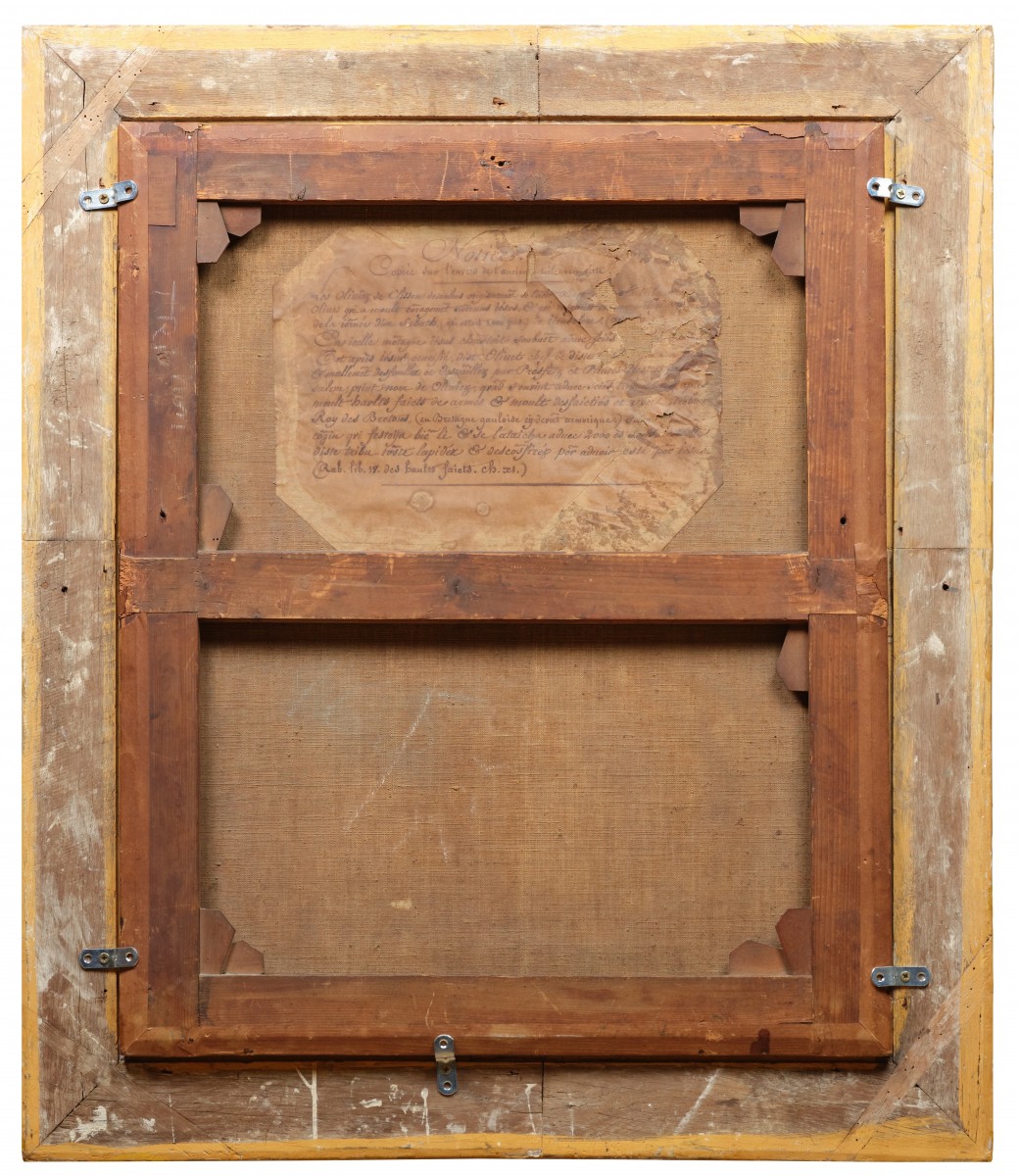
Carved and gilded wooden frame from the Louis XIV period with floral corners
Framed: h. 90 cm, w. 77 cm
This work is sold with a certificate of expertise guaranteeing its origin, its date of execution, and its attribution to the artist.
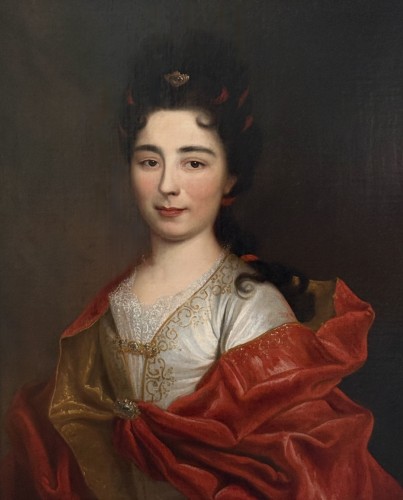
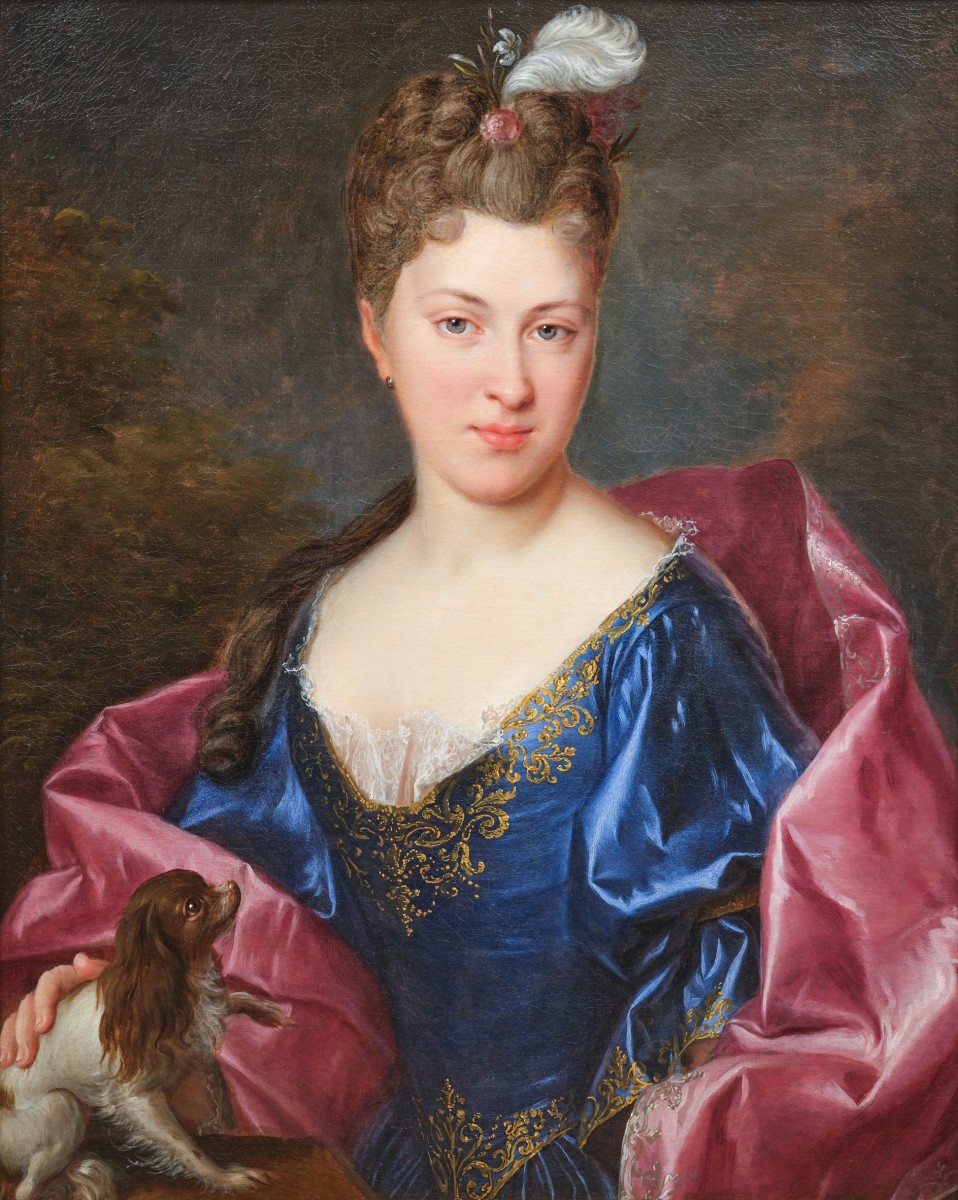
Emblematic of the reign of Louis XIV, our portrait offers a refined and idealized image of a French aristocrat at the beginning of the 18th century, at a pivotal moment when the elegance inherited from the Grand Siècle begins to soften toward a more intimate and graceful sensibility.
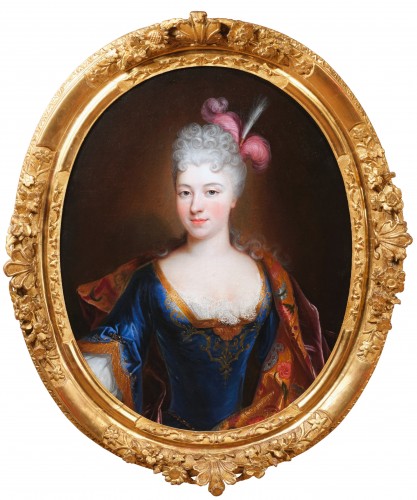
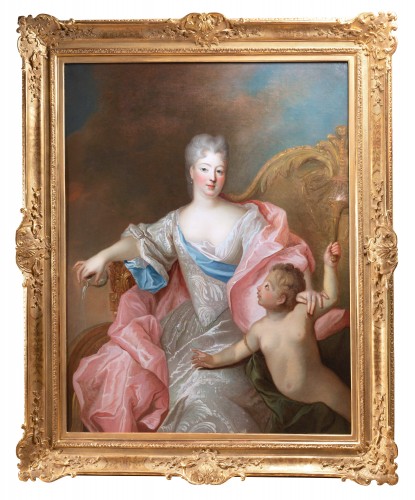
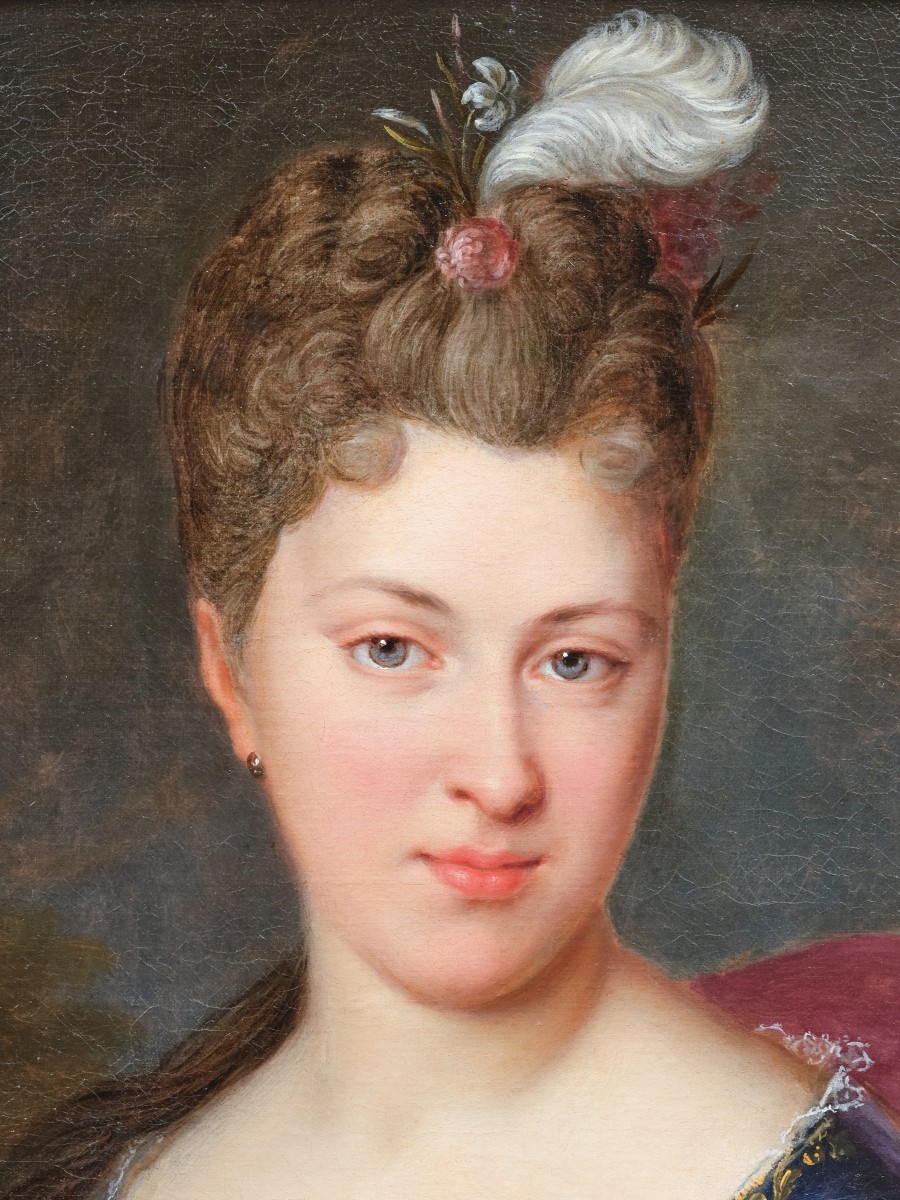
The young woman is depicted half-length, slightly turned, her gaze gently resting toward the viewer. Her face, delicately modeled by a diffused light, is distinguished by a clear, pearly complexion, with subtly rosy cheeks, reflecting an ideal of freshness and youth. The expression is calm, almost confidential, imbued with a restrained elegance that perfectly corresponds to the aristocratic codes of the period.
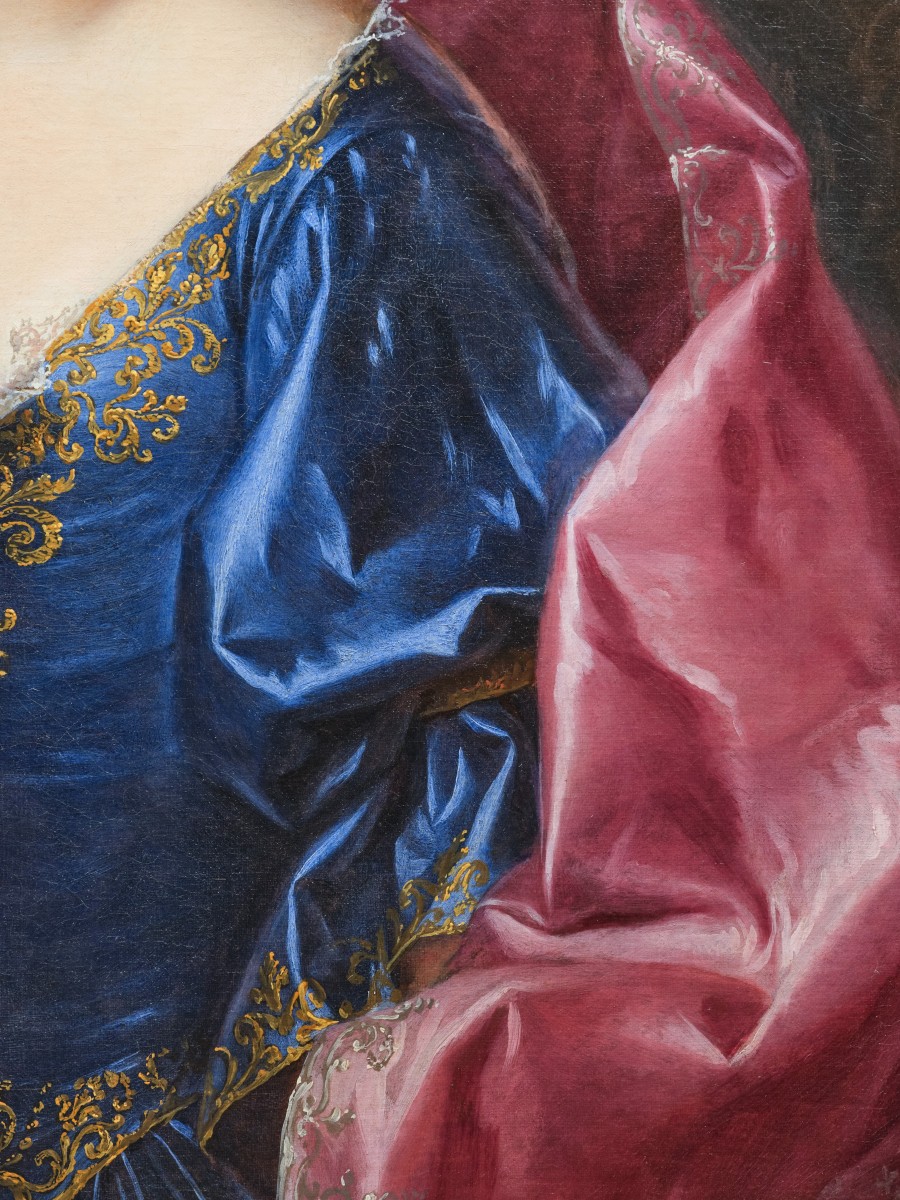
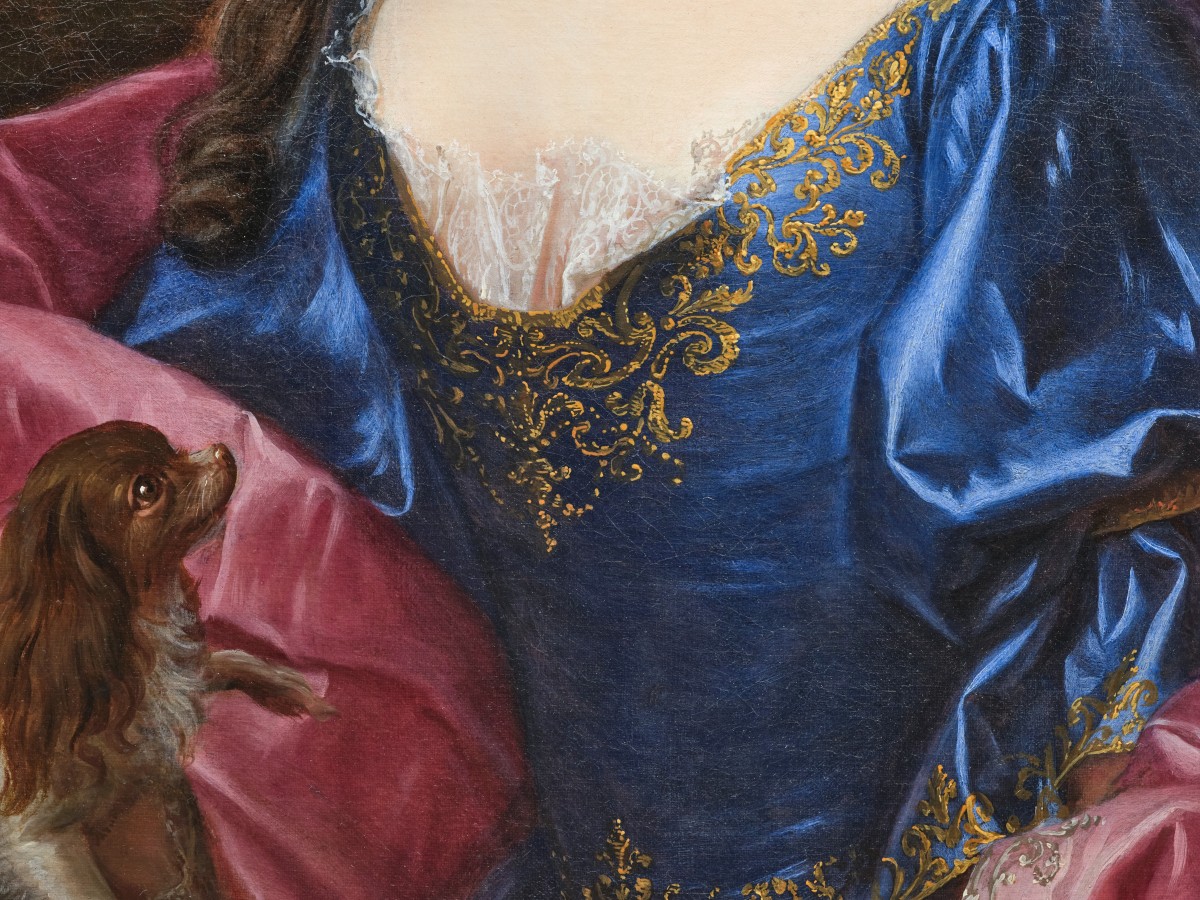
The costume constitutes one of the most remarkable elements of the work. The dress, in a deep and luminous blue, is animated with finely chiseled gold embroidery that highlights the neckline and structures the bust. This satin blue captures the light in multiple reflections, revealing the painter’s virtuosity in rendering precious fabrics. Over it, a large pink drapery, with rich and shifting tones, envelops the shoulders and arms. The shades of pink, ranging from deep carmine to softer powdered tones, interact with the blue of the dress in a particularly appealing chromatic harmony. The folds of the fabric, broad and supple, demonstrate a meticulous attention to the effects of material and movement.
The hairstyle, high and elegantly structured, is adorned with a light white feather and small delicate flowers. These decorative elements reinforce the fresh, almost spring-like character of the whole: the feather brings a sense of lift and lightness, while the flowers evoke nature, youth, and ephemeral beauty. This type of ornament was highly fashionable in aristocratic circles at the beginning of the 18th century, where sophistication blended with a certain natural grace.
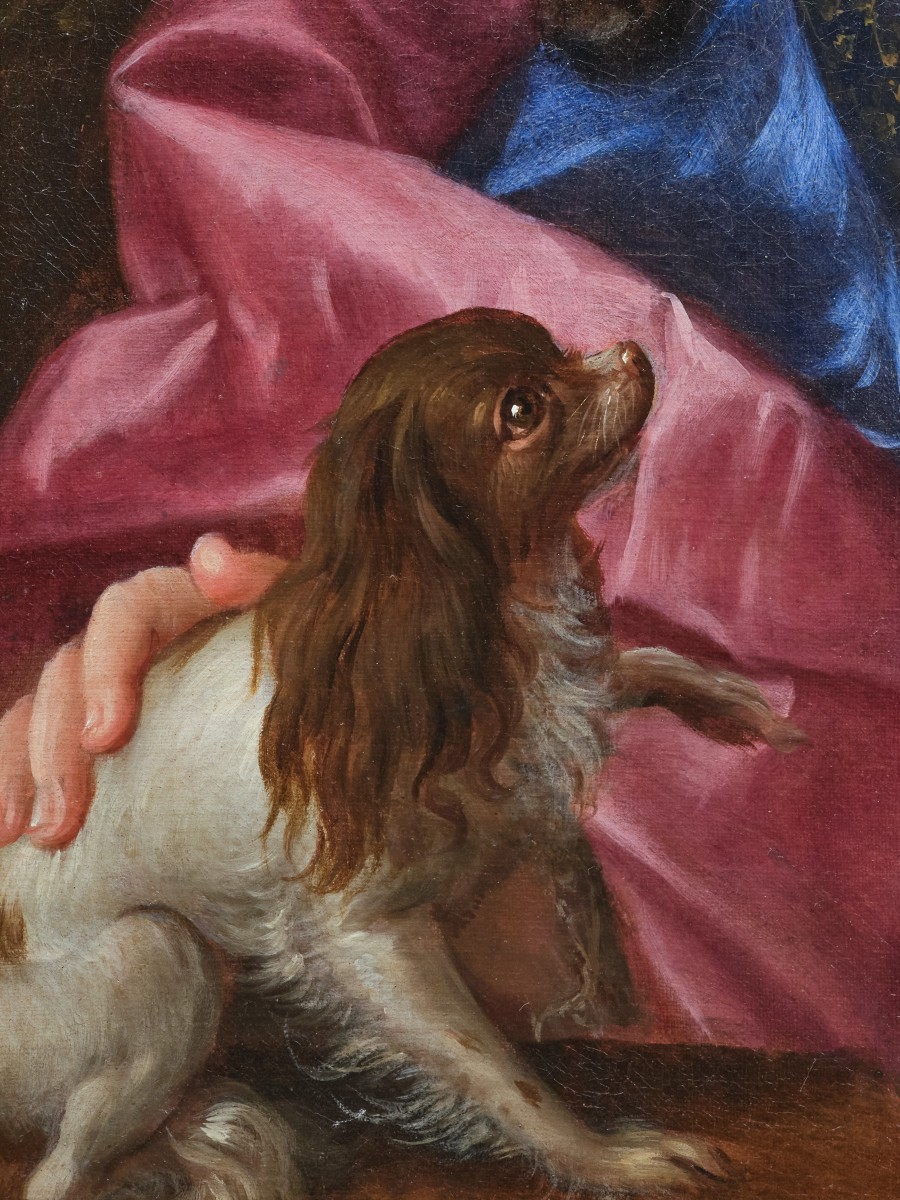
On the left side of the composition, a small companion dog, probably a spaniel, draws attention with its lively and affectionate attitude. It gently raises a front paw, in a gesture that is both attentive and imploring, seeking contact with its mistress, who touches it tenderly. This animal, highly prized in high society, is both a symbol of status and a sign of domestic intimacy. Its presence humanizes the scene and introduces a touching note of tenderness, contrasting with the dignity of the official portrait.
The background, treated in slightly blurred brown and greenish tones, suggests a landscape without defining its contours. It primarily serves to highlight the figure and the vivid colors of the costume, while contributing to the soft and airy atmosphere.
The whole thus conveys an impression of freshness and renewal, almost spring-like, where the richness of materials, the delicacy of ornaments, and the liveliness of the colors combine to offer an ideal image of female aristocracy at the beginning of the 18th century: elegant, refined, yet also close to a more intimate and graceful sensibility.
Alexis Simon Belle (1674–1734) was a French portrait painter born in Paris. He trained under François de Troy, a renowned court artist, which oriented him early toward aristocratic portraiture.
He quickly became a sought-after painter among the French high society and circles linked to the Jacobite exile. He is notably known for his portraits of Stuart claimants, such as James Francis Edward Stuart, and his family, whom he depicted with an elegant style closely aligned with that of the court of Versailles.
In 1710, he married Marie-Nicolle Horthemels, from a family of illustrators and engravers, which integrated him into an important Parisian artistic milieu.
His work is characterized by particular care given to faces and fabrics, as well as a classical style typical of French portraiture of the early 18th century. He died in Paris in 1734.
Delevery information :
We organize the shipping and delivery of our artworks worldwide, working with specialized fine art carriers as well as DHL Express for the secure shipment of small and medium-sized works (up to 120 cm).
Each artwork is carefully packed and shipped in a custom-made transport crate to ensure optimal protection. All shipments are fully tracked and insured.
We pay the utmost attention to every stage of the shipping process to ensure fast, reliable delivery. Shipments via DHL Express are generally dispatched within approximately 7 days of purchase.
All of our artworks can be viewed at our Paris gallery and may also be collected in person.