Offered by Galerie Nicolas Lenté
REQUEST INFORMATION
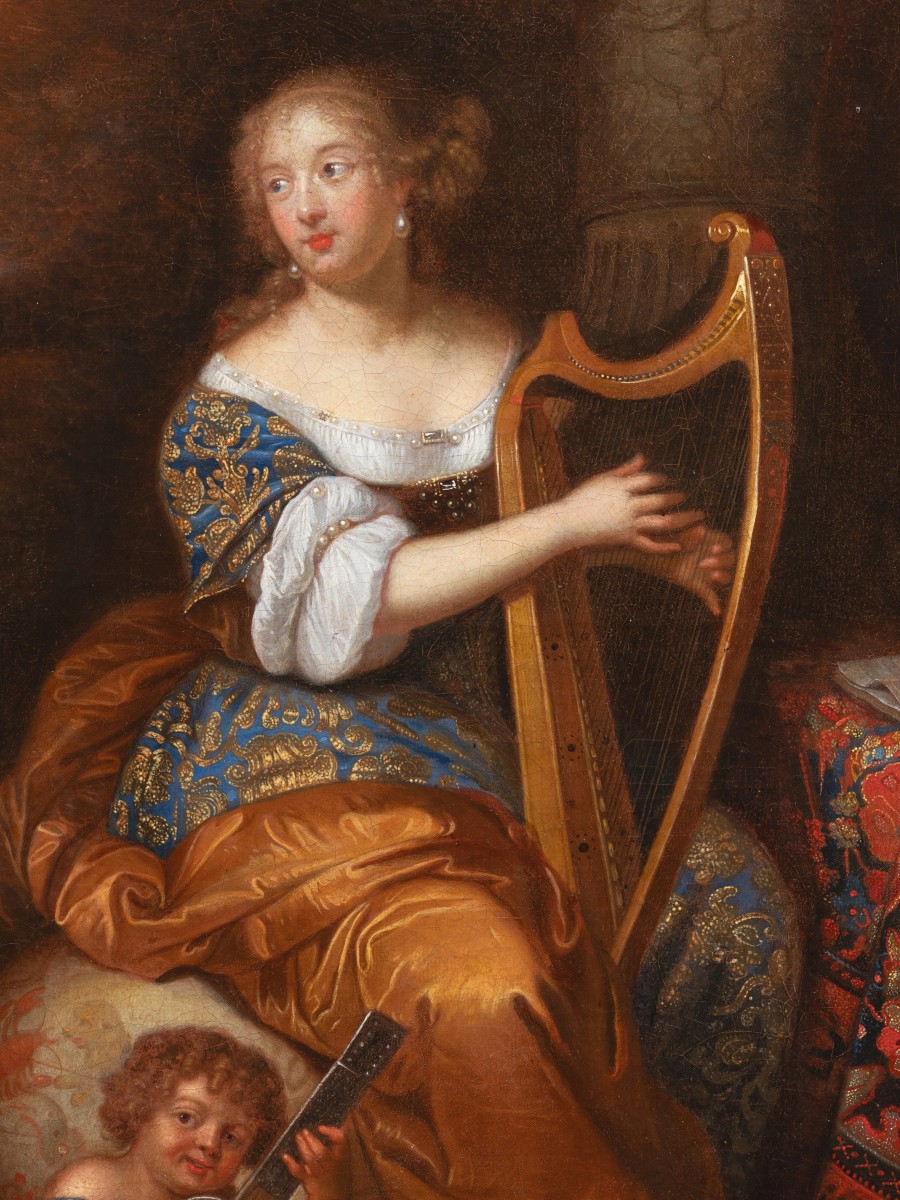
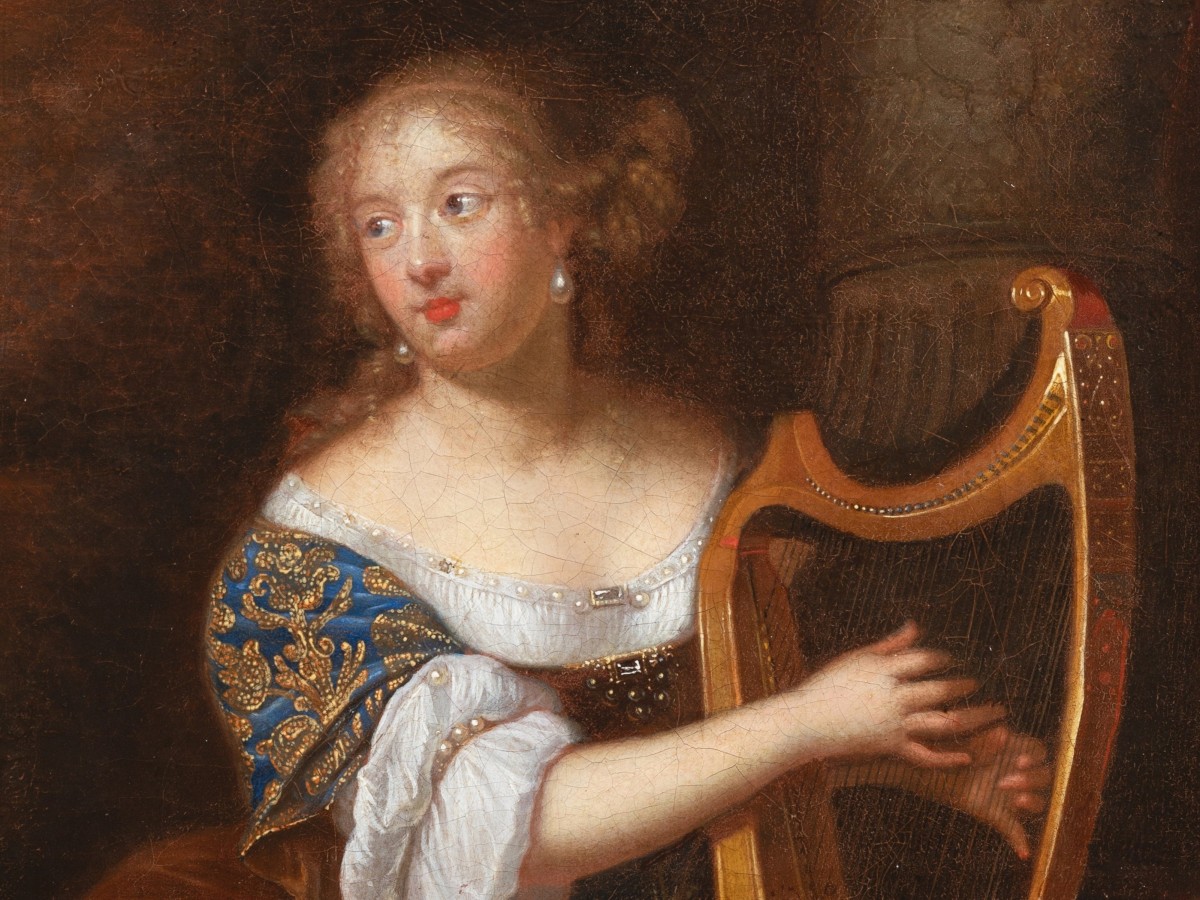

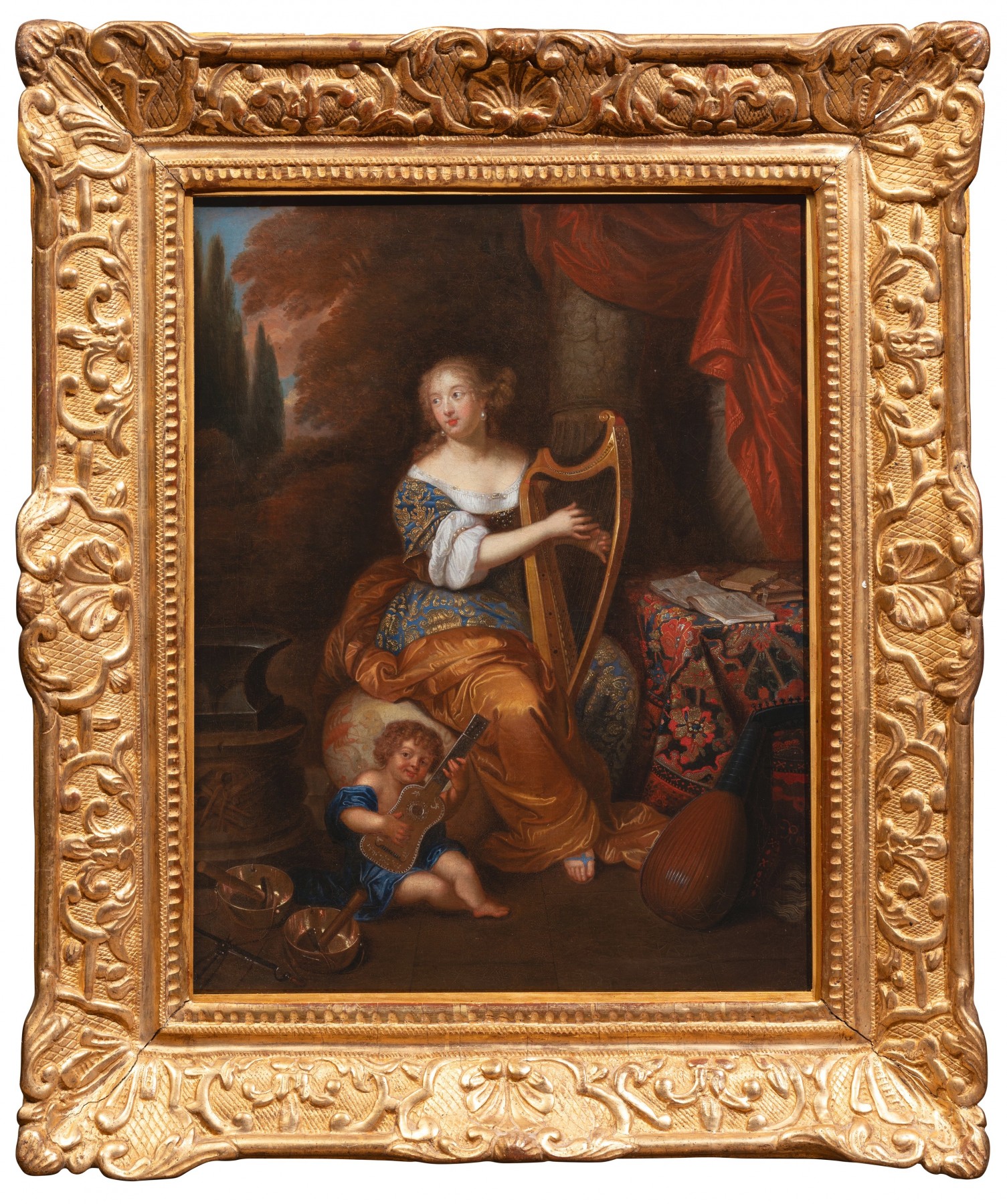
Portrait of the Marquise de Montespan (1640-1707)
Workshop of Caspar Netscher (1639 – 1684, The Hague)
Oil on canvas.
Dimensions: h. 47 cm, w. 36 cm.
17th century Louis XIV carved and giltwood frame
Framed dimensions: h. 66 cm, w. 56 cm.
This artwork is sold with a certificate of expertise guaranteeing its origin, date of execution and attribution to the artist.
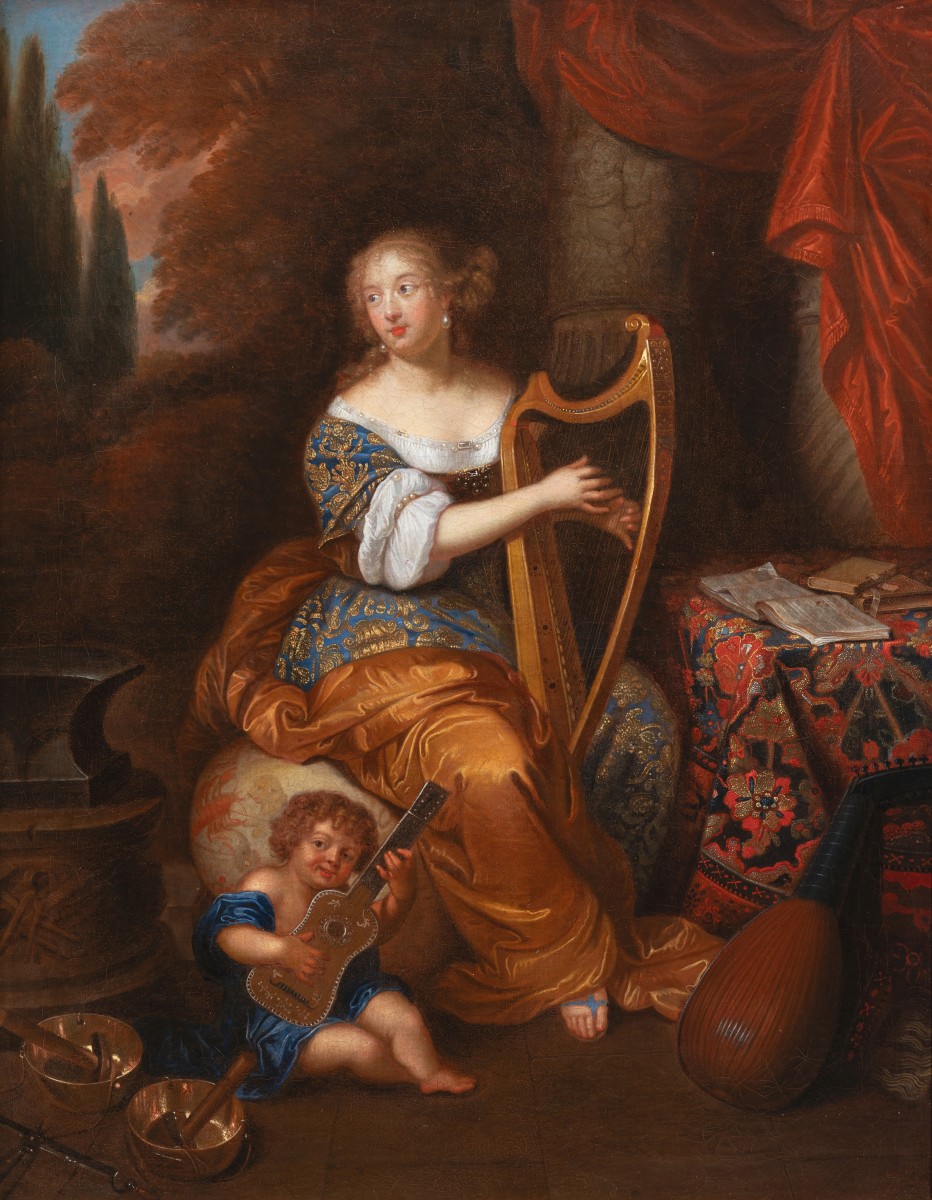
Our work is a studio version, identical in size, of the portrait executed by Caspar Netscher and belonging to the Dresden Gallery of Fine Arts.
Related work:
Caspar Netscher, Portrait of the Marquise de Montespan, signed and dated 1671, oil on copper, 48 x 37 cm, inv. no. 1351, Gemäldegalerie Alte Meister, Dresden.
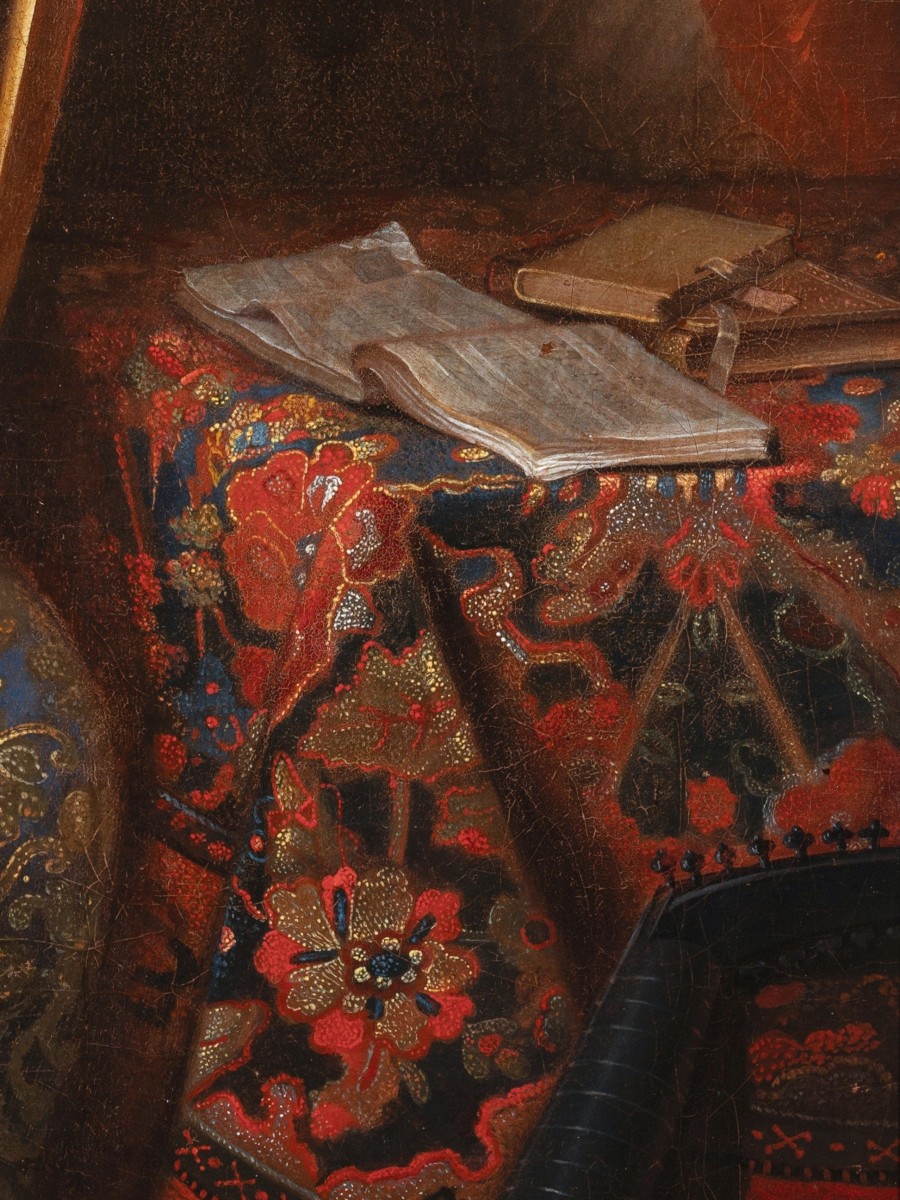
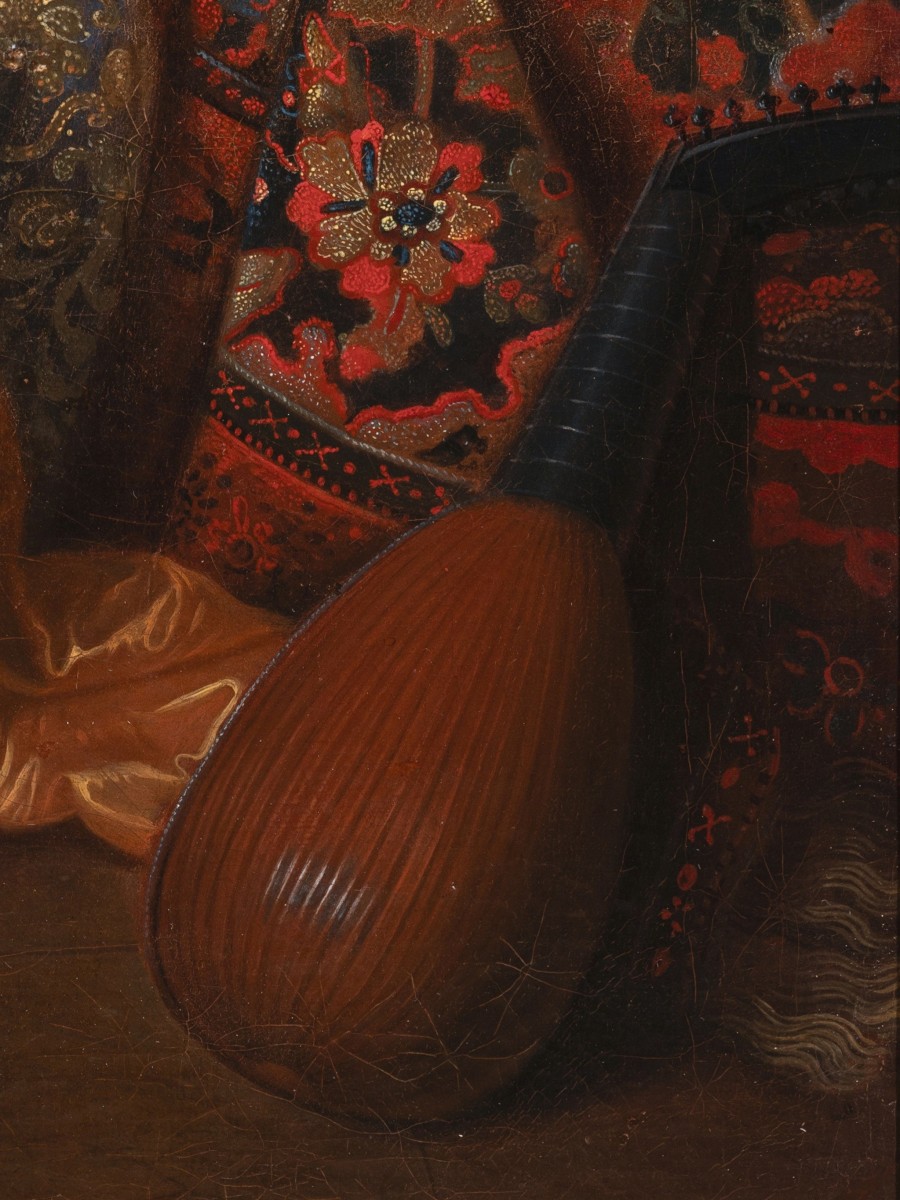
In our exquisite portrait, Madame de Montespan appears as the idealized Saint Cecilia, the embodiment of music and harmony. She wears a sumptuous blue gown embroidered with gold floral motifs, its richness underscoring her rank at the court of Louis XIV. She plays the harp while seated on a celestial globe, placed beside a table covered with a Persian rug upon which rests an open music book, a symbol of her culture and artistic mastery.
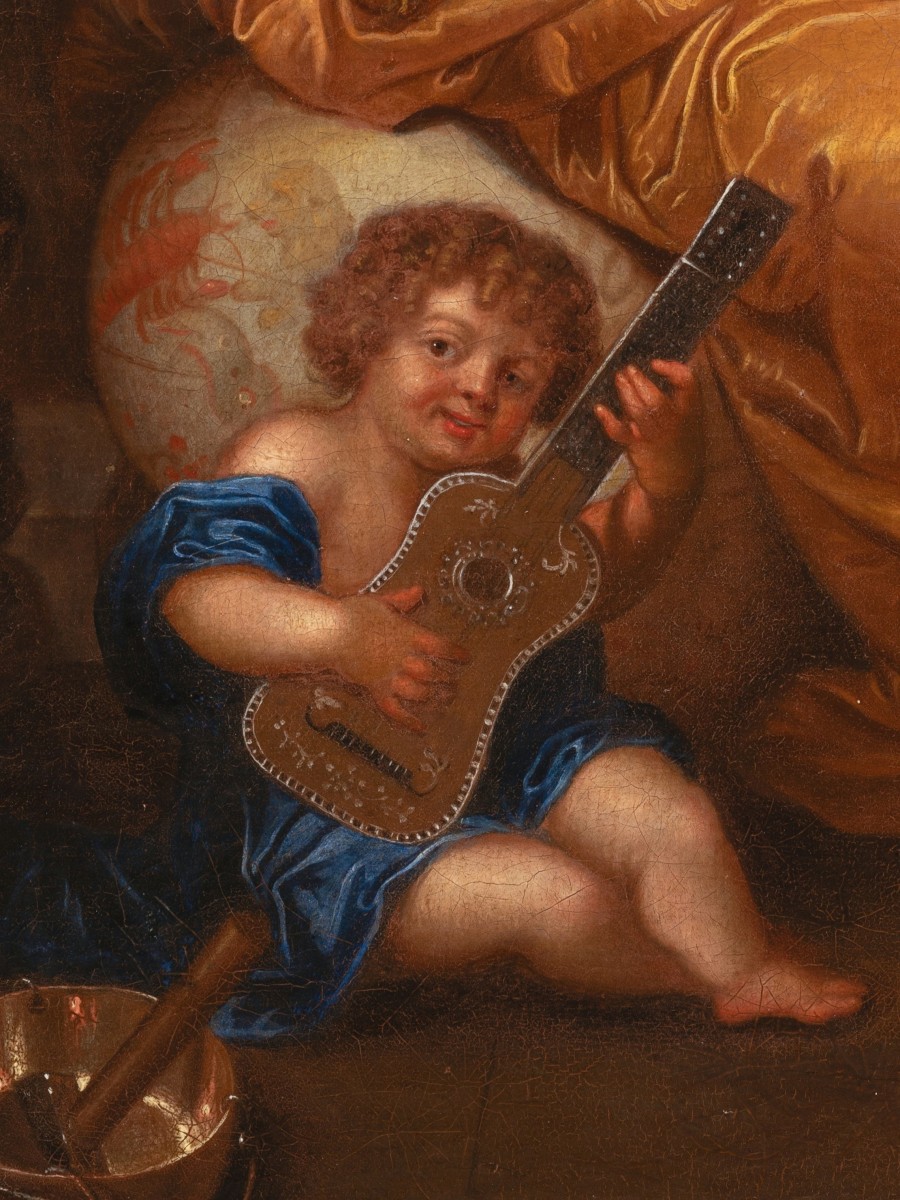
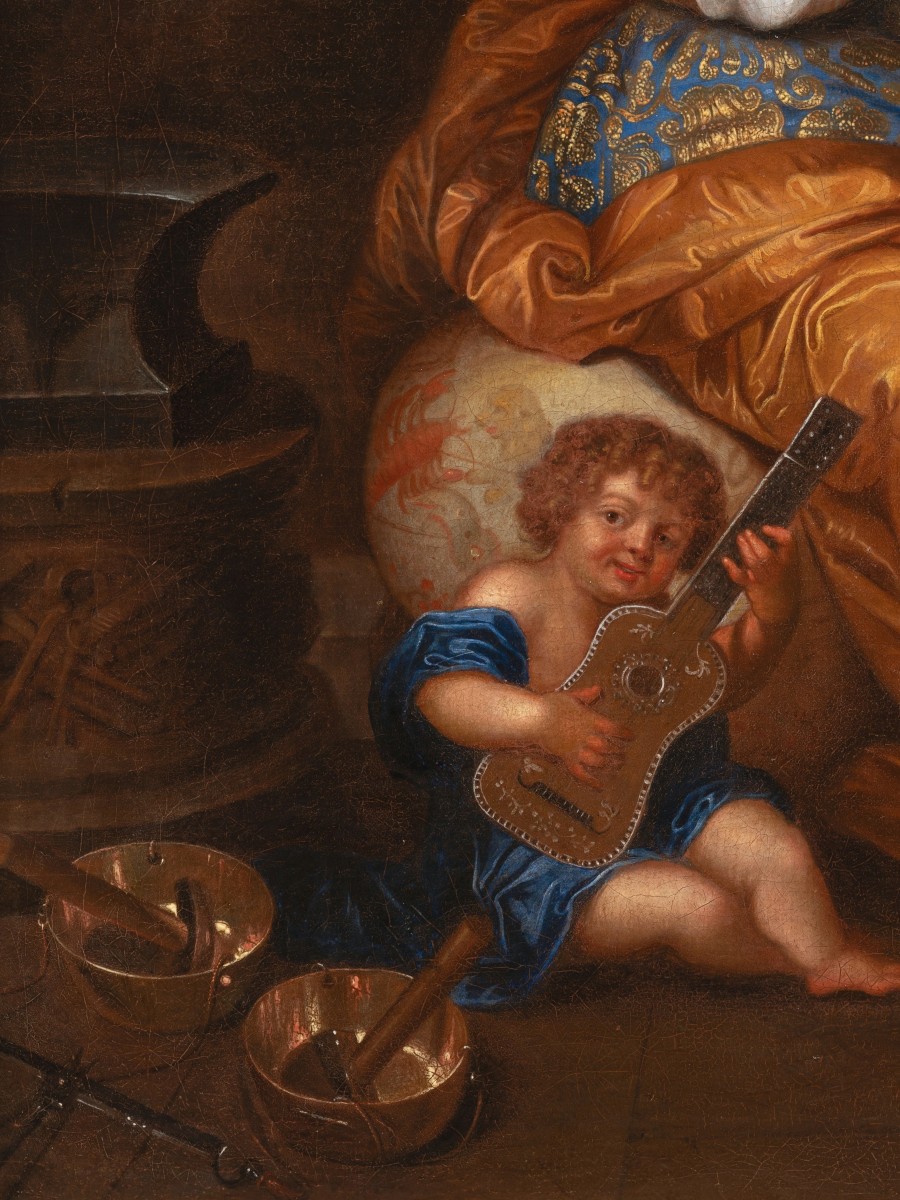
At her feet, her very young son, Louis Auguste de Bourbon, Duke of Maine, about one year old, is portrayed playing the mandolin. This childlike presence lends an intimate and affectionate dimension, while reinforcing the musical theme of the composition.
The carefully constructed setting blends nature and architecture: to the left unfolds a park landscape, while to the right stand a column adorned with reliefs and a heavy red curtain, framing the scene like a theater. In the foreground, several objects—an anvil, a hammer, a balance—reference the experiments attributed to Pythagoras on the relationships between sounds, while the globe on which the figure rests alludes to the theory of the harmony of the spheres, according to which the entire universe is governed by musical proportions.
Thus, through this rich and sophisticated composition, the painter does not limit himself to a simple portrait: he constructs a true allegory, in which Madame de Montespan appears as a figure of universal harmony, uniting music, science, and cosmic order, while simultaneously asserting her prestige and her role at court.
Delevery information :
We organize the shipping and delivery of our artworks worldwide, working with specialized fine art carriers as well as DHL Express for the secure shipment of small and medium-sized works (up to 120 cm).
Each artwork is carefully packed and shipped in a custom-made transport crate to ensure optimal protection. All shipments are fully tracked and insured.
We pay the utmost attention to every stage of the shipping process to ensure fast, reliable delivery. Shipments via DHL Express are generally dispatched within approximately 7 days of purchase.
All of our artworks can be viewed at our Paris gallery and may also be collected in person.