Offered by Antichità Castelbarco

Pieter Angillis (Dunkirk, 1685 – Rennes, Ille-et-Vilaine, 1734)
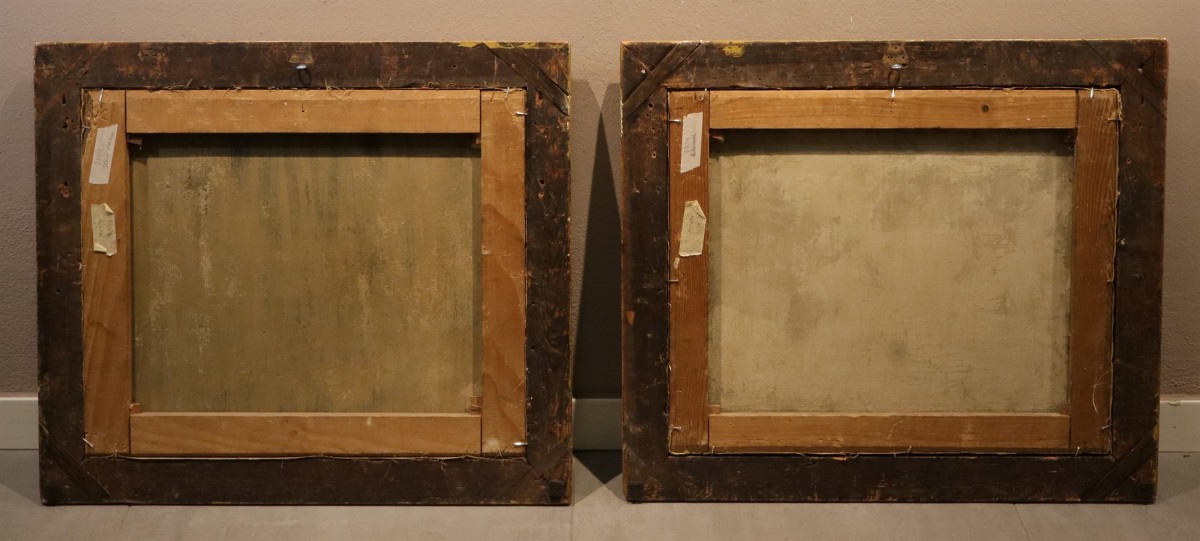
Signature: the first signed 'P Angellis F(ecit)', at the base of the stone column in the lower right corner
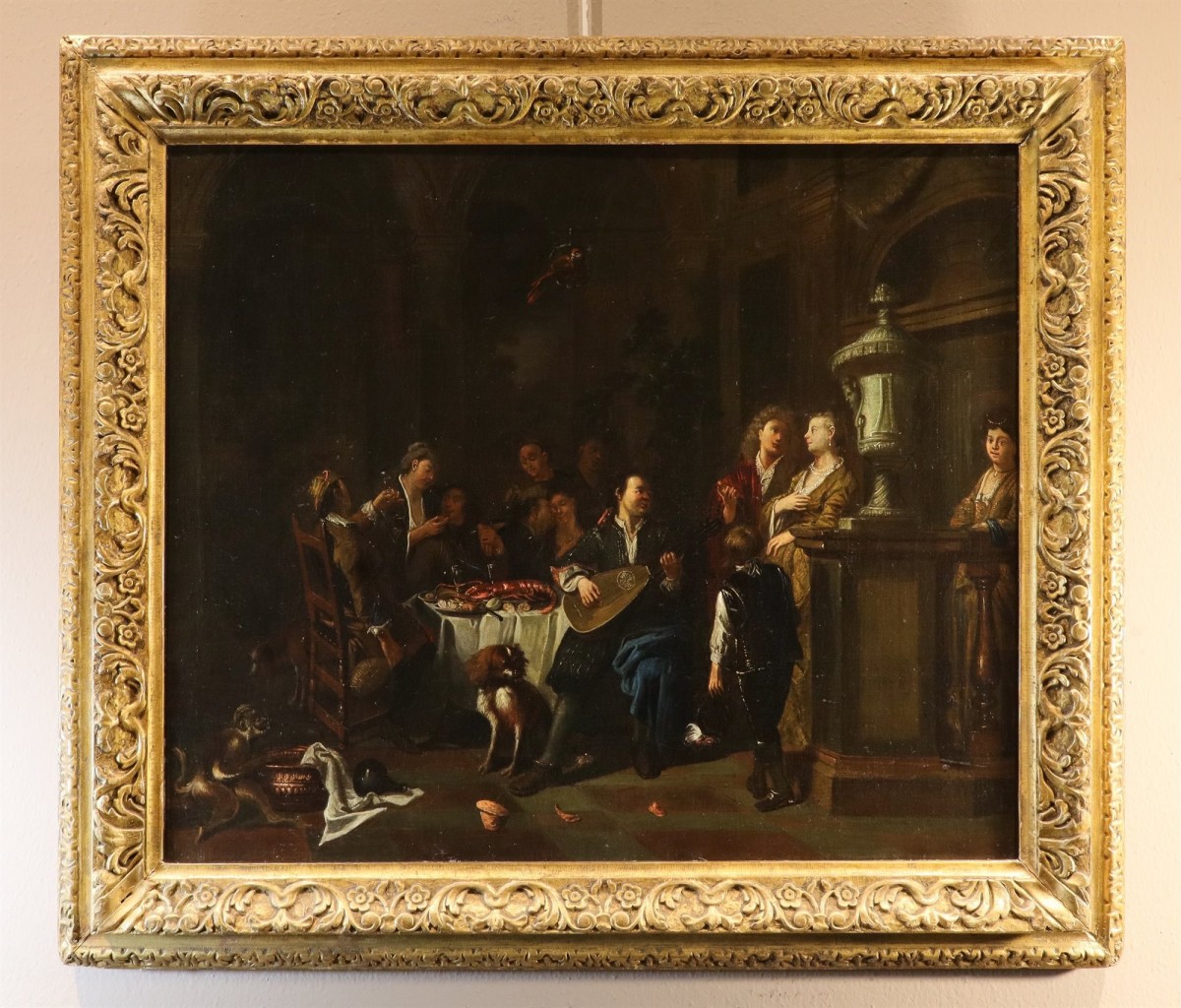
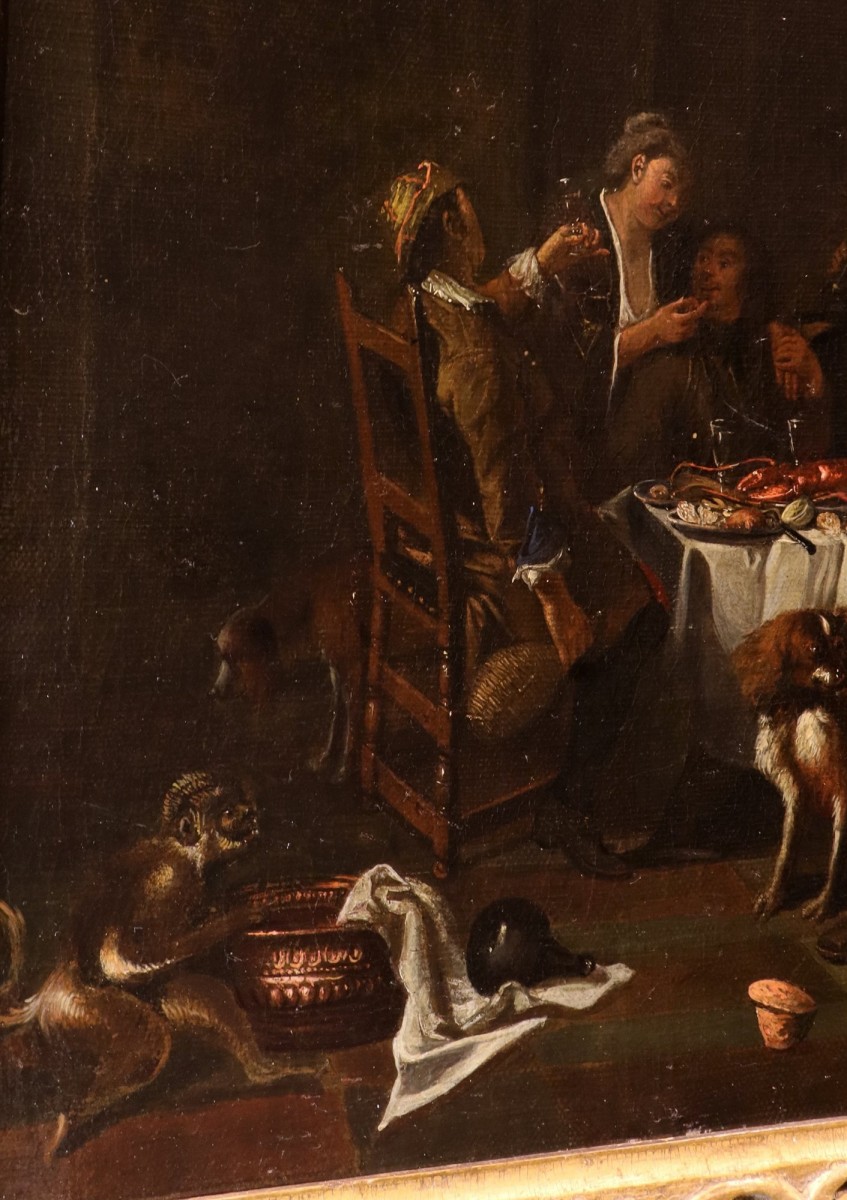
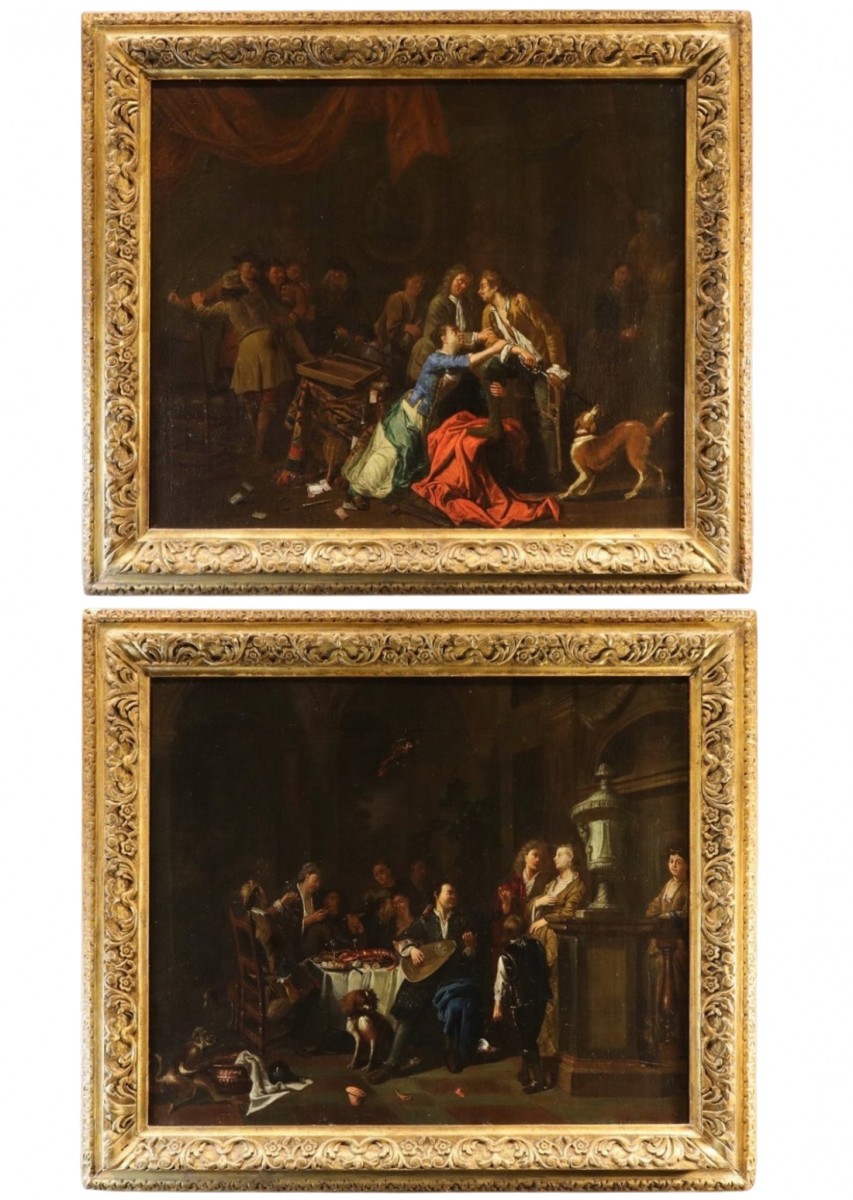
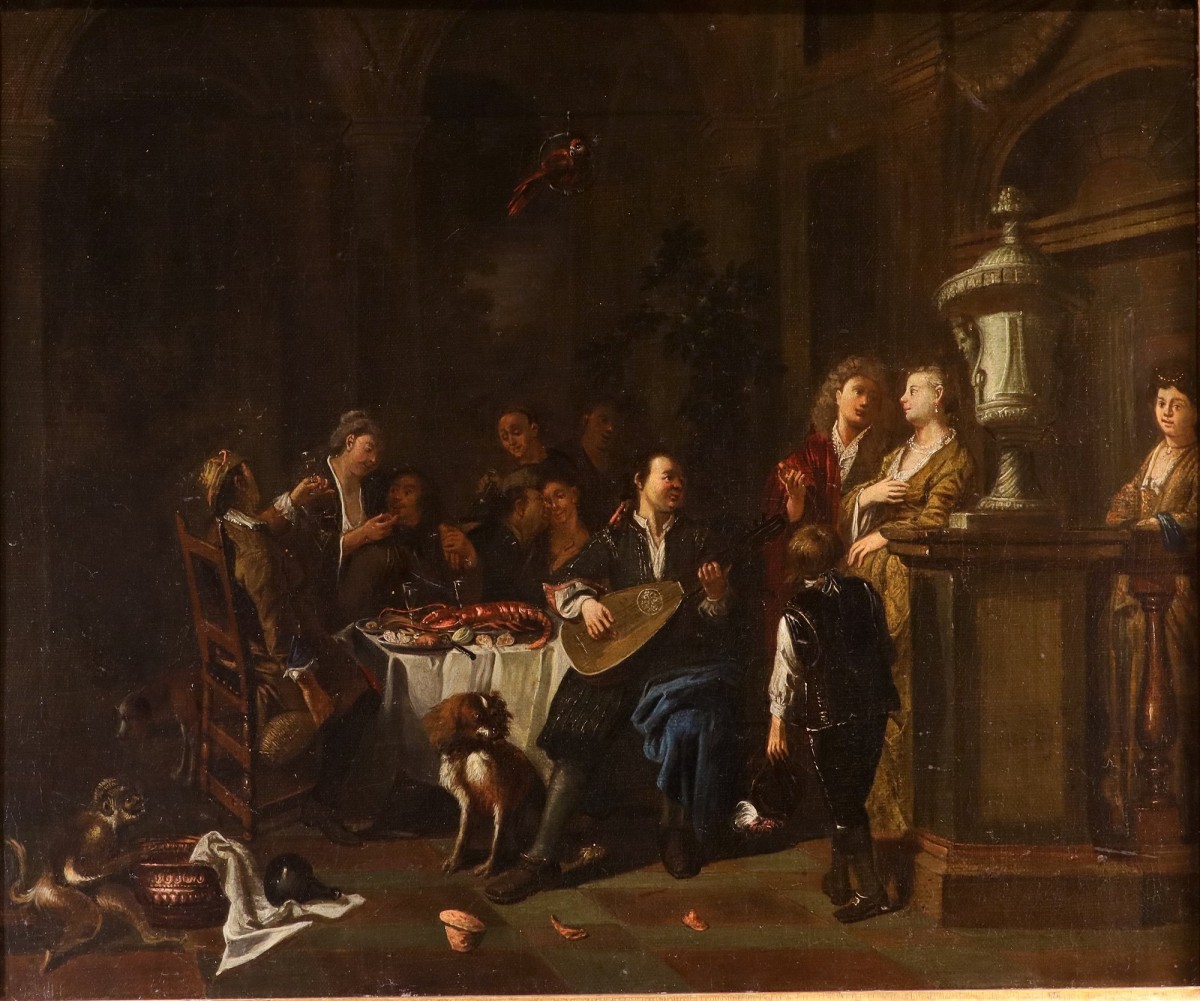
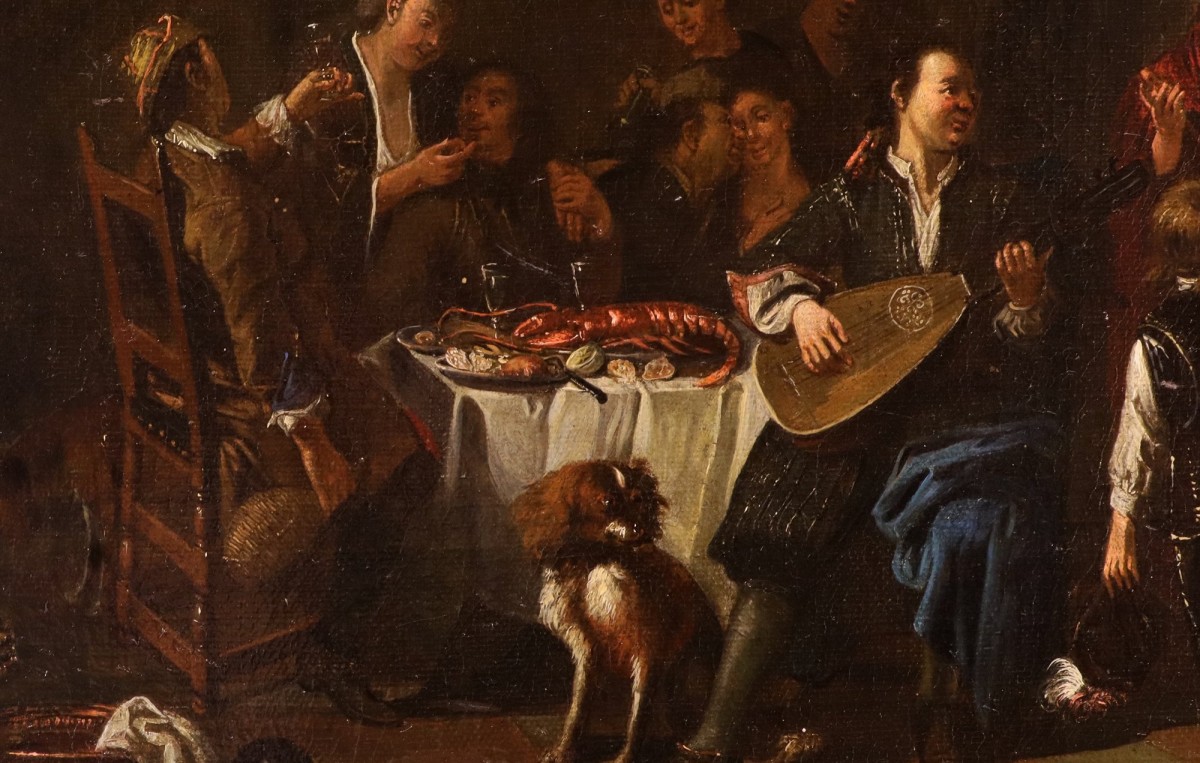
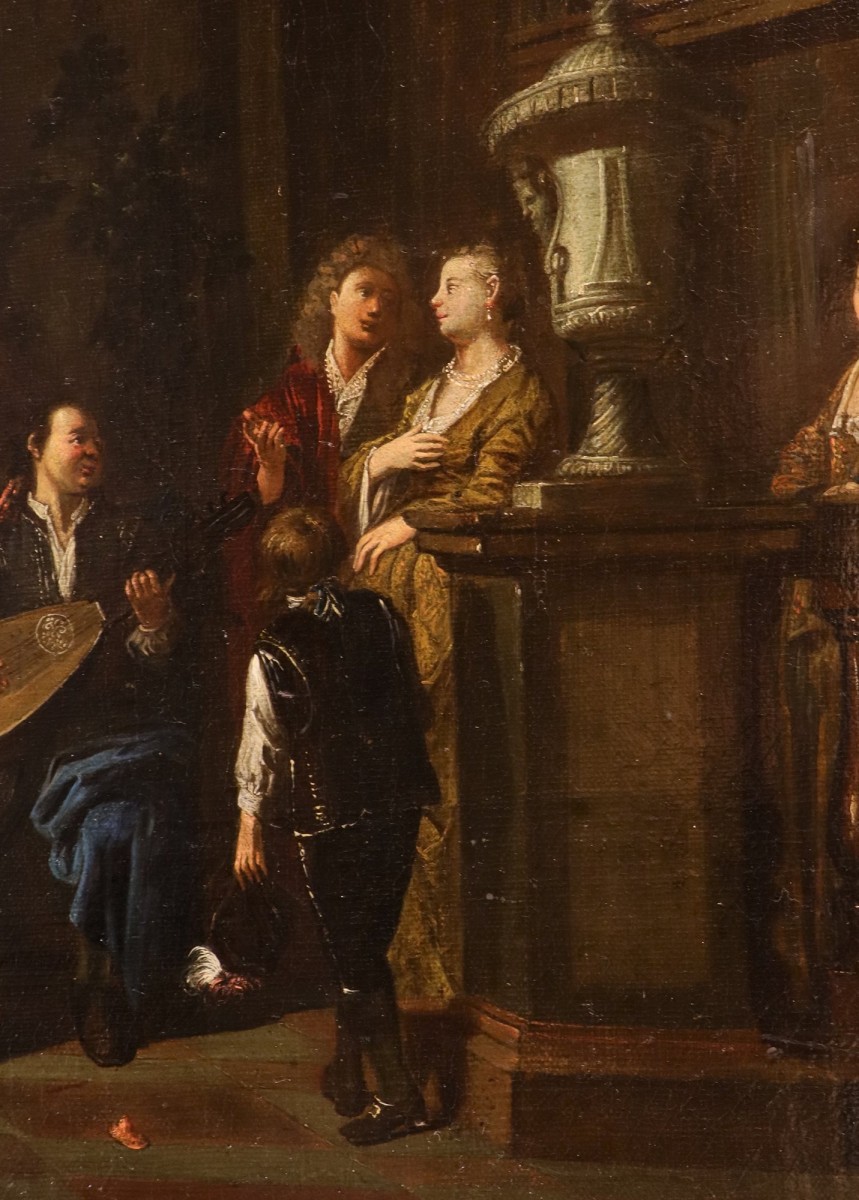
a) Banquet with Concert /
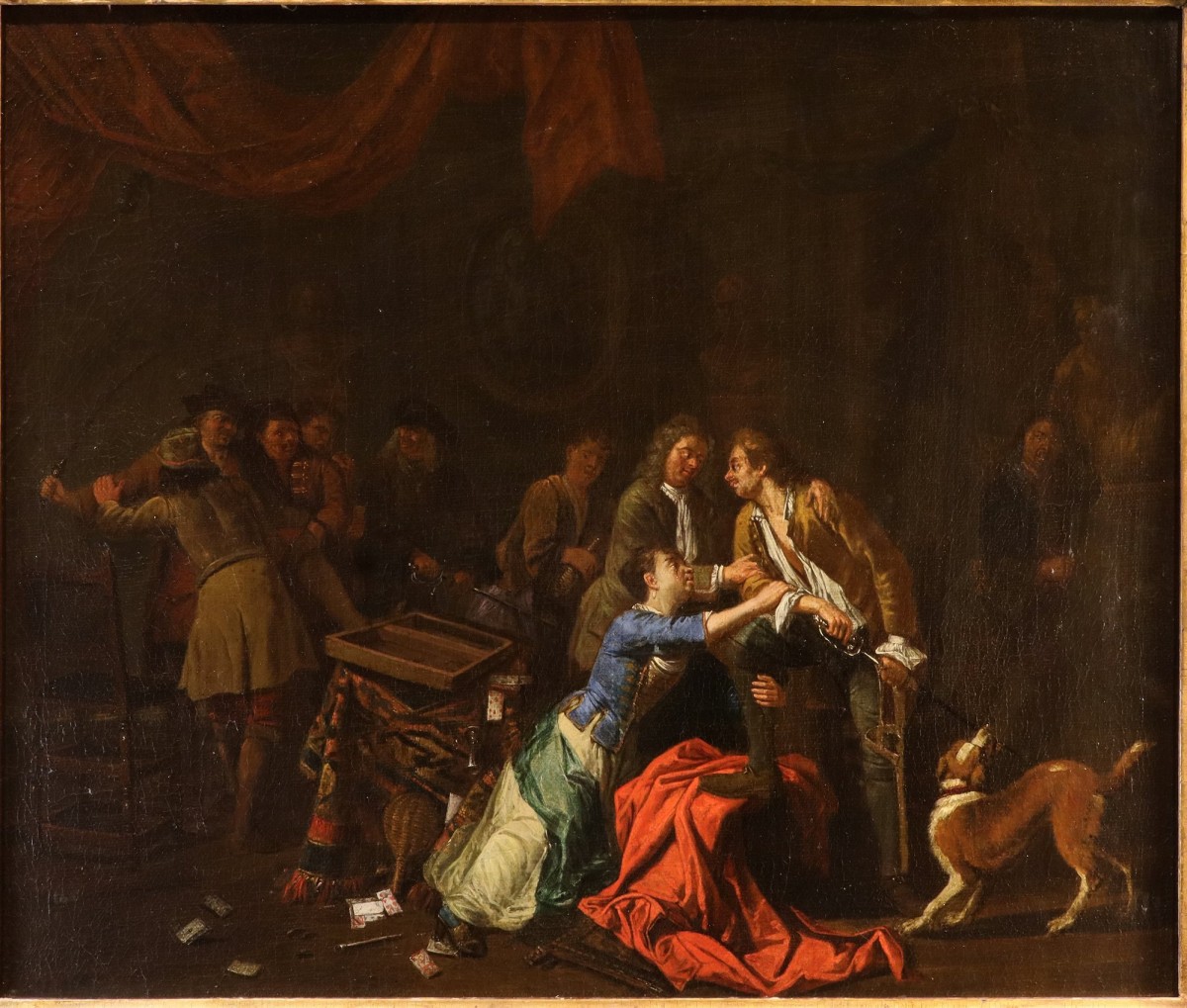
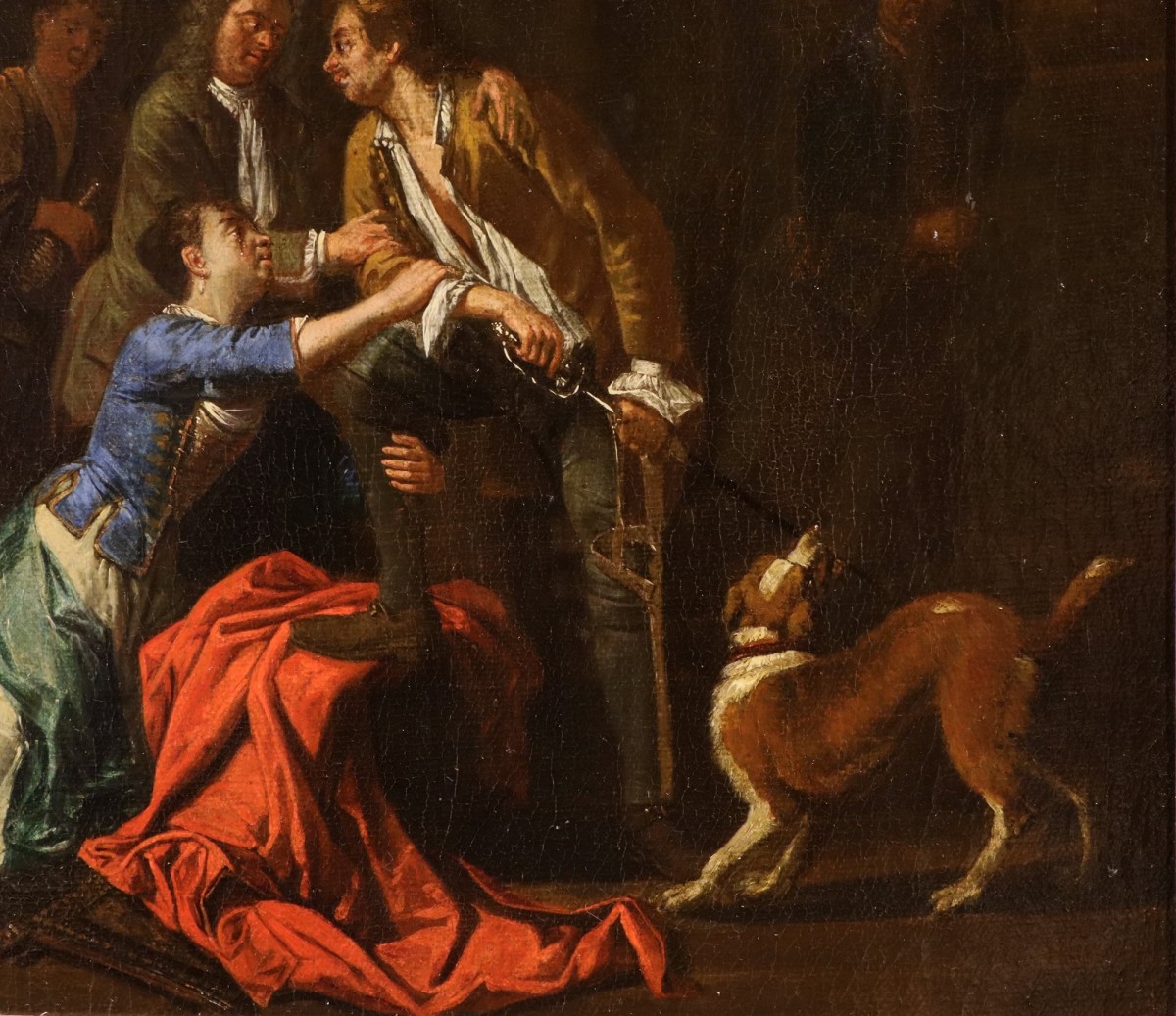
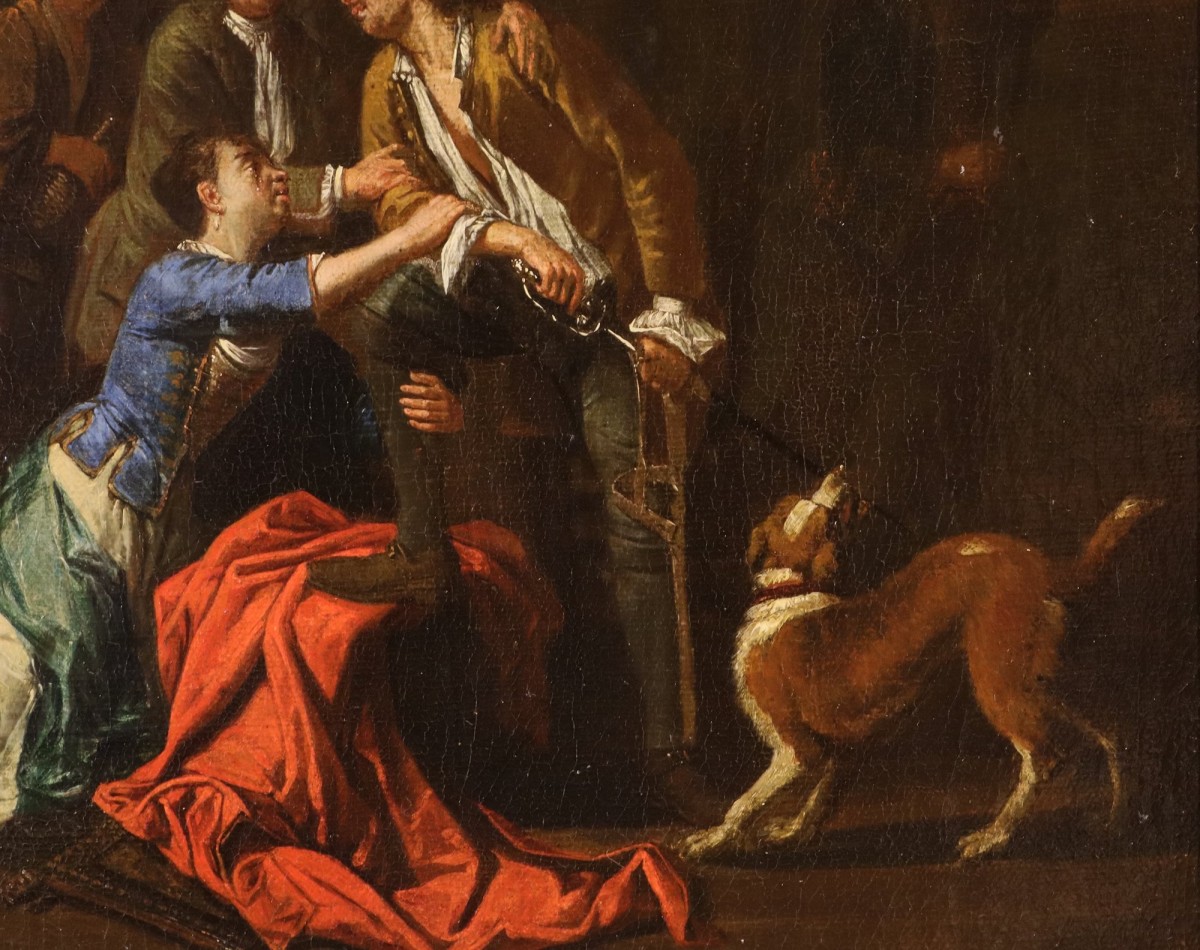
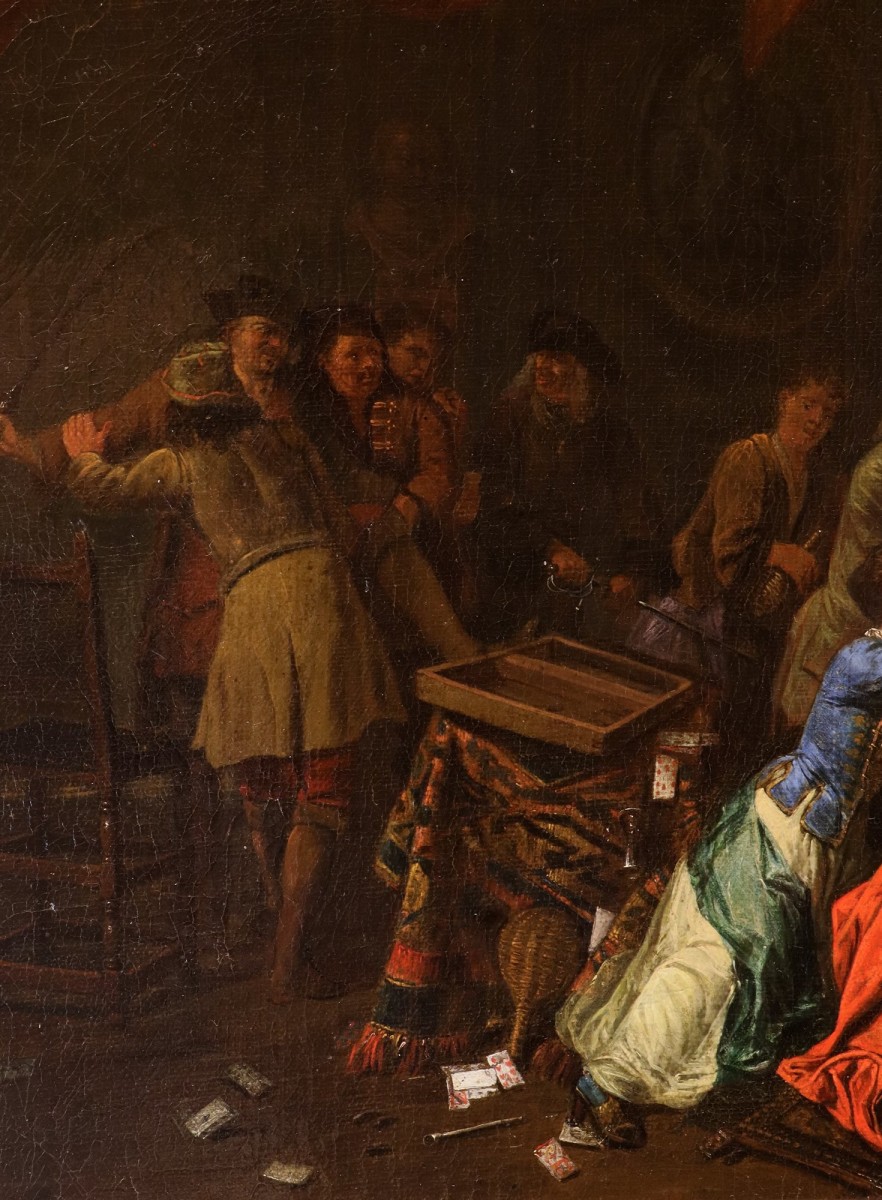
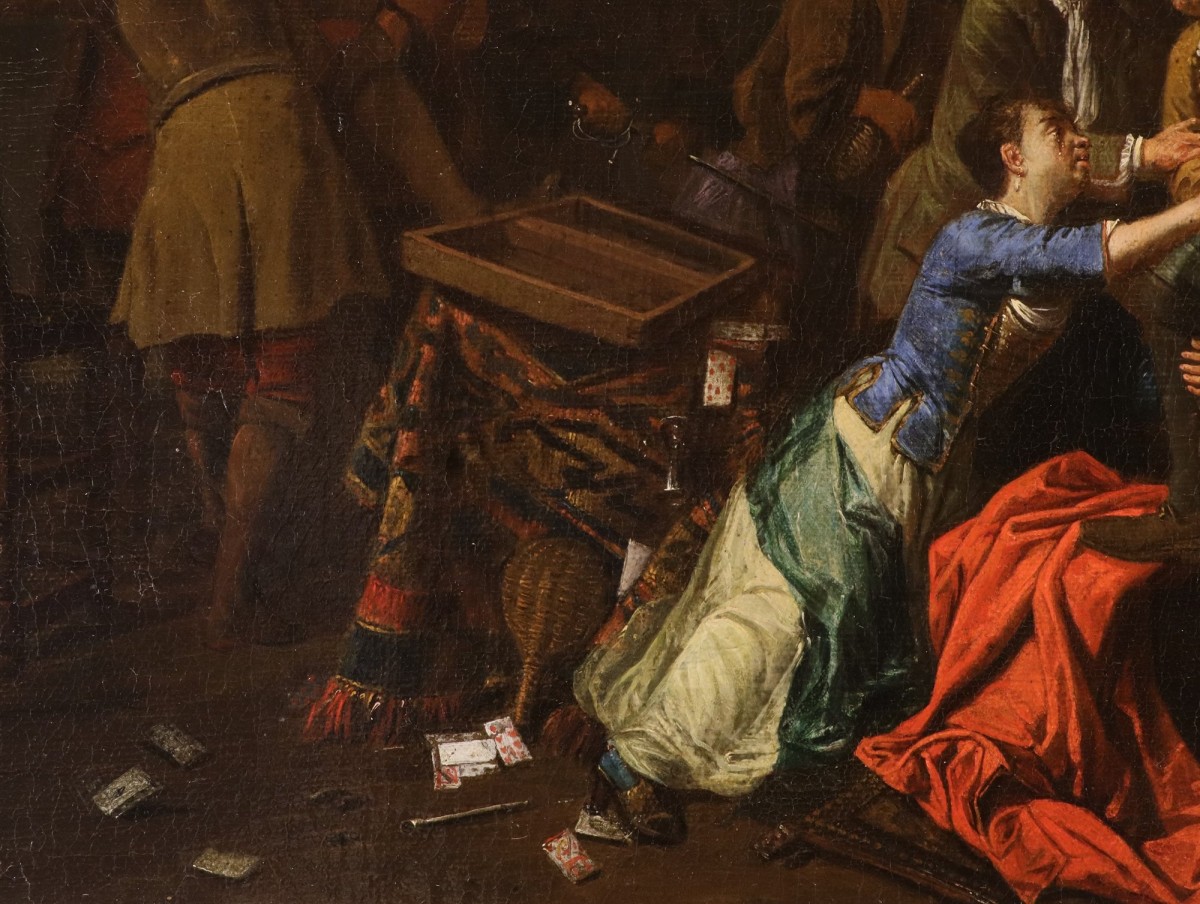
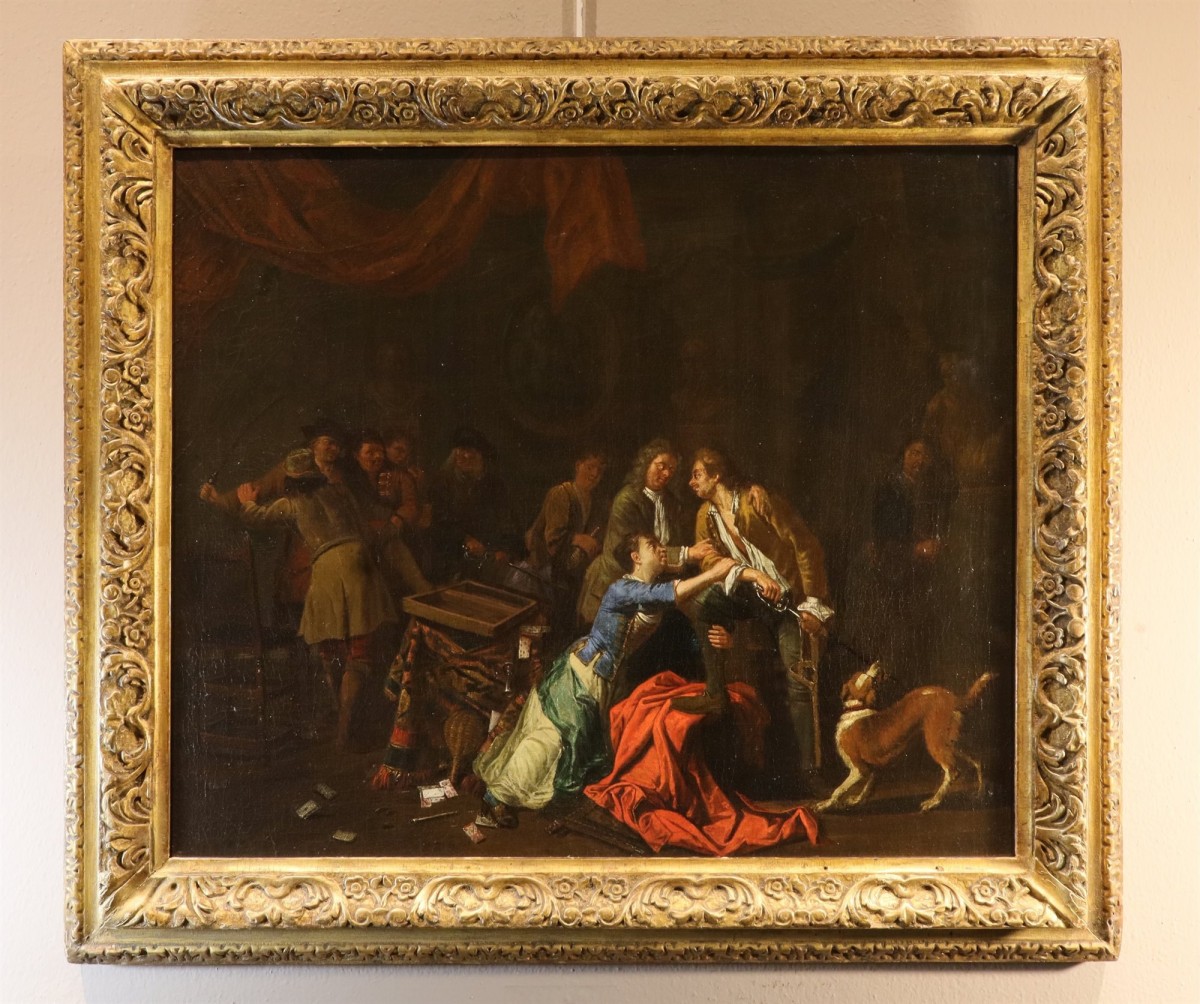
b) Brawl
pair of oil paintings on canvas 50 x 59 cm - framed: 62 x 72 cm
Provenance: Bonhams London, Old Master Paintings, April 27, 2016, lot 95, Estimate: 8,000/10,000 Euro
The lively and detailed scenes depicted in our pair of paintings, representing respectively a cheerful banquet and a brawl that broke out during a card game, bear the signature of Pieter Angillis (Dunkirk, 1685 – Rennes, Ille-et-Vilaine 1734) - 'P Angellis F(ecit)’,- a French/Flemish painter of the Baroque and Rococo periods, famous for his genre scenes and city markets.
Looking more closely, in the first painting we are likely witnessing a banquet or a musical celebration, a typical subject of 18th-century Flemish art.
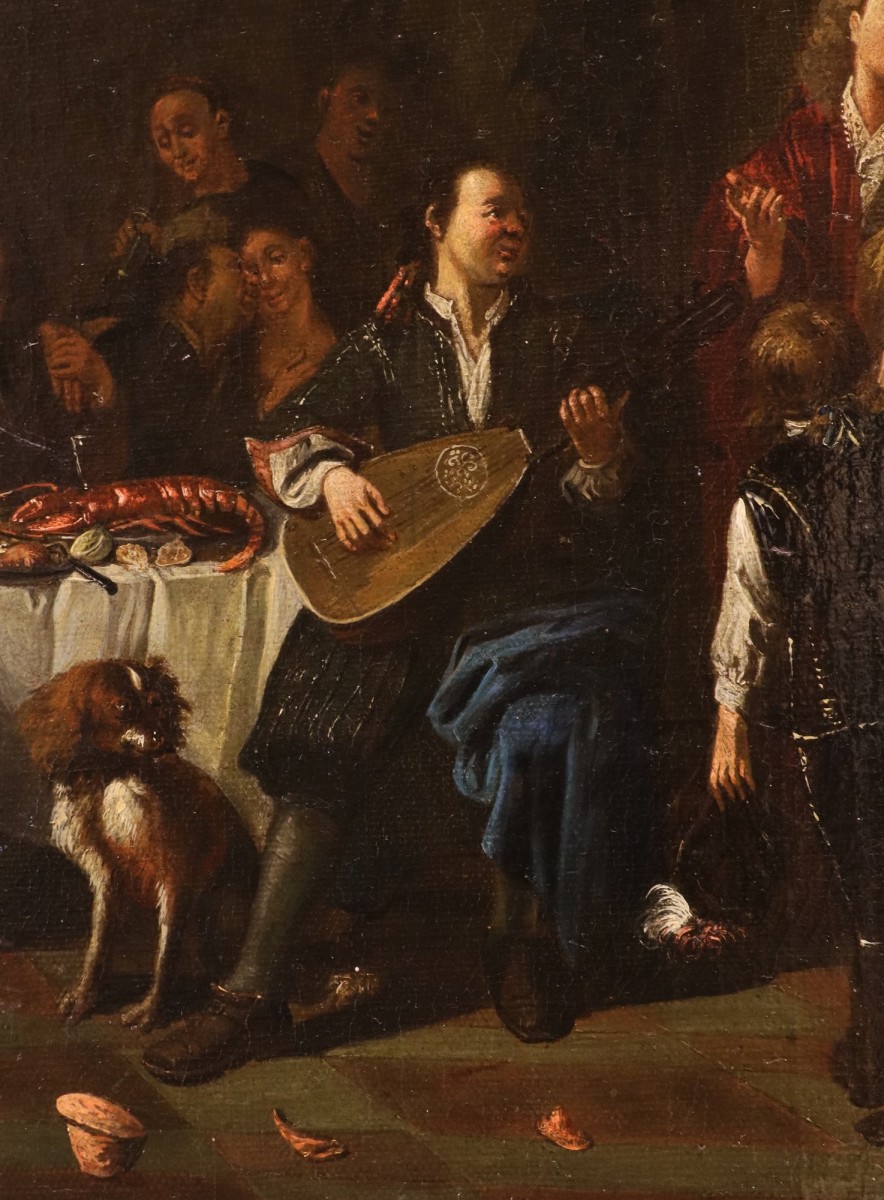
The group of people is conversing amiably around a lavishly set table, with a musician in the center playing the lute while addressing the woman leaning against the column.
The composition includes typical elements such as food, domestic animals (a dog, a small monkey, and a parrot hanging overhead), and a large decorative vase in the classical style.
The second work, however, depicts the turmoil of a brawl between two male figures, likely arising during or after a card game—another common theme in genre painting of the era used to represent bourgeois or working-class life.
In the center, a visibly worried female figure tries to calm the standing man, who is ready to draw his sword, while in the background other characters interact animatedly and on the right a dog watches the scene anxiously.
These are two typical works by Pieter Angellis, whose painting was strongly influenced both by his training in his hometown, located in southern France, and by his travels throughout Europe—first to Antwerp, where he became a master of the Guild of Saint Luke in 1715, then in London for about sixteen years (c. 1719–1728) in the Covent Garden district, in Rome, Italy (1728–1731), and finally in Rennes, Brittany, where he achieved great success.
Thanks to these constant moves, his style was shaped by a diverse blend of influences, skillfully combining the Flemish meticulousness of David Teniers the Younger with the French elegance of Antoine Watteau.
His intelligent and never banal compositions are reflected in a striking theatrical effect, determined above all by a narrative function achieved through a masterful use of light.
Delevery information :
We take care of and organise the transport of the purchased works, both for Italy and abroad, through professional and insured carriers.
We take great care We personally take care of the packaging, to which we devote a great deal of care: each work is carefully packed, first with arti- cle material, then with a custom-made wooden box.
Should you have the desire to see this or other works in person, we would be happy to welcome you to our gallery in Riva del Garda, Viale Giuseppe Canella 18, we are always open by appointment only.