Offered by Brozzetti Antichità
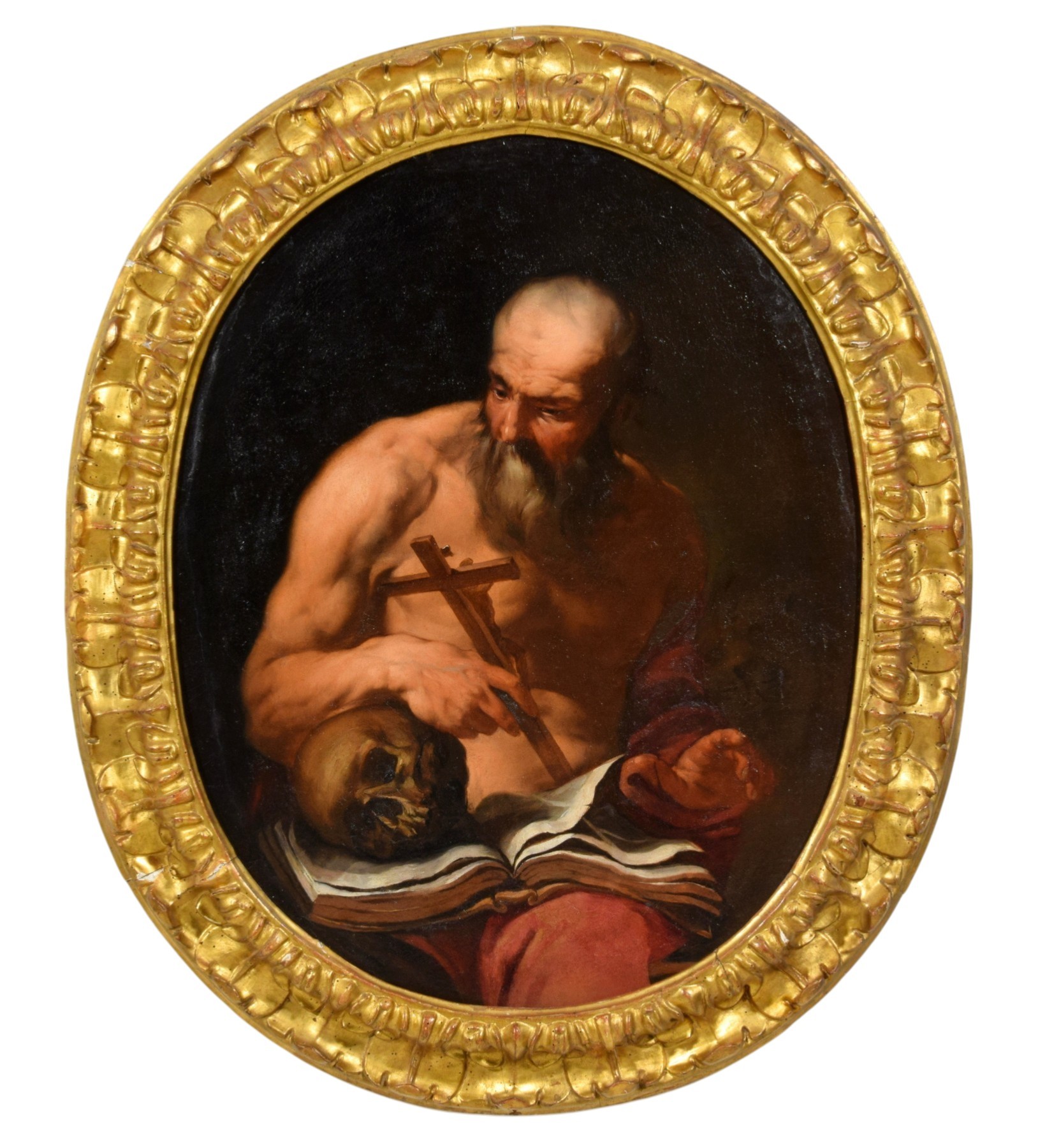

Antonio Zanchi (Este, 6 December 1631 – Venice, 12 April 1722)
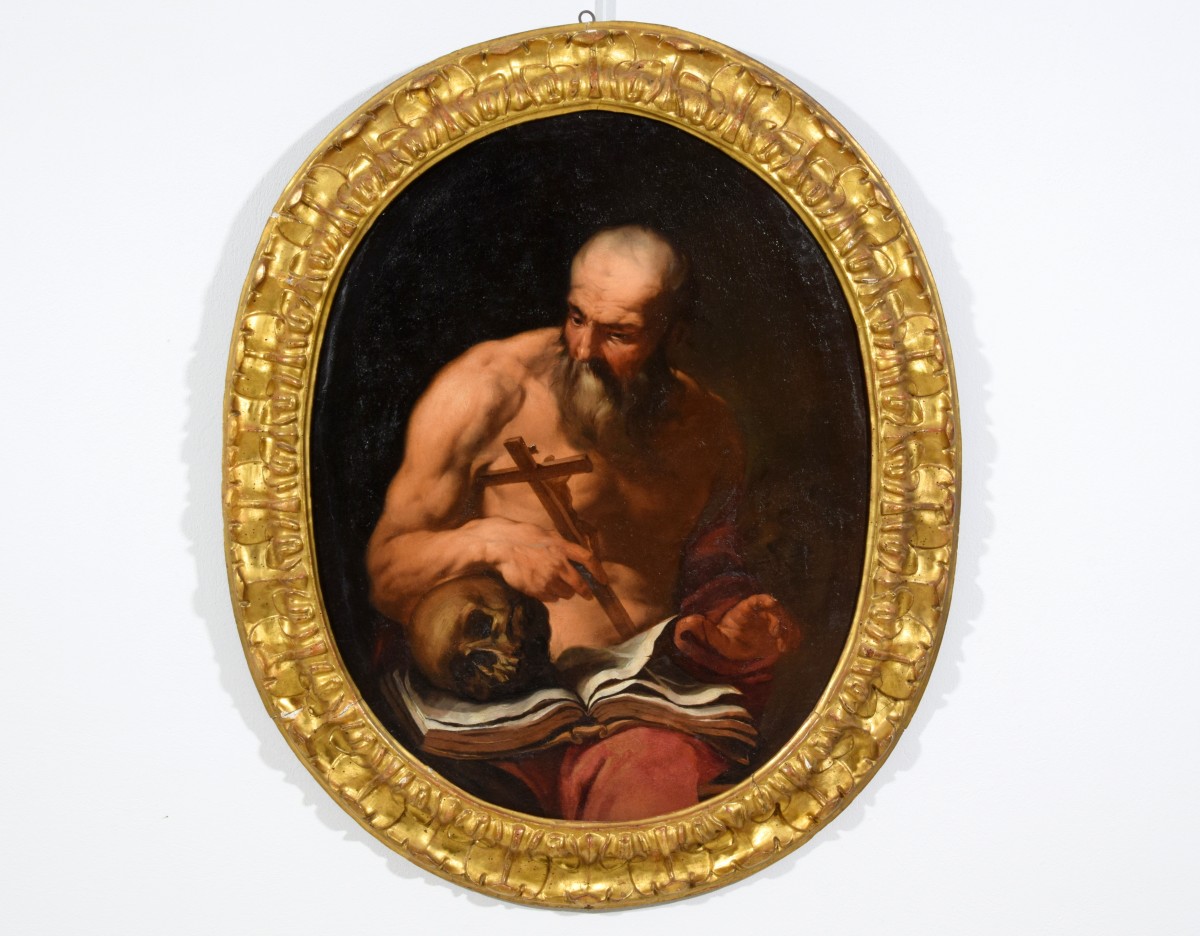
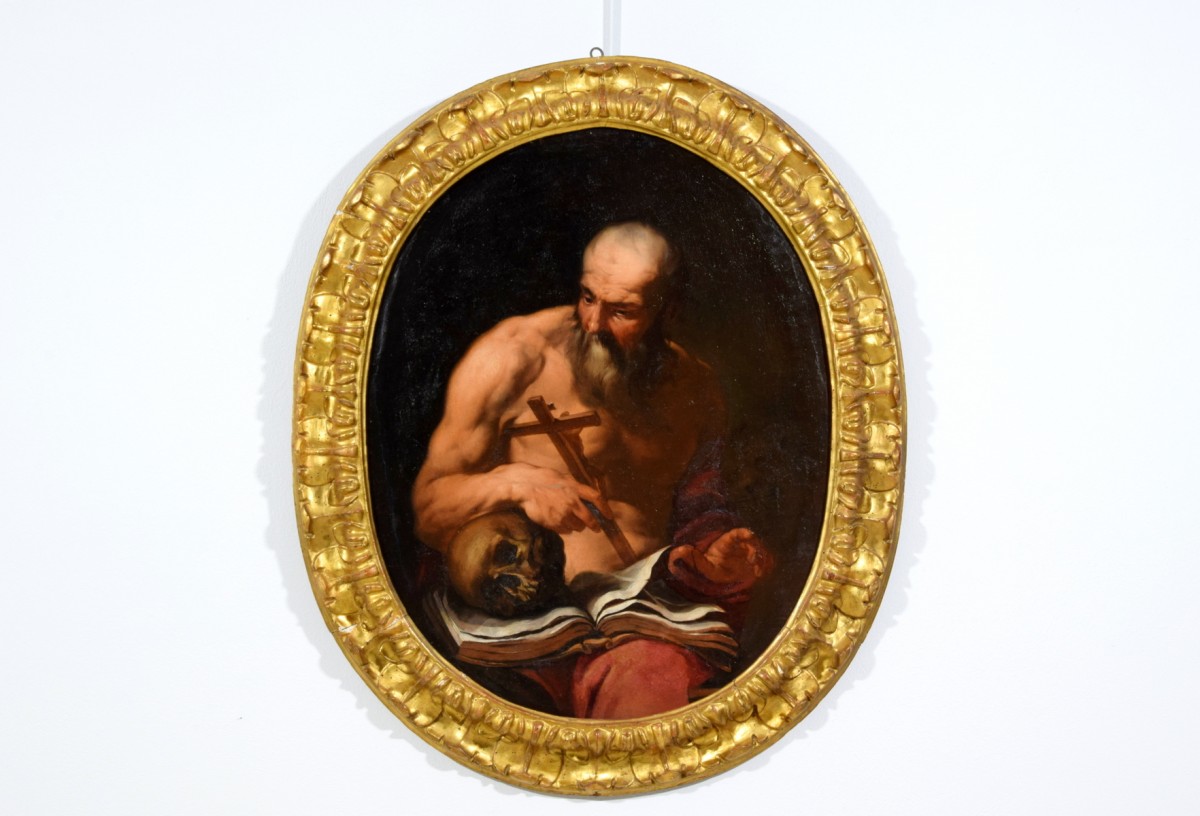
St. Jerome Penitent
Oil on canvas
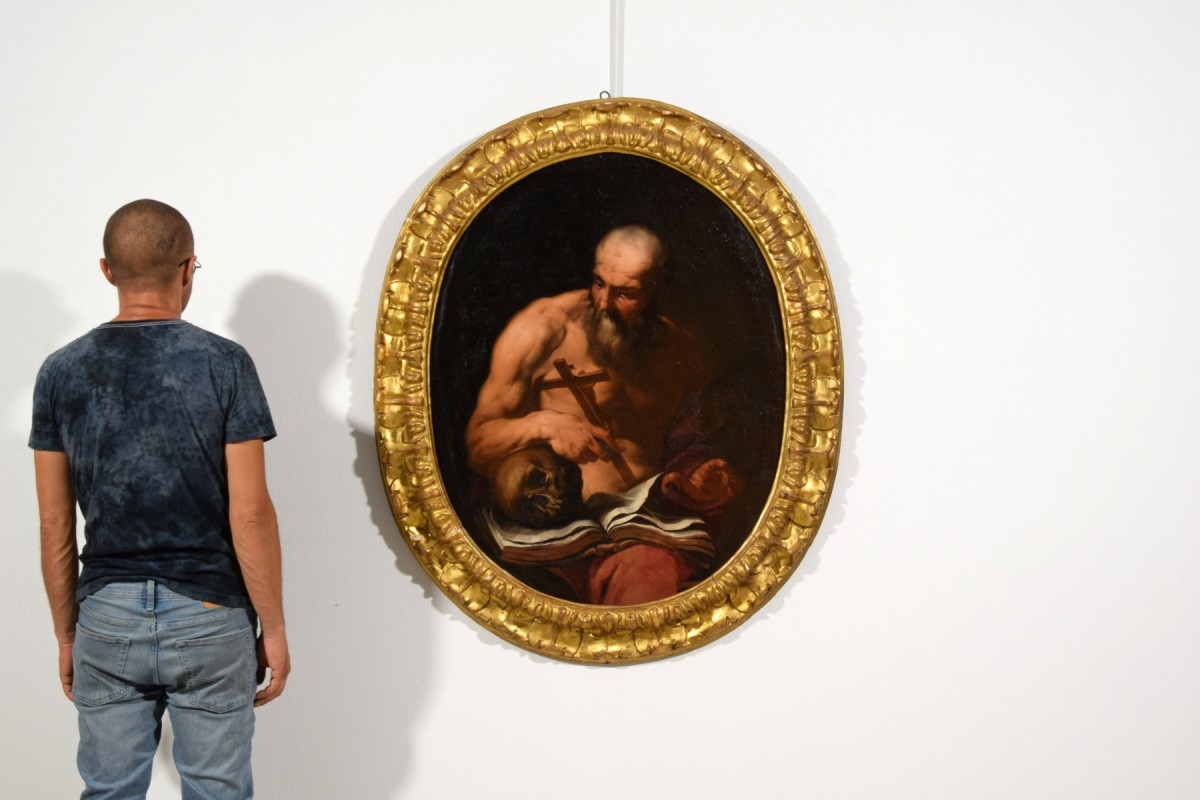
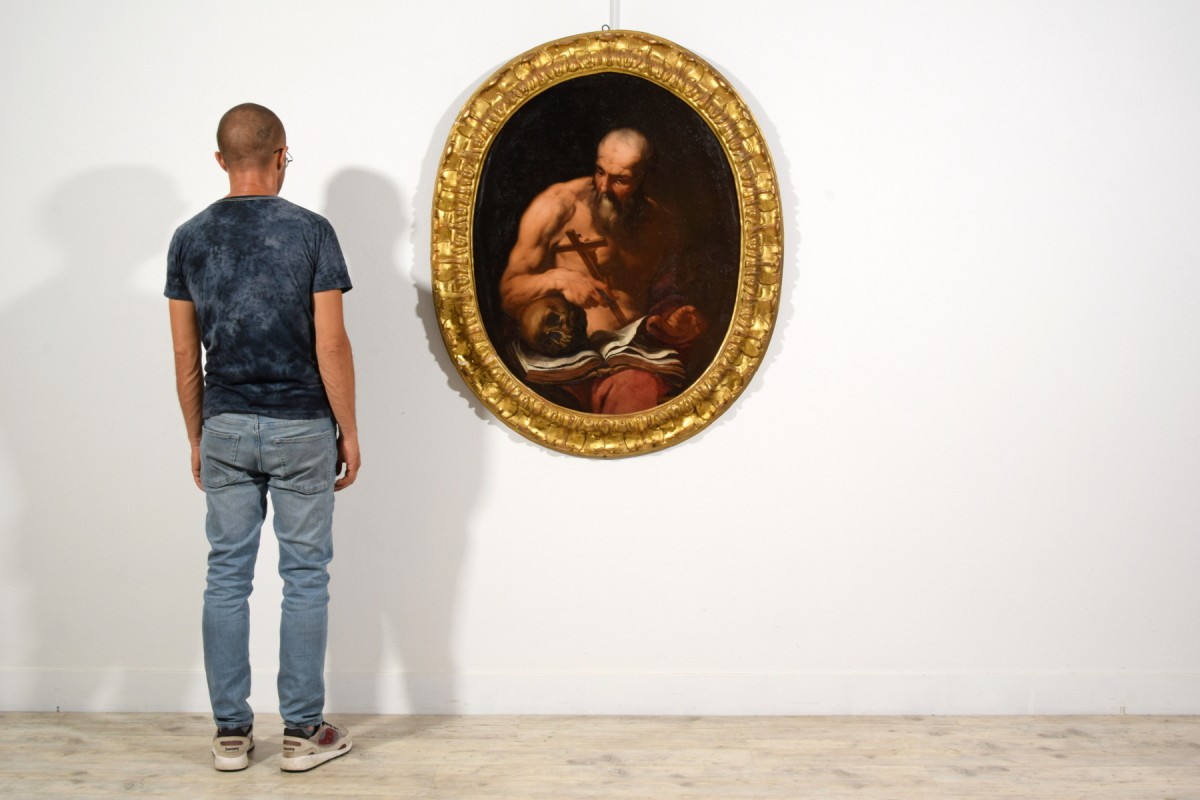
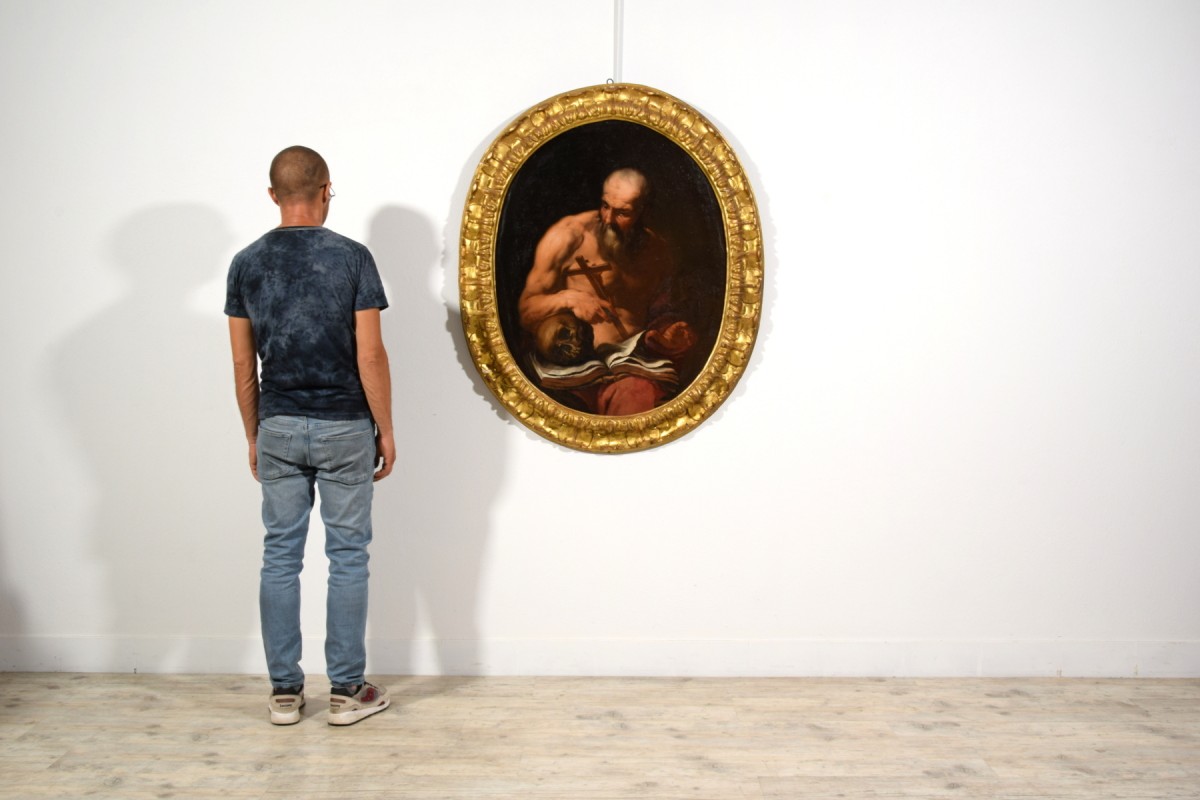
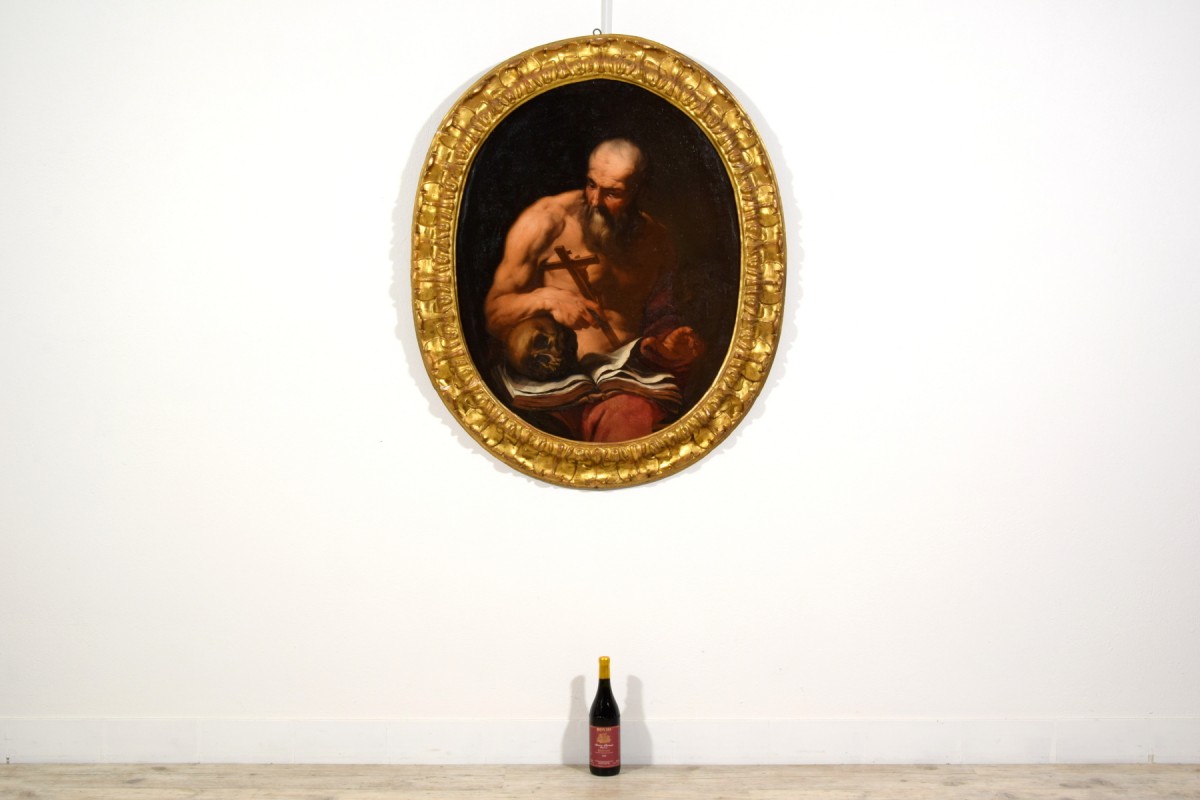
Dimensions: canvas W 73 × H 92 cm; frame W 96 × H 115 × D 6 cm
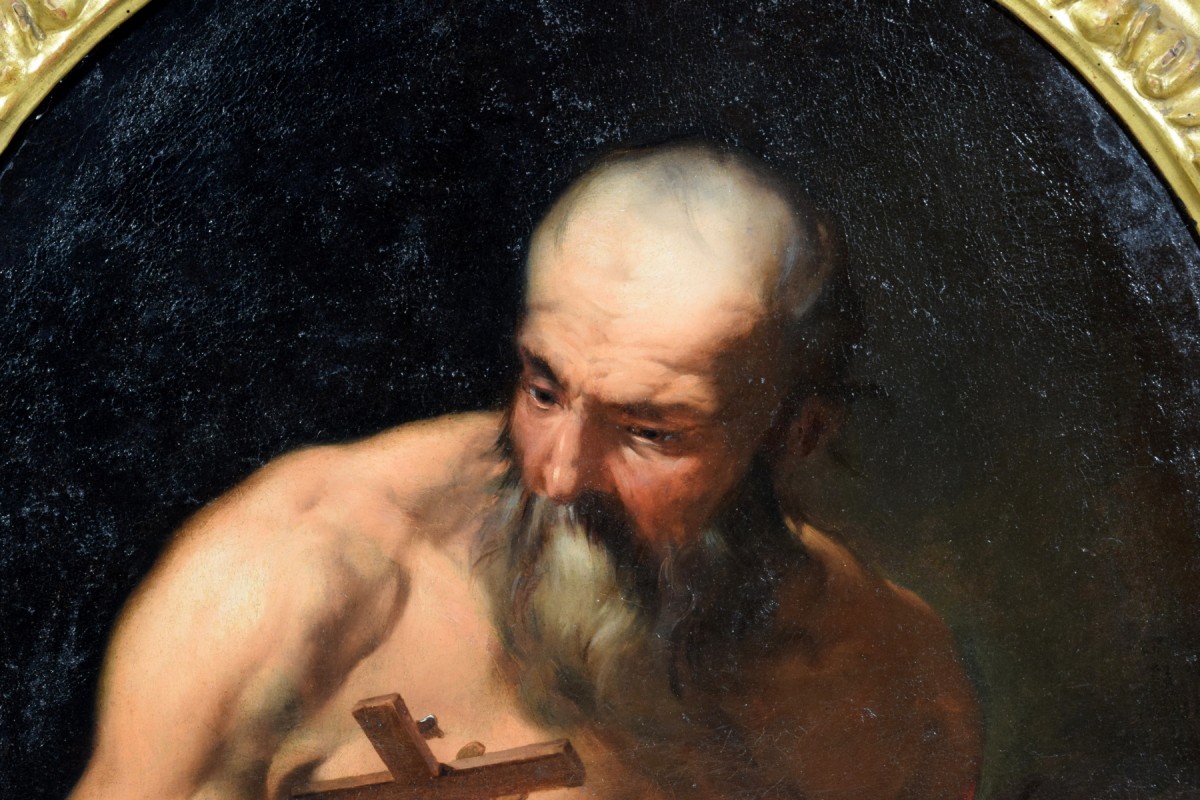
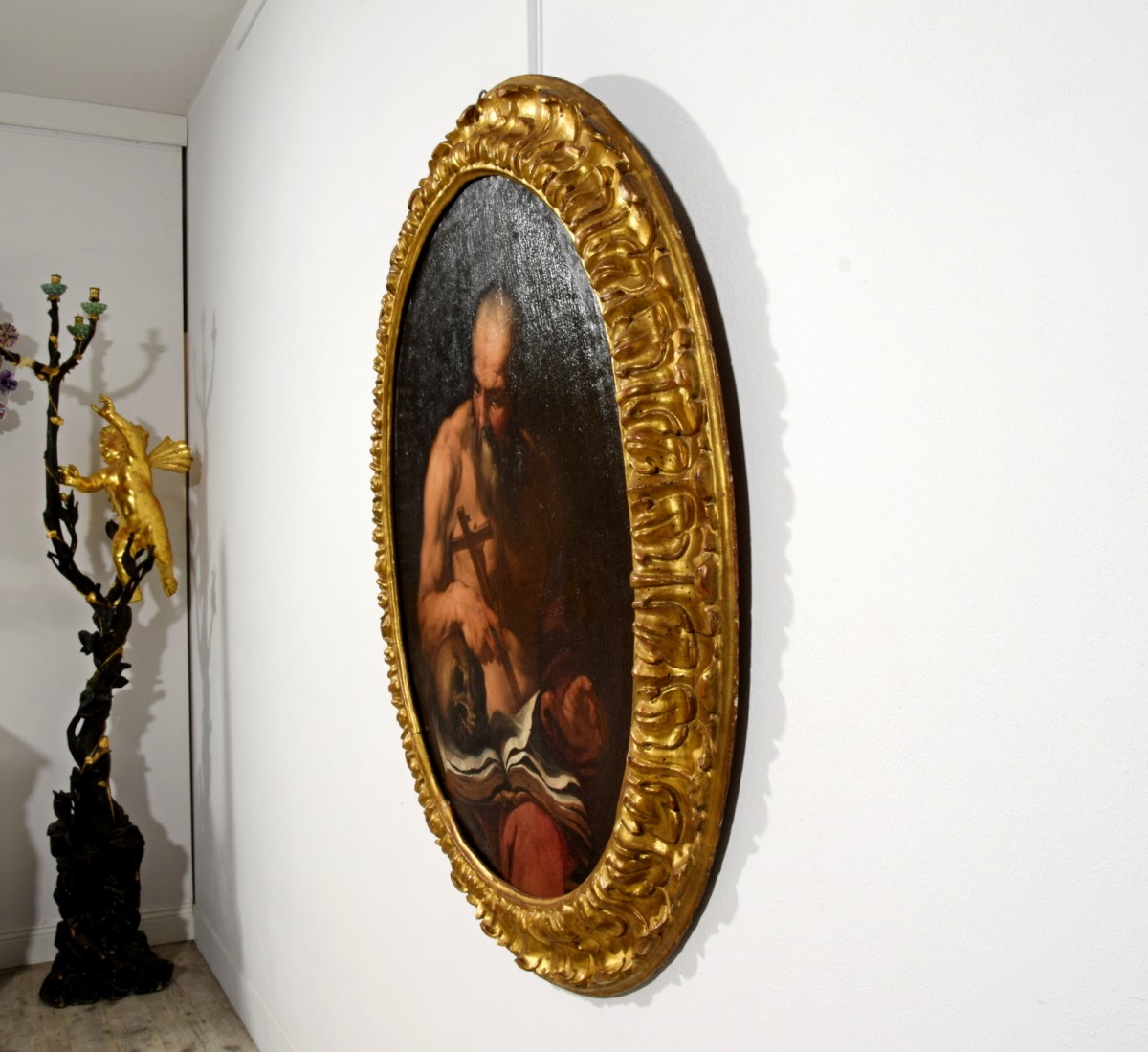
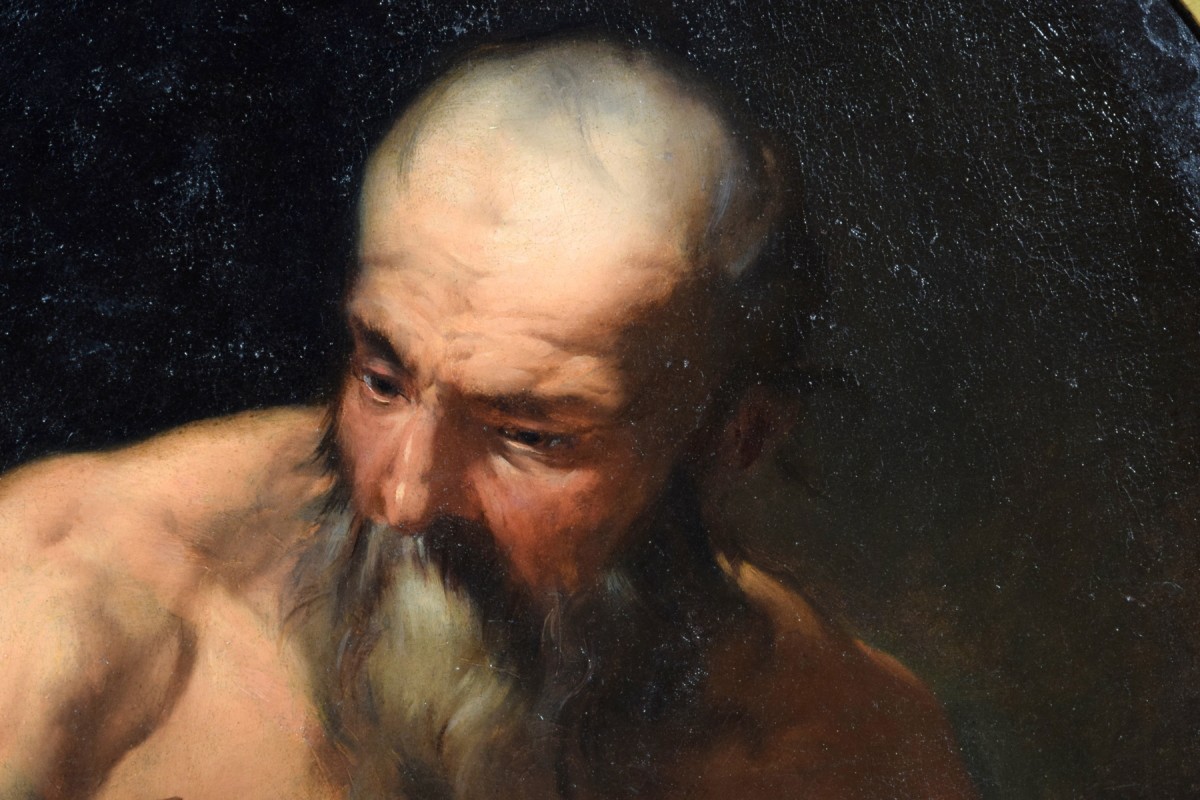
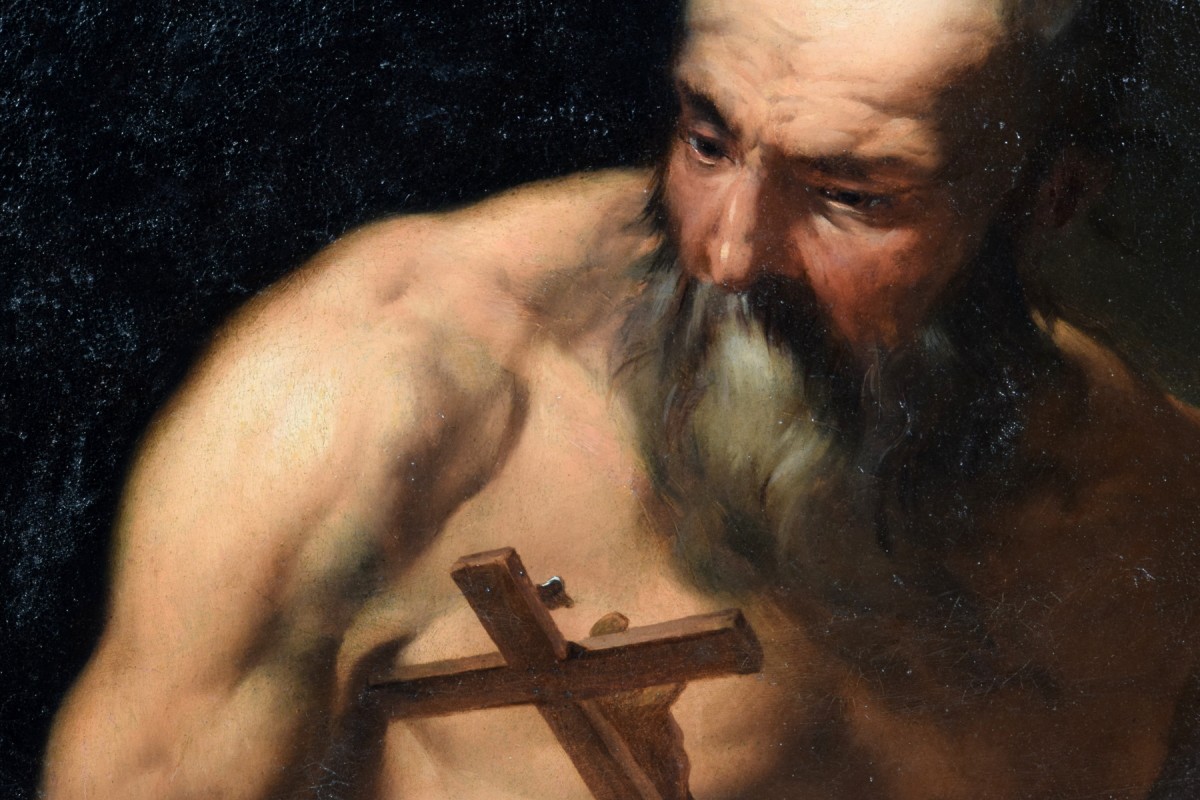
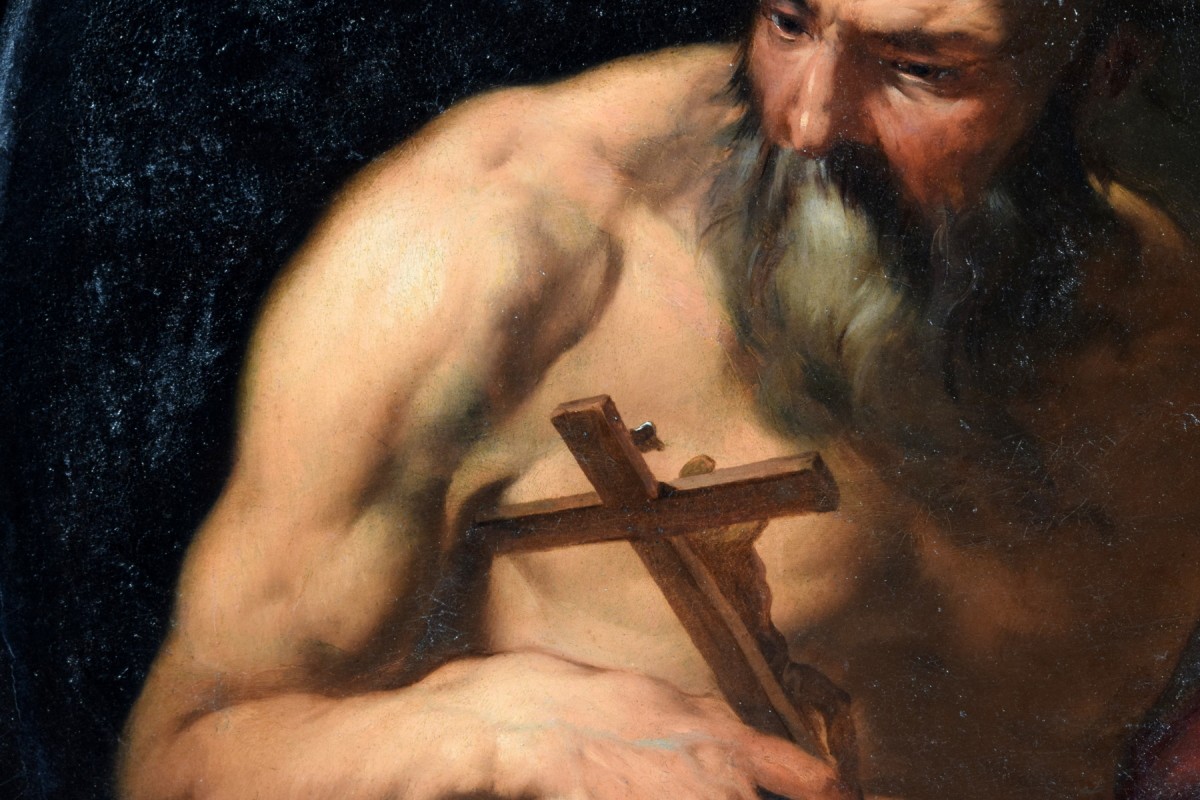
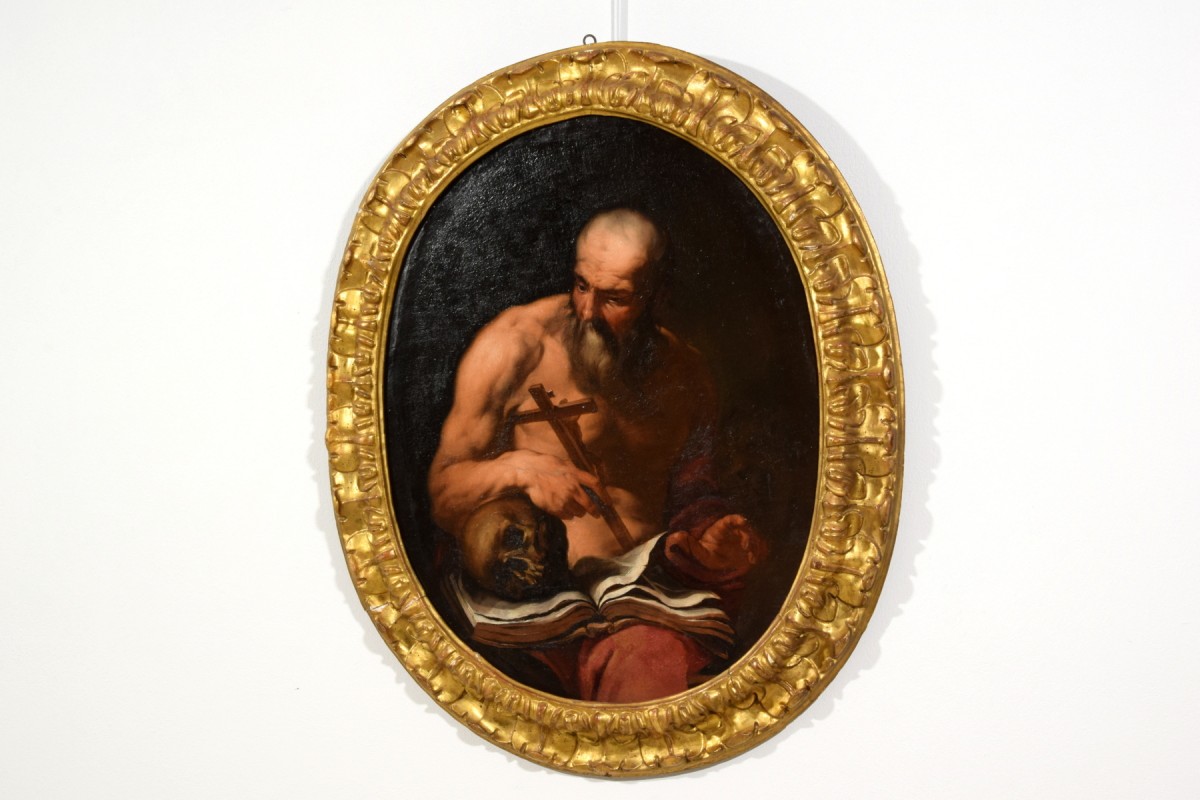
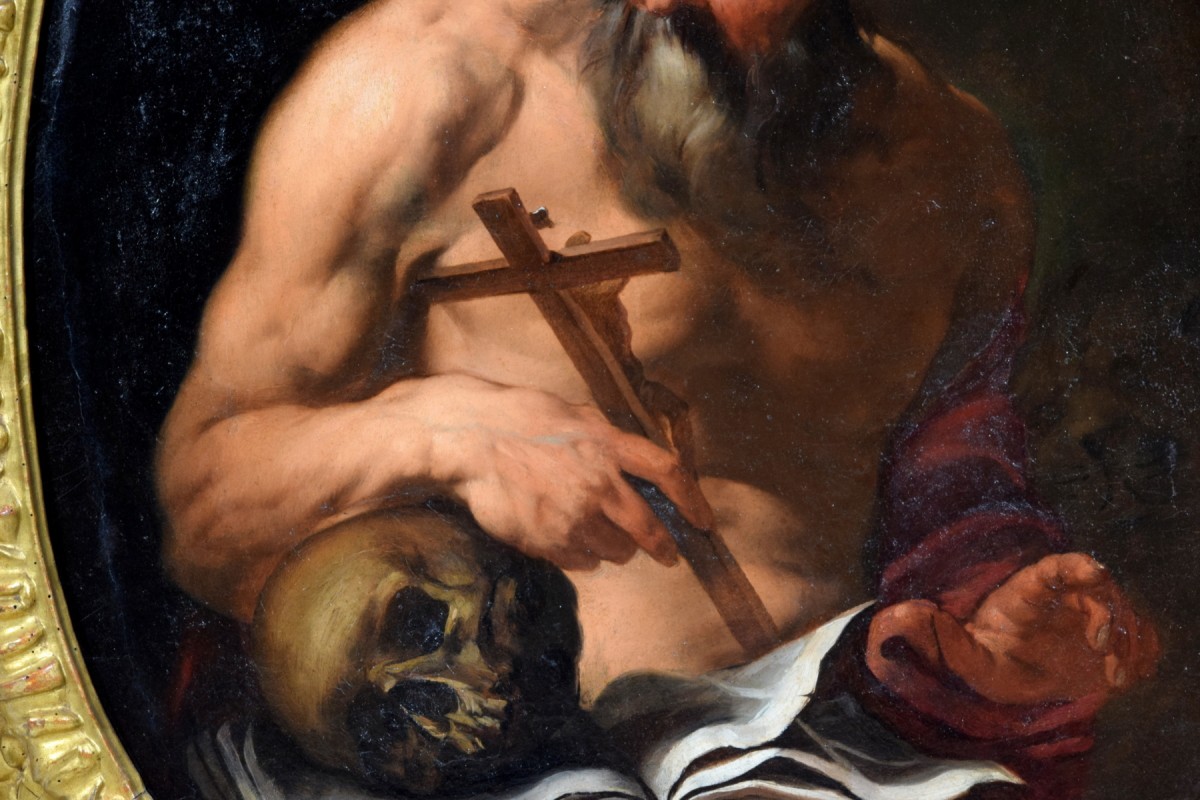
The painting depicts St. Jerome as a penitent, a subject widely explored in Venetian Baroque painting and particularly suited to the poetics of Antonio Zanchi (1631–1722), master of lagoon tenebrism.
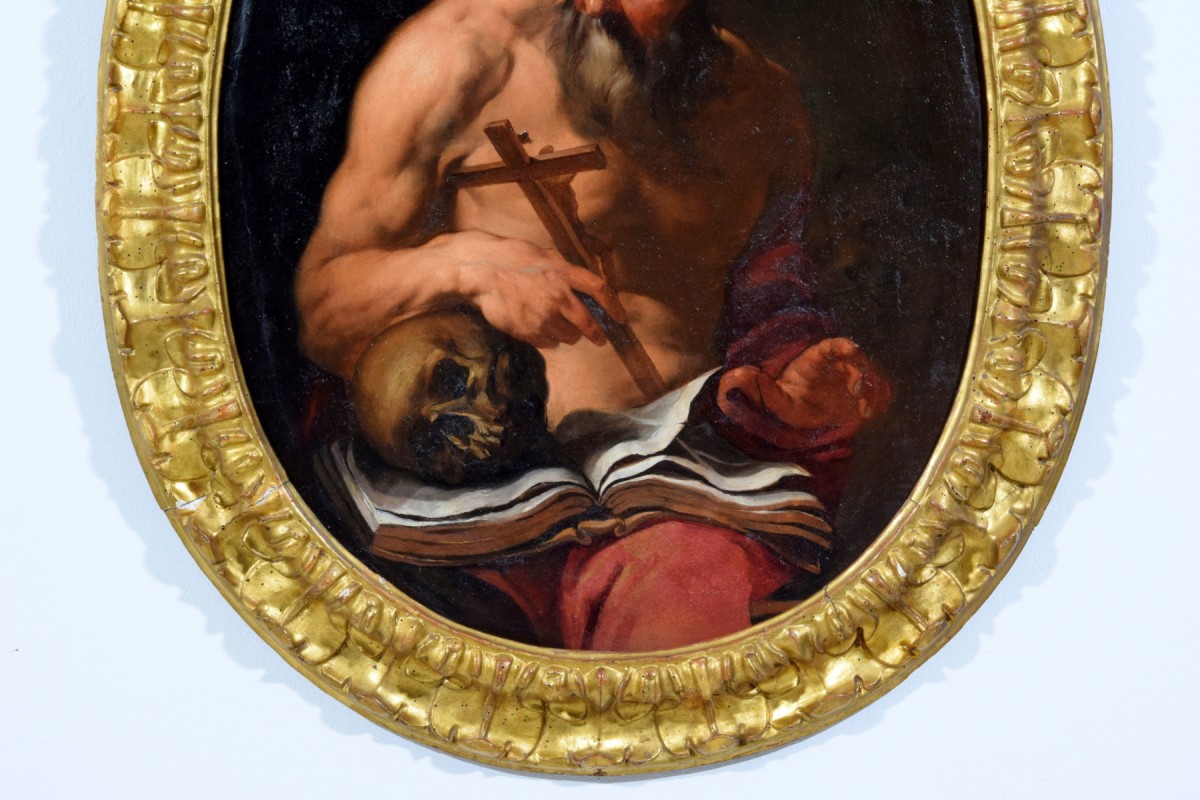
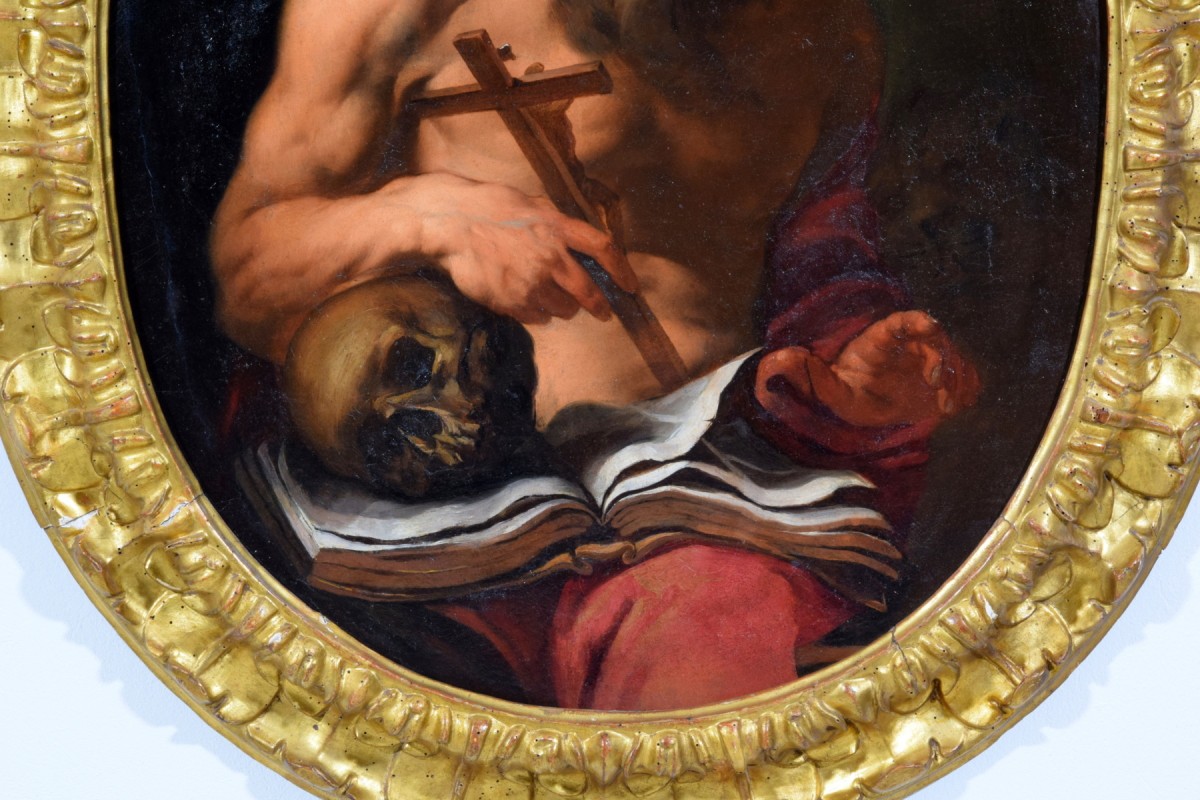
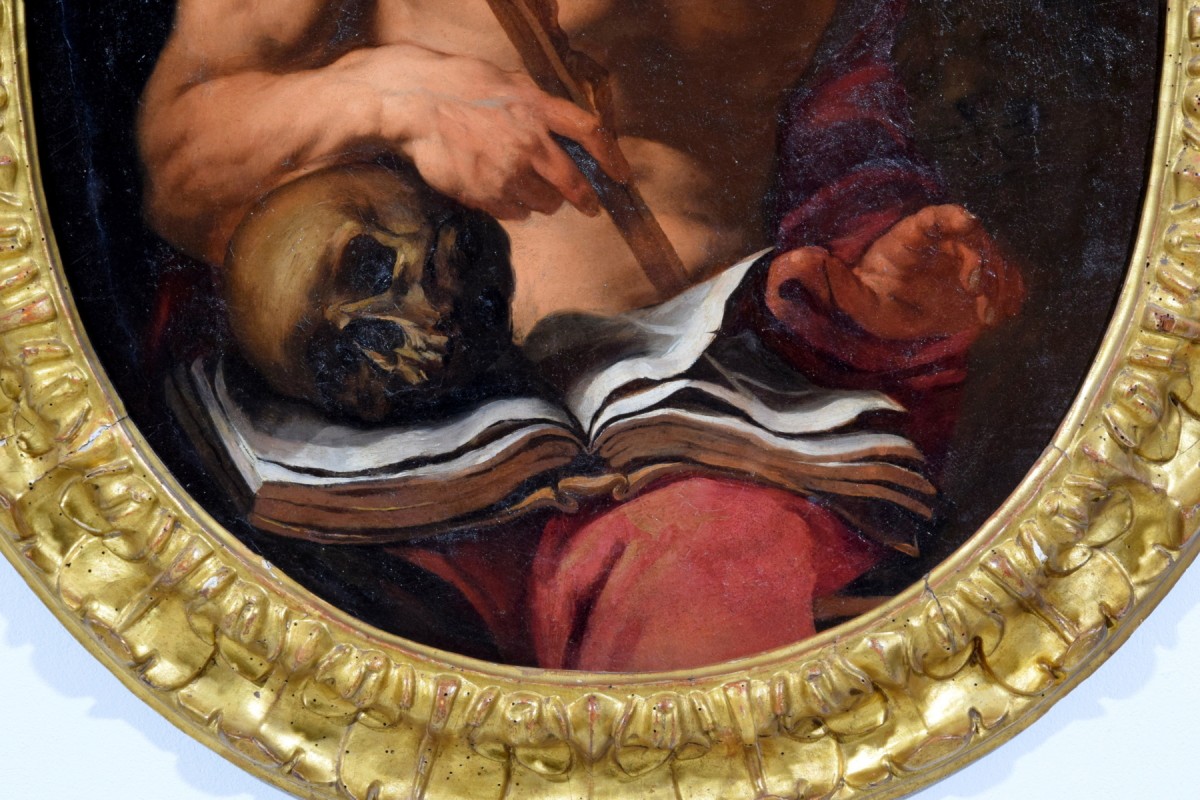
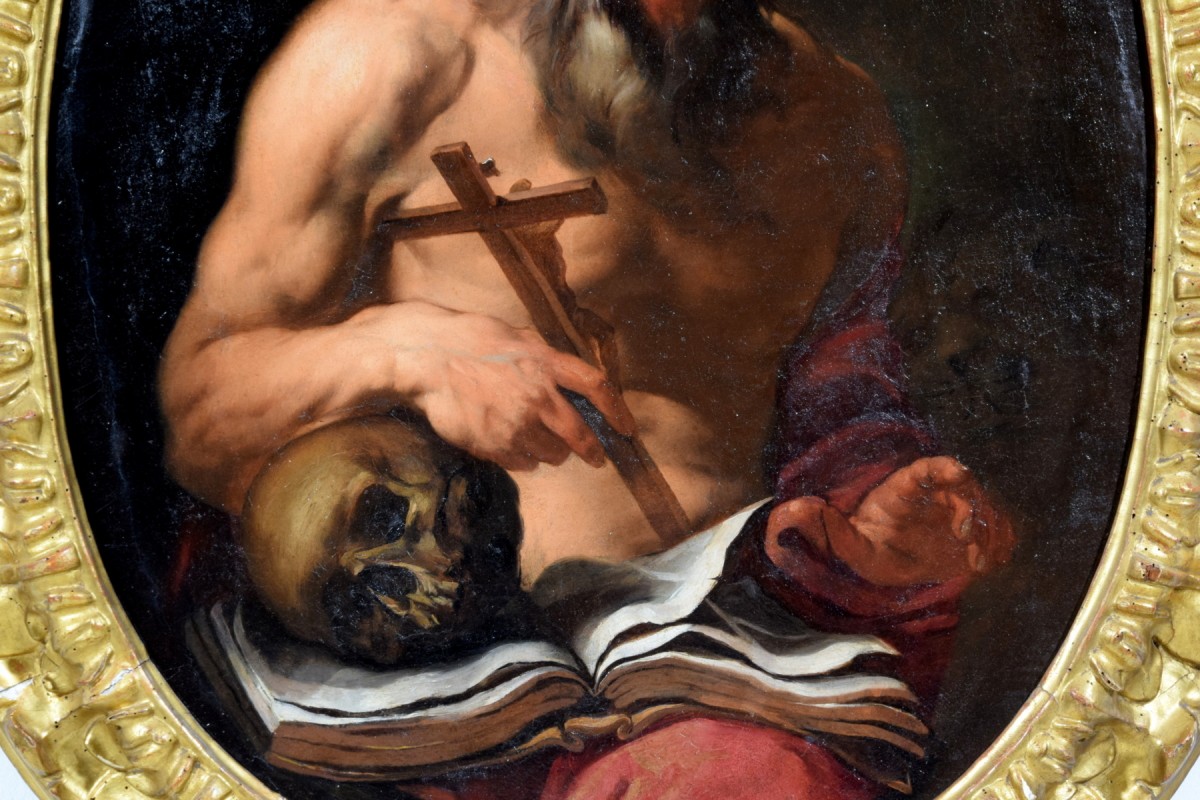
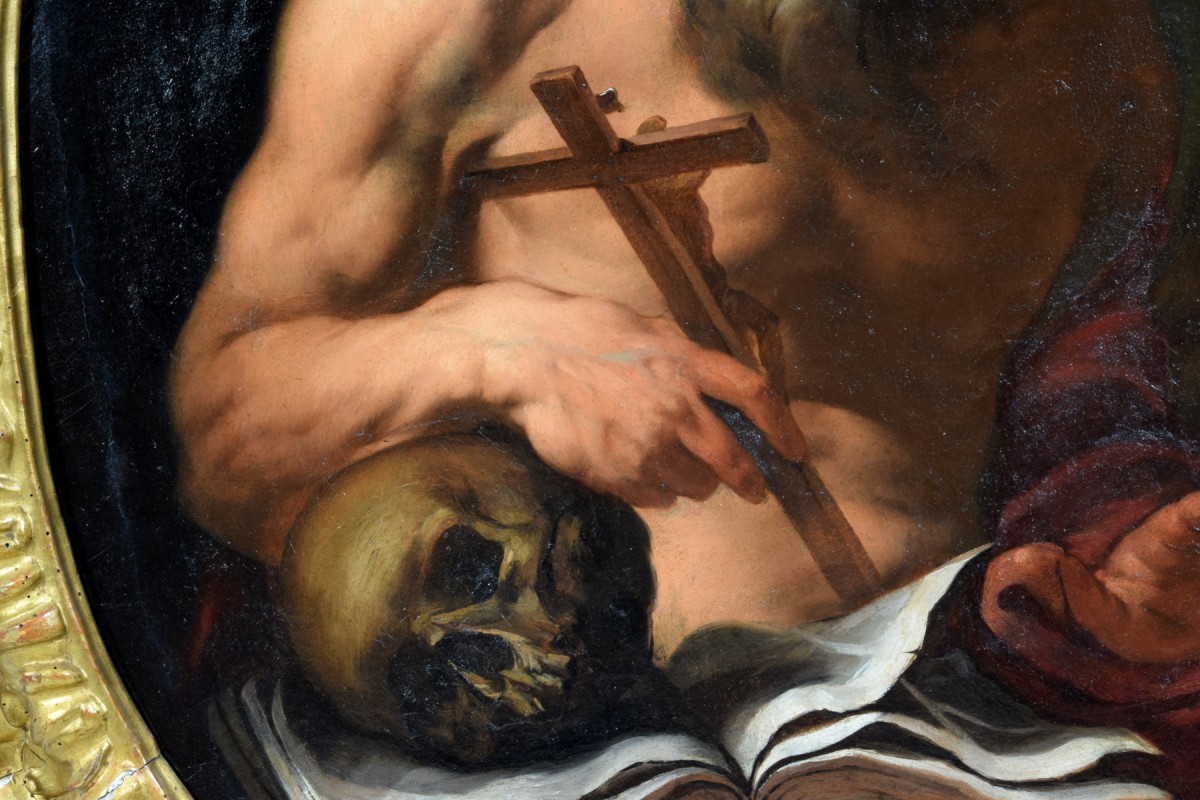
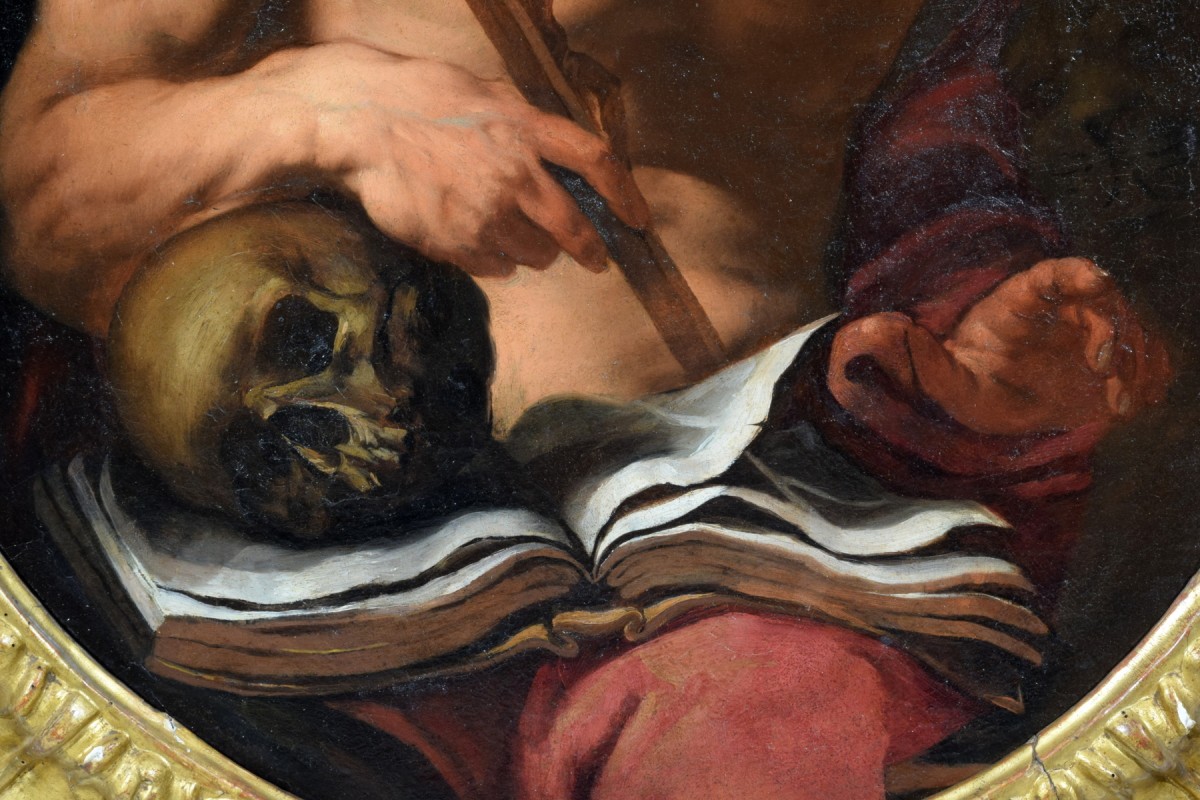
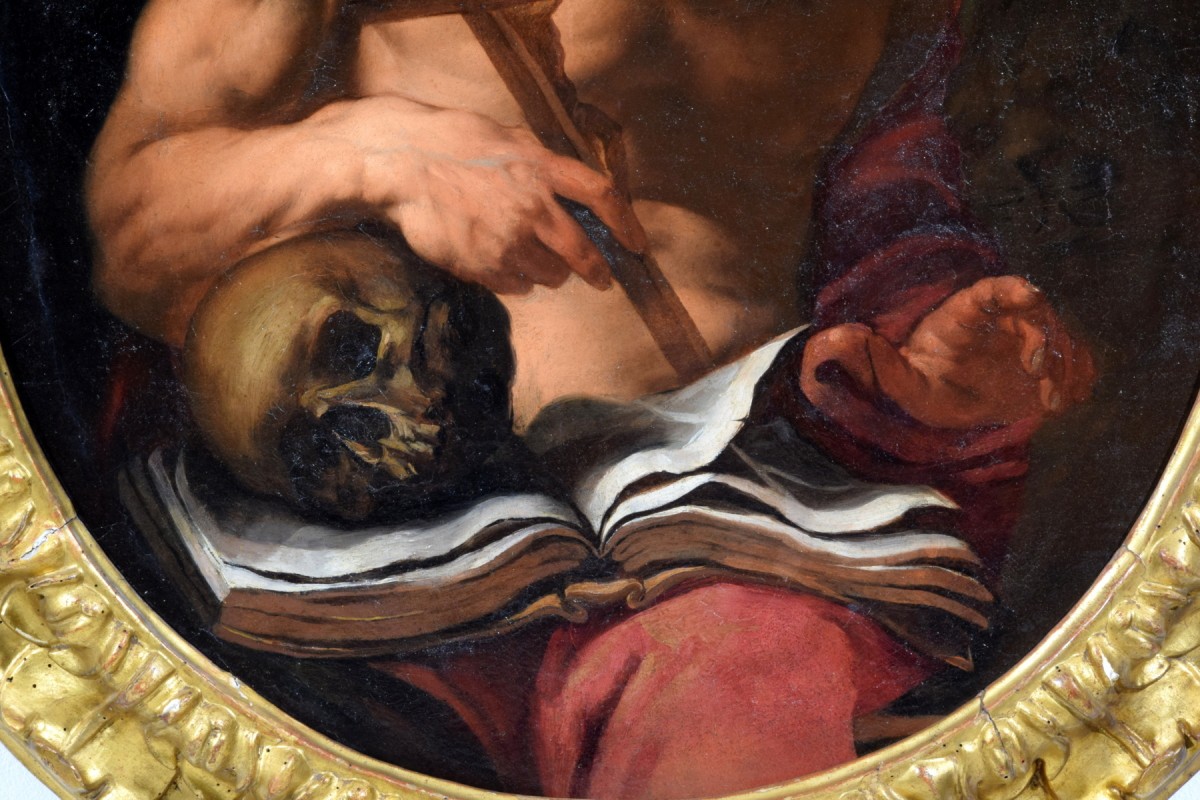
The composition presents the saint in a half-length figure, bare-chested, immersed in a dense chiaroscuro atmosphere. The traditional iconography associated with St. Jerome is confirmed here through the customary symbols of his meditation: a skull, a book bound in leather, and a crucifix. The saint is shown as a hermit, semi-nude, covered with a red mantle richly draped, aged and with a long white beard. His rugged, time-worn face is turned downward, with an absorbed and meditative expression.
Several iconographies of St. Jerome relate to episodes from his life. Among these, the depiction of the saint in meditation, in penance, or intent on study is particularly widespread. The book alludes to his numerous exegetical writings and to the Vulgate. The skull is a symbol of Vanitas, the transience of human life and meditation on death. The red cardinal’s mantle refers to the widespread medieval—yet erroneous—belief, perpetuated by the Legenda Aurea (The Golden Legend), that Jerome was a cardinal because he served as secretary to Pope Damasus; thus, the cardinal’s robe entered his iconography.
Returning to the work under study, the dark background accentuates the saint’s virile physique, marked by time and penance, with intensified muscular rendering, focusing the light on his arms, head, and symbolic objects. The brushwork is swift and vigorous, dense in the more illuminated areas. Furthermore, the oblique lighting, the somber atmosphere, and the plastic anatomical treatment of the figure show clear affinities with authenticated works by Zanchi. His pictorial language, management of chiaroscuro, the intense emotional expressiveness of his figures, the compositional setup, and the iconographic typology are fully consistent with the oeuvre of the master—one of the protagonists of 17th-century Venetian painting, known especially for his dark tones and theatrical figures.
His skill in rendering flesh and his effective handling of chiaroscuro provide a significant example of Zanchi’s “tenebrism” and pathetic style. His persistent use of vehement light-and-shadow contrasts and colors of melancholic tone contributed greatly to his success among his contemporaries.
Antonio Zanchi moved to Venice at a young age and found there the ideal environment to develop a poetics grounded in strong chiaroscuro contrasts, in tune with the research of the so-called tenebrosi and the Caravaggesque influences filtered through local tradition. His rise occurred in the 1660s, when he received important public and confraternal commissions. In the following years, Zanchi became one of the most sought-after painters in Venice and the Veneto. His works also spread to Padua, Treviso, Rovigo, Verona, Vicenza, Loreto, Brescia, Milan, Bergamo, and even Bavaria, thanks to both public and private patronage that appreciated his vigorous style.
Zanchi died in Venice on 12 April 1722, leaving behind a vast and coherent corpus fundamental for understanding the evolution of 17th-century Venetian painting.
The St. Jerome examined here appears consistent with Zanchi’s mature phase, when tenebrism chiaroscuro remained central and the artist pursued strong volumetric investigation of figures, with muscular bodies and well-defined anatomy.
Of particular technical-stylistic interest is the comparison with a canvas depicting The Death of Socrates, which appeared on the art market a few years ago. In both works, the artist uses a single, assured, and fluid brushstroke to define the vein on the hand, rendered in a subtle blue-grey tone.
In conclusion, in light of the stylistic, technical, and comparative analysis conducted, the painting depicting St. Jerome can be attributed to Antonio Zanchi’s mature hand. The solidity of the light construction, the controlled drama of the scene, the quality of the painterly material, and the precise affinities with authenticated works attest to an expert and fully self-aware hand, typical of Zanchi’s production at the height of his maturity.
The painting therefore stands as a significant and coherent contribution to the artist’s catalogue, confirming the expressive hallmark and emotional depth that characterise his finest works.
The work is presented in an oval carved and gilded wooden frame of Emilian origin dating to the 17th century. The state of preservation of the pictorial surface is good; a few small scattered retouching are visible, the result of a conservative restoration. The painting has also been relined and re-stretched in modern times.
We apologize for any errors in the translation from Italian.
Please contact us to receive the expertise in Italian.