Offered by Frédéric Brossy

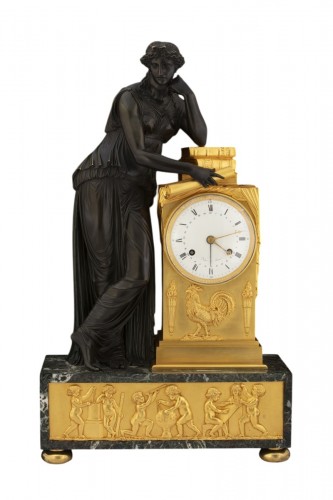
Attributed to André-Antoine Ravrio, master founder in 1777.
Born on October 23, 1759 in Paris and died on December 4, 1814 in Paris.
He was among the most important bronziers of the late 18th century and the First Empire, working in close collaboration with the most talented designers, decorators, bronziers, and other exceptional craftsmen such as Pierre Philippe Thomire.
This period of the 19th century was remarkable for the quality of the work of the artisans of art, notably the chasers and bronziers.
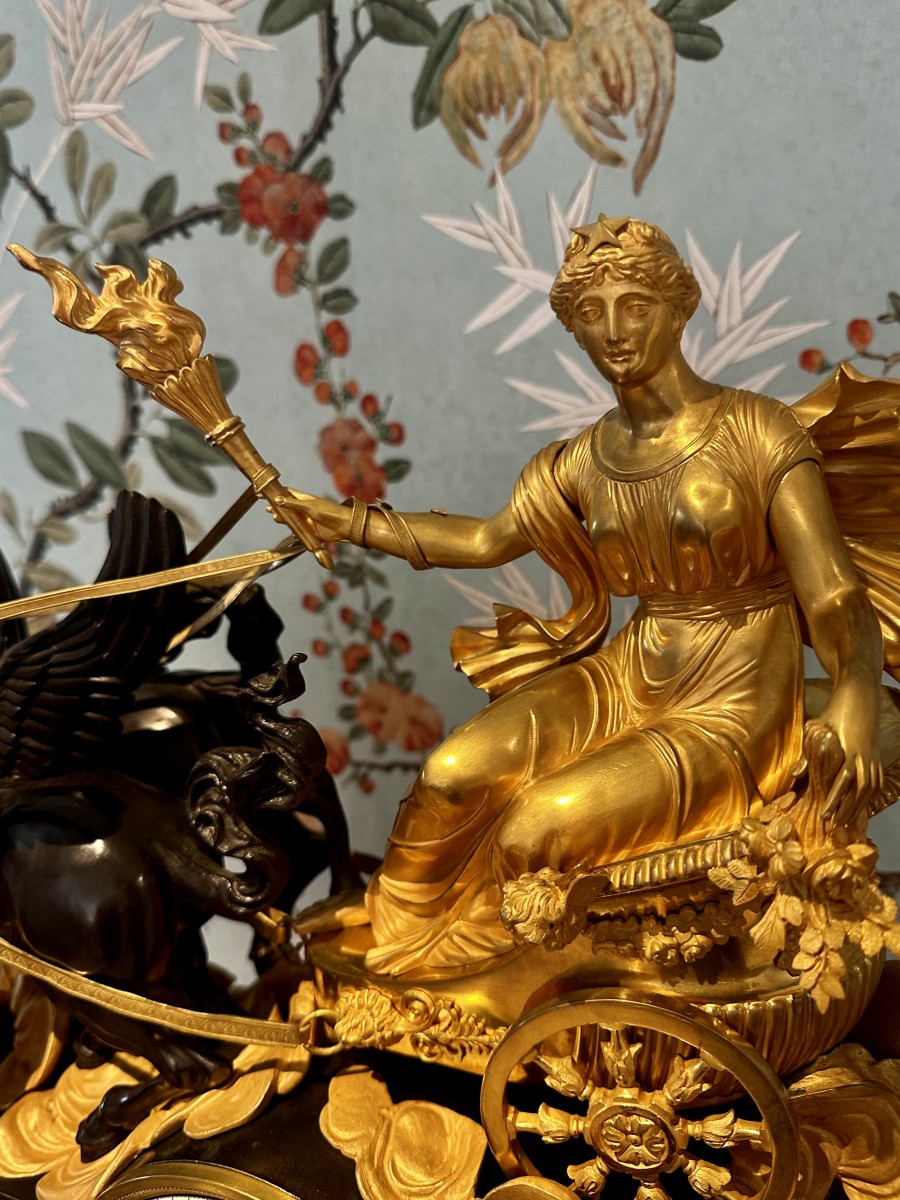
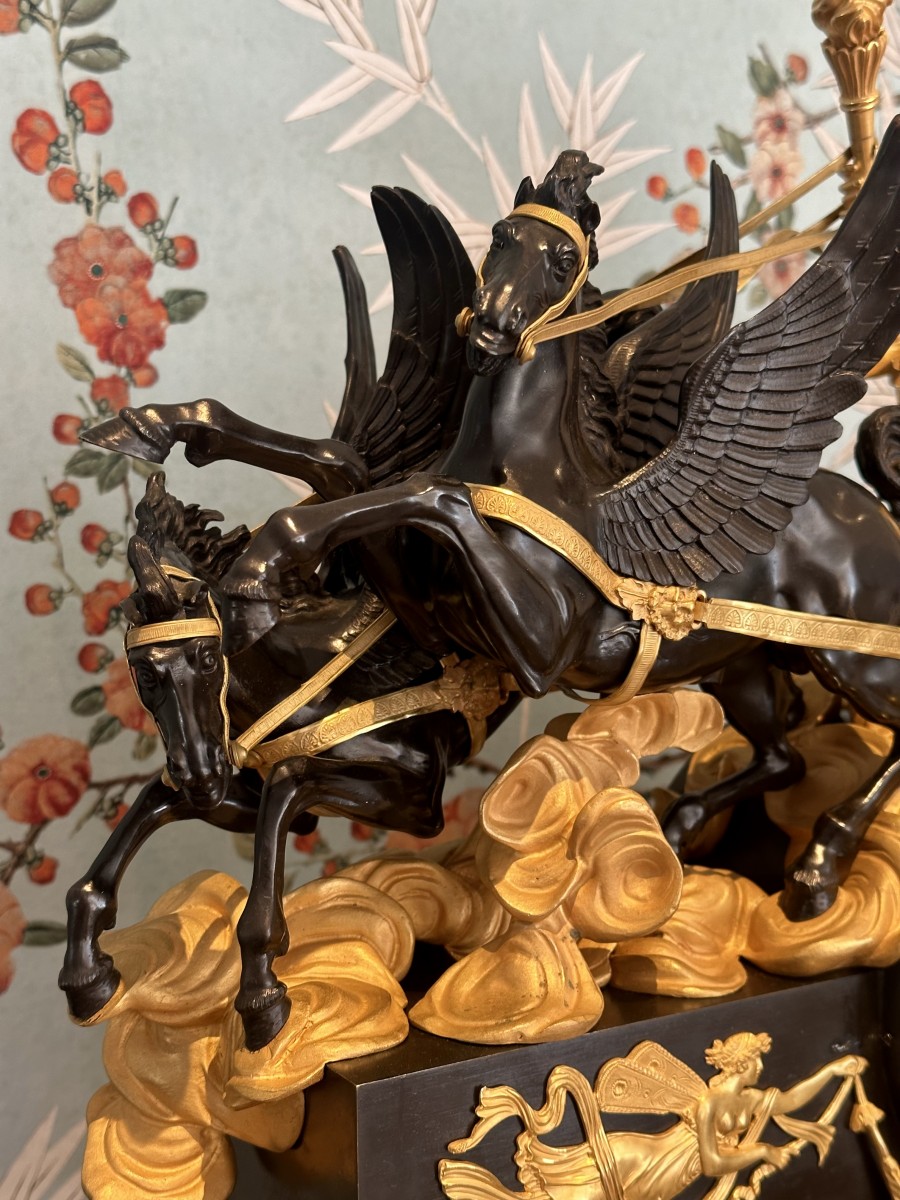
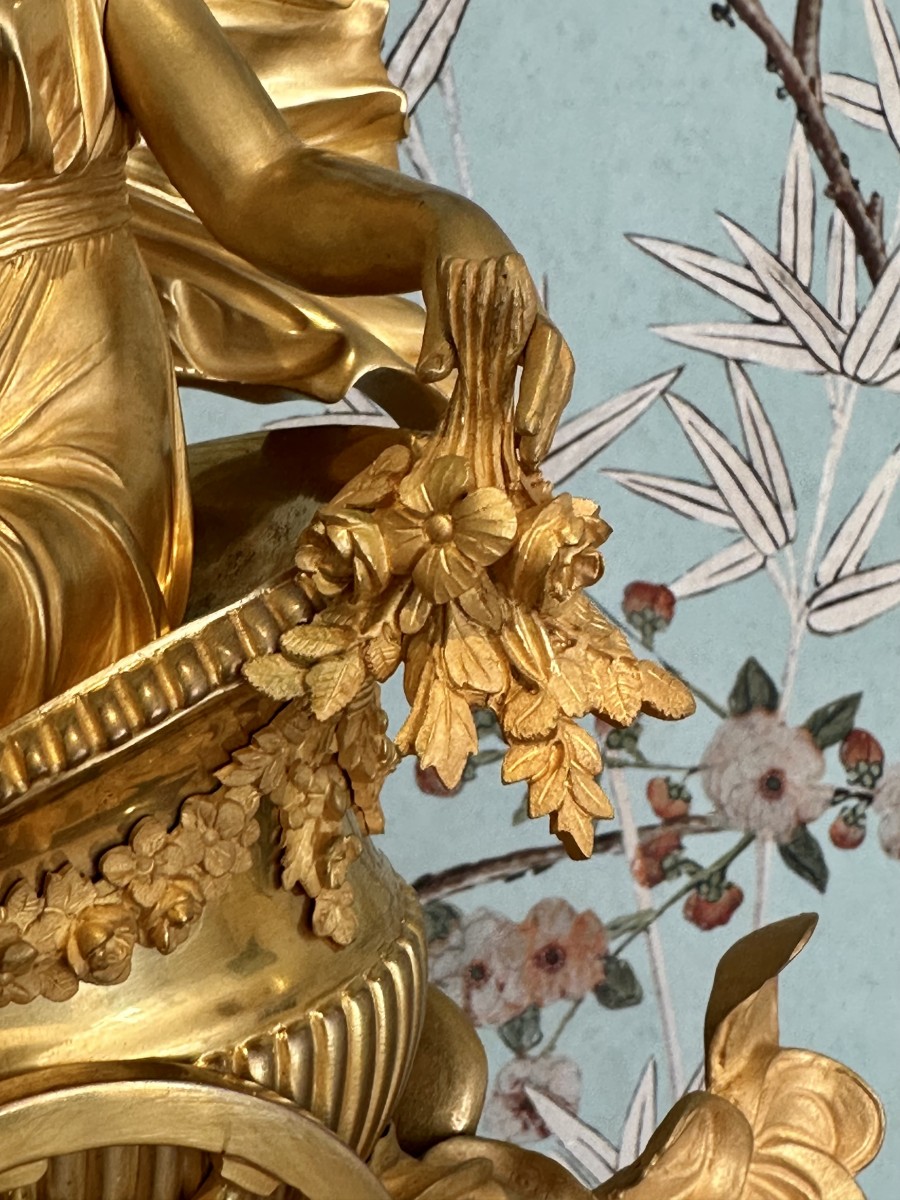
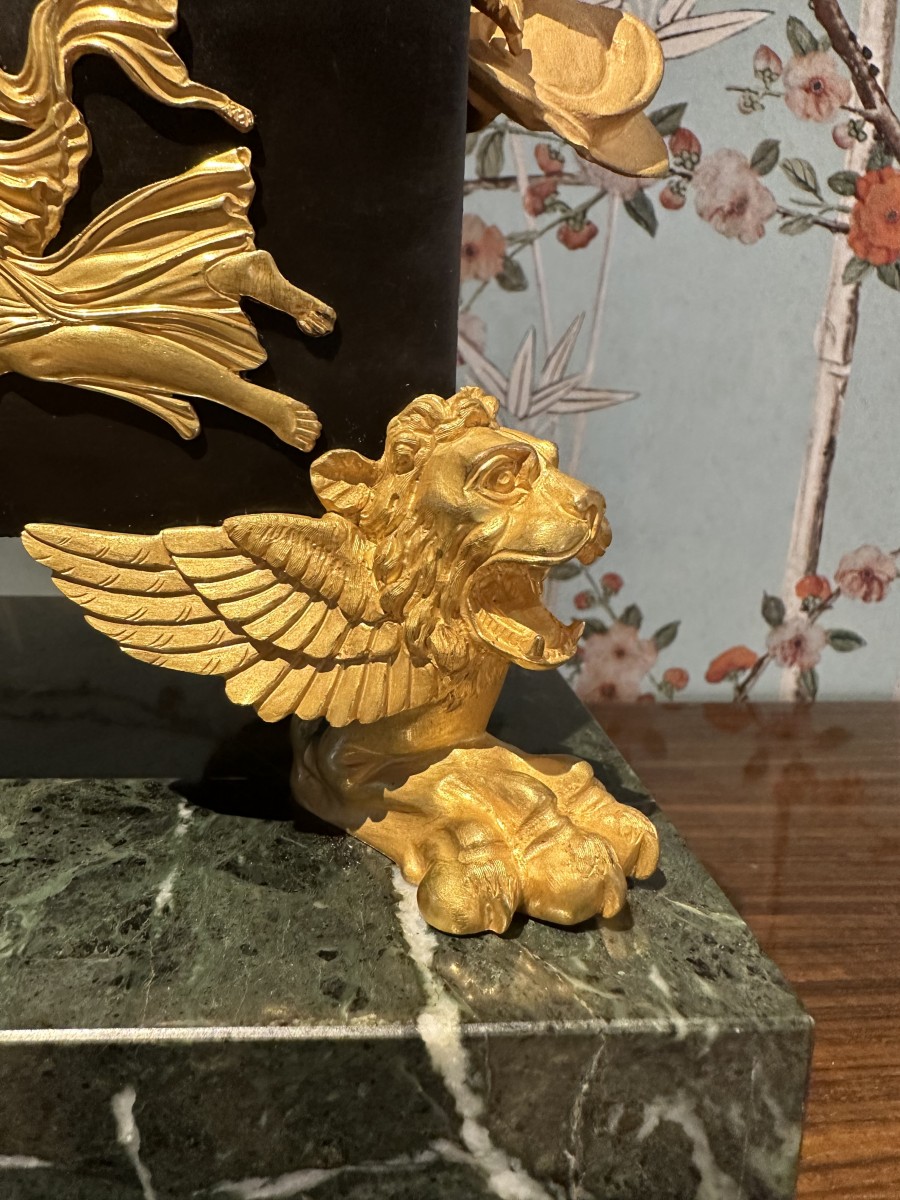
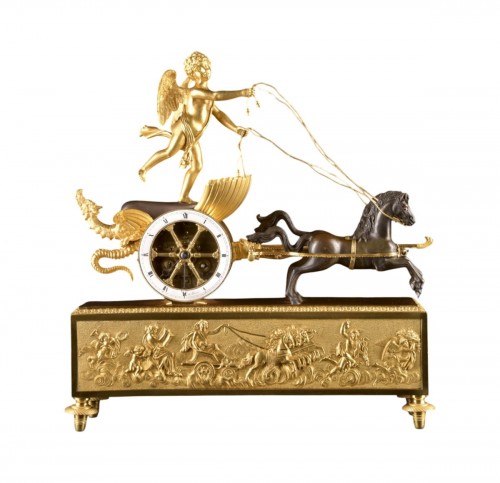
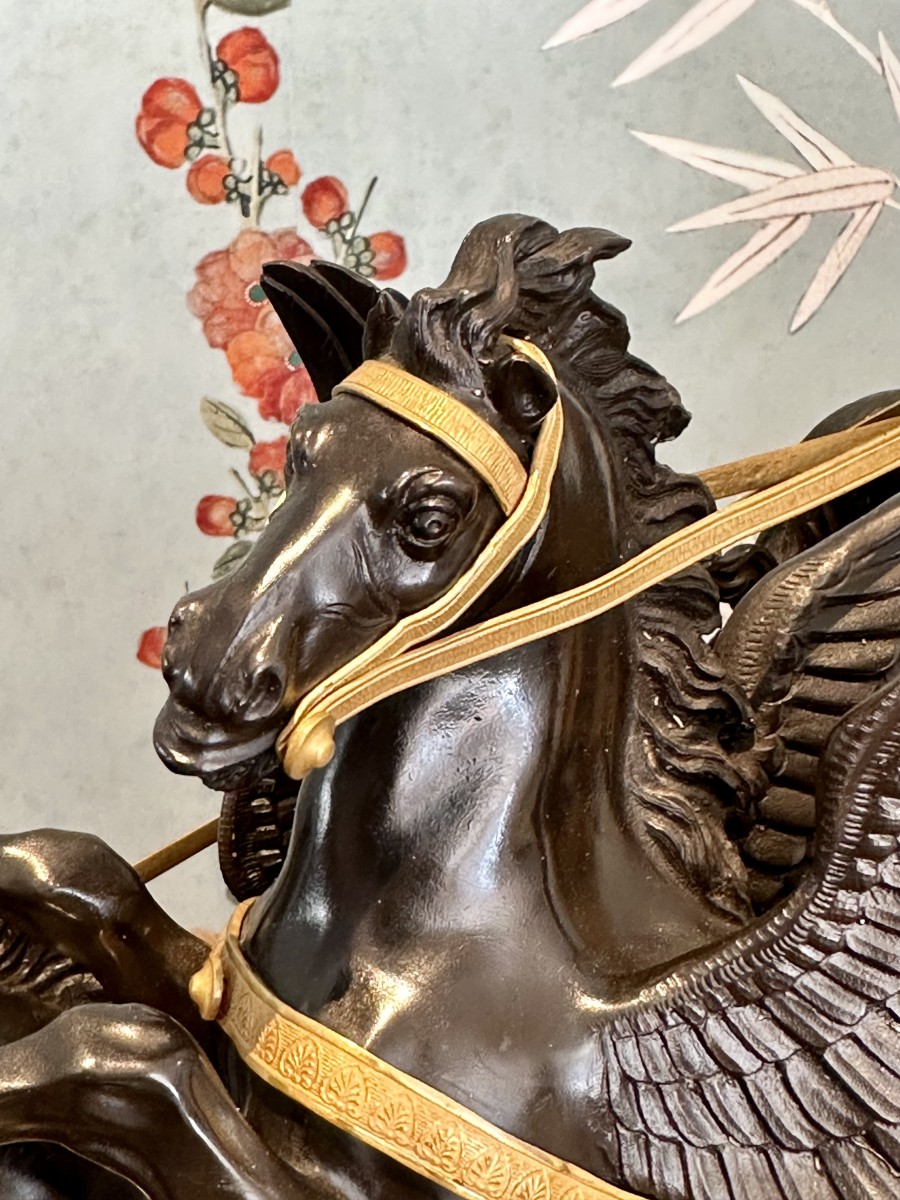
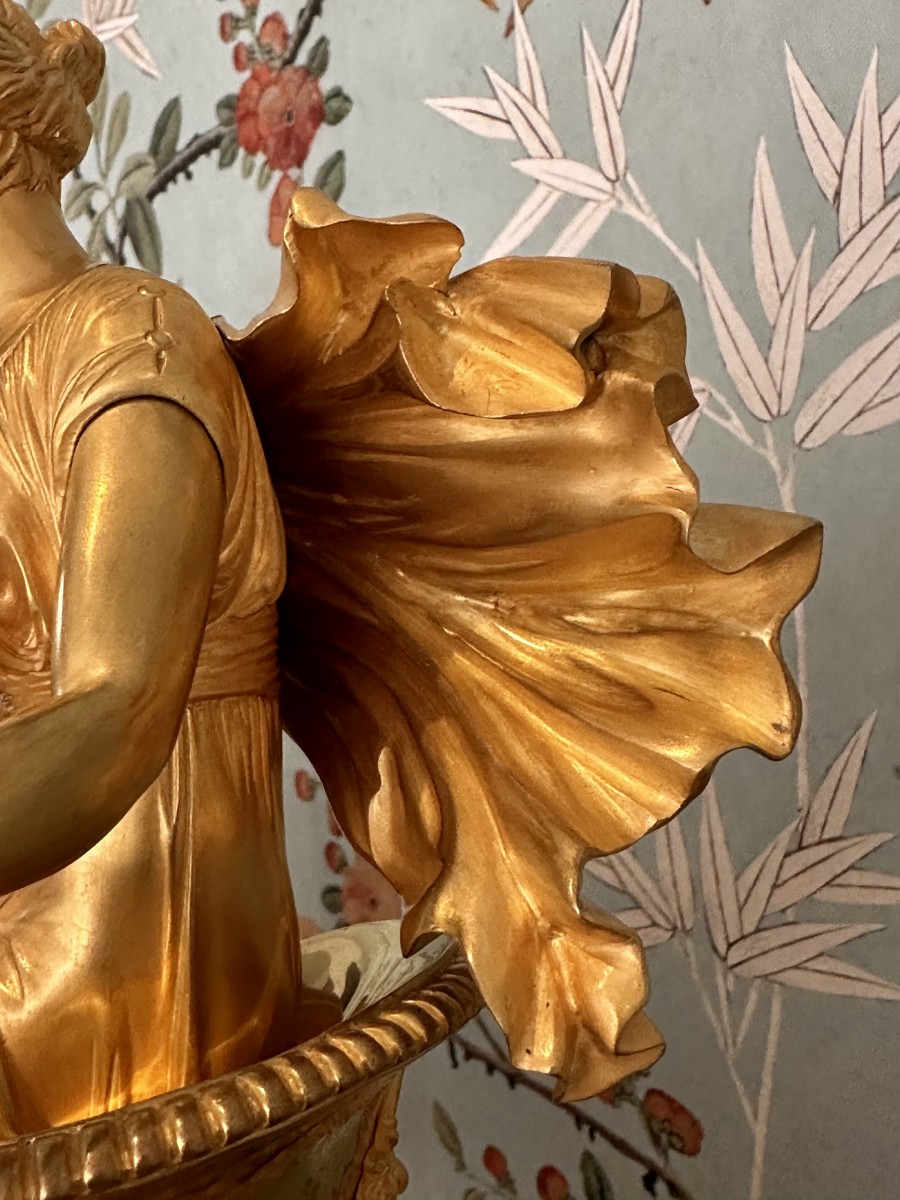
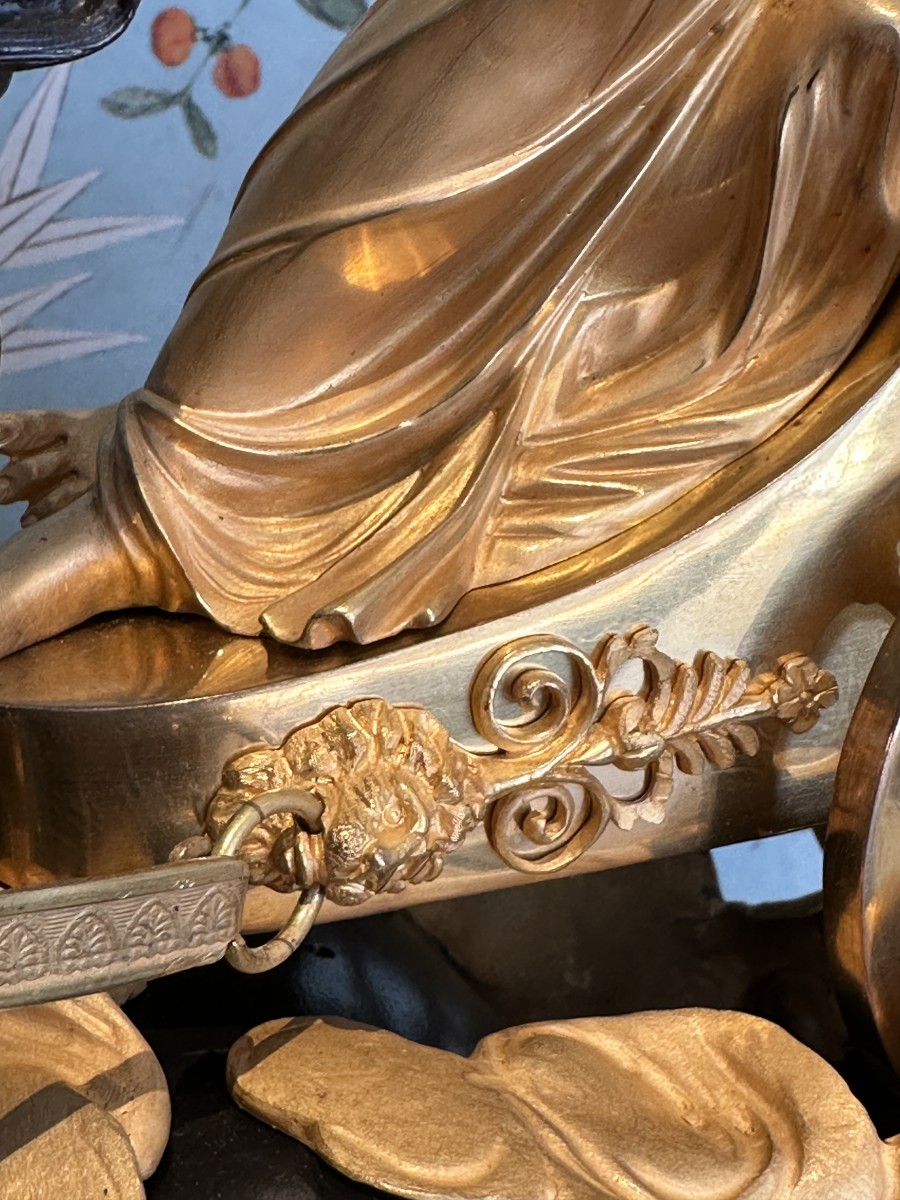
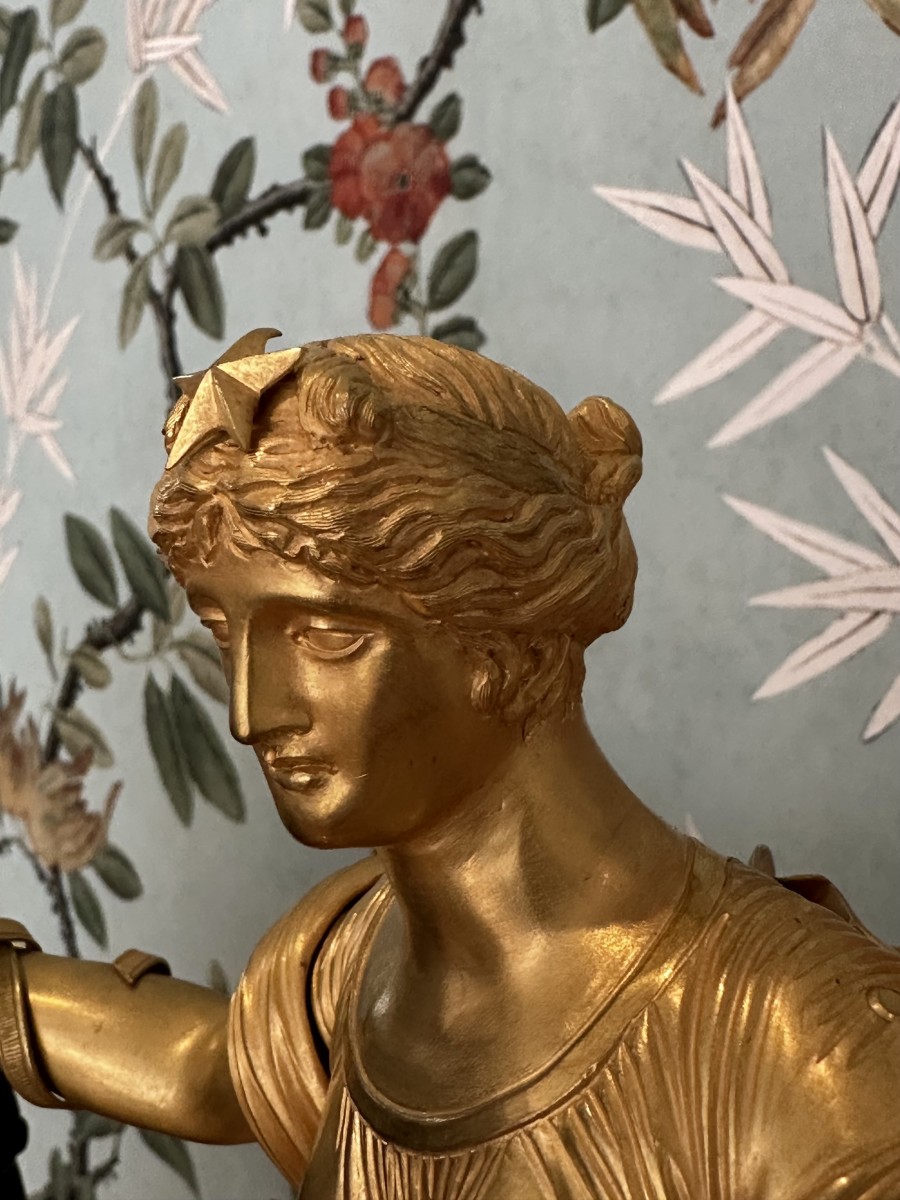
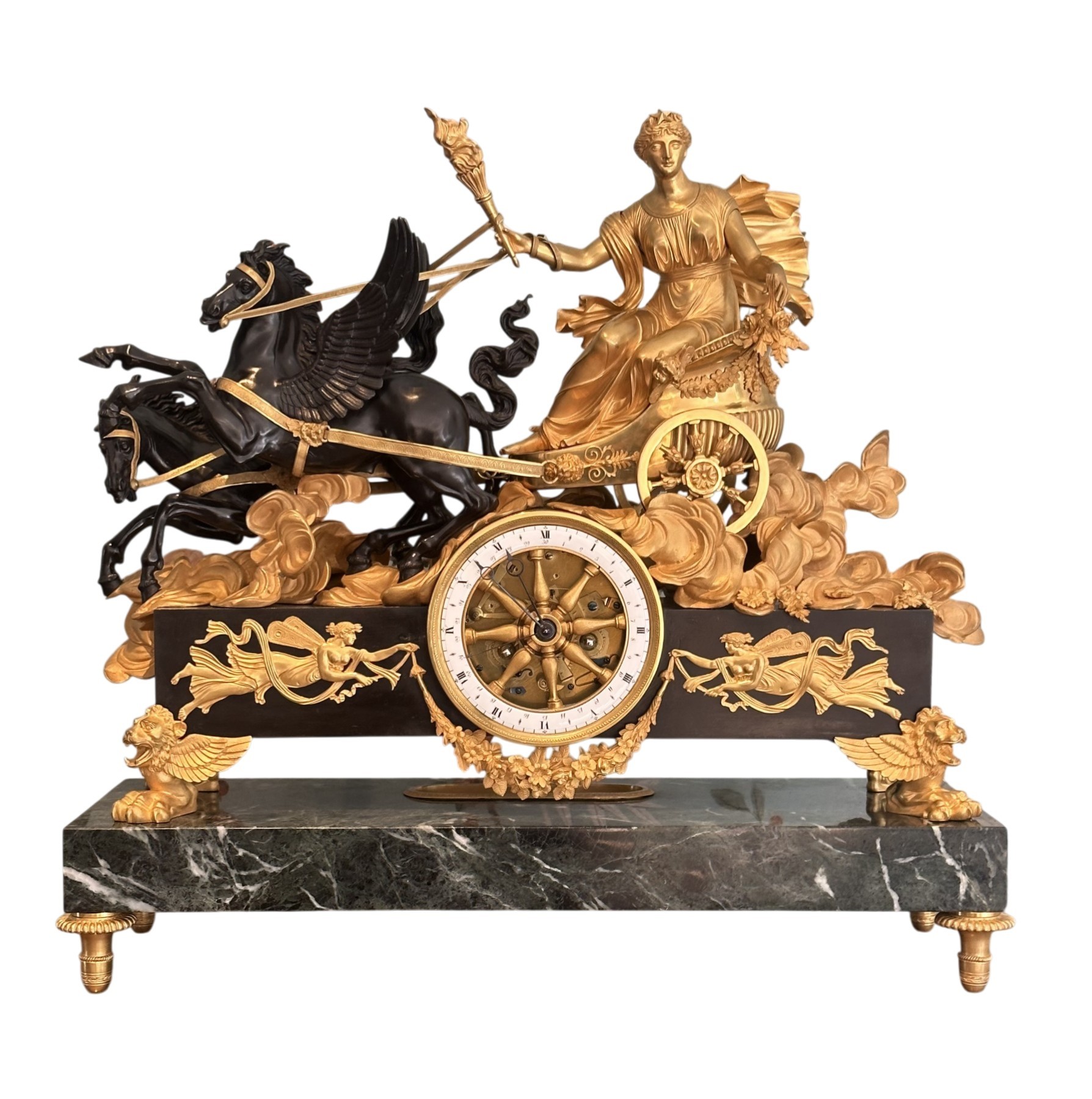
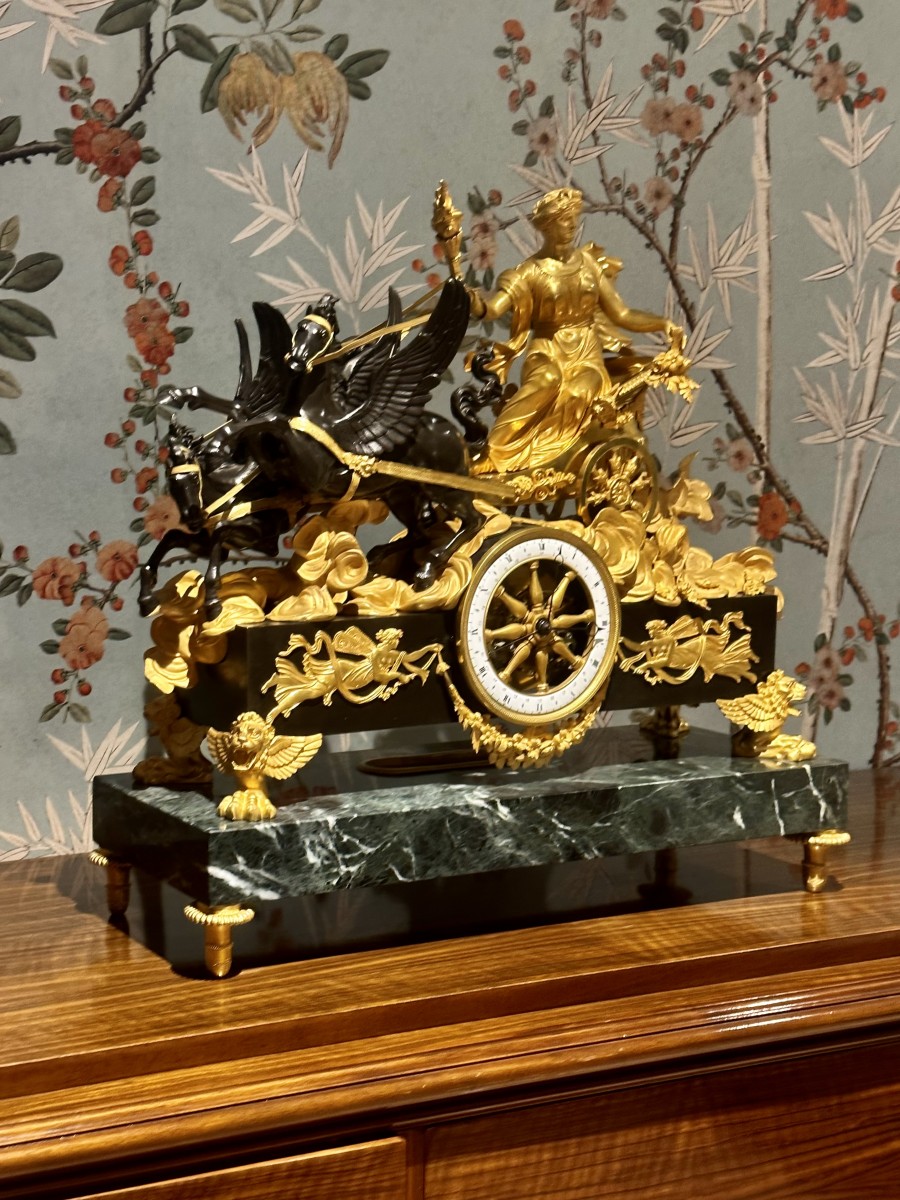
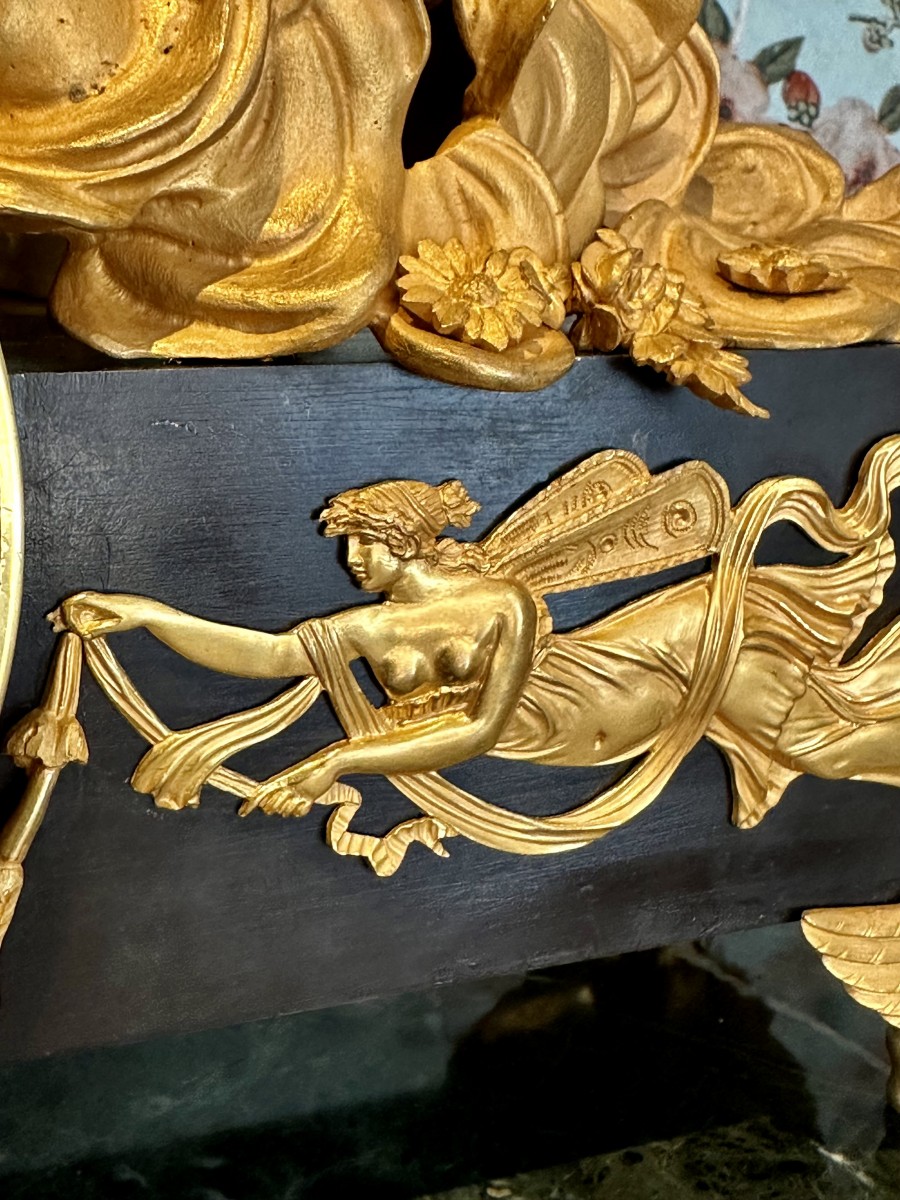
This clock represents the goddess Ceres leading a chariot decorated with garlands of flowers, holding in her right hand a flaming torch and in the other hand a bouquet of flowers, harnessed by two richly caparisoned winged horses.
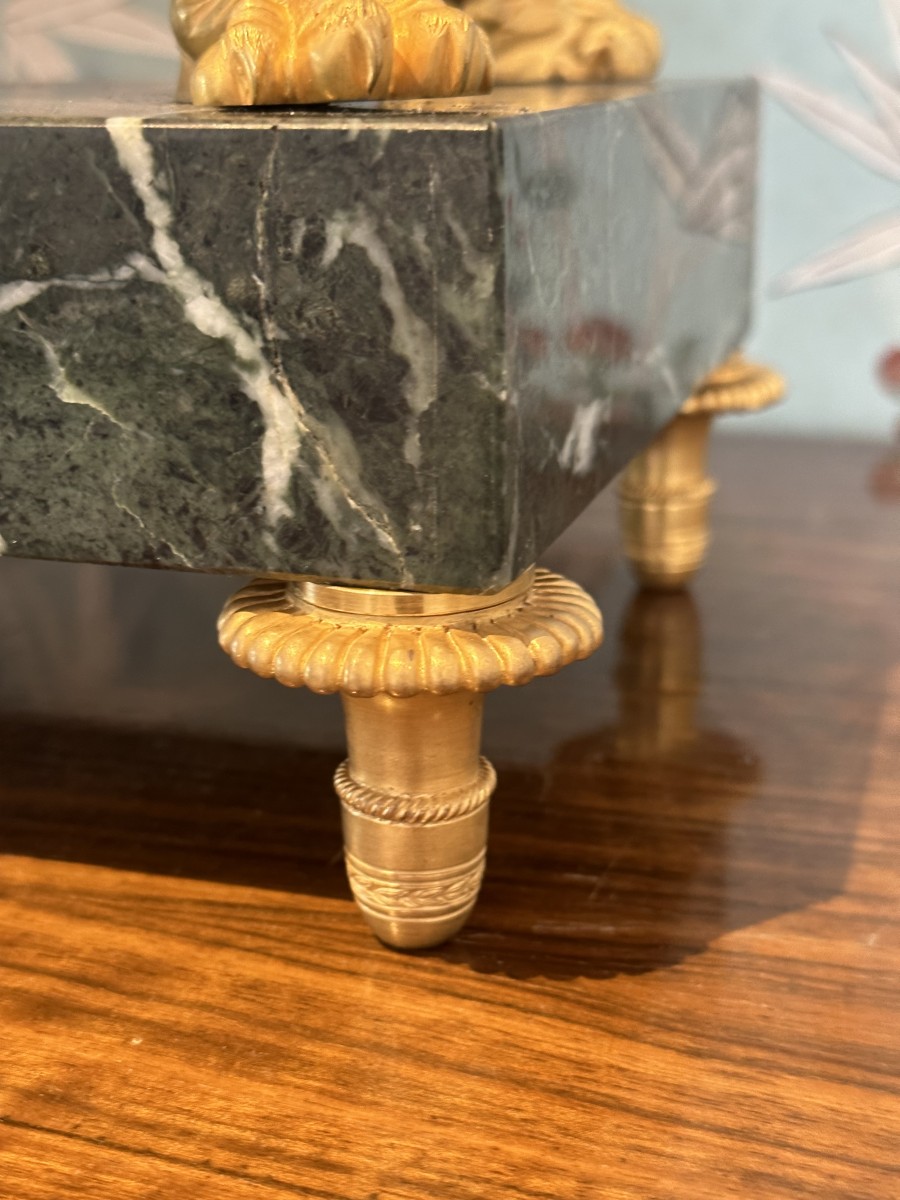
The whole rests on a quadrangular base in green sea marble.
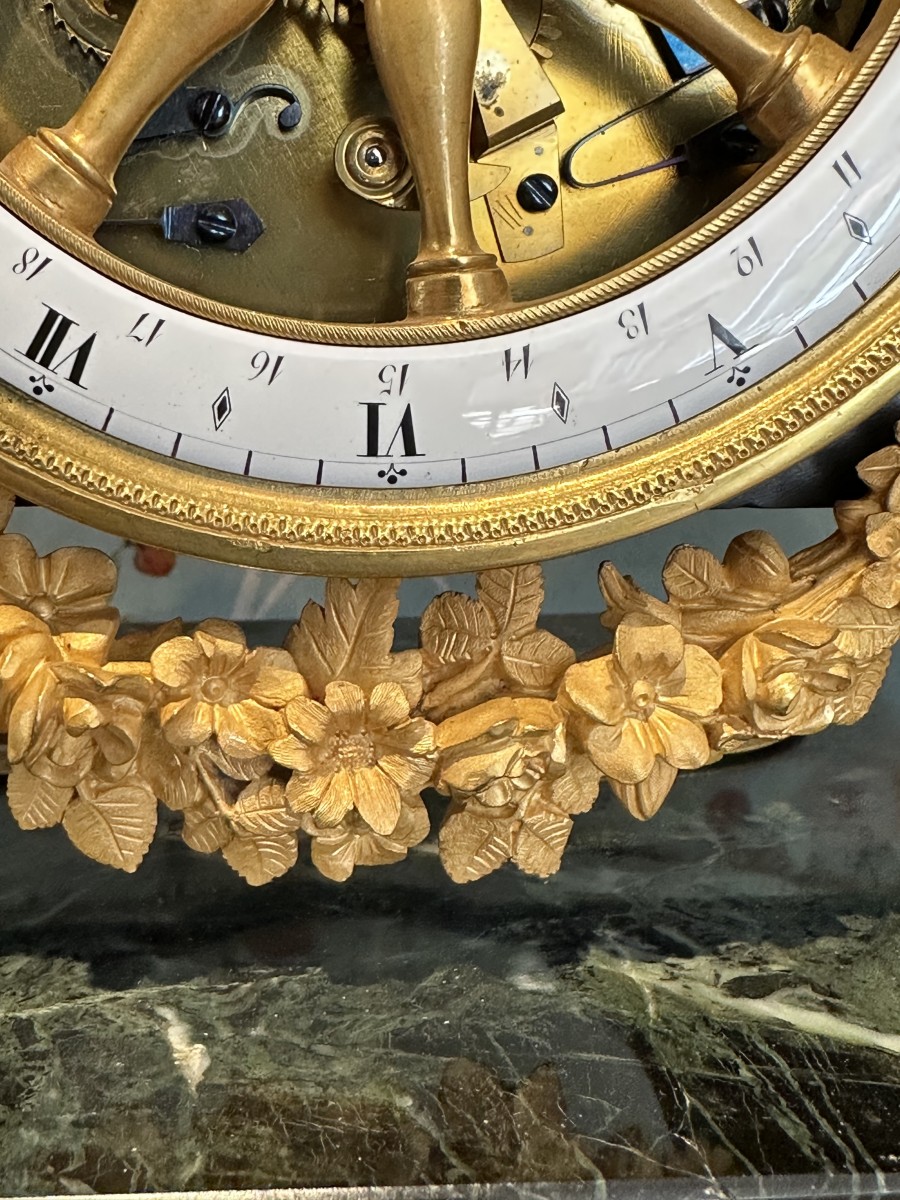
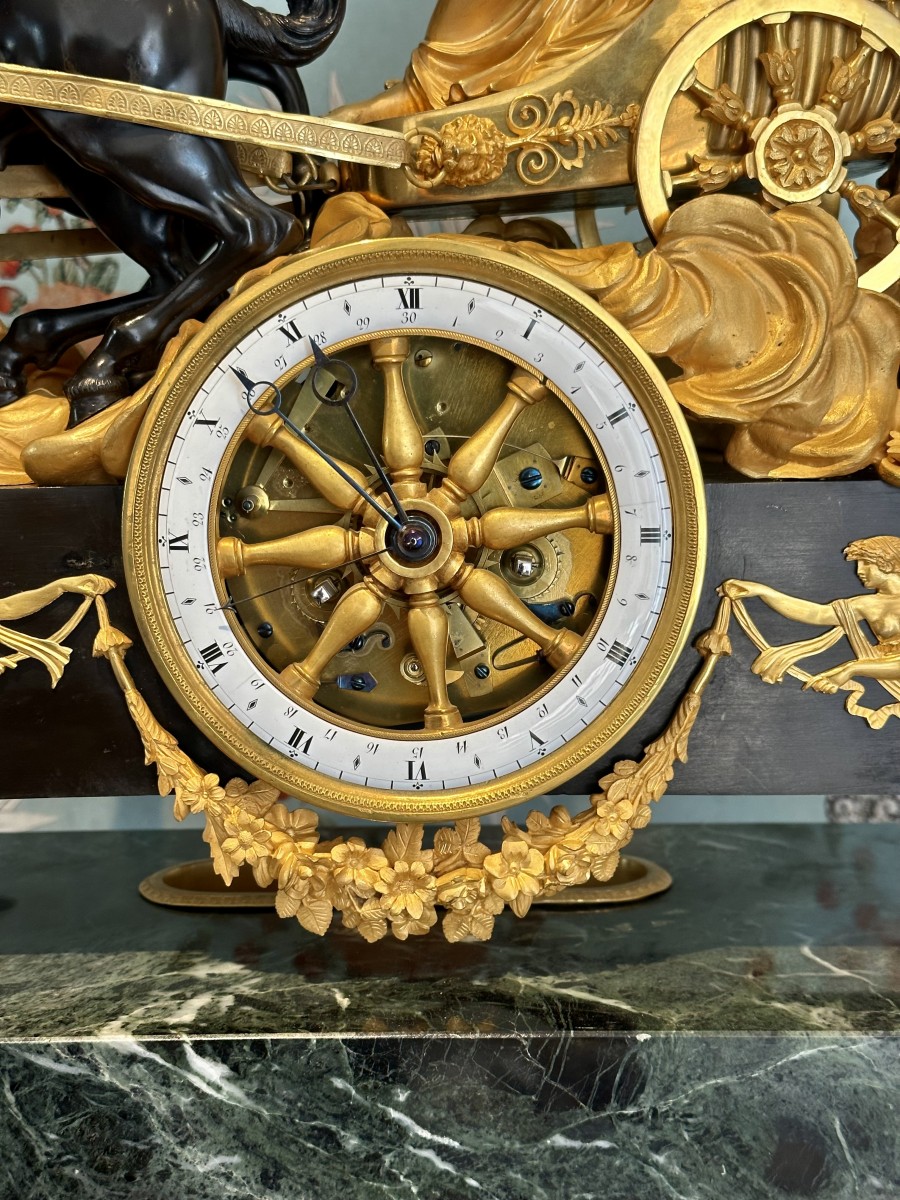
The dial, set within a chariot wheel, pierced and enamelled on its border, indicates the hours in Roman numerals; it also shows the days of the month in Arabic numerals with blued steel hands.
The movement strikes the hours and the half-hours.