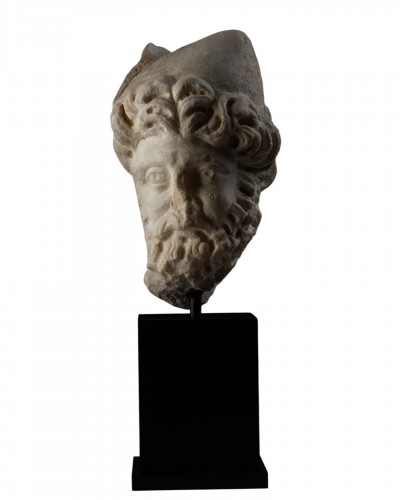
Offered by Desmet Galerie
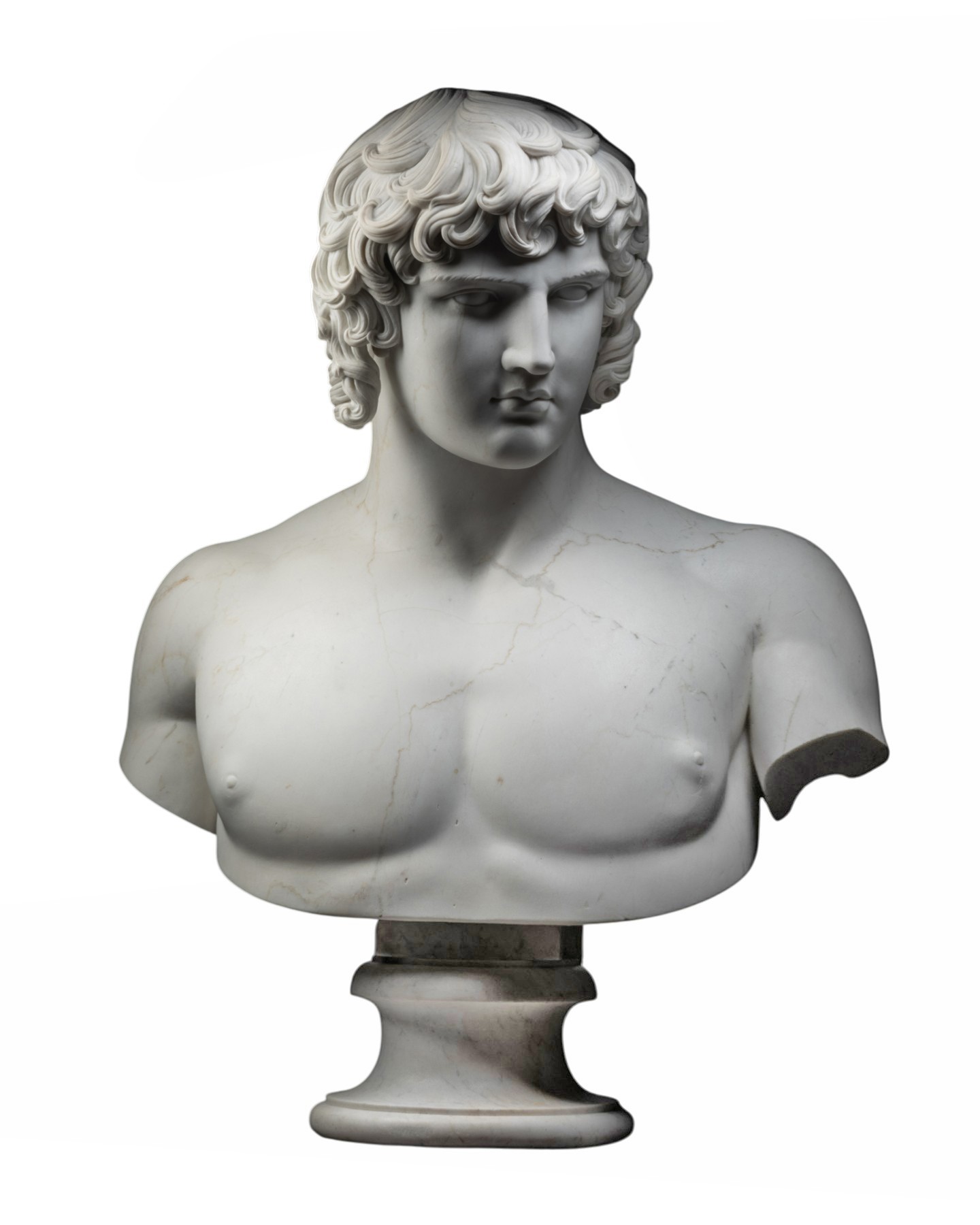
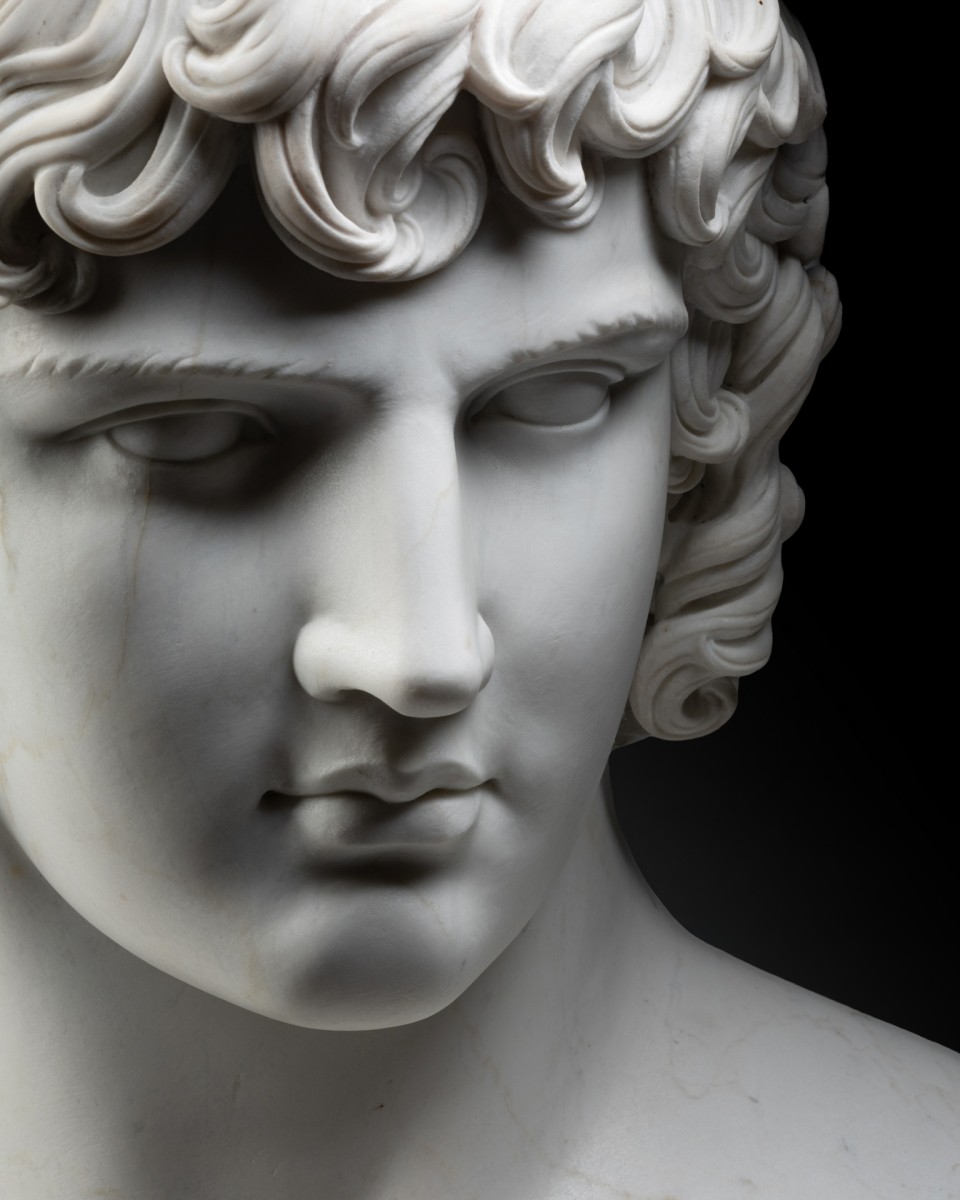
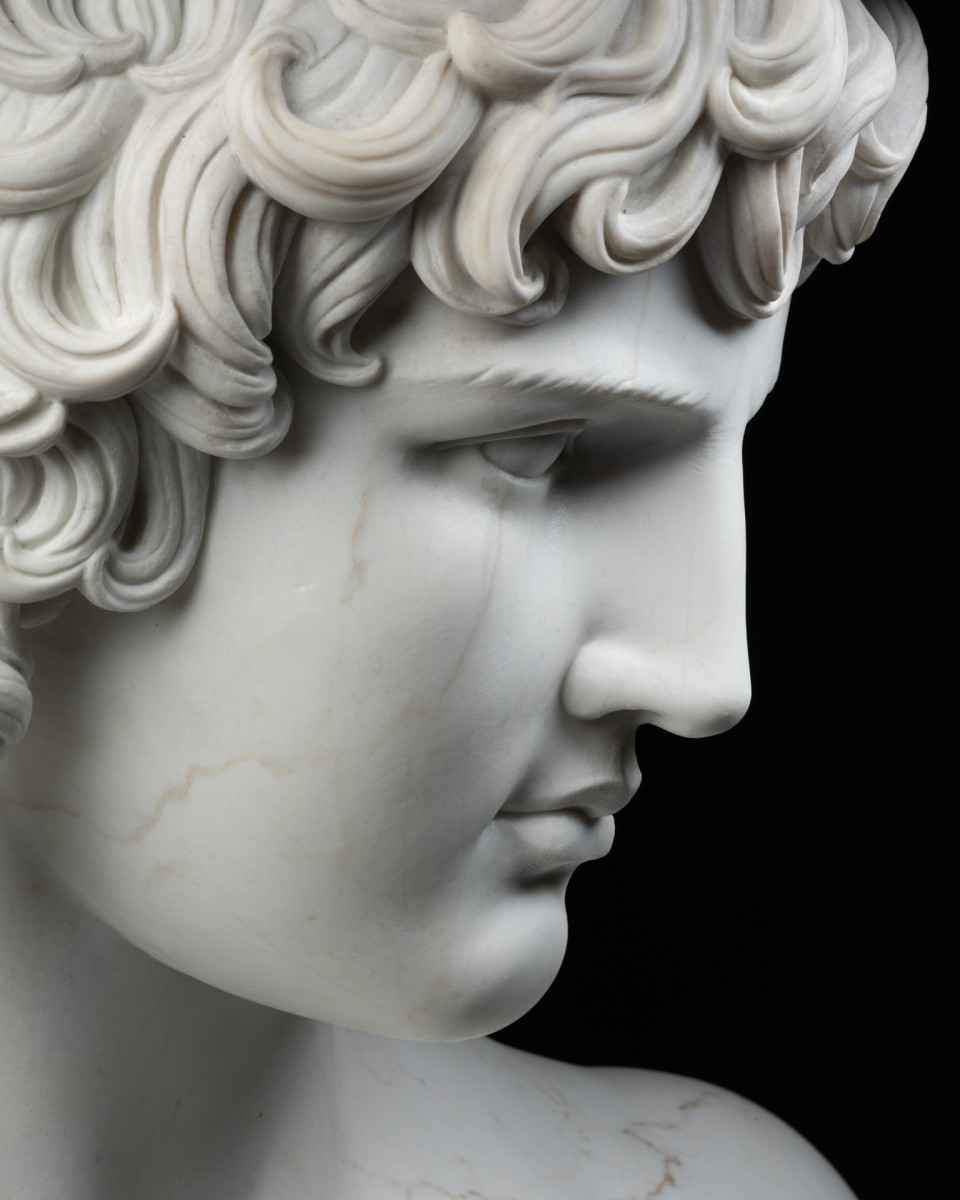
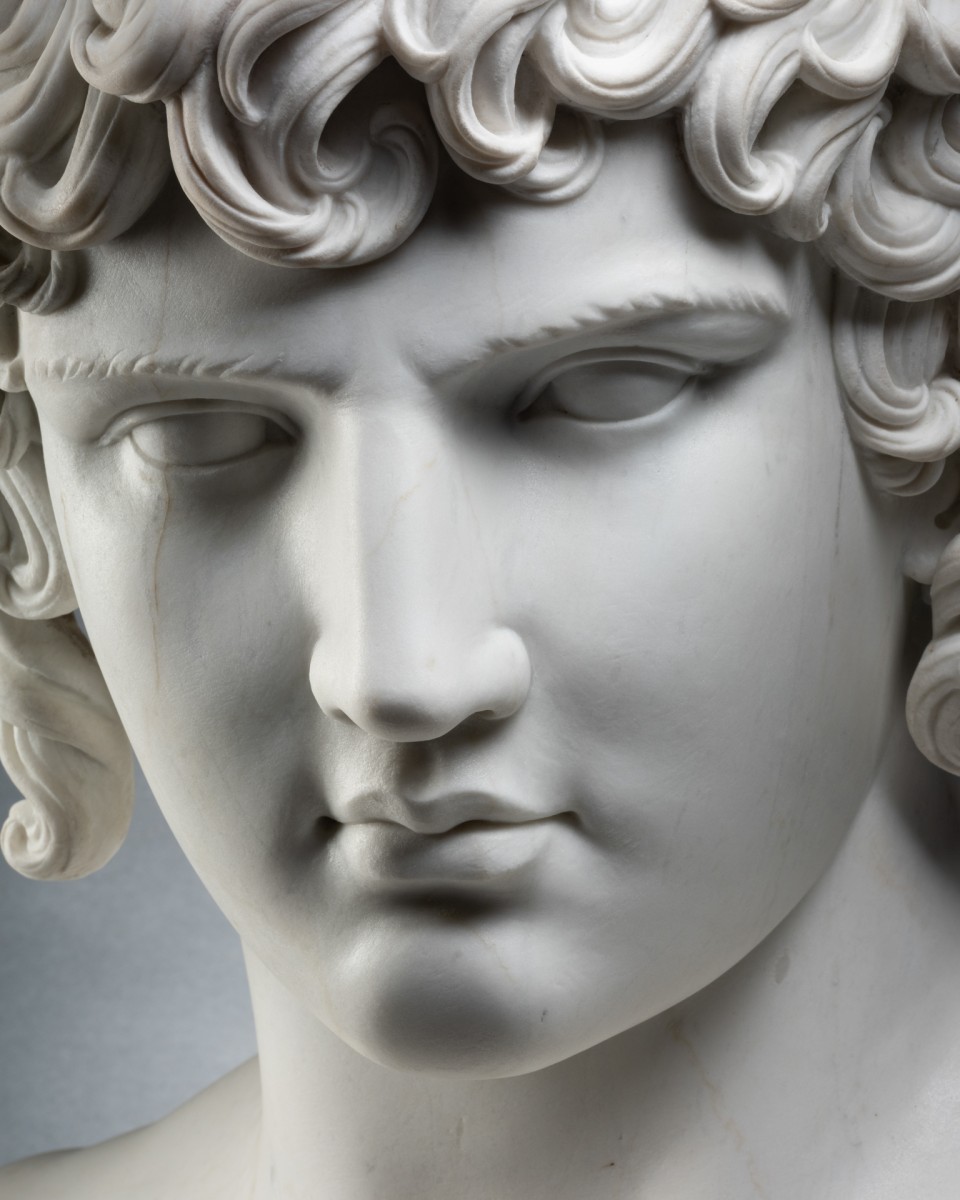
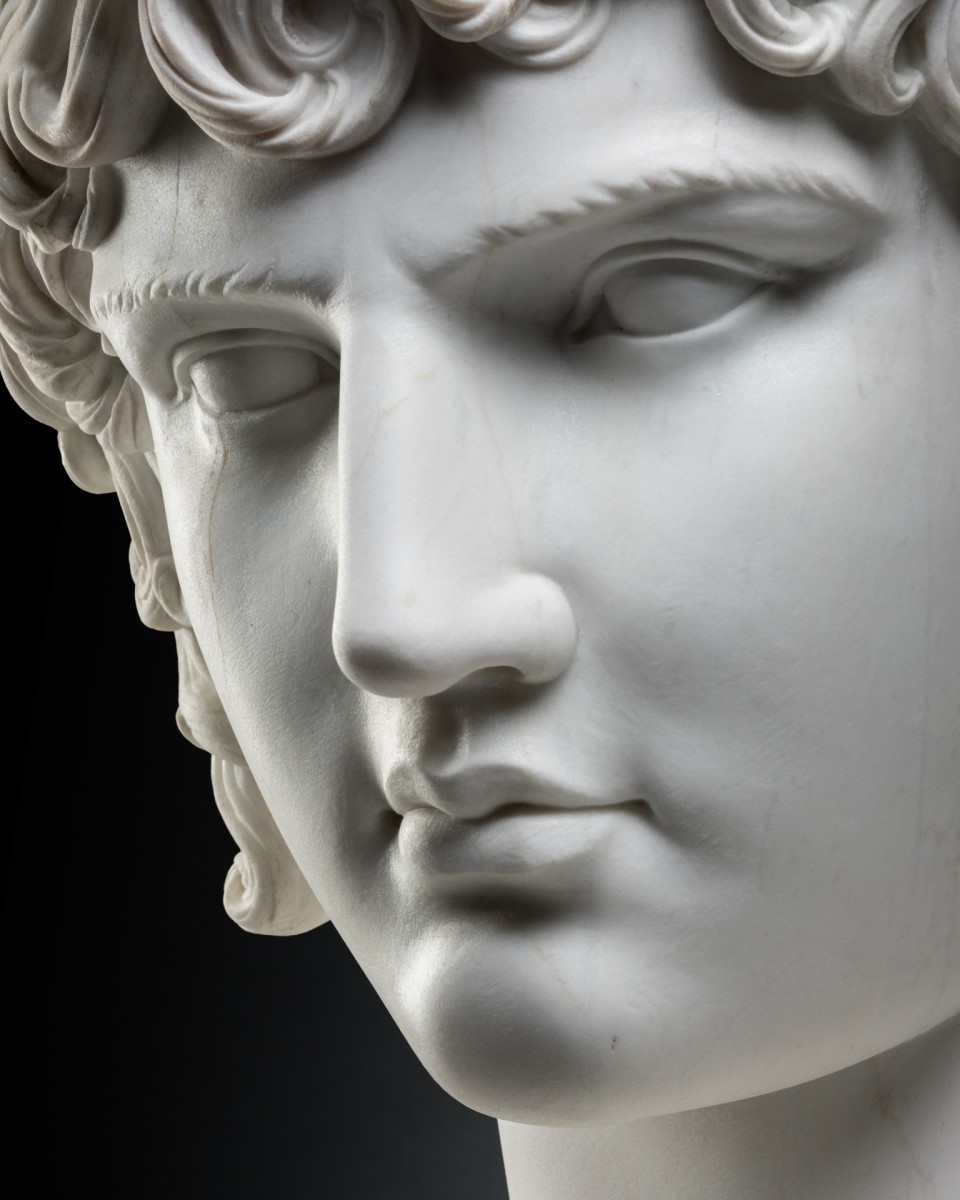

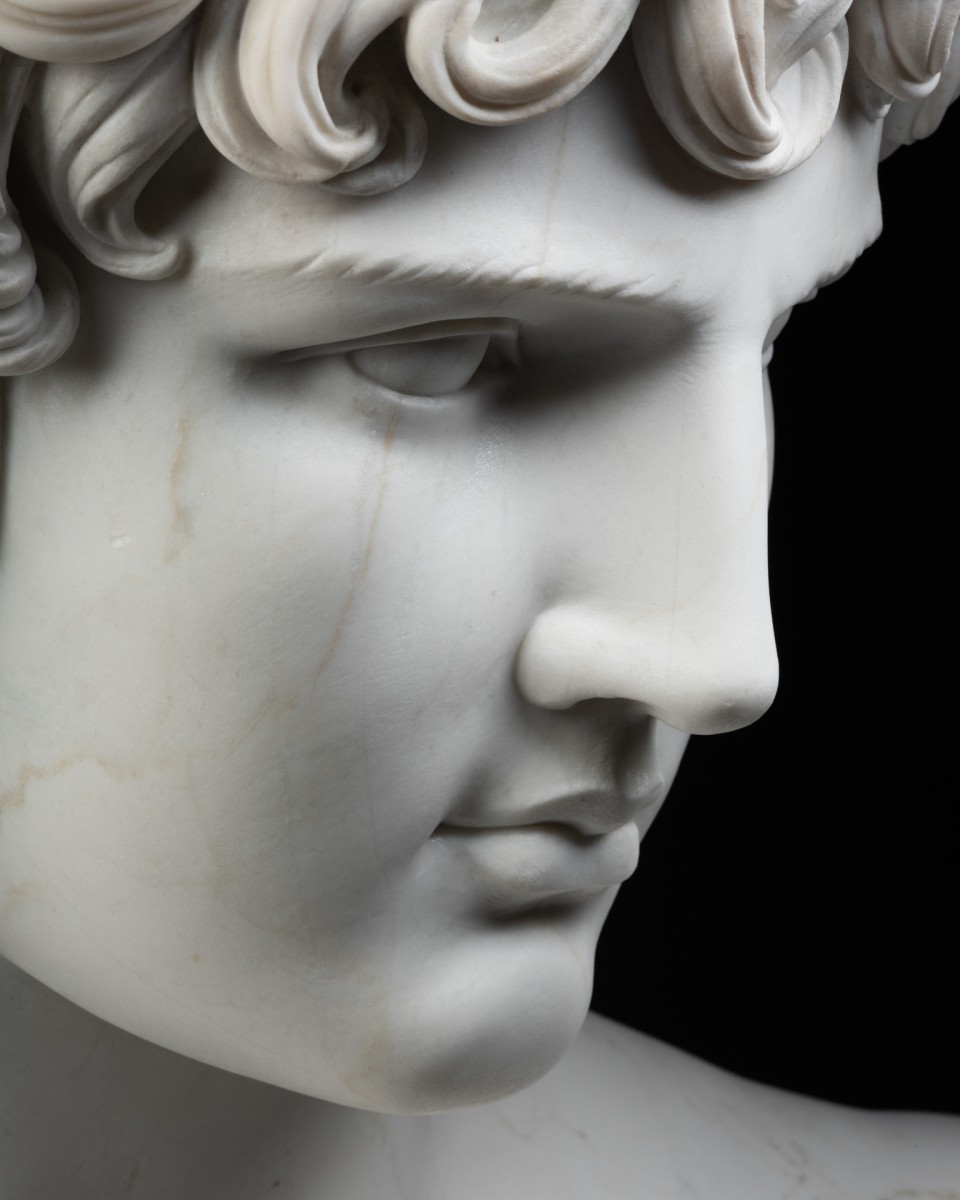
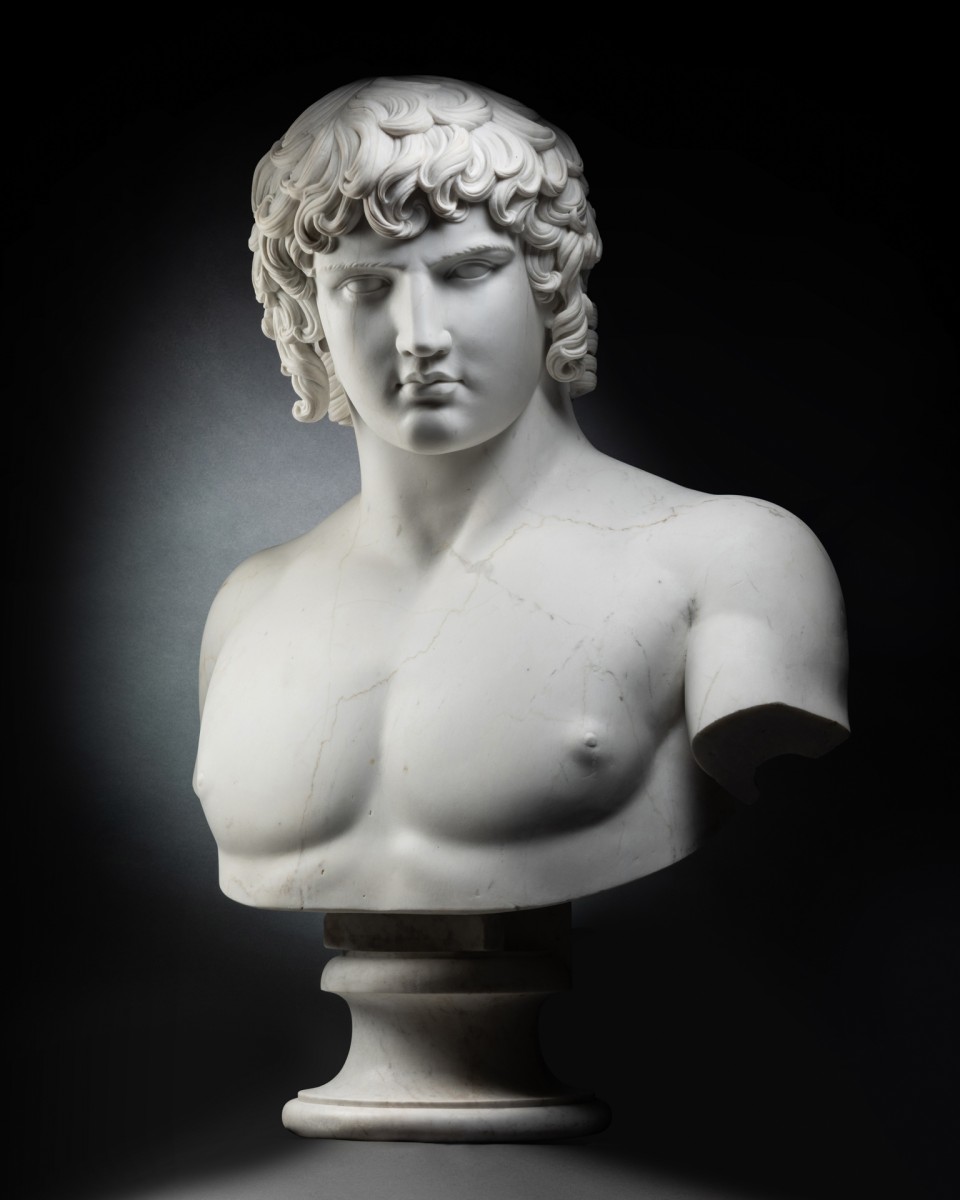
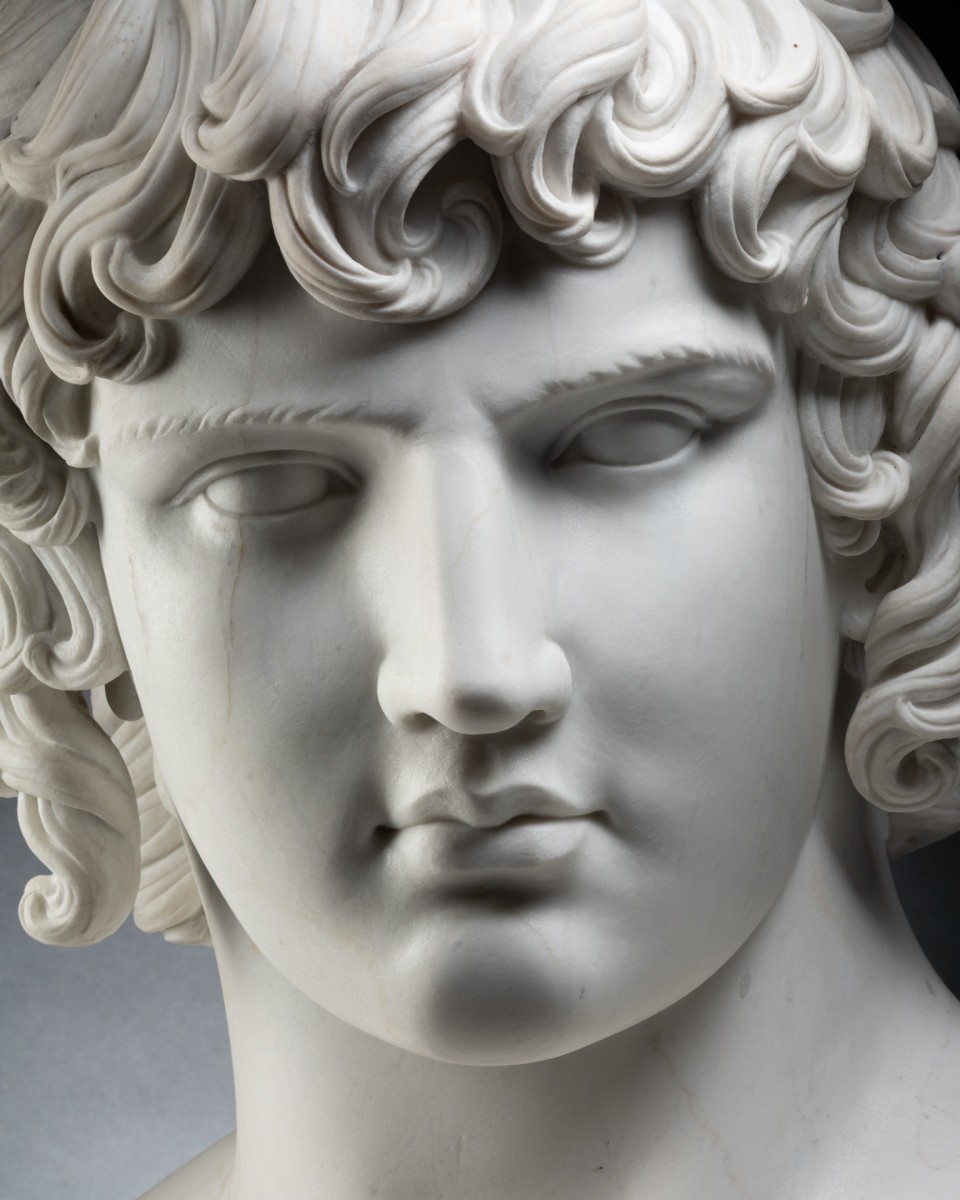
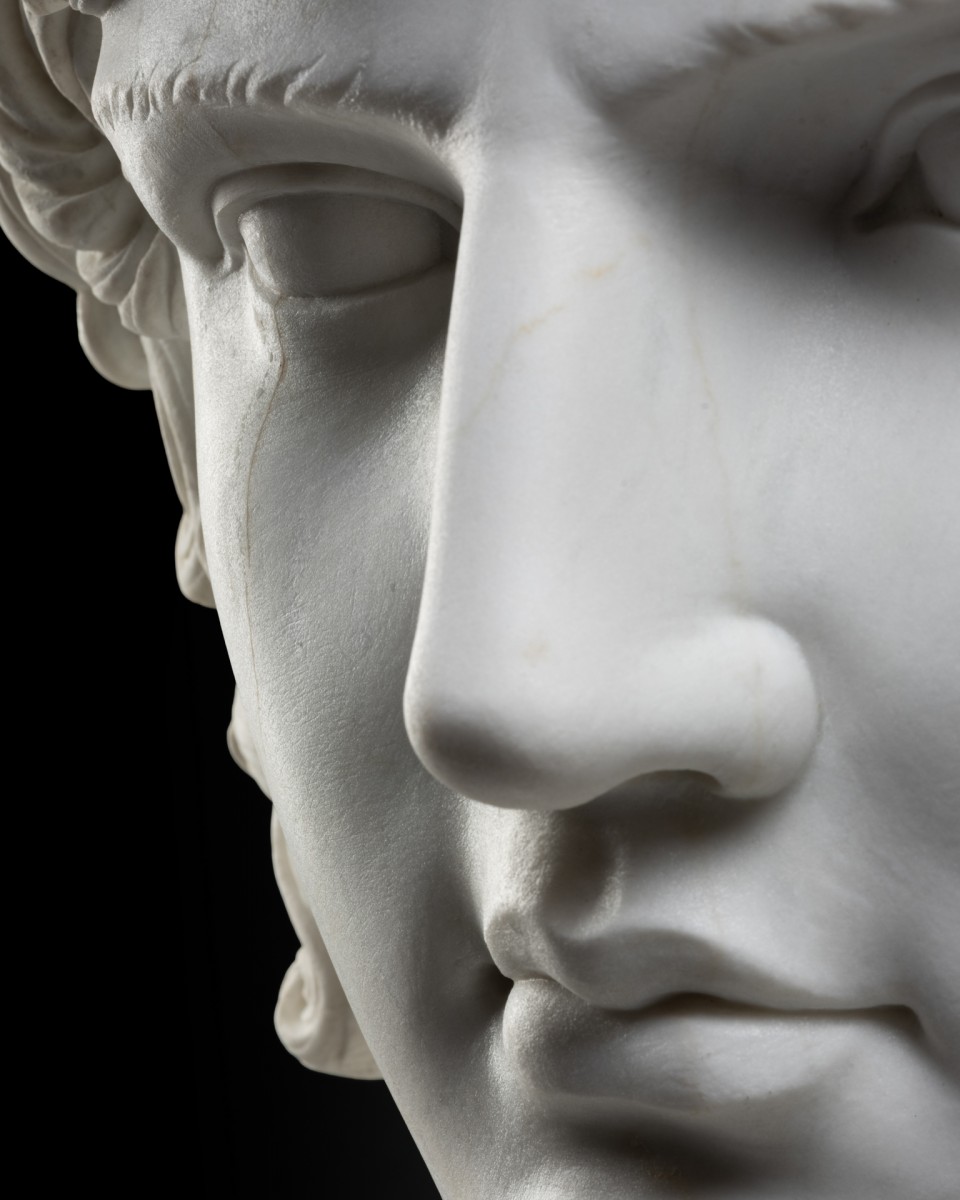
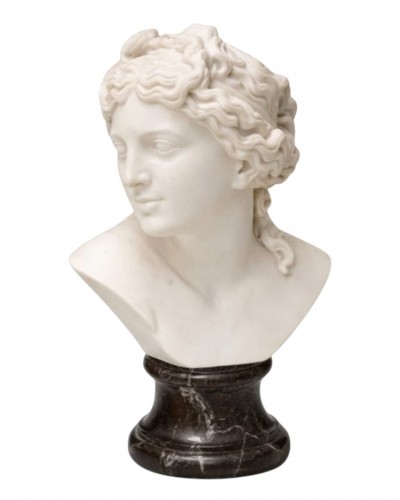
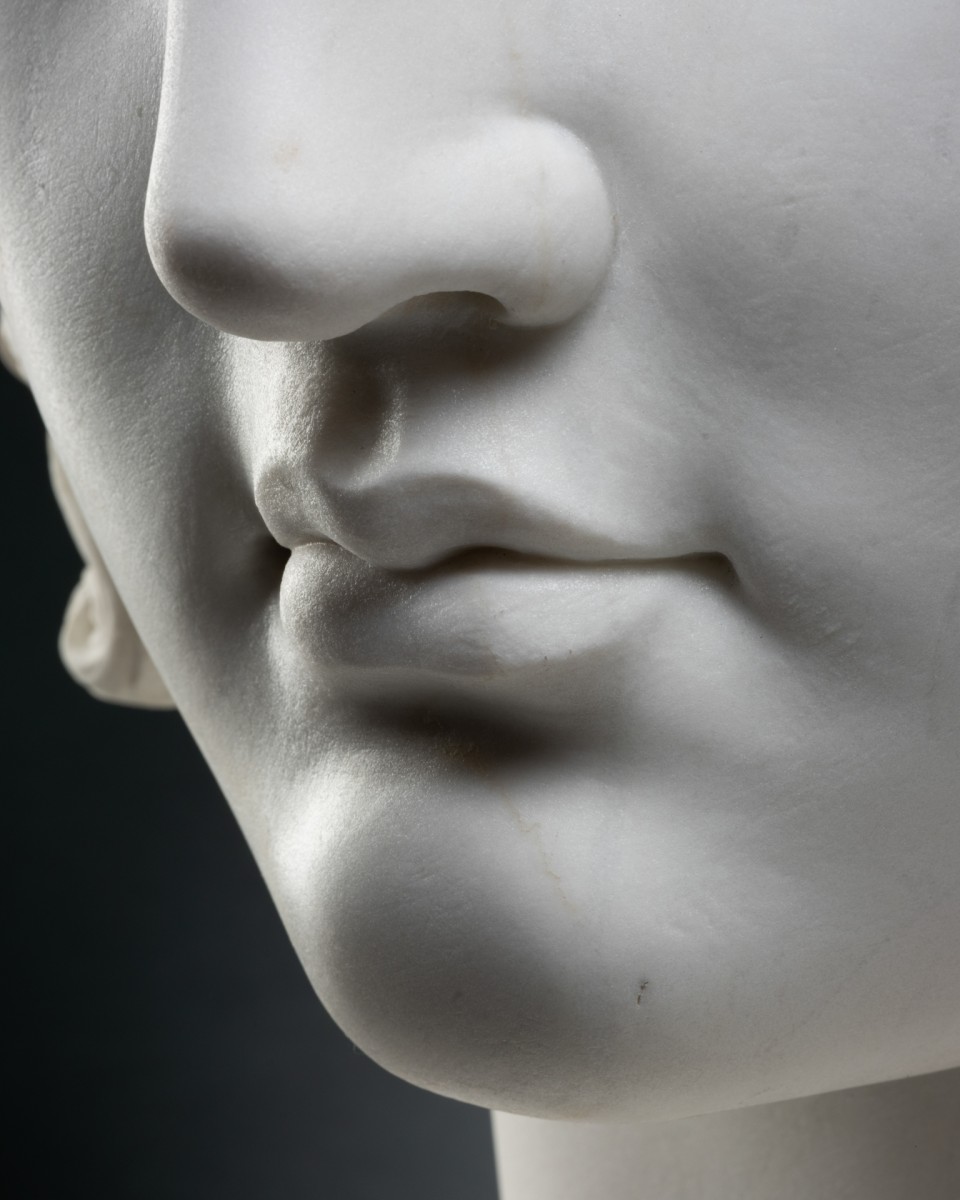
The present marble bust is a compelling and refined Roman neoclassical representation of the youth, traditionally identified as Antinous. It is sculpted from fine carrara marble. It presents a slender, ephebic male figure with gently modelled facial features and a soft yet penetrating gaze.
The head is characterised by a luxuriant mass of intricately carved curls that sweep across the forehead and frame the cheeks, evoking a sense of both youthful beauty and melancholic repose. The transition from the delicate modelling of the face to the schematised treatment of the torso exhibits controlled plasticity; the broad, swelling chest is rendered with subtle muscular definition, while the neck and shoulders convey an elegant physical presence. Although preserved here as a bust, the overall composition retains a classicising balance and serene dignity consistent with Roman interpretations of idealised youth.
The original Roman bust is preserved in the Vatican Museums under Inventory No. 251 and is displayed in the Sala Rotonda of the Pio-Clementino Museum. Discovered in 1790 at Hadrian’s Villa at Tivoli, the colossal prototype became an early acquisition of the Vatican under Pope Pius VI (1717–1799) and was subsequently restored before installation in the newly opened Rotunda, where it quickly attained renown. Following its temporary seizure and exhibition in Paris after the French invasion of Italy under General Bonaparte in 1796, it was restituted in 1816 and has remained in situ ever since. The distinctive features of the original bust have prompted scholarly debate: Marconi in 1923 proposed it as an authentic portrait of Antinous, a view later contested on the grounds that the heavily stylised hair treatment is more evocative of divine iconography than a specific individual. Georg Lippold observed that the work’s apparently more independent and less formulaic execution likely reflects an intentional deviation from established portrait types for a setting in the imperial villa, rather than a true individual likeness.
In the context of the Grand Tour and the reception of classical sculpture in the modern era, this type of Antinous bust has acquired a compelling legacy. Busts and statues of Antinous were among the most sought-after antiquities in eighteenth- and nineteenth-century collections and were widely reproduced in both marble and bronze. Renaissance and later collectors prized such images for their embodiment of ephebic beauty, melancholic expression, and classical elegance. Contemporary scholarship recognises that images of Antinous were disseminated throughout the Roman Empire following his deification by Hadrian after the youth’s death in the Nile in 130 AD, with upwards of one hundred variants now known to archaeology. These images served not only as commemorations of the individual but also as cultic and religious icons that blurred the boundary between portraiture and divine representation.
Antinous himself was a young Bithynian from Asia Minor who became the favourite and likely lover of Emperor Hadrian. His untimely death by drowning in 130 AD prompted an unprecedented imperial response: Hadrian founded the city of Antinoopolis in his honour and established a widespread cult. Throughout the second century AD, Antinous was venerated in numerous cities, his image appearing on sculptures, coins, and as subjects of games and festivities. Although exact details of his life remain elusive, the artistic legacy of Antinous stands as a remarkable example of personal memory intertwined with imperial propaganda and religious innovation in the Roman world.
Delevery information :
We can arrange shipping.