Offered by Desmet Galerie
REQUEST INFORMATION
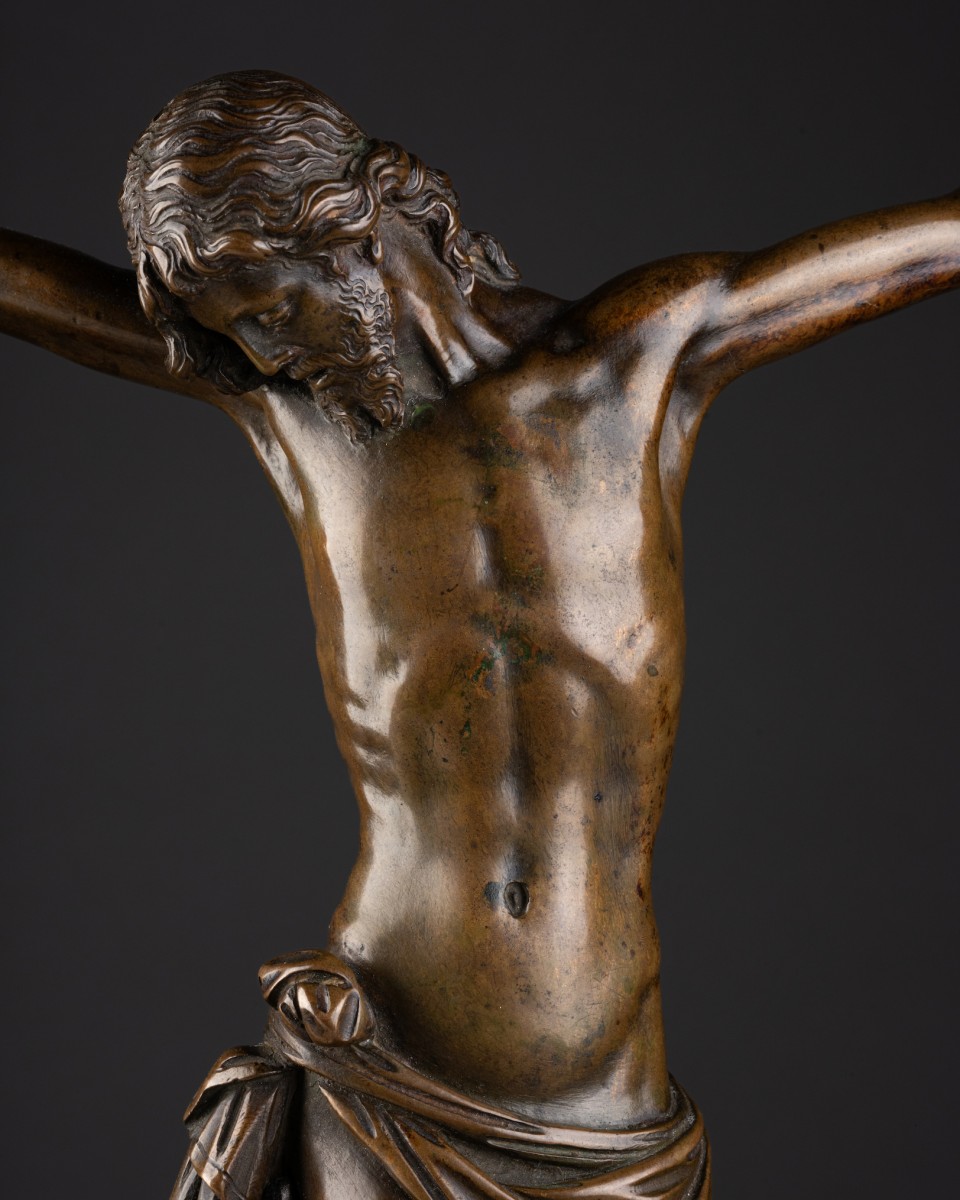
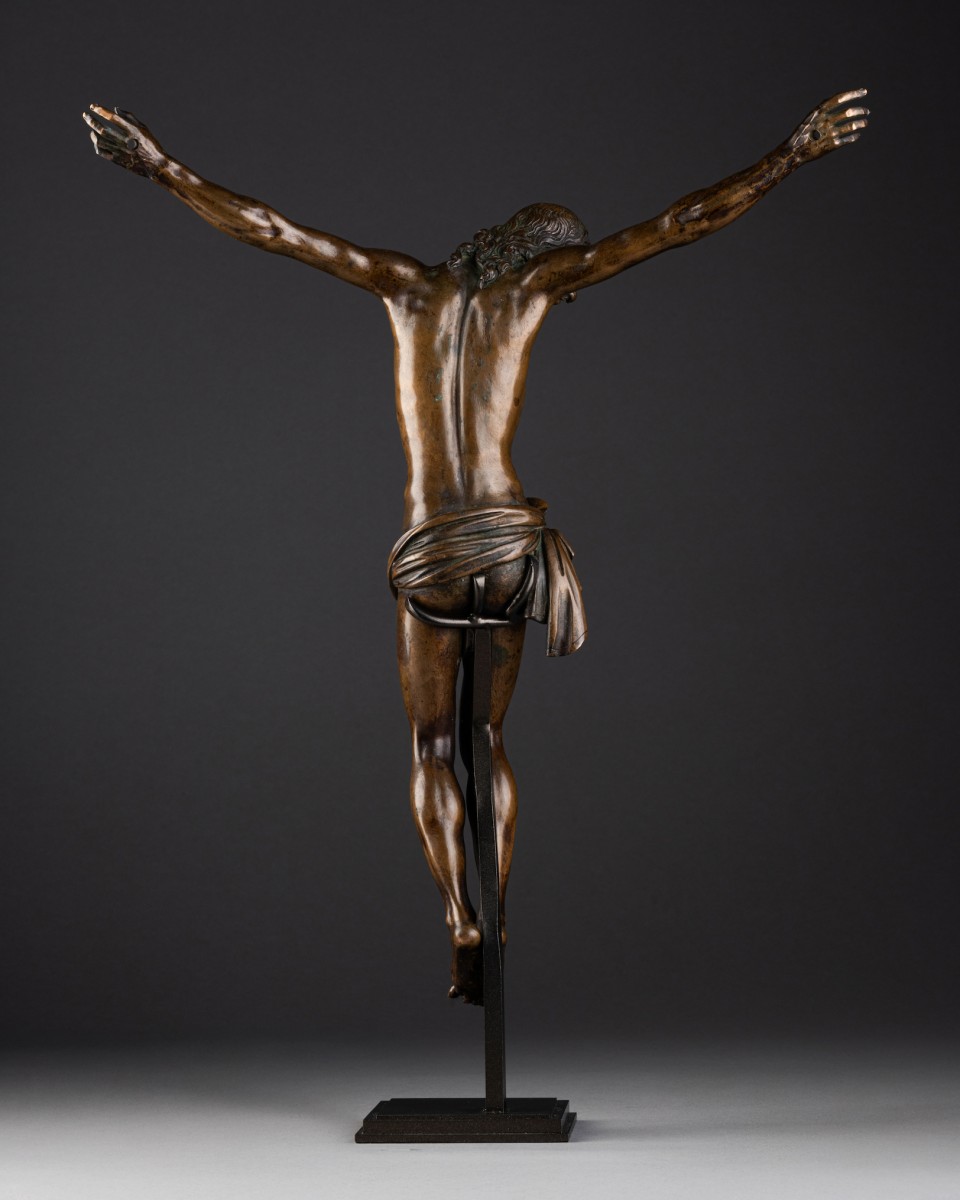
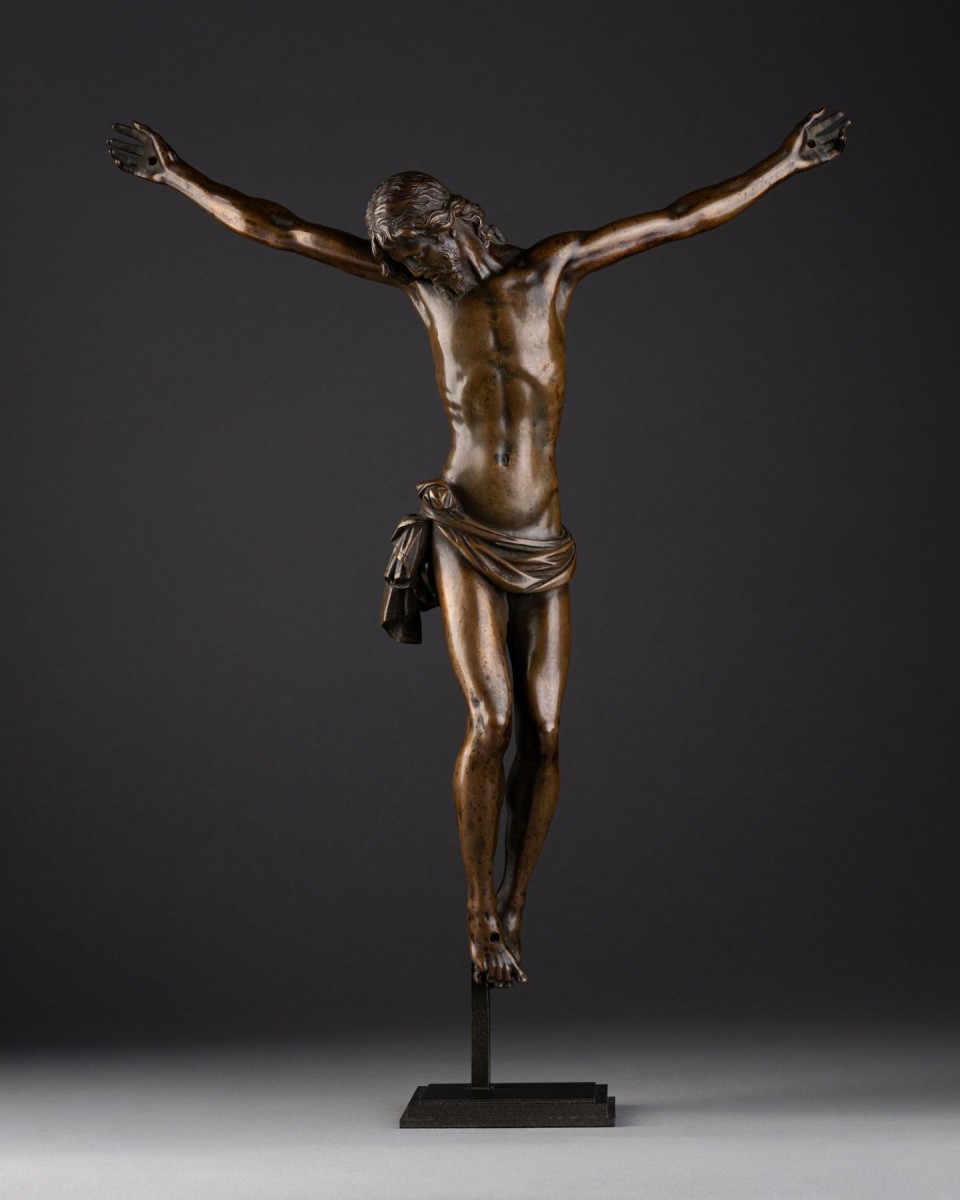

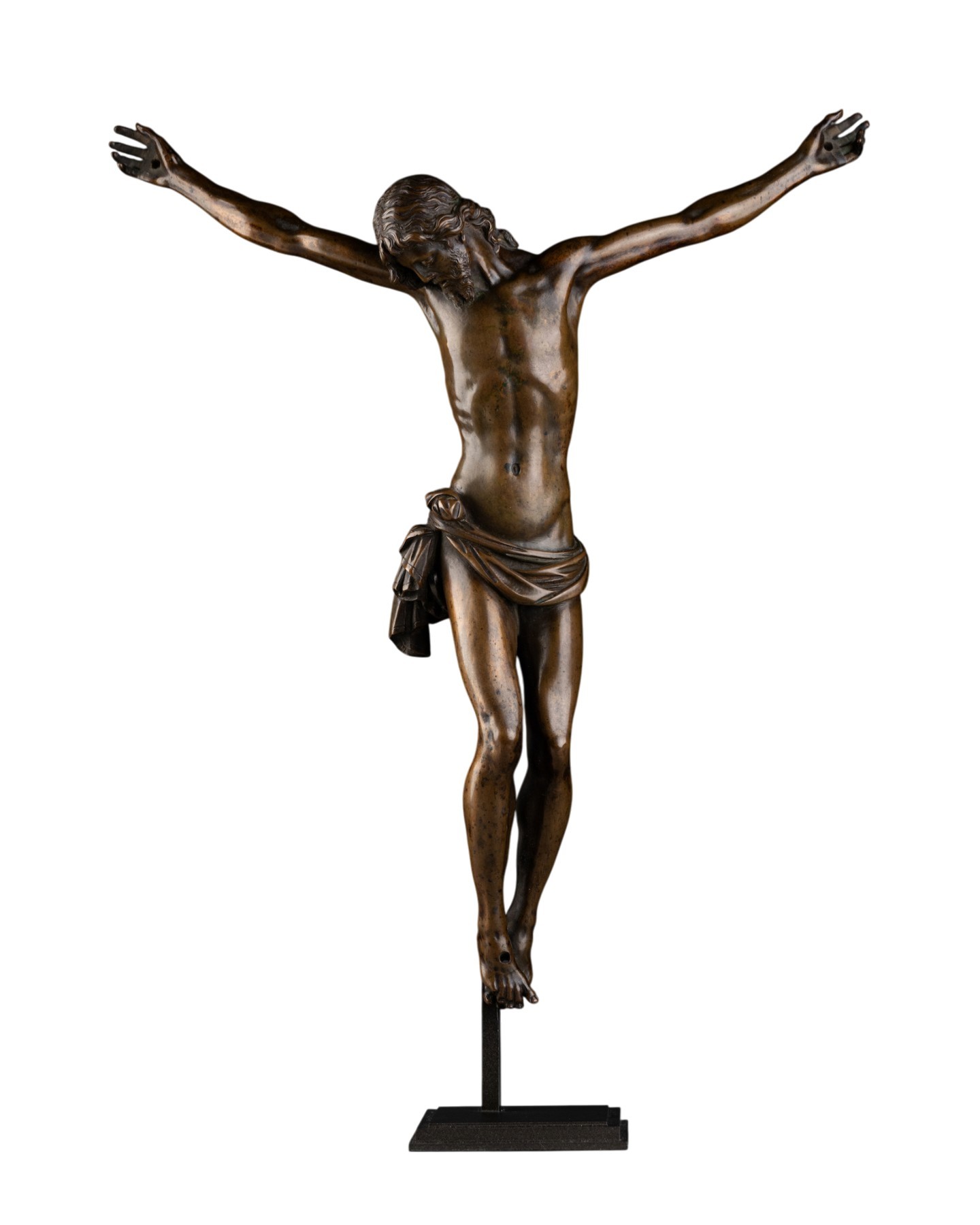
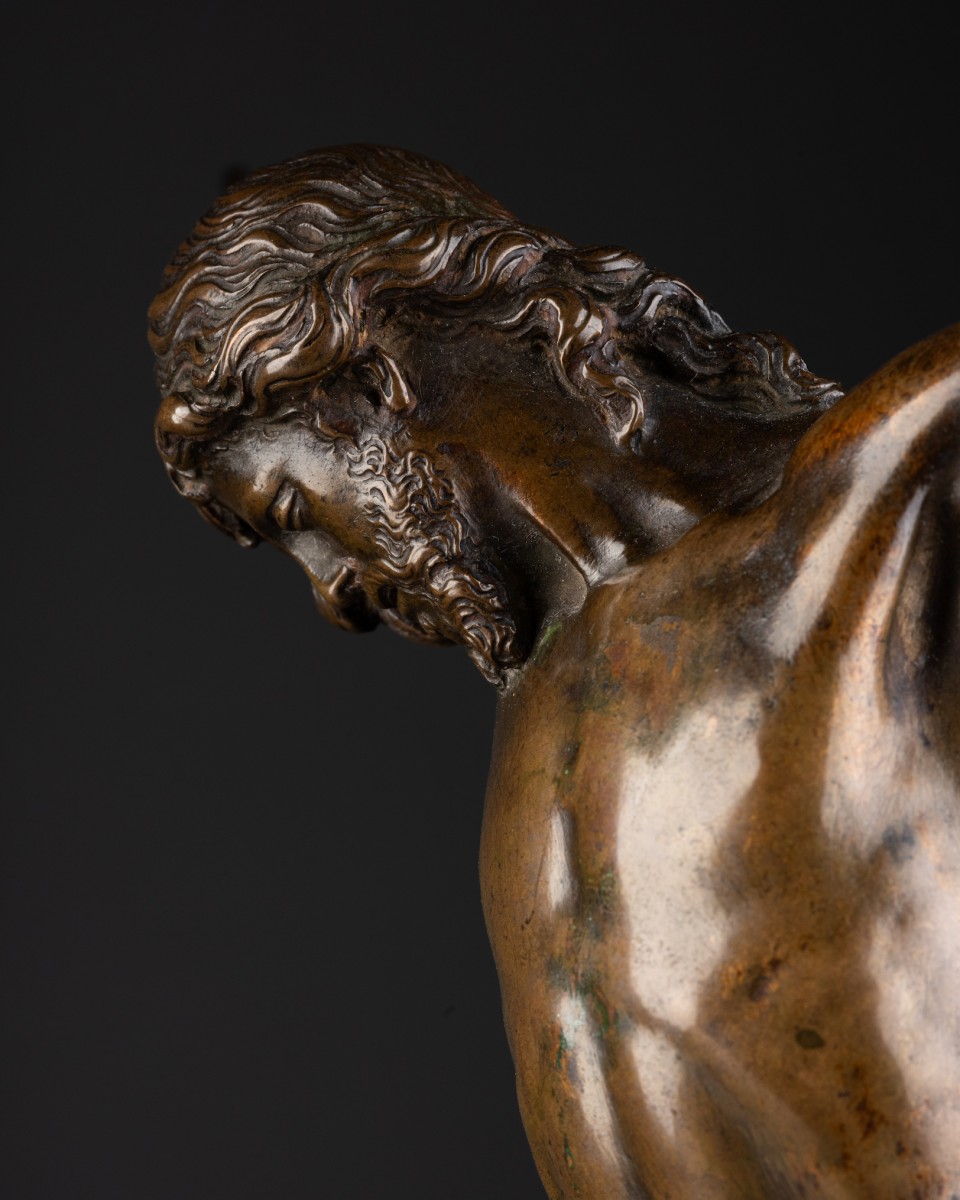
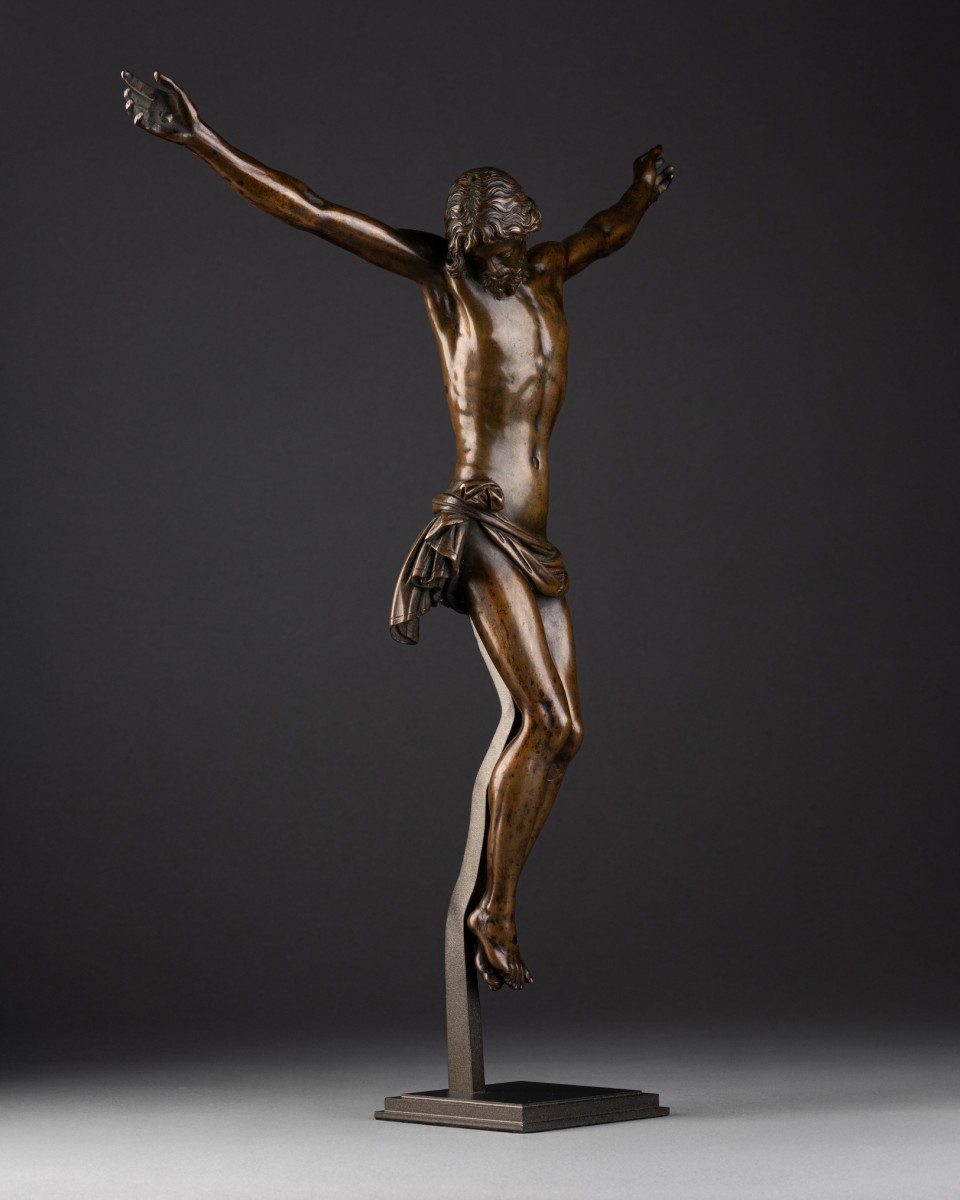
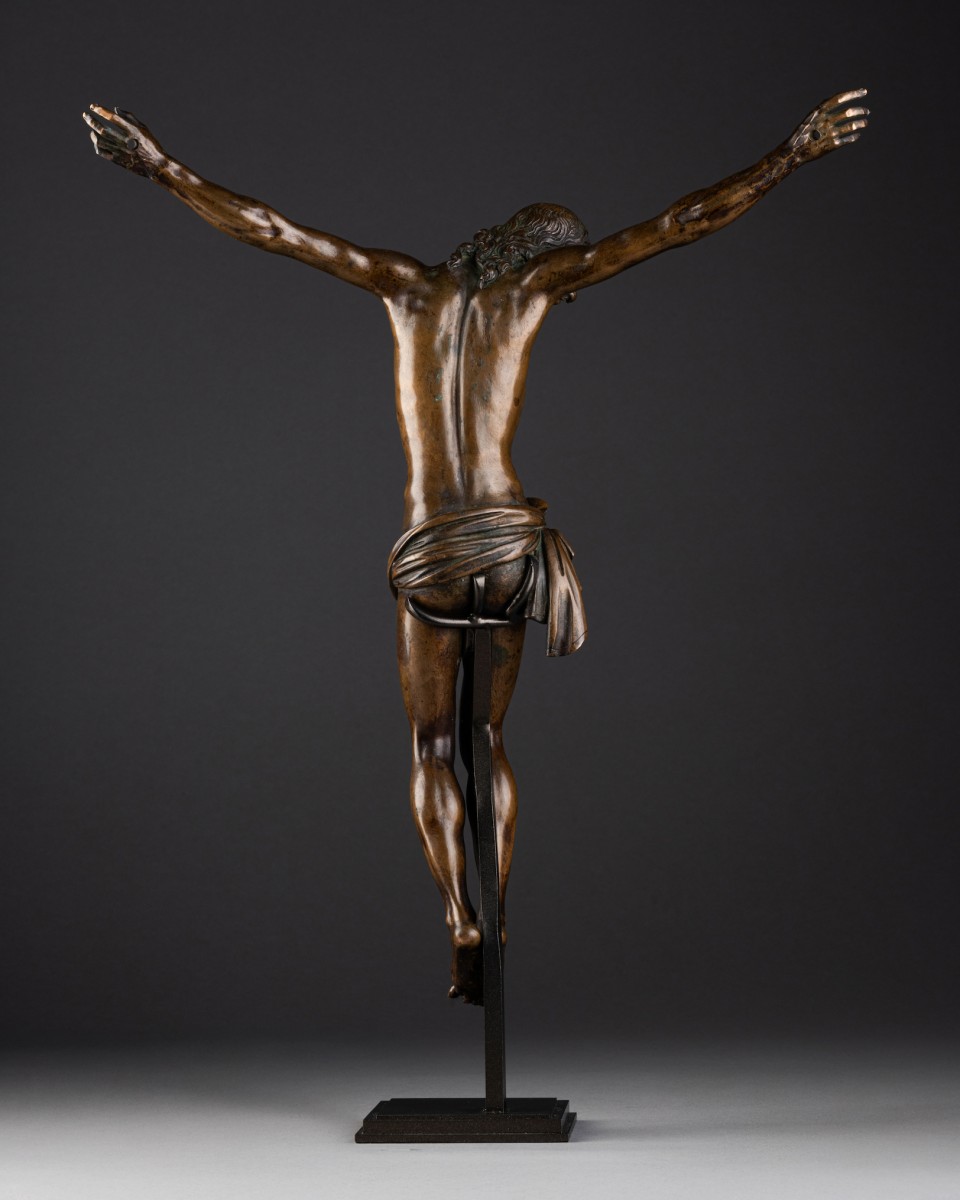
This finely cast bronze of the dead Christ exemplifies the refined devotional bronzes associated with Antonio Susini, Giambologna’s most accomplished assistant and collaborator. The figure presents a serene yet poignant image of the Redeemer, rendered with a meticulous attention to surface and anatomical precision that betrays Susini’s training as a goldsmith.
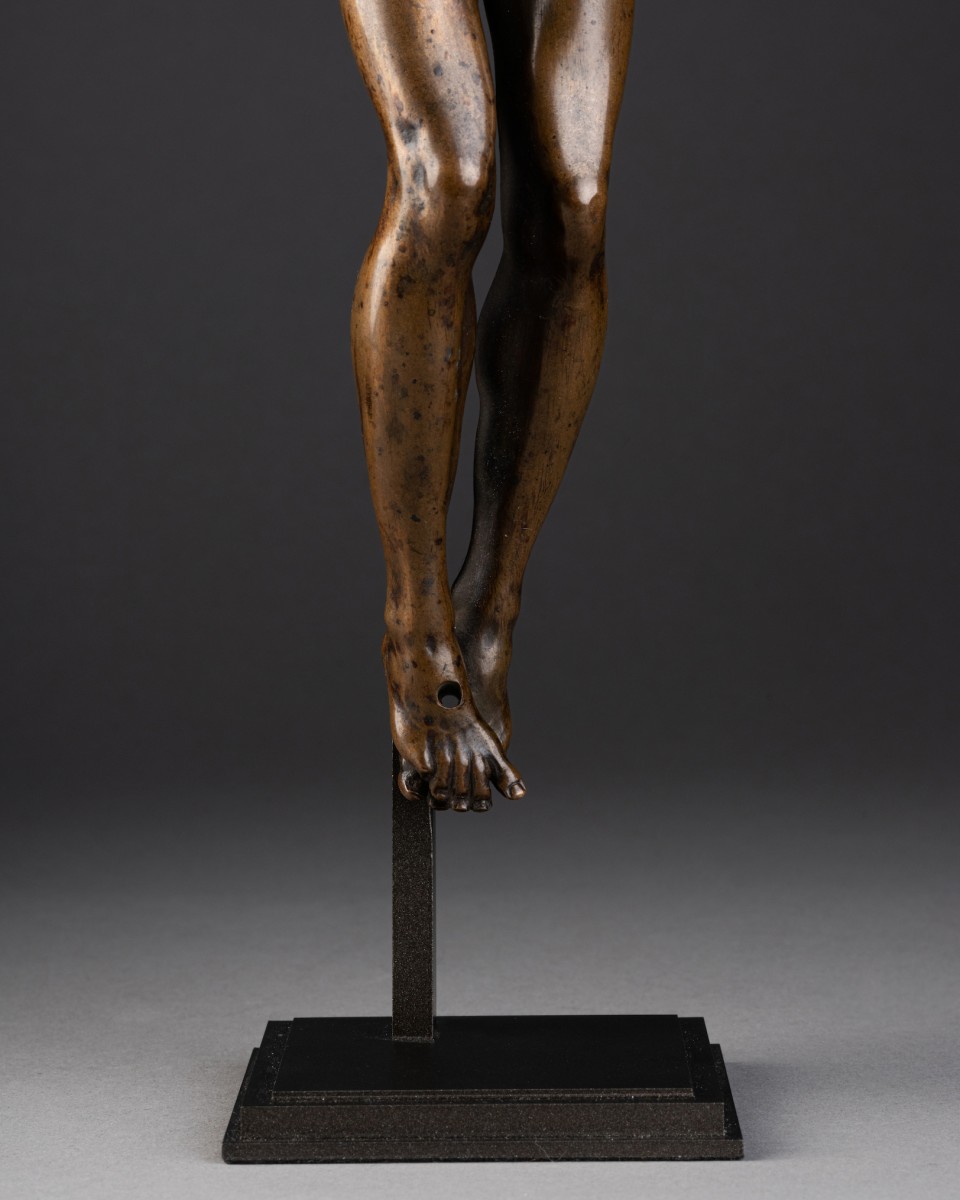
Christ is shown with arms extended in cruciform, his head tilted gently downward, the eyes closed in death. The figure’s elongated proportions are softened by the subtle contrapposto: the torso leans delicately toward the lowered head, the legs twist with the right foot slightly raised, and the rhythm of the pose is balanced by the fluttering folds of the perizonium, tied in a vigorous knot at the hip. The body retains a quiet suppleness, the sharply filed details of the hair, beard, and toenails contrasting with the smooth modelling of the flesh. The result is an impression of fragile nobility and contemplative beauty, qualities that recall the refined bronze crucifixes produced in late Renaissance Florence for private devotion.
The subject of the Crucified Christ held central importance in Counter-Reformation Italy, where it embodied both the mystery of the Passion and the perpetual sacrifice of the Eucharist. Giambologna himself produced several crucifixes in bronze, beginning in the 1580s. A letter written by Simone Fortuna to the Duke of Urbino in 1583 already attests to the sculptor’s production of such works, and by around 1588 at least two large examples were cast in Florence: one for the convent of Santa Maria degli Angiolini, the other for the Salviati Chapel in San Marco (respectively 46.8 and 45.8 cm high).
Our cast, more modest in size, was conceived for intimate contemplation. The refinement of its execution, visible in the precise chasing, the sharpness of the filed details, and the consistent warm patina, firmly aligns it with the small group of bronzes attributed to Antonio Susini. Closely comparable examples are preserved in the Hill Collection, New York (gilt bronze); the Art Gallery of Ontario, Toronto; the Liebieghaus, Frankfurt (inv. 1523); a former piece in the Johnson Collection; and another in a private collection.
Antonio Susini, born in Florence in 1558, entered Giambologna’s orbit through the patronage of Jacopo Salviati in 1580. He quickly became one of the master’s closest collaborators, responsible in large part for the production of small-scale bronzes in the Florentine workshop. After establishing his own studio and foundry in 1600, Susini continued to produce variations of Giambologna’s models, especially crucifixes, which were highly sought after among princely patrons and private collectors alike. His reputation in this field endured well into the final years of his career: in 1622, only two years before his death, he presented no fewer than ten Christ figures—five Cristo Morto and five Cristo Vivo—to Duke Ferdinando I Gonzaga of Mantua.
This Cristo Morto is a particularly eloquent example of Susini’s art: its combination of Giambologna’s invention with Susini’s meticulous finishing reflects both the devotional and the aesthetic values of early Seicento Florence.
References:
C. Avery, Giambologna: The Complete Sculpture, Oxford, 1987, pp. 199–200.
D. Allen, Renaissance & Baroque Bronzes from the Hill Collection, in P. Wengraf (ed.), London, 2014, pp. 158–163.
C. Avery & A. Radcliffe (eds.), Giambologna: Sculptor to the Medici, exhibition catalogue, Edinburgh/London/Vienna, 1978, no. 111.
Liebieghaus, Frankfurt, inv. 1523.
Delevery information :
We can arrange shipping.