Offered by Galerie Tourbillon
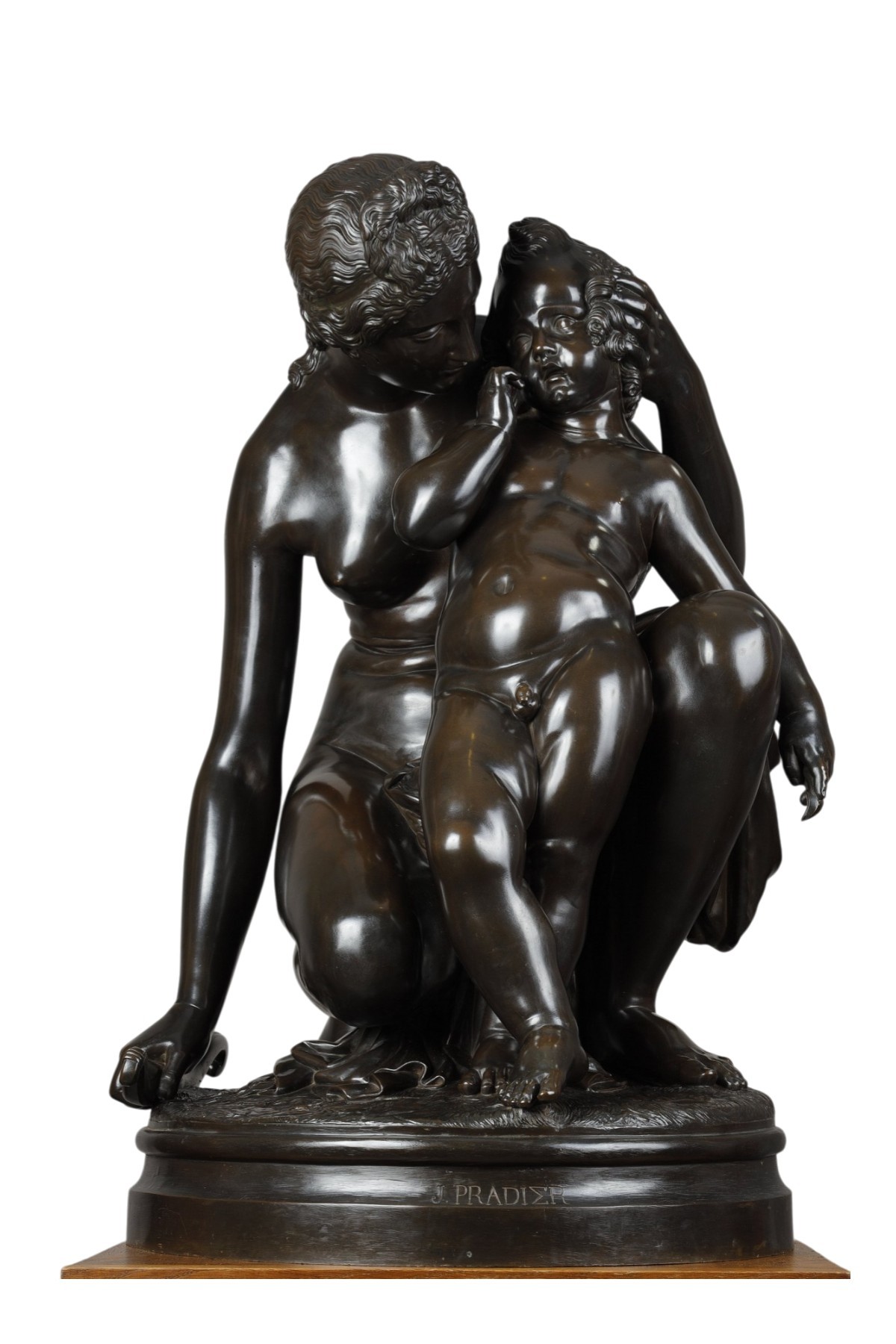
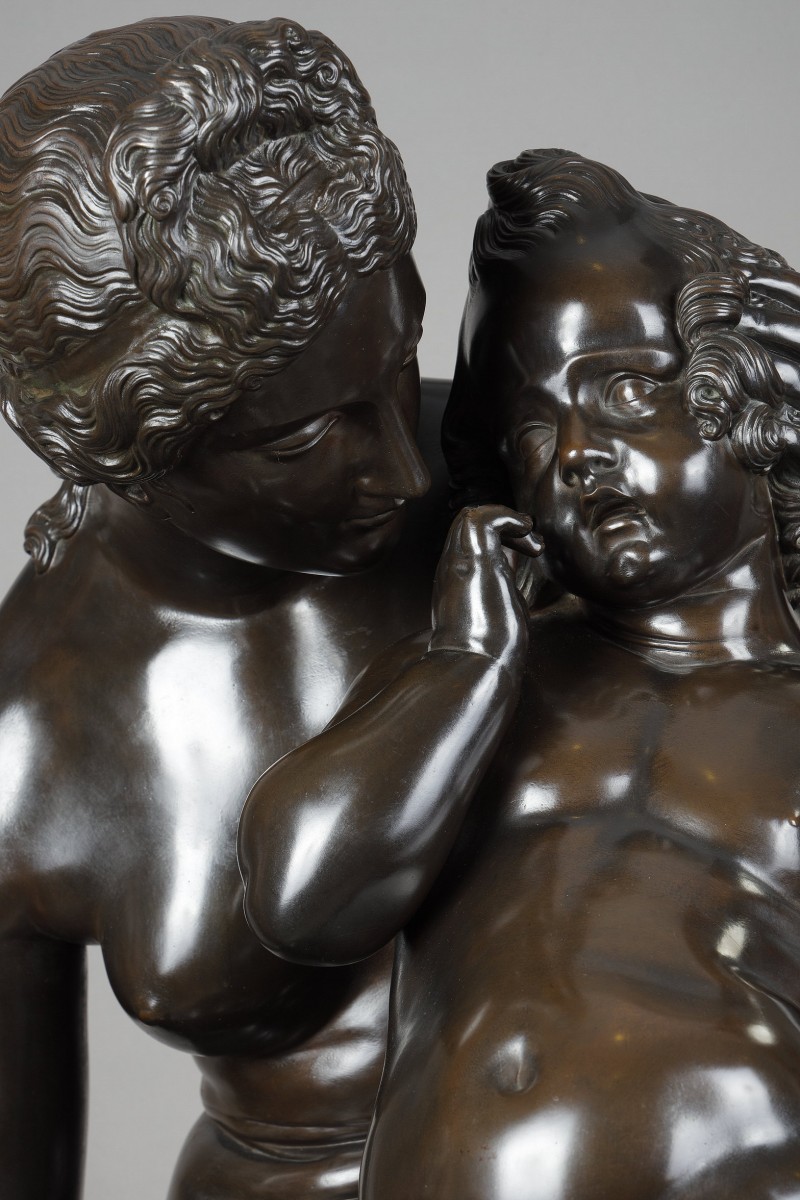
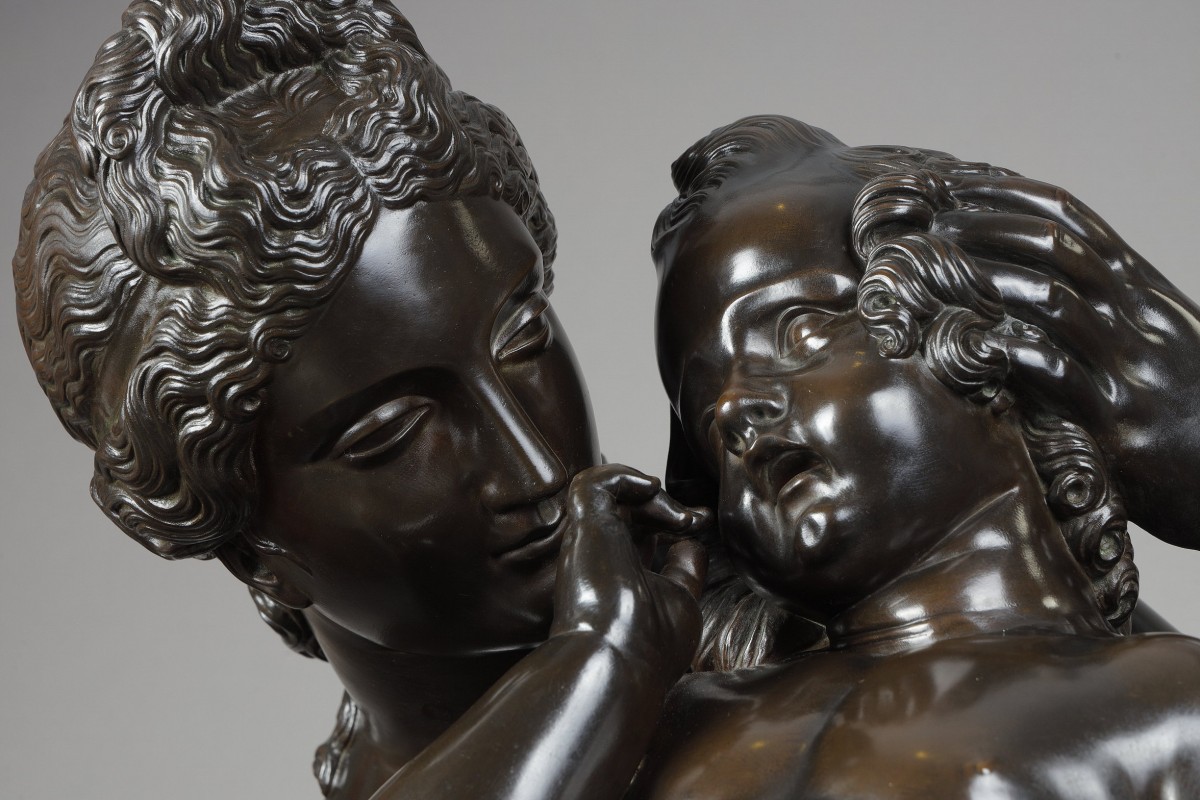
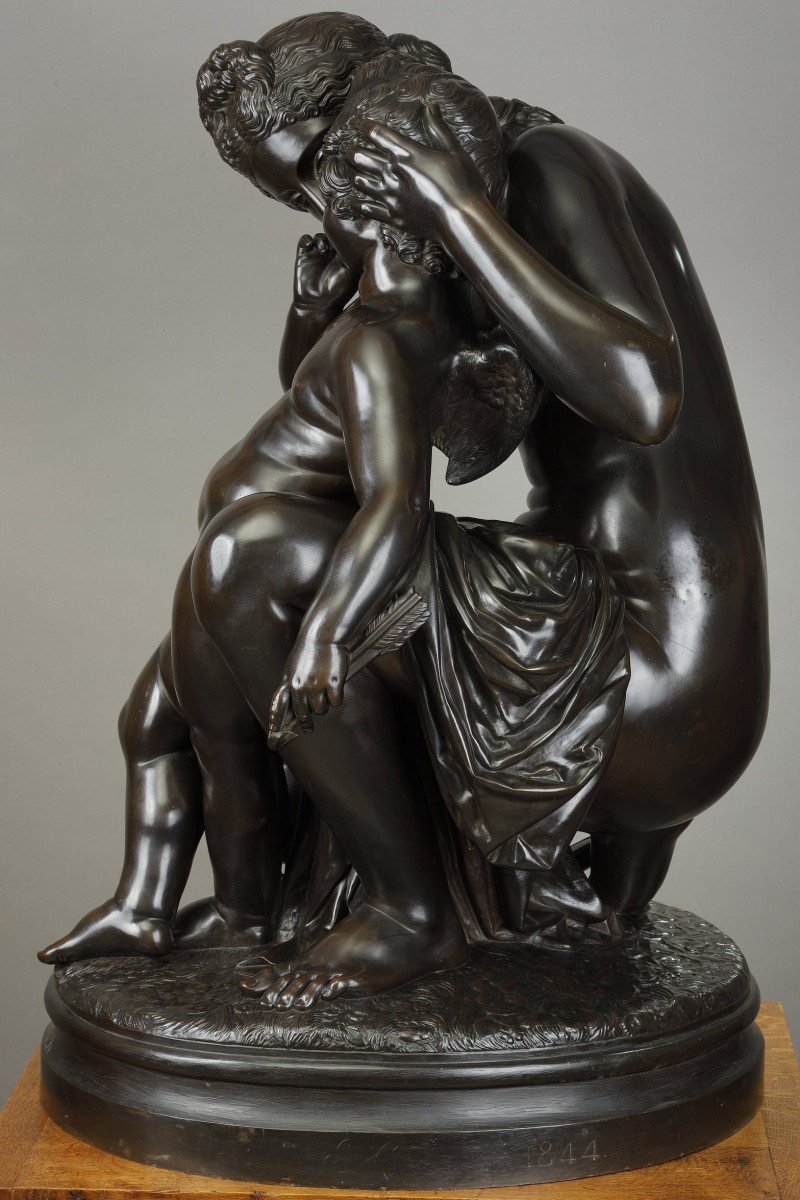

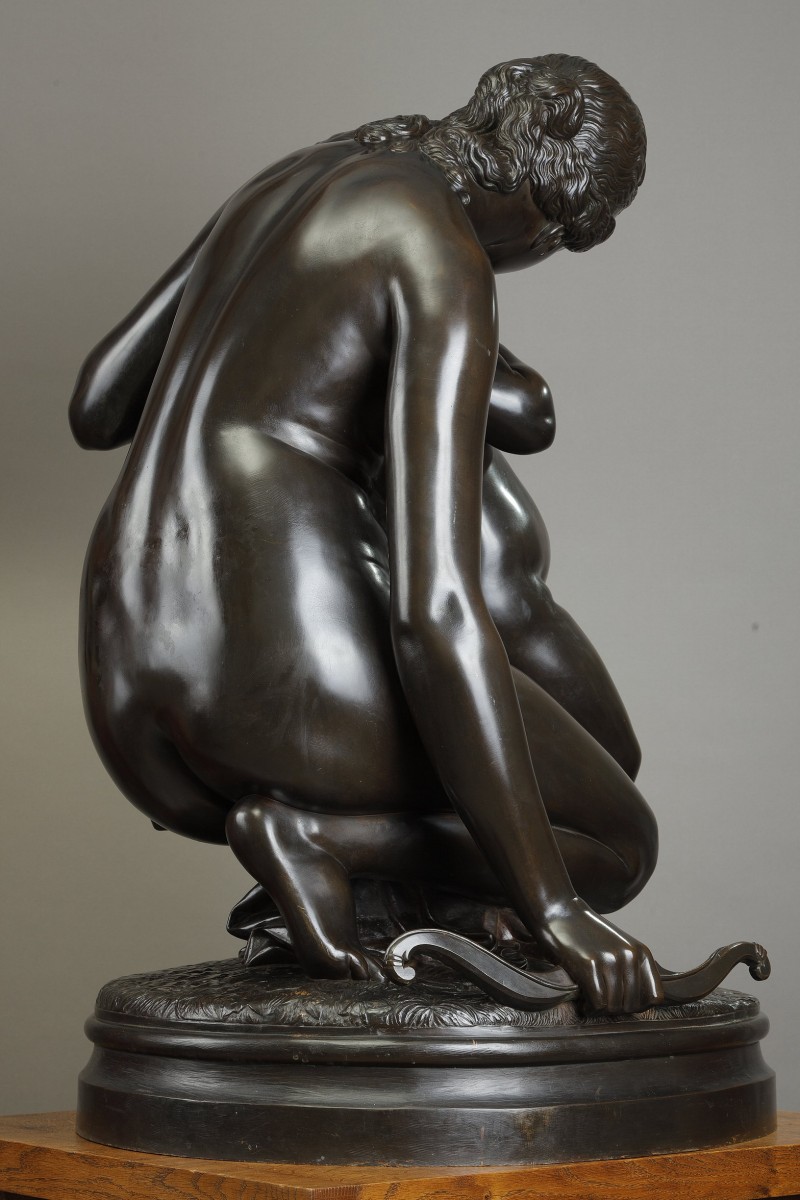
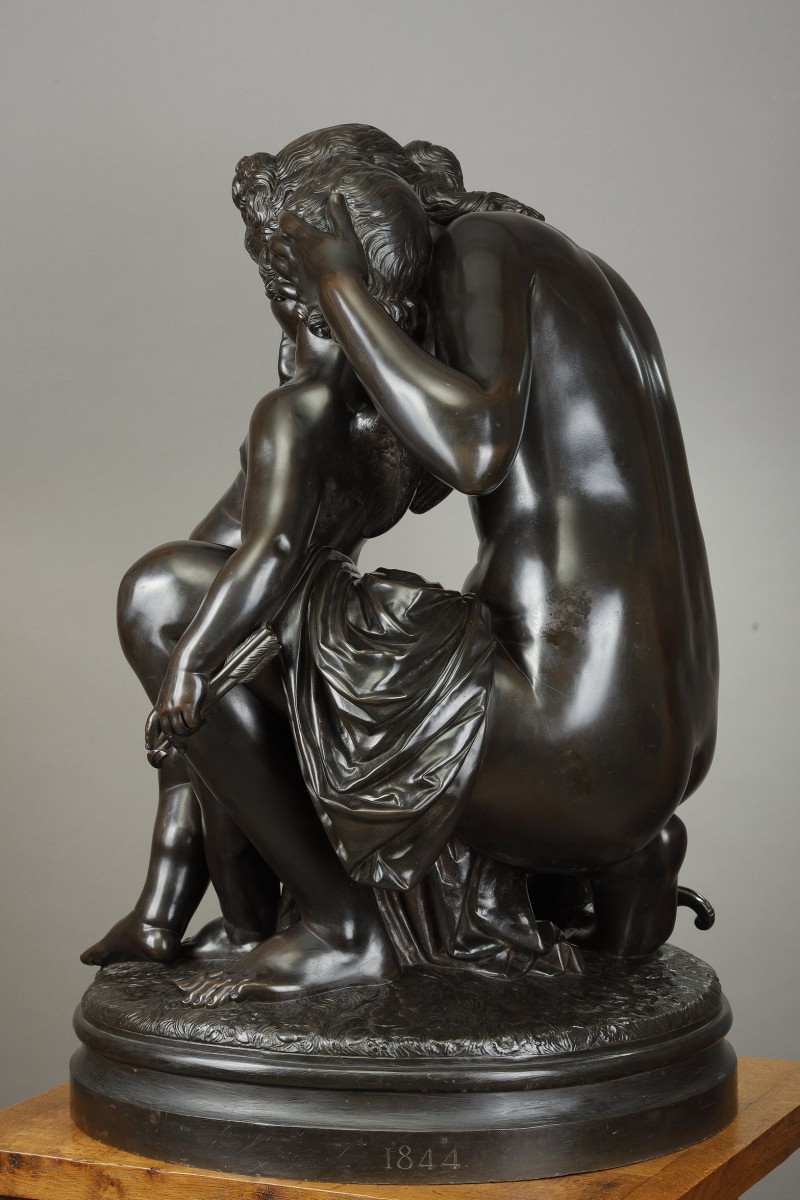
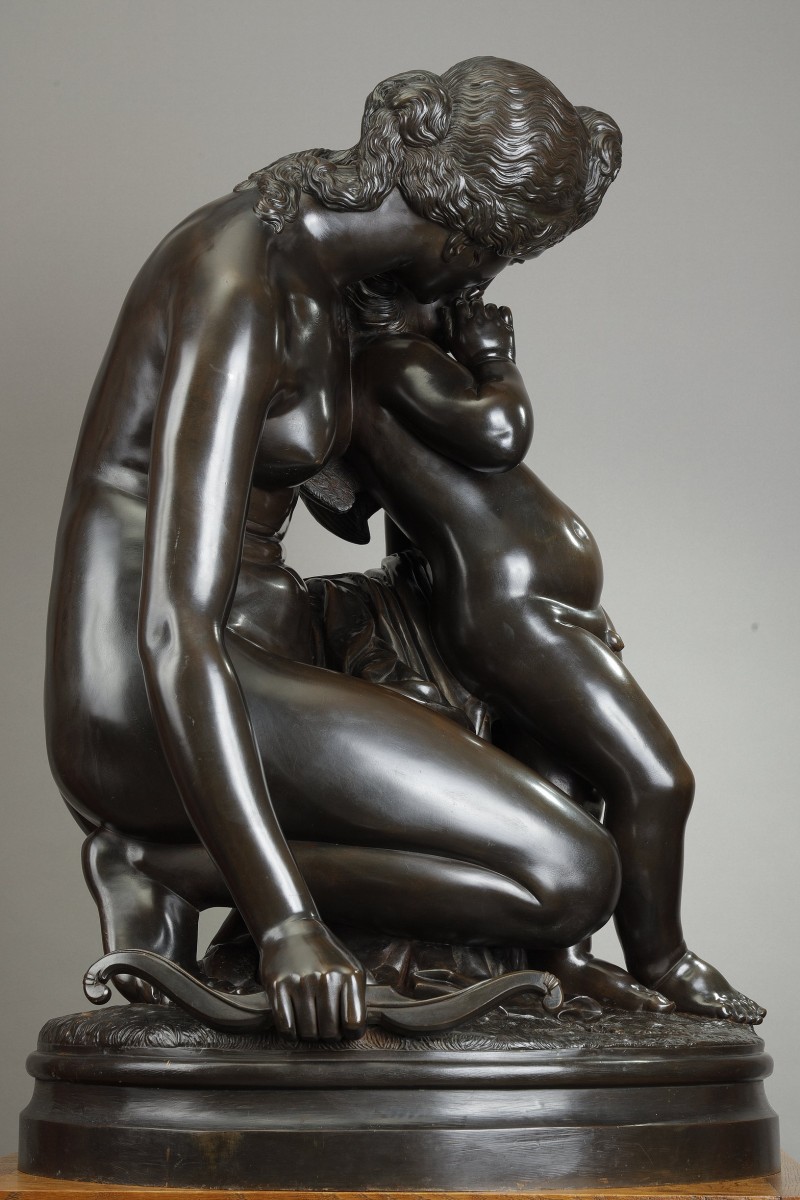
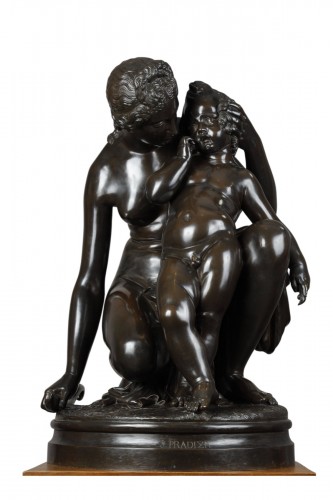
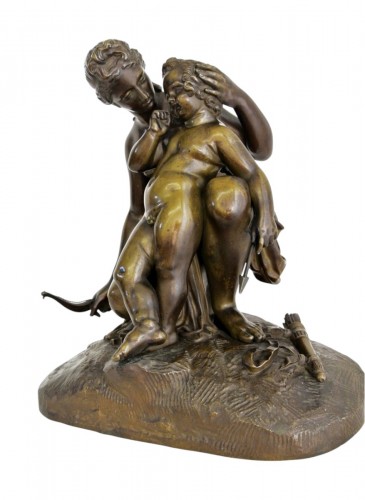
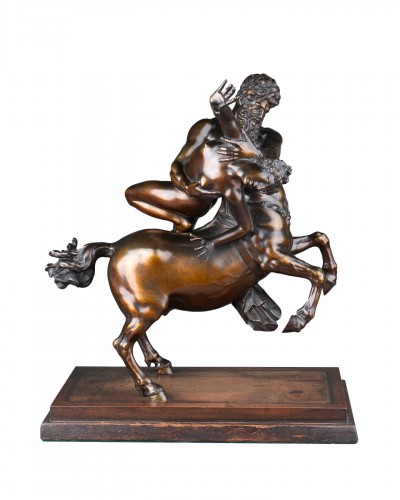
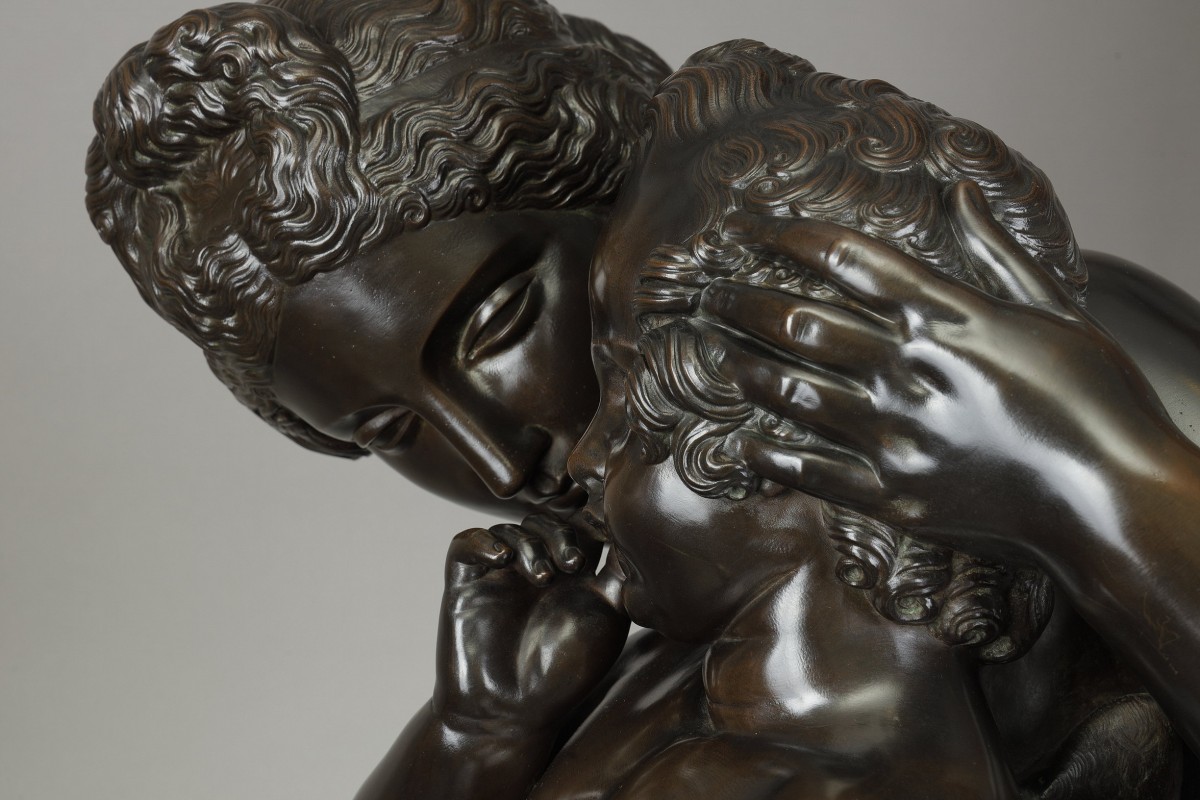
Venus and Cupid
also know as "Word of advice from Venus to Cupid"
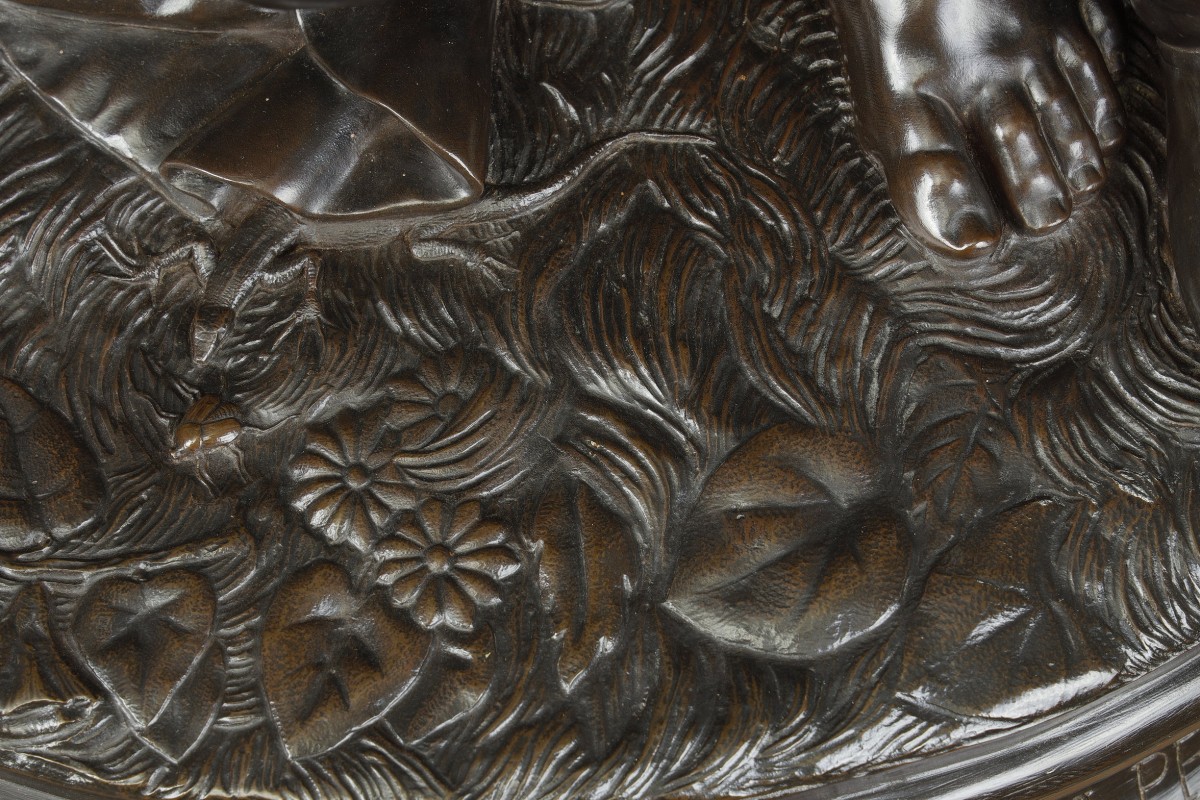
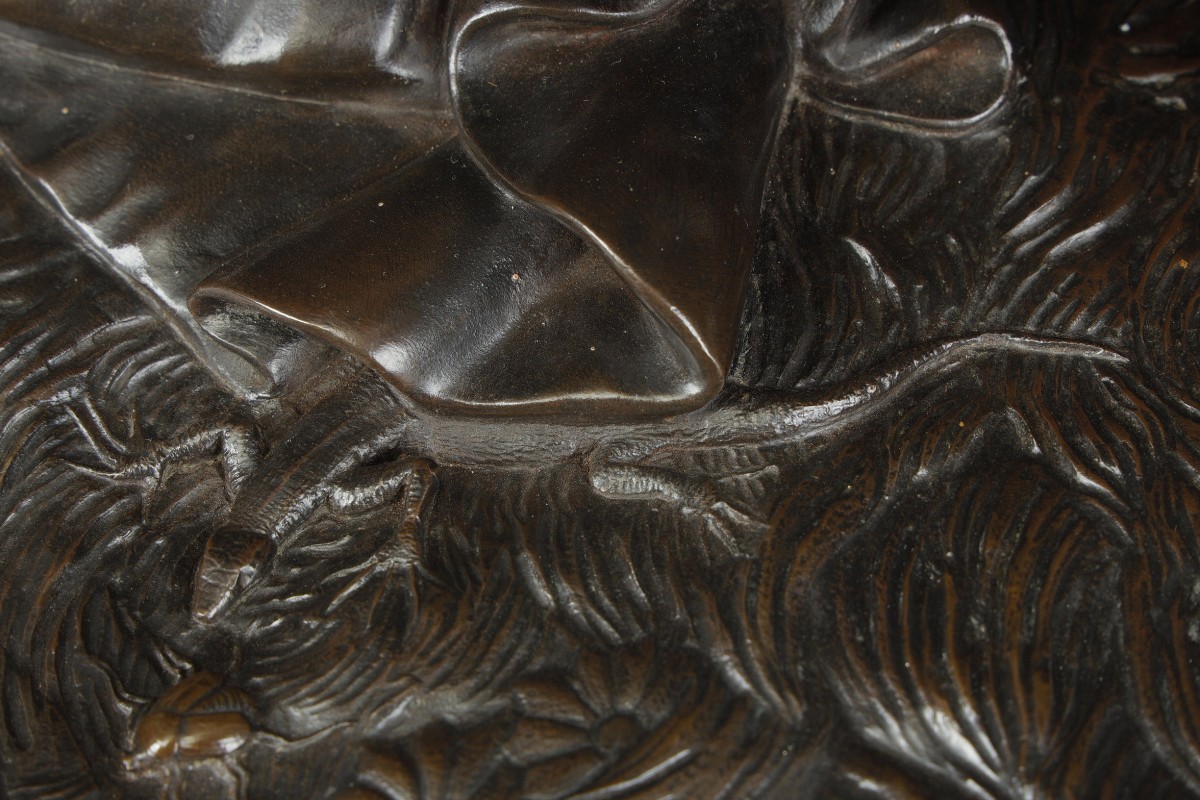
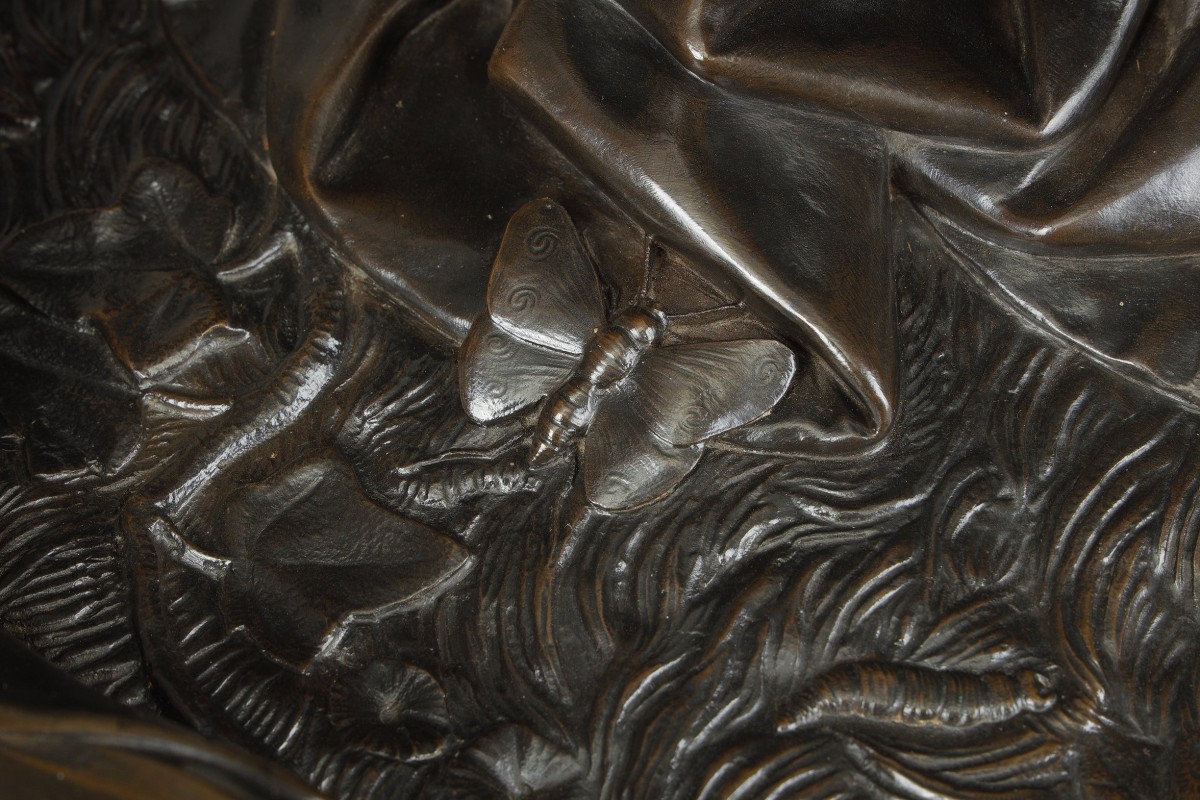
A rare and very important bronze group with a dark brown patina
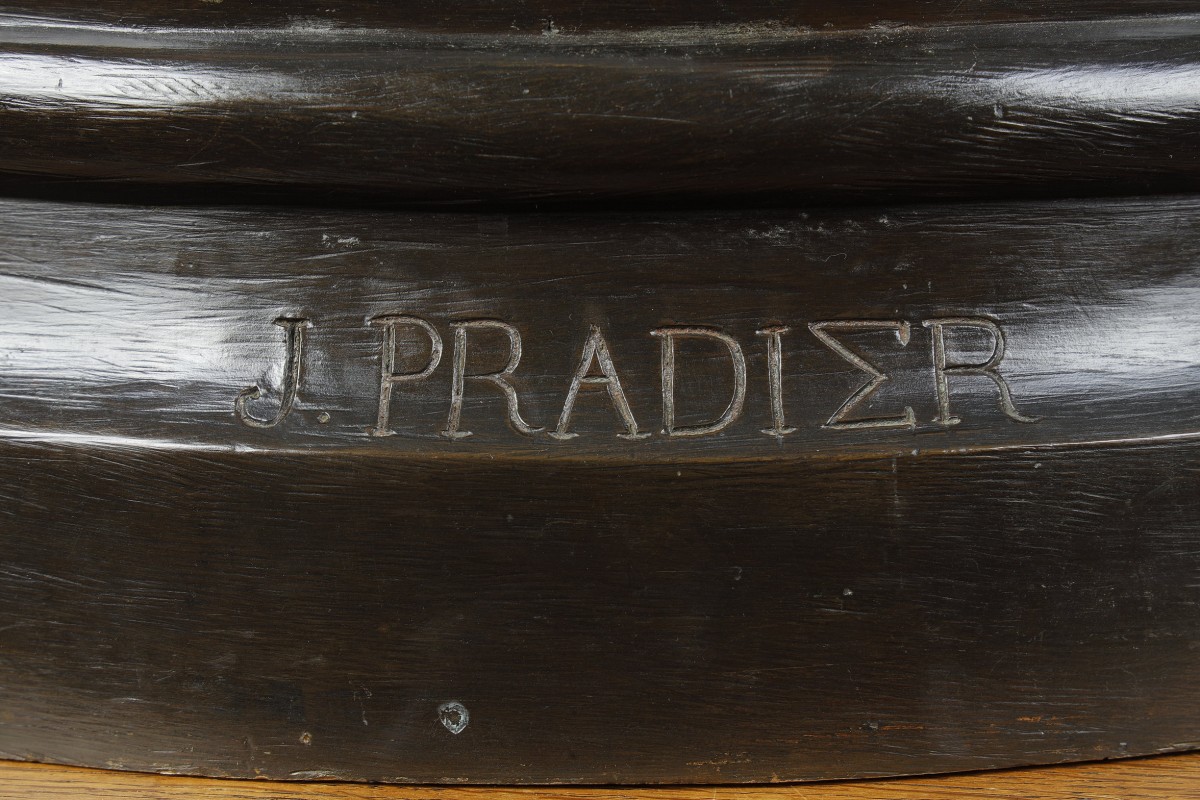
signed on front edge of base " J. Pradier "
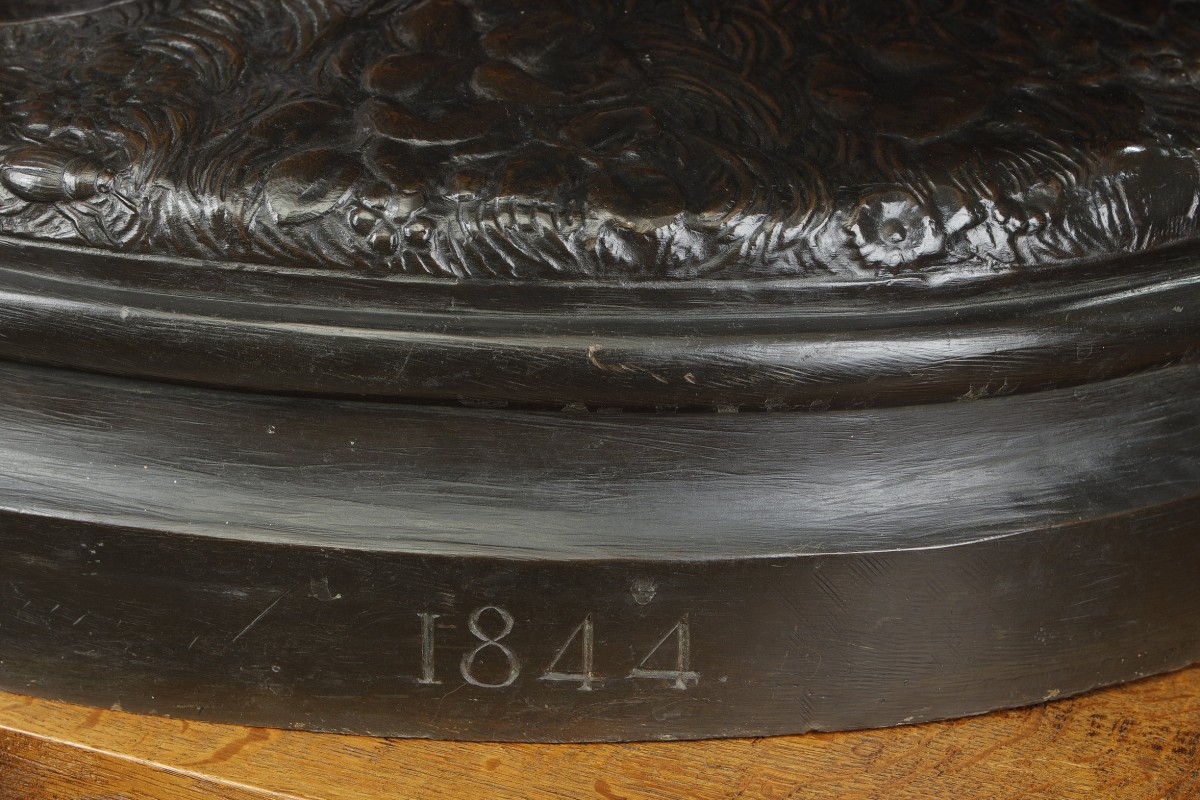
dated on the side " 1844 "
cast by Edouard Quesnel (trace of the foundry mark next to the date)
France
1844
height 96,5 cm
width 61 cm
depth 66 cm
The marble model was created and presented at the Salon in 1836, purchased from the artist by Tsar Nicholas I in 1849, and now exhibited in the Hermitage Museum in St. Petersburg.
It is noted that at the Exhibition of the Products of Industry of 1844, a precursor to the great universal exhibitions, "Venus and Cupid" was presented with other bronze casts by Quesnel.
Listed in "Catalogue raisonné, James Pradier et la sculpture française de la génération romantique", C. Lapaire, Sik Isea, 5 Continents éditions, Milan, 2010, pages 280-281, n°102.
Biography :
Jean-Jacques Pradier, known as James Pradier (1790-1852) was a sculptor and painter from Geneva who made a career in France. Following the fashion of the time, he adopted the English name of "James". He entered the public school of drawing in 1804. In 1807 he joined his brother Charles-Simon Pradier in Paris, where he worked for François-Frédéric Lemot before being admitted to his studio at the Ecole des Beaux-Arts in Paris, as well as in the painters Charles Meynier and François Gérard.
Pradier won the Grand Prix of Rome in 1813 in sculpture for his bas-relief "Néoptolème prevents Philoctète to pierce Odysseus with his arrows". He was appointed professor of sculpture at the School of Fine Arts in Paris in 1828, where he replaced François-Frédéric Lemot. We wanted to recognize the traits of Juliette Drouet, his mistress, in the marble group Satyr and Bacchante who caused a scandal at the Salon of 1834. This link ended when Juliette met Prince Demidoff, she left for Victor Hugo, then Pradier's friend. In Paris, James Pradier had in 1831, his home rue des Beaux-Arts and his studio at rue Neuve-de-l'Abbaye.