Offered by Desmet Galerie
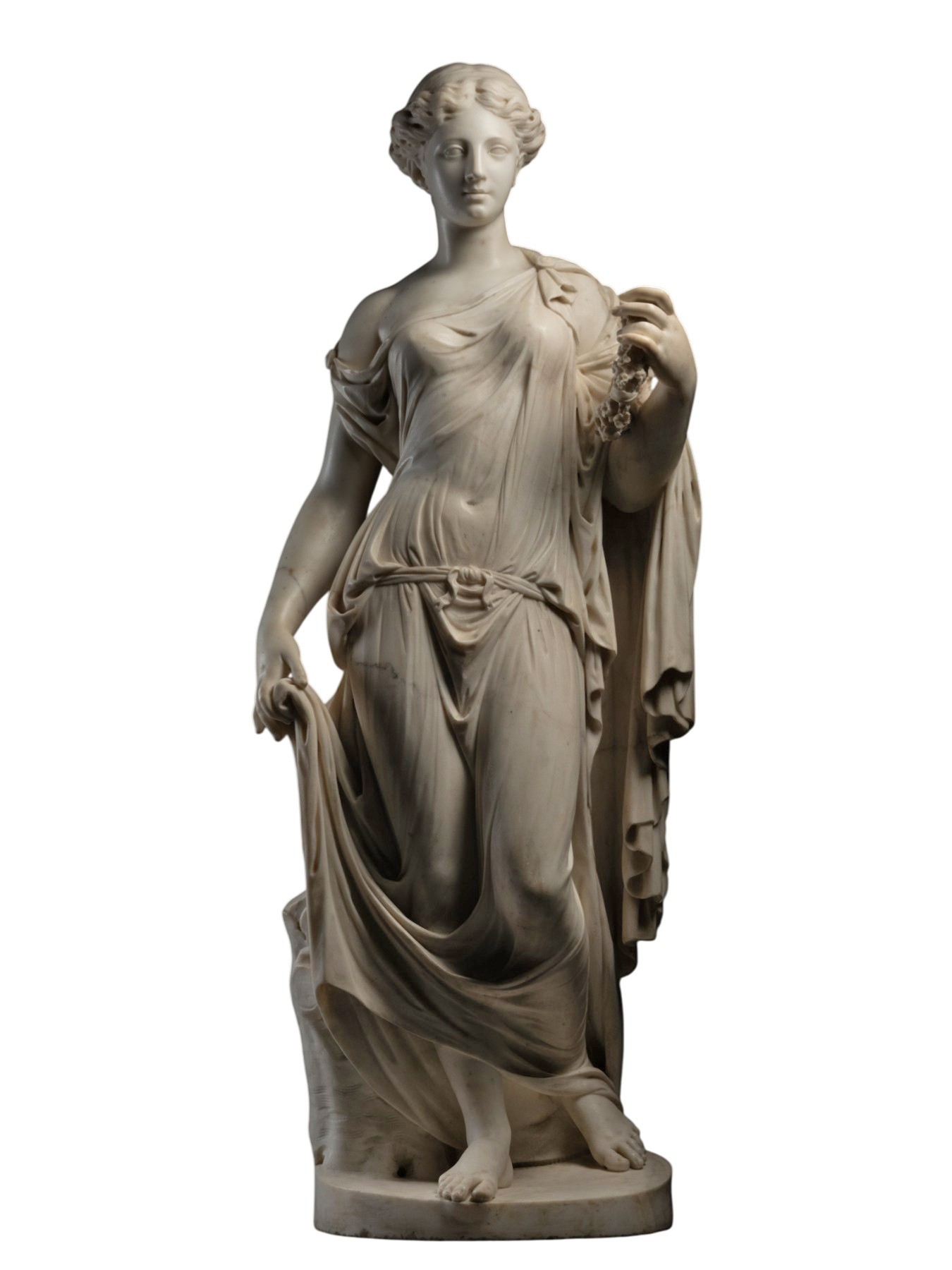
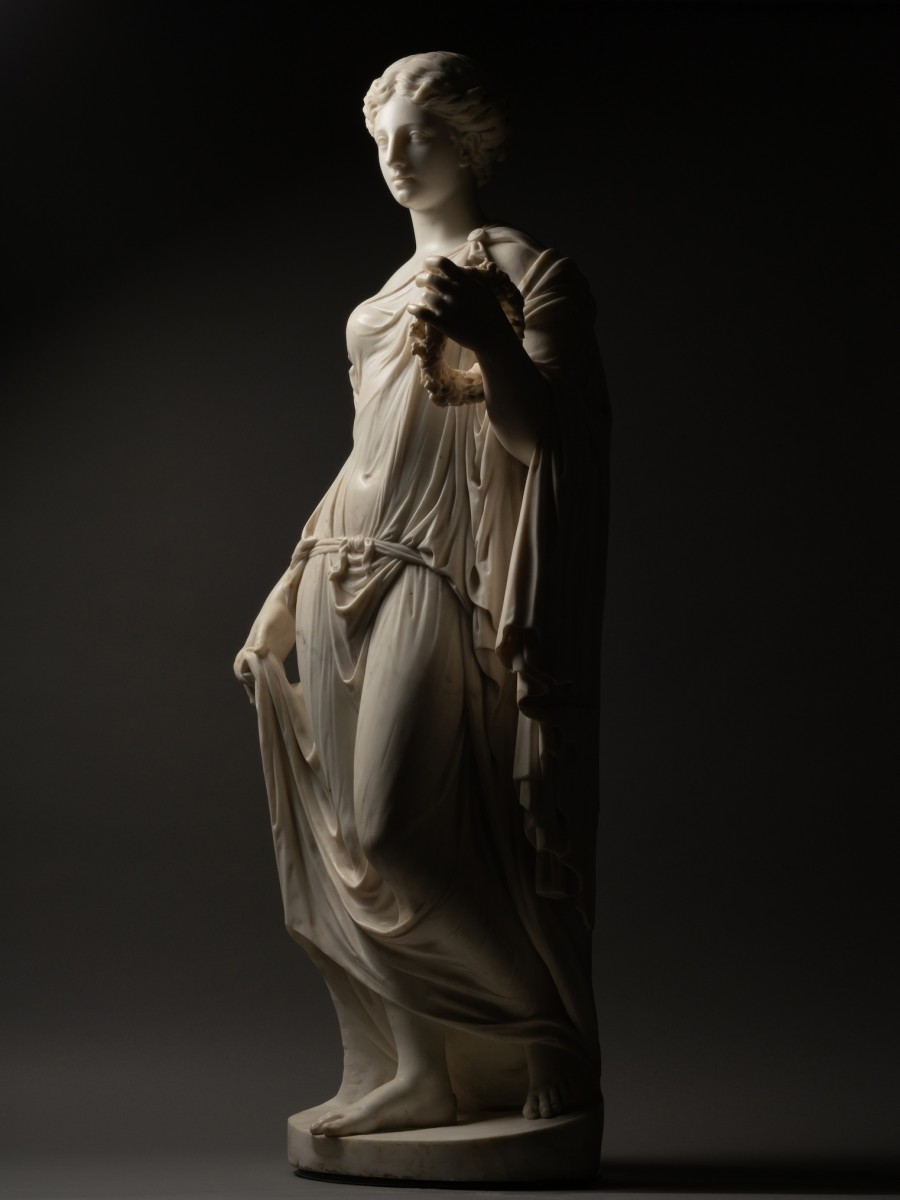
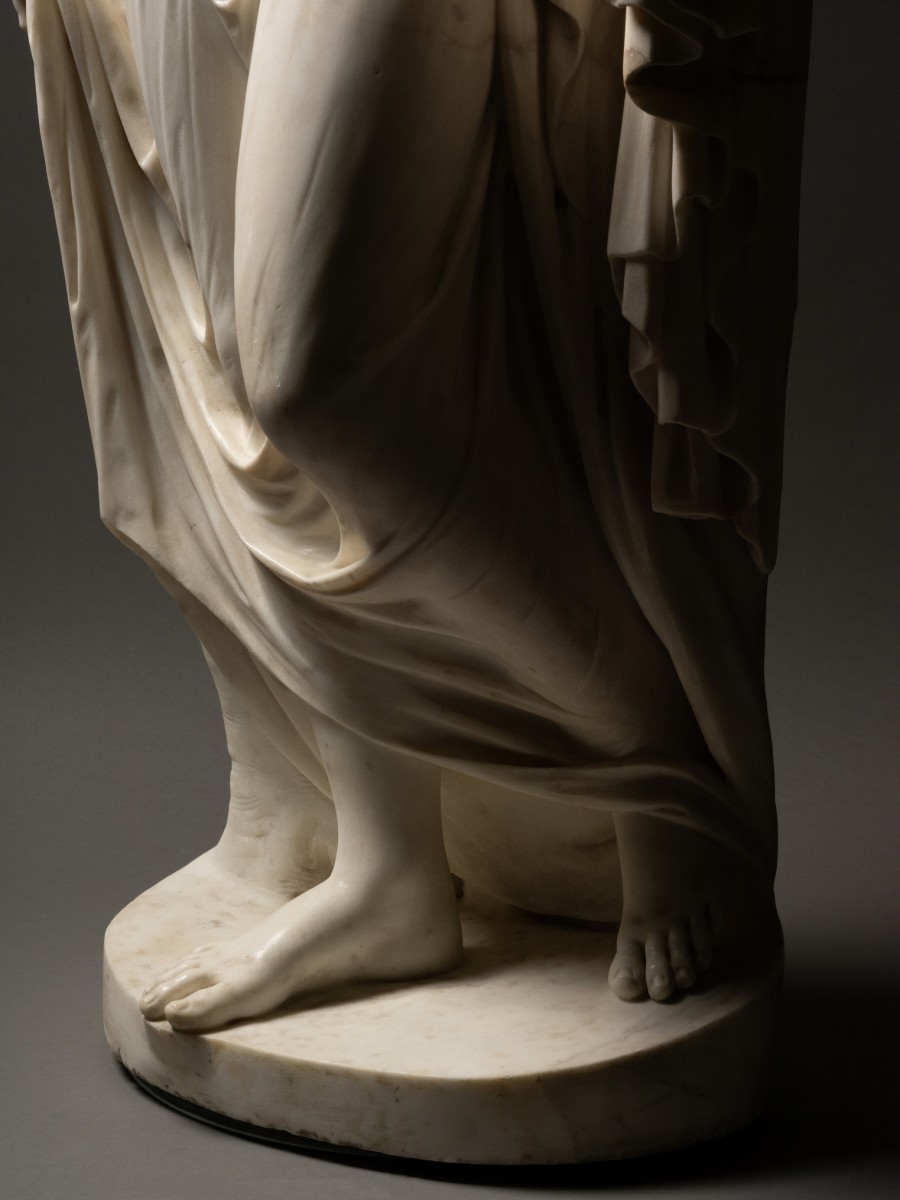

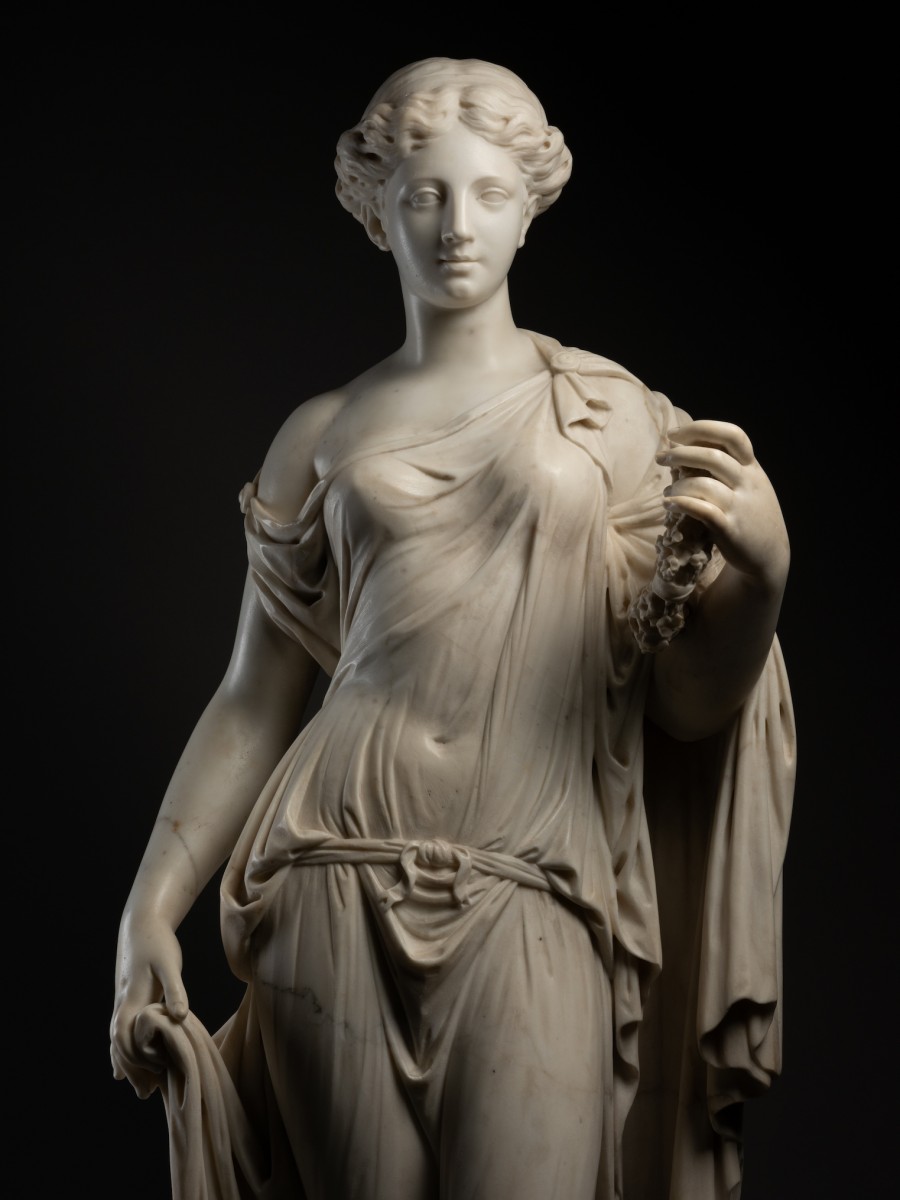
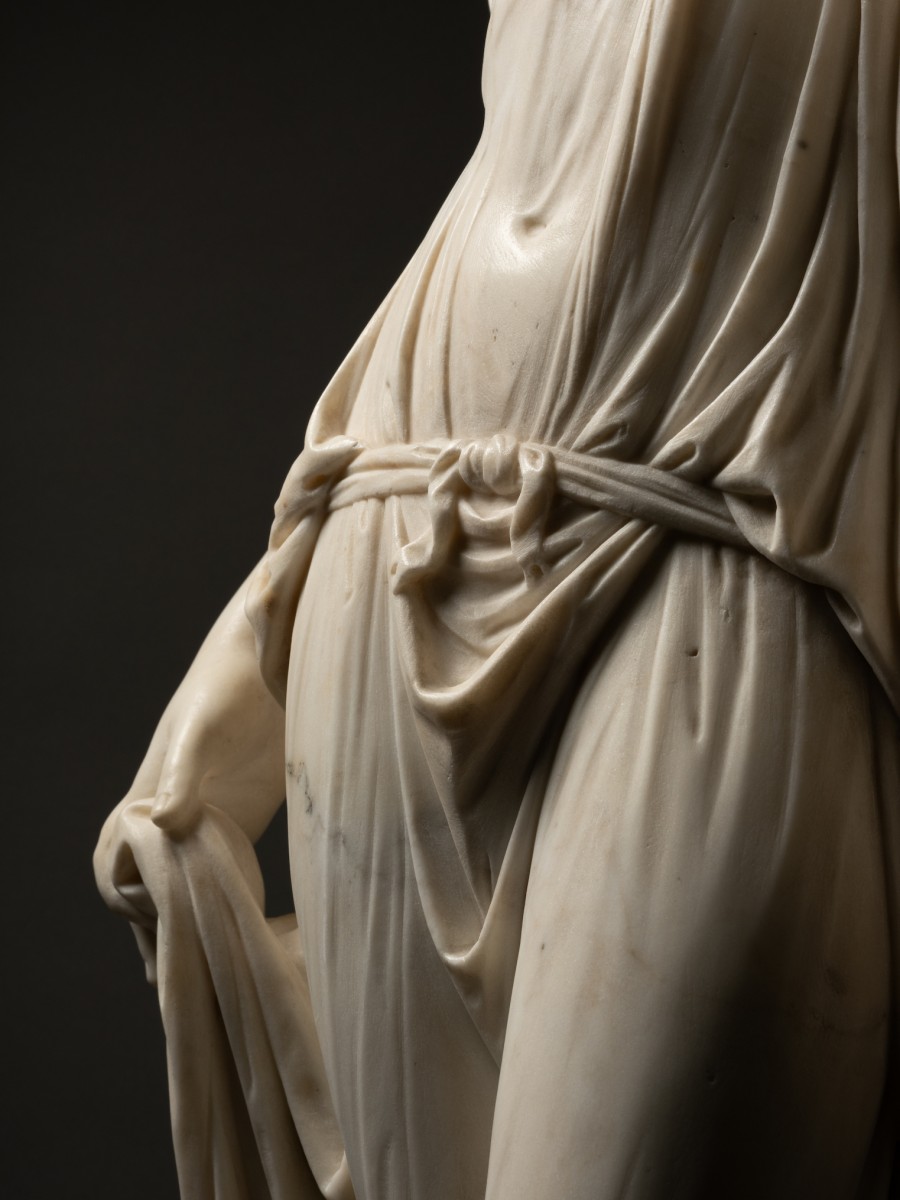
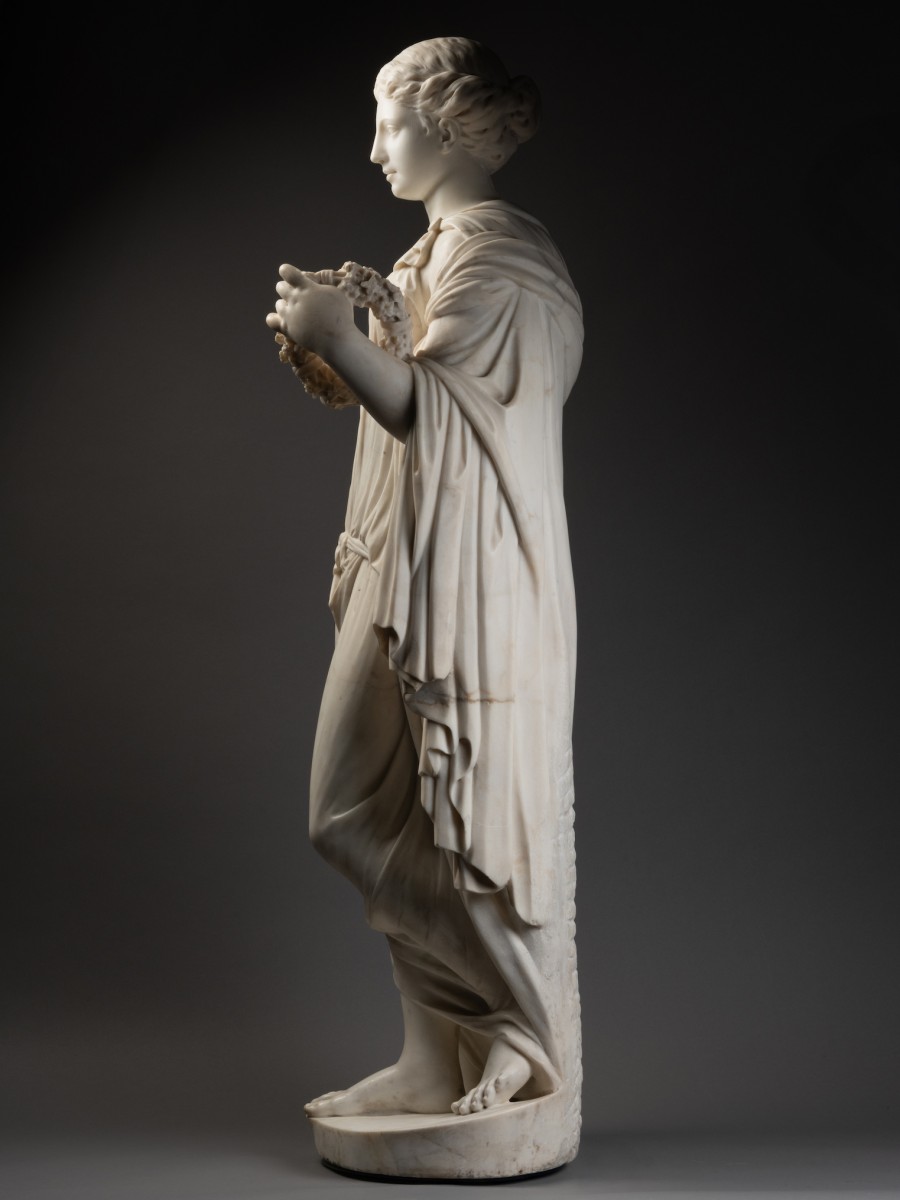
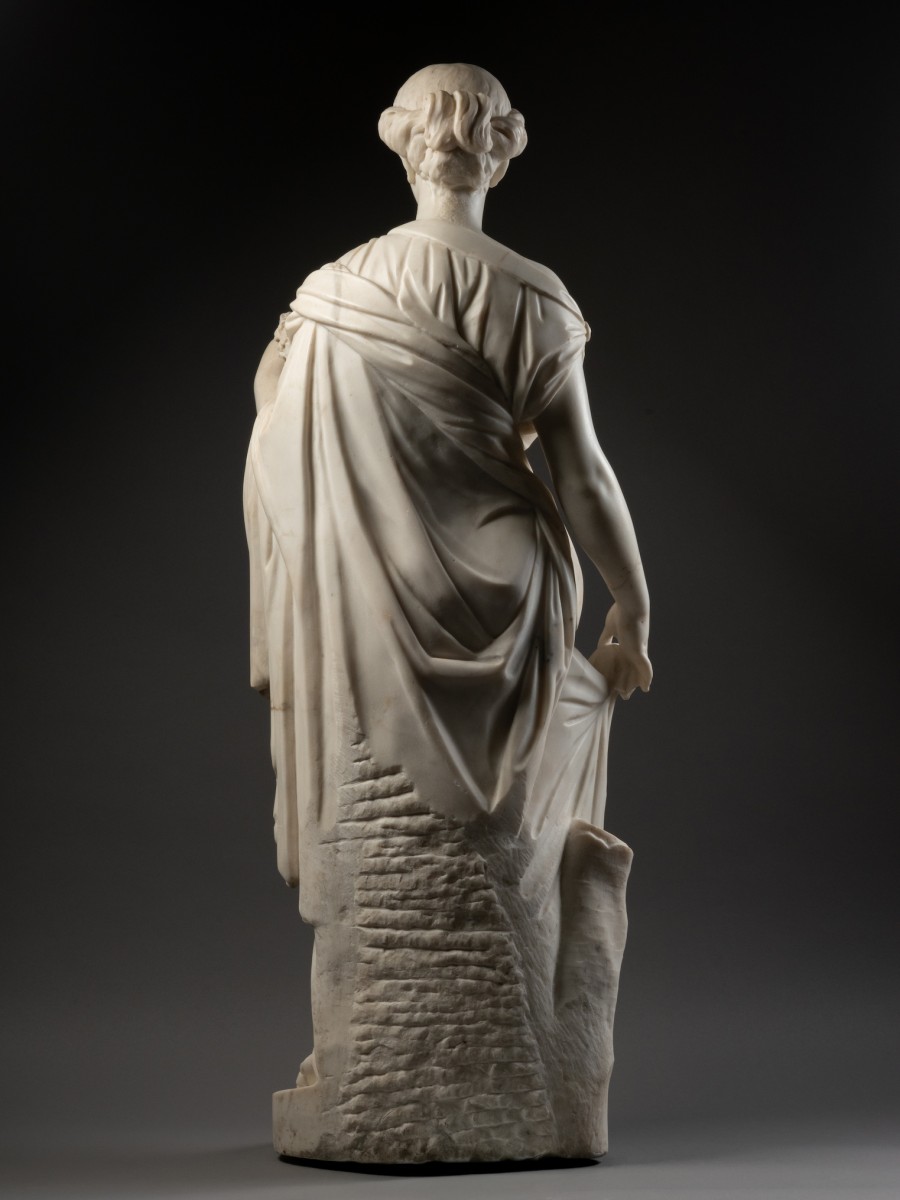
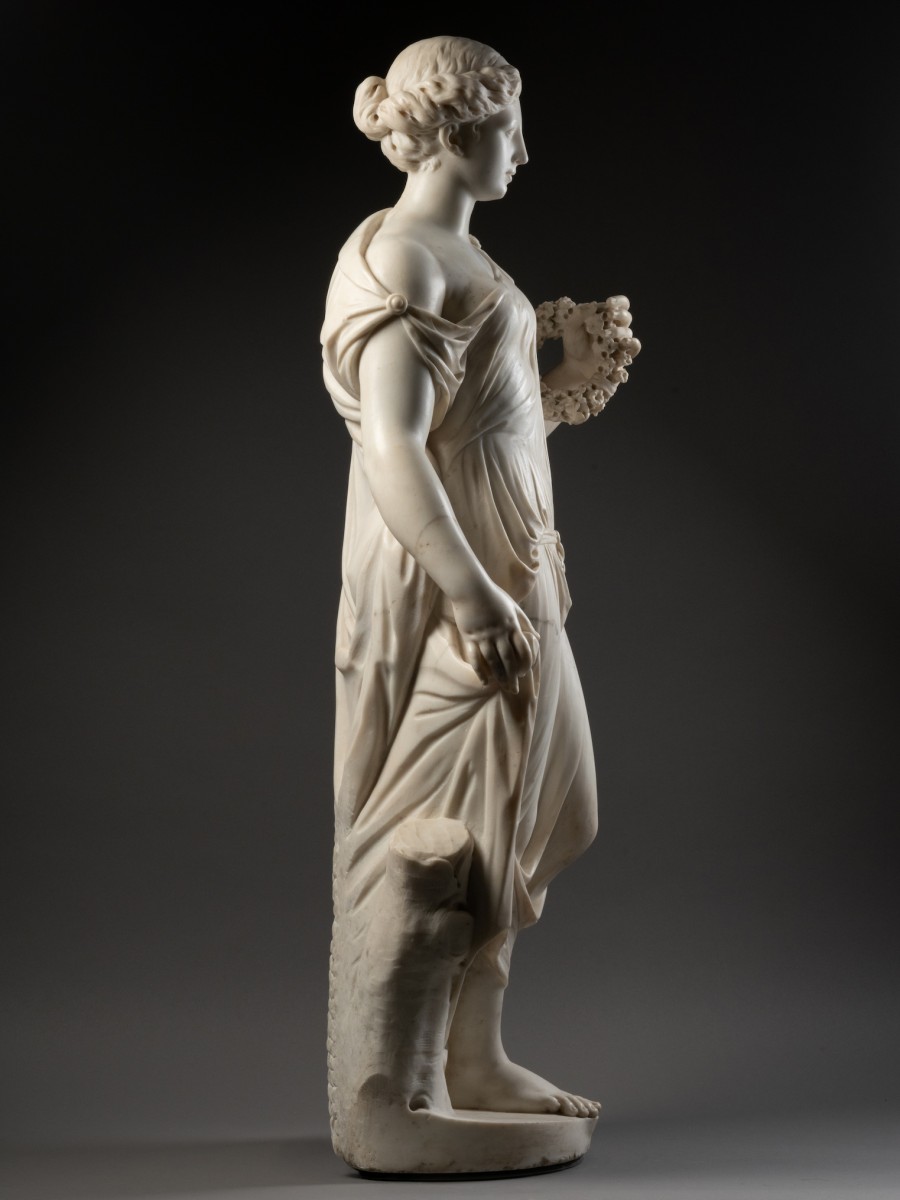
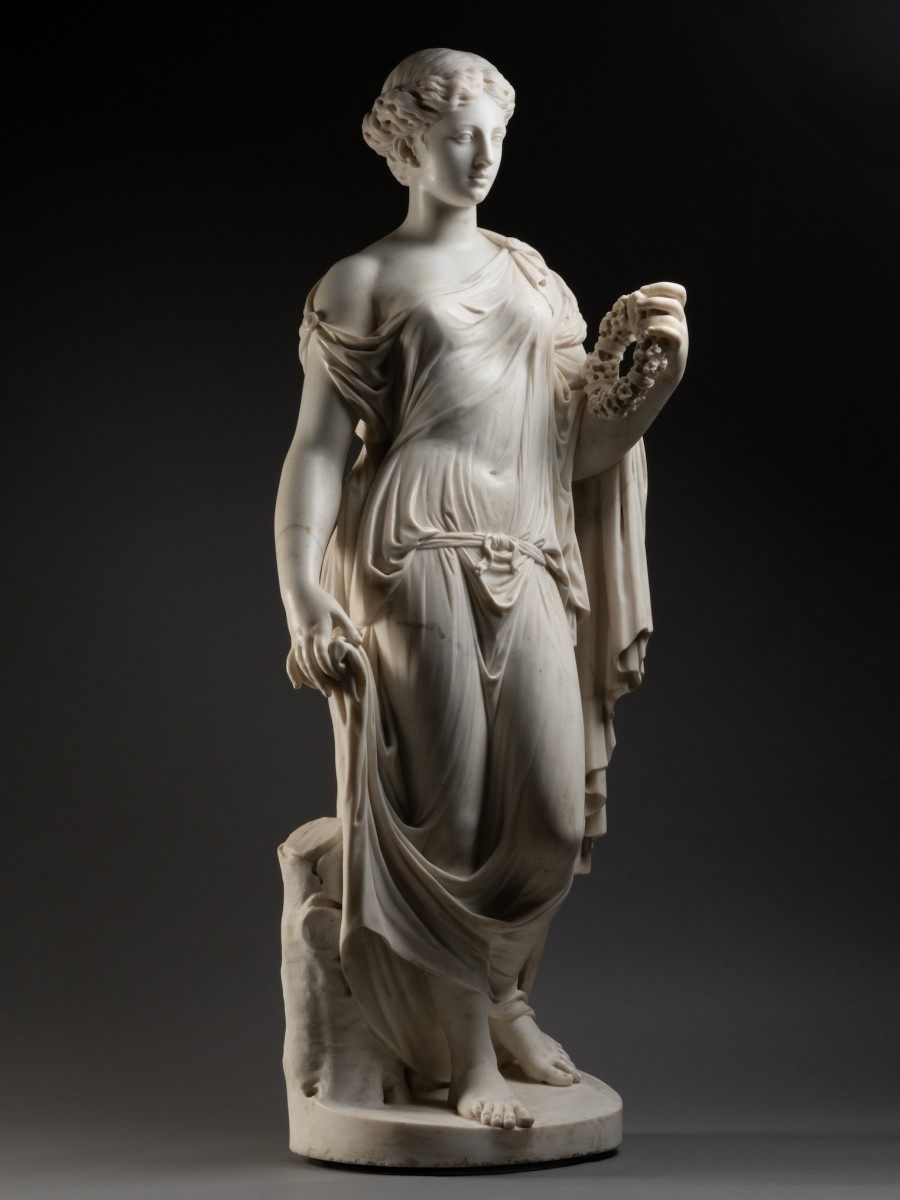
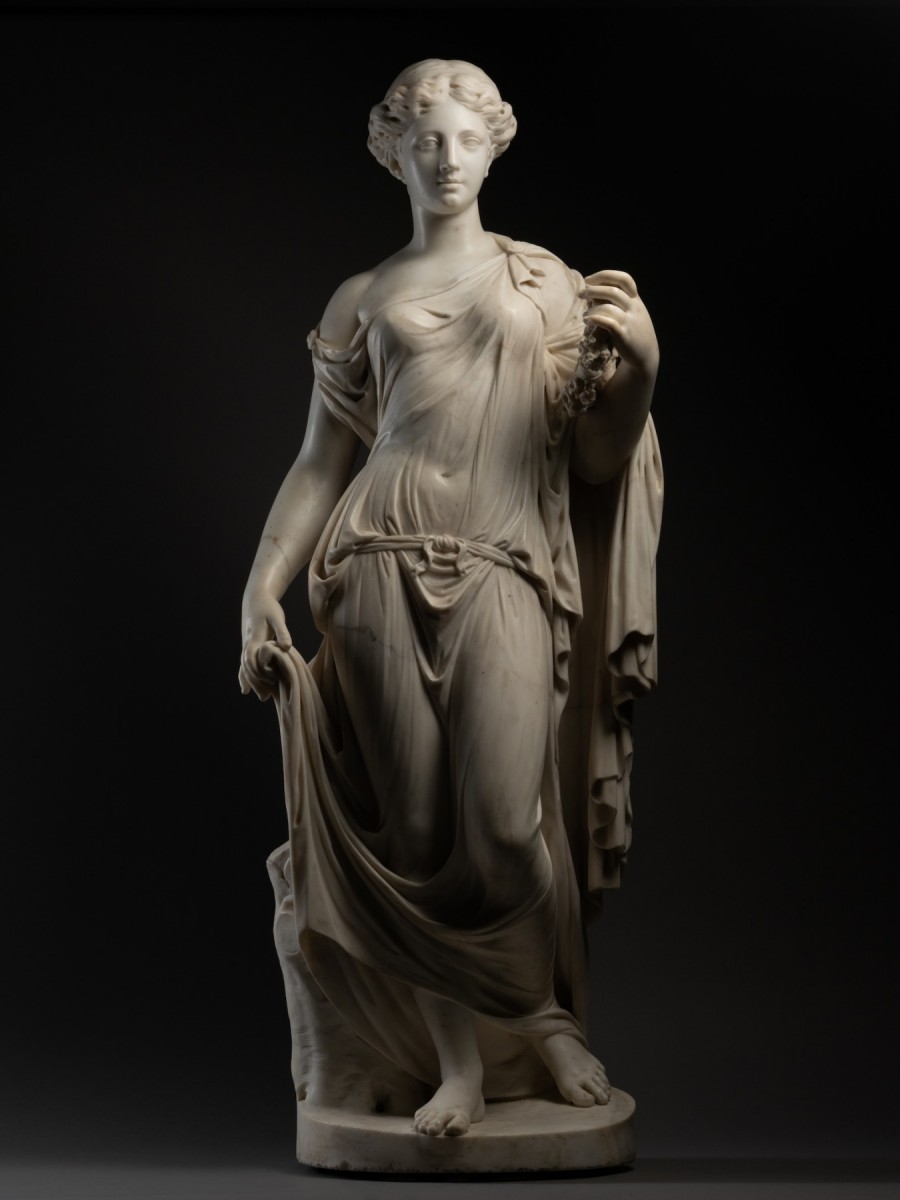
The statue depicts a gracefully posed female figure inspired by the iconography of Flora, goddess of flowers and spring. The figure stands in a gentle contrapposto, with the weight resting on her left leg while the right leg steps forward, giving the composition a subtle sense of movement. The drapery is handled with remarkable finesse: thin, fluid folds cascade over the body, revealing the underlying form with a classical “wet-drapery” effect. A carefully modelled knot gathers the fabric at the waist, demonstrating the sculptor’s technical precision.
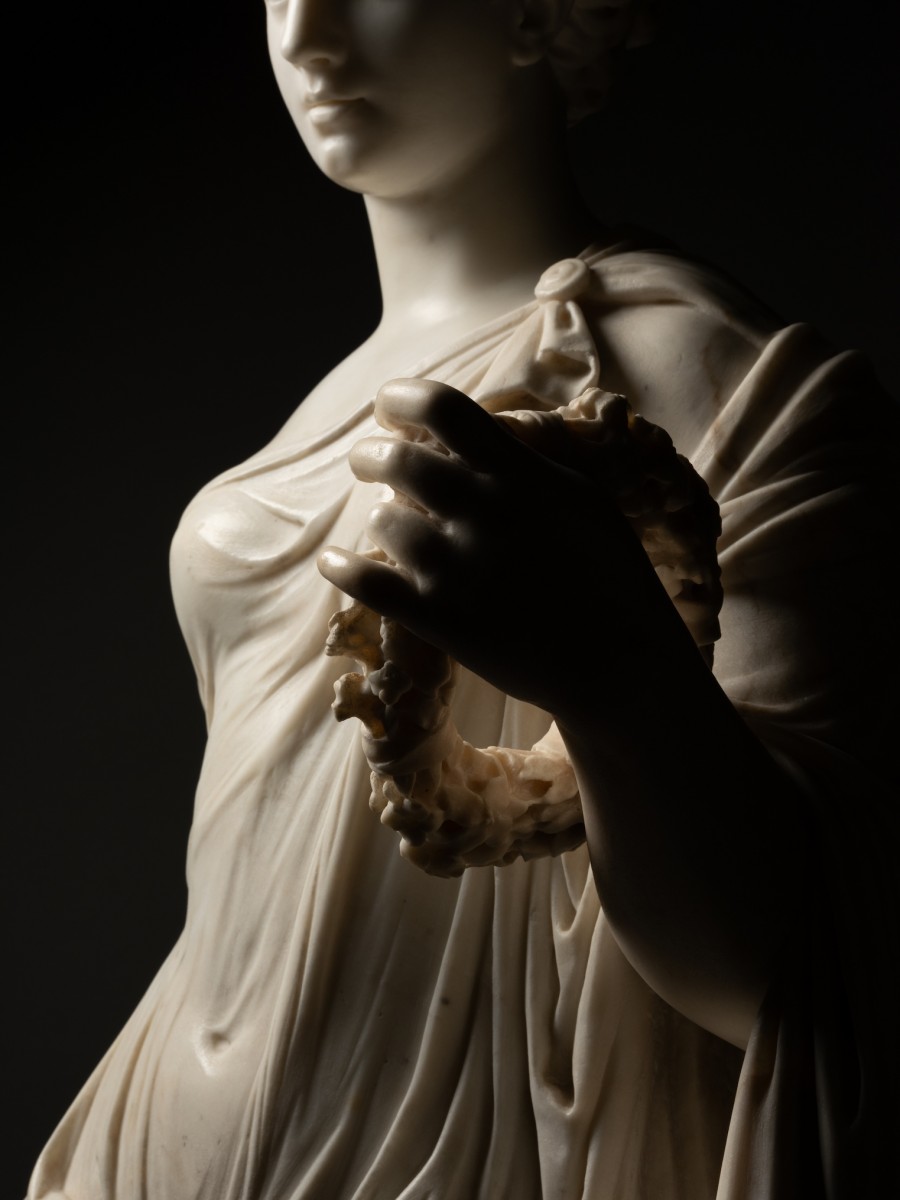
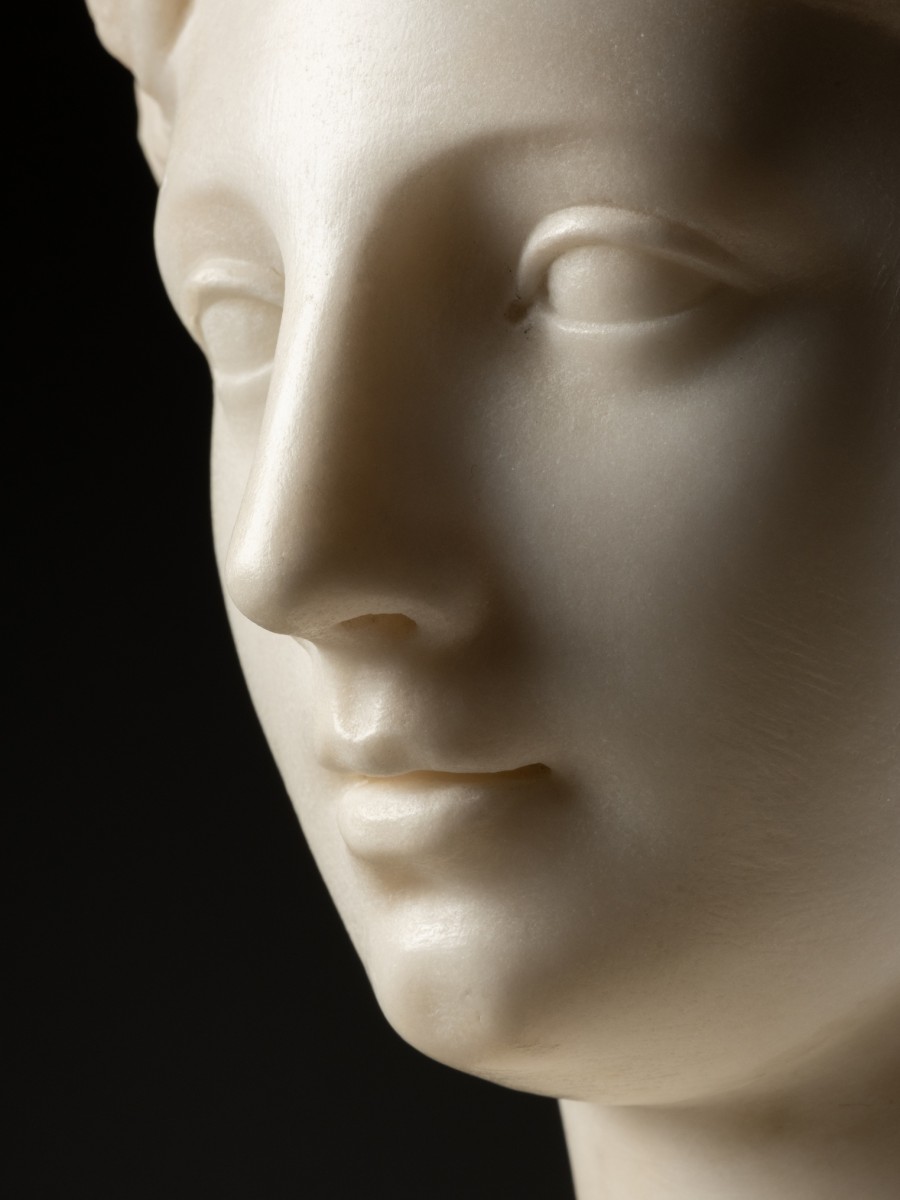
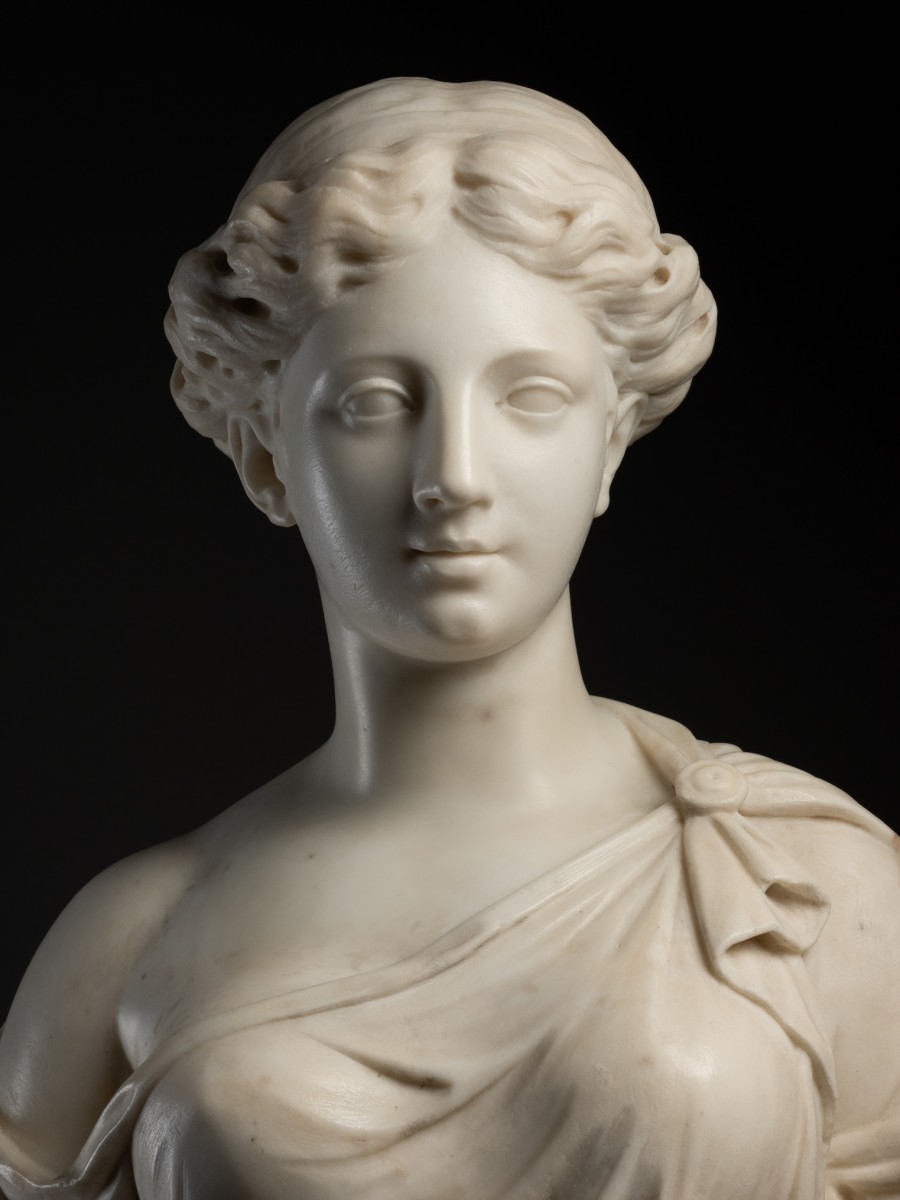
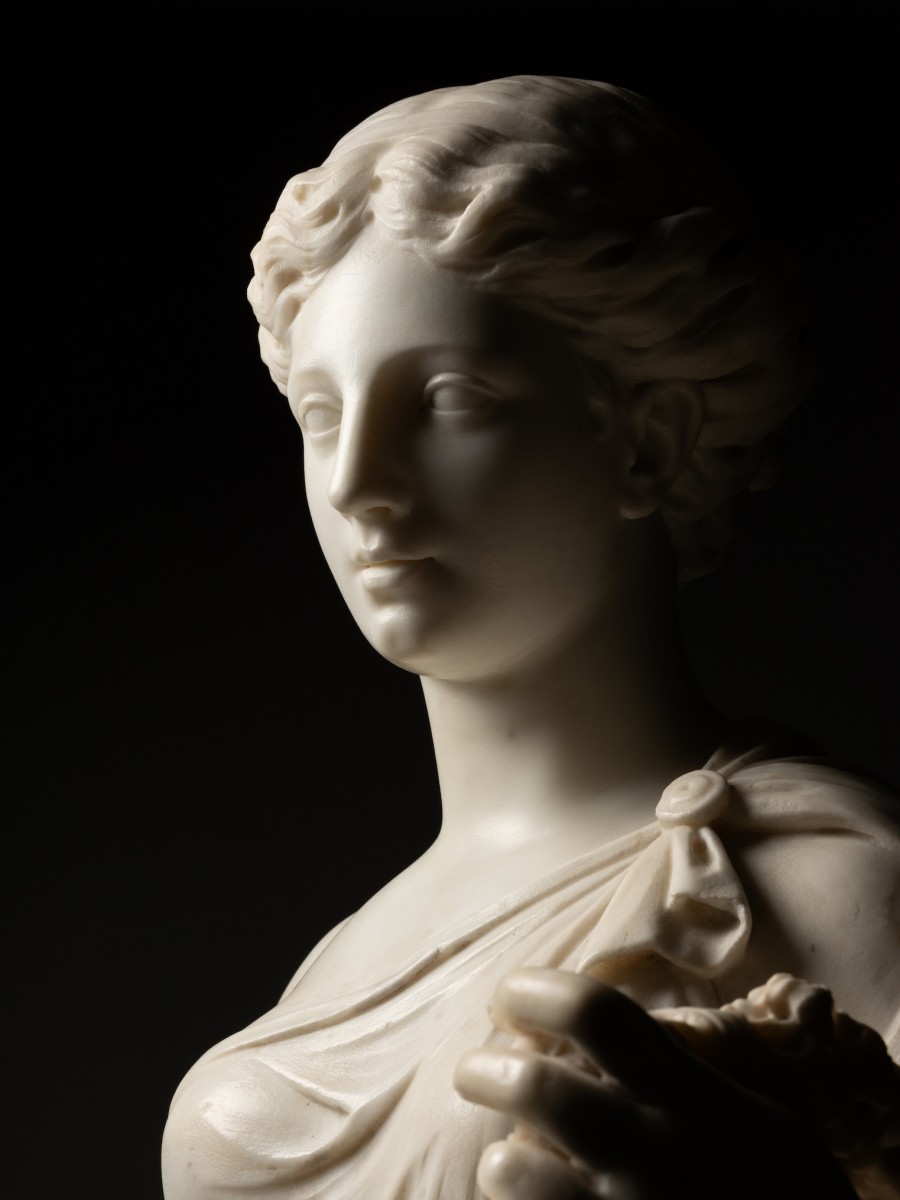
Her head turns slightly to one side, with a serene, idealised expression characteristic of late eighteenth-century classicism. The hair is arranged in soft, rhythmically carved waves framing the face. In her right hand she holds a wreath of flowers, an attribute traditionally associated with Flora, while her left hand lifts a fold of her garment in a gesture that enhances the sense of poised elegance.
A tree-trunk support, typical of marble statuary, stabilises the composition and is discreetly integrated into the design. The surface finish alternates between softly polished flesh areas and a more matte treatment of the drapery, underscoring the contrast between skin and textile.
During the second half of the eighteenth century, Rome, Florence, and Naples became major centers for the production of marble sculpture destined for Grand Tour travellers - wealthy Europeans, particularly from Britain, France, and Northern Europe, who sought to acquire classical works or modern interpretations after antique prototypes.
Not all sculptures of this period were strict copies. Many were freely inspired reinterpretations of well-known ancient statues. Italian workshops had access to antiquities in major collections and to drawn or plaster models, yet sculptors often adapted poses, proportions, drapery, and attributes to suit contemporary neoclassical taste. These reinterpretations were highly desirable to collectors: they combined the authority of antiquity with the refined aesthetic sensibilities of the period.
A work of this scale - 115 cm - fits the profile of pieces intended for sophisticated private collections, studioli, and domestic galleries, where an antique theme rendered in a modern classicising idiom would be perfectly at home.
The Flora Farnese, a monumental Roman marble statue (2nd century AD) excavated in 1540 and long part of the celebrated Farnese collection, became one of the canonical female figures of early modern and neoclassical reception of antiquity. Now in the Museo Archeologico Nazionale in Naples, the Naples-Flora is characterised by lavish drapery, a calm, idealised face, and the presence of floral attributes.
In the eighteenth century the sculpture achieved renewed fame as Naples became a key Grand Tour destination. Numerous sculptors produced replicas, reductions, and more commonly adapted interpretations. These reinterpretations were rarely exact: artists often slimmed the proportions, adjusted the pose, refined the physiognomy, or reworked the drapery to conform to the elegant, linear aesthetic of late neoclassicism.
The present sculpture aligns strongly with this tradition. The floral wreath clearly identifies the figure as Flora and relates to the ancient prototype, yet the body proportions, the more mobile stance, and the subtle handling of drapery speak to a late eighteenth-century artistic vocabulary rather than to a literal replication of the Farnese original. It is, in other words, a creative neoclassical reimagining of a celebrated antique model - precisely the type of work Grand Tour collectors prized.
Delevery information :
We can arrange shipping.