Offered by Artimo
REQUEST INFORMATION
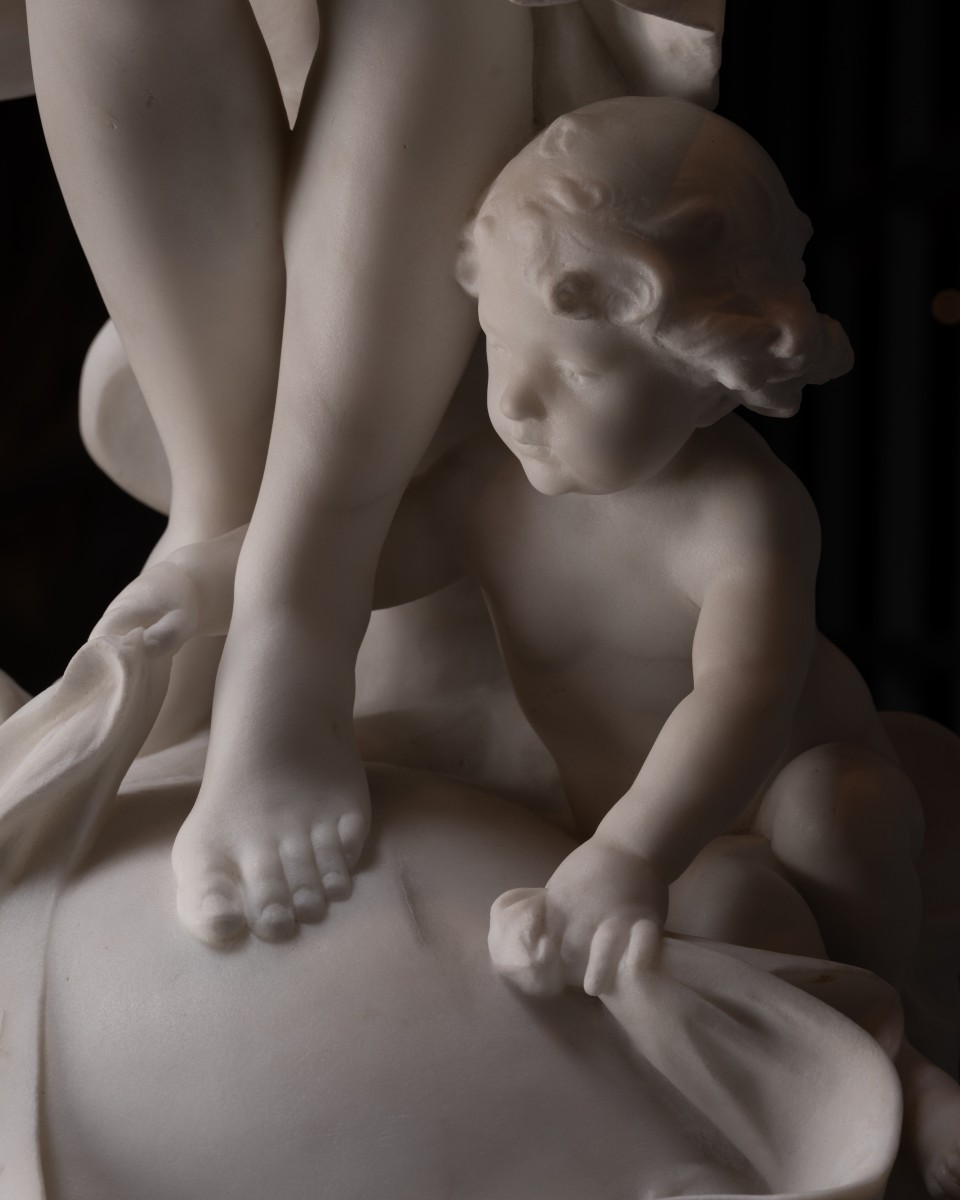
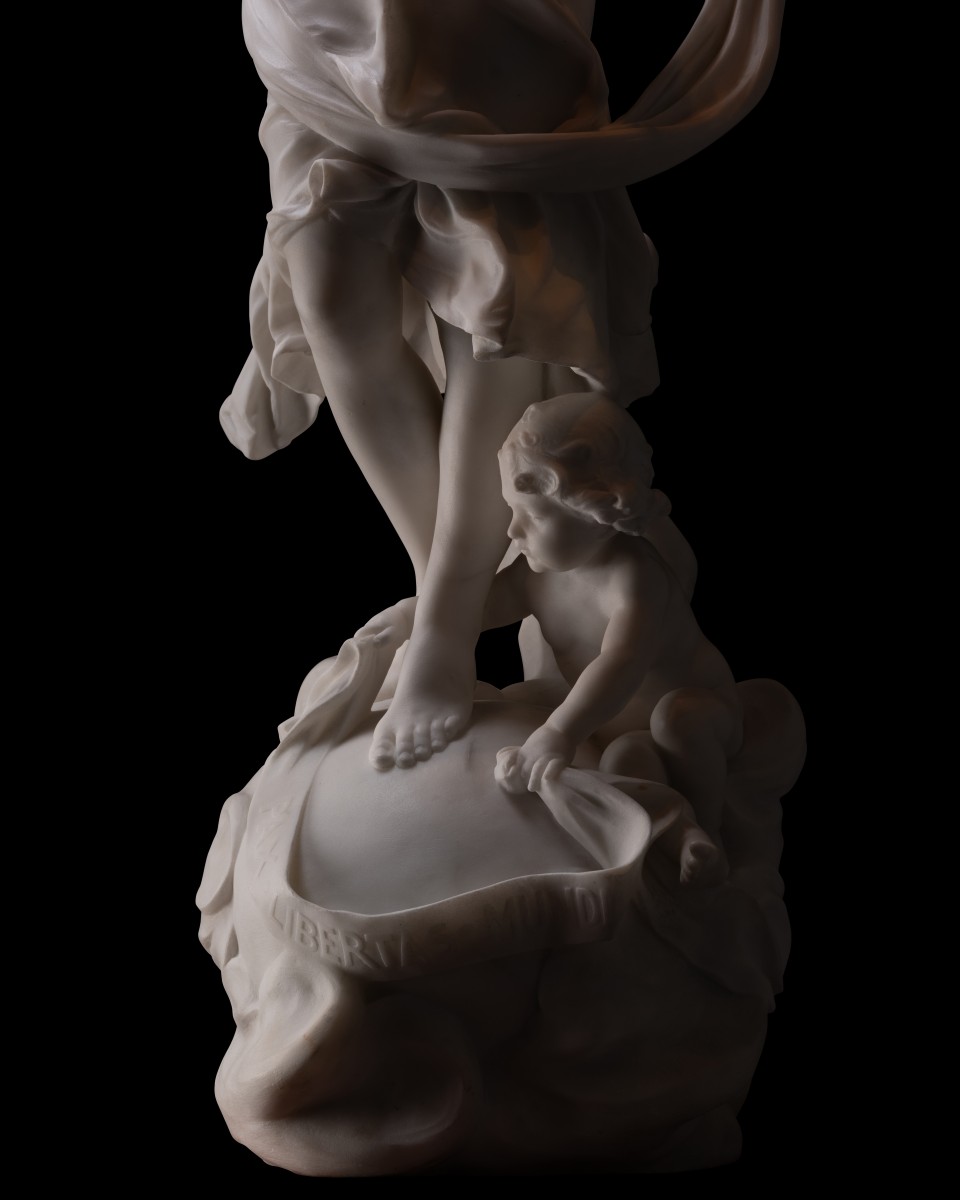
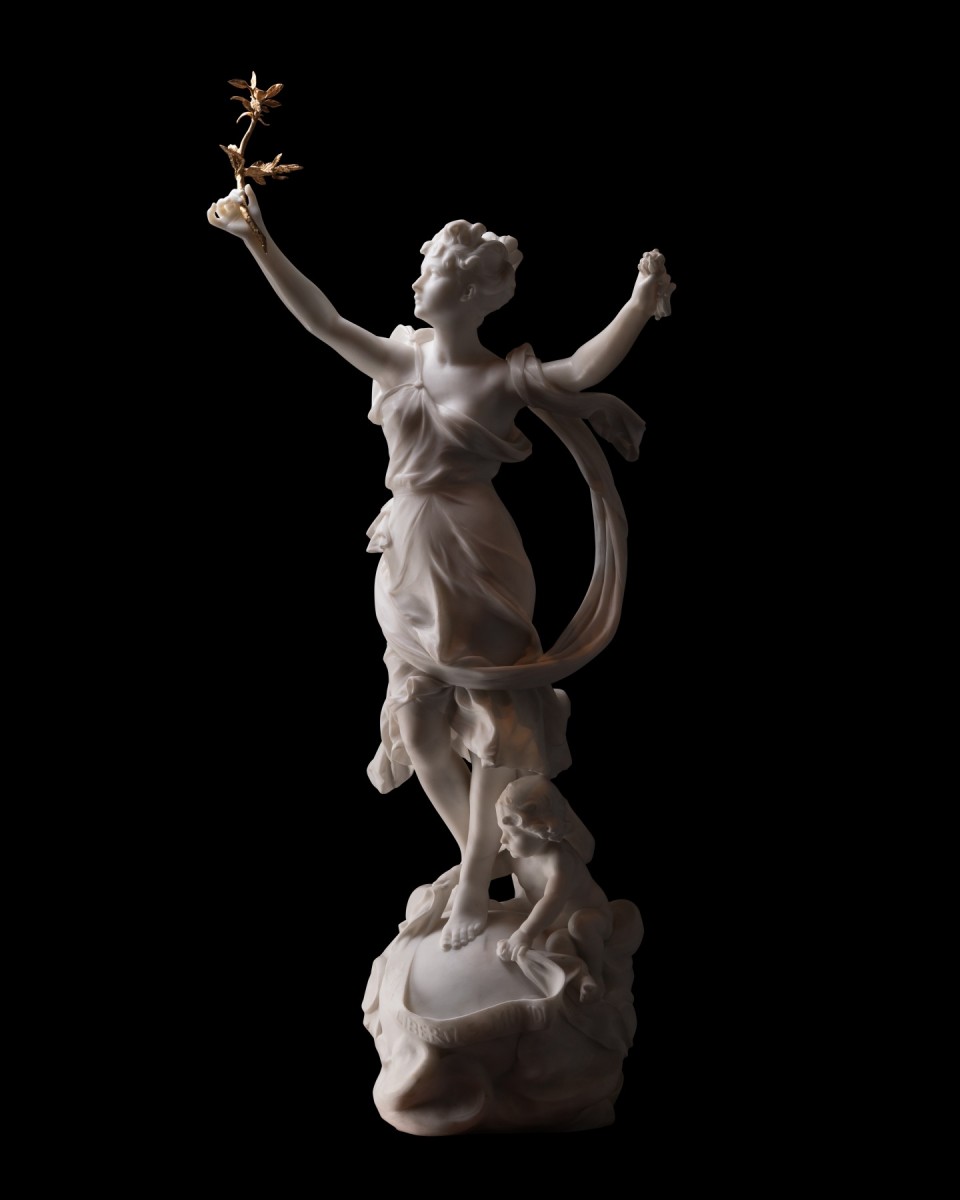

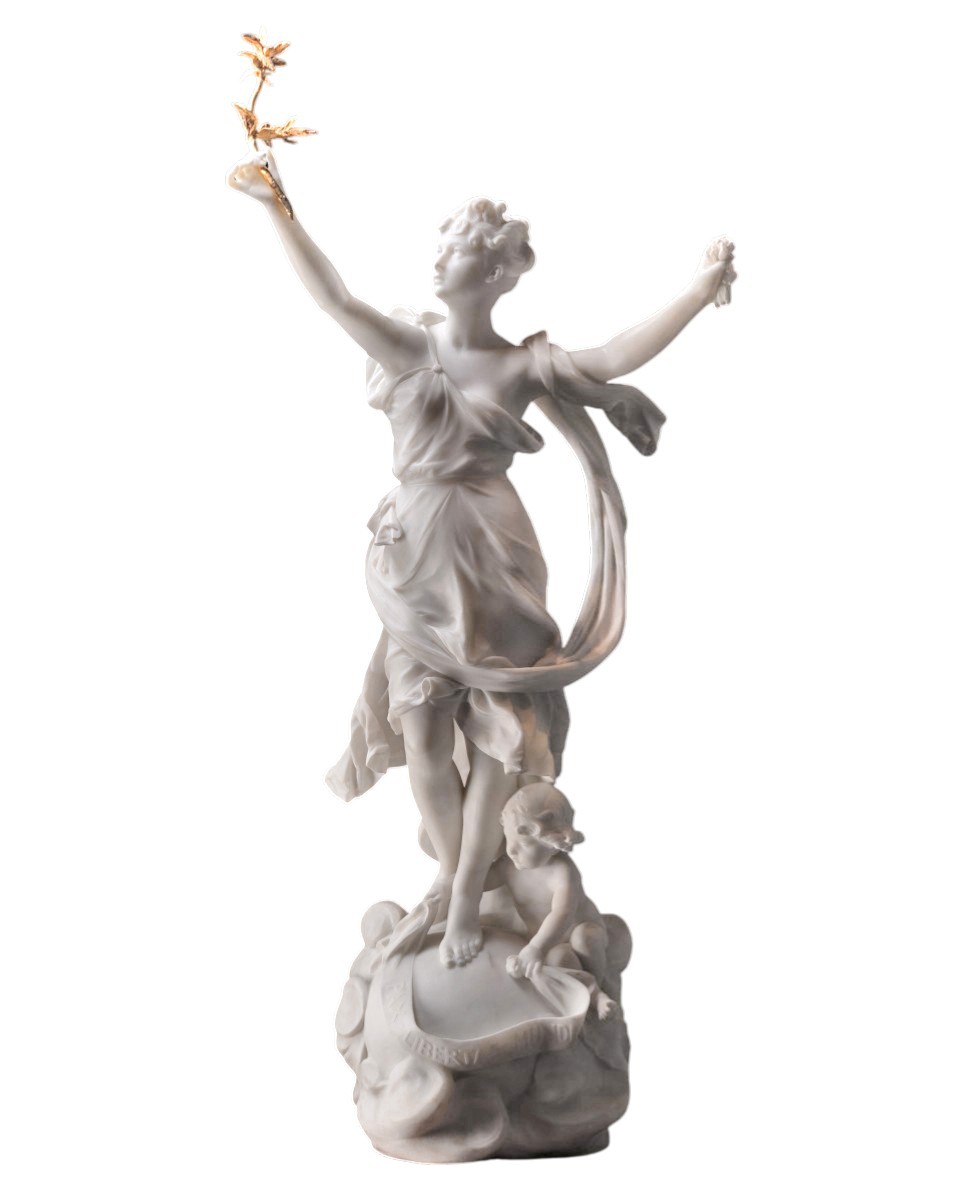
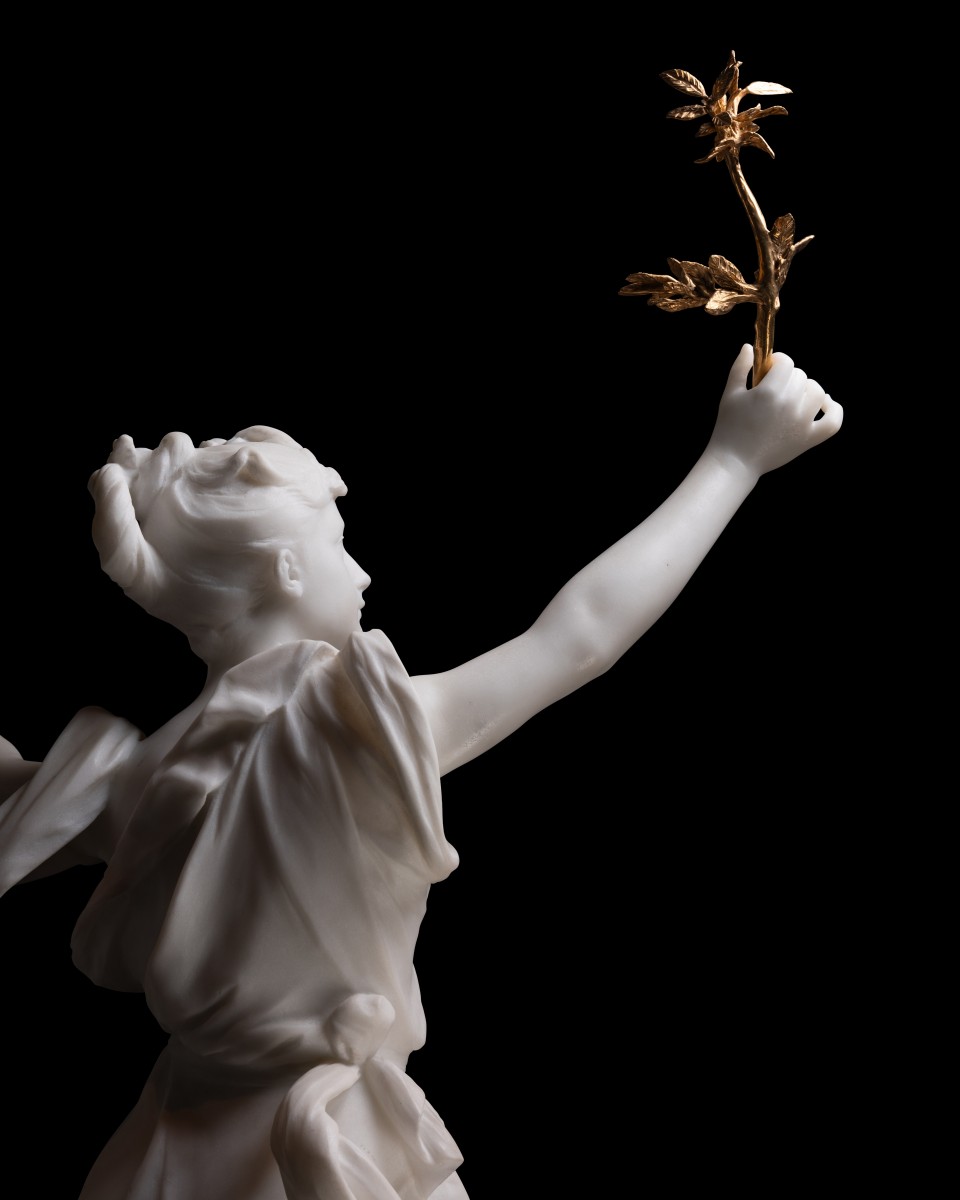
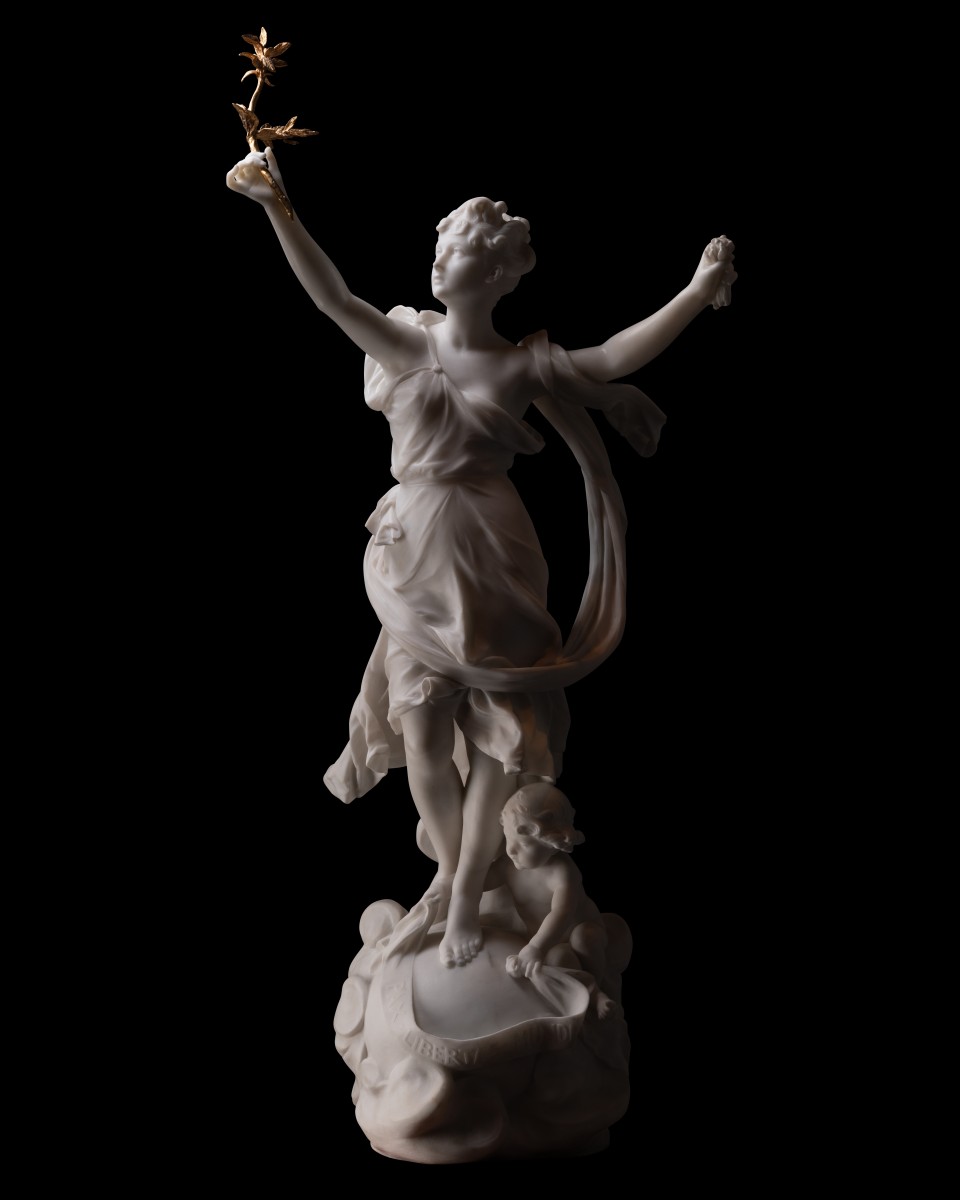
With “Pax Libertas Mundi,” Luca Madrassi gives form to a universal allegory characteristic of the late nineteenth century, in which political idealism, humanist pacifism, and faith in progress converge in a synthetic and immediately legible image. The sculpture depicts a female figure, draped in an antique manner, standing upon a terrestrial globe partially enveloped in clouds. With her arms widely outstretched, she adopts a posture of elevation and welcome, suggesting the universality of her message.
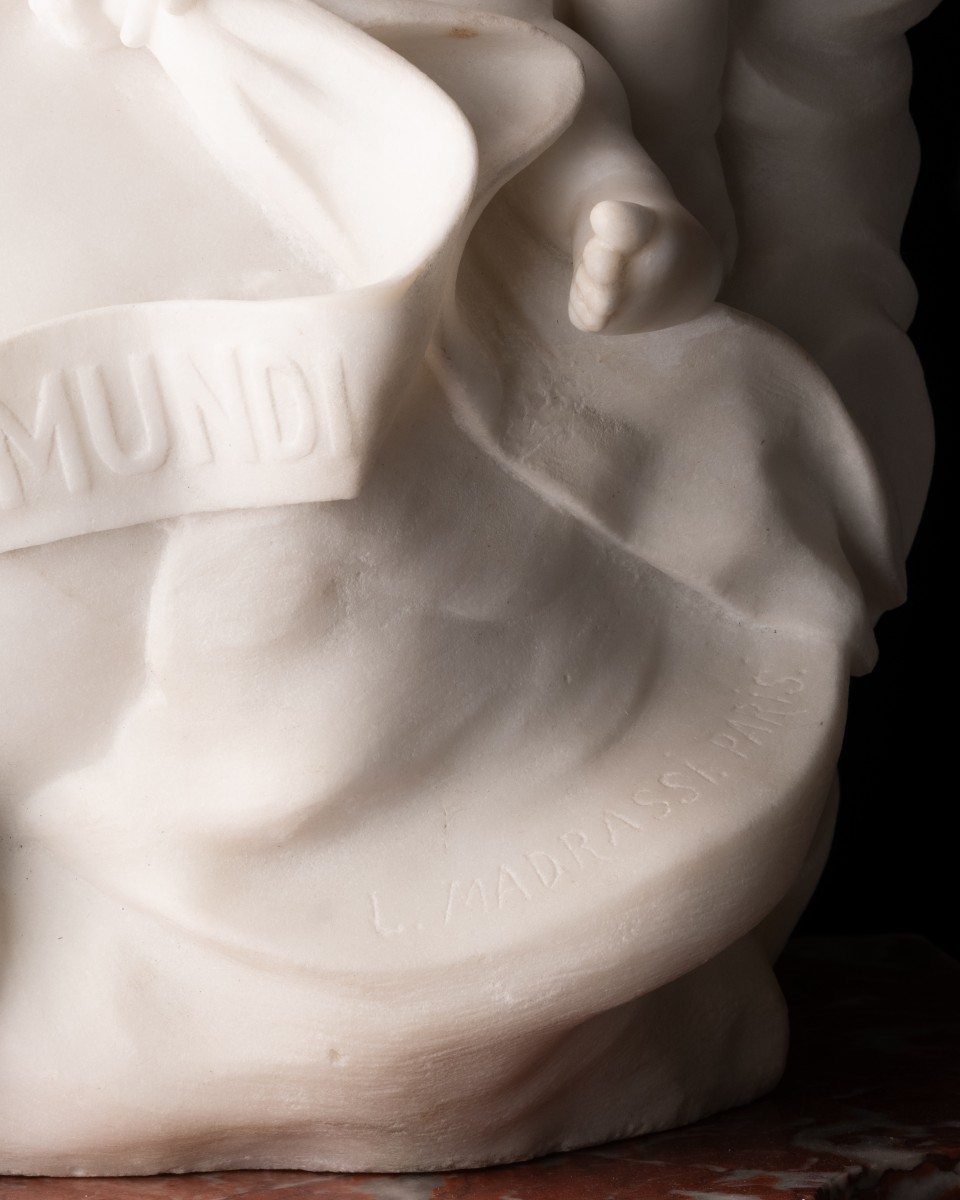
At her feet, a kneeling putto supports a scroll bearing the motto PAX LIBERTAS MUNDI. The Latin inscription lends the work a timeless and solemn dimension. It articulates three fundamental notions — peace, liberty, and the world — in a formulation that transcends national boundaries to express a universal ambition. The choice of Latin, the language of moral authority and humanist tradition, reinforces this programmatic intent. The treatment of the marble displays remarkable refinement: the draperies, animated by supple and deeply carved folds, create an upward movement that accompanies the impulse of the body and heightens the impression of moral elevation. The transitions between polished surfaces and more animated passages demonstrate Madrassi’s technical mastery and his grounding in a late academic tradition, while remaining open to a more Symbolist sensibility.
Known primarily through its bronze editions, “Pax Libertas Mundi” finds in this marble version a particularly accomplished expression. The choice of marble — a material associated with prestige and permanence — transforms the allegory into a true sculpted manifesto.
Through this work, Madrassi fully engages with the intellectual climate of the Belle Époque, marked by the rise of pacifist movements, belief in the moral progress of humanity, and the affirmation of universalist ideals. “Pax Libertas Mundi” does not recount a specific ancient myth; rather, it proposes a vision — that of a world governed by peace and liberty, elevated to the status of absolute values.
LUCA MADRASSI (Tricesimo, 1848–1919, Paris)
Luca Madrassi was a French sculptor of Italian origin. He began his artistic studies in Rome before continuing his training at the École des Beaux-Arts in Paris, where he studied under Pierre-Jules Cavelier. He later joined the studio of Albert-Ernest Carrier-Belleuse. Between 1876 and 1880, Madrassi worked as a praticien for Gustave Doré, a collaboration that may explain certain similarities between the works of Carrier-Belleuse and those of Doré.
Luca Madrassi began exhibiting at the Salon of the Société des Artistes Français in Paris in 1879. He frequently received honourable mentions for his often allegorical subjects (in 1881, 1882, 1883, and 1885), as well as a third-class medal in 1896. He acquired French nationality and became a member of the Société des Artistes Français in 1890. He also exhibited at the Salon of the Société Nationale des Beaux-Arts in 1896.
Delevery information :
Deliveries are offered in Belgium and Northern France.
All other deliveries are subject to a charge.