Offered by Galerie Gilles Linossier
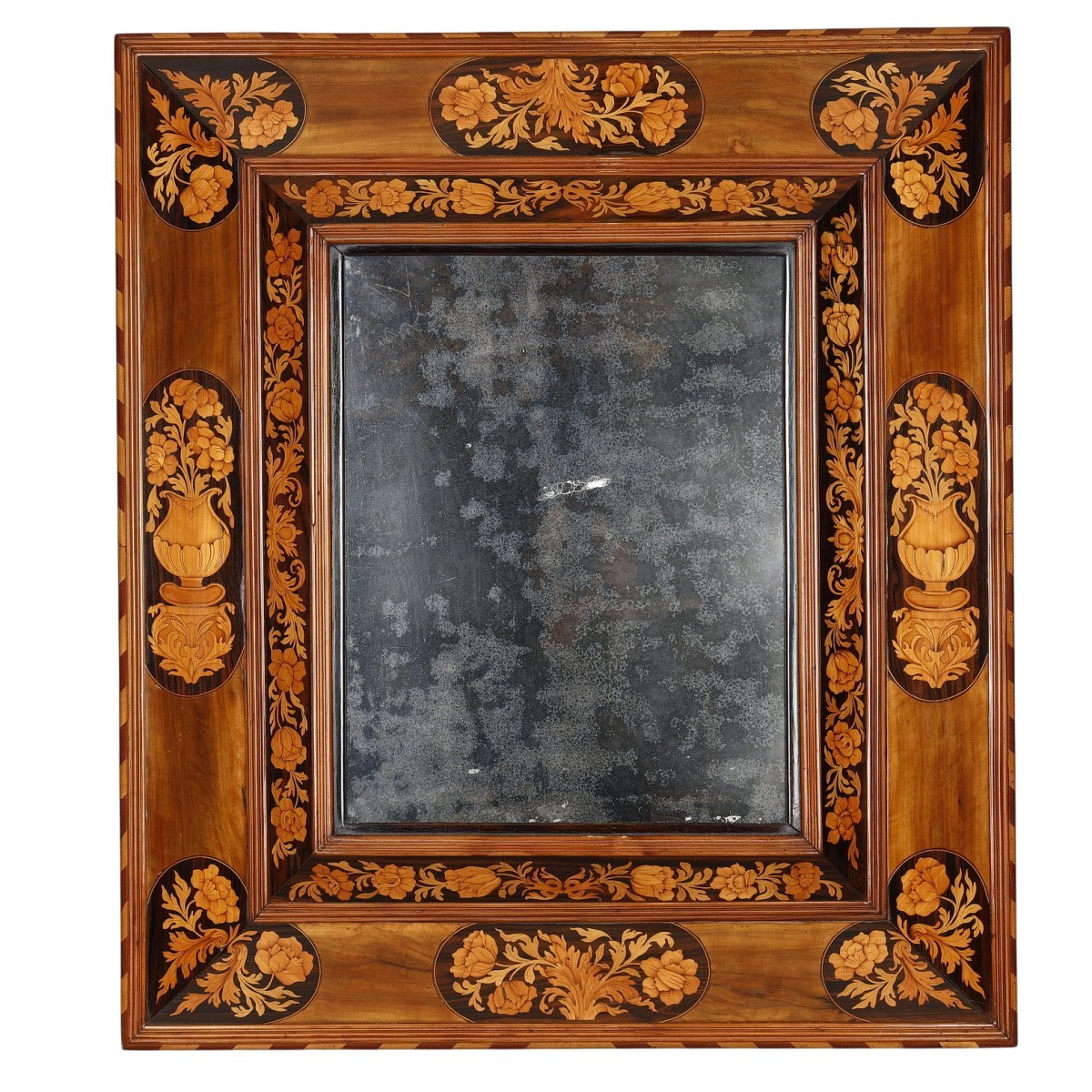
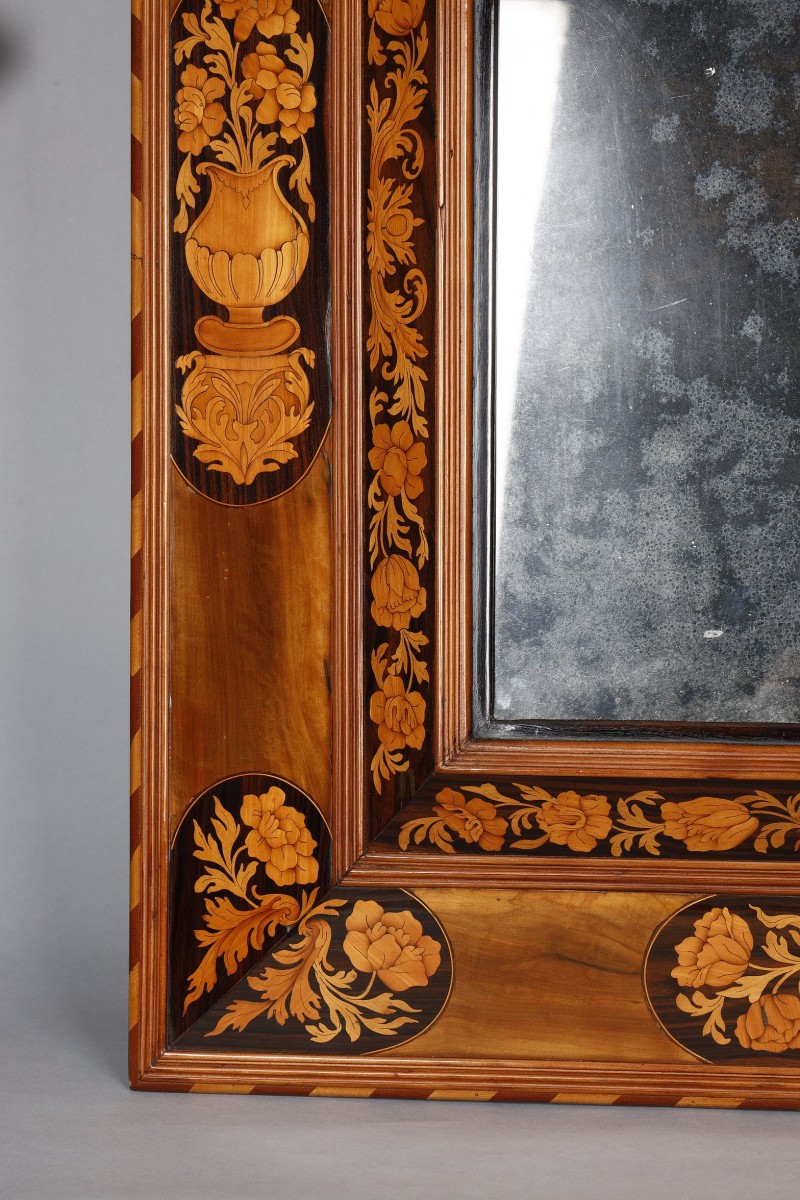
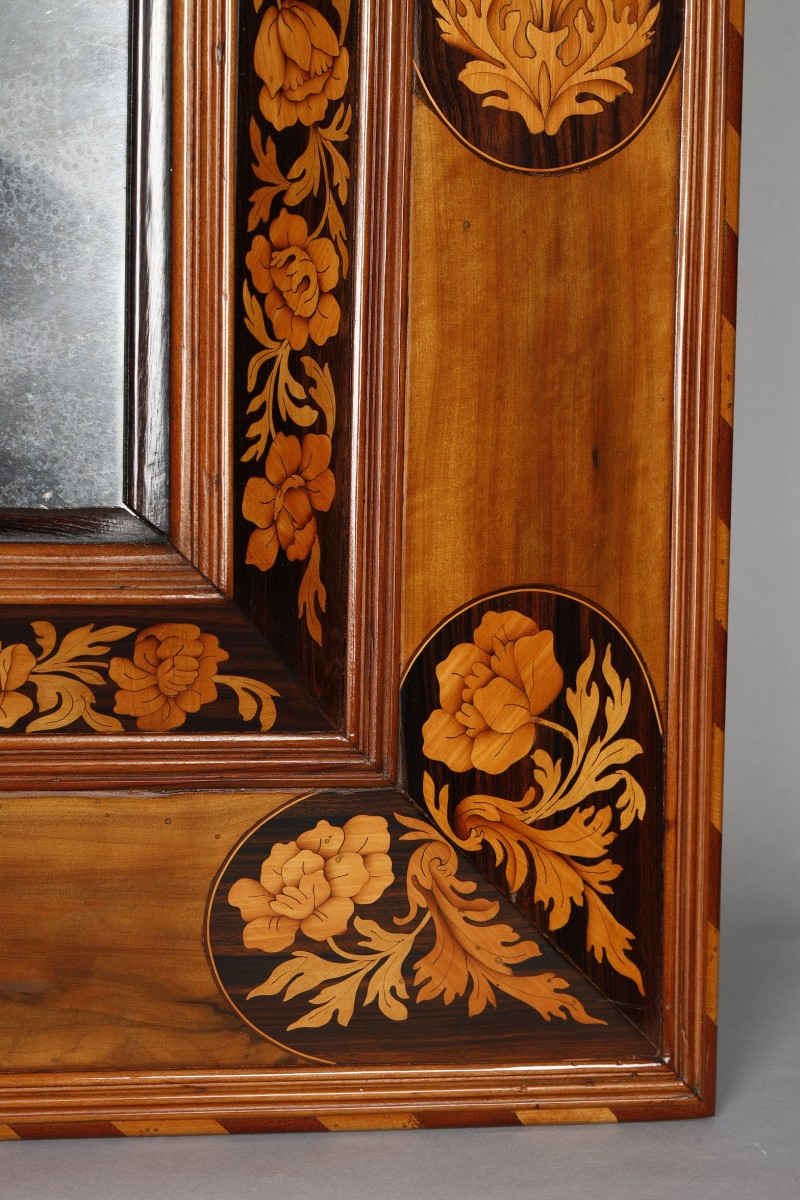
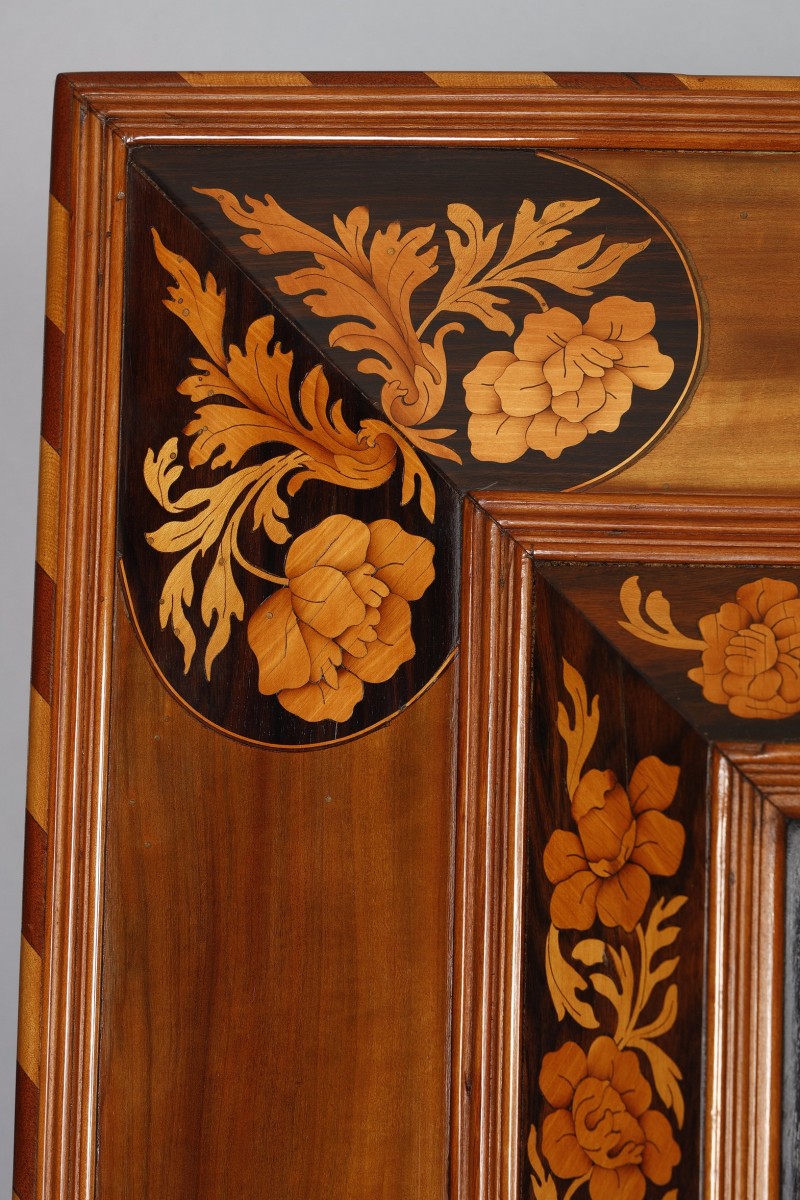
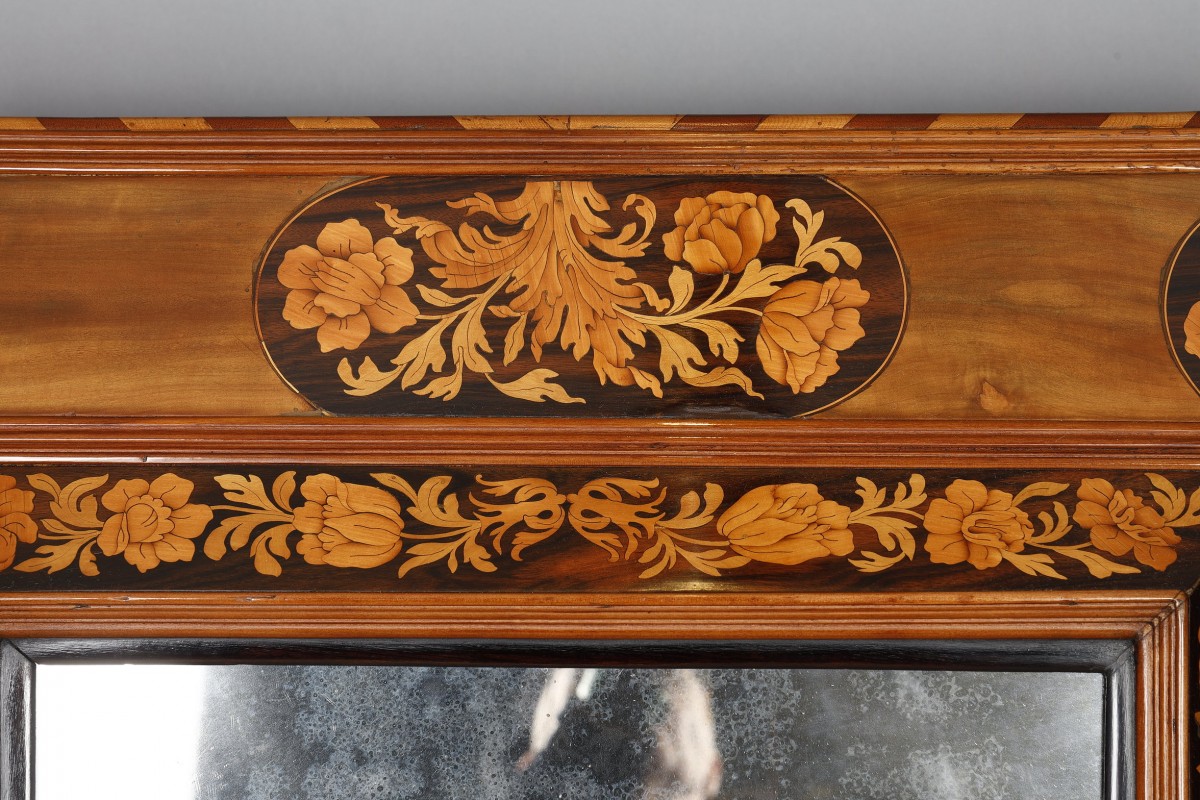

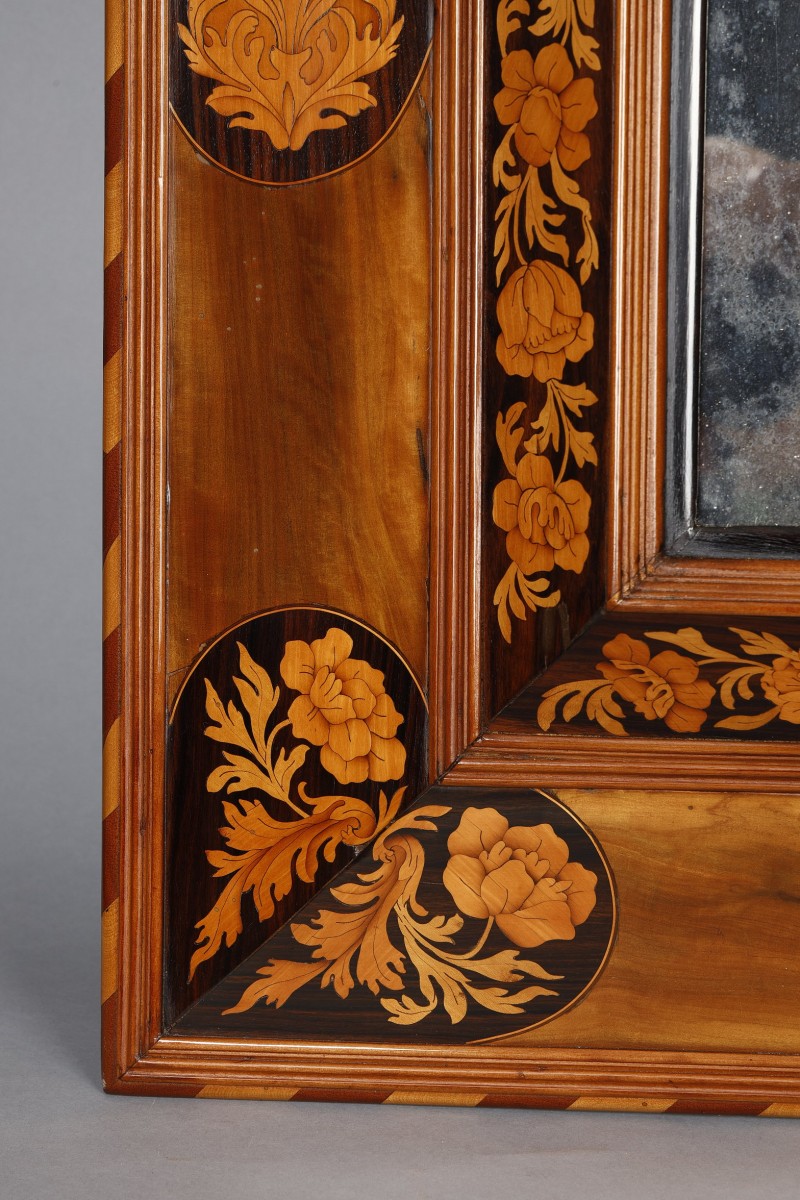
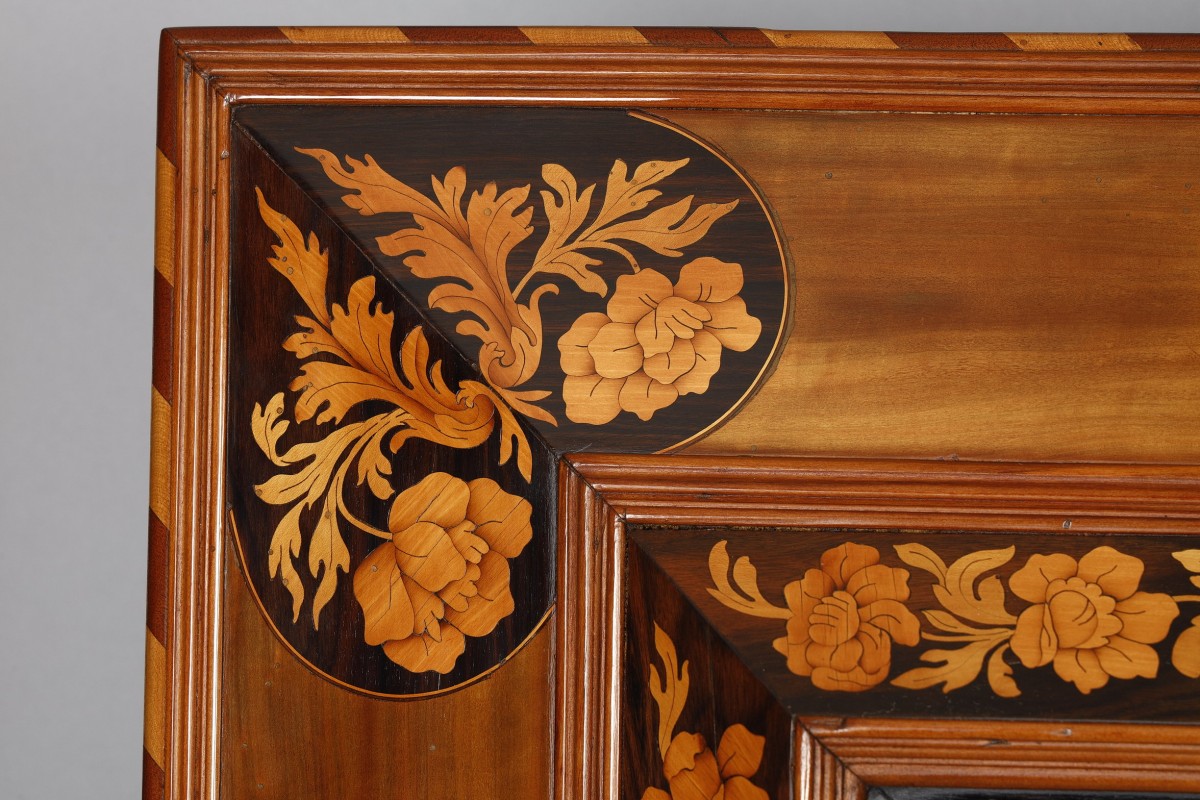
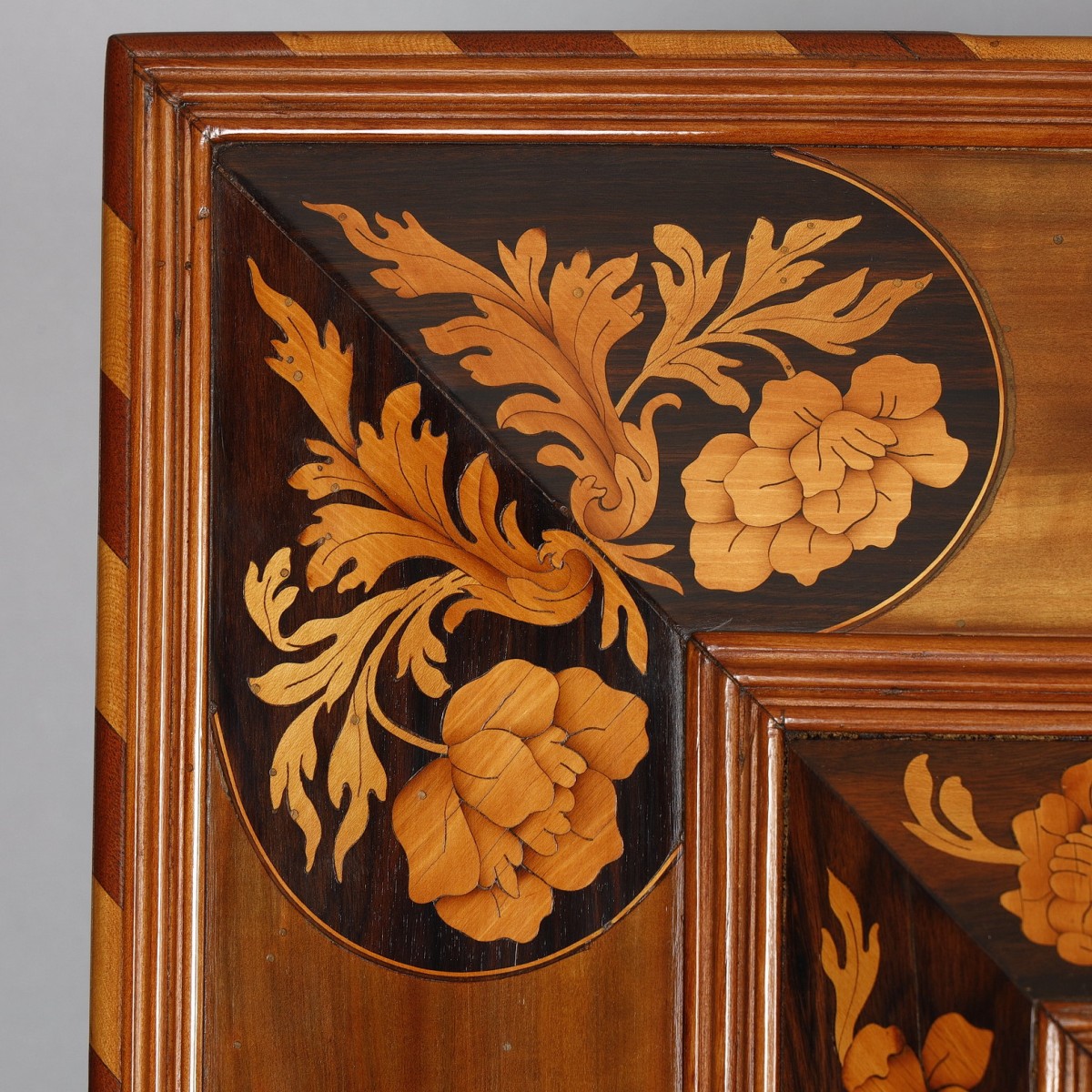
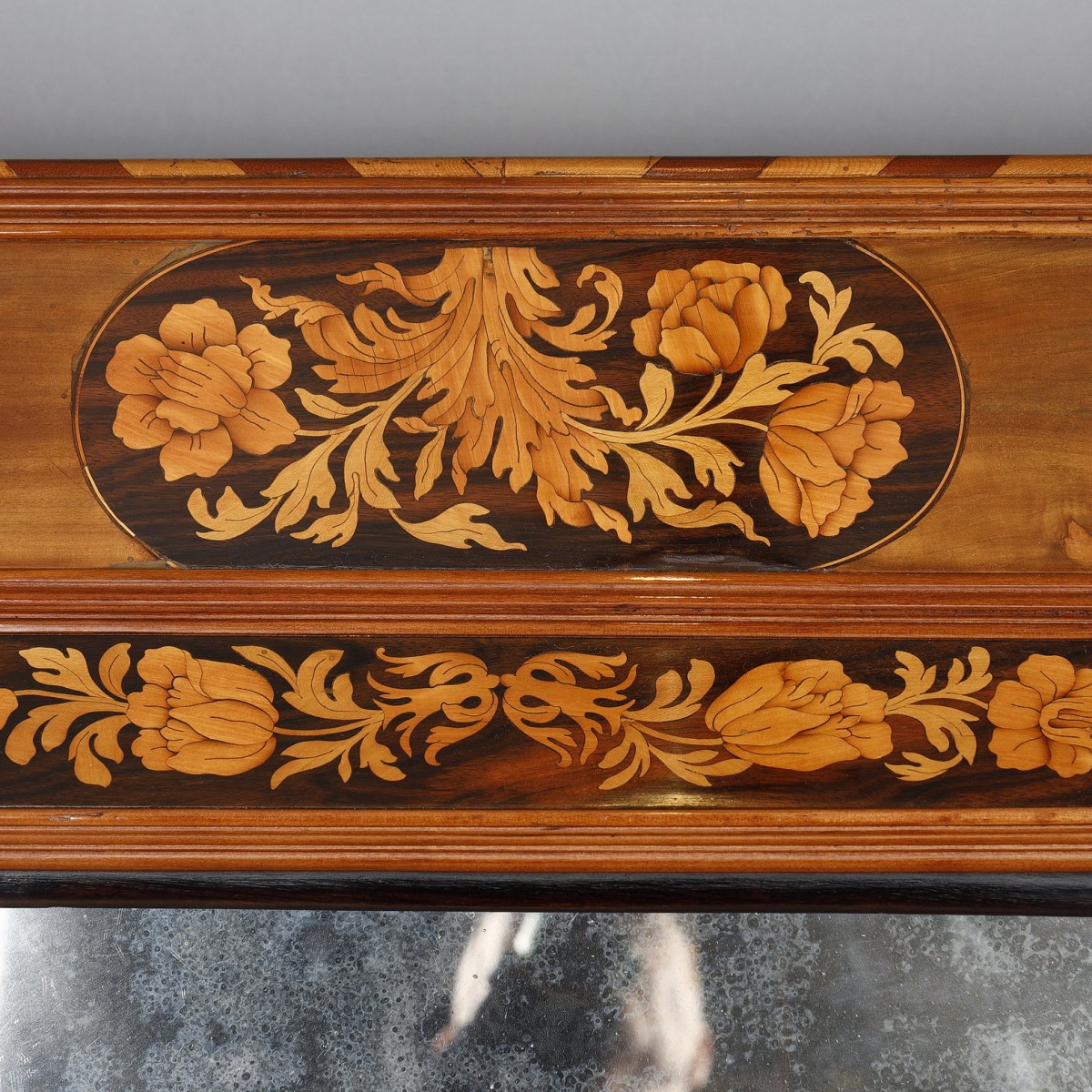
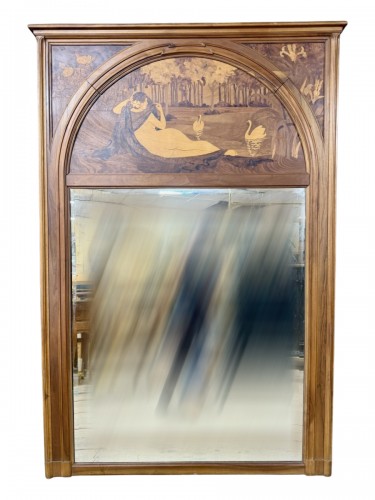
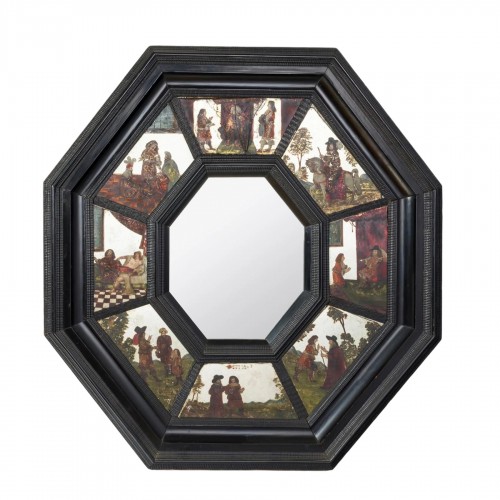
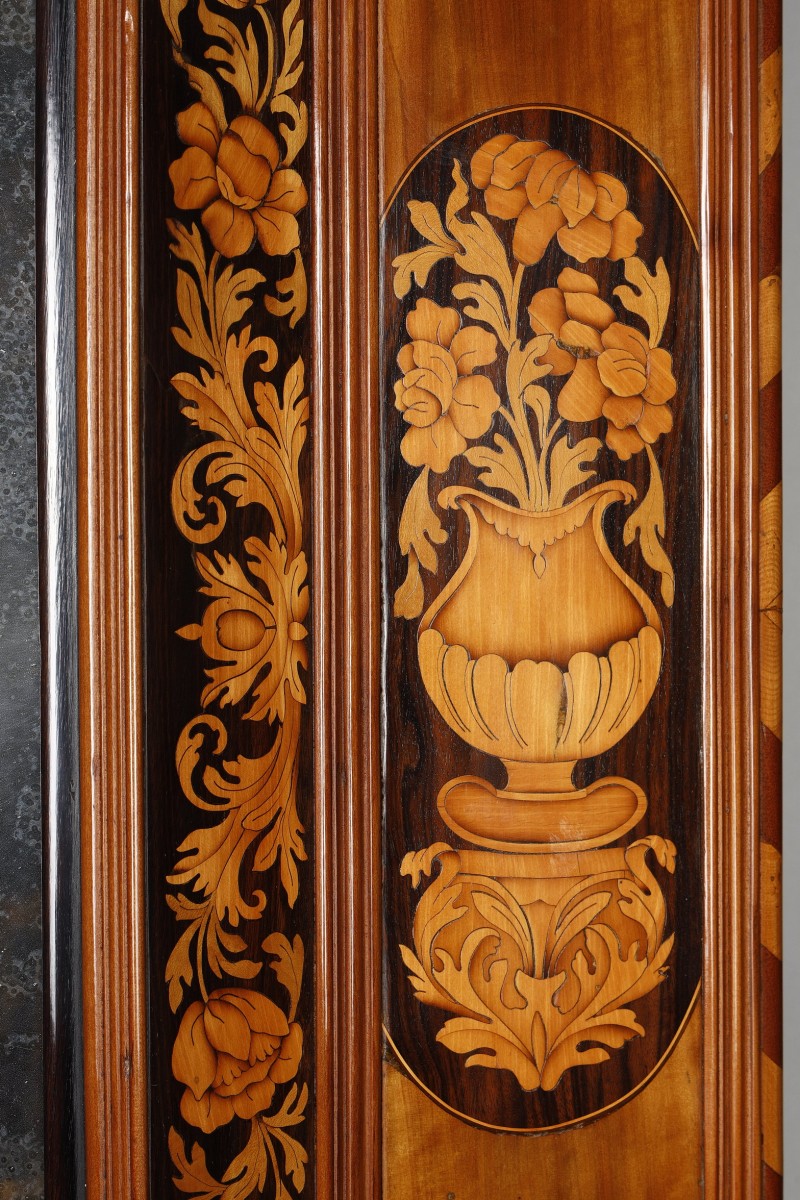
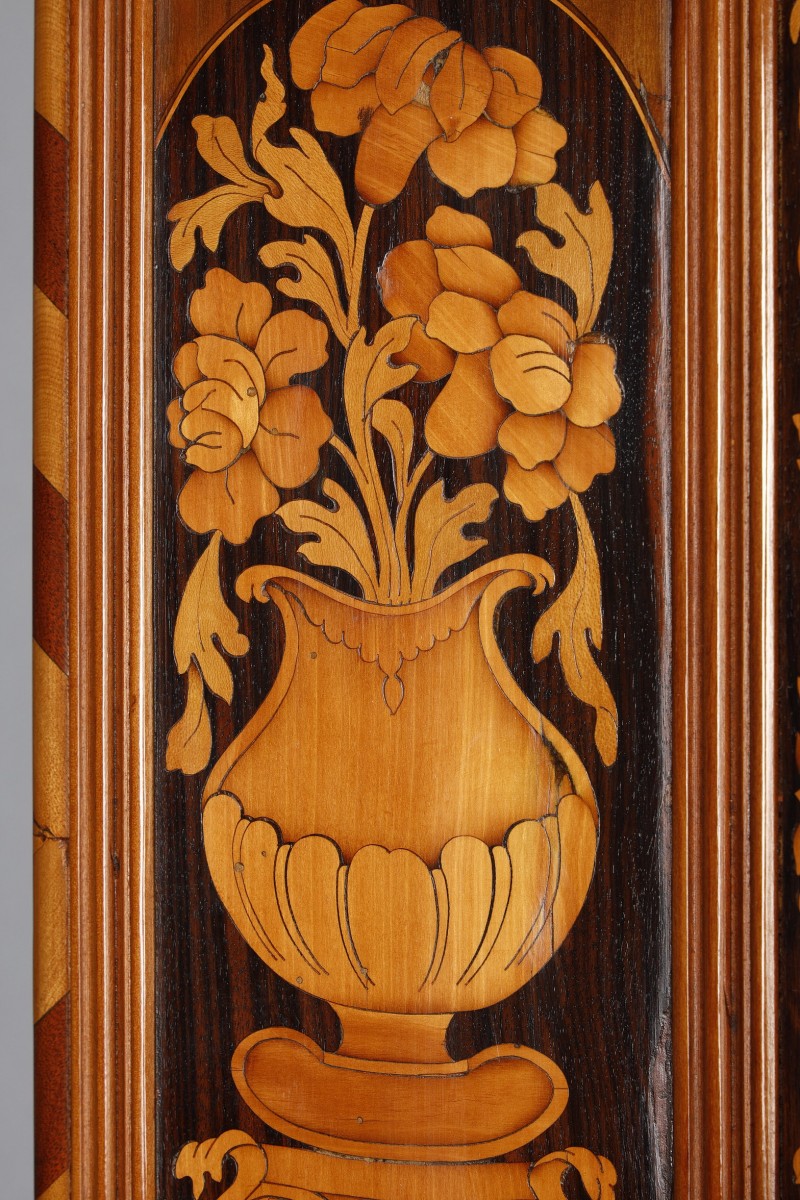
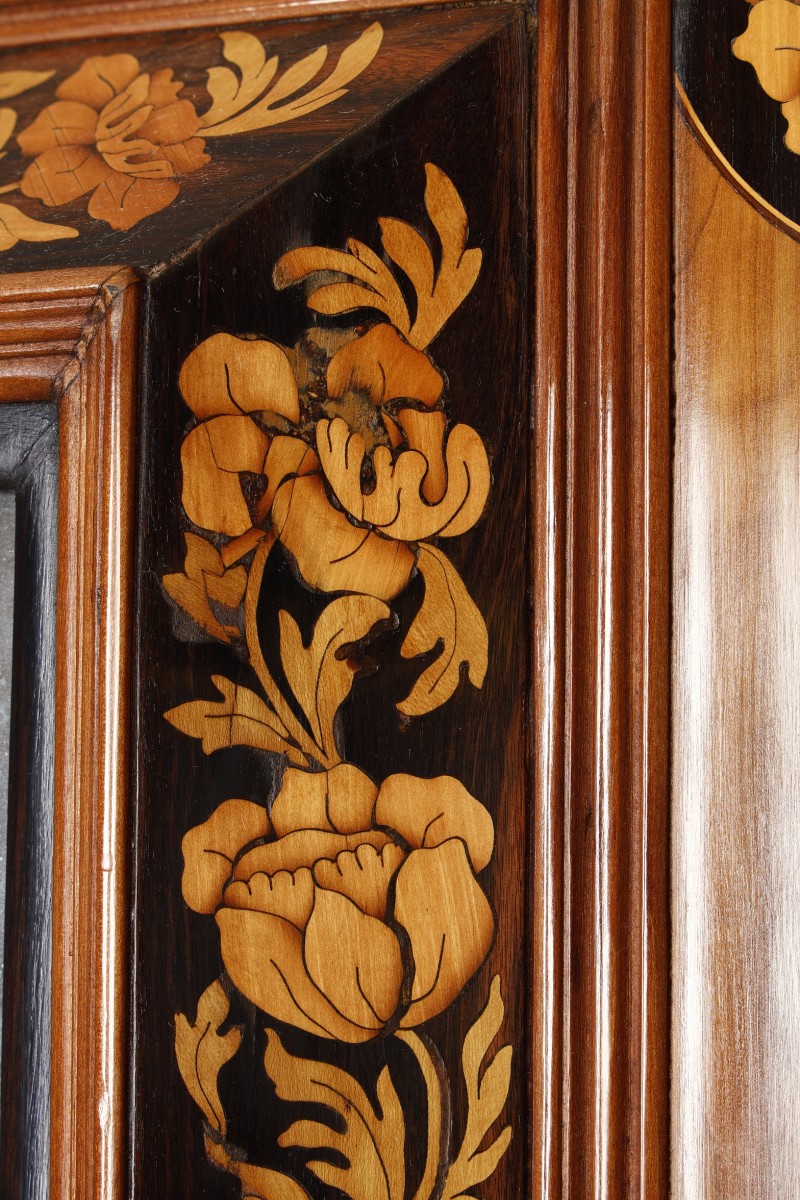
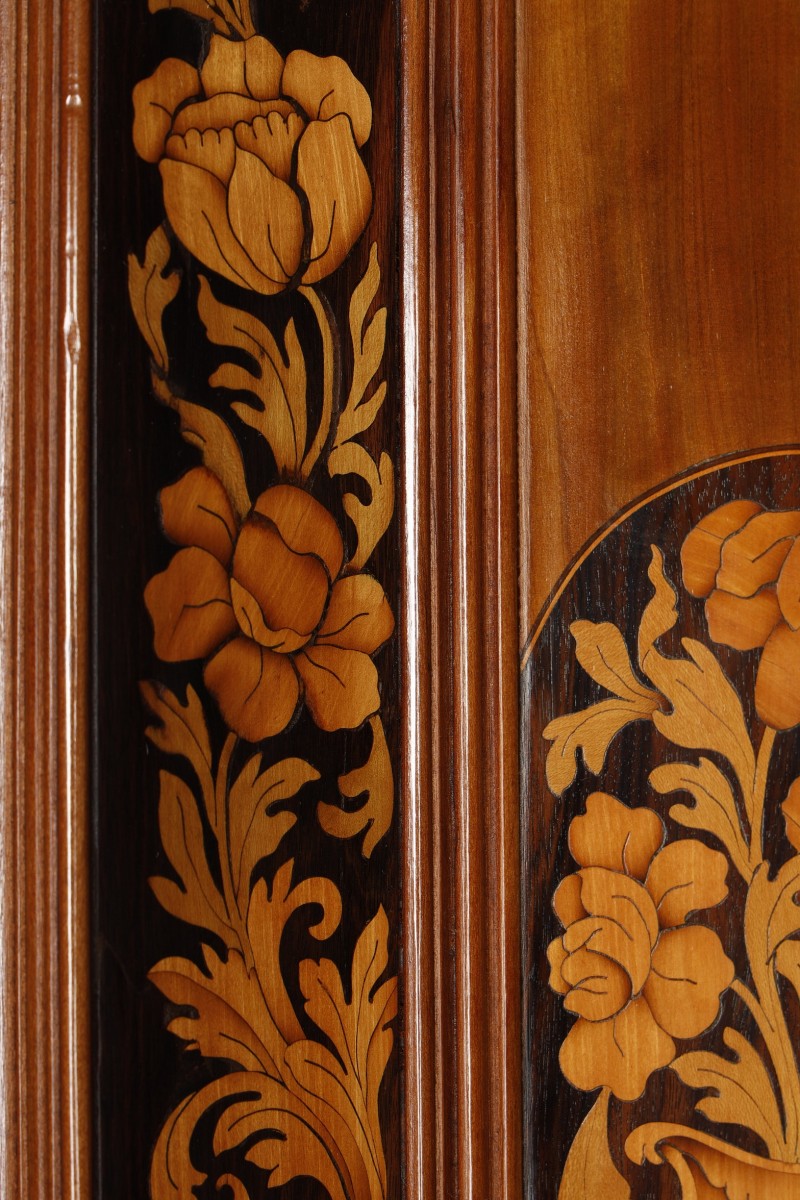
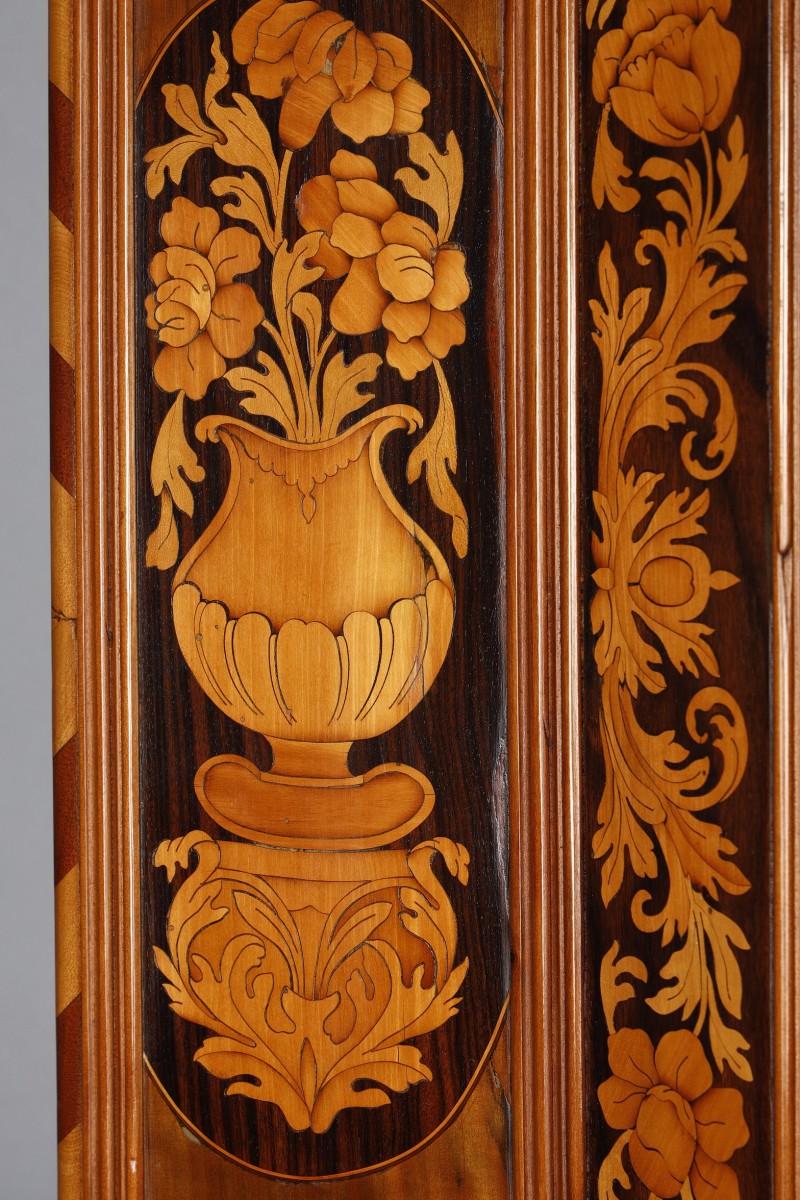
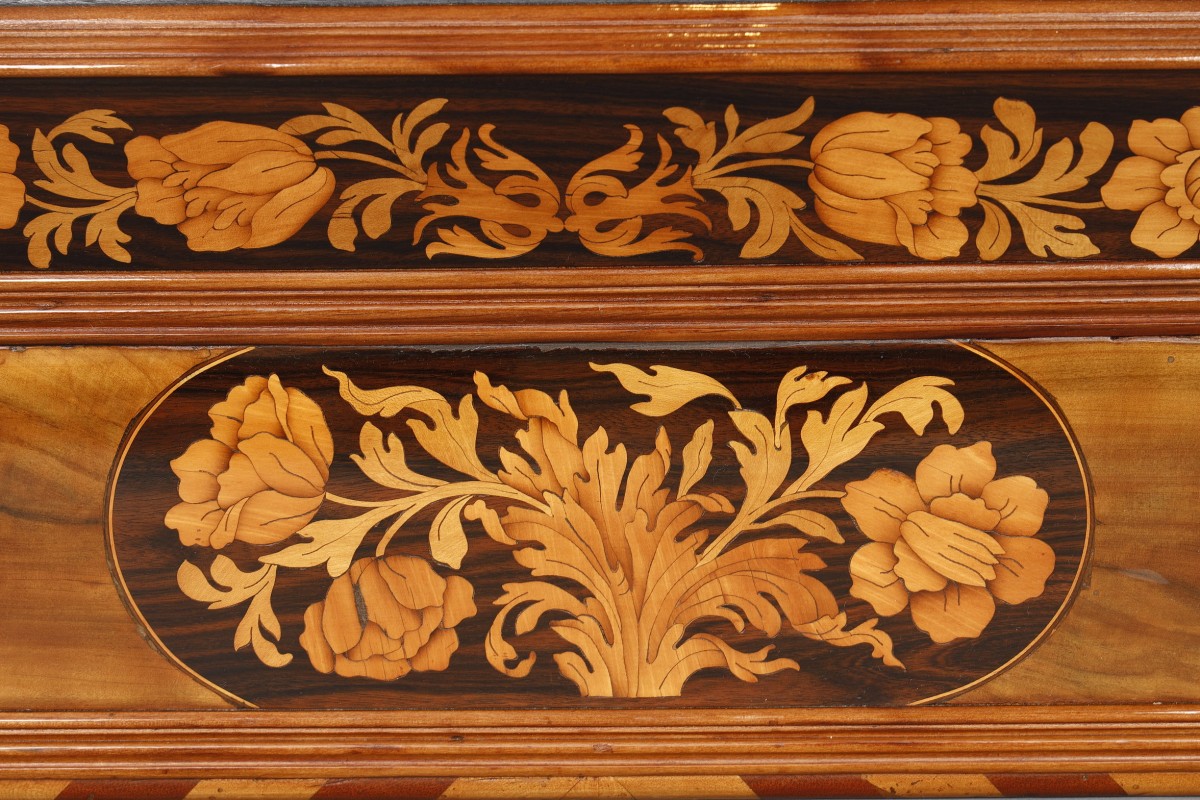
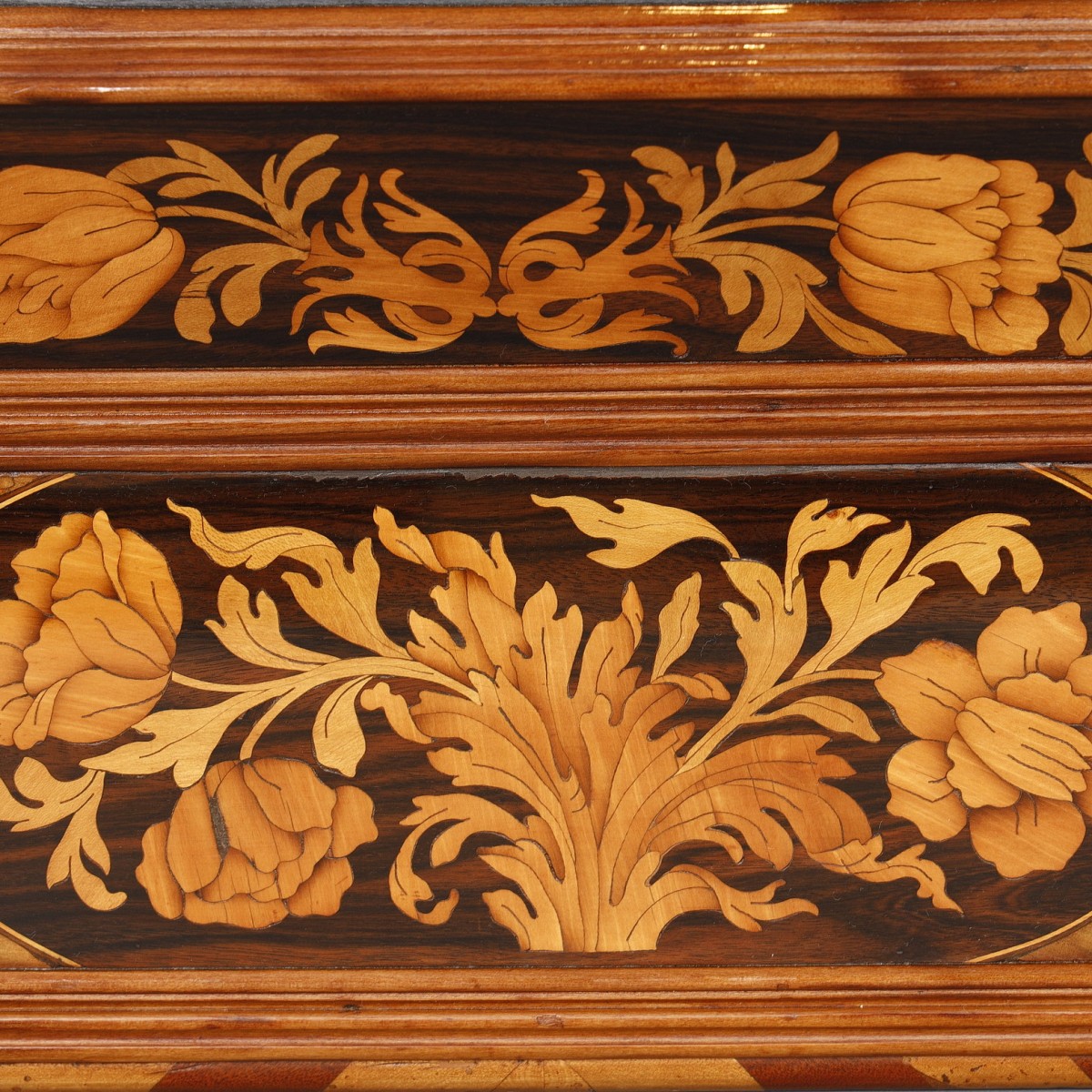
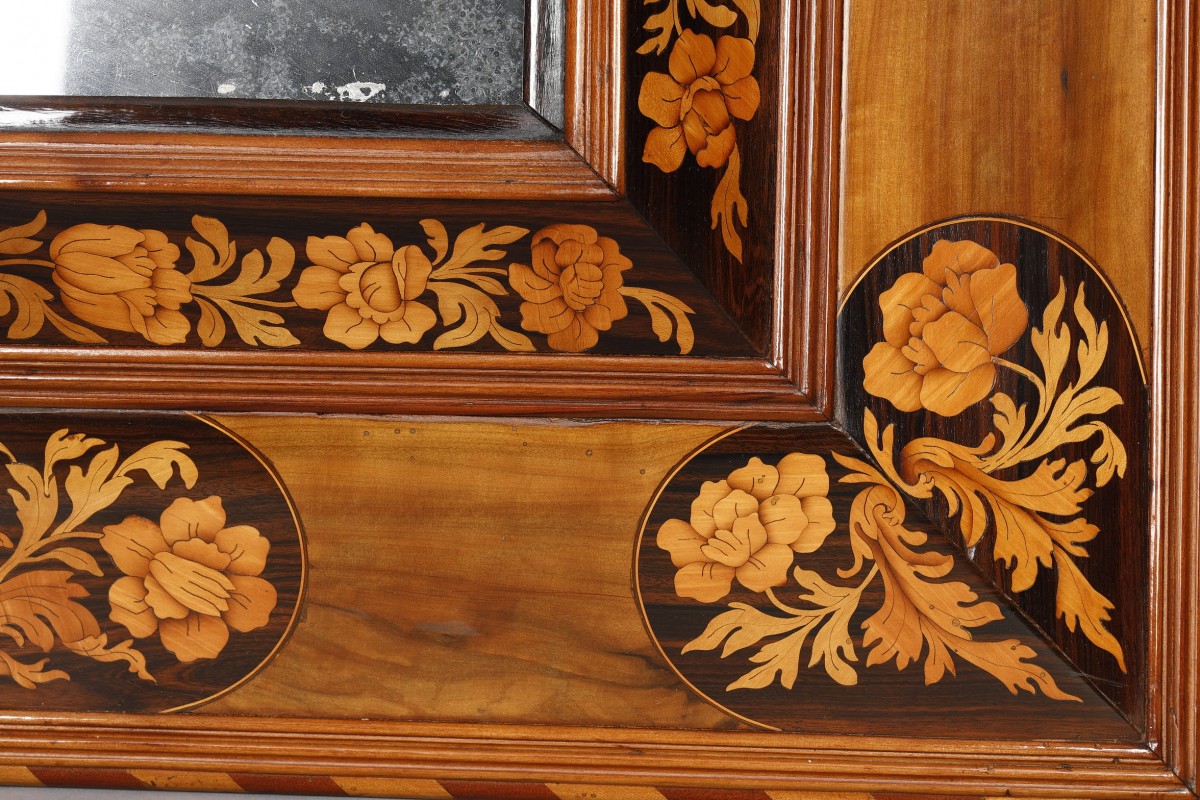
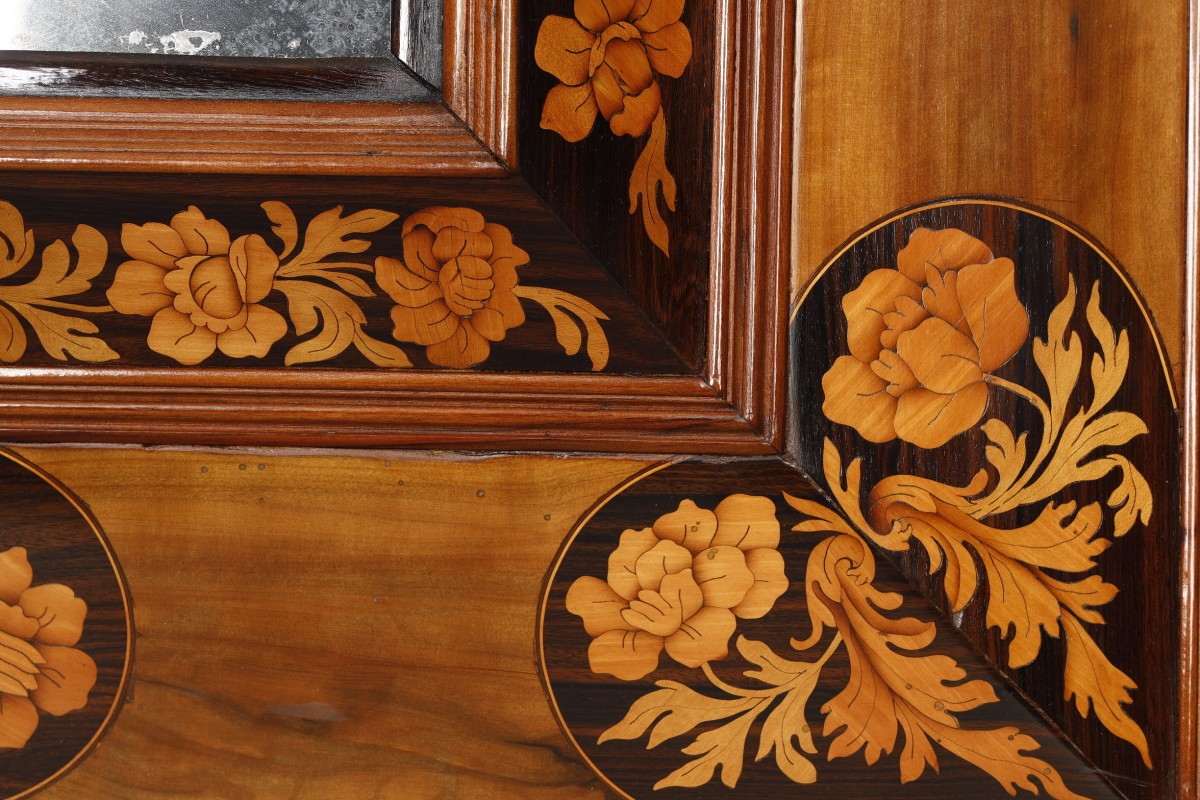
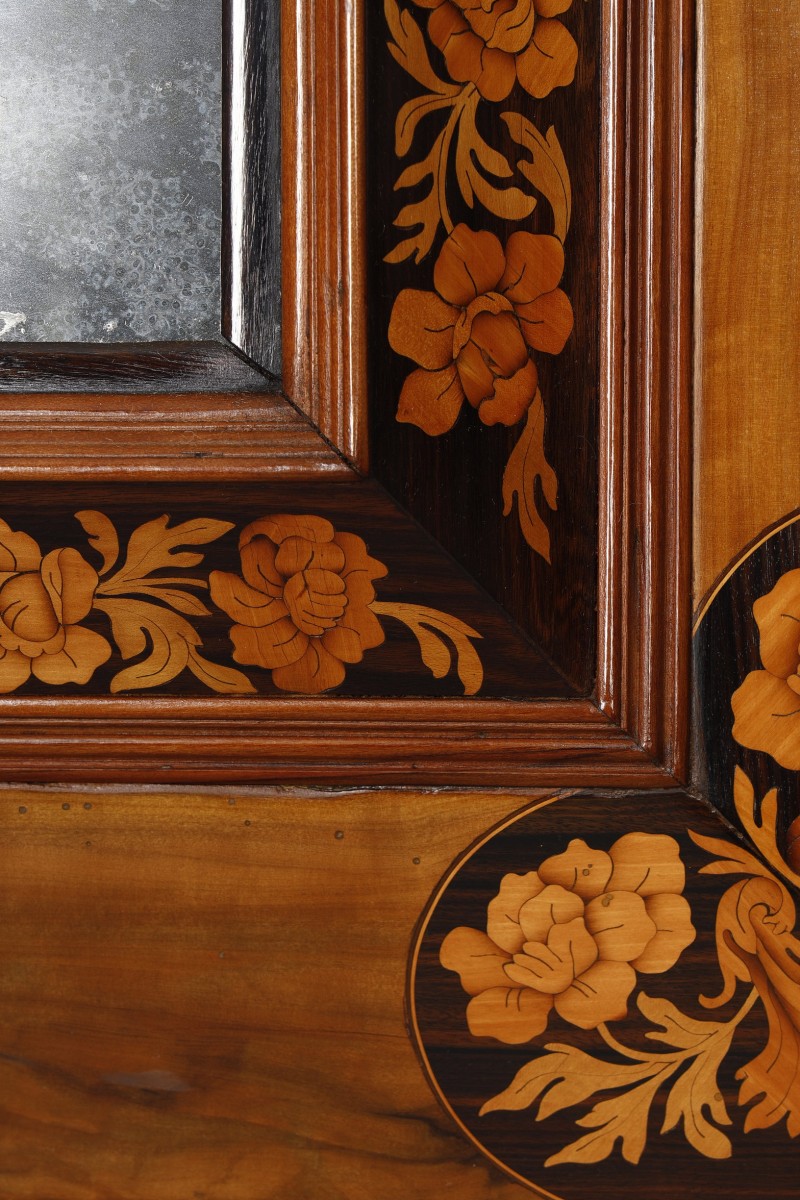
17th-century work attributed to Thomas Hache (1664–1747)Wooden mirror with a double inverted profile, inlaid using the "hot sand burnt wood" technique.The walnut frame is richly decorated with floral marquetry in light wood on dark wood reserves, typical of Dauphiné production at the end of the 17th century. It perfectly frames the entire perimeter.The rest of the composition is structured by wide bands decorated with foliate scrolls and vases of flowers, inscribed within centered oval cartouches or polylobed cartouches in the corners, arranged in perfect symmetry.This is itself framed by alternating dark and light wood fillets.An elegant and restrained decoration, distinguished by the fine quality of the marquetry design.Original mercury mirror.If Thomas Hache (1664-1747), a cabinetmaker from Grenoble, produced such abundant marquetry, it was through his apprenticeship with Pierre Gole, cabinetmaker to King Louis XIV and master of floral marquetry, and later in Chambéry, where he discovered Italianate decoration (vegetal scrolls, interlacing patterns, arabesques, acanthus leaves, and a profusion of plant motifs) and the scagliola technique.It was from this technique that he developed his inlaid marquetry, working with the interlocking of shapes and wood species.Thomas Hache thus developed a personal style, recognizable by the frequent use of floral marquetry on a dark background, vases, palmettes, and scrolls, applied to both furniture and mirror frames. The craftsmanship here is such that we can attribute it to this great cabinetmaker.The abundantly floral decoration, playing on these contrasts of bright and dark colors, is one of his hallmarks. Indeed, he innovated in these veneers. "It is in the content of these pre-prepared veneers, where the scrolls, foliage, and flowers are stylized in very elaborate and dense compositions, that belong only to him and that no other cabinetmaker, except Pierre (his son), has used. The plant ornaments they contain are cut from light and shaded wood to give relief." (The Genius of the Axe, by Pierre and François Rouge, p. 65).In our mirror, we notice the full quality of the nuances within a single leaf.Comparable mirrors are now held in major public collections, including:The Grenoble Museum, which possesses several mirror frames and pieces of furniture attributed to Thomas Hache or his workshop;or the Museum of Decorative Arts in Lyon, for example, where very similar marquetry decorations can be found.H 100 x L 87 cm